Are you ready to go to Bolivia?

     Vicky and I took a trip to Bolivia and Colombia. Our trip was an Overseas Adventure Travel (OAT) Trip from late April to early May 2026. It was an interesting trip for us. We learned about how elevated these countries were before we visited, but I'm not sure our bodies were quite ready for those altitudes. Nonetheless, we persevered and enjoyed our visit. We never missed a hike, but we did stop to catch our breath frequently. 

     We like South America and have now visited seven countries there. Each has had some similarities, but each has also been different. Since we spent most of our time high in the Andes Mountains, rather than low in the Amazon, we faced the challenge of the altitude most of our trip. We wished we had visited these countries when we were younger, but hey, we still did quite well, so I guess we are young enough!  

     I'll just include a few photos from Bolivia to give you a flavor of our trip. Bolivia was a pre-trip for Colombia, so we were only there for about six full days. That was still enough to give us a good taste of Bolivia.

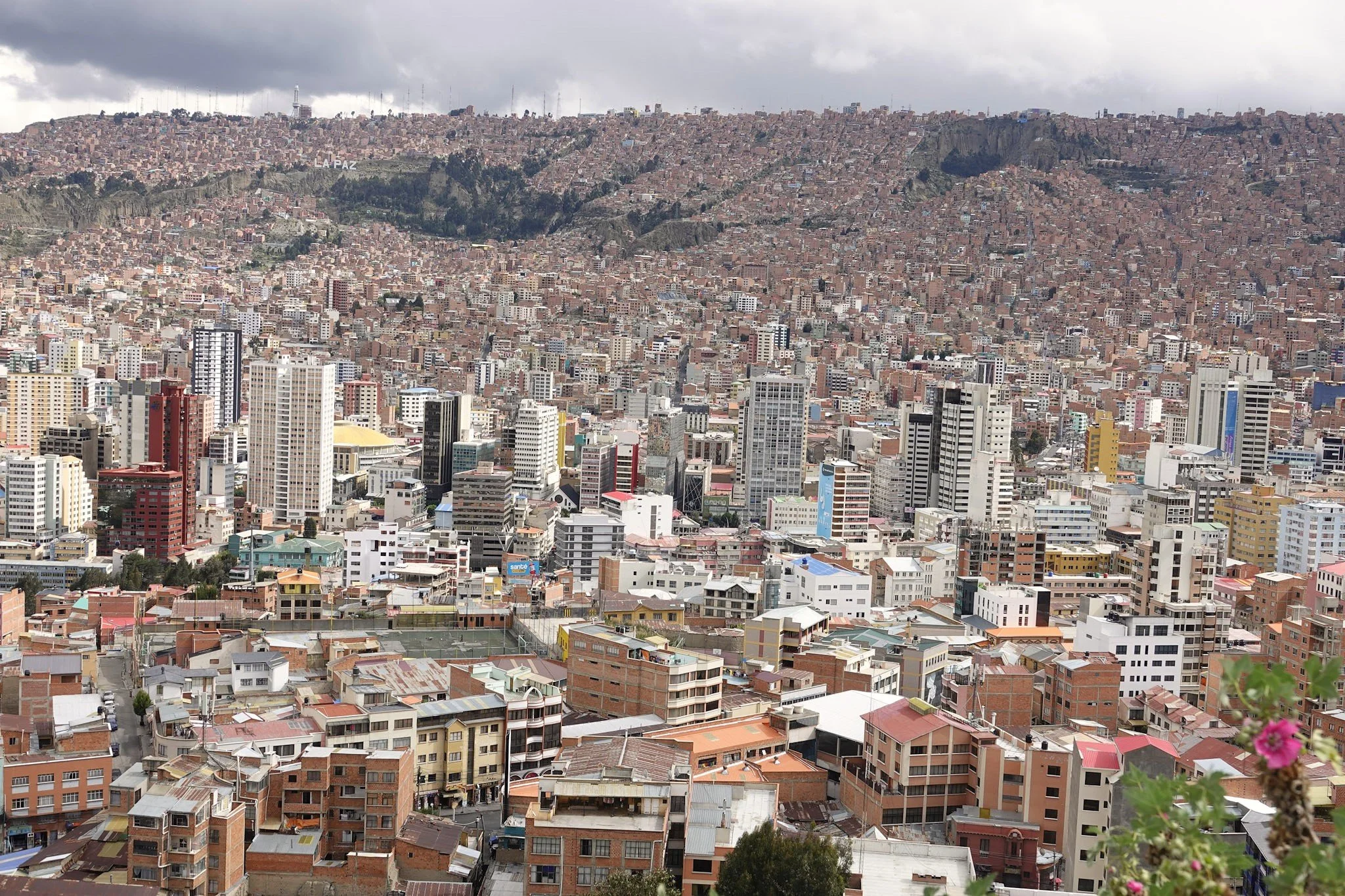
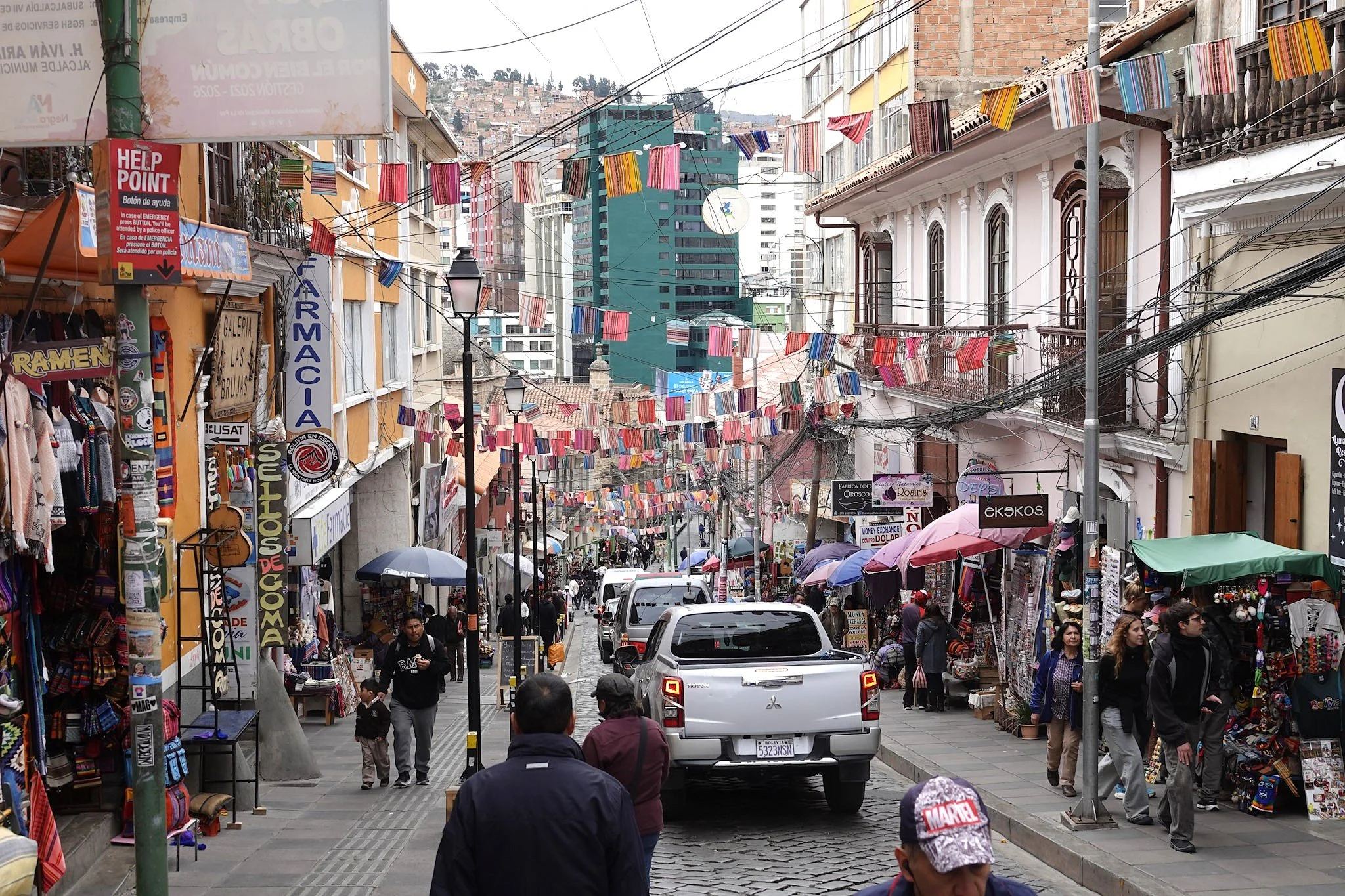
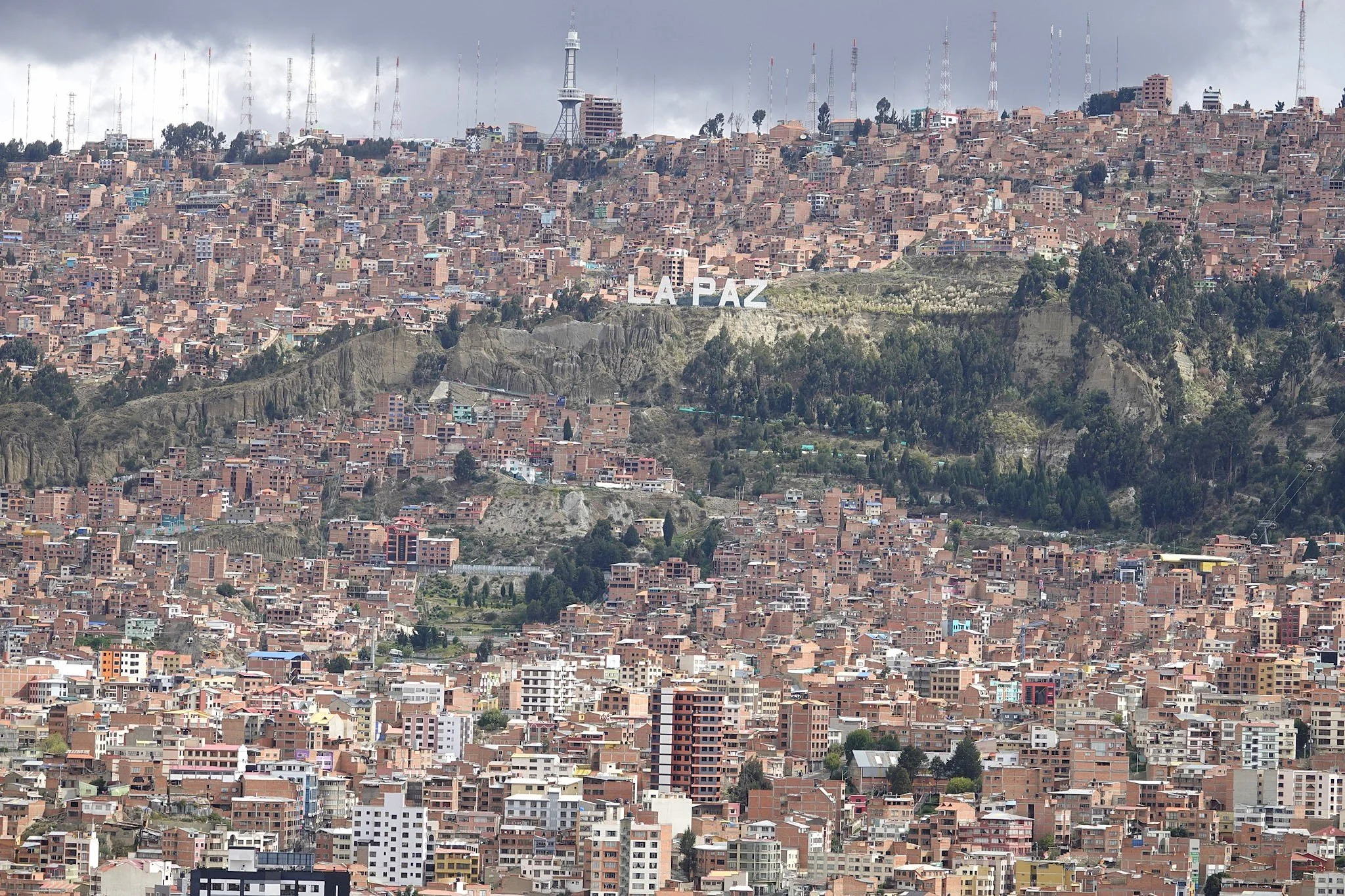
     Below you can get a small glimpse of La Paz. It's the legislative capital and one of the largest cities in Bolivia. For a huge town, we enjoyed our visit here.
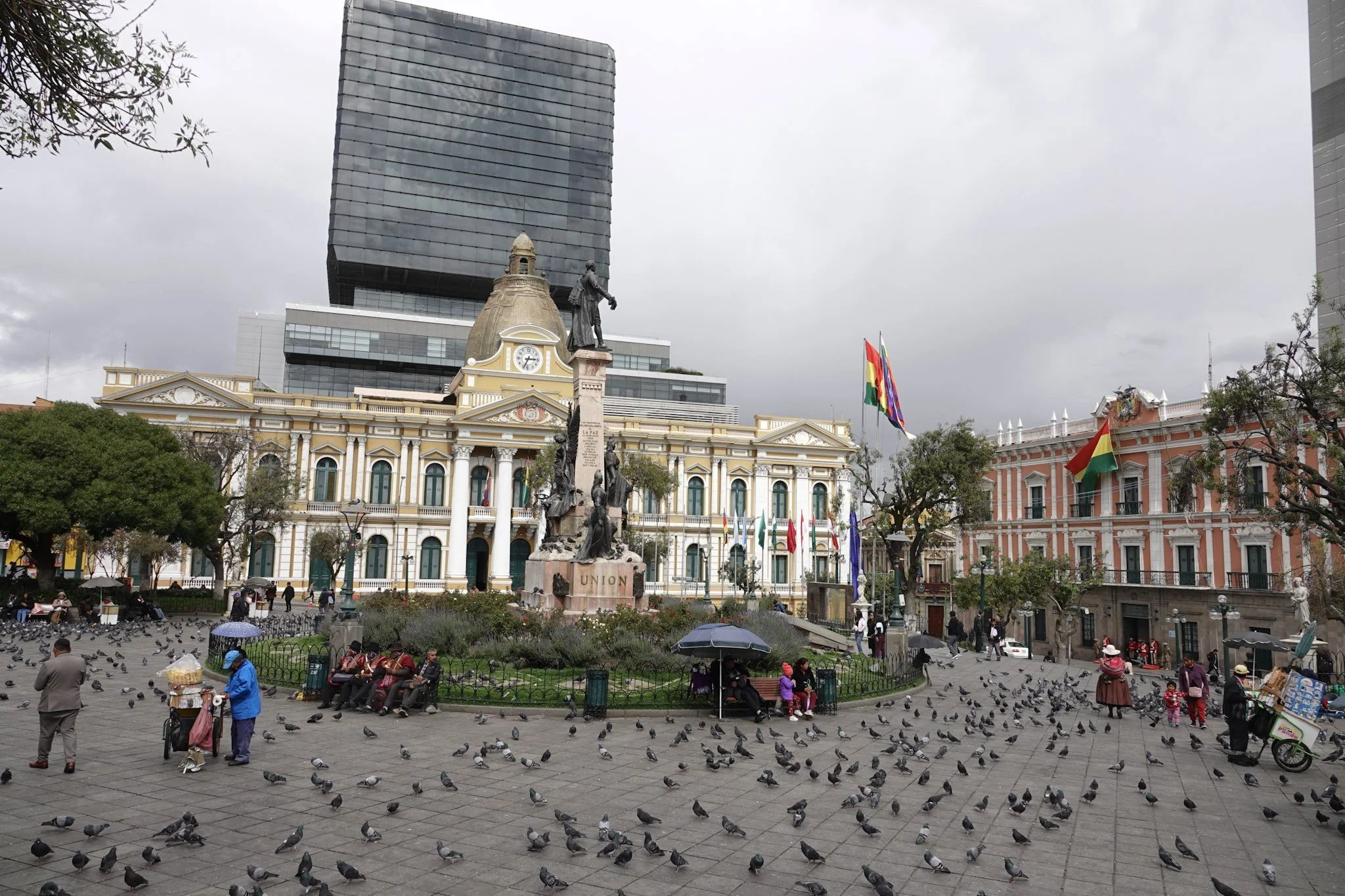
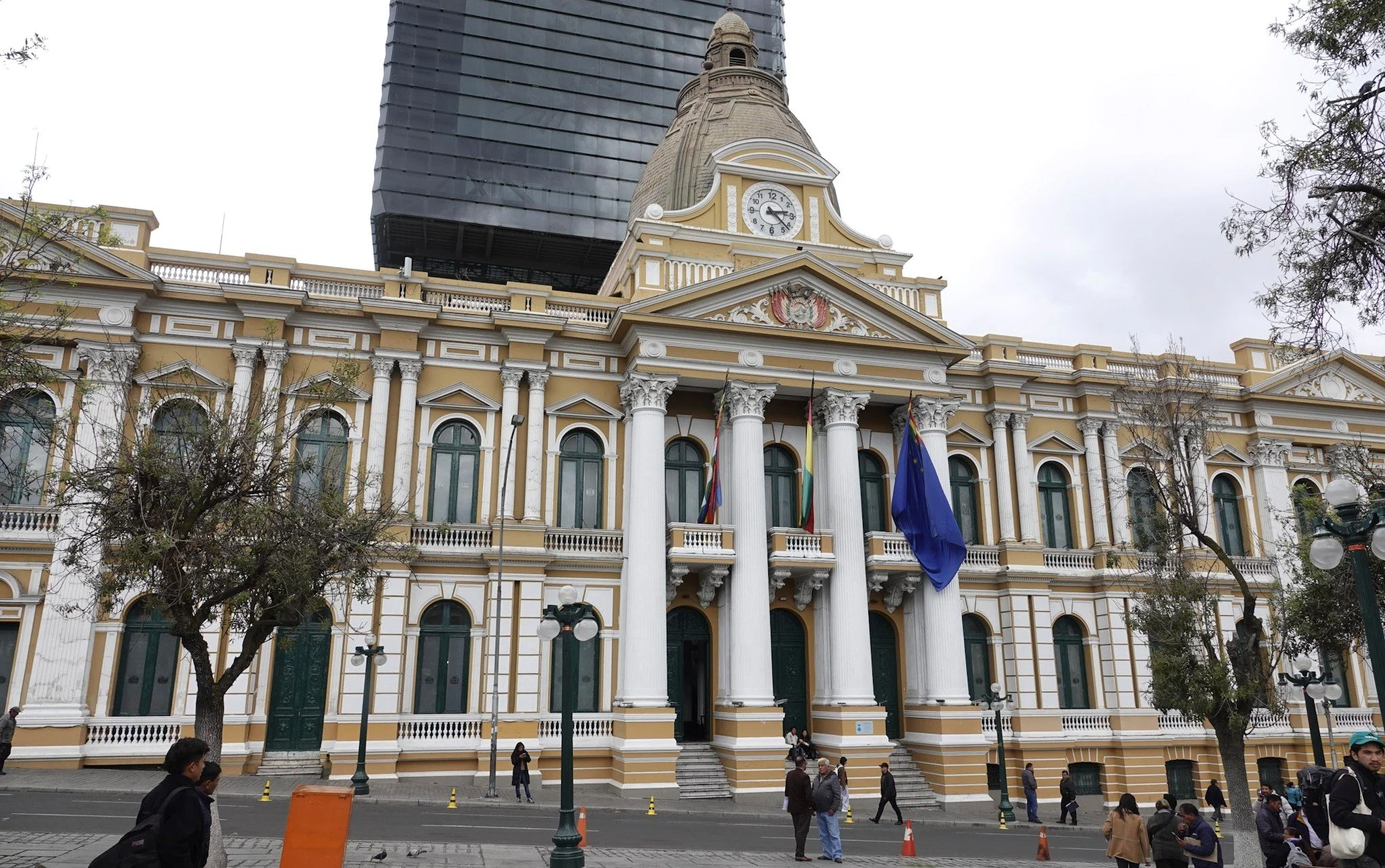
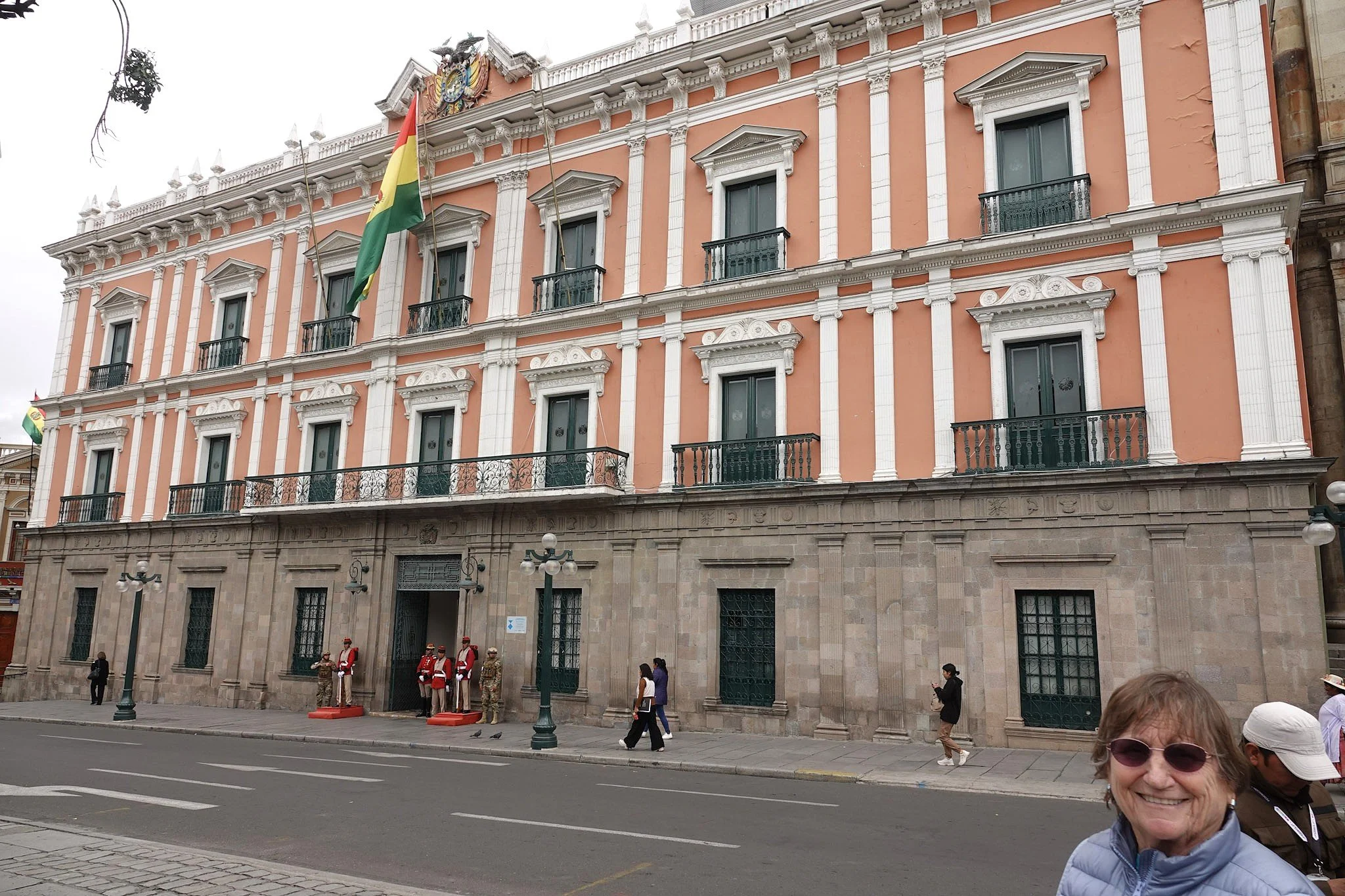
     This is in the Plaza Murillo which is the historic city center of La Paz. The Colonial Era is evident in all the major cities. It has mixed thoughts for the locals. They were conquered, but the invading Europeans left some lasting legacies and made some cultural contributions. I do love the old Colonial buildings. Below is the Presidential Palace, like our White House. 
     We visited Copacabana which is on the shores of Lake Titicaca. The lake is the highest navigable lake in the world, so our altitude challenges continued.
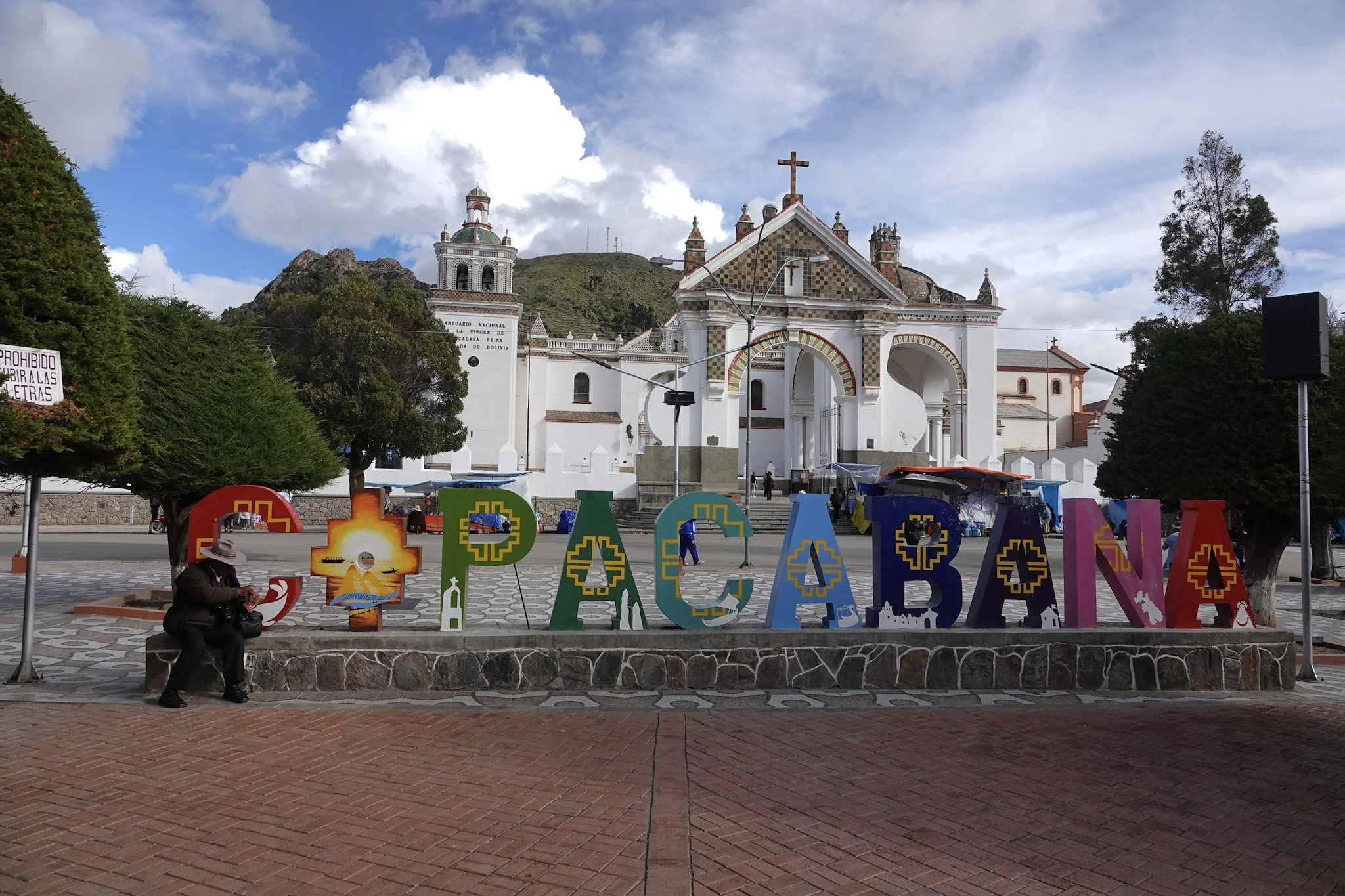
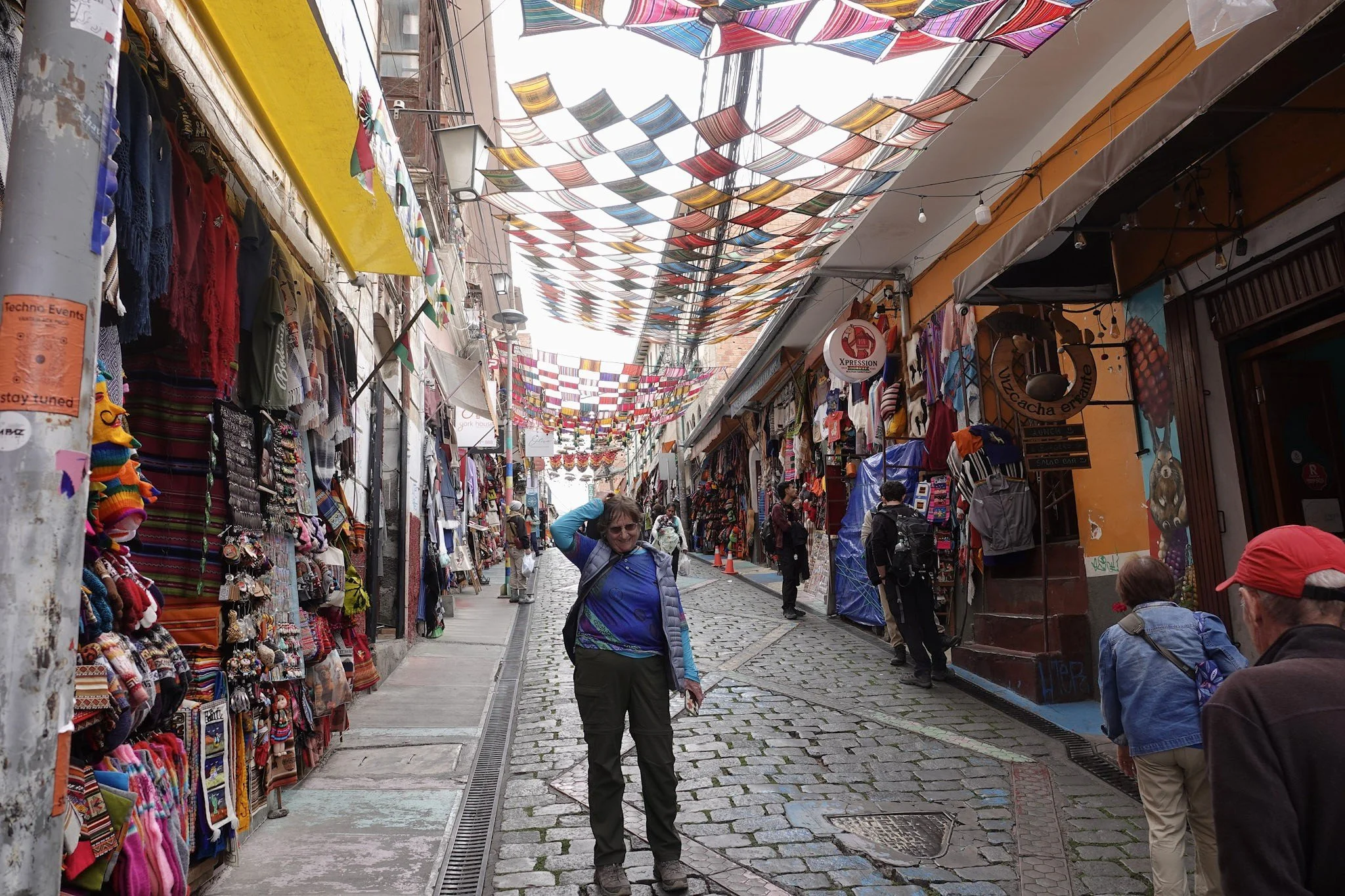
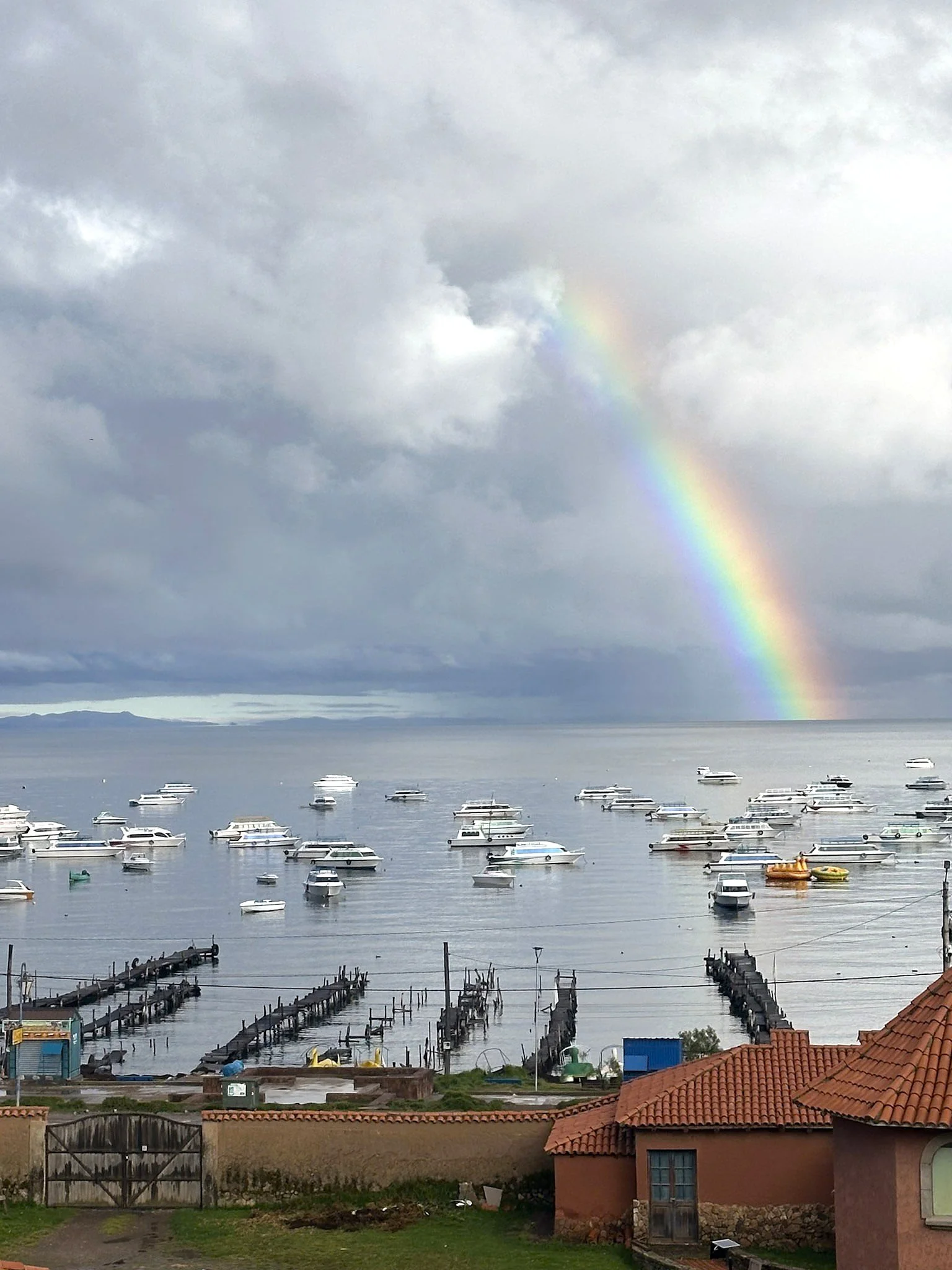
     We really enjoyed our visit to Lake Titicaca. We had rain, sun, clouds, and some great experiences, plus we added in a little color.
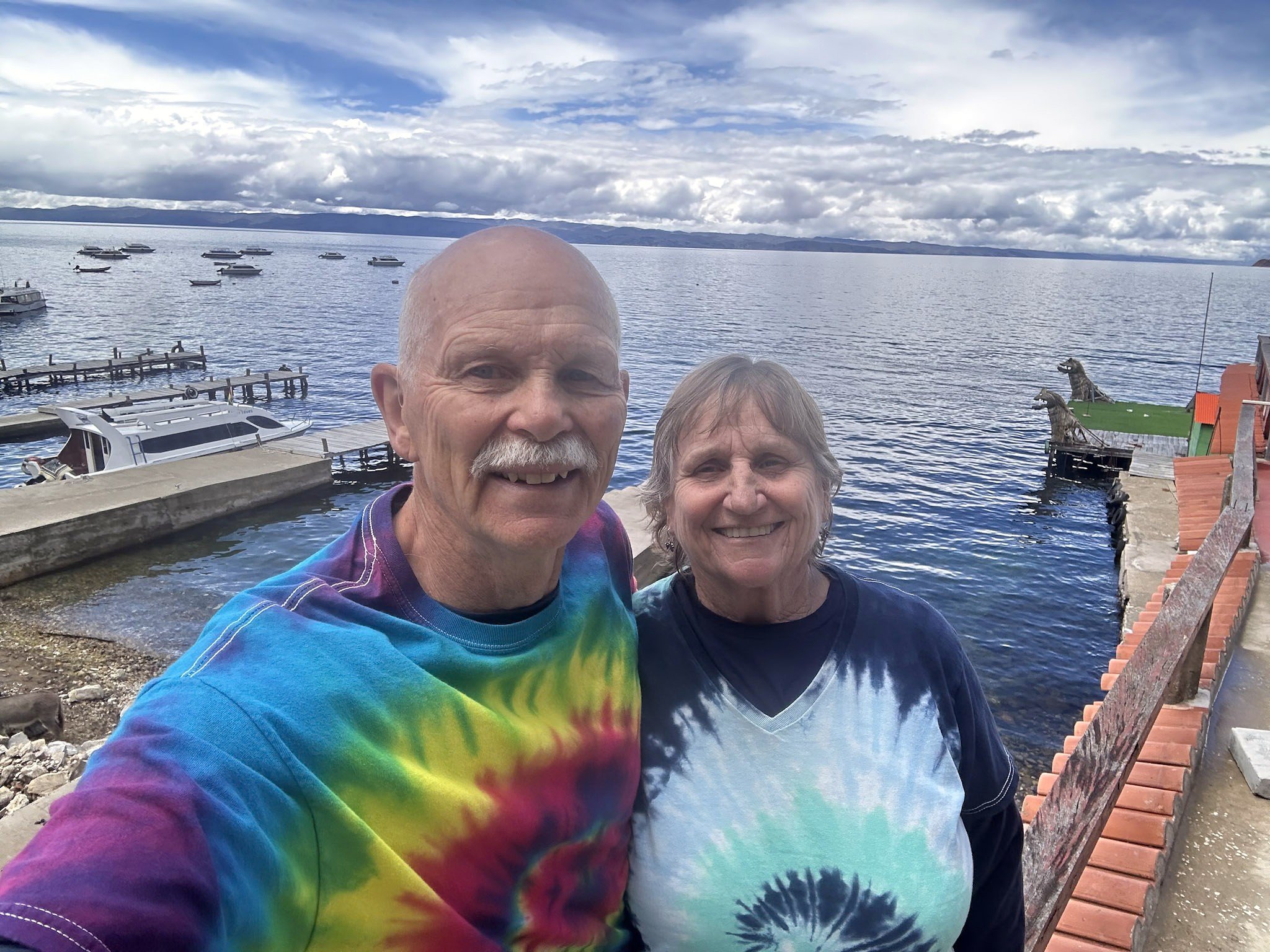
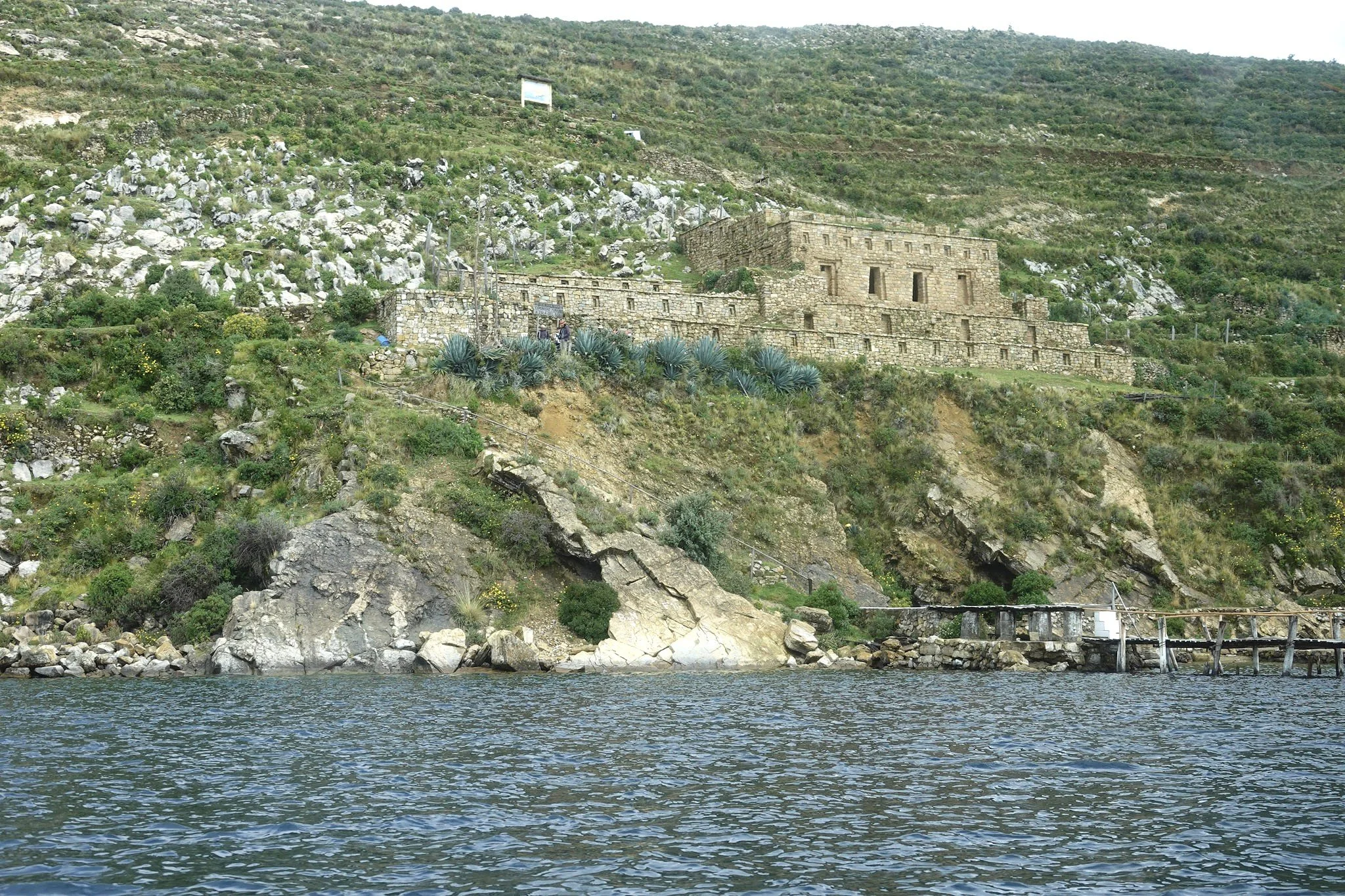
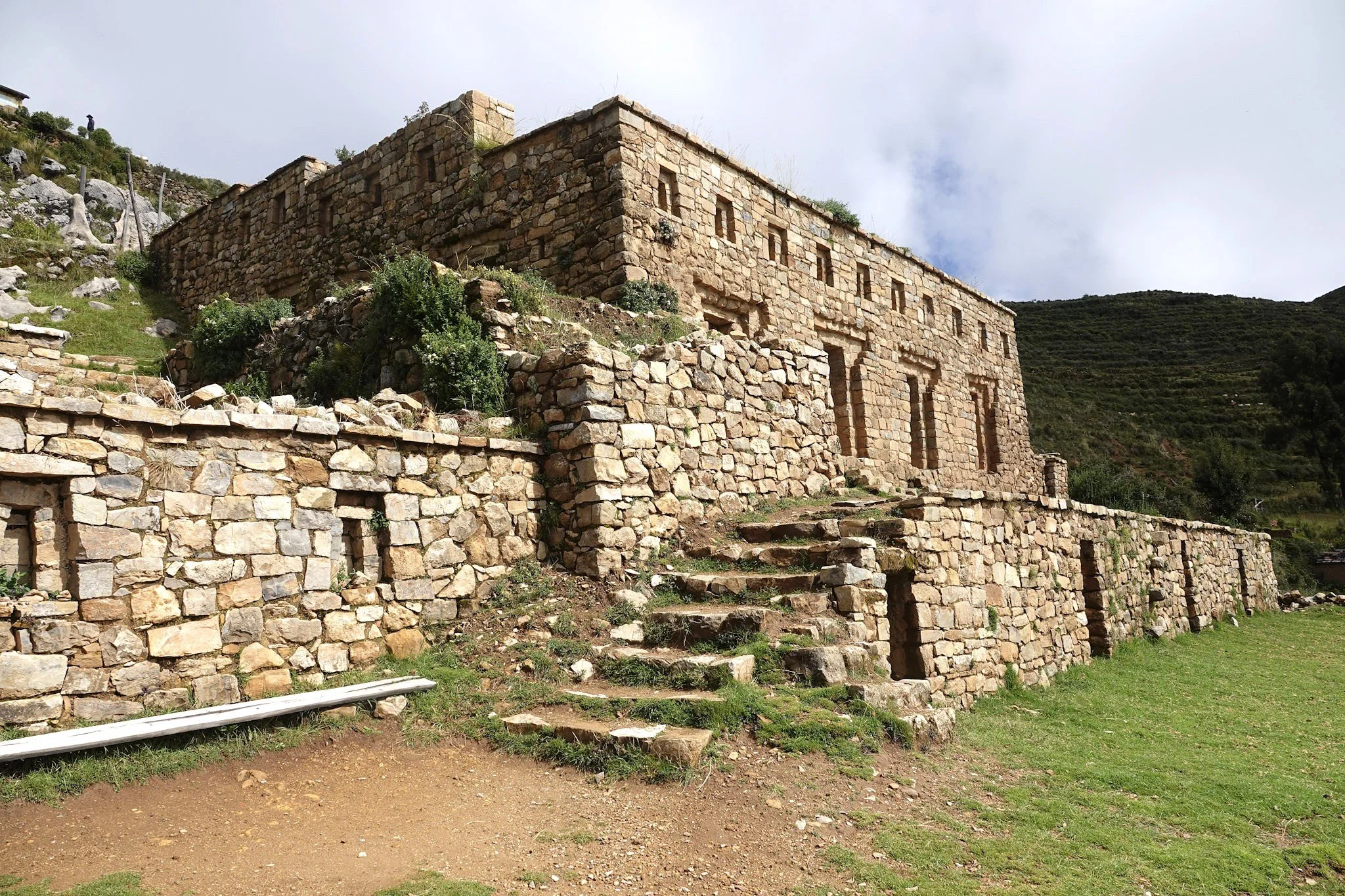
     This is an archeological site on the Island of the Sun, in Lake Titicaca. It was an Inca temple and originally held 173 gold idols and statues. The Spanish stole them all and sent the gold to the King of Spain.
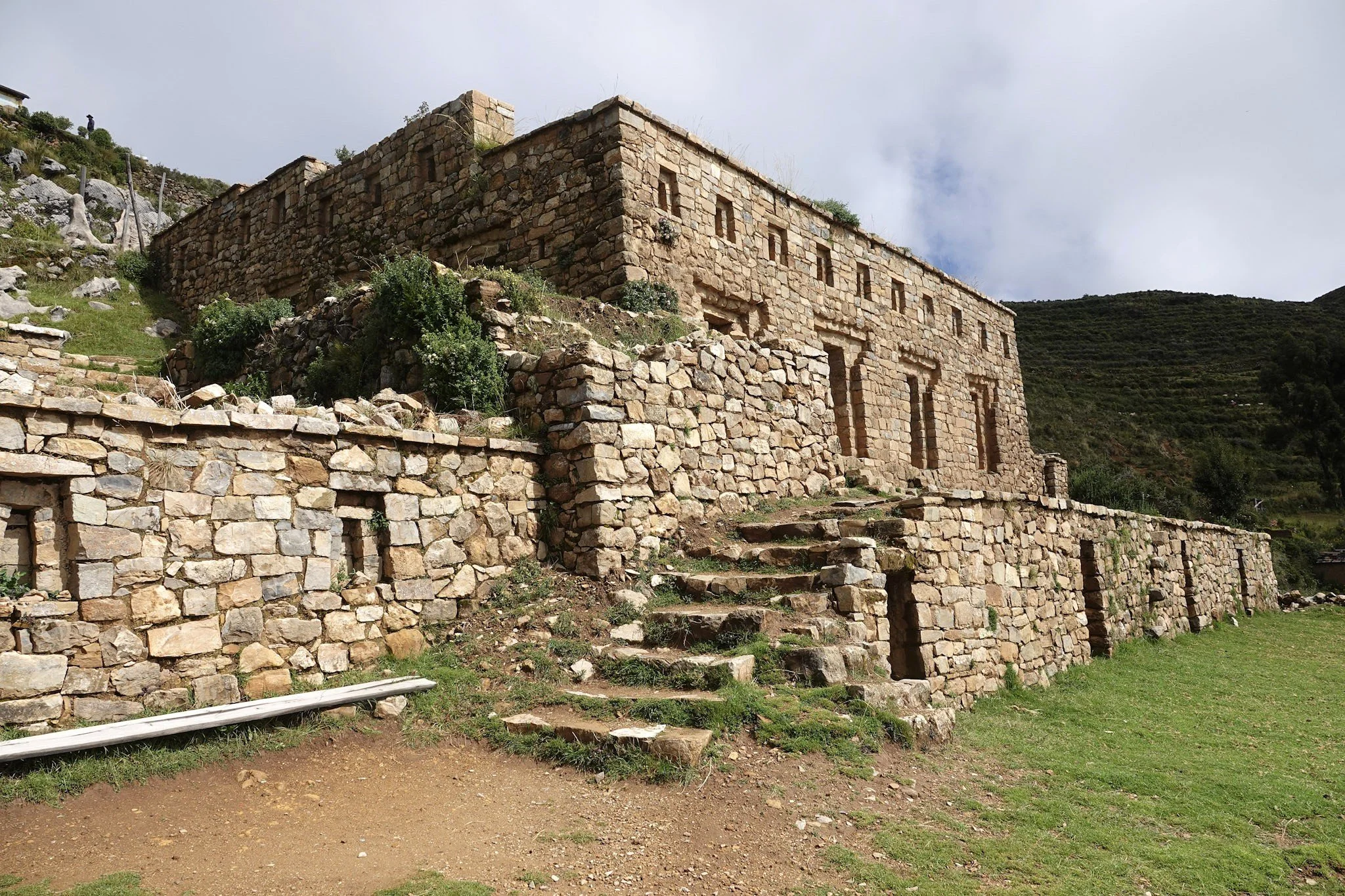
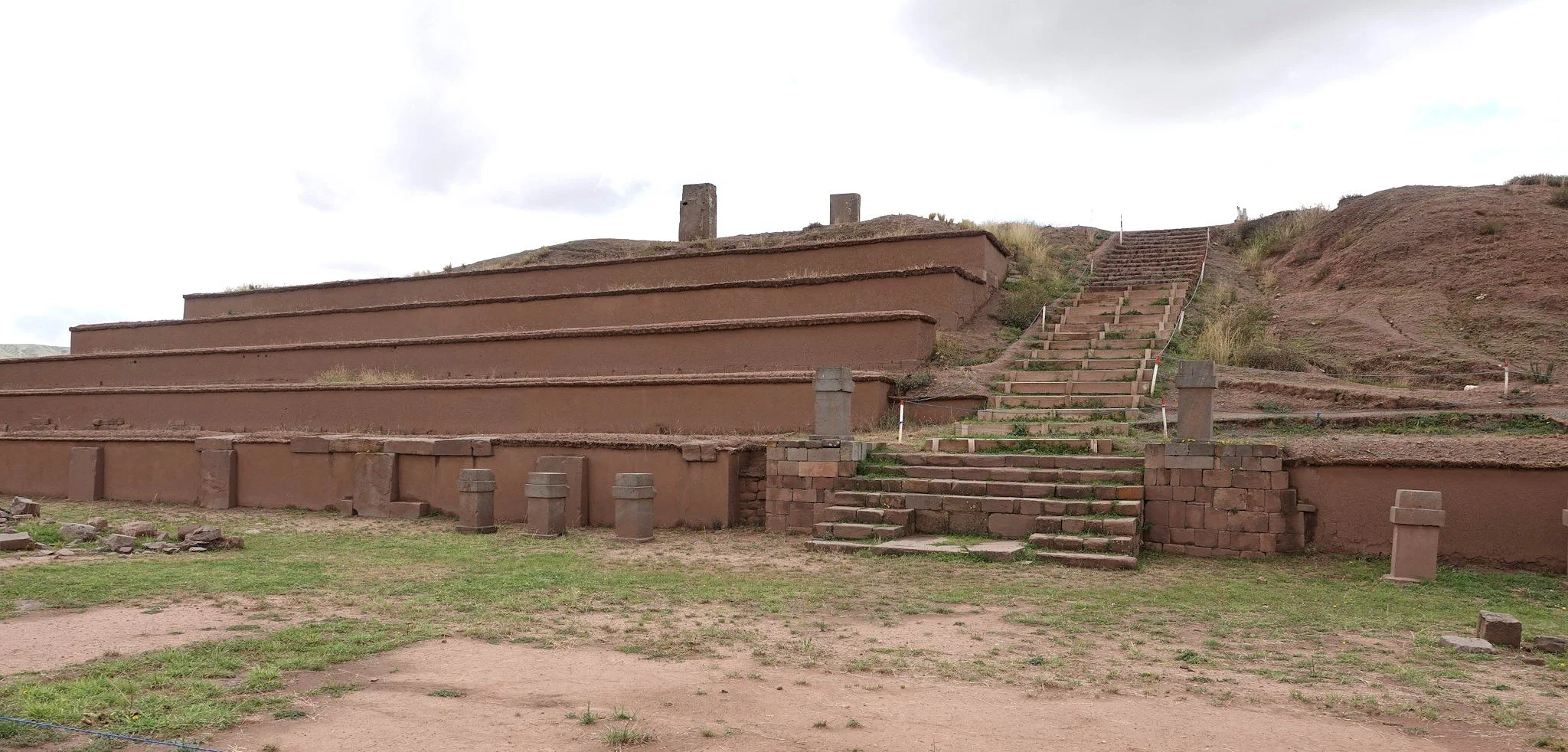
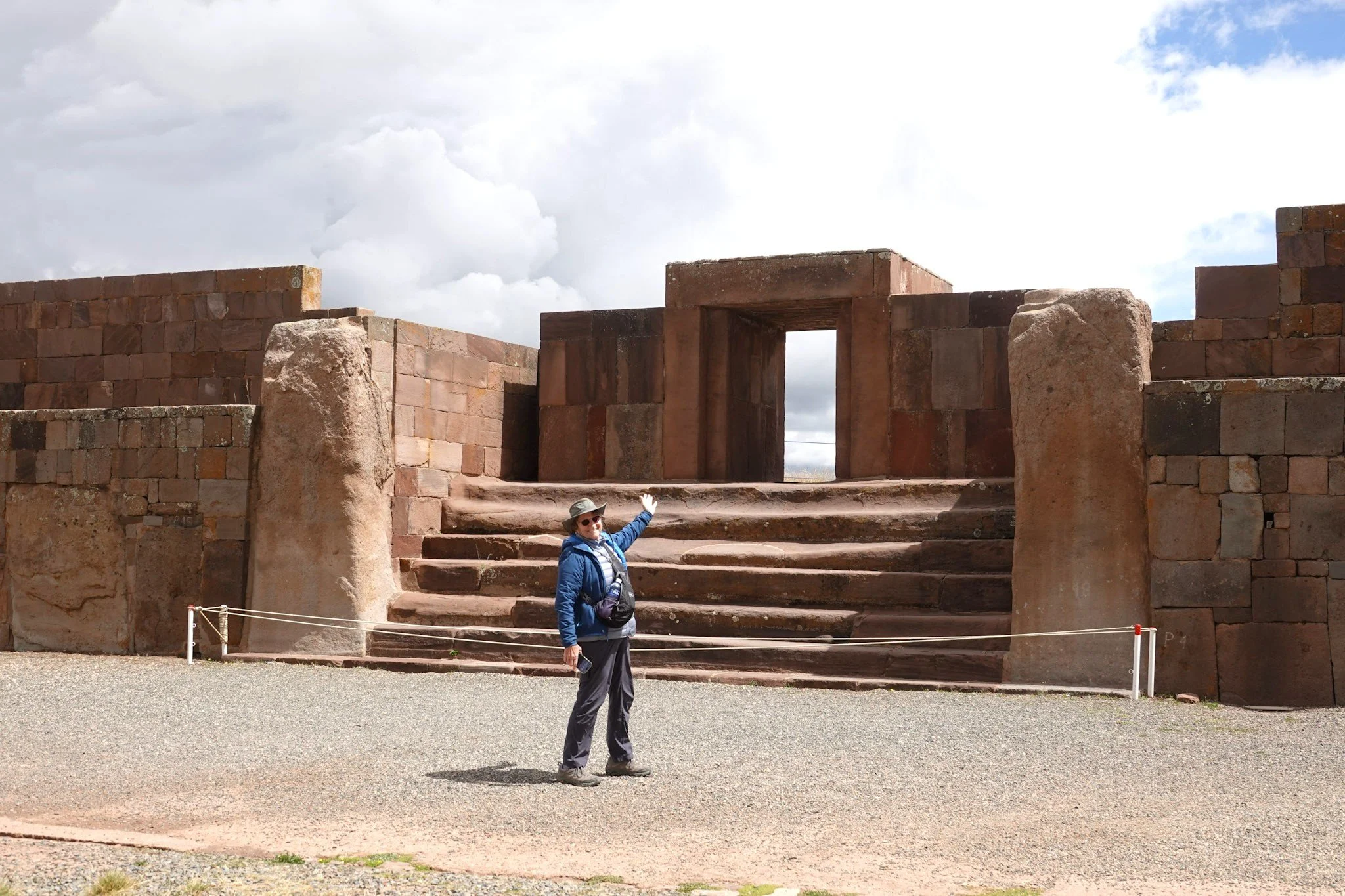
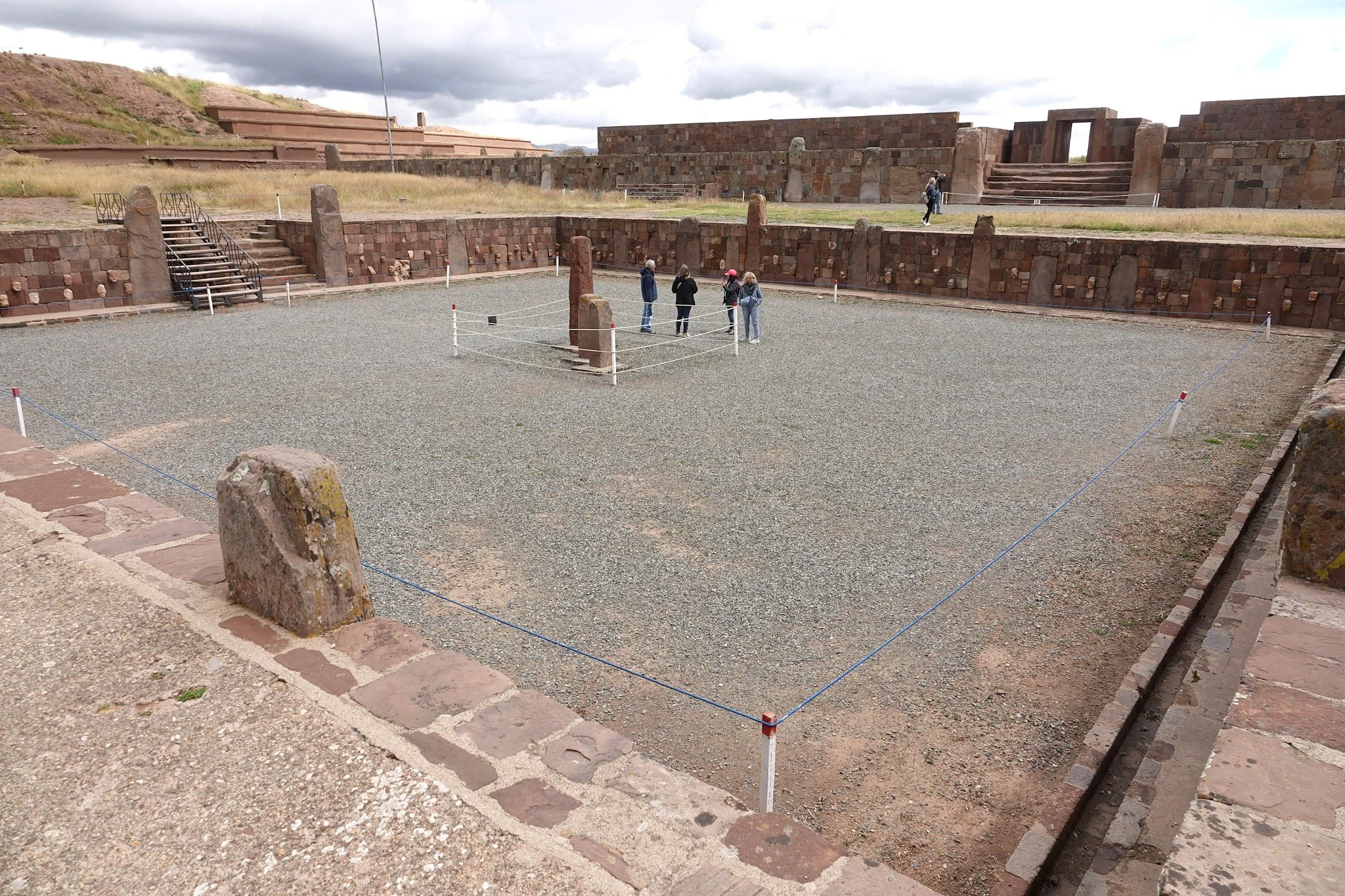
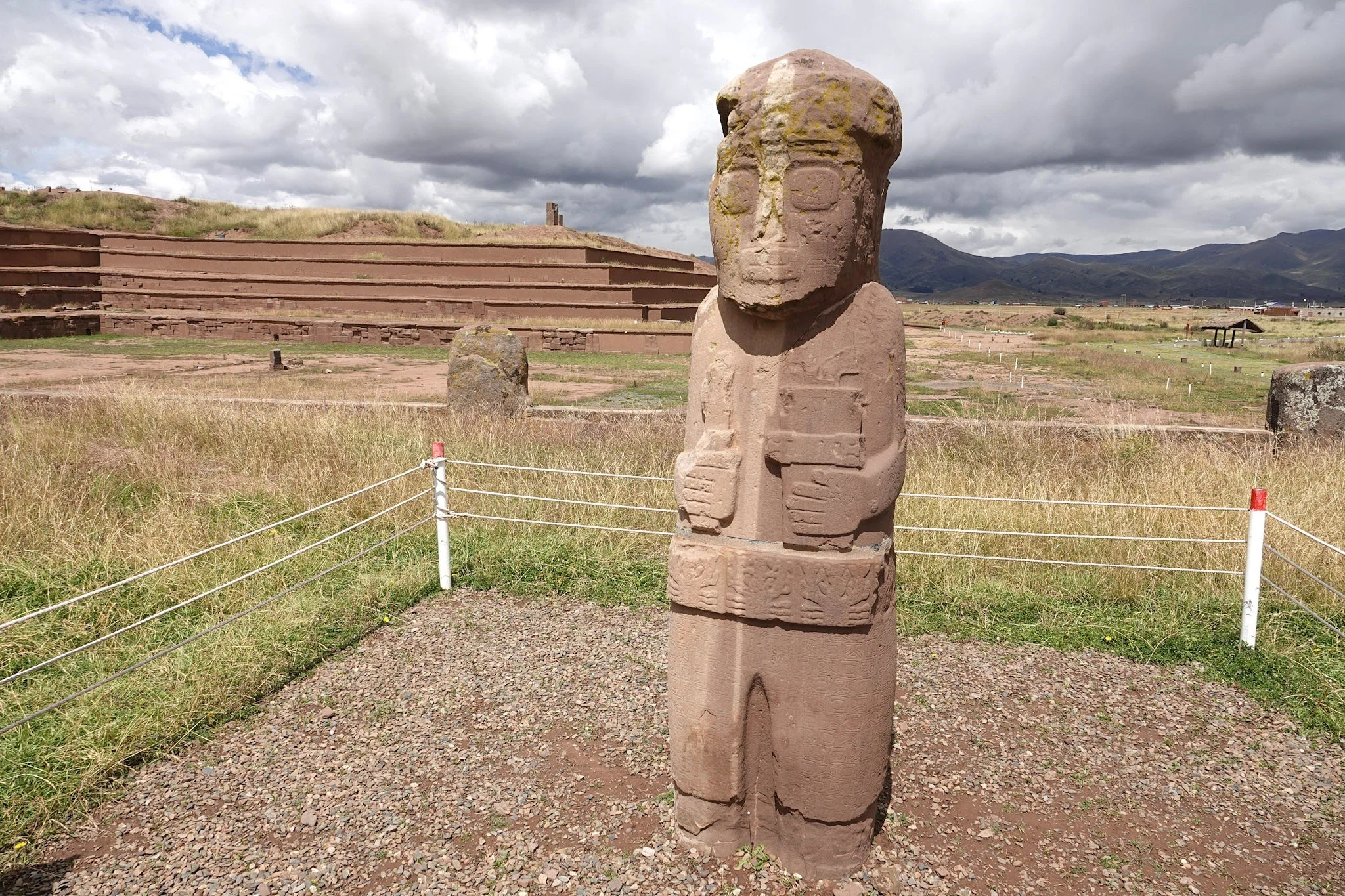
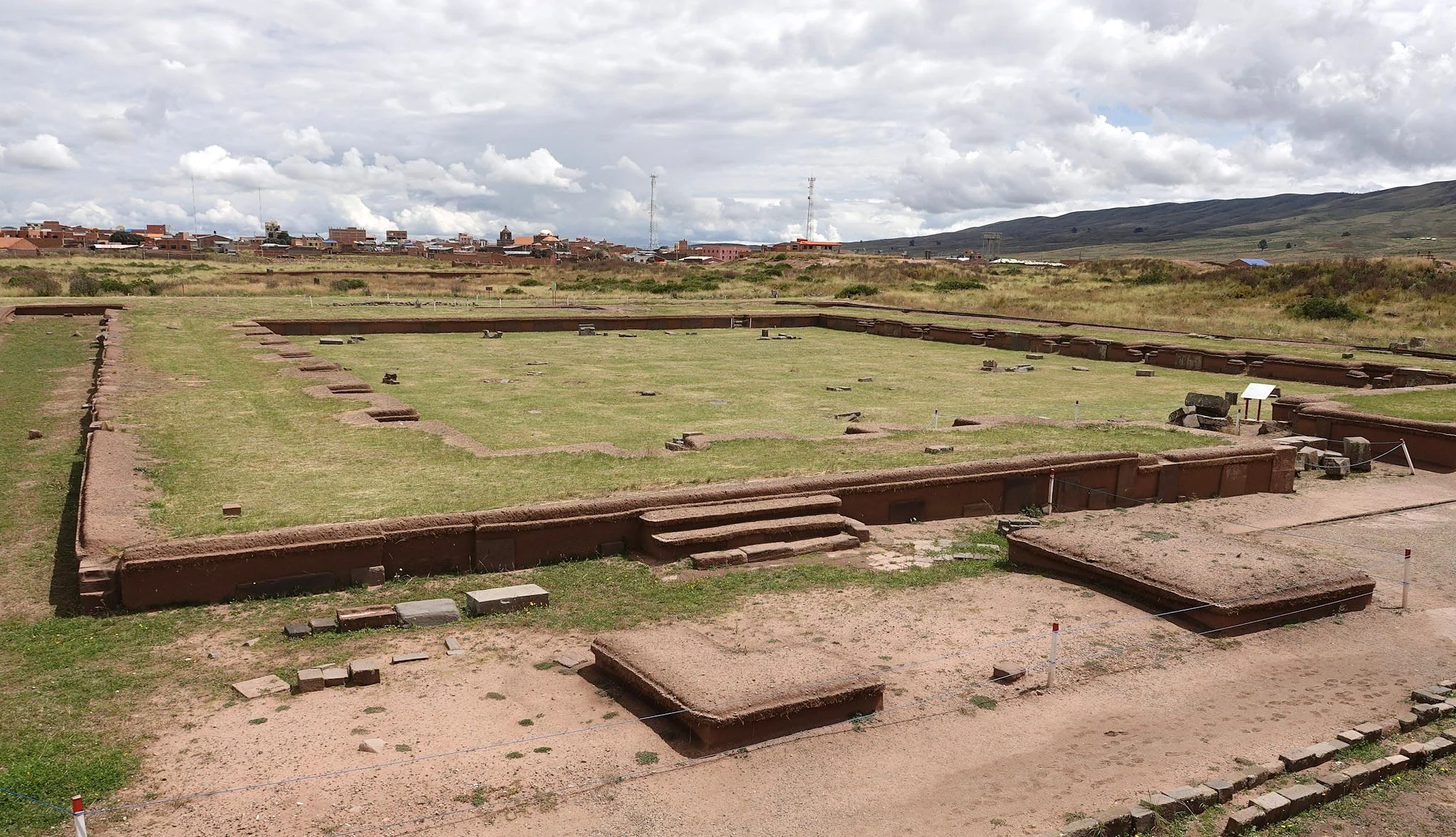
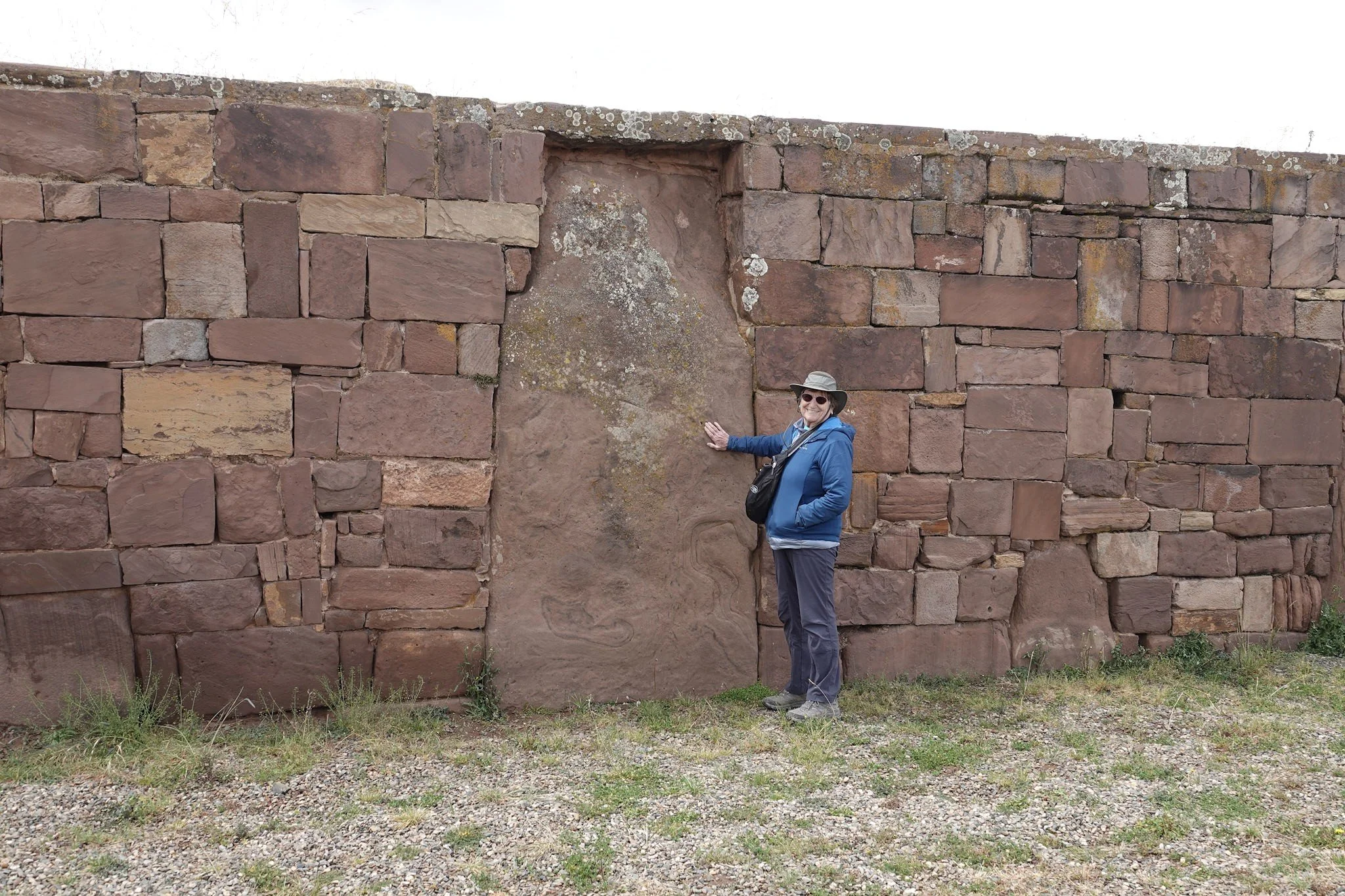
     Below is another archeological site at Tiwanaku. This site was a thousand years older than Machu Picchu and way before Incan times. I could not help but wonder if this culture did not have some influence on the Incas...due to the walls that they built. 
      So if you would like to join us for our trip to Bolivia, keep on reading….


La Paz

     We started our Bolivian tour in La Paz. It is the seat of the government of Bolivia and the highest national capital in the world. It's also one of the largest cities in Bolivia with over two million people in the metropolitan area. La Paz in in the valleys of the Andes Mountains and peculiar in that it's a mountainous town but it's also a very large city. La Paz looks like a bowl-like depression in the mountains with higher mountains surrounding it, some of them snow-covered.
     La Paz was founded as a city in 1548 by a Spanish conquistador. It was on the site of an Inca village. They named it Nuestra Senora de La Paz or Our lady of Peace. I find that interesting that an invader named it that. 

     I found the elevation of La Paz to be the most interesting fact. The elevation of La Paz goes from 10,650 feet elevation to 13,250 feet elevation. So, you might know another person who lives in your town, La Paz, that lives at an elevation of 2,600 feet above or below you. Fascinating.

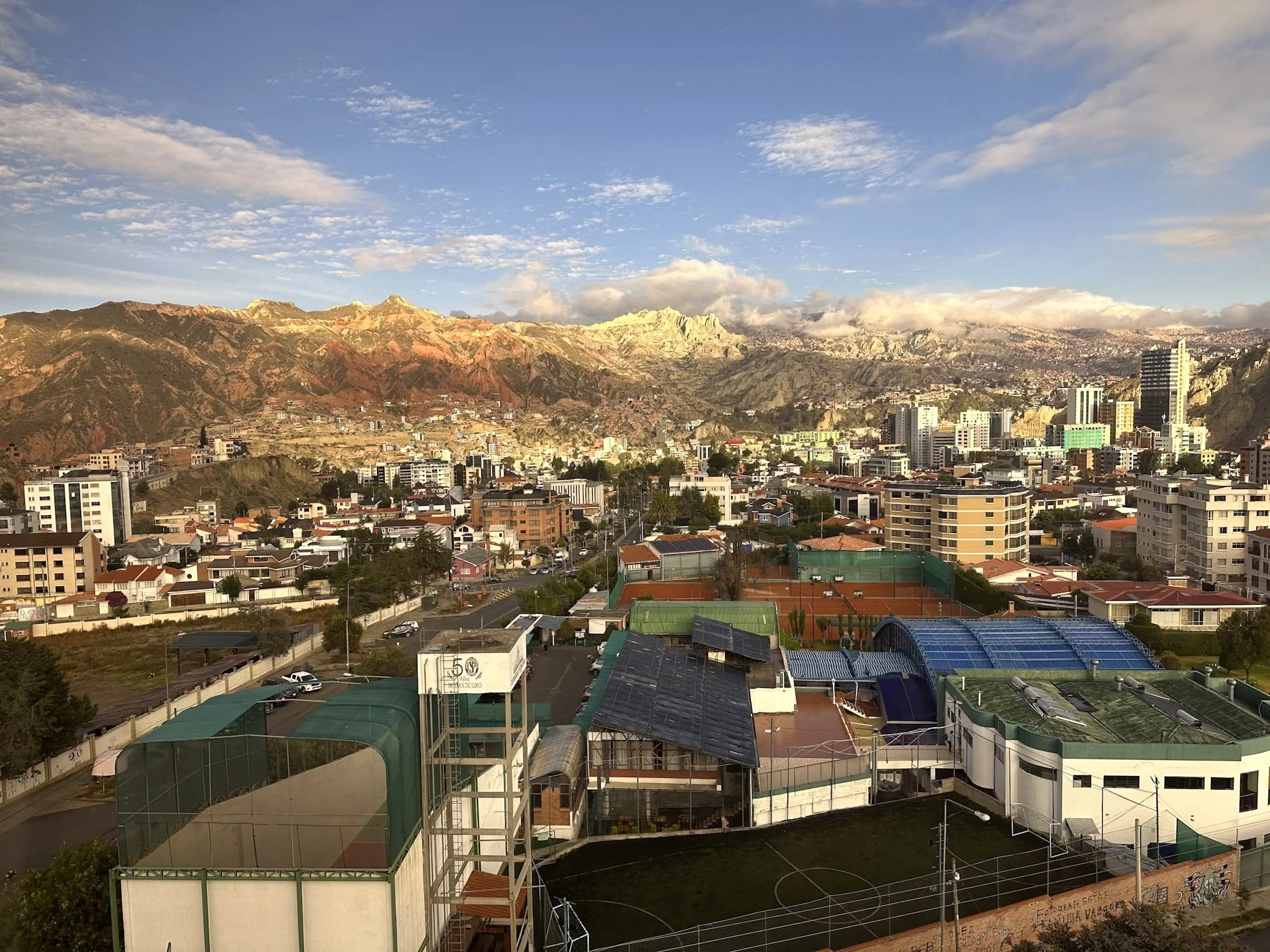
     The lower end of La Paz is flatter and more affluent. We stayed at the lower end, due to the elevation, but we were still at 10,850 feet and also on the eighth floor of our hotel. But since we landed at the El Alto Airport, at 13,323 feet elevation, our hotel was much better. You can see our hotel room view below.

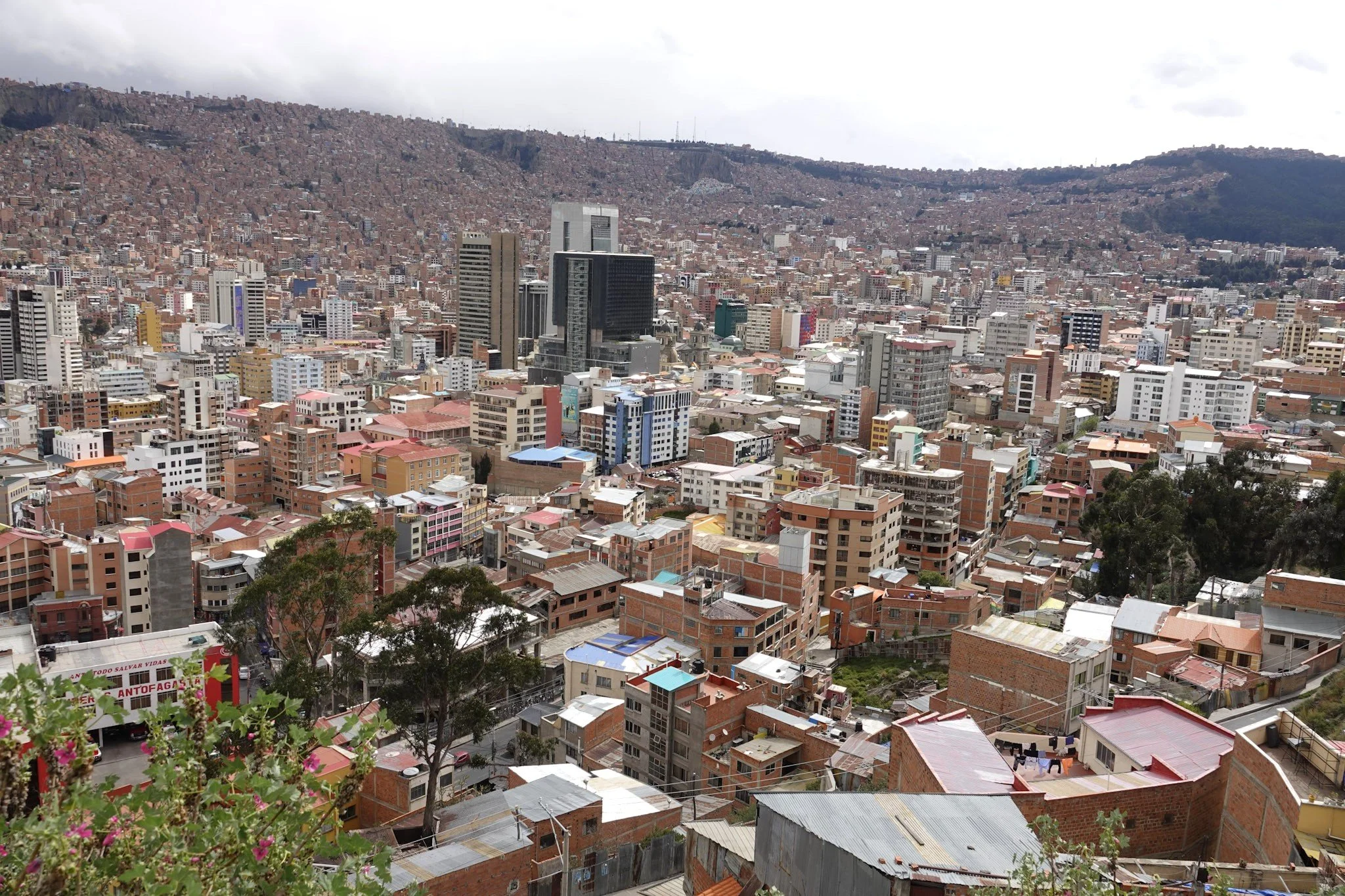
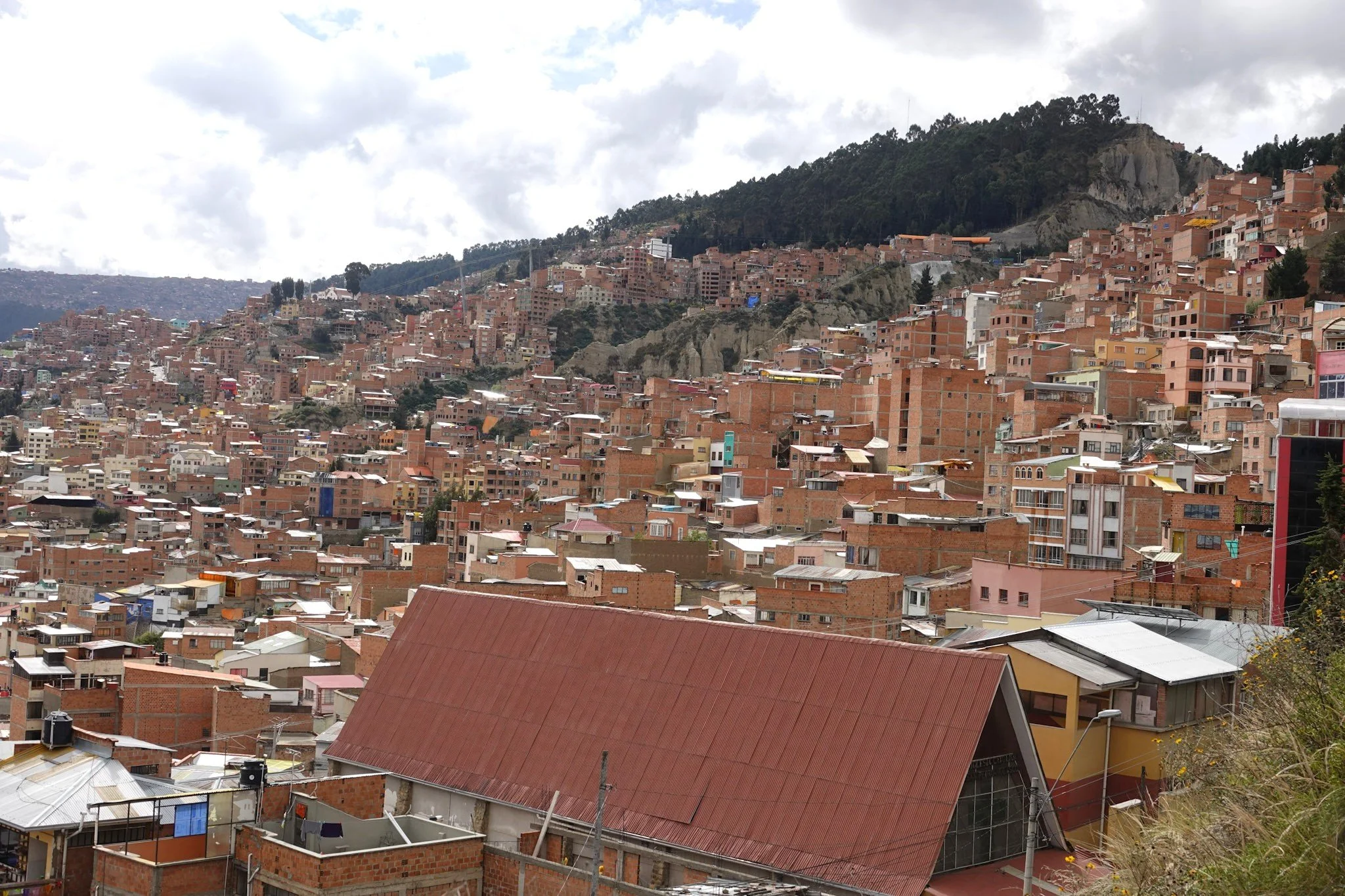
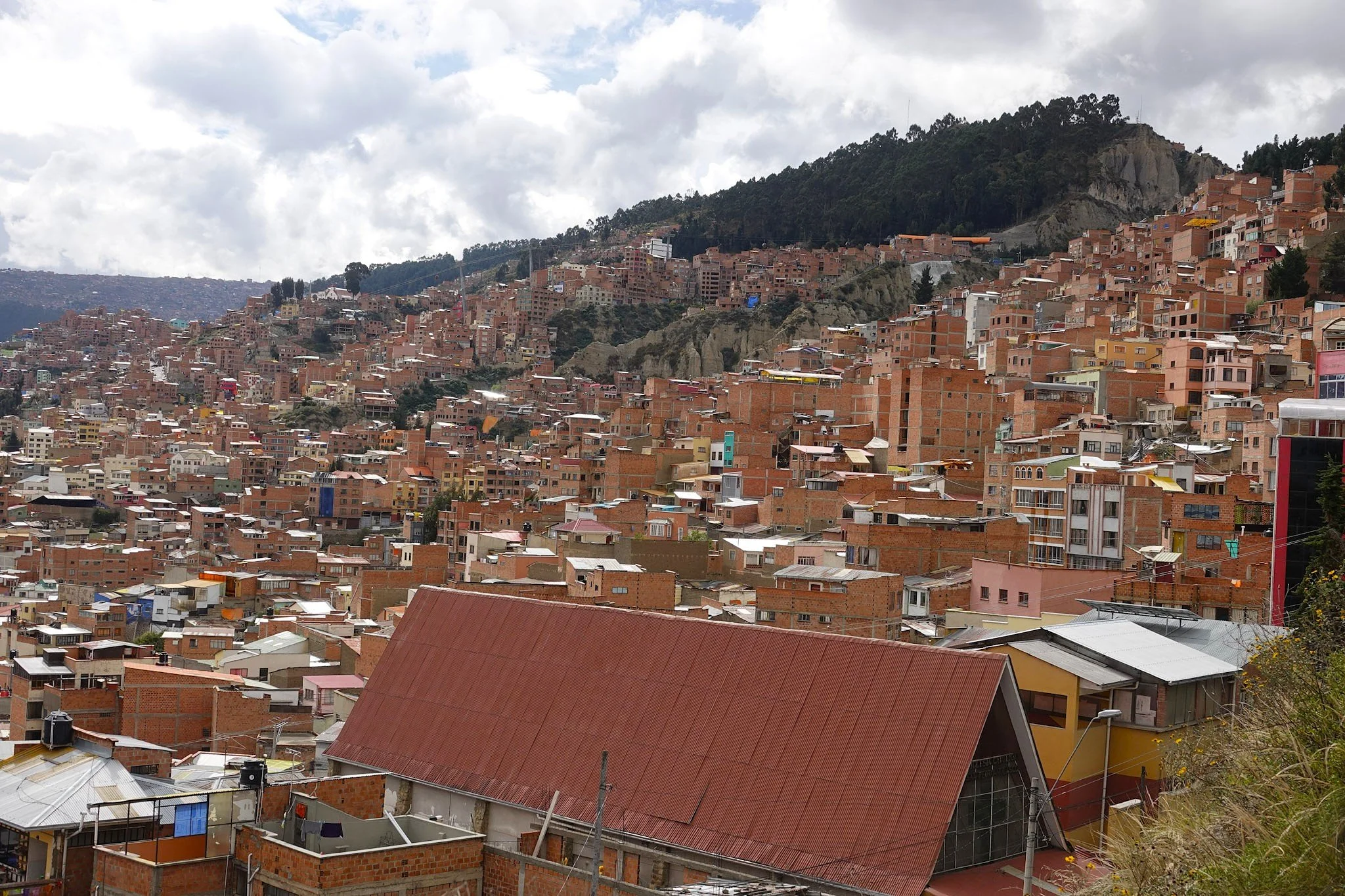
     During our stay in La Paz, we drove and hiked up to the Killi Killi viewpoint. Our guide suggested that it was somewhat of a secret viewpoint. It was a really great one and we had a 360-degree view from up there. We spent quite a while and took lots of photos. I'll only include three photos but they give you a good idea of what La Paz is all about as a city.

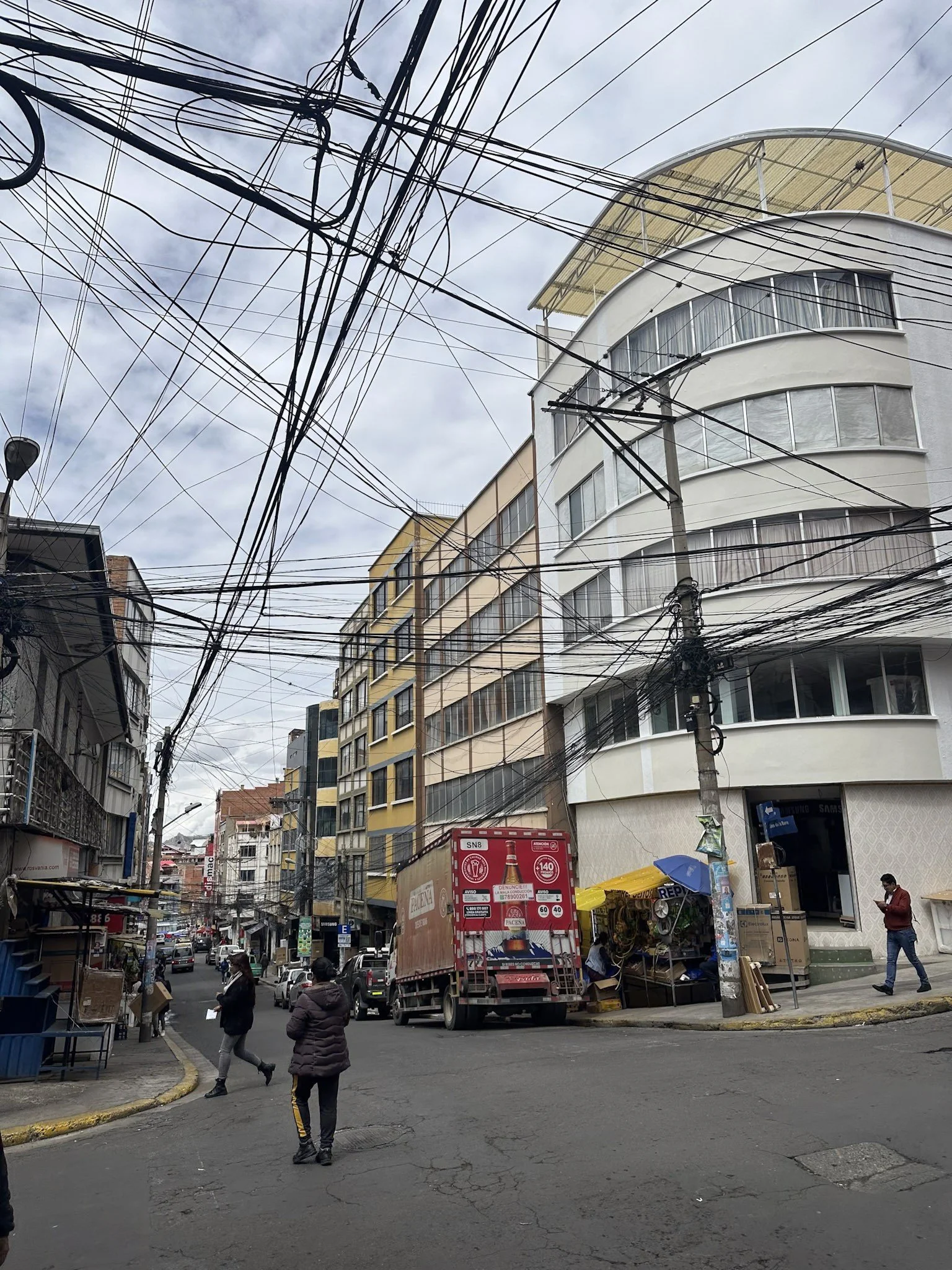
     I loved the view from Killi Killi and the town looked so uniform and neat from up there. I'll include the next photo just to make sure you know that, at the ground level, it's also interesting but quite different, though well connected.

     Plaza Murillo is the main plaza of La Paz. It's also the seat of the Bolivian legislature and numerous governmental departments and agencies. Here you can see the Bolivian Palace of Government, also known as the "Burnt Palace", due to past fires. The government had dictated that no new buildings could or would be built around or near this building, but as our Bolivian guide told us, money has a way of getting things done.


Valley of the Moon

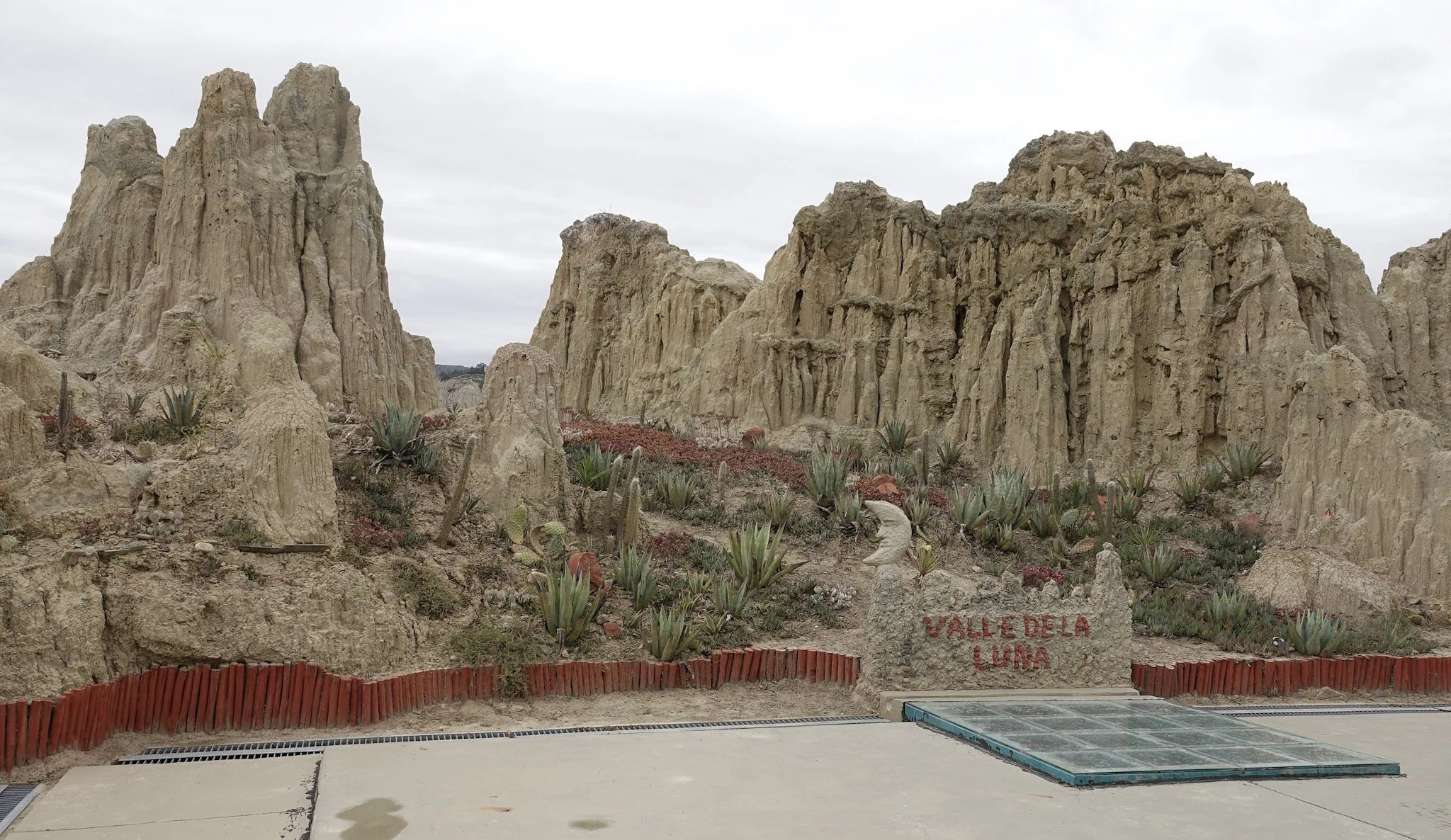
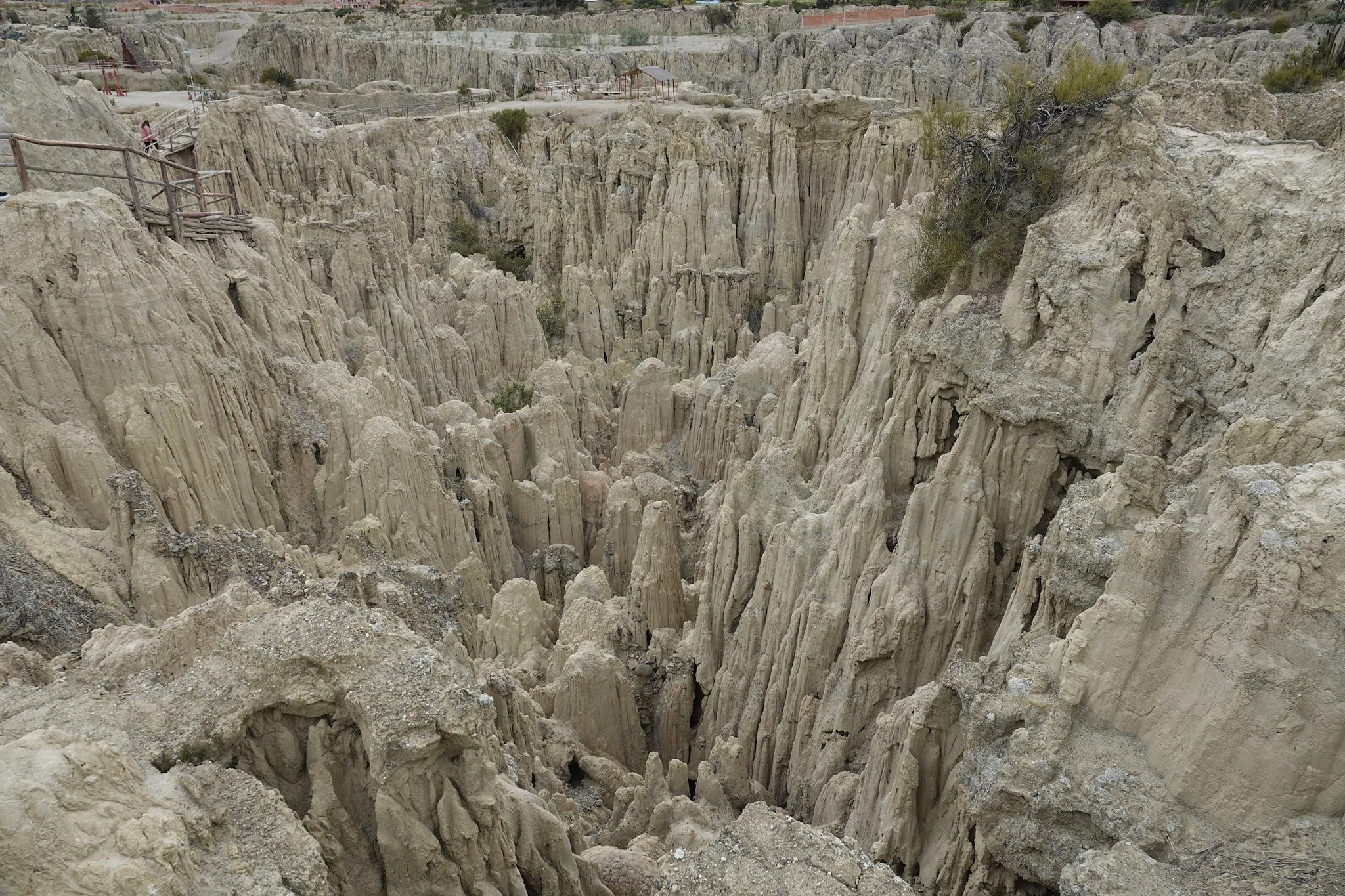
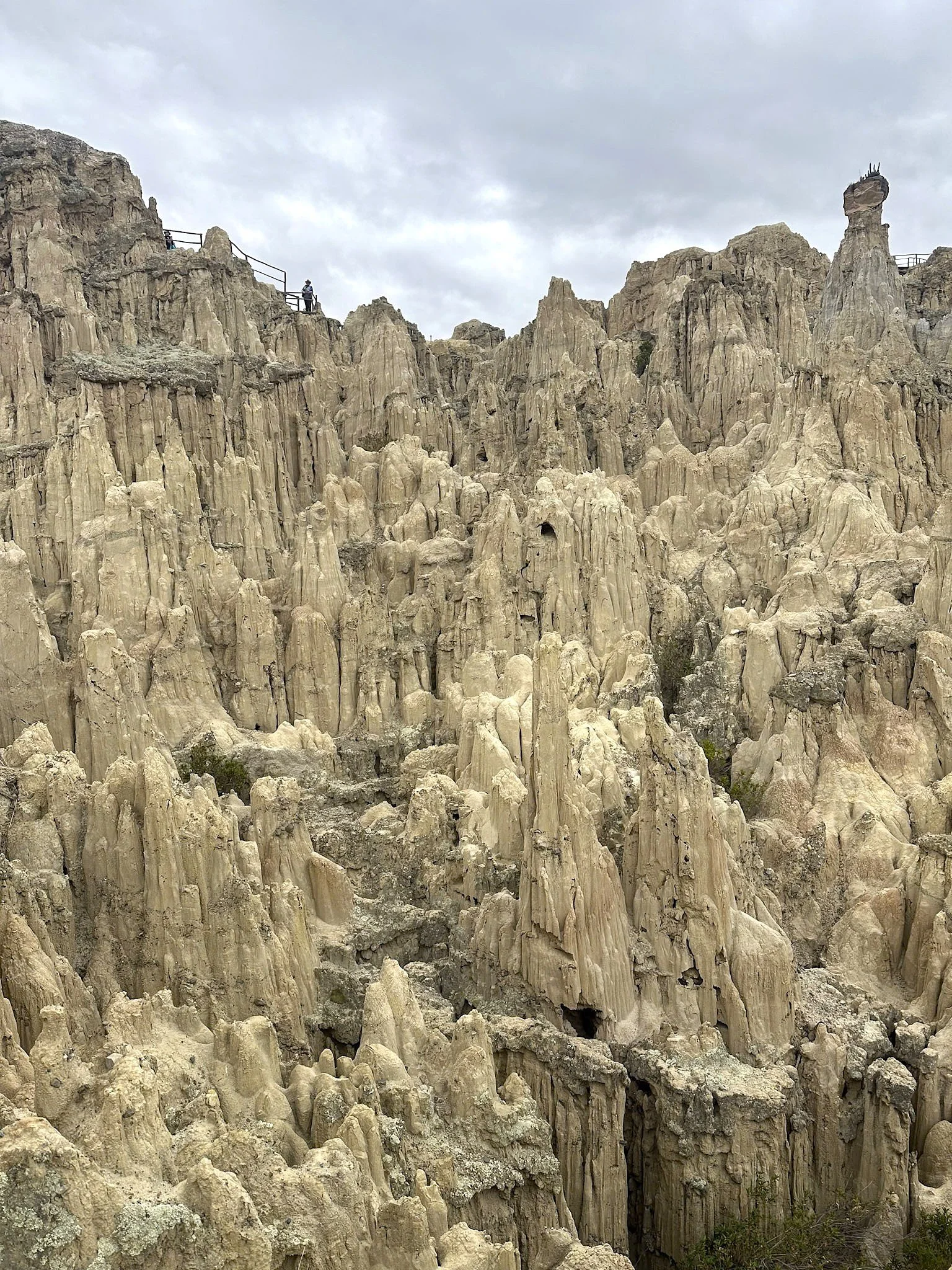
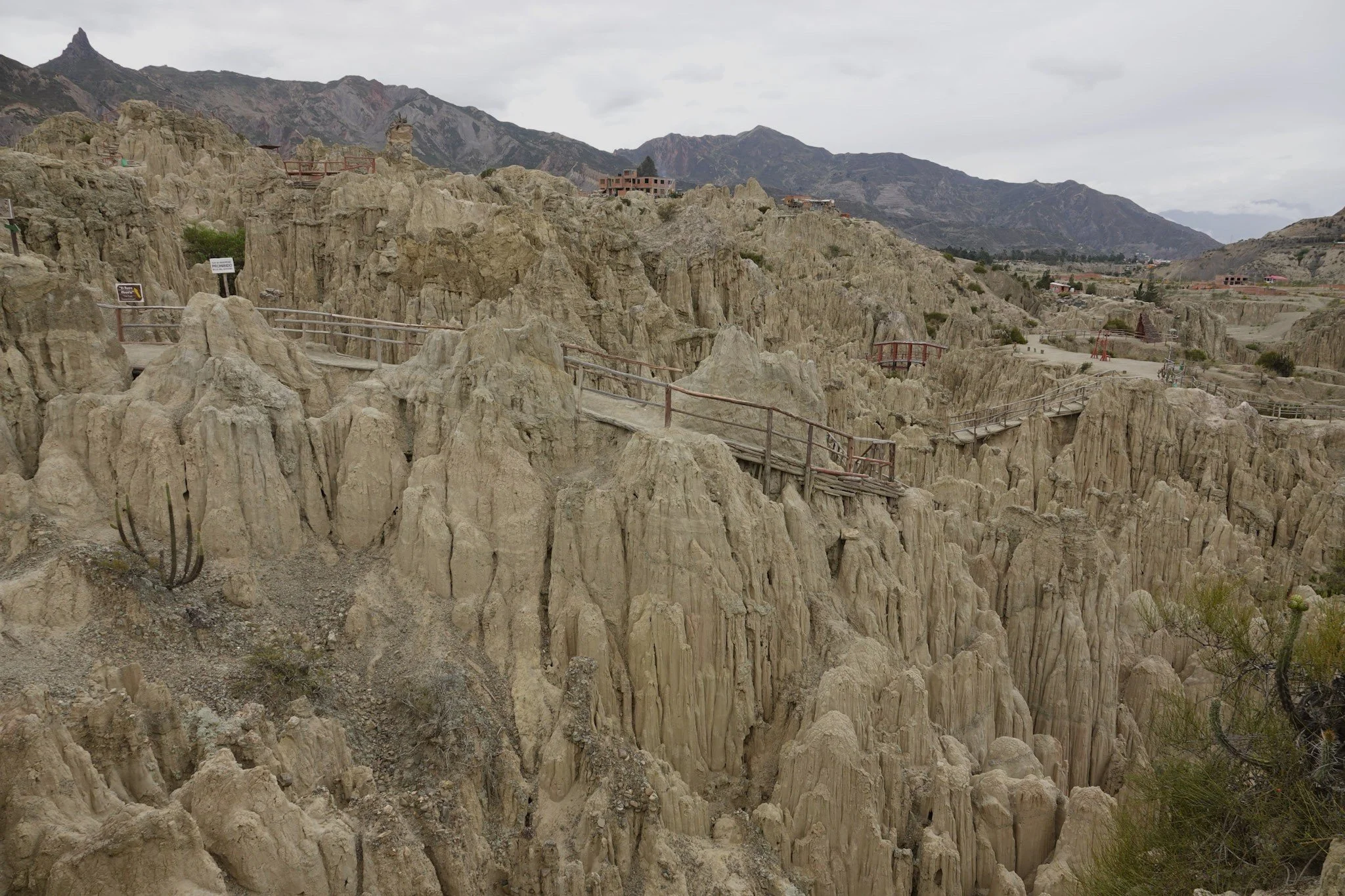
     One of our first visits in La Paz was to the Valley of the Moon. It's a protected municipal area of about 37 acres of land. The soil is primarily composed of clay and sandstone rather than rock. Erosion is constant here. The results of erosion include craters, spires, caves, ditches, arches and white chimneys. It is mostly a beige or light brown color but there are some reds and violets as well.

     The Valley of the Moon name was given to it by Neil Armstrong because the landscape reminded him of the moon. Neil visited here shortly after his trip to the moon in 1969. He was received as a guest of honor by local authorities.

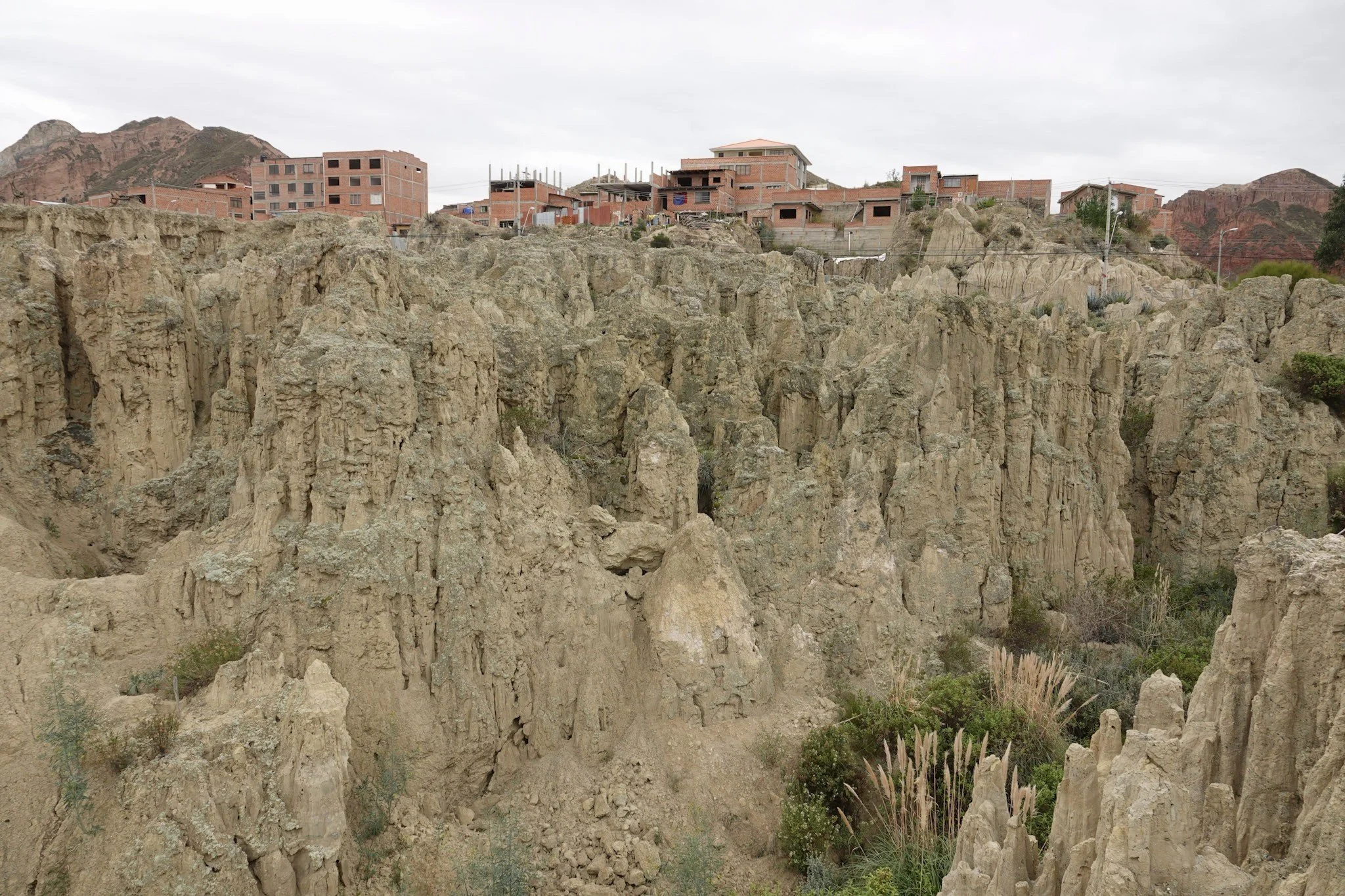
     The sad part to me was that our guide told us that the current preserve is only 10 - 15 percent of its original size. Before it was made a reserve, people claimed the land and built houses on it, using the clay to make their bricks. Our guide said that was typical of expansion of housing in Bolivia. People with very little money just moved farther out to the fringes of towns and cities and built there on cheap land.

     Below is the entrance area to the Valley of the Moon reserve. The next two photos will give an idea of the landscape of the reserve.

     We were given a choice at a junction point. We could choose a 20-minute hike or a one-hour hike. Vicky chose the shorter hike, and I chose the longer one. I took this photo of Vicky standing near the upper rim of the valley. The elevation was from around 10,500 to almost 12,000, so lots of ups and downs.

     The next photo is just to give another view of the valley and reserve.

     I took the next photo to show the houses that have encroached on the reserve, before it was a park. They are made of bricks from the clay in the park.

Costumes Market

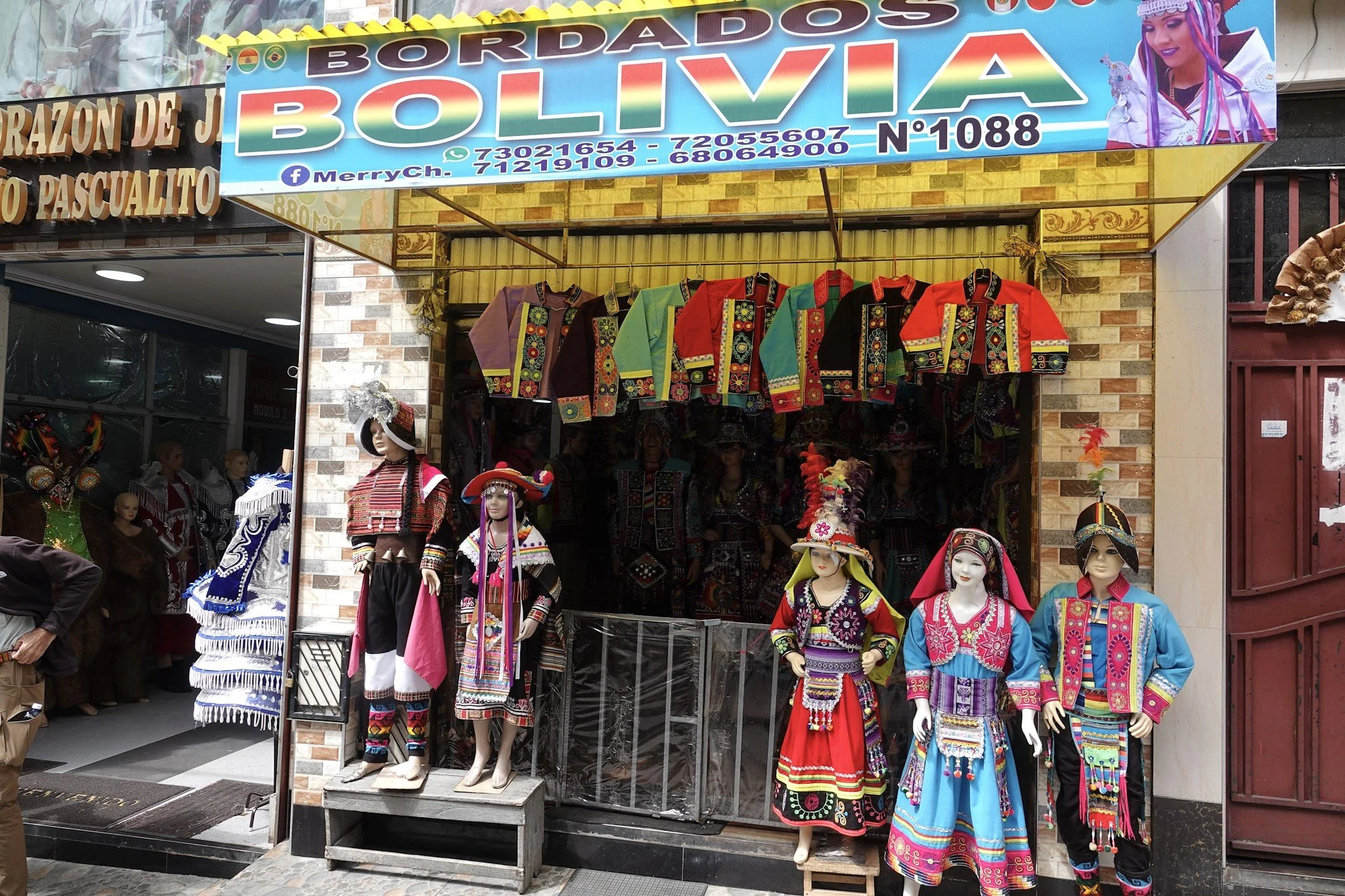
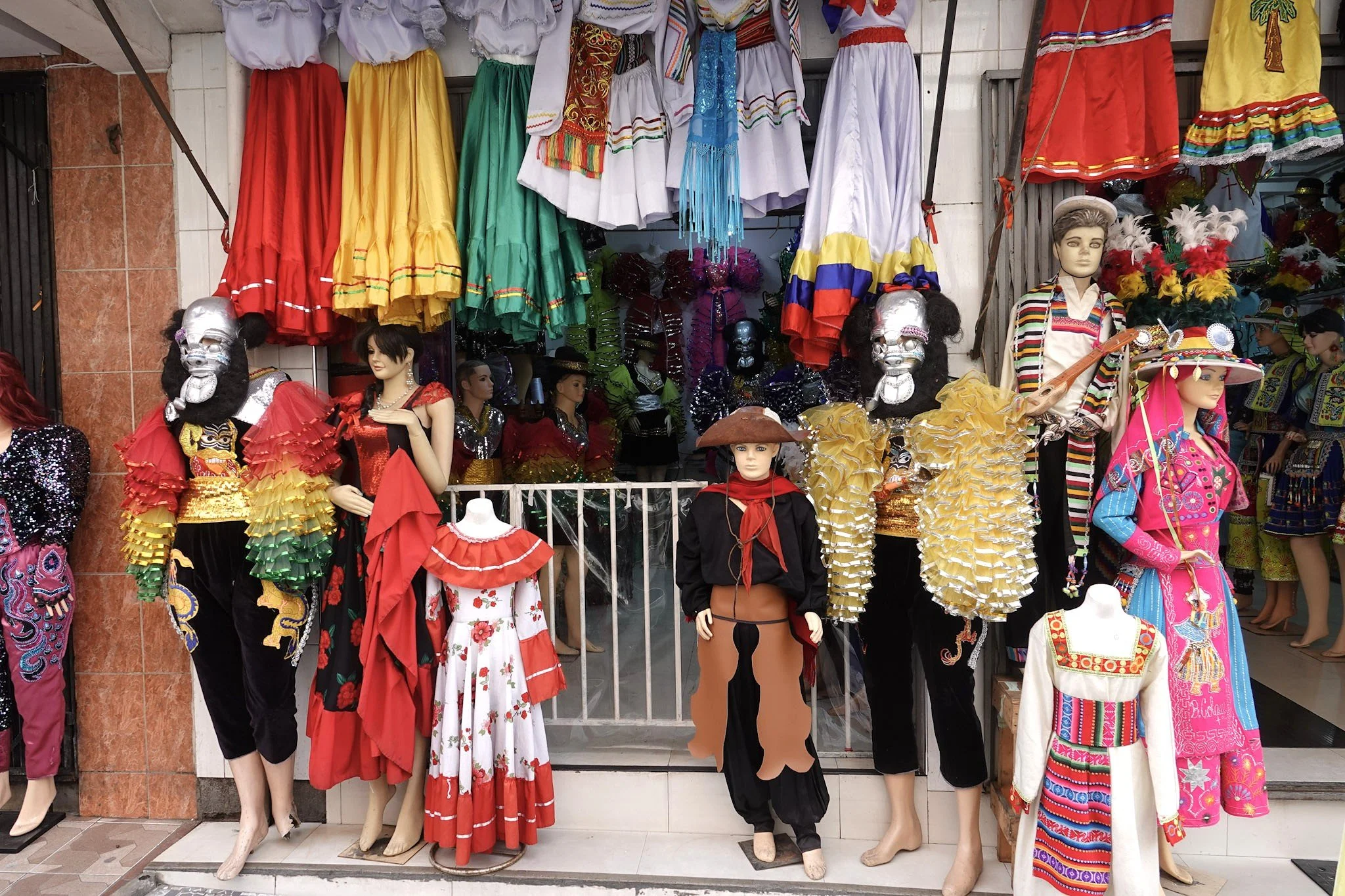
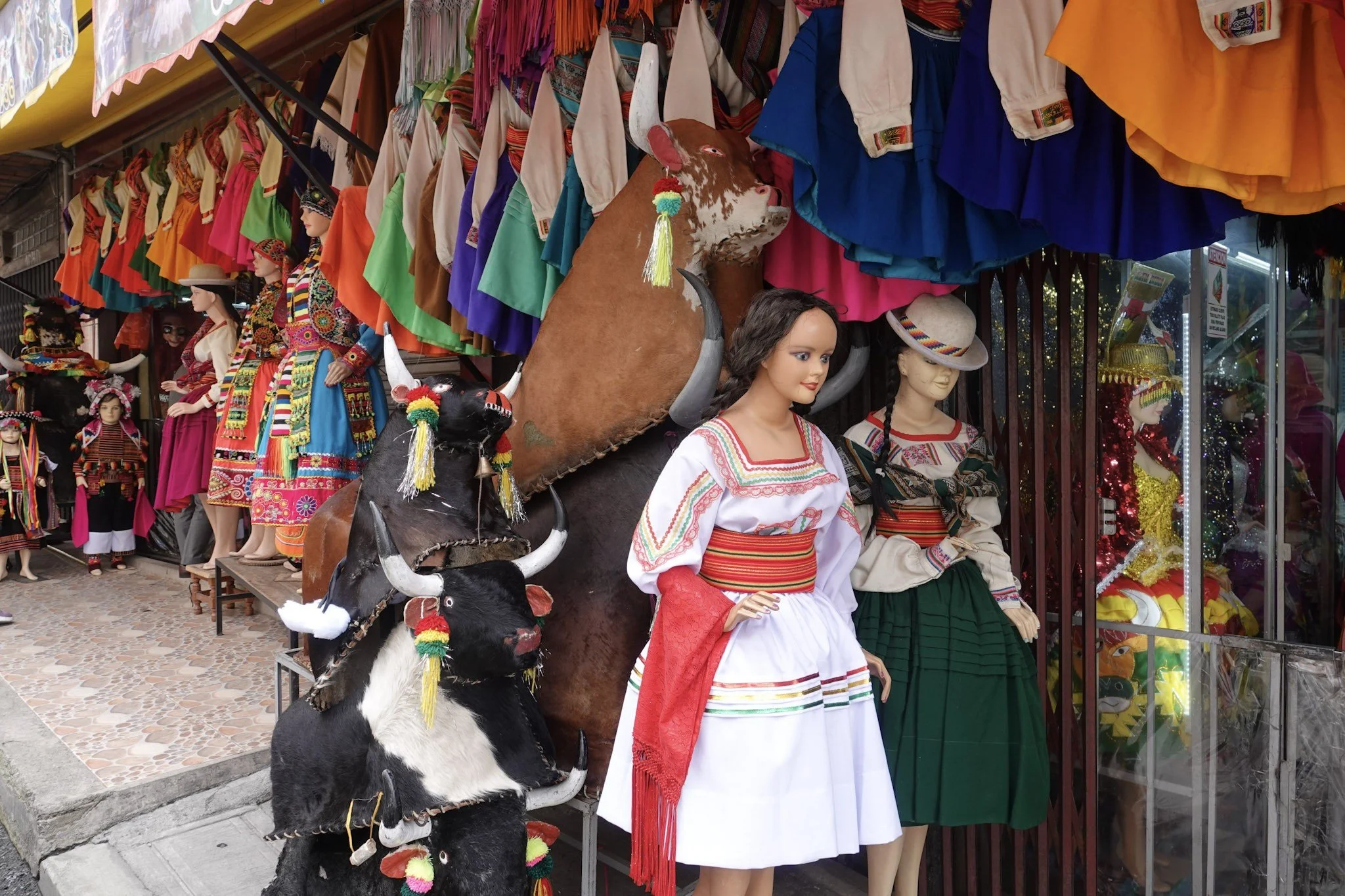
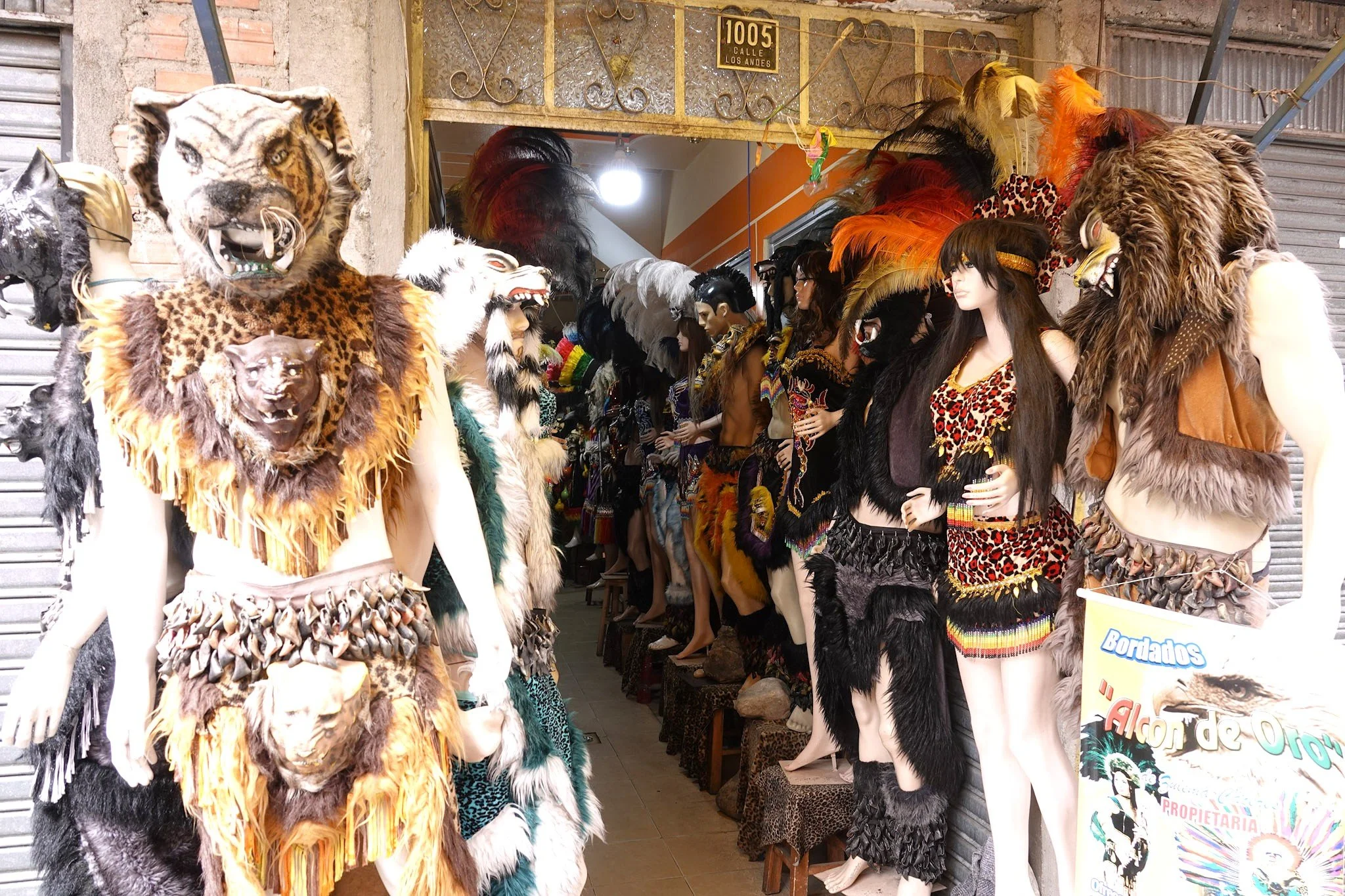
     On our first full day in La Paz, we visited "the markets." I will post another market visit after this one, but I'm giving the Costumes Market a special post. Why? I'm not sure that I've ever seen a strictly costumes market before. It's actually just one section of a long market area but that's what our guide called it. 

     Our guide said that most people cannot afford to buy or make their own costumes. Costumes are made with fancy designs, fabrics, and supplements. He also said that costumes are only rented for one day, so it's not really practical to make them and store them. Plus, kids grow and could outgrow them quickly.

     The major festival is Carnaval de La Paz in February or March, leading up to Lent. Next is the Fiesta del Gran Poder honoring the Virgin of La Merced, the city's patron saint. There is also the Day of the Dead celebration. Other celebrations are probably mostly centered around religious holidays.

     Celebrations include dancing in the streets, music, parades and processions, with choreography rooted in Catholic and Pre-Hispanic traditions.

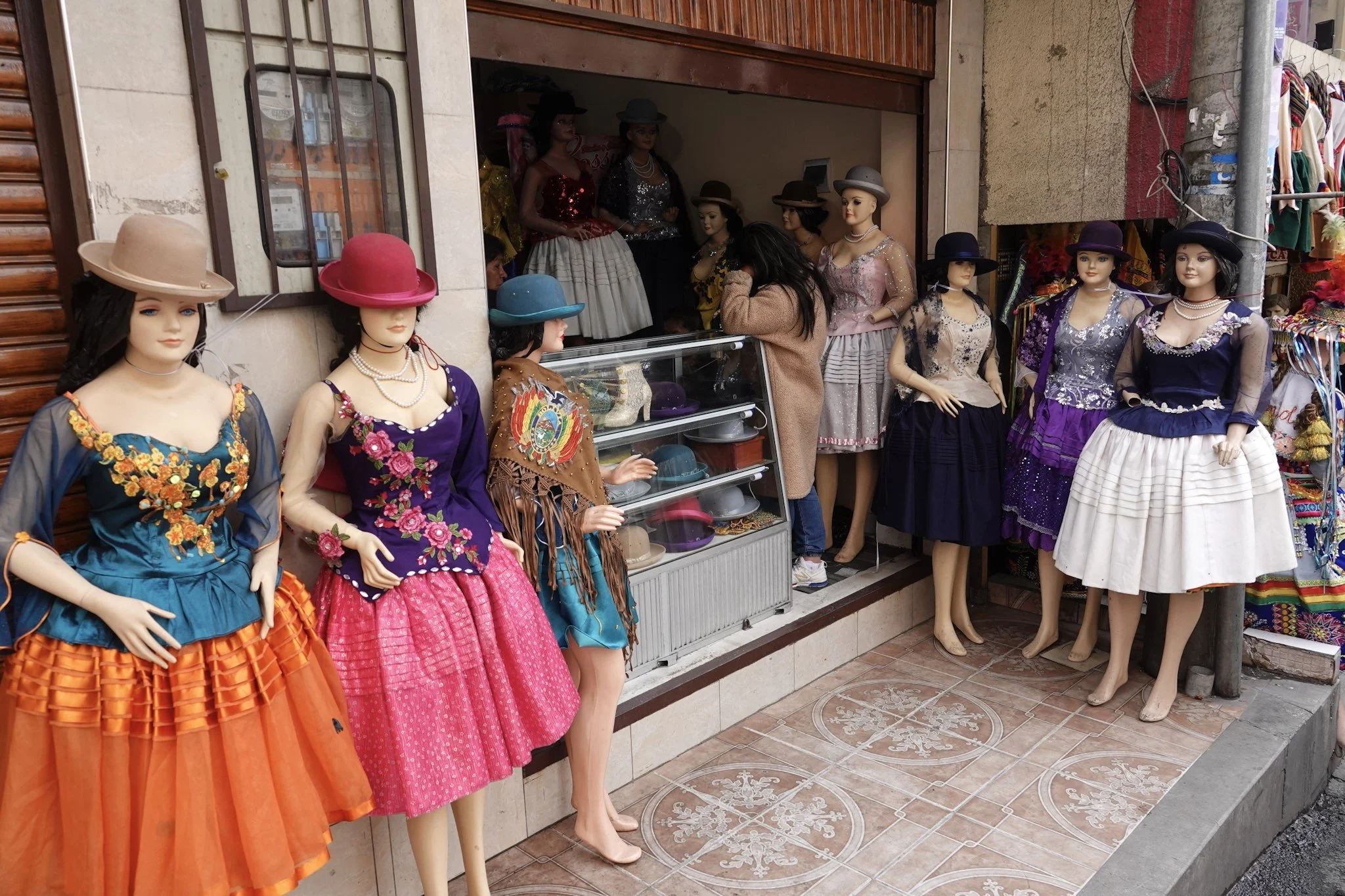
     Costumes can be seen below. They include sequins, feathers, beads, leather, and much more. Costumes celebrate Andean elements, Spanish elements, animals of the Andes, bullfighting (which is no longer held in Bolivia, but still celebrated), African influences from slavery times, and indigenous elements. See if you can pick out these elements in the costumes you see in the stores below.

Other Markets

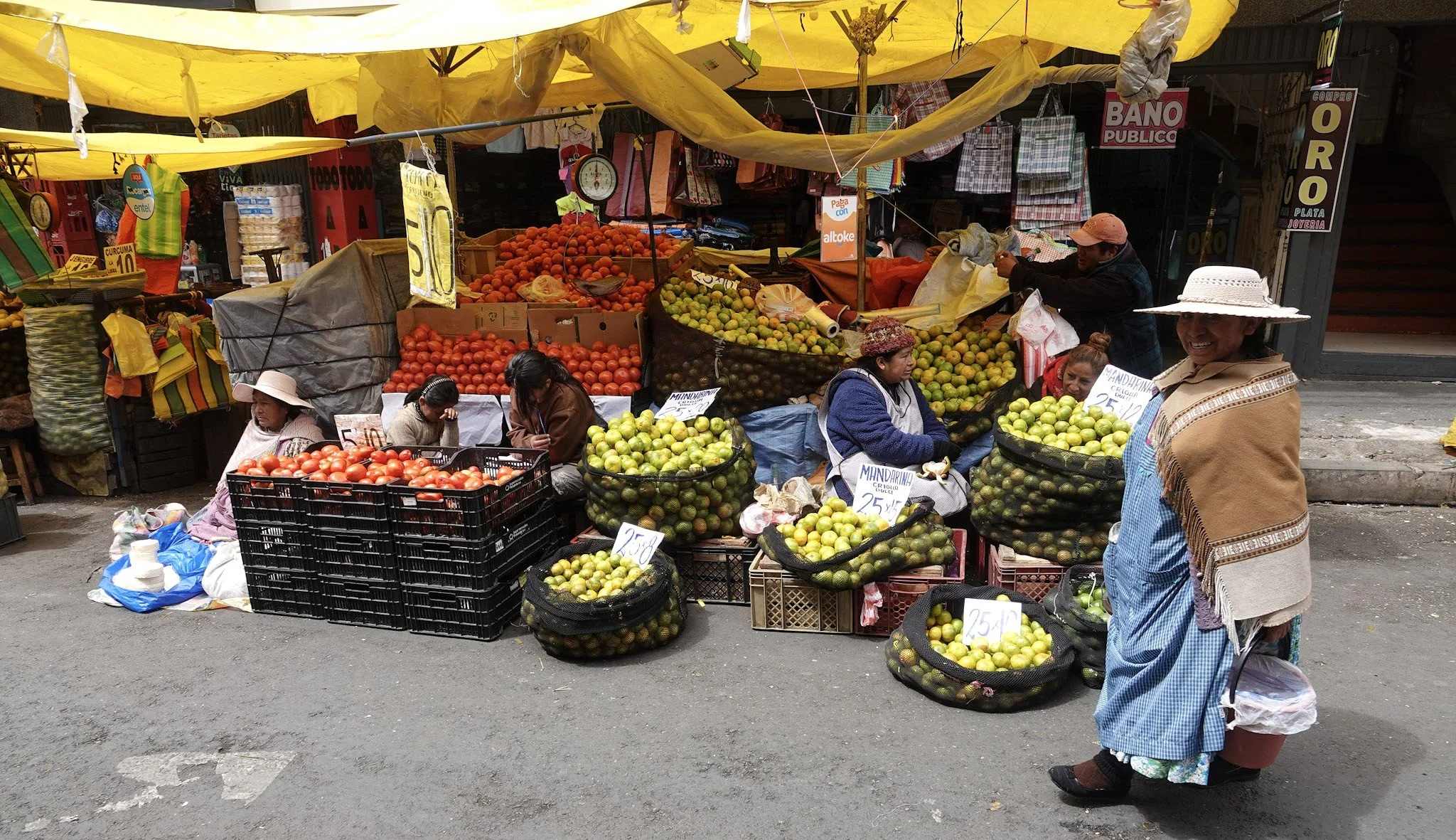
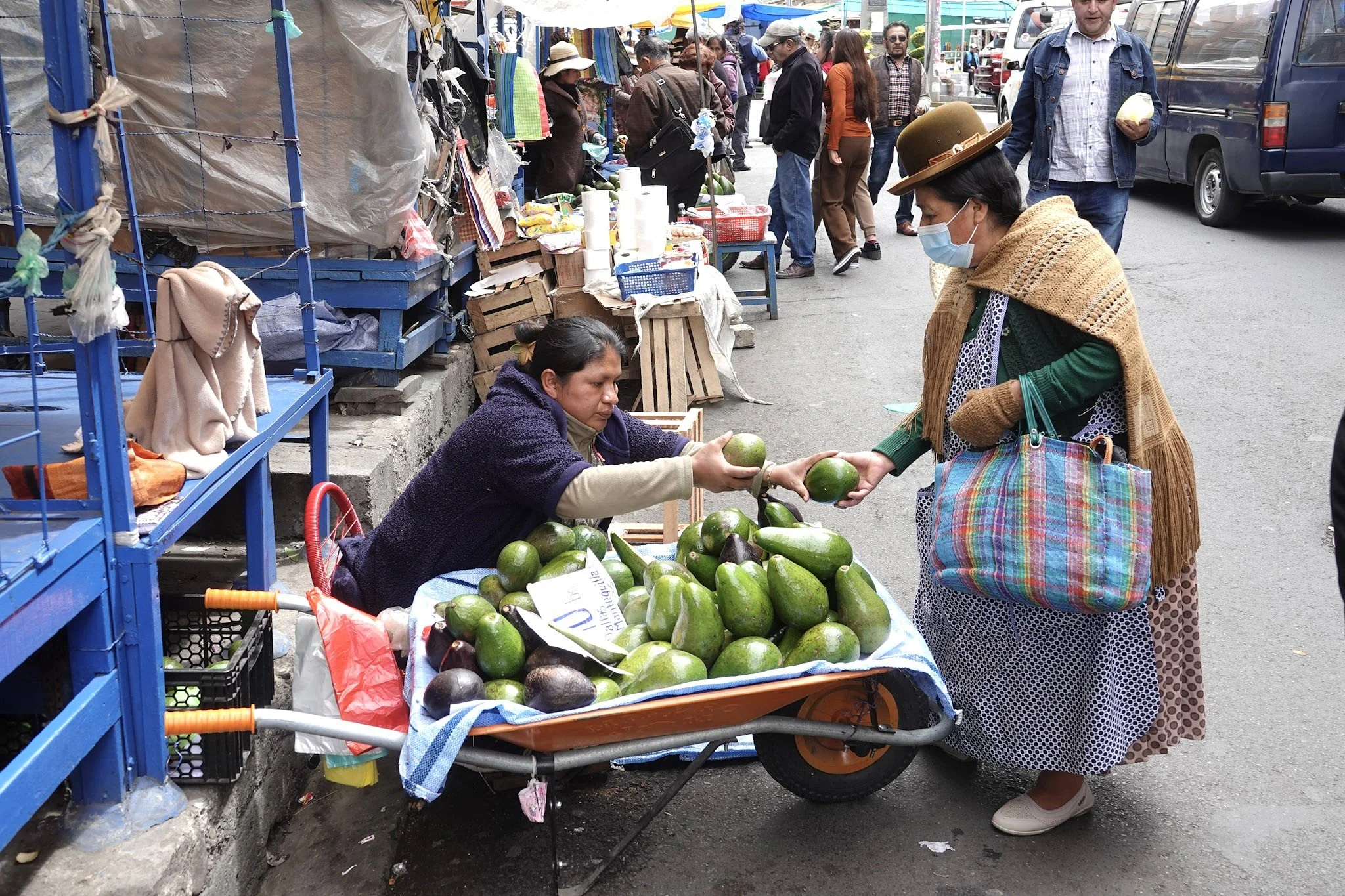
     We walked through the markets for an hour or more. It was just a long walk passing one market after another. Markets passed included: the hardware market, the Tech market (think phones, games, speakers, and such), the appliances market, the doors and windows market (where our guide purchased his doors and windows for his house), the fruit market, the dress and shoes markets, the small hardware market, the "lights" market, the herb market, the music market, and the most prominent, the Witches' market.

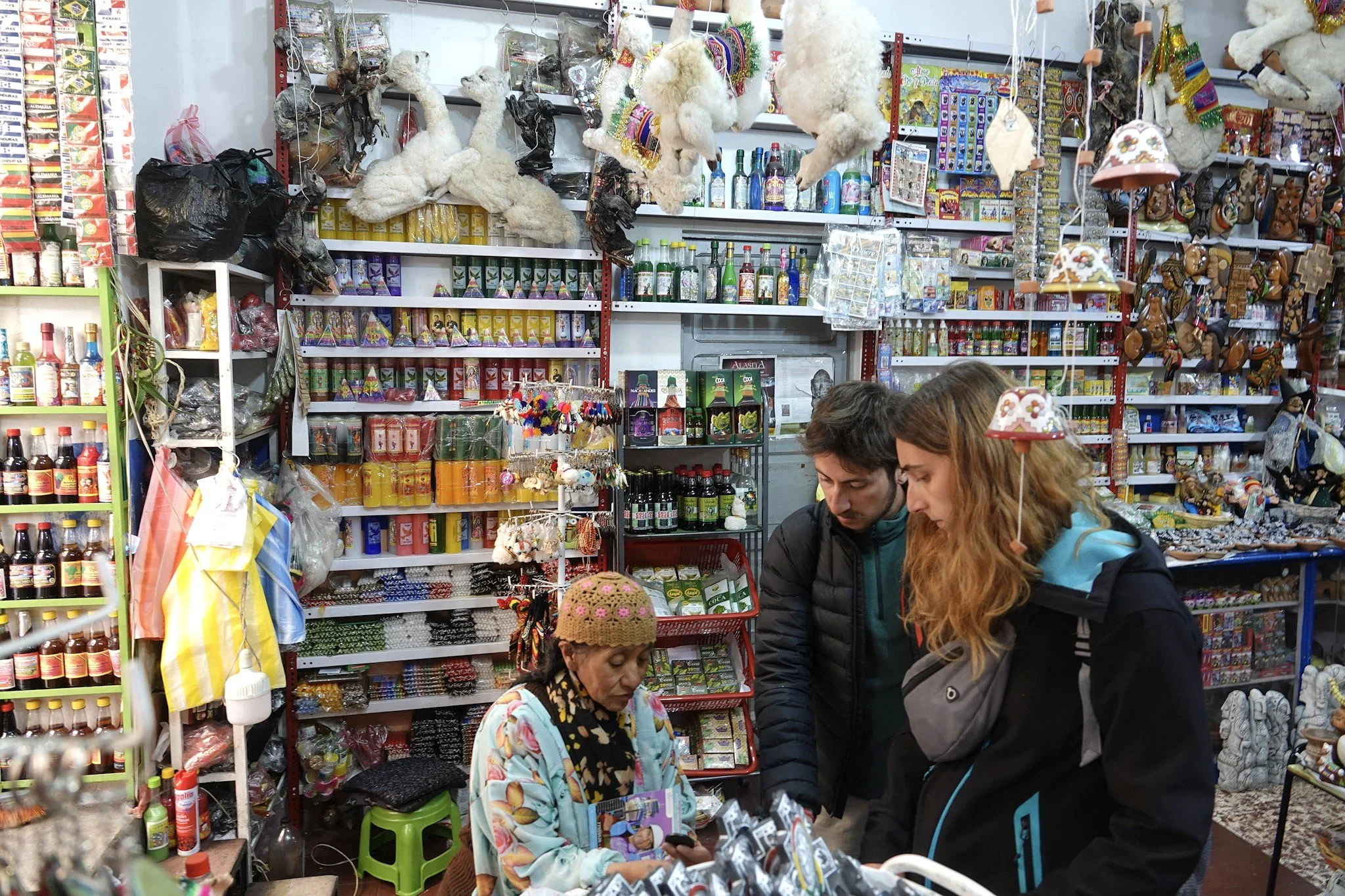
     The Witches' Market seemed very popular. My understanding is that it's popular with both locals and tourists. It evidently rests around magic, religion, witchcraft, superstition, and local culture. They sell charms, cremes, herbs, and so on but that's just the beginnings. They sell fetuses of dead animals such as goats, sheep, pigs, etc. They sell hallucinogenic drugs, but only to the shamans, not to regular people, and they know their customers. And no, those are just fuzzy play animals near the top of the photo, but dead fetuses. Those are only needed if you desire something very big, like a giant house or fancy car.

Murillo Square

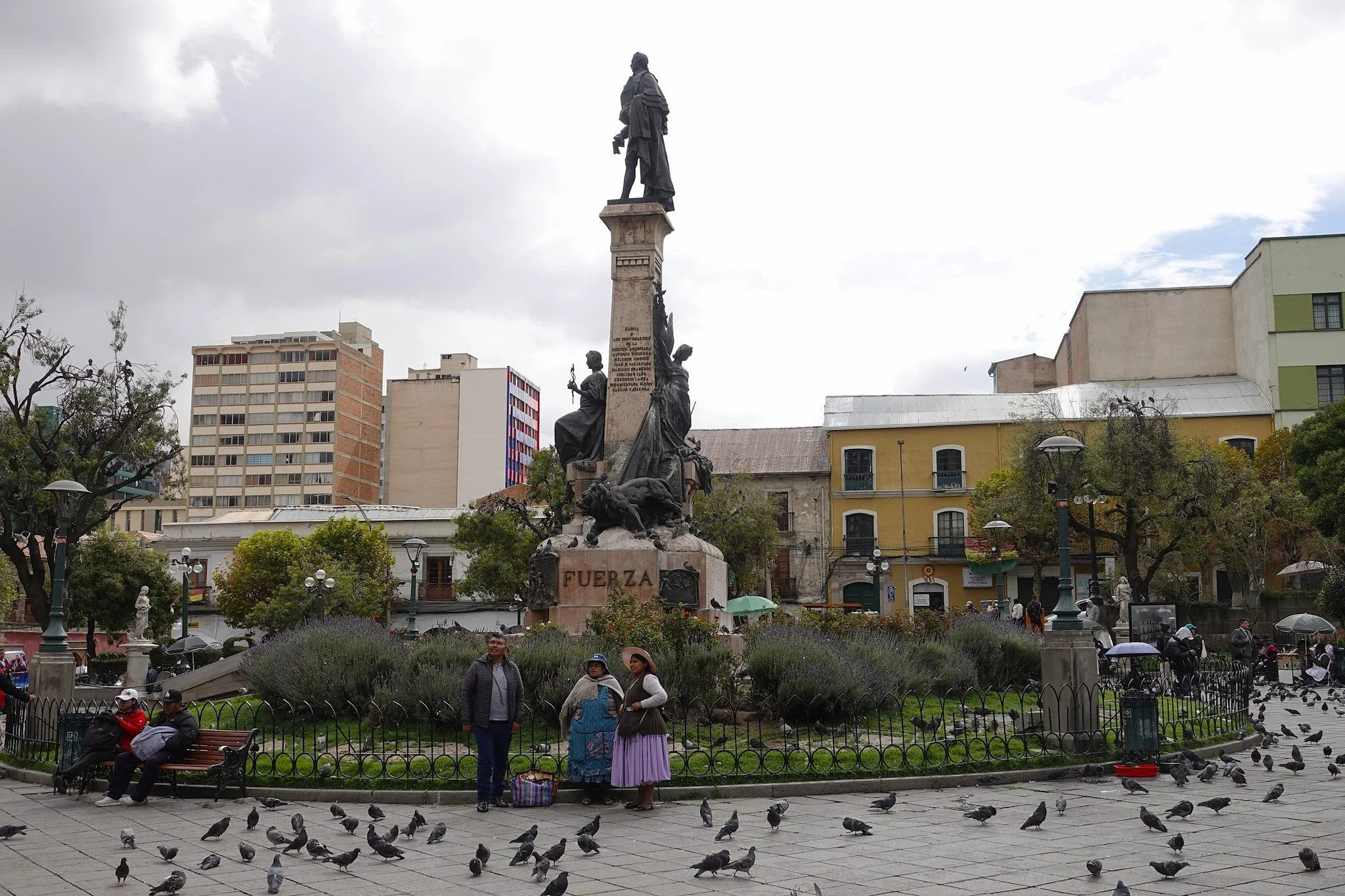
     Plaza de Murillo or Murillo Square is both the historical and the political heart of the city of La Paz. It was named for Pedro Domingo Murillo who was a key figure in Bolivia's independence movement. The square was busy when we were there, but we saw more pigeons than people, by far. The square contains many of the La Paz landmark buildings. Unfortunately, many ladies were selling pigeon food.

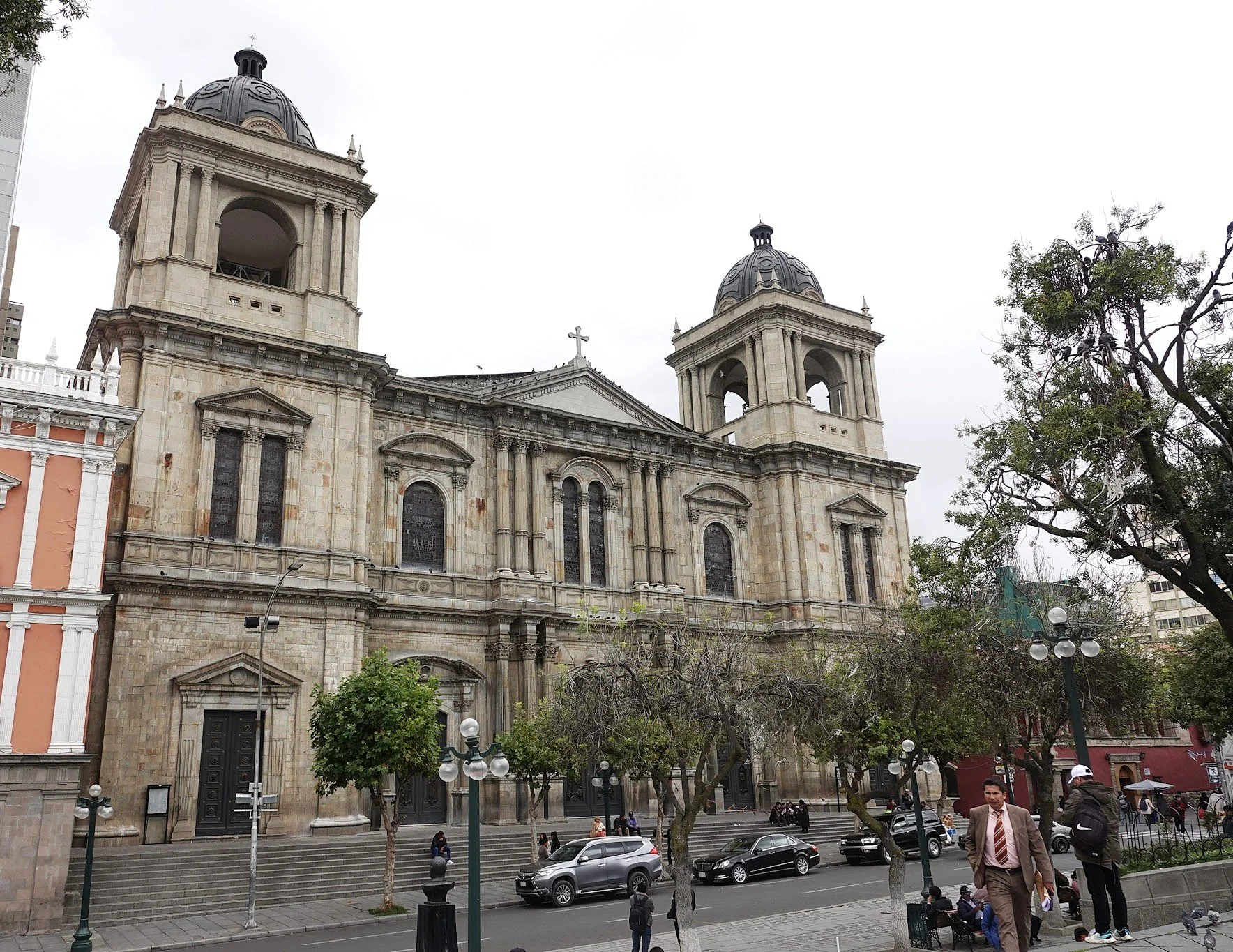
     First is the Metropolitan Cathedral of Our Lady of Peace. Construction began in 1622 but took 70 years to complete. It was originally stone and brick, but cracks started to appear in 1831, and they ended up demolishing the building. The current cathedral started in 1835 and was officially opened in 1925 but still needed work to be finished. The final work was not done until 1989 when there was a push for it, due to an upcoming visit by Pope John Paul II. 

     Next is the Plurinational Legislative Assembly building. This is where national laws are debated and created. You can also notice the Casa Grande del Pueblo building right behind it. The tall glass tower seems to conflict with the colonial buildings, but there you go.

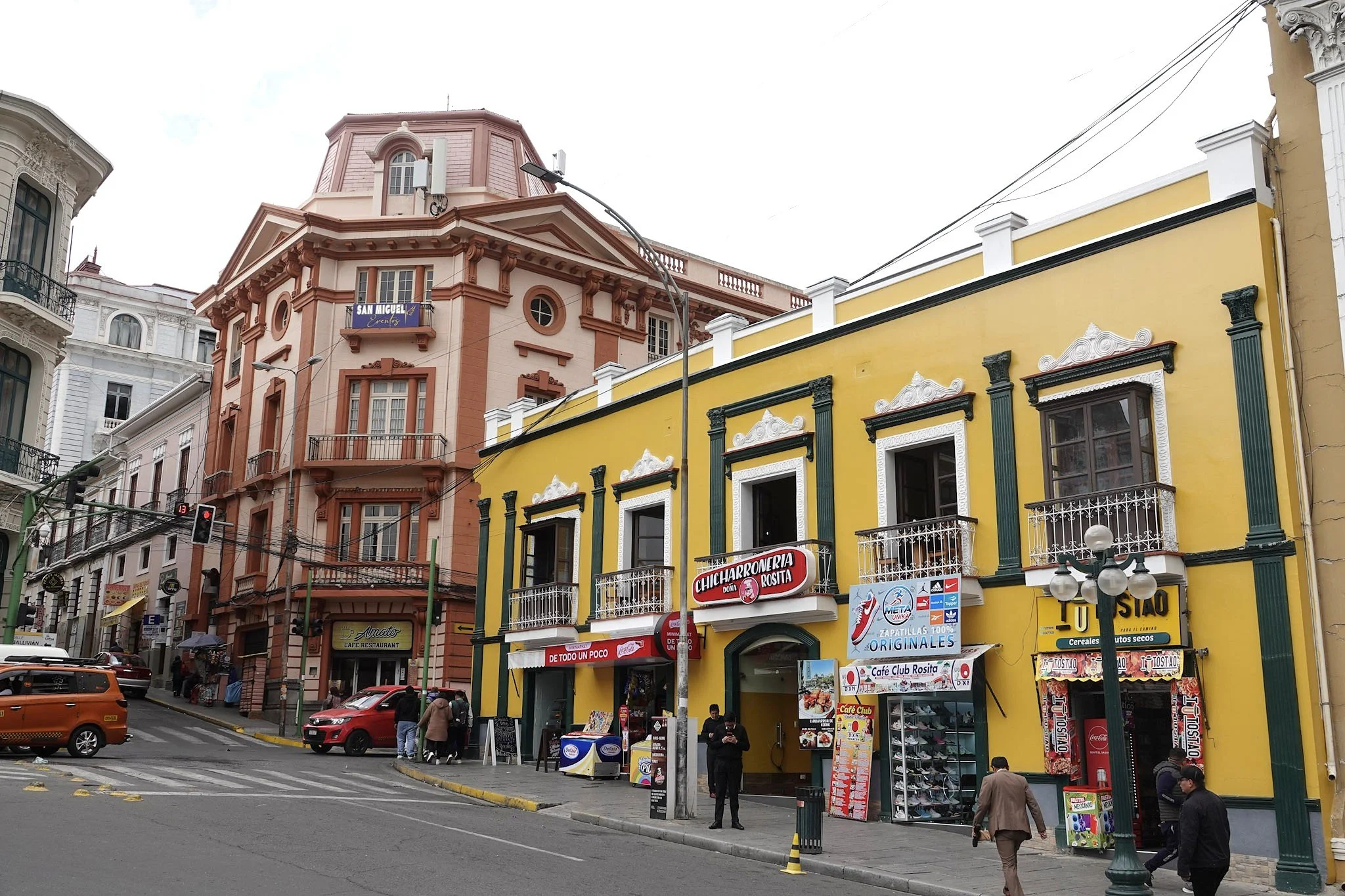
     The corner buildings in the square are, according to our local guide, the oldest buildings in Bolivia so they go back to the Spanish times.

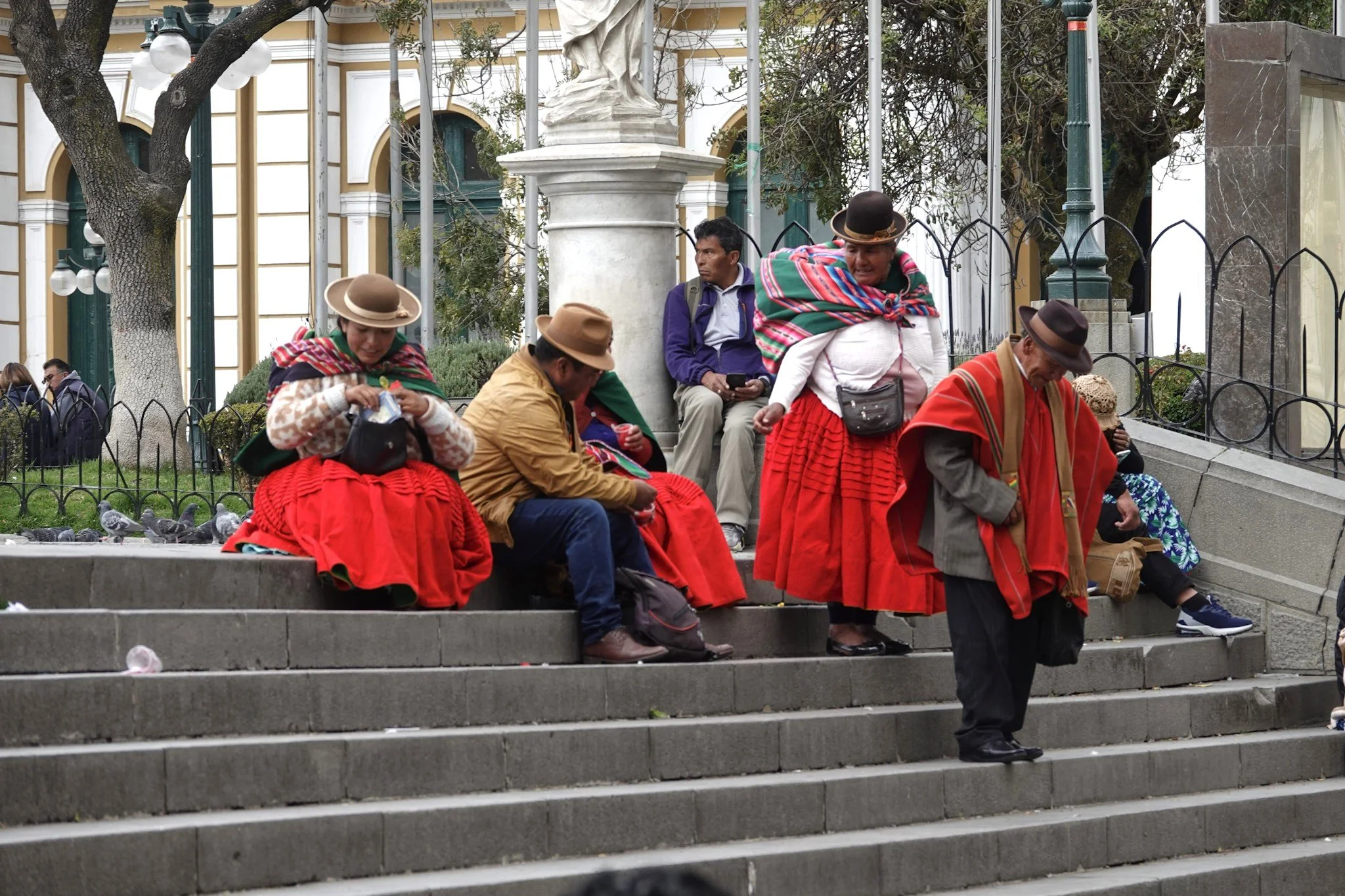
     Some of the locals stood out more than others.

     The central monument in the square has a statue of Pedro Domingo Murillo. The central square is a nice place to sit and observe life in La Paz...but the pigeons!

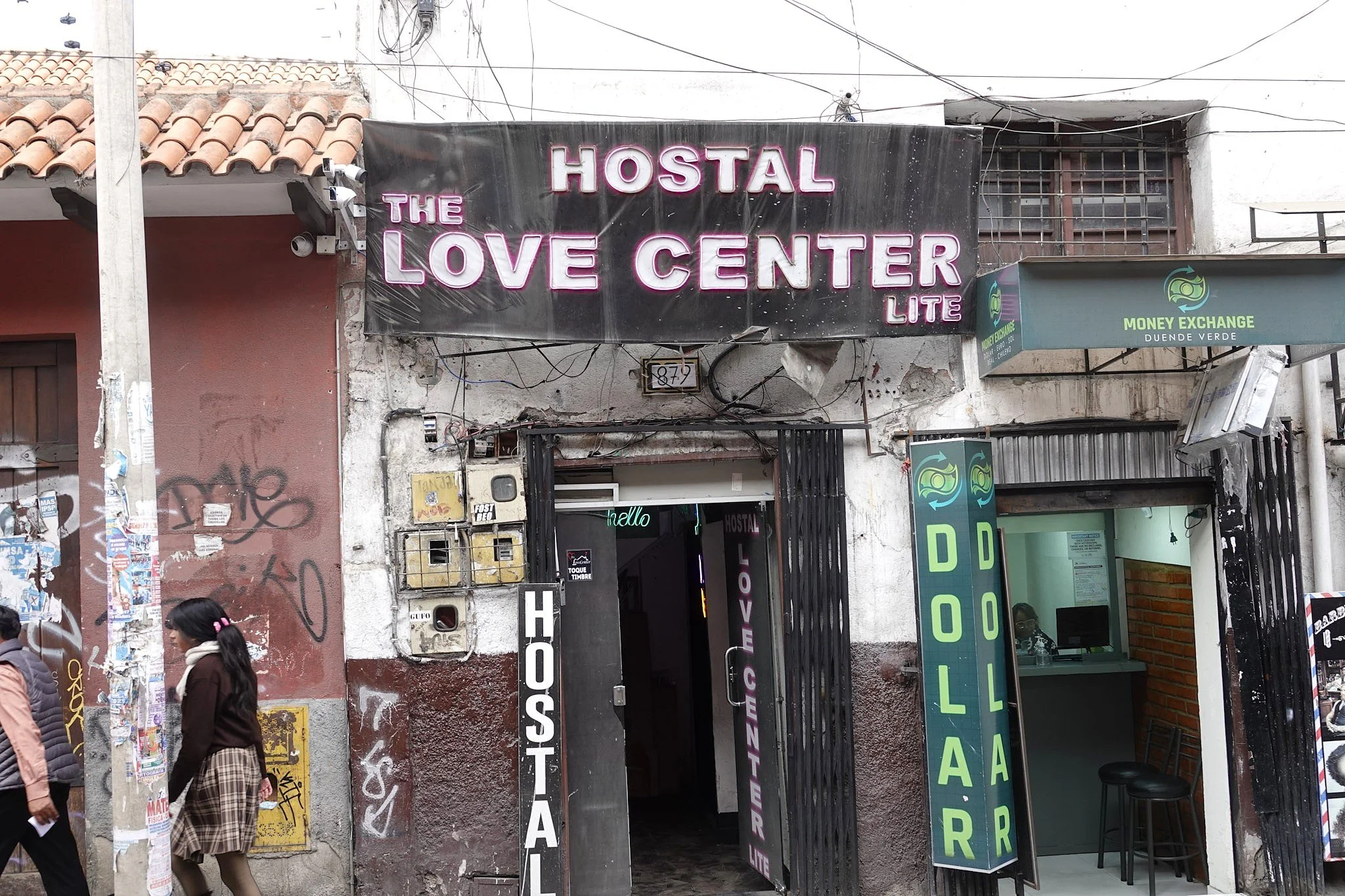
     Bolivia has lots of youth hostels. We saw them everywhere we went. They give cheap lodging for young travelers. Based on the sign on the one below, near the main square, I'm not sure what else they provide.


La Paz to Lake Titicaca

     On this day, we drove from La Paz to Lake Titicaca. To give you an idea of our drive, it's only about a 45-mile drive. But, it took us two hours just to go from lower La Paz to upper La Paz, so two hours just to cross the city. We also had to cross El Alto, above La Paz and just as busy. The problem is that with the very high mountains on either side of the valley and two million people all trying to drive somewhere, it's a big traffic mess.

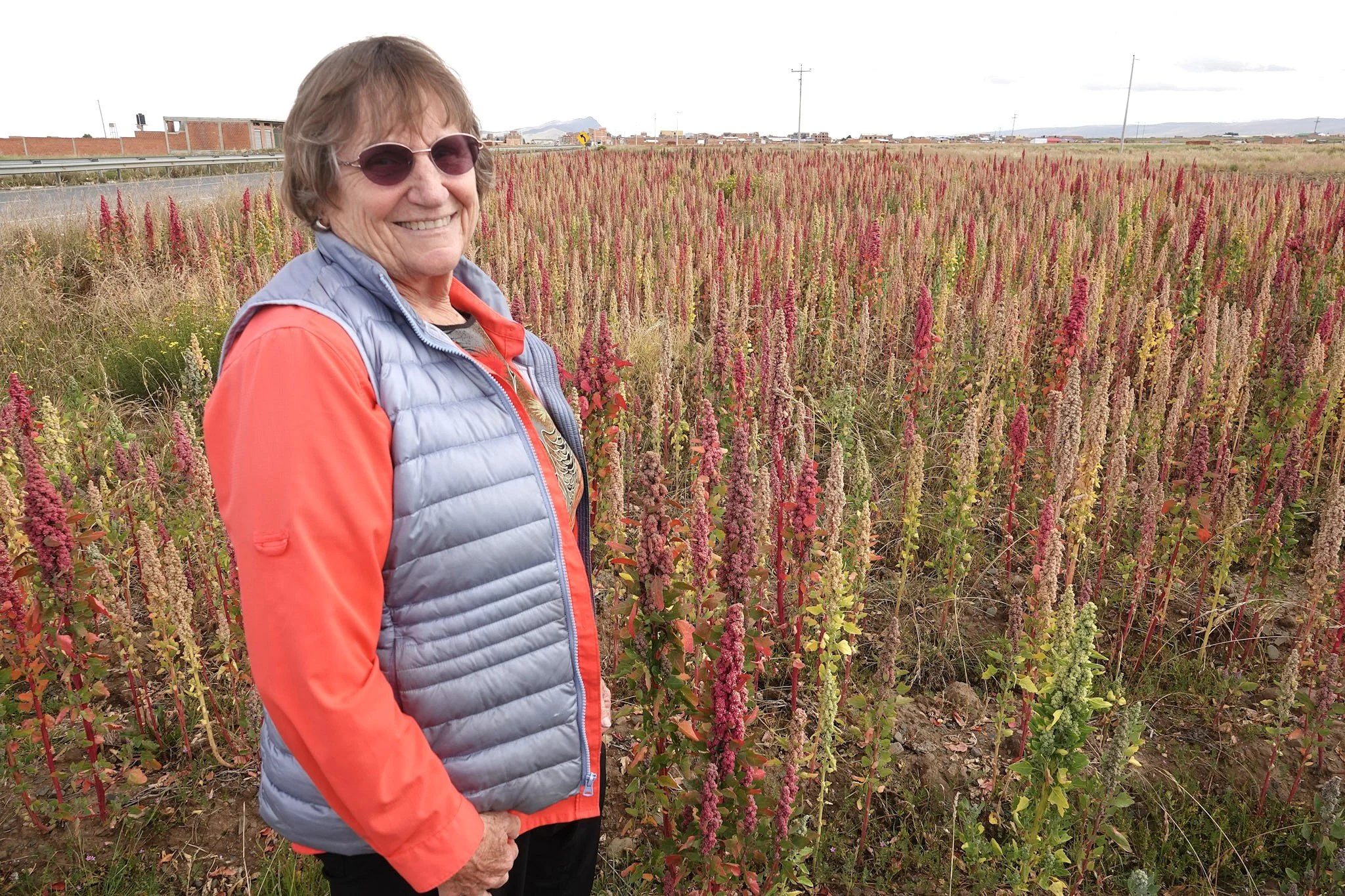
     Once out of the city areas, we made a first stop. It was at a farmer's quinoa (pronounced "keen-wah") field. Quinoa is a staple grain for Bolivia. It has been cultivated here for thousands of years starting with the indigenous communities, and some of them call it their "mother grain." You eat the seeds.

     Our guide said that when he was growing up, they were very poor and his family ate quinoa every meal because it was so cheap and so good for them. But in more recent times, quinoa has gained international recognition for its nutritional benefits. That has created a high demand and consequently a much higher price. It has become a primary farm crop but our guide said that now, poorer people cannot always afford it.

     We had quinoa served to us at multiple meals and in several forms, such as "like rice," in fritters and in croquettes. 

     The redder stalks are nearing harvest time.

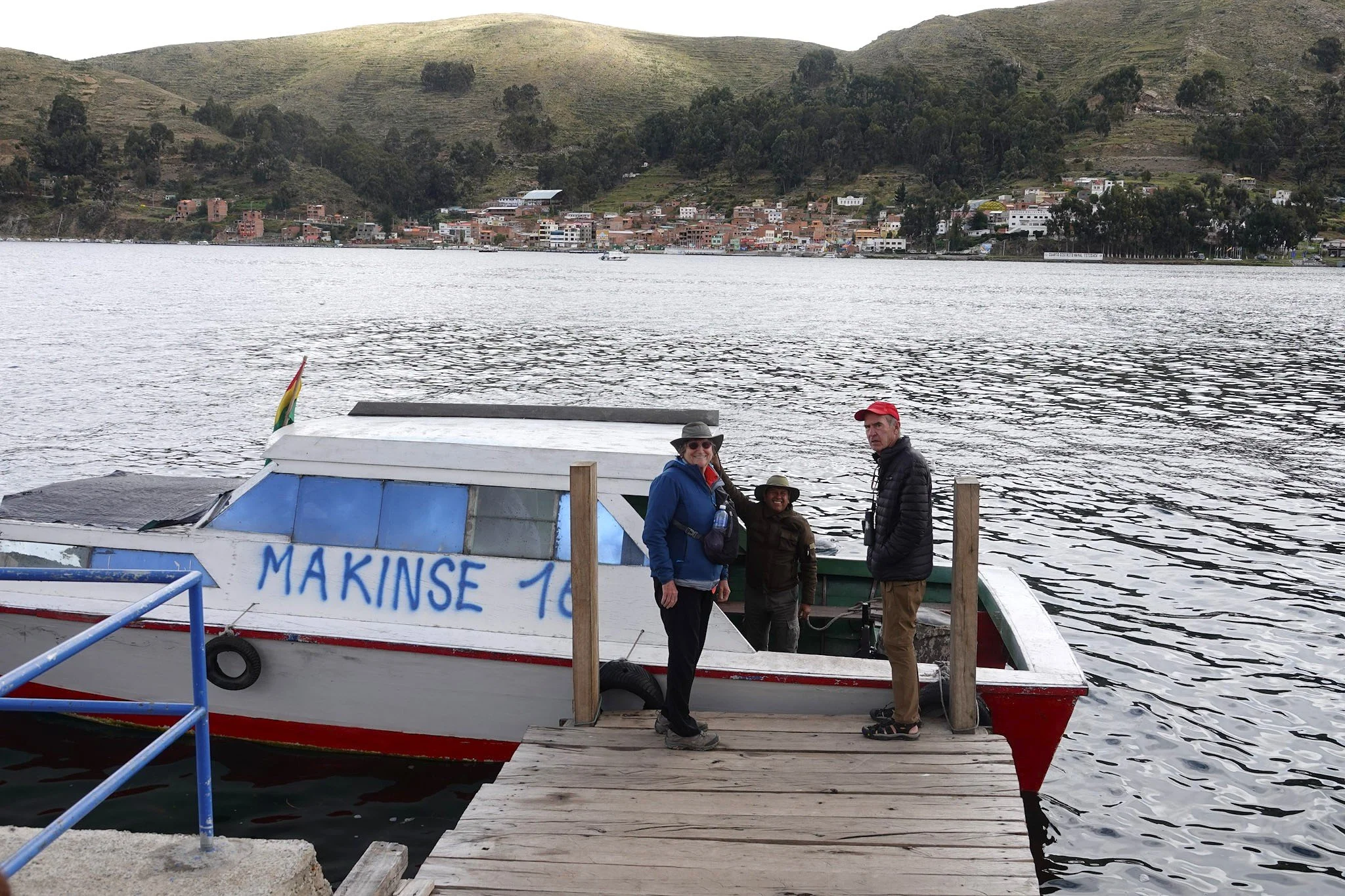
     In arriving at the lake, I was surprised that we needed to take a boat to cross a strait. I could see clearly on the map that the land would take us to where we were going. But there is an international problem. The lake straddles the borders of Peru and Bolivia with Peru on the west side and Bolivia on the east side.  If we drove around, we would have needed to pass through Peru. So what?, you say. The so what is that Peru requires a 24-hour stay in Peru for people passing through Peru on this road. Therefore, we stopped in San Pedro de Tiquina to cross the strait of Tiquina by boat, thereby staying in Bolivia the entire time. Interesting.

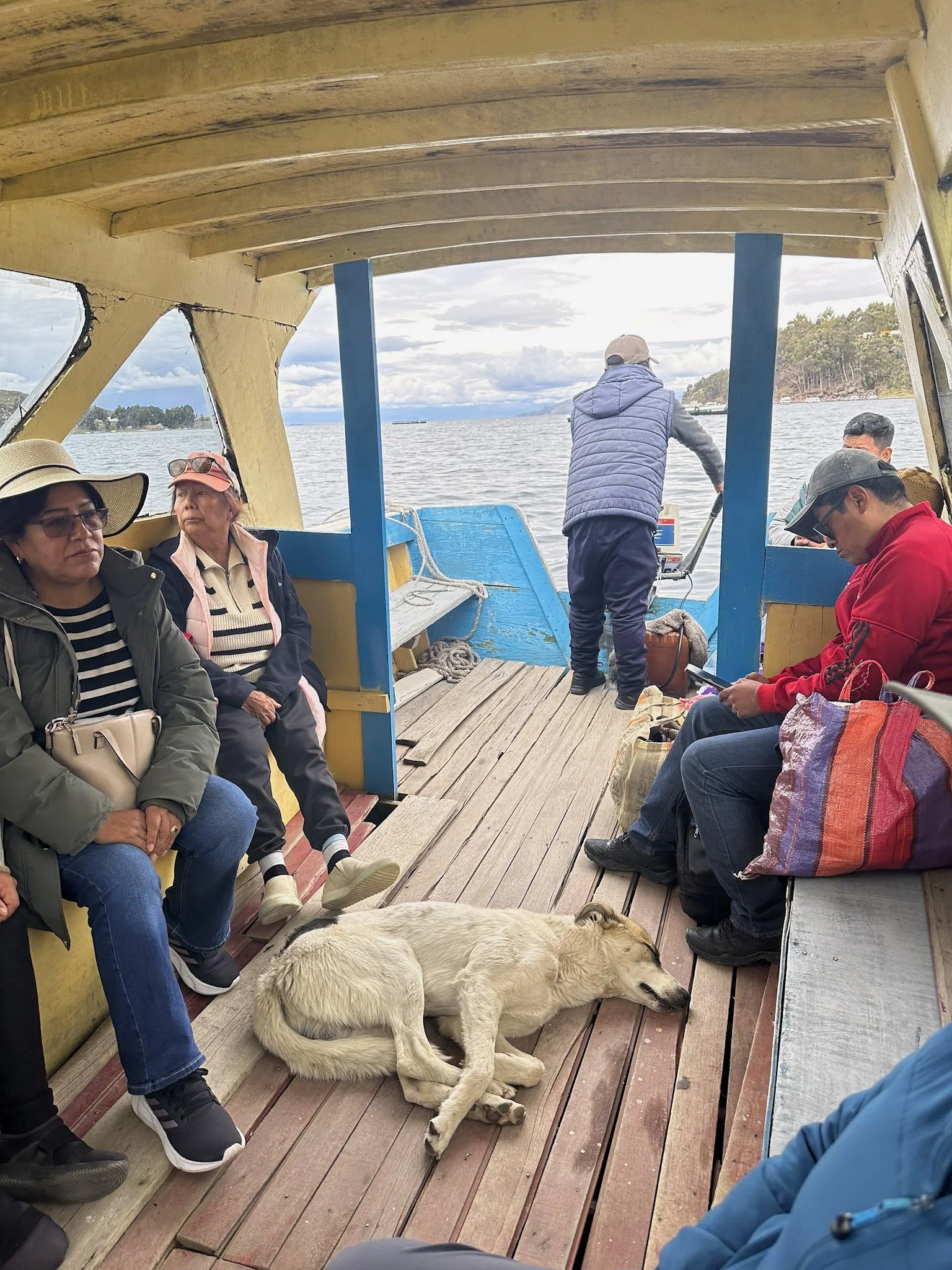
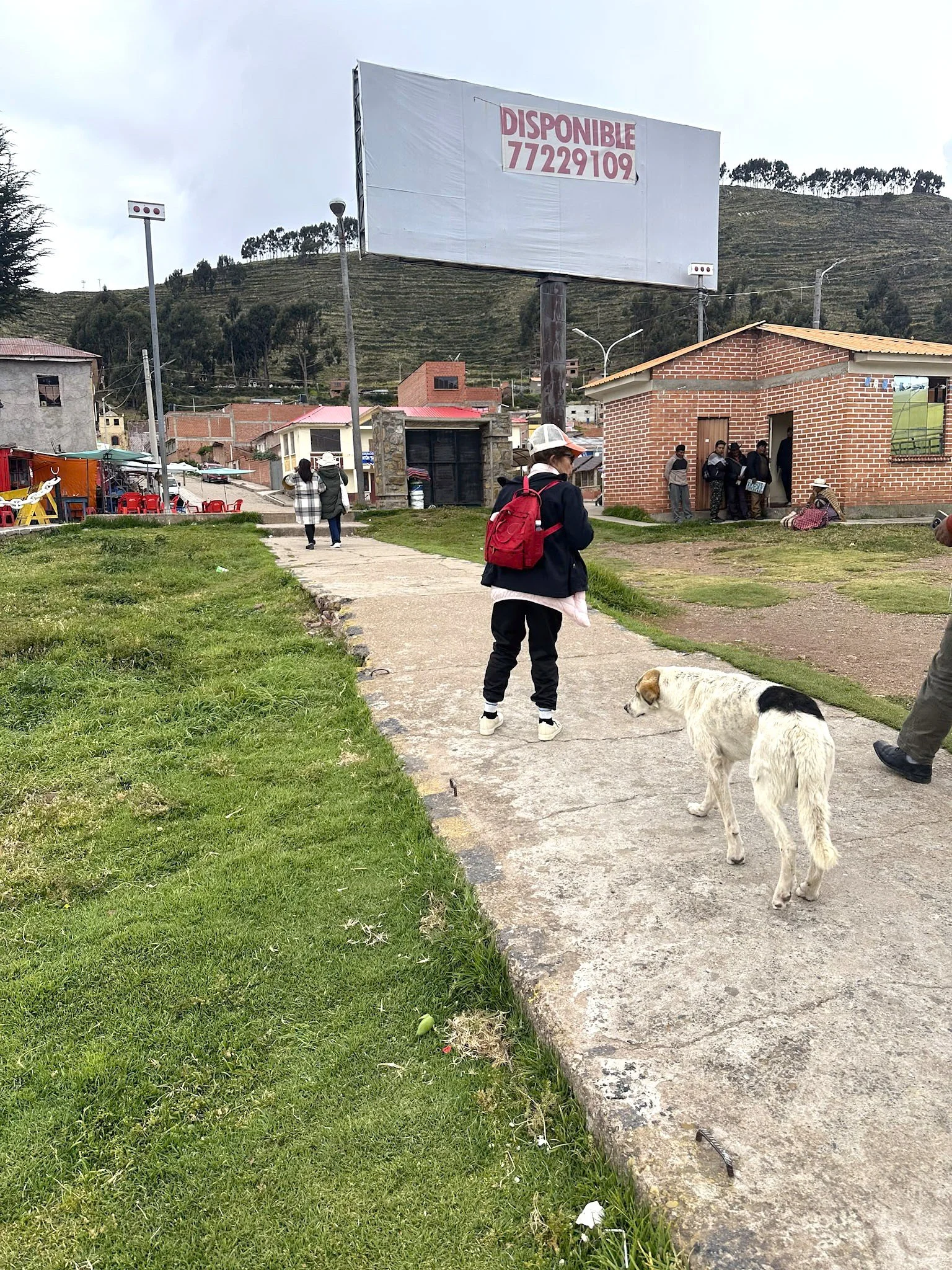
     This next story is just too good not to tell. As I was walking down the ramp to pay and board the small boat, I noticed a dog walking along side me. At one point, the dog passed me. I was curious where he was going but I kept walking. The dog got to the very narrow and walled-in pay station, and two attendants were trying, using their legs, to keep the dog out. I arrived, gave them my ticket and squeezed through their dog blockade. At one point, I helped to keep the dog out, since I had created an opening. But the dog juked all three of us and started down the boat ramp, with me right behind him. As we approached the boat, I saw the Captain stand to the boarding ramp and try to stop the dog from boarding. The dog barely slowed down for the Captain, jumped aboard the boat, and quickly lay down in the middle of the cabin and took a nap. The Captain resigned himself to having another, though non-paying, customer.

     When we reached the other side, the dog promptly woke up and deboarded the boat, walking up the ramp with the rest of us customers. I think it's fair to assume that this dog is a regular commuter. But from where and to where and why, I have no idea...and he never did pay the fare.

     Lake Titicaca is a very large lake and sits at an elevation of over 12,500 feet high. They say it's the highest navigable lake in the world. It's also the largest lake in South America by surface area and by volume. 

     Bolivia is a landlocked country and has been since the War of the Pacific from 1879 to 1884. They had 250 miles of Pacific Ocean coastline but lost it in their war with Chile. That treaty was finalized in 1904.

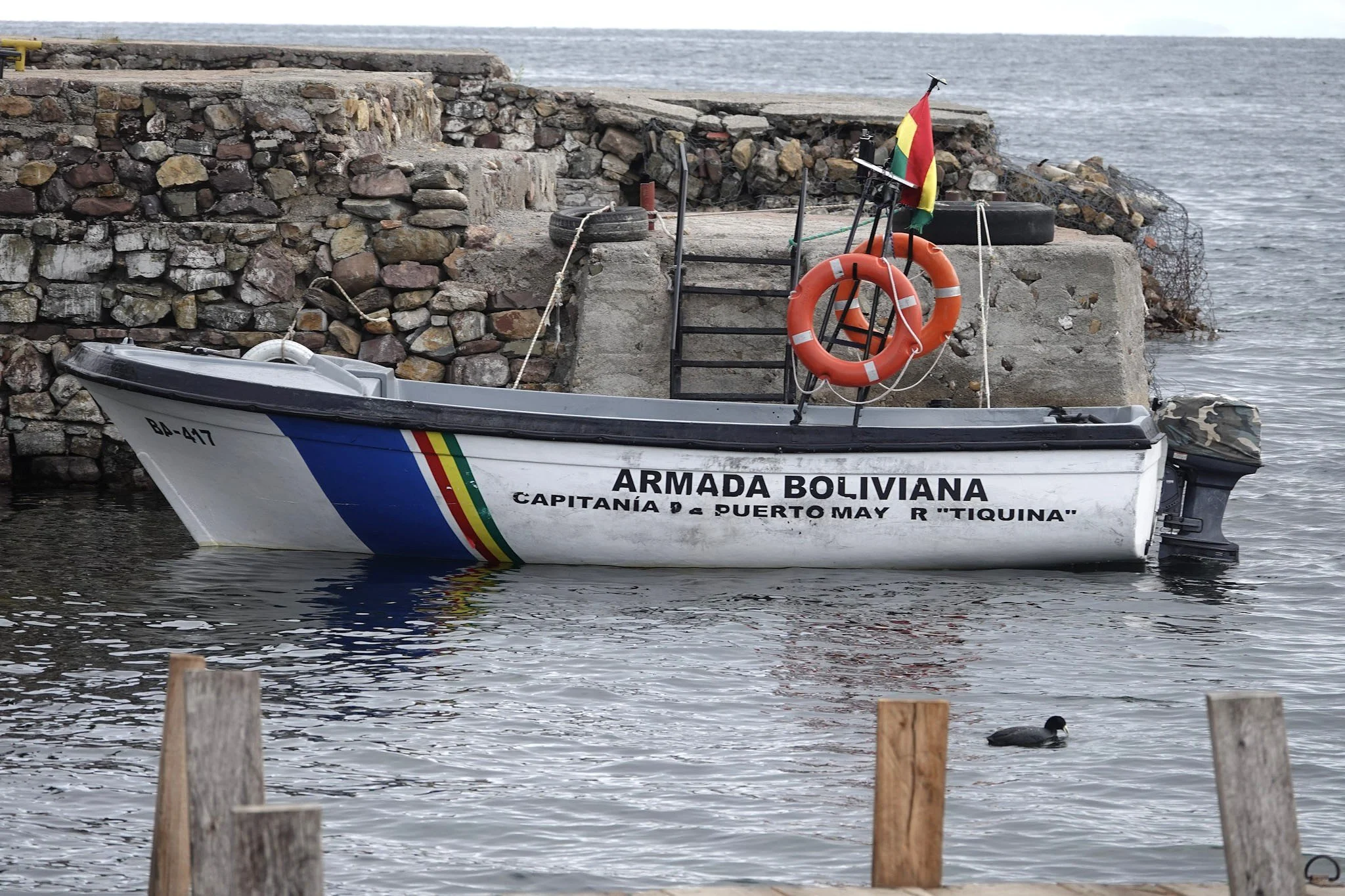
     But, Bolivia does have a Navy. It's called the Armada Boliviana. They sail and do drills on Lake Titicaca and on the Amazon River, patrolling river borders with Brazil, Argentina, and Paraguay. We saw their training facility on Lake Titicaca and on seeing their boat, I felt much safer.

Aymara Family Visit

     Our first stop when we arrived at Lake Titicaca was to visit an Aymara family. The Aymara are an indigenous people of the Andes Mountains, residing primarily in Bolivia. The Aymara people's history goes back many thousands of years in the high-altitude plains of the Andes. They flourished near Lake Titicaca and trace their roots back to the Tiwanaku civilization. They became subjects of the Inca Empire in the late 15th century and were subjugated by the Spanish colonial rule.

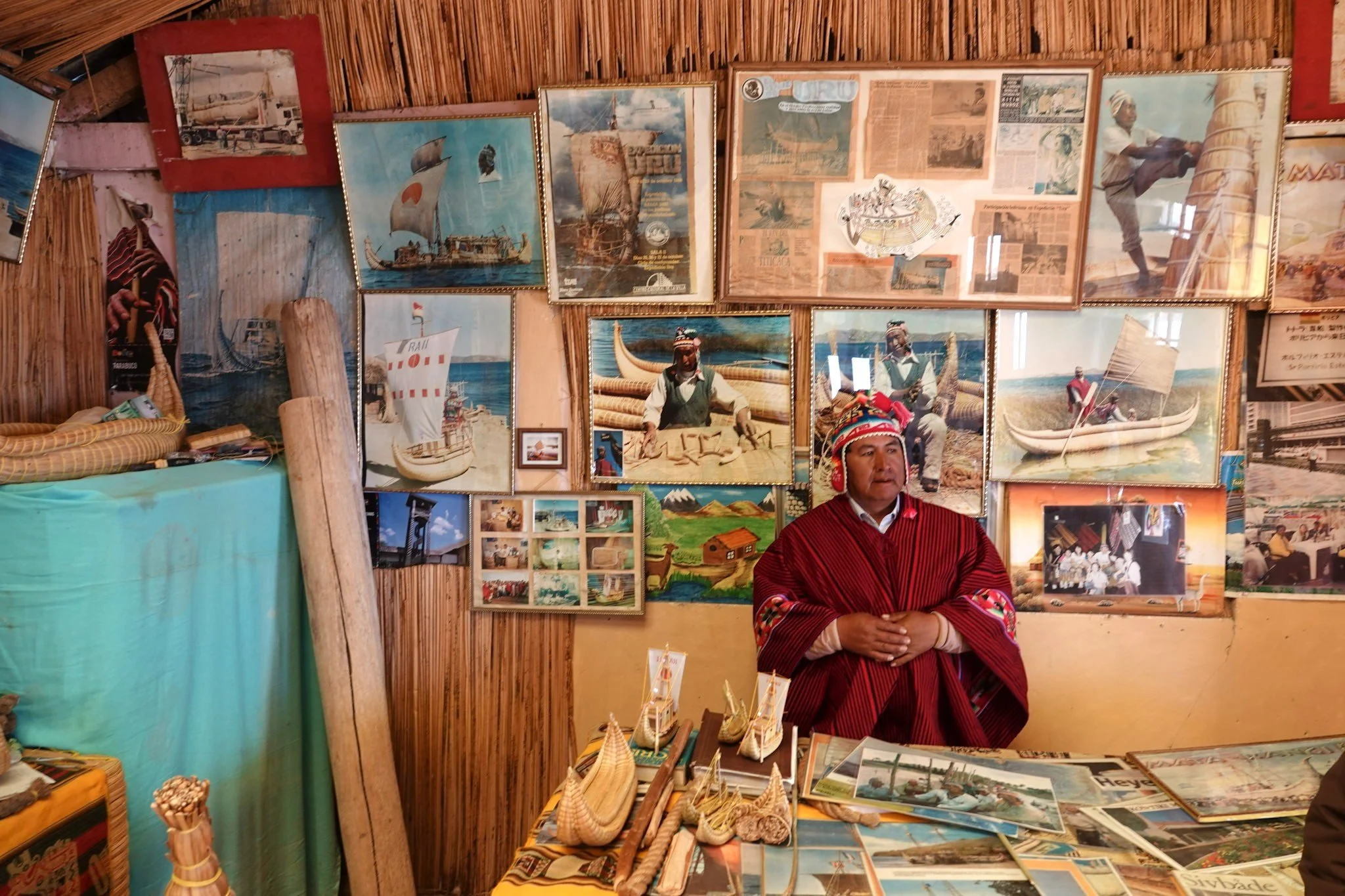
     The Aymara people are still around today, and we visited one Aymara family. This family lives right on Lake Titicaca. The leader of this family is Portfidio Esteban. We knew going there that he builds reed boats, from the reeds growing in the shallows of Lake Titicaca, upholding an ancient cultural tradition.

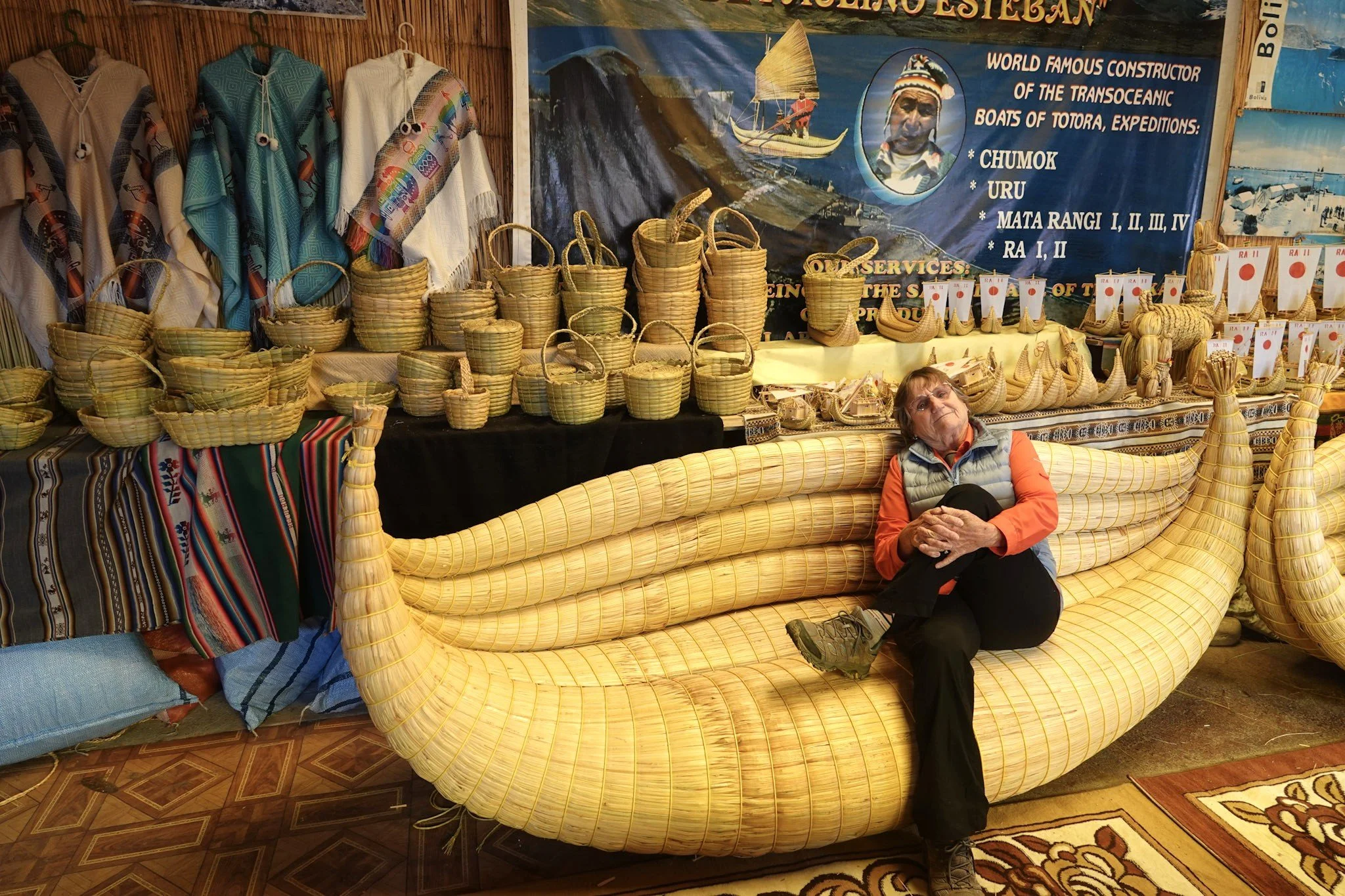
     You can see Portfidio in his reed shop below with some of his memorable photographs.

     I will confess that I didn't have great expectations for our visit here. While I understand traditions and cultural industries, I hardly expected what we learned. His father was Paulino Esteban and Portfidio learned reed boat building from his father. Thor Heyerdahl visited his father and him here and they also did sailing projects with Thor Heyerdahl, to prove their and Heyerdahl's theories. The Aymara people believe that the Vikings made it all the way to South America. 

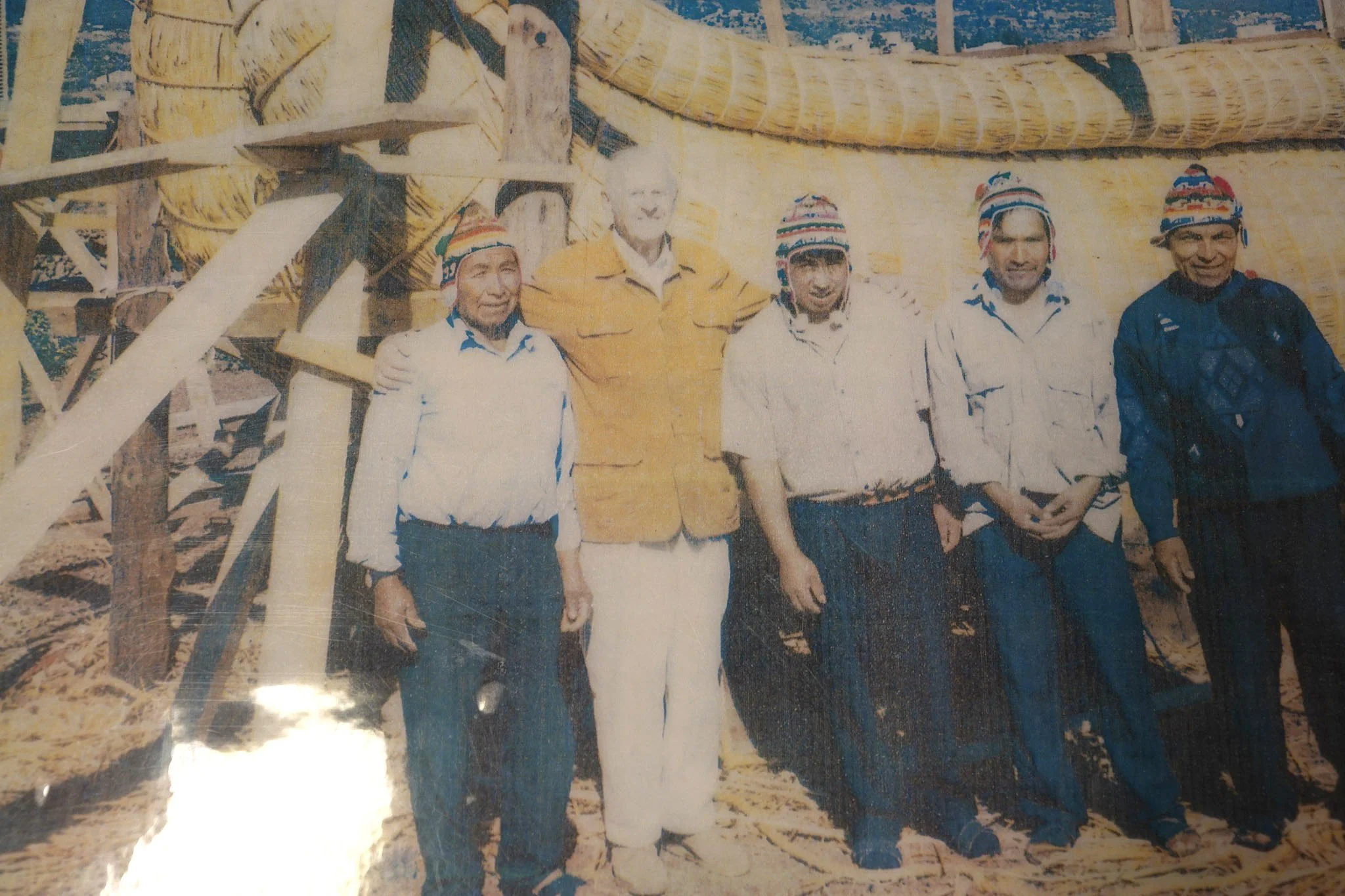
     Portfidio has traveled the world to build, sail, and teach his reed boat making craft. He's traveled to Japan, Norway, Egypt, Spain, Denmark, Portugal, Iraq, and other places. He's also sailed on several experimental trips with and without his dad. You can see a photo of a photo below. Portfidio is in the middle with Thor Heyerdahl to his left and his father to the left of Heyerdahl.

     Portfidio told us that it takes 4,000 reeds and three months to make a reed boat. The reed boats hold four to ten people. Today, boats are no longer being made, so Portfidio now makes reed furniture, couches, baskets, displays, and other items, as you can see below.

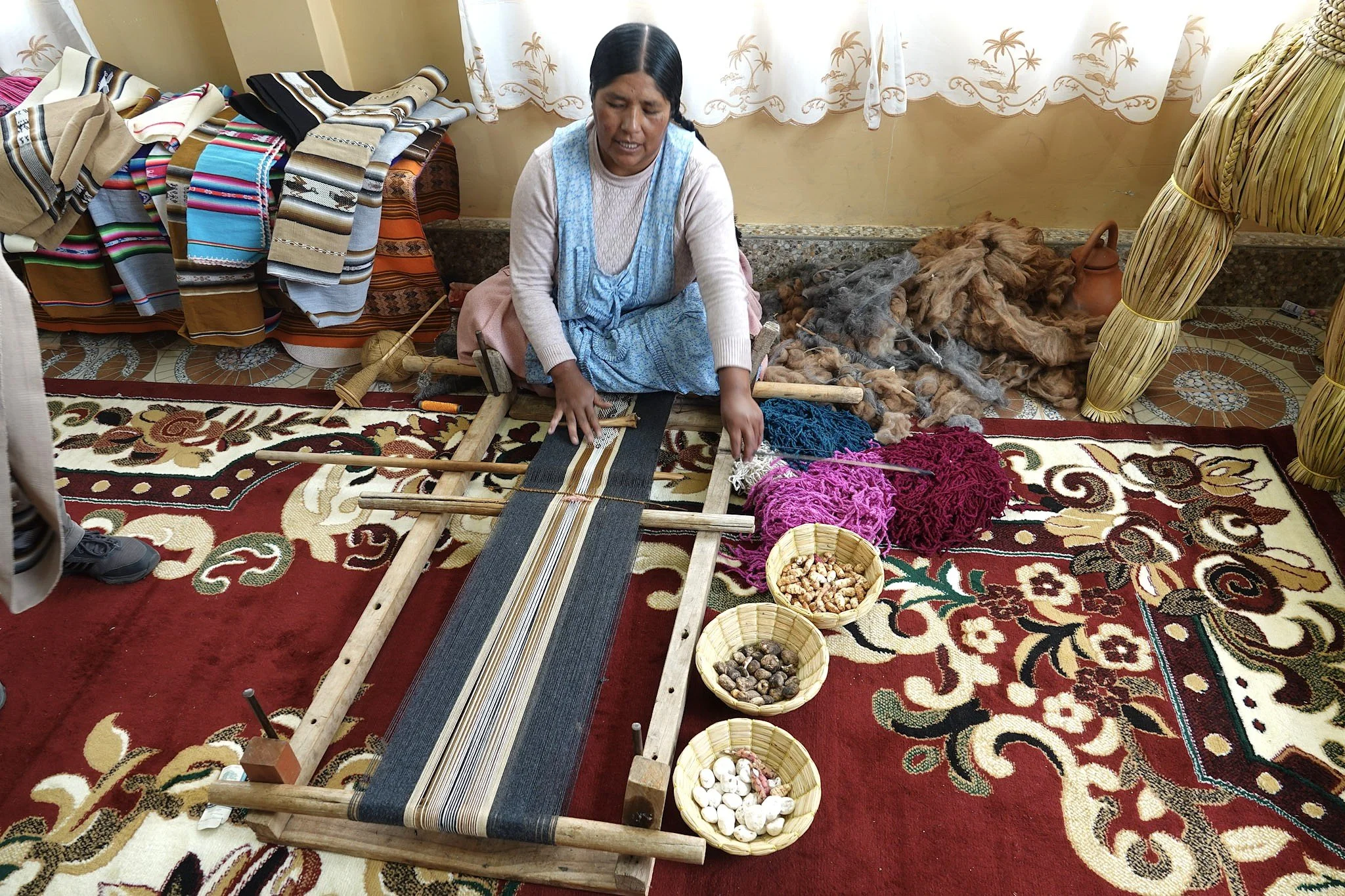
     In the back room of his business, we found his wife working as well, only she was doing weaving. Her work seemed pretty elaborate, and she seemed to be intent on her work.

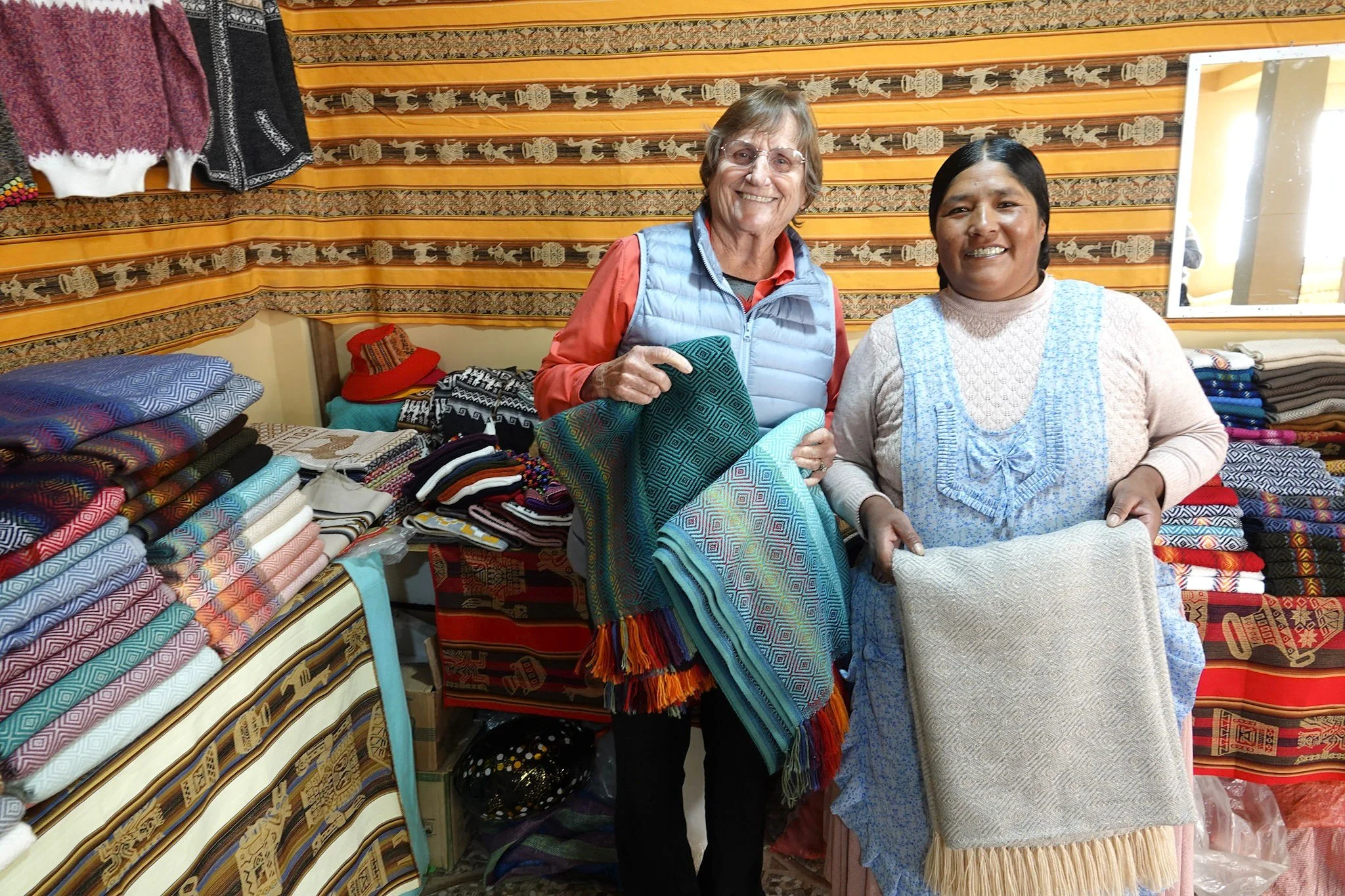
     We got her to take a break and of course, she sells her blankets. Vicky purchased three Alpaca blankets from her. They were very impressive blankets.


Copacabana

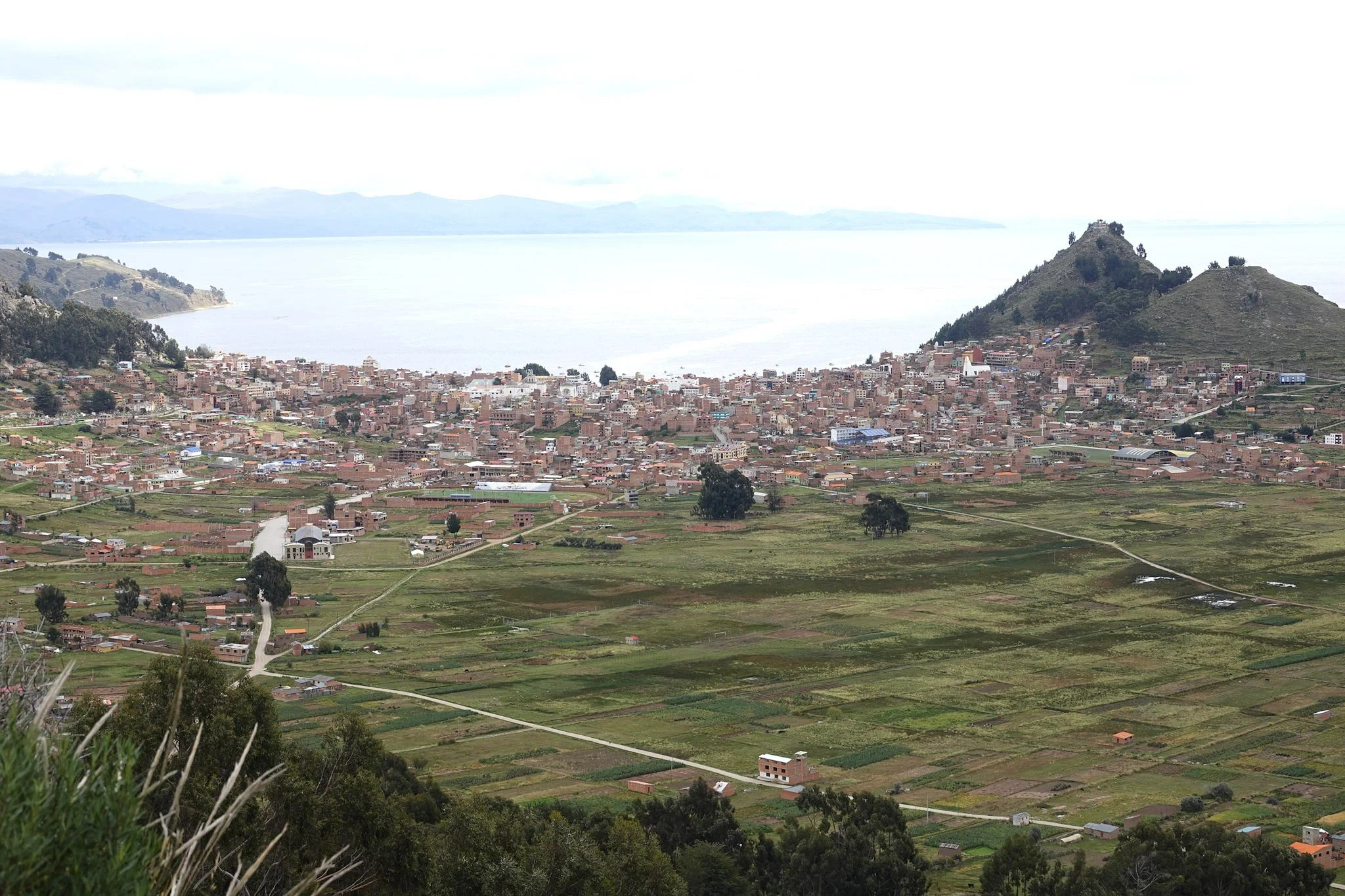
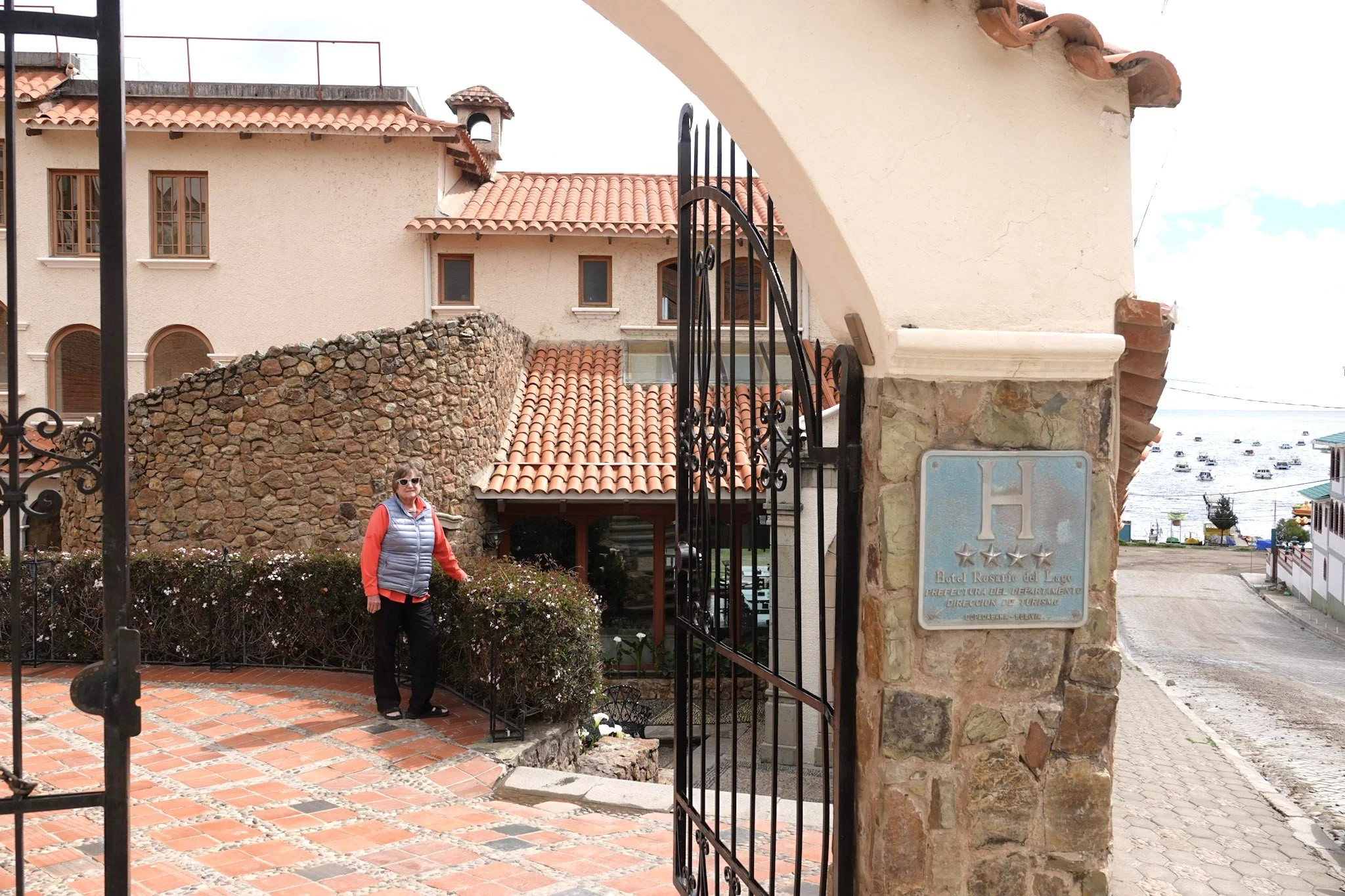
     Our destination and lodging at Lake Titicaca was in the town of Copacabana. The town was named Copacabana in 1530, so this is the original Copacabana. Our drive into the town took us over the 14,000 foot elevation mark and the lake itself is over 12,500 feet elevation. Copacabana is the main Bolivian town on Lake Titicaca. Today, the town is an important tourist destination known for its quaint atmosphere and its lake trout. It's known for its religious celebrations, cultural traditions, and its festivals. The town has around 6,000 inhabitants. You can see our first glimpse of Copacabana below.

     We checked into the Hotel Rosario del Lago, which was very nice. We had a great lake view from our room.

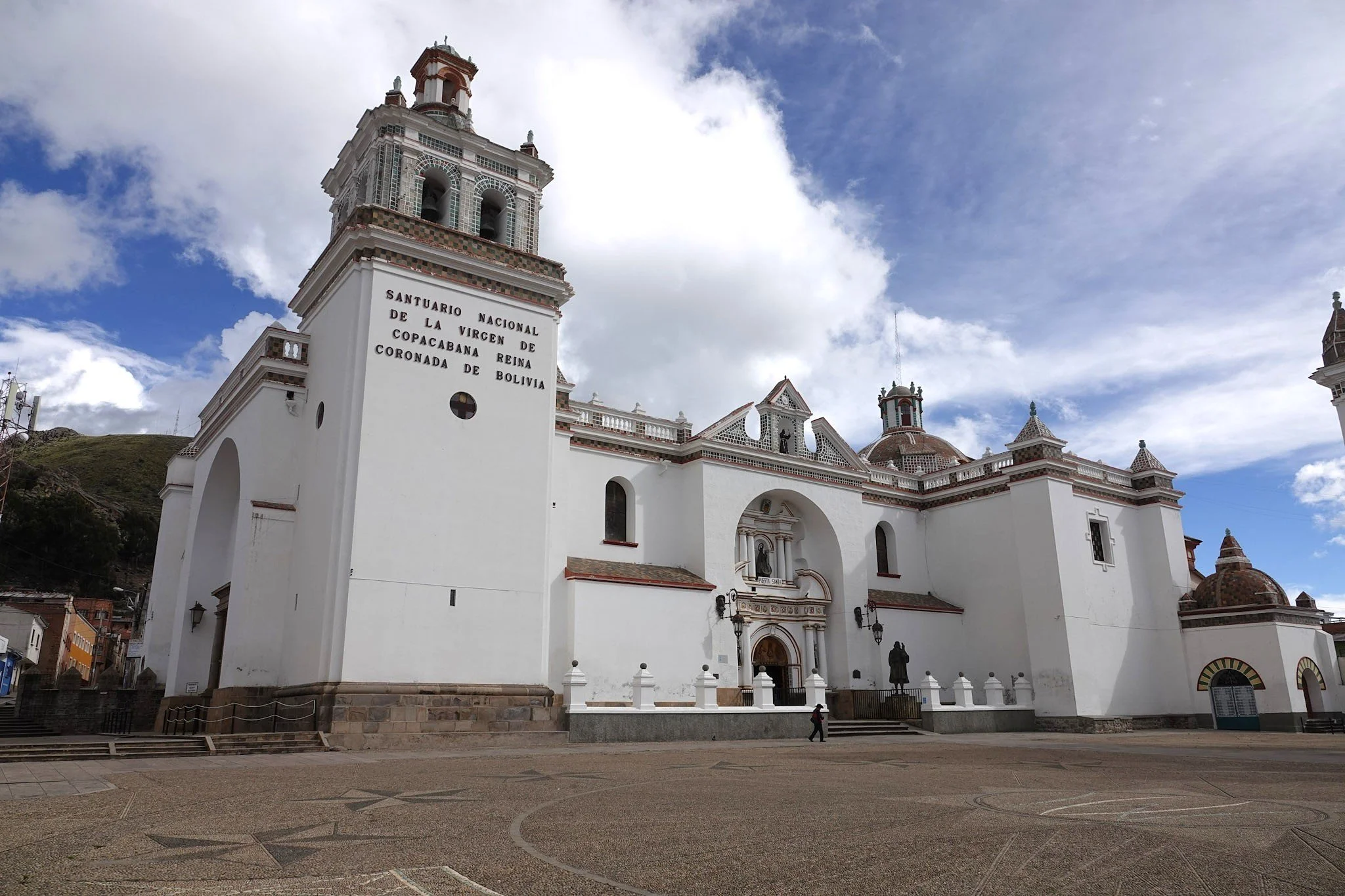
     We took an hour and forty-five minute hike around town. The highlight, besides the lake, was probably the Basilica of Our Lady of Copacabana. The altar dates to 1614 and it's a major and historically significant church, in the Moorish style. Our Lady of Copacabana is the patron saint of Bolivia. The church was mostly built in the 17th century. At 12,800 feet elevation, visiting the church was still a little tiring.

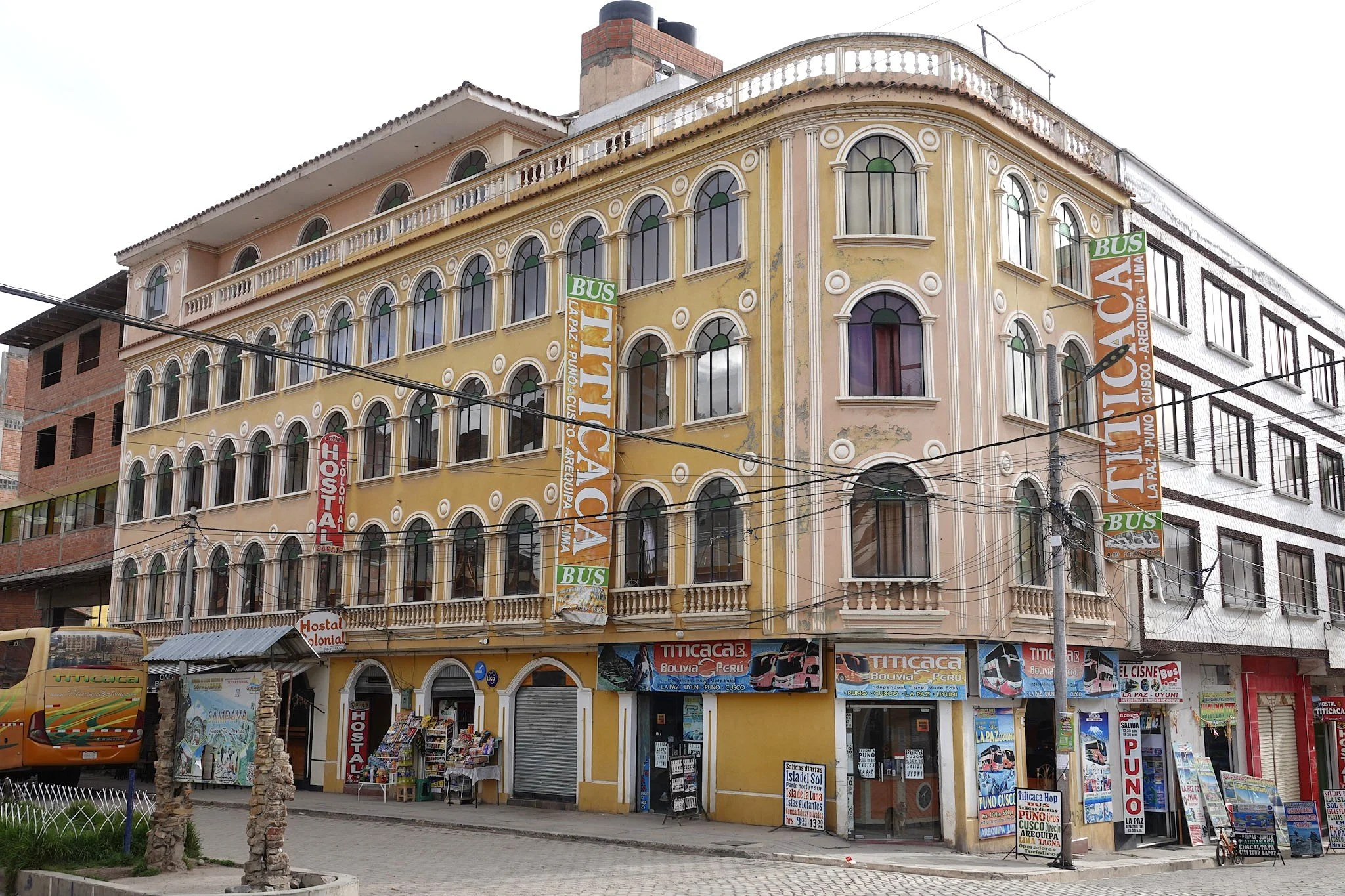
     Walking the town was not overly exciting, but they do have a few remnants of the colonial period to see.

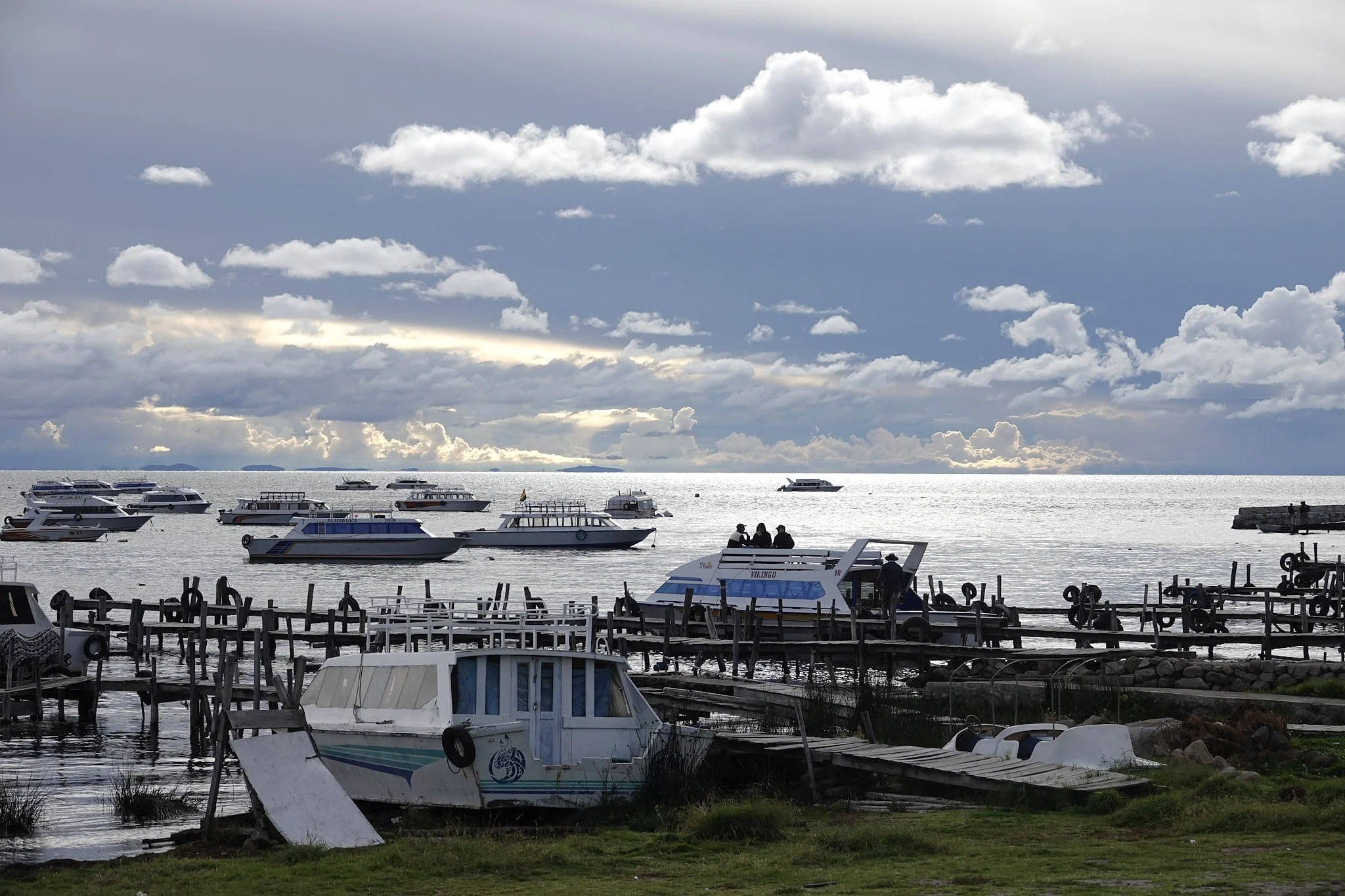
     For me, Lake Titicaca was the highlight of visiting Copacabana. We spent most of our time just viewing the lake.

Island of the Sun

     From Copacabana, we took an hour plus boat ride out into Lake Titicaca in a steady rain. But before we arrived at the Isla del Sol, the rain stopped and the sun came out. The Island of the Sun is located in the Bolivian portion of the lake. Archeological evidence suggests that it has been inhabited since the third millennium BC. It features over 80 Inca ruins, agricultural terraces, ancient ruins, and a rich cultural heritage. The island is only about 5.5 square miles.

     Our guide said that, according to Andean legend, gods rose from the waters of the lake to found the Incan Empire. I was quite amazed to think that the Incan empire started on an island in the middle of Lake Titicaca, but hey, when gods are involved, who knows what to expect.

     Our first stop on the island was to see the Temple of the Sun. Our guide called it the Pilko Kaina archeological site. It's an Incan site including the palace-like temple dedicated to the sun god, Inti. You can see the temple of the sun as we approached the island and again, after we climbed up to the temple level. You might also notice that the hillsides around the temple were once extensively terraced.

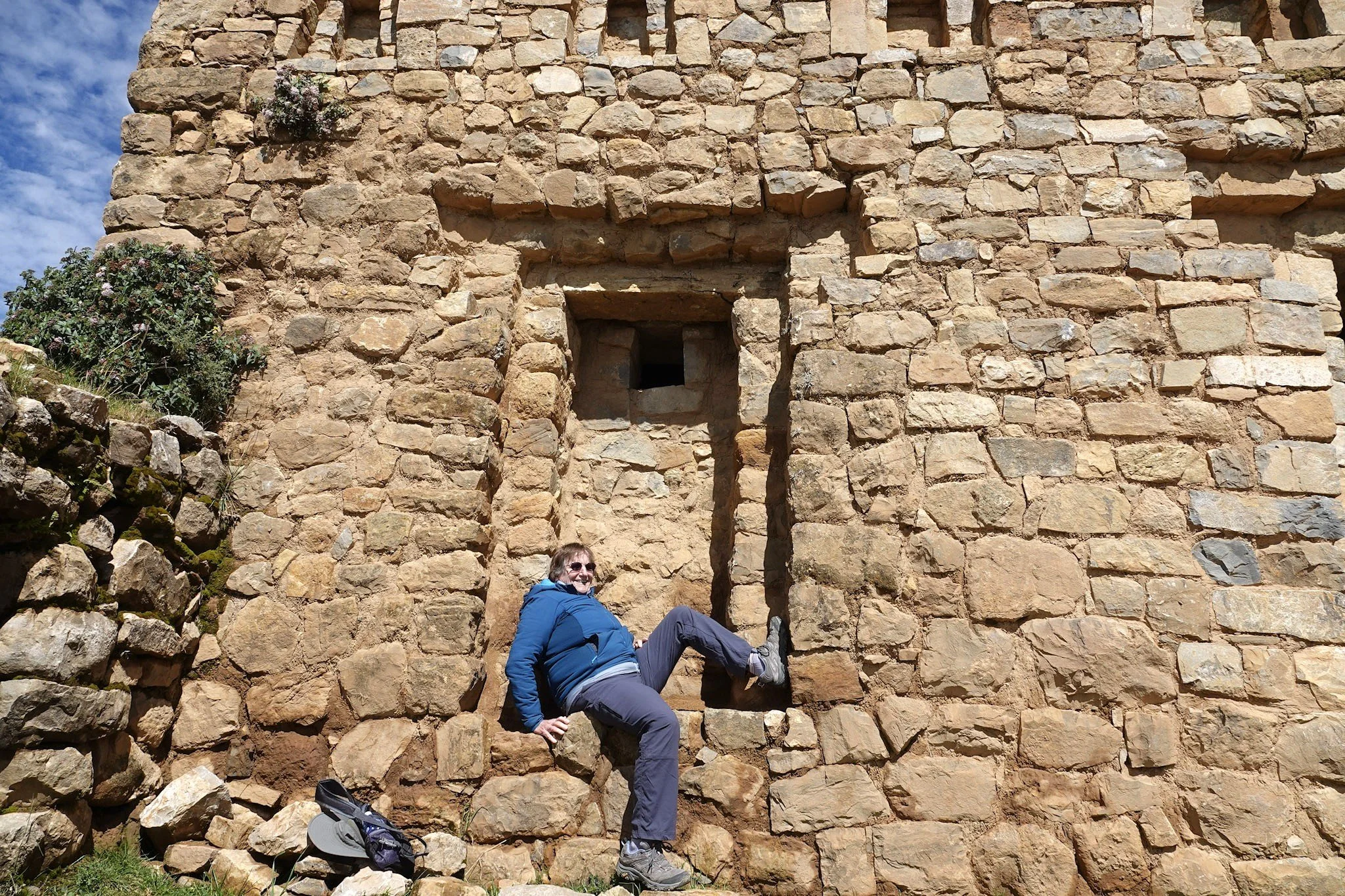
     Our guide said that the temple of the sun had 173 gold statues and idols installed in it, from quite small to human-size. The Spaniards eventually arrived here and stole all the golden statues and idols, melted them down, and sent the gold back to the King of Spain. Too bad for the Spaniards, I discovered that they left the most valuable one, right in place. Actually, it appears to have slipped down a bit.

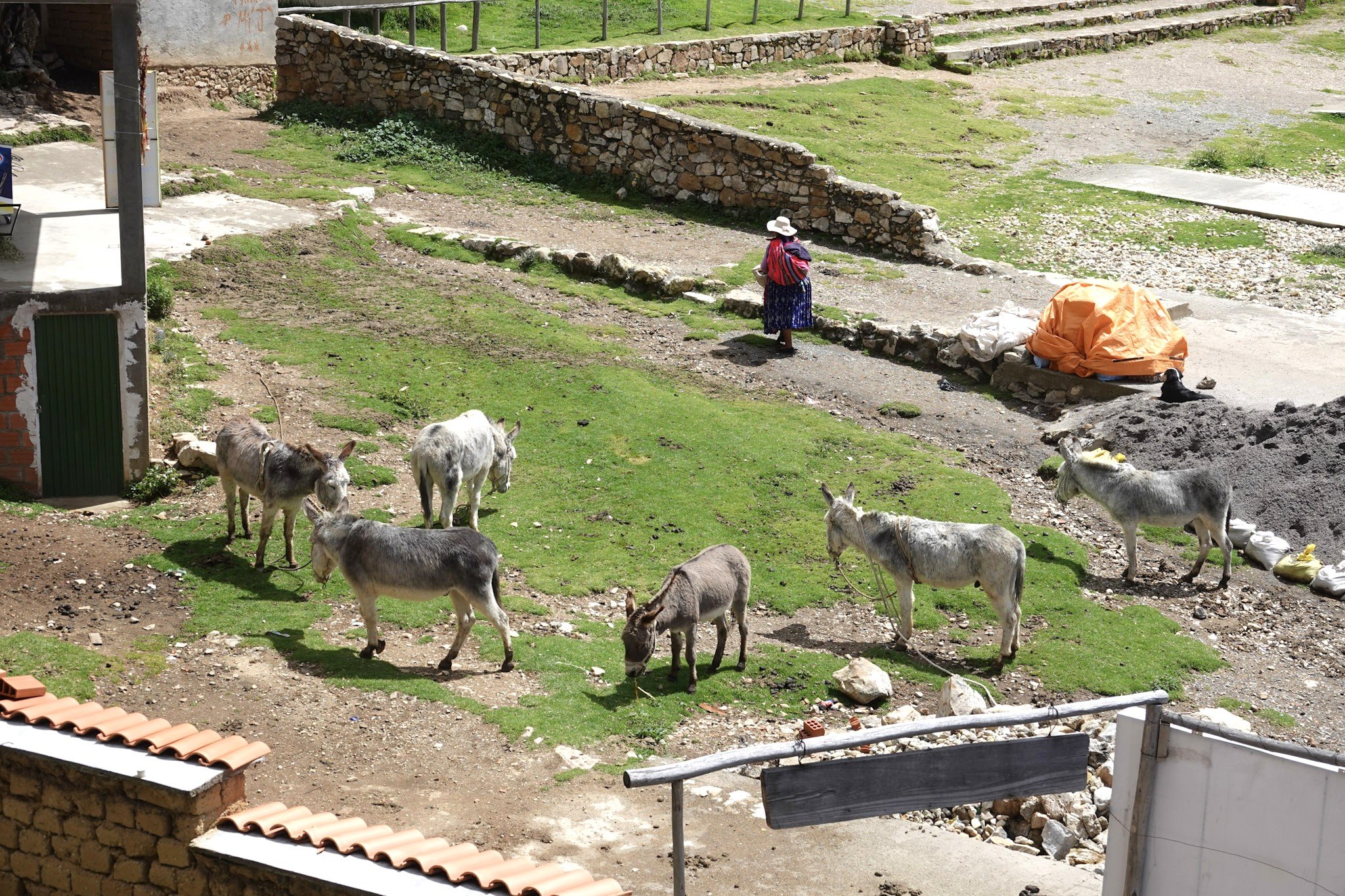
     We left the temple on our boat and made the short trip to Yumani, one of the two largest villages on the island. The Island of the Sun has no vehicles of any kind. It has boats and footpaths for the roughly 800 families that live on the island. At Yumani, we discovered that they do have some help with transportation.

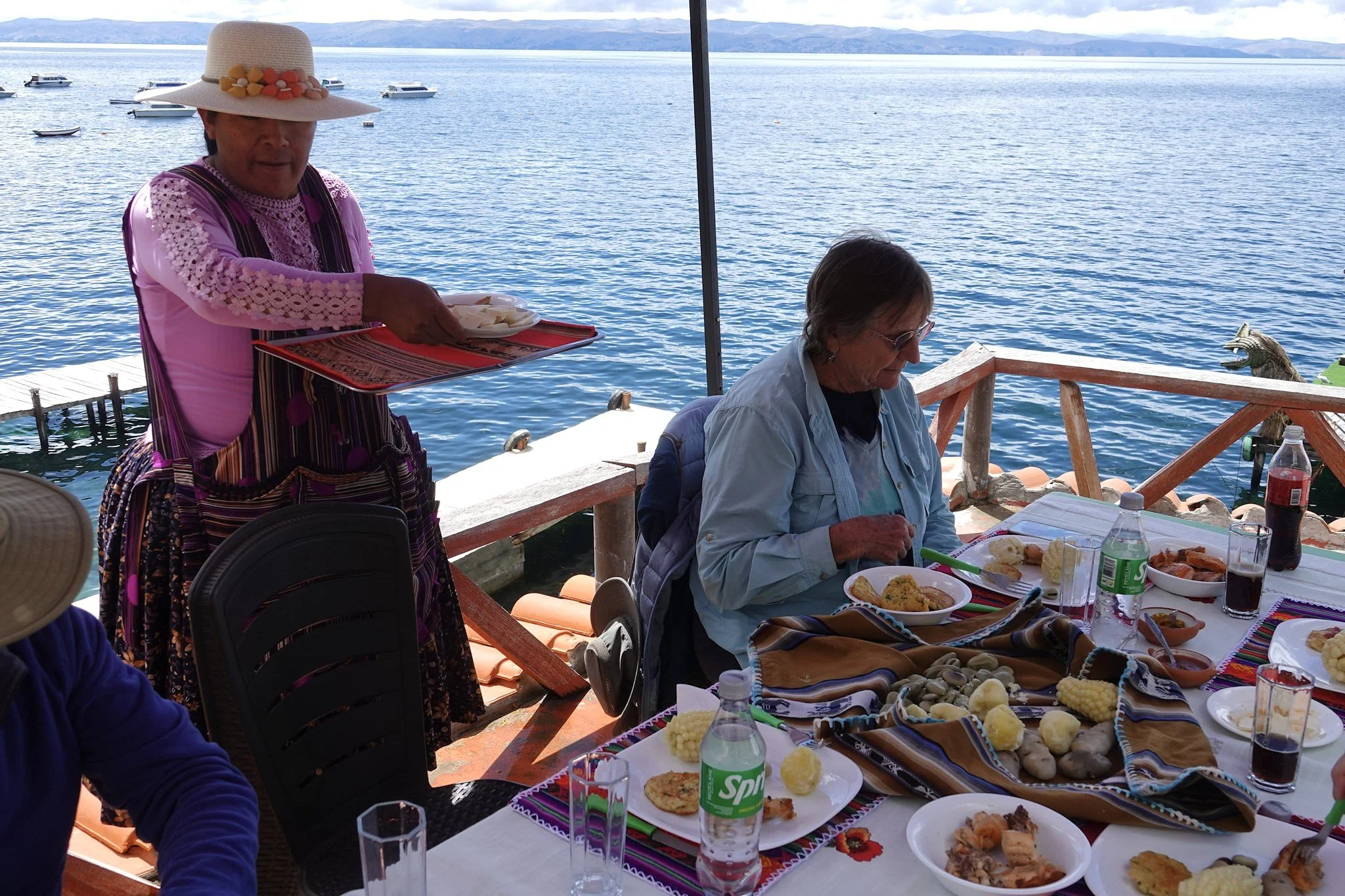
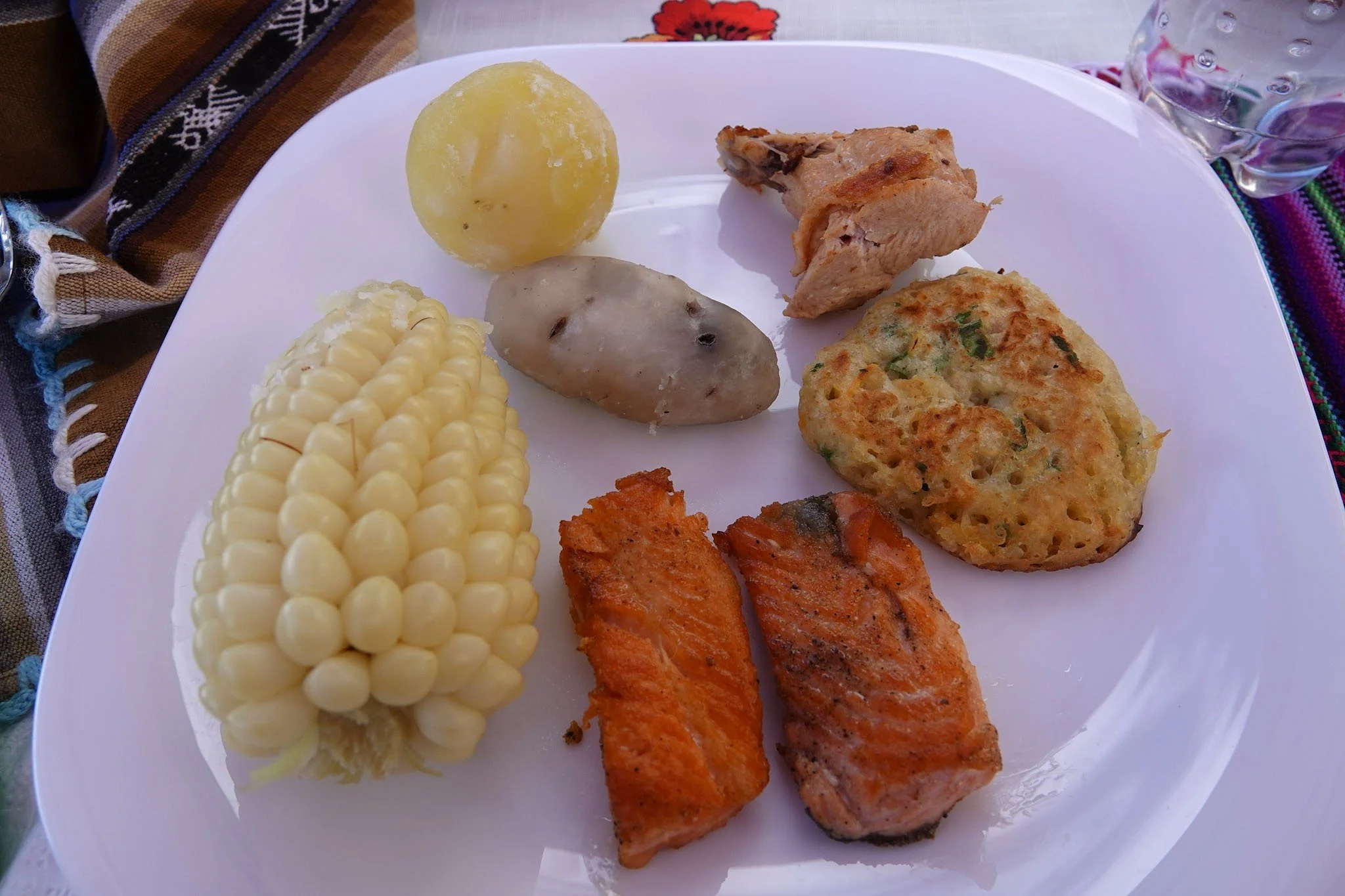
     We ate lunch at the Yumani Restaurant. We had an "Apphapi" lunch, which means a native sharing meal. It was fresh trout, chicken, two types of potatoes corn, fava beans, quinoa fritters, homemade cheese, condiments, drinks, and an orange for dessert.


Bolivian Housing

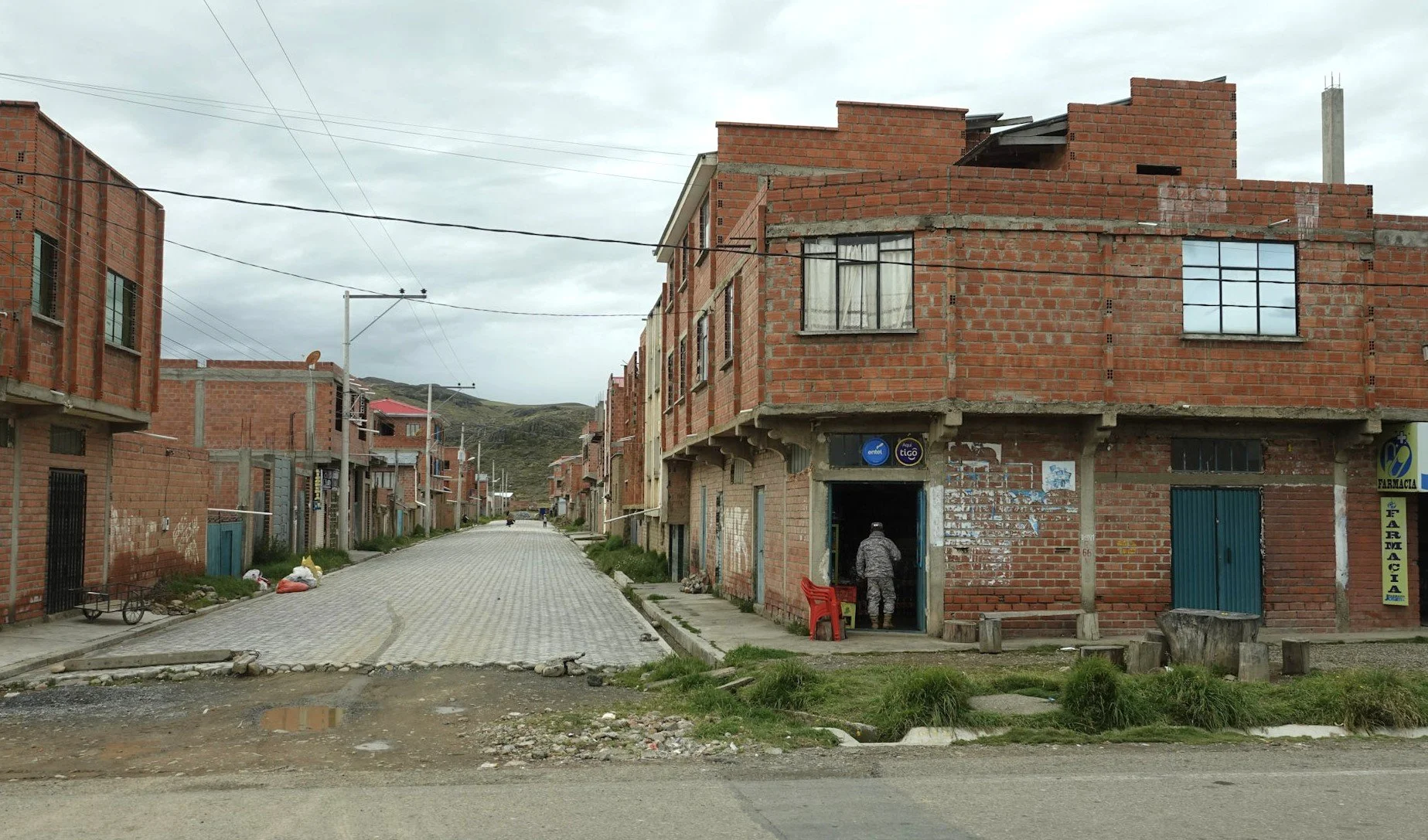
     From our first day in Bolivia, I was interested in their housing. Looking over La Paz, it was obvious that brick housing seemed to be the favorite choice.

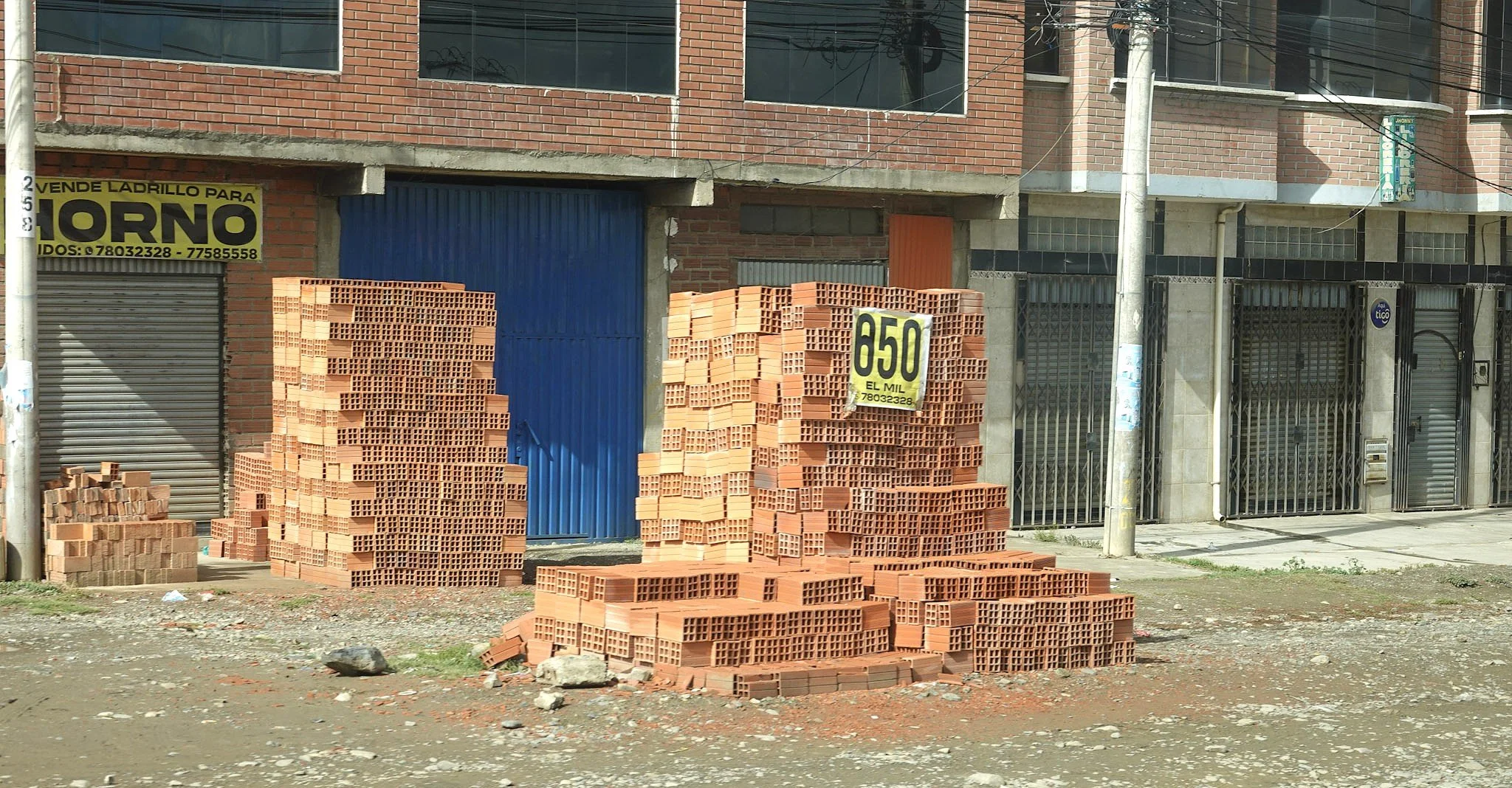
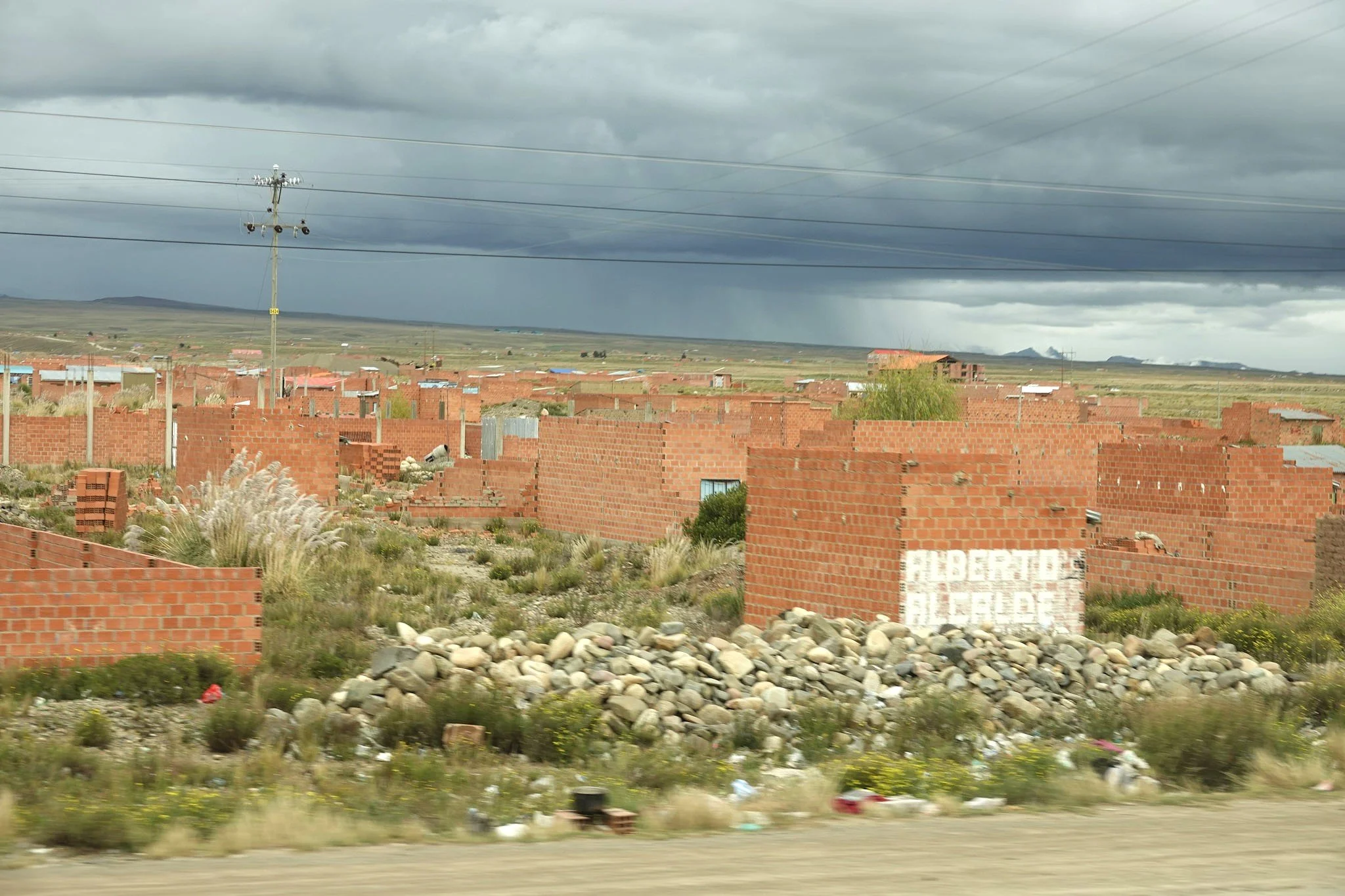
     As we traveled around Bolivia, both in towns and out in the country, I couldn't help but notice that there were piles of bricks everywhere. They were in front of businesses and houses, on the side of the road with nothing around, and pretty much, everywhere else.

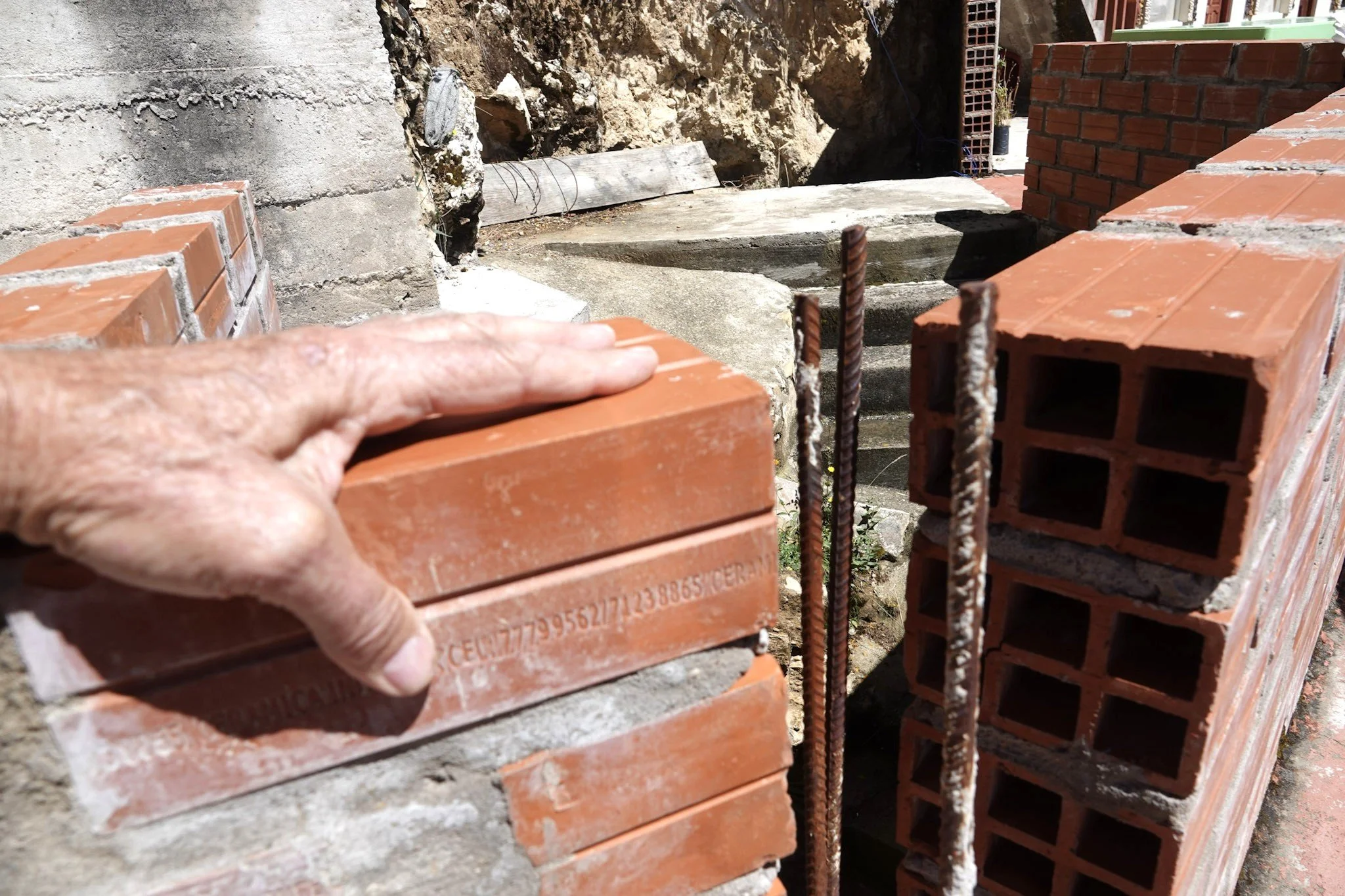
     At one point, I got close to some brick work under construction and took the next photo, just to satisfy my own curiosity. The bricks were roughly 3" by 4" by 8". The bricks also contained six large square holes in each brick.

     I finally asked our guide about all the bricks. He said that most people build their own houses and mostly use bricks. He said that land is cheap if you go far enough from the main towns. He said that bricks are 1,000 bricks for $60 US dollars. He said that rebar and cement are also cheap. He said that 72.2 percent of Bolivians own their own homes. I'm confident that this is a higher percentage than in the US.

     Our guide said that he purchased his land in the year 2000 for $13,000. He built a 2,000 square foot home for $65,000. We visited the markets where he purchased his doors, windows, etc. I have to think that such a high percentage of home ownership gives Bolivia a tremendous measure of stability.


Titwanaku

    We drove out of La Paz and back near Lake Titicaca again to visit Tiwanaku, a Pre-Colombian and Pre-Incan archeological site. It is believed to date back to around 600 BC. The city was built, according to our guide, 1,000 years before Machu Picchu and well before Incan times. Archeologists believe that perhaps 20,000 to 60,000 people lived here.

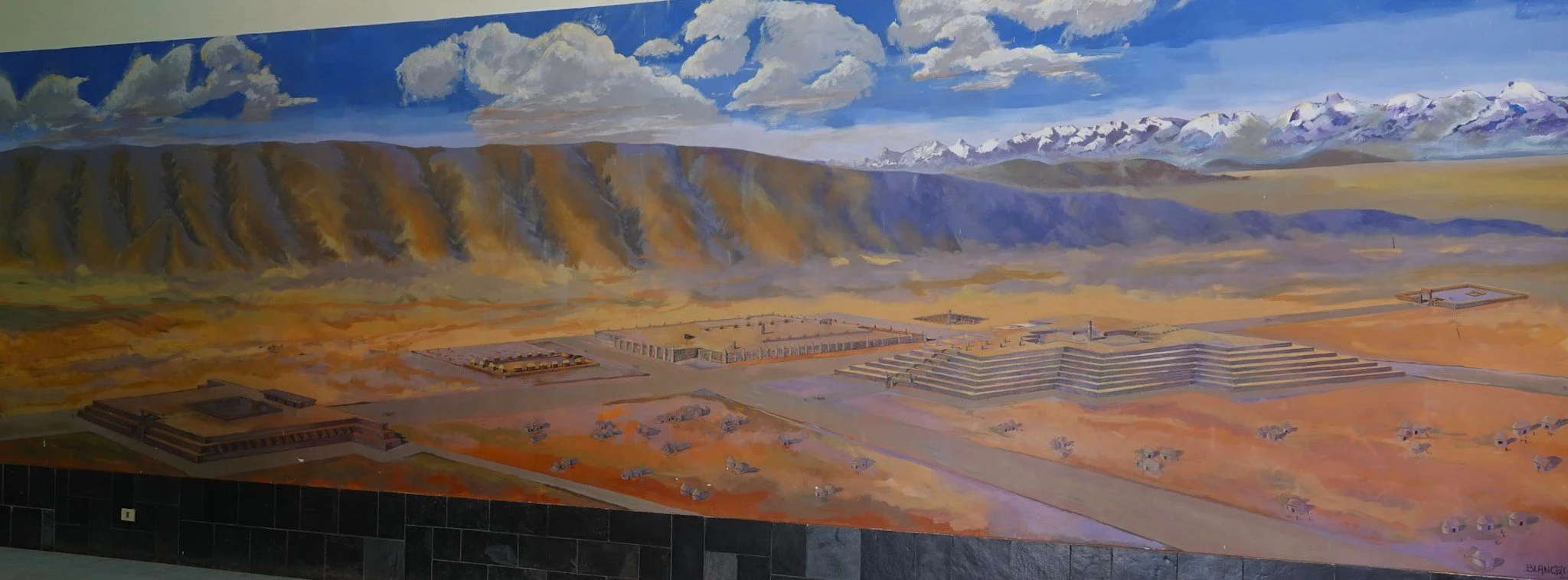
     We started our visit here by going through their two museums: the Ceramic Museum and the Lytic Museum. The museums house works from this ancient city. We also learned some interesting facts such as they floated some of the very large stones to here from 65 miles away, by reed boats, when Lake Titicaca was 210 feet higher than it is now. I took the following photo of a photo in the Ceramic Museum. It purports to show what Tiwanaku looked like in its heyday.

     We spent several hours here and walked to all the main areas for viewing. Our guide gave us information along the way. The site includes monumental structures, megalithic blocks, decorated ceramics, and more, but according to a University of Pennsylvania archeologist, only 7 percent of this site has been uncovered so far. Most of the rest is down below. Our guide called this site the Andean Mecca.

     Most parts of the city were built by "7's" such as seven platforms, seven graves, etc. but it's not known why. We saw the main platform remains with a combination of original stones and replacement stones. 

     Tiwanaku was built with North-South and East-West lines of alignment. It had three levels to the city: upper world, middle world, and lower world. We saw the Gate of the Sun and some statues, and they all aligned with the Line of the Equinox.

     The last photo was a graveyard which was interesting when our guide gave us lots of information. This area had lots of original stones.


Bolivian Food

     We enjoyed our meals in Bolivia very much. We ate as local as we could and never resorted to burgers or pizza, which they have plenty of in Bolivia. I will just show a few dishes that we enjoyed on our stay in Bolivia. Beans, potatoes, corn, and quinoa are as common meal ingredients as can be. We had lots of fish and meats too. We always got dessert with our meals.

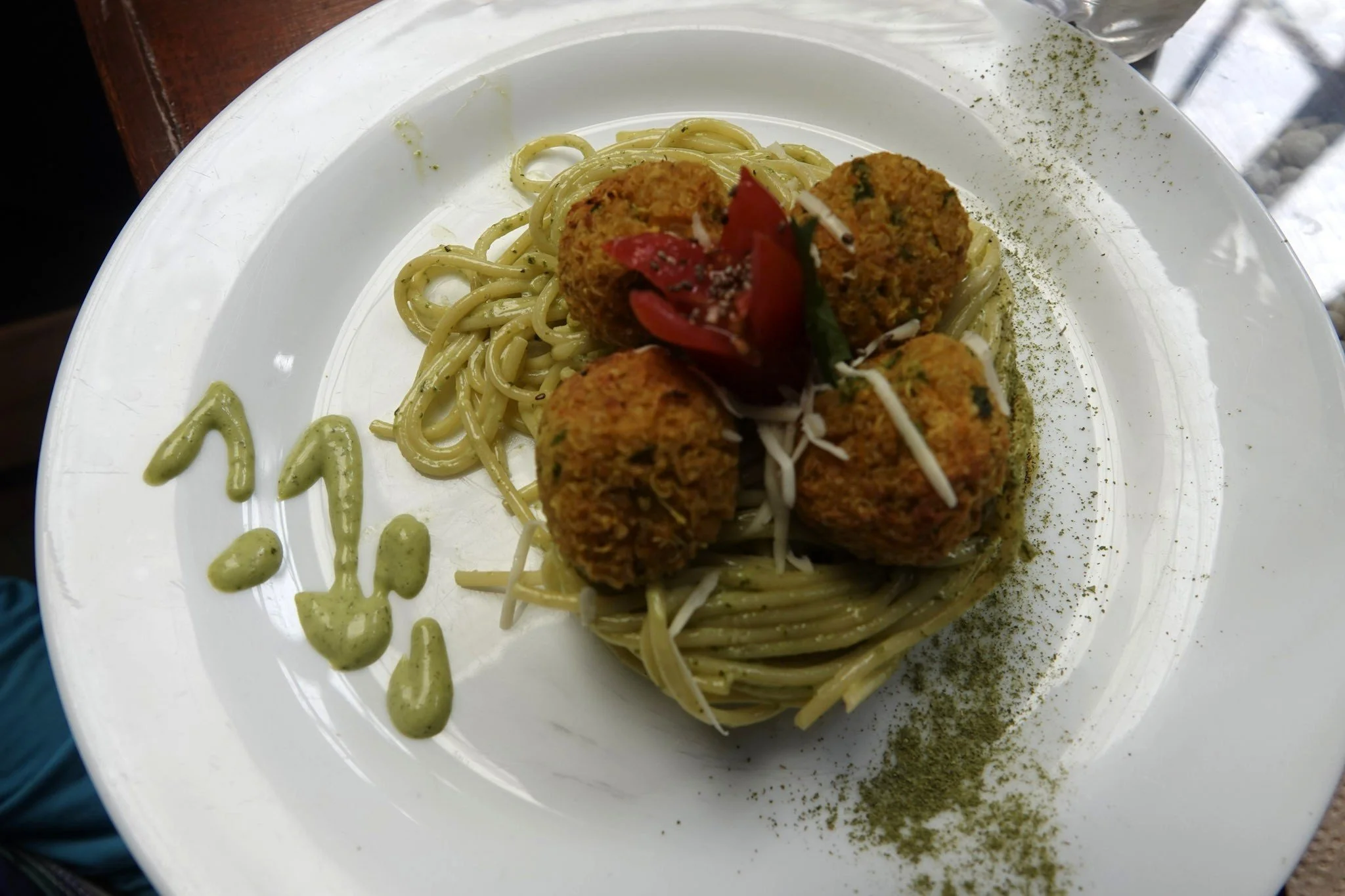
     This first dish was quinoa croquettes with pasta cu pesto.

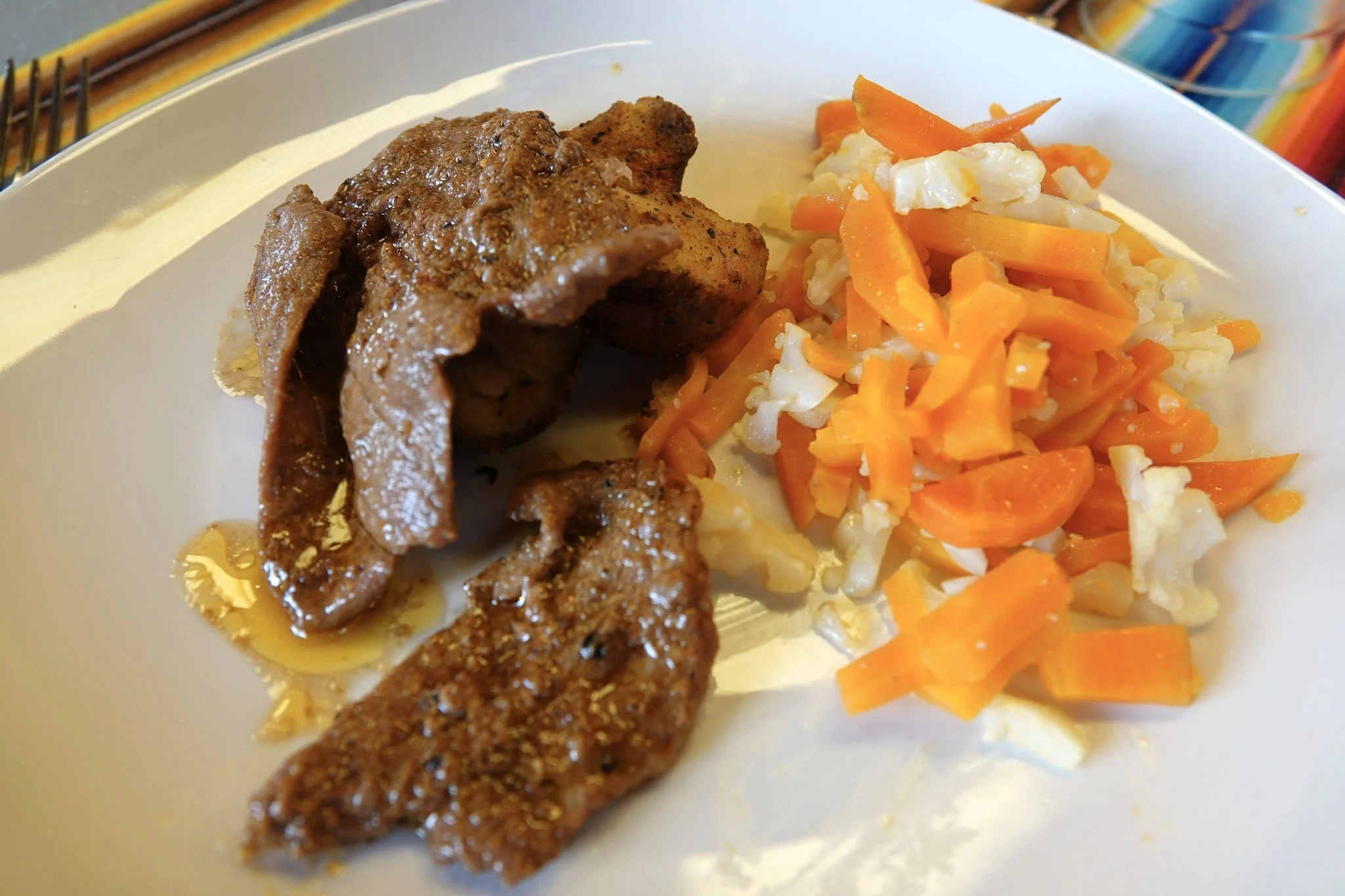
     I couldn't pass up ordering the Llama steak with potatoes, carrots, and cauliflower. It was thin cut, rich, and tasted like beef. This was at the Eco Restaurant in Tiwanaku.

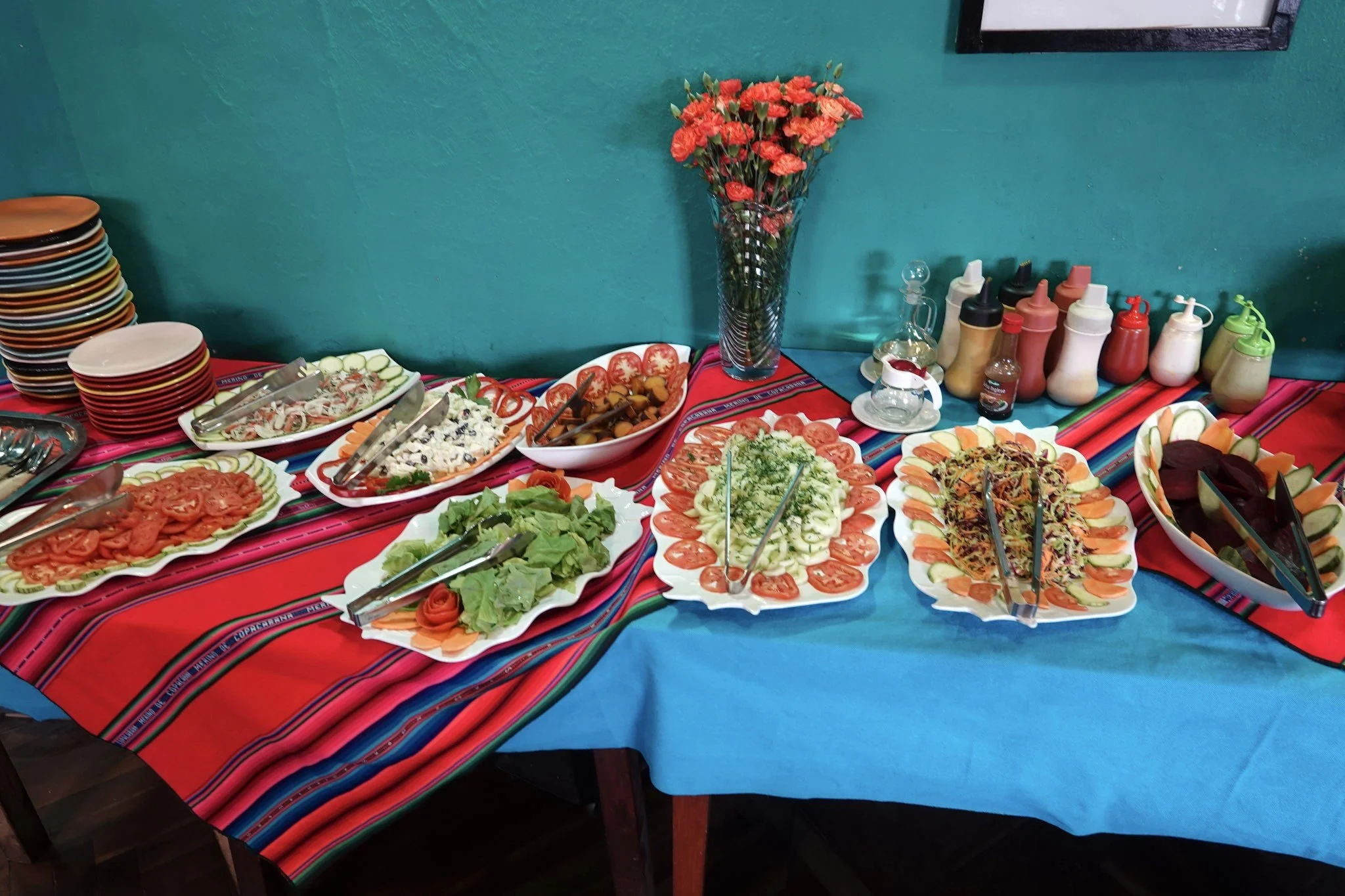
     We enjoyed a nice salad bar at the La Viscacha restaurant in La Paz. I tried a little bit of everything and it was all very fresh and delicious.

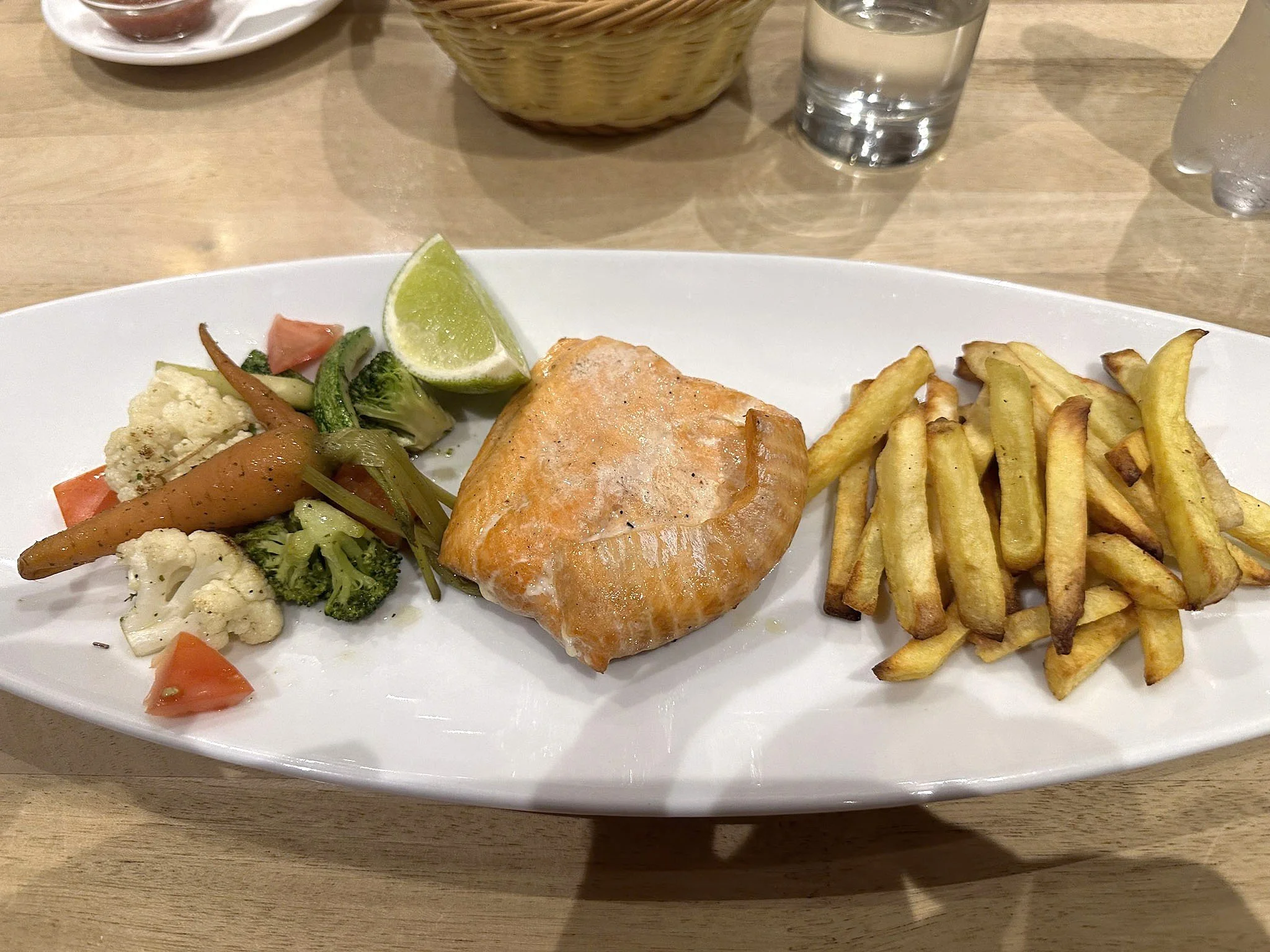
     For our dinner at our hotel in Copacabana, I had the fresh grilled trout with mixed vegetables and French fries.

     Our lunch at the Yumani Restaurant on the Island of the Sun in Lake Titicaca was a very traditional or native meal, called Apphapi. We had trout, corn, two types of potatoes, chicken, quinoa fritters, along with condiments, homemade cheese, drinks, and an orange for dessert.

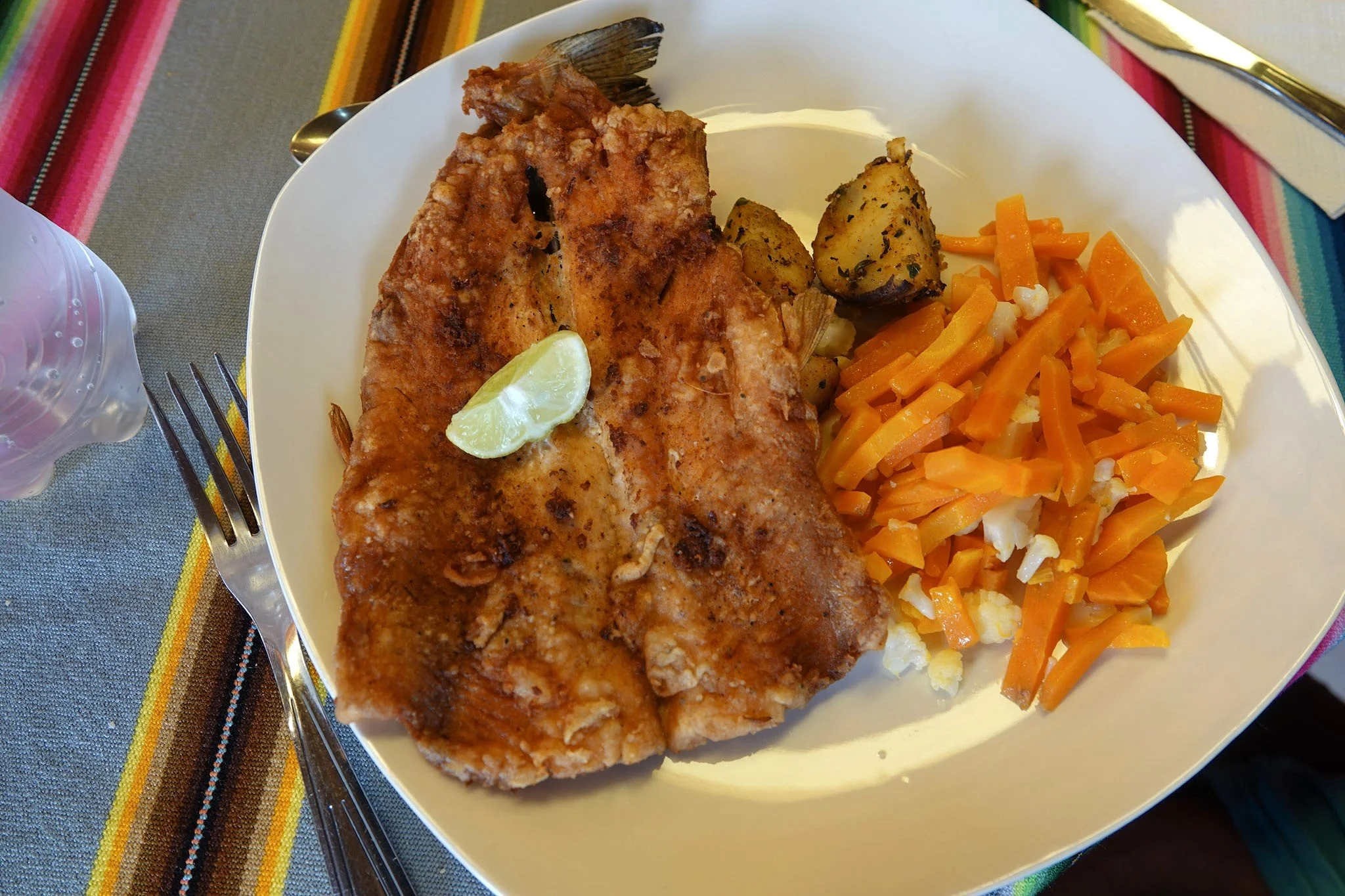
     Also in Tiwanaku, Vicky had fresh rainbow trout with potatoes, carrots, and cauliflower. The trout was often extremely large, which surprised us, but it was also very delicious.

Bolivan Miscellaneous

     This post will conclude the Bolivian portion of our trip. I just thought I would throw in a few other items of interest before we move on to Colombia, part of the same trip.

The first photo was a fast-moving, winding-road bus photo, but I'll show it anyway. We were driving through the mountains on our way to Copacabana and Lake Titicaca. Our guide held up his phone, with an elevation app open, to show us that we were over 14,000 feet elevation. 

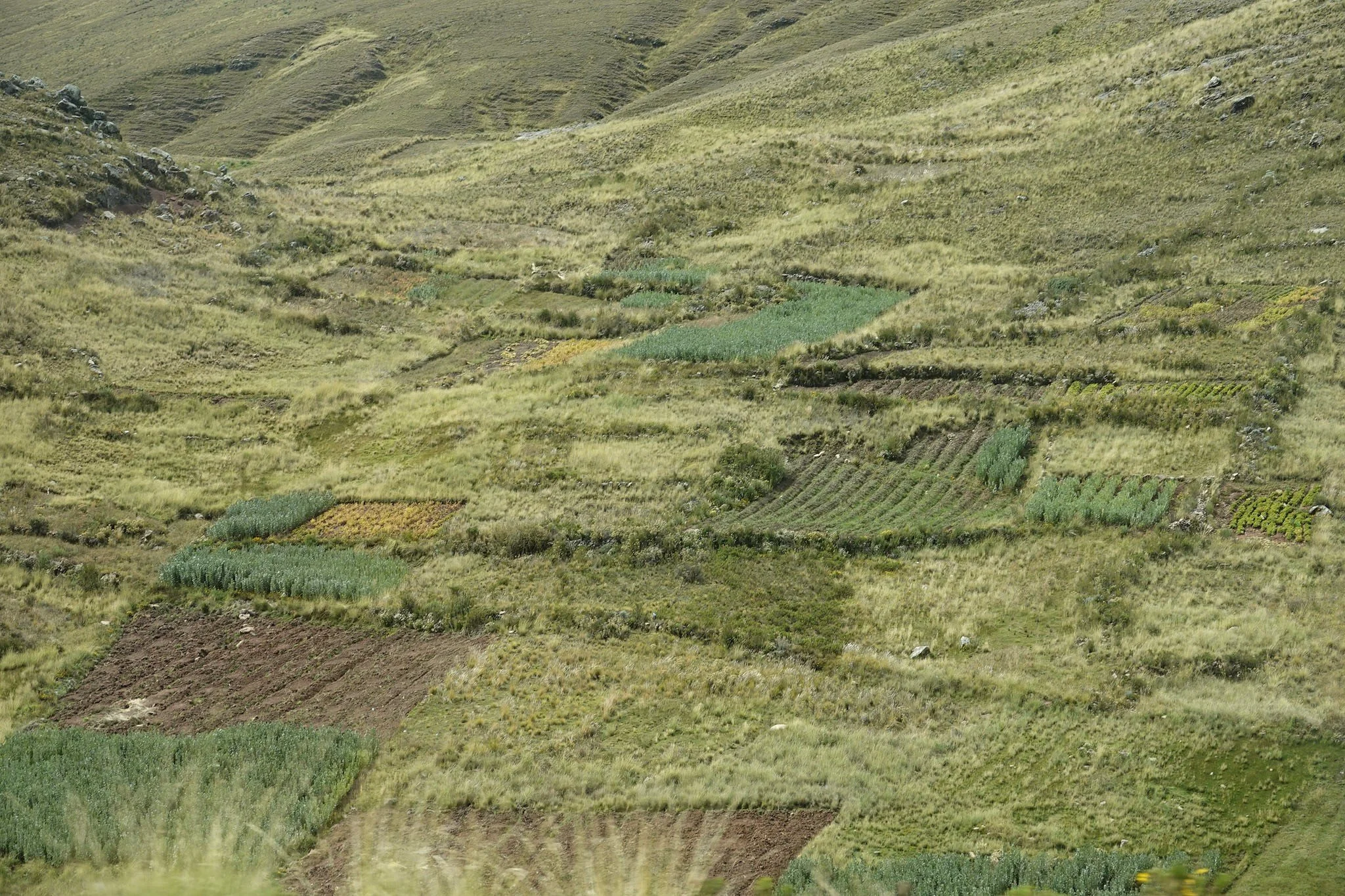
     I don't know what I expected to see but as I looked out, I saw some people working these fields. I asked our guide what they were growing here at over 14,000 feet elevation. He said it was mostly potatoes. So there you go.

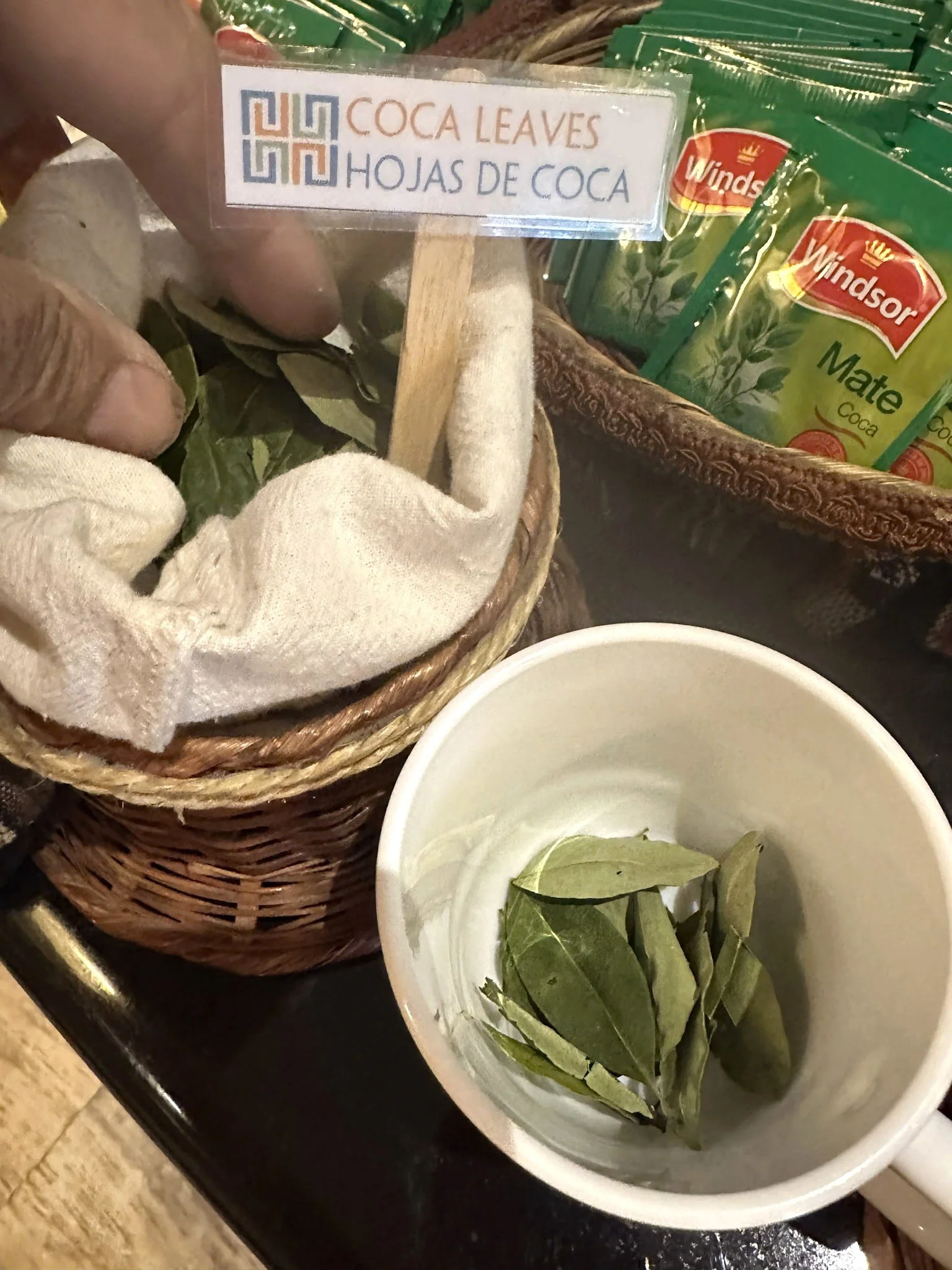
     Speaking of elevation, we didn't have an opportunity to buy oxygen cannisters in Bolivia, because they don't have them. Our guide strongly suggested that we drink lots of Coca Tea. We did, every morning for breakfast, instead of coffee. They had both Coca tea leaves and Coca tea bags. We went with the Coco leaves. We just put a bunch of leaves into our cups and poured the hot water over them, let it steep, and drank it. If it had any effects, I was not aware of them. And yes, they are the final ingredient  needed to make cocaine.

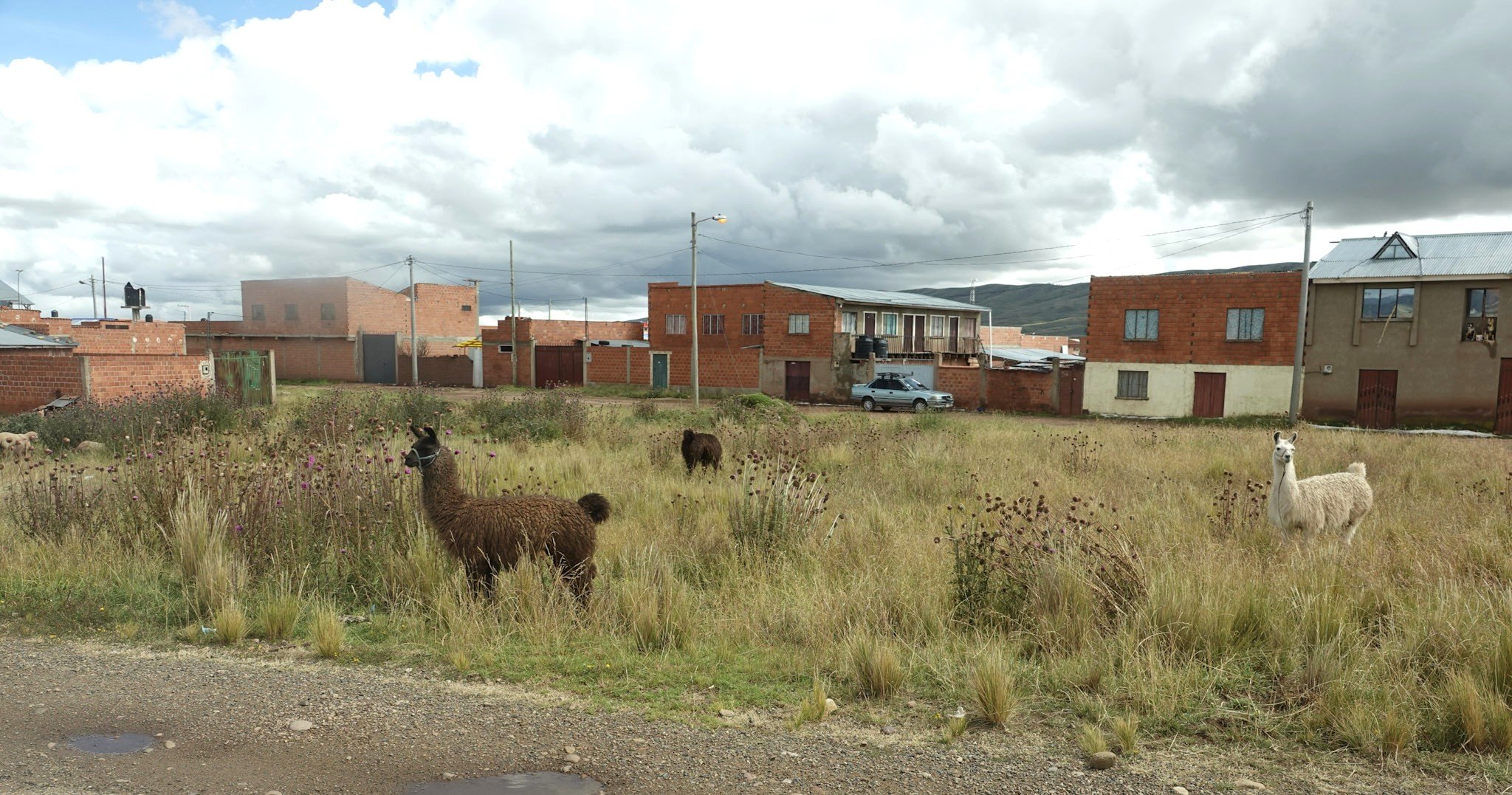
     We didn't see much wildlife in Bolivia but of course, we were not in the Amazon but rather in the Andes. We did, however, manage to come upon a few animals, so I'll just show this one photo of a few Llamas that were grazing near Tiwanaku. These were someone’s animals, grazing on a lead rope.

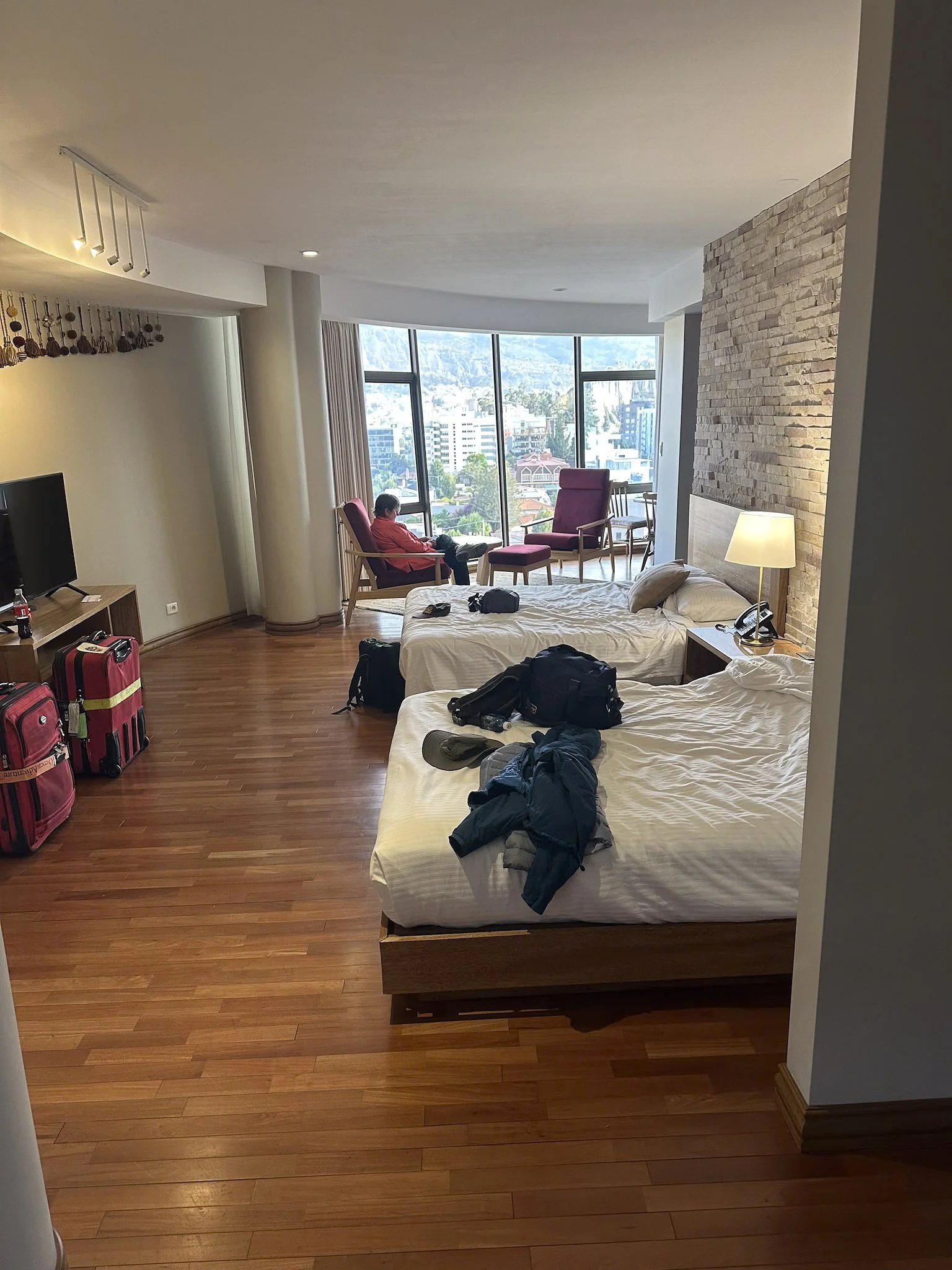
     Our accommodations in Bolivia were quite nice. We had big rooms with great views. This was our room in La Paz at the Botique Rosario del Sur. This is just the main portion of the room. To the right in the back, we had a kitchenette with a table, chairs, fridge, microwave, etc. The bathroom was to the right of the wall and almost as long as the wall. It had everything.

     Our hotel on Lake Titicaca in Copacabana was also very nice, and we had another great view. One of my goals for Bolivia was to find the trail of Butch Cassidy and the Sundance Kid. I never managed that as they were in southern Bolivia and we never got down that way. I suppose that was silly on my part, but I've always liked chasing rainbows....