La Paz
We started our Bolivian tour in La Paz. It is the seat of the government of Bolivia and the highest national capital in the world. It's also one of the largest cities in Bolivia with over two million people in the metropolitan area. La Paz in in the valleys of the Andes Mountains and peculiar in that it's a mountainous town but it's also a very large city. La Paz looks like a bowl-like depression in the mountains with higher mountains surrounding it, some of them snow-covered.
La Paz was founded as a city in 1548 by a Spanish conquistador. It was on the site of an Inca village. They named it Nuestra Senora de La Paz or Our lady of Peace. I find that interesting that an invader named it that.
I found the elevation of La Paz to be the most interesting fact. The elevation of La Paz goes from 10,650 feet elevation to 13,250 feet elevation. So, you might know another person who lives in your town, La Paz, that lives at an elevation of 2,600 feet above or below you. Fascinating.
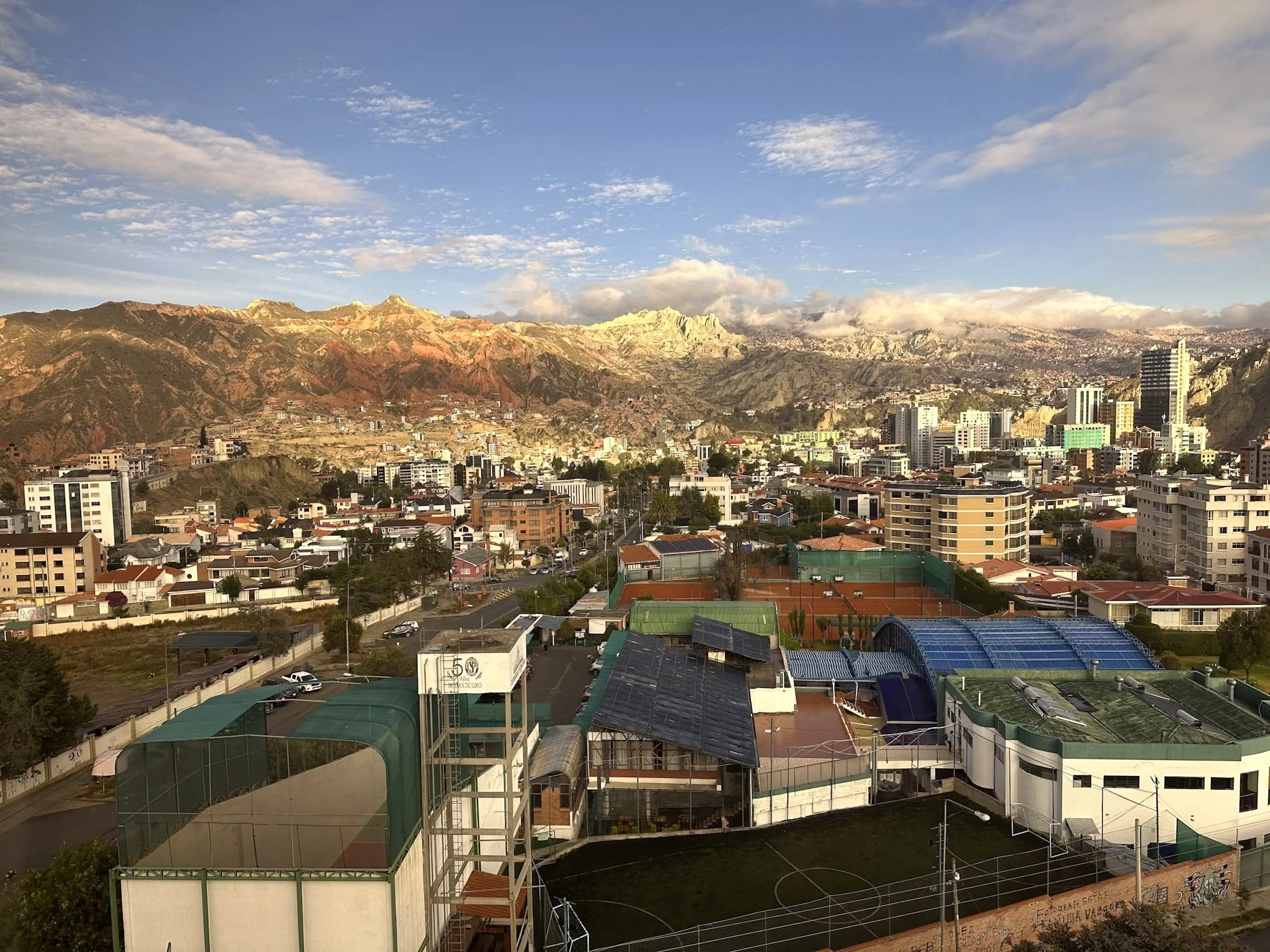
The lower end of La Paz is flatter and more affluent. We stayed at the lower end, due to the elevation, but we were still at 10,850 feet and also on the eighth floor of our hotel. But since we landed at the El Alto Airport, at 13,323 feet elevation, our hotel was much better. You can see our hotel room view below.
During our stay in La Paz, we drove and hiked up to the Killi Killi viewpoint. Our guide suggested that it was somewhat of a secret viewpoint. It was a really great one and we had a 360-degree view from up there. We spent quite a while and took lots of photos. I'll only include three photos but they give you a good idea of what La Paz is all about as a city.
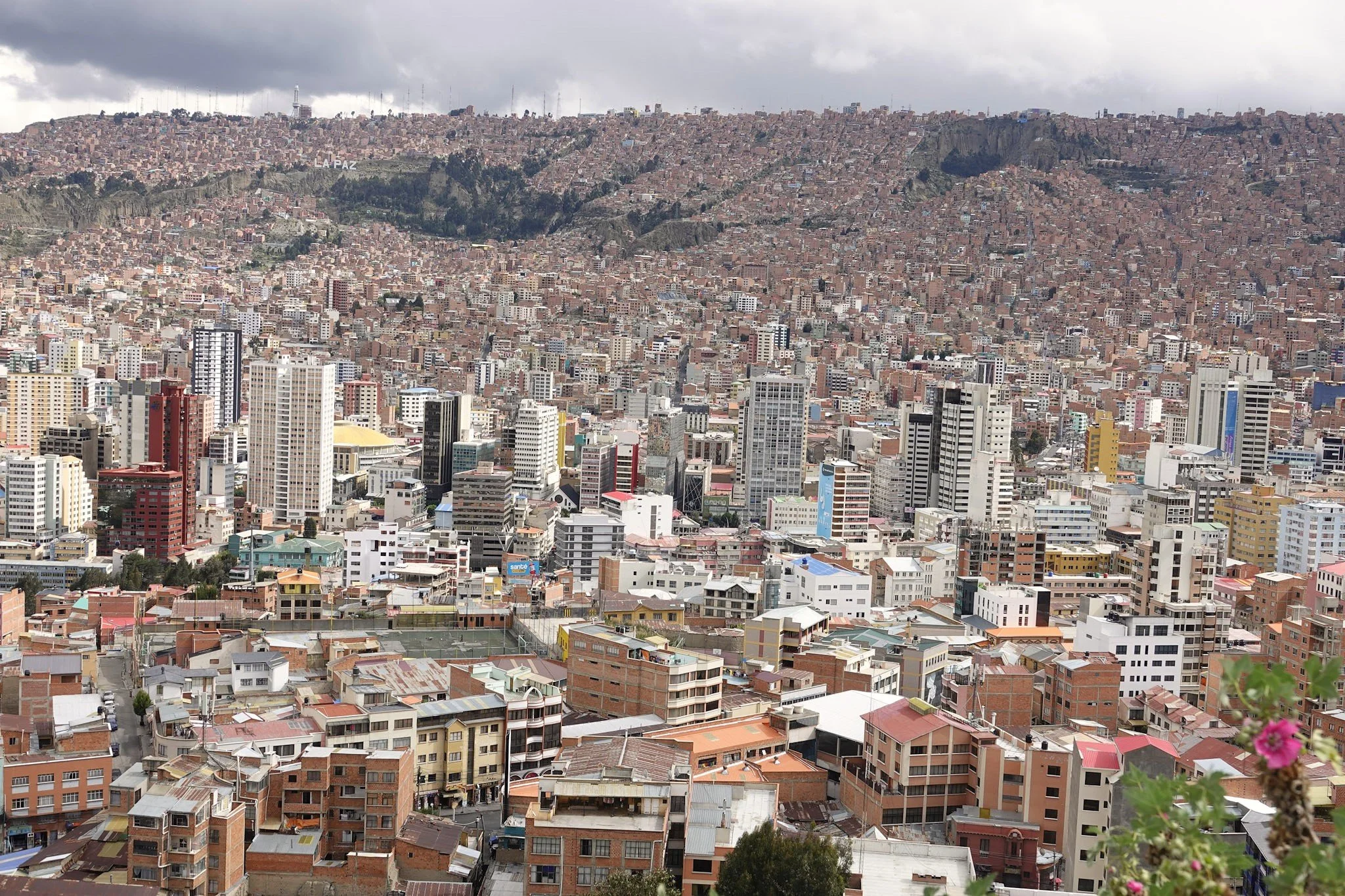
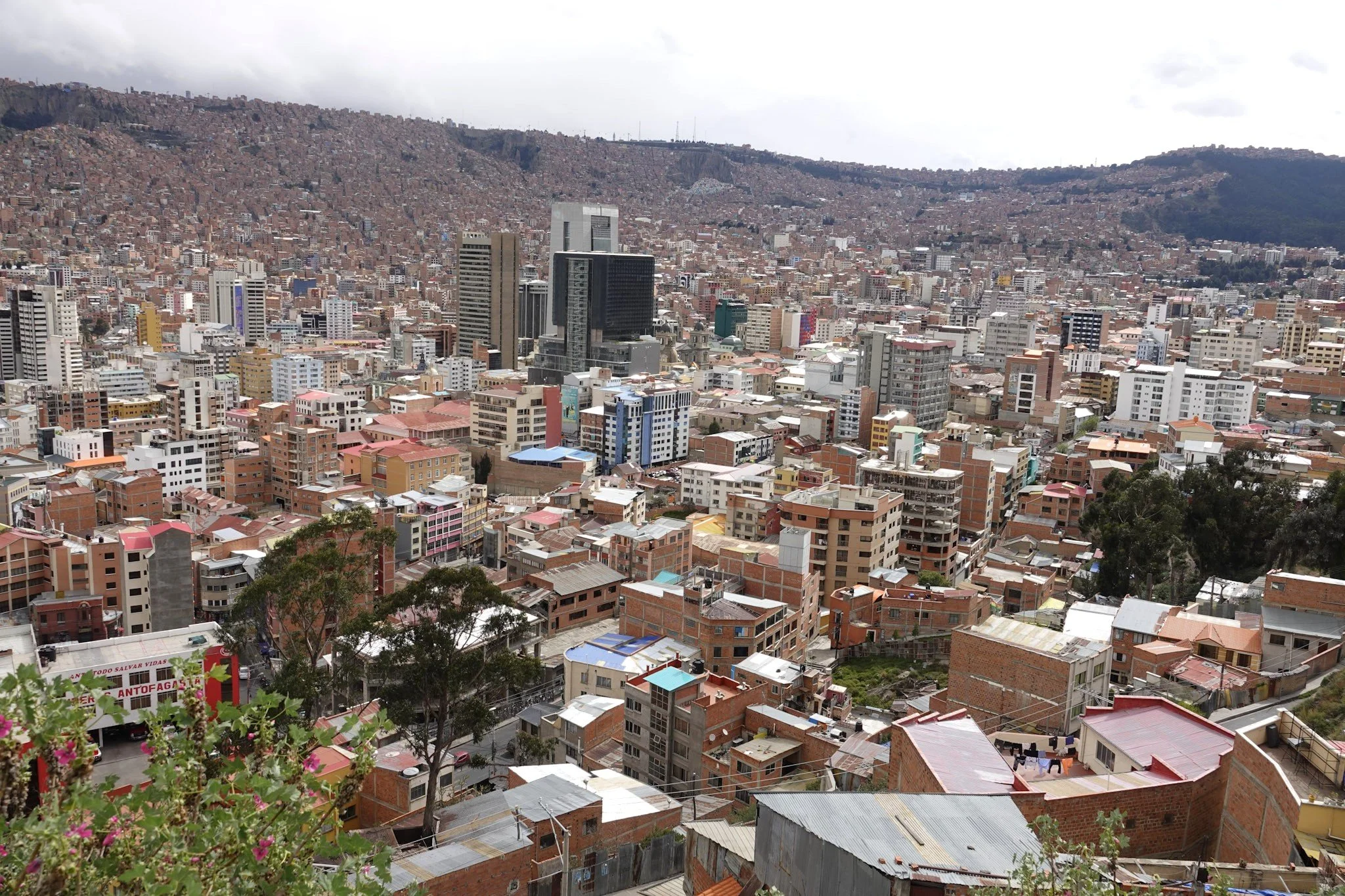
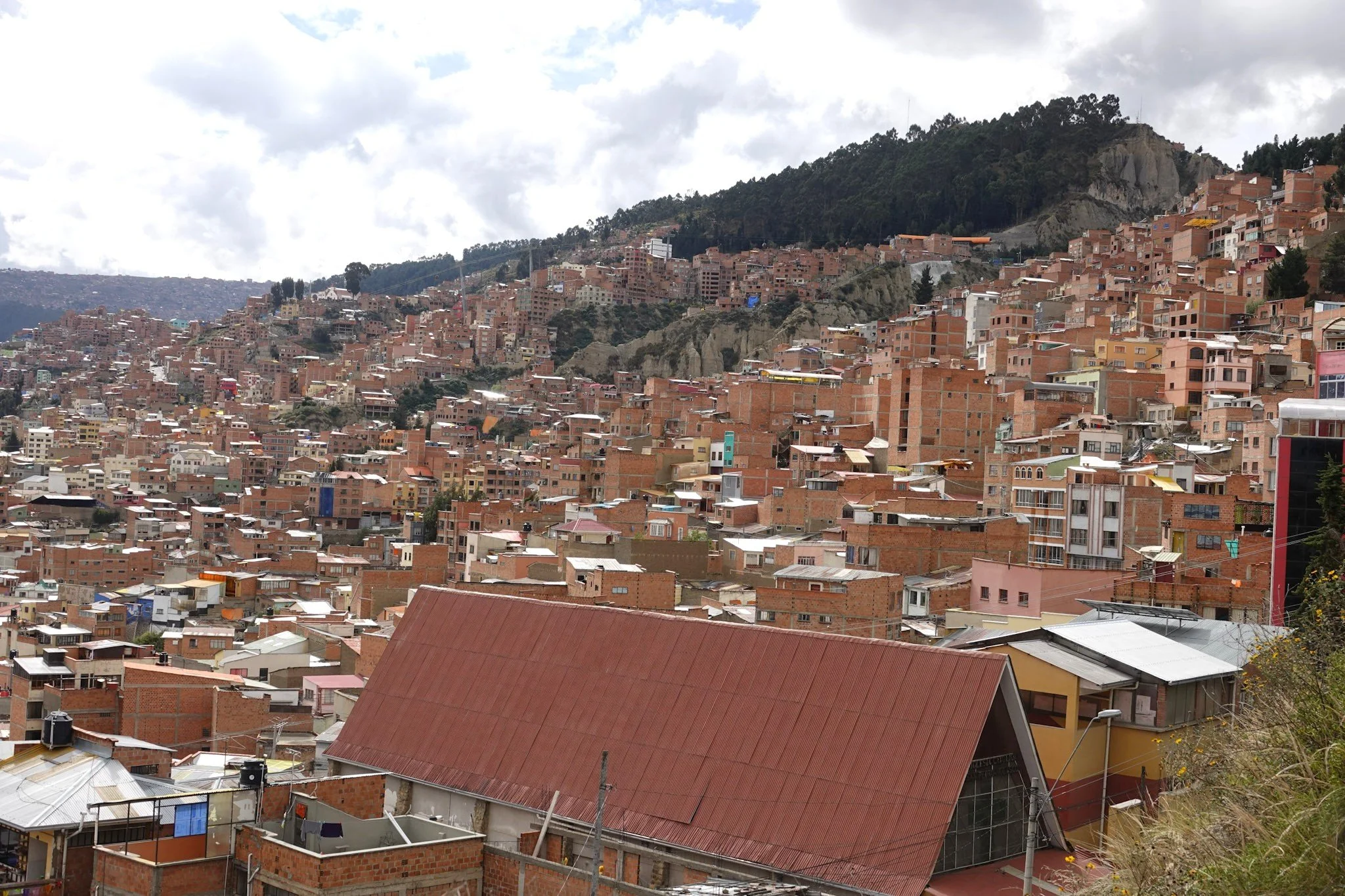
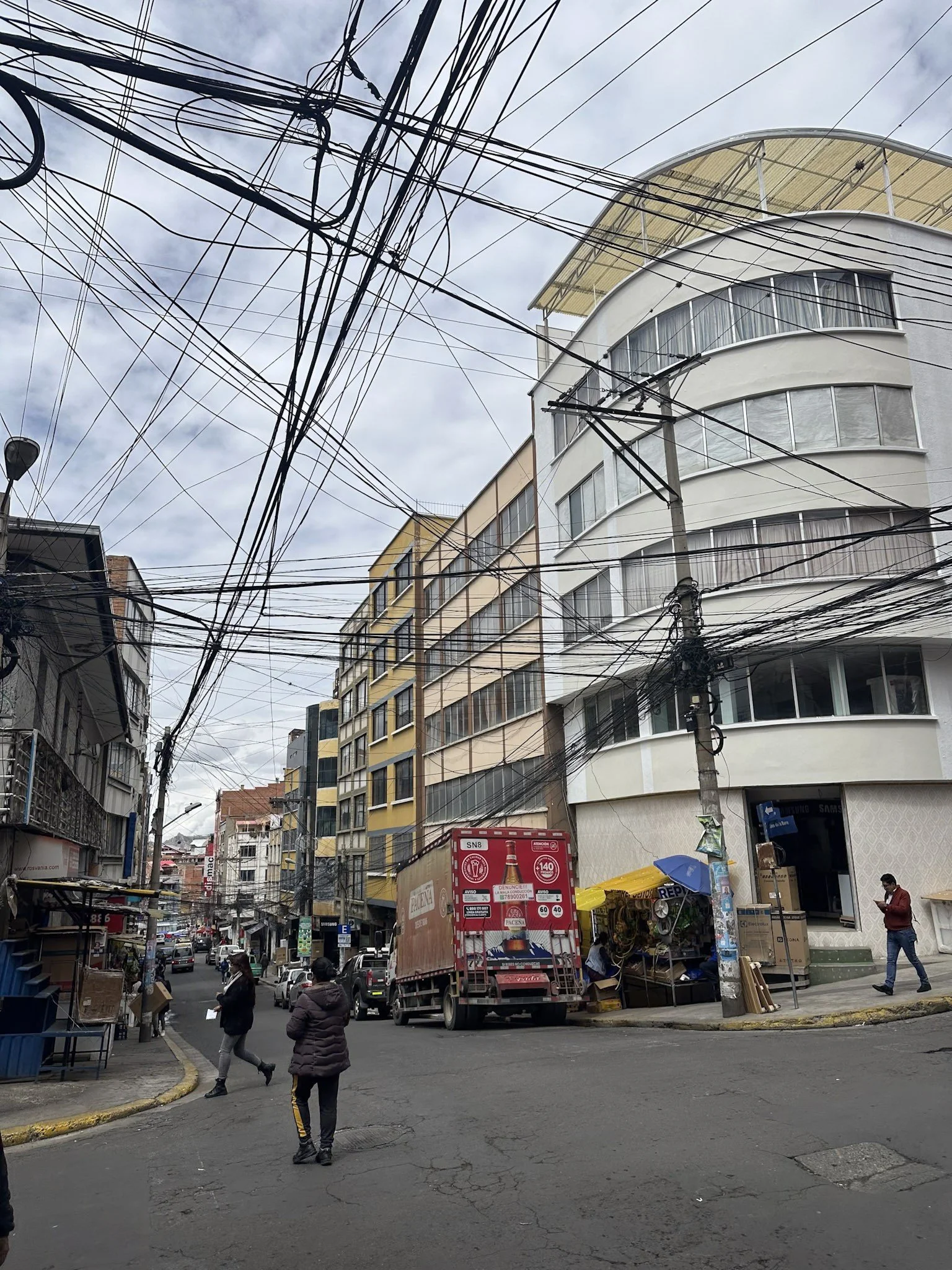
I loved the view from Killi Killi and the town looked so uniform and neat from up there. I'll include the next photo just to make sure you know that, at the ground level, it's also interesting but quite different, though well connected.
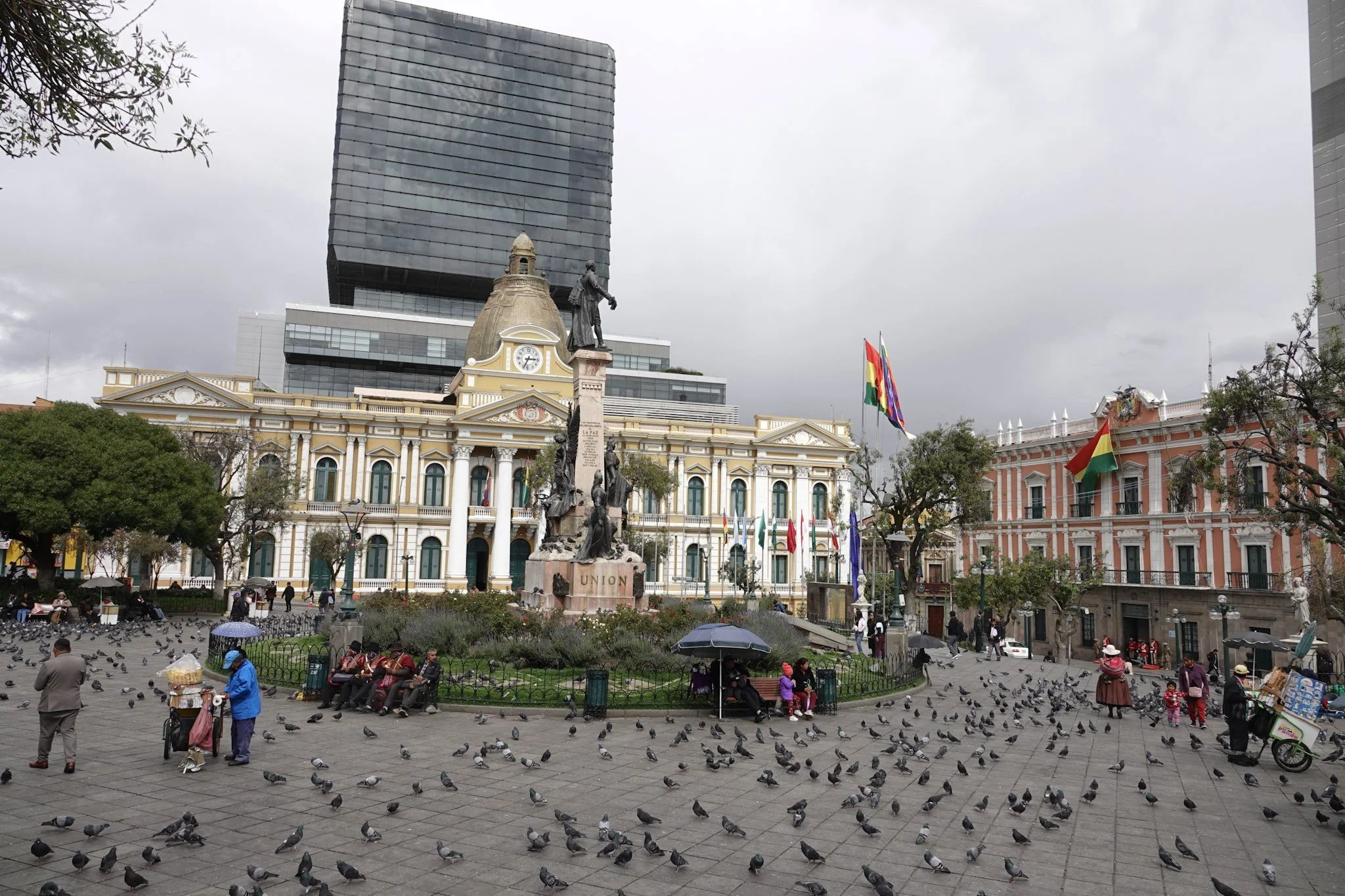
Plaza Murillo is the main plaza of La Paz. It's also the seat of the Bolivian legislature and numerous governmental departments and agencies. Here you can see the Bolivian Palace of Government, also known as the "Burnt Palace", due to past fires. The government had dictated that no new buildings could or would be built around or near this building, but as our Bolivian guide told us, money has a way of getting things done.