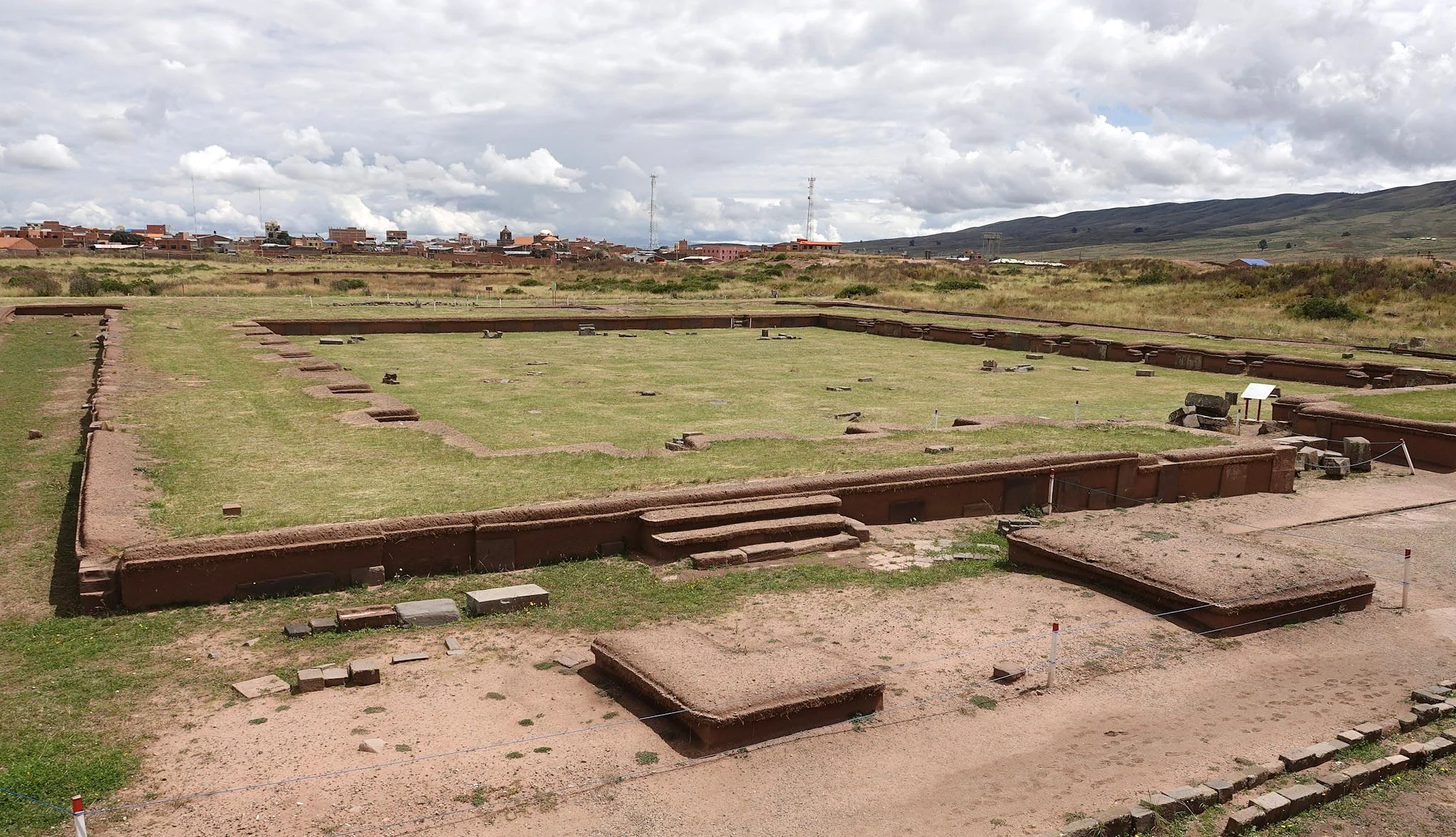
Titwanaku
We drove out of La Paz and back near Lake Titicaca again to visit Tiwanaku, a Pre-Colombian and Pre-Incan archeological site. It is believed to date back to around 600 BC. The city was built, according to our guide, 1,000 years before Machu Picchu and well before Incan times. Archeologists believe that perhaps 20,000 to 60,000 people lived here.
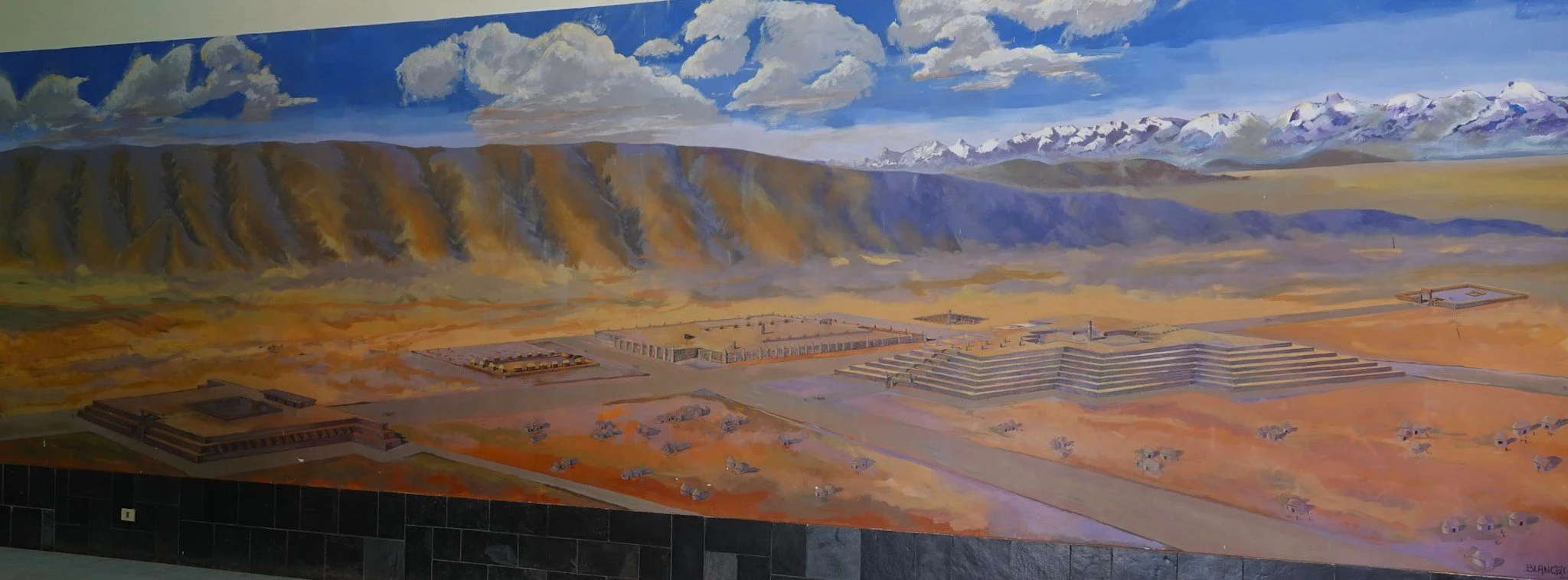
We started our visit here by going through their two museums: the Ceramic Museum and the Lytic Museum. The museums house works from this ancient city. We also learned some interesting facts such as they floated some of the very large stones to here from 65 miles away, by reed boats, when Lake Titicaca was 210 feet higher than it is now. I took the following photo of a photo in the Ceramic Museum. It purports to show what Tiwanaku looked like in its heyday.
We spent several hours here and walked to all the main areas for viewing. Our guide gave us information along the way. The site includes monumental structures, megalithic blocks, decorated ceramics, and more, but according to a University of Pennsylvania archeologist, only 7 percent of this site has been uncovered so far. Most of the rest is down below. Our guide called this site the Andean Mecca.
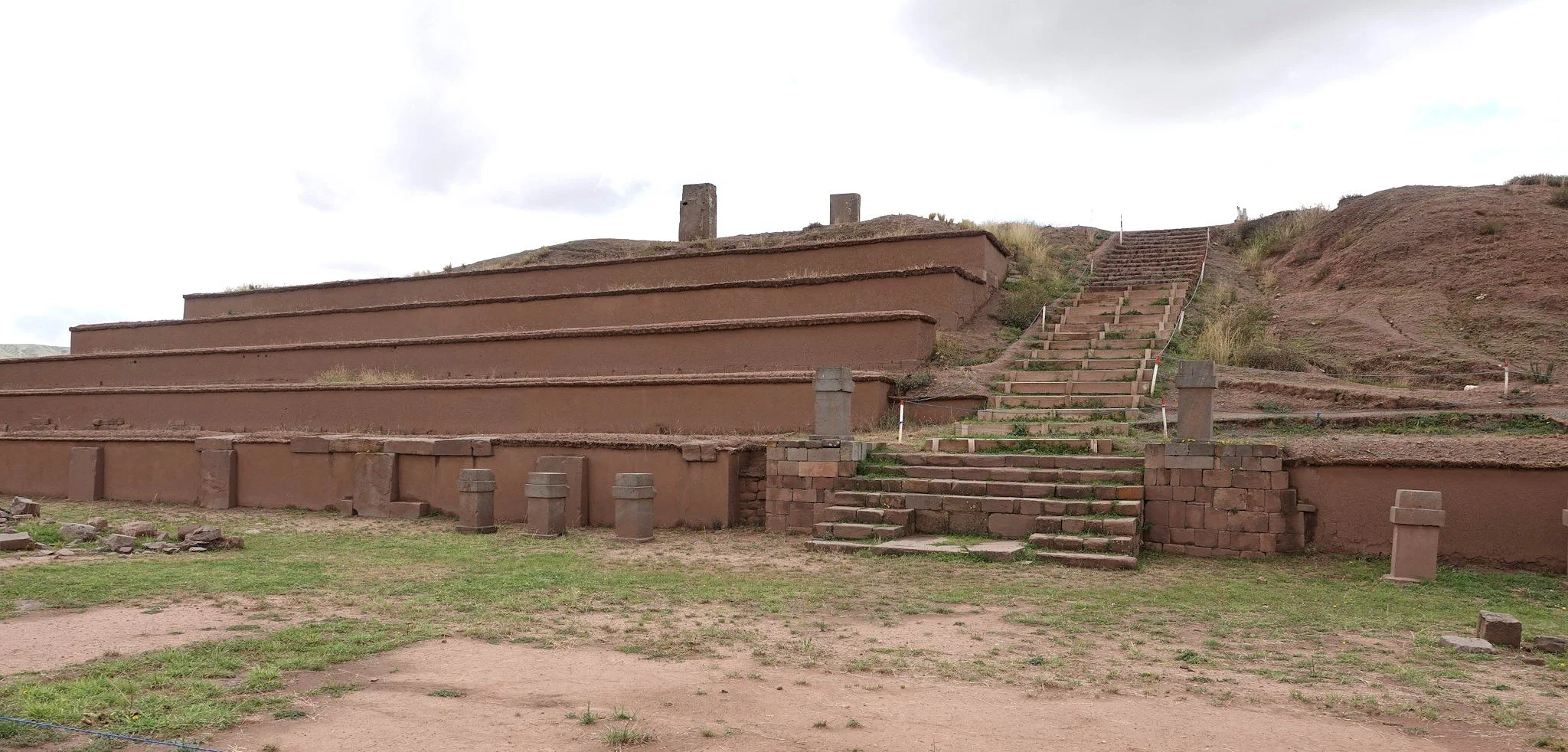
Most parts of the city were built by "7's" such as seven platforms, seven graves, etc. but it's not known why. We saw the main platform remains with a combination of original stones and replacement stones.
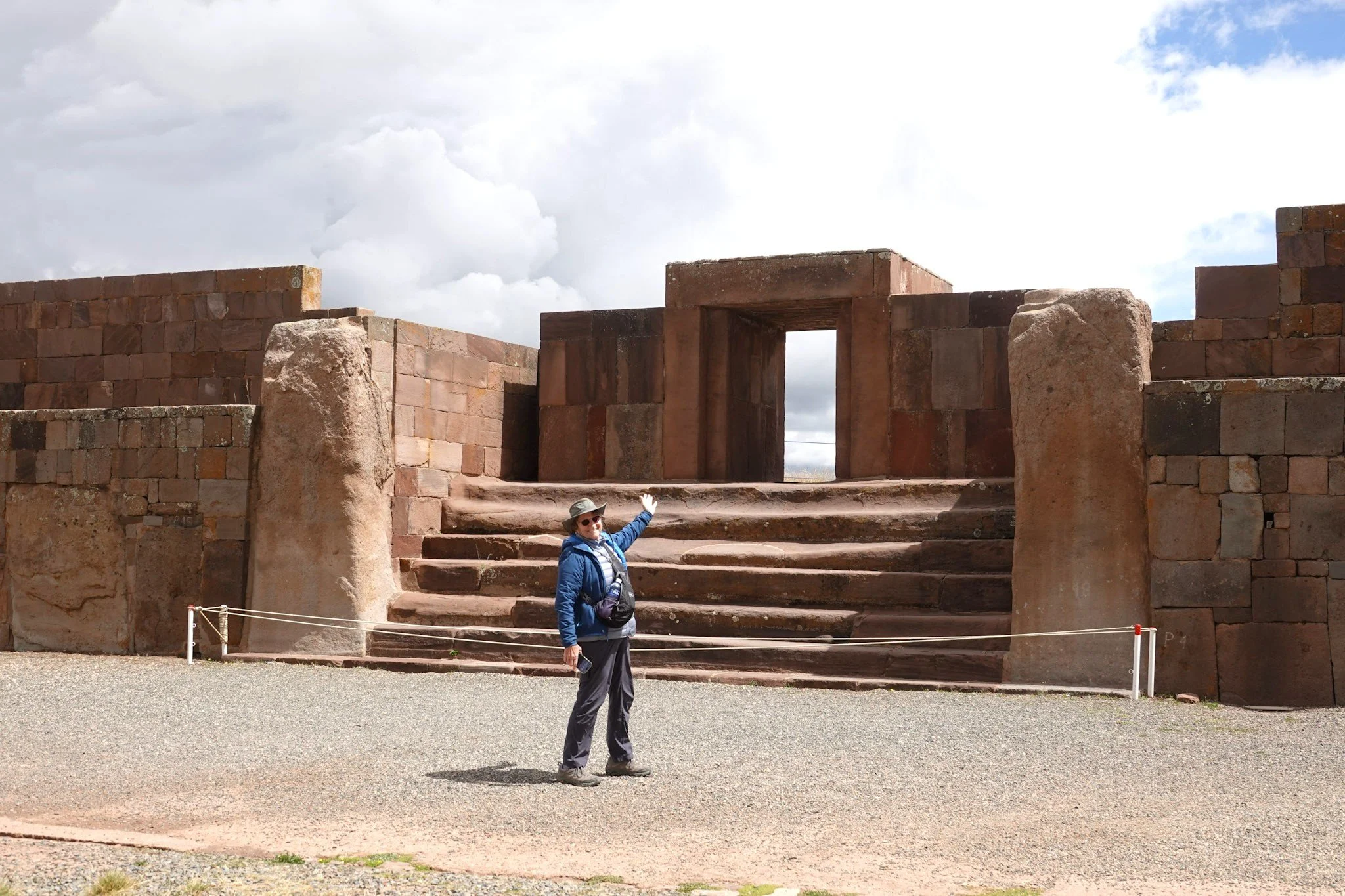
Tiwanaku was built with North-South and East-West lines of alignment. It had three levels to the city: upper world, middle world, and lower world. We saw the Gate of the Sun and some statues, and they all aligned with the Line of the Equinox.
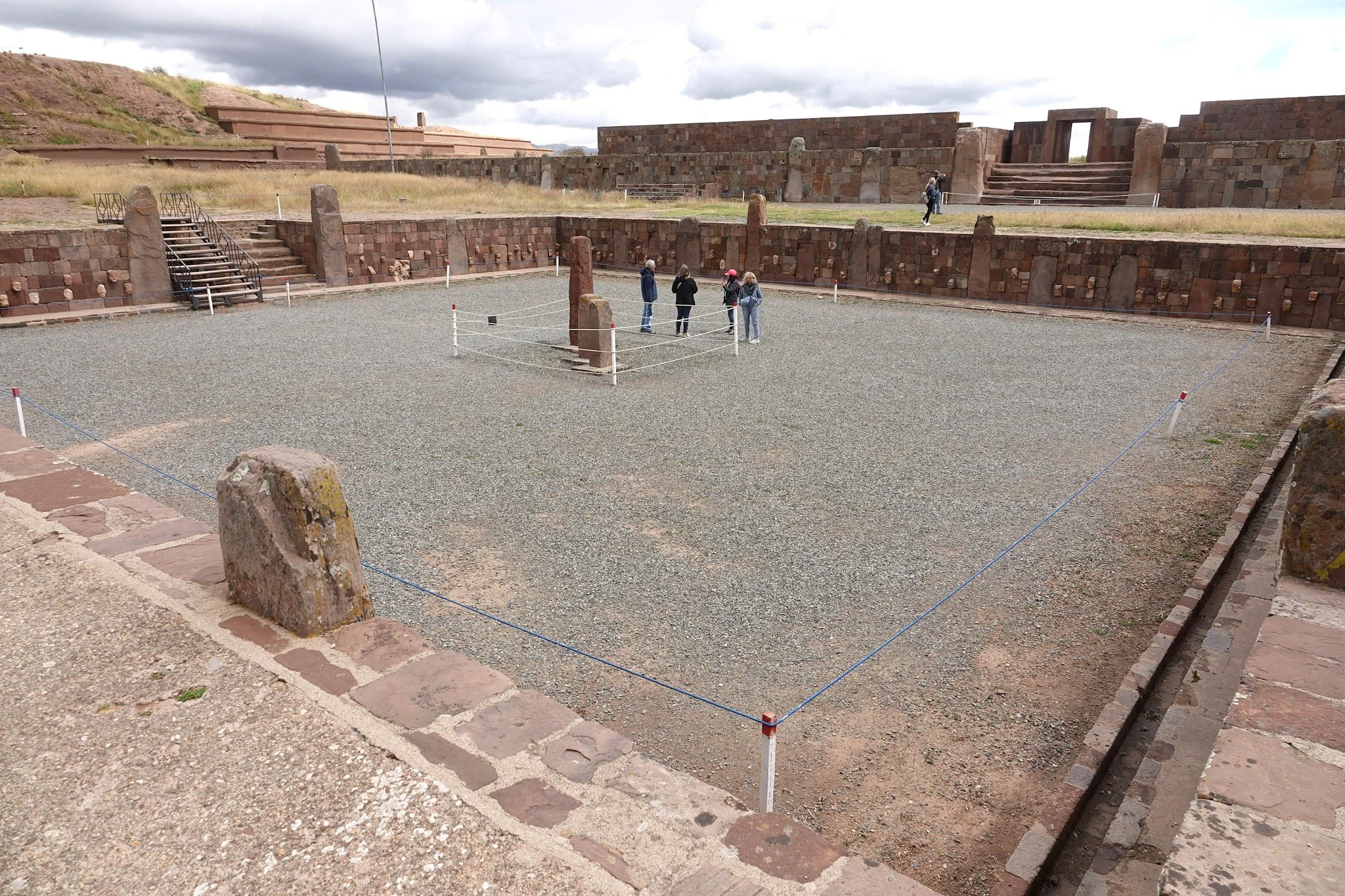
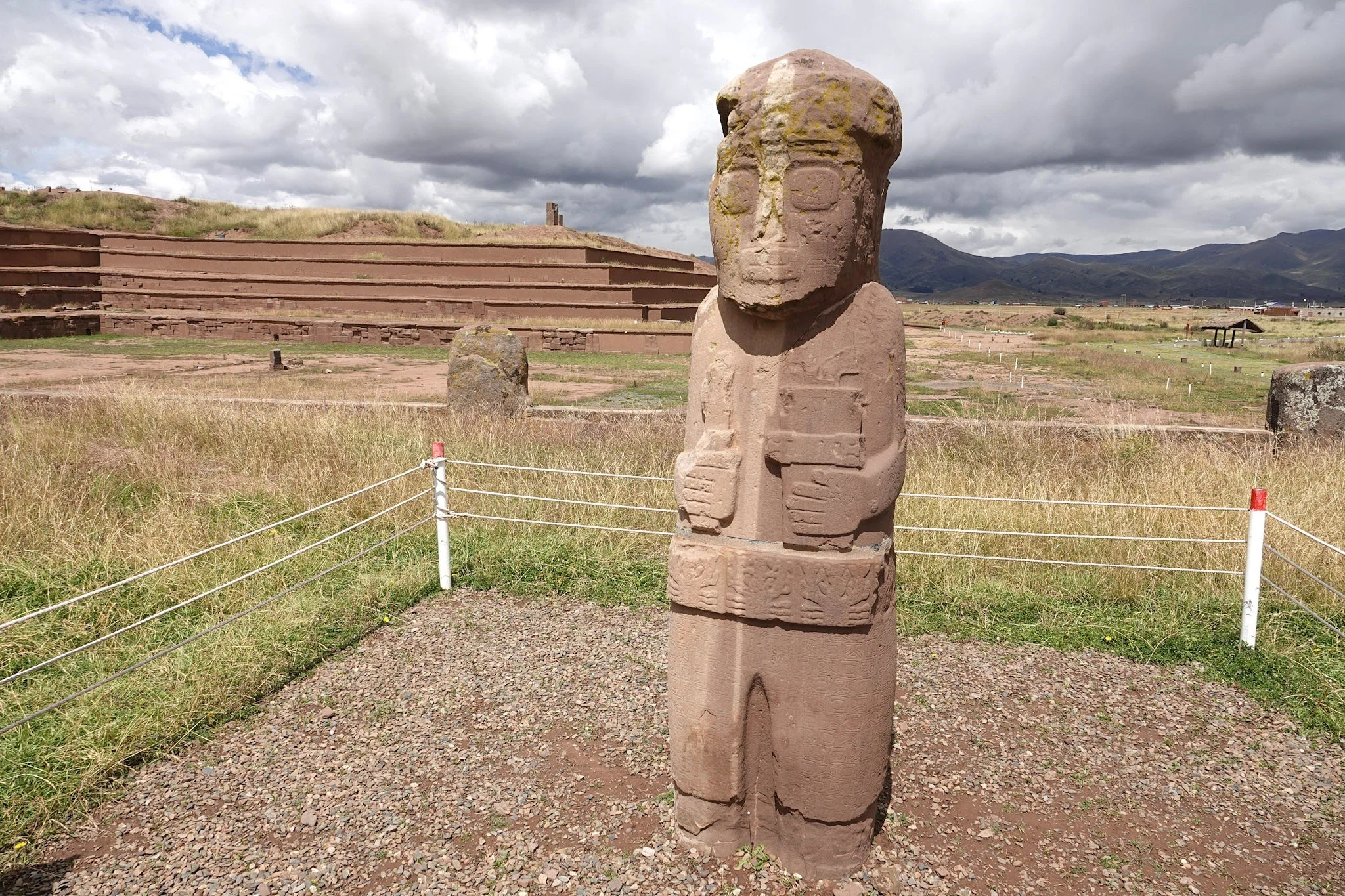
The last photo was a graveyard which was interesting when our guide gave us lots of information. This area had lots of original stones.