La Paz to Lake Titicaca
On this day, we drove from La Paz to Lake Titicaca. To give you an idea of our drive, it's only about a 45-mile drive. But, it took us two hours just to go from lower La Paz to upper La Paz, so two hours just to cross the city. We also had to cross El Alto, above La Paz and just as busy. The problem is that with the very high mountains on either side of the valley and two million people all trying to drive somewhere, it's a big traffic mess.
Once out of the city areas, we made a first stop. It was at a farmer's quinoa (pronounced "keen-wah") field. Quinoa is a staple grain for Bolivia. It has been cultivated here for thousands of years starting with the indigenous communities, and some of them call it their "mother grain." You eat the seeds.
Our guide said that when he was growing up, they were very poor and his family ate quinoa every meal because it was so cheap and so good for them. But in more recent times, quinoa has gained international recognition for its nutritional benefits. That has created a high demand and consequently a much higher price. It has become a primary farm crop but our guide said that now, poorer people cannot always afford it.
We had quinoa served to us at multiple meals and in several forms, such as "like rice," in fritters and in croquettes.
The redder stalks are nearing harvest time.

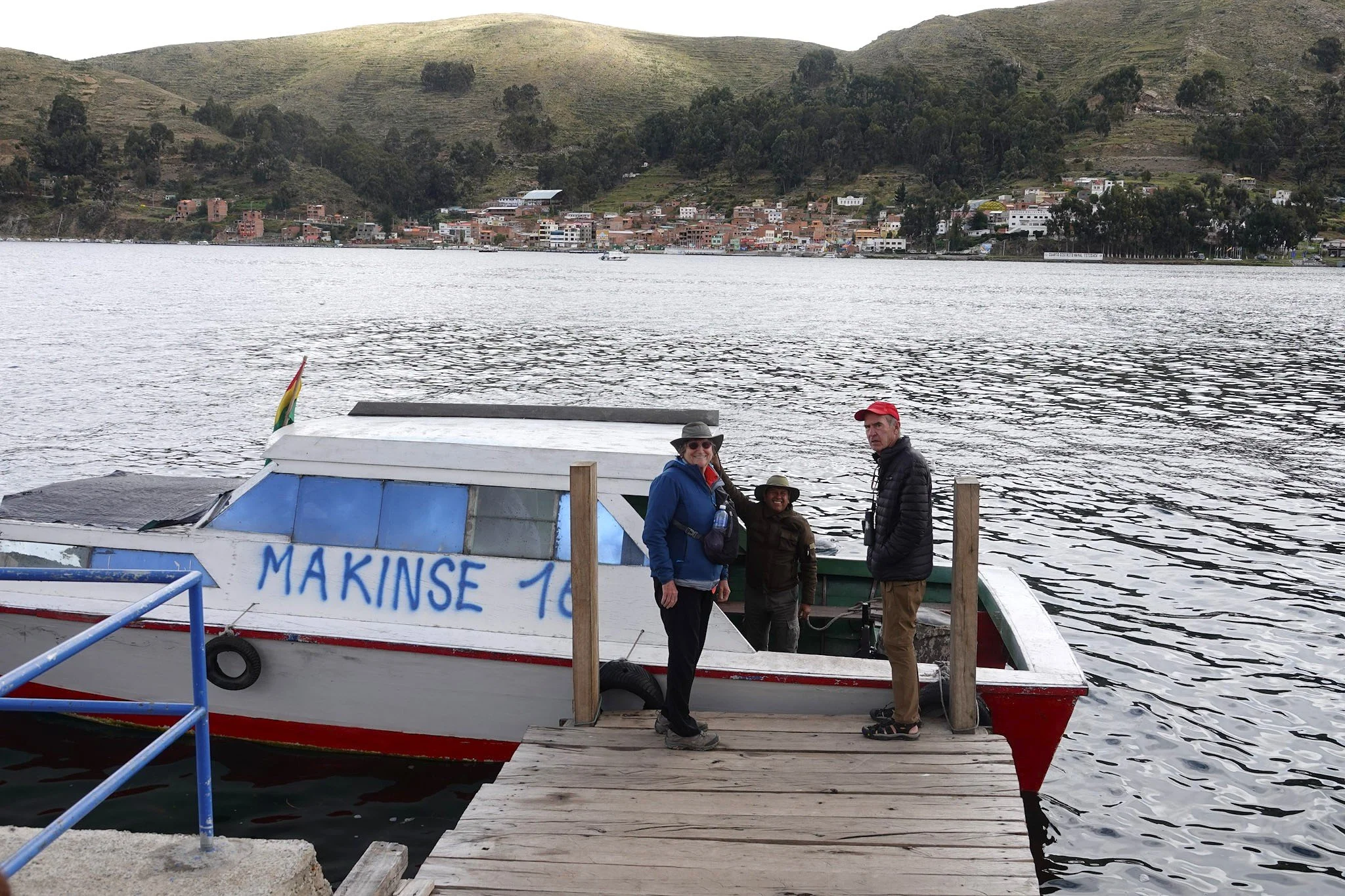
In arriving at the lake, I was surprised that we needed to take a boat to cross a strait. I could see clearly on the map that the land would take us to where we were going. But there is an international problem. The lake straddles the borders of Peru and Bolivia with Peru on the west side and Bolivia on the east side. If we drove around, we would have needed to pass through Peru. So what?, you say. The so what is that Peru requires a 24-hour stay in Peru for people passing through Peru on this road. Therefore, we stopped in San Pedro de Tiquina to cross the strait of Tiquina by boat, thereby staying in Bolivia the entire time. Interesting.
This next story is just too good not to tell. As I was walking down the ramp to pay and board the small boat, I noticed a dog walking along side me. At one point, the dog passed me. I was curious where he was going but I kept walking. The dog got to the very narrow and walled-in pay station, and two attendants were trying, using their legs, to keep the dog out. I arrived, gave them my ticket and squeezed through their dog blockade. At one point, I helped to keep the dog out, since I had created an opening. But the dog juked all three of us and started down the boat ramp, with me right behind him. As we approached the boat, I saw the Captain stand to the boarding ramp and try to stop the dog from boarding. The dog barely slowed down for the Captain, jumped aboard the boat, and quickly lay down in the middle of the cabin and took a nap. The Captain resigned himself to having another, though non-paying, customer.
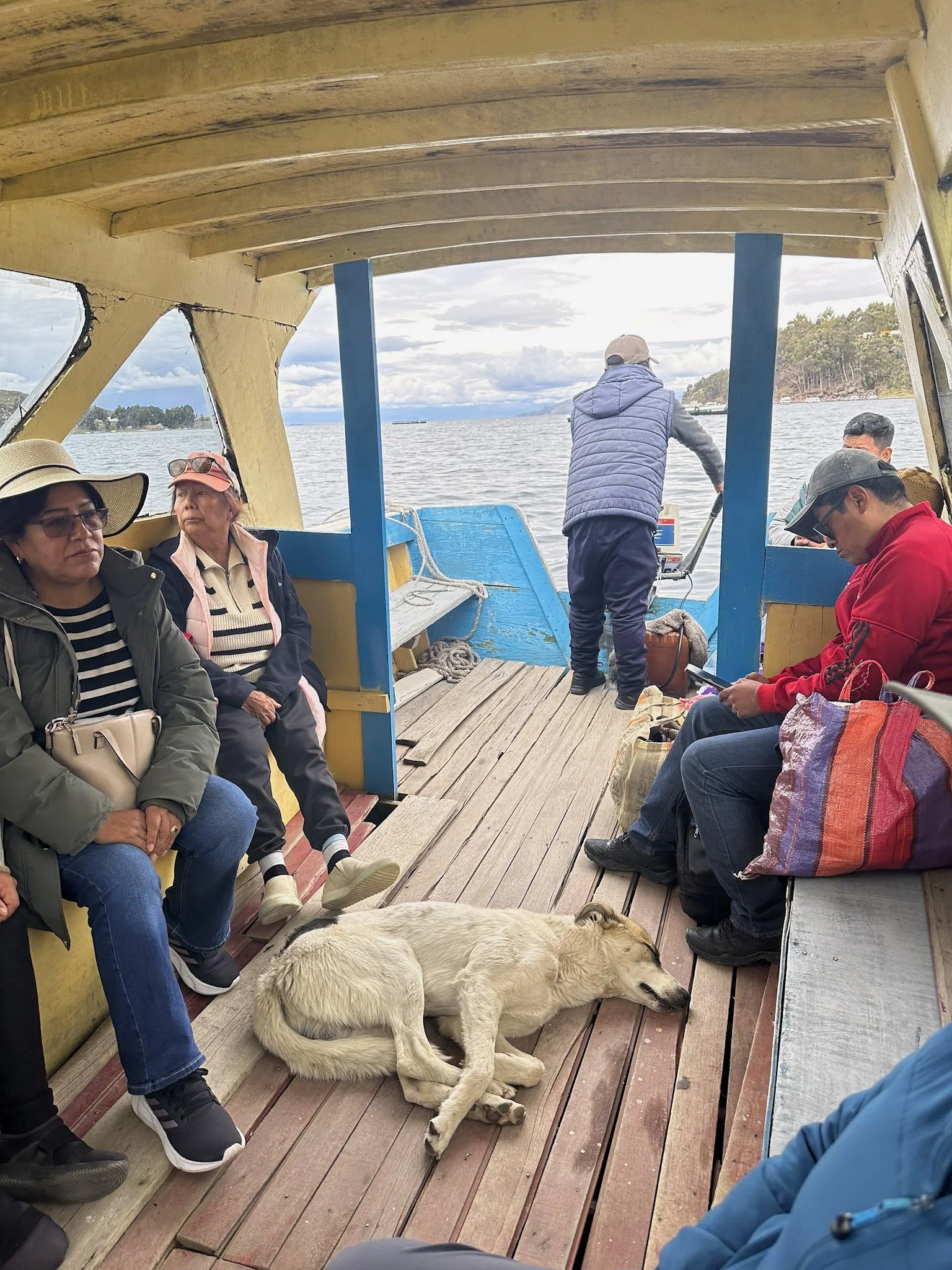
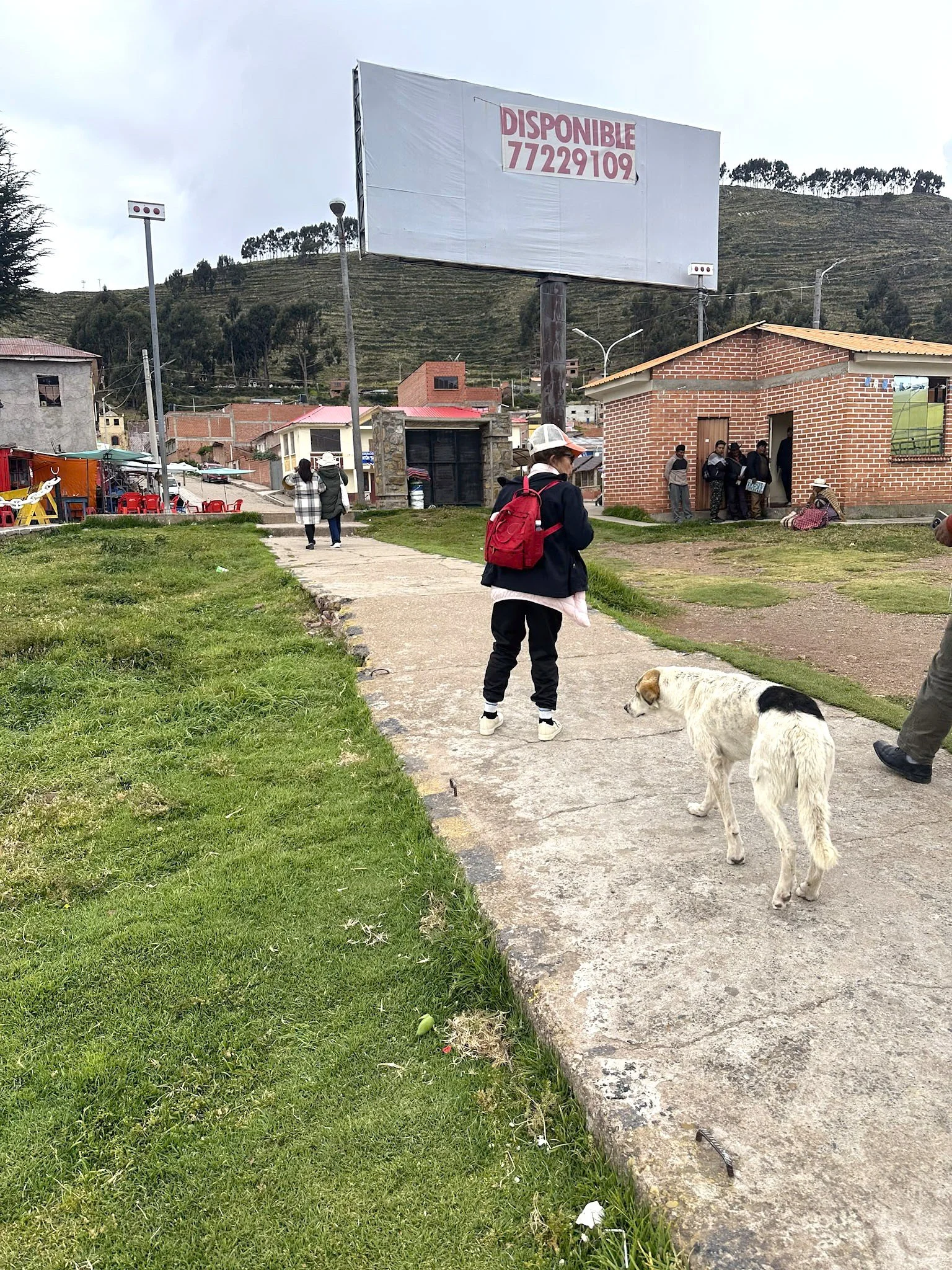
When we reached the other side, the dog promptly woke up and deboarded the boat, walking up the ramp with the rest of us customers. I think it's fair to assume that this dog is a regular commuter. But from where and to where and why, I have no idea...and he never did pay the fare.
Lake Titicaca is a very large lake and sits at an elevation of over 12,500 feet high. They say it's the highest navigable lake in the world. It's also the largest lake in South America by surface area and by volume.
Bolivia is a landlocked country and has been since the War of the Pacific from 1879 to 1884. They had 250 miles of Pacific Ocean coastline but lost it in their war with Chile. That treaty was finalized in 1904.
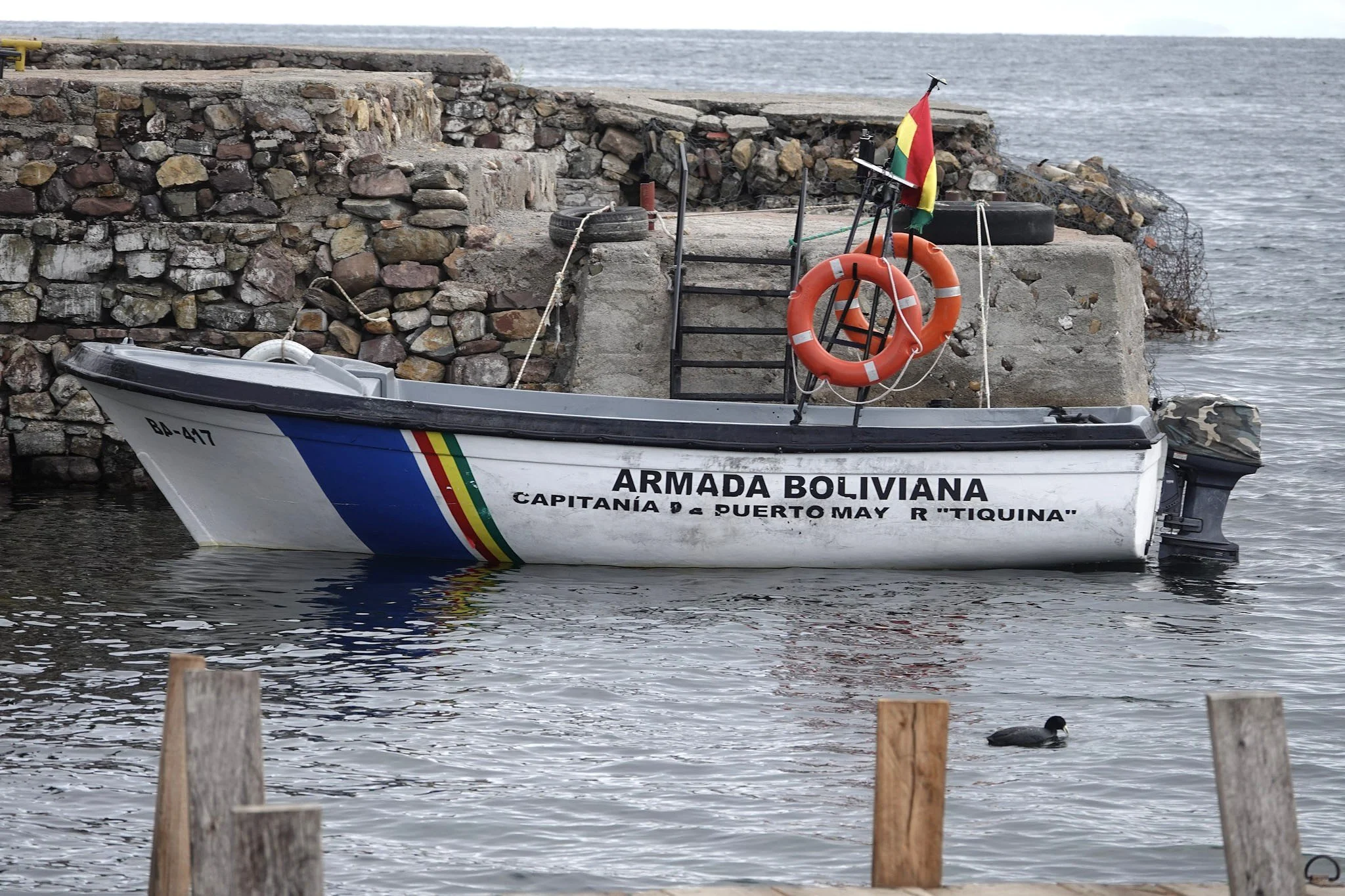
But, Bolivia does have a Navy. It's called the Armada Boliviana. They sail and do drills on Lake Titicaca and on the Amazon River, patrolling river borders with Brazil, Argentina, and Paraguay. We saw their training facility on Lake Titicaca and on seeing their boat, I felt much safer.