Cartagena Tour Stops
We spent parts of four days in Cartagena, so we made lots of touring stops with our guide plus our local guide. These will be a few of our touring stops.
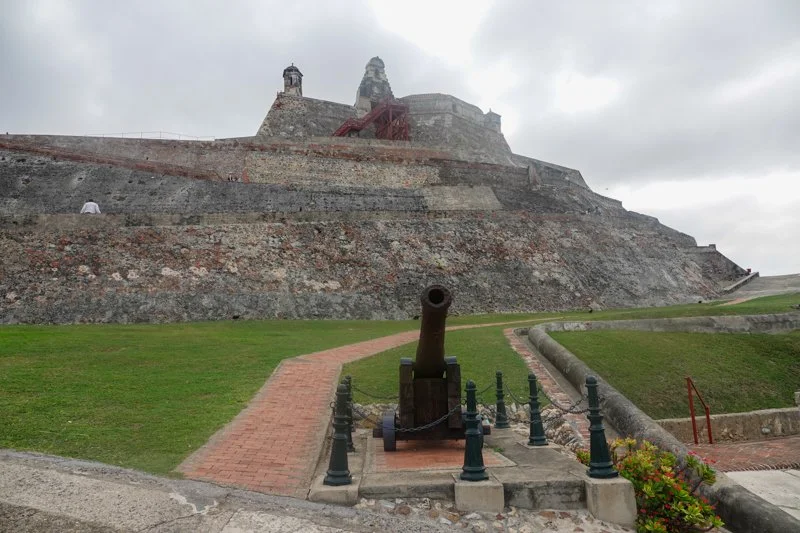
Our first stop on our first full day in Cartagena was the Castle of San Felipe or the San Felipe Fortress. It was built on a hill for protection by the Spaniards. It was the largest fortress built by the Spanish on mainland South America, and was needed to protect the wealthy colonial trade in Cartagena. The fortress was only for protection from a 'land attack', not for protection from water attacks. The Spanish had three other defenses built for water attacks.
The construction of the fortress started in 1536 but was interrupted by the French, who attacked the city. The French captured Cartagena but then died from diseases within a month of their victory, according to our local guide. The fortress was expanded in 1639 and again in 1657. It was built by African slave labor under Spanish supervision during the Colonial era. This fortress was involved in several battles between the late 17th to early 19th centuries, against European powers. It was named in honor of Philip IV of Spain.
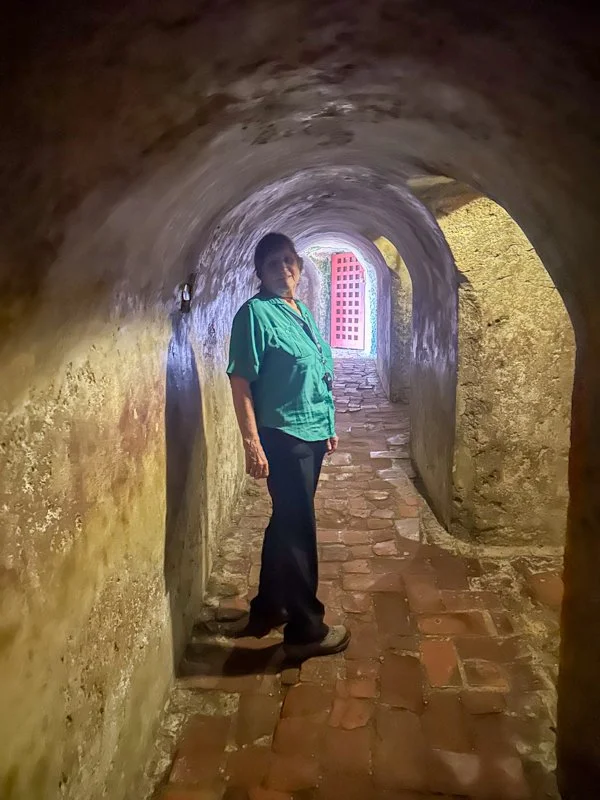
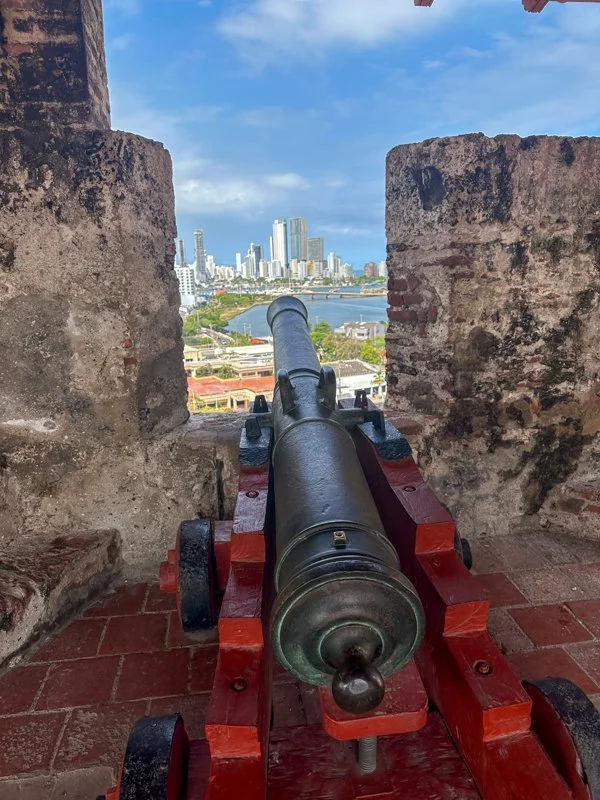
The castle is a massive structure, and I couldn't really capture it in a photo as I was too close. It covers the entire hill in stone. The castle is also riddled with tunnels, designed to move men and materials through the fort to where needed and to protect the soldiers. We also were treated to some excellent views from the top of the fort's walls.
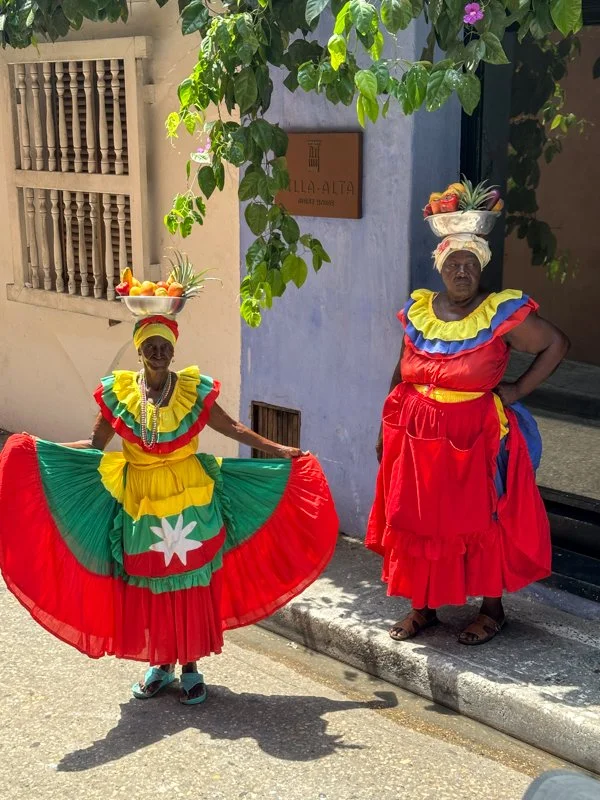
Some tour stops were not so much tour stops as places that some of the locals hang out, waiting for the arrival of tourists. This happened multiple times throughout Old Town. We enjoyed each encounter since after all, we were tourists.
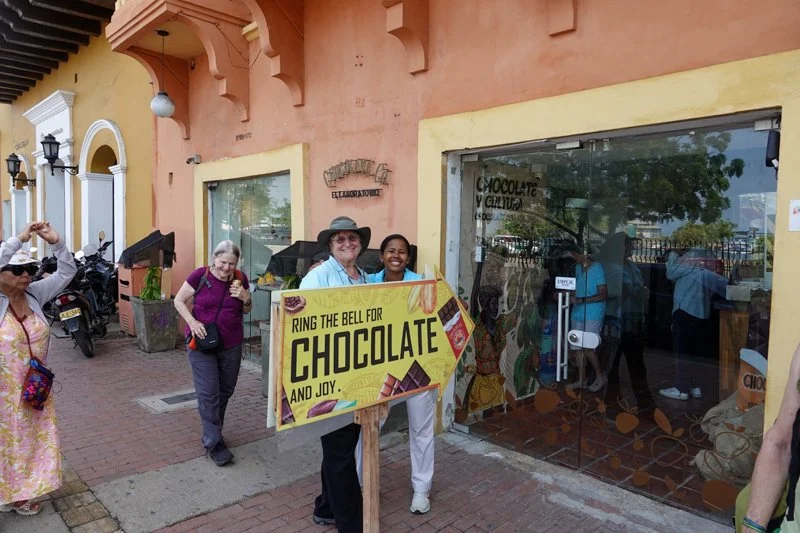
We were at a place right across from the Caribbean Sea, waiting for a bus, when our guide treated us to an unscheduled visit. It was a chocolate shop, and the owner showed us what they do to make their chocolate candy. He showed us all the steps and gave us samples, but hey, he had me after reading the sign out in front of his shop.
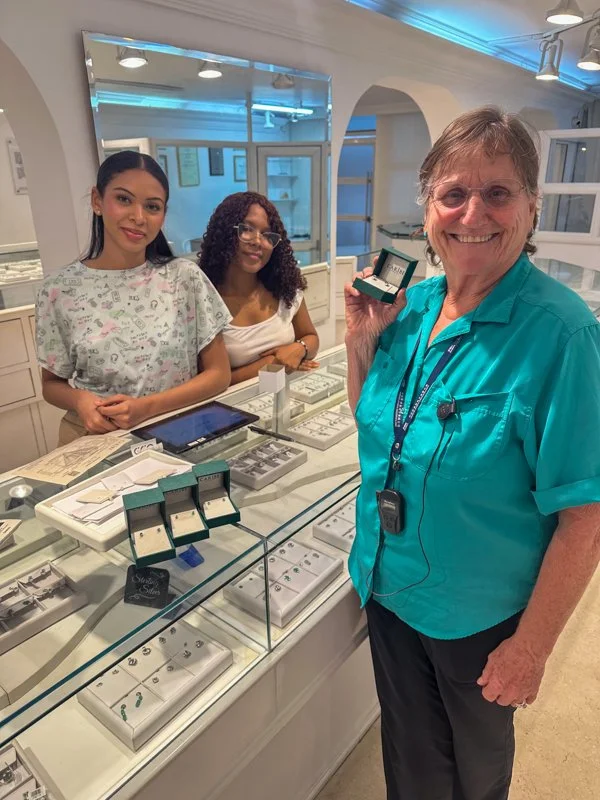
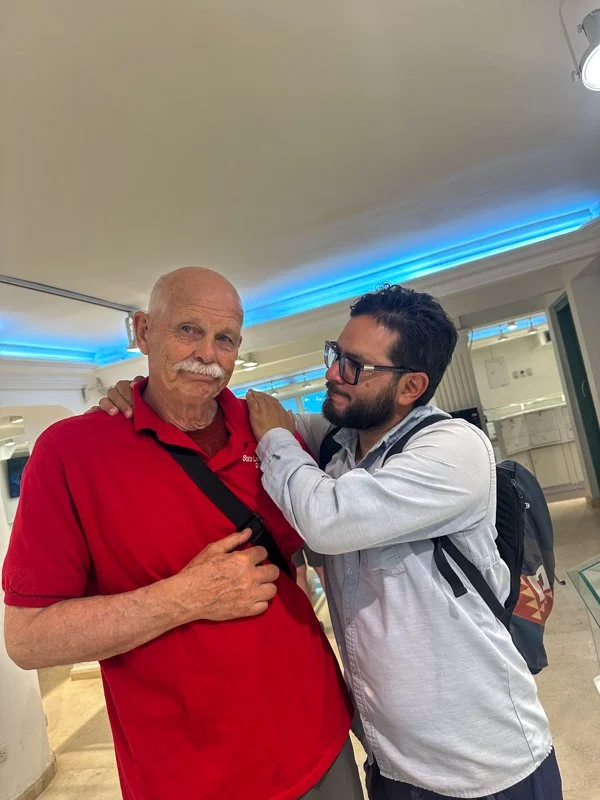
After lunch on this day, we visited the Emerald Museum for an hour and a half. A person made a detailed presentation to us, from the emerald mining right through to their emerald store. Vicky managed to select four pairs of earrings to purchase, then called me over to pay for them. When the clerk told me it would be $ Five Million pesos, I was a bit taken aback. Our guide, Ernesto, came over and consoled me. He kept telling me, "Bill, it's only pesos, not dollars."
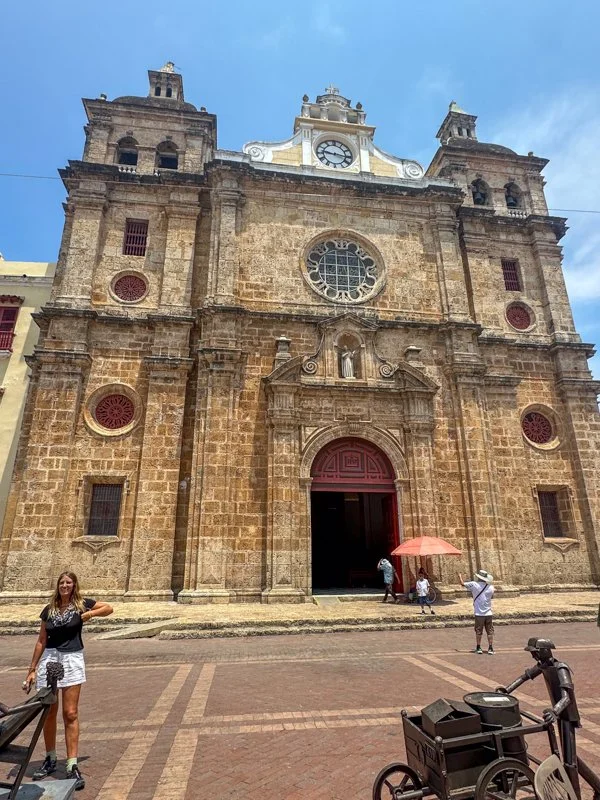
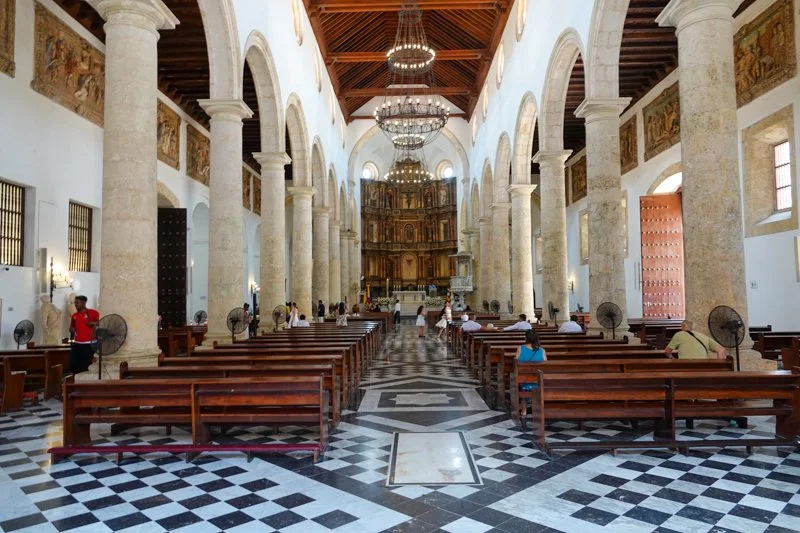
The Church of San Pedro Claver is an iconic church known for its architectural beauty as well as for its historical and spiritual significance. Its importance is directly tied to the life and work of Saint Peter Claver. He was known as the "Apostle of the Slaves." His remains are within the church. Inside the church, it was very nice but much simpler than many other churches and I liked the look and feel of it very much.
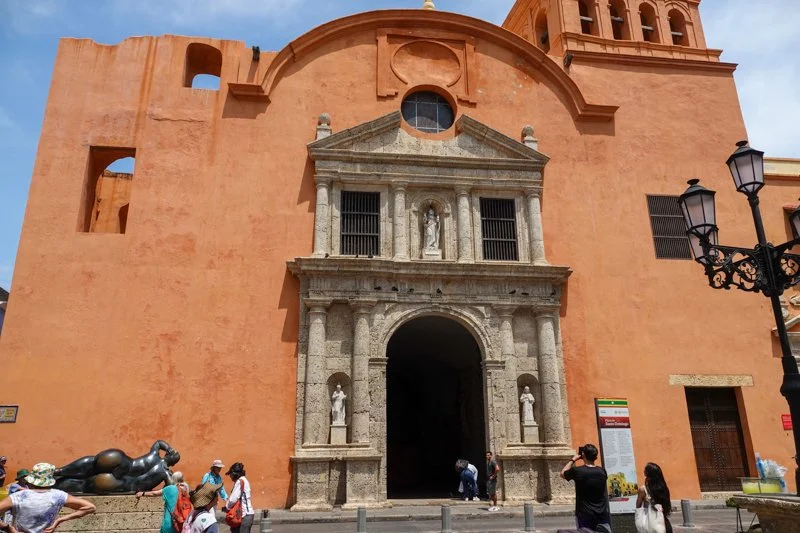
The Church of Santo Domingo is the oldest church in Cartagena and was built in the 16th century. Our guide said that construction lasted from 1533 to 1811, so a long time. This was due to limited resources and sporadic funding. The church was founded by Dominican friars and was the center for the Dominican missionary work. This church is known for its twisted bell tower, which legend says was the work of the devil in an attempt to destroy the church. A good architect or builder might argue that it has to do with construction issues, but there you go.
Perhaps my most curious issue with this church is the fact that there is a Botero sculpture right in front of it. The sculpture is of a naked woman, and she is facing the church. You can see her on the lower left corner. Our guides, who almost always had an answer for everything, had no answer for why this statue was where it was.
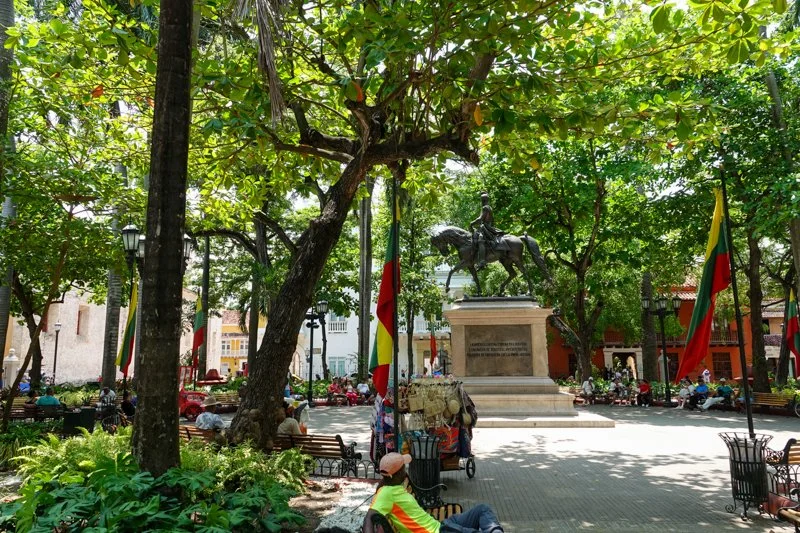
Parks and statues were a definite part of Cartagena. This is Simone Bolivar Park in Simone Bolivar Square. It has some major tourist attractions surrounding it including the Cathedral of Cartagena, the Old Government offices, the Palace of Inquisition, the historical museum of Cartagena, and the Naval Museum.
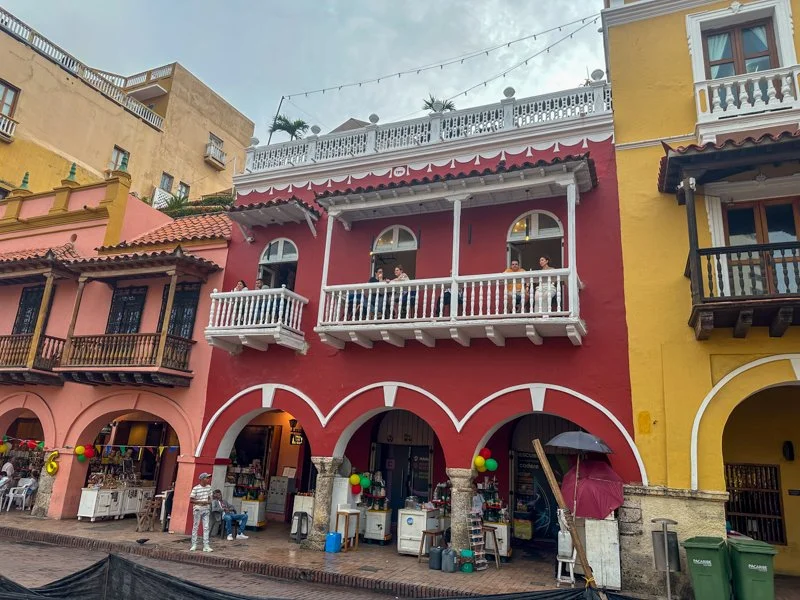
A good deal of the old town area had that great colonial look and feel. Parts of it reminded me a little of being in New Orleans. There were lots of restaurants, bars, music, and a party atmosphere.
Cartagena's history is intertwined with the Caribbean which includes Cuba. They share some indigenous roots, colonial trade networks, and were both involved with the transatlantic slave trade. Cuba was another key hub in the Spanish colonial trade for both goods and people.
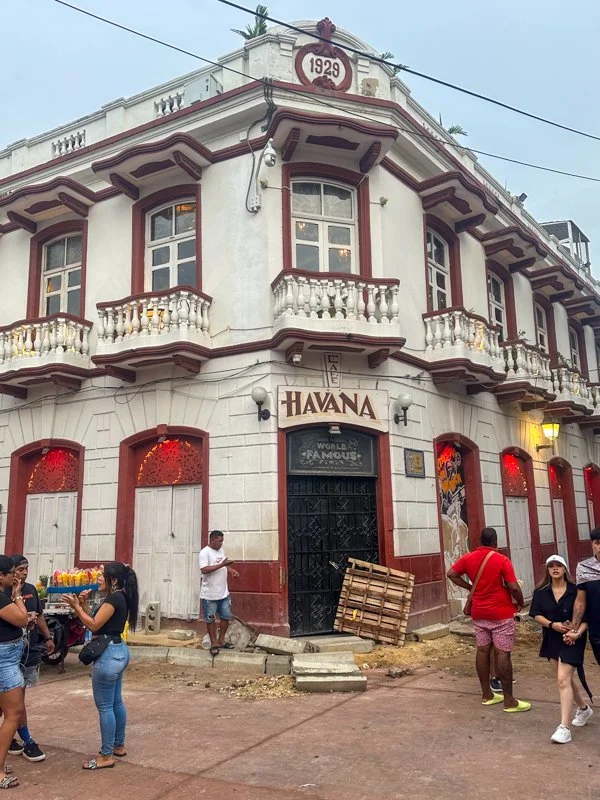
So I shouldn't have been surprised to find this building in old town. You can see that it says 'Havana' over the door and at the very top is '1929.' The building is currently under re-construction.