Cartagena
Cartagena was our final stop in Colombia. We had long looked forward to getting there because it would mean that we were now at sea level and away from the high altitudes. Well, Cartagena is at sea level since it's on the Caribbean Sea, but the heat and humidity were extremely challenging for us. The temperatures were in the high 80's to 90, and the humidity was at 80 plus percent.
Cartagena has a long history, probably back to 4,000 BC. Its full name is Cartagena de Indias as Colombus thought he had landed in India when he arrived, per our guide. The city was named after Cartagena, Spain and was founded on June 1, 1533. It is one of South America's oldest colonial cities. It played a key role in the administration and expansion of the Spanish Empire.
Cartagena was a key port for exporting Bolivian silver and gold to Spain and for the importation of enslaved Africans to South America. For those reasons, Cartagena suffered frequent attacks by both pirates and other colonial powers. Cartagena built multiple defenses against these attacks and much of those defenses are still standing in the city today.
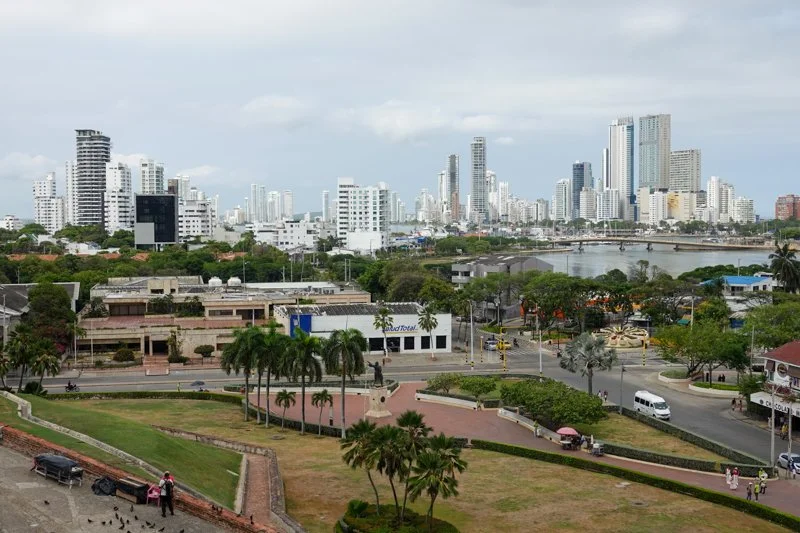
Modern Cartagena is a large urban city with a larger metropolitan area. Economic activities include maritime industries, petrochemical industries, and tourism. We spent most of our time in Cartagena in the colonial areas, so I'll start with a photo showing its more modern side. This photo was taken from the San Felipe Fortress.
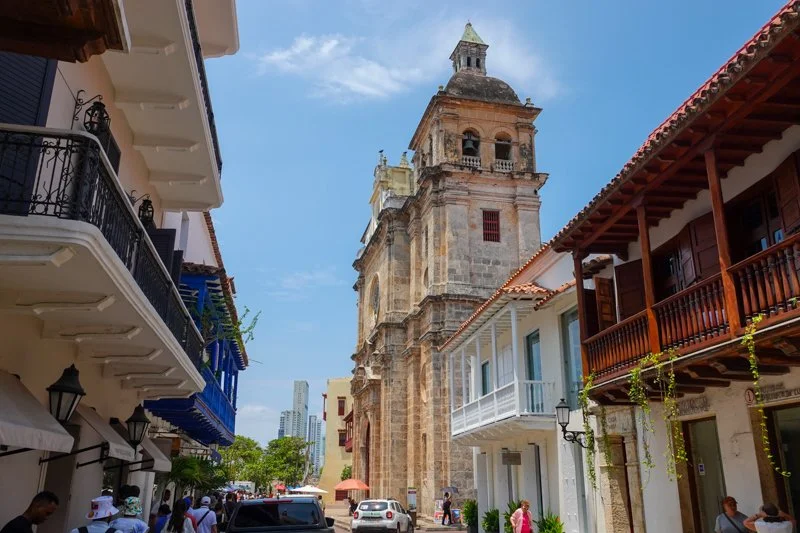
This first post will be some general photos and explanations of our time in Cartagena. I'm including the next photo because it shows the very old (church), the colonial buildings on the street, and the large modern buildings in the background.
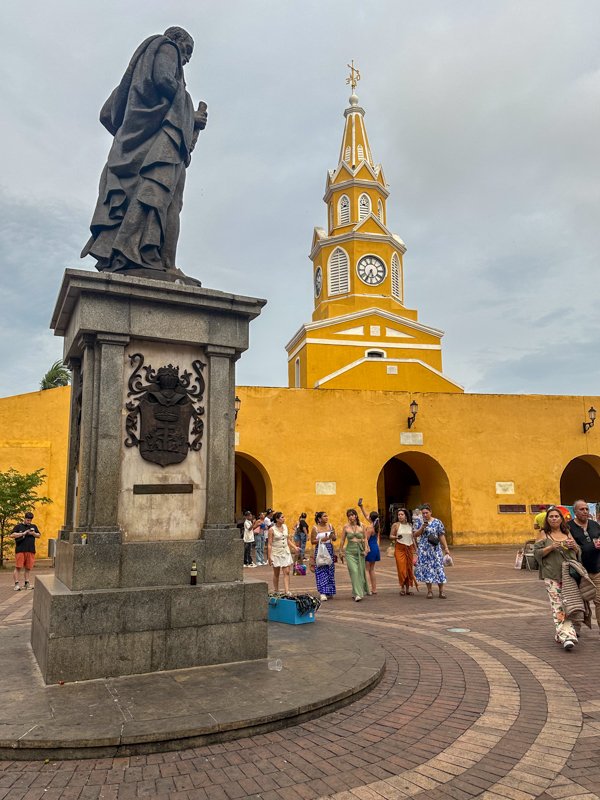
The next photo is an old town plaza, and you can see some common features. The wall is the old city's defensive wall, twelve feet high, and built for protection from water attacks. Much of the old city wall still stands. You can also see a statue and Cartagena has plenty of statues. The clock tower was over the main entrance to the walled city. The clock was brought to here in 1874 from the United States, but it was replaced in 1937 by the current Swiss clock.
As one of Colombia's oldest colonial cities, Cartagena has some beautiful colonial buildings.
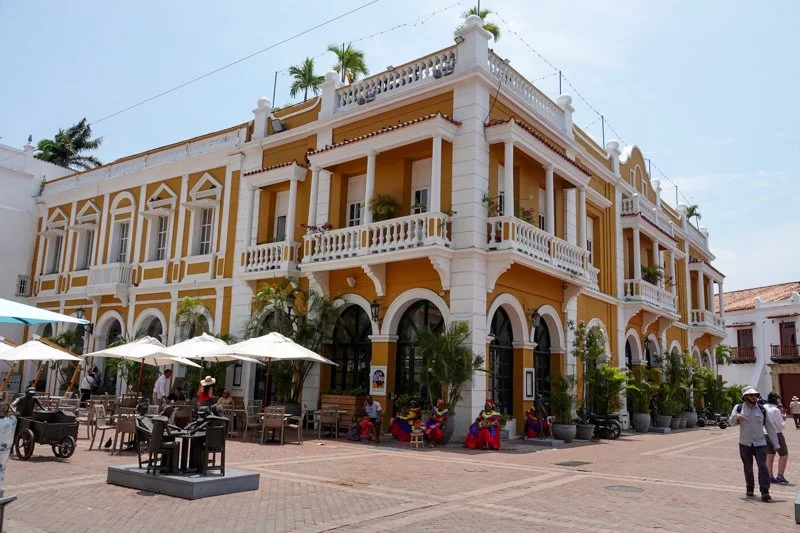
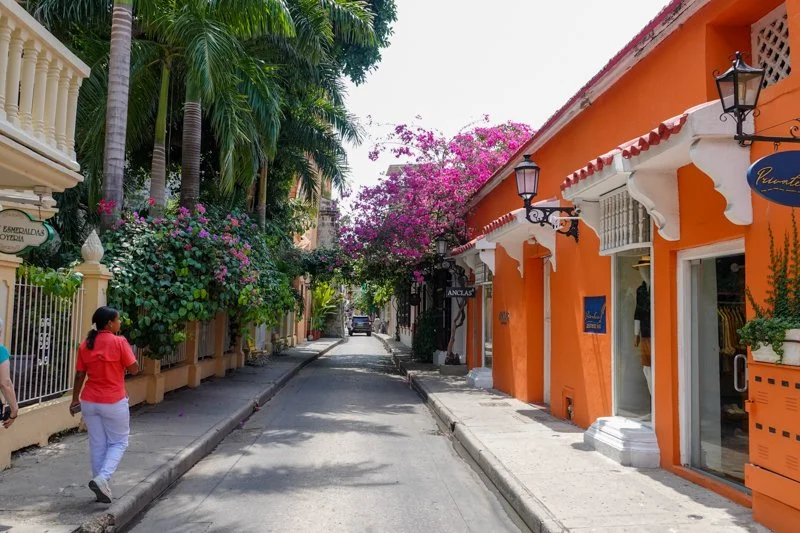
We were in a nice hotel called the Bantu which is in Old Town Caragena. This next photo is not the street of our hotel, but it is very near to our hotel and typical of the area of Old Town. The woman walking on the left is our local tour guide, also named Vicky, and a very good guide. She added a lot to our touring.
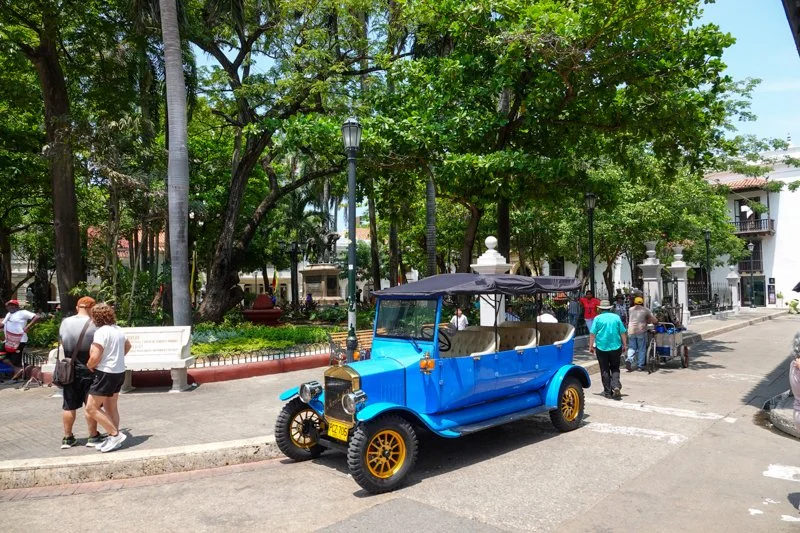
The next photo is about a block from our hotel. It's Simone Bolivar Park in the Simone Bolivar Square. The car was a point of interest. Our guides said that Cartagena was trying to phase out the horse carriages, for a variety of reasons. The old-style cars are electric cars, to reduce pollution and noise. They do that but they are so quiet that they are causing some problems since, in the crowded and noisy streets, people don't hear them coming.
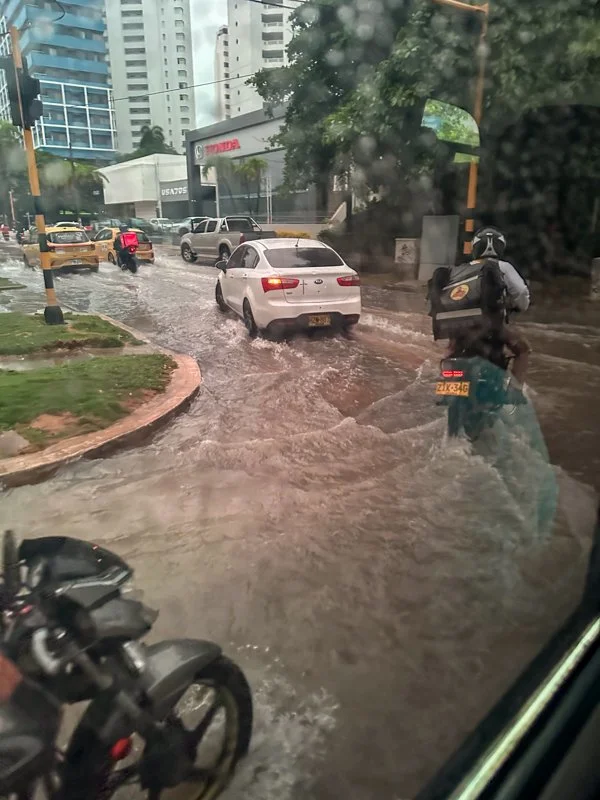
On this day, we had just come out of the emerald museum, where we had been for an hour or more. It started to rain and rain relatively heavy. We boarded our bus to return to our hotel. In a matter of just a few minutes, the streets had three to six inches of water in them. Our local guide said that this has been a problem in Cartagena since day one, and they obviously have not solved their problem. This is a moving bus photo and not very good, but you get the idea. So, if it started to rain hard in Cartagena, you had to be prepared for immediate flooding.