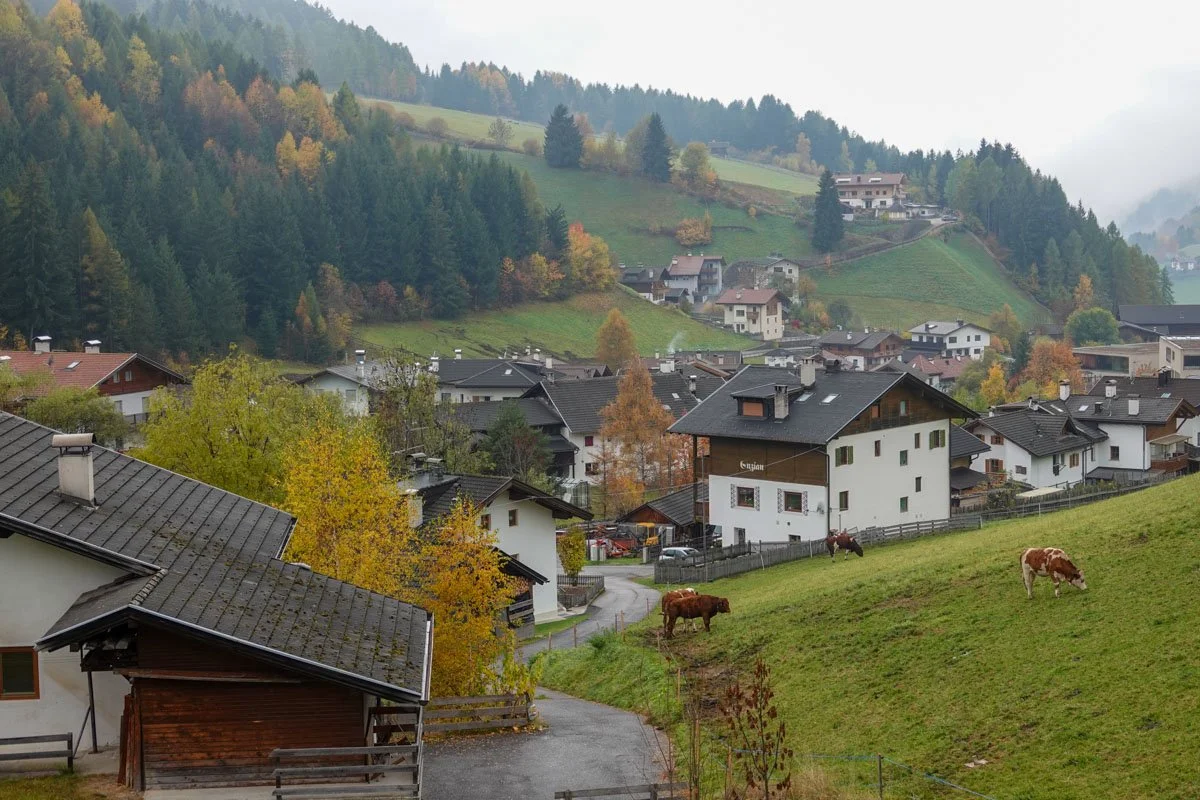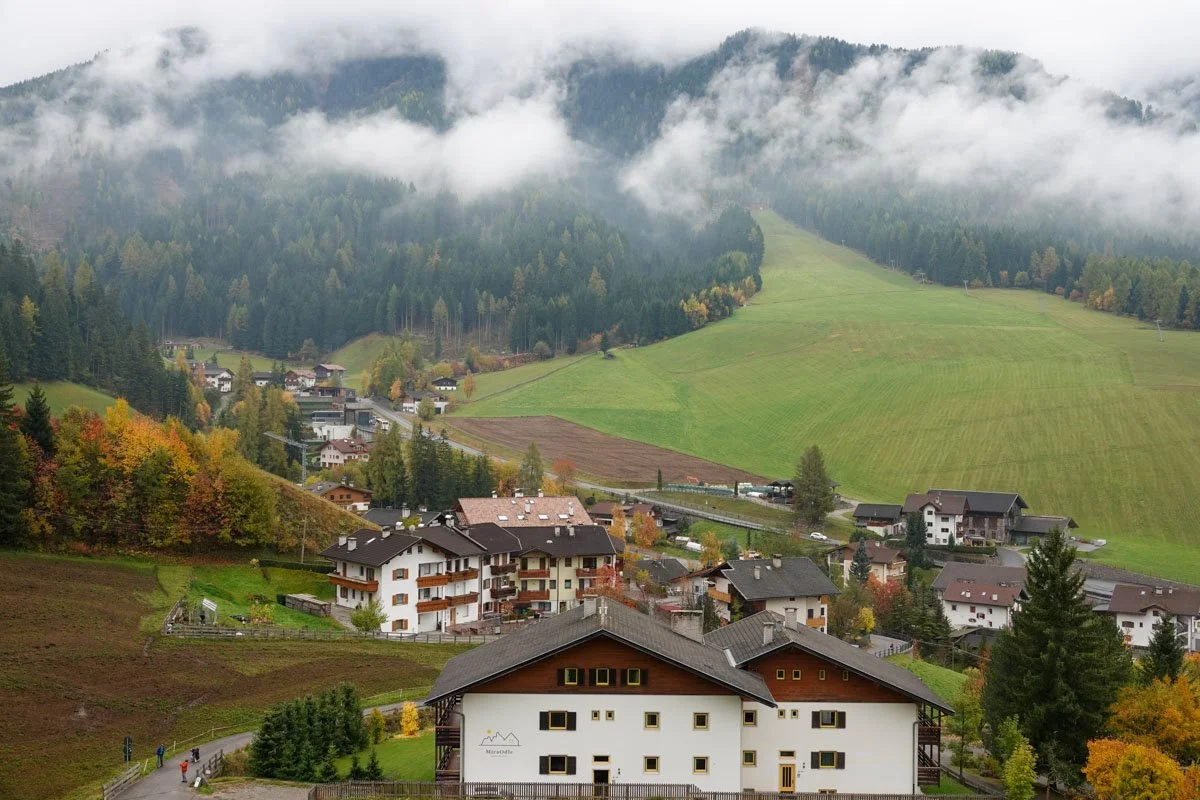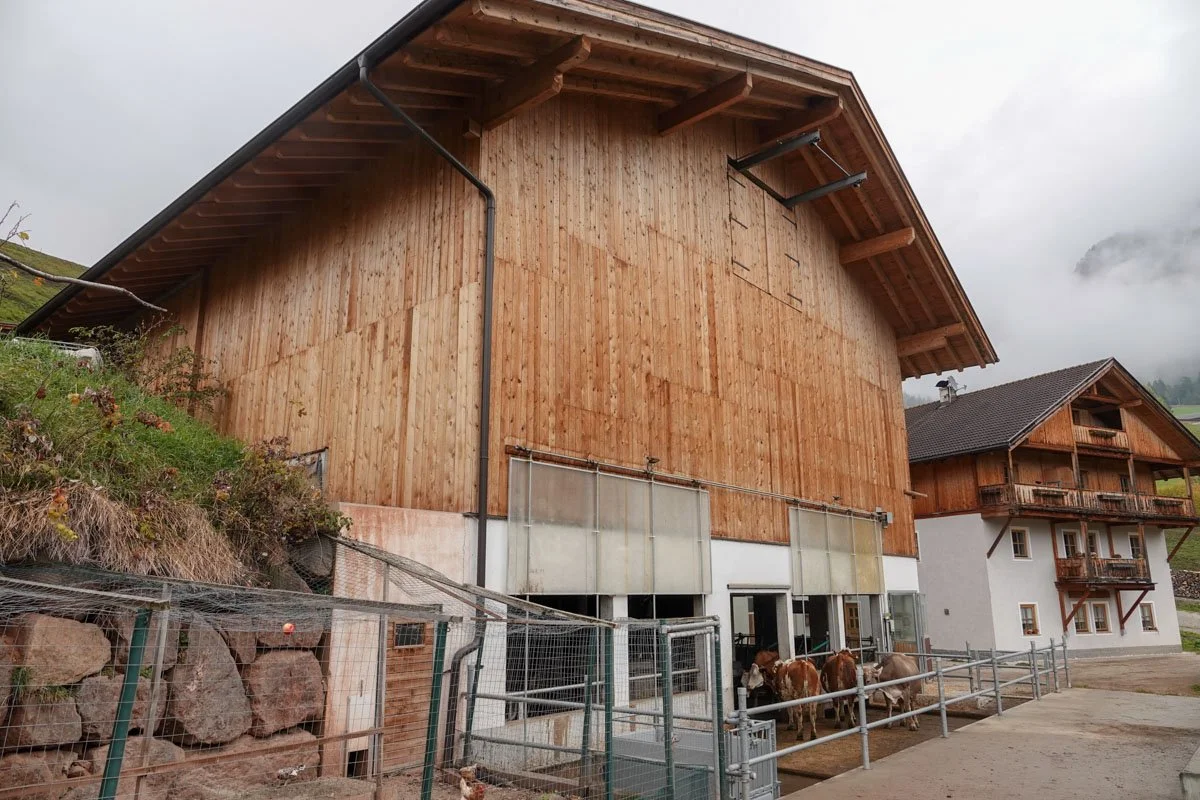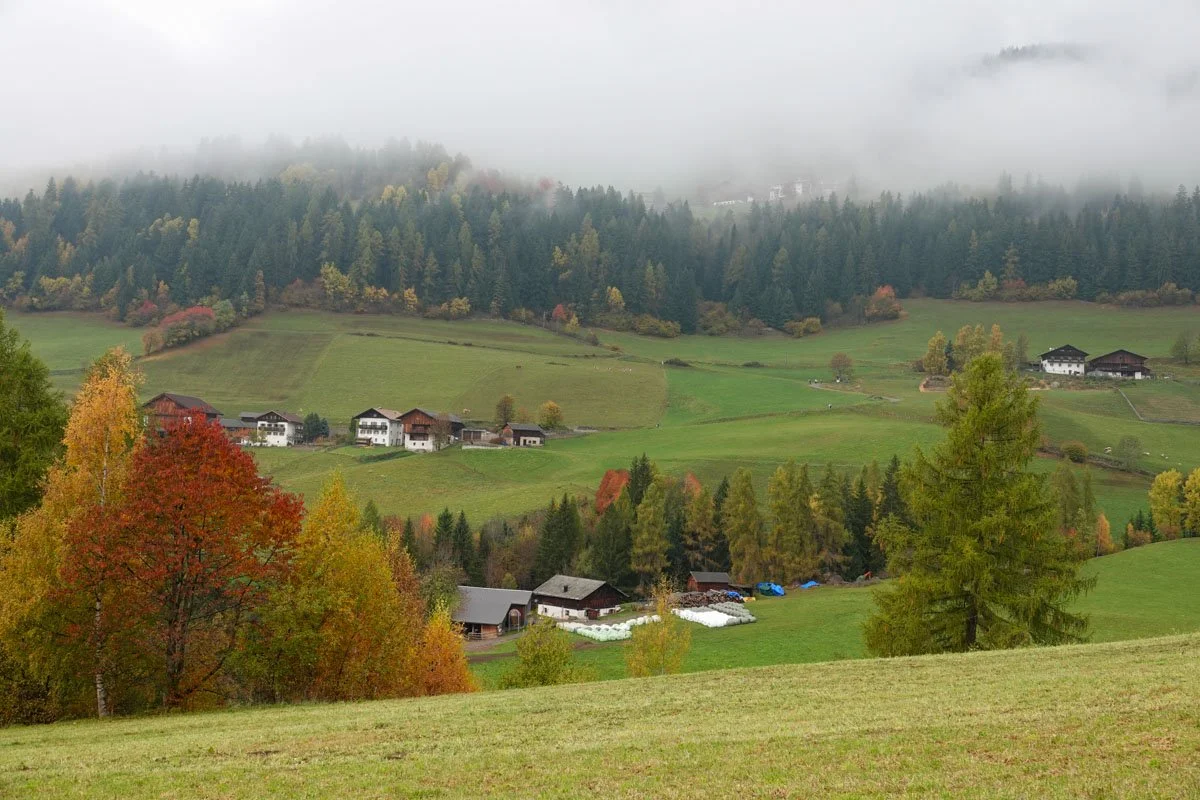
Are you ready to go to Northern Italy?

     Vicky and I recently returned from a trip to Switzerland and Italy (October 2025). Yes, we finally made it to these wonderful places. After spending nine days in Switzerland, we spent eighteen in northern Italy. 

     We spent our time in Italy mostly in the Italian Alps, but we also visited Milan and Venice. The Alps were never out of our sight, even in Venice. 

     I suspect that most people have already visited Italy. I also suspect that most people have concentrated their trips more in southern Italy, so hopefully, I will still be able to point out some new sights in Italy. 

     For me, Italy was my 100th country to visit in the world. I started my foreign travels with the idea of going to places like Egypt to crawl inside the Great Pyramid, Tibet, Mongolia, Myanmar, India, and Bhutan, amongst others, while I was still young. But even I am surprised that I visited 99 countries before I got to Italy. But better late than never and it was worth waiting for!

I'll give you a few glimpses of our trip, just so you have an idea of what we saw and where we went.

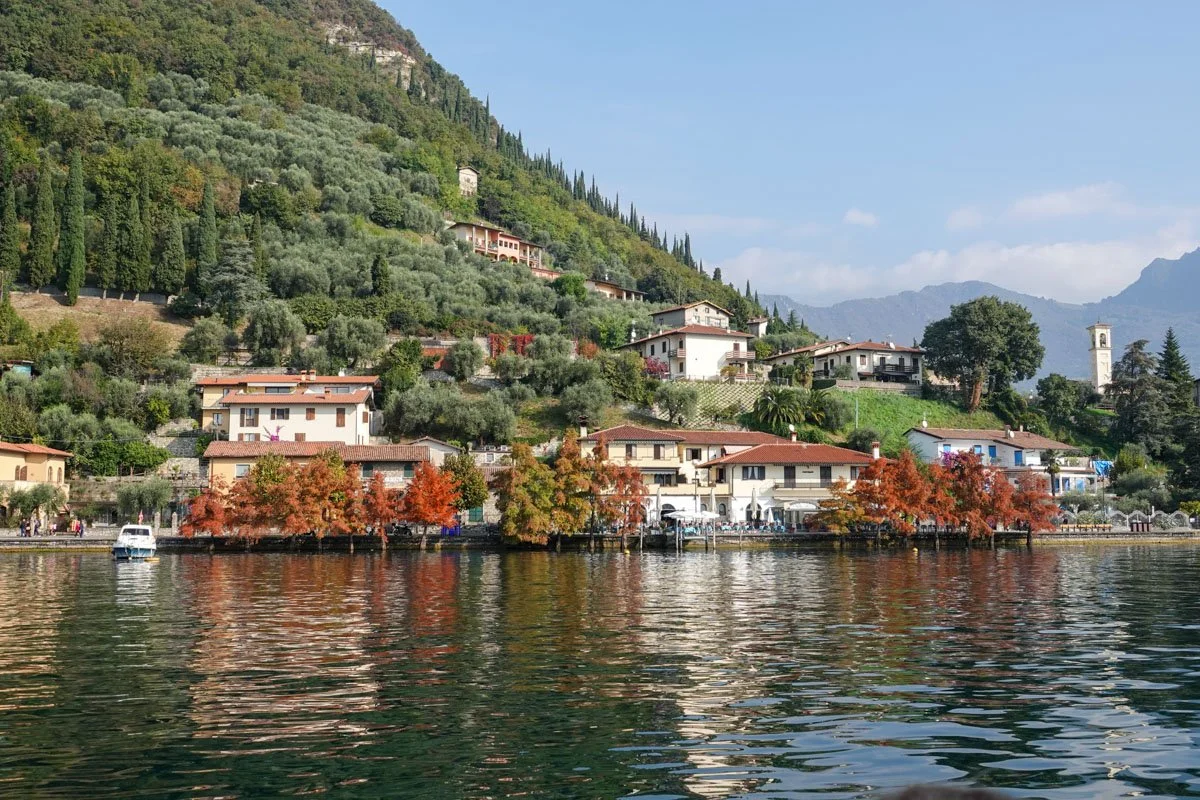
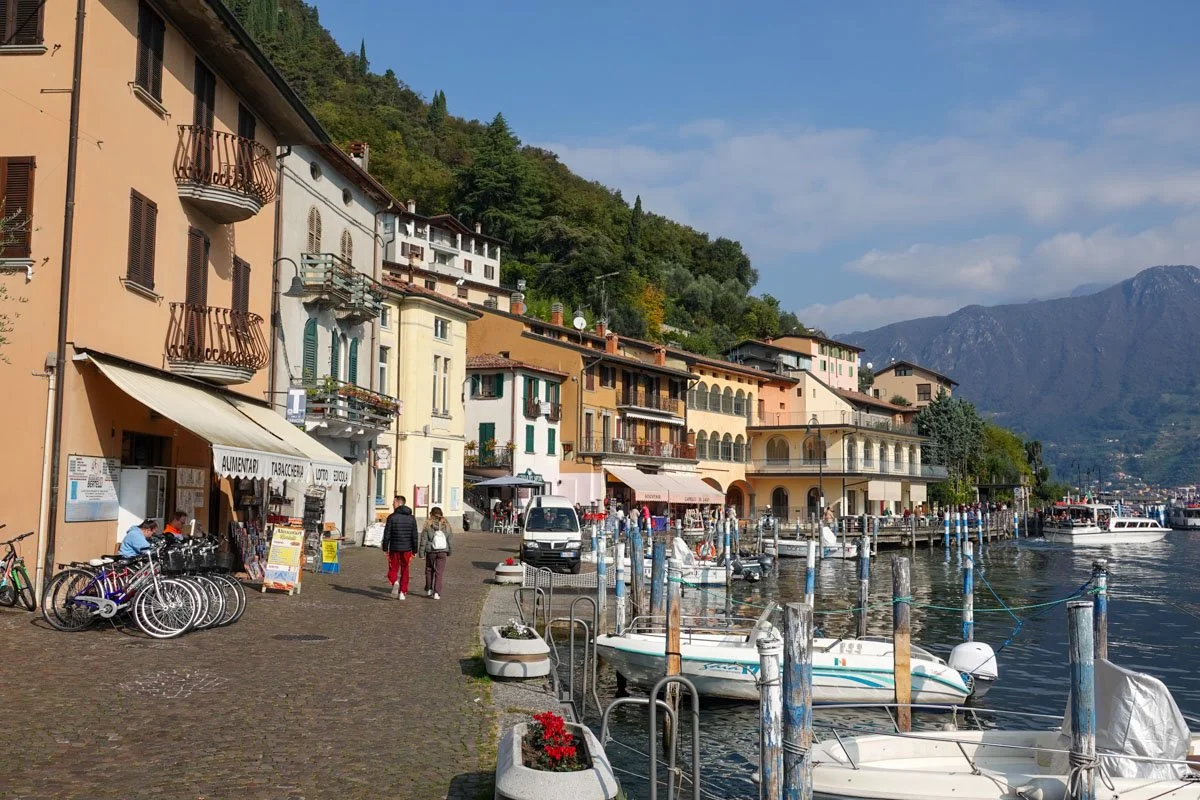
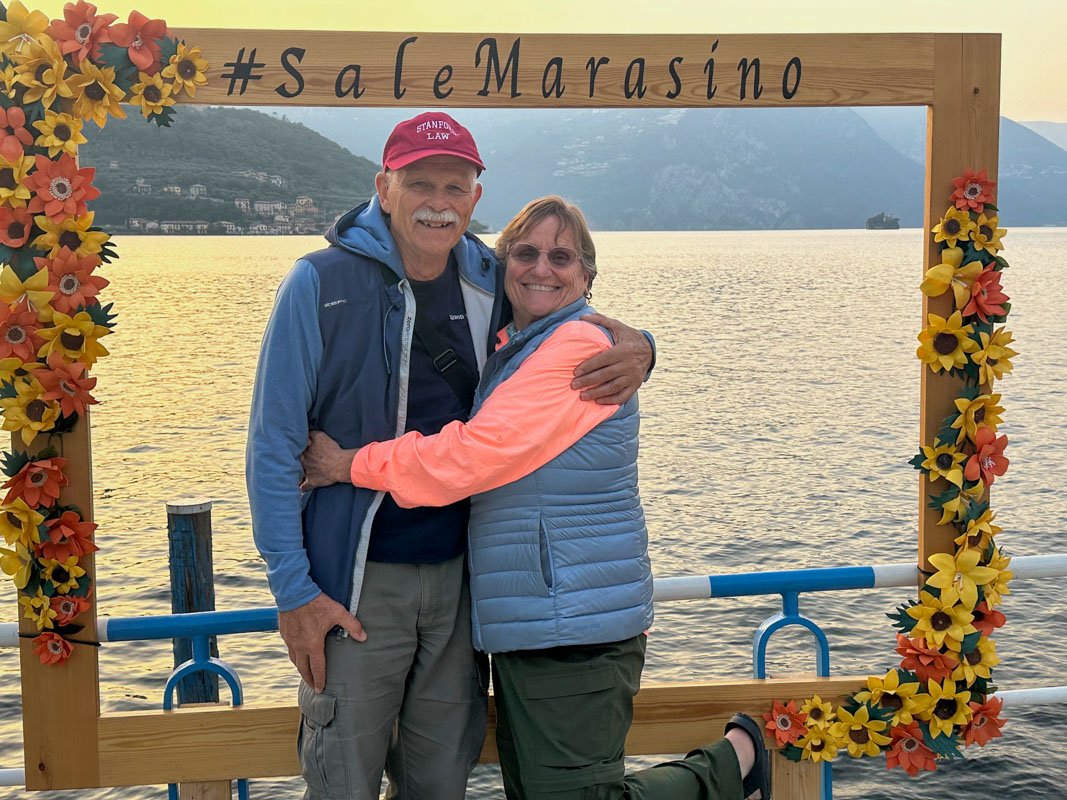
I'm not sure if this is true but it seemed like everywhere we stayed in northern Italy, we were on a lake. This is Sale Marasino on the shores of Lake Iseo.
As I said, we were still in the Alps and we continued to take mountain hikes which continued to be beautiful!
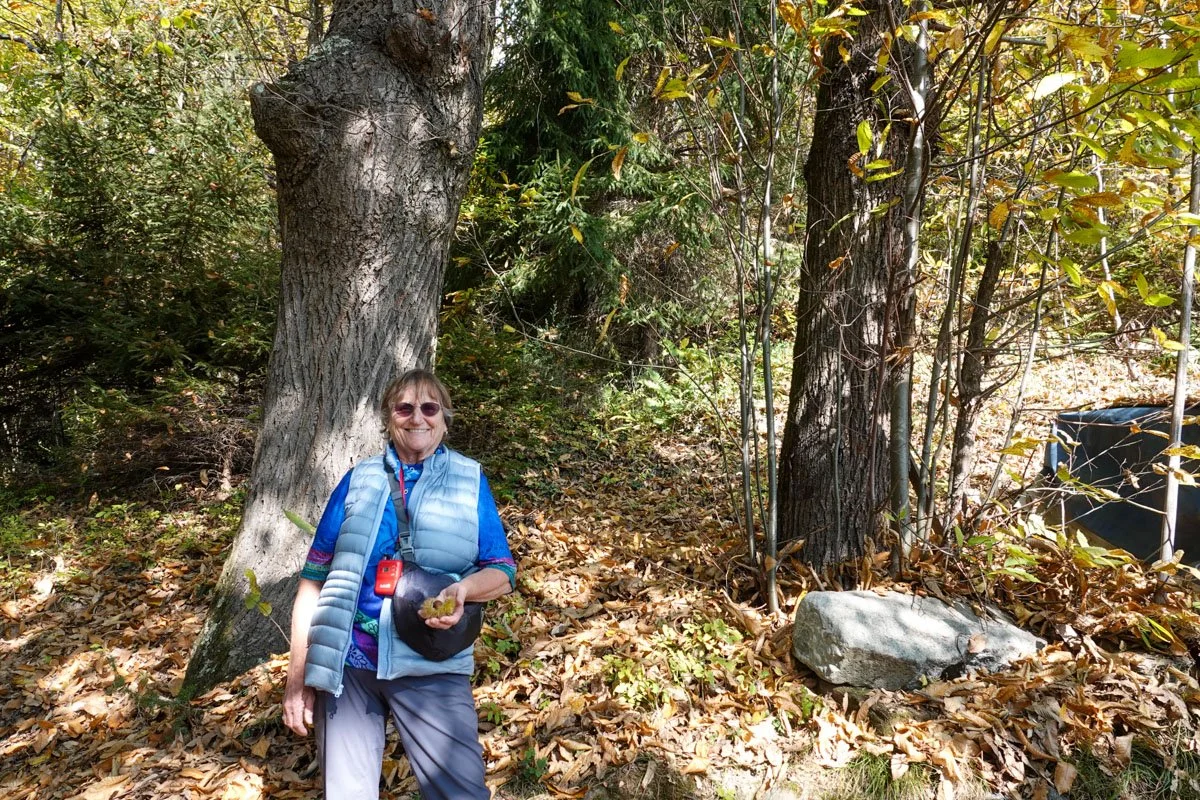
Fall is one of our favorite times to travel. We love the fall color and all that goes with it. In northern Italy, that includes finding chestnuts. We found more chestnuts than we could have eaten. Chestnuts (Castagnes in Italian) were being roasted and sold everywhere we went.
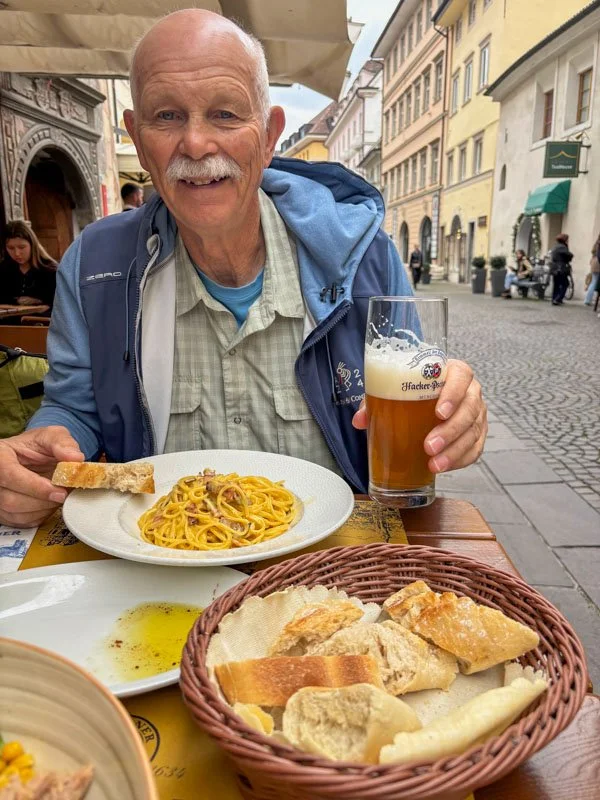
The food was excellent, but that was no surprise. If there were any surprises, mine was that we didn't have pasta as often as I expected. Below was a meal we ate in Bressanone.
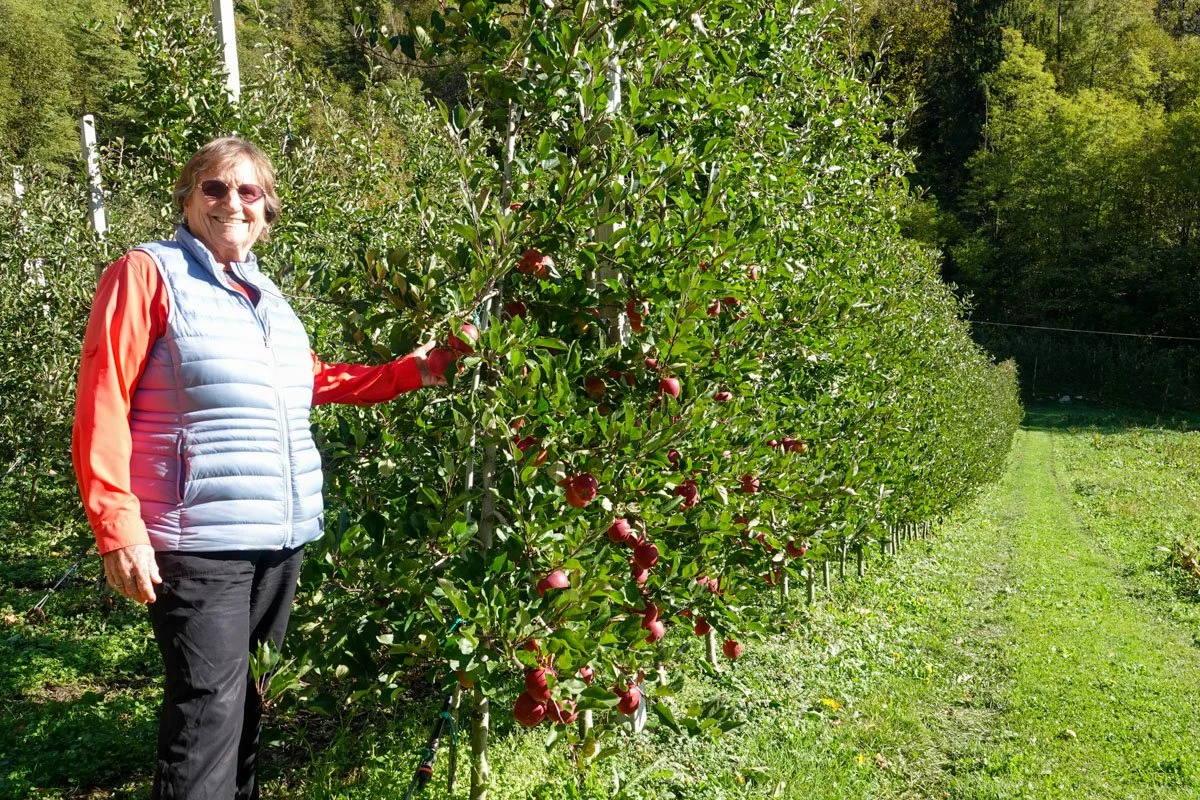
We got to visit several farms in Italy, and they were real highlights for us. This was a visit to an apple farm near the town of Borgo.
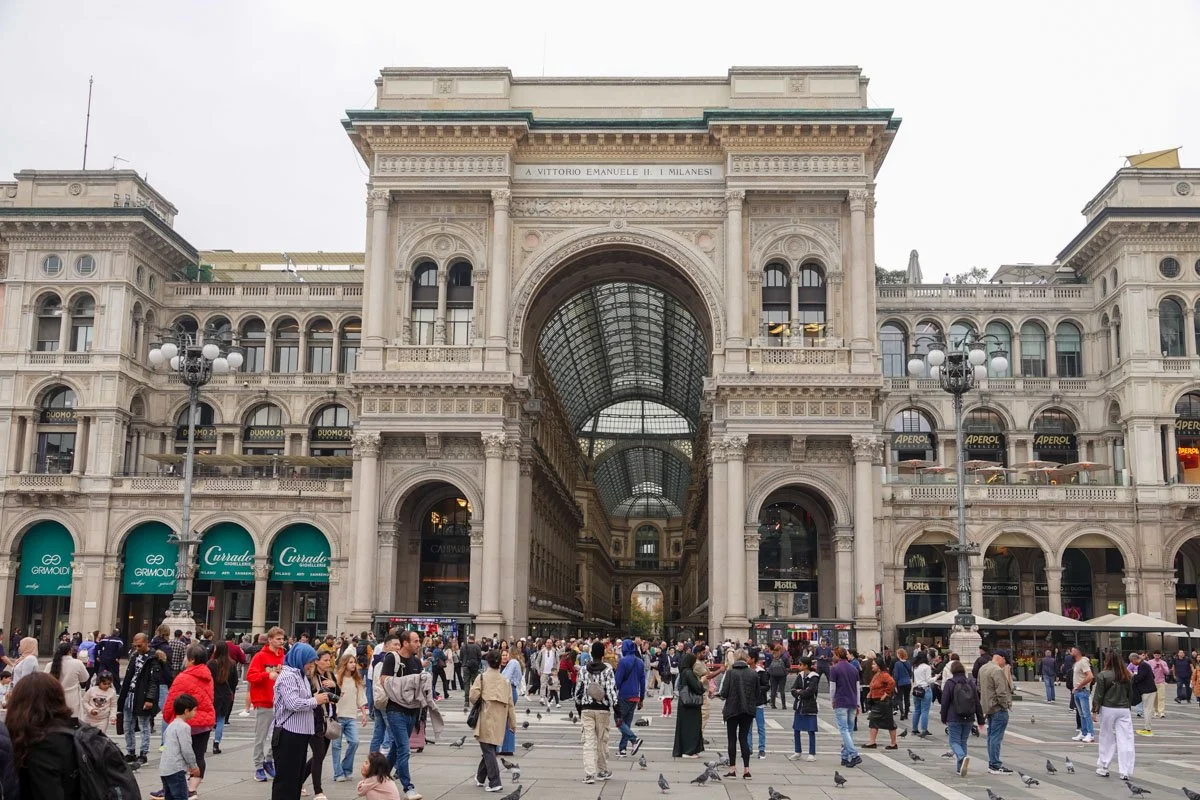
Our visit to northern Italy was not all in the country or mountains. We also visited Milano and Venice, which we also enjoyed very much.
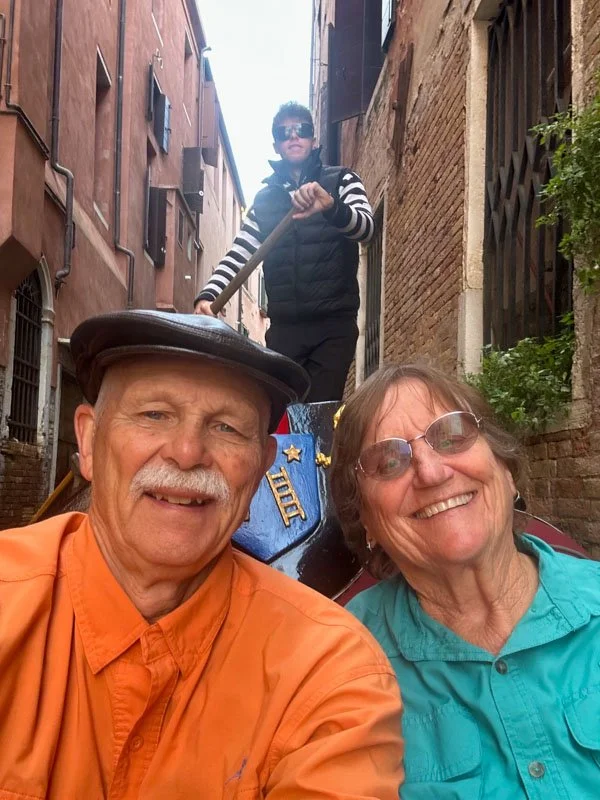
Orta San Giulio

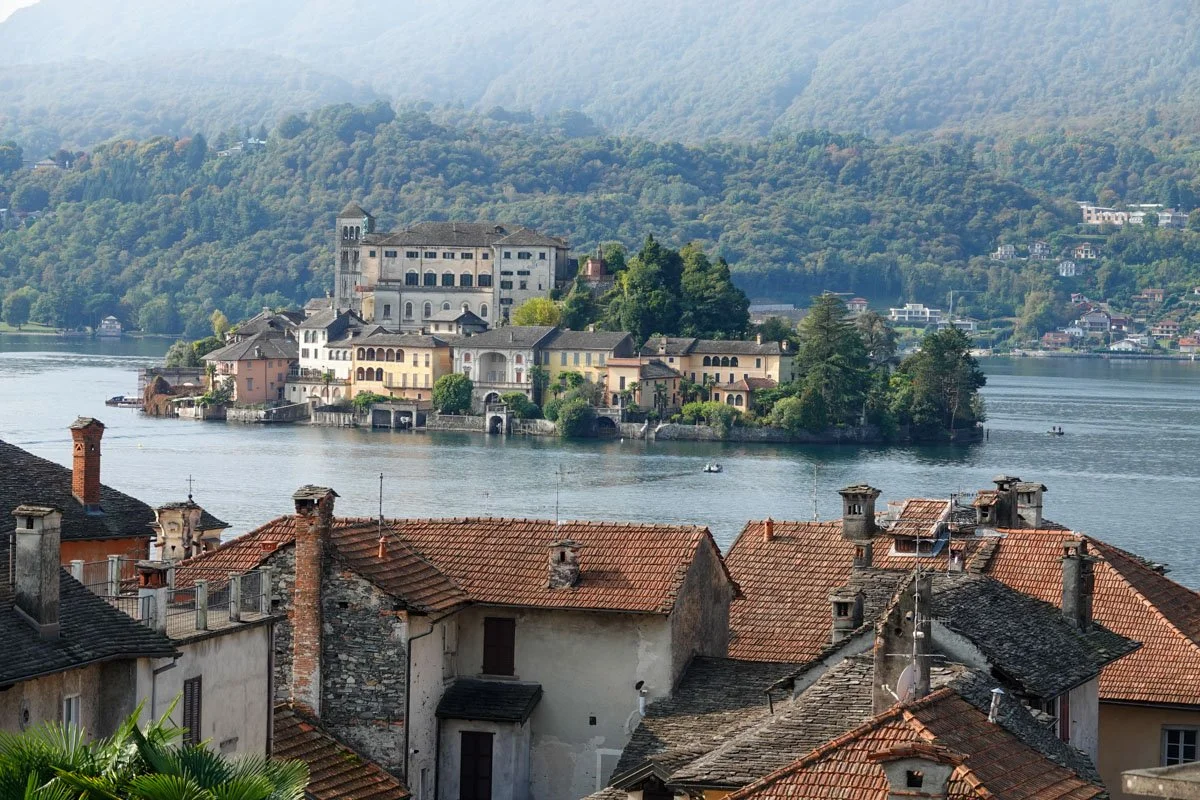
     We crossed the border from Switzerland to Italy in mid-morning. Before lunchtime, we were in the small village of Orta San Giulio. The town is built up on a hill that juts out from the eastern bank and into Lake Orta. The village was very busy and our guide said that people flood here on any nice-weather Saturday and it was a nice-weather Saturday when we were here.

     There was a haze in the air but it was still a nice day. We walked along the lake and through the town. It would seem that one of the highlights of Orta San Giulio, and part of it, is San Giulio Island. It is only a short distance offshore from the town.

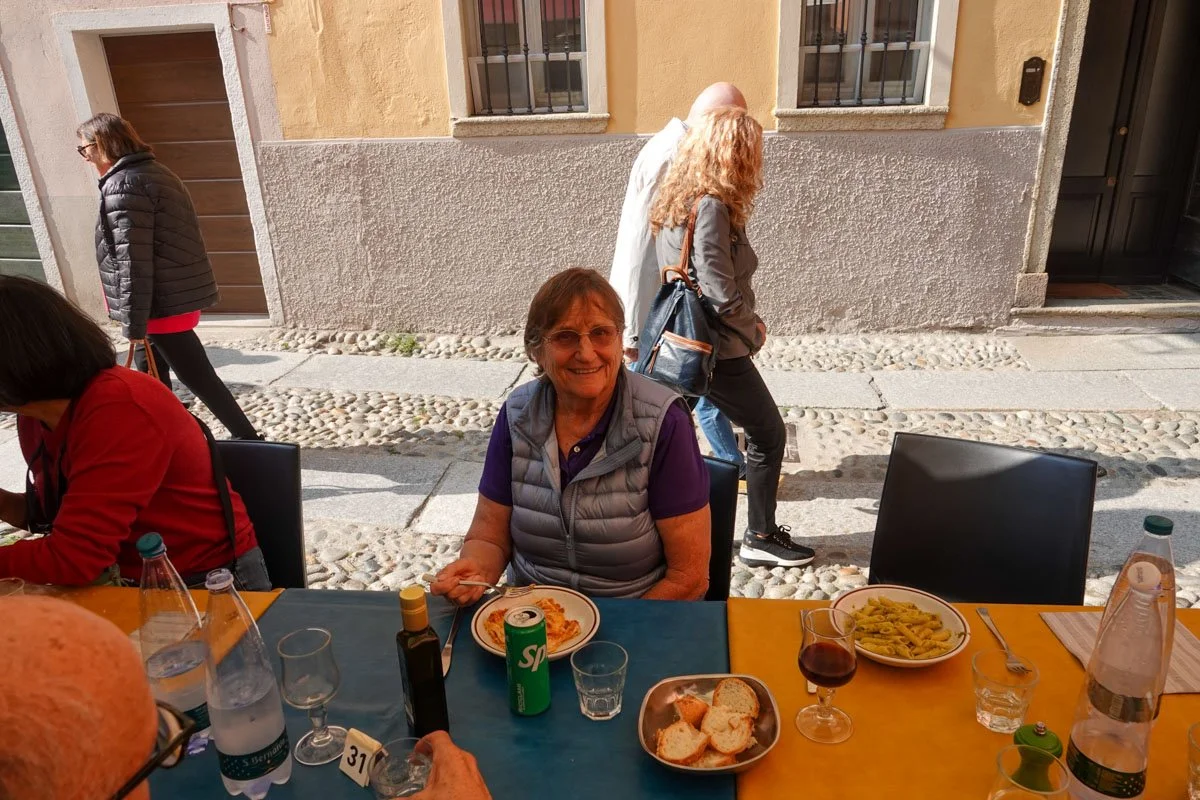
     We got lunch in the village. We had a baby carrot and young green bean salad, with bread, of course. My main was pasta cum pesto and Vicky had lasagne. We had wine with lunch and Cross Pie (Apricot in crust) for dessert.

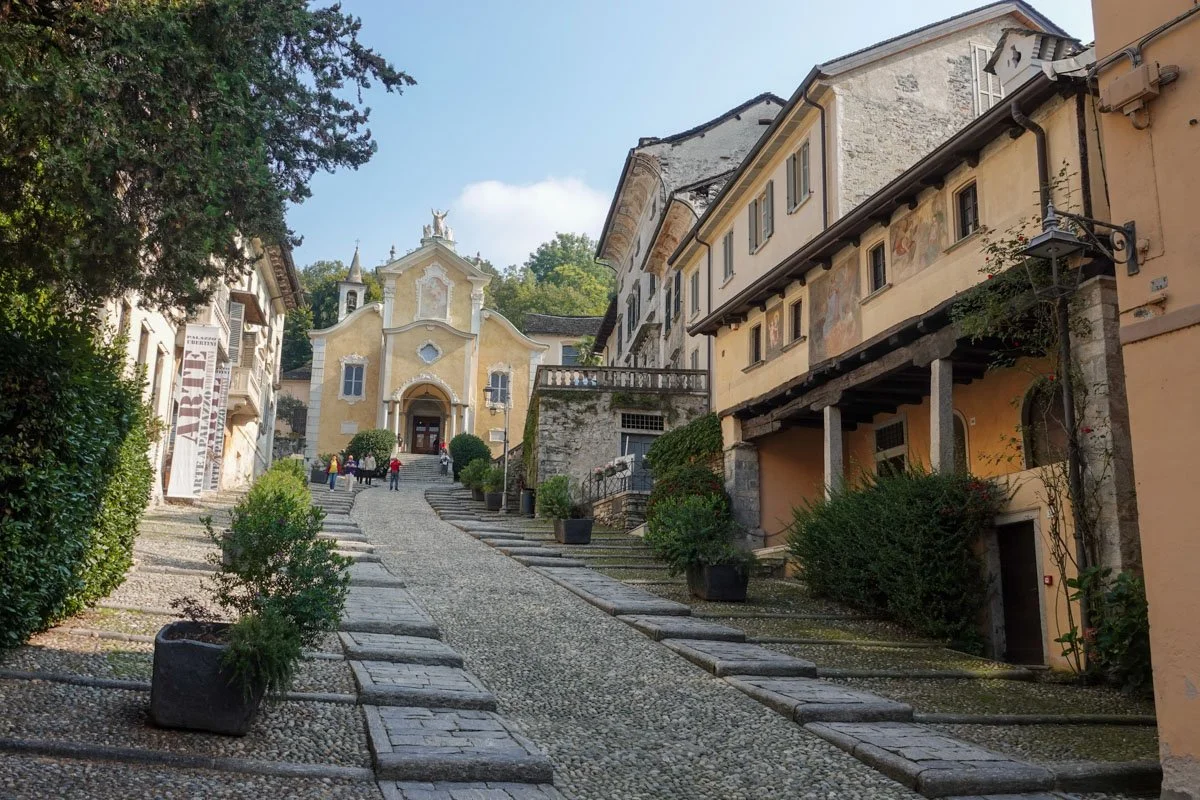
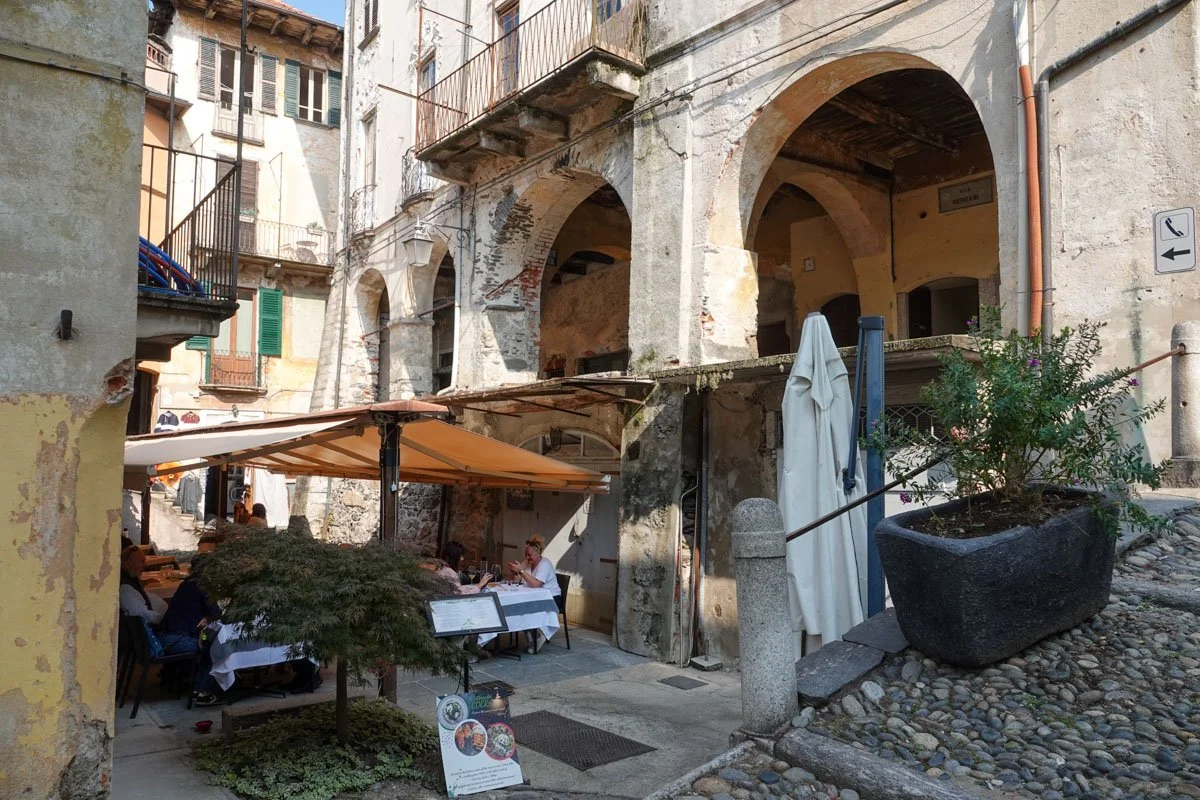
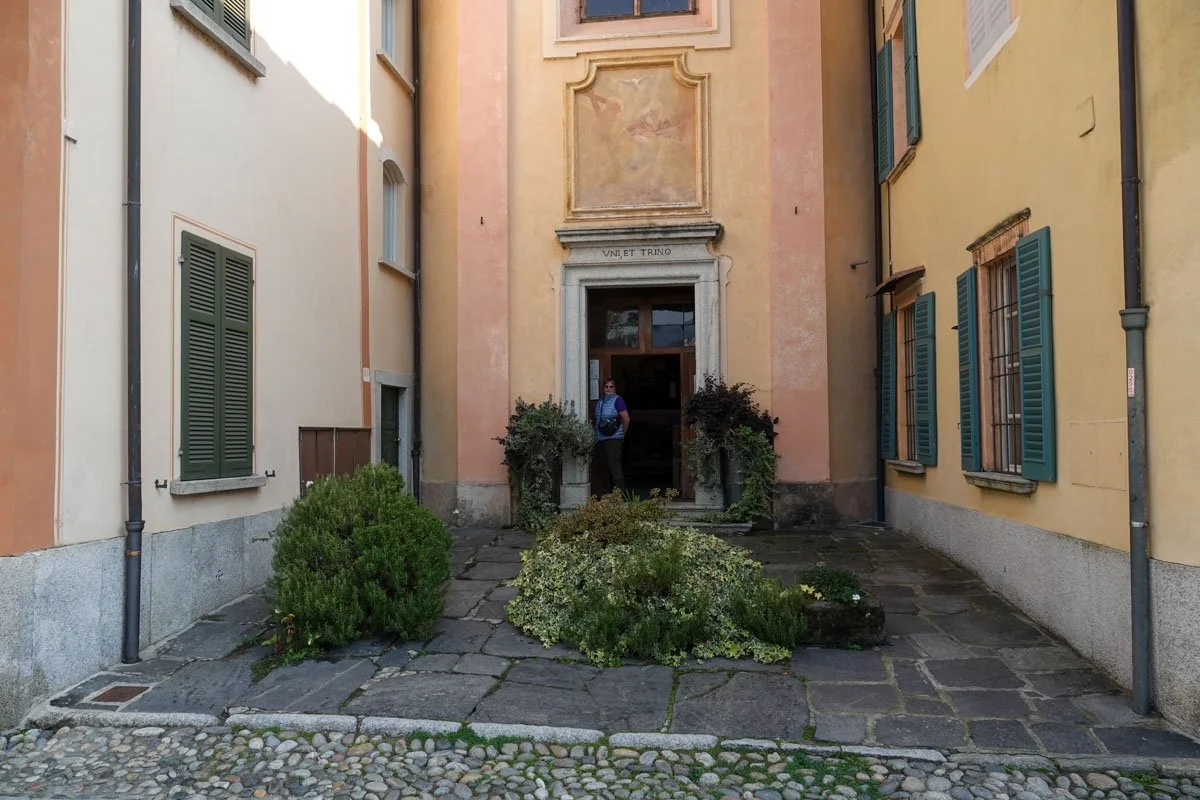
     We found some interesting places wandering around town, though we didn't always know what we had found.

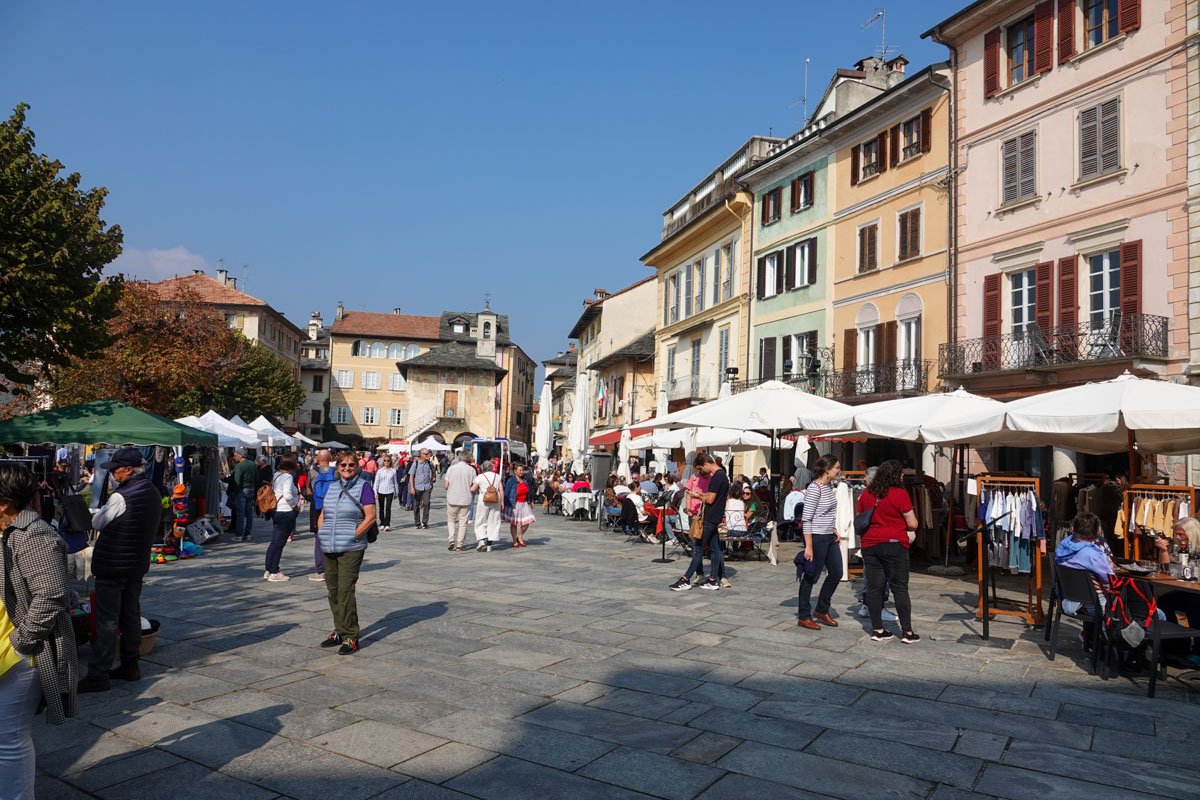
     We ended our time here at a Saturday Market in a plaza down by the lake. It was more of a tourist market, though I would say more for local tourists than for foreign tourists. We found a wild collection of booths selling many different items.

Lecco on Lake Como

     Our first stopping point in northern Italy was the town of Lecco which is on Lake Como. Lecco is at the southeast end of Lake Como. Lake Como is a lake of glacial origin which you can see by the multiple branches which would have been glaciers between the mountains. Lake Como's shape is like an inverted Y. It's the third largest lake in Italy and one of the deepest lakes in Europe. 

     Lake Como is at the foot of the Alps and has been a popular retreat for the wealthy since Roman times. It also boasts various artistic and cultural items and its shores are dotted with villas and palaces, some going back many centuries. Some palaces and villas are known for their historic architecture and elaborate gardens. 

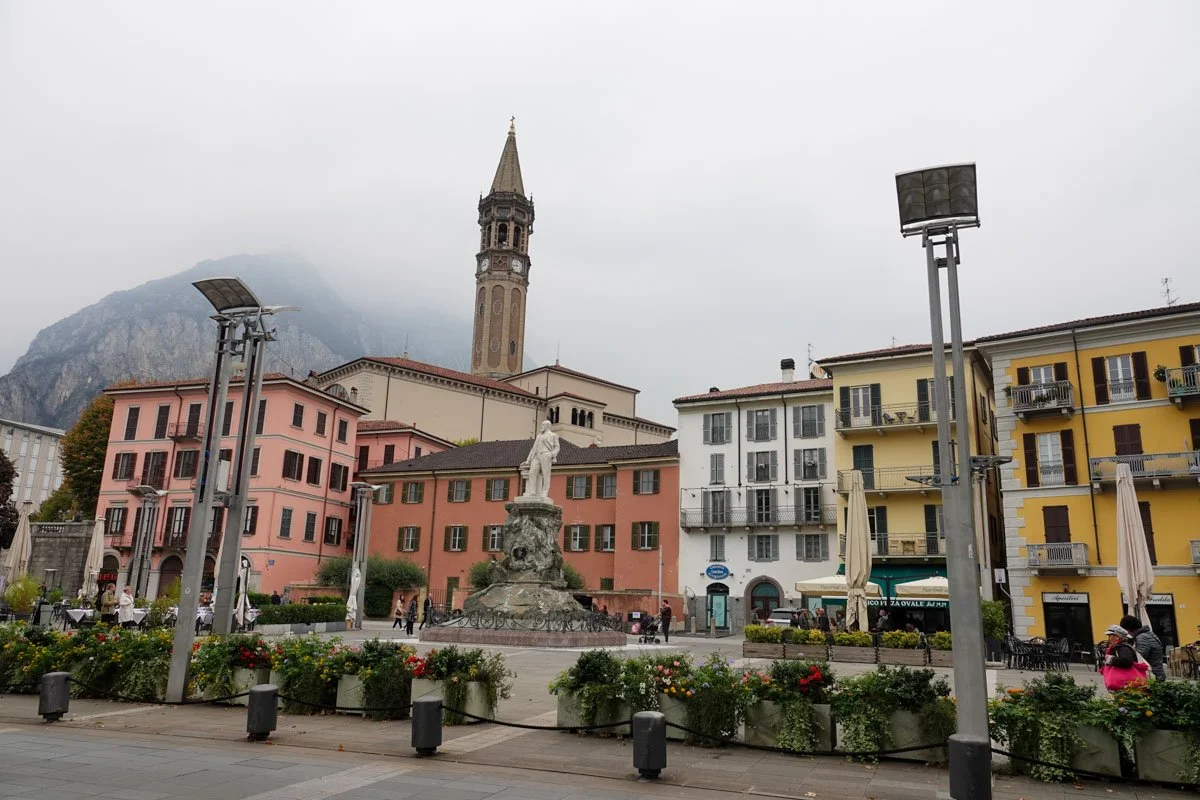
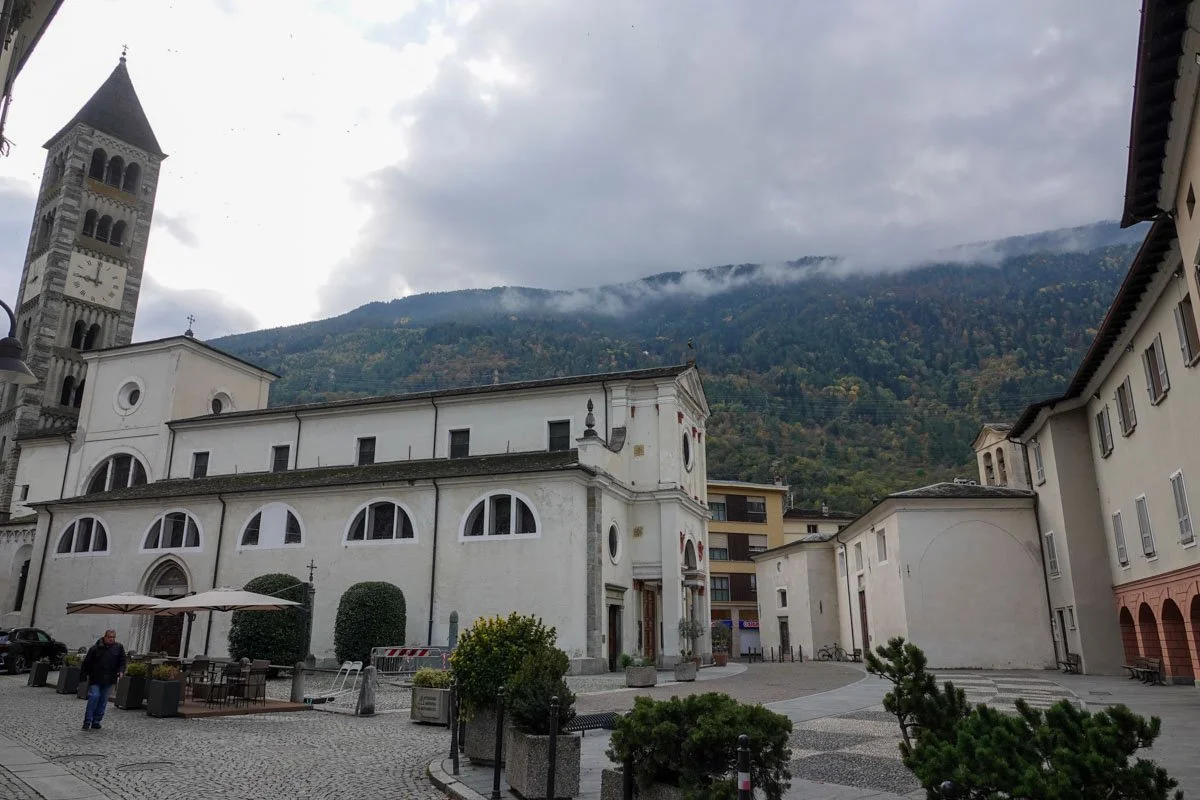
     Our Italian guide said that towns have two main places, the church and the town hall. You can see the top of the main church in Lecco below, with its roughly 300-foot tall clock tower. That's a landmark for people out on the lake or around the lake.

     We stayed in Lecco and Lake Como for three days. I wasn't about to complain about the weather after three straight days of viewing the Matterhorn in Zermatt. But I asked our guide about the weather here and mentioned that it didn't look like the brochures. She laughed and said that it was a very large lake surrounded by very tall mountains, so what did I expect? She said that it takes very strong winds to clear out the sky here. We never got any strong winds, not for three days here. Oh well...

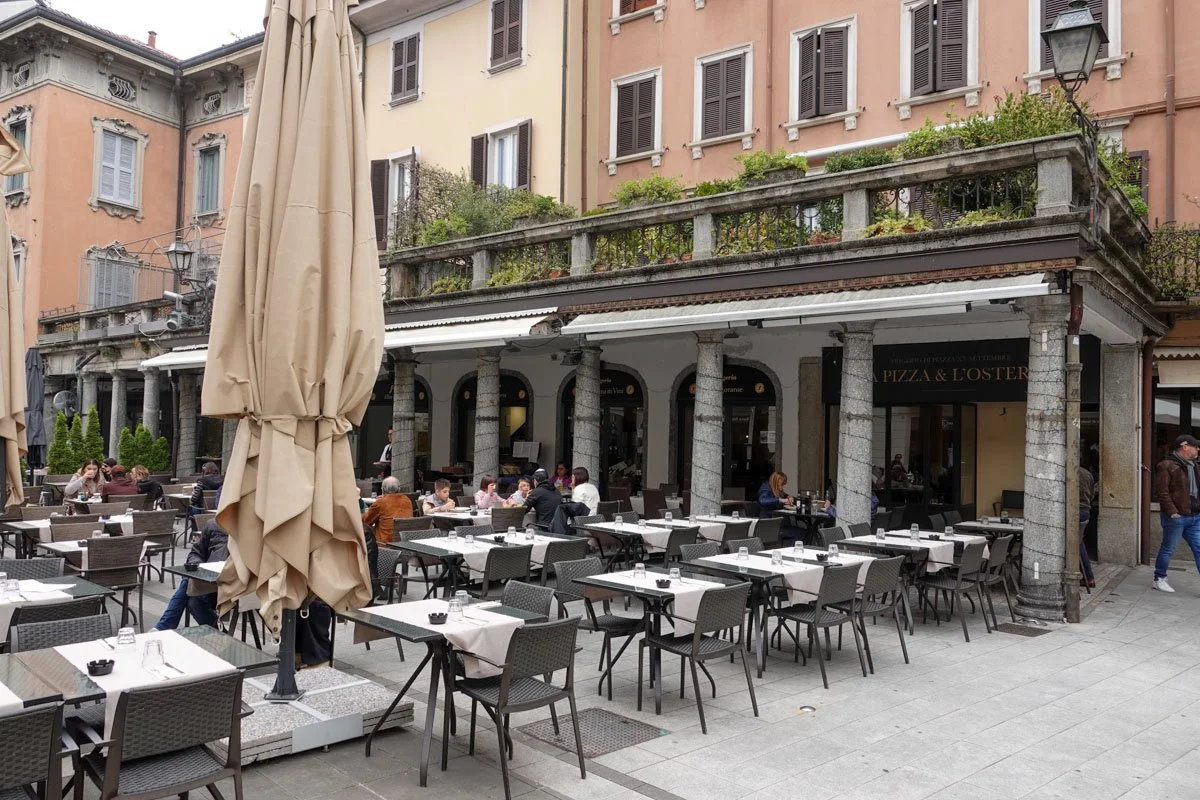
     We could see that people here love the outdoors for dining and such in nice weather. But outside seating was readily available on our visit.

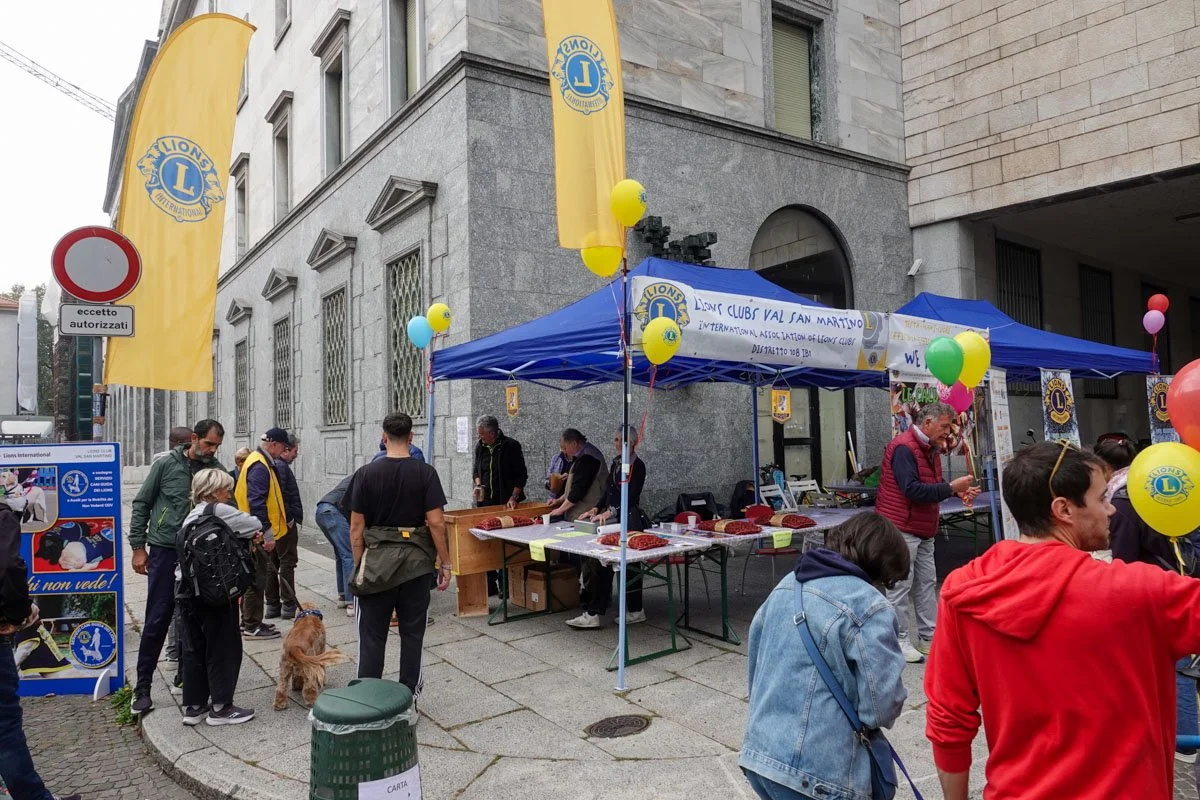
     We were sitting in the main square area (which is not square) when I noticed a very busy booth right across from where I was sitting. I went over to check it out. It was the Lions Club selling chestnuts and also selling roasted chestnuts.

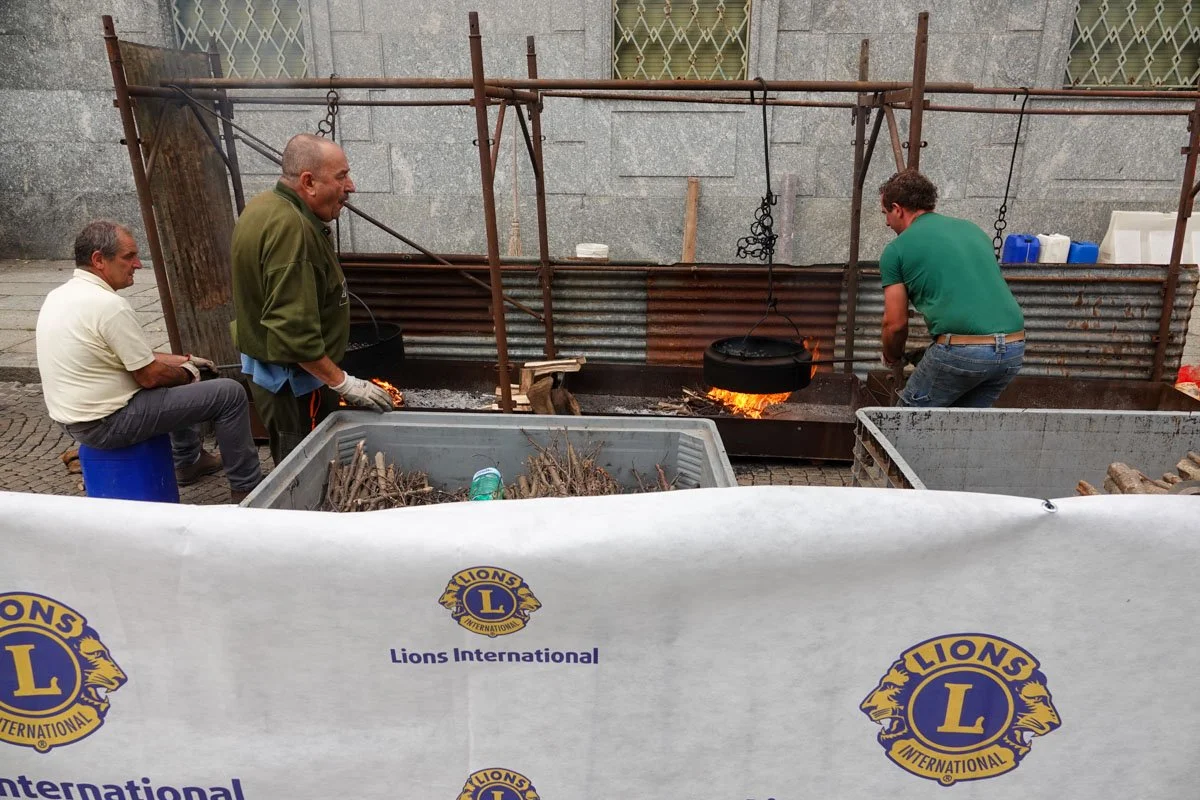
     Shortly after I sat back down, a fellow tourist said it looks like a fire down the street as the smoke poured past us. I said it couldn't be a fire, and I went and investigated. Yep, it was the Lions Club guys roasting chestnuts. I waited for the smoke to clear to take this photo.

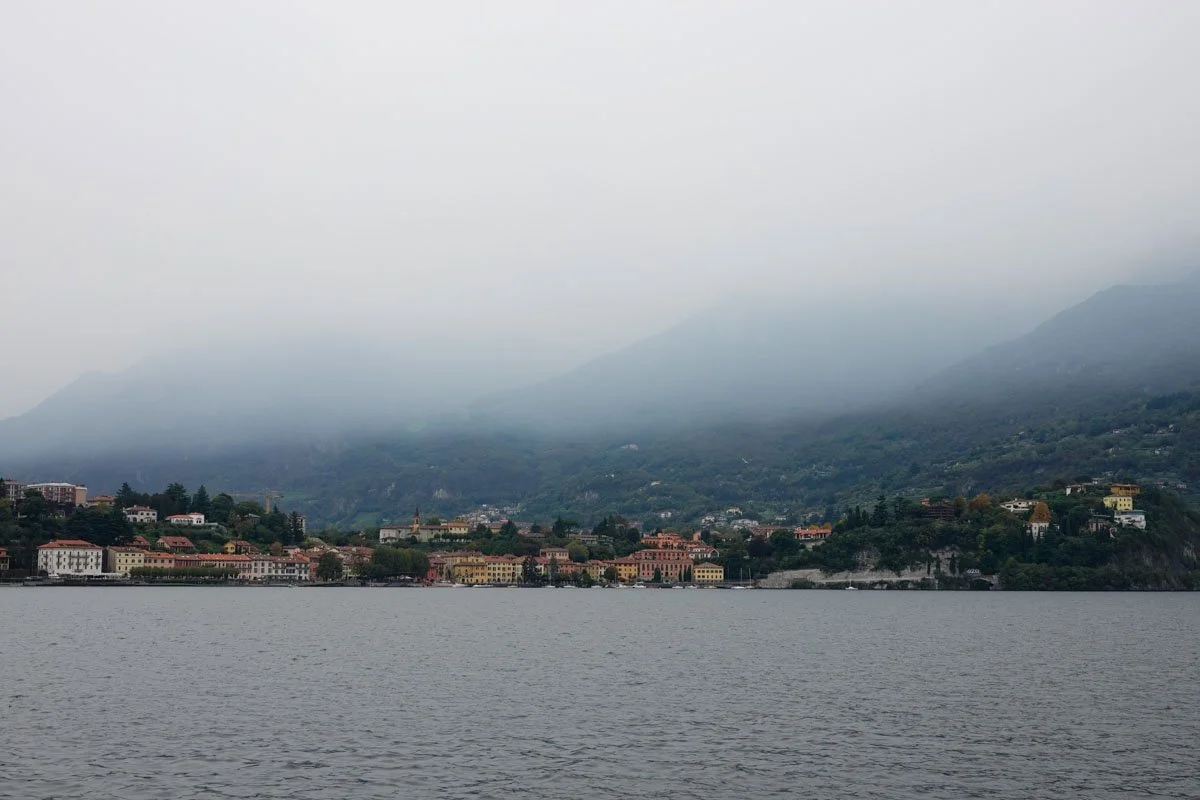
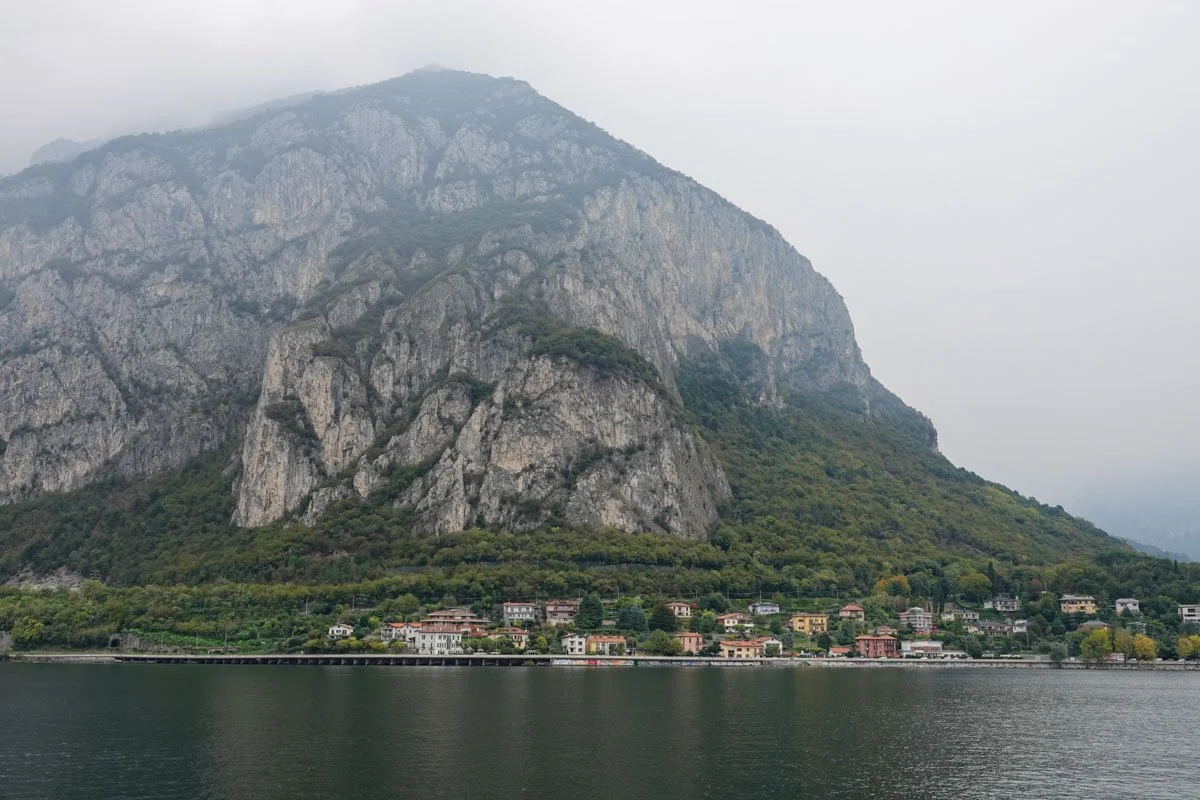
     We took a boat ride out on Lake Como from Lecco. It was a nice ride and we got some nicer views of the lake and villages along the lake but it was still on the cool and cloudy side.

Milan

     Milan was just over thirty miles south of Lecco. We drove down to Milan by bus and stayed for the better part of the day. Milan, or Milano as our guide called it, is the regional capital of Lombardy, in northern Italy. It's the second most populous city in Italy with a population of around 1.4 million. The wider metropolitan area is the largest in Italy with an estimated population of over six million people. 

     Milan was founded around 590 BC by a Celtic tribe. Rome conquered it in 222 BC and it was the capital of the Western Roman Empire. It has a history of cultural and political struggles against Austrian domination and on and on.

     Milan is the economic capital of Italy and a major international center for finance, science, industry, fashion, art and tourism. It's both a global fashion capital and one of the most visited cities in the world. It's also a major cultural center with art galleries and museums that feature some of the greatest collections in the world, including major works by Leonardo da Vinci.

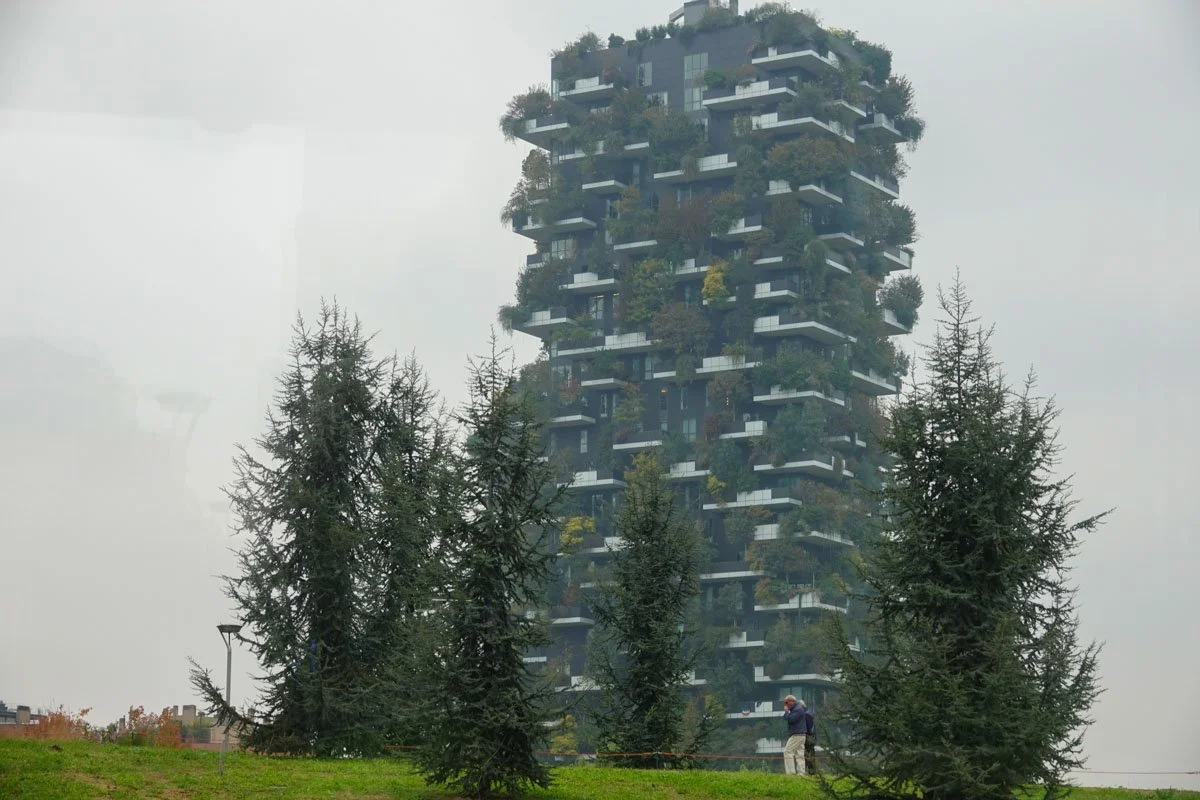
     I knew that I was somewhere different as we first arrived in town. Our guide pointed out the Bosco Verticale or Vertical Forest. It's a pair of residential skyscrapers designed by Boeri Studio. The skyscrapers rise to 250 and 328 feet high. They are home to 800 trees, 4,500 shrubs, and 15,000 plants. It's an integrated design to balance ecology, aesthetics, and living space. The towers are self-sufficient using renewable energy and filtered greywater. They are also home to 300 non-plant occupants. We only got a drive-by view (and moving bus photo) but I was impressed.

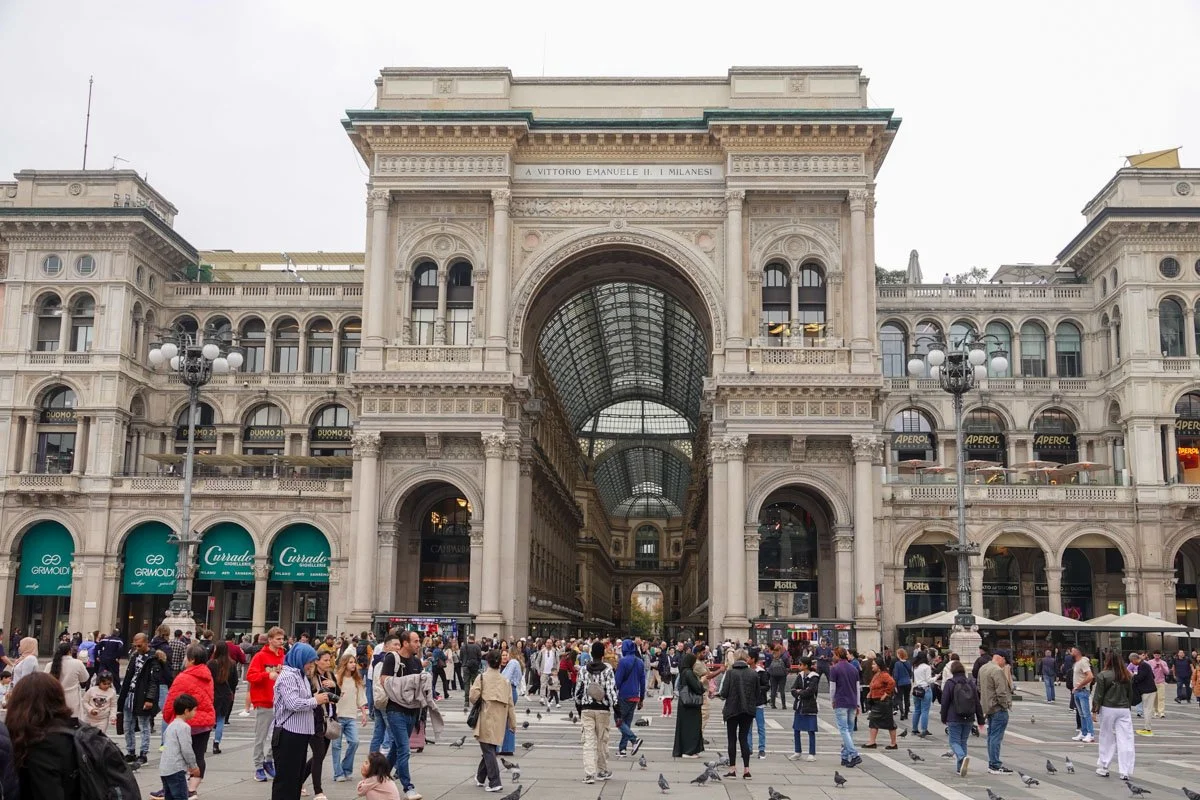
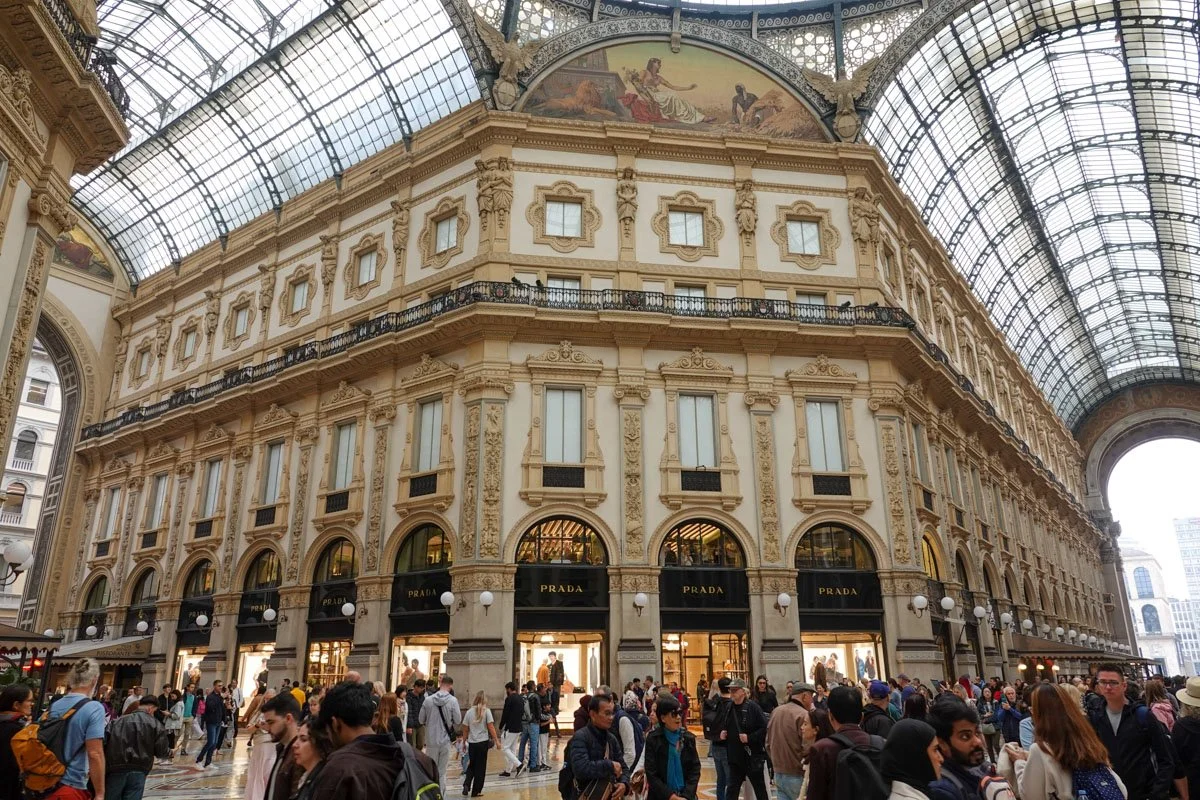
     We had a local guide who toured us around the Main Square area. The Galleria Vittorio Emmanuele II was something to see. It connects two original royal family palaces. I don't know if it's possible to "ooze" fashion, but this place does it. Of course, we weren't alone here.

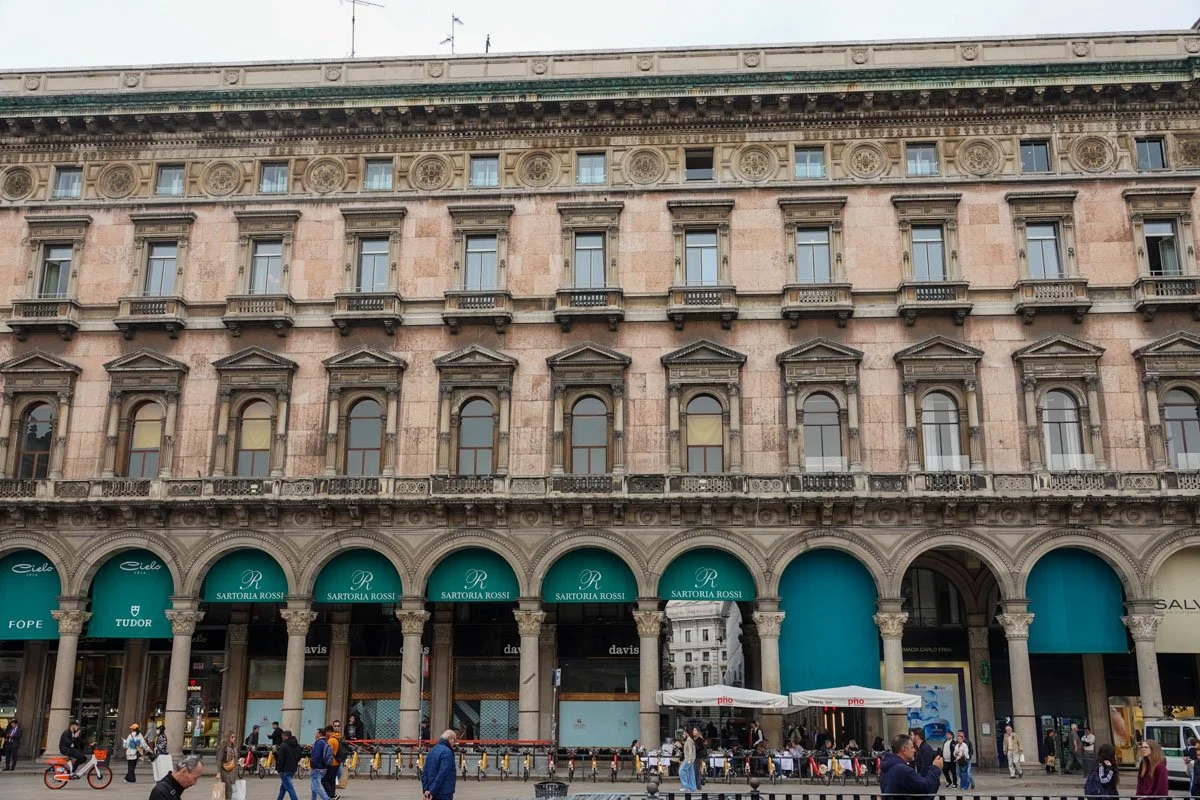
     You can almost feel like you're back in the royal palace days as you look around parts of the main square area.

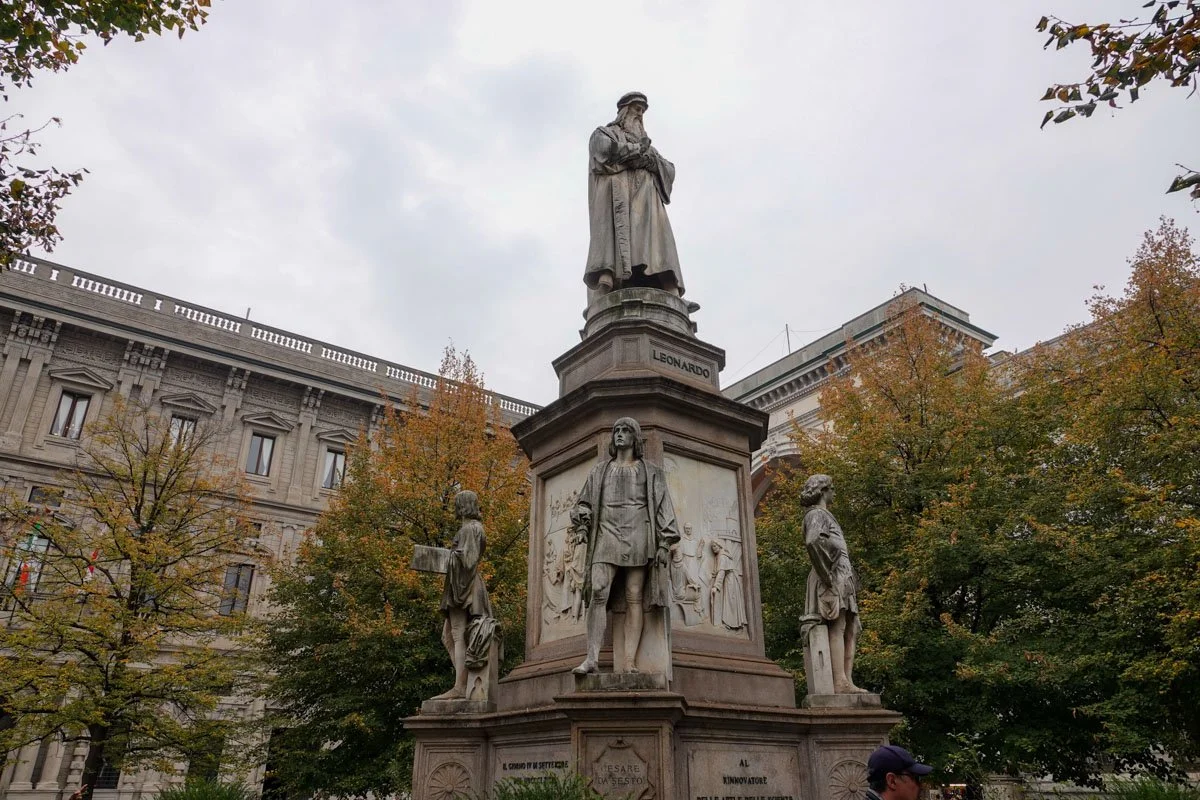
     Statues and artwork are spread all around the area. We didn't have time to see any museums and could not get tickets to see Da Vinci's Last Supper, but you can see plenty of art just wandering around. Leonardo da Vinci is a mainstay in Milan and he stands atop this artwork.

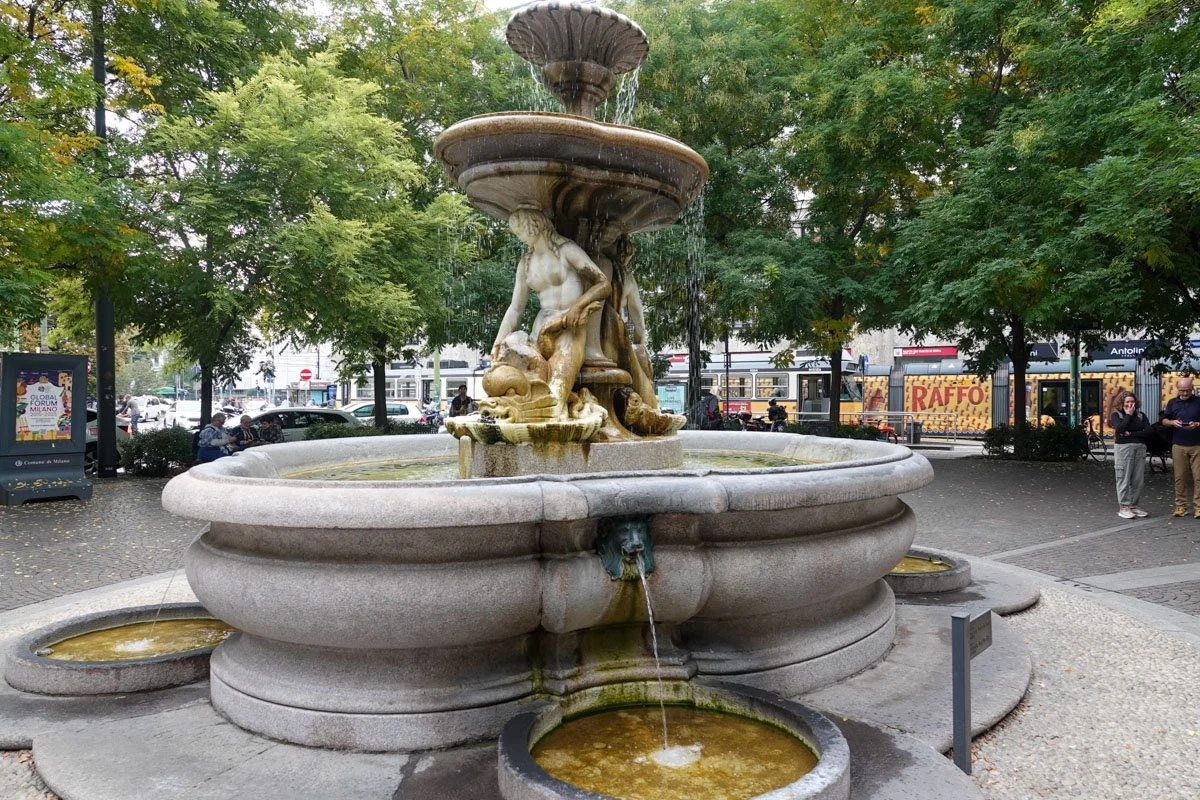
     Italy also has its public drinking fountains, like Switzerland, but they didn't look quite as inviting.

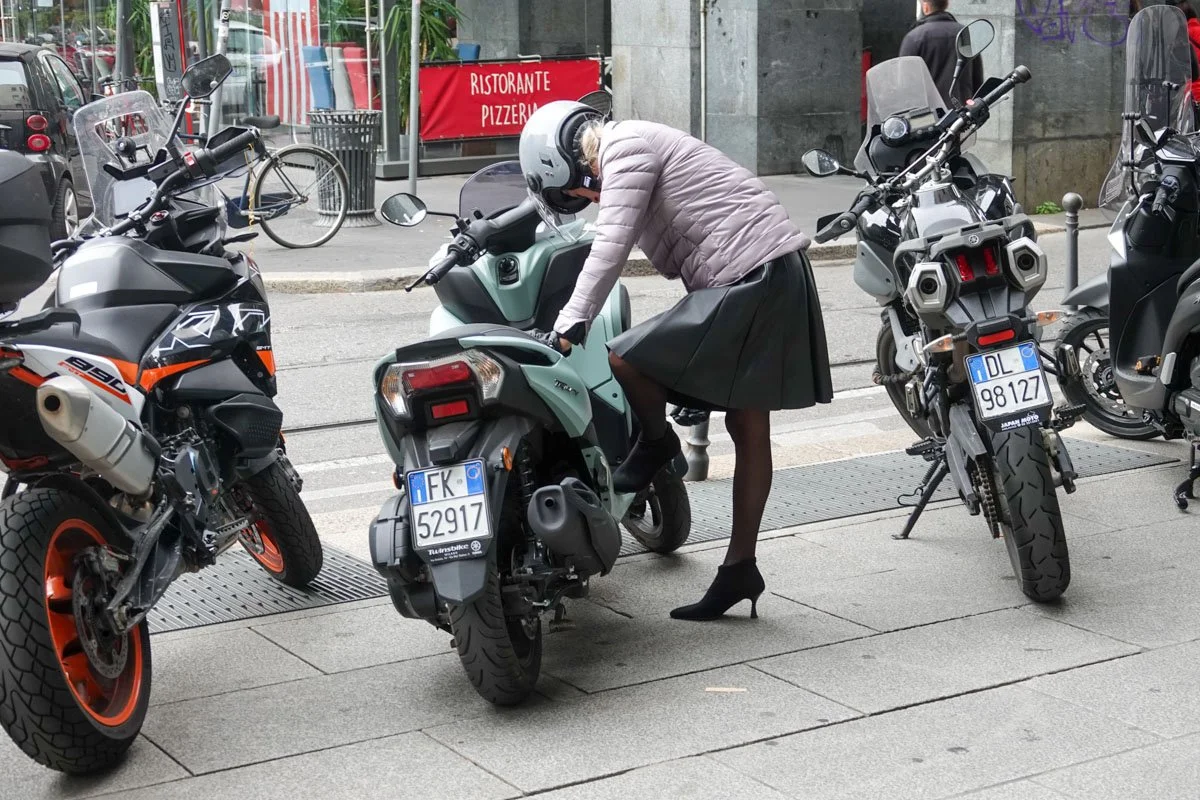
     When I think back to Milano, I have one key memory that I will share with you. After seeing the Duomo de Milano, the Galleria, the Opera House, and much more, this will always be my memory.

     Vicky and I were nearing the end of our stay in Milan. We had walked away from the Main Square area but were now walking back towards it. I was walking along with my head down, to make certain that I didn't trip on the cobblestones. A motorcycle passed by me and was quite close to me as it passed. Since I was looking down, I happened to notice that the rider was wearing high heels. I looked up and noticed that she was stopping just ahead. I hurried to get the following photo. That's my key memory: a motorcyclist wearing high heels. Now that's Milano!

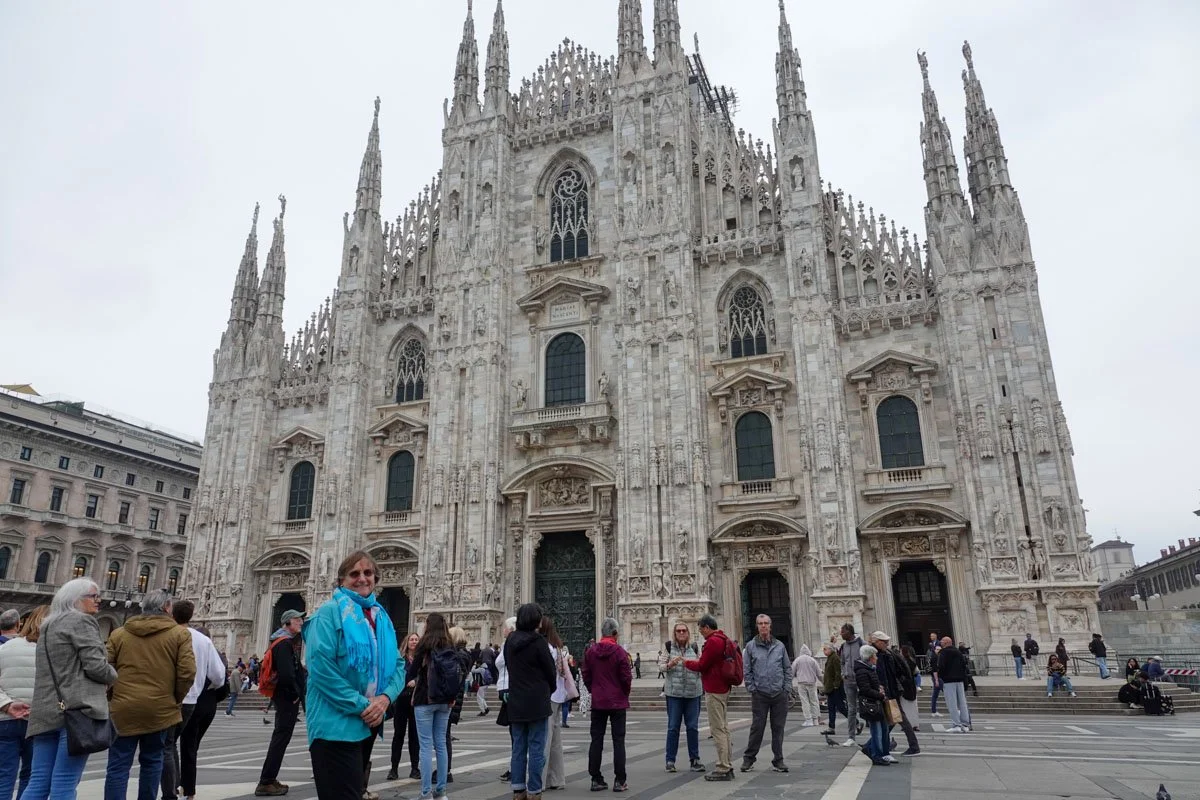
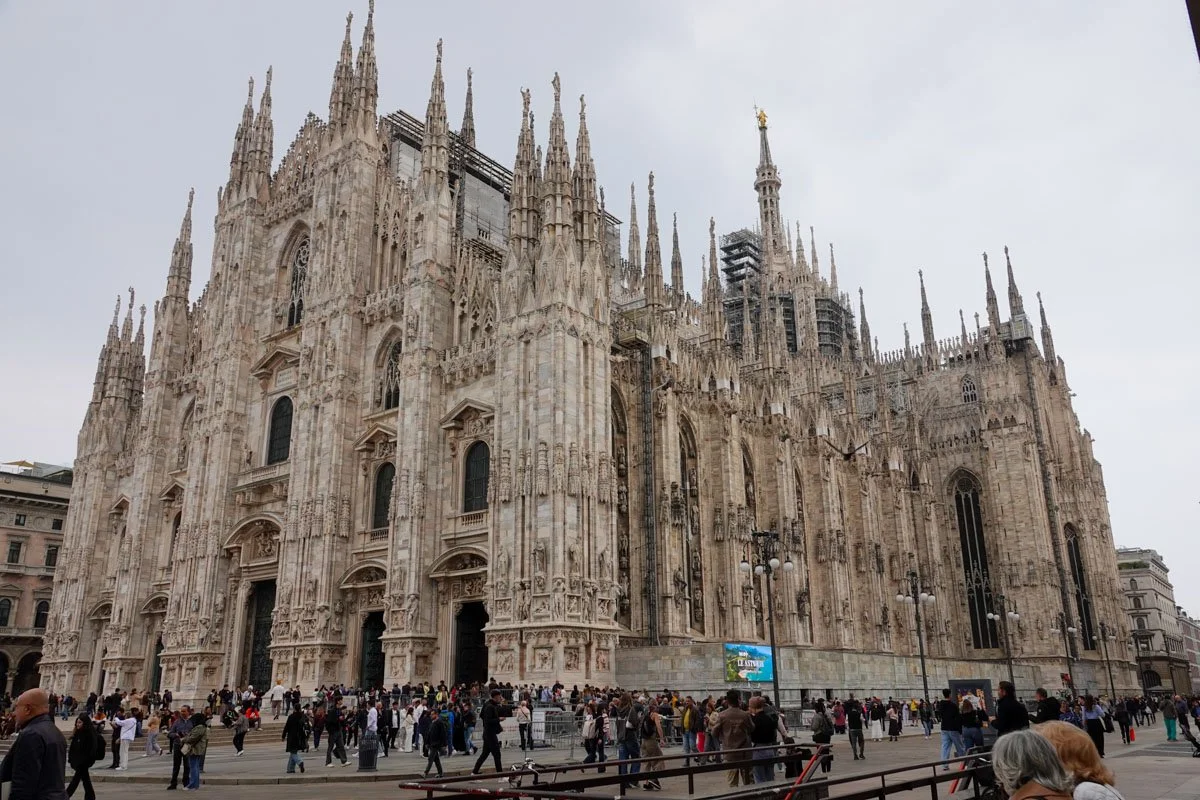
     The Milan Cathedral is really the central feature of Milan. And while I got confused by all the churches in Italy, this cathedral is easy to remember. It's called the Duomo di Milano in Italian. This cathedral took almost six centuries to be completed. Construction started in 1386 and was not finalized until 1965, so in my lifetime. It's the largest church in Italy and one of the largest in the world.

     Milan's city layout is centered around this cathedral. Streets either radiate out from the Duomo or circle it, which reveals that it occupies the most central site in the old Roman Mediolanum, that of the public basilica facing the Forum.

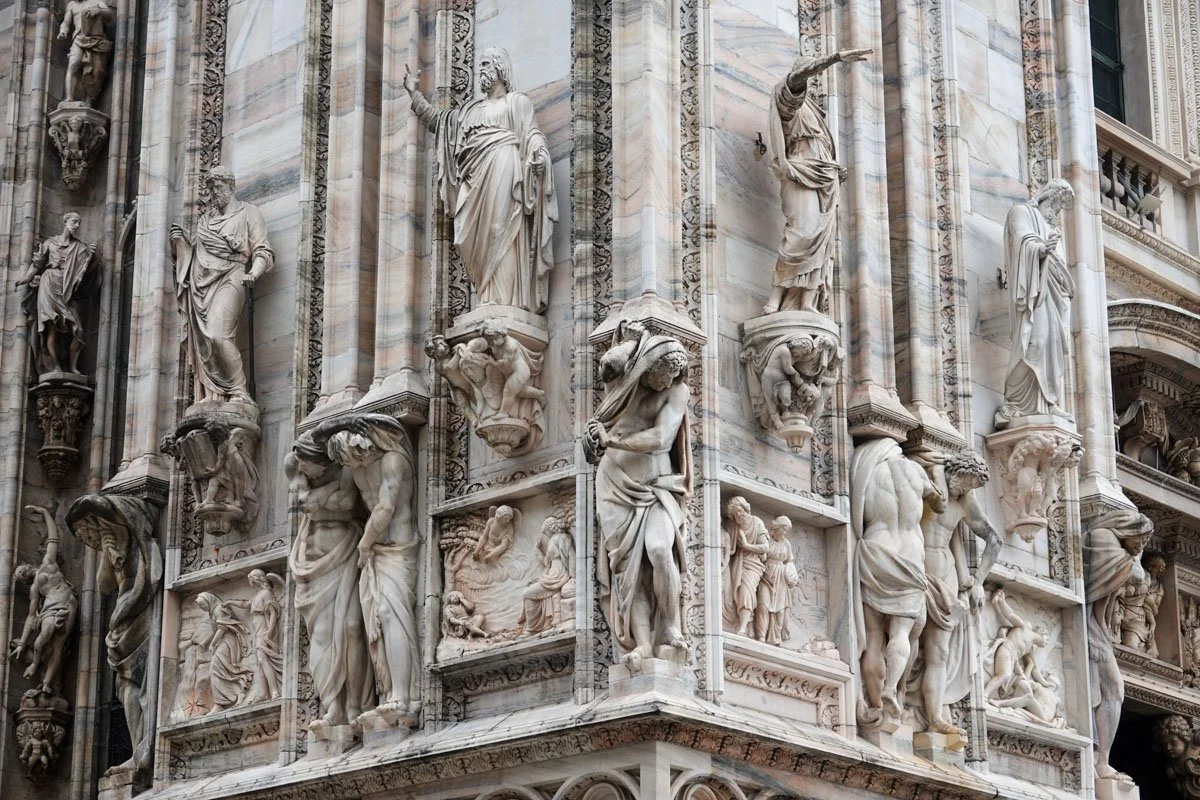
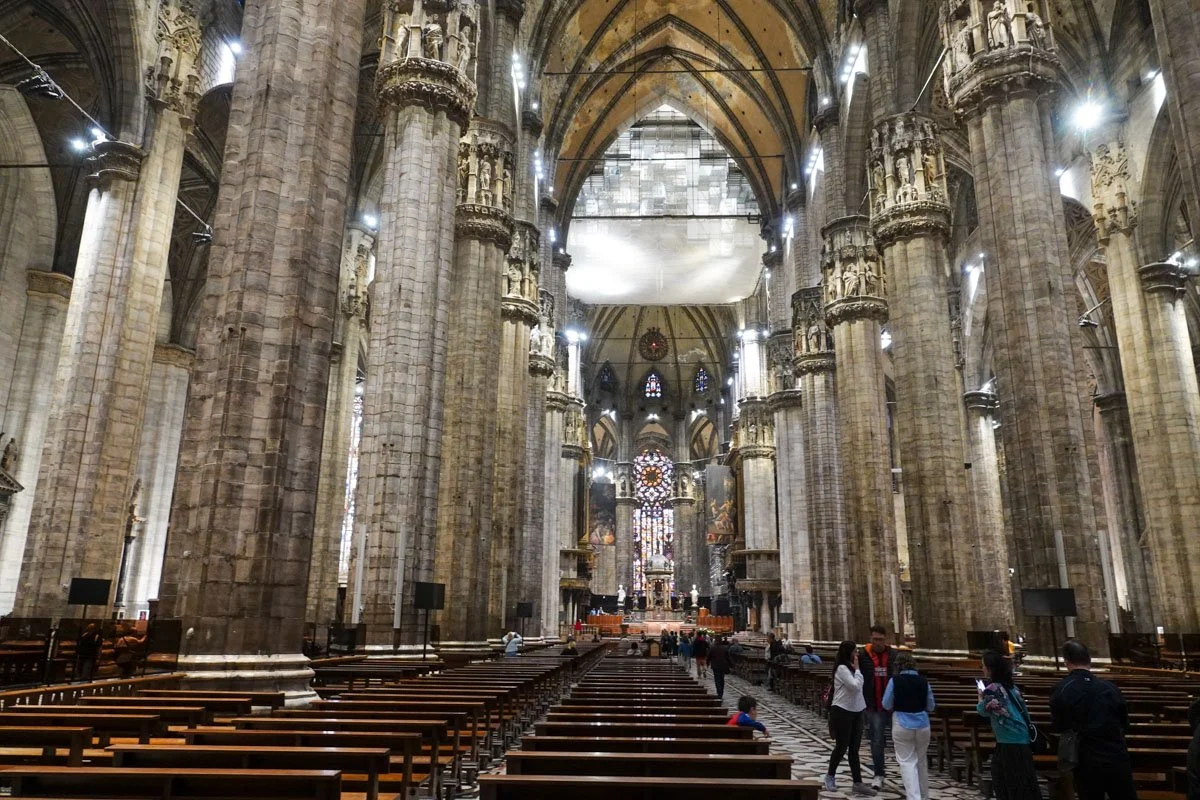
     It's primarily a Gothic design with pointed arches, ribbed vaults, and flying buttresses. The outside is covered with over 3,400 statues and 135 spires. The color is mainly because it is mostly constructed with Candoglia marble which is known for its pinkish hue. The interior is massive and it seats 10,000 but holds 40,000 people when all are standing. Five aisles lead from the entrance to the main altar. It really needs to be seen to be fully appreciated. Our local guide said that the cathedral is 'always' being cleaned, repaired, and renovated. 

     My photos will not do it justice. The micro-level photo is to show just how much detail is in and on this cathedral.

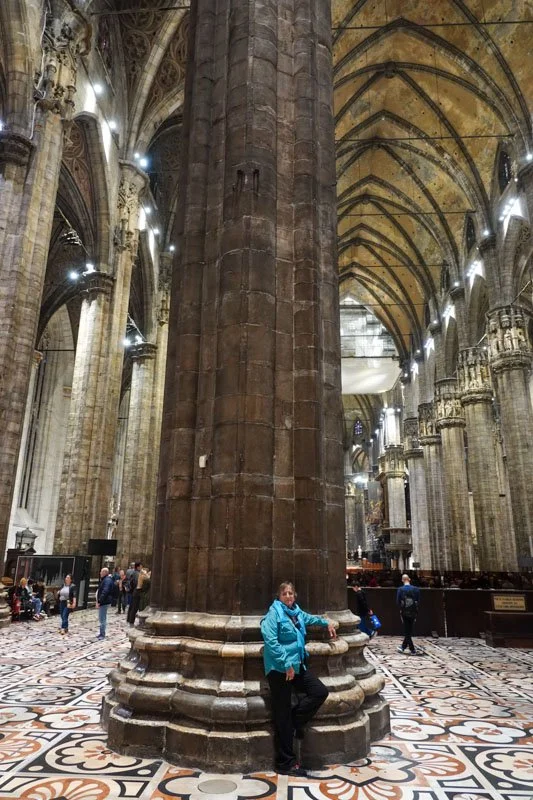
     The inside of the cathedral was also overwhelming. I took the second photo specifically to give scale to the inside of the church. You should also notice the marble floor.

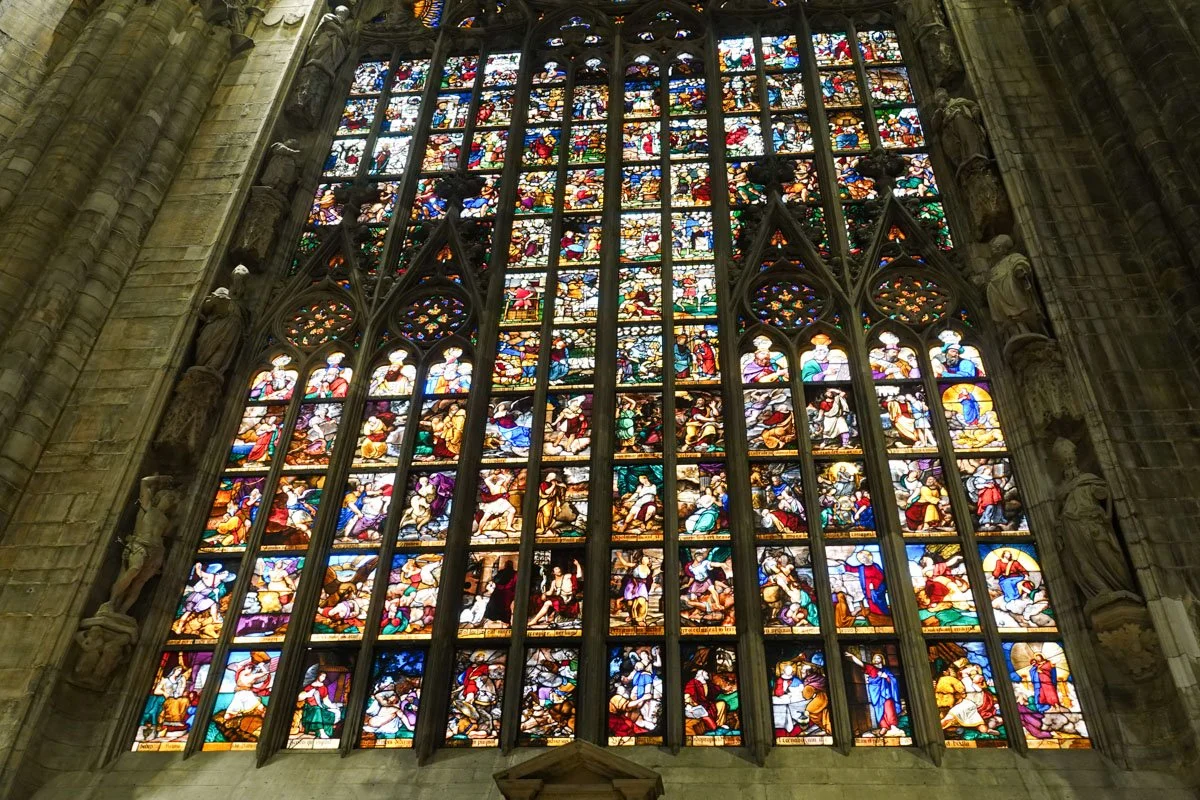
     There were an infinite number of details to see but I'm sure that they are all available online. The windows were magnificent.

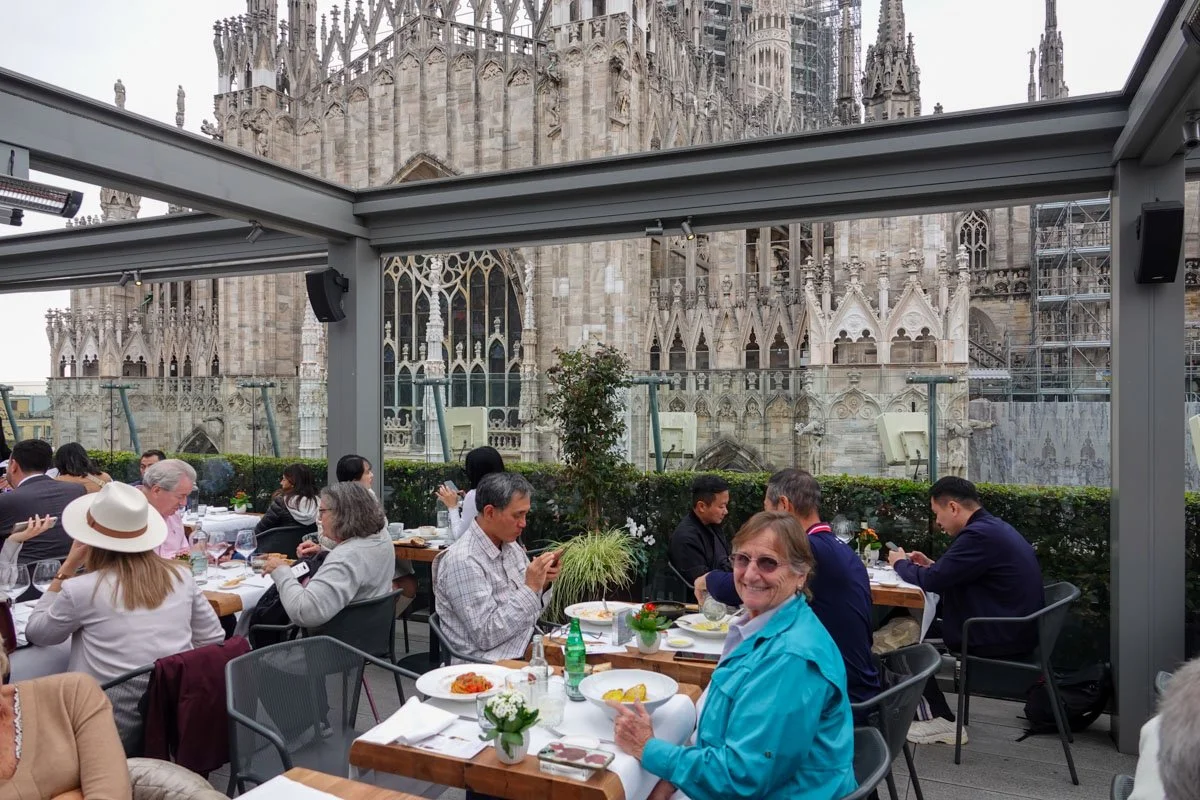
     While we could probably never spend enough time to see everything, we decided to eat at a rooftop restaurant across the street from the cathedral. For perspective, we are dining on the 7th floor roof at the Maio Restaurant. Vicky had pumpkin soup and I had spaghetti.

Piona Abbey

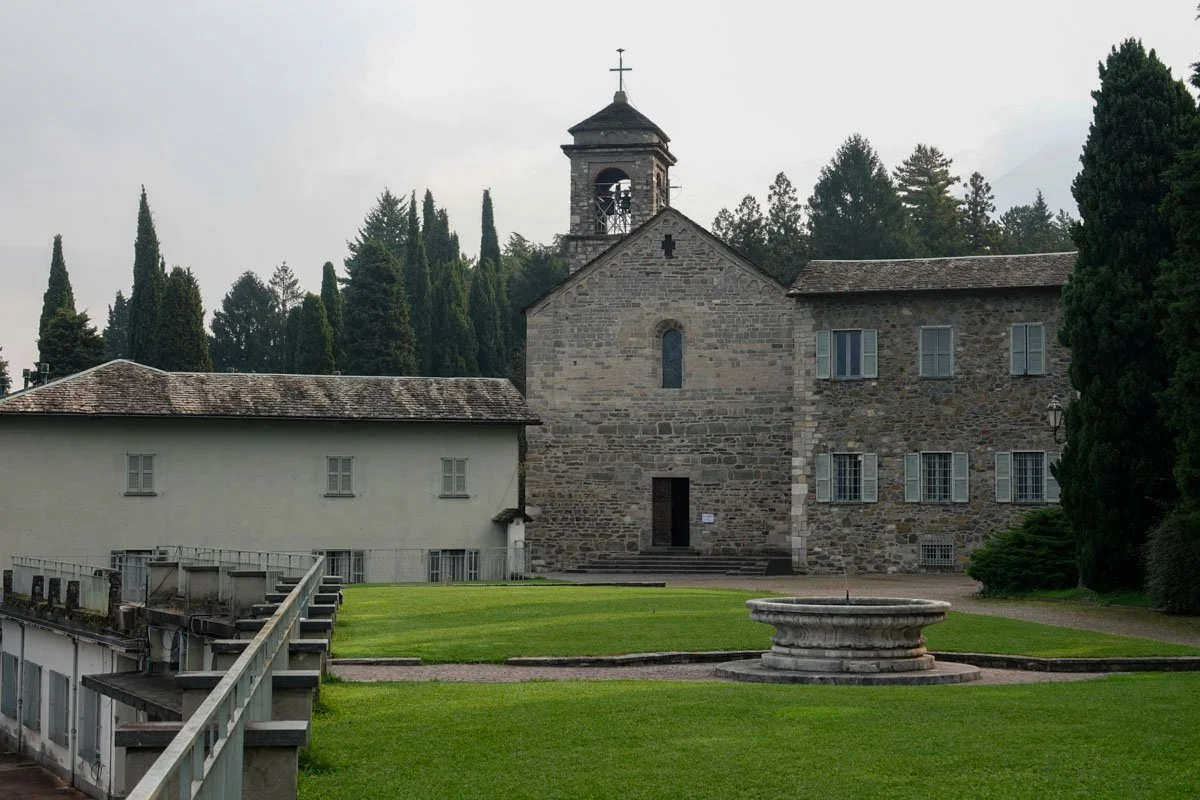
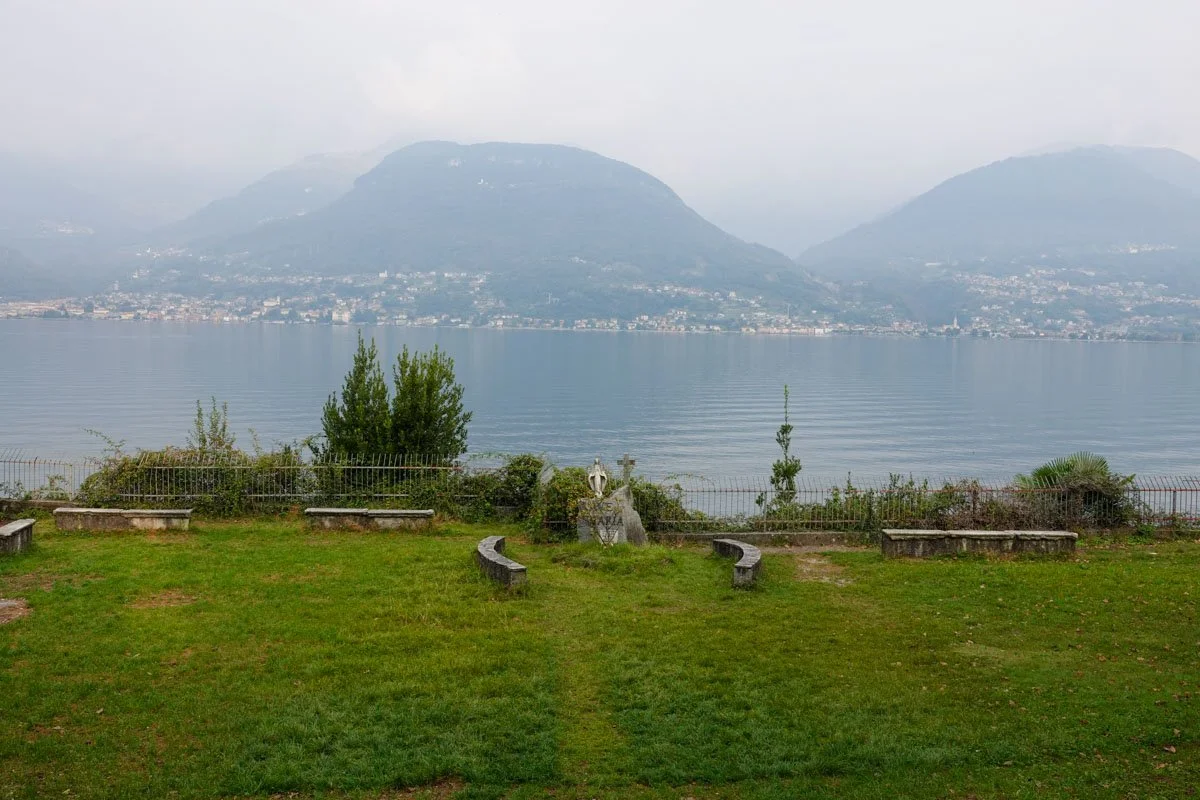
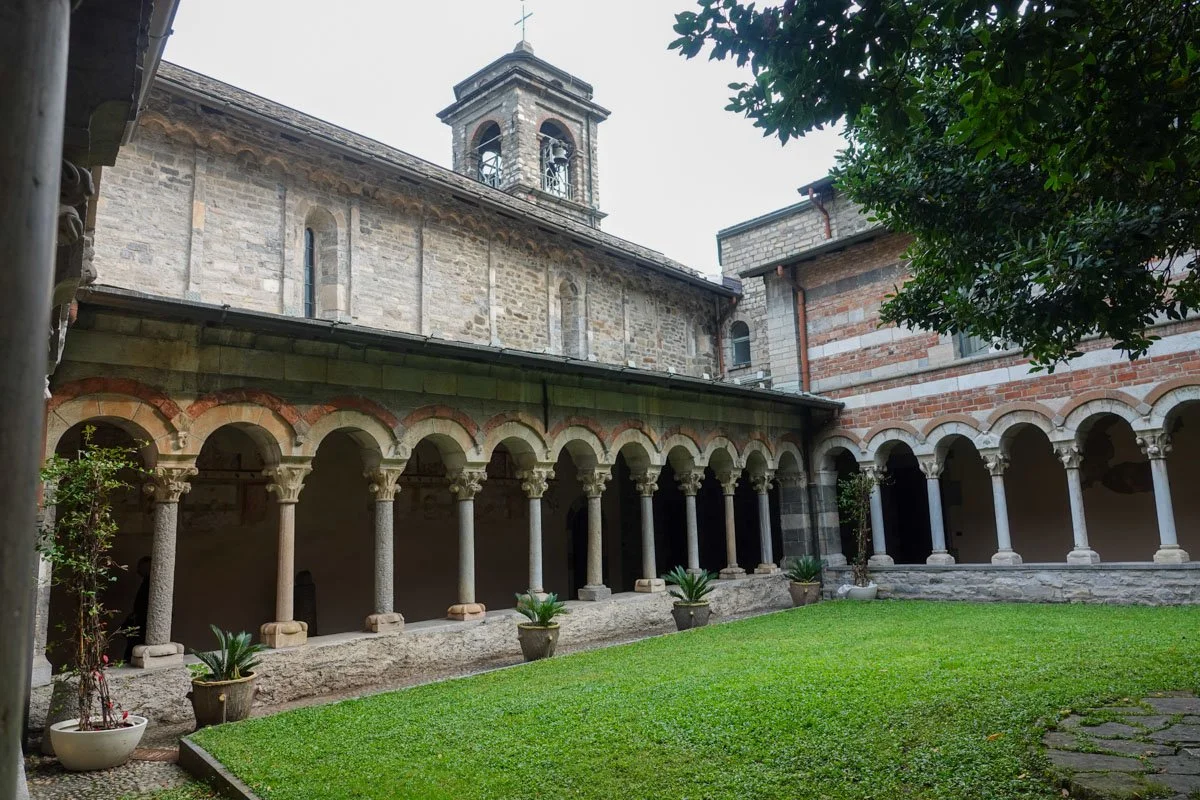
     While we stayed in Lecco for three nights, we traveled about each day. This visit was to the Piona Abbey. It's a 7th century religious complex on the far north bank of Lake Como. It's in the Lombard Gothic style of architecture with French influences. The current church dates from the 12th century and it has frescoes from the 12th and 13th centuries. The bell tower dates from the 18th century. It all looked to be in very good condition so it must have been well taken care of for all these years.

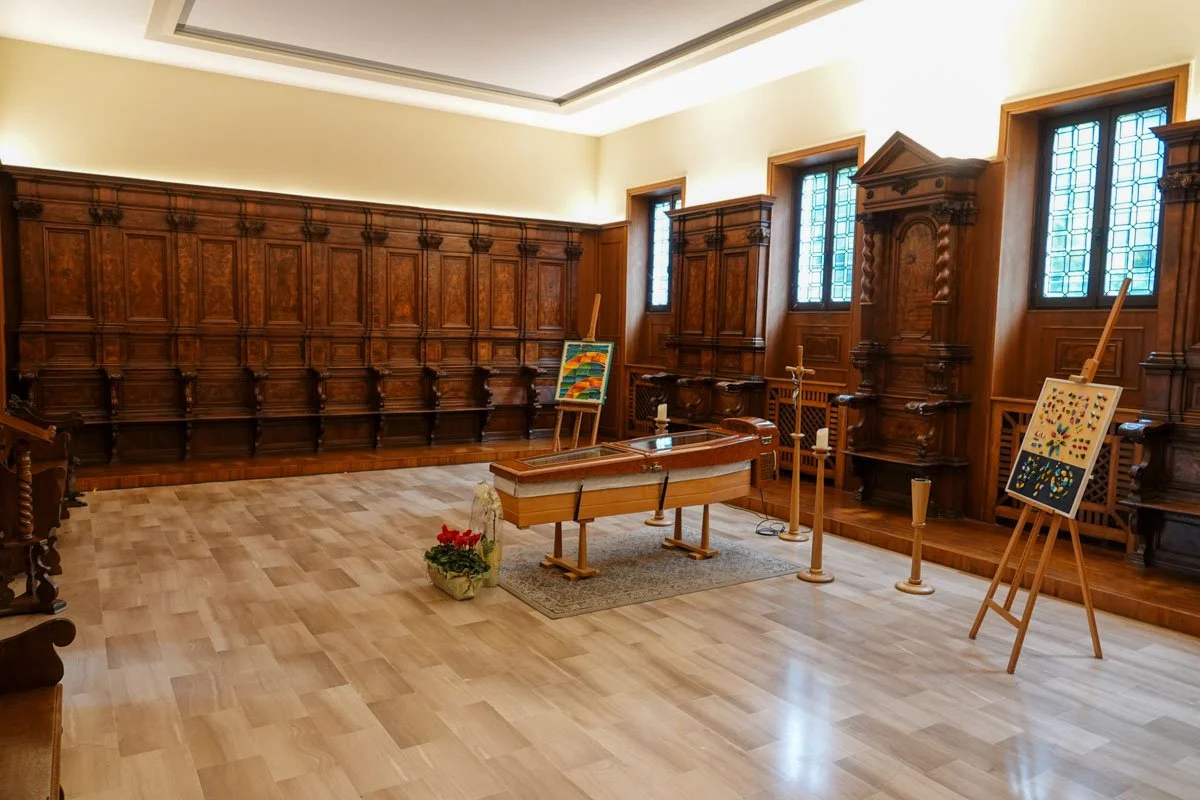
     It is quite a large complex though we didn't see very many people while here. We did see the body of a priest lying in state awaiting his funeral and burial which was scheduled for the next day.

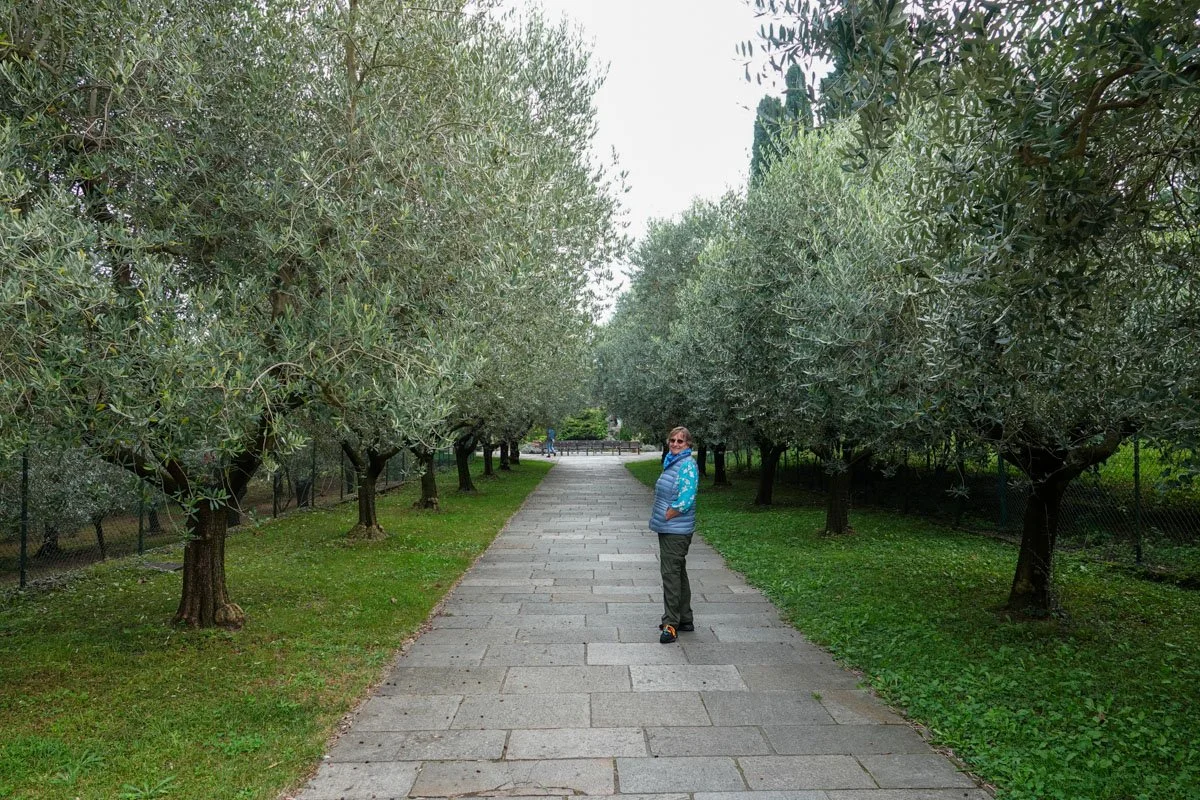
     My favorite parts of the Abbey were the grounds which were extensive. They probably had a degree of self-sufficiency when founded, and it looked like they still do today. We saw a large olive orchard that looked well cared for.

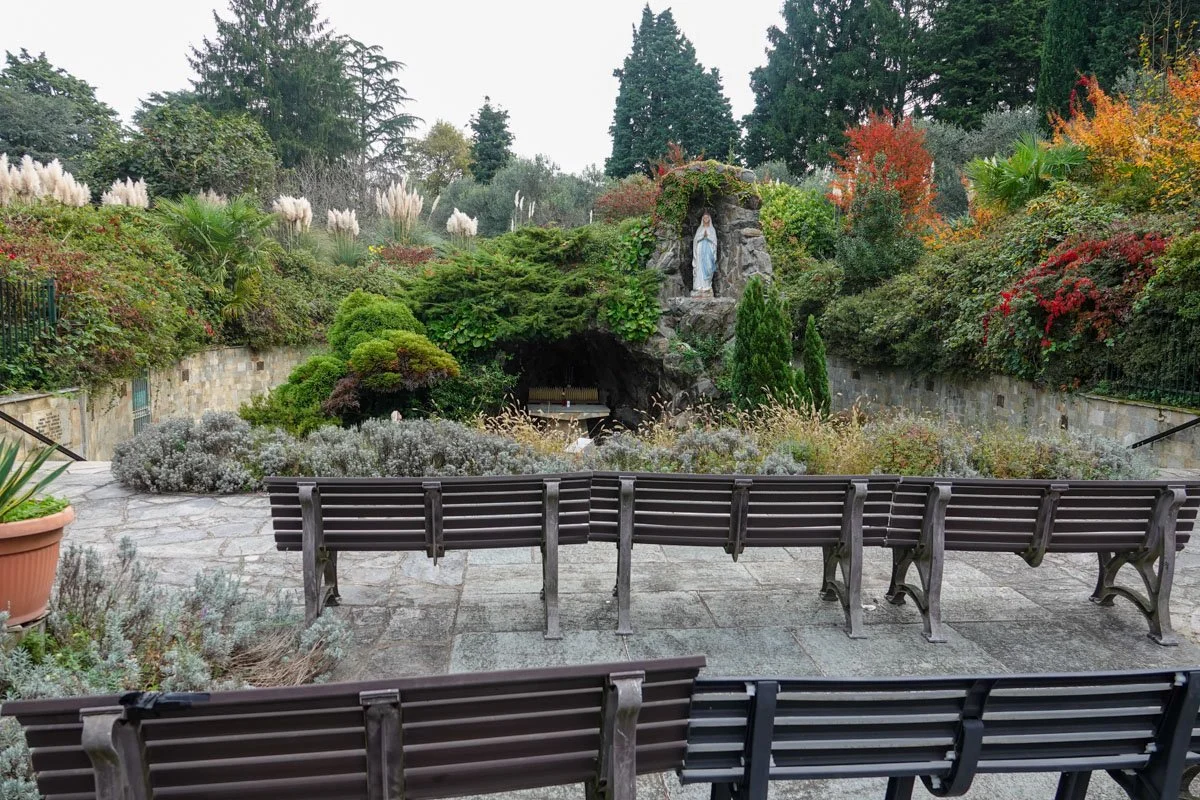
     The path above was the only path through the olive trees. It led to some sort of ceremonial area probably dedicated to the Virgin Mary. It may have been used for meditation, teaching, or other things. We never got any explanation for it but it was a nice place to visit.

Fort Montecchio Nord

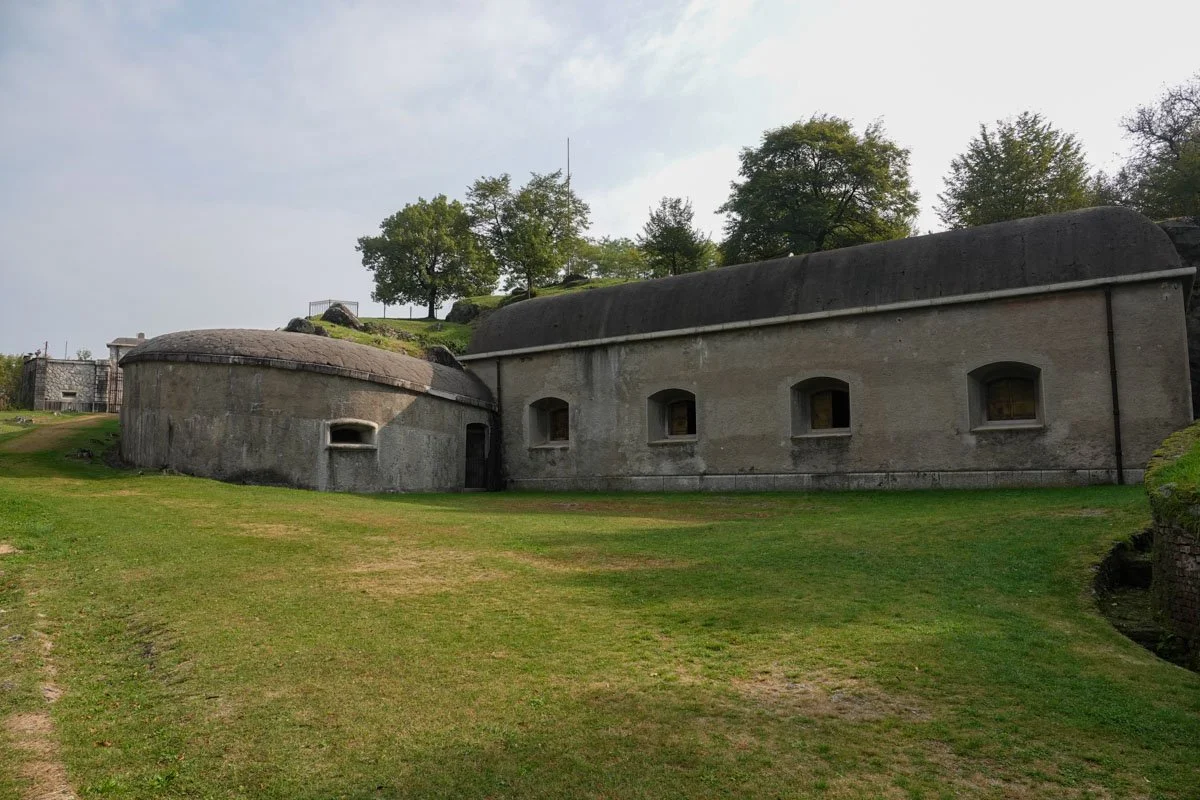
     Fort Montecchio Nord is a short distance north of the Piona Abbey and also in the town of Colico. It is also on Lake Como. This fort was built between 1911 and 1914. It was built to control the roads in the event that the Austro-Hungarian Empire or the Germans violated Swiss neutrality and invaded Italy through this valley from the north. Switzerland and northern Italy still talk a lot about World War One, but not WW II.

     This fort is the only Italian military fort of the First World War that has been kept with its original armament intact and it is one of the best preserved forts in Europe. It was built into the rock and has extremely thick walls, lots of tunnels, communications galore, water systems, electrical systems, ventilation systems, and more. It held 100 men for WW I and 200 men for WW II, but saw next to no fighting in either war.

     The fort is quite a large complex and has an explosives storage room that is almost 200 feet deep. We walked all through the fort.

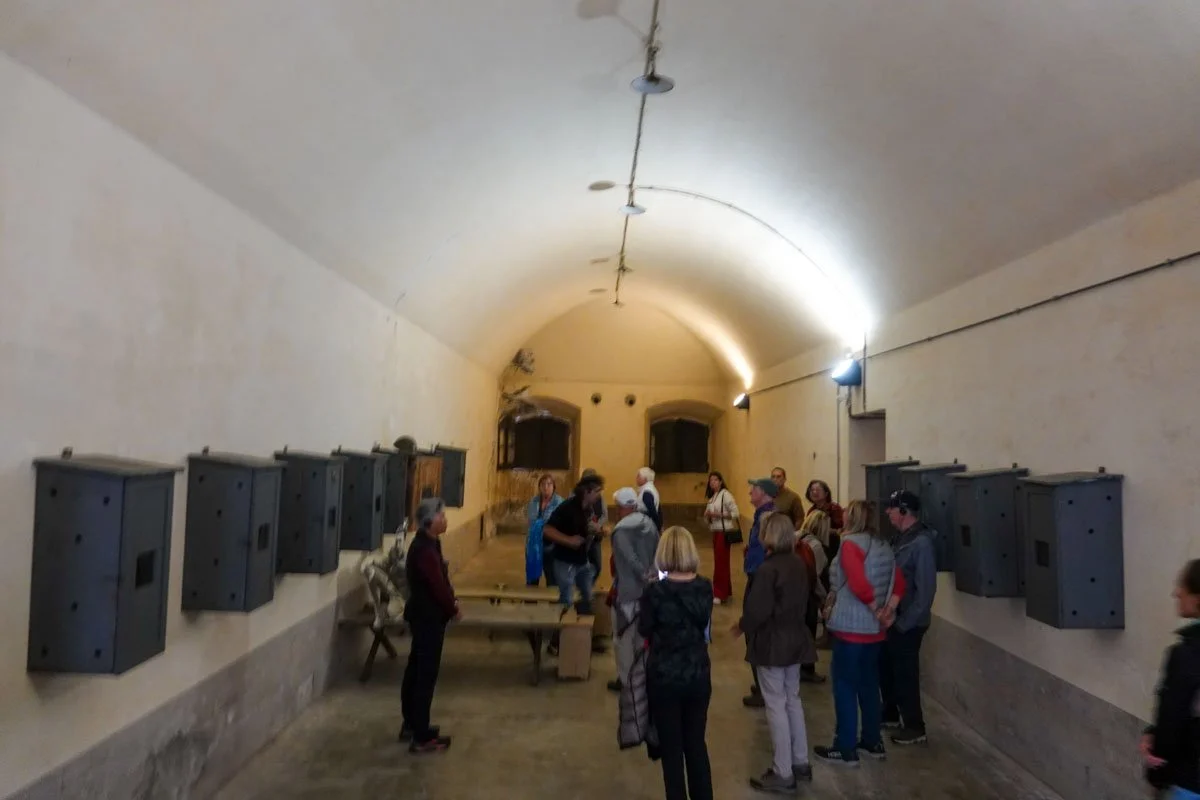
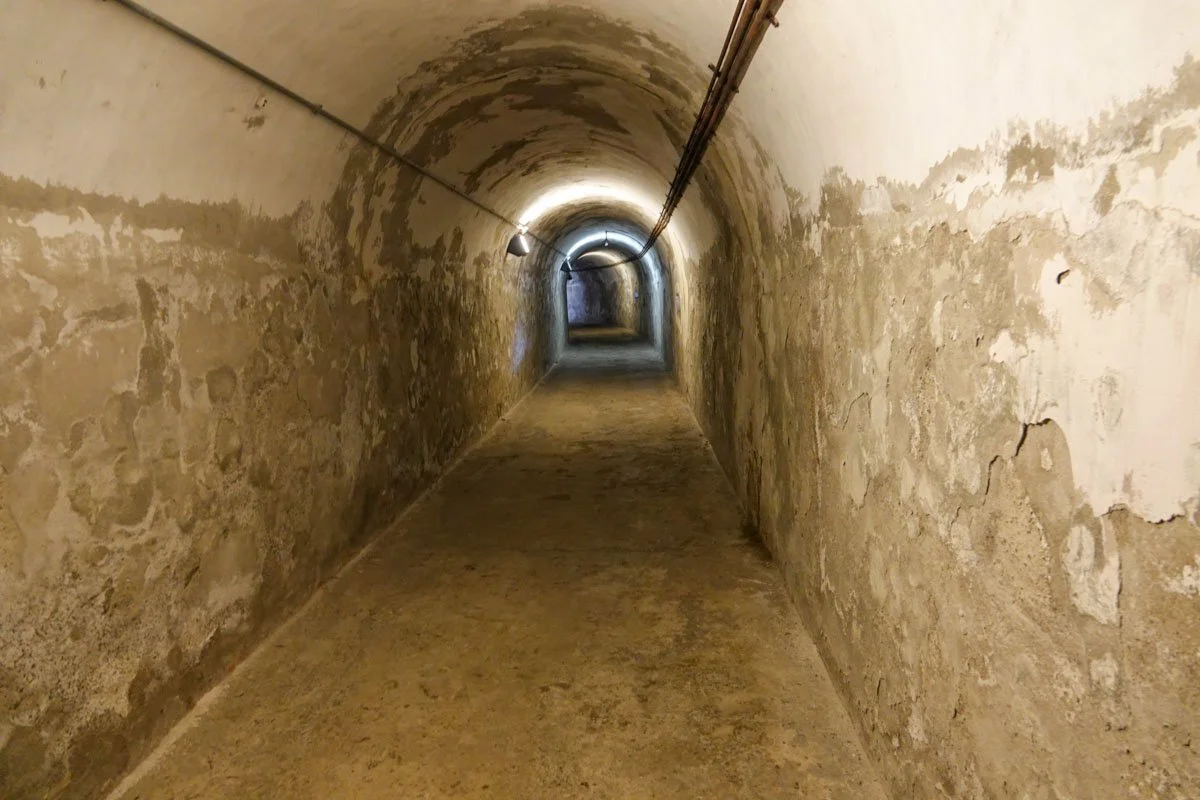
     The next photo was a heated bunk room that accommodated 40 soldiers. It positioned them to get to guns and positions very quickly. Almost all movement within the fort was underground.

     This next curved tunnel connected troops and gun positions and was well underground and 460 feet long.

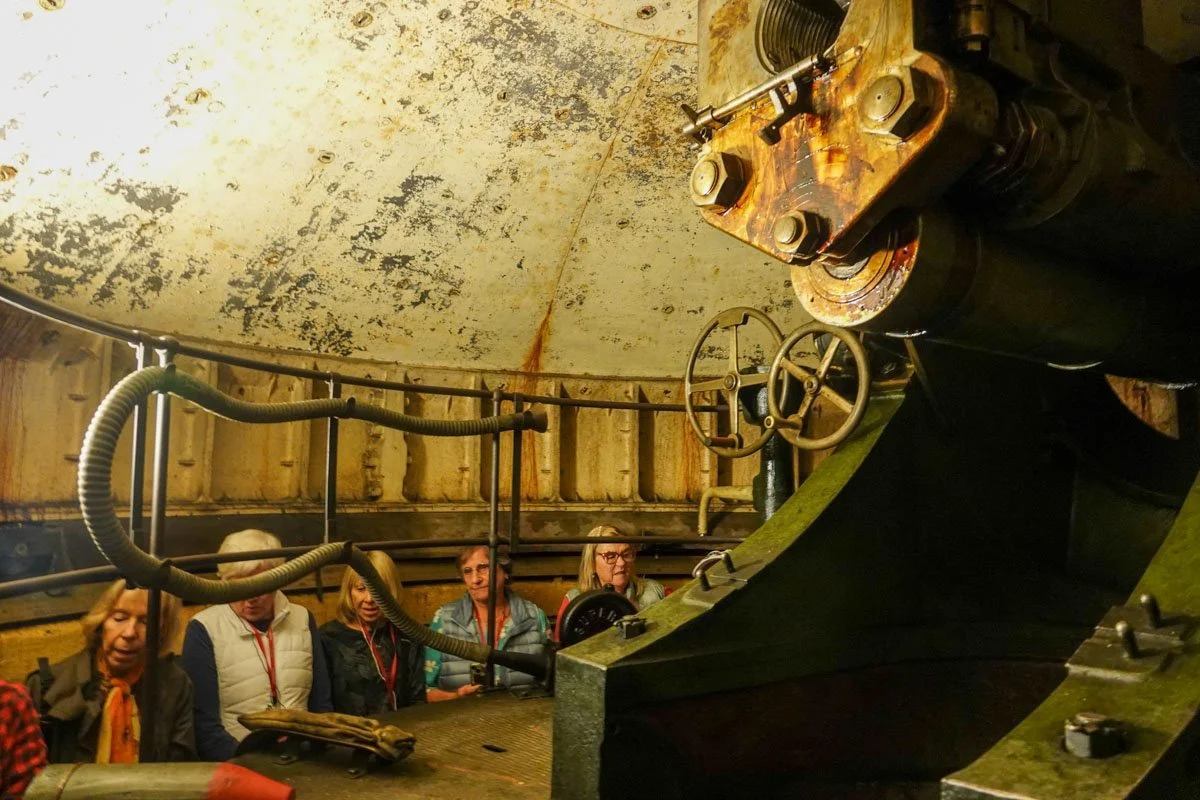
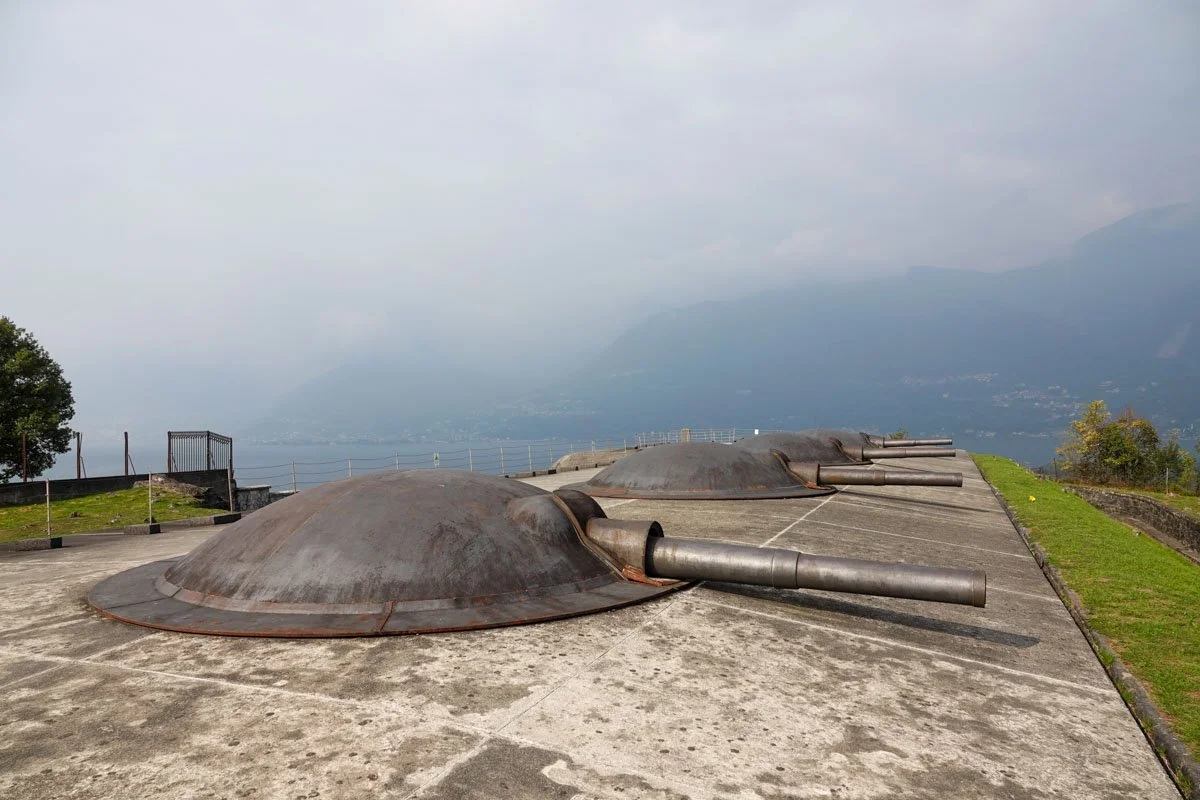
     They have four huge French cannons in rotatable positions under armored domes. They are model Schneider 149 mm guns with a range of 8.7 miles. We got to climb the ladder up into one of the gun rooms from below, and a fort guide operated it for us to see how it moved up and down. It still works perfectly, though they aren't expecting an attack.

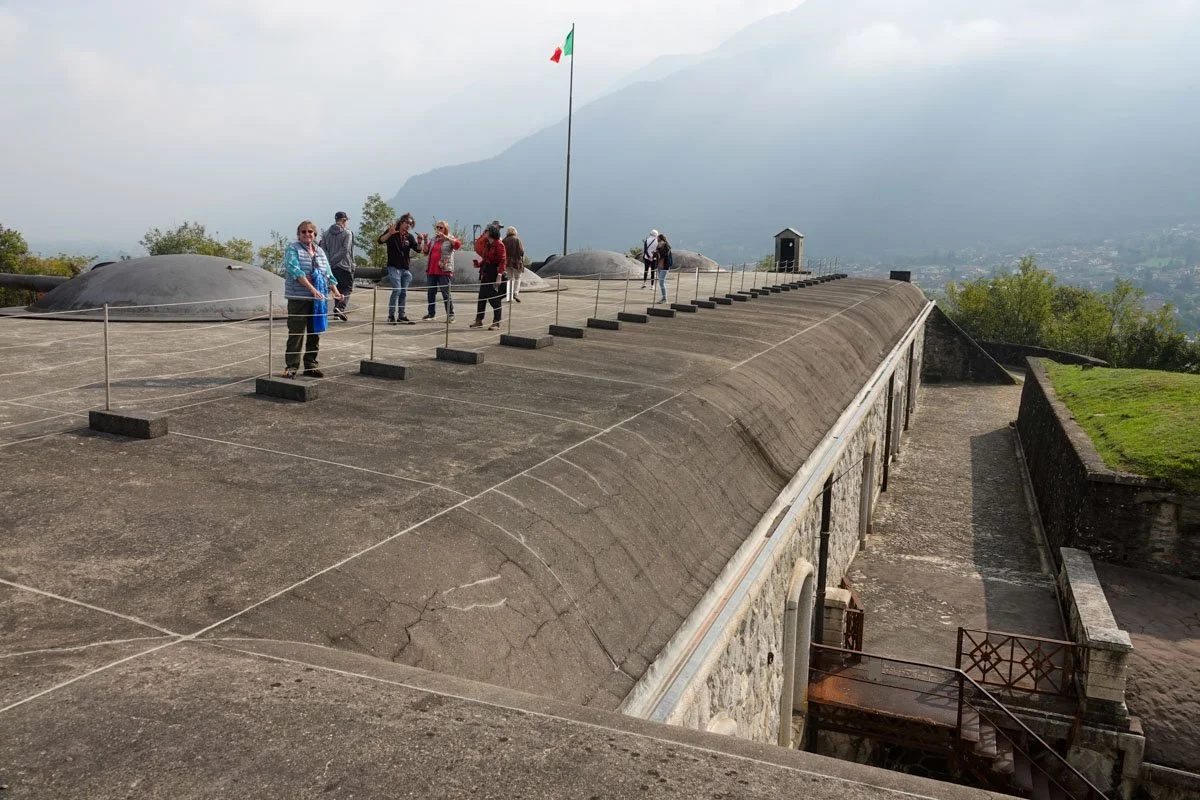
     We also climbed up to the guns on the top for a view of the enemy's anticipated invasion paths (to the right). Lake Como is behind the guns.

Tirano

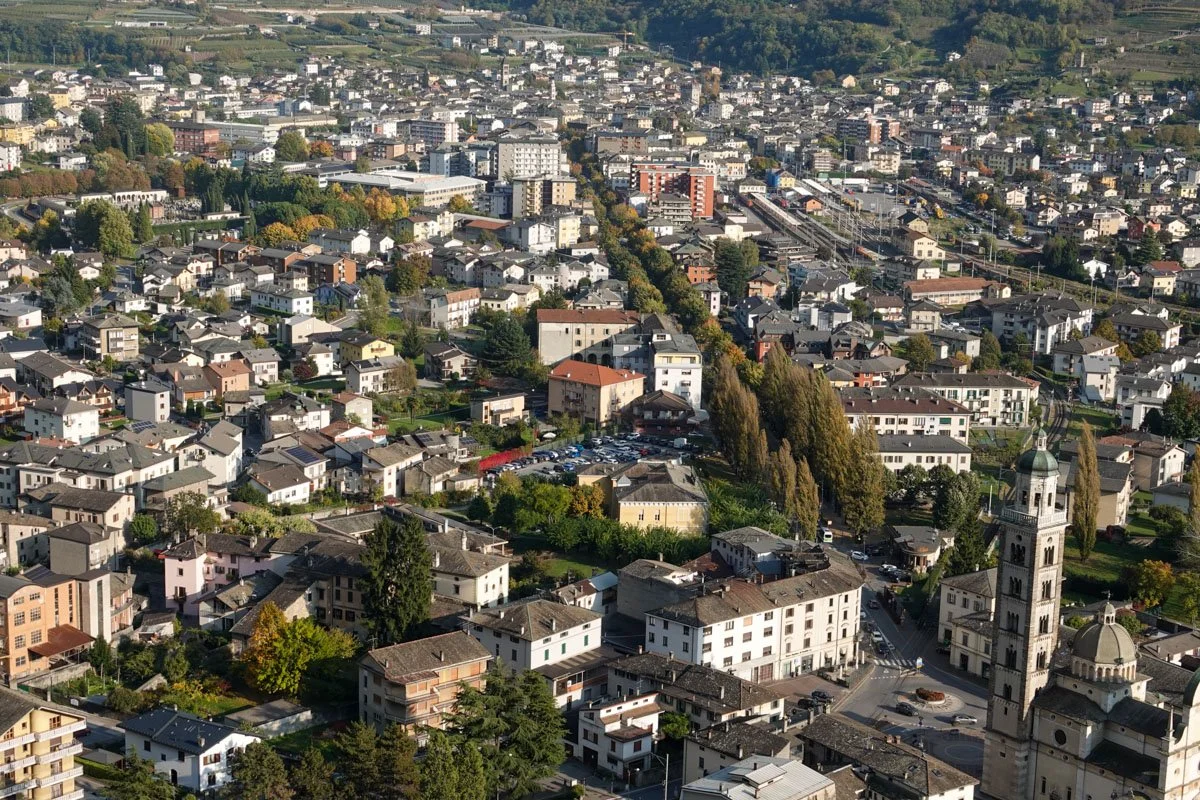
     Tirano was our next stopping point. It's about two hours east of Colico and Lake Como and only a mile from the Swiss border. It's a quiet town without a great history but is known for a couple of things. One is that it is the departure point for the Red Train, which is what the locals call the Bernina Express. The Red Train travels to Switzerland. We took it and had a fantastic day up in the Swiss Alps.

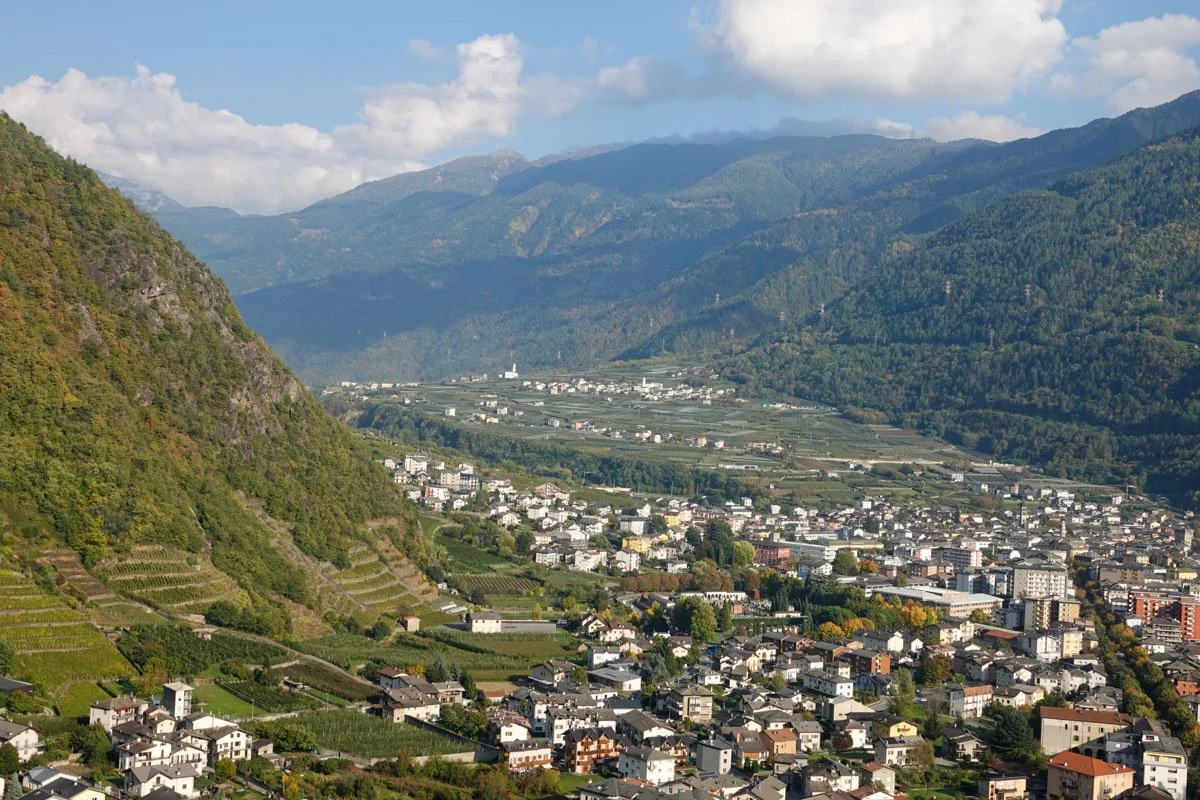
     At the end of one day, we hiked up the side of a mountain to a small church. From there, we had the view below of the town of Tirano. If you look in the lower right corner, you can see a tree-lined street. That's the main street and our hotel was right near the far end of the trees.

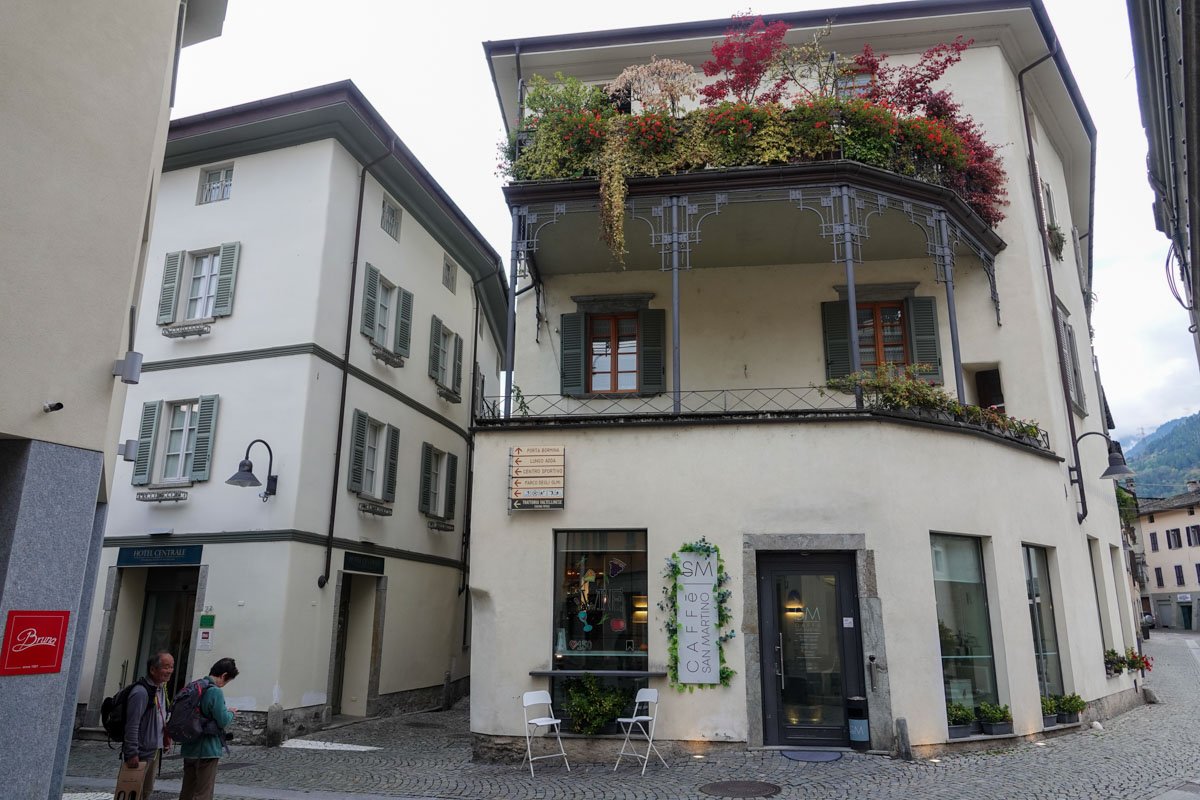
     Our hotel, Hotel Centrale Tirano, is on the left in the photo below. The following photo is just looking to the right of the photo below. There you can see St. Martin's Church, built in the 1300's.

     Tirano, like I suppose all Italian villages, is a mix of the very old through the very new.

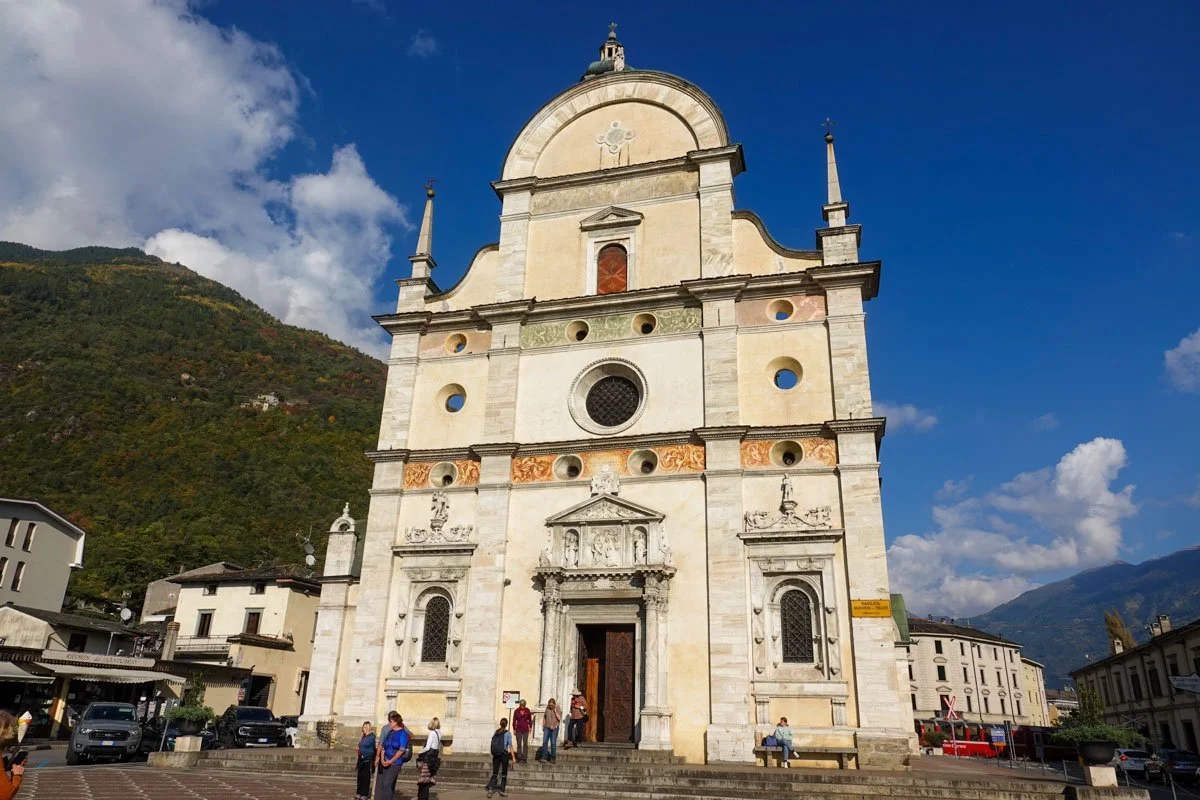
     The other thing that Tirano seems famous for is the Basilica and Sanctuary of Madonna di Tirano. We were told that it stands where the Madonna appeared to a farmer, Mario Omodei, of Tirano, in 1504. The 16th century sanctuary was impressive, as was the 17th century organ with its 2,200 pipes. We didn't get to hear it but I can imagine...  The basilica stands at the other end of the tree-lined street from our hotel.

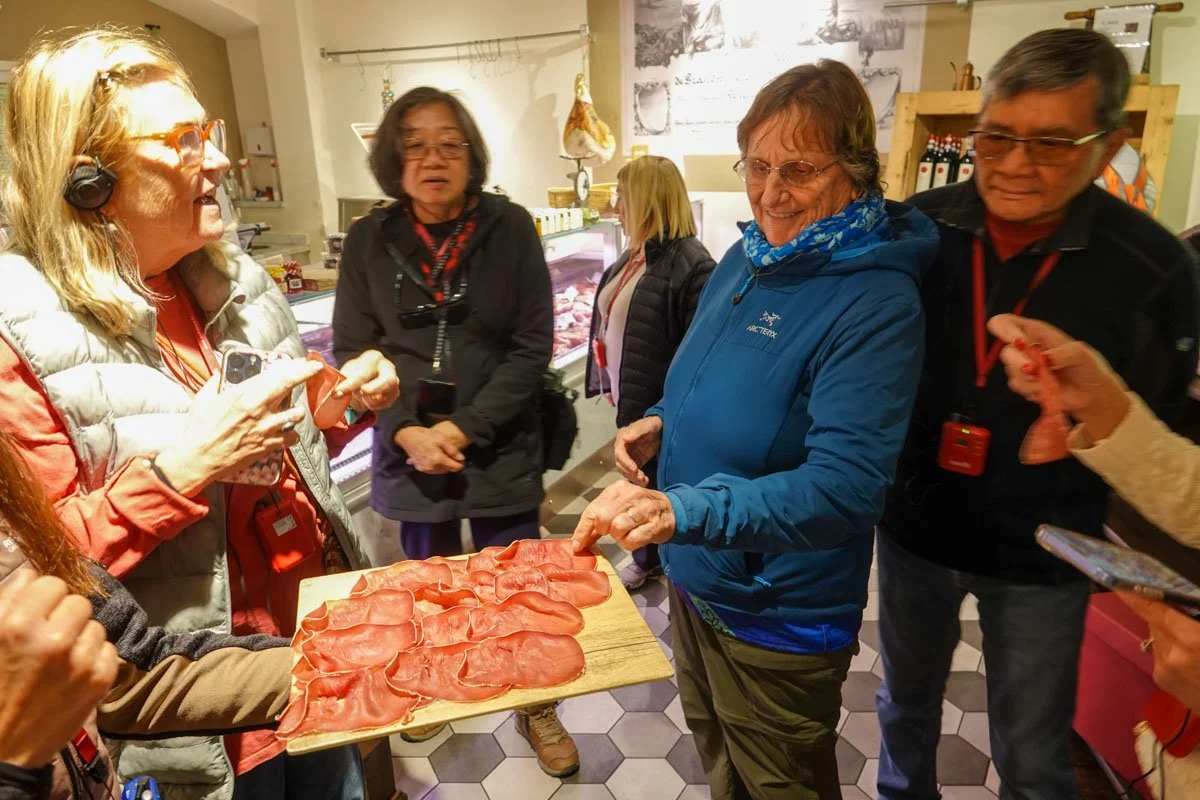
     We walked around Tirano and enjoyed their food, coffee, and gelato. This was a stop in a meat market for some Bresaola, a thin-sliced, dark red, low-fat meat that originated in the Italian Alps.

Butega Valtellina

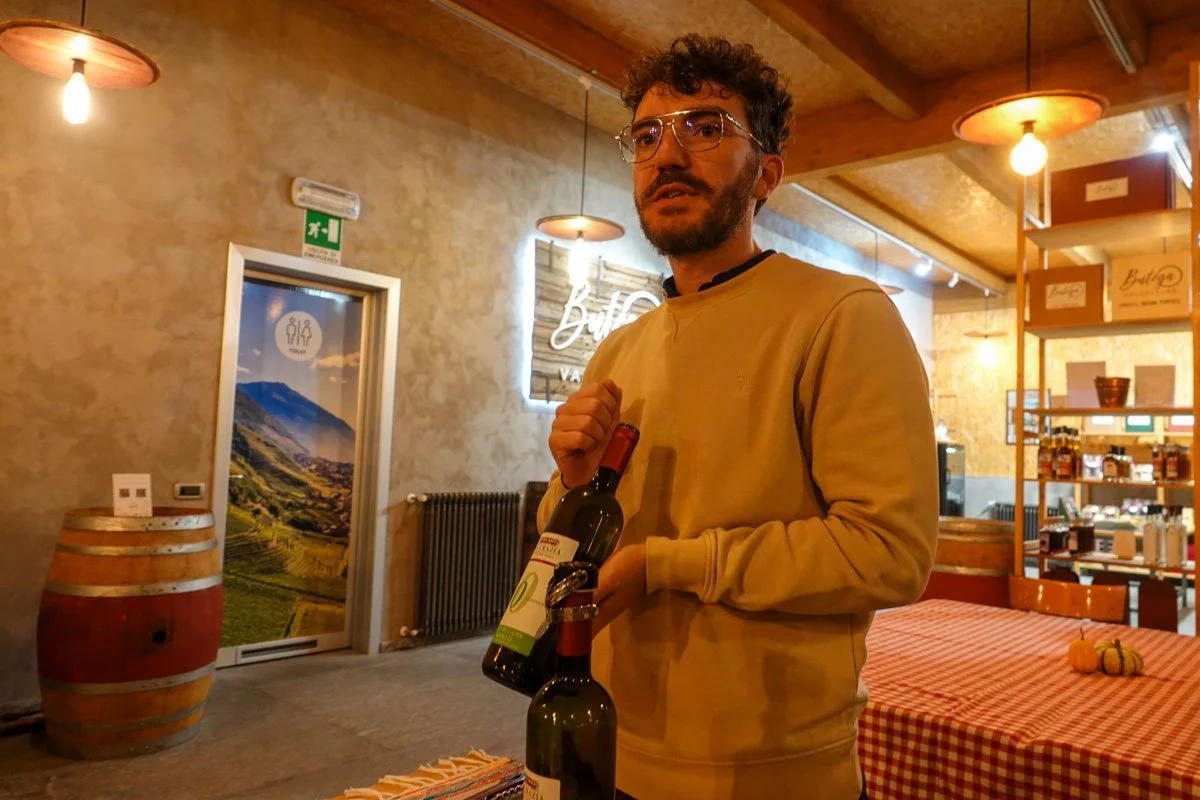
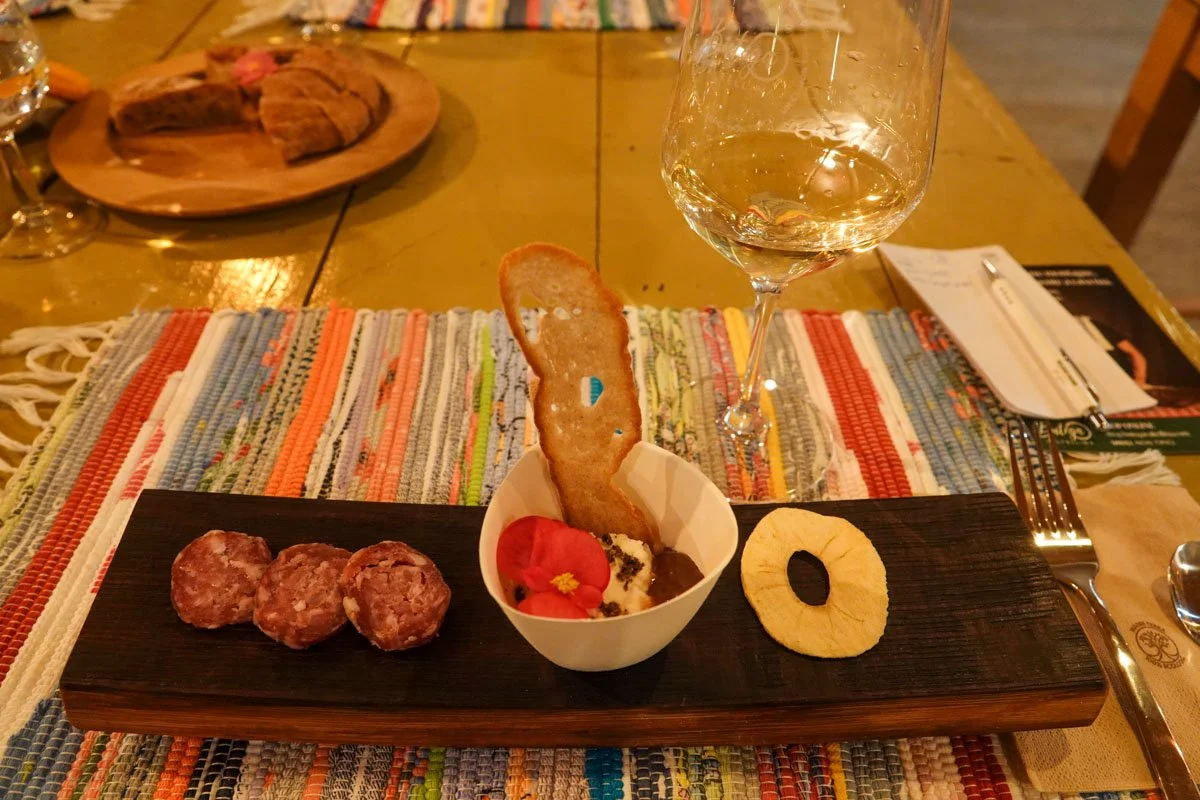
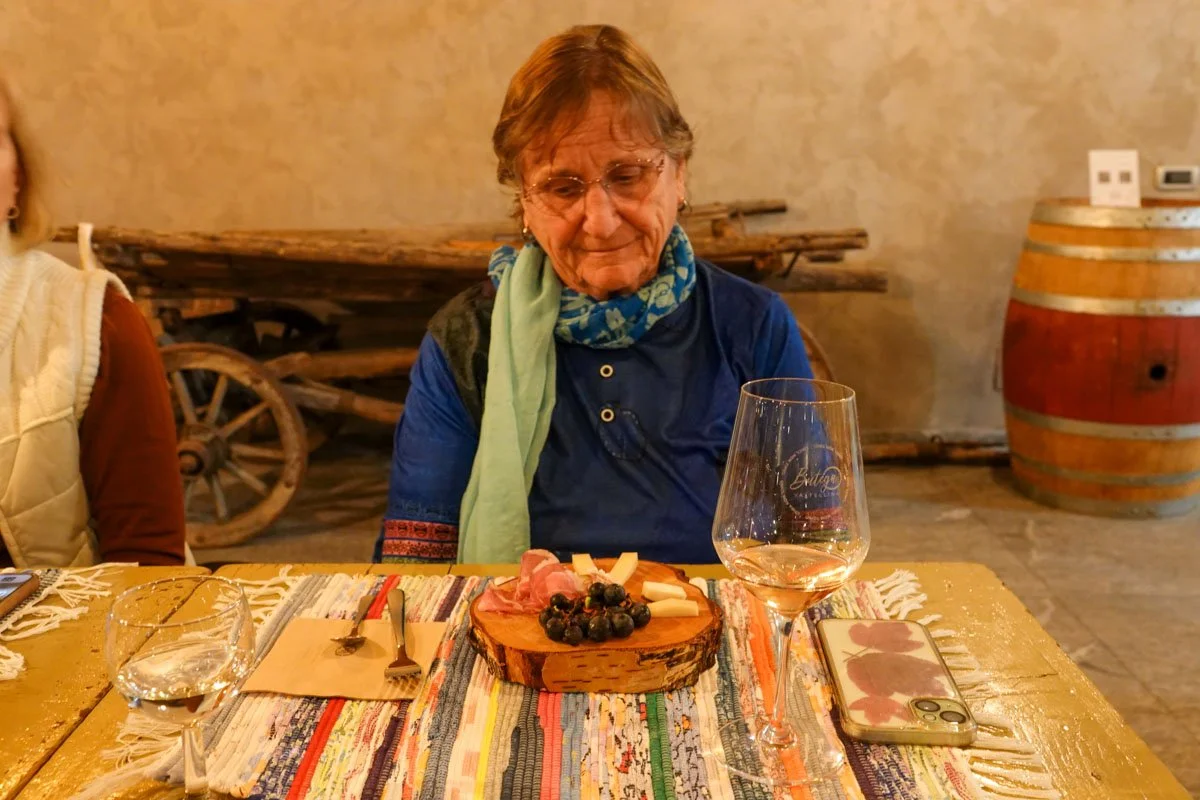
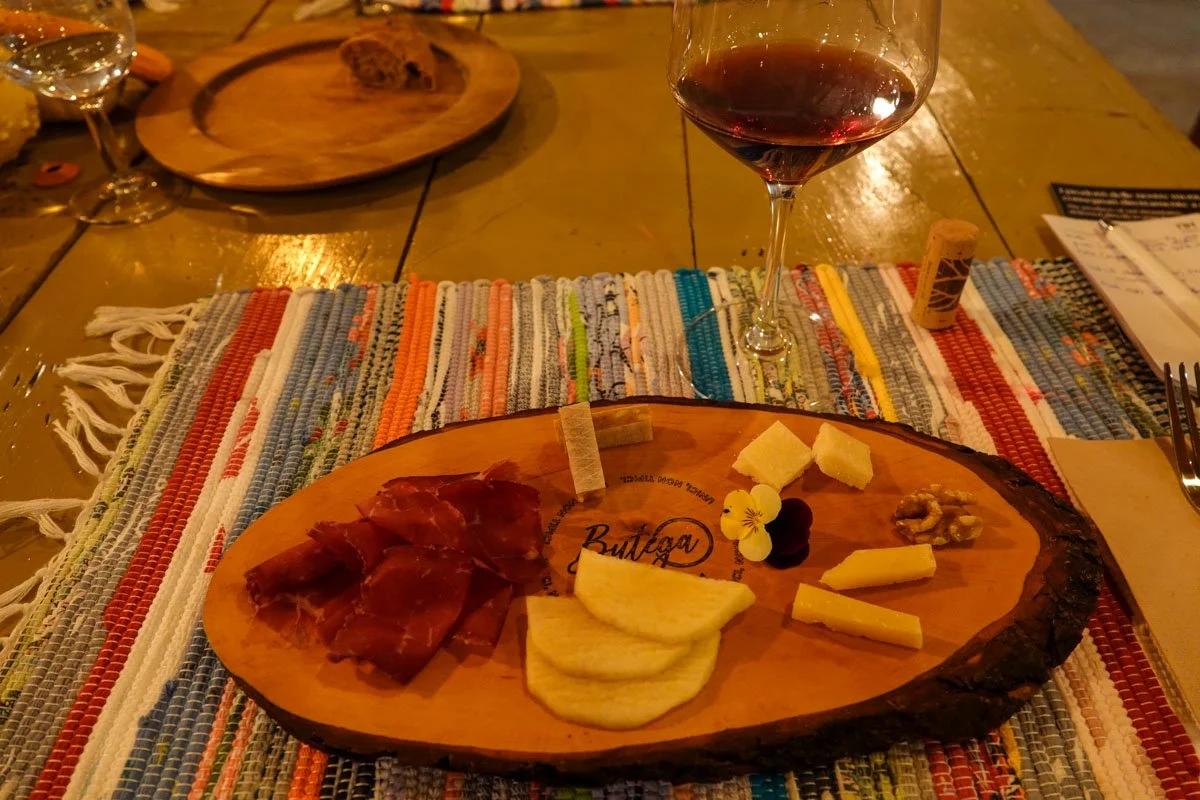
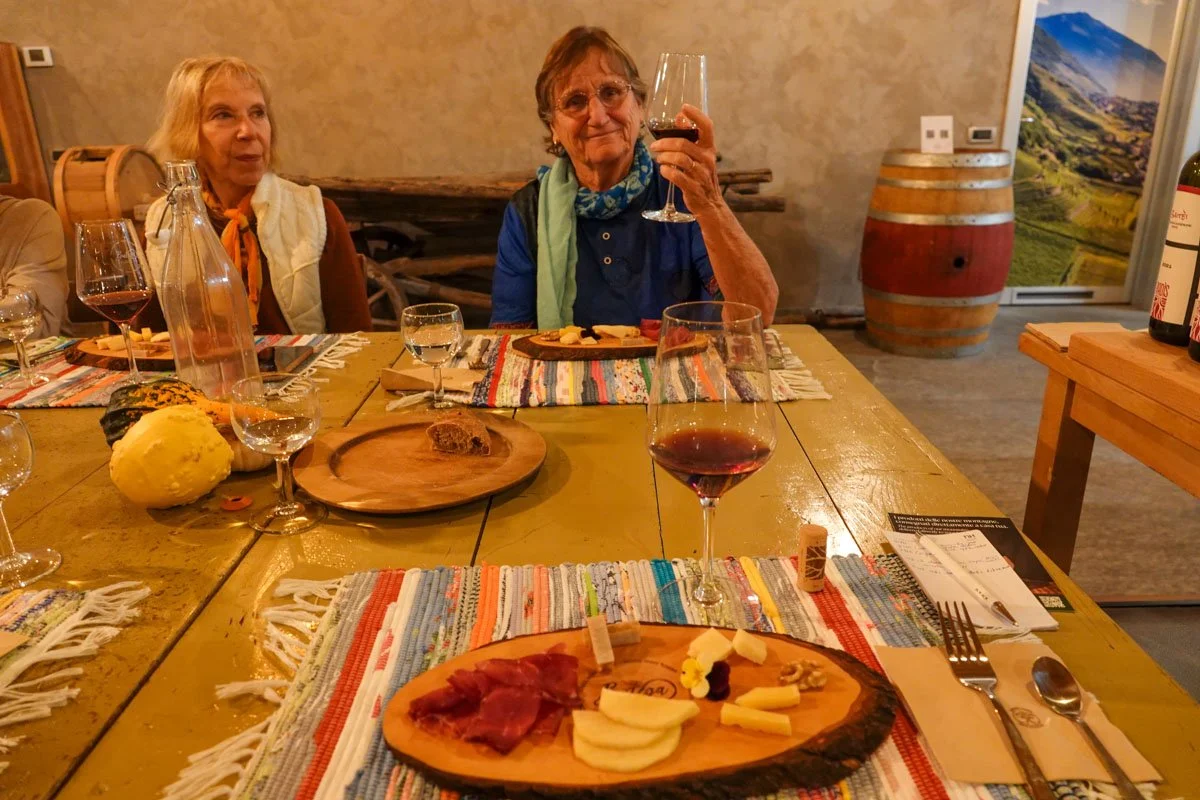
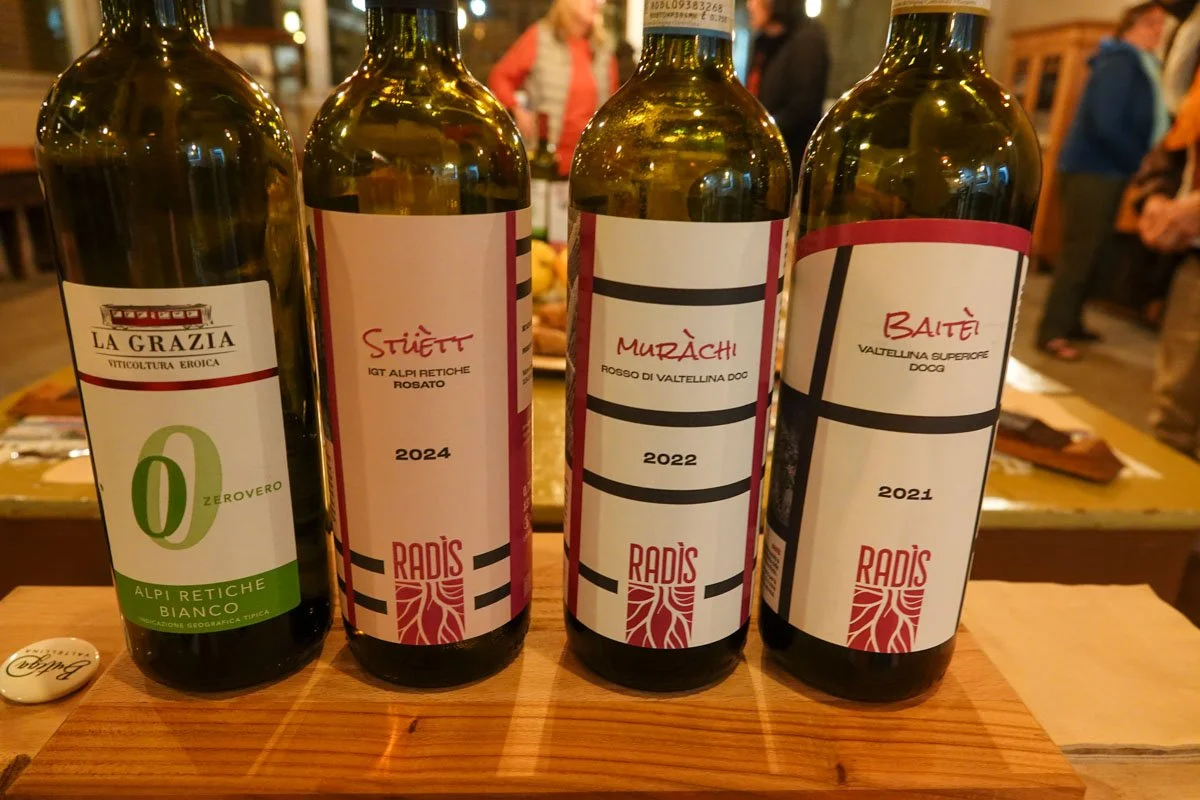
     Our first night in Tirano, we went out for a wine-pairing at a business in town. It's a wine shop that is a small farmers cooperative of sorts. Tirano is in the Valtellina wine region of Italy. Small farmers here make wine, mead, honey, jams, etc. This shop helps them with sales, marketing, and labelling. 

     We tasted four wines which were each paired with a variety of tasty treats, including fresh flowers, bread, meats, cheeses, fruits, and jams. The guy who explained everything to us was quite good. The whole event was slow, well-explained, and fun and relaxing. Oh, and the food and wine were very good too, and I ate all the fresh flowers.

Dairy Farm Visit

     This day was what Overseas Adventure Travel (OAT, our tour company) calls, "A Day in the Life." We spend the day with some sort of local people making cultural discoveries. In this case, we drove to the Valtellina Valley which is the Alpine region of Italy and very near the Swiss border. We were at an elevation of about 2,500 feet. We passed many vineyards along the way and we made several stops. This was the first stop.

     On a side note, we were told that these Alpine mountain villages were formed by many small hamlets. A hamlet was usually 8-10 farmer's houses and a small church. Can you believe that a group of 8-10 families could support a church? Oh well...

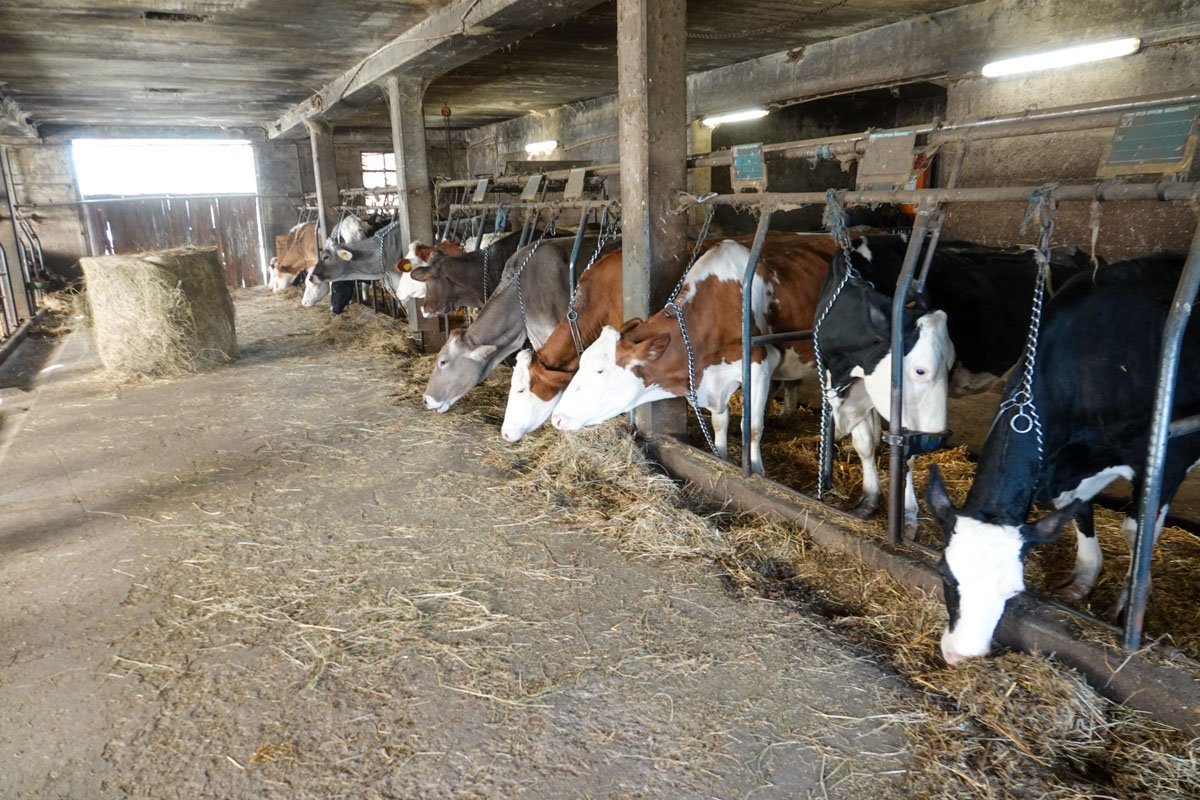
     A dairy farmer was our first visit. He used to have 70 cows and produce milk. He said that proved problematic, for making money. Now he has 40 cows and produces cheese and butter. He said that this business has a much lower mortality rate for his cows than with the milk cows. He has three types of cows, each for a different product. His cows are Brown Swiss, Black and White, and Red and White (he named them for us). He also produces all the food for his cows which includes grass, hay, corn, etc. He bales hay and makes silage for the winter time.

     On another side note, the farmer told us that grapes and wine make more money but climate change has been very hard on grapes in this area, so many farmers have switched to cows.

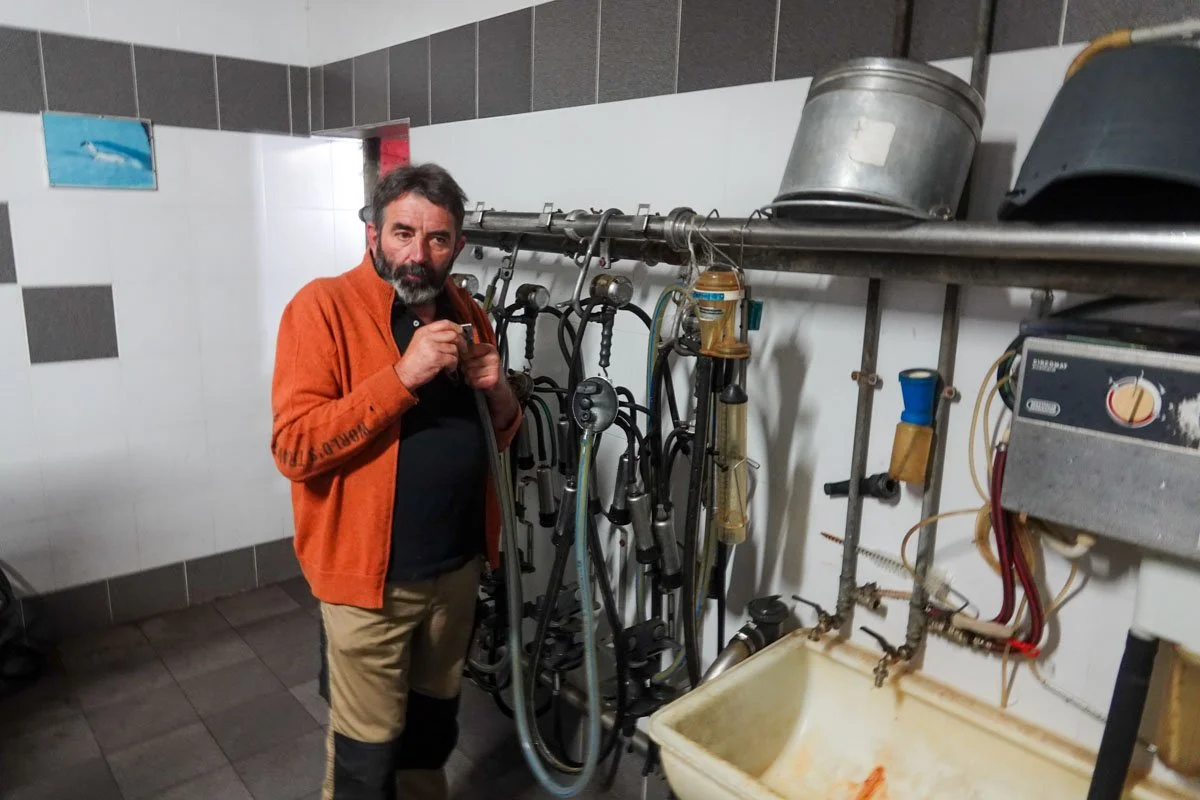
     Here is the farmer with some of his milking equipment. It's actually quite high-tech in terms of how it tracks each cow's production.

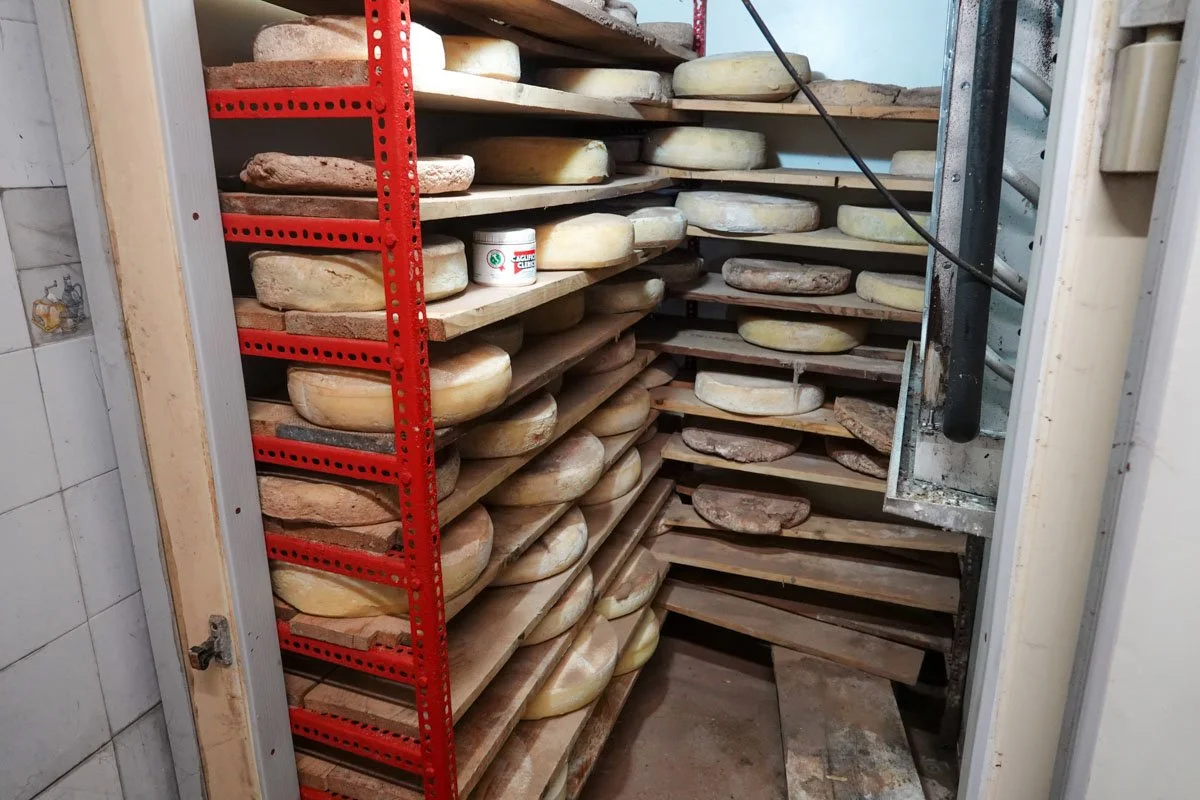
     This was my favorite room to visit on his farm...the Cheese storage room.

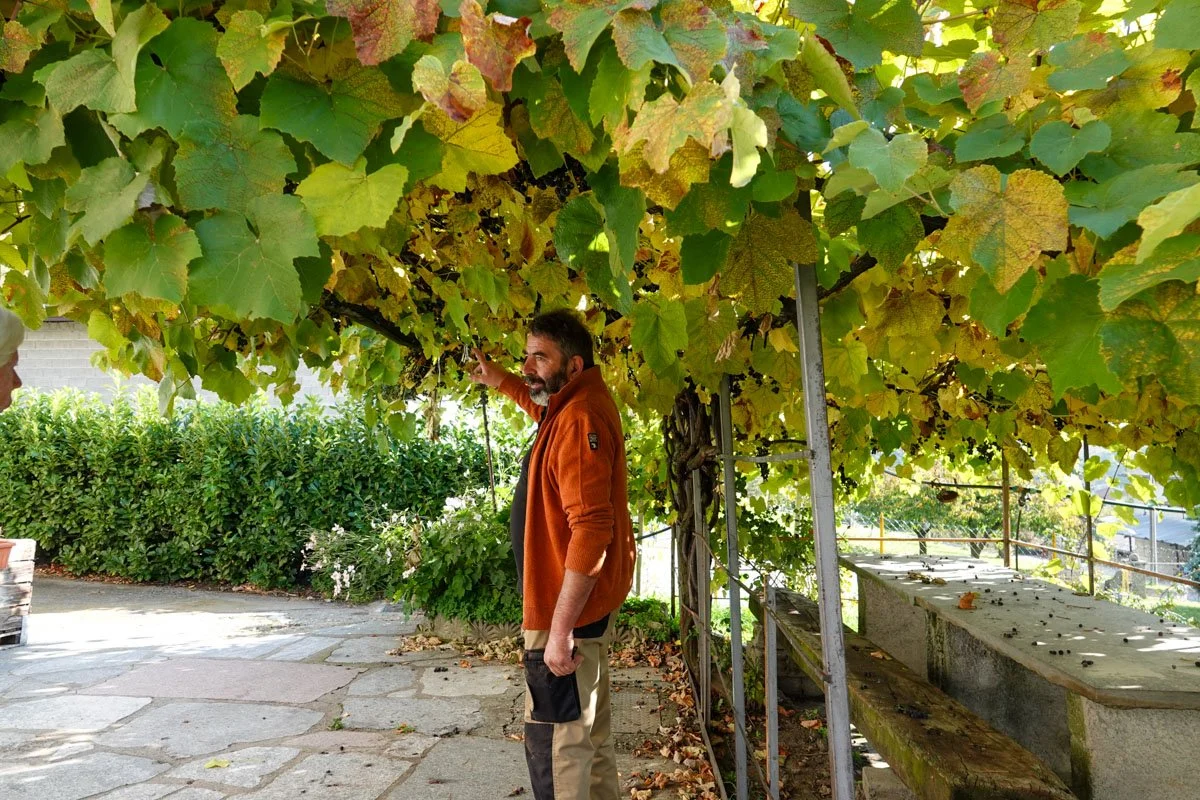
     He showed us his cheese and butter making equipment, process, storage, etc. Like most farmers, he also still has some grapes near his house as well as chickens, geese, fruit trees, etc. Here's he's showing and telling us about these grapes.

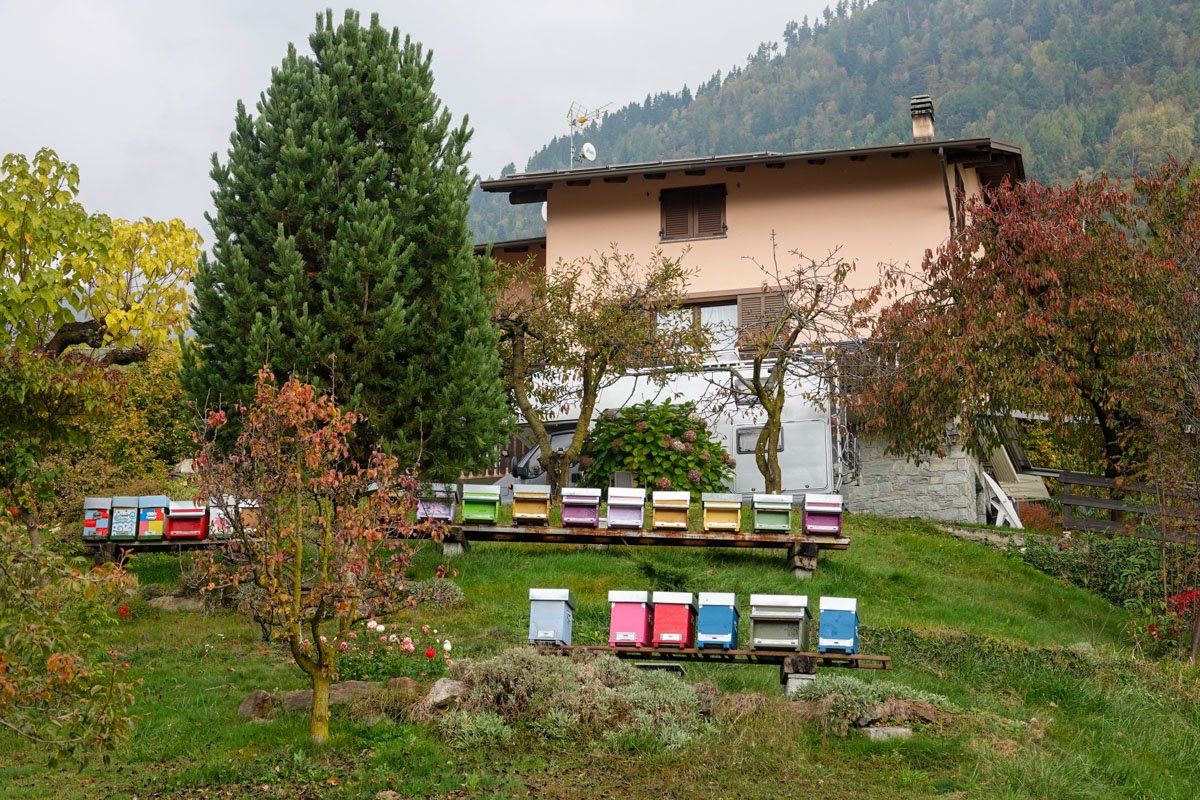
     As this is a farm area and they all seem to do multiple types of farming, I went next door for a bee-hive photo.

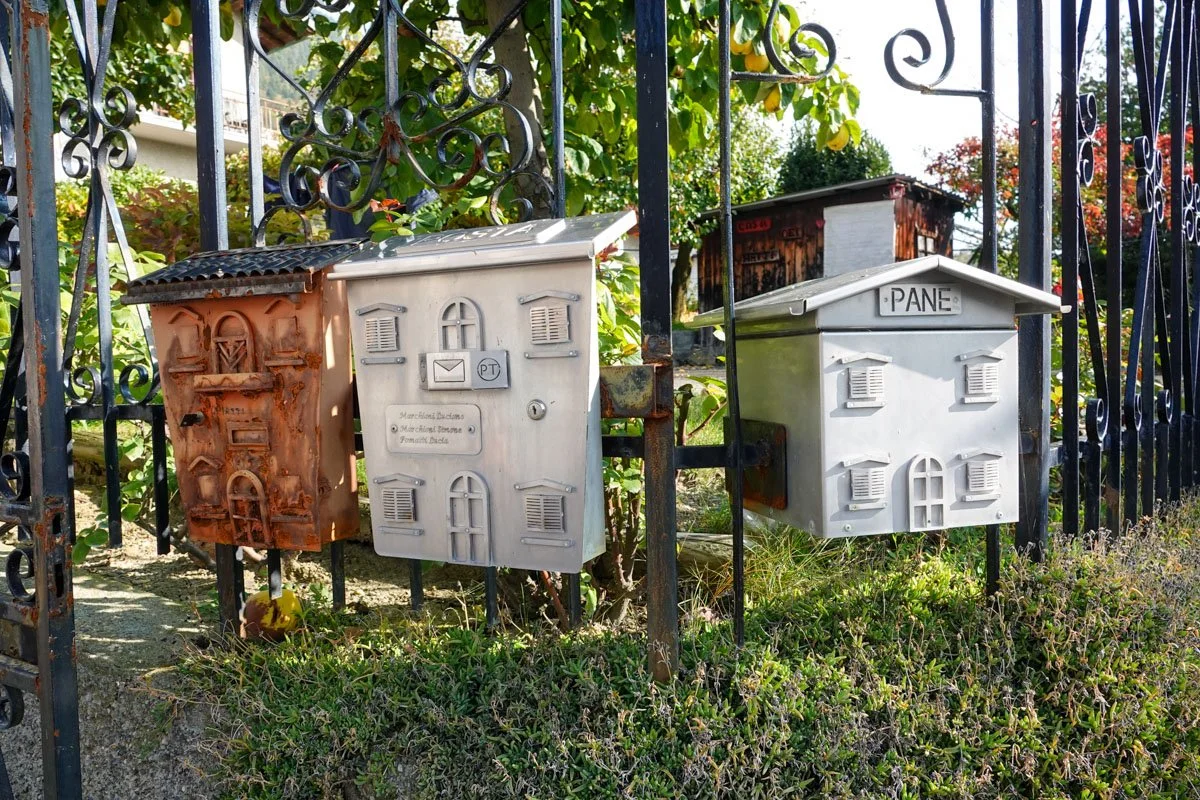
     This was a first for me. As we walked up to his house for some cheese tasting and other tastings, I couldn't help but notice his mailboxes. If you look at the boxes, the one of the right says "Pane" or bread in Italian. He said his bread gets delivered in this box every day. What a life...

Water Mill Visit

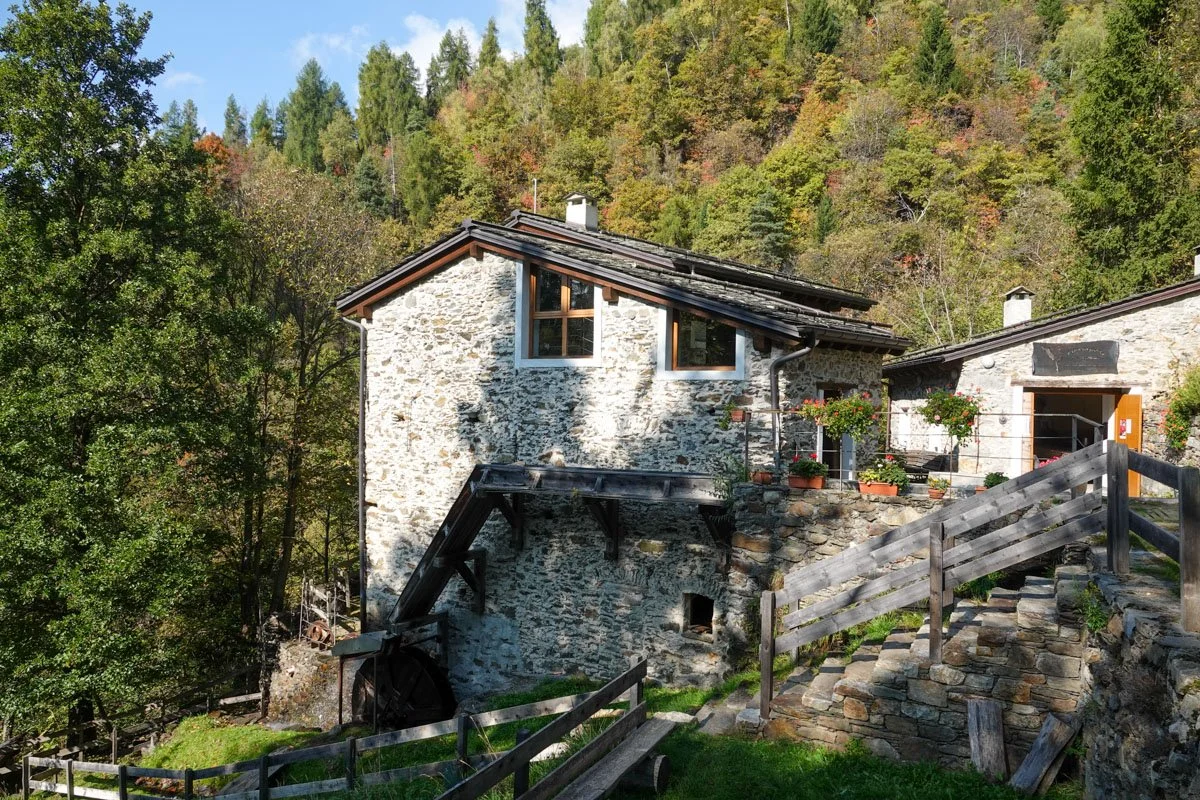
     We are still on our OAT "Day in the Life" day. This was a visit to a water mill. This place used to be a farm, but they didn't make it. It was tough times for farmers here back in the 1960's and 1970's, and many lost their farms and moved down to the valley. But now some of these pioneers are making a comeback in the "agri-tourism" business. Agri-tourism makes most of its money from tourists rather than from the farming and crops.

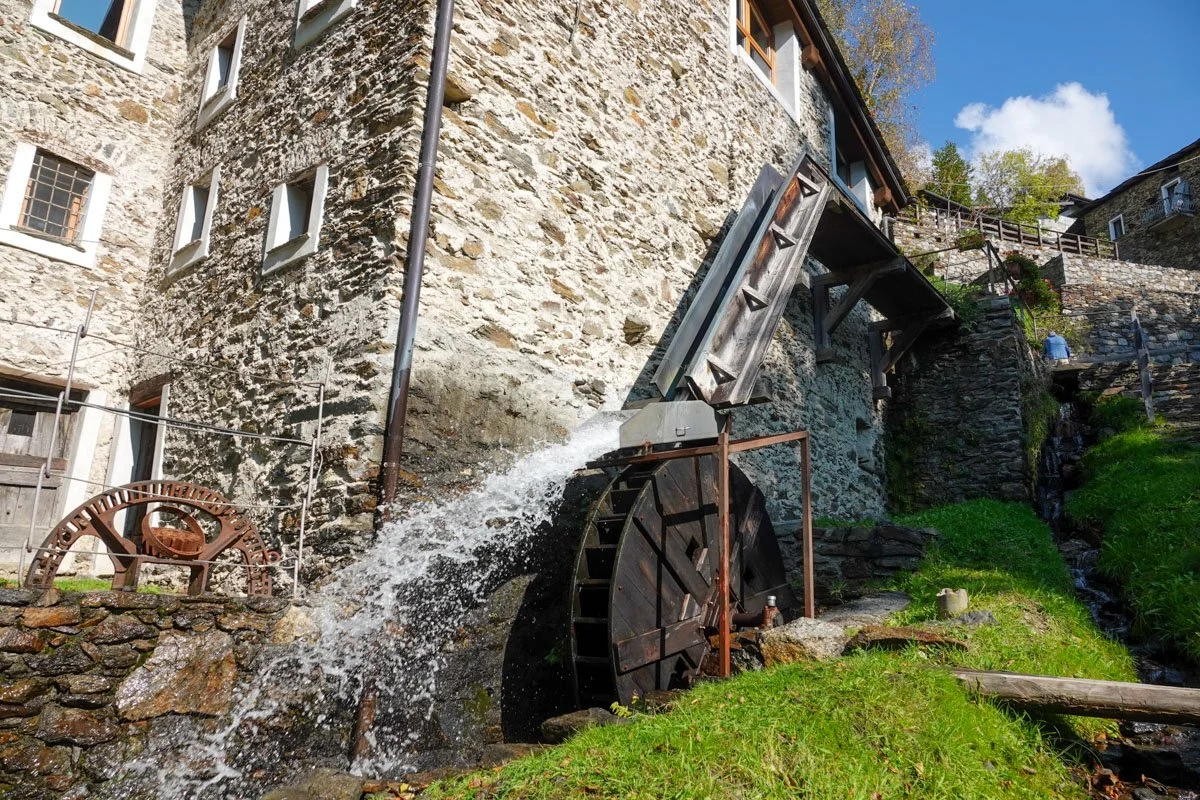
     This visit was to a water mill that has been refurbished for their agri-tourism business. They mostly mill buckwheat which they grow here locally. The building also contains a second mill used for milling barley and chestnuts, also grown locally. We got to see both mills working.

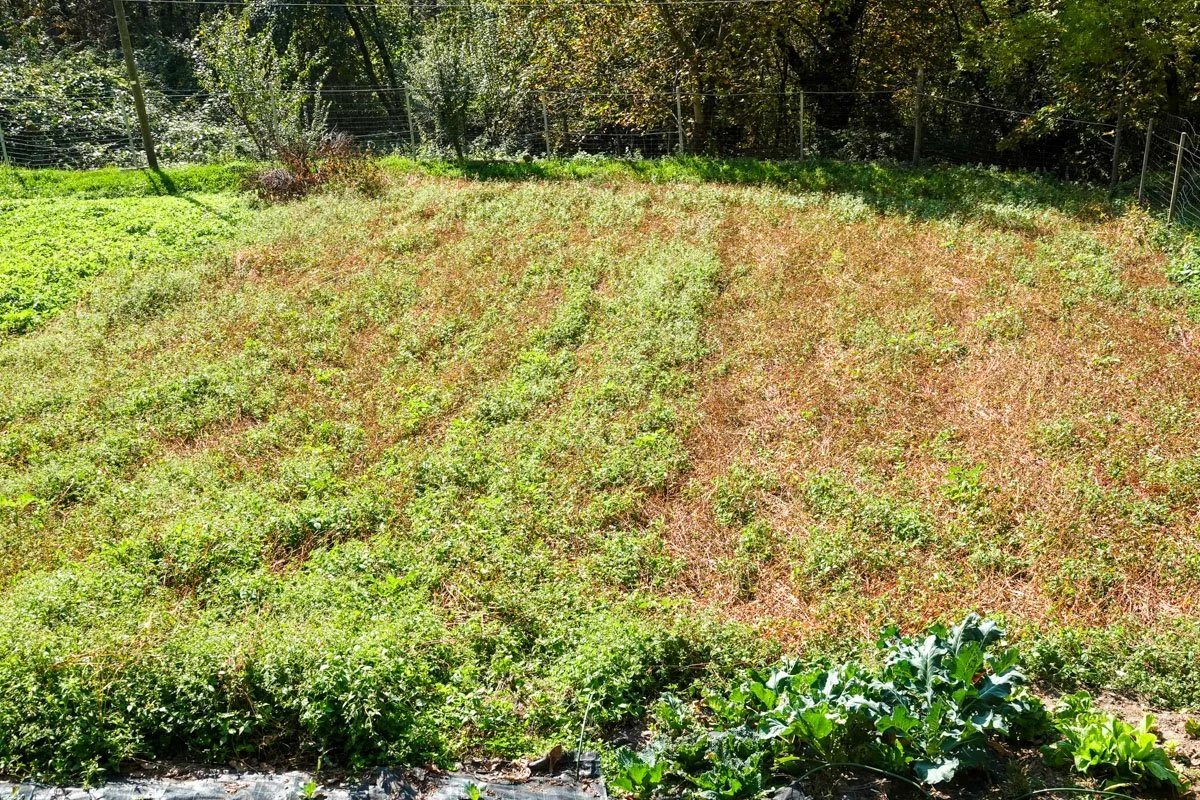
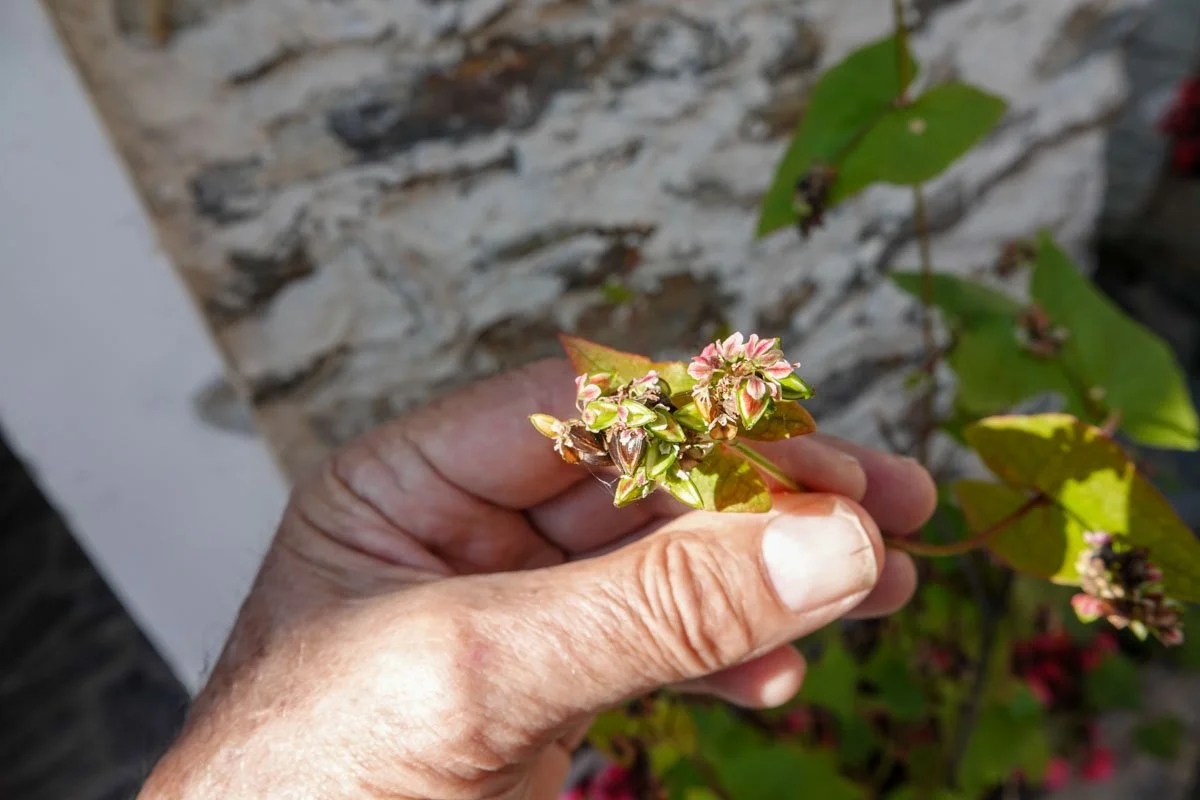
     I was unfamiliar with buckwheat. I might have paid more attention to the buckwheat than the milling process. Below is a buckwheat field, in late season, and also I'm holding onto a buckwheat seed pod.

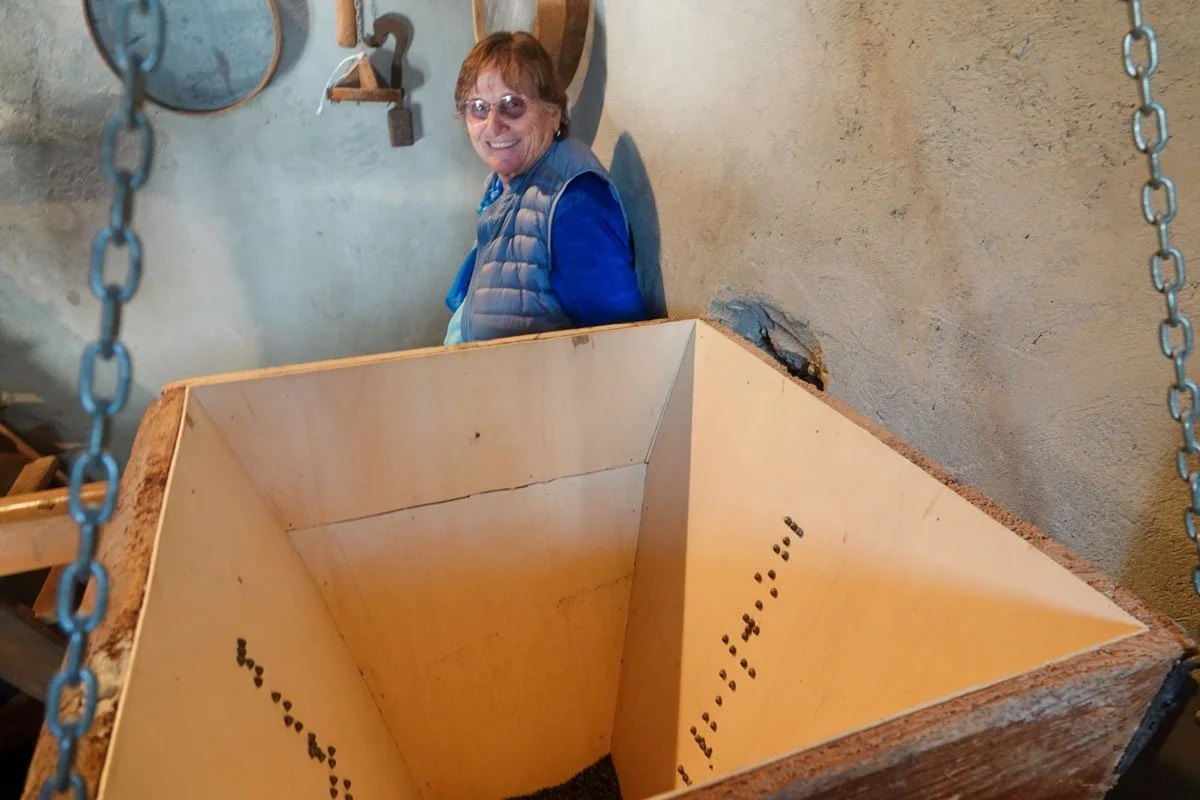
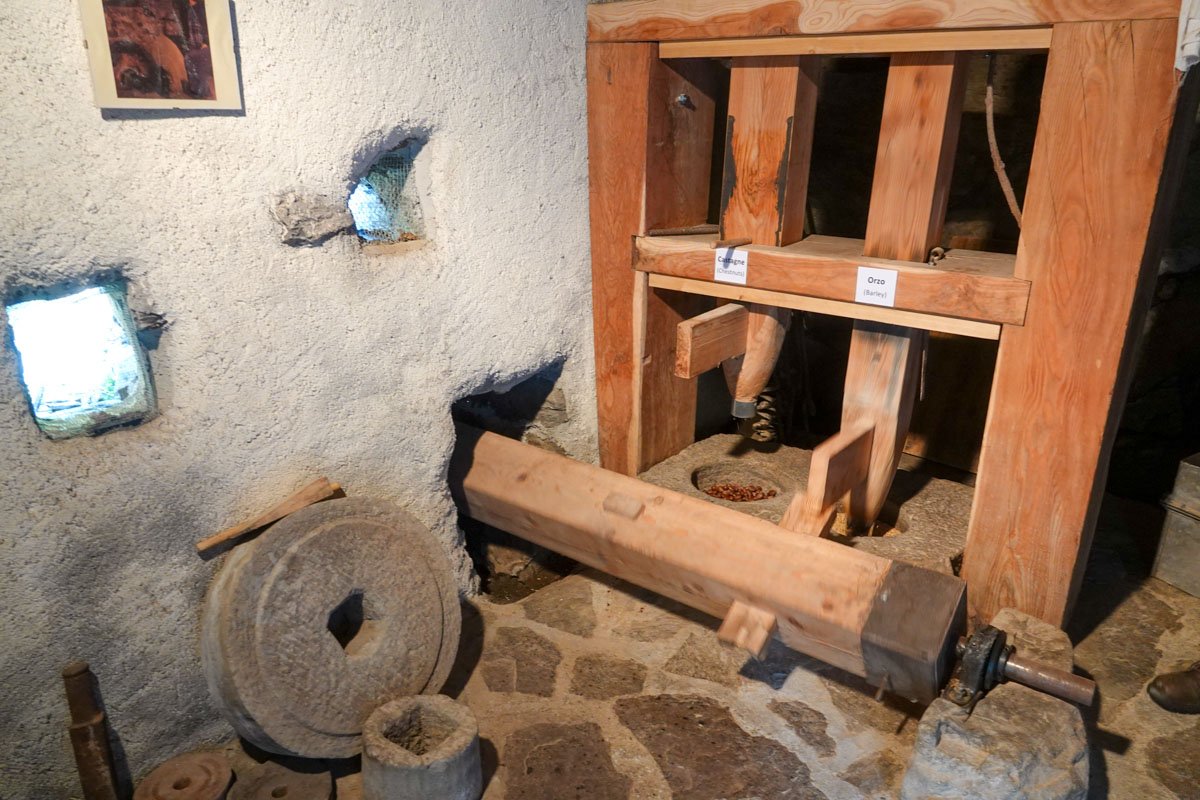
     Inside the mill was somewhat confined space. It wasn't easy with our group to get good photos of the milling process. Below you can see Vicky near a seed bin of buckwheat and also a photo of some milling equipment.

     The good news for the mills is that the Alps are rich with water, so powering the mills is not a problem.

Buckwheat Pizzoccheri

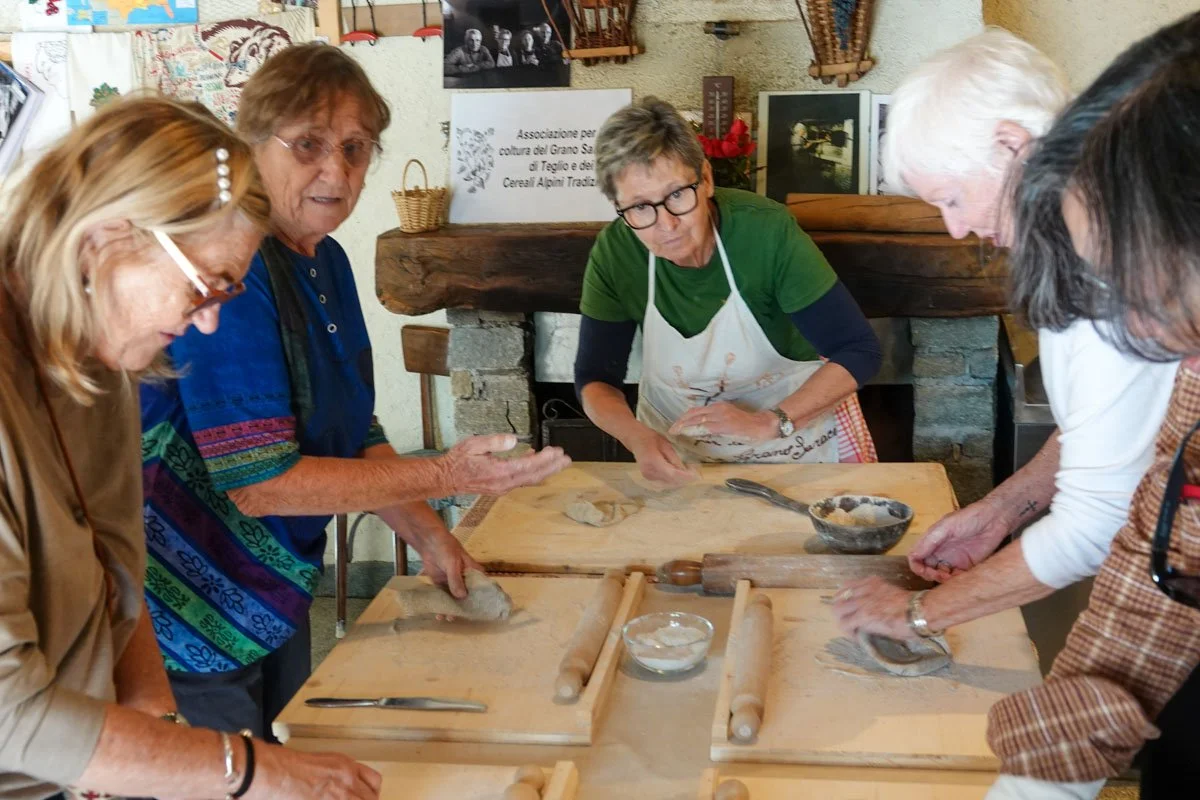
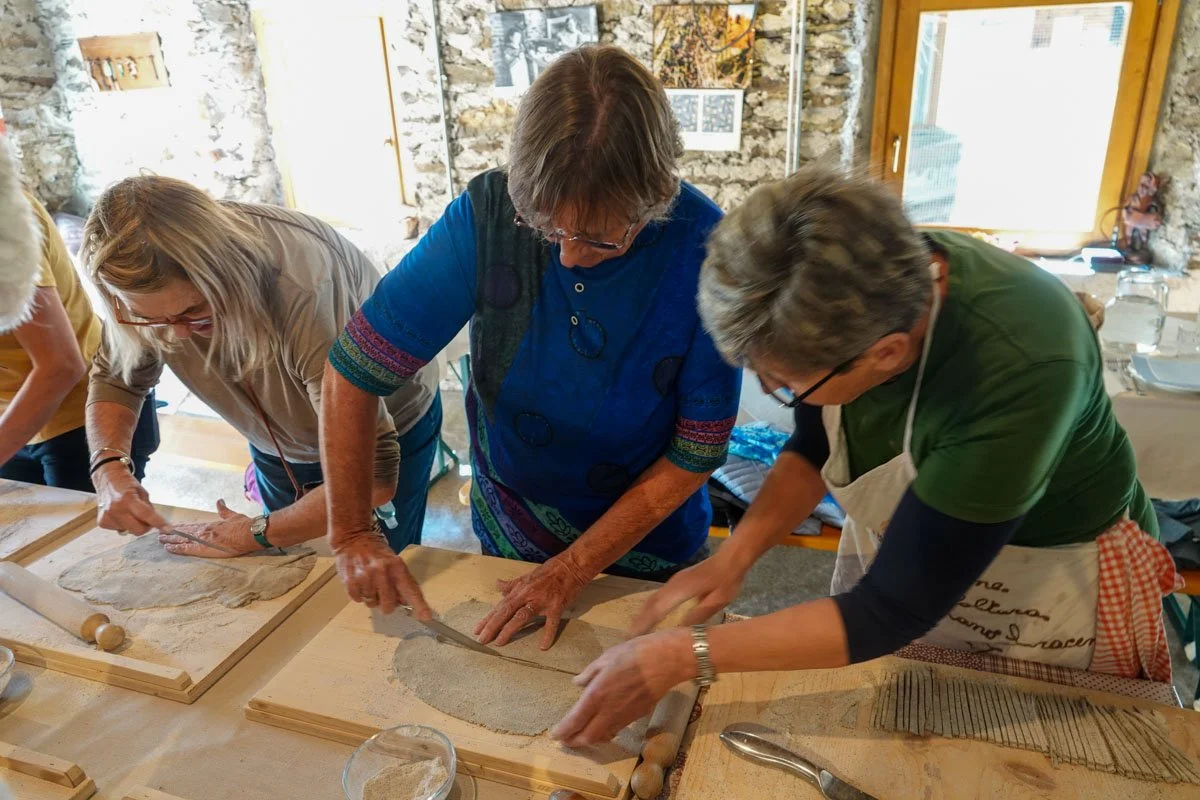
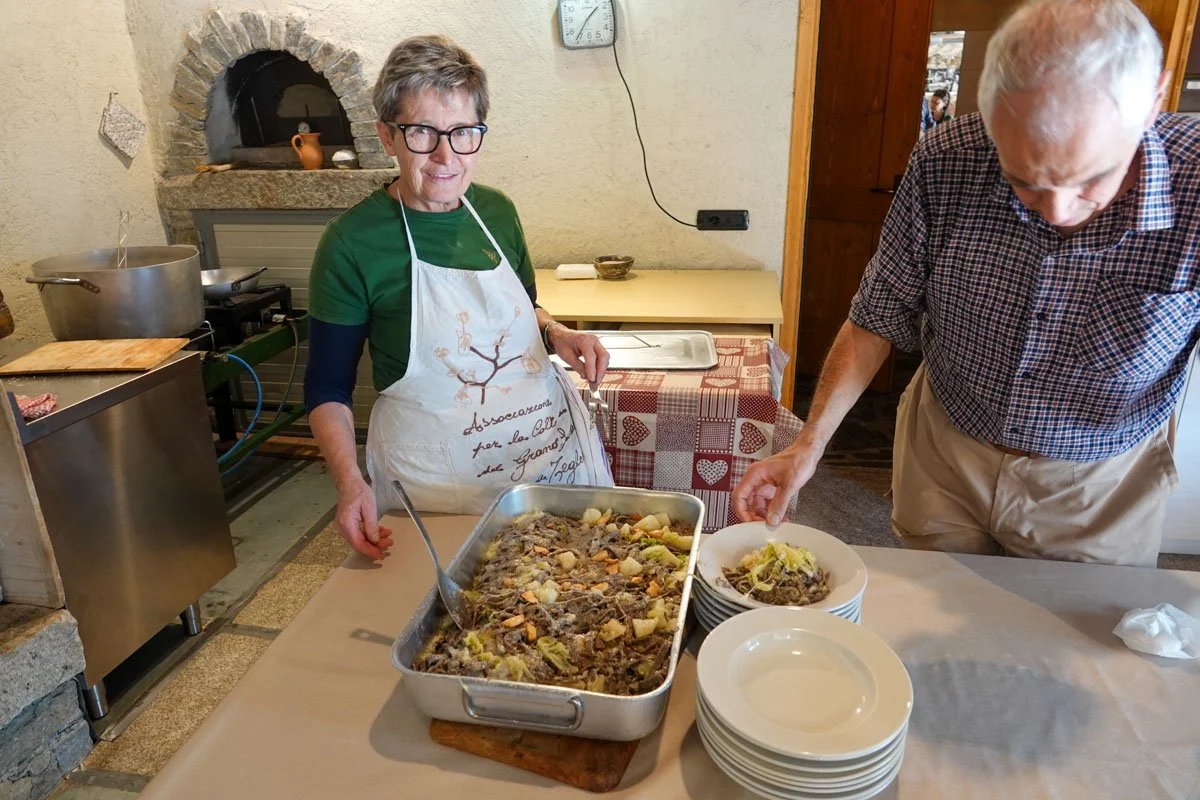
     We are still at the water mills. We milled some buckwheat and made it into flour. Then we took the buckwheat flour and made it into buckwheat pasta. The buckwheat pasta was then cooked with potatoes, cheese, and cabbage to make something called buckwheat pizzoccheri. Then we ate it for lunch along with plenty of red wine. It was very good and very hearty! Our hosts only mistake was leaving a half-full bottle of wine next to me!

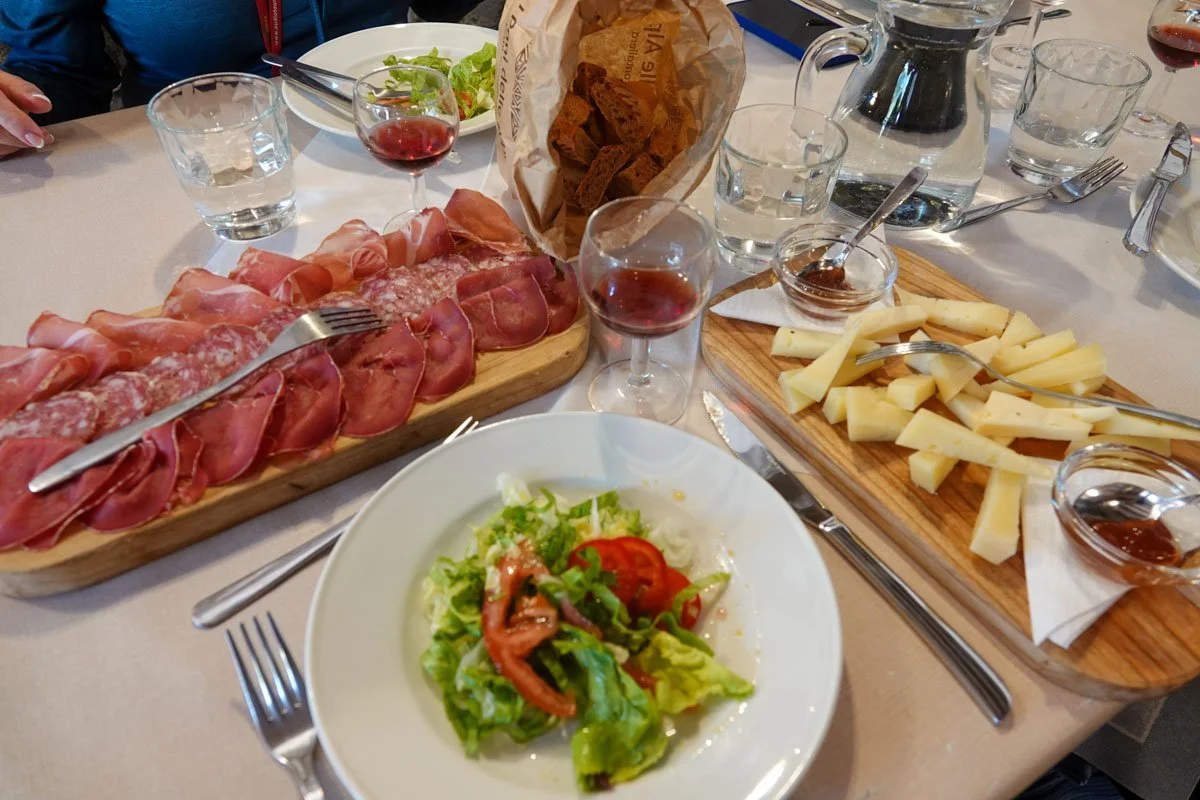
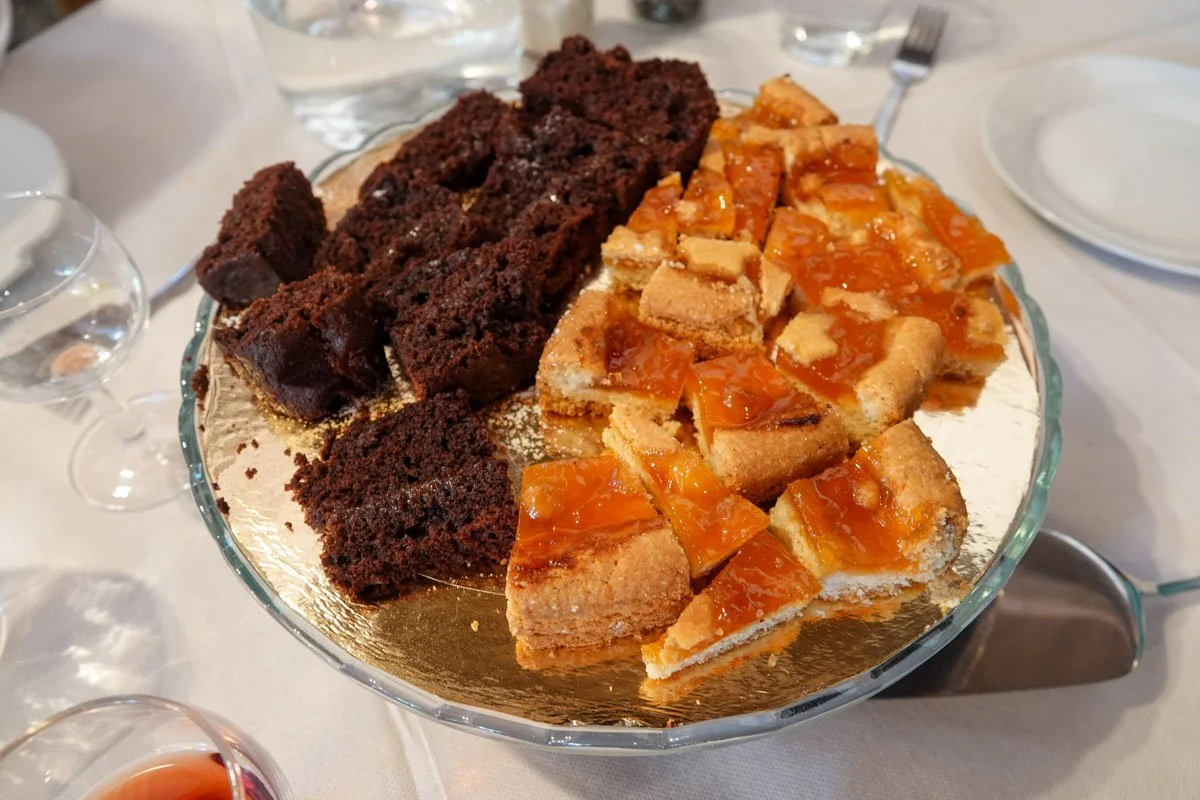
     Our lunch was rounded out with salad, cold cuts, cheeses, bread, and jam. Dessert was apricot shortbread and chocolate cake.

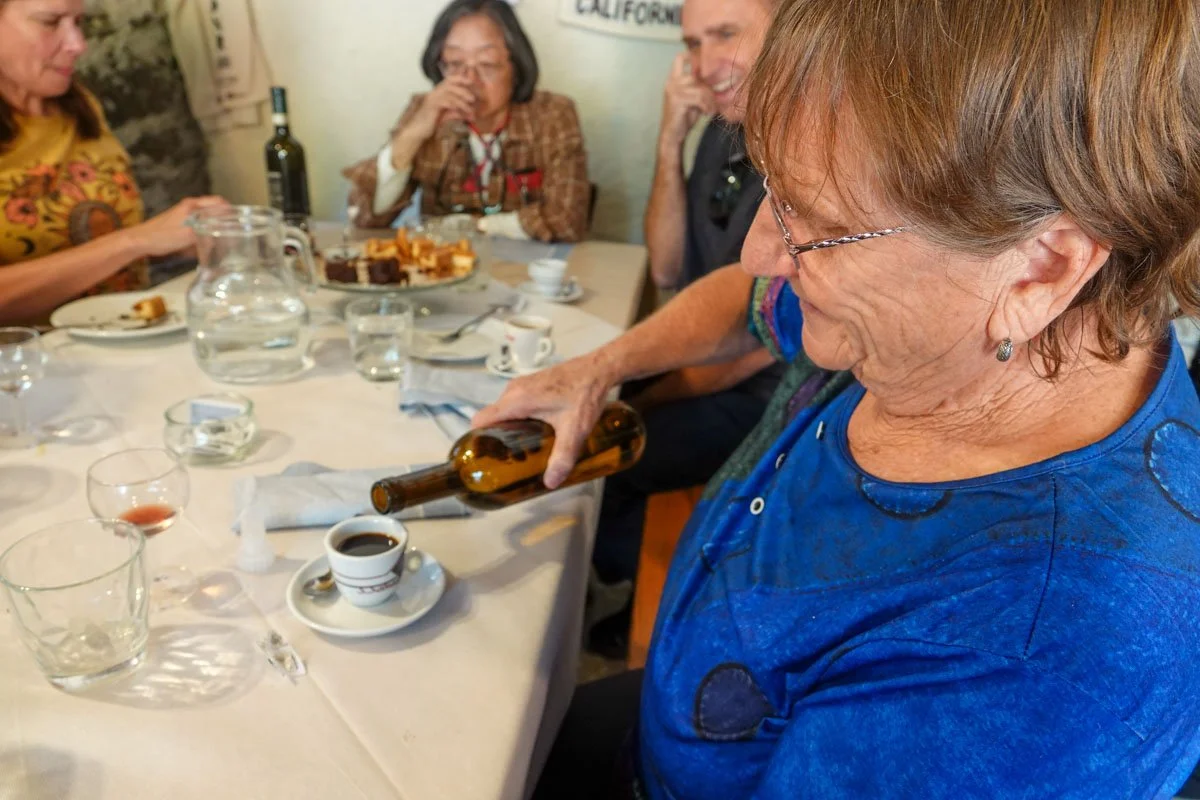
     We, of course, had some Expresso after lunch. But we found out we could add some Grappa to the expresso and make it into Cafe Corretto! Here you can see Vicky doing the honors.

Santa Perpetua Hike

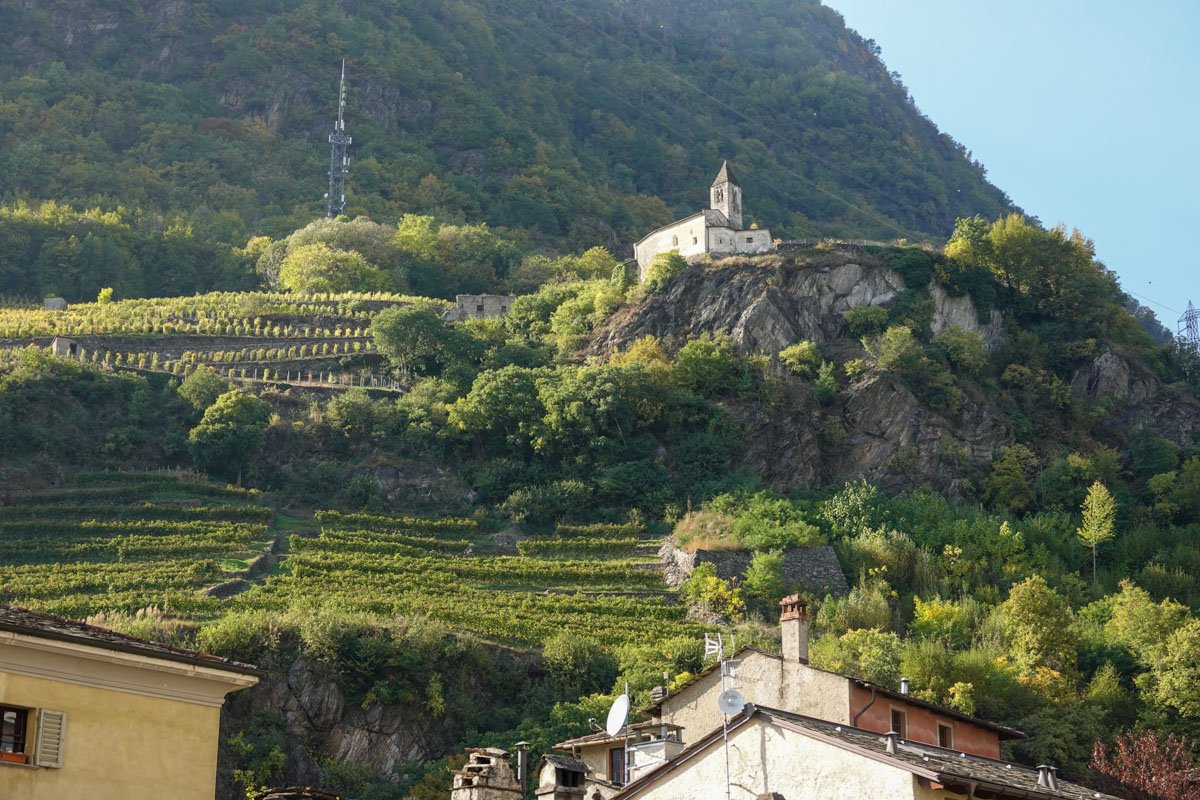
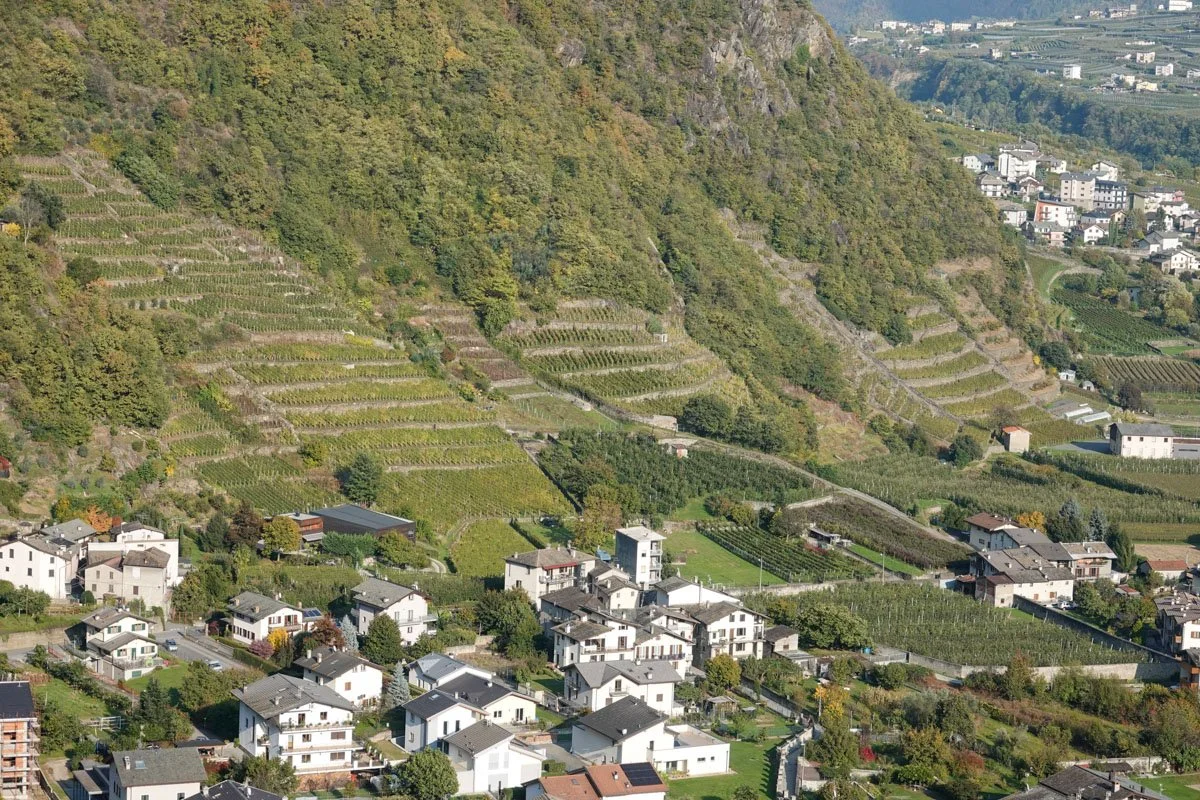
     One late afternoon in Tirano, we hiked from town up the mountainside to the Santa Perpetua church. For me, I was more interested in hiking through the vineyards. This is the Valtellina wine region, and we saw lots of vineyards from the roads, but I wanted to see some up close. We started our hike from the Basilica of Tirano, and you can see the small Santa Perpetua church from there. 

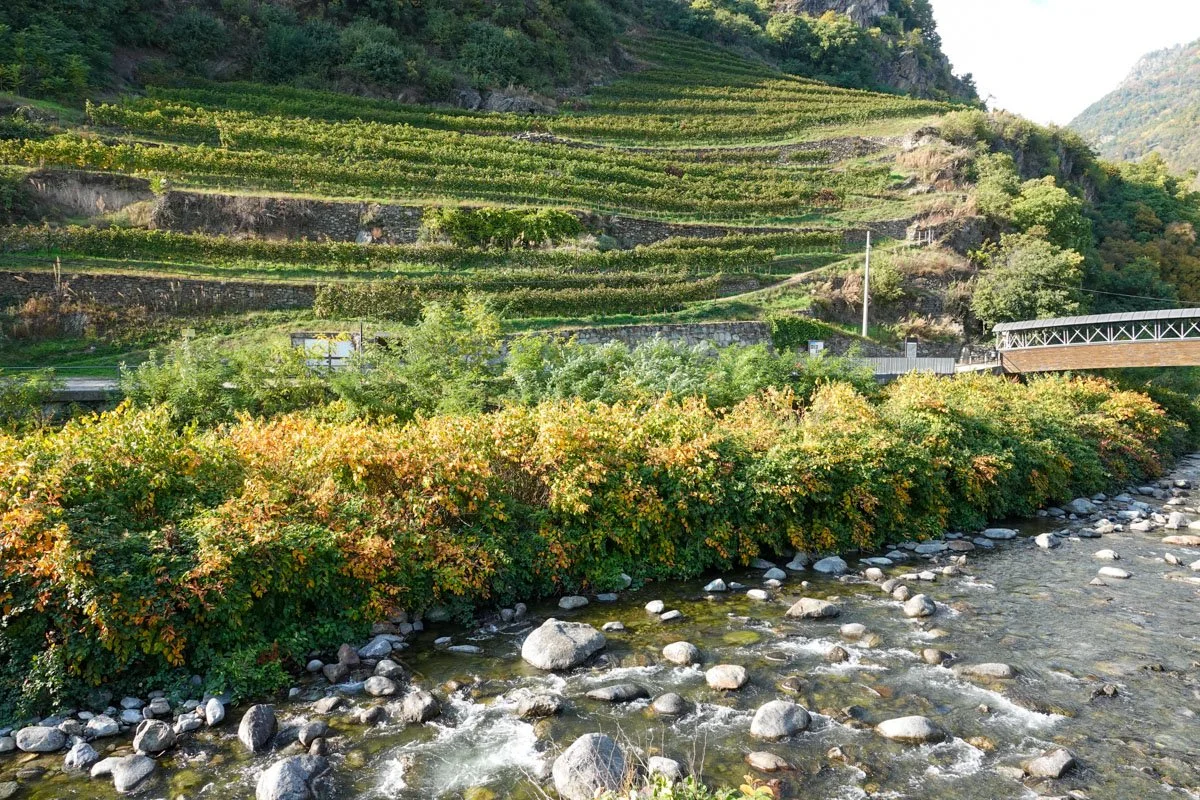
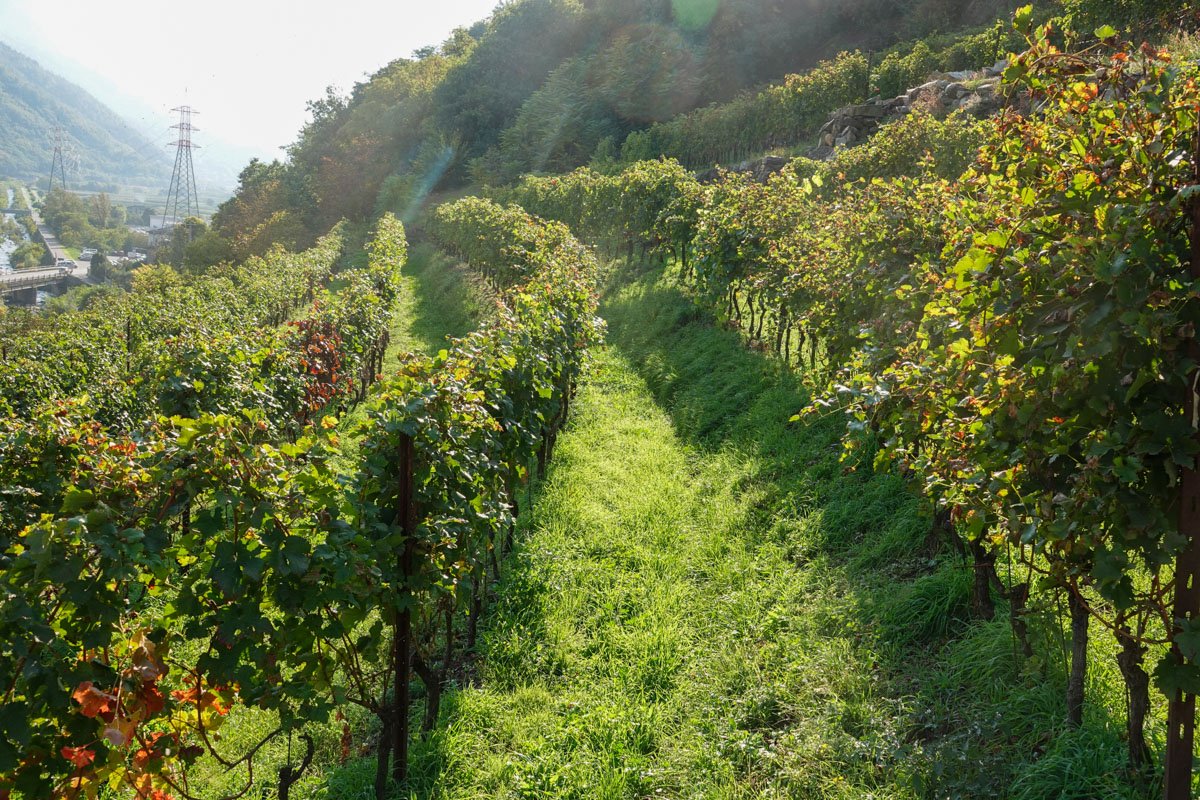
     The vineyards look to be challenging to work. The mountainsides are not level and the rows go up and down. Some areas are terraced, but the rocks for the terracing are not super stable either. The rows are narrow, and the vines are high. I imagine these vineyard workers earn their pay.

     We reached the small church which was documented in the 11th century. Santa Perpetua was at a crossroads of routes connecting the Rhine and Inn valleys with Valtellina. These ancient paths made a church a key stopping point for travelers. The church was locked up when we arrived. But the church was located on a natural balcony with spectacular panoramic views. We enjoyed the views before hiking back down to town.

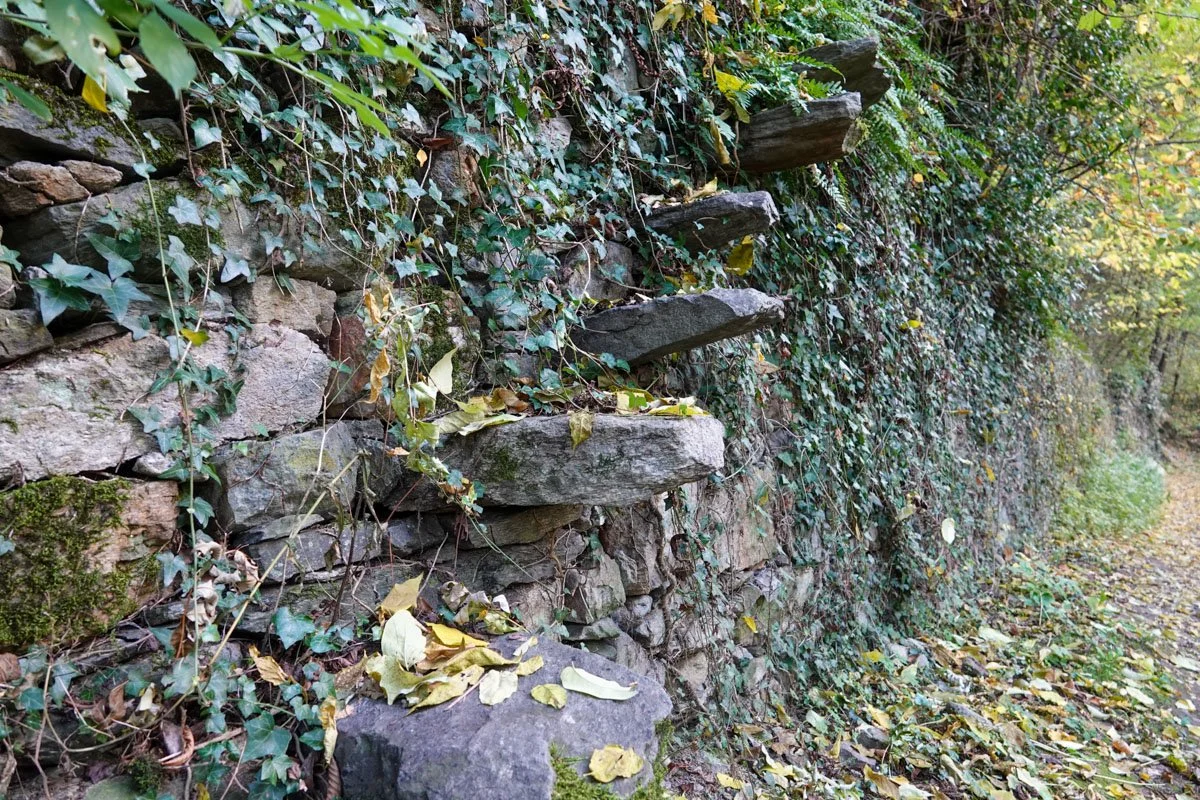
     As we hiked along the roads in the vineyards, the retaining walls were eight or ten feet high. I kept wondering how the workers managed to get into the vineyard to do their work. Before long, I figured it out. Steps were built into the terracing walls.

Home-Hosted Dinner

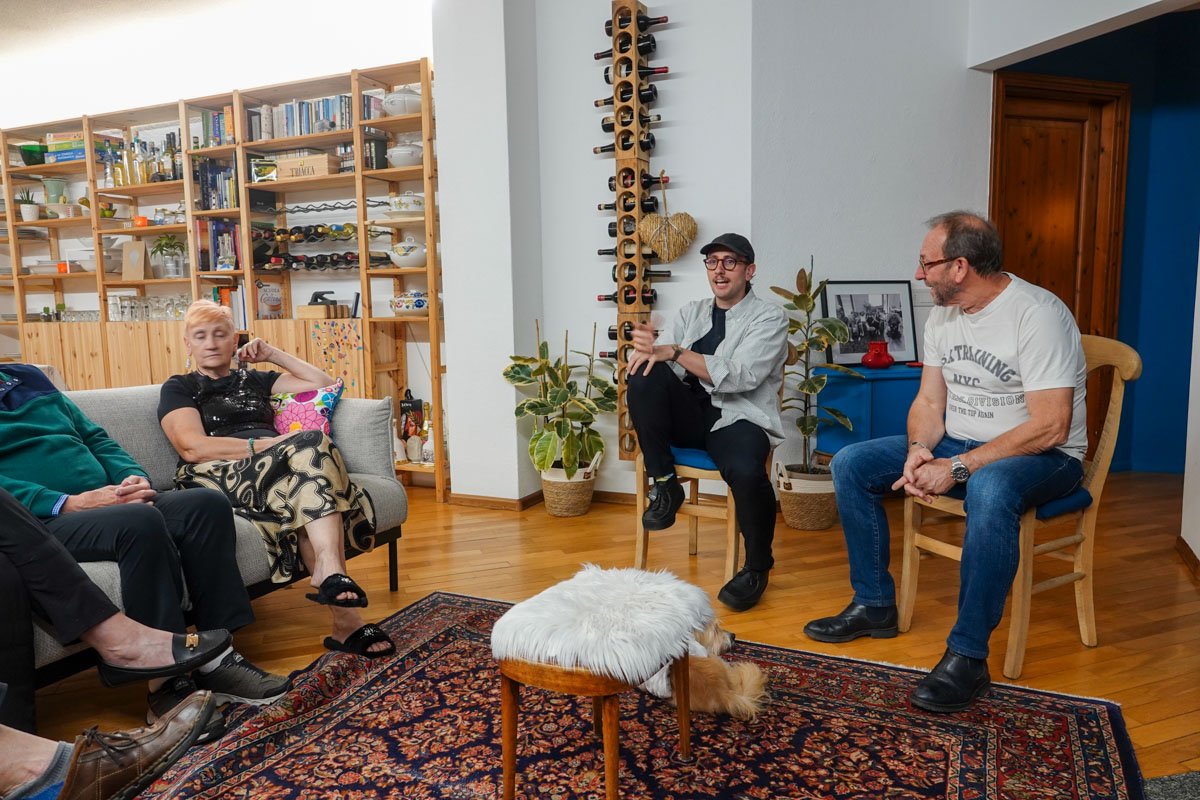
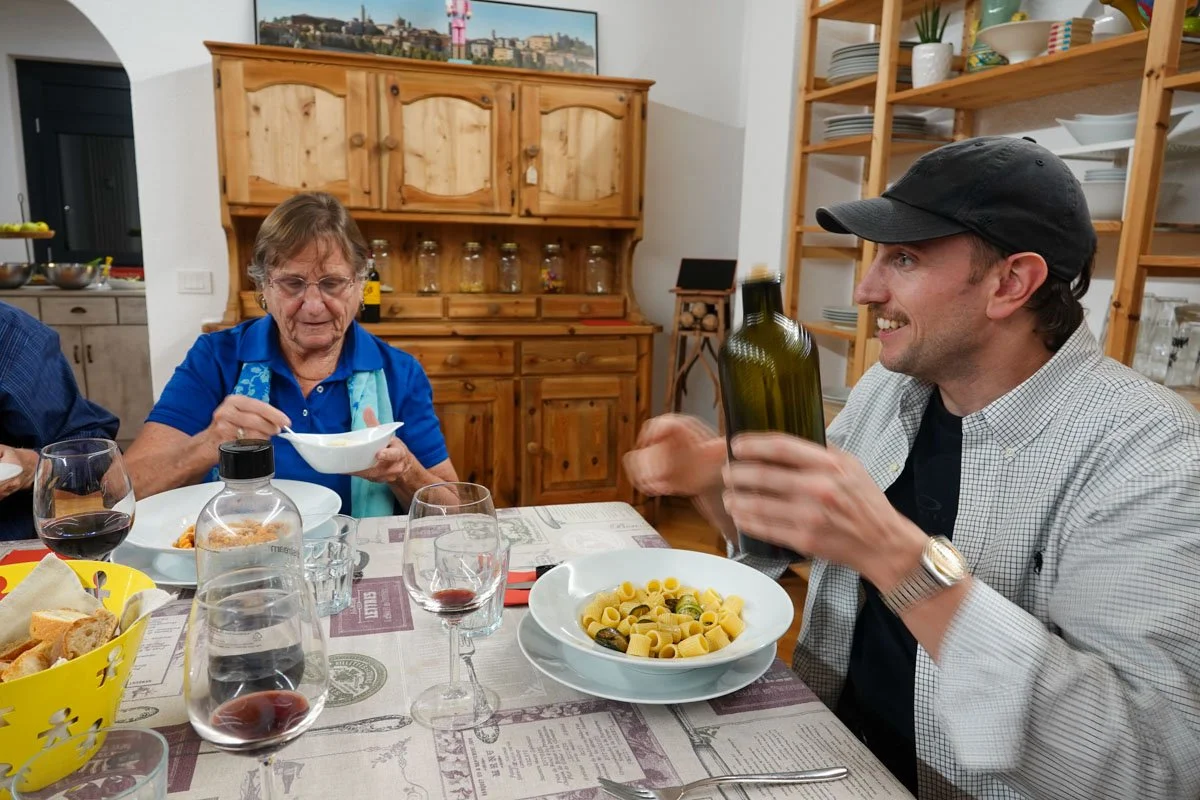
     We enjoyed a home-hosted dinner on this night in Tirano. They drove us from our hotel to their home but it was dark so I'm not sure where it was located but it was a short drive from our hotel, so it must have been in the photo below somewhere as we were near the top of the tree-lined street.

     Our hosts were Daniella, Mateo, and Myrco. Mateo, their son, works for the Butega Valtellina winery where we visited our first night in Tirano. He does labeling and design work. He said that labelling is incredibly difficult as Italy changes labelling and content laws frequently and it is difficult to keep up with it all and stay in compliance. He said it's much more difficult than in the U.S. They also had two dogs. 

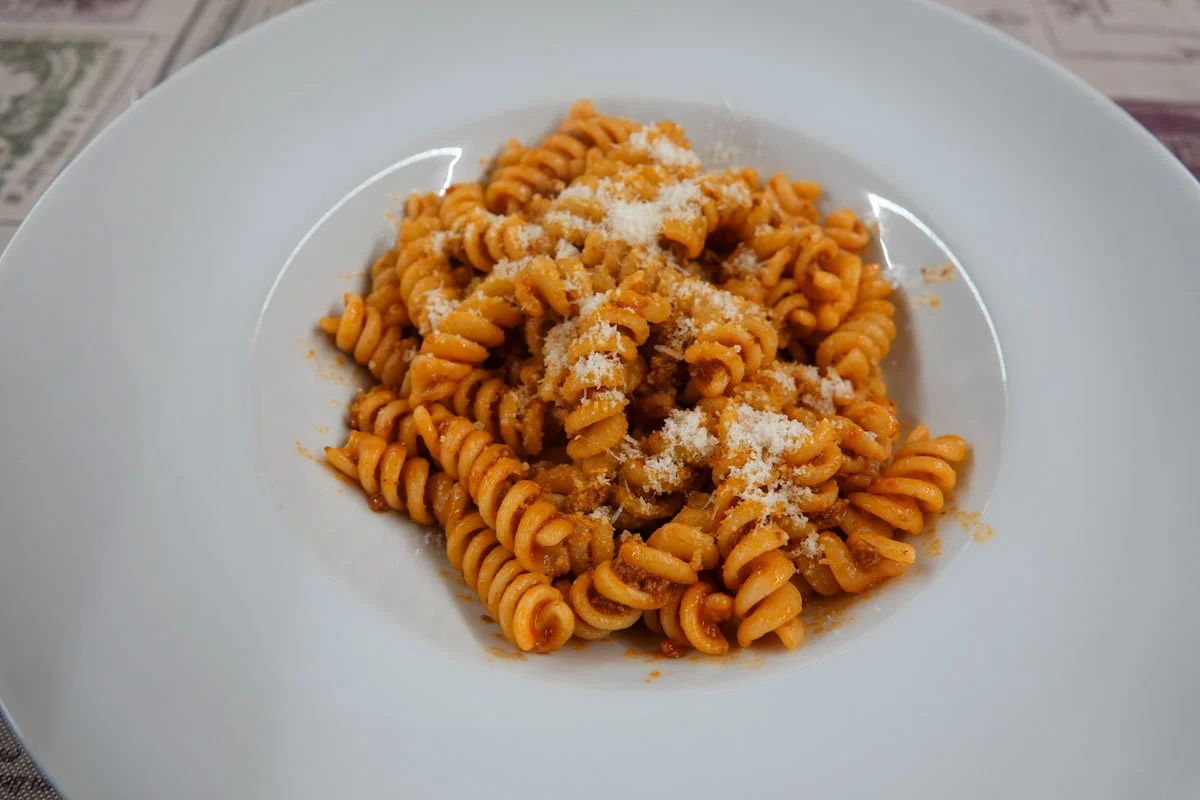
     Our first course was a carrot, potato, onion, and nutmeg cream. I think it was soup, but they called it a cream (no photo). We had chianti wine with it. Our main was rigatoni with a meat and tomato sauce. Mateo had something different from us.

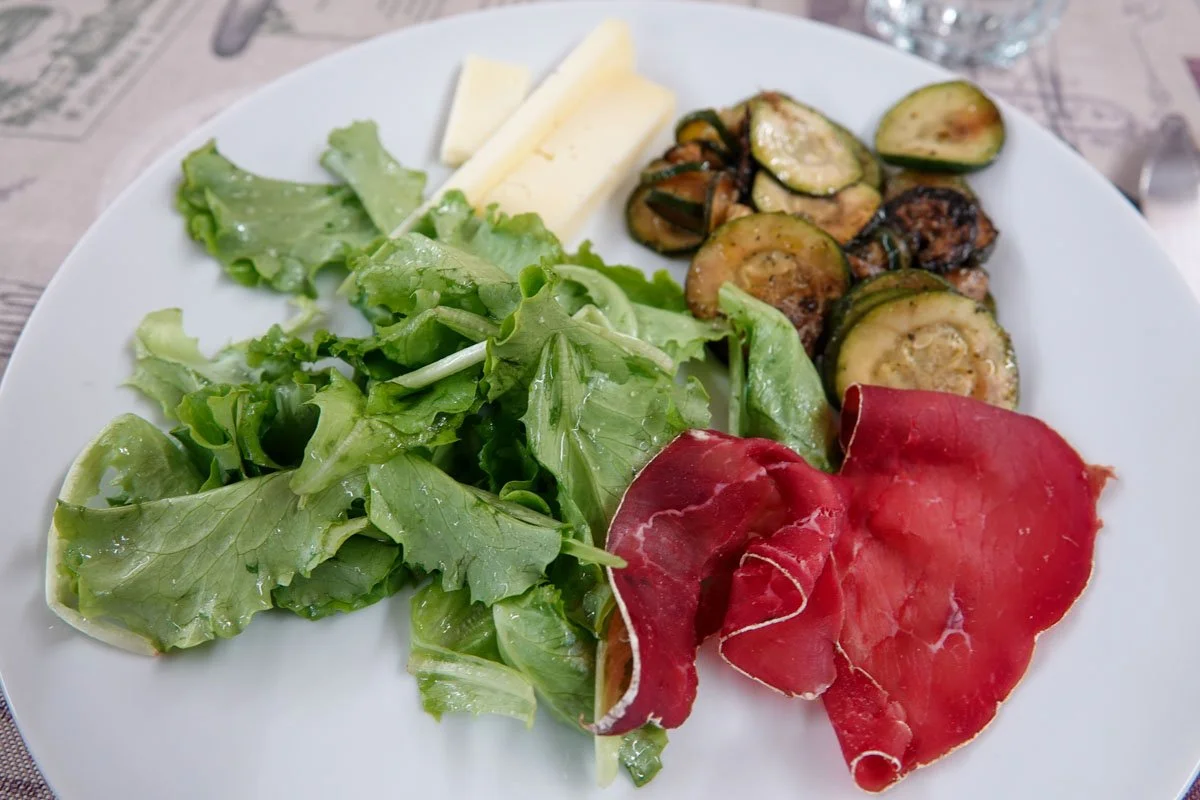
     The last course of our dinner was salad with lettuce, zucchini, bresaola, and Valtellina Casera cheese. Gelato was for dessert.

Bersi Serlini Winery

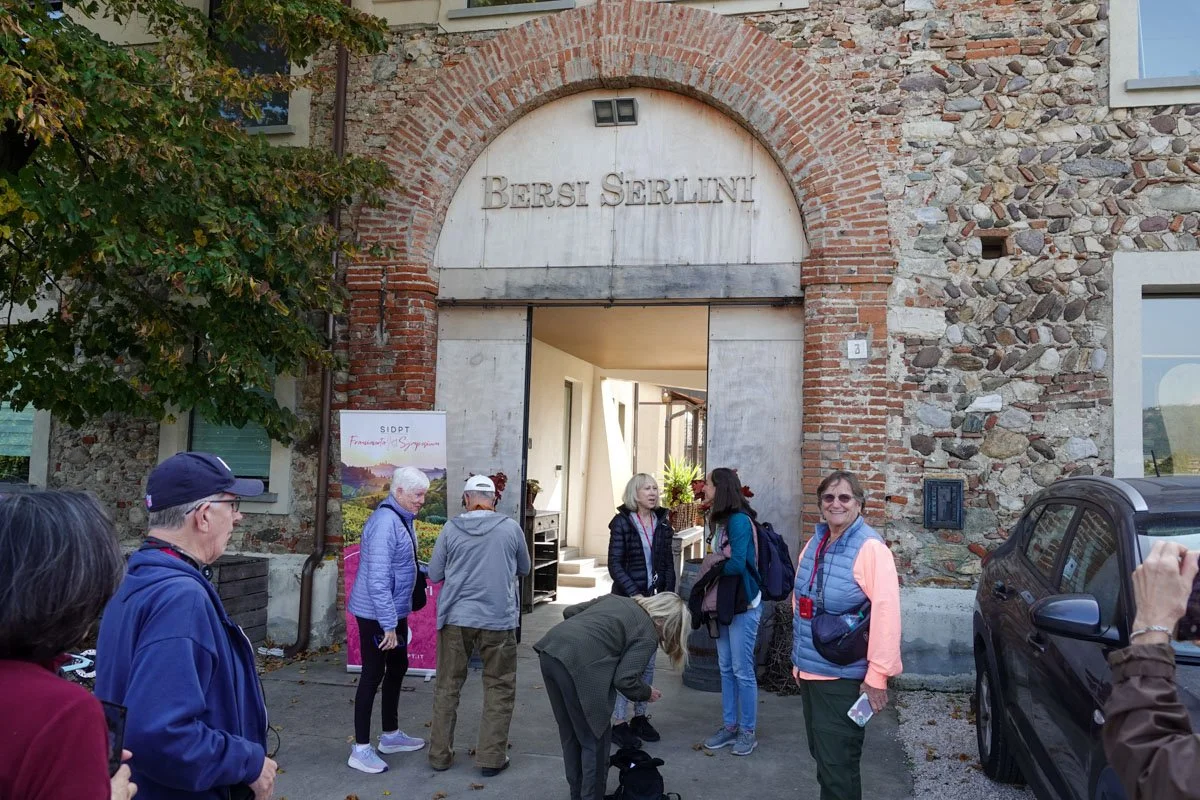
     We were driving this day from Tirano to Lake Iseo. We stopped in late afternoon at the Bersi Serlini Winery in the Franciacorta wine region, known for its sparkling wines. This winery has 35 acres of mostly Chardonnay grapes with some Pinot Noir included for balance. They only make sparkling wines, but they make several different types. They said the winery was started in 1886 by the family that still owns it. Their primary tasting room is an 11th century building built by the Benedictine monks.

     Our winery guide said that the high acidity, the nearby lake, and the mountains all contributed to their Chardonnay grapes being great for making sparkling wines. Our winery guide also said that they are in the "hospitality" business, not the wine business. They do weddings, corporate events, business meetings, and more. They have multiple indoor and outdoor settings, and wine is always served with every event. 

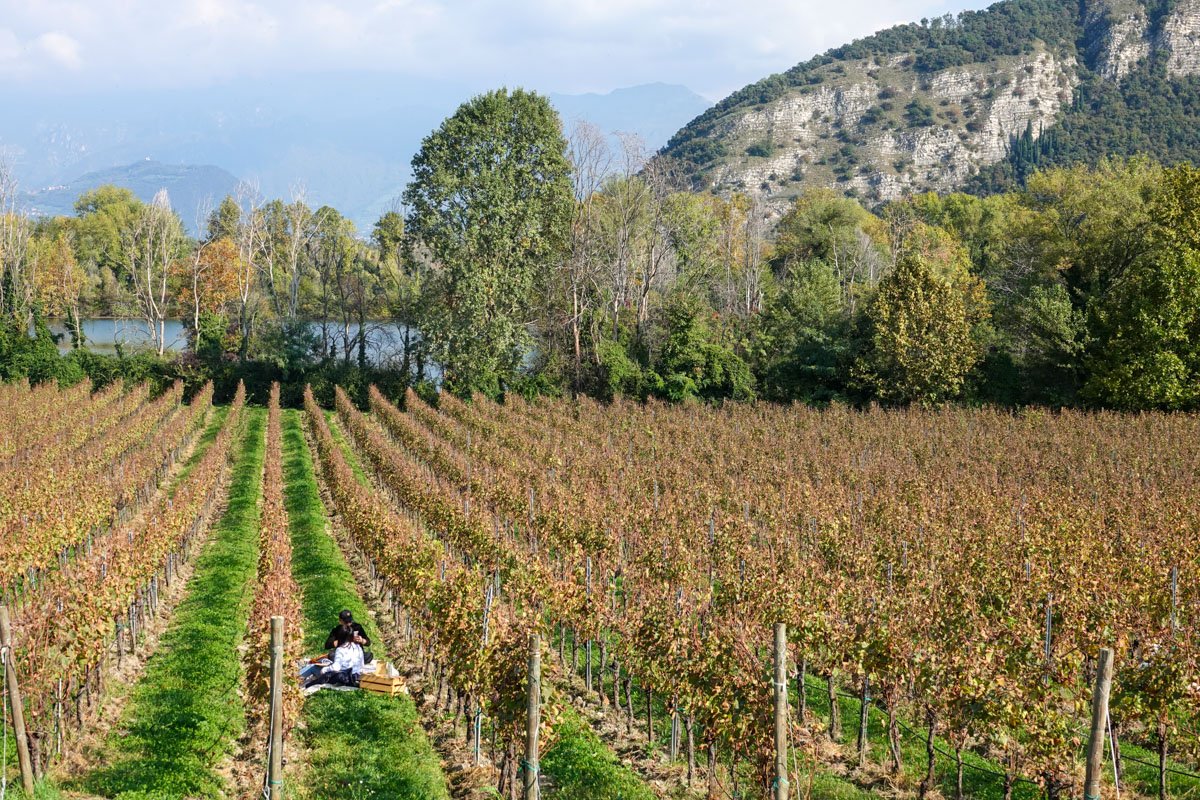
     You can see one of their vineyards just below their winery in the next photo. You can also notice a couple having a picnic in the vineyard, which is part of their idea of being in the hospitality business.

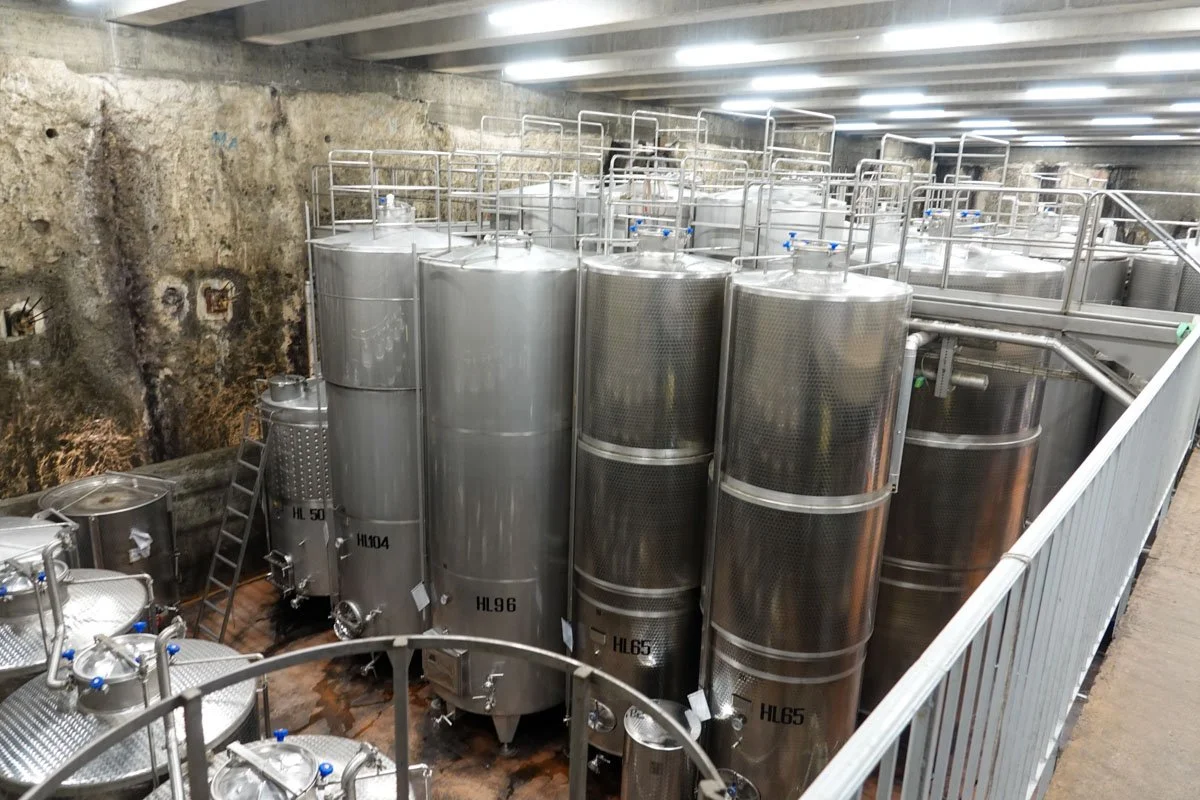
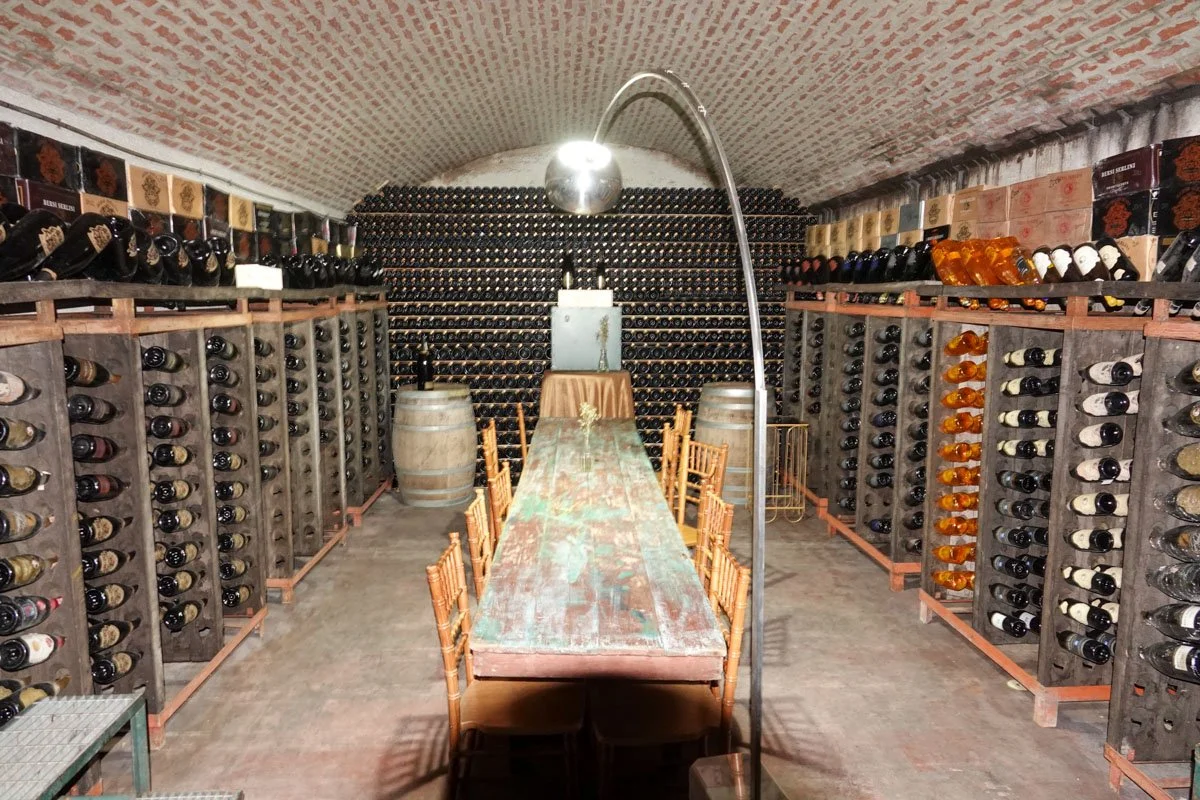
     They have two underground cellars, the vinification cellar and the maturation cellar. Both cellars are substantially underground. We first walked the grounds, perused the crushers and so on and then went down into the vinification cellar. Our guide said that they harvest in August to get the grapes at high acidity which helps for sparkling wines. Since we were here in mid-October, most of the initial work had long since finished.

     We visited the fermenting room, the ageing room, and the "mixing-decision" room.

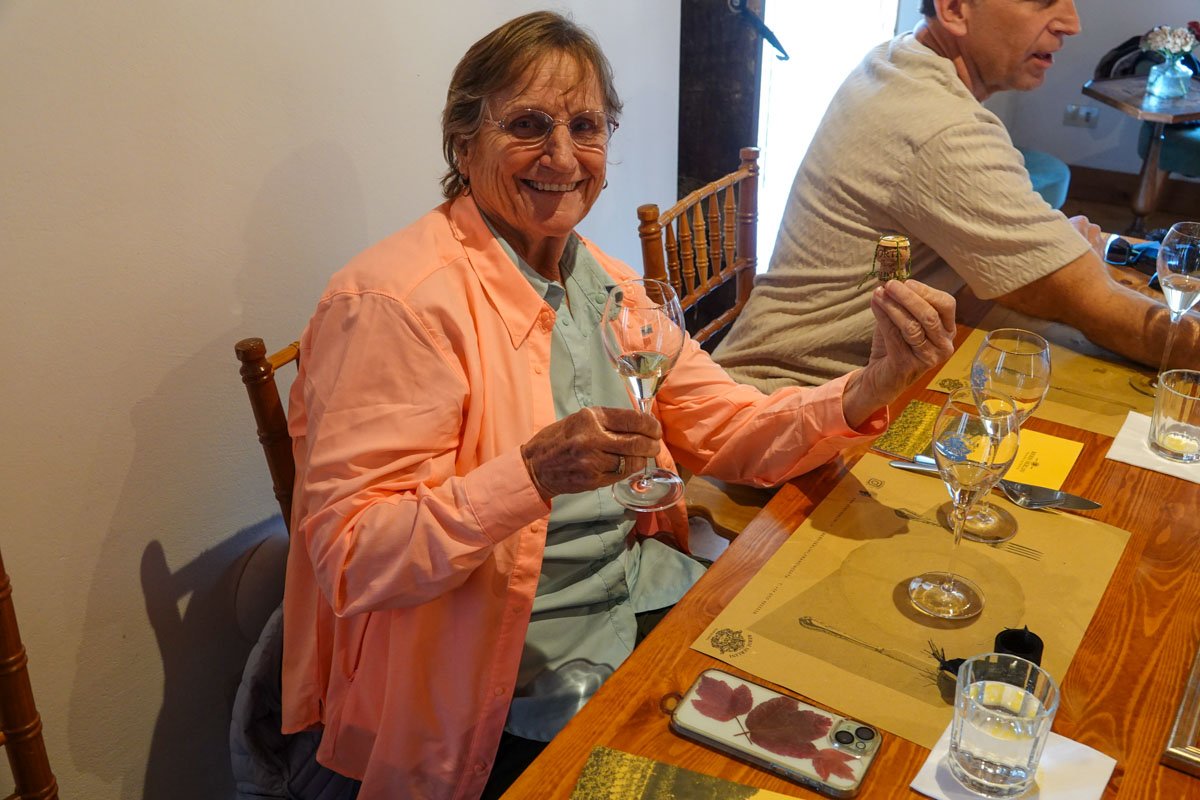
     After our winery tour, we were seated in a tasting room and "blind tasted" (with a complete blindfold) three wines: a fresh, young, sparkling wine; a less pressure, long-aftertaste wine, and a sweet-aged wine. Vicky was one of only two people in our group of 16 that correctly guessed all three wines in the blind tasting. Her prize for guessing correctly was a wine-cork, which she is holding in her hand.

     We were served lunch after our wine tasting. Then we had some free time. I spent my free time walking around the property. I passed several vineyards on my way to their "botanic garden." They said that they have wine-tasting events in the garden where people can associate the various plants with the wines they are tasting. Of course, the garden was past its summer peak and well into fall decline but I still enjoyed the visit there.

Lake Iseo

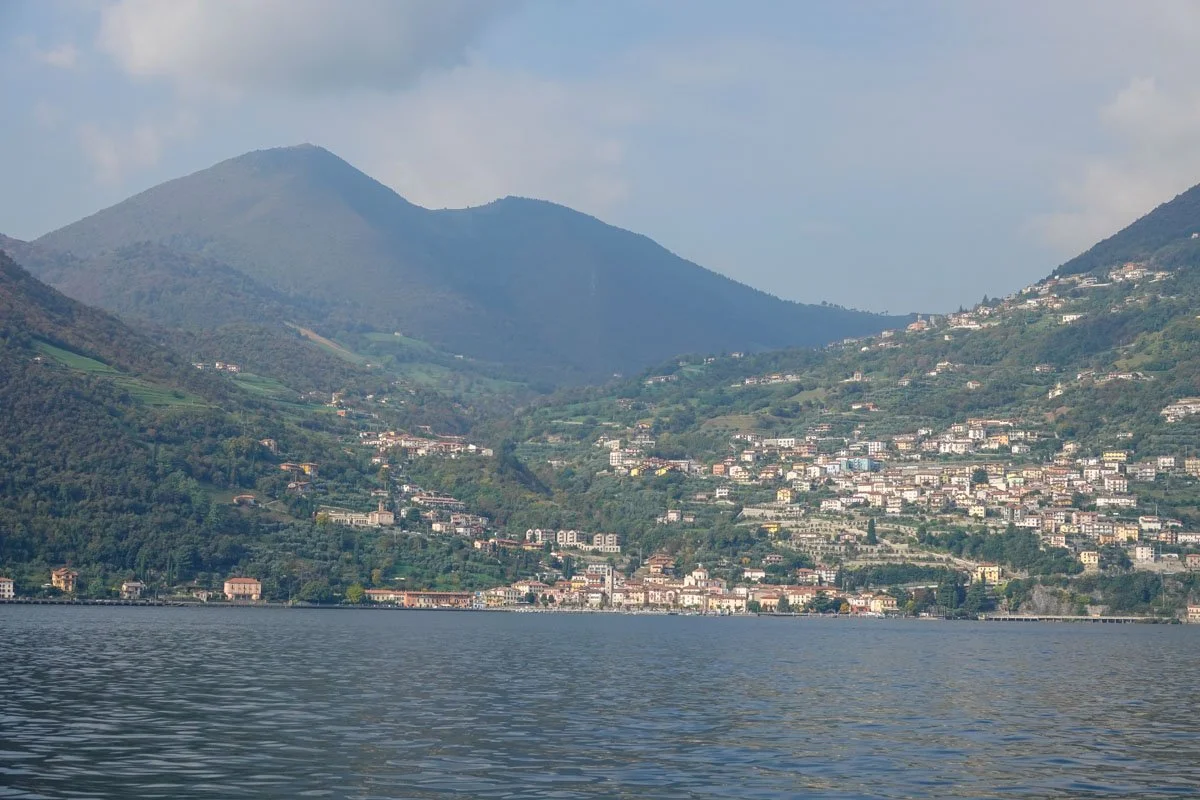
     Our next stopping point was Lake Iseo. We stayed right across the street from the lake in Sale Marasino. On our first full day there, we took a boat ride out and around part of the lake. It was not an entirely clear and sunny day, but it was much better than Lake Como. But like Lake Como, it was a large lake surrounded by high mountains, so some haze in the air as you can see below. Lake Iseo also has many picturesque towns around it.

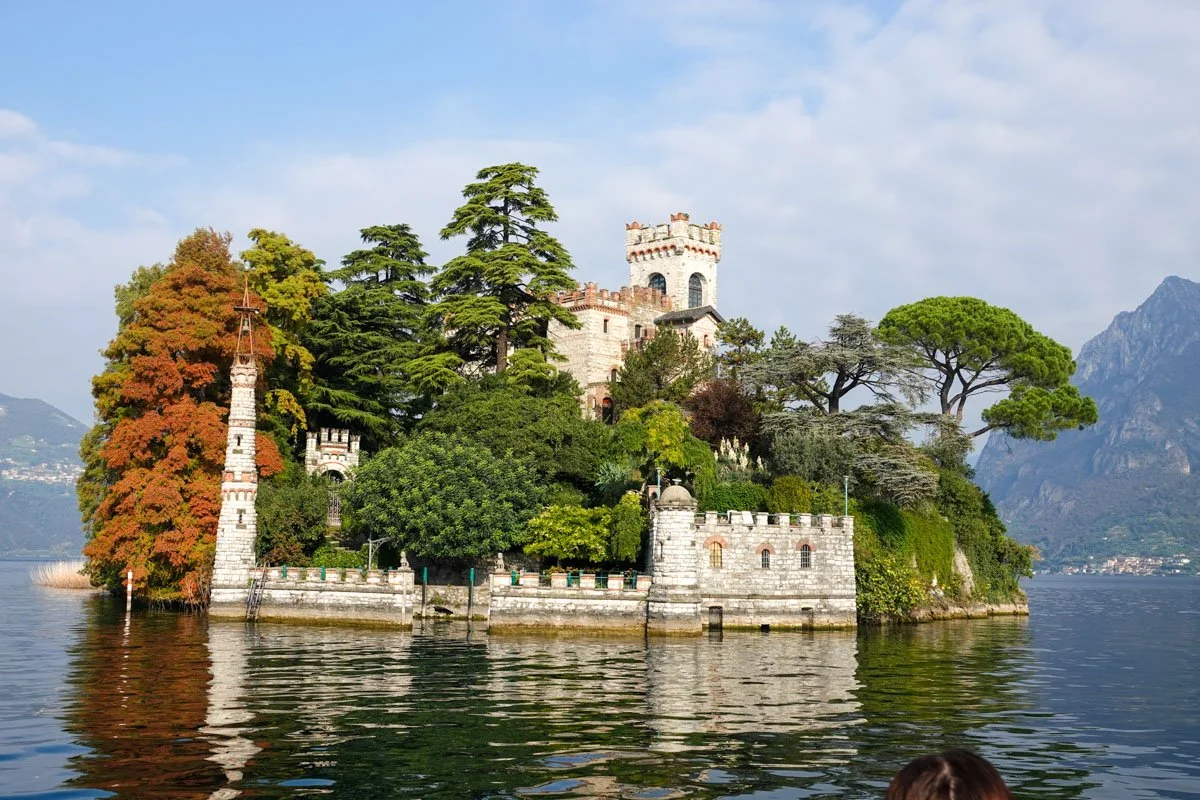
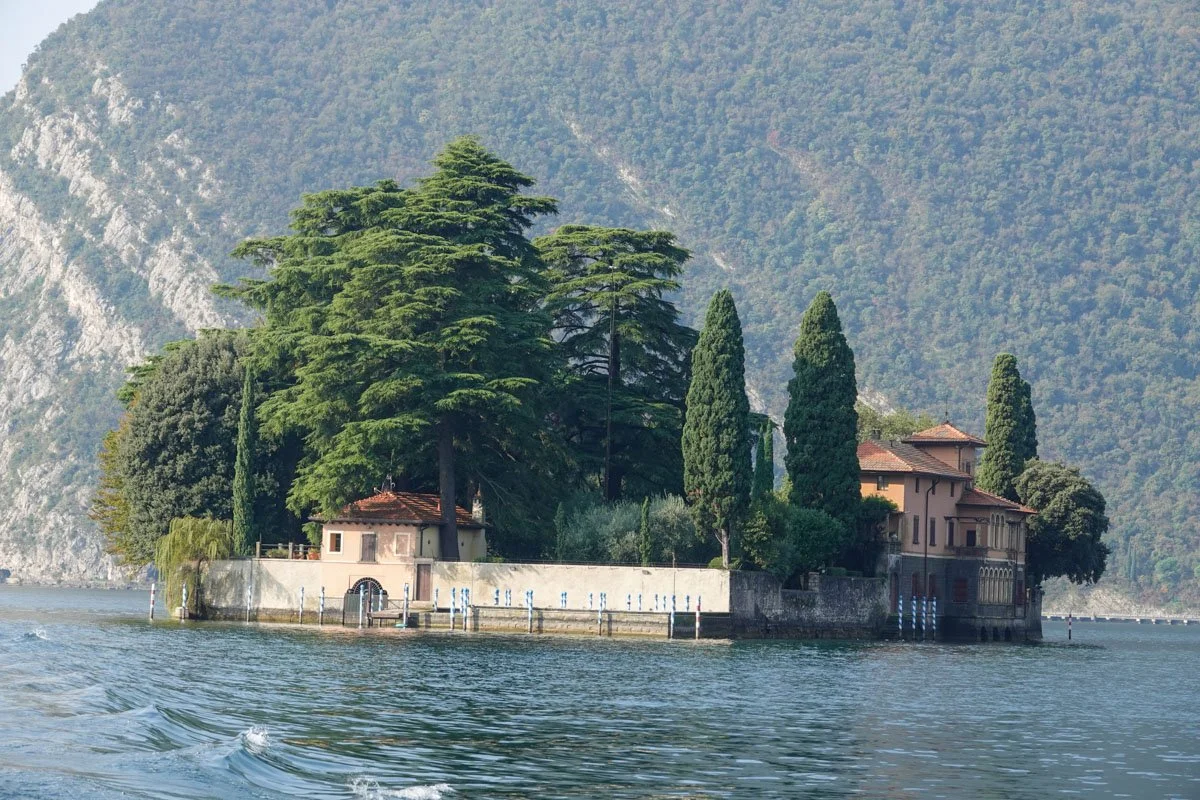
     There are multiple islands in Lake Iseo and they were a primary feature of our boat trip around the lake. The first island we passed was Loreto Island. It looks a little bit like something out of a fairy-tale. It has a history going back to the 15th century when the nuns of Santa Chiara built a convent here. It passed into the hands of several wealthy families after that and is still in private hands.

     Our guide said that the castle was built in 1910. Our boat driver said that George Clooney tried to buy the island but was told that it was not for sale. I can see why George might want to buy it; the place seems enchanted.

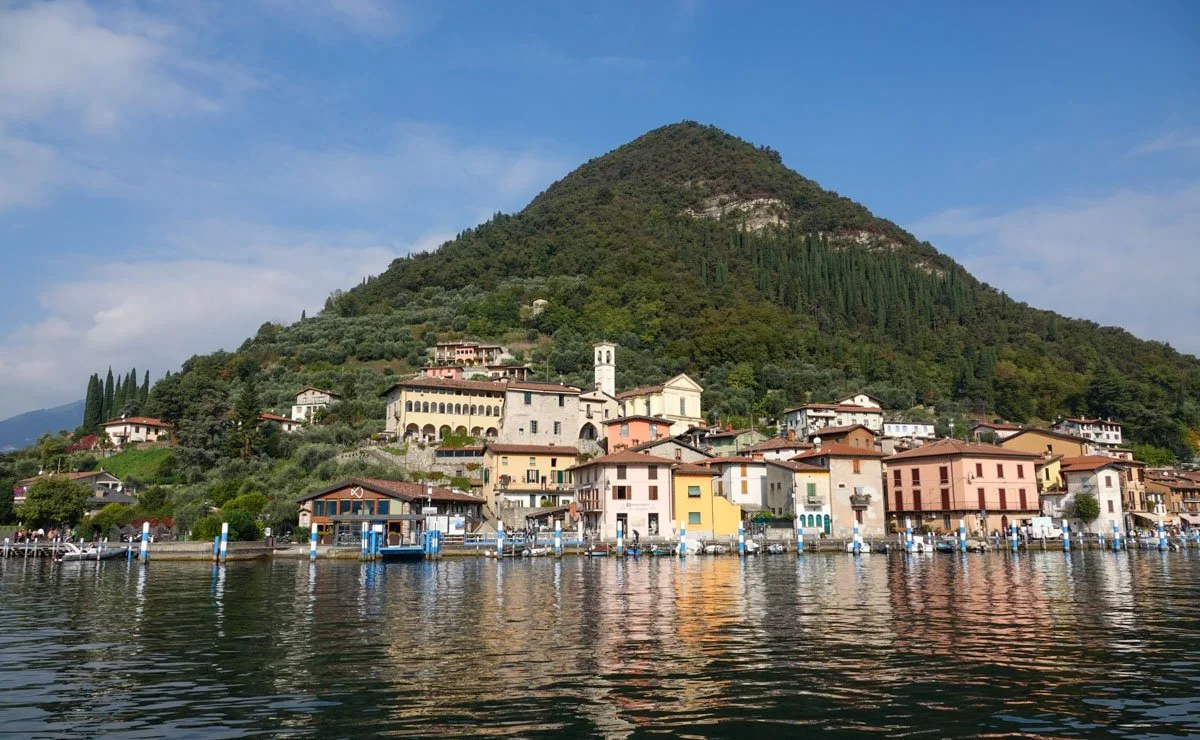
     The largest island in the lake is Monte Isola. It rises steeply from the lake and is the largest inhabited lake island in Europe. It is made up of small fishing villages and has chestnut woods and olive groves on its slopes. It is connected to the mainland and various other towns by ferries.

     The third lake island we passed by was San Paolo Island. It too has a long history as some Friars erected a monastery there around 1490. I'm not sure about the appeal of these islands to friars and nuns but so be it.

     Today, our guide said that the island has just one home. The island is owned by the Beretta family, famous as one of the world's oldest active firearm manufacturing companies. 

     We ended our lake boat tour by getting off on San Paolo Island. Below is a better photo of the whole island. It was quite a place to visit.

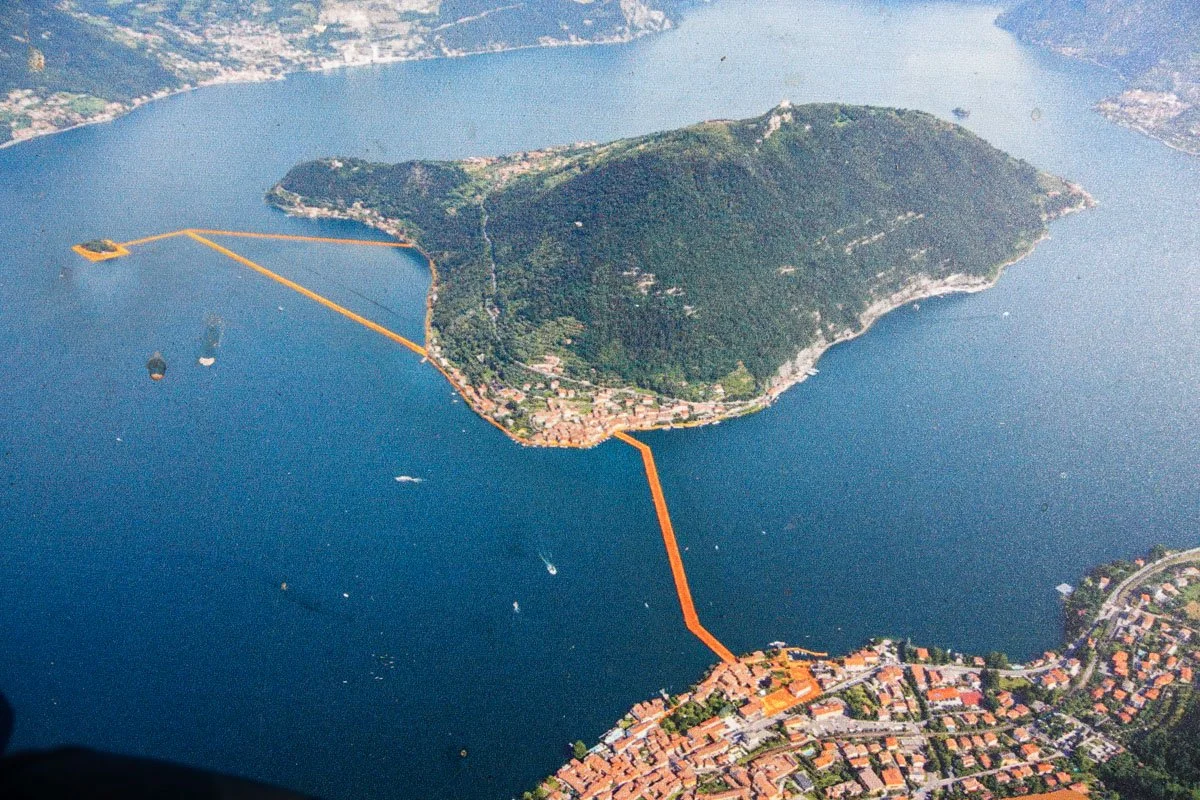
     One highlight of the last two islands, and two photos above was that they were part of a Christo art project. Christo created "The Floating Piers" art project here between June 18 and July 3, 2016. It consisted of floating polythene cubes covered in a saffron colored fabric. The project went from the village of Sulzano to San Paolo and Monte Isola. 

     Our guide said that Christo paid Italy, or this area of Italy, $30 million euros for fees to do it, but only made back $18 million euros. The locals considered it a huge success. You can see a photo of a photo below. I understand that millions of people visited it and walked around the lake on it.

Monte Isola Island

     We exited our Lake Iseo tour boat at Monte Isola Island. It's the largest island in Lake Iseo and the largest inhabited lake island in Europe. The island rises steeply from the lake and is almost 2,000 feet high. The island has 1,600 residents and it has grade schools but no high school. We passed a villa that was built in the 1400's that looked very much like our California "mission" architecture. 

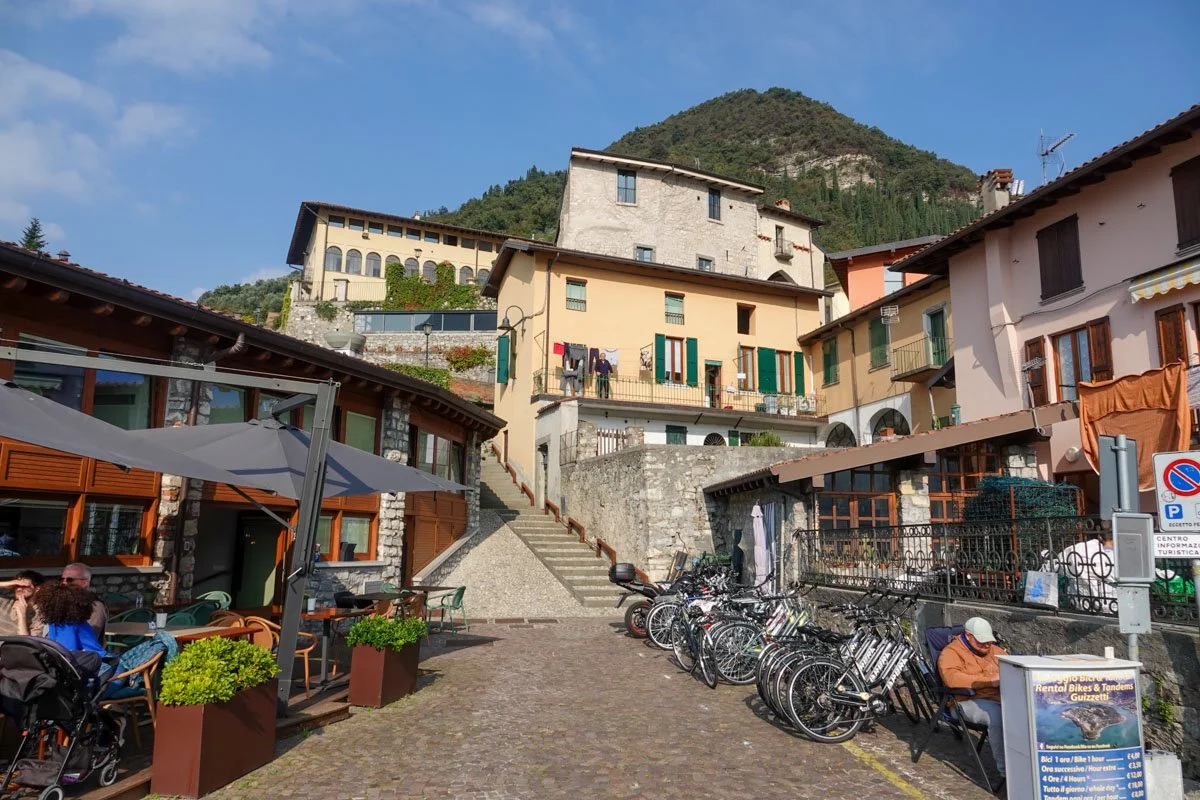
     The island is still a fishing village, but we could see that tourism is encroaching, like by the number of bike rentals available. The island has hiking trails all around, we were told, but my guess is that they are pretty steep trails.

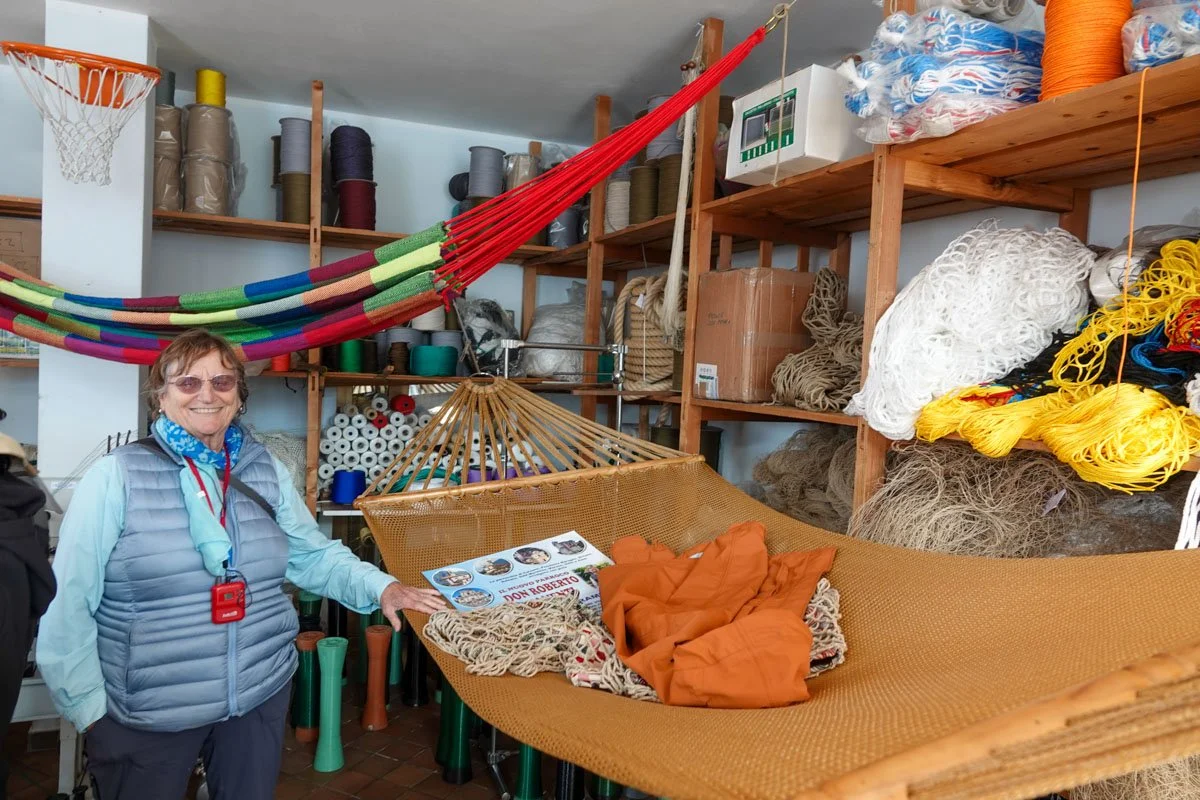
     We visited a "net builder" store. This is a business that used to solely make fishing nets. Fishing, however, has declined greatly as an industry. The net builders didn't want to quit their business, so they just started making any kind of nets that anyone was willing to purchase. You can see some of their products in their store. Also, they have made goal nets for the World Cup games several times. The owner said that he didn't want to make nets for the World Cup any longer because each time he has done it, Italy has done poorly in the football games. On another side note, when the Christo art project was here in 2016, this net maker said that he did 4 years-worth of business in two weeks. 

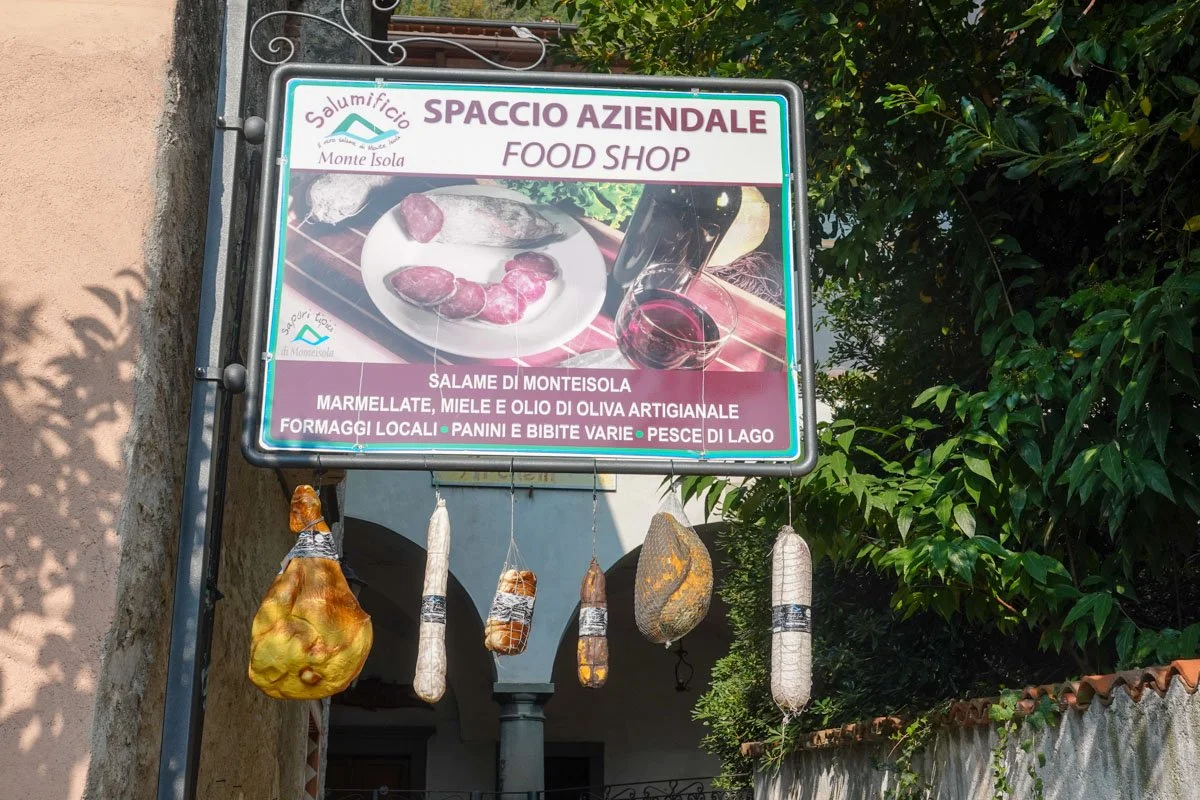
     We saw many other businesses but the ones that impressed me the most were the ones that dealt with old Italian foods, like the one below. They had plenty of products hanging out for inspection.

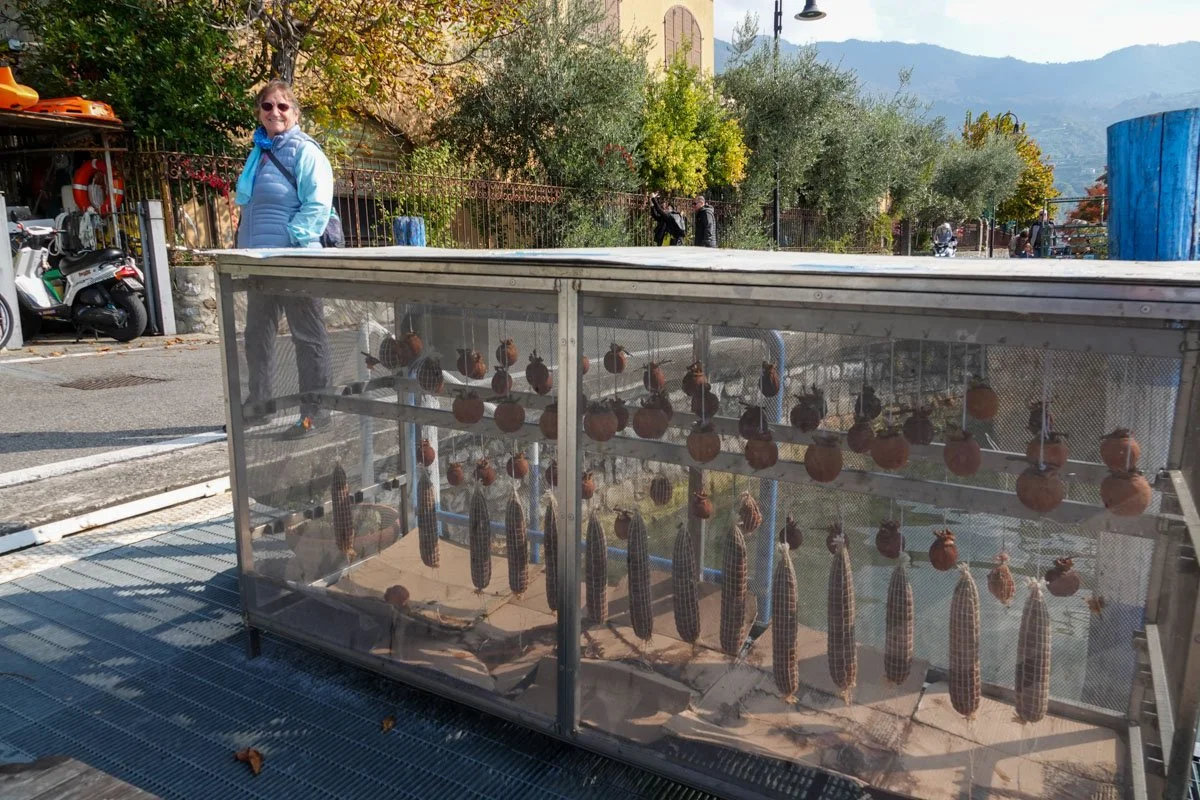
     It was also impressive just walking along the docks. On one boat dock, I found a screened box where someone was drying meats and persimmons. I don't know if this was a commercial operation or just someone who lived on the island and needed more sunlight.

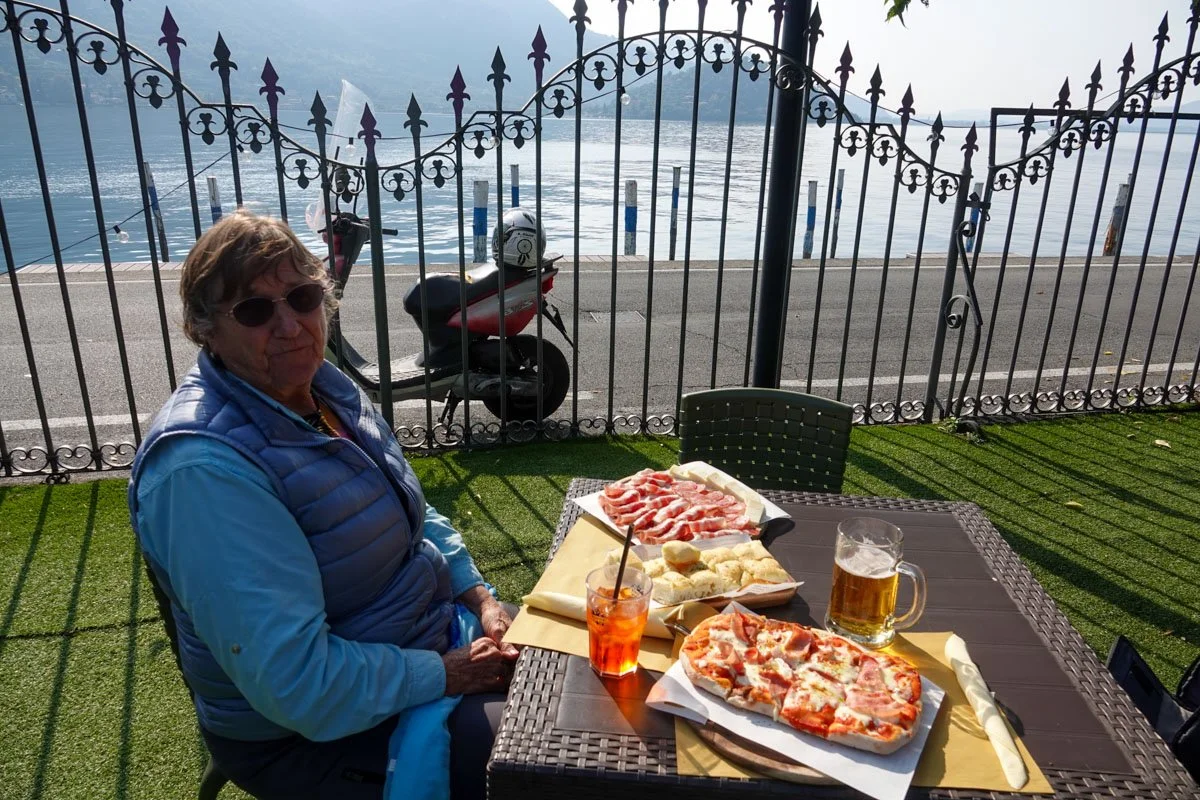
     Vicky and I decided to get something to eat to tide us over after all our walking. We stopped at a lakeside restaurant called the Love Garden. We thought that we hadn't ordered very much. We ordered a pizza, some focaccia bread, meats and cheeses. Our expectations were that the meats, cheese, and Focaccia bread were smaller side dishes. I had a beer and Vicky had an Aperol spritz. We did our best with this snack.
Manestrini Oil Mill

     The Manestrini Oil Mill was one stop on our drive from Lake Iseo to Trento. It was founded by Frantoio Manestrini in 1960. Their mill is on the ruins of a 14th century Franciscan monastery, where they cultivated olive trees and produced oil centuries ago. Today, his daughter Nicoletta leads the company. Nicoletta gave us a tour of the property and lots of information about their business, olives, and more.

     She told us that Italy has 500 varieties of olives. Her mill harvests 3,000 olive trees including four different varieties of olives. They also have a variety of antique olive producing equipment that she showed us.  

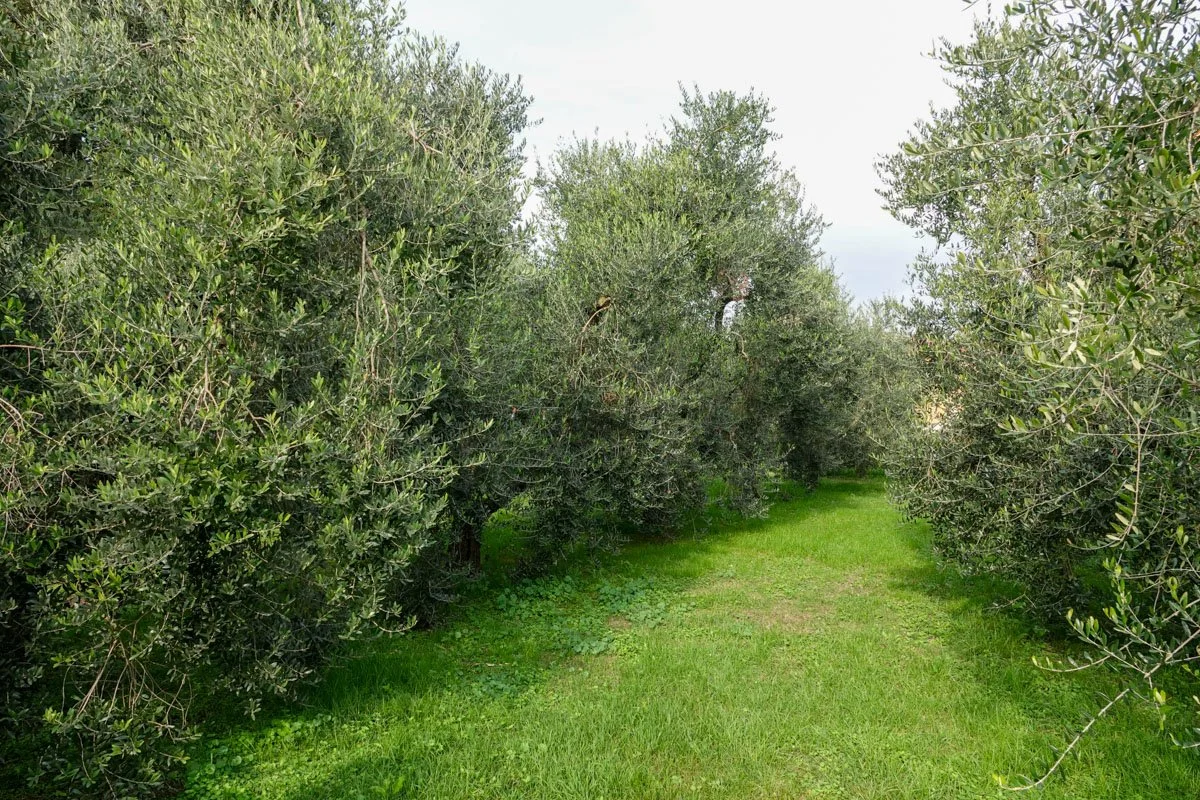
     Their mill has olive groves surrounding it and we got out into the olive trees, which were large and healthy looking.

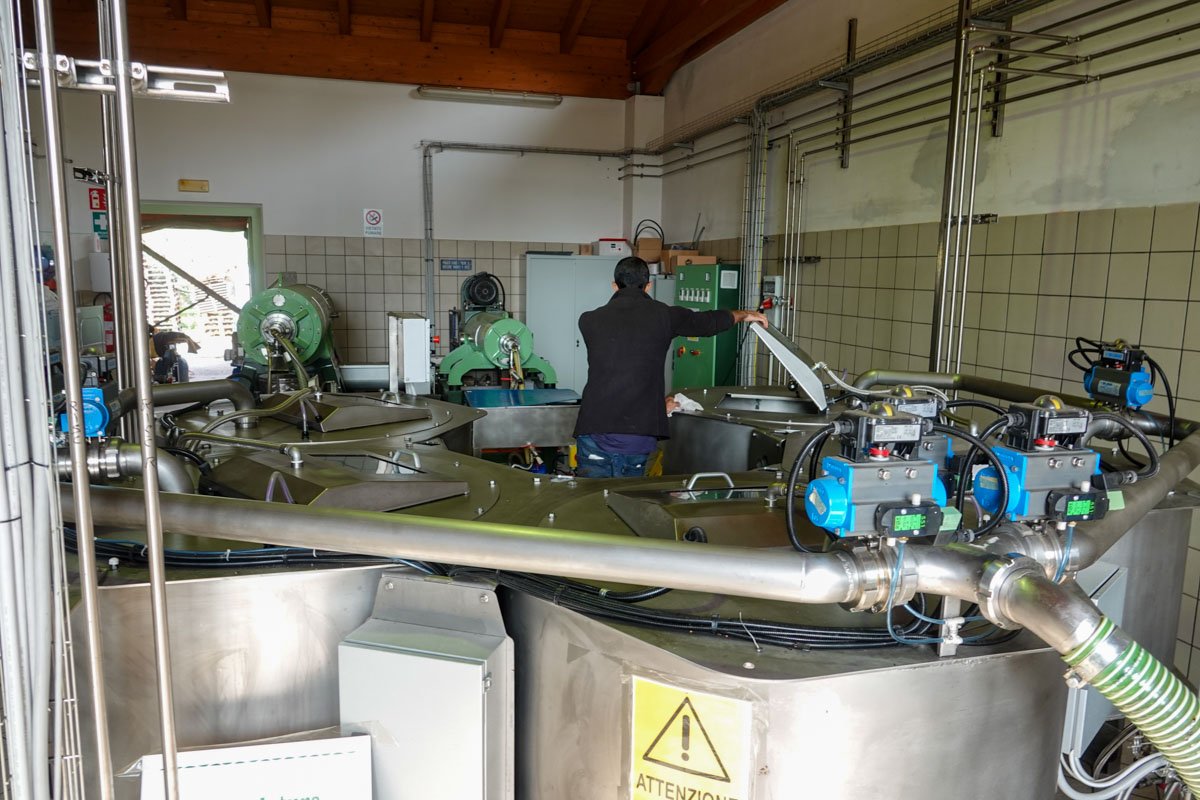
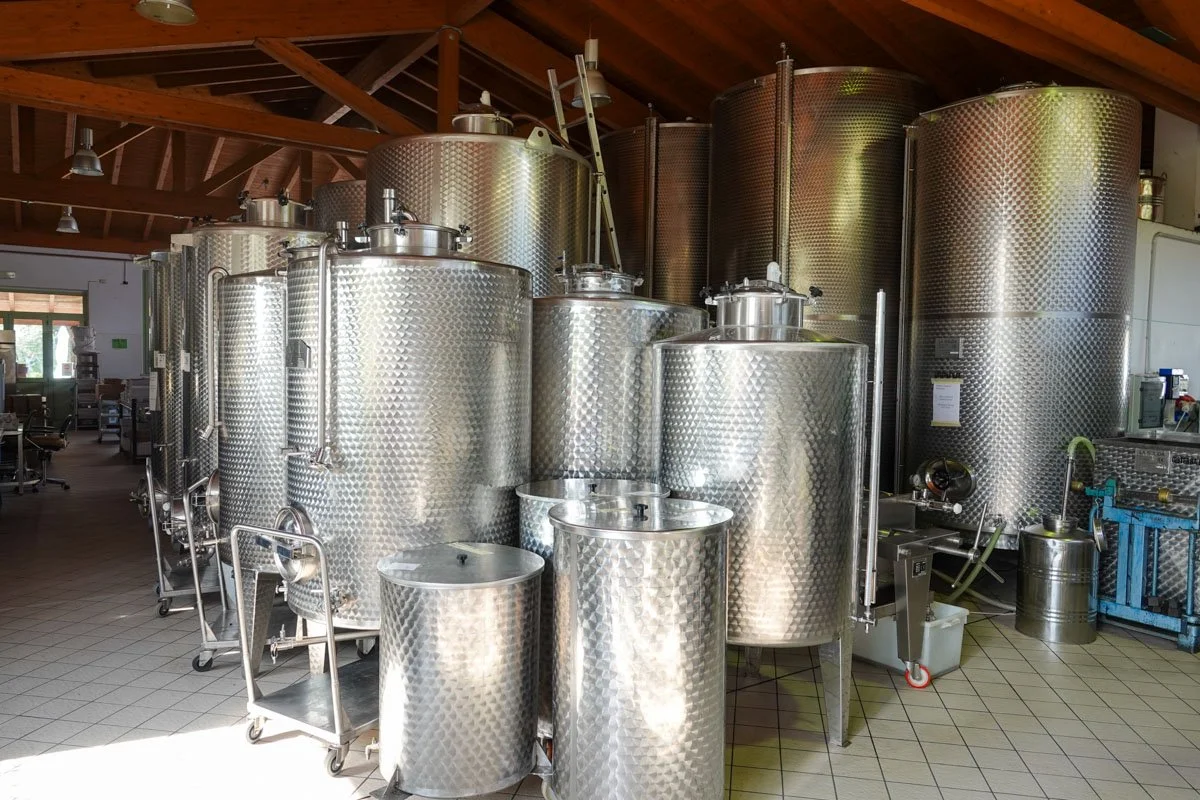
     We inspected all their equipment, both outside and inside their mill. The current olive processing equipment looks to be very high-tech.
In the second photo, you might also notice that parts of the operation appeared very similar to wine-making.

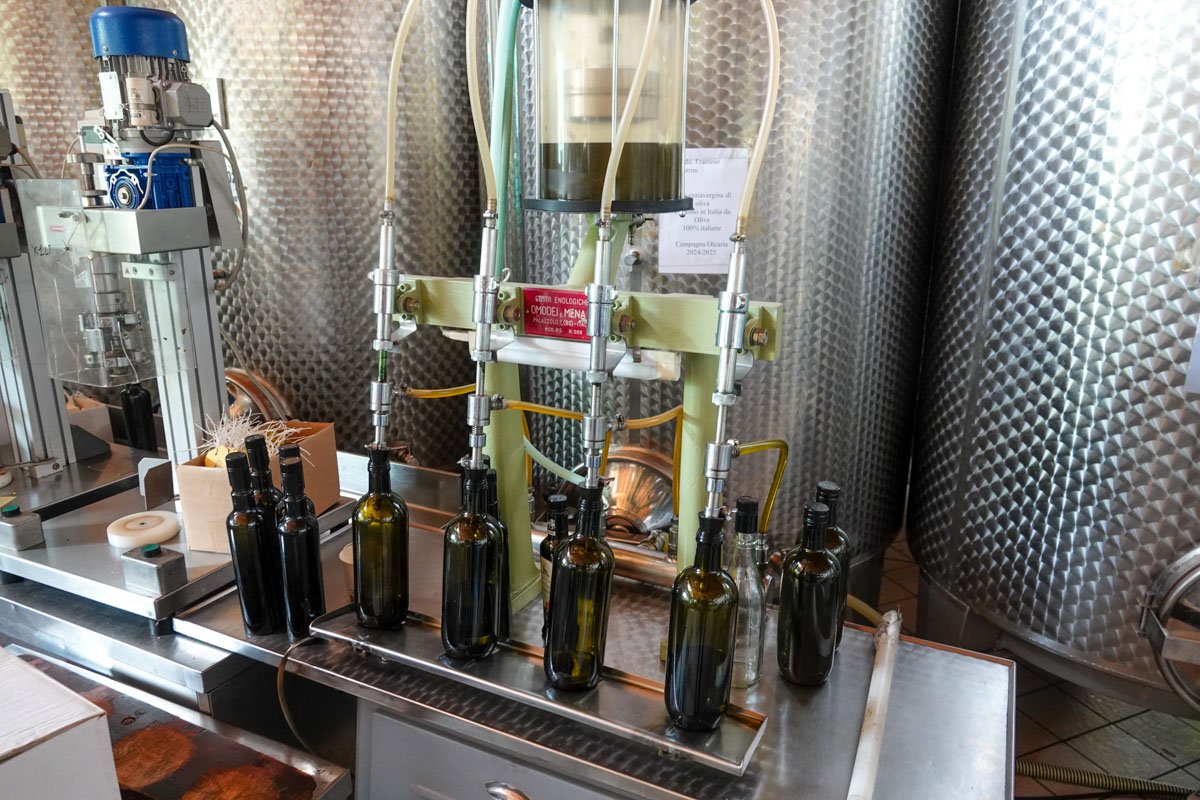
     The bottling end of the operation definitely looked smaller and more hands on than wine.

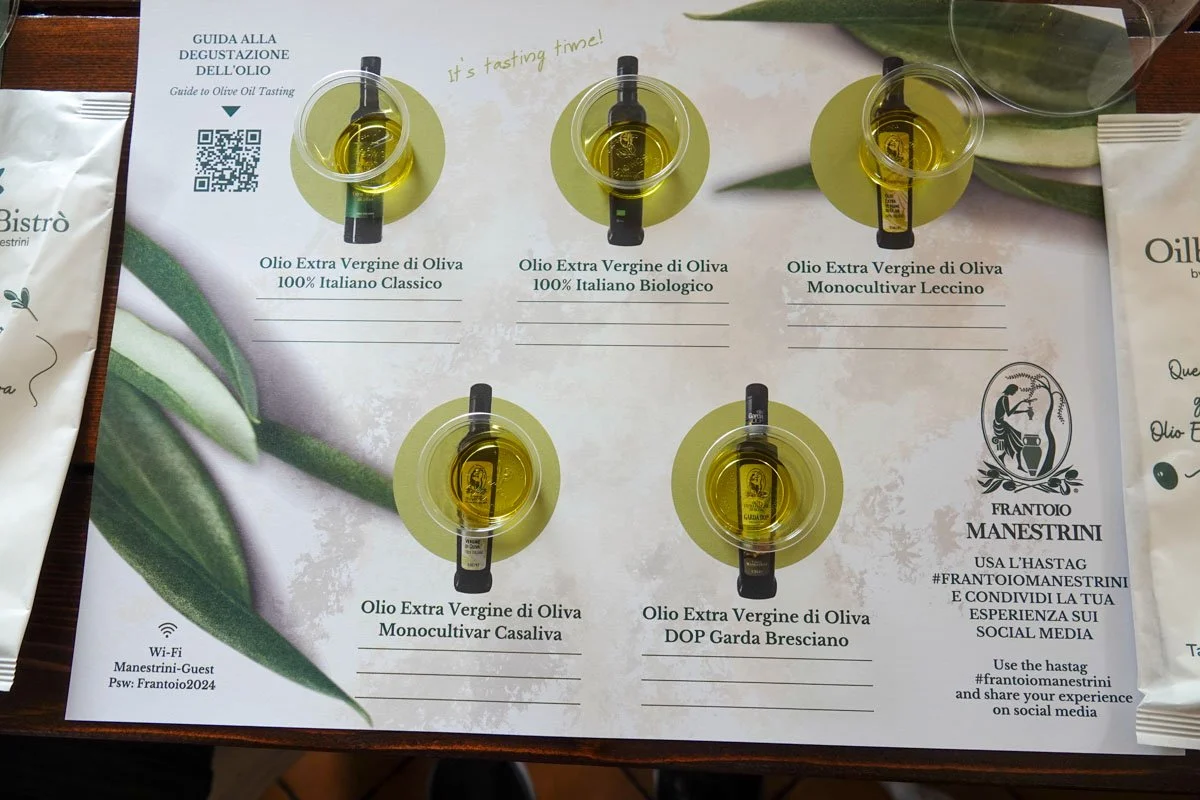
     We had an olive oil tasting with five varieties of olive oil.  

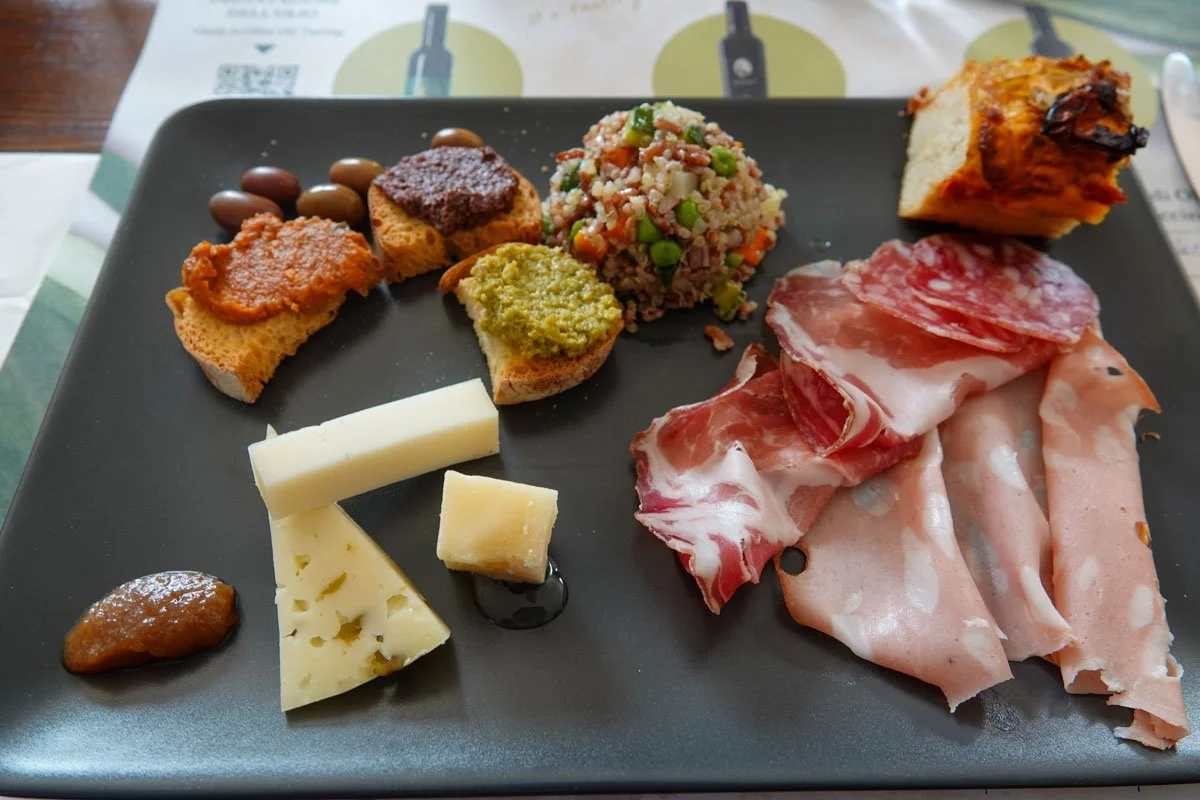
     I can't remember but I'm not sure we made any stops on this trip that didn't include being served some food. The olive mill was no exception. We were served olive tapenade, olive pastes on toast, cured meats, cheeses, and jam. 

Trento

     Trento was our next stopping point in northern Italy. It has a history from ancient times through the Romans and then was part of Austria and the Austria-Hungarian Empire until the end of World War One. It was annexed by Italy in 1919. Our local Trento guide said Trento used to be Italian-speaking Hungarians before 1918 when they became Italian-speaking Italians. 

     The guide said that in 1916 when the first world war started here, 600 men from Trento went to fight for Italy while 60,000 men went to fight for Hungary. It was at that point that Mussolini started to gain influence here though he didn't gain power until 1922 and not officially until 1925.

     Our guide said that Trento might be most famous for the Council of Trento, held between 1545 and 1563. It was the 19th ecumenical council of the Roman Catholic Church and was prompted by the Protestant Reformation. The Council of Trento revised Catholicism to defeat Protestantism. It was the last time that a Catholic ecumenical council was held outside of the city of Rome. And while it was unsuccessful at defeating Protestantism, it did manage to issue key statements and clarifications of the Church's doctrines and teachings, including scripture, biblical canon, sacred traditions, original sin, salvation, the sacraments, the Mass, the veneration of saints and much more. The Council met for 25 sessions over 18 years with Pope Paul III, who convoked the council, overseeing the first eight sessions. Two other popes oversaw the later sessions. 

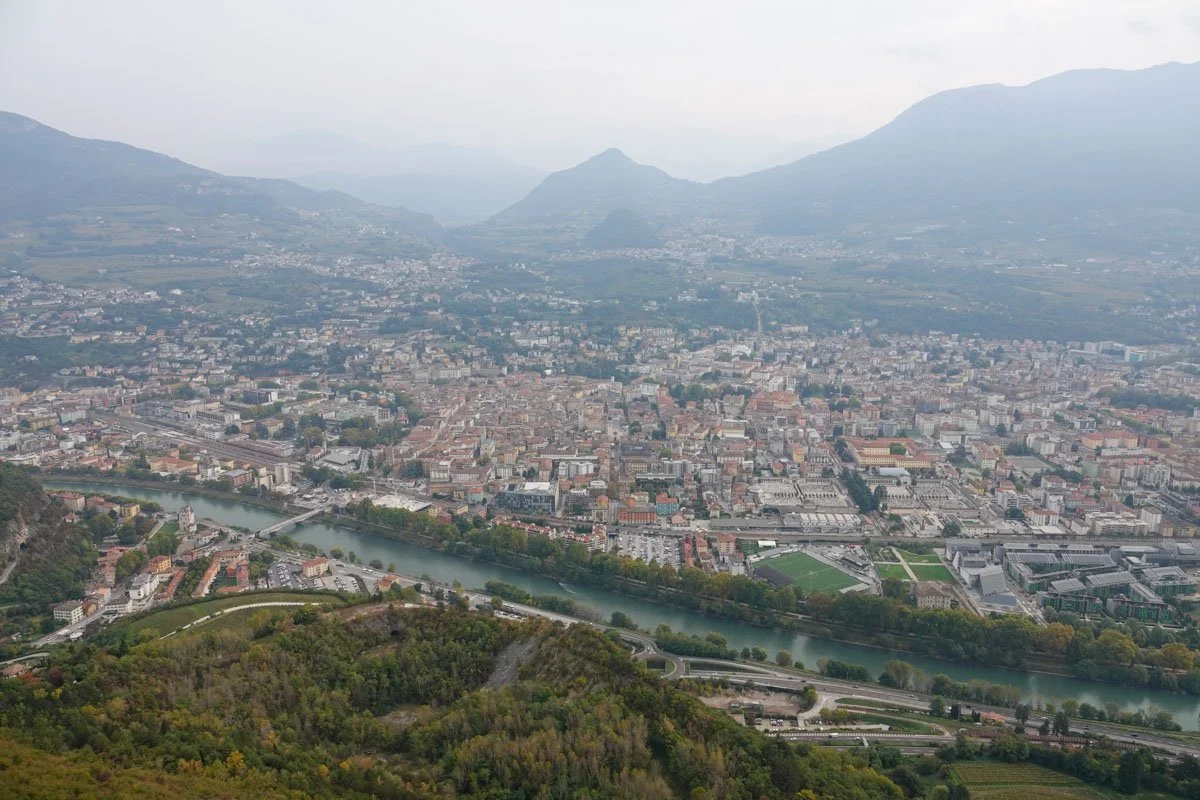
     In our first full afternoon, we walked across town and the Adige River and took a funicular ride up to Sardagna which is across the river and very high up the mountain. It was from there that I took the following photo of Trento. We got the funicular right across the river, next to the bridge.

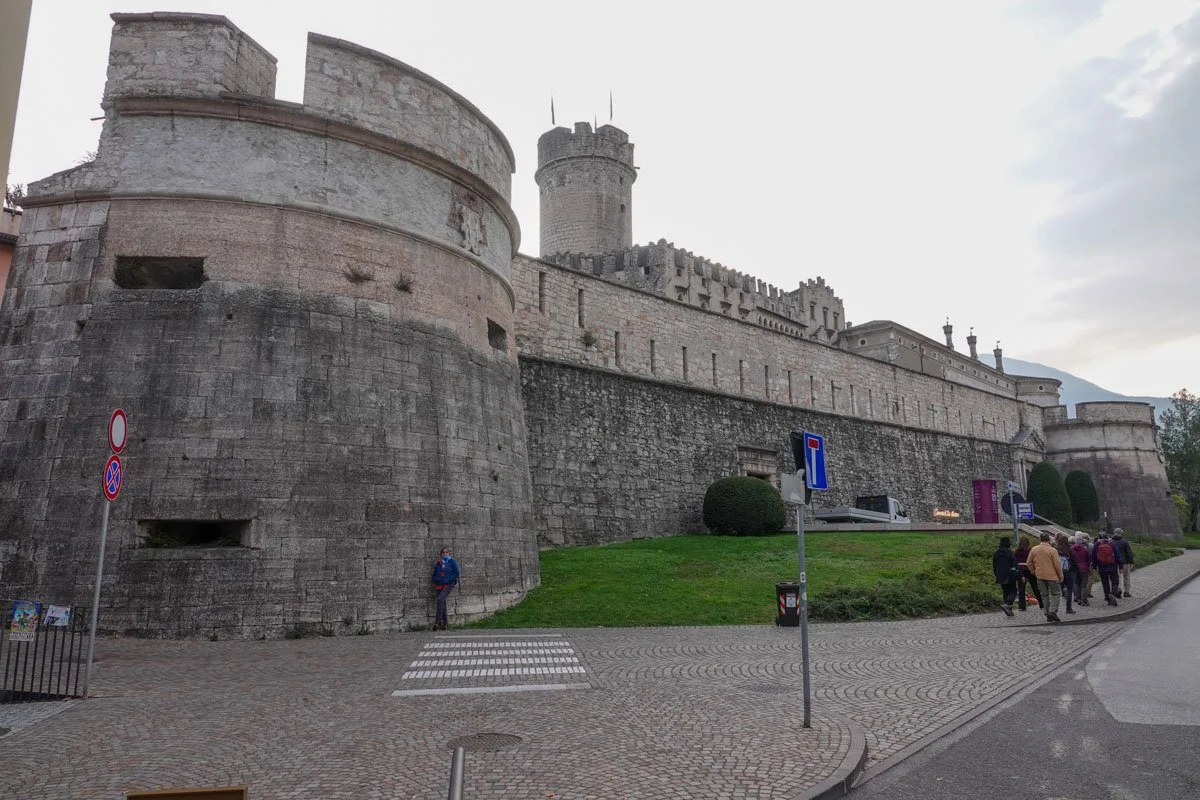
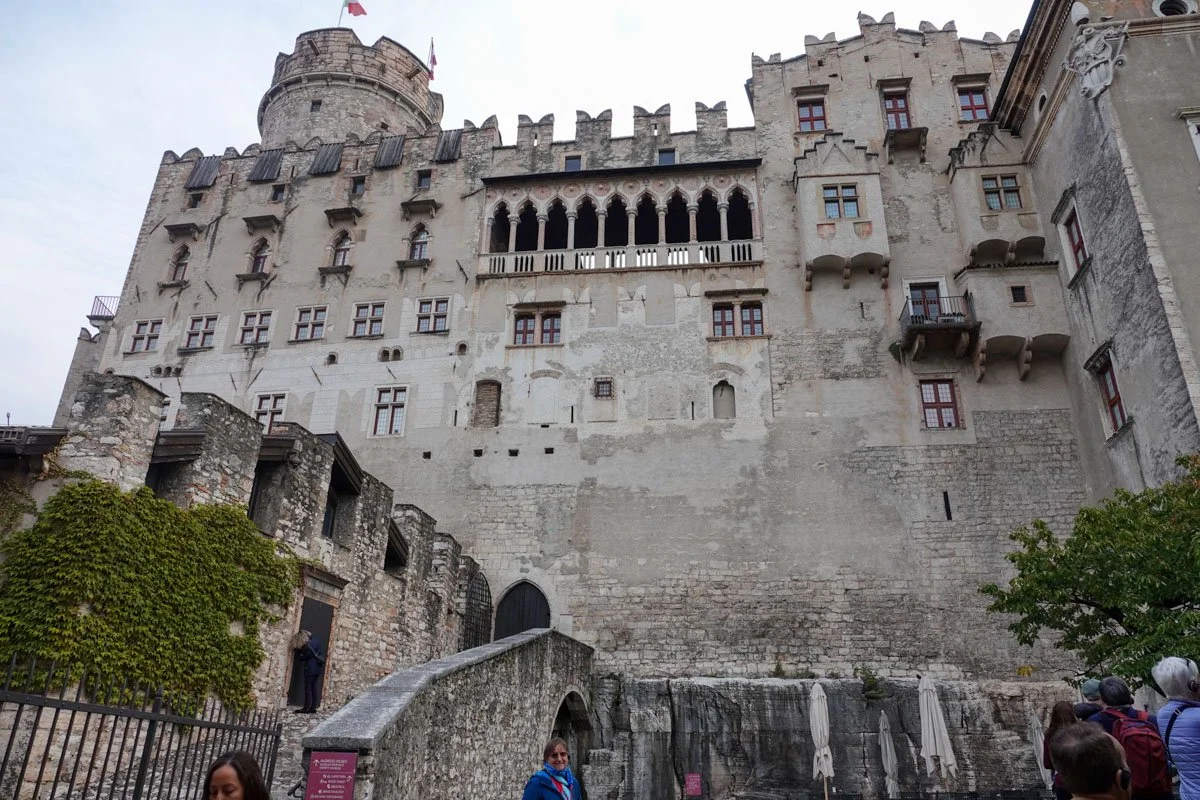
     Our first stop on our walking Trento city tour was the Buonconsiglio Castle. Our guide said that "castle" just means "fortified place", much like an army base. This castle was the home of the Prince Bishop of Trento. He was appointed by the German Emperor. Upon his death, the emperor would appoint another prince bishop. Prince Bishops started their reign in the 13th century. Over the years, the castle had many design changes. It is still very impressive today with incredible stonework and decorations, inner courtyards, beautiful frescoes, and wall paintings. It was a lot to consider, but I'll include two photos just to give an idea of the size and scope of it. You can see Vicky in front of the round tower on the left side.

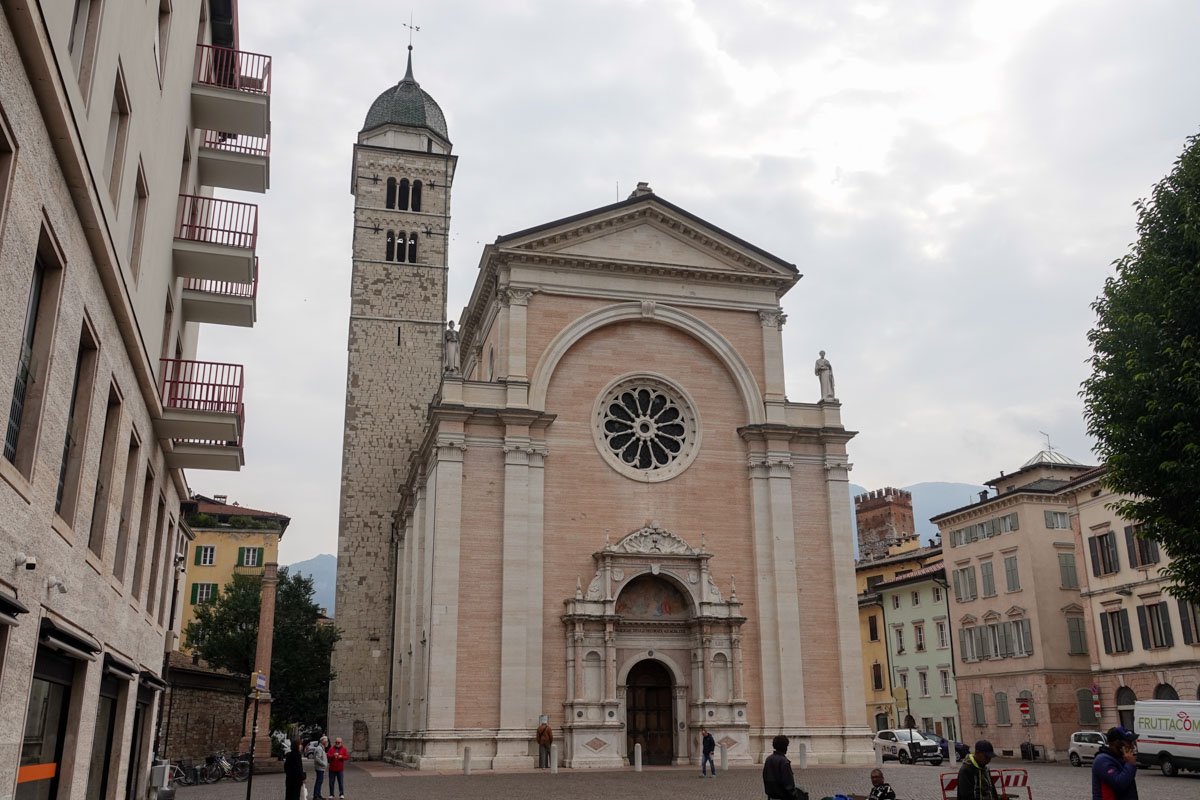
     Next is the Chiesa di Santa Maria Maggiore. It's not as impressive as the Trento Cathedral in town but a beautiful building. It has lots of stucco details, many decorations, notable Baroque altars, and a large bell tower.

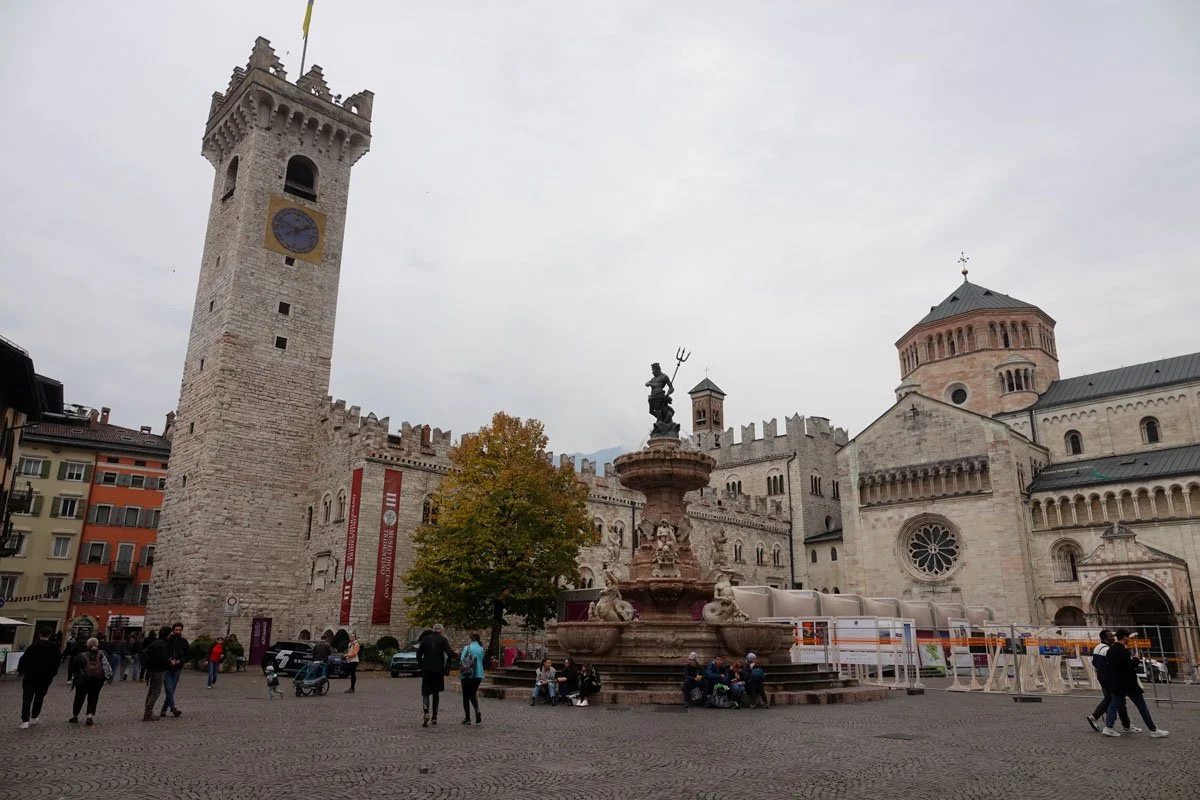
     Next is the Cathedral Plaza. It is one of the main squares of Trento. The Trento Cathedral is on the right side. It was originally constructed in the 11th century. It's the main religious structure in Trento. It has been renovated and remodeled many times over the years. Many Renaissance frescoes were added to the interior in the 14th century. The circular rose window and decorative arched doorway are notable as are the two large gothic towers, one with an onion dome. The Fountain of Neptune is also in the square as are other significant buildings.

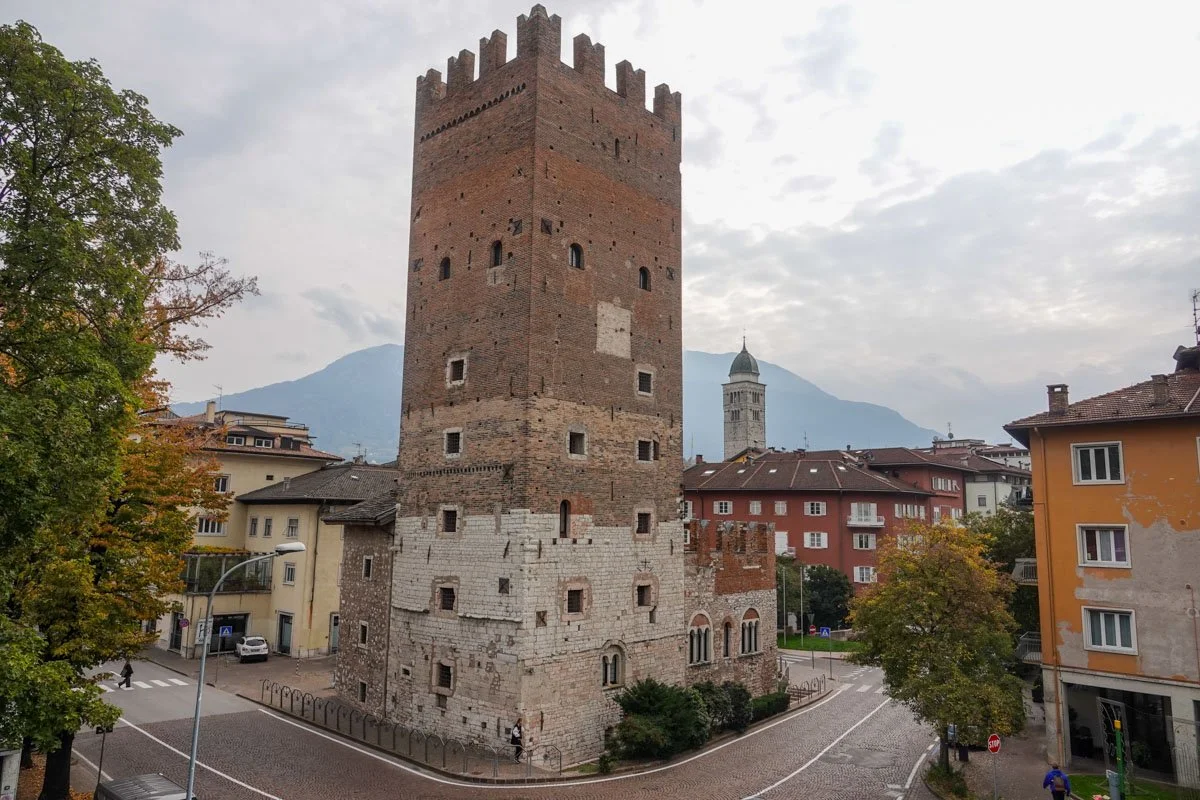
     On our walk to the funicular to go to Sardagna, we found what had once been a corner of the old city wall. Everything but the corner tower is long gone but the tower still stands as a tribute to earlier times. I thought the tower looked like it had been shot at a few time.

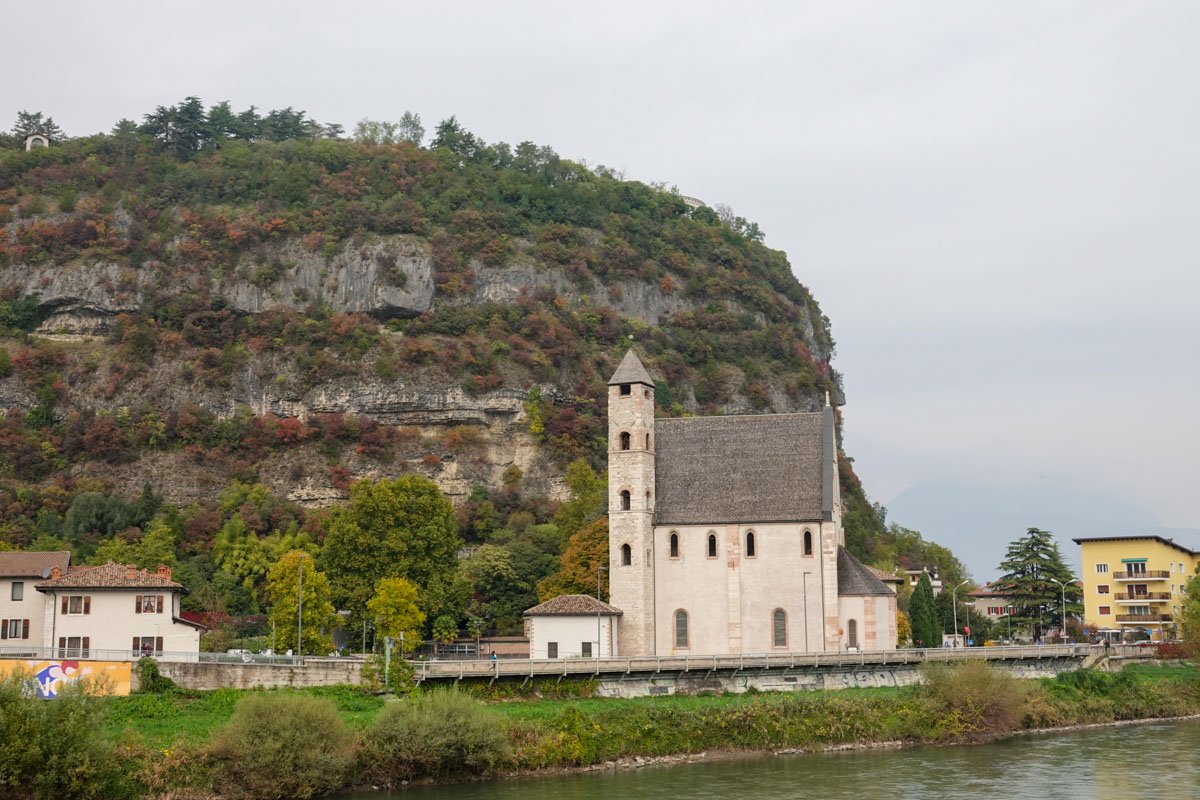
     This next photo is right across the River Adige from the old town corner tower. The mountains in and around the city really add a lot to the look and feel of the city. And of course, churches seem to be everywhere.

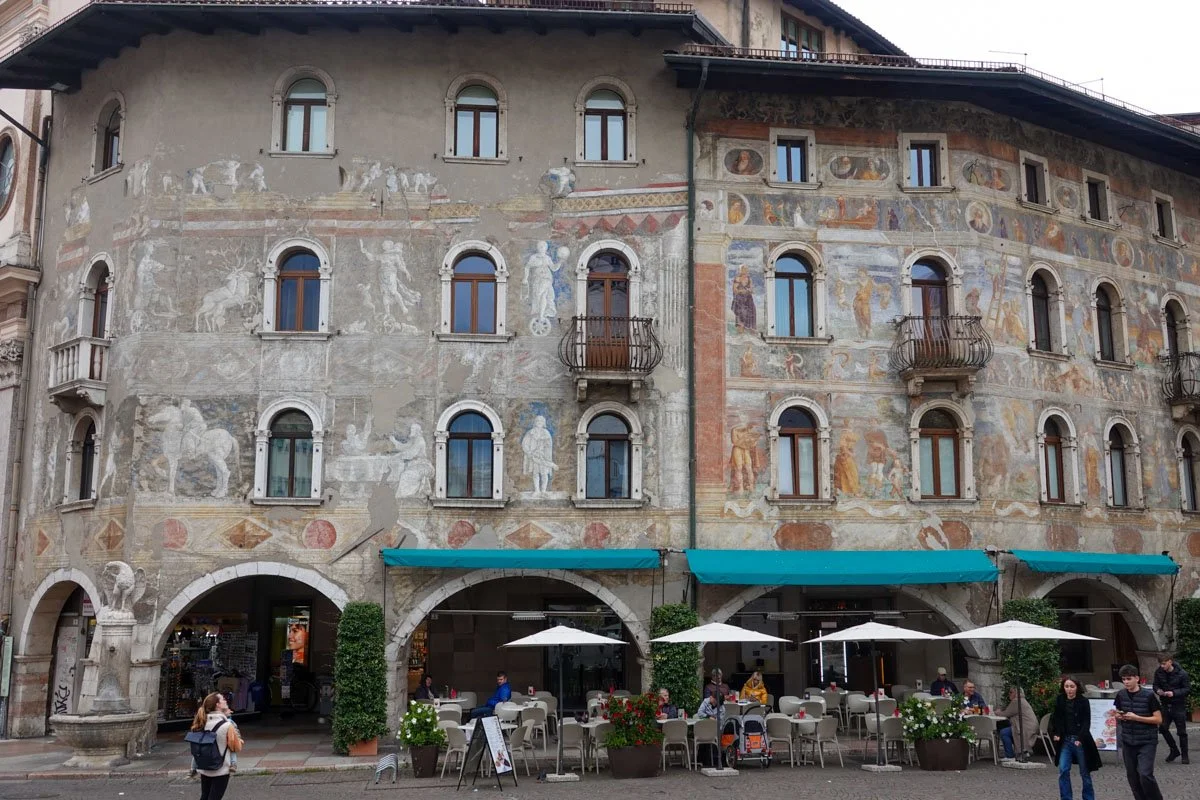
     This is an old building in the Cathedral Plaza or Square and just across from the Fountain of Neptune. The frescoes on the exterior of the building are really eye-catching and remarkable.

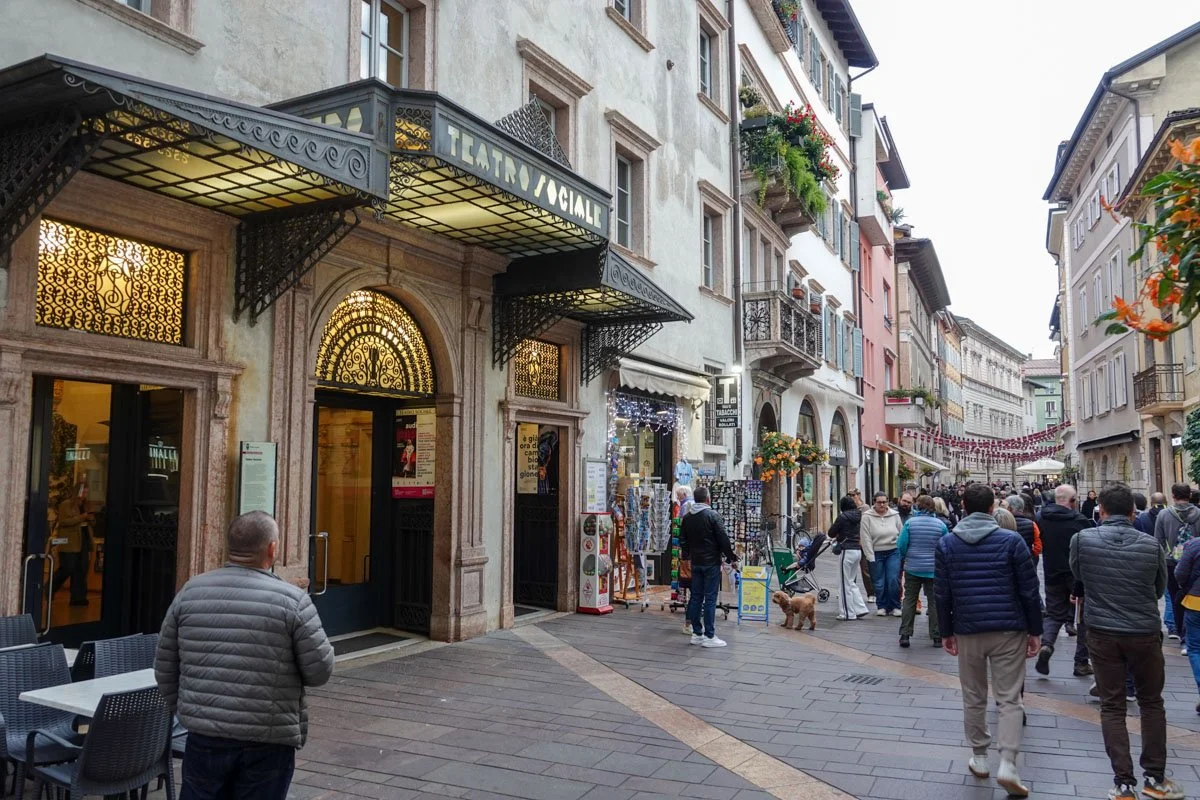
     We managed to walk many of the shopping streets as well that probably aren't so famous but they were still very busy.

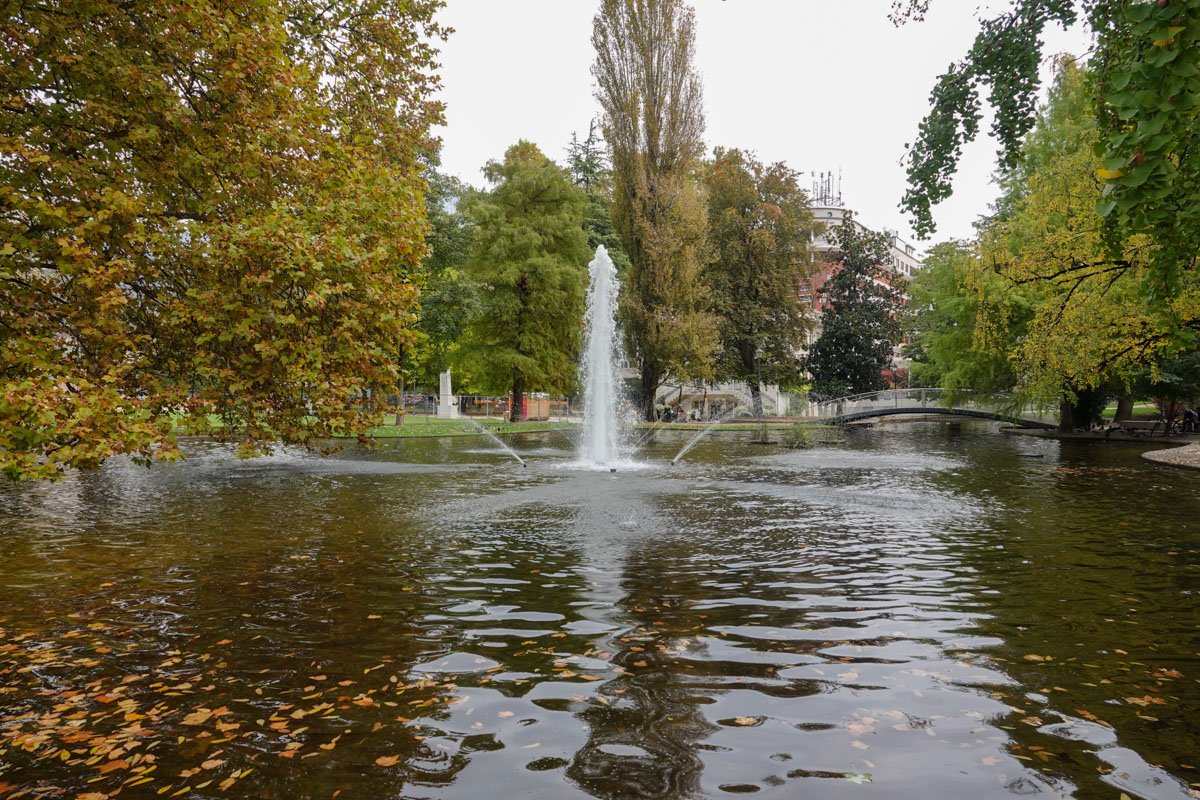
     We also found parks and places within the city to be off by ourselves, more or less, and spend time relaxing. This was near our hotel.

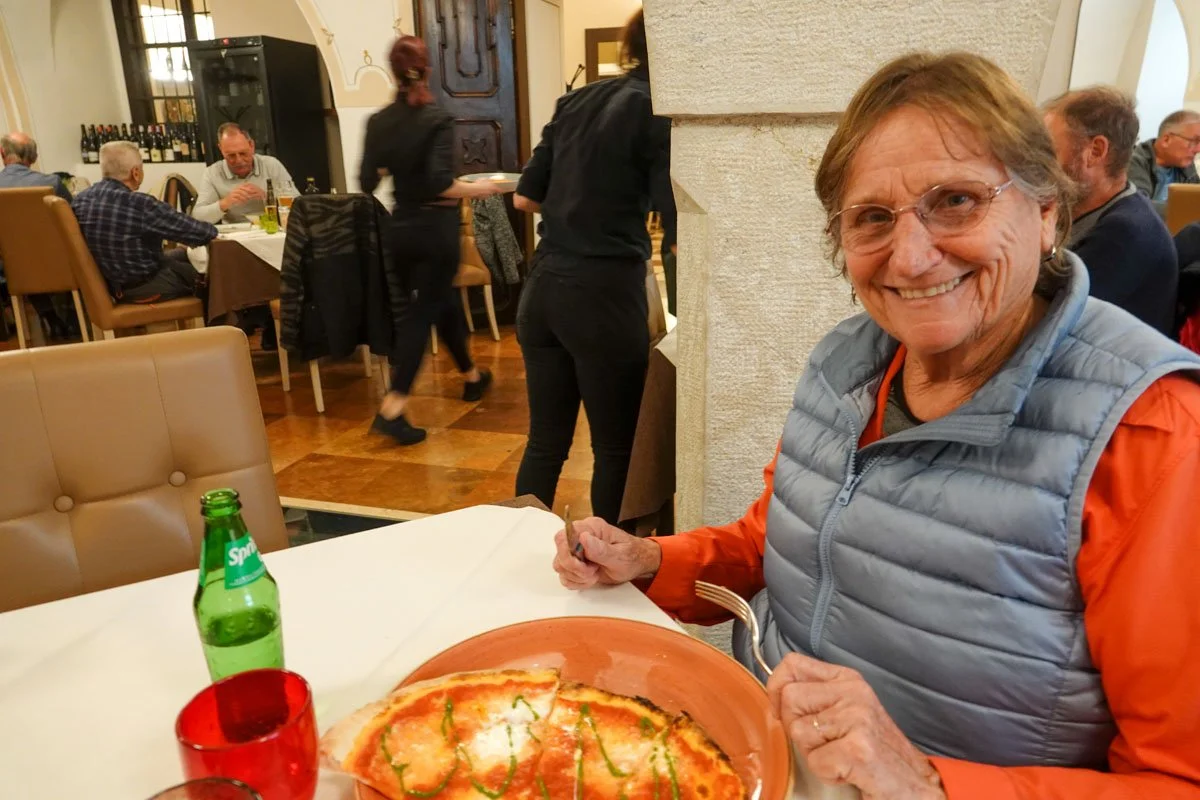
     We got hungry and decided to find a quiet place for lunch. We saw a small sign at the end of a long, narrow alley in Old Town. We followed the alley, with no one else in it, until we found the Antico Pozzo Restaurant. We opened the door and wow, the place was packed with people and they all appeared to be locals. We ordered a pesto pizza. It was very thin and very good, but needed more pesto.
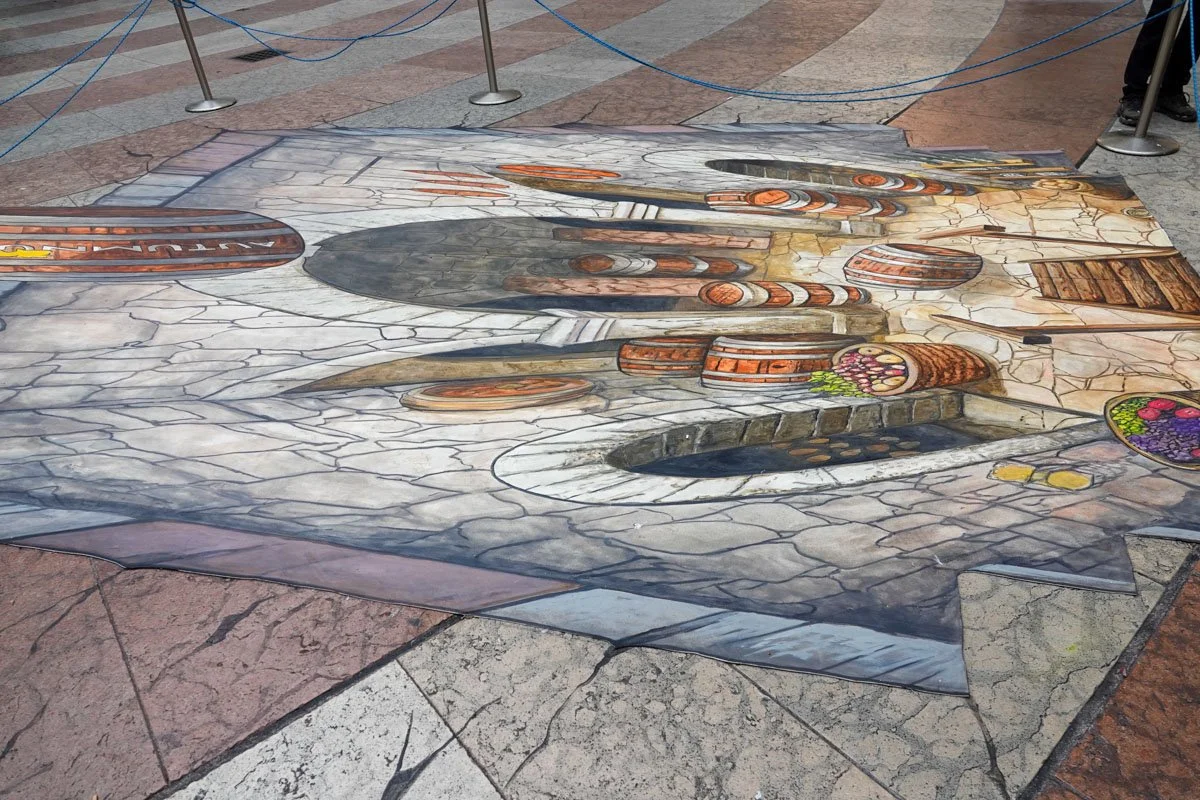
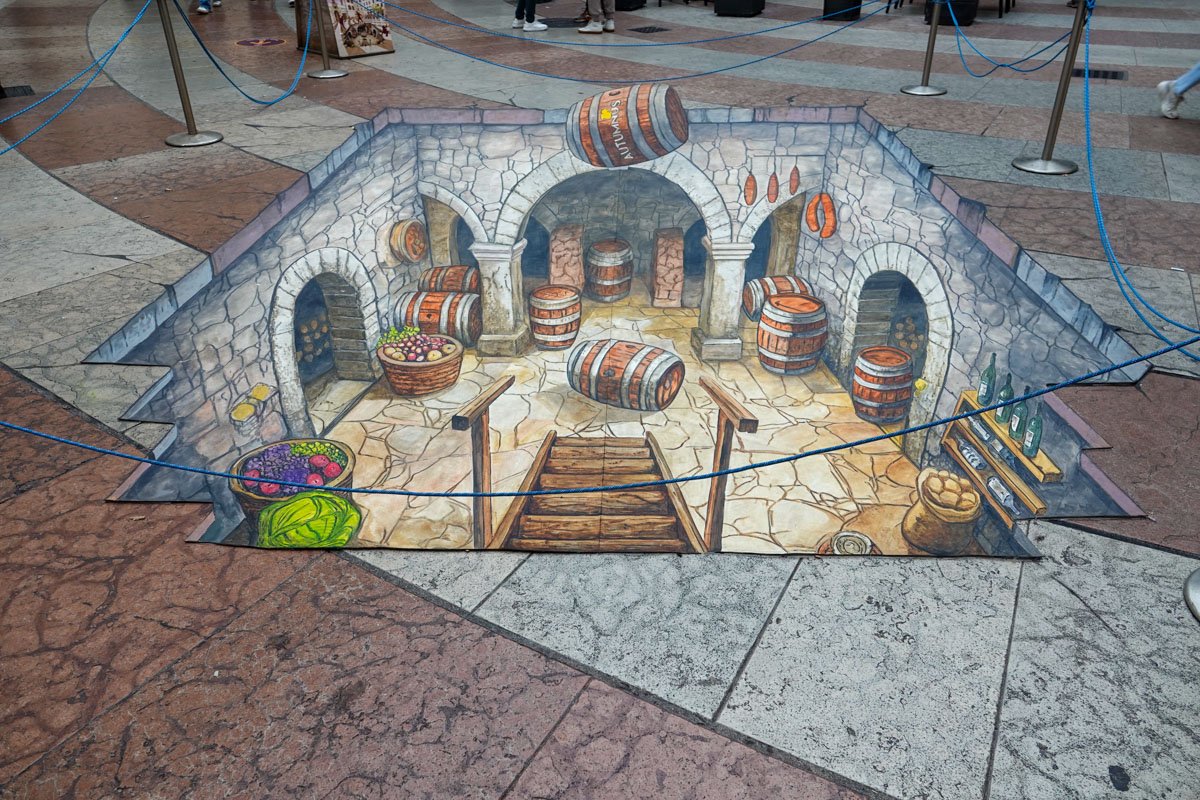
     We were in another plaza or square when we came to a roped-off area in the center of the plaza. You can see what we saw in the first photo below. Then, we walked around to one end of the area for a different view of the same section of the square. It was all completely flat.

Ristorante Boivin

     We took a bus from Trento to nearby Levico which is about 14 miles away and is a small town of about 8,000 people. We went to the Ristorante Boivin. The restaurant is in a 17th century building. Our guide said that this was a Michelin star restaurant in 2019. The restaurant is in the town center and offers an original mix of Trento cuisine but with influences from around the world. 

     We came to this restaurant for a cooking lesson. The owner-chef is Riccardo Bosco, and he was supposed to give us the cooking lesson. He was away on this night, however, to receive an award, so we got substitute chefs to help us prepare dinner. They were very good as well.

     We prepared our dessert first which was apple-raisin strudel. Our dessert chef said that strudel probably originated in China but Italy has made it their own.

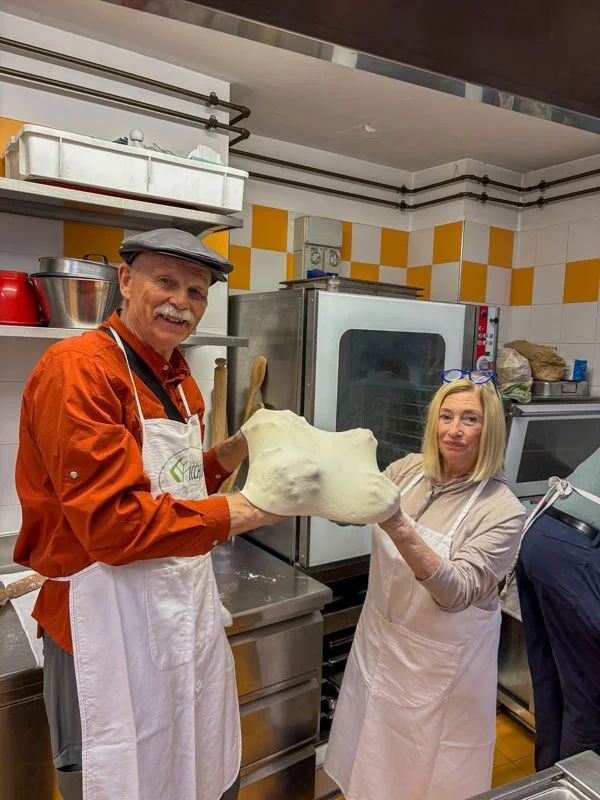
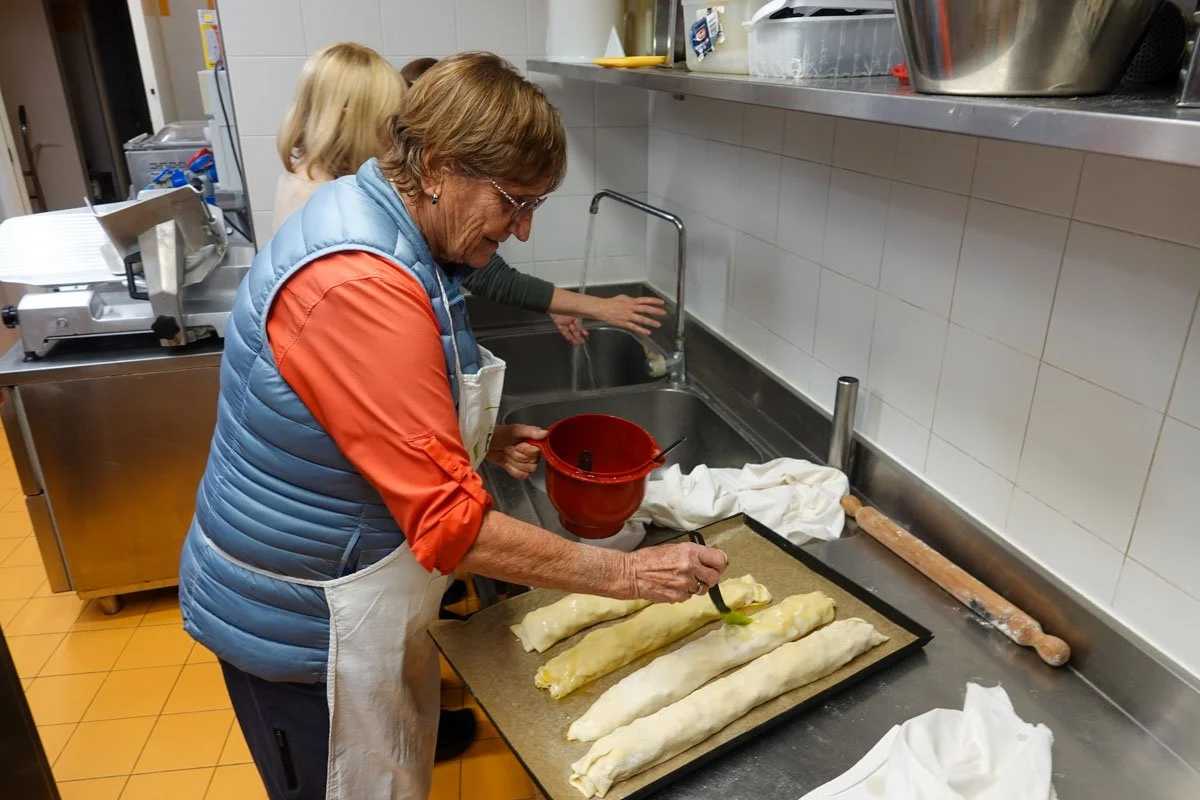
     The dough was first rolled out using rolling pins but that didn't get it thin enough. We had to then toss it and stretch it some more to get the correct thickness - or thinness. It was very elastic dough. Even my big fingers didn't cause a problem.

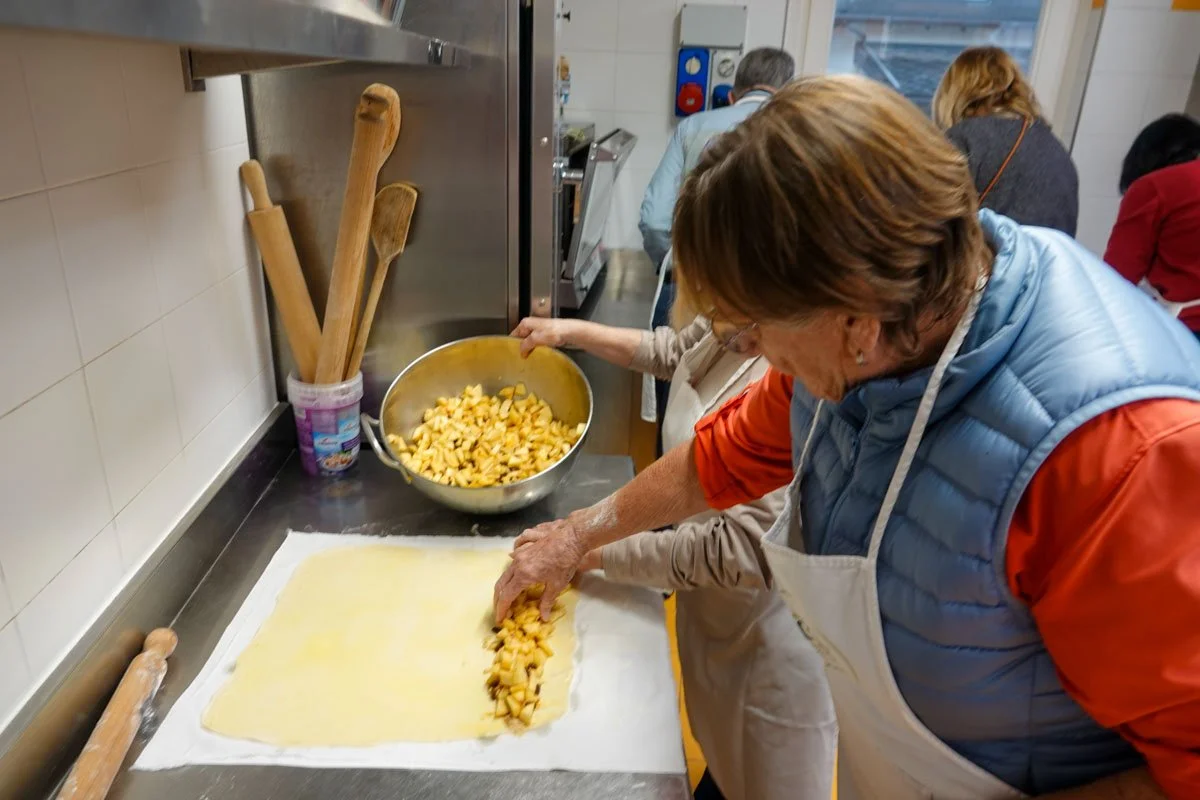
     We had to cut it, stuff it, roll it, baste it, and bake it. I'll just show two photos of the work on our strudel.

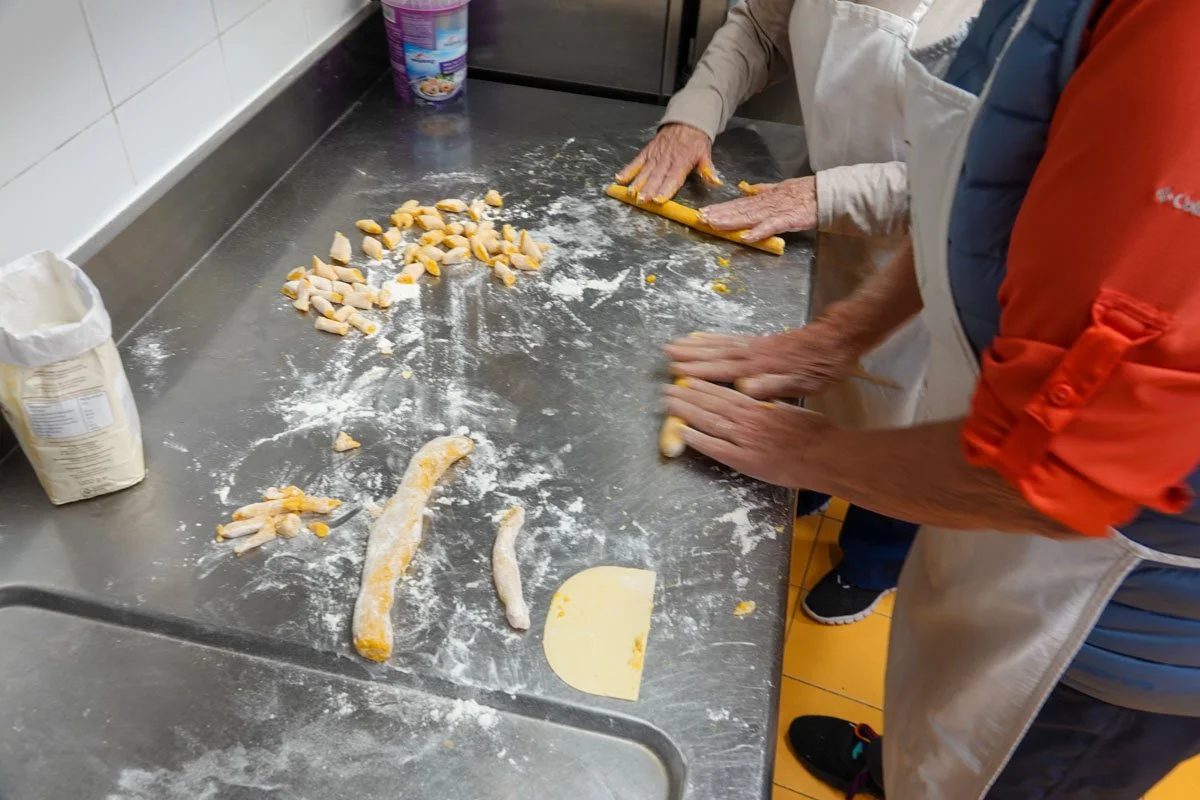
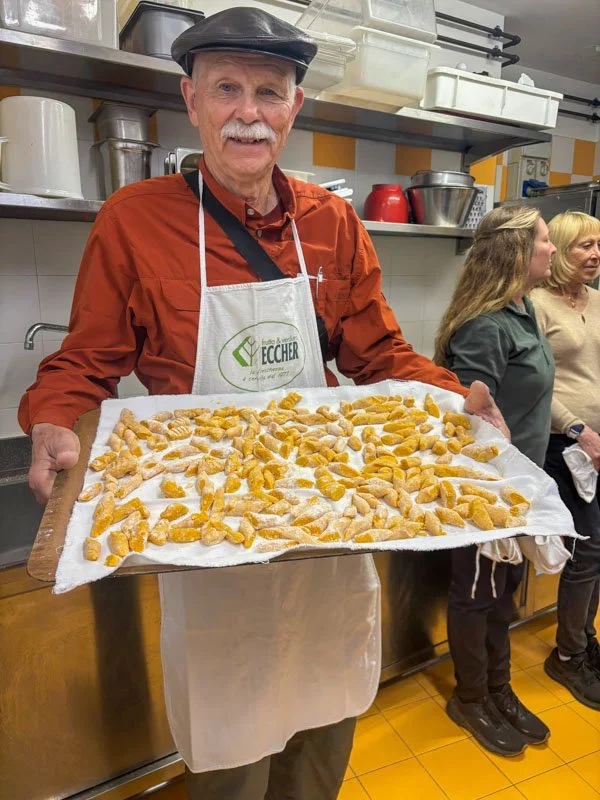
     Next, we got another chef, the owner's son, and we made pumpkin gnocchi with pumpkin, flour, eggs, and a little milk. First you can see Vicky working on it, then me with some of our table's finished product, ready for cooking. I found rolling it with "light" fingers to be problematic for me.

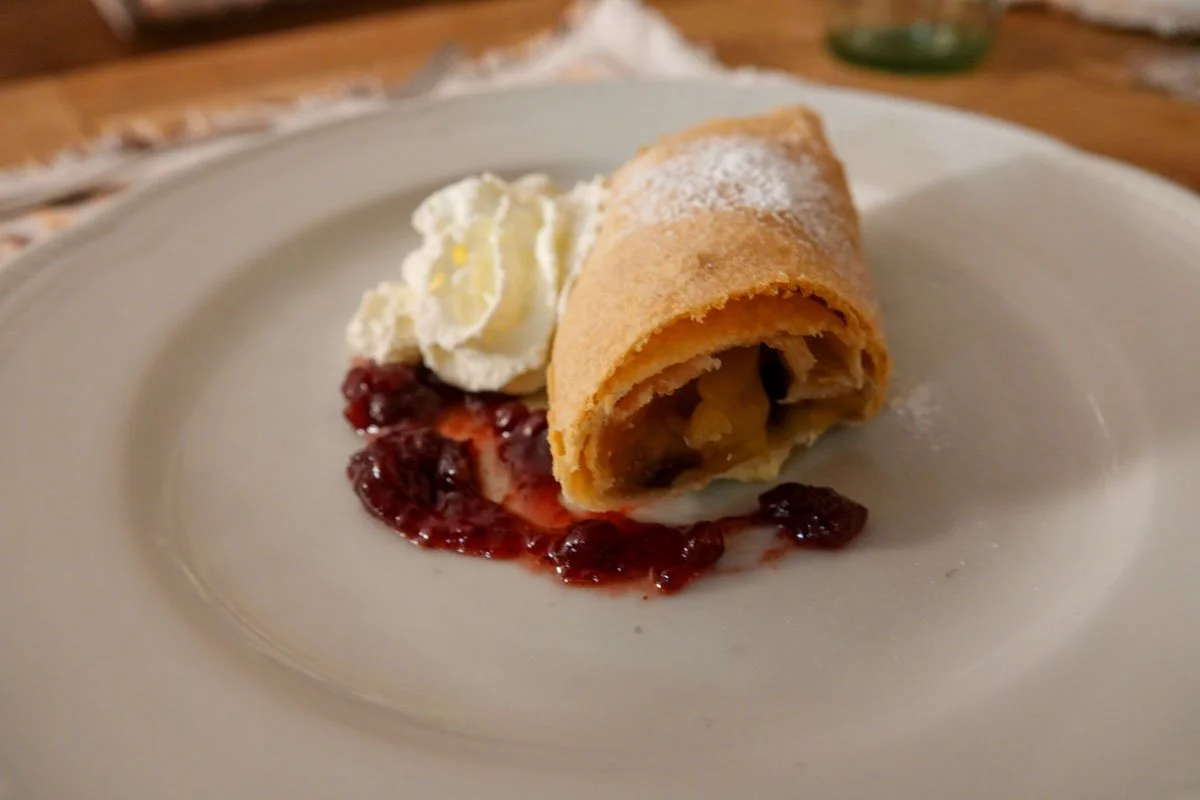
     I'll include one finished and served photo from our dinner, of the strudel, our dessert. It was delicious!

Santa Magdalena

     On this day, we were driving from Trento to Bressanone. Our drive was in the Dolomites, a specific section of the Italian Alps. It's also part of the Italian Tyrolean Alps and looks much like parts of Austria or southern Germany. 

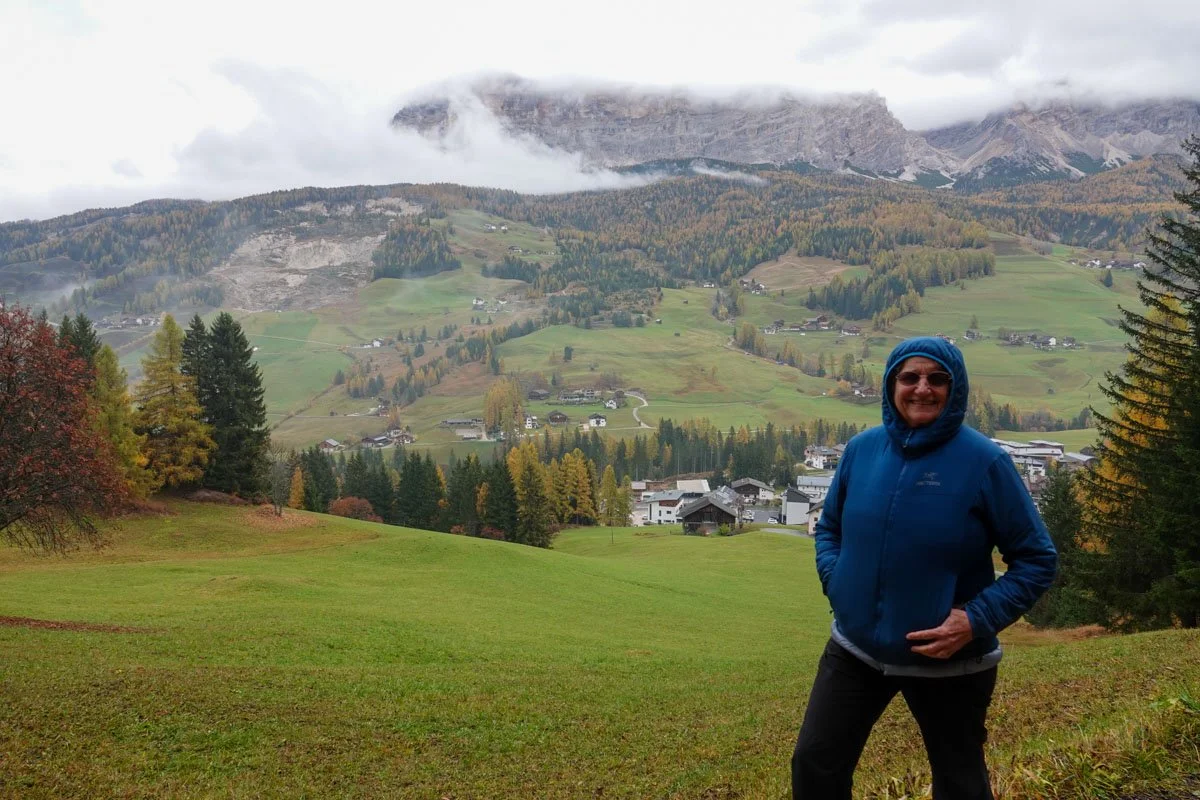
     We definitely appeared to be off any major road, but we drove through the Val di Funes, an Alpine valley surrounded by the steep peaks of the Dolomites. The land was dotted with sloping mountain pastures, farmsteads, and occasional church spires.

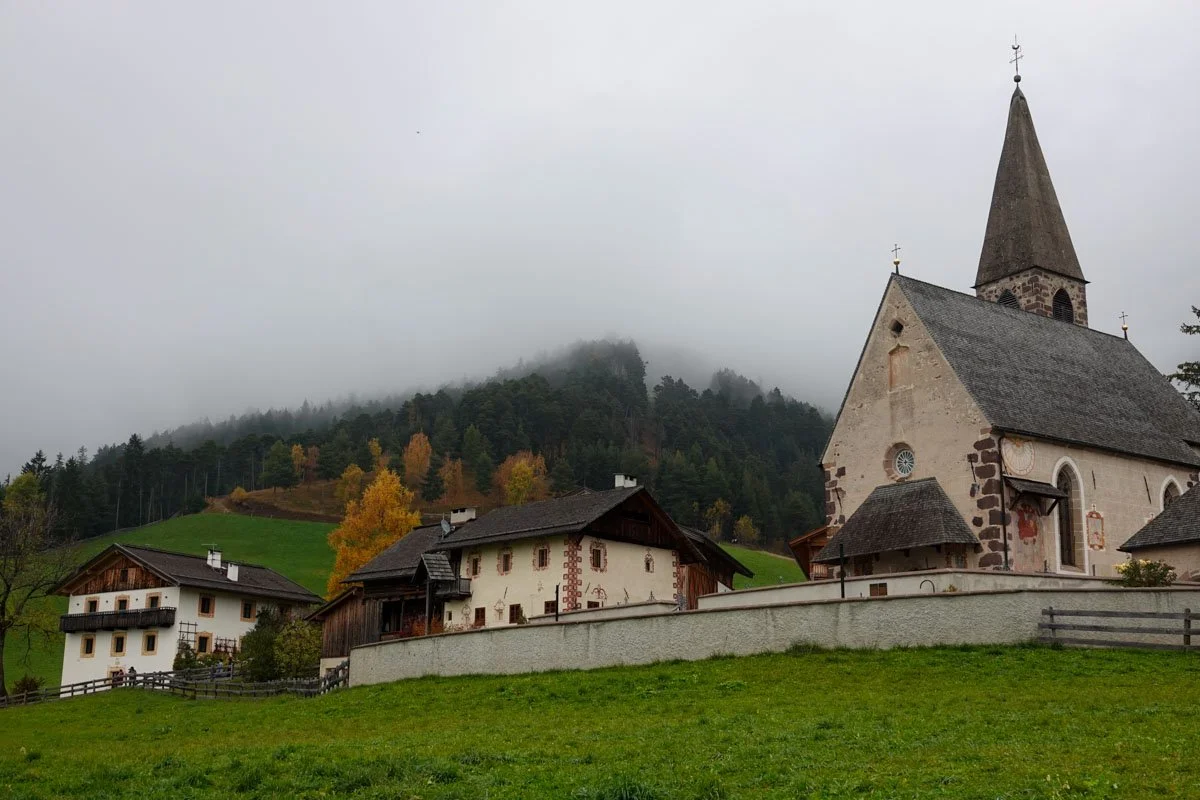
     We stopped in a restaurant in the small town of Santa Magdalena which has 370 people. We picked up a guide who is a native here. He took us for a walk up a rather steep hill up to the Santa Magdalena Church, perhaps the highlight of the town and the reason for its name.

     Our guide's family's house is the one highest on the hill in the photo below. He told us that the town has more cows than people. But not big herds of cows, it's just that most families have a few cows for milk, butter, and cheese.

     I asked our guide about the field across the roadway. He said it's farmed most of the year but after the snows come, it becomes ski slopes.

     On our hike up the mountain, we did pass a few farmers with more than a couple of cows. Their cow operations appeared to be extremely well done with everything neat, clean, and able to easily withstand the winters.

     These photos of the landscape are somewhat disappointing to me. IF you could see the same photos without the clouds against the mountains, it would really be something. The Dolomites are in the background, sticking high in the air with sharp peak next to sharp peak next to sharp peak. The clouds hid them from these photos but as we drove on we got to see them from other locations and they were spectacular.

     We hiked up to the Santa Magdalena Church. It's a small church but quite colorful and nice inside. I would call this church small but elegant.
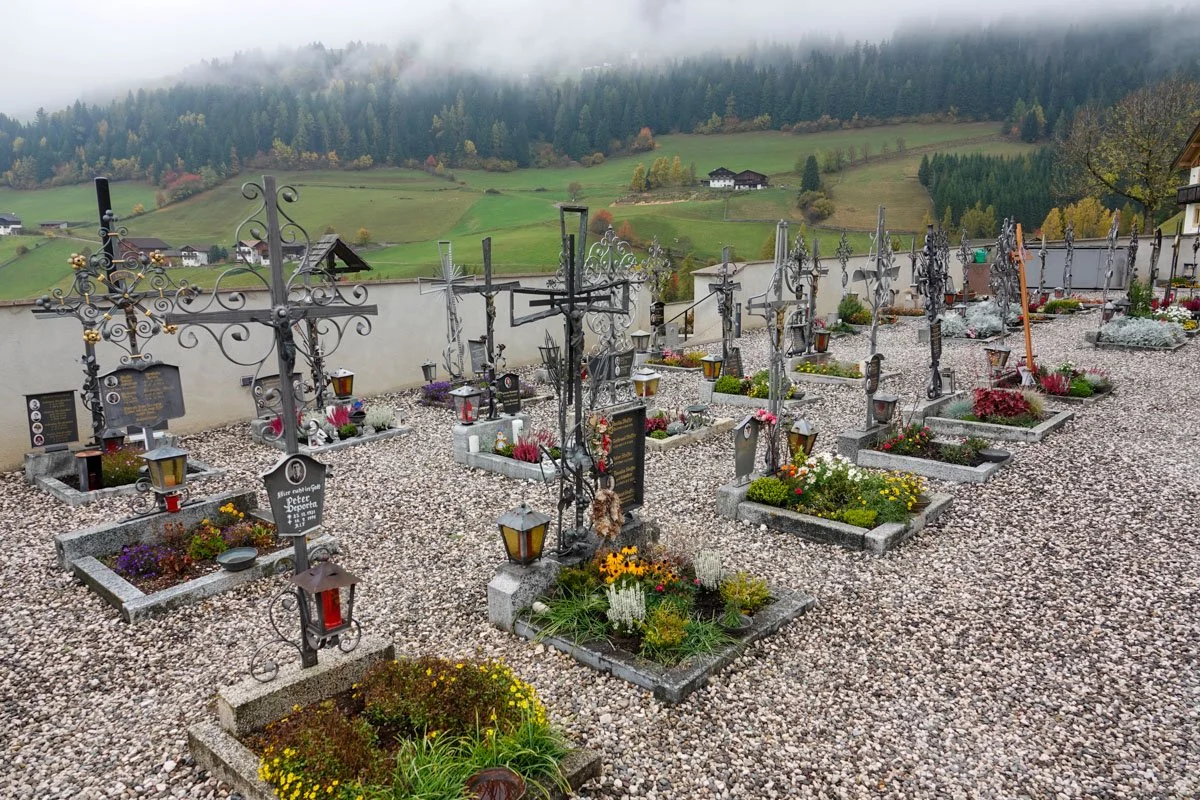
     I found the cemetery right in front of the church interesting. At first glance, I thought it looked rather bleak with all the rocks. But after getting closer, I realized that each plot has live plants growing in it, not fake flowers.