Milan
Milan was just over thirty miles south of Lecco. We drove down to Milan by bus and stayed for the better part of the day. Milan, or Milano as our guide called it, is the regional capital of Lombardy, in northern Italy. It's the second most populous city in Italy with a population of around 1.4 million. The wider metropolitan area is the largest in Italy with an estimated population of over six million people.
Milan was founded around 590 BC by a Celtic tribe. Rome conquered it in 222 BC and it was the capital of the Western Roman Empire. It has a history of cultural and political struggles against Austrian domination and on and on.
Milan is the economic capital of Italy and a major international center for finance, science, industry, fashion, art and tourism. It's both a global fashion capital and one of the most visited cities in the world. It's also a major cultural center with art galleries and museums that feature some of the greatest collections in the world, including major works by Leonardo da Vinci.
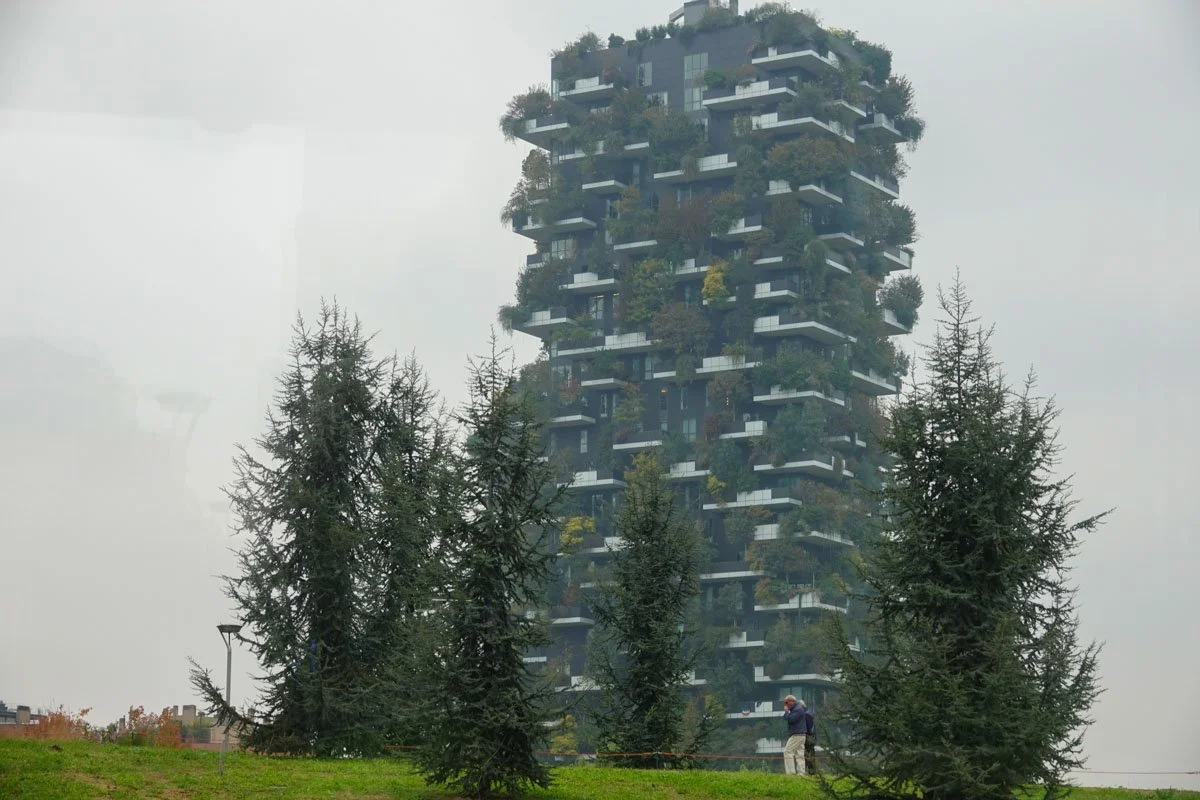
I knew that I was somewhere different as we first arrived in town. Our guide pointed out the Bosco Verticale or Vertical Forest. It's a pair of residential skyscrapers designed by Boeri Studio. The skyscrapers rise to 250 and 328 feet high. They are home to 800 trees, 4,500 shrubs, and 15,000 plants. It's an integrated design to balance ecology, aesthetics, and living space. The towers are self-sufficient using renewable energy and filtered greywater. They are also home to 300 non-plant occupants. We only got a drive-by view (and moving bus photo) but I was impressed.
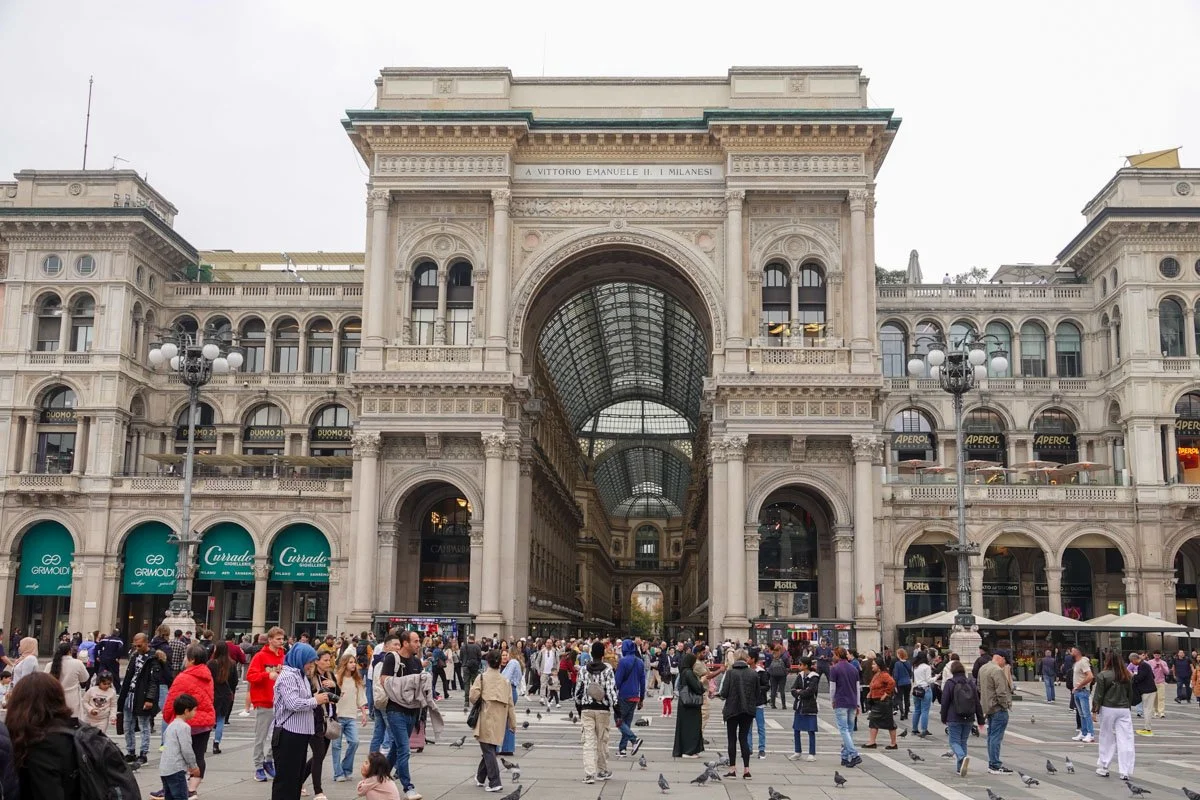
We had a local guide who toured us around the Main Square area. The Galleria Vittorio Emmanuele II was something to see. It connects two original royal family palaces. I don't know if it's possible to "ooze" fashion, but this place does it. Of course, we weren't alone here.
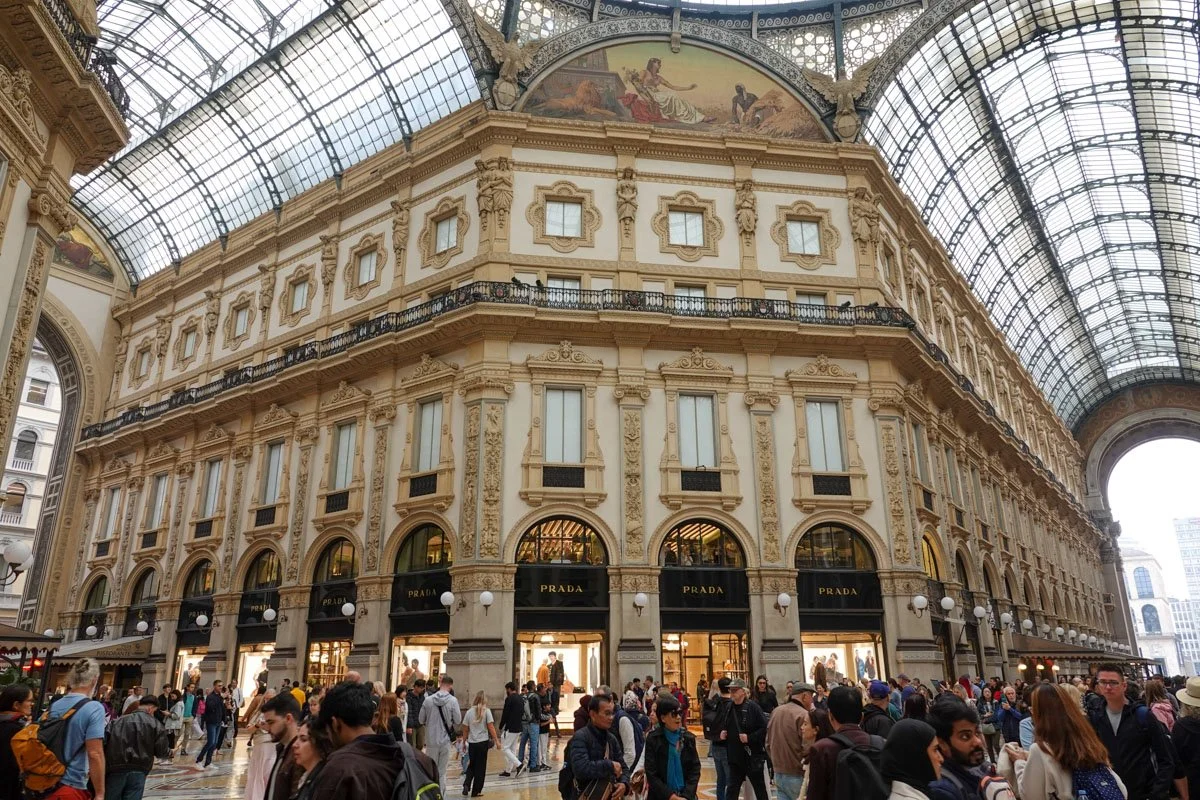
You can almost feel like you're back in the royal palace days as you look around parts of the main square area.
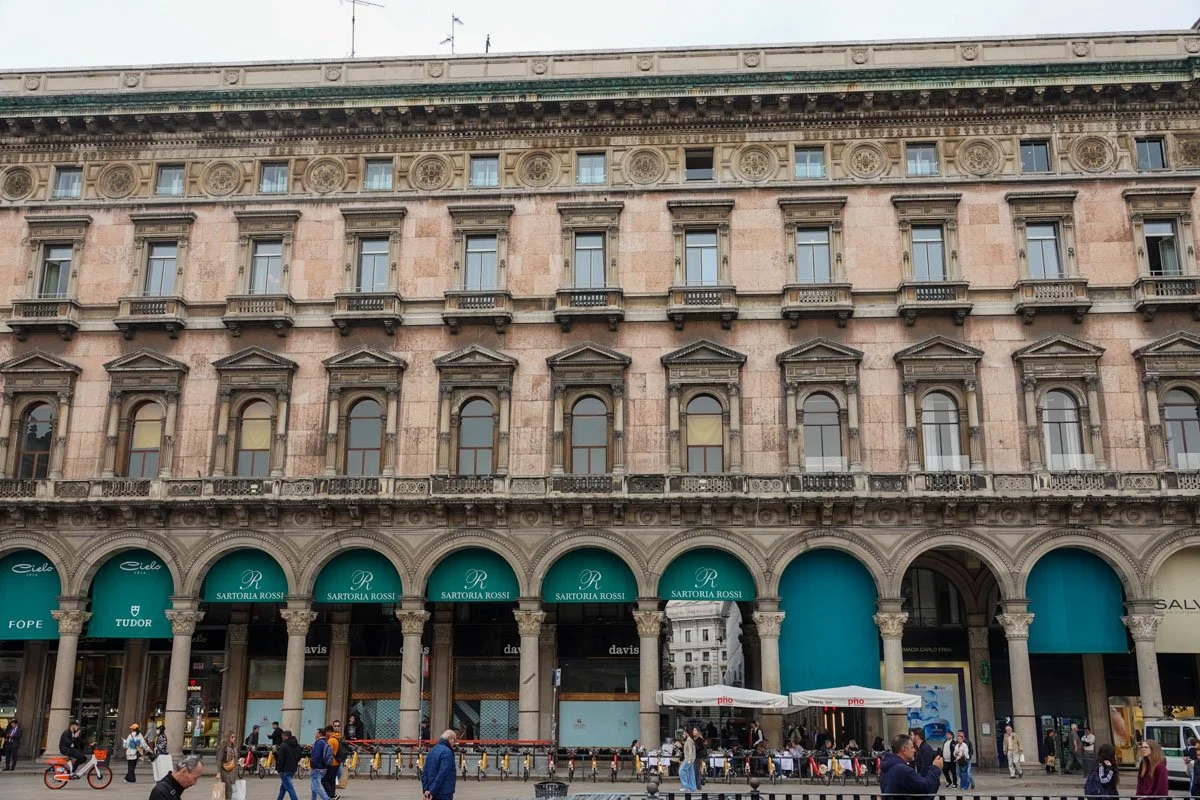
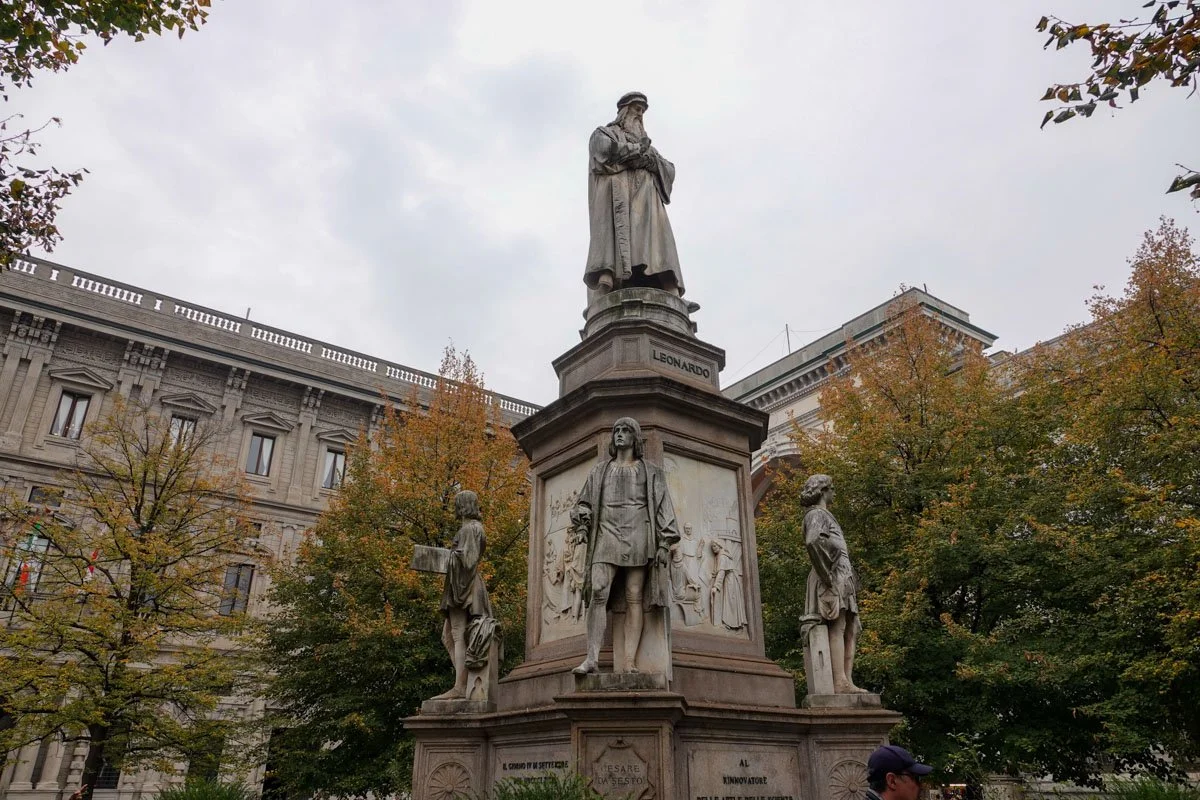
Statues and artwork are spread all around the area. We didn't have time to see any museums and could not get tickets to see Da Vinci's Last Supper, but you can see plenty of art just wandering around. Leonardo da Vinci is a mainstay in Milan and he stands atop this artwork.
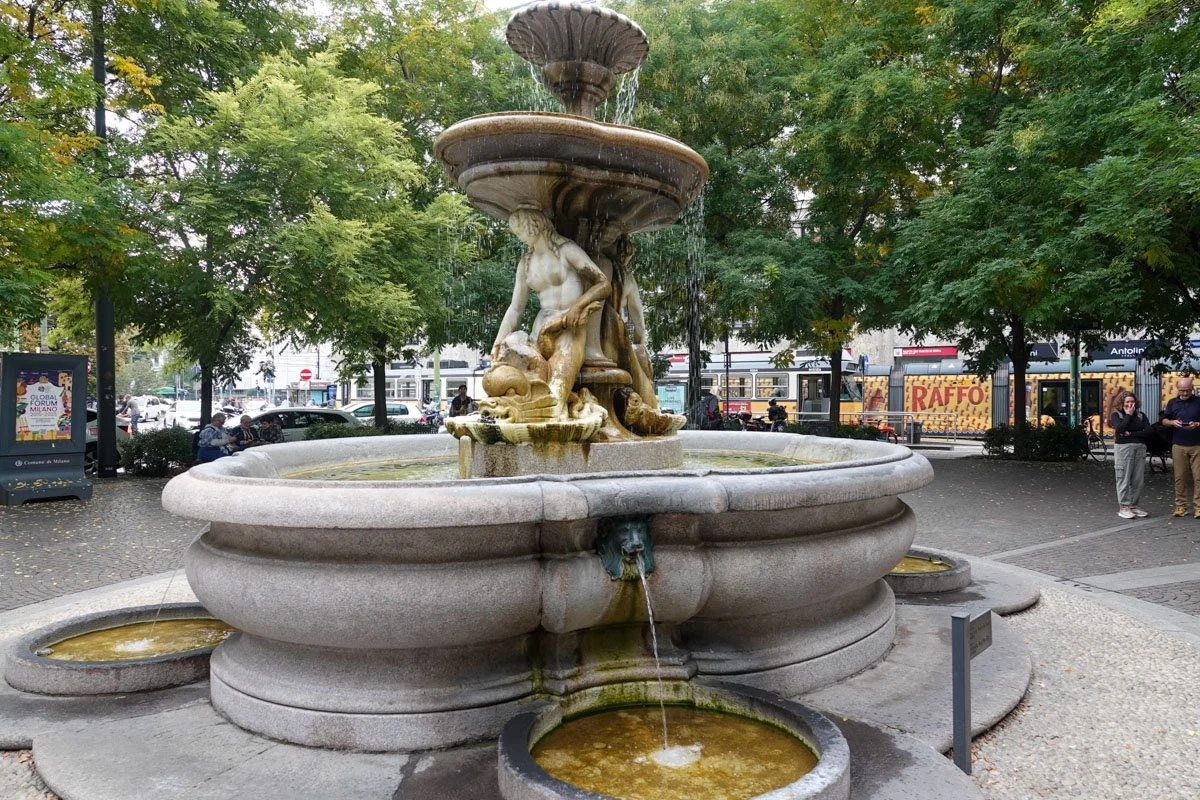
Italy also has its public drinking fountains, like Switzerland, but they didn't look quite as inviting.
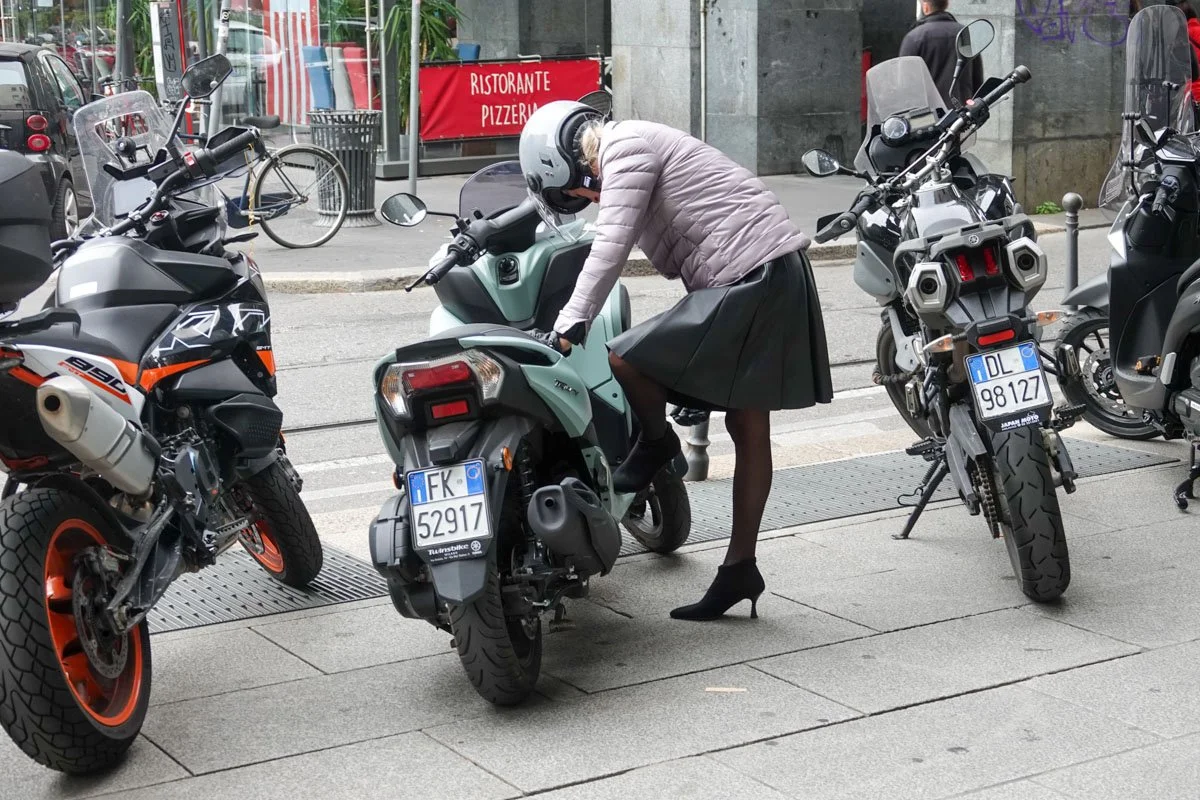
When I think back to Milano, I have one key memory that I will share with you. After seeing the Duomo de Milano, the Galleria, the Opera House, and much more, this will always be my memory.
Vicky and I were nearing the end of our stay in Milan. We had walked away from the Main Square area but were now walking back towards it. I was walking along with my head down, to make certain that I didn't trip on the cobblestones. A motorcycle passed by me and was quite close to me as it passed. Since I was looking down, I happened to notice that the rider was wearing high heels. I looked up and noticed that she was stopping just ahead. I hurried to get the following photo. That's my key memory: a motorcyclist wearing high heels. Now that's Milano!
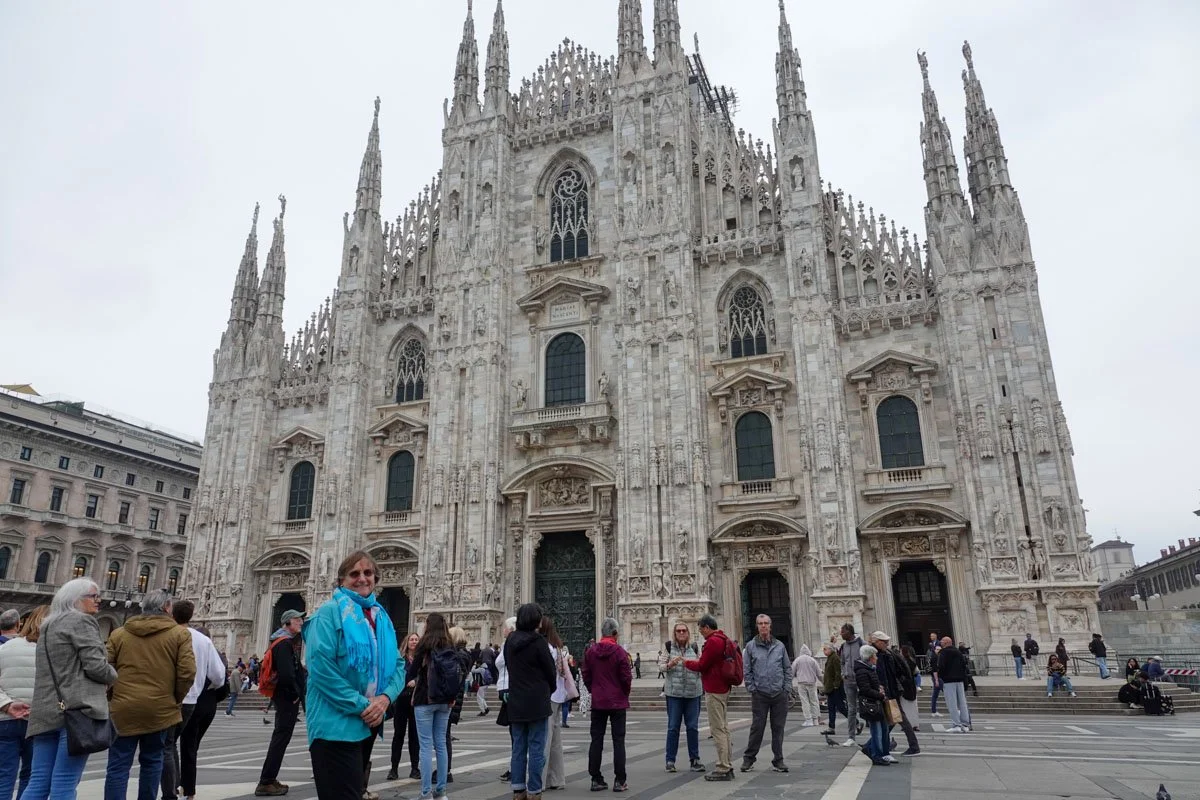
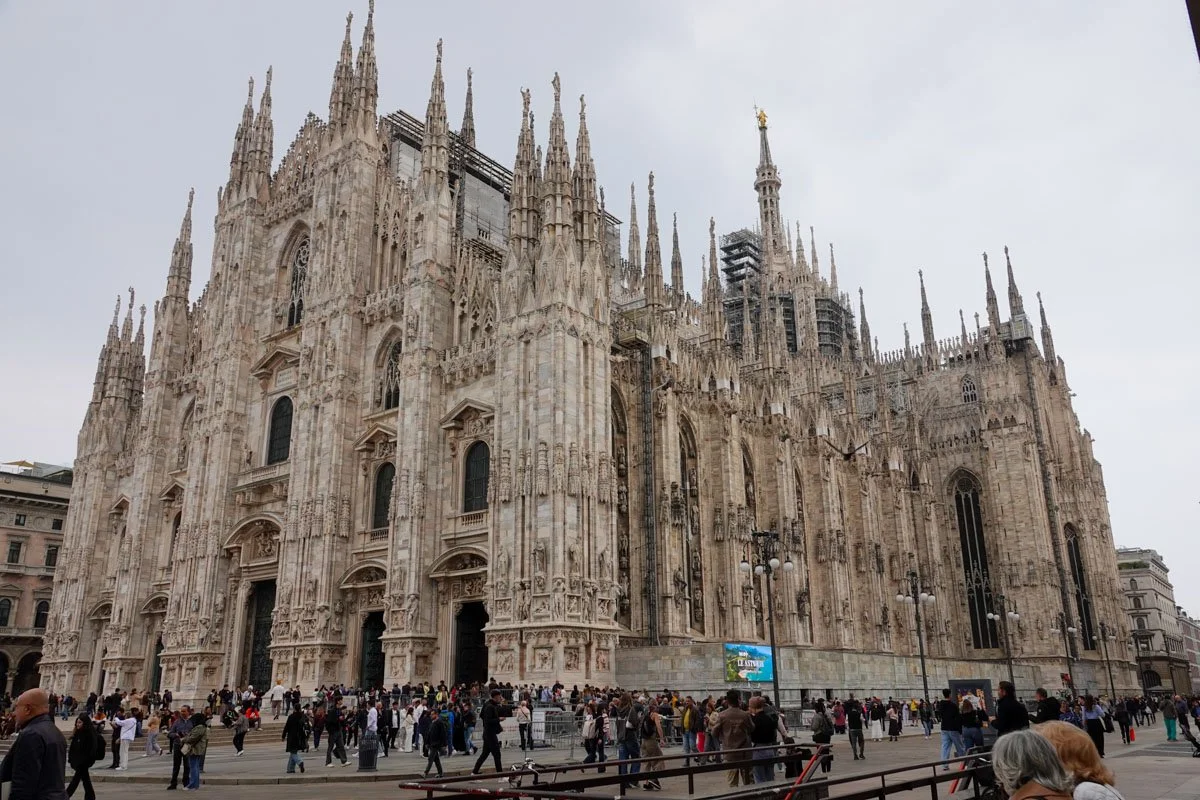
The Milan Cathedral is really the central feature of Milan. And while I got confused by all the churches in Italy, this cathedral is easy to remember. It's called the Duomo di Milano in Italian. This cathedral took almost six centuries to be completed. Construction started in 1386 and was not finalized until 1965, so in my lifetime. It's the largest church in Italy and one of the largest in the world.
Milan's city layout is centered around this cathedral. Streets either radiate out from the Duomo or circle it, which reveals that it occupies the most central site in the old Roman Mediolanum, that of the public basilica facing the Forum.
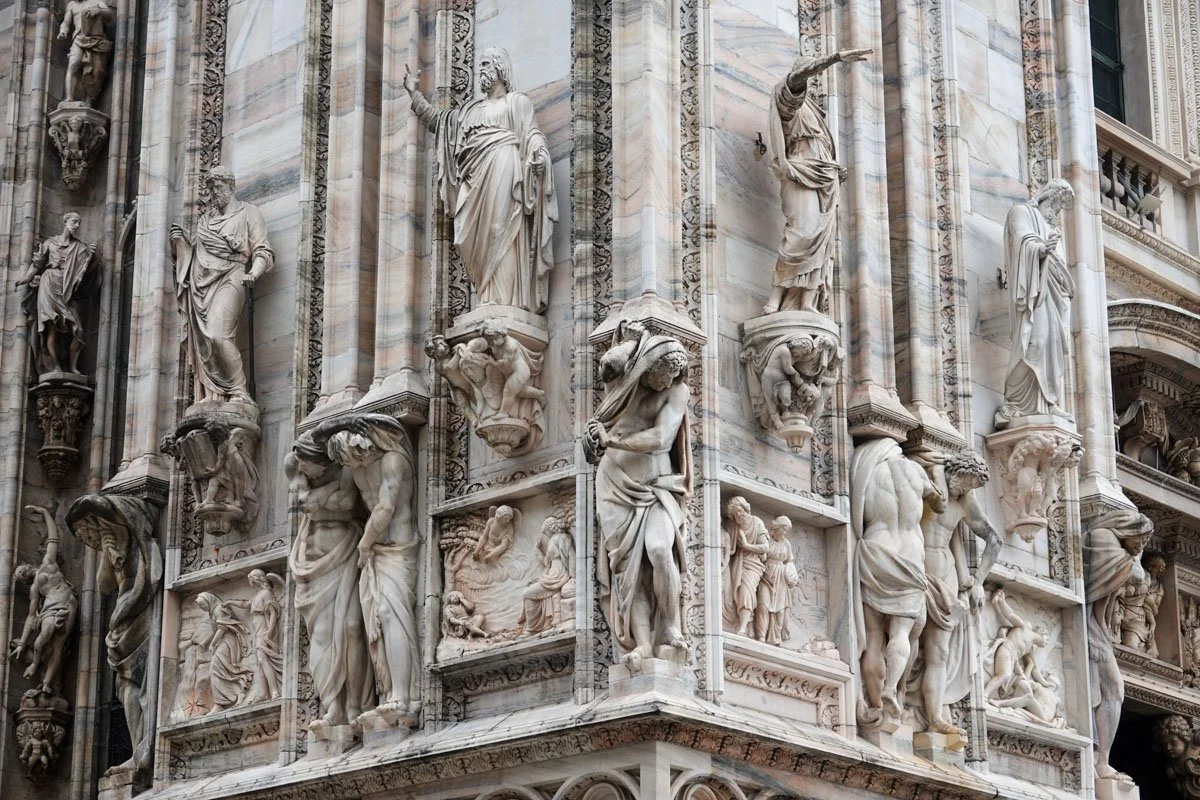
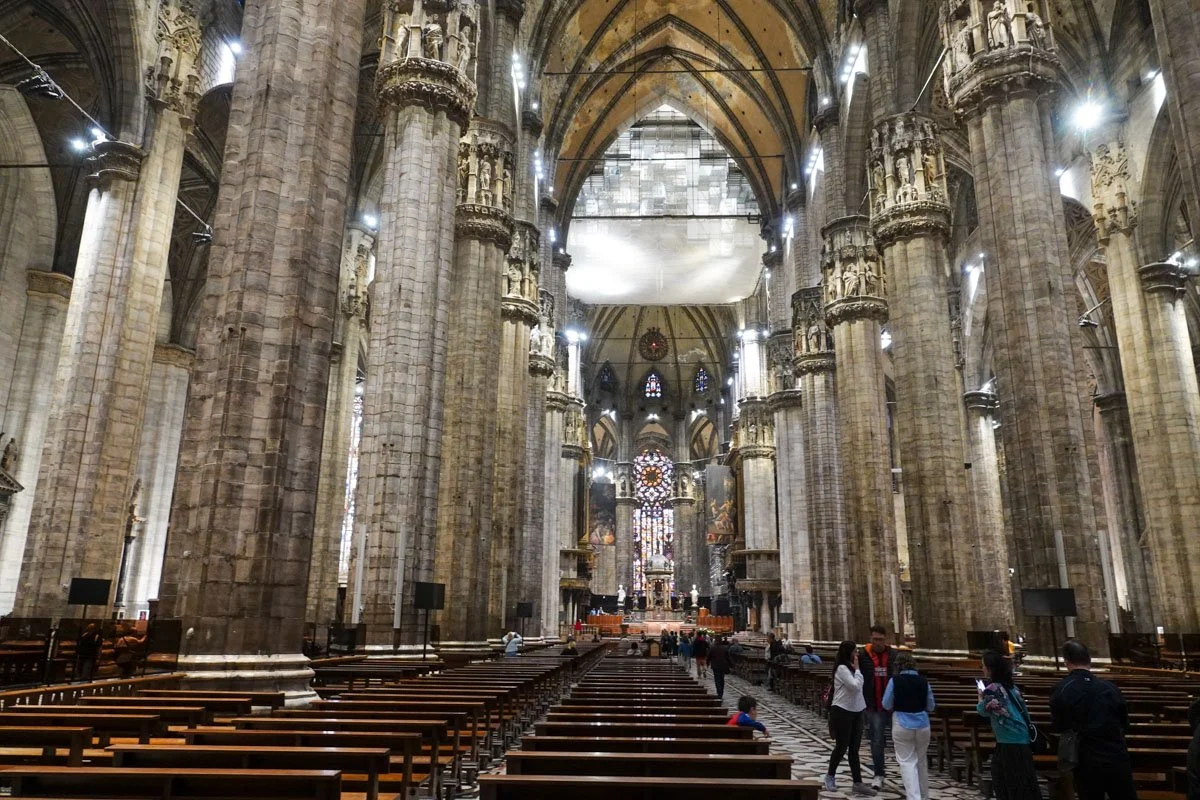
It's primarily a Gothic design with pointed arches, ribbed vaults, and flying buttresses. The outside is covered with over 3,400 statues and 135 spires. The color is mainly because it is mostly constructed with Candoglia marble which is known for its pinkish hue. The interior is massive and it seats 10,000 but holds 40,000 people when all are standing. Five aisles lead from the entrance to the main altar. It really needs to be seen to be fully appreciated. Our local guide said that the cathedral is 'always' being cleaned, repaired, and renovated.
My photos will not do it justice. The micro-level photo is to show just how much detail is in and on this cathedral.
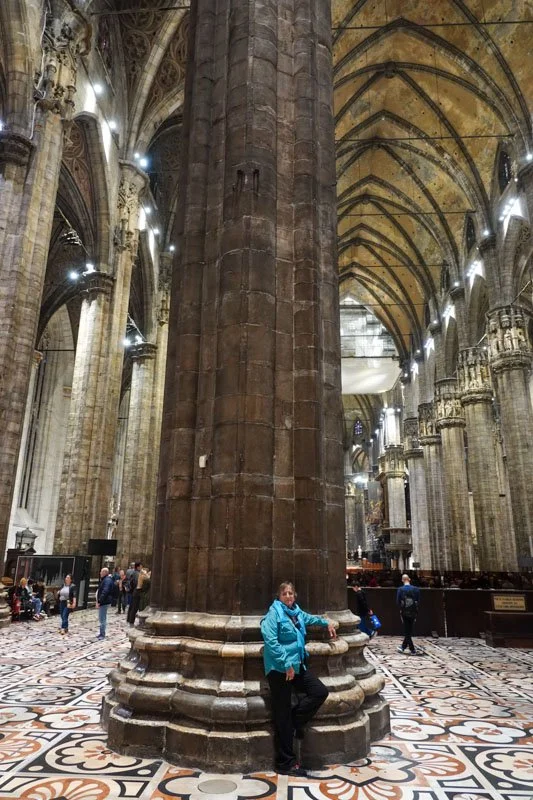
The inside of the cathedral was also overwhelming. I took the second photo specifically to give scale to the inside of the church. You should also notice the marble floor.
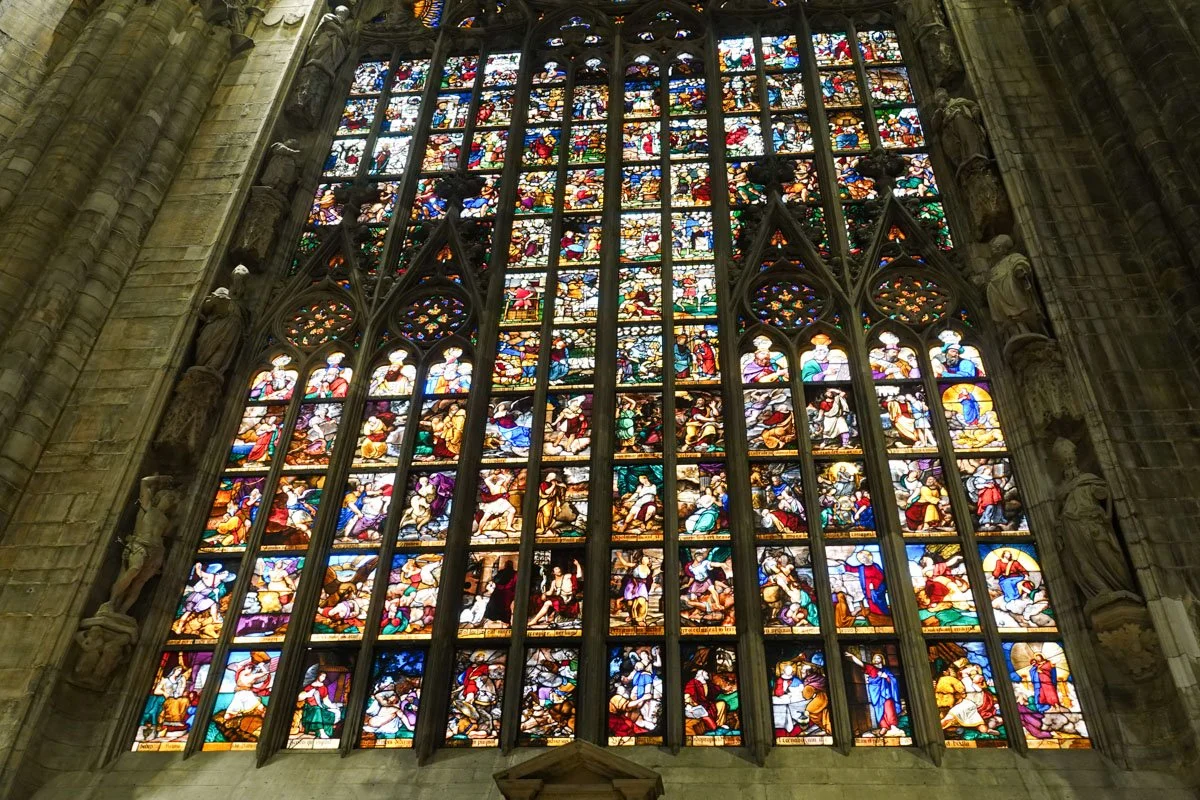
There were an infinite number of details to see but I'm sure that they are all available online. The windows were magnificent.
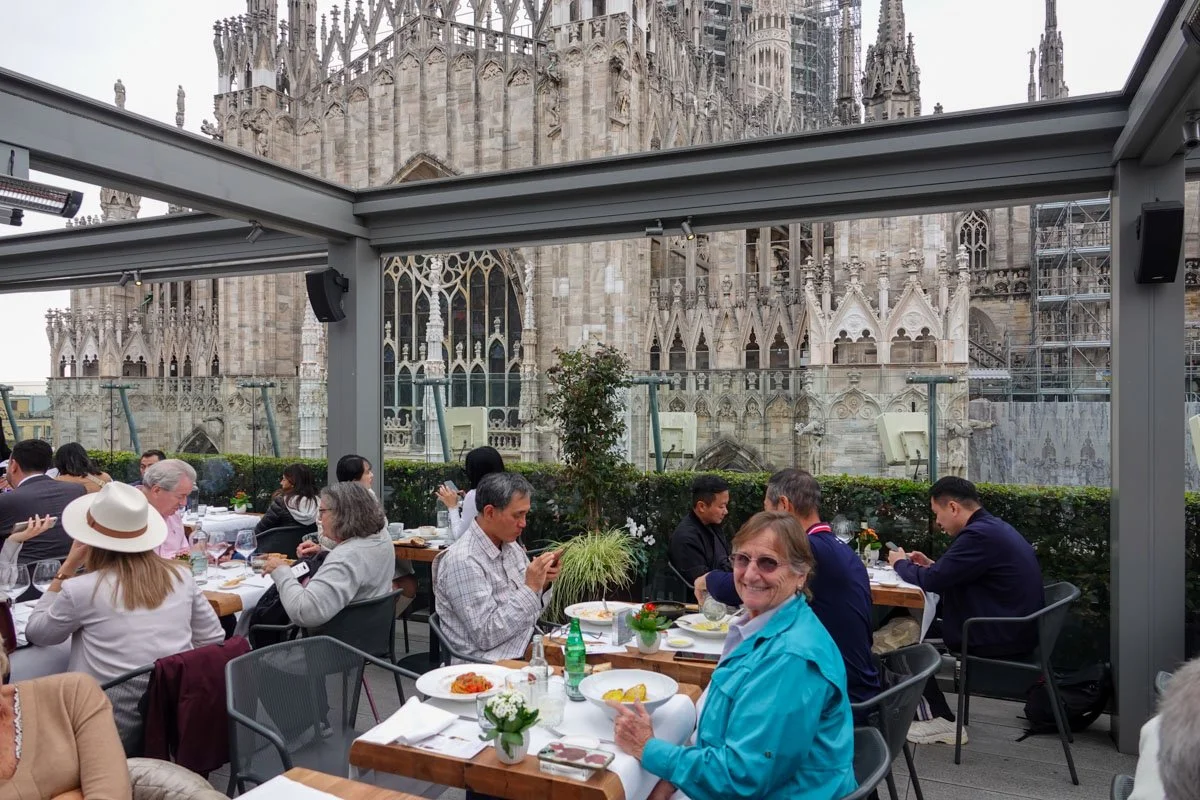
While we could probably never spend enough time to see everything, we decided to eat at a rooftop restaurant across the street from the cathedral. For perspective, we are dining on the 7th floor roof at the Maio Restaurant. Vicky had pumpkin soup and I had spaghetti.