Bressanone (Brixen)

     Bressanone was our next stopping point. Both German and Italian are spoken here, so Brixen is the town's name in German. We heard both languages and saw signs for both names and languages. But everyone we talked to also spoke English quite well.

     The town sits at the confluence of two rivers, the River Isarco and the River Rienza. Bressanone is a beautiful mountain town and of course, we are still in the Italian Alps. The town is very near the Austrian border.

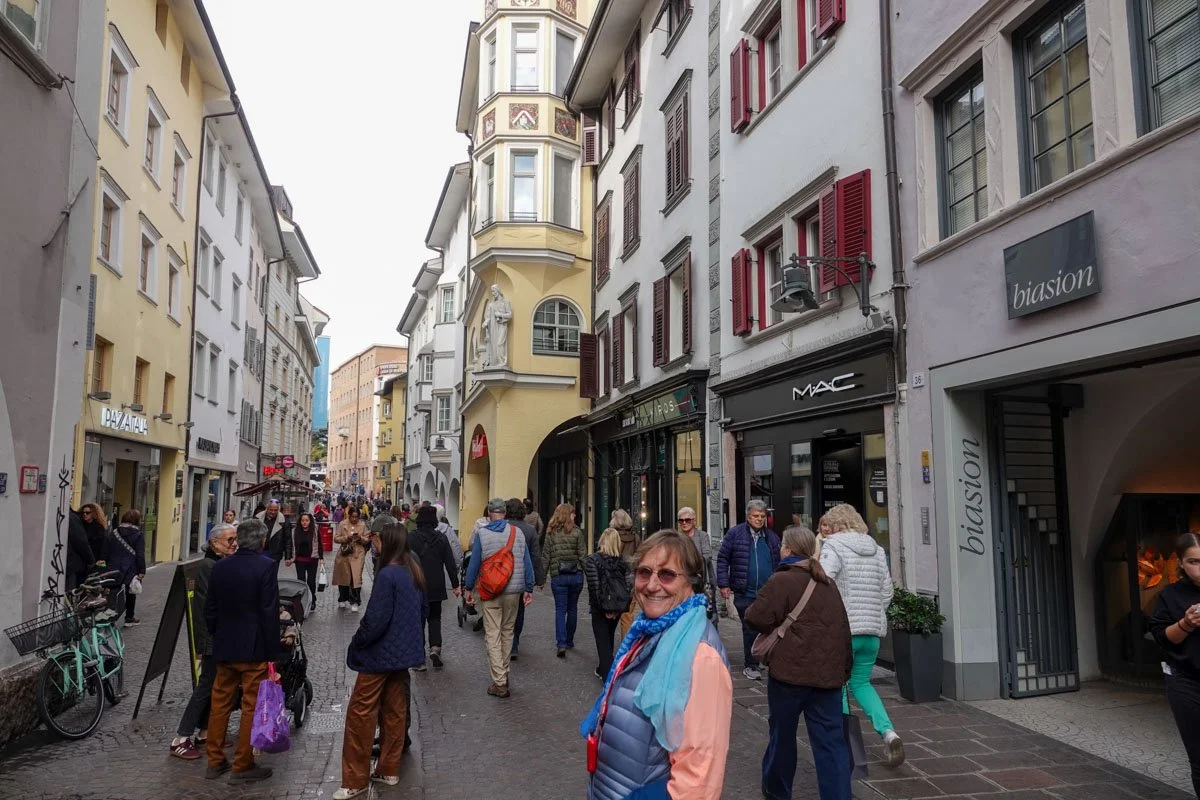
     We liked Bressanone a lot. It was smallish, with about 23,000 inhabitants and easy to navigate the whole town and still find our way back to our hotel. It had everything we wanted. We liked the small streets with covers over the shops so we could even window-shop when it was raining. The mountains were all around and visible from many places in town.
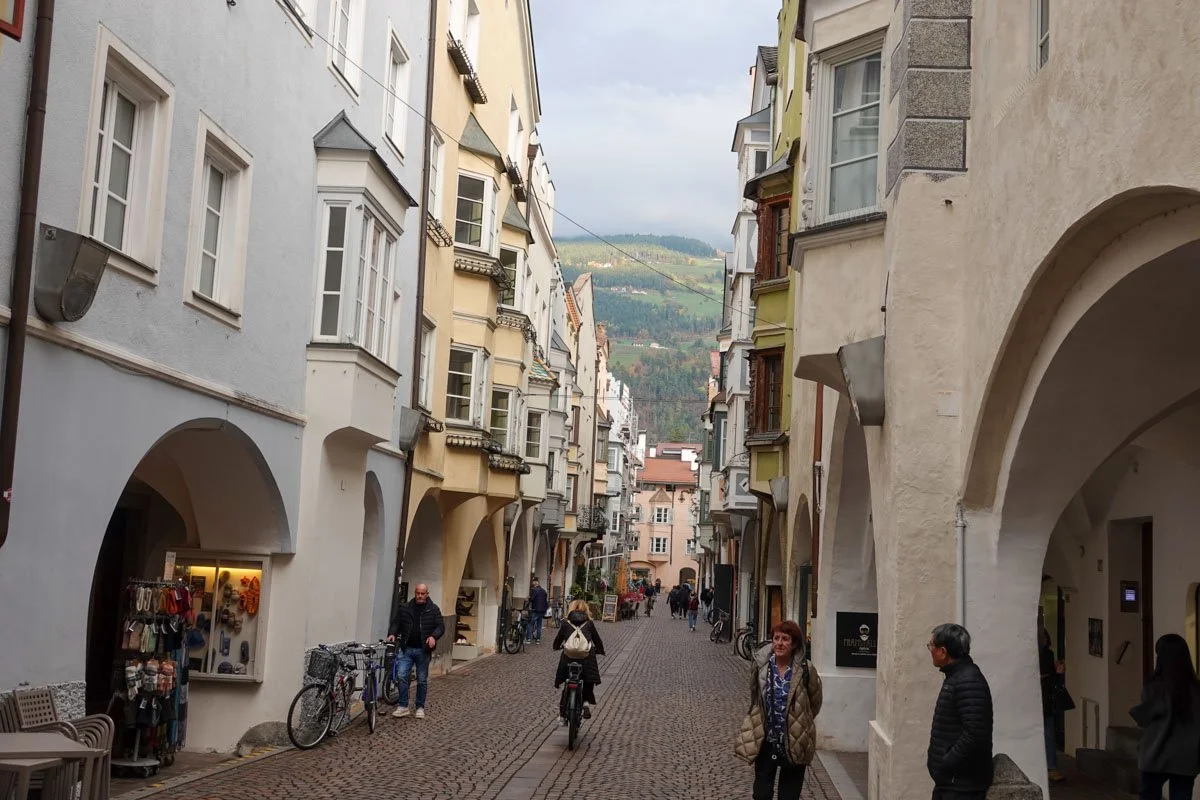
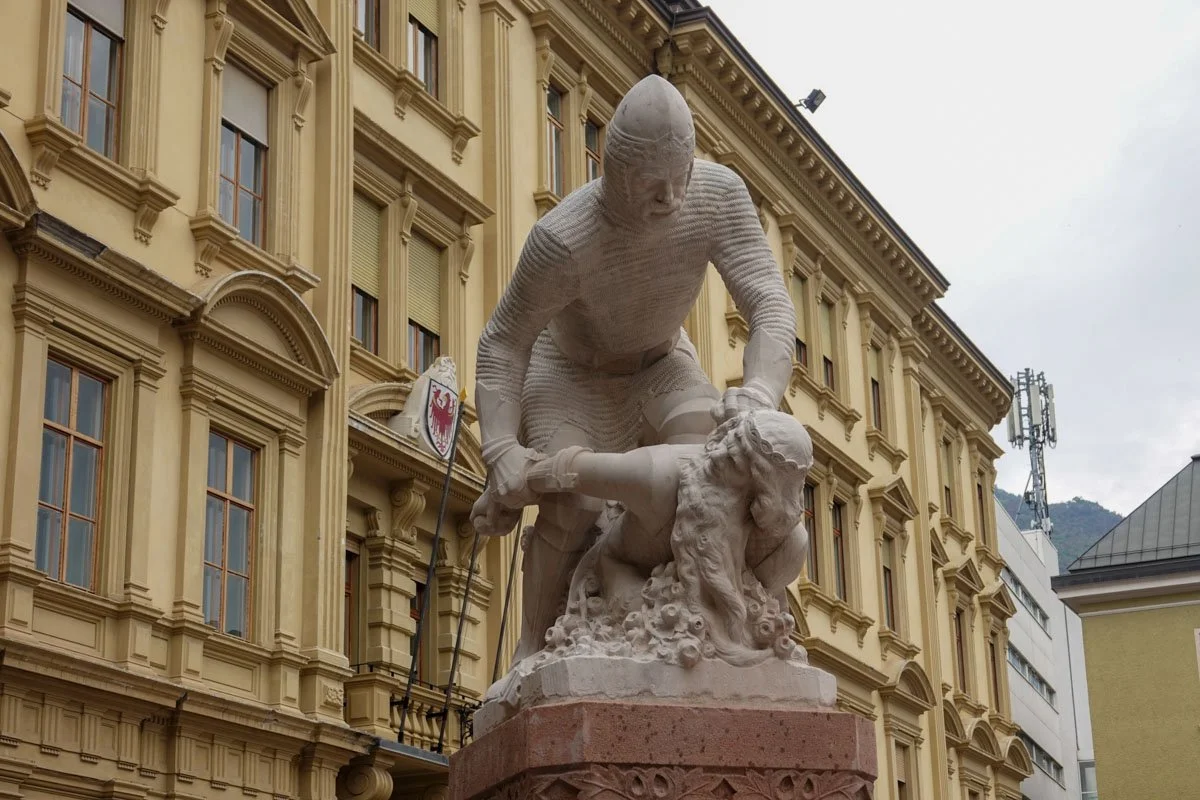
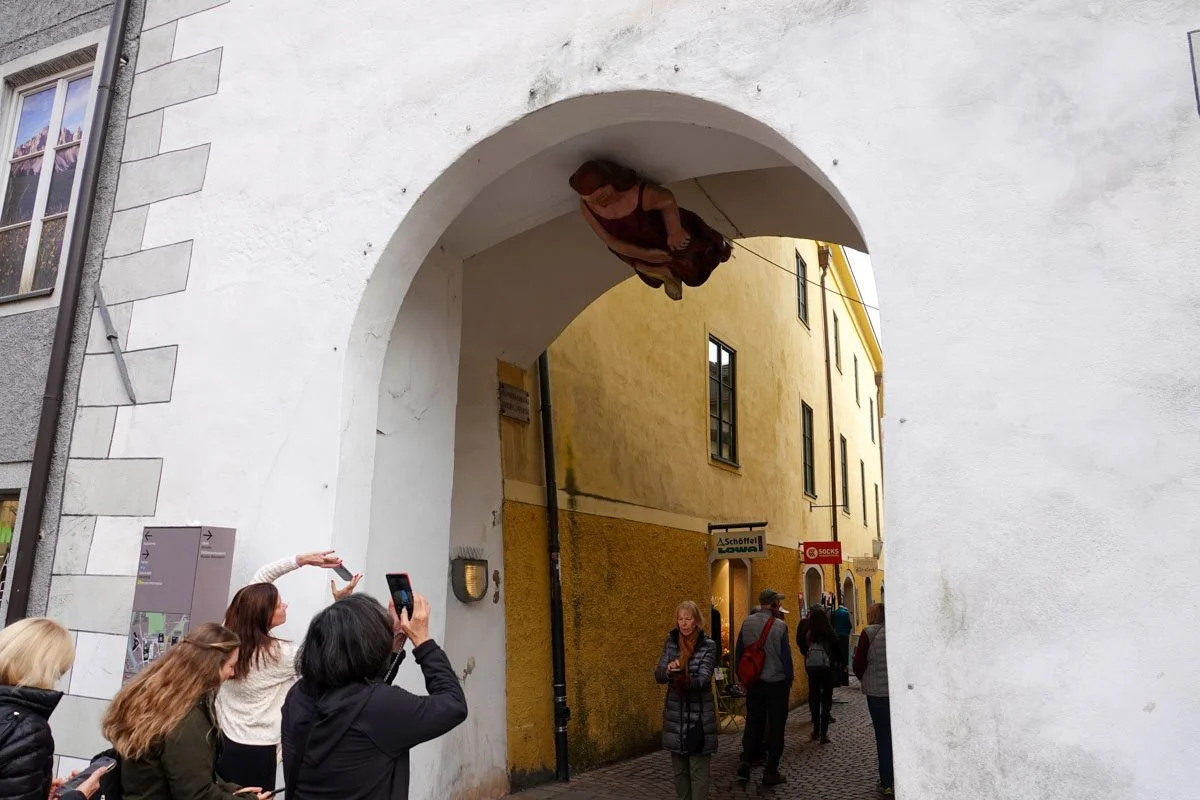
     Bressanone also had the unique peculiarities that we liked so much in the Italian Alps, like the statue above the walkway, see below. Our guide told us the story about this statue but I can't remember it.
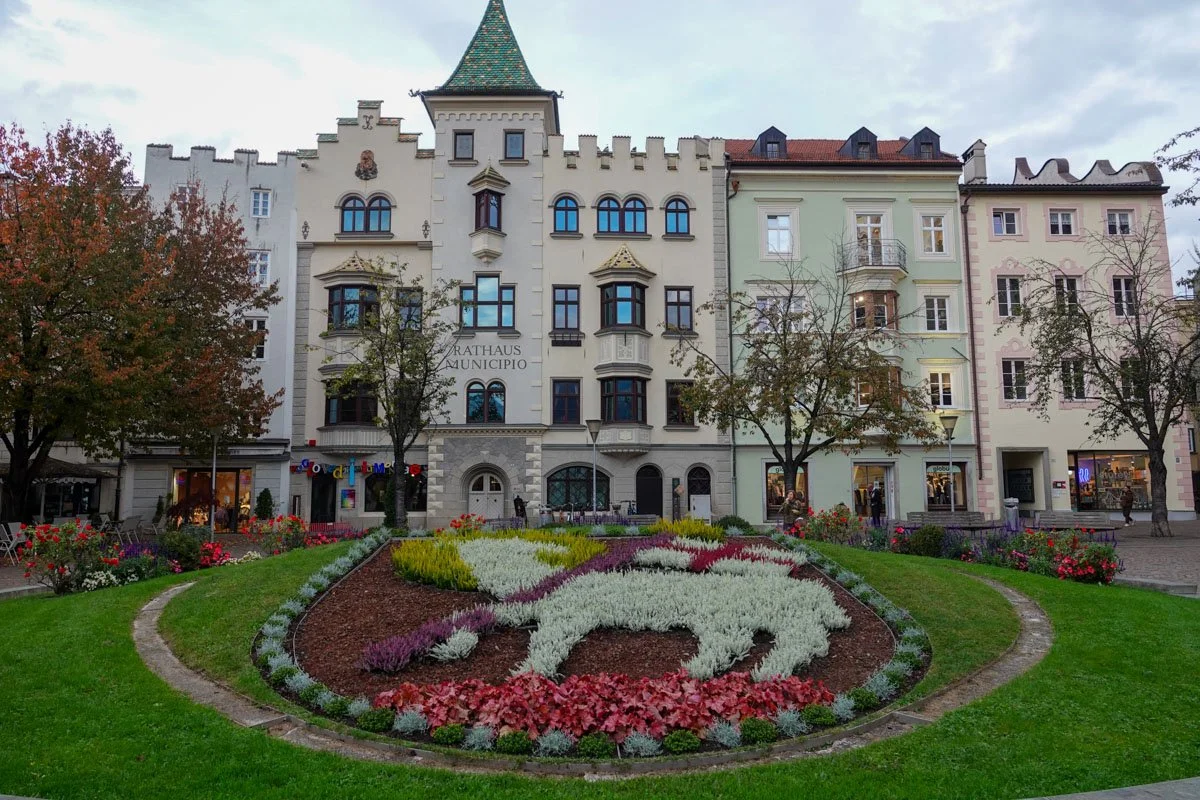
     The next building is in Cathedral Square, the main square in town. We saw lots of interesting architecture in Bressanone.
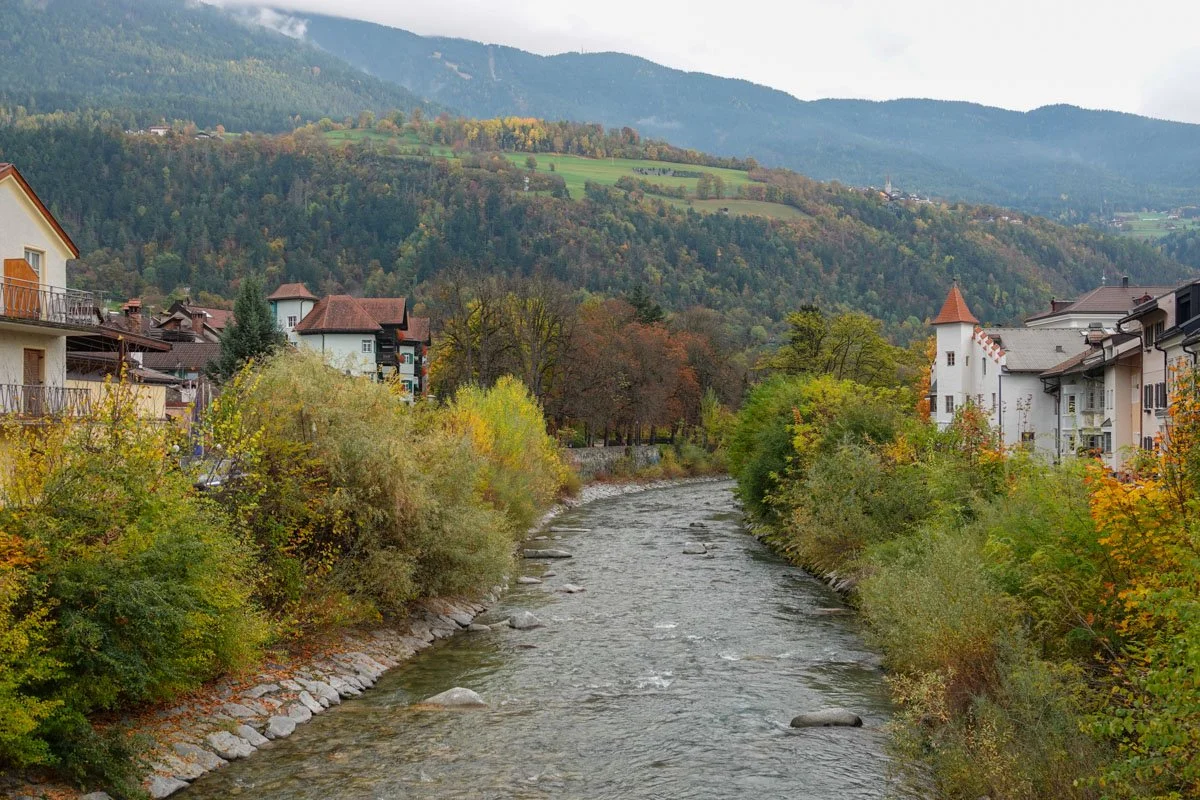
     Water and the Alps were never out of view by much. Below is very near the middle of town, from a bridge over the river.
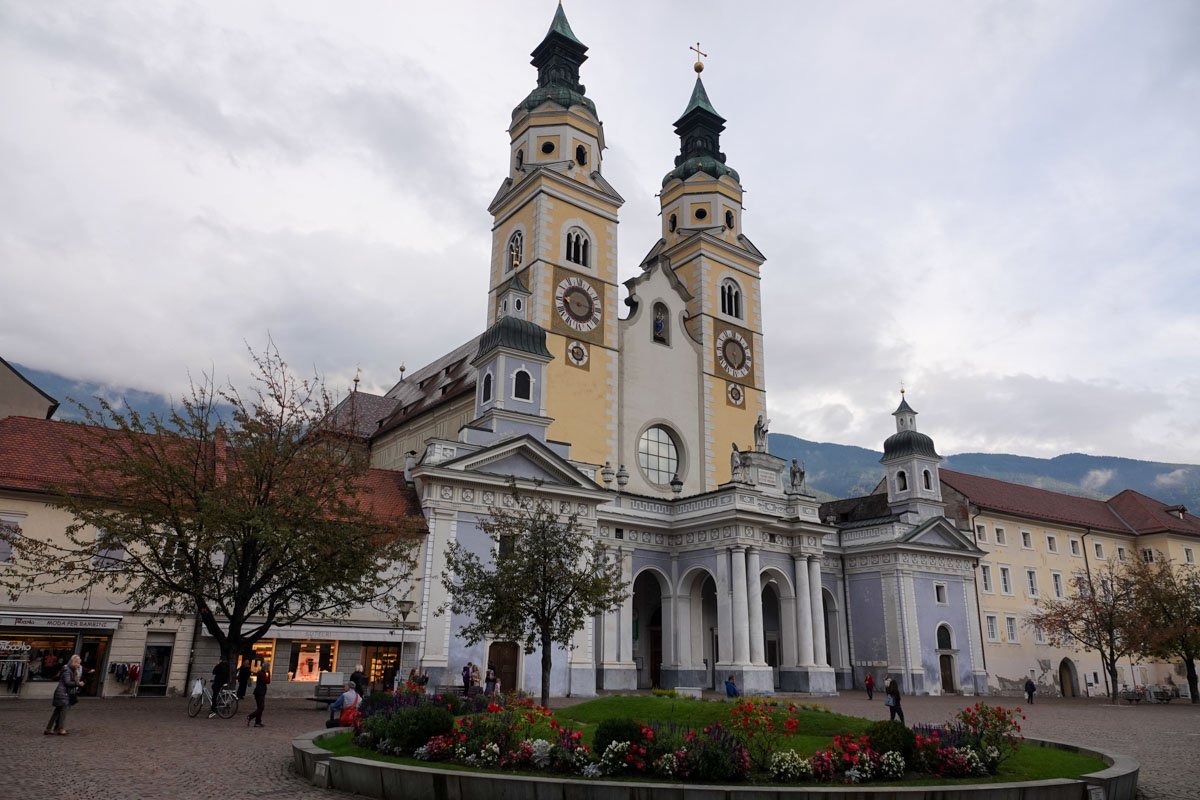
     It seemed like a cathedral or church was the center of every town and the most important site to see. This is the Bressanone Cathedral, on one side of Cathedral Square. The cathedral was built in the 10th century but was given a Baroque makeover in 1745. It has two huge clock towers that are painted bright yellow with the facade walls of pastel blue. And I found it peculiar, but the Parish Church is right next door. 
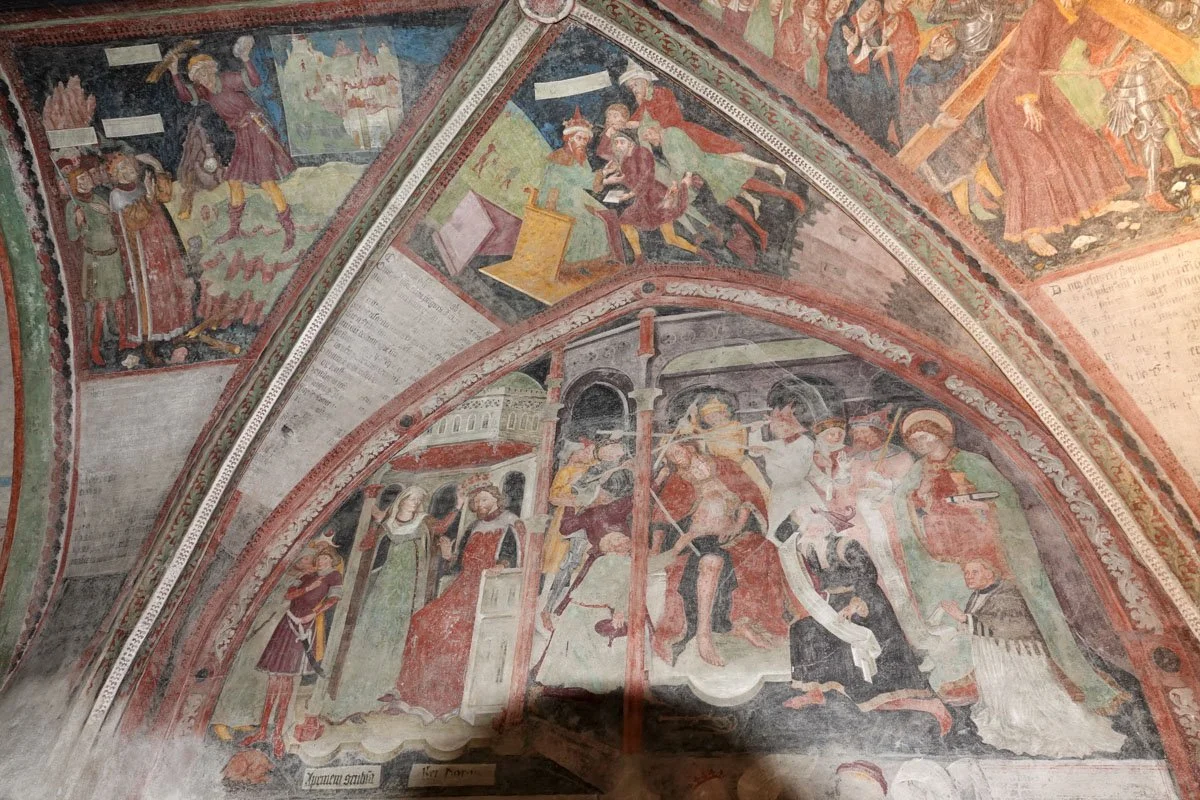
     There were many buildings attached to the cathedral and all of them had ceilings over all passageways and all were covered with frescoes. Our guide said that the frescoes were painted for people who could not read to be able to follow the bible. 
The Bishop's Palace

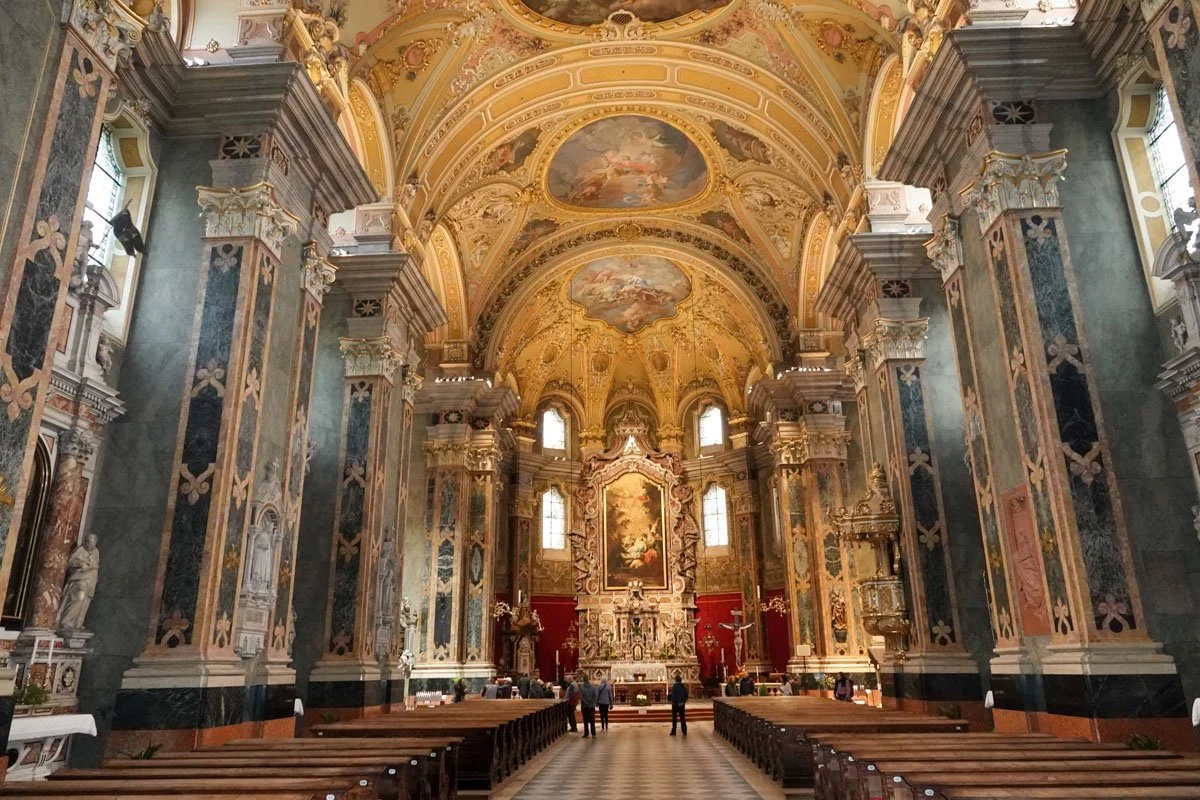
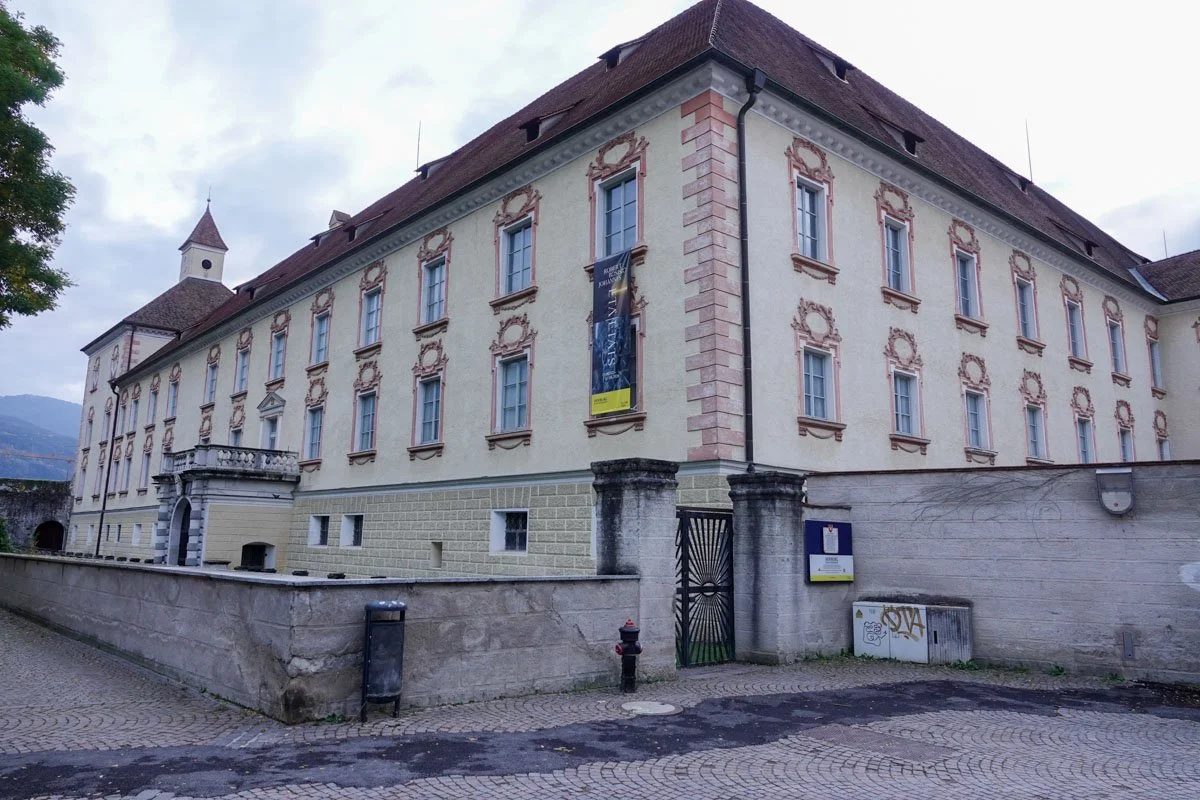
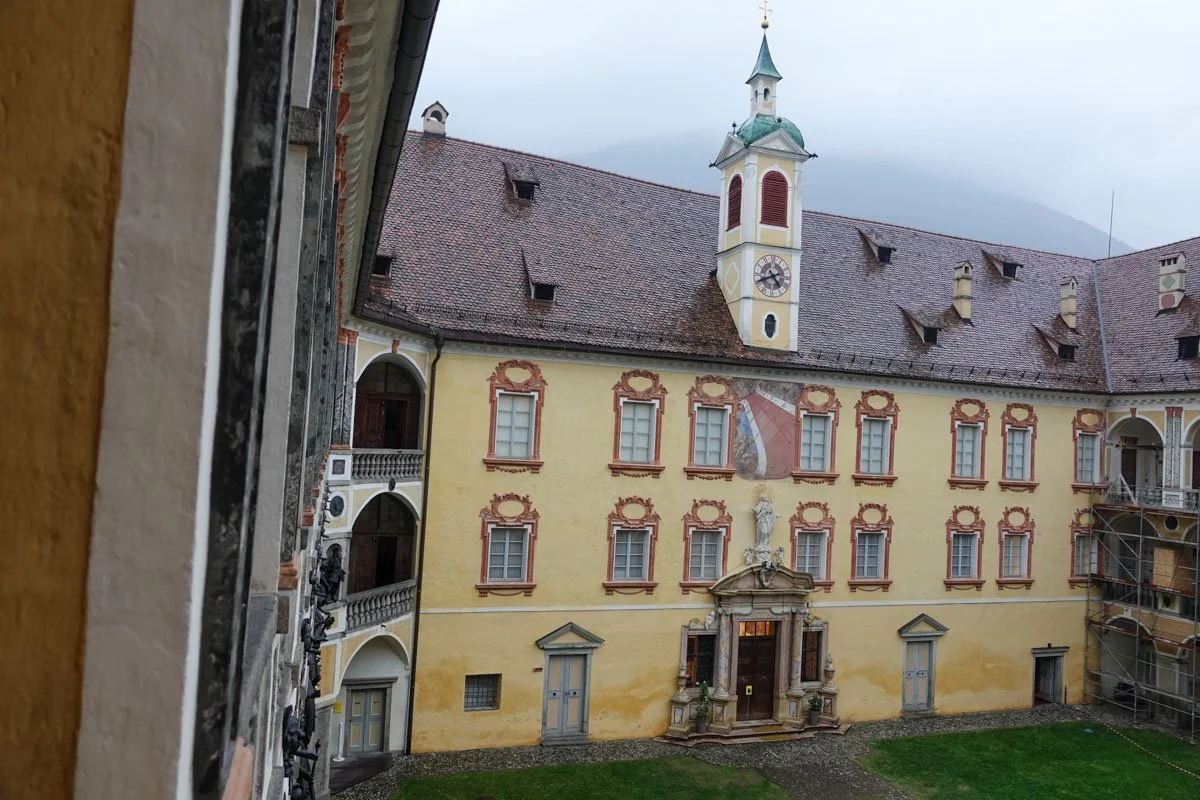
     One of Bressanone's key places to visit was Hofburg, or The Bishop's Palace. The Prince Bishop of Bressanone commissioned construction of a fortified palace in the 13th century. Numerous revisions followed until around 1600 when the renaissance-style interior courtyard was created. Around 1706 some Baroque renovation occurred in the palace including the bishop's chapel and its majolica stoves were built. 

     We visited here one afternoon when it was raining hard outside. We had the whole place nearly to ourselves. The palace has things to see from the floor to the ceilings. It has plaster embellishments, tapestries, historical furnishings, a Chinese sitting room, a renaissance courtyard, state rooms, religious art including nativity scenes, sacred relics, liturgical objects, ivory art, precious goldsmiths' crosses, and all sorts of valuables.

     Personally, I can't get over the whole "Prince Bishop" thing. Talk about the mixing of church and state... It served as the bishop's seat until 1964. Today, it houses the Diocesan Museum, the Cathedral Treasury, and a Nativity Museum.

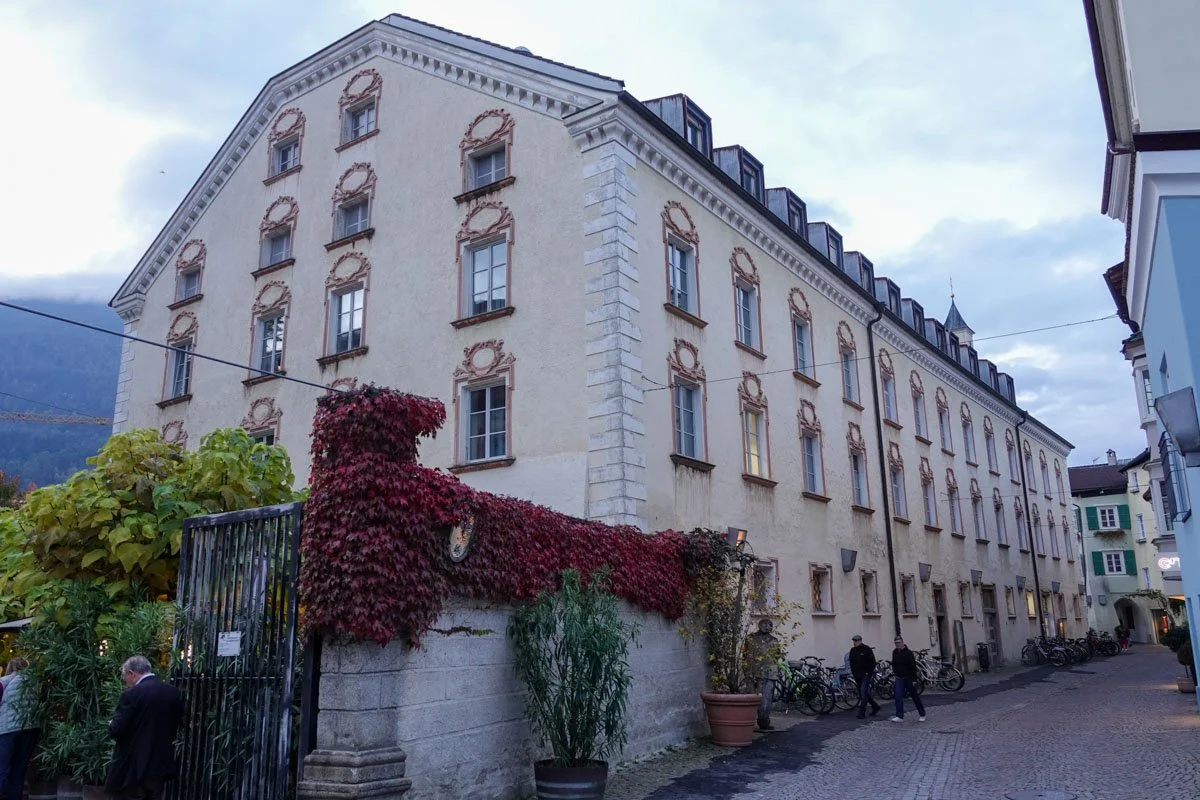
     The first photo is a view of the Bishop's Palace from across the street. It was hard to get it all in the photo. The second photo is just to the right of the Bishop's Palace and it's the Bishop's Carriage House. It looks even larger than the palace. The third photo is part of the renaissance courtyard. It was a hard photo to get as I had to lean way out an open window on the third floor. The Prince Bishop lived a pretty good life.

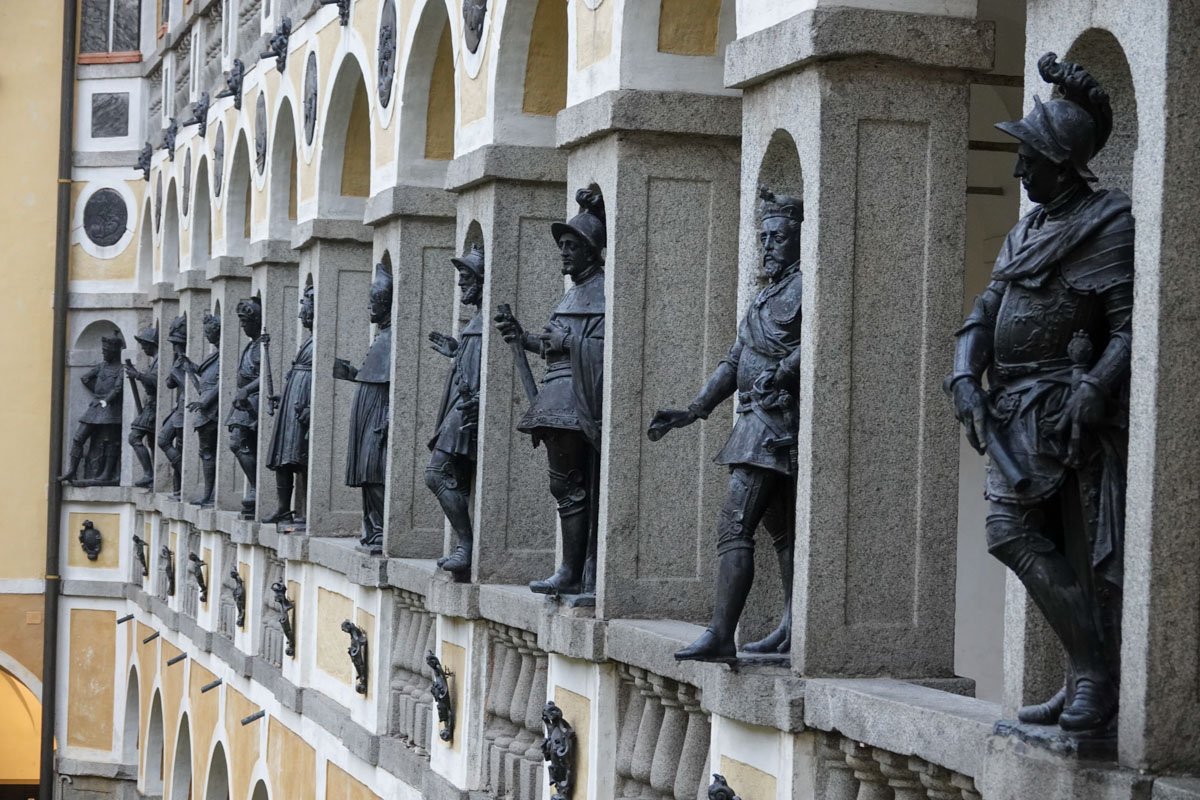
     This is another 'leaning out the window' photo. These statues lined the exterior wall of the courtyard. I think on the second floor.

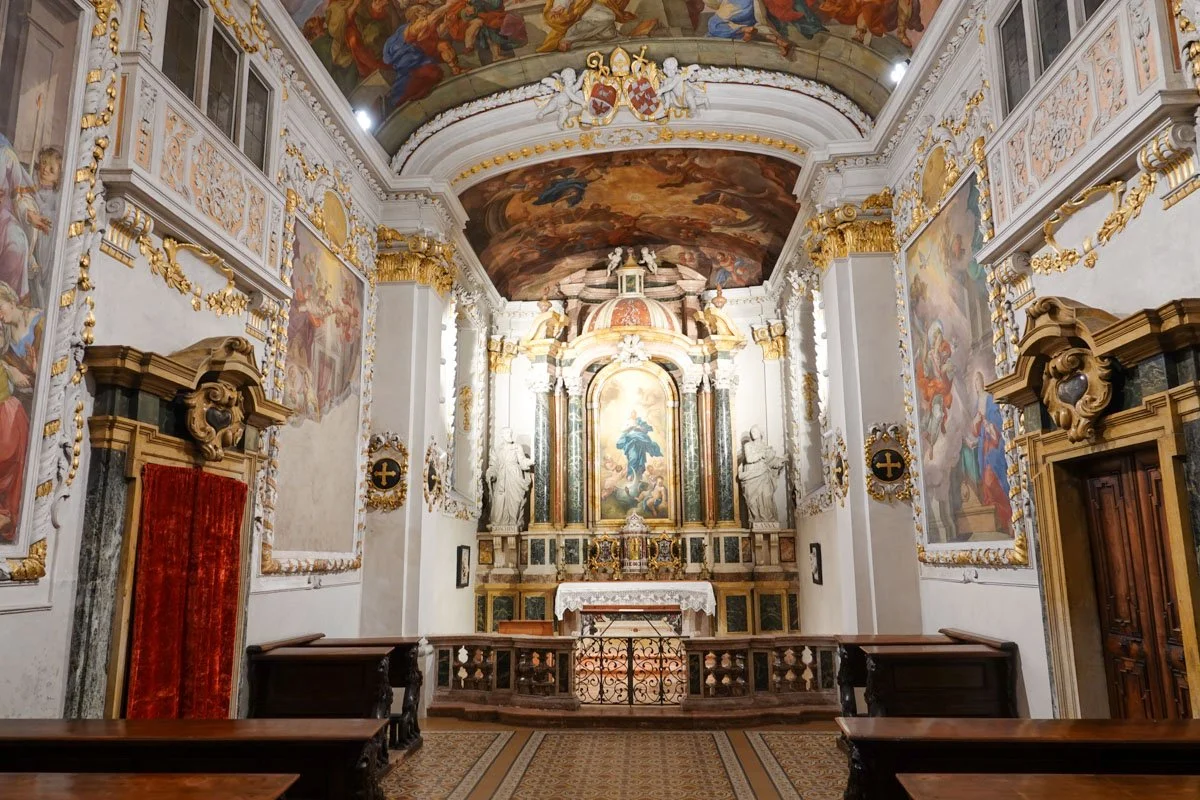
     This is the bishop's chapel, small but very elegant.

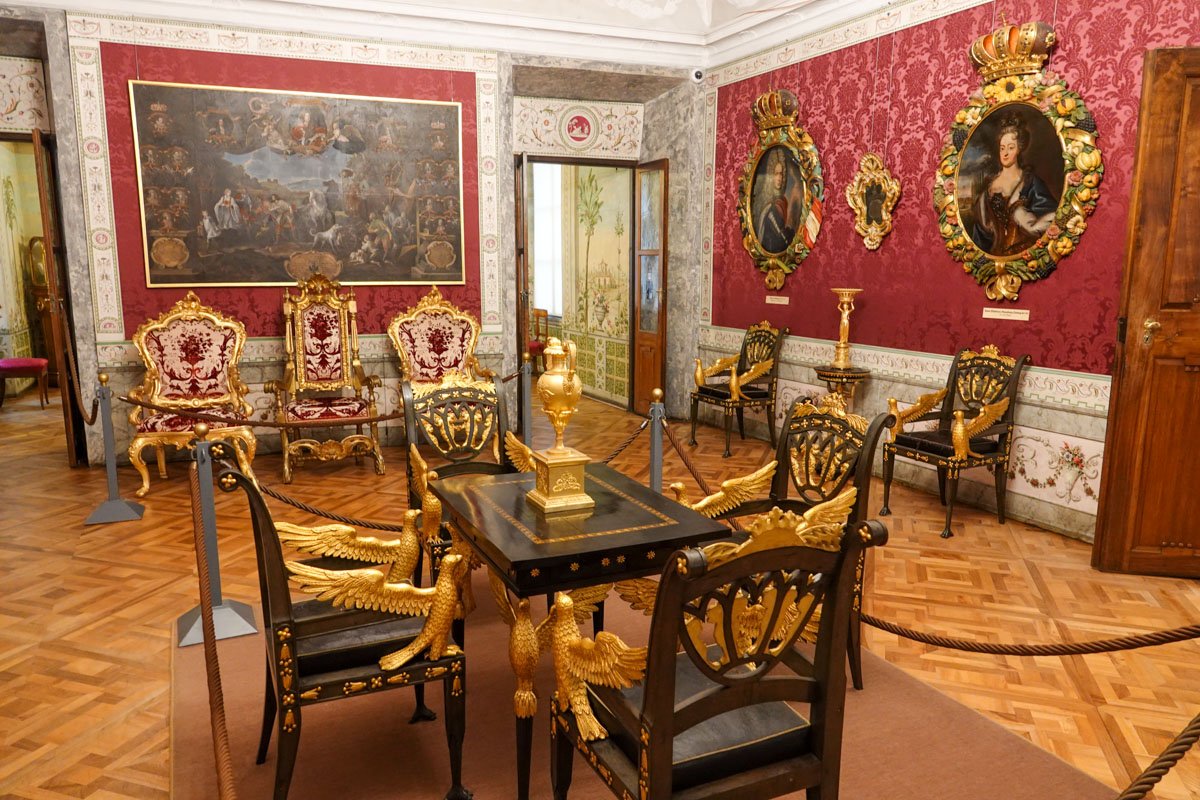
     It's a big palace and we visited rooms of every type.

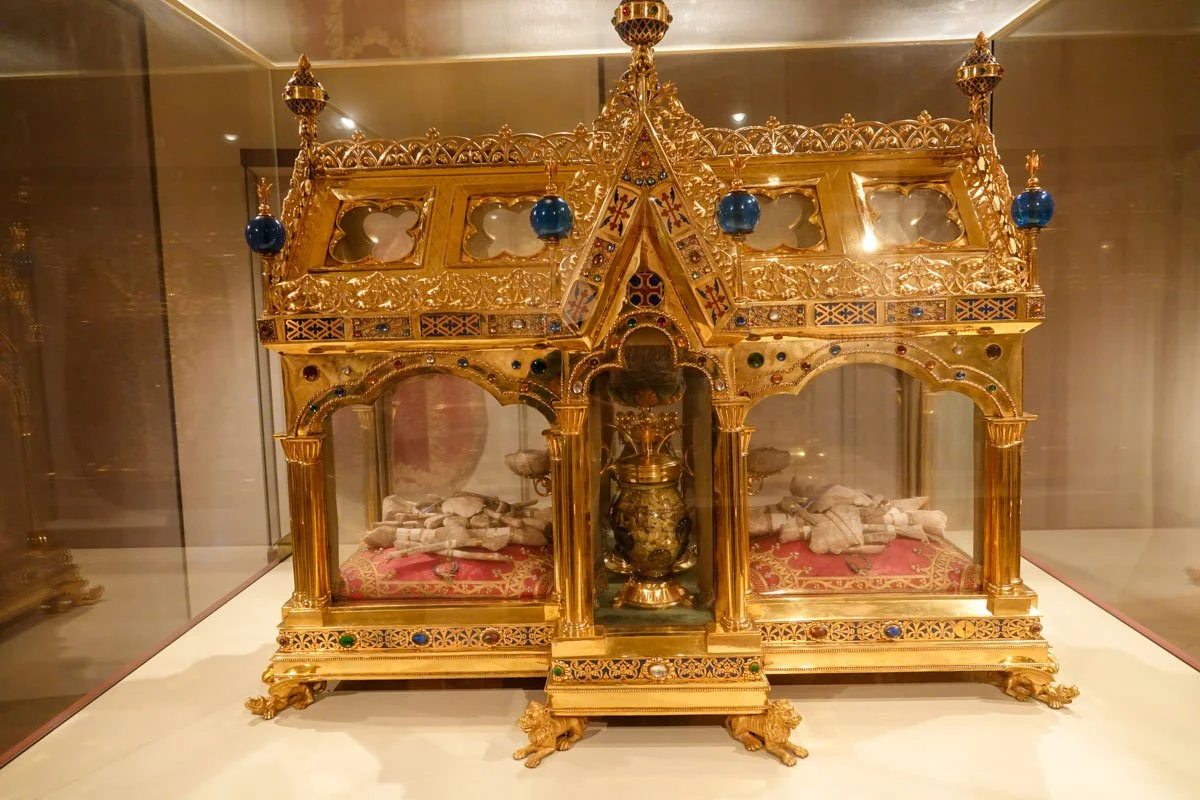
     Many of the small objects were no doubt some of the most priceless in the museum.

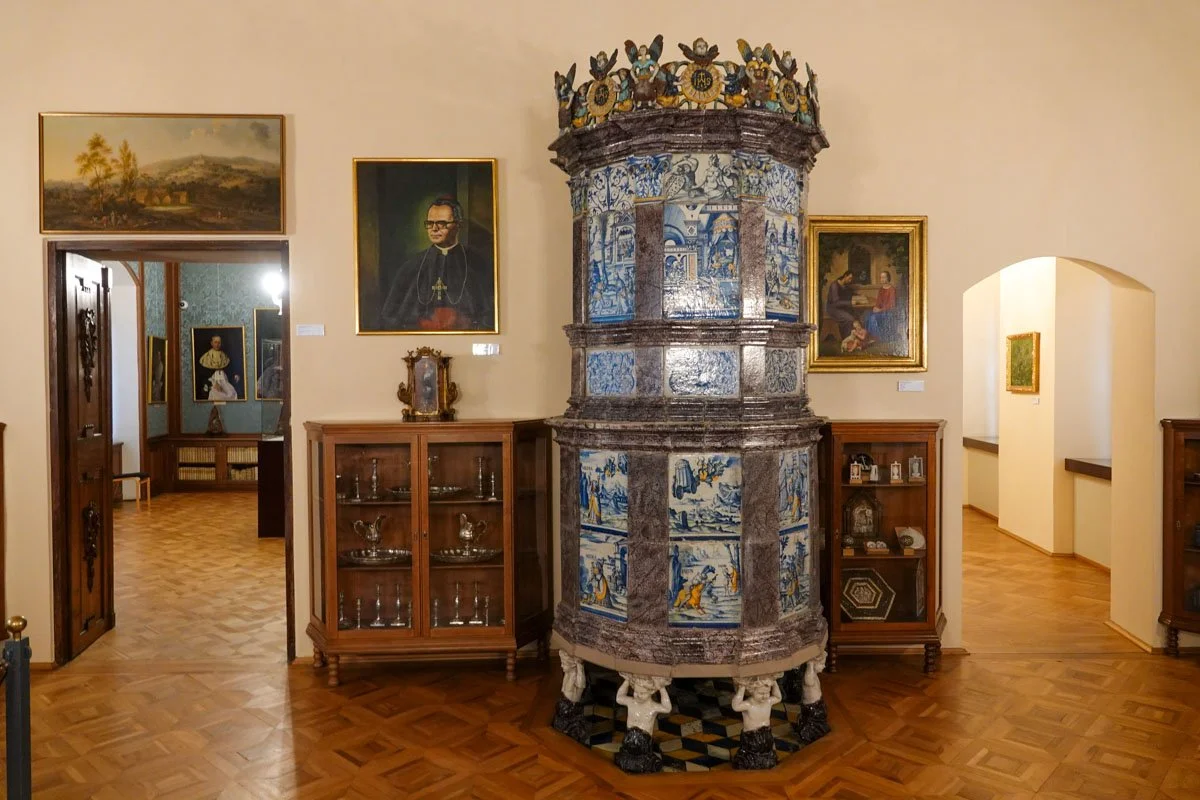
     Perhaps my favorite thing to look for and see were the majolica (pottery made by a tin-glaze process) stoves. Almost every room had one. They were each very different, each very decorative, and all were quite large. The one below was not one of the largest stoves. This palace must have cost a fortune to heat in the winter time but I'm sure the bishop was comfortable.
Bolzano (Bozen)

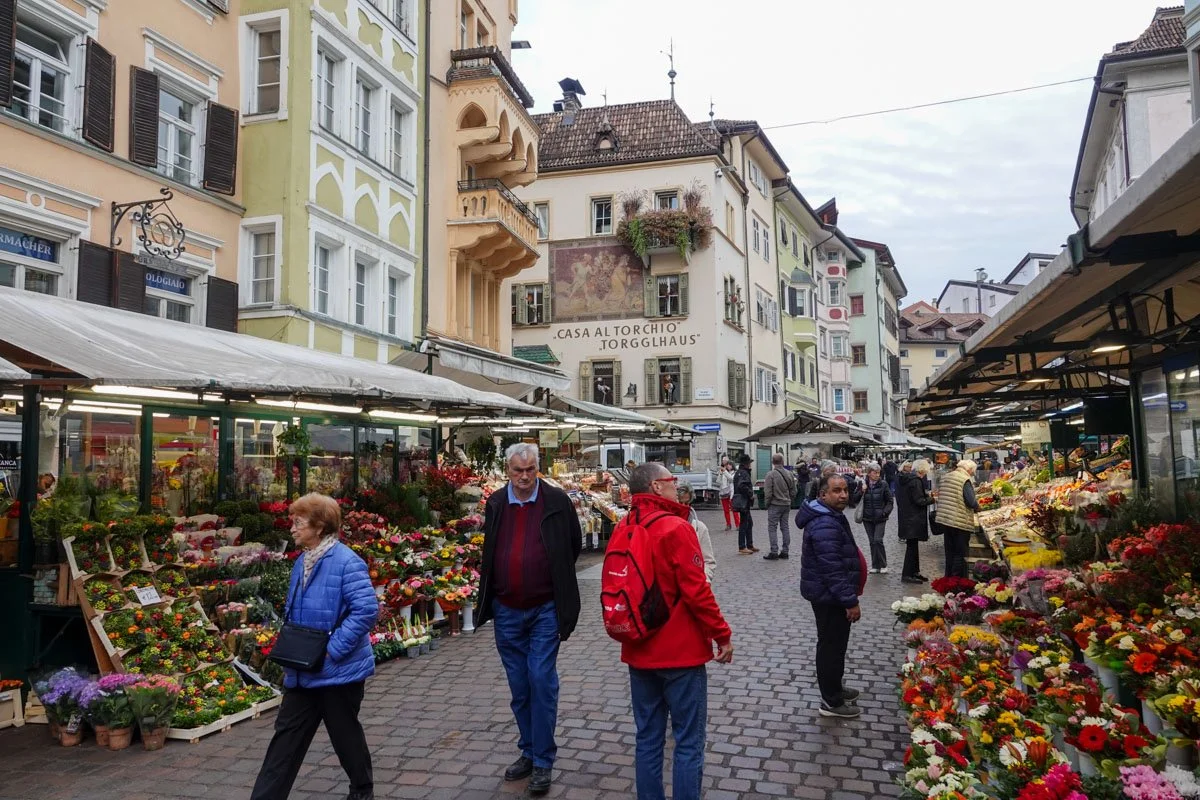
     We took the train from Bressanone to Bolzano. It's all part of the same South Tyrol area which is all bilingual with Italian and German, hence the German name Bozen. In the case of Bolzano, it's about 70 percent German speaking. It was part of Austria for centuries until after World War I when it became part of Italy. Bolzano is the capital city of South Tyrol.

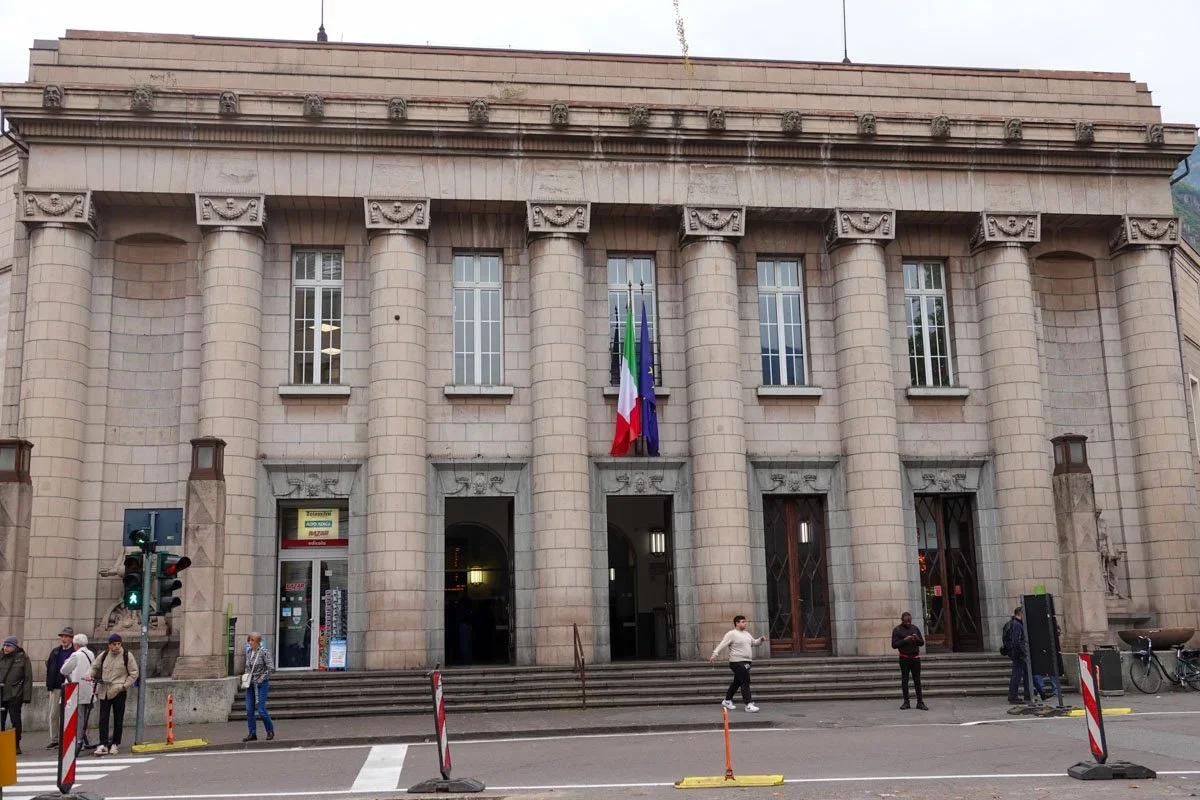
     As we got off the train and started on our walk in Bolzano towards old town, we saw several interesting buildings. Interesting because of our guide who told us that they were from the Mussolini era and were considered fascist buildings. That meant that they appeared to be very strong and powerful buildings. At that point, I wasn't sure how much I would enjoy visiting Bolzano. I wasn't sure about the artwork either.

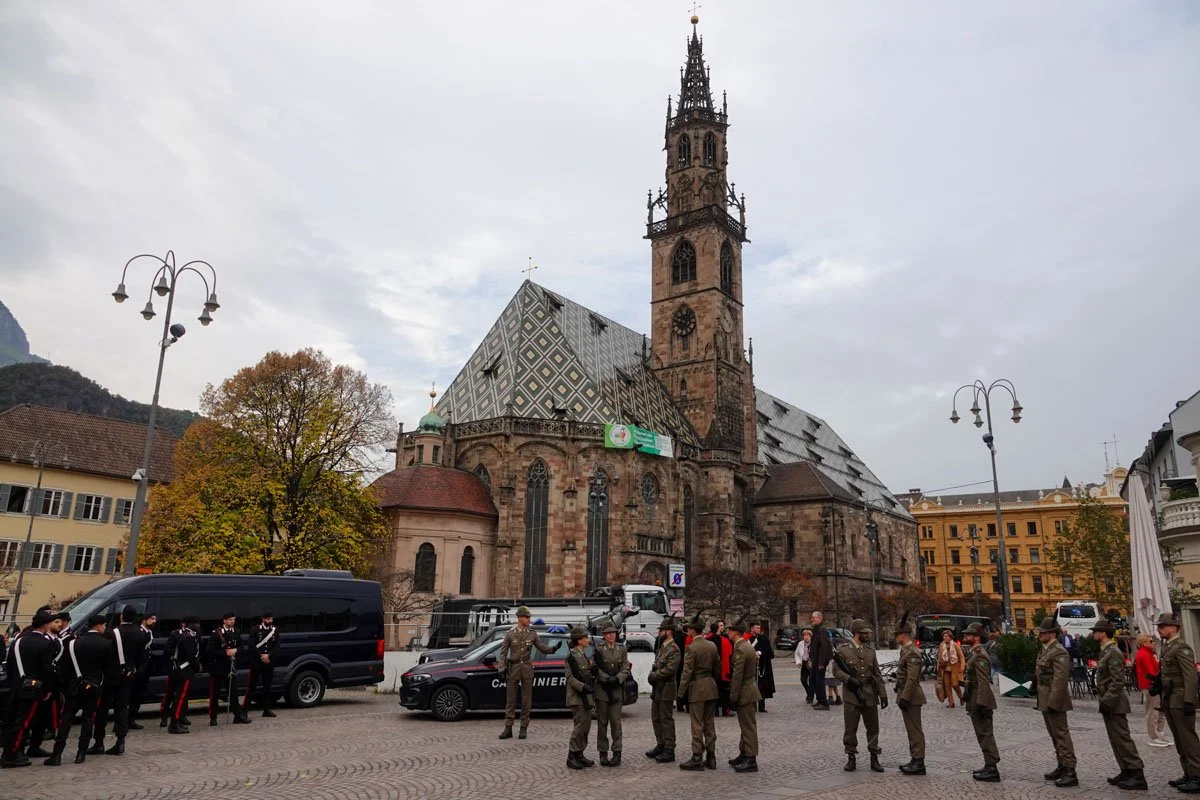
     As we got to the city center and the Cathedral of St. Vigilio, built over 800 years ago, we ran into the army, or at least parts of several armies. It turned out that the soldiers were out to celebrate the end of World War One, when this area became part of Italy. Of the four different army groups, I liked the Mountain Troops the best as they had feathers in their caps (the guys on the right).

     But from this point on, Bolzano was a great city to visit. It was a beautiful city full of history, architecture, culture, and scenery. Our next area to visit was, I believe, the Merano Market on the banks of the Passer River. I did have to be careful, however, as Vicky had "shopping eyes!"

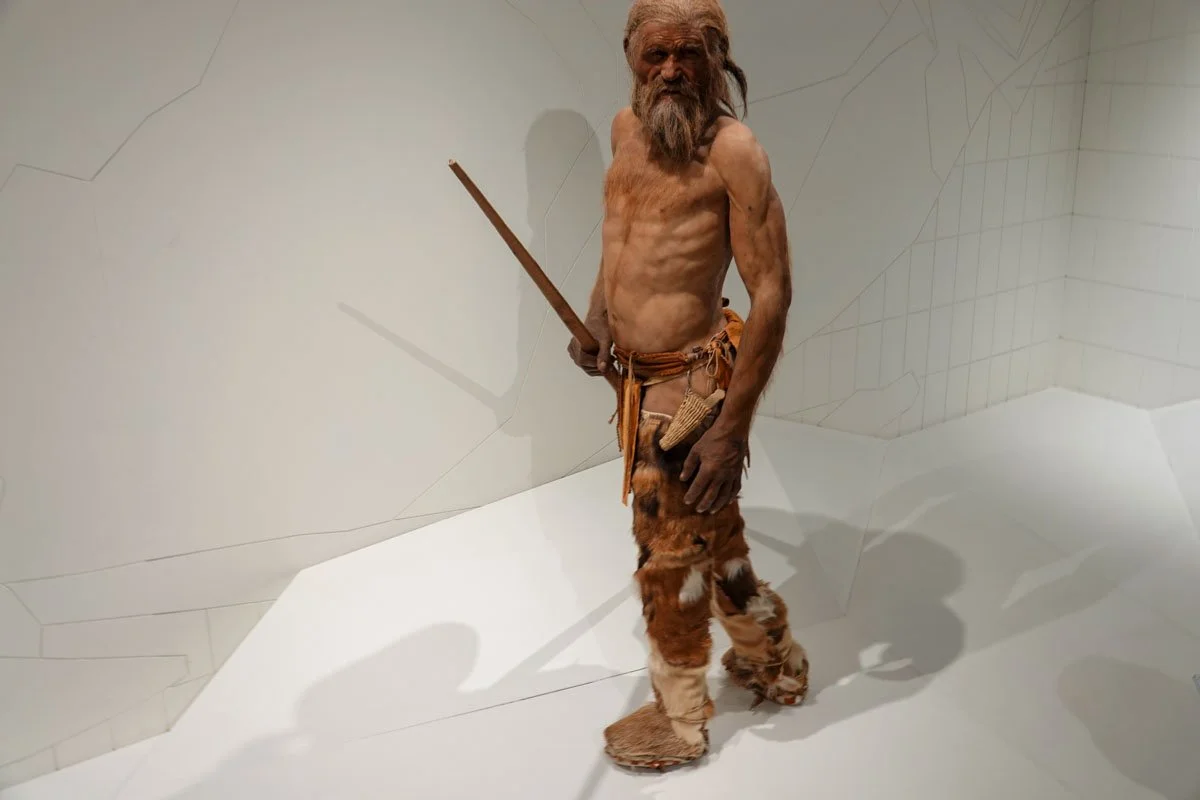
     We had one interesting stop before lunch time. We visited the Museum of Archeology. We were there to learn about Otzi, the Iceman. He is a 5,300 year-old ice-preserved mummy discovered near here in 1991. It was a fascinating story and a good museum but very crowded.

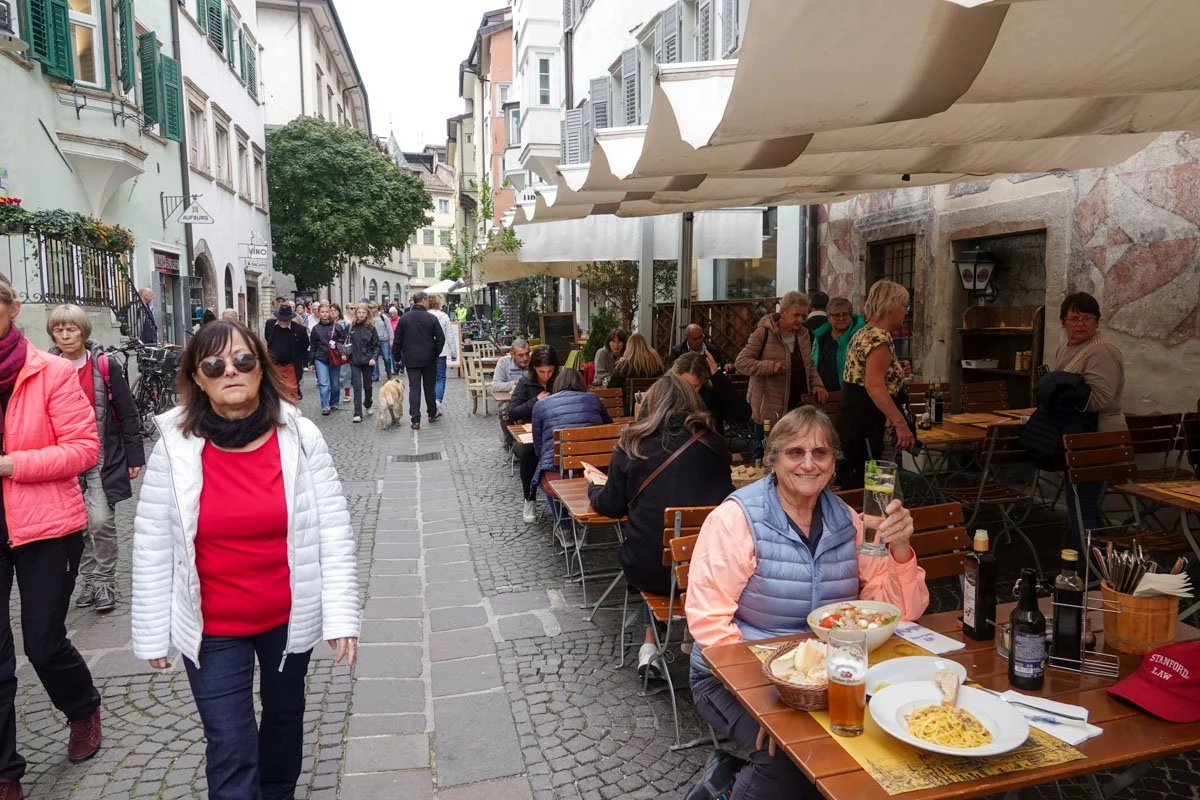
     At lunch time, Vicky and I wandered off from our group, found a very long small alley and came out on the other side on a busy street full of restaurants. We found Paulaner Restaurant and ate lunch. I had spaghetti Carbonera and a Hacker beer while Vicky had a house salad with shrimp, tuna, cheese, etc. Vicky had an elder flower spritz to drink.

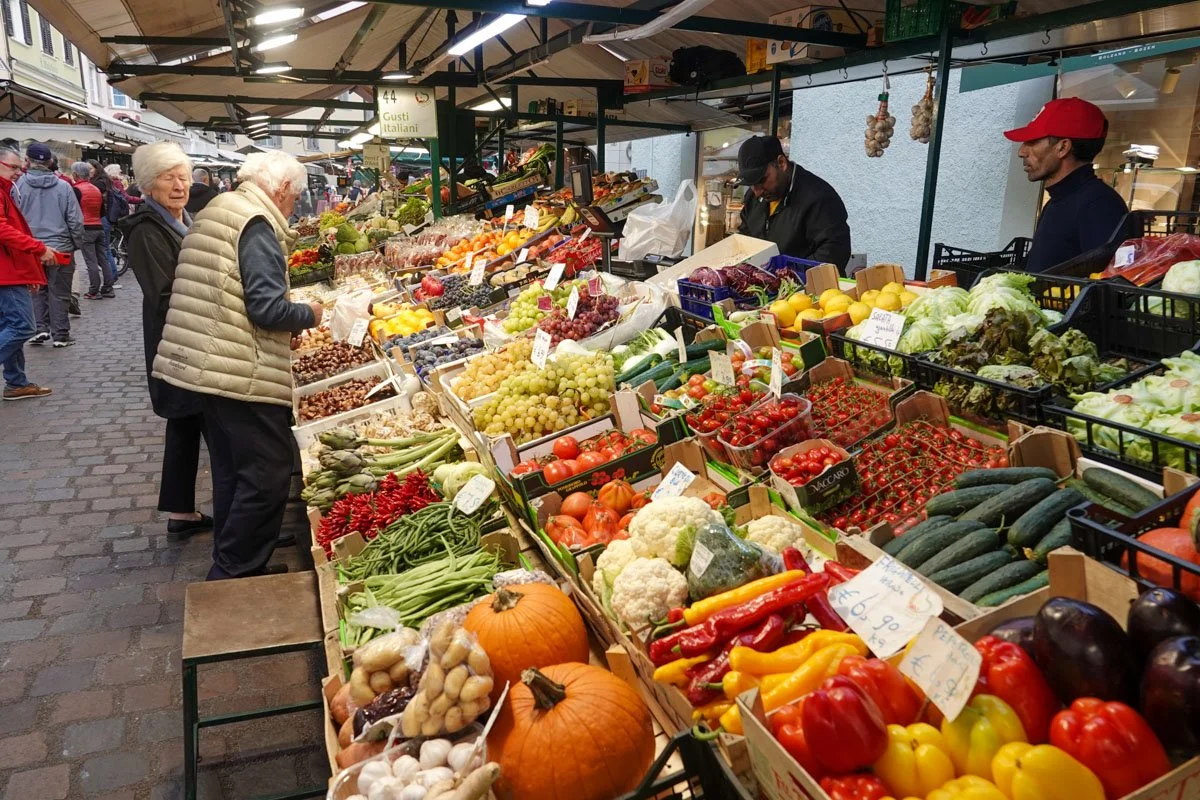
     On most of my trips and in particular to less developed countries, I like to highlight their markets. I haven't done that with Switzerland and Northern Italy, but I will here. I wouldn't want anyone to think that this area of the world doesn't have great street food markets. This was our post-lunch Bolzano street food tour.

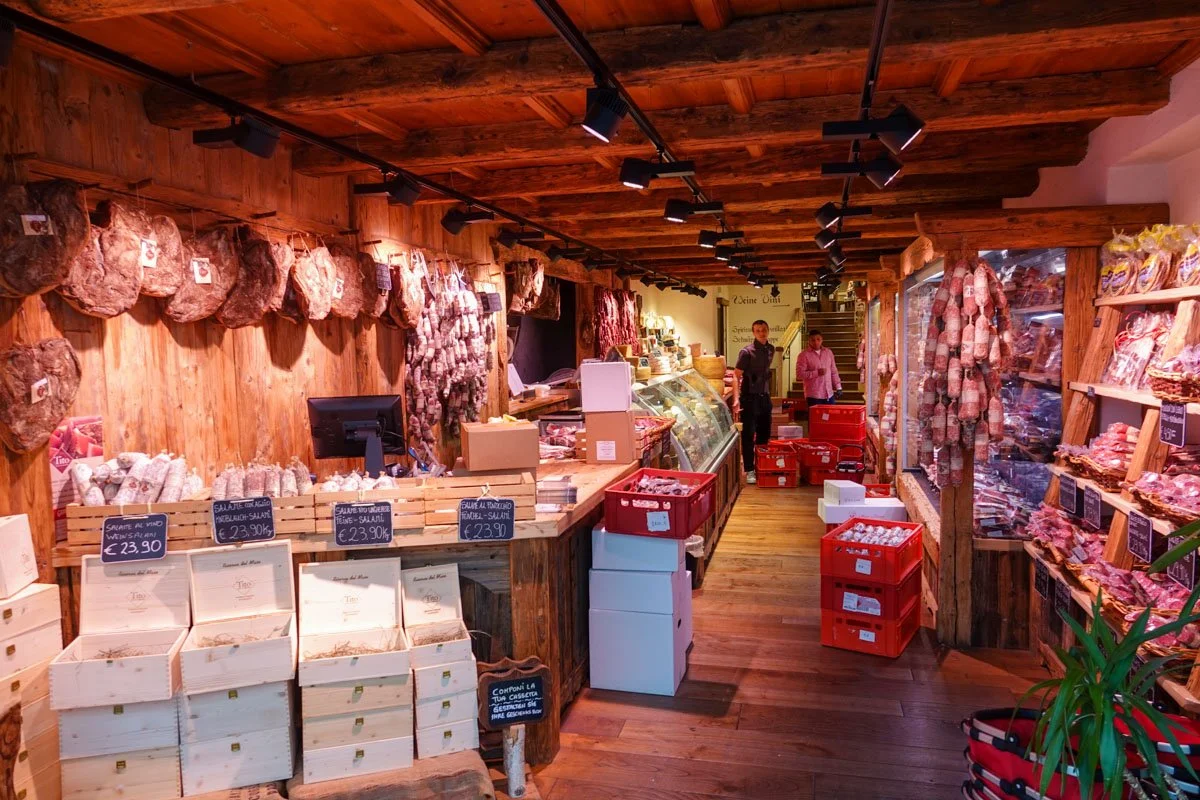
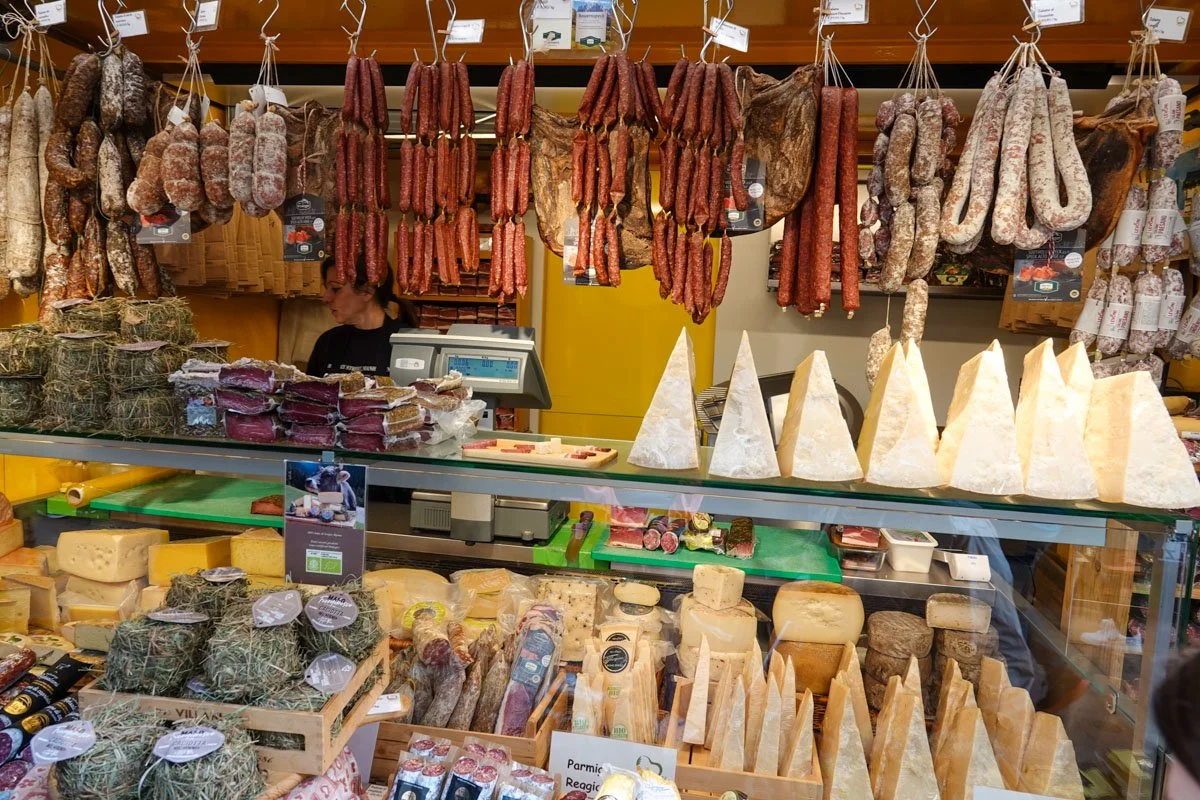
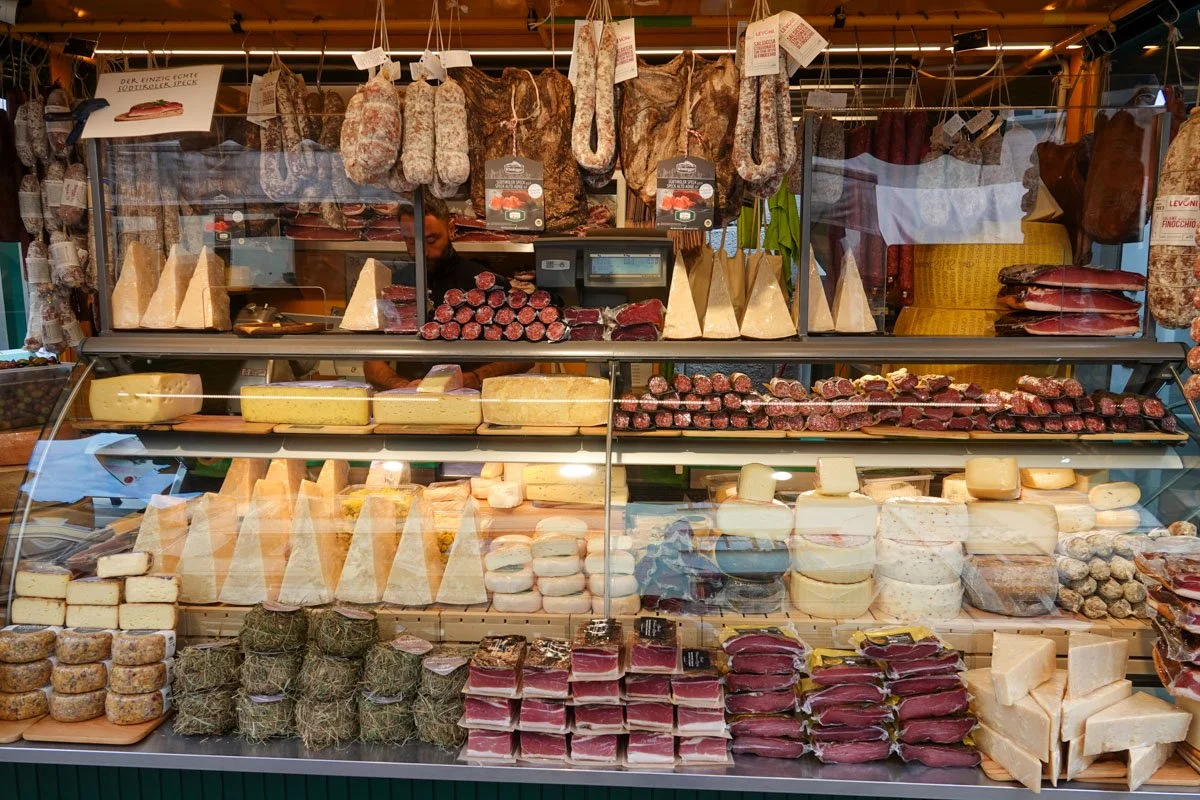
     The first stop was just off the street, but one floor down. The dried meats were super enticing, to say the least. Yes, we did try some samples.

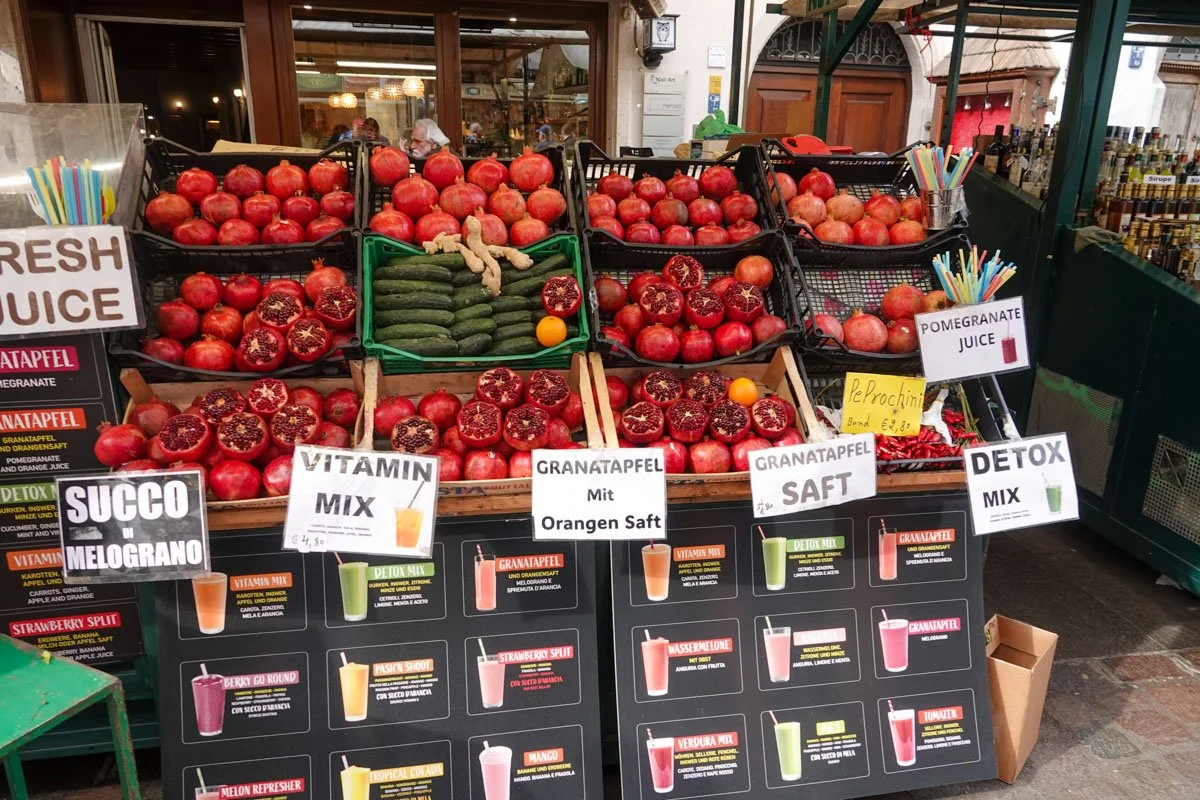
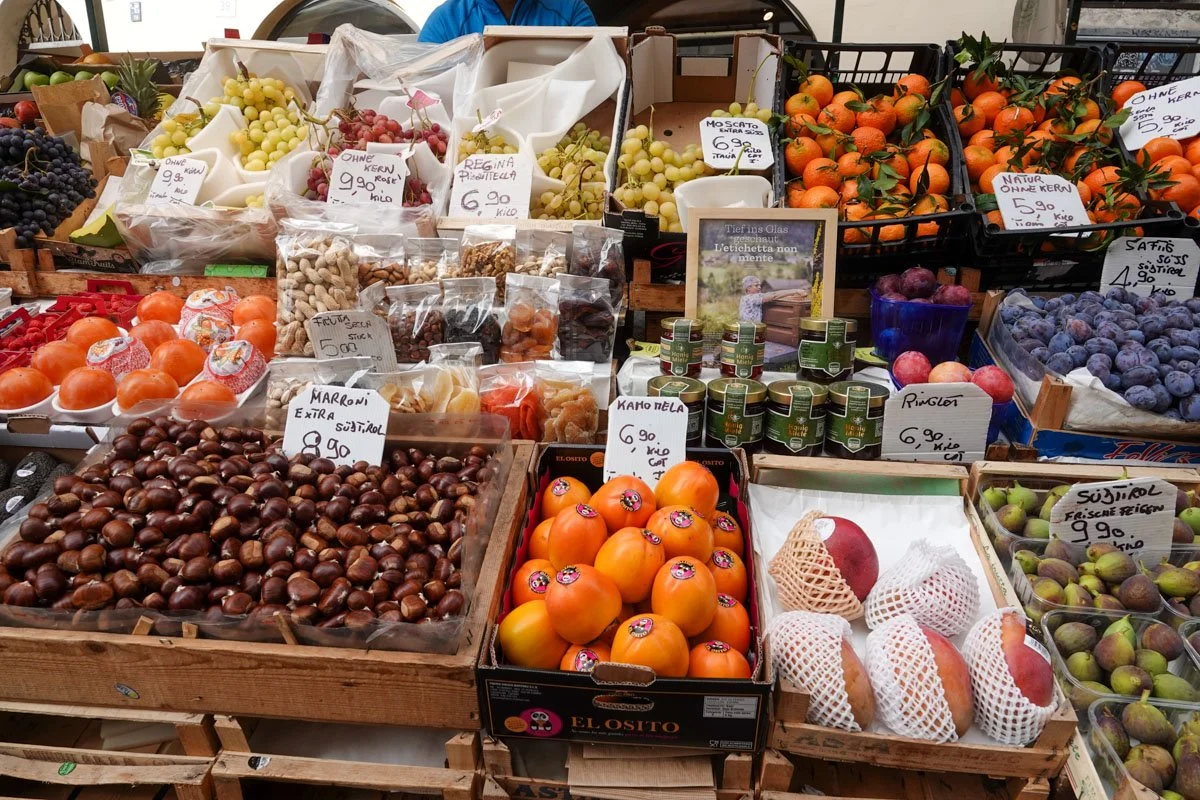
     I especially liked the seasonal items like pomegranates, persimmons, and chestnuts, but everything looked good.

Novacella Abbey

     One afternoon in Bressanone, we boarded a bus and drove north to Varna. We visited the Novacella Abbey. It's a very large religious and production complex. It was founded in 1142 by the Augustinians, who still run it. In the Middle Ages, a school for choral music and a school for copyists was here. The abbey also was established for travelers, pilgrims, the sick, and the poor, offering shelter and care until it closed in the 15th or 16th century.

     Novacella underwent secularization under Napoleon, but monastic life was revived in the abbey in the early 1800's. During WW II, Novacella served as a supply depot and was partially destroyed. It has been restored to its Baroque style again since 1949.

     Today it houses a boarding school, a convention center, an exhibition space, a museum, and a winery. 

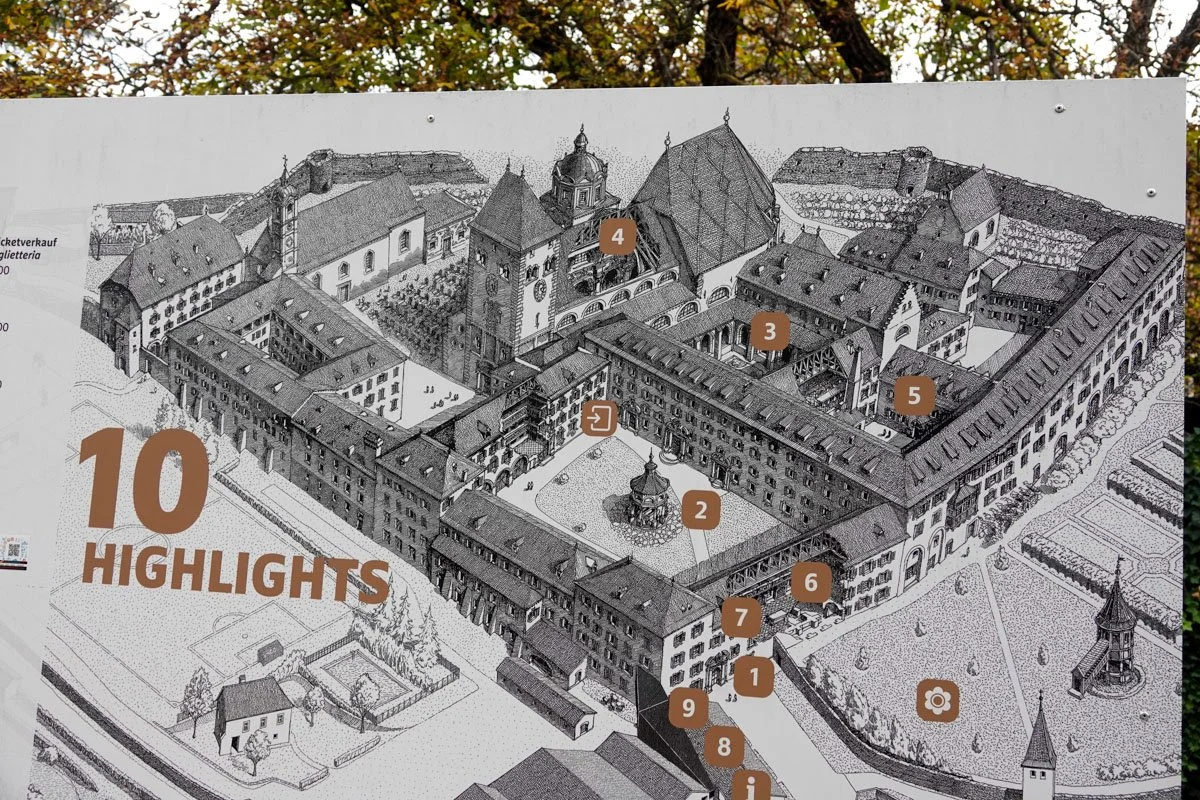
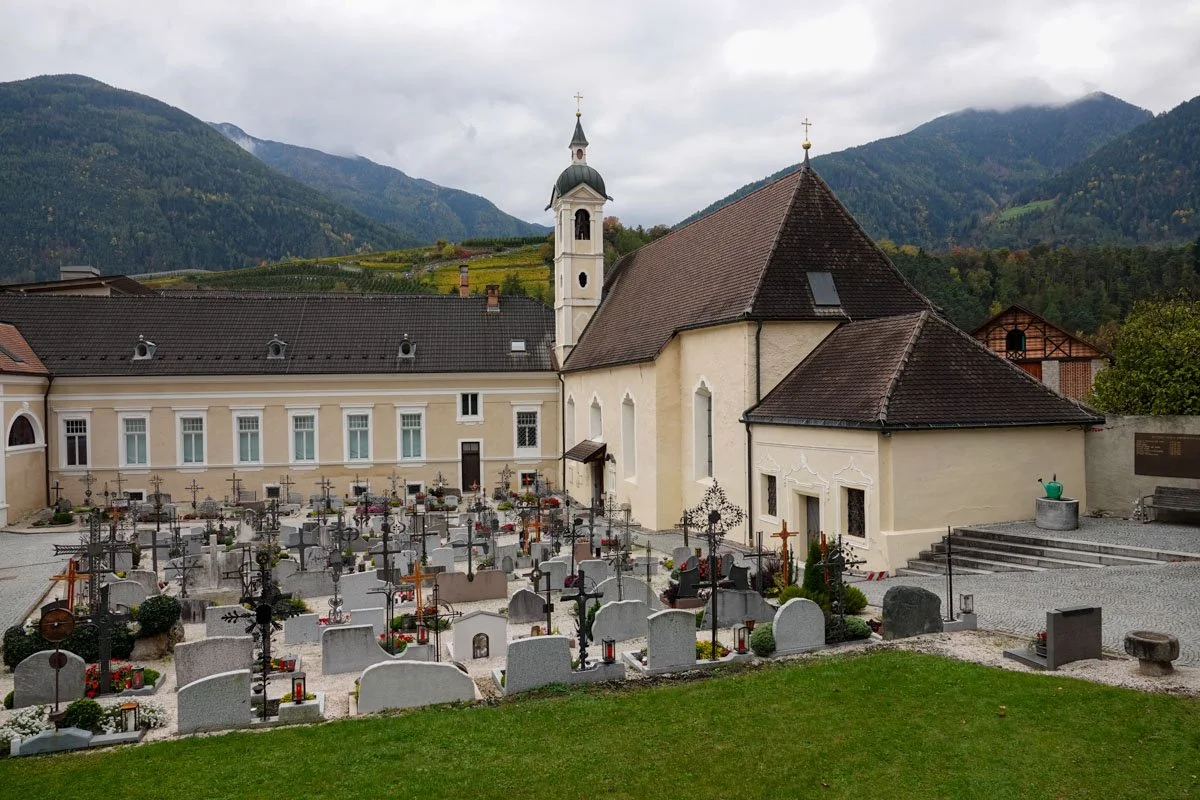
     The abbey was a much bigger place than I expected. It also looked more like a fortress than I expected. I will barely be able to show much of it, but I do want to at least give you some idea about the abbey. I will start with a photo of a display photo of the abbey, just for perspective.

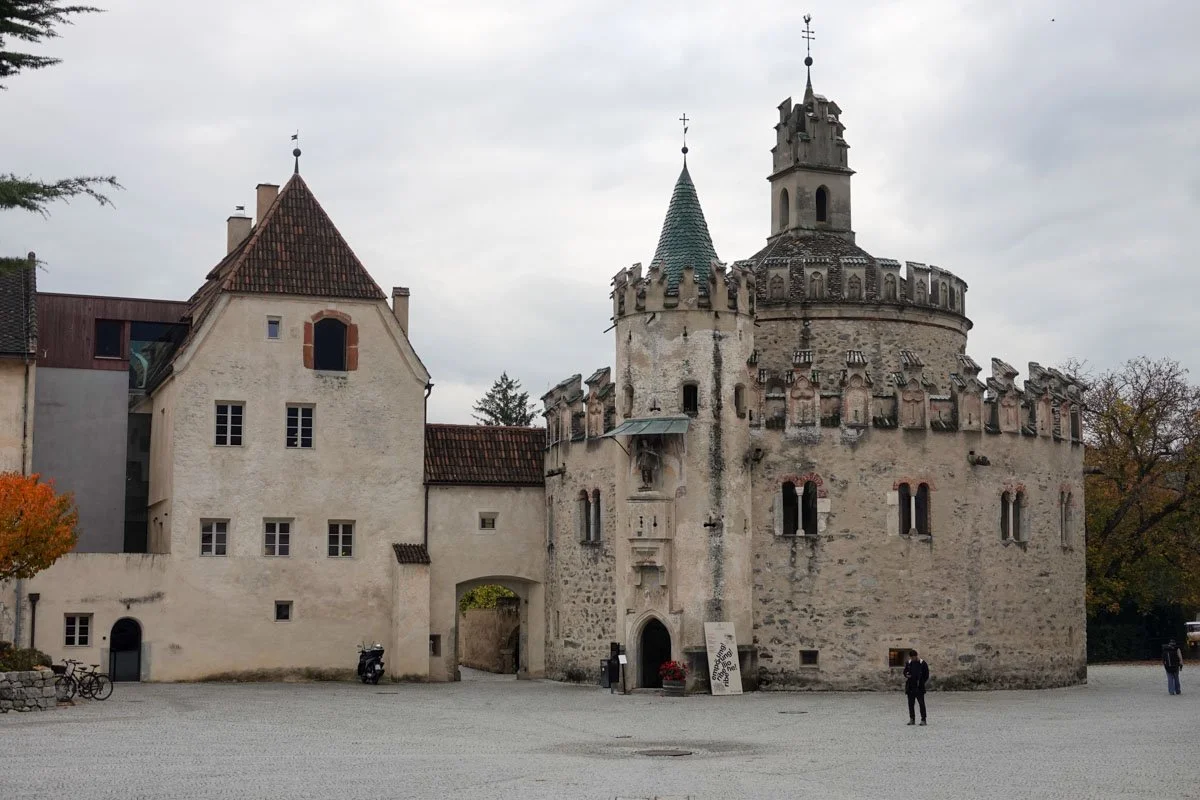
     I'll include two more photos of two parts that we visited to give you some idea about the looks of the abbey.

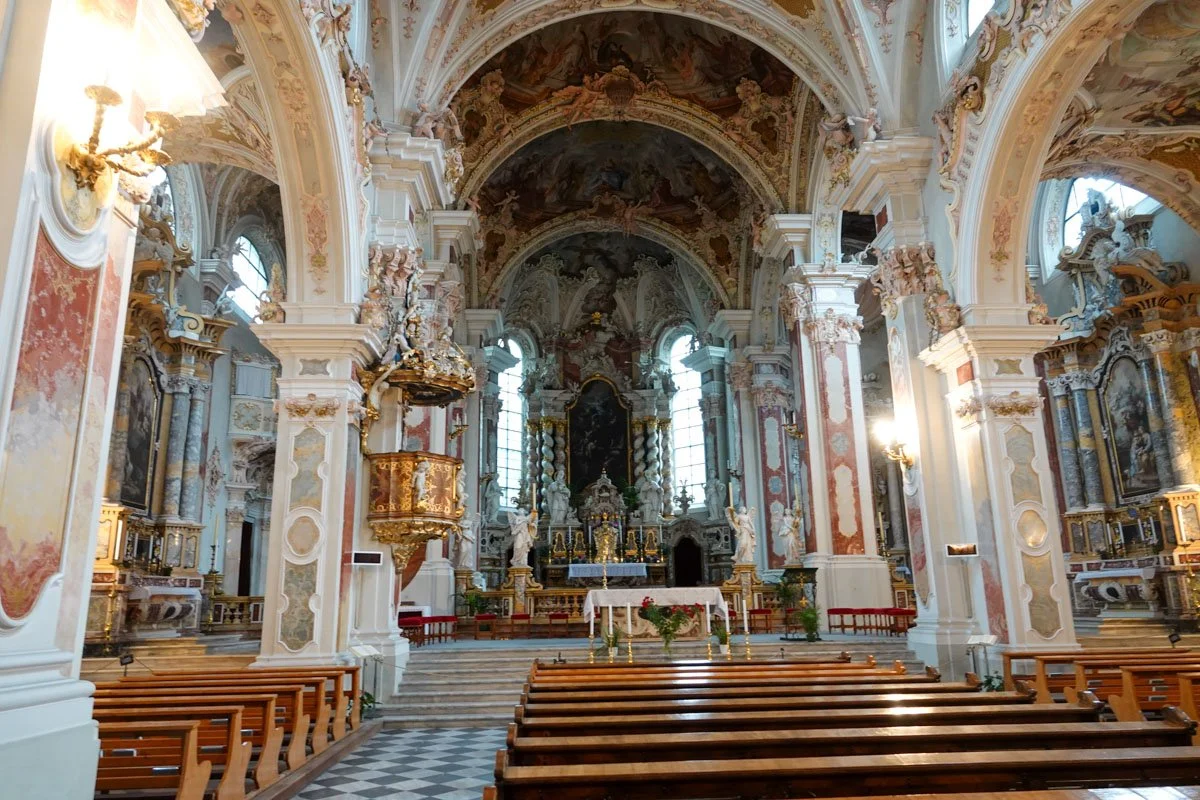
     We only visited a few places within the abbey, but that included the Church of Our Lady. This abbey church was rebuilt in the mid-1800's, transforming its original Romanesque architecture into a Baroque style. It seemed like a large and fancy church for being inside an abbey. Adjacent, the cloister had Gothic ribbed vaulting and frescoes as well as the nearby monastery garden.
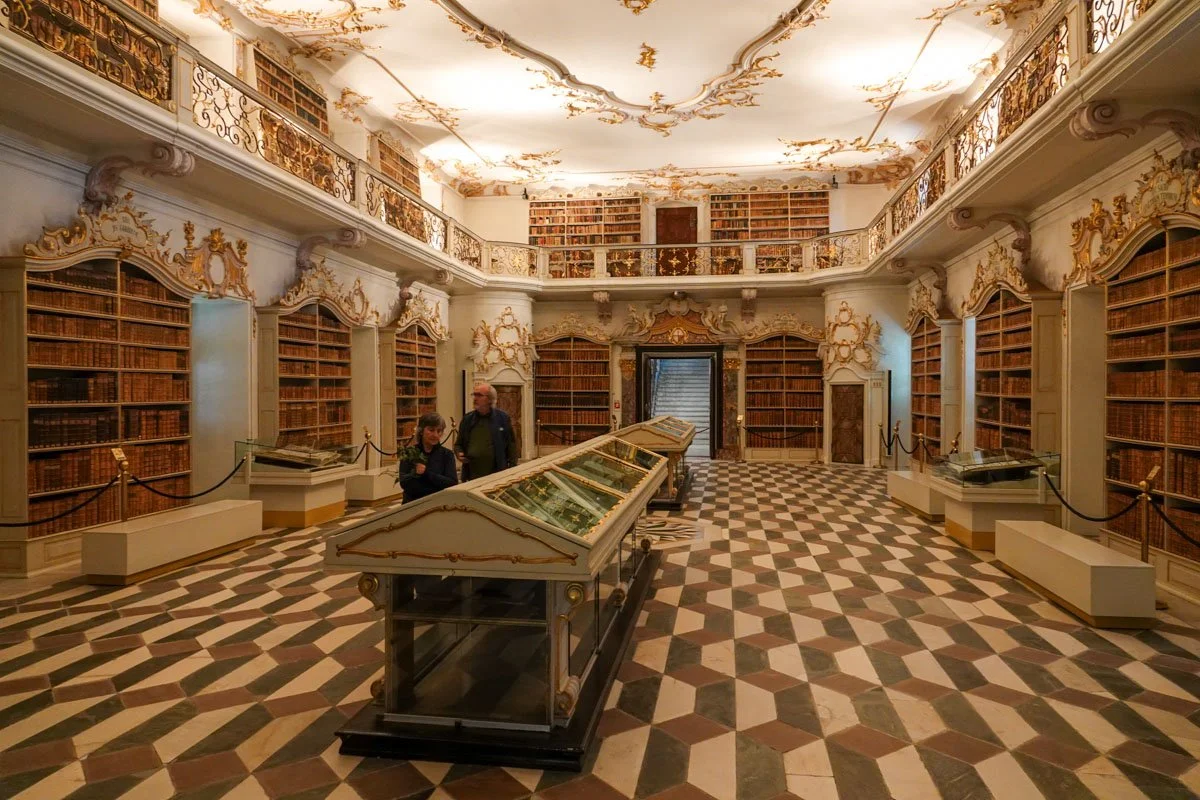
     The library was one of our main visits in the abbey. It has a very valuable manuscript collection and an art gallery featuring Gothic panel paintings.

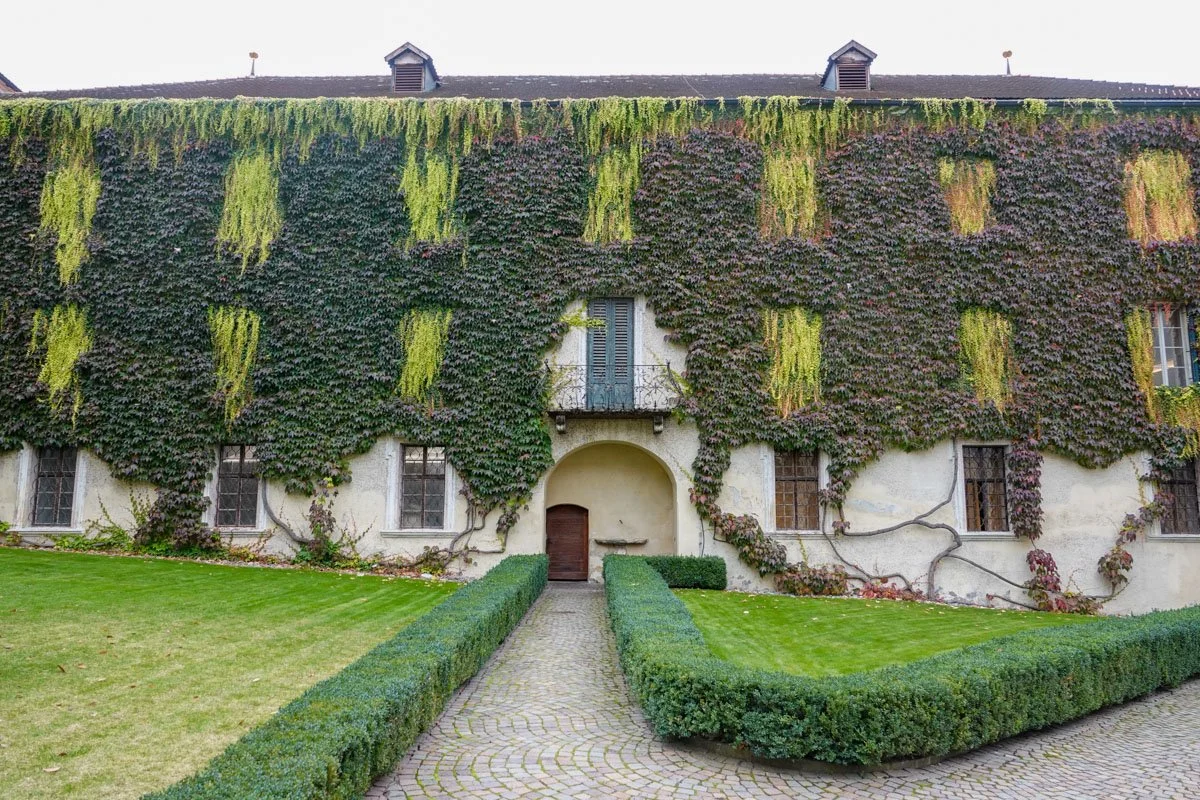
     One of my favorite things to see was when we were in the courtyard, directly outside the library. I noticed the wall with the different plants growing on it and asked our guide about them. The guide said that this was the external wall of the library, and the plants were meant to protect the books. The light-colored hanging plants cover over the library's windows to greatly filter the light that reaches inside the library.

Novacella Monastery Winery

     I suppose the main reason we visited the Novacella Abbey was to visit the winery, or at least it was my main reason. Since ancient times, the abbey has produced high-quality wines. Due to the altitude and latitude of Varna, white grapes are the major grapes. But they also produce some good red grapes, Pinot Noir above all, but the reds are produced in vineyards that are further down in the valley and more suited for red grapes.

     Wine is still produced within the abbey complex. They also have a wine bar-restaurant. It was my kind of abbey.

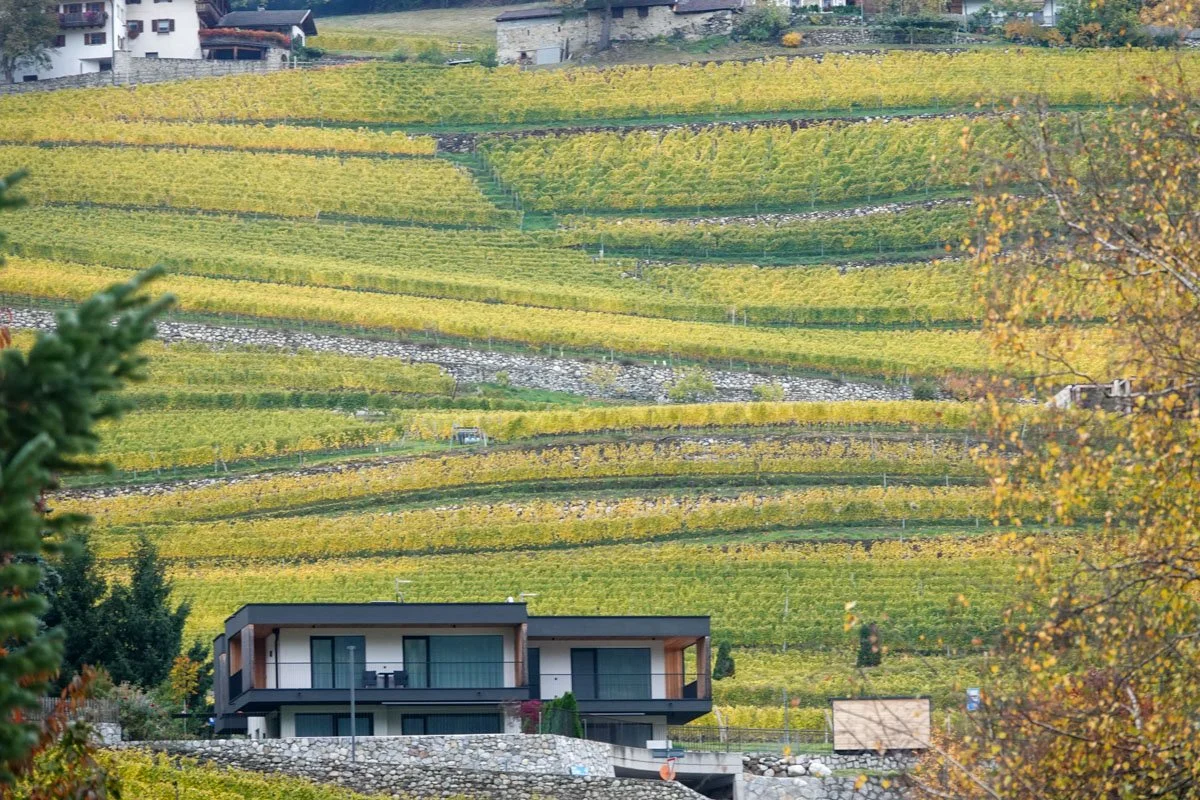
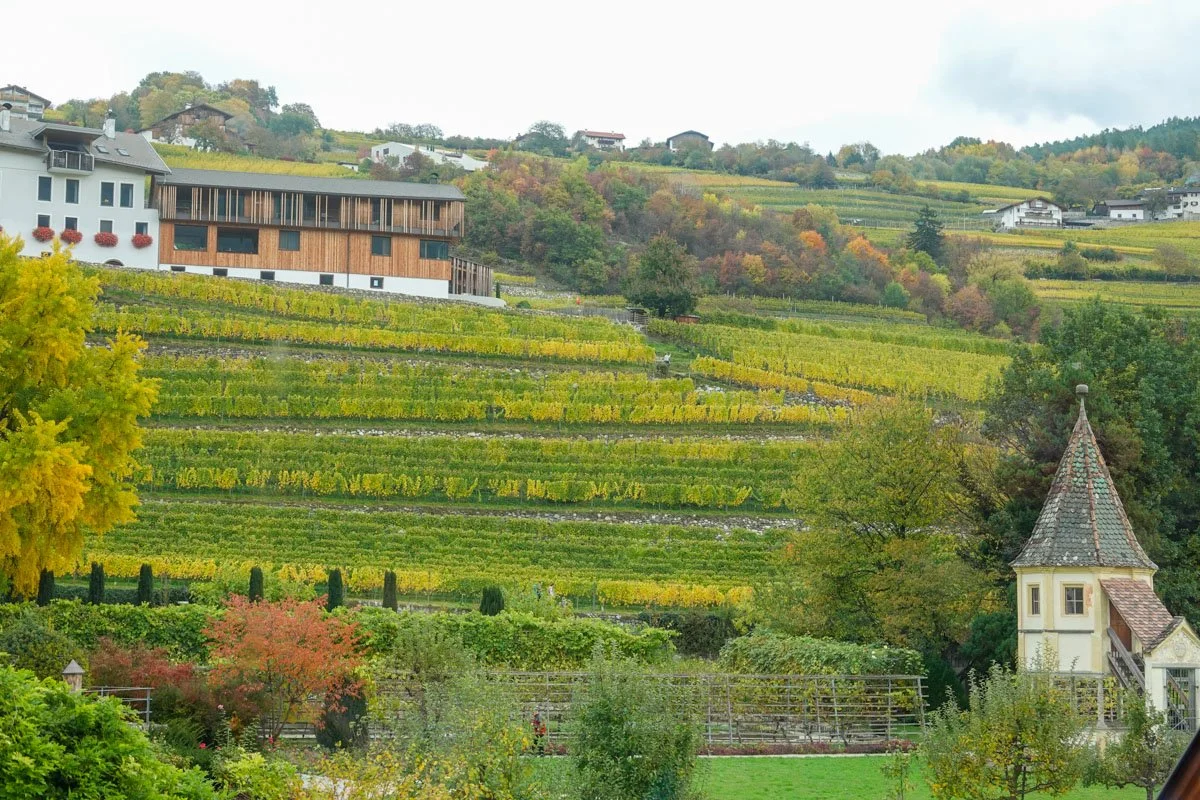
     The grapes and vineyards impressed me more than the wine-making and the wine, so I'll show more vineyard photos. The first two photos were taken from the abbey parking lot, just to show that the area is very vineyard oriented.

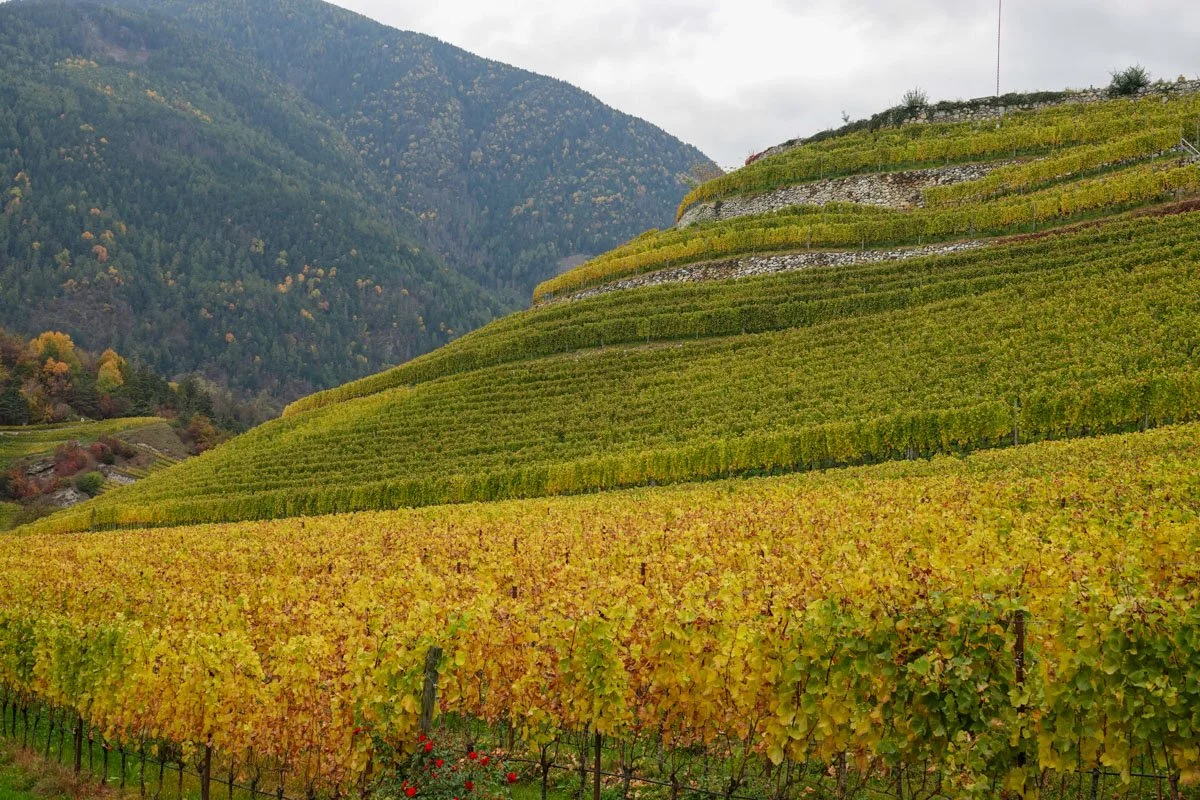
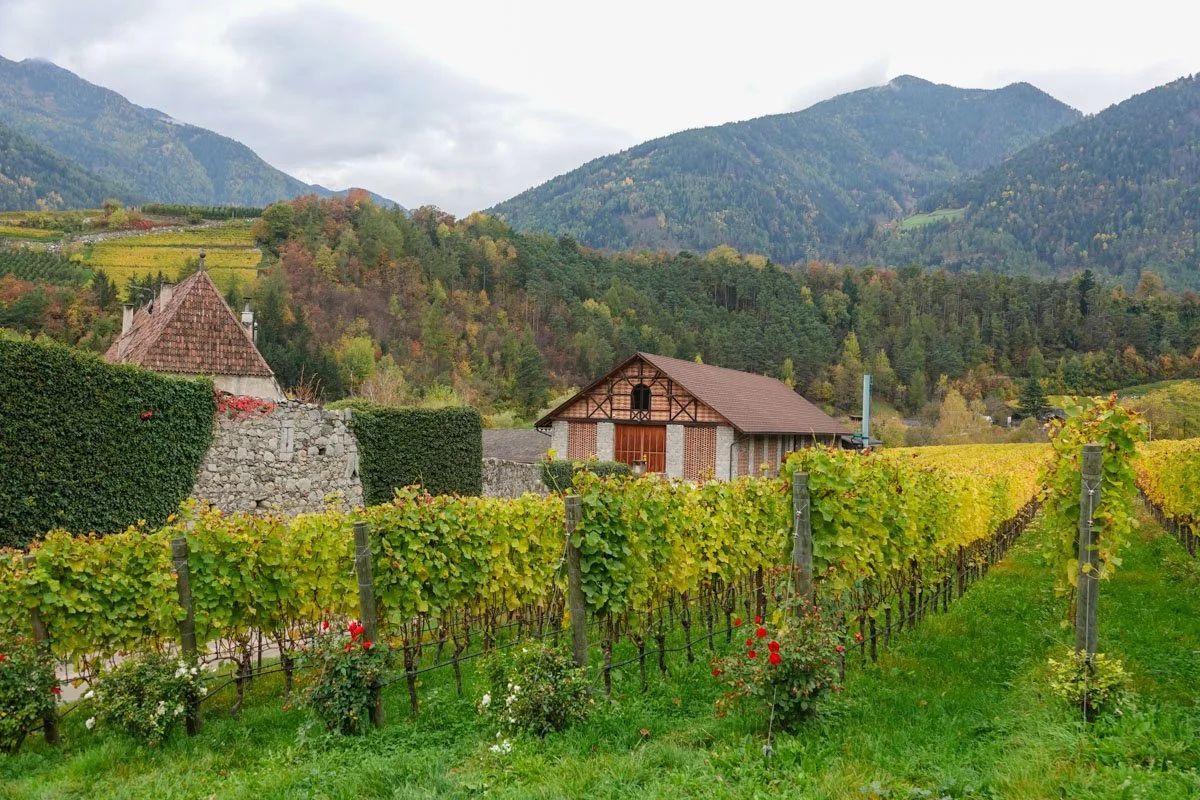
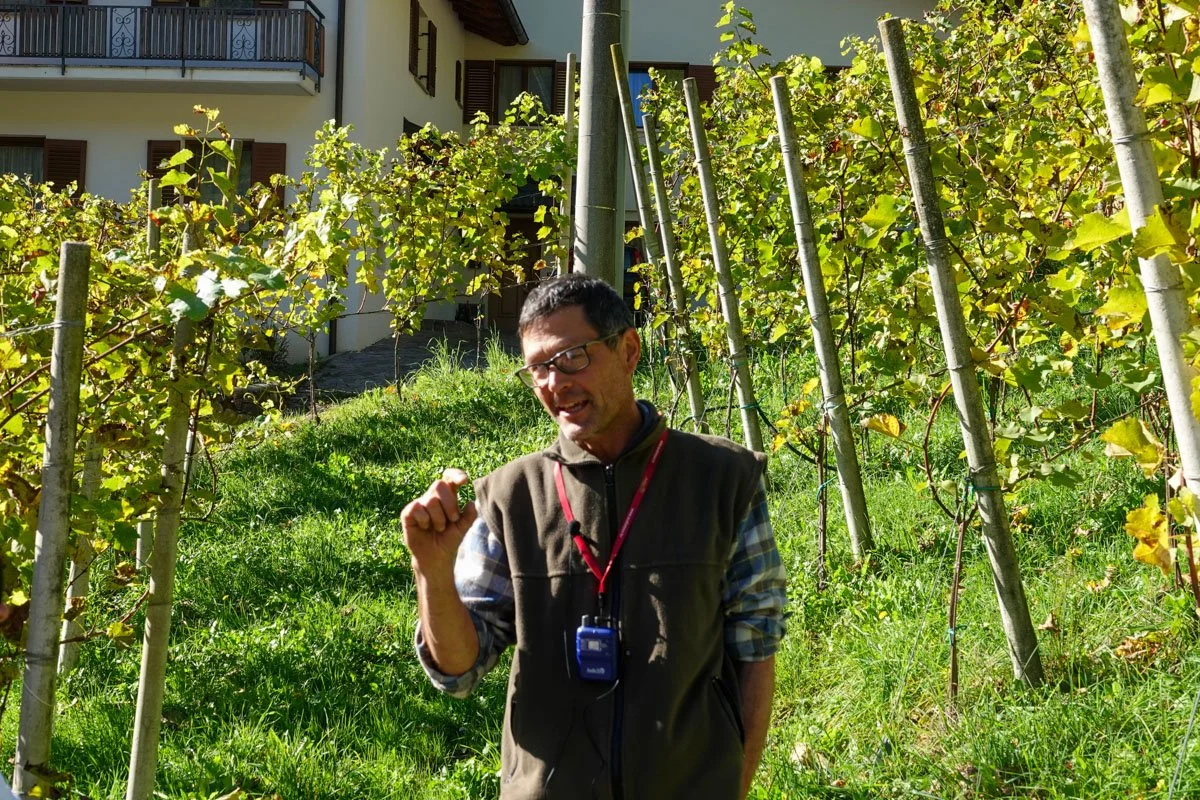
     After visiting the abbey, the church, and the library, we walked out through a back wall archway to see some of the abbey's own vineyards. It was late October and the vineyards were beautiful. In the second photo, the rock wall on the left surrounds the abbey.

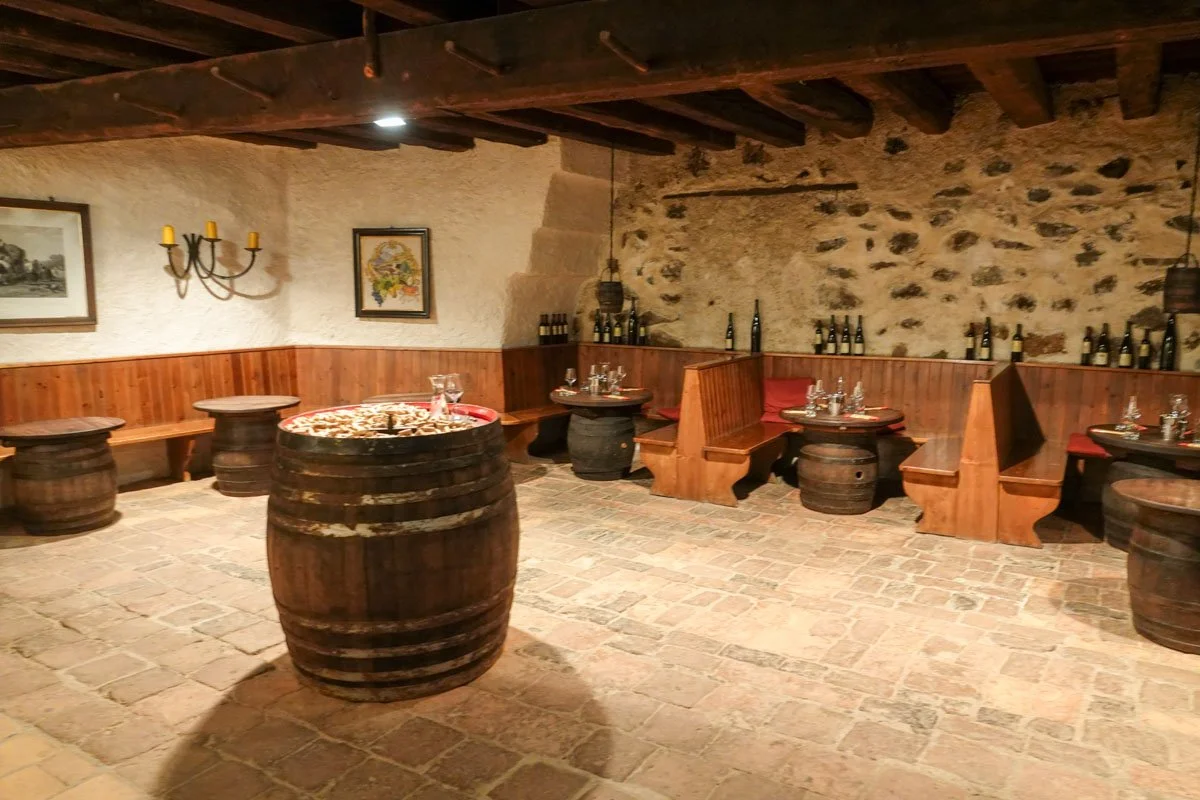
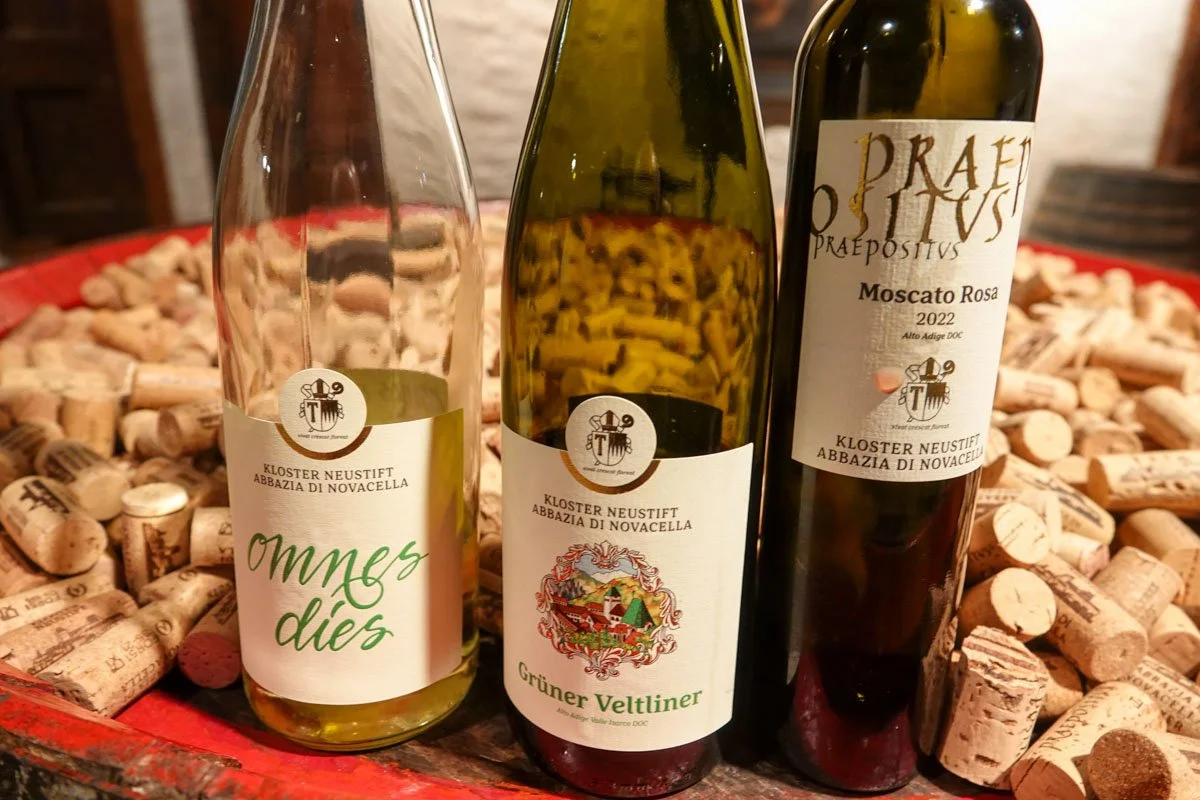
     Our abbey guide sat us down in an ancient cellar tasting room. She gave us lots of information about the wines that we tasted, about the grapes, and all such information including the history of wines here in the abbey. We tasted three wines.

Val Gardena

     On this day, we drove south from Bressanone to Val Gardena. It's a valley in the Dolomites of South Tyrol. The Dolomites, or Pale Mountains, are a mountain range within the Alps Mountain Range. The name Dolomites comes from the carbonate rock: dolomite. Val Gardena is a valley in the Dolomites and surrounded by the Dolomites. It's perhaps best known as a tourist stop for skiing, rock climbing, and woodcarving.
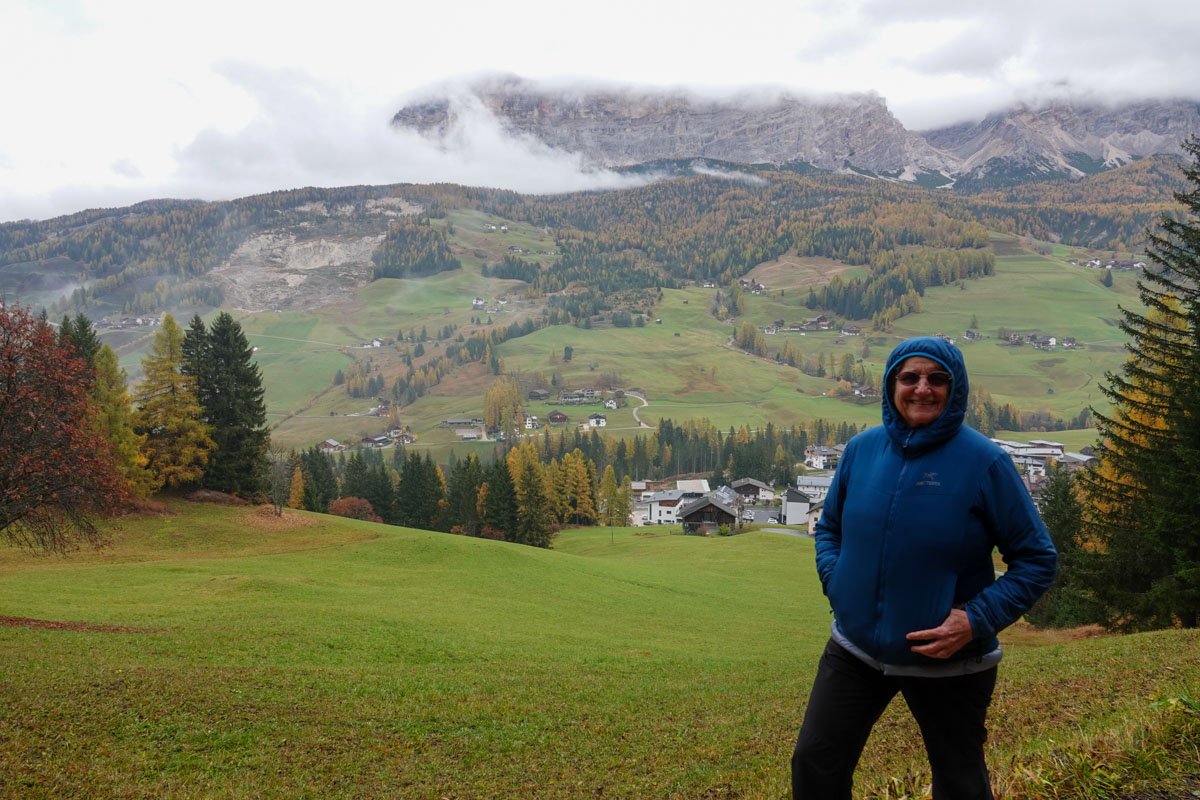
     Our interest here, via our travel company, OAT, was to visit some small Alpine villages that are the center of Ladin culture. Ladins are an ethnic minority of about 35,000 people that live in five valleys in the Dolomites, including Val Gardena. 

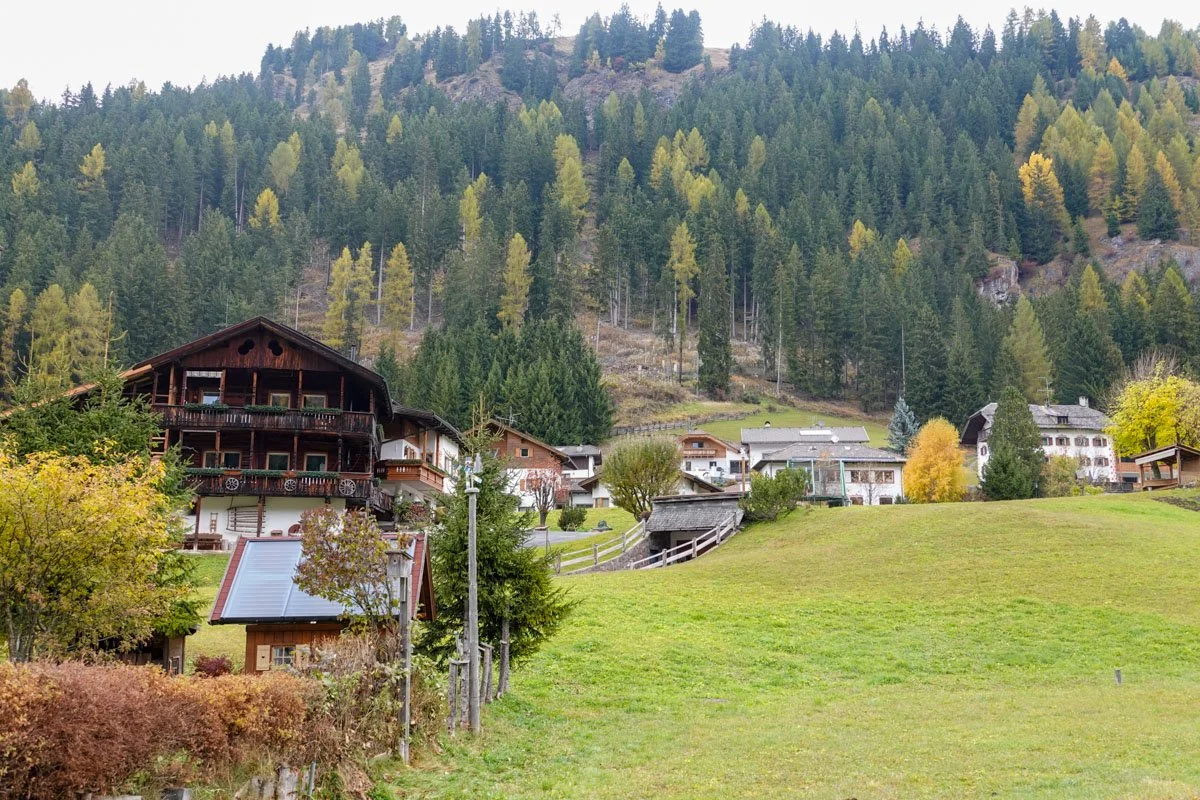
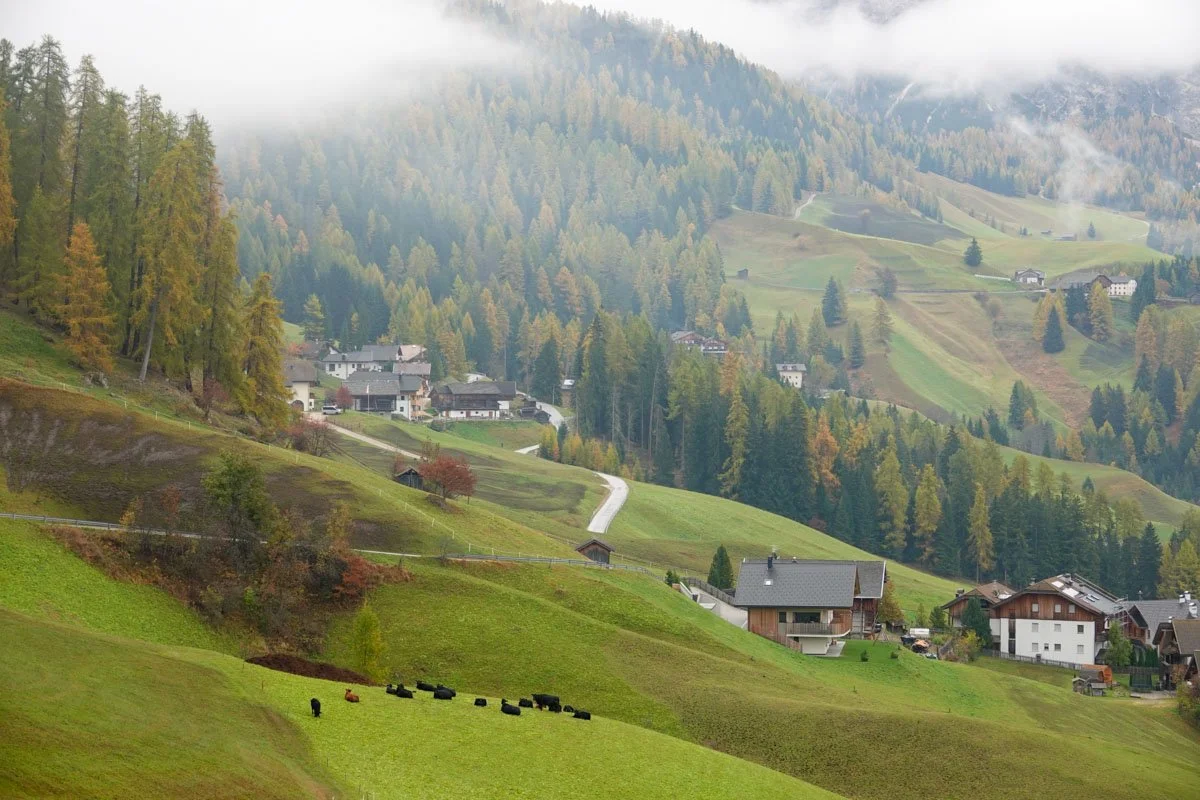
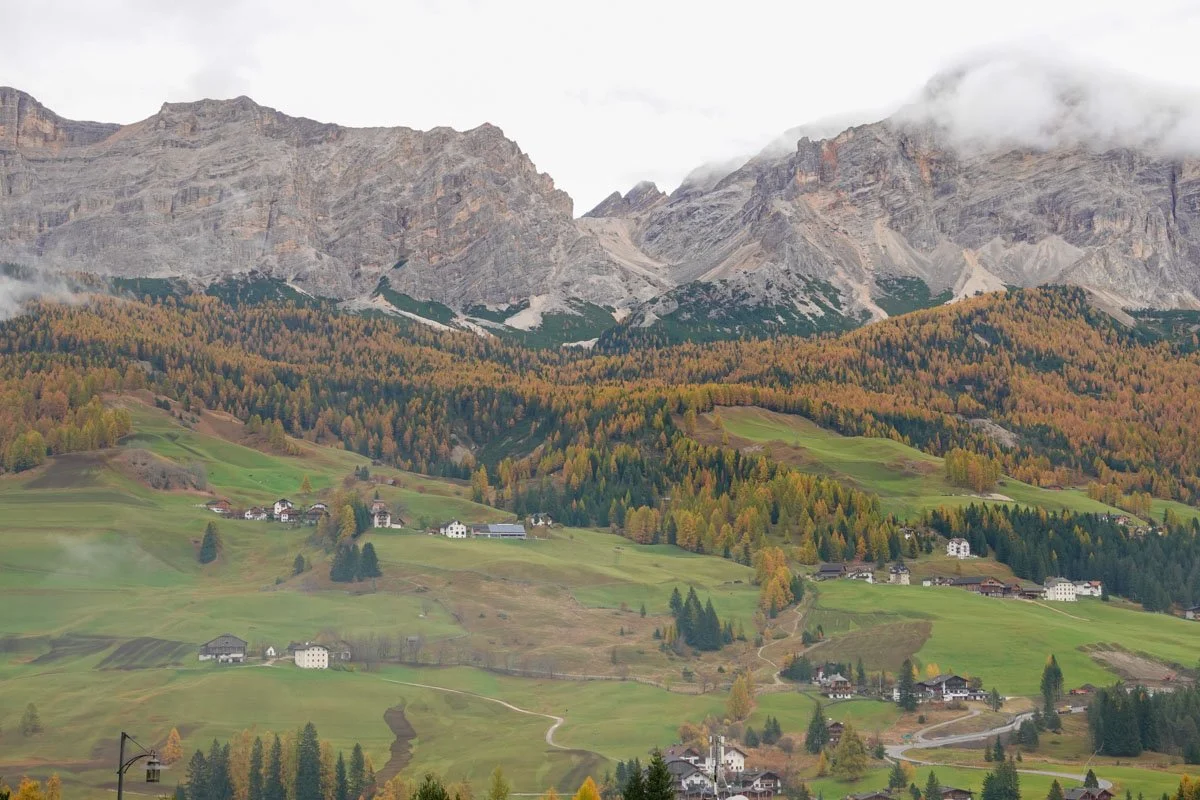
     Ladin's developed their own language that is different from German or Italian and is the oldest language in Italy's Alpine region. We drove through the valley and made several stops. It was not the clearest of days and in fact, we hit some heavy fog several times. Often, we couldn't see the tops of the mountains. But despite it all, it was a beautiful day and a beautiful valley. Below is one of the small villages where we stopped.

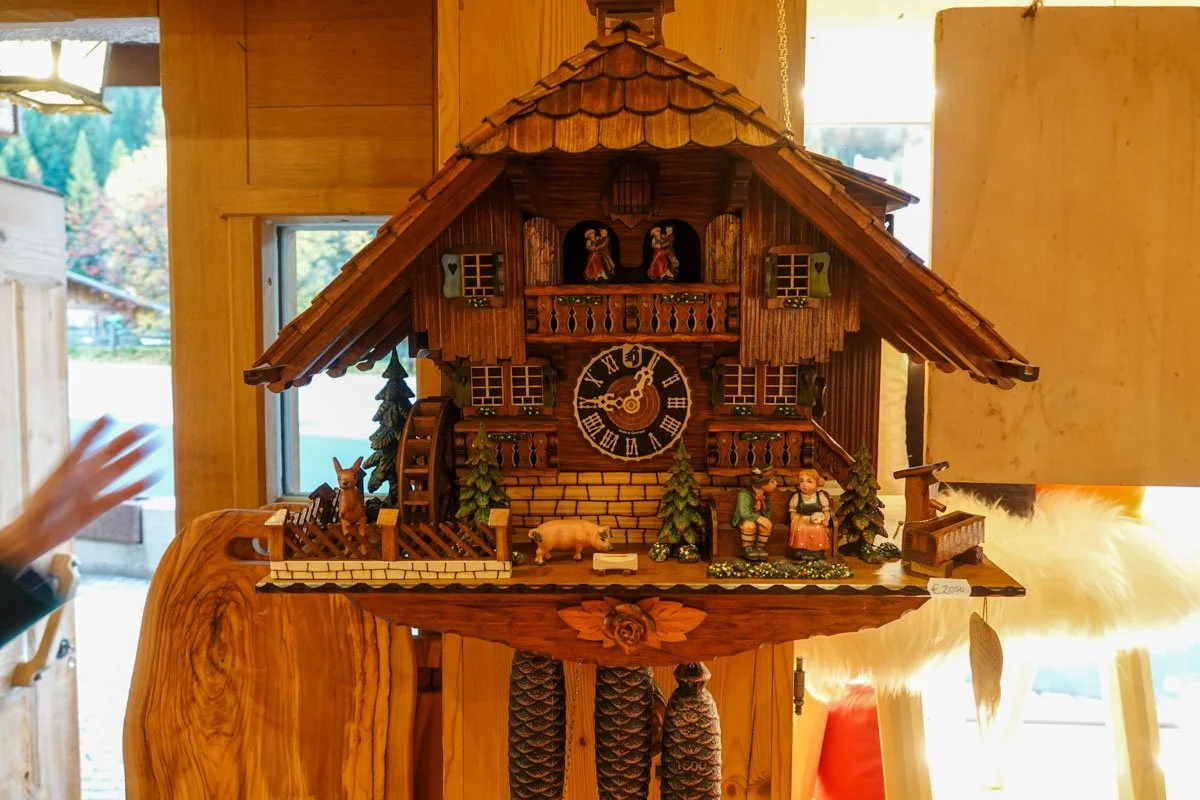
     Val Gardena has been known for woodcarving since the 17th century. It started with people whittling religious statues and altars. It has expanded today to all sorts of carvings: gnomes, mushrooms, statues of all sorts, bird houses, bird feeders, and every religious object. But my favorites at the one woodcarving shop that we visited were the cuckoo clocks. They had many of them and they were real beauties.

     We met a Ladin Alpine guide, and he took us for a mountain hike. He guides hikes in good weather and teaches skiing in the snow times. He explained about Ladin culture, the mountains, and what we were seeing. All signs that we saw were in three languages: Ladin, German, and Italian.

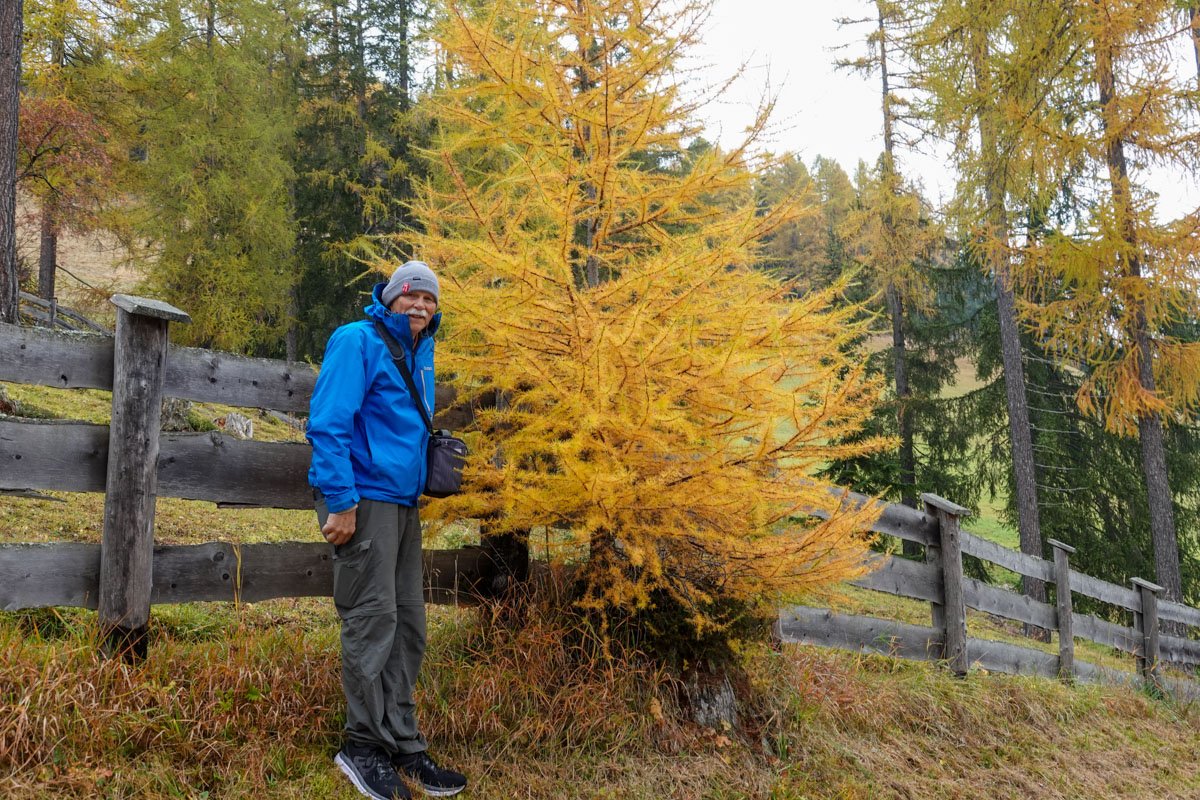
     Most trees were evergreen trees including Silver fir, Norway spruce, and several pines but the larch trees were my favorite. Larch are the only deciduous conifer tree. Their needles turn yellow and fall off like a deciduous tree. That yellow color was such a highlight in the mountains amongst the evergreen trees.

     Like I said, I wished it had been a much clearer day, but we still loved every minute in Val Gardena.

Golden Horse Hotel

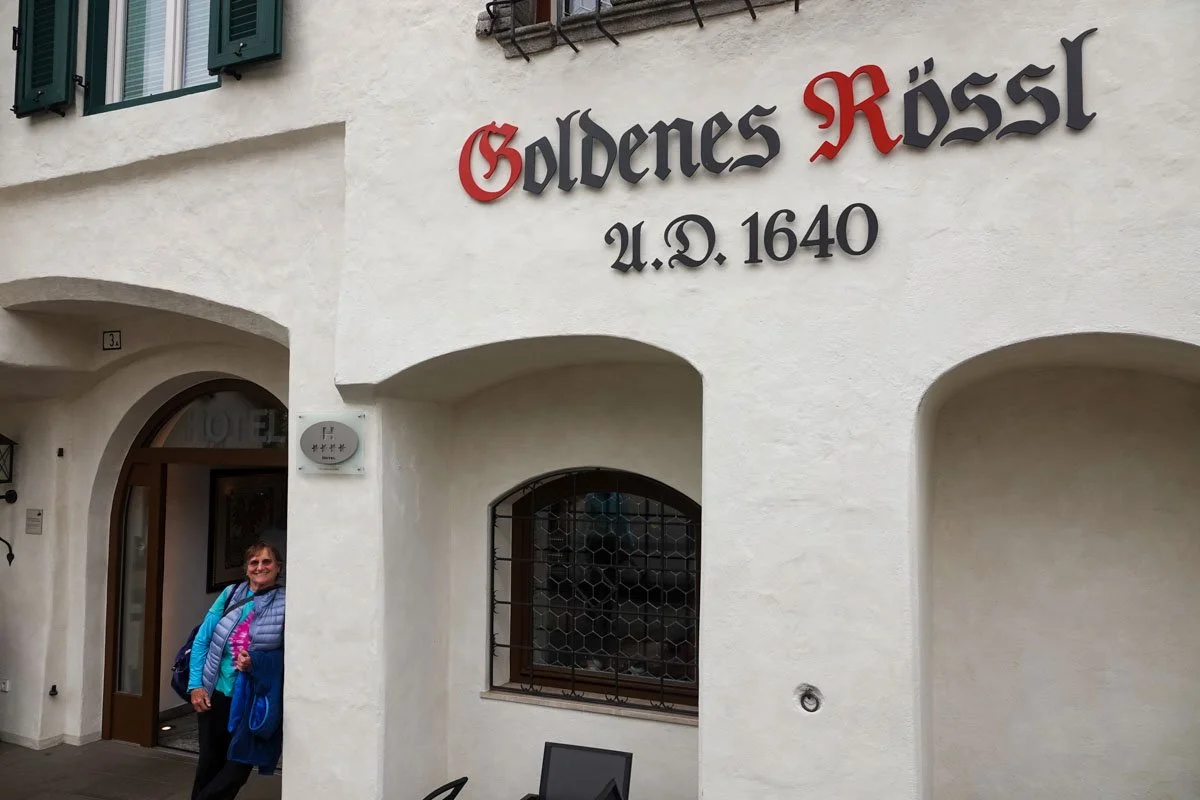
     We stayed at the Golden Horse Hotel in Bressanone. They said it was founded in 901 so it's very old. It is a family owned and operated hotel and by that, I mean that the whole family works there and we saw them every time we were there. They were very friendly people and we enjoyed our stay very much. To look at the hotel, I would have never guessed its age but that was true with so many buildings on this trip. Most have all been upgraded and made to look much more modern. In the photo below, we just arrived at the Golden Horse Hotel. I'm not sure about the 1640 date.

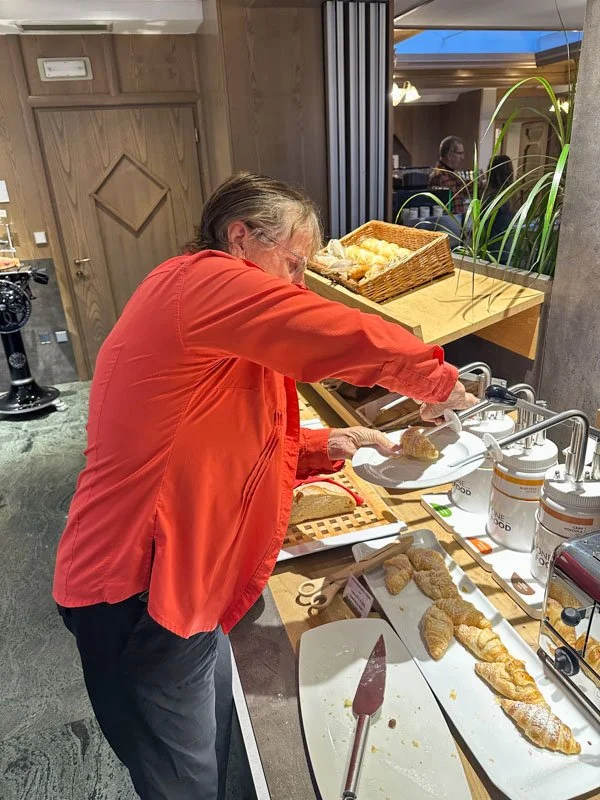
     There was a lot to like about the Golden Horse but my favorite thing was probably their breakfasts. I rarely post much, if any, about our breakfasts. That's because they are normally a buffet with all the breakfast items that one would expect. Breakfast variations are not usually that remarkable. That was not true at the Golden Horse. These Tyroleans made breakfast an unusual experience for us. They had coffee and an omelette chef and all that, but it was the other items, with their emphasis on 'freshness' that was so impressive.
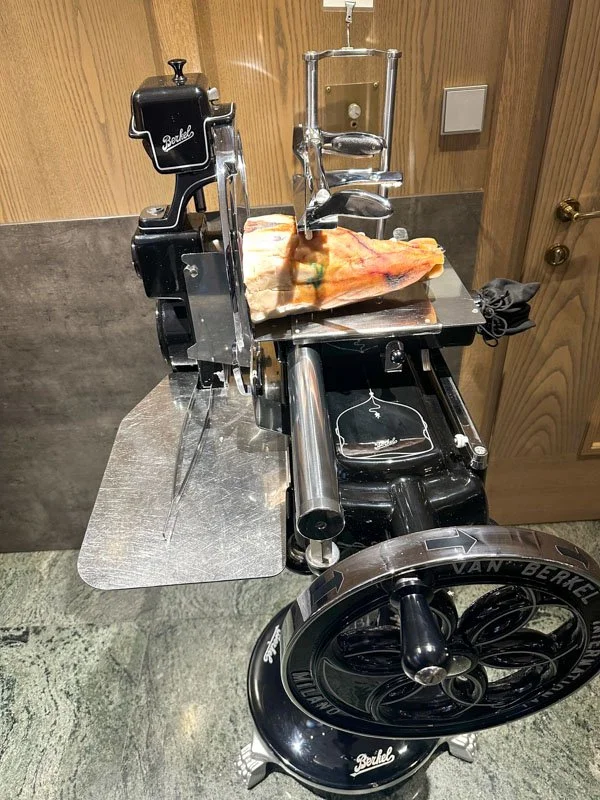
     I'll start with fresh, sliced meat. Everywhere else had dried meats but it was already sliced. Not at the Golden Horse. We sliced our own meat.

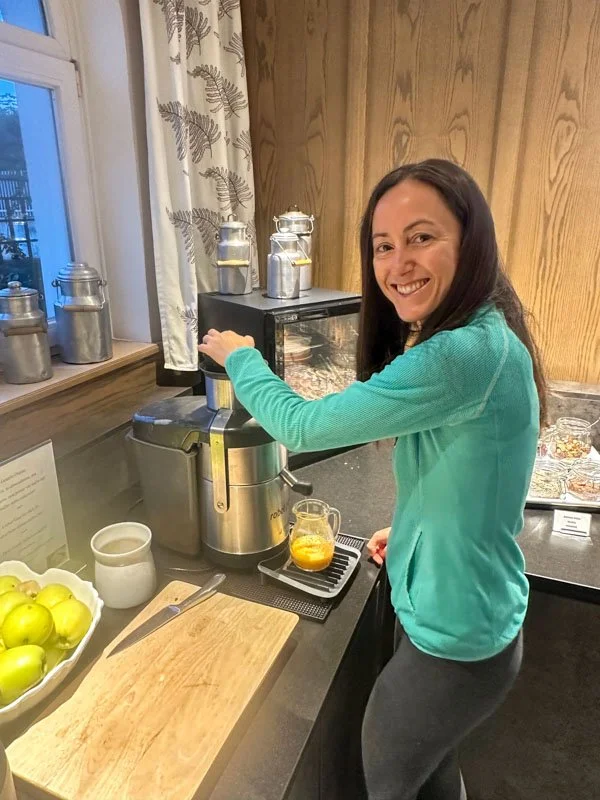
     We had multiple juice options. In the case of Maddalena, our Italian tour guide, she chose to create her own juice. If I can remember correctly, she added fresh ginger, carrots, and apples. I didn't ask for a taste, but she assured me that it was terrific! 

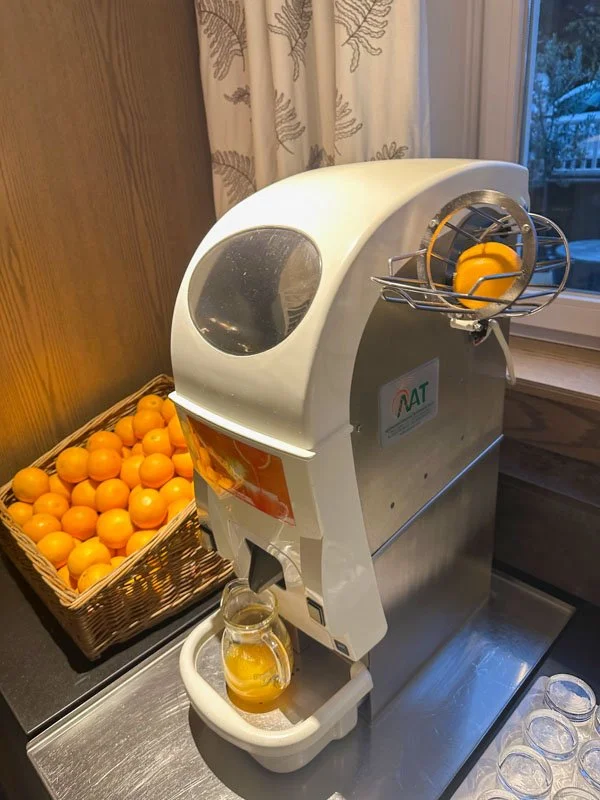
     In my case, I'm an orange juice guy but I got to make my own orange juice. It only took two or three oranges to make a glass.

     Vicky is working here to "stuff" her croissant. She had three choices: chocolate, vanilla, or hazelnut. Croissant's had a hole in the middle that was made for adding stuff to it...so we did.

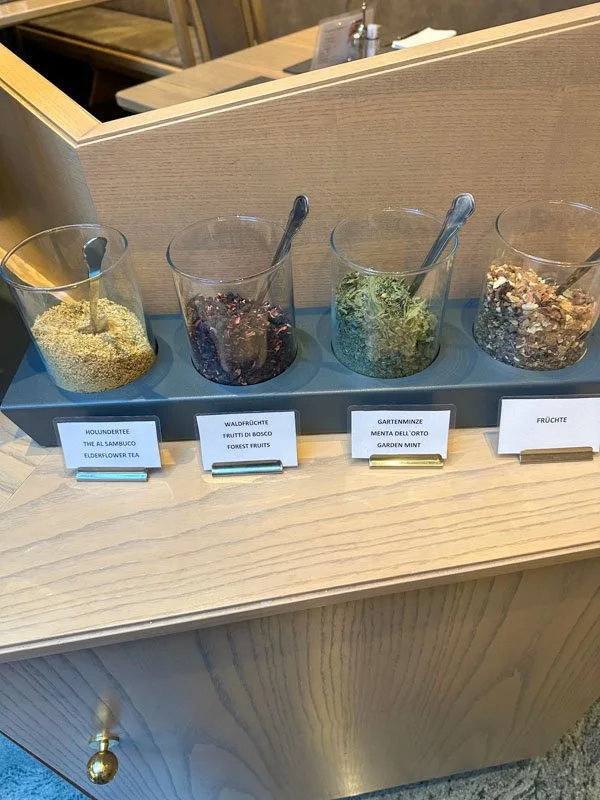
     Tea was also available and served, but I'm not sure I've ever seen it available like this. Fresh ingredients!

Veneto Region Farmer

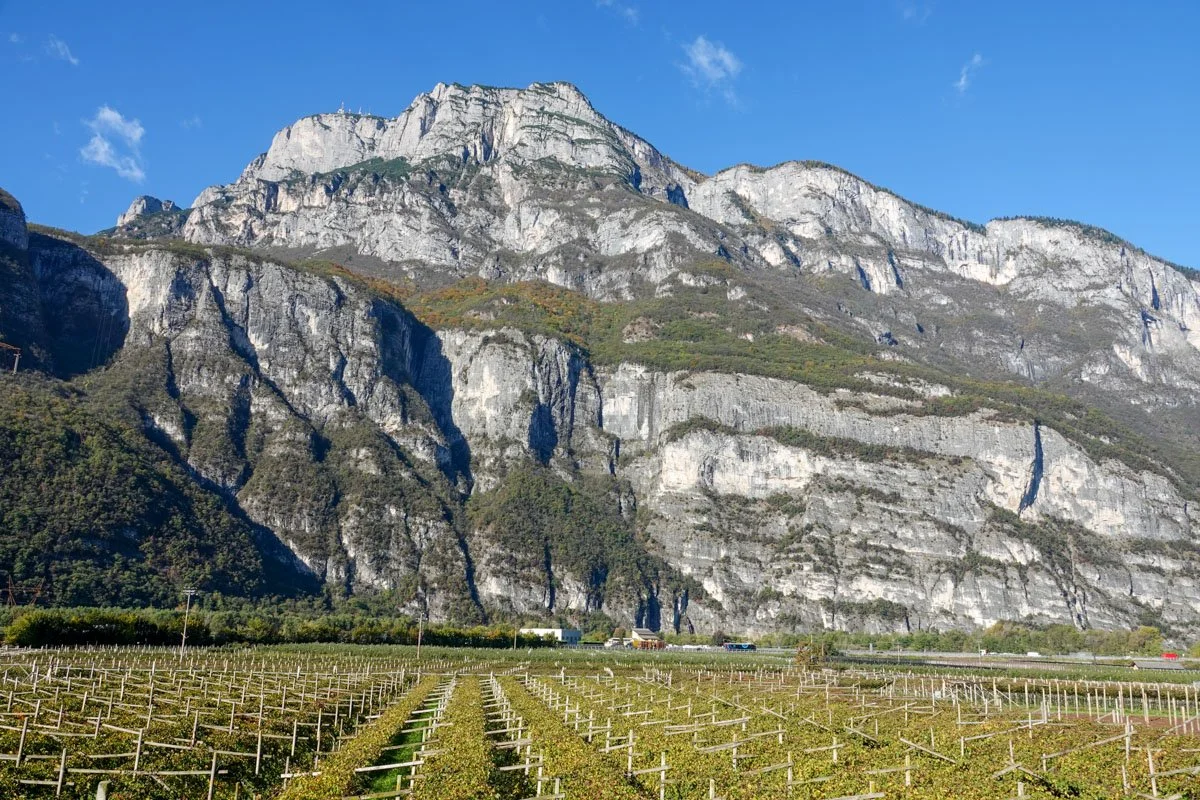
     We left Bressanone and drove through valleys, in the direction of Venice. Along the way, we first stopped at the Adige River Valley. The landscape and the grapes both looked fantastic, so I'll include one photo from our pit stop in the valley. (Note: these are not the Dolomites, but very nice)

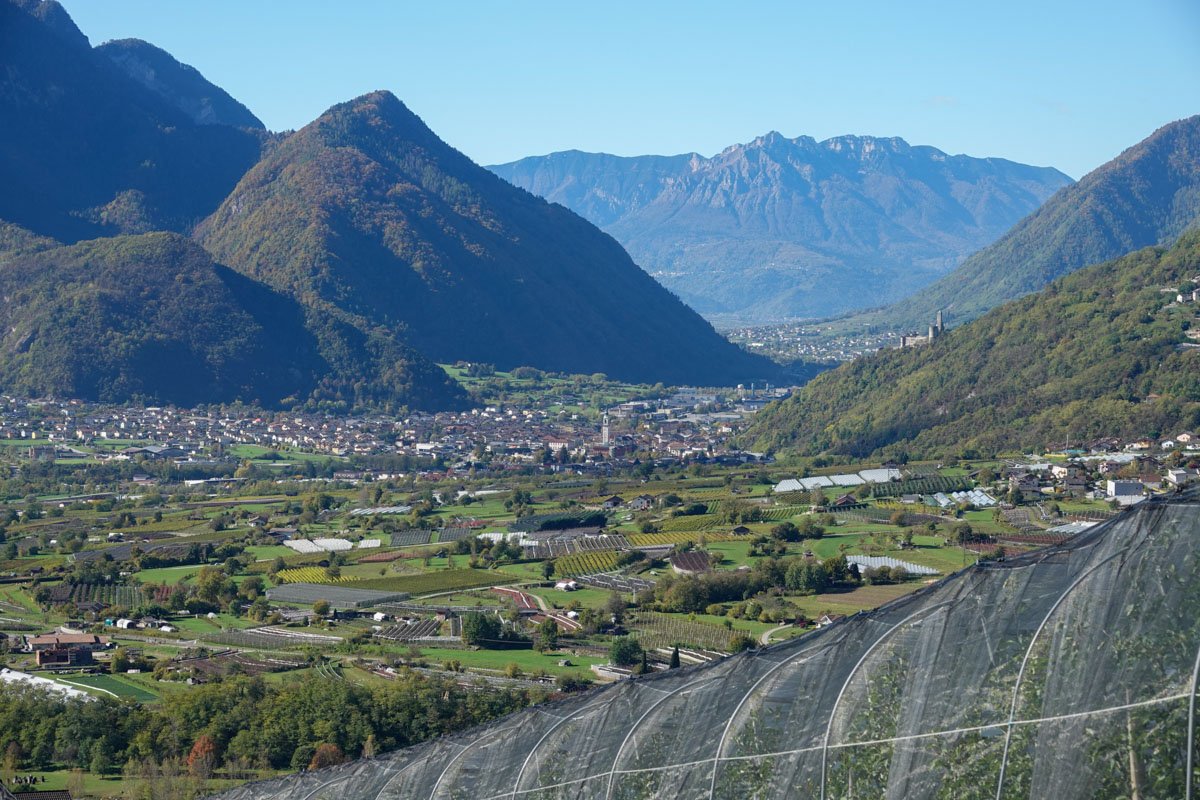
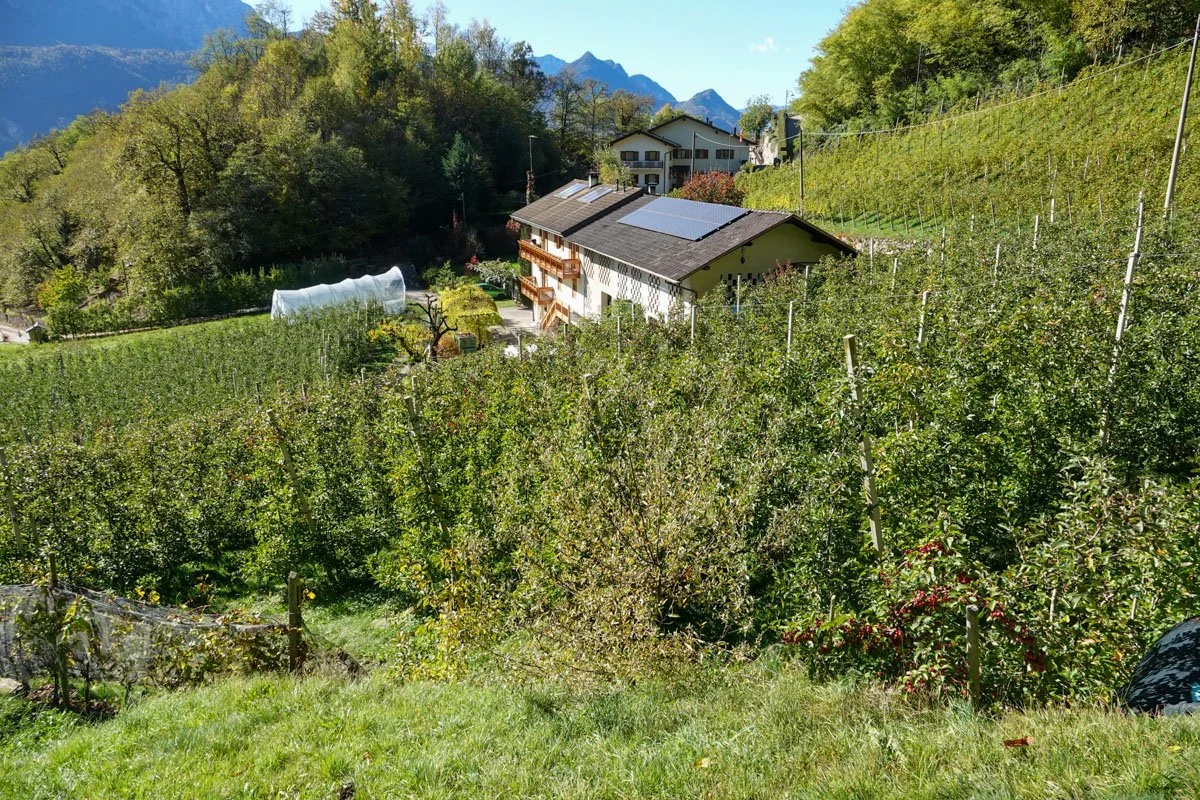
     We kept driving into the hills of the Veneto region near Borgo Veneto, only up into the hills above it. The bus stopped where you see in the photo below and we had to walk to the farm. But first we met the farmer, Elvio. He immediately took us back in time by talking about all the fighting in this area during World War One. He pointed out places in the hills across the valley and named the battles that occurred there. Elvio was not alone in talking about the first world war on this trip. It turns out that this area was the Italian Front during World War One.

     In Elvio's case, his family was farming here before WW One but they were Hungarian. After the war, they had to become Italians. He also said that during World War II, there was no fighting here, just a little bombing.

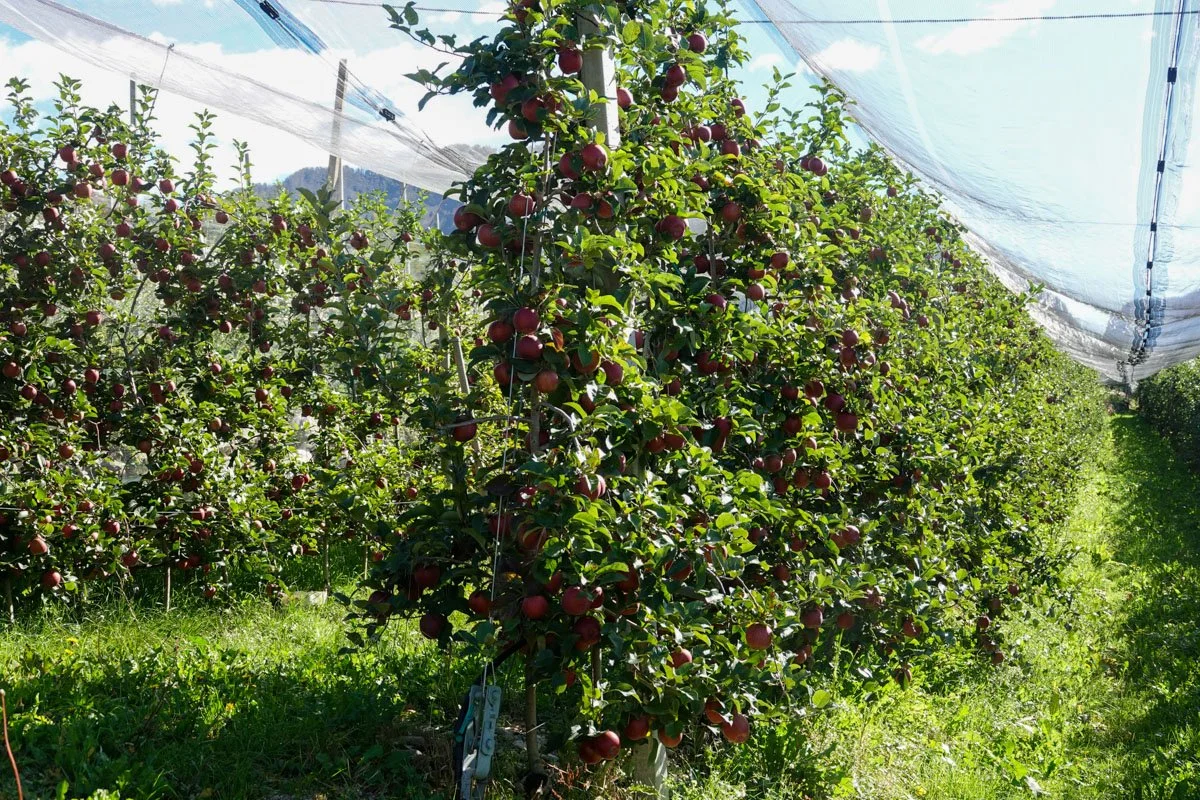
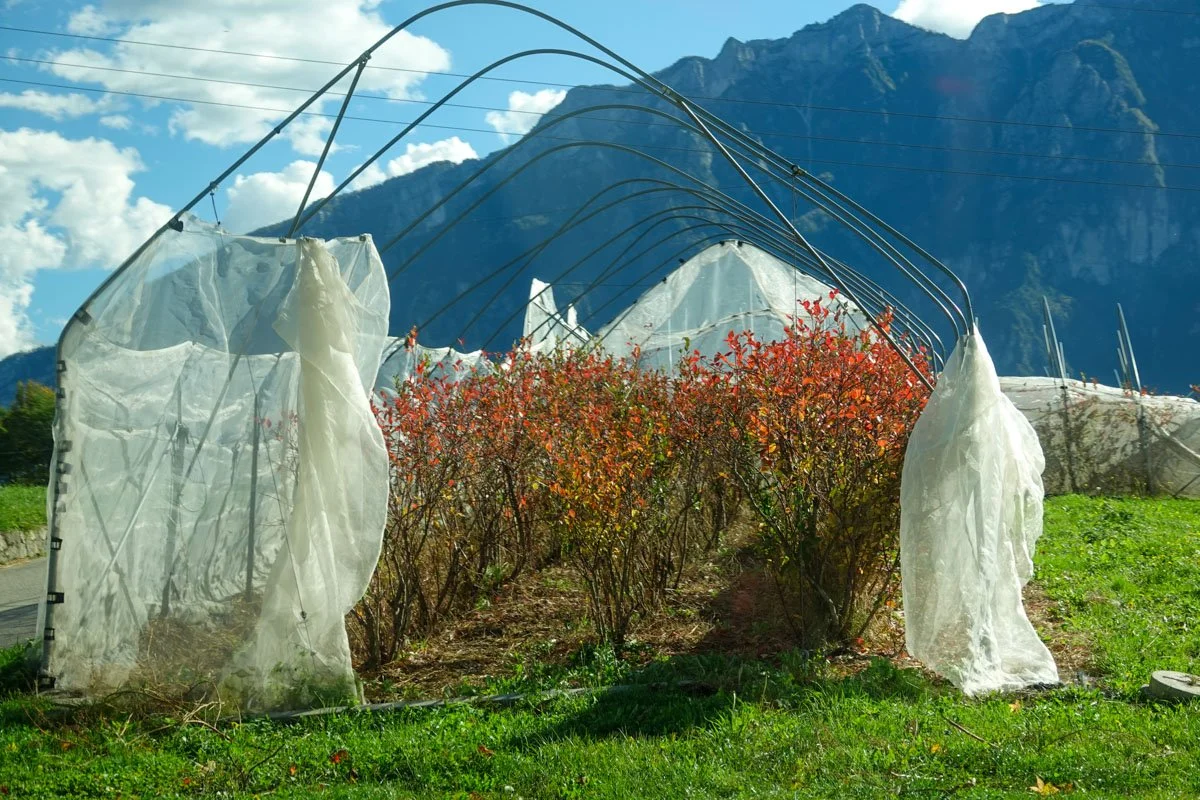
     On the lower right in the above photo, you can see some apple orchards. They are covered over with netting. You can see another photo below.

Why do you think the apples are covered over by netting?

     I personally guessed birds: WRONG. Elvio told us it was due to "hail". He said that climate change has caused Switzerland and Northern Italy to have much more frequent and more intense hailstorms. Since over 90 percent of their apples are for the fresh apple market, they can't afford the damage that hail would do to their apples. At least three people on this trip told us that and all blamed climate change.

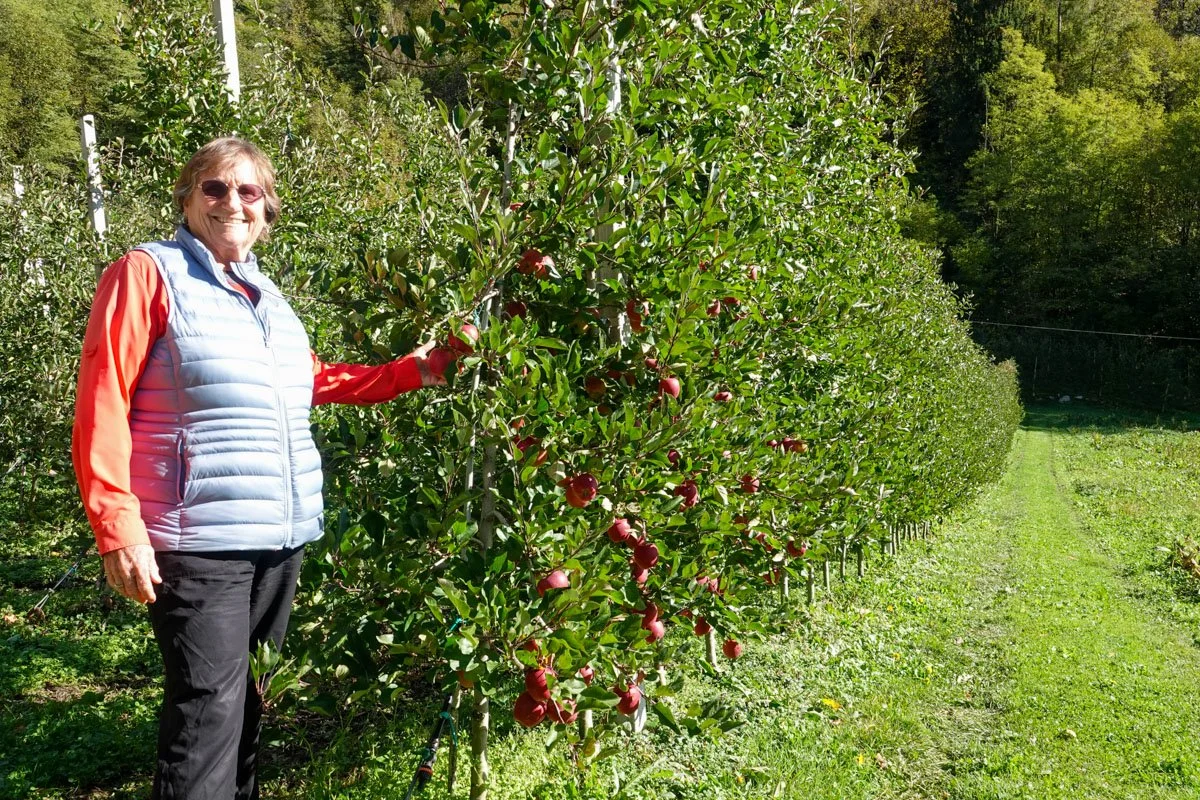
   Elvio walked us to his farm and home. He has 9 acres by his home but more land at other locations. Apples are his major crop, and he belongs to an Apple Cooperative. He said that this area of northern Italy is the EU's major apple producing area. 

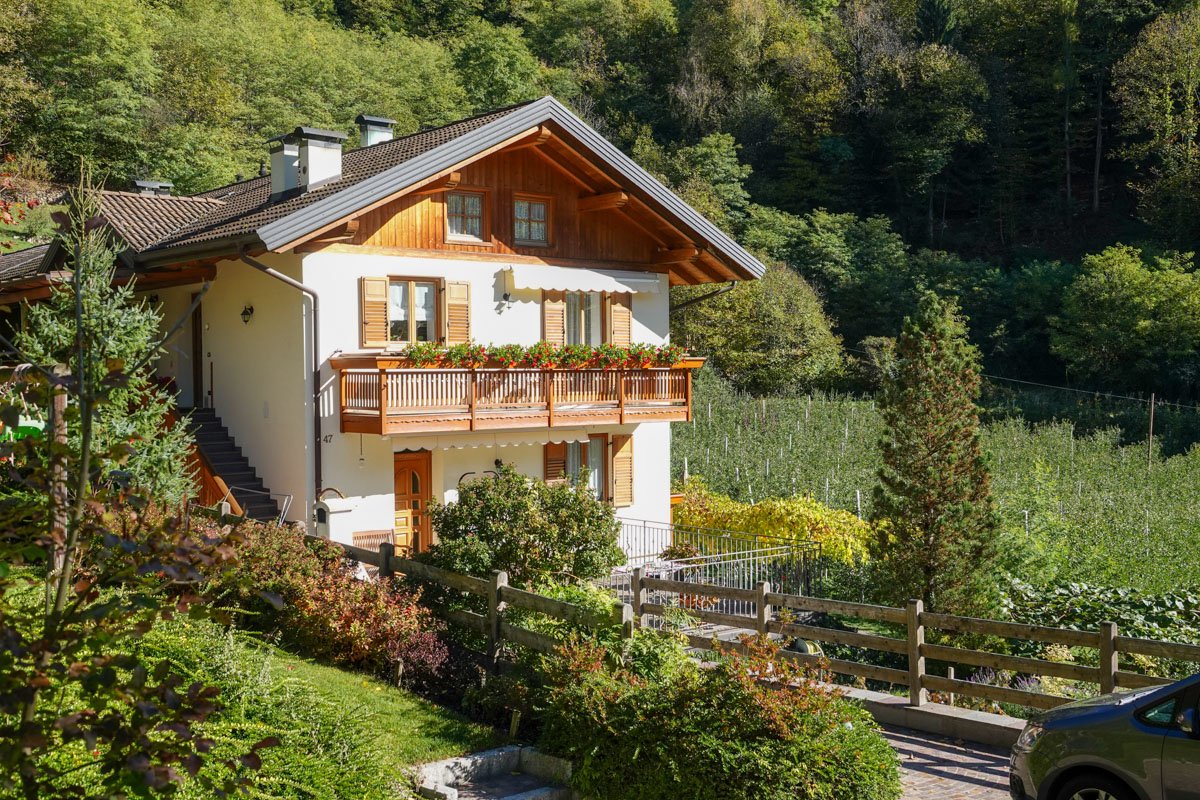
     Elvio said his home is 100 years old, but basically, it's a brand new home, except for one interior wall.

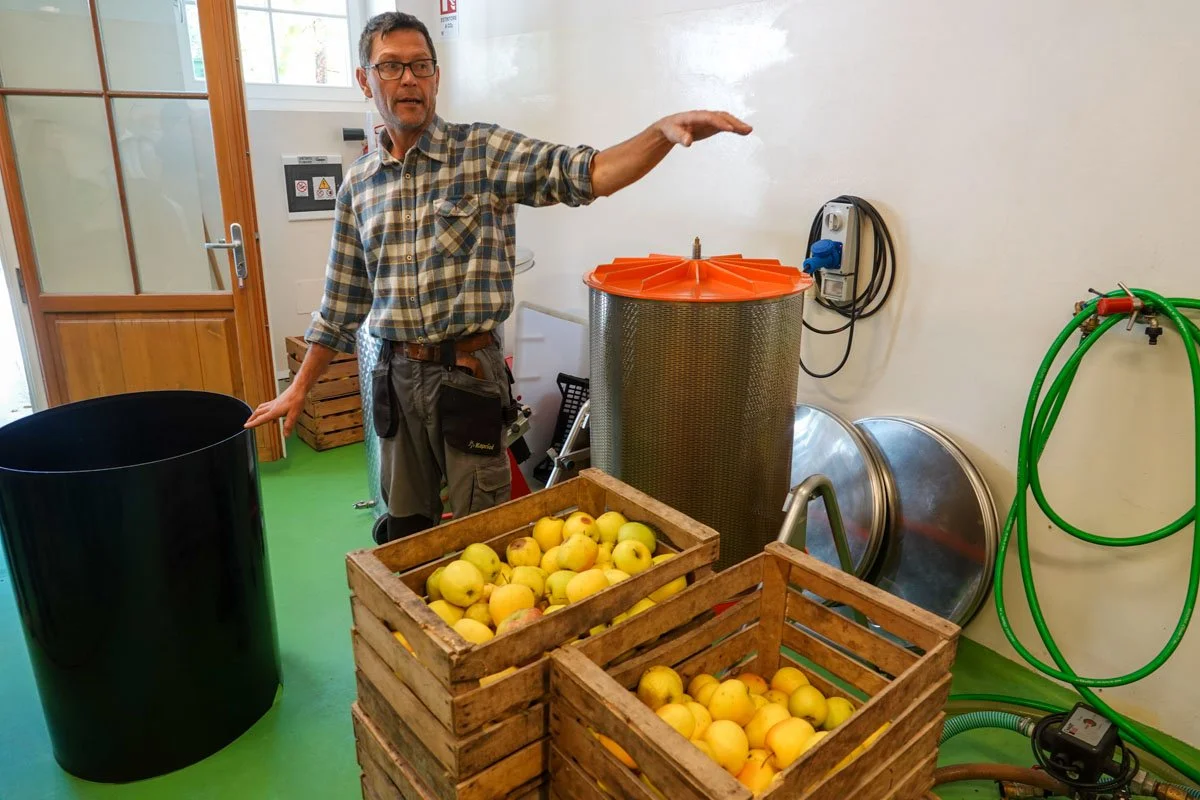
     Elvio said that less than 10 percent of the area's apples are used for juice, applesauce, dried apples, etc. He makes his own apple juice and sells it. He doesn't make very much but still enjoys making it and drinking it. We drank some with lunch.

     Elvio's also raises wine grapes. He sells most of his grapes to a winery, but he uses some of them to make his own wine for home use. He shared some with us for lunch and it was quite good.

     Elvio's apples here at his farm are roughly 90 percent Golden Delicious and 10 percent Red Delicious, but he has some Swinga apples too. He grows some Fuji and Granny Smith apples at his other locations. I can personally attest that his apples are excellent!

     Elvio's other crops include cherries and blueberries (below). For personal use, he also had pomegranates, persimmons, kiwi's, along with a big garden that has tomatoes, corn, peppers, squash, garlic, and much more.

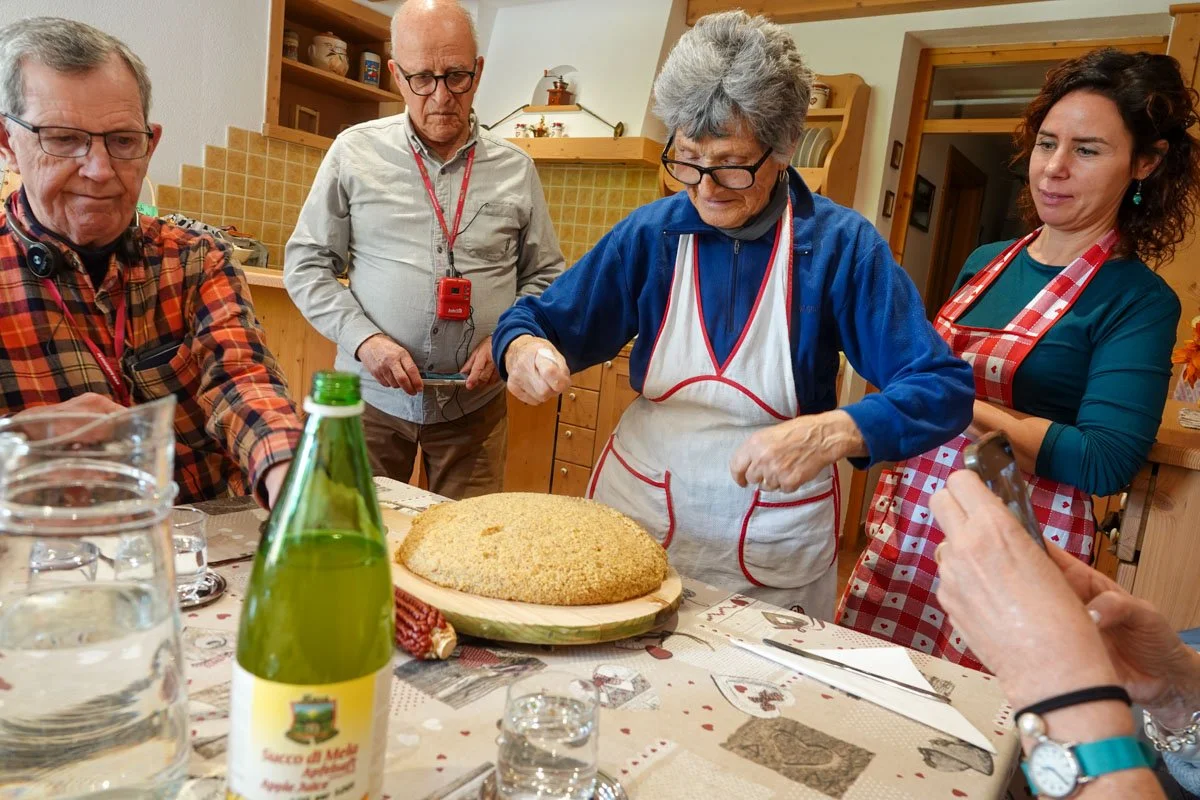
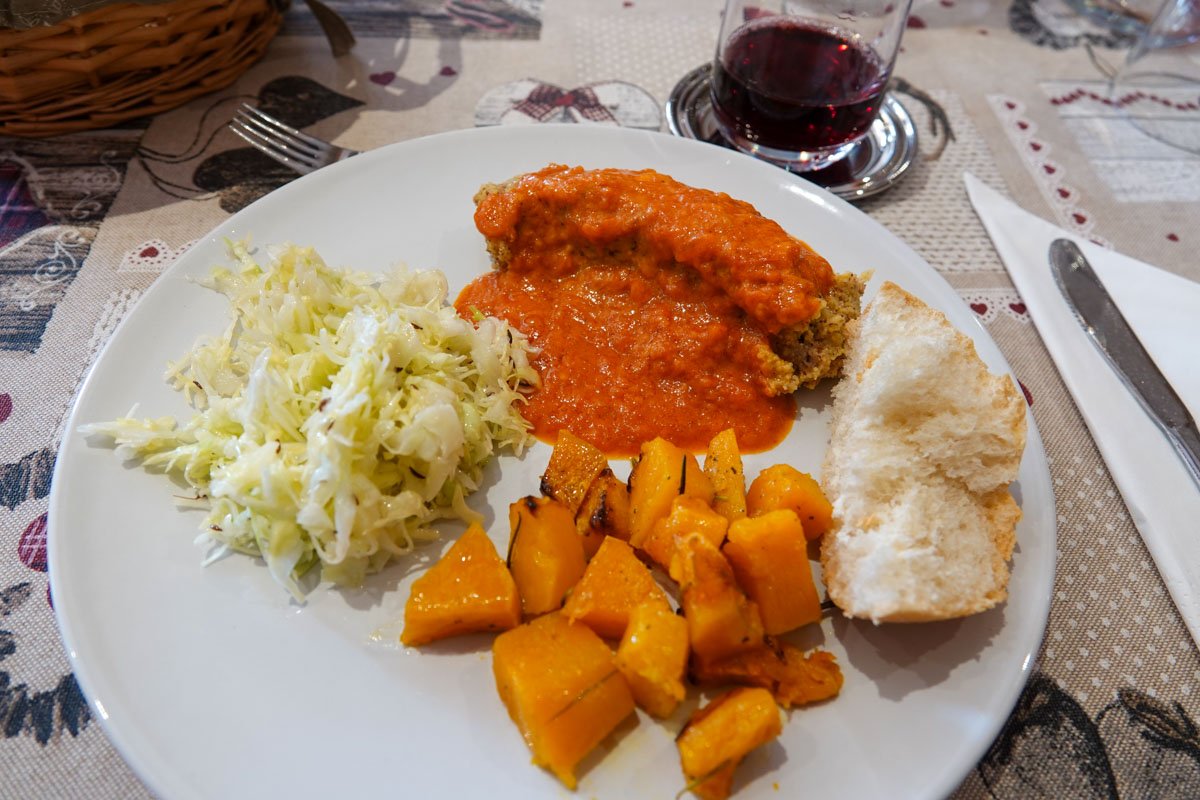
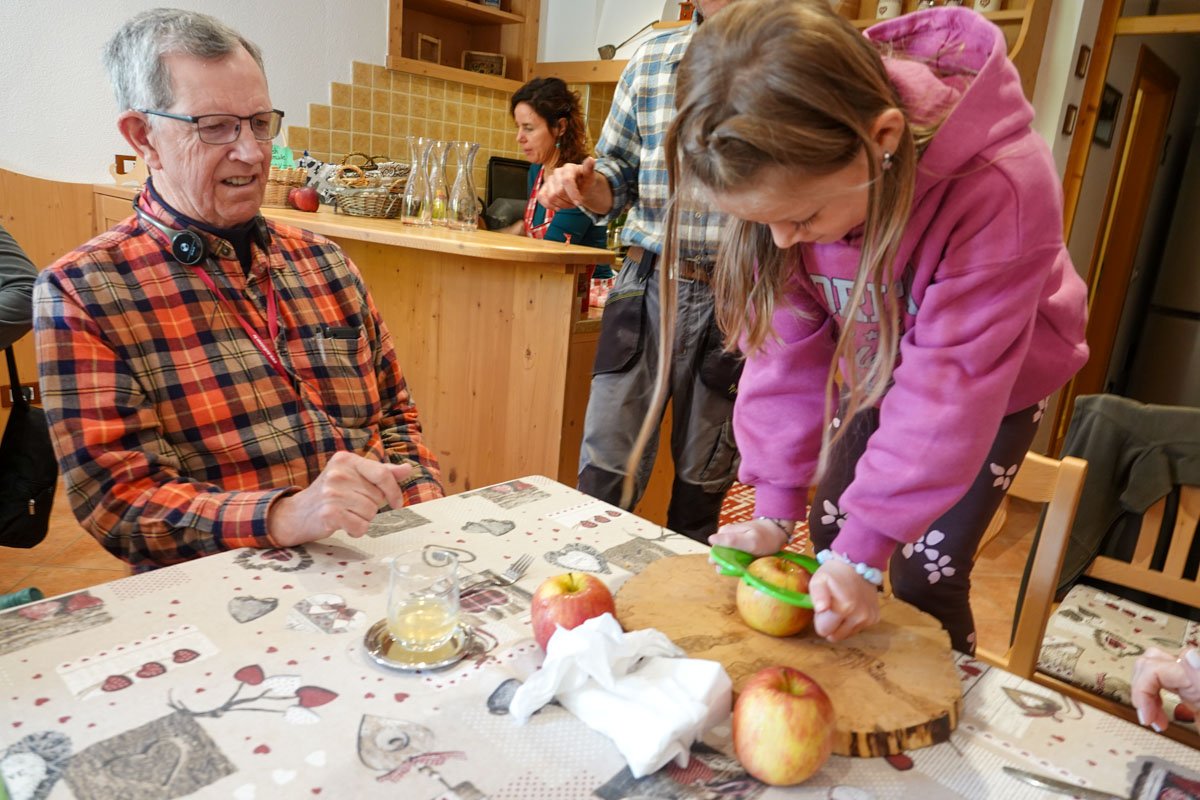
     We were served lunch with probably everything being home grown and homemade. Elvio's mom and his wife made us lunch. They made polenta which his mom cut with a thread, then covered with tomato sauce and Trento cheese. We had homegrown squash, cabbage with fennel, fresh made bread, and homemade apple juice and wine. Dessert was a crumble cake and fresh apple slices, done by his daughter. Lunch was excellent!

Welcome to Venice

     For most of our northern Italy trip, I was having trouble remembering exactly where I had been. Why?  I was always in the Alps and seeing beautiful mountains. I was always near a lake or river. I was always in a small medieval town. There was always a church high up or on top of a hill. They were always roasting chestnuts. I was always hearing multiple languages spoken. I was always hiking with great scenery. There were always great cafe's and restaurants. I was always drinking wine and expressos. Well, you get my point. Then, we arrived in Venice. Venice was the last stop on our northern Italy trip. I had long been thinking about remembering exactly where I was when I saw something on my trip. And then I was in Venice.

     With that as my mind set, my sense of humor took over: 

If your hotel parking lot looks like this....

You might be in Venice.

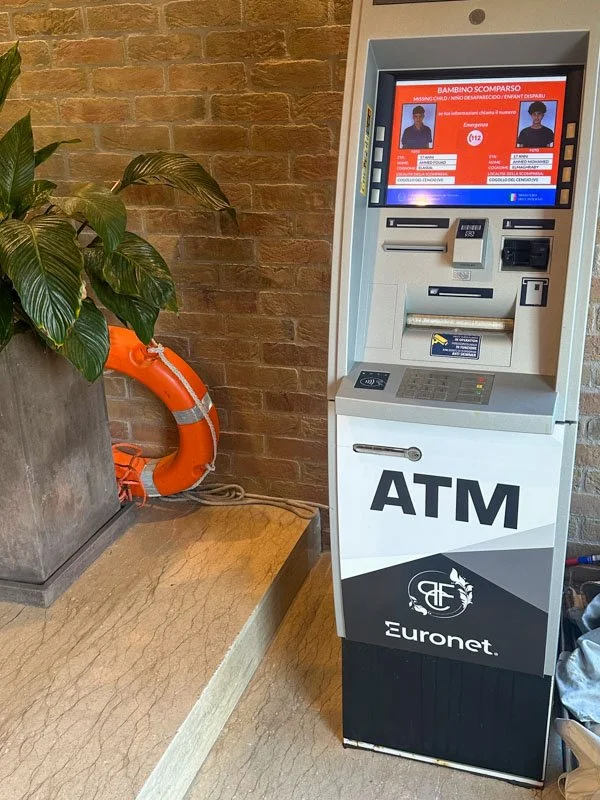
     If you walk into your hotel lobby, and one of the first things you see is a life preserver...

You might be in Venice.

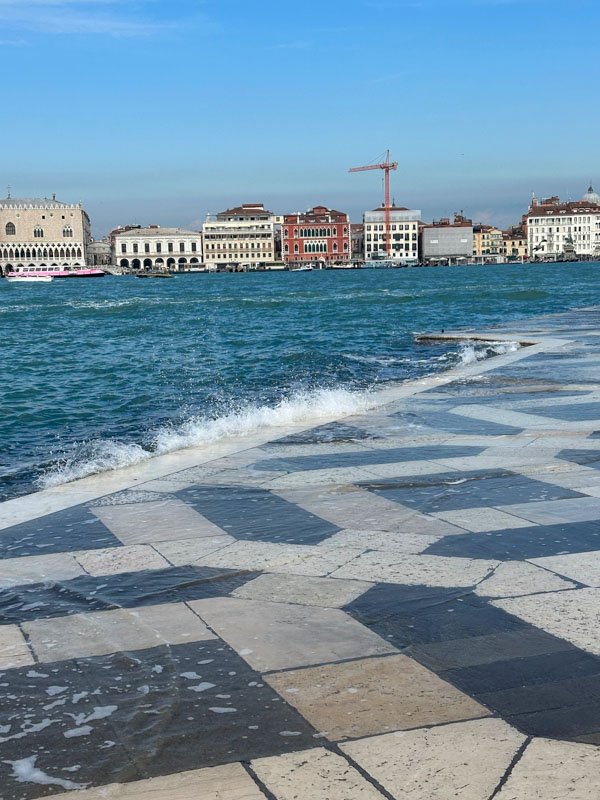
     If you are walking down one of the town's main streets, and you get splashed by a wave....

You might be in Venice.

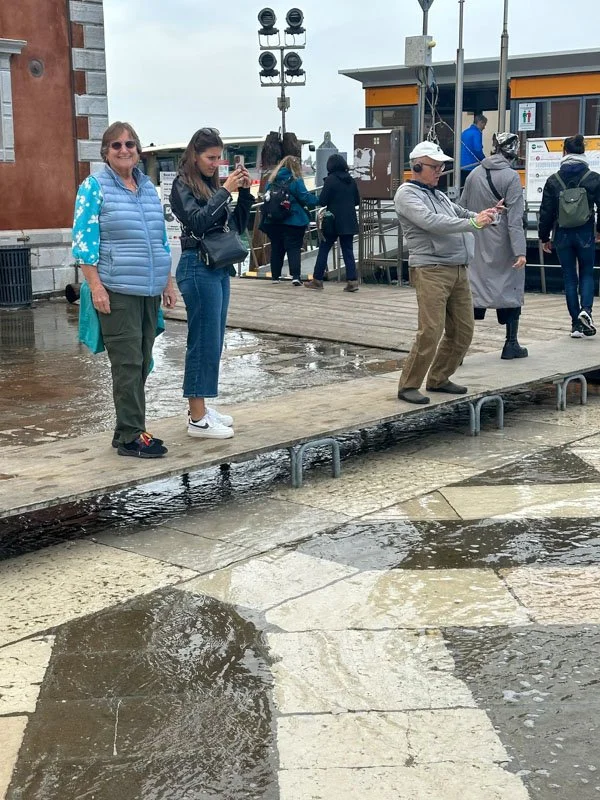
     If you find yourself walking on a permanent raised walkway, just to get to a water bus....

You might be in Venice.

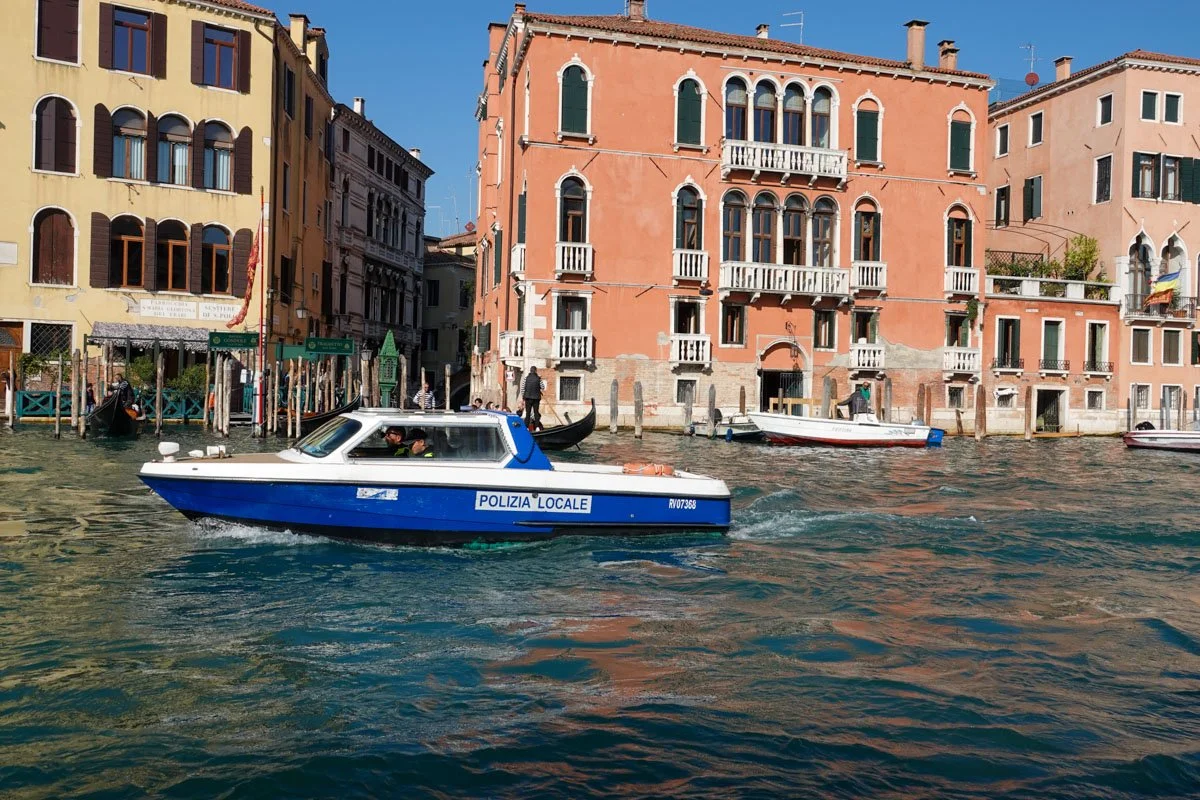
     If you see a police cruiser pass you by...and it actually is a cruiser...

You might be in Venice.

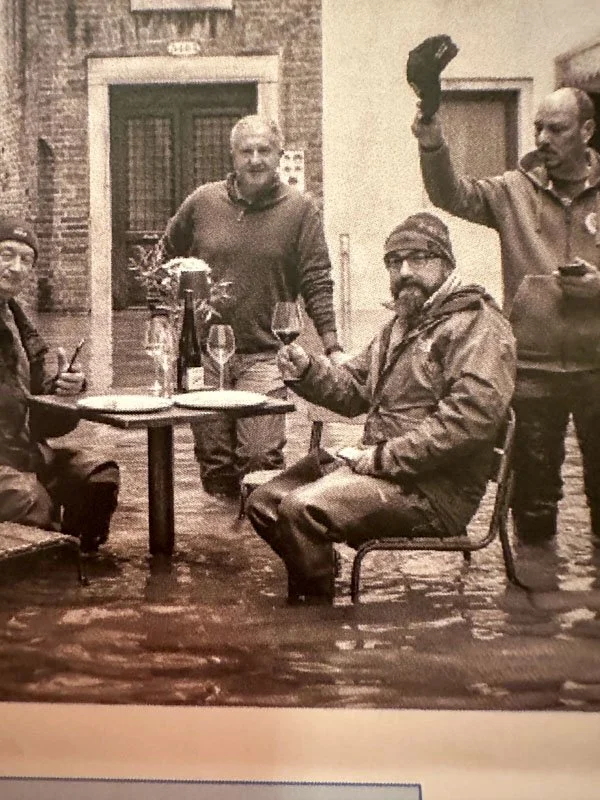
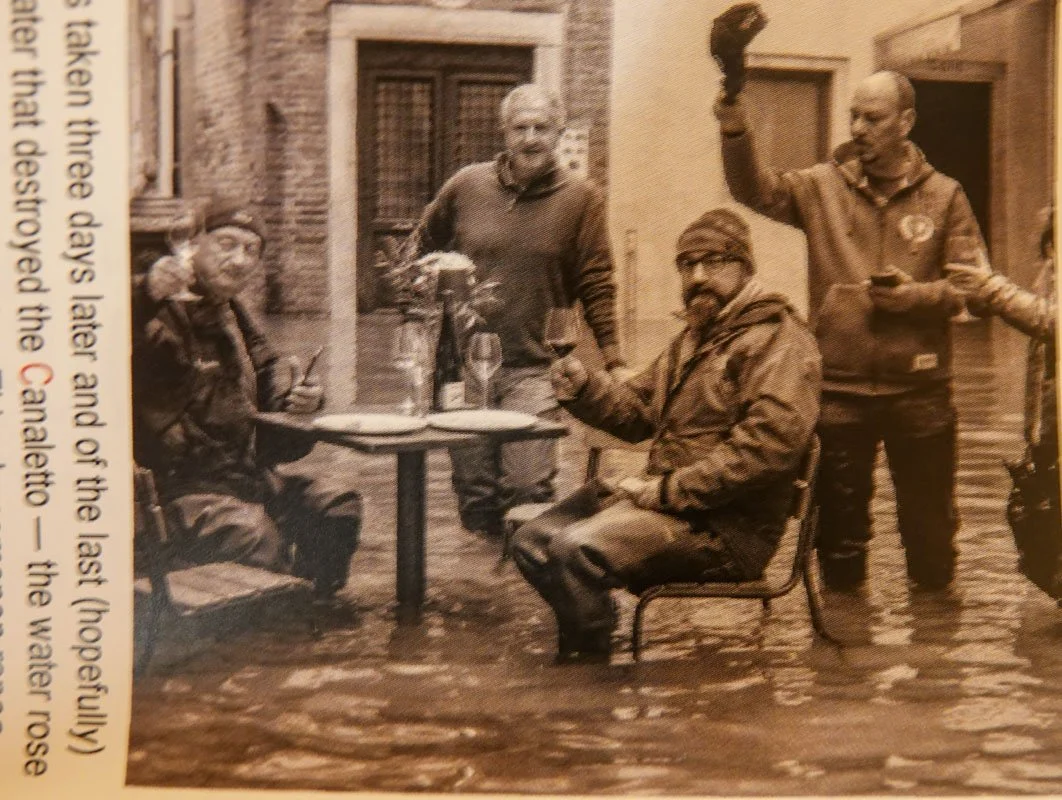
     If you go out to a restaurant, and they have a photo like below on the front of their menu...

You might be in Venice.

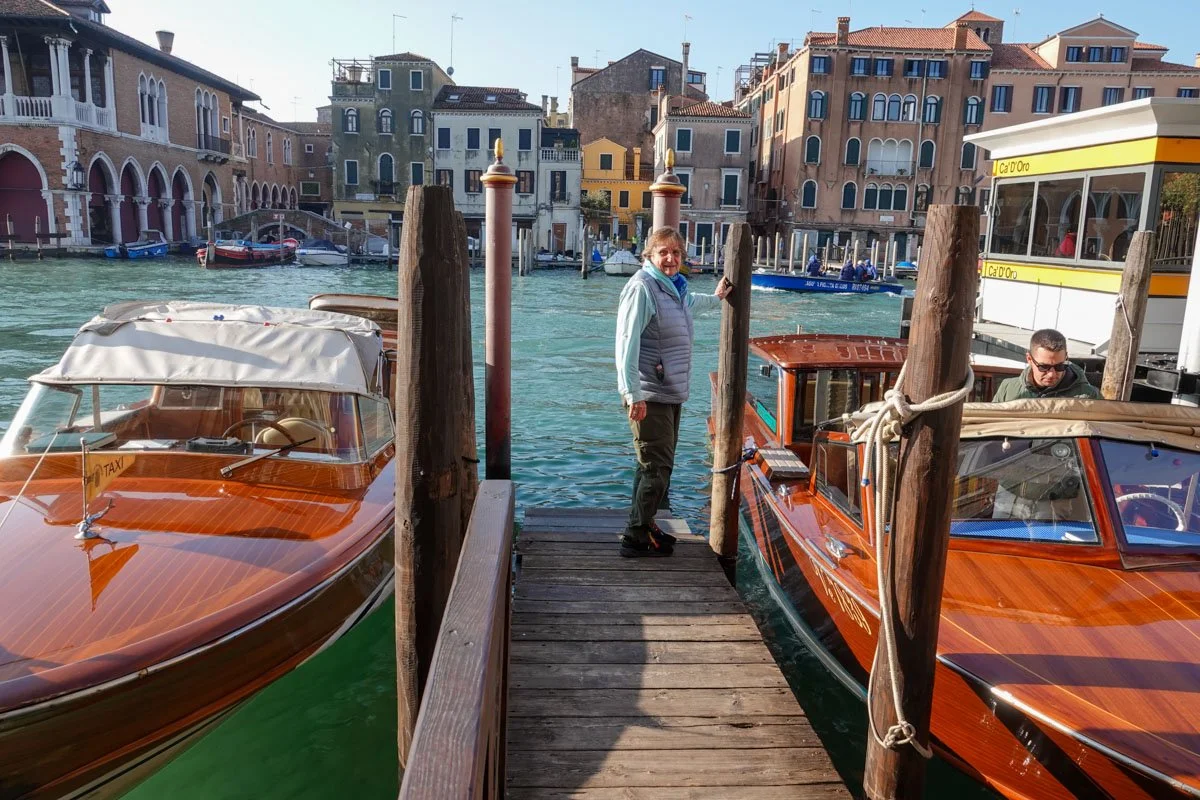
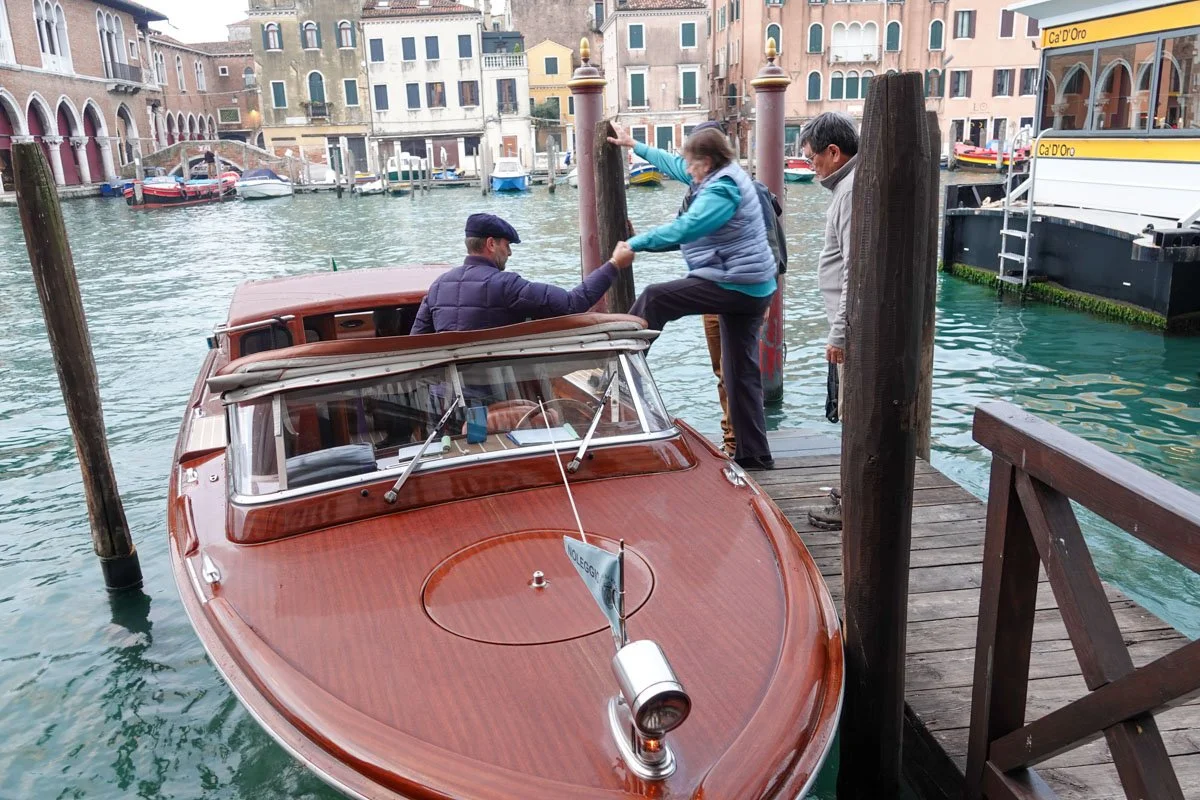
     If you call a taxi cab...and this guy shows up....

You might be in Venice.

Venice Ebb and Flow

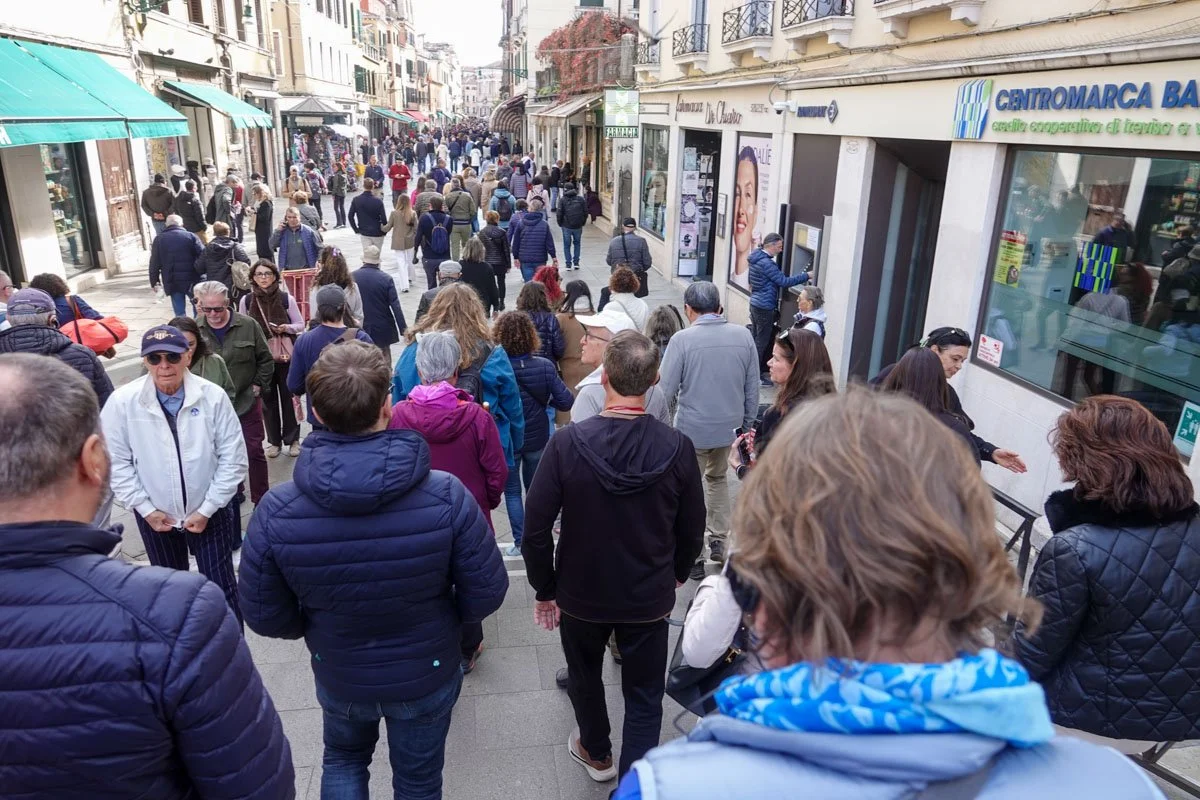
     We found out right away that Venice has its own ebb and flow. Our hotel, the Pesaro Palace, was located right on the Grand Canal, which is a landmark canal in Venice. At the other side of the hotel was the busiest street in Venice. It went from the train station to St. Mark's Square. Our Venetian guide told us that "when" we got lost, and we would, we could just walk until we hit this street, then follow the stream back to our hotel.

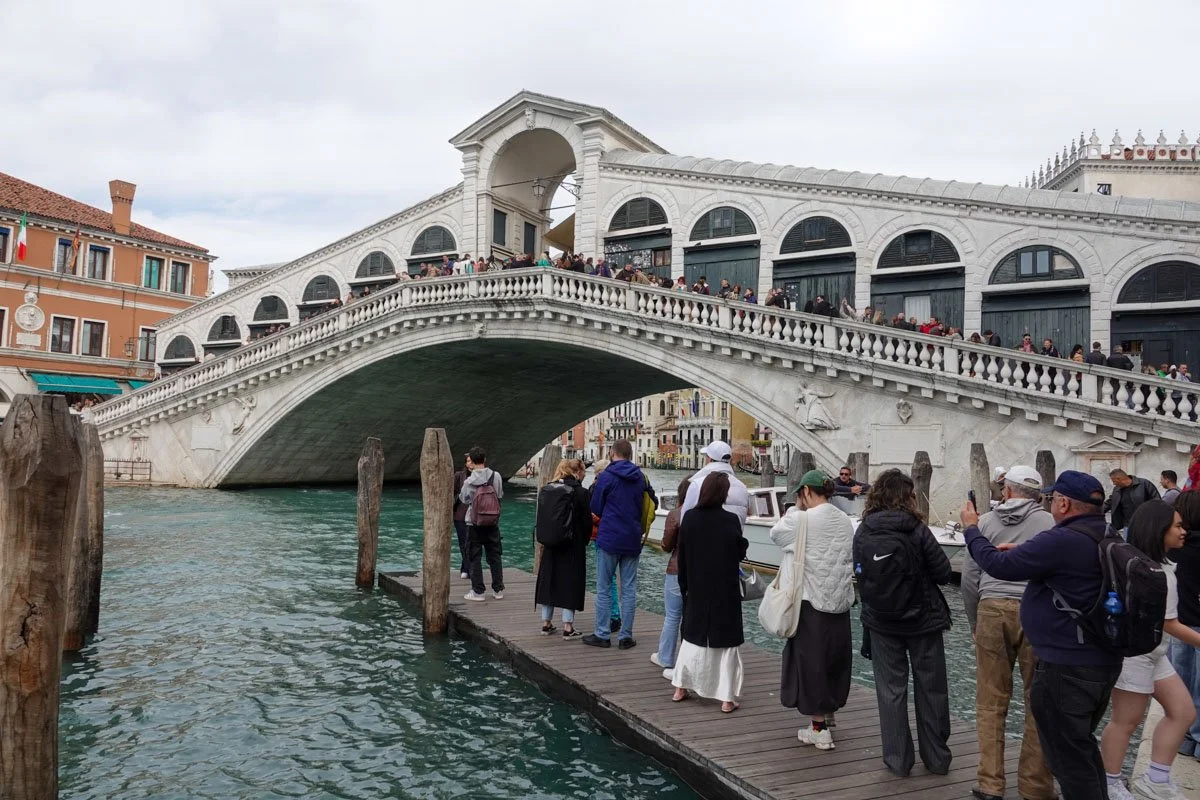
     There are many other places in Venice that are crowded, such as the Rialto Bridge. It's a stone arch bridge completed in 1591. It's a single span that features two arcades of shops with some very nice things to buy. It also has great views of the Grand Canal, especially at sunrise and sunset. It was crowded but we went over it and under it several times each.

     Our Venetian guide said that we would get lost and of course, we did, at least twice. It was somewhat like being in a maze because we found ourselves following our noses to find what we could find. Some streets were difficult just to pass oncoming pedestrians.

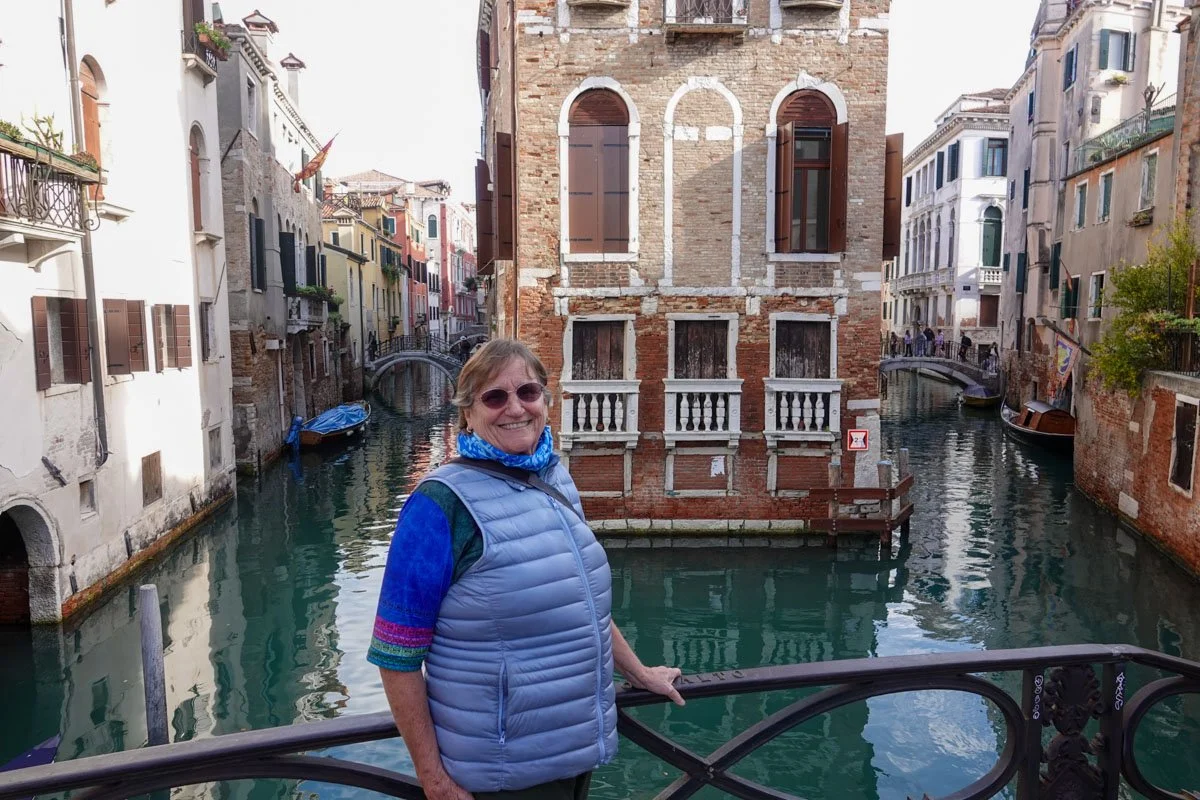
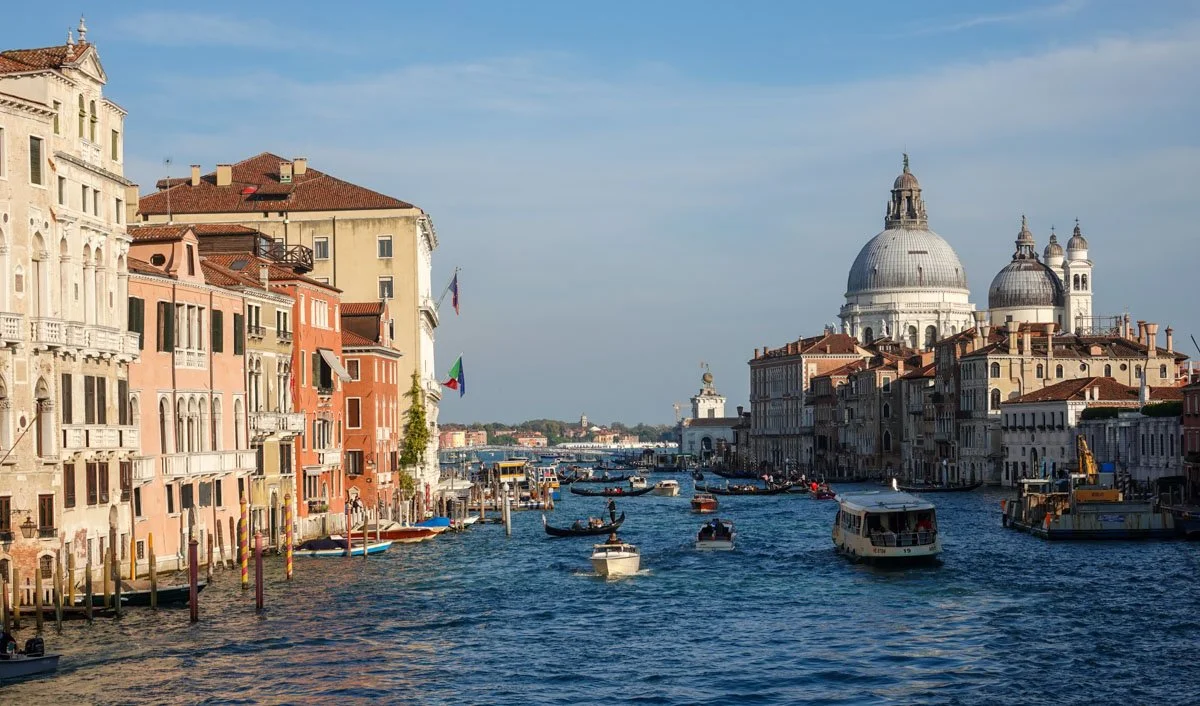
     Venice is made up of some 118 to 124 islands, separated by 150 canals, and has some 438 to 476 bridges, depending on your source, all connecting each other. Vicky counted bridges, and she said that we were crossing over more than twenty bridges a day, without even trying. You can see three or four bridges just in this photograph.

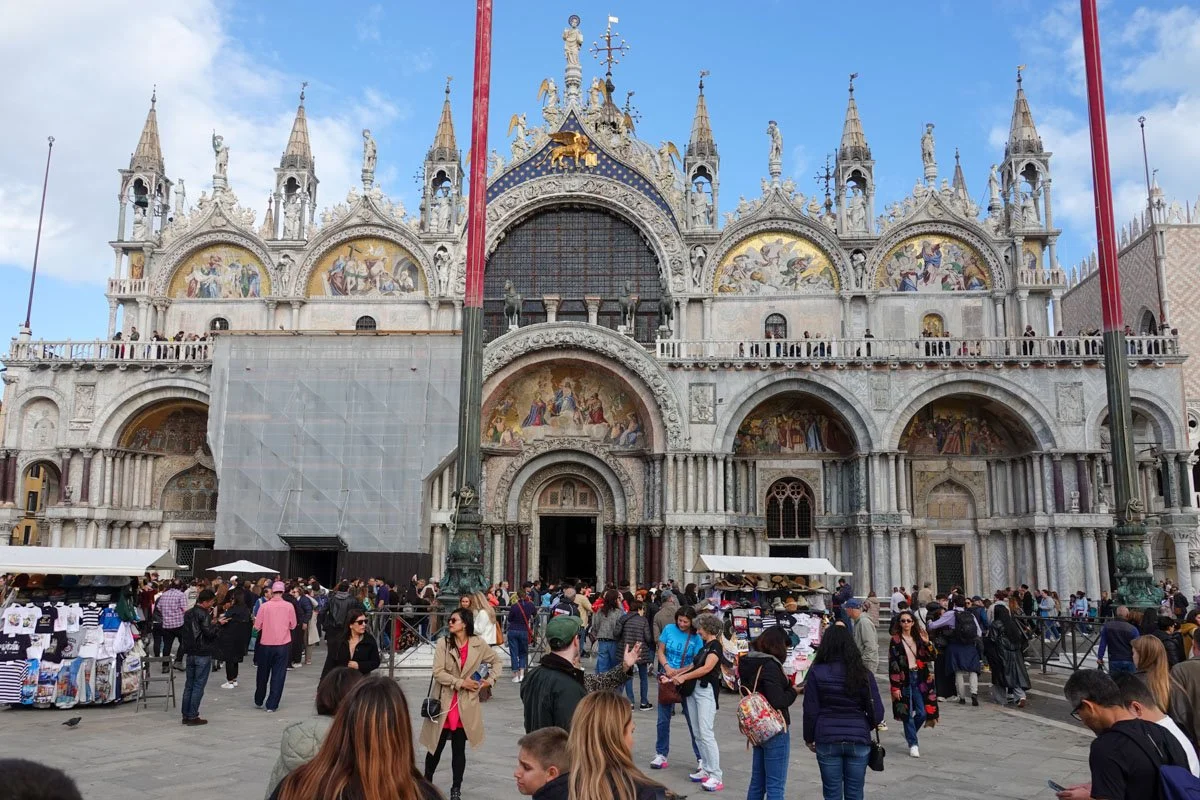
     St. Mark's Square is named after the Basilica of St. Mark. The basilica was named after the apostle, Mark, and his relics are contained inside the basilica. The square and the basilica are perhaps the top attraction to see in Venice. Like all great basilicas and cathedrals, it is always being worked on, repaired, or something that involves renovation or construction.

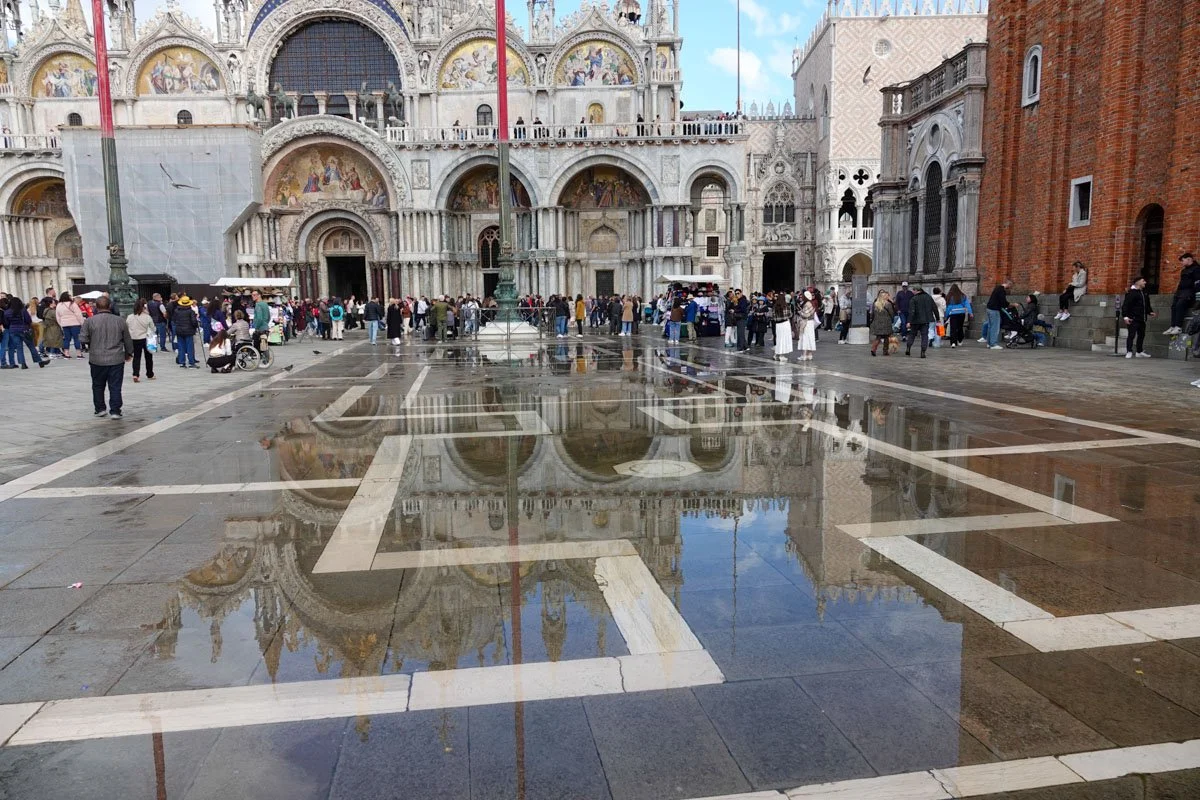
     I did manage to find a way to get some perhaps better photos, without so many people. I would find the giant puddle or lake in the plaza or square, and take my photos from behind it. I asked our guide about this small lake and she only laughed. She said that she was here in St. Mark's Square one day when the water was up to her waist.
Around Venice

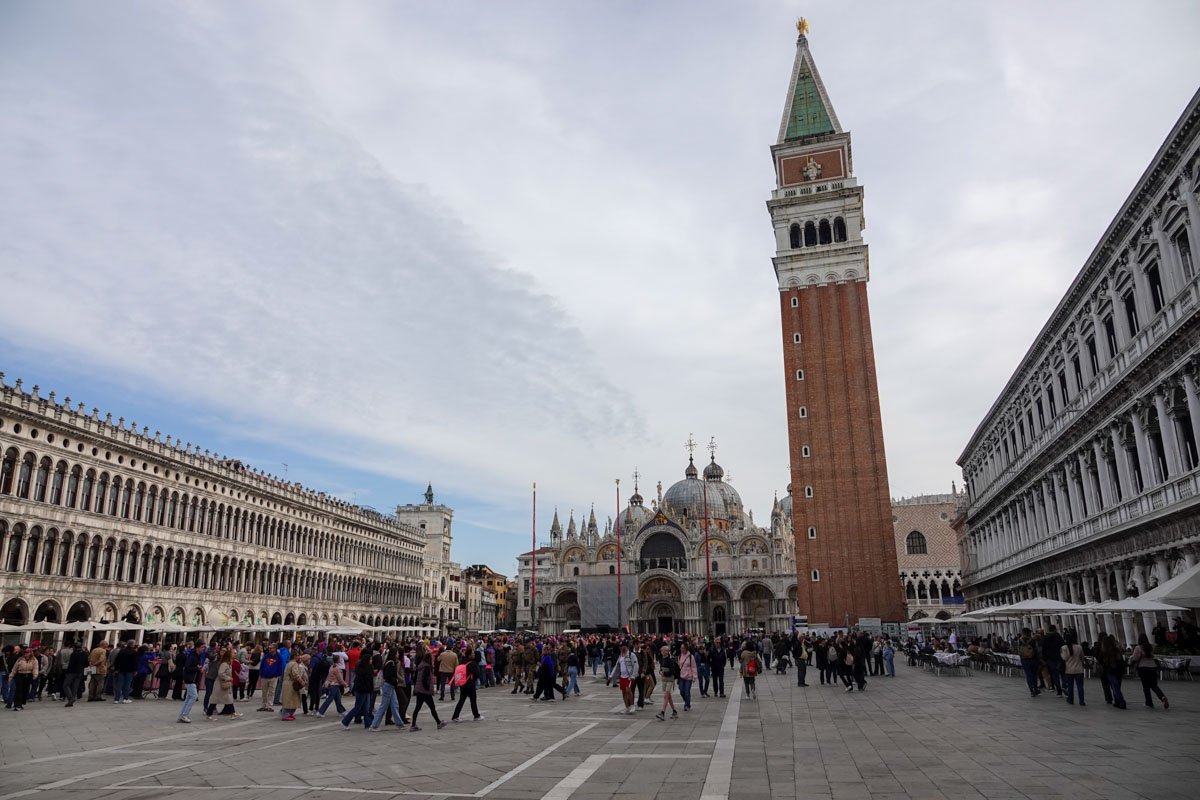
     We spent a lot of time touring Venice, with and without local guides. There were very few dull moments. I'll start back at St. Mark's Square. This photo is from farther back in the square so that you can see more than just the St. Mark's Basilica. It's really a large square at 196 yards by 77 yards, so it's almost like two football fields by three-quarters of a football field. The basilica is at the back but the Doge's Palace is on the sides. The Doge was the President of Venice, so a man of tremendous power. You can also see the Campanile or the bell tower of St. Mark's Basilica. Construction of the Campanile began in the 10th century, though what we see today was finished in 1912. The previous tower collapsed in 1902. It's 323 feet high and was both a guide for ships to safely enter the harbor and a watchtower to sight approaching ships and protect the city. Also in this square are lots of very nice stores and even the oldest coffee shop in Italy, Caffe Florian, opened in 1720. 
     Our local Venetian tour guide was pointing out to us where Marco Polo lived in Venice. He was a huge factor in Venice becoming a major trading center and being the city it is today. Of course, Marco Polo lived in many other places that we have visited as well.

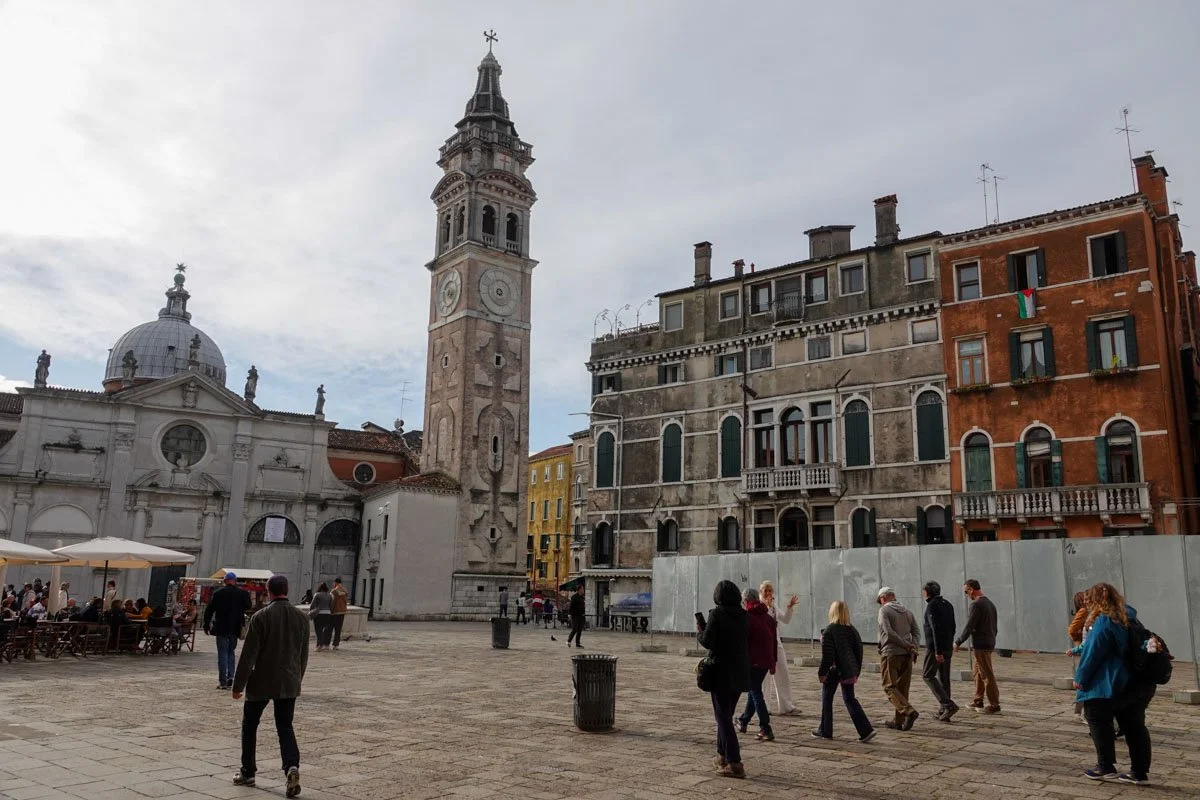
      Venice had many other squares, or campi, besides St. Marks. This one was very interesting as well and not so crowded. This is Santa Maria Formosa Square. It was designed in 1492 and has many famous buildings.

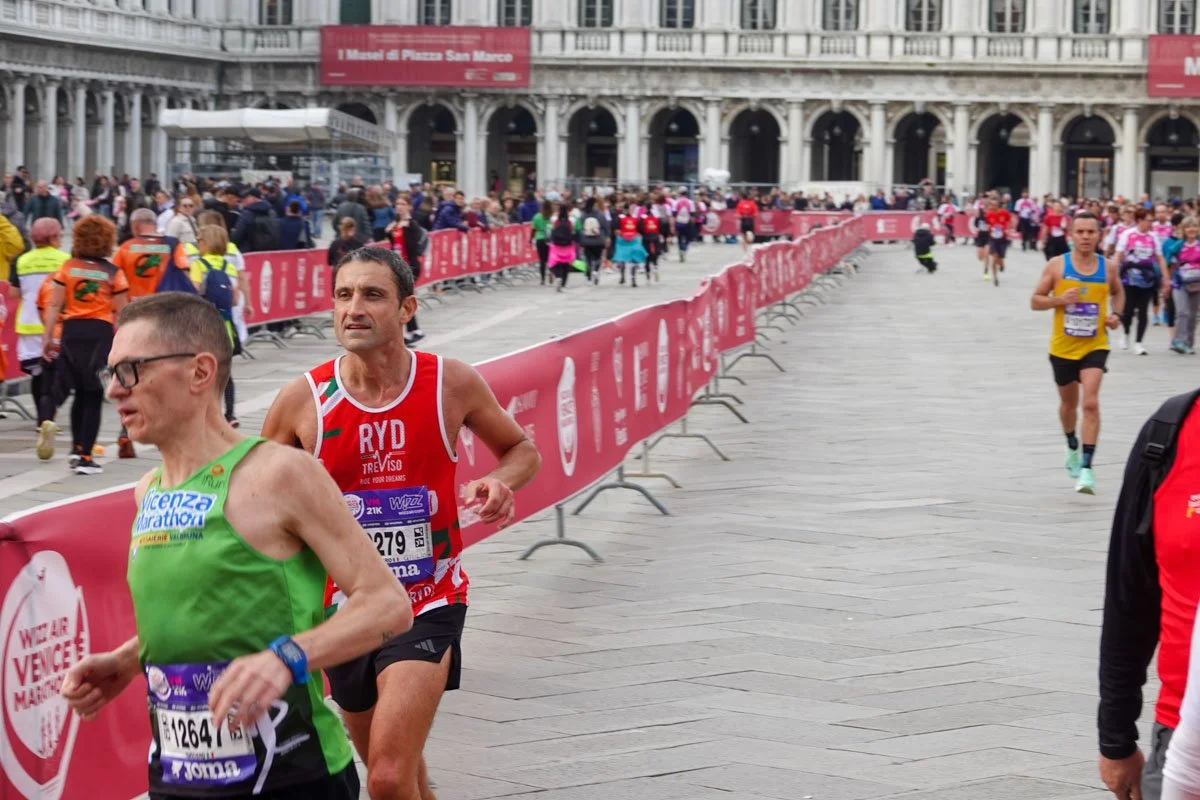
     Venice is much like other major cities and on this day, the Venice Marathon was being run. At first, I was surprised since the city is so cut up by canals and bridges, but their marathon has been run for many years. This is again in St. Mark's Square.

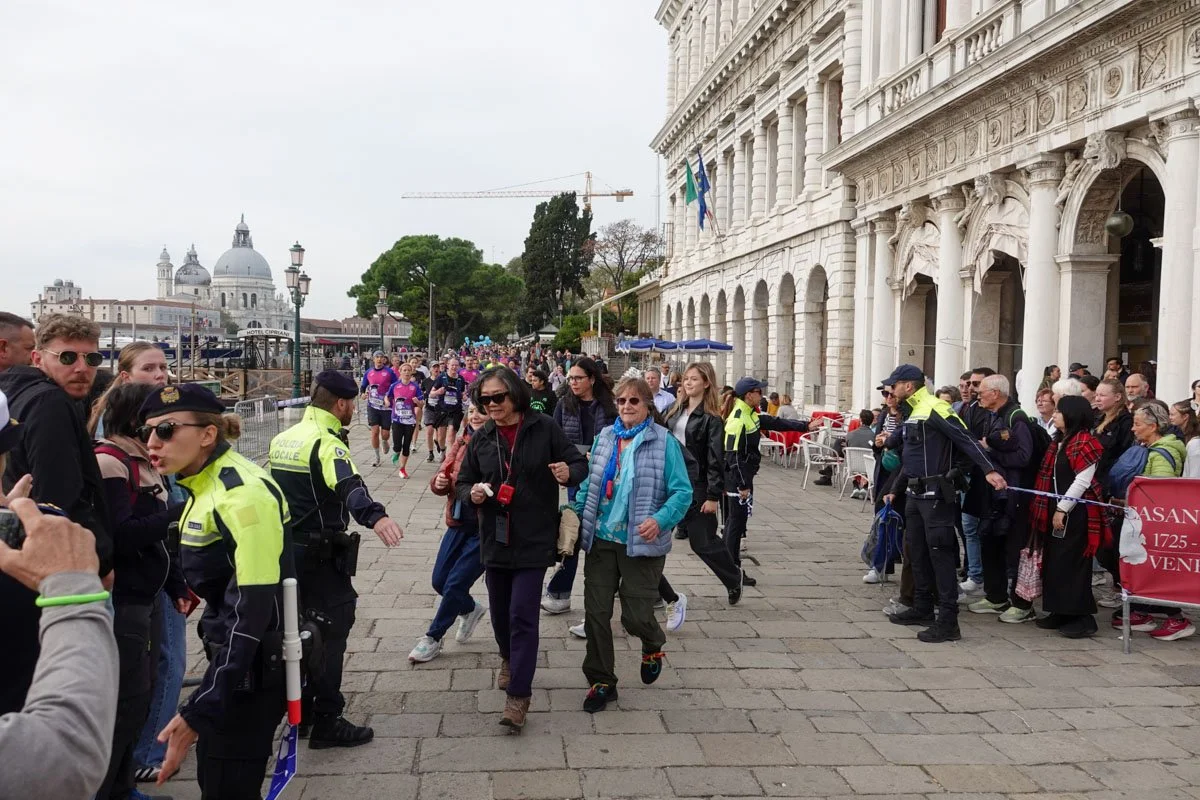
     Wait, did I mention that we ran in the Venice Marathon? Well, we did! Oh alright, well, what we did do was to run "across" the marathon course - and we had to do it four times to get to our water taxi. Here you can see Vicky "running in" (or across) the marathon. She was really moving fast, too!

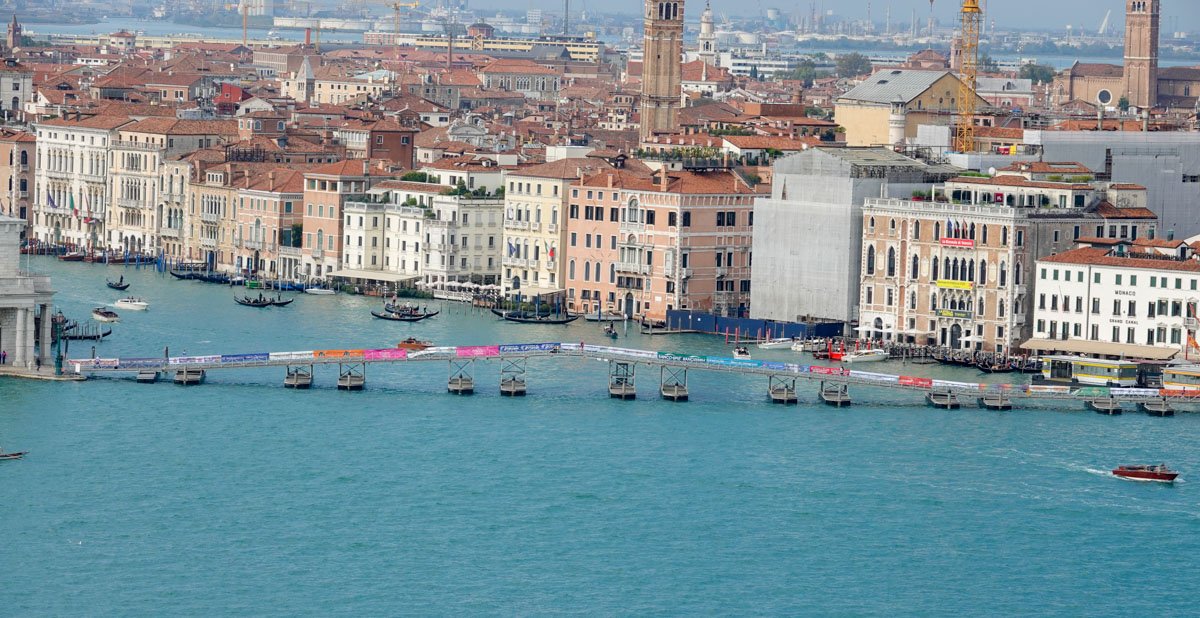
     I still had questions about how Venice managed to put an entire marathon running course together, given the fact that Venice is Venice. On one excursion that day, for which we crossed the marathon, we got to see a temporary bridge across the Grand Canal, done just for the marathon. I have to give it to the Venetians for ingenuity. 

San Giorgio's

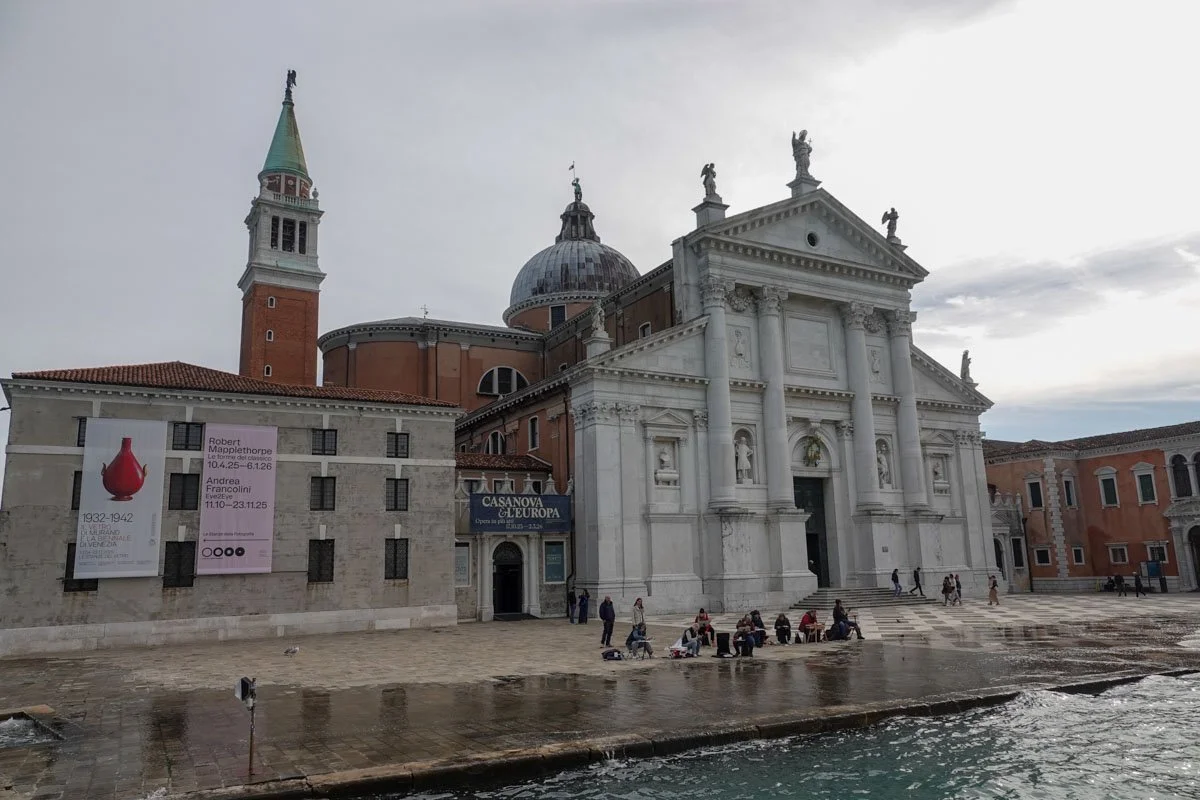
     After fighting our way across the Venice Marathon four times, we took a waterbus across the Venetian Lagoon to visit San Giorgio Maggiore, a 16th century Benedictine church and monastery. The first church was built about 790 and in 982 the island was given to the Benedictine order by the Doge at the time. But in 1223, an earthquake destroyed all the buildings on the island.

     The current church was built between 1566 and 1610. The church is a basilica in the Renaissance style with its external white marble.

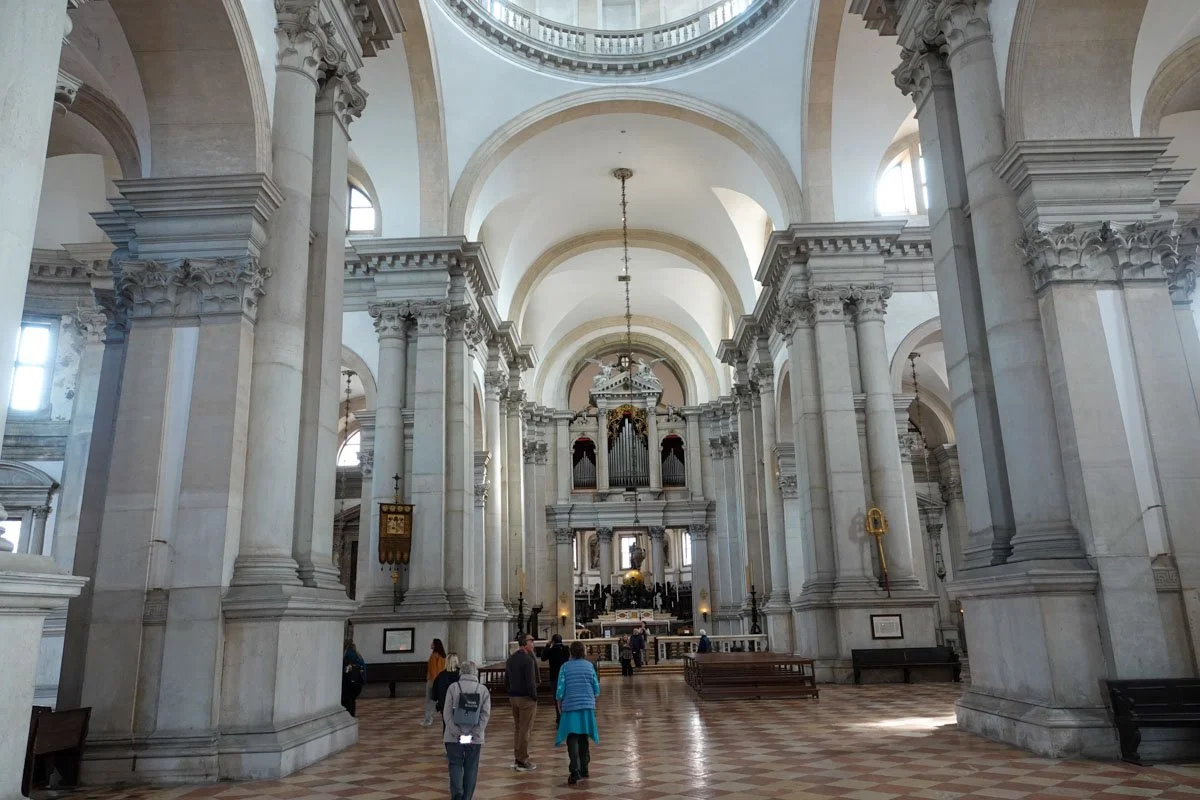
     The interior of the church is bright with massive columns. It is, however, relatively simple with mostly white, undecorated walls. The Benedictine monks kept control of the church and did not sell decorating rights to wealthy families which was done in many Venetian churches. The Benedictine monks had income from property so were in a stronger financial position.

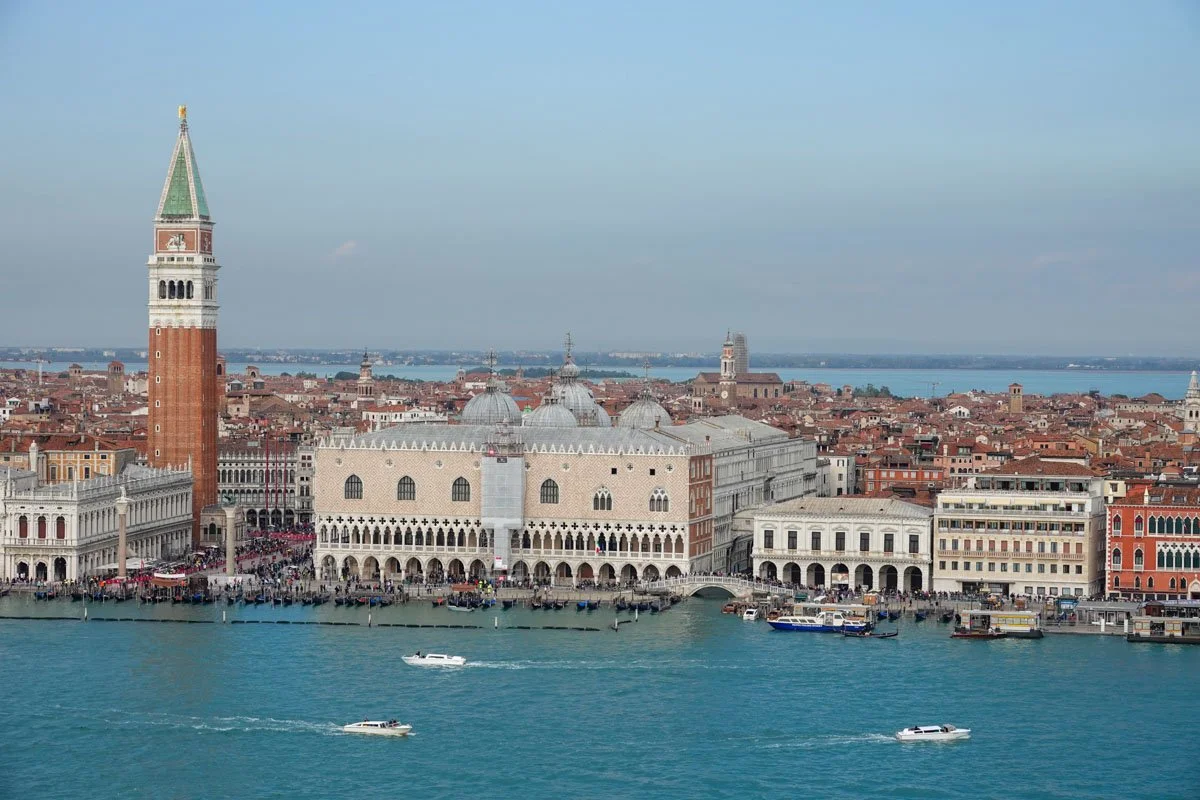
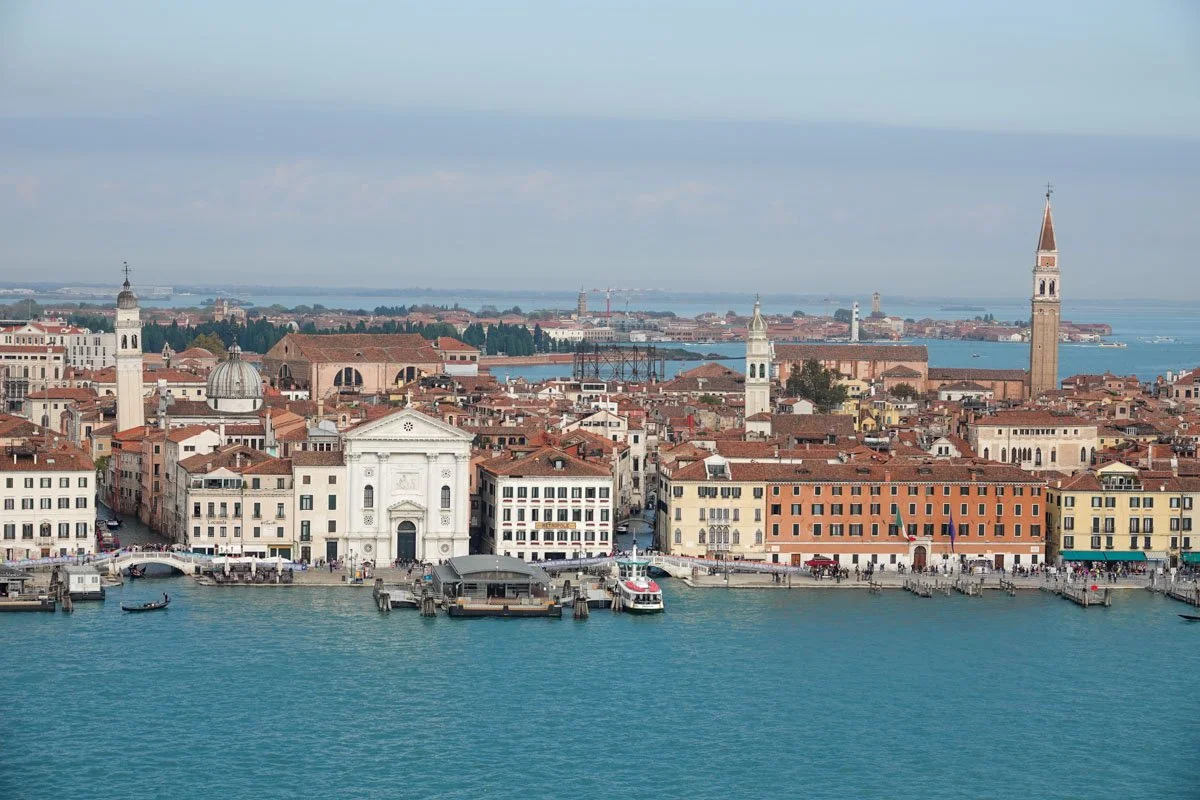
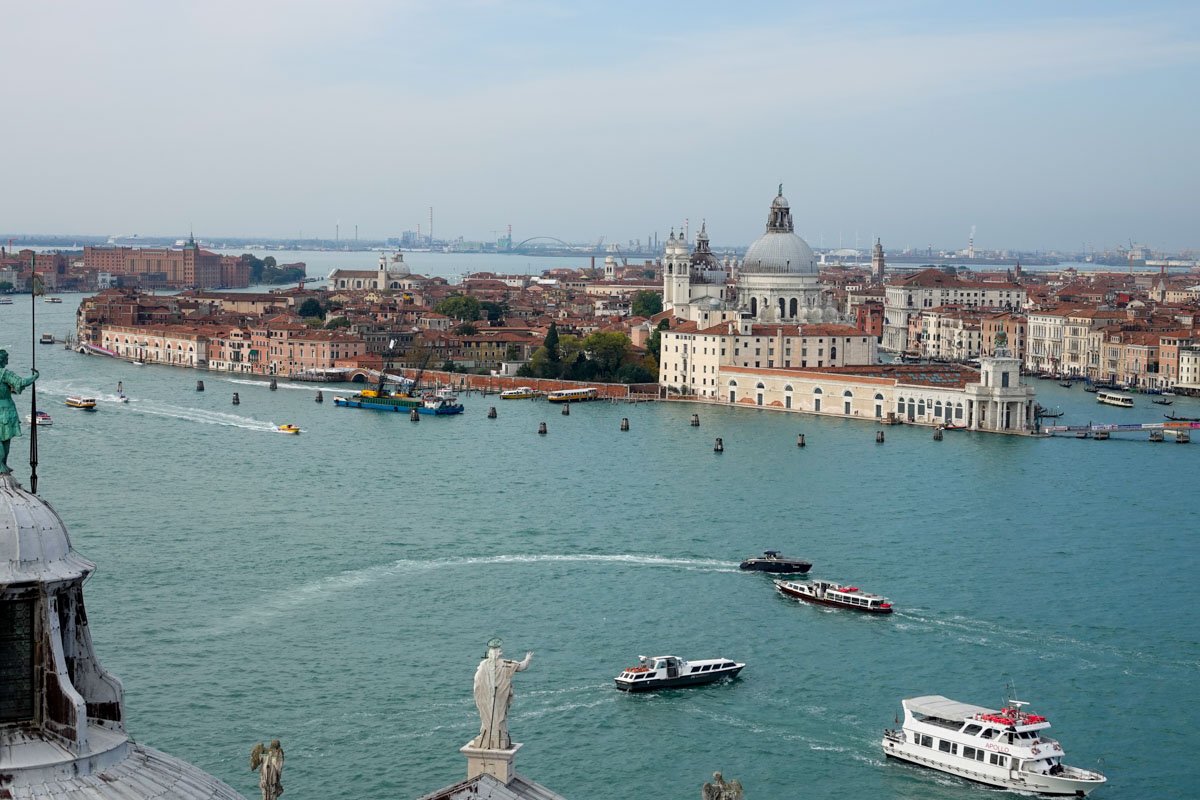
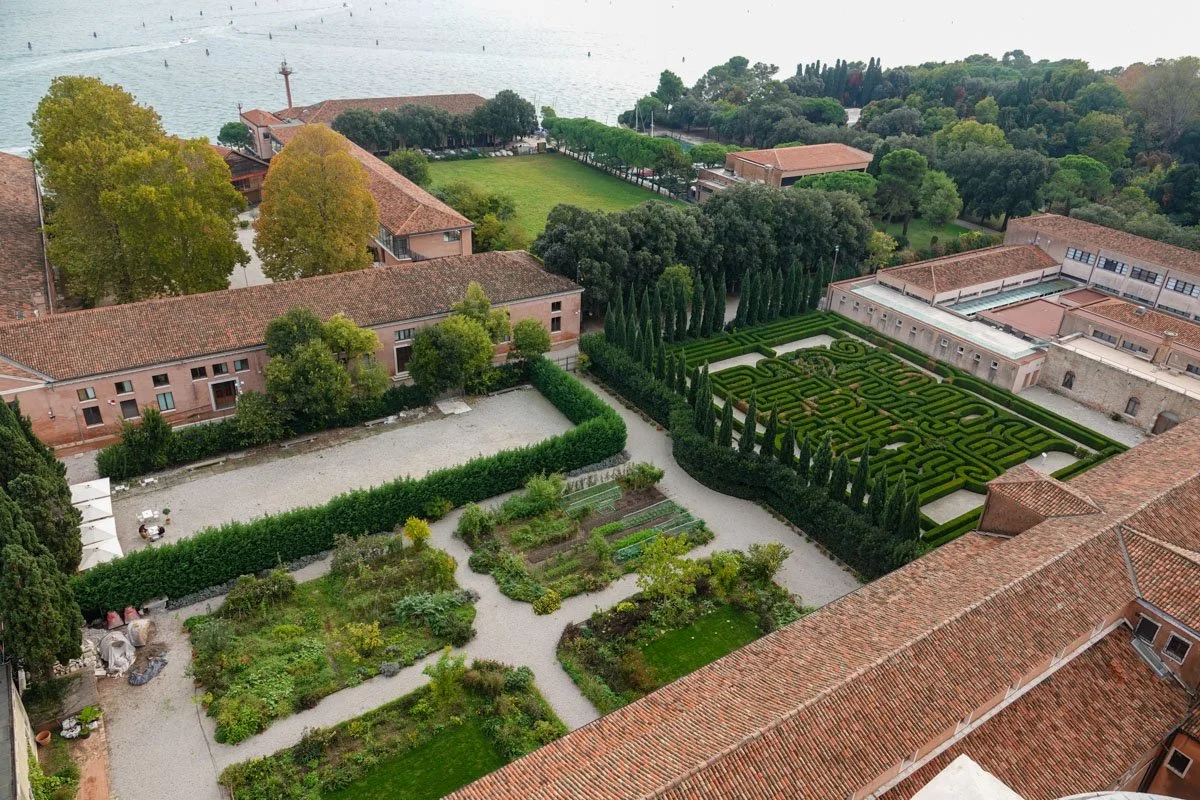
     We paid an additional fee and took the lift up to the top of the bell tower, or campanile. It was first built in 1467 but fell in 1774 and then was rebuilt in 1791. The views of Venice from the top of the bell tower were super. The next four photos were from the top of the bell tower.

     The first one below is looking directly across the Venetian Lagoon. The second photo is to the right of the first photo and the third photo is to the left of the first photo.

     Looking down from behind the church, it was interesting to see the monastery. I especially liked their labyrinth.

Ristorante Cantina Canaletto

     We walked to this restaurant in Venice proper for lunch after returning from San Giorgio's. It's a bit off the beaten path but very near the Rialto Bridge and St. Mark's Square. The restaurant was started in 1983 and was flooded in November 2019 as the photo on their menu shows. The menu went on to say that the water got as high as the table tops.

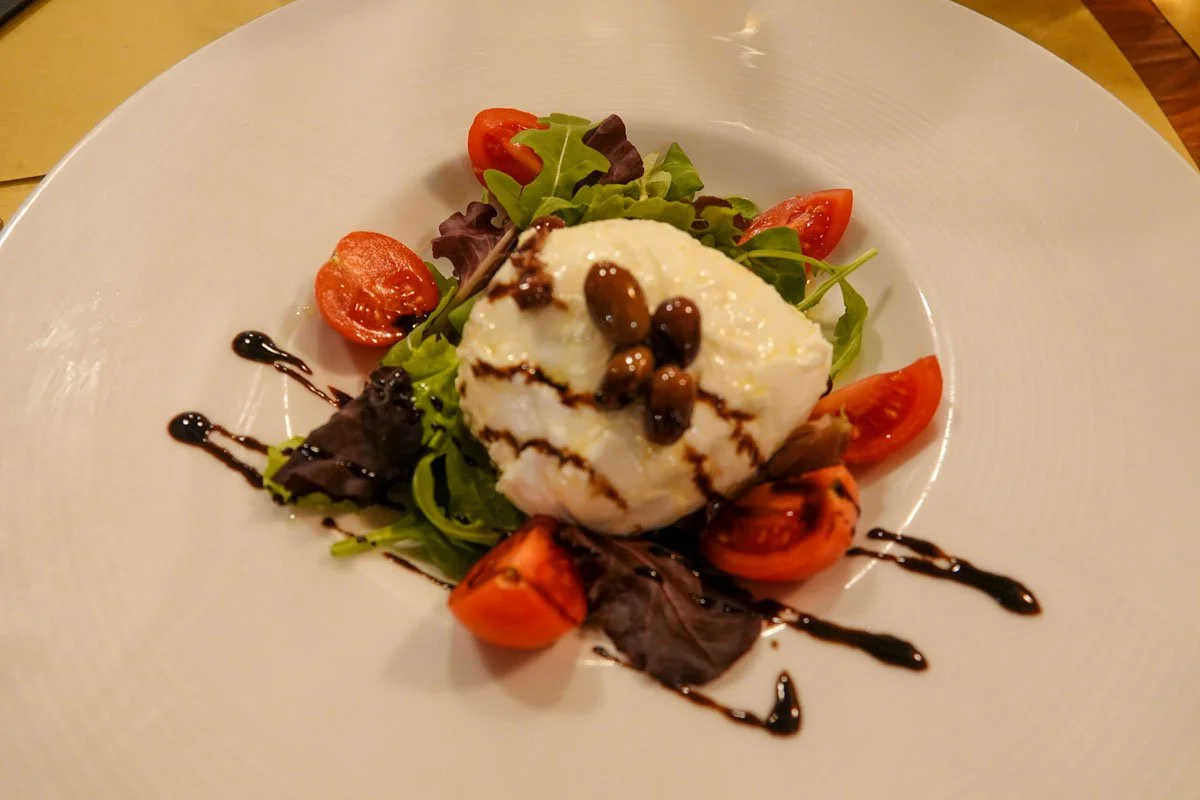
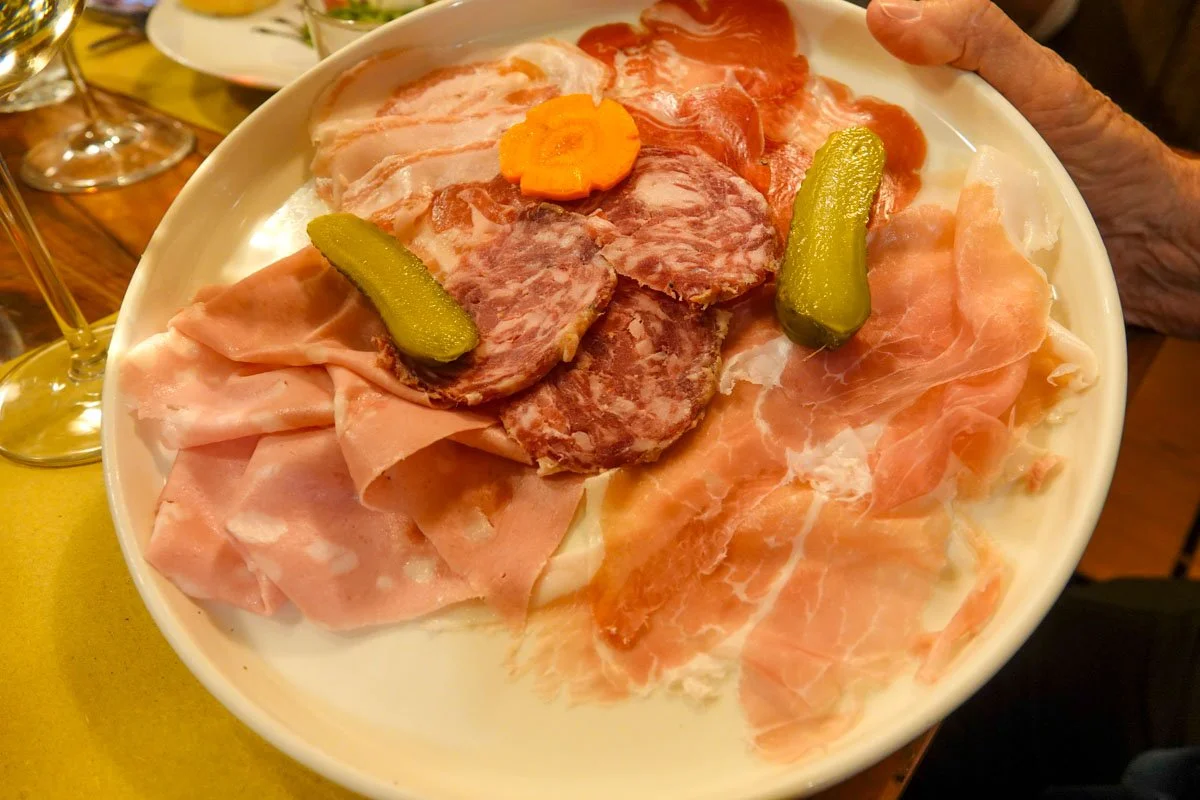
     We started with a caprese, mozzarella, and tomato salad, plus a delicatessen plate. (Sorry but these photos were not very well taken)

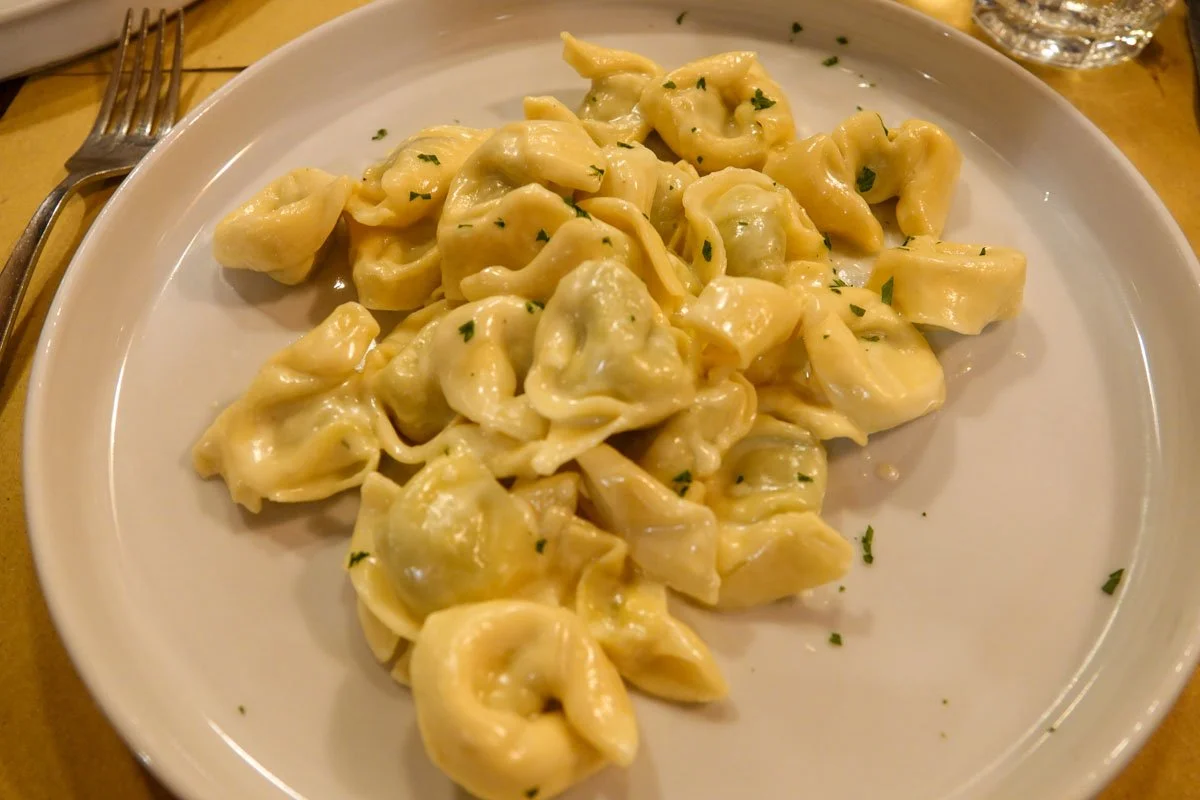
     Vicky had a spaghetti dish and I had ravioli canaletto. We also had wine and bread.

     We had tiramisu for dessert.

More around Venice

     Venice is a big place and while we were there for four-plus days, we barely scratched the surface. I think I could spend several weeks there and still find places and things to entertain me. Not only that, but we never visited any museums or art galleries and they have a lot of them. This post will just be some odds and ends that I found interesting in Venice.

     First off, the boat traffic in the canals can be incredibly busy, but no one seems to be bothered by it in the least. I assume that it's normal in Venice.

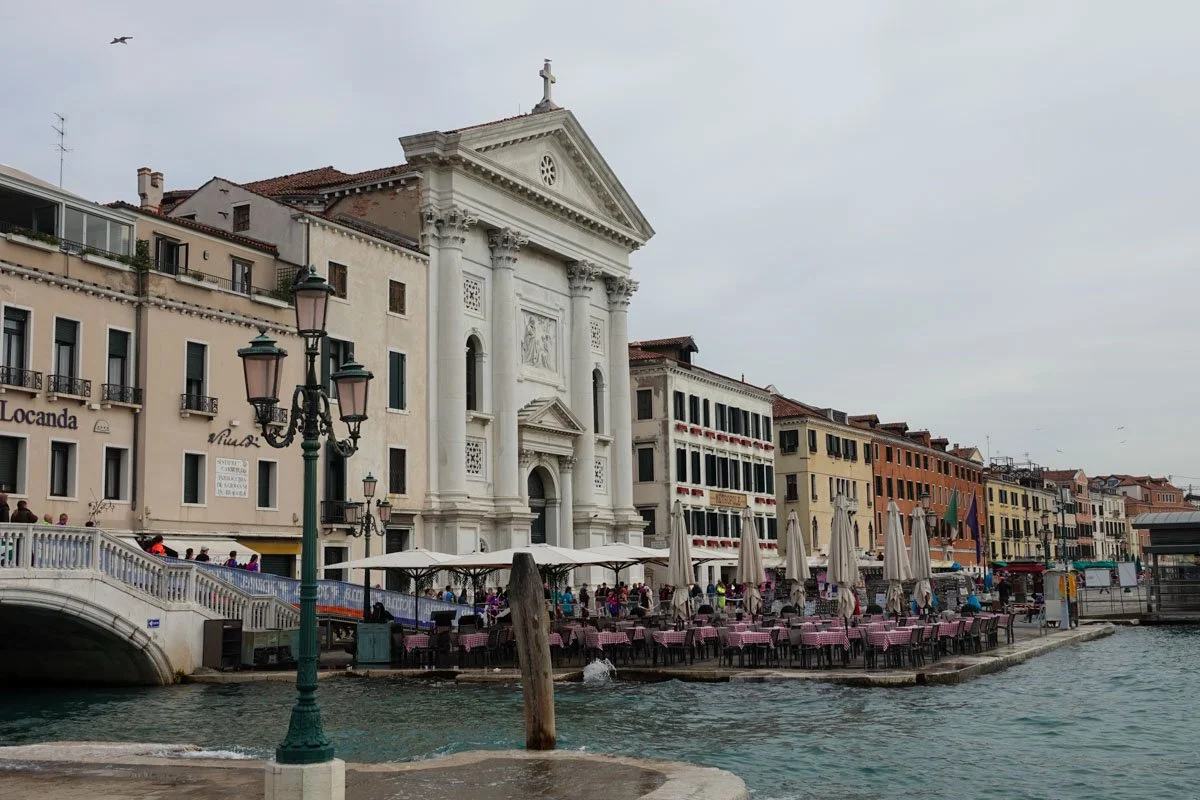
     Dining al fresco, or in the fresh air, is normal in much, if not all, of Europe. It's also normal in Venice, but I have to say that I might tend to draw the line if sitting in a seat subject to being splashed. It didn't seem to concern the Venetians. (though I don't think this place was open yet)

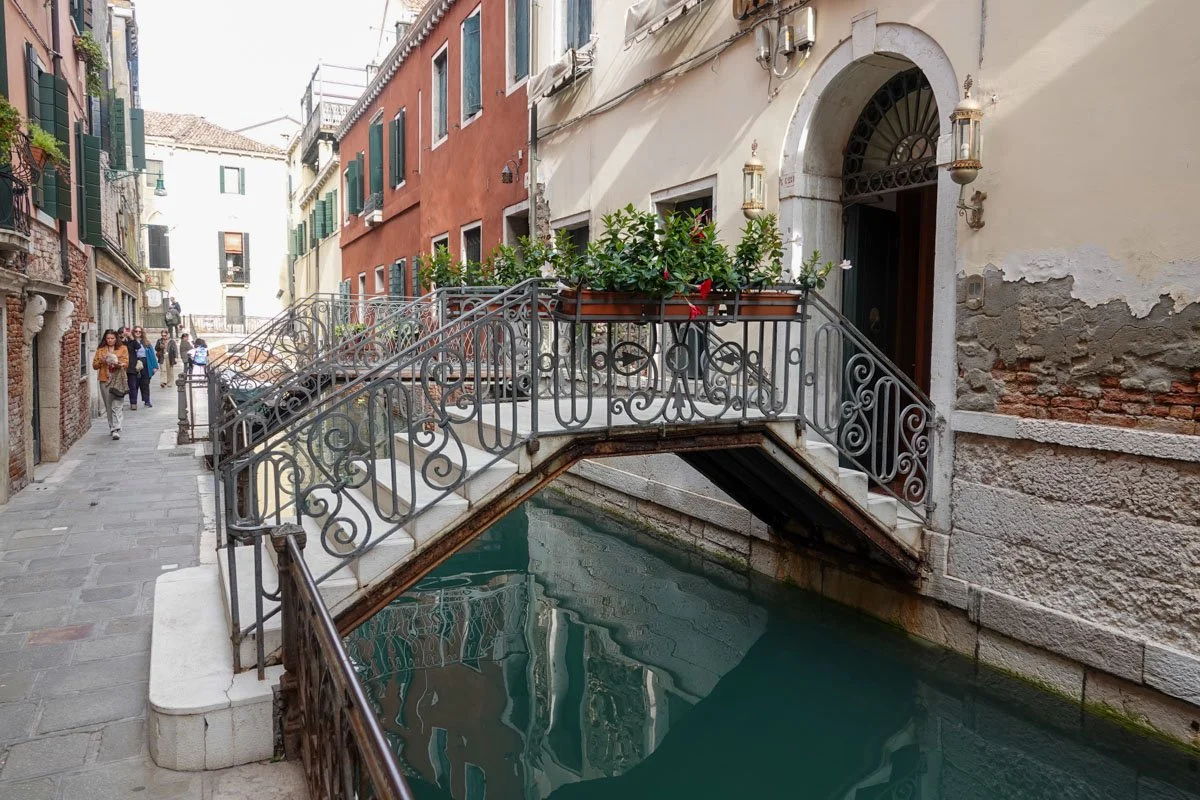
     Venice is a city of islands, canals, and bridges. This is super true for some people as they have to cross a bridge just to get into their house.

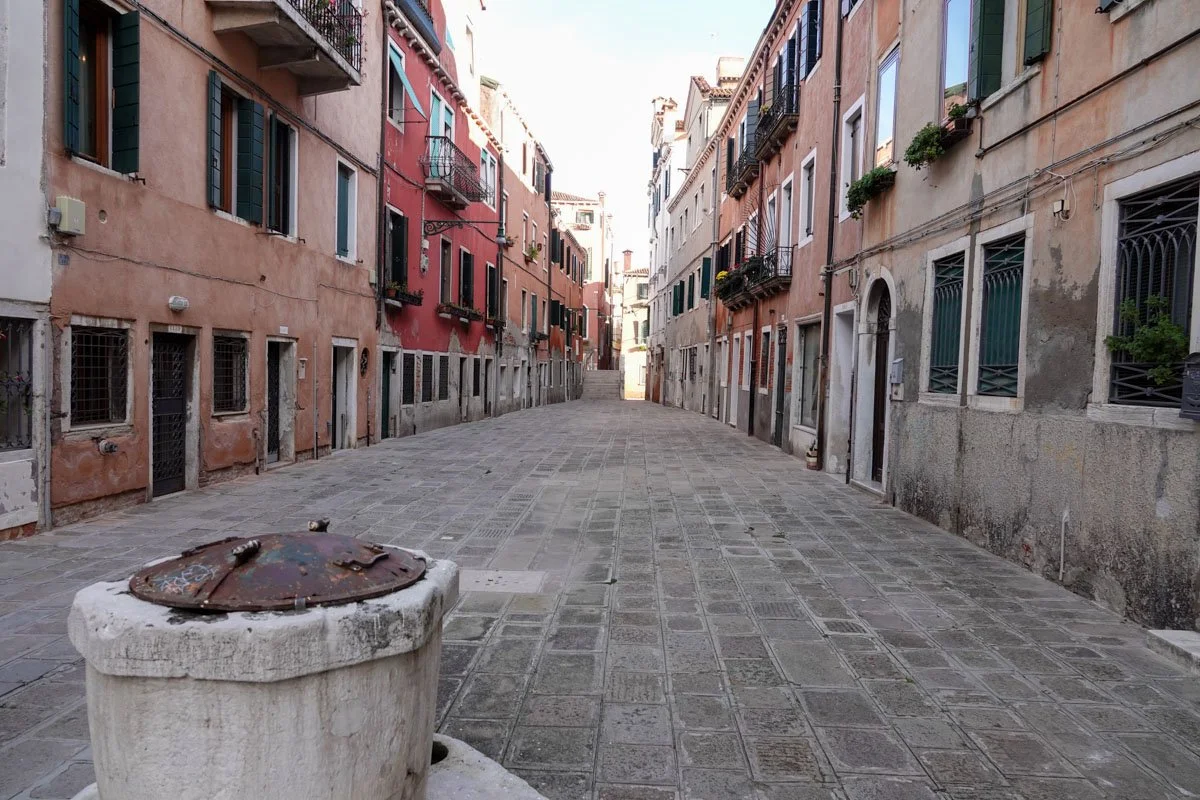
     It might seem that Venice is a super busy city. It is, but Vicky and I managed to follow our noses down streets and alleys, while getting lost, just for the heck of it. We just wanted to get off the beaten path and see what else we could find. Some streets were empty entirely. You will also notice a cistern in the photo. Venetians used to get all their water from these cisterns. The cistern water has long been polluted, and water has long since come to Venice from an aqueduct from mainland wells. All cisterns have long since been sealed off to prevent anyone from drinking the water. 

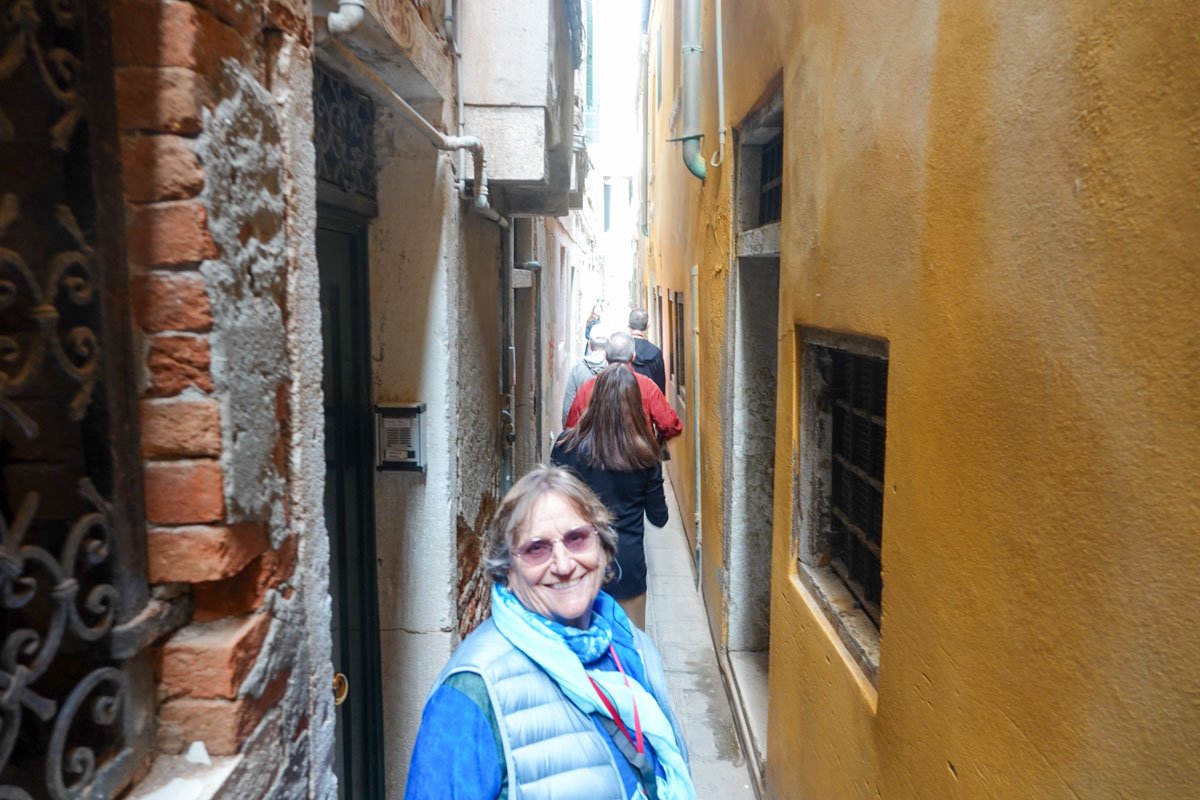
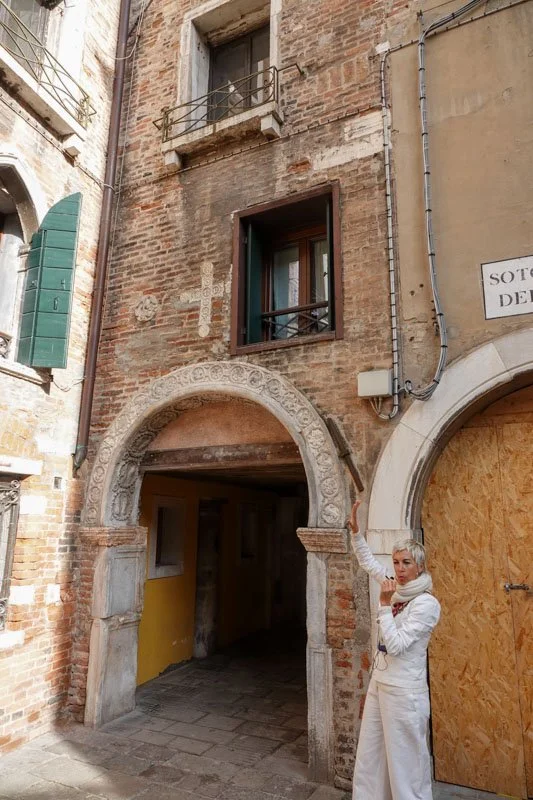
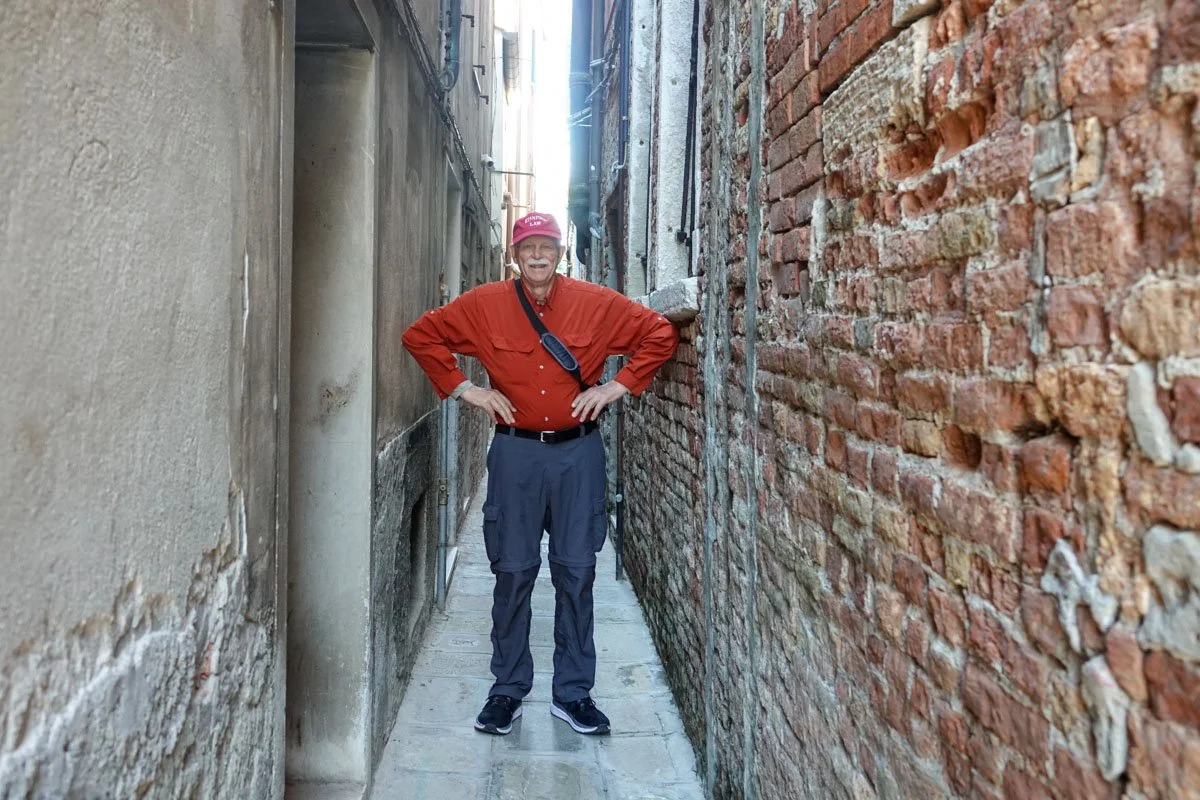
     The above empty street was a big street. We also wandered down many small streets, many of them winding around and making multiple corners. On the next street, I could not even extend my elbows full wide out, it was so narrow.

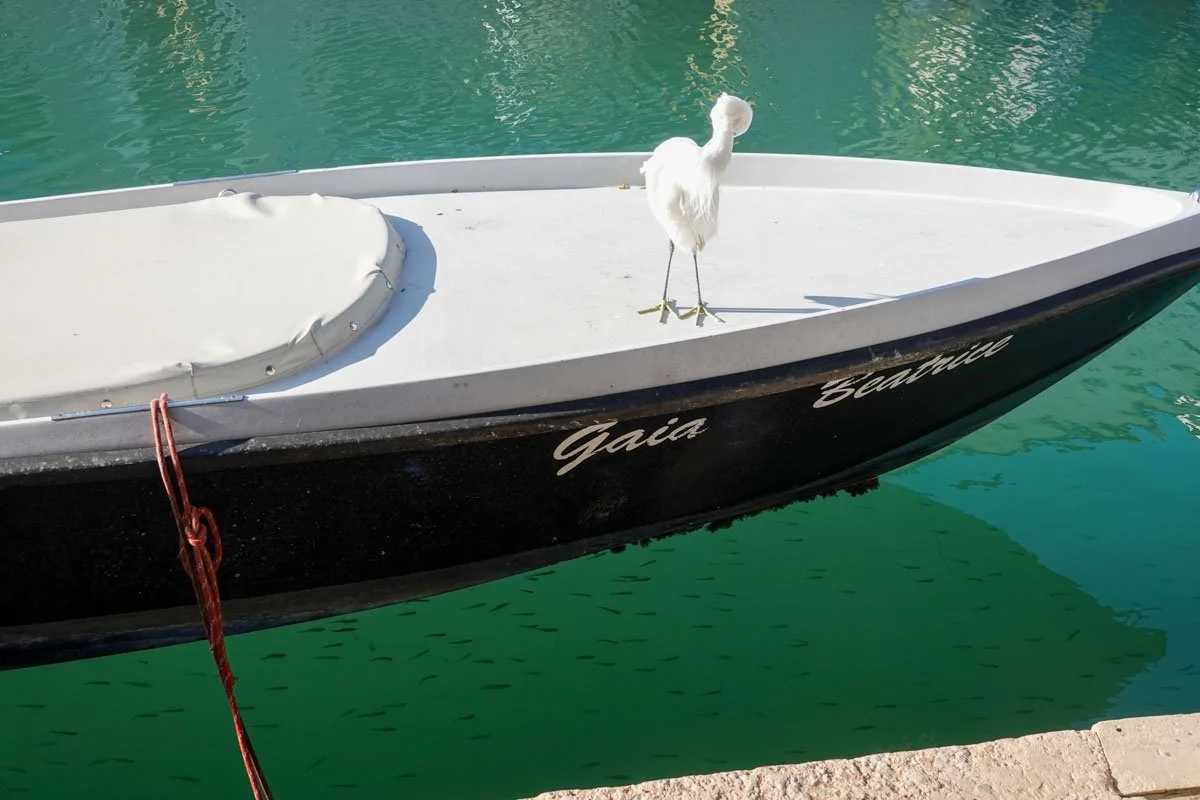
     I was walking along the street when I saw this snowy egret standing on a boat right next to me. I asked the bird what he was doing standing there. Vicky answered for the bird by saying to look in the water. Question answered.

Burano

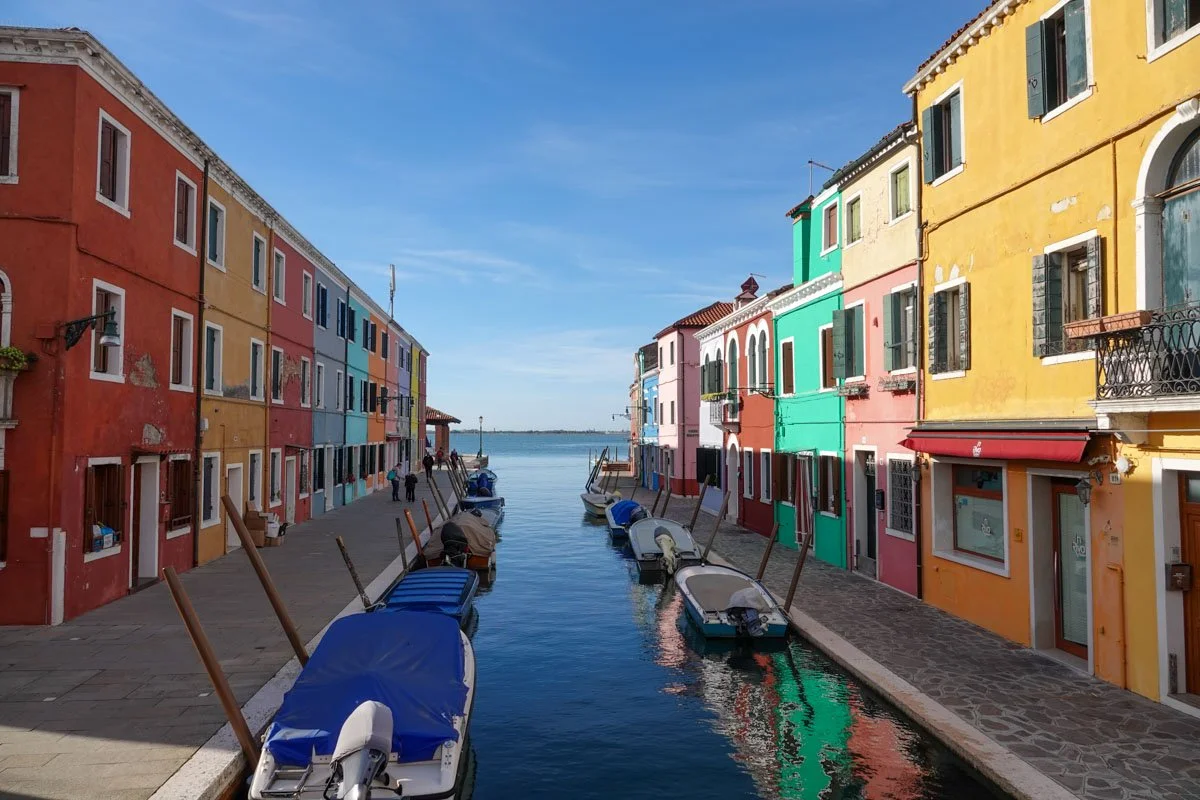
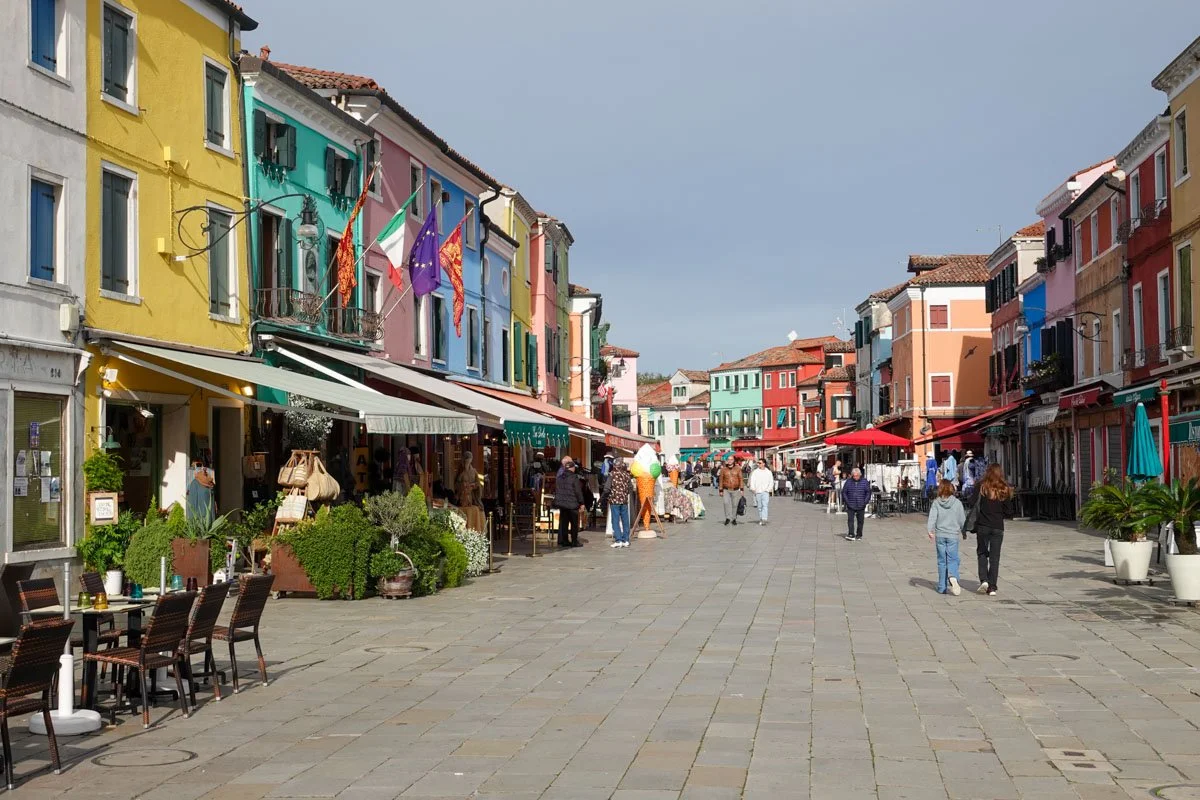
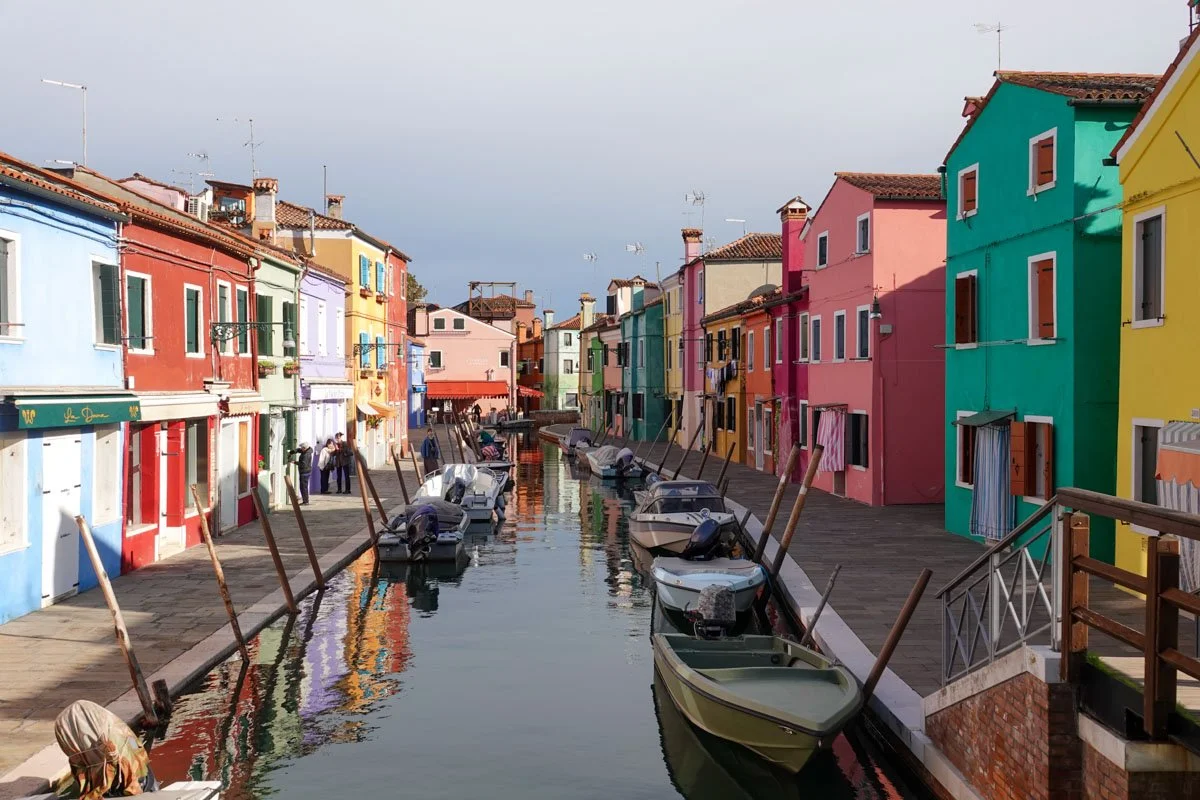
     We visited the island of Burano one morning while in Venice. It's at the northern end of the Venetian Lagoon. Burano is about four miles from Venice, and it was a 45-minute water bus ride to get there from nearby St. Mark's Square. My understanding, from our guide, is that it was a fishing village at one time. Venice has strict color schemes allowed for its housing. But Burano received an exception for their housing colors so that the fisherman could find their way home in the heavy fogs in the lagoon. Burano is an extremely colorful island. I believe that there are still fisherman here but tourism is the primary economy now.

     Some years back, Burano filled in one of its five canals and made their main road and their only town square, Piazza Baldassare Galuppi. There is a statue of Baldassare Galuppi in the square along with the Lace Museum, Town Hall, the church of San Martino with its leaning campanile or bell tower and a painting by Giambattista Tiepol, plus many restaurants and stores. Our guide assured us that the square would be packed with people by noon.

     Burano still has its other canals that separate its four islands.

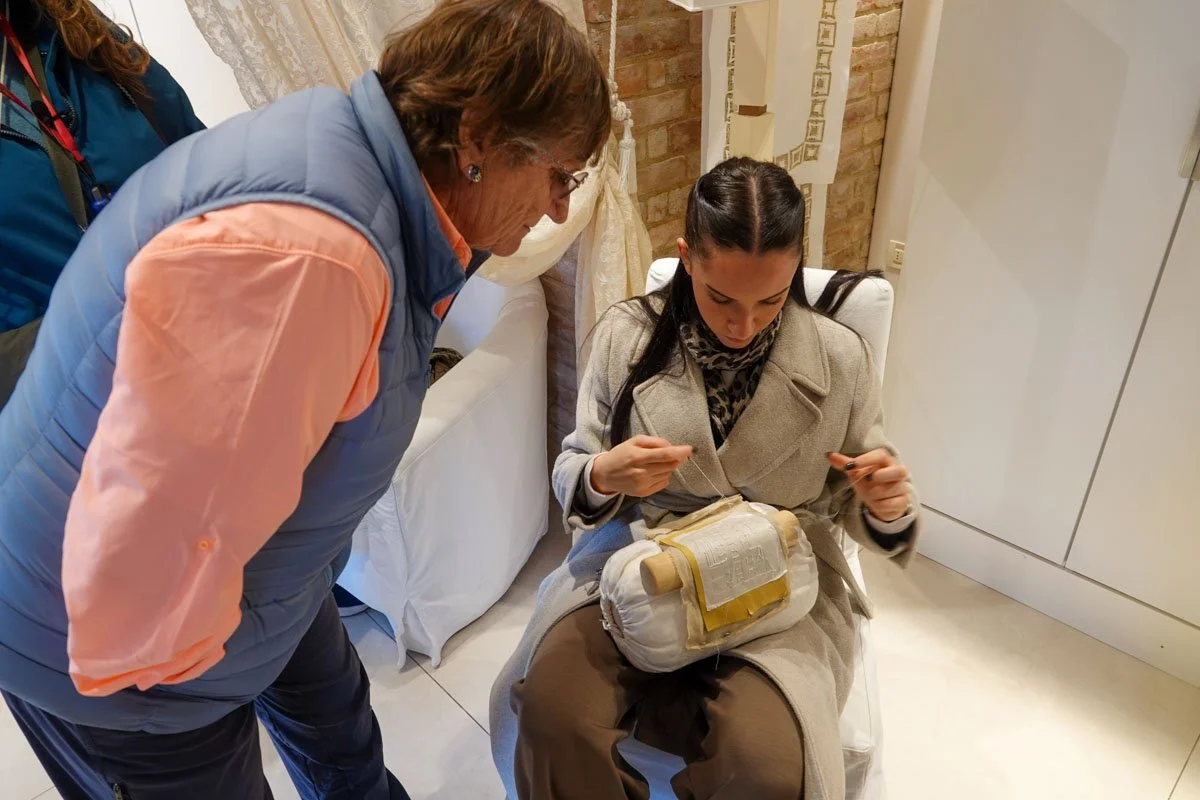
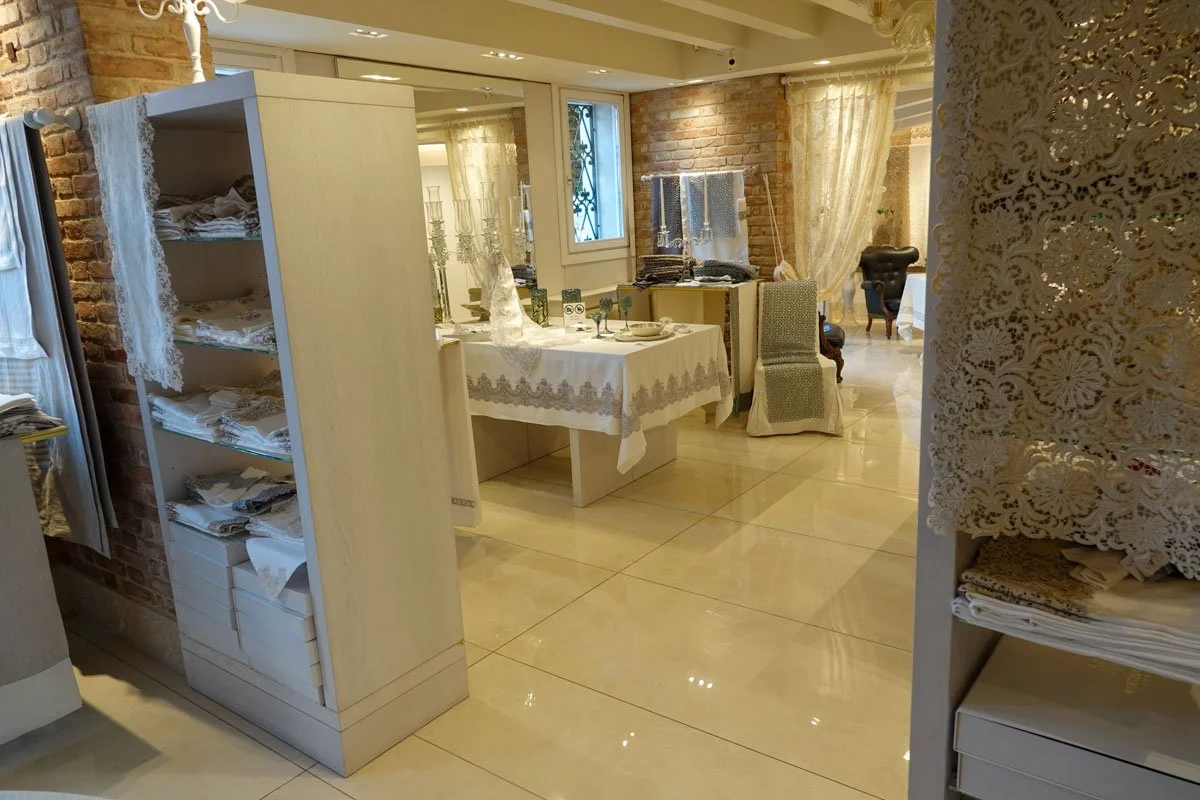
     Burano rose to prominence in the 16th century when women began making lace with needles. Leonardo da Vinci visited here in 1481 and purchased a cloth for the main altar of the Duomo di Milano. Lace was soon exported across Europe. The trade declined in the 18th century but was revived in 1872 when a school of lacemaking was opened on Burano. Lacemaking is still done on Burano. The Lace Museum was closed the day we visited here but we did visit a lacemaker's shop. Vicky was quite impressed. A woman from this store gave us information which included showing us a lace doily smaller than my hand that she said took 10 days to make and cost over $1,000 euros. I didn't ask how much for a tablecloth.

     On a side note, we did buy a tablecloth in Burano, but it was from another store and it wasn't lace. It is an incredibly colorful tablecloth, like Burano.

     We had some free time on Burano. While Vicky checked out more of the lace making and lace shops, I wandered off. I crossed a bridge to another small island and found the Ristorante Venissa, a Michelin Star and Green Michelin Star restaurant and wine resort. It was still mid morning but I noted that they had a seven-course or a ten-course tasting menu as well as wine pairings. Oh well, next time... It also had vineyards and a great vegetable garden with lots of artichokes and other things.

Murano

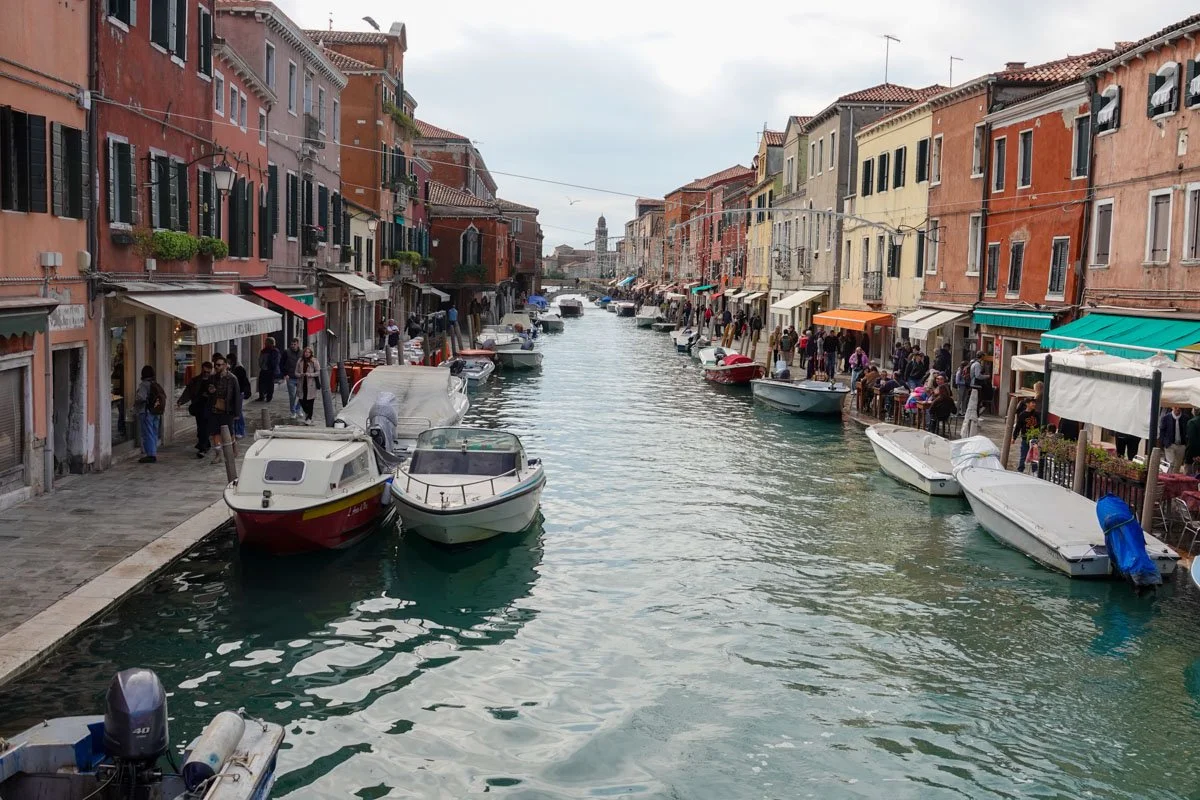
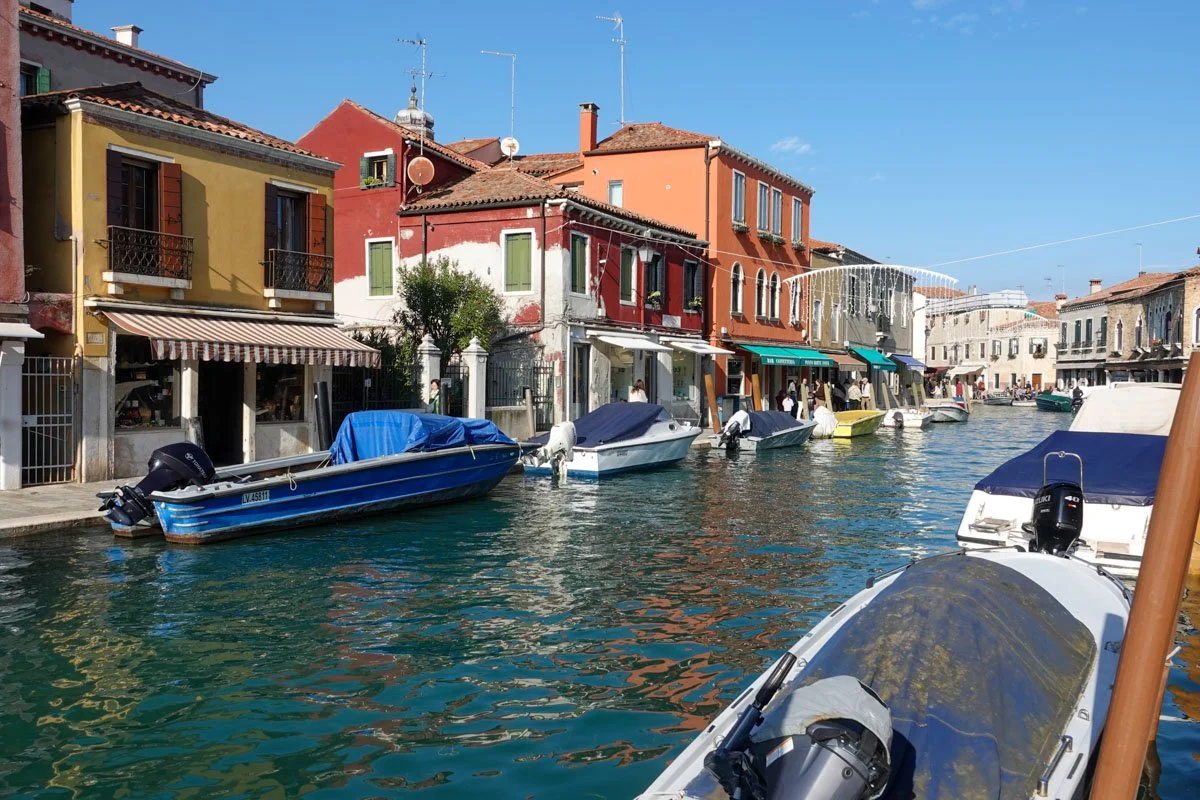
     Murano is a series of islands linked by bridges in the Venetian Lagoon. It's about one mile from Venice and we stopped here on our way back from Burano. Murano was initially settled by the Romans but later by other people. The island initially prospered as a fishing port and through the production of salt. The island looks like it belongs as part of Venice, though probably more colorful.

     Venice has long been known for glassmakers. In 1291, Venice made all the glassmakers in Venice move to Murano. I don't know why, but they did. Murano is a glassmaker's paradise. They initially made glass beads and mirrors. Aventurine glass was invented in Murano. For a while, Murano was the main glass producer in Europe. Later, the island became known for chandeliers.

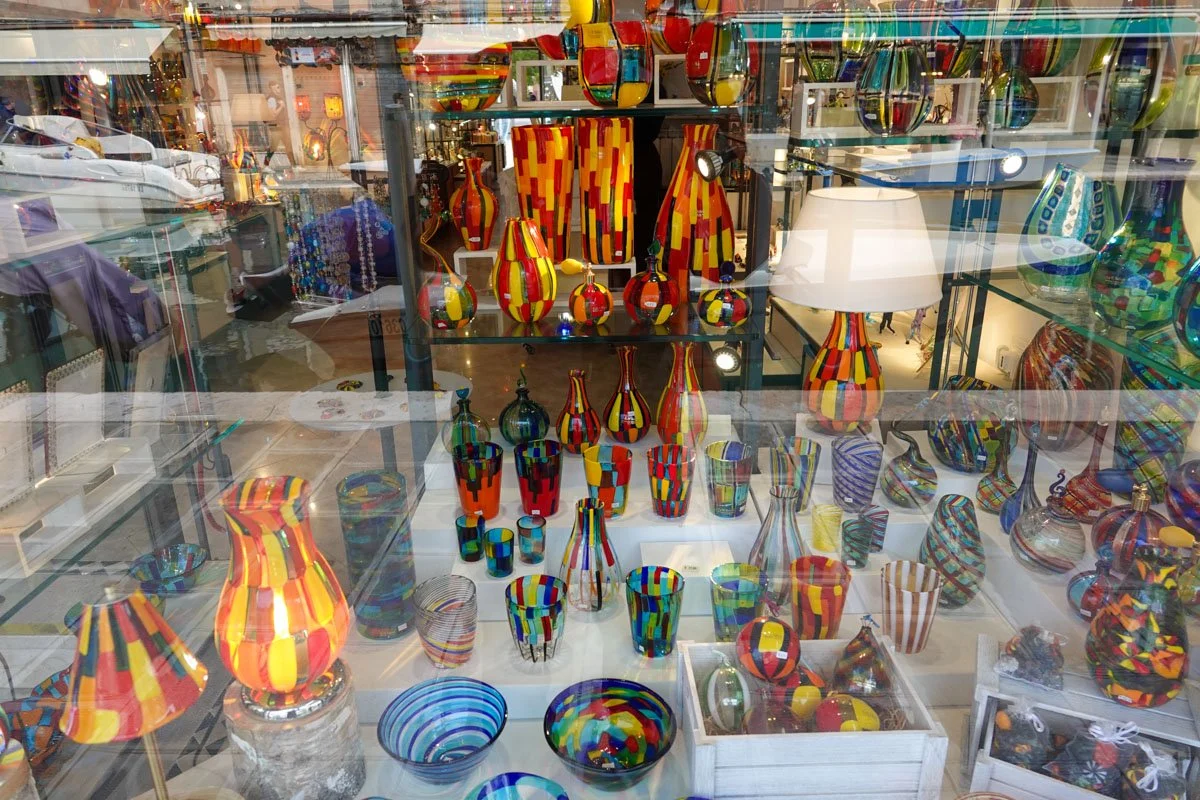
     Today, Murano is full of glass shops. You can buy most anything you want, made out of glass in Murano. We saw glasses, lamps, ornaments, vases, goblets, jewelry, figurines, animals both large and small, miniatures, bottle corks, and everything else. I drew the line when I thought I was looking at some delicious candy, only to discover that it was made of glass. 

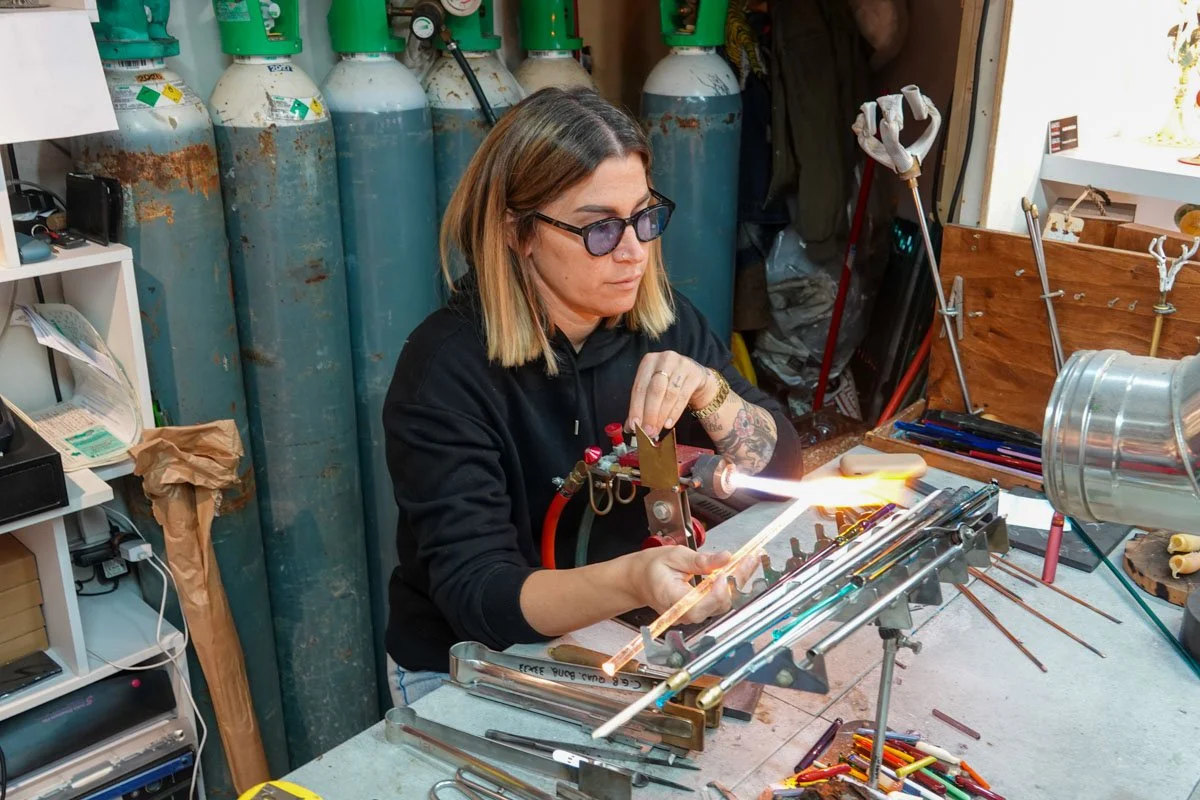
     We visited a glassmaker, watched her work, and had a Q&A with her. I found her work fascinating. She said she had been doing this for ten years.

     We had lunch at the Bella Vecchia Pescheria restaurant. We had a green salad, pasta with shrimp, and for dessert, "chocolate salami with cream." (wink-wink on the salami part, but that's what they called it). The whole meal was very good.

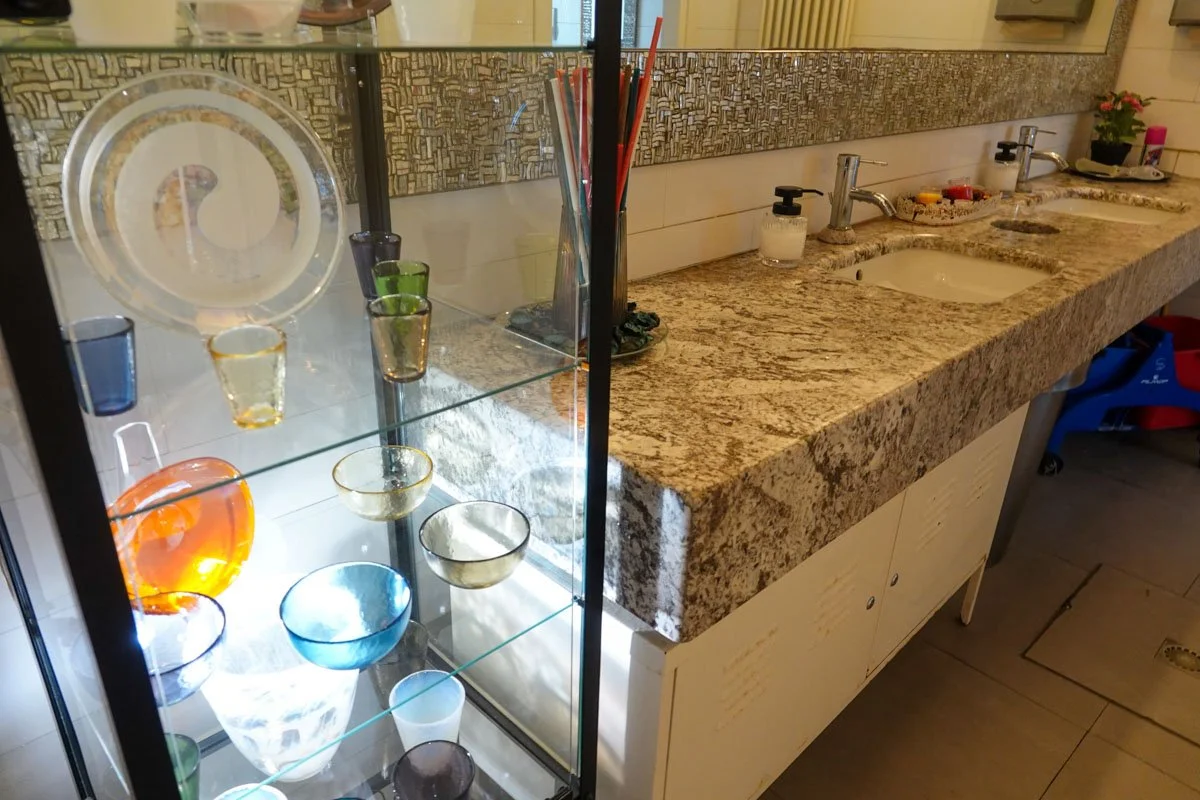
     It is my contention that Murano is the leading glassmaking city in the world. How did I determine that? After lunch, I went to the restaurant's men's room before we left the town. This is what I saw in the men's restroom at the restaurant. Beat that, glassmaking towns of the world!

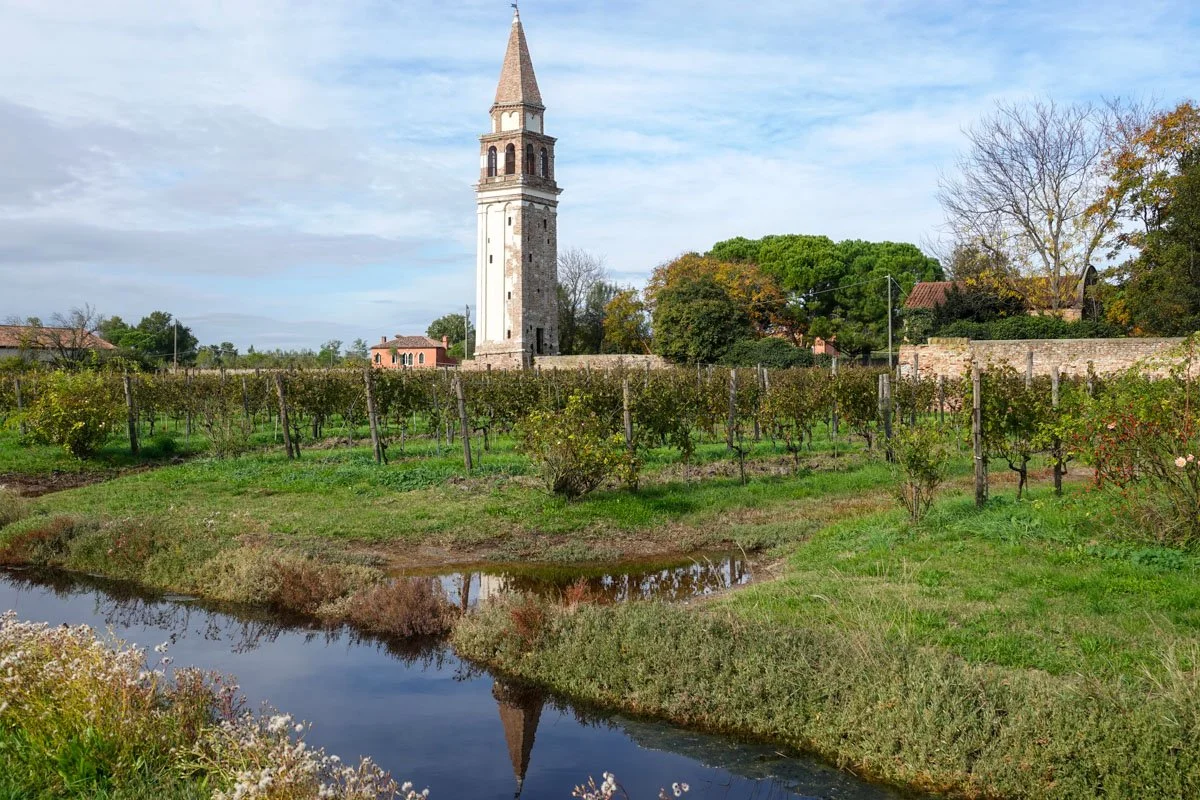
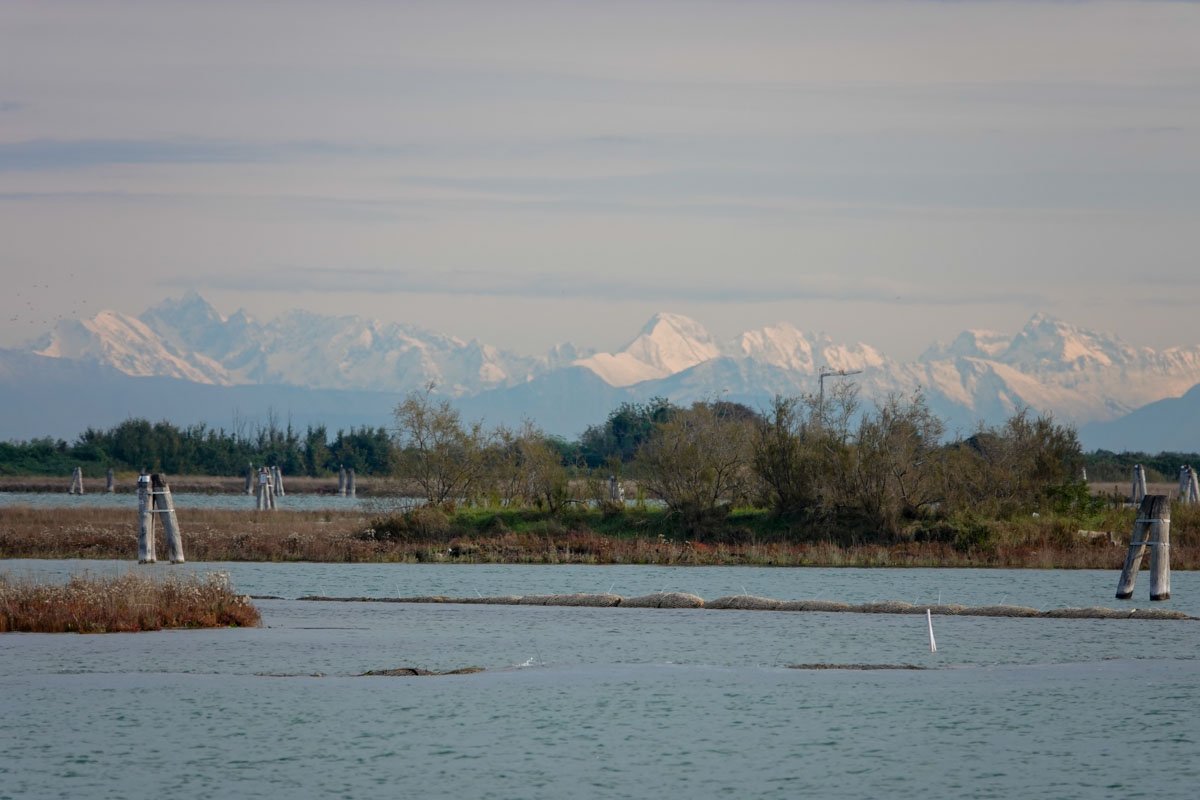
     One last note before leaving these islands out in the Venetian Lagoon. When we arrived at Venice, I thought that the Alps were now way behind us. But from the islands out in the lagoon, you can see that the Alps are not far off.

Mundane Venice

     It is my nature to wonder about such mundane things work as construction, water, garbage, etc. in a place like Venice. But after five days there, I came across any number of these items, just as we were wandering about.

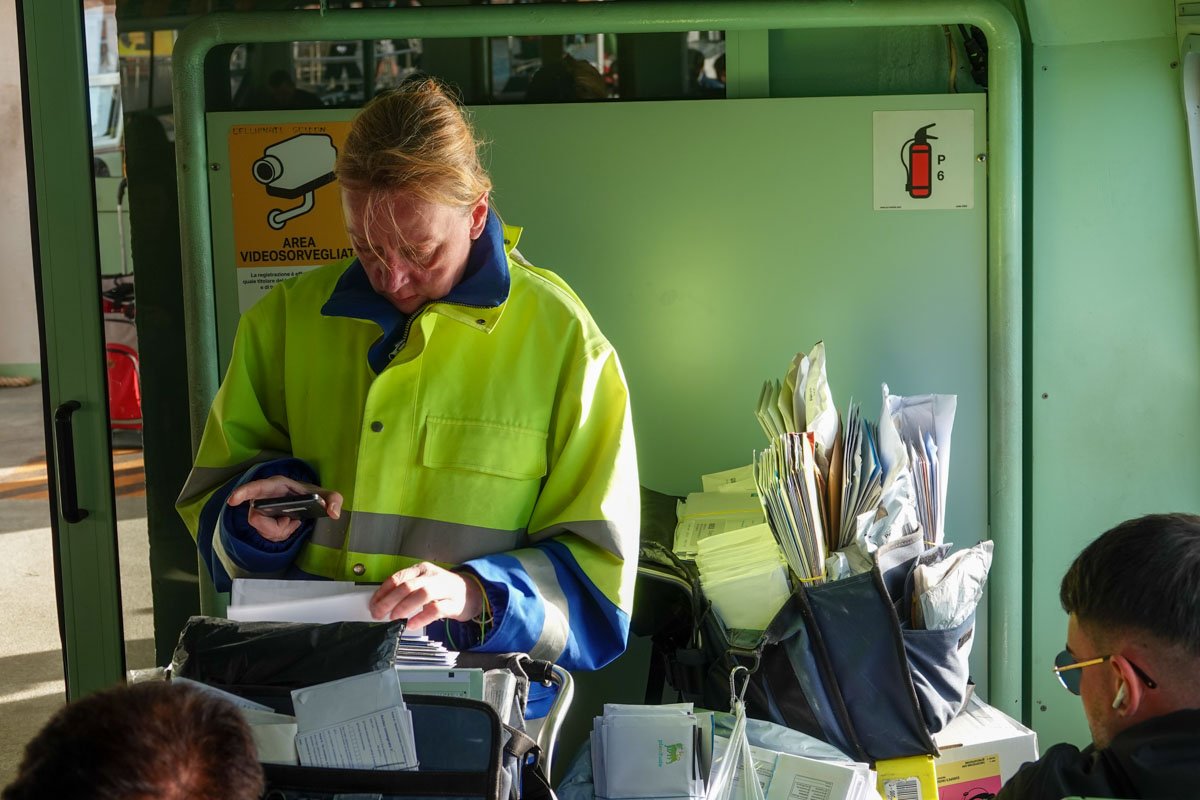
     The first was on a water bus on our way to Burano. A mail carrier sat across from us on the water bus, sorting out her mail. She got off the bus with us on Burano Island.

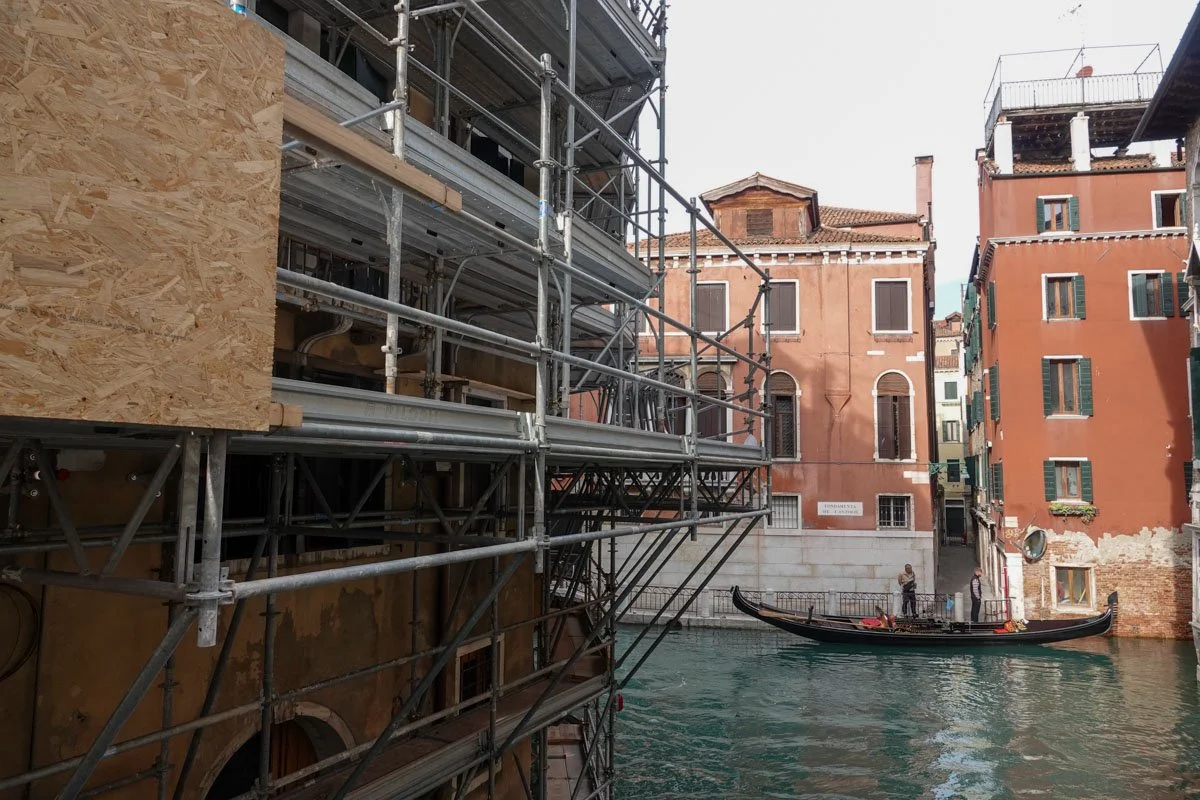
     Construction was happening all over Venice. We saw lots of cranes operating and many construction projects. They looked very normal. Of course, the weight of all the construction is helping to sink Venice into the lagoon, causing the flooding.

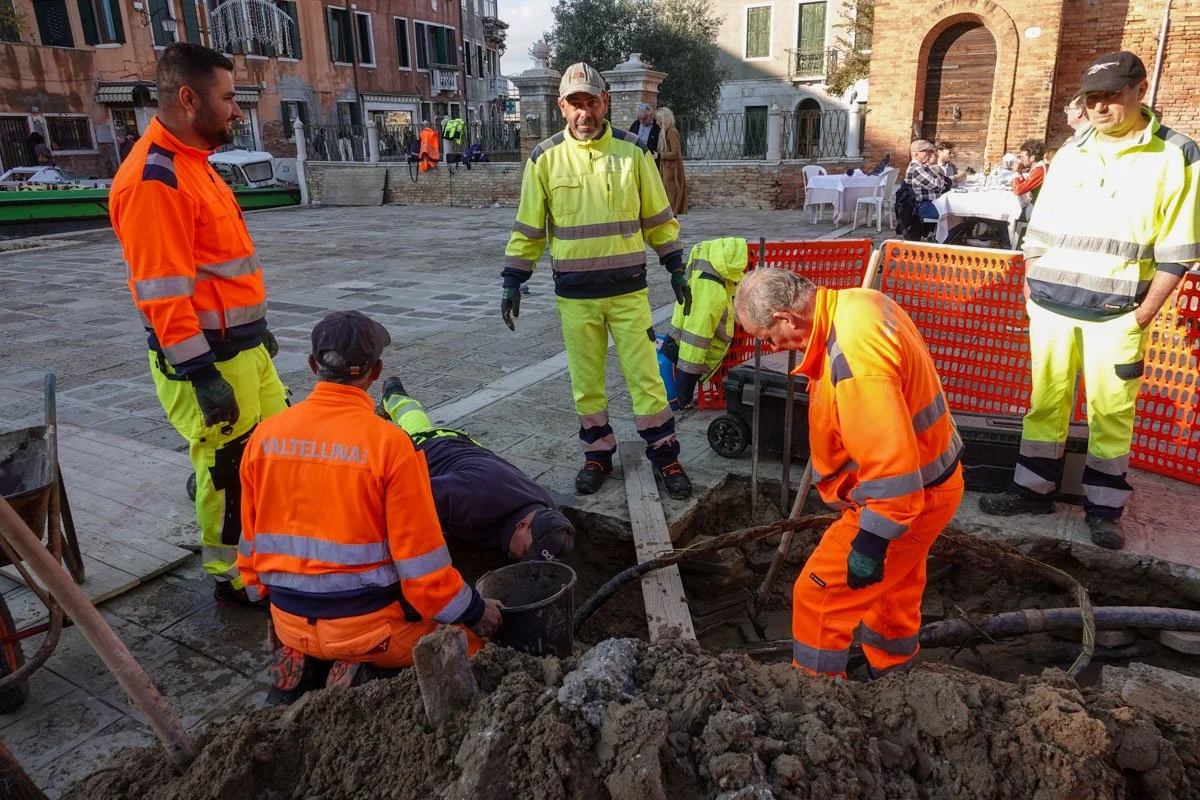
     This underground crew was hard at work in a plaza. I only did a minimum of supervising this crew. They seemed to be right on top of things.

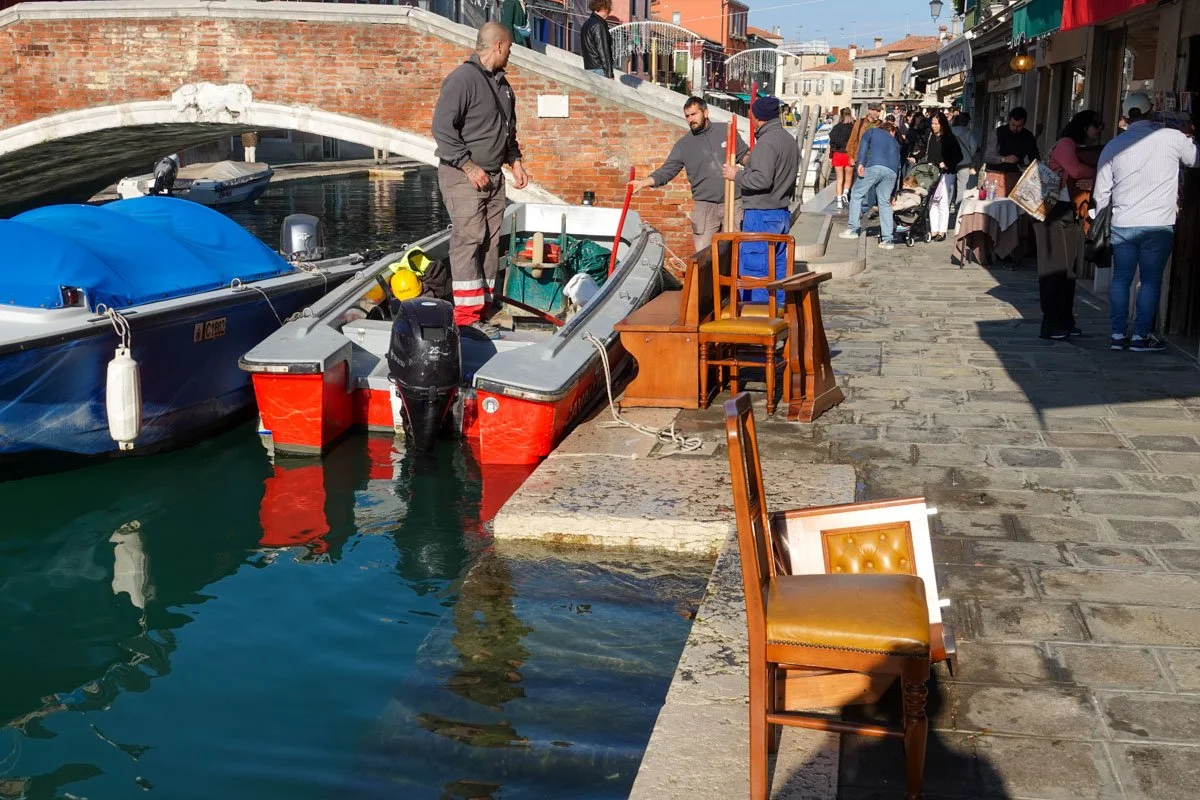
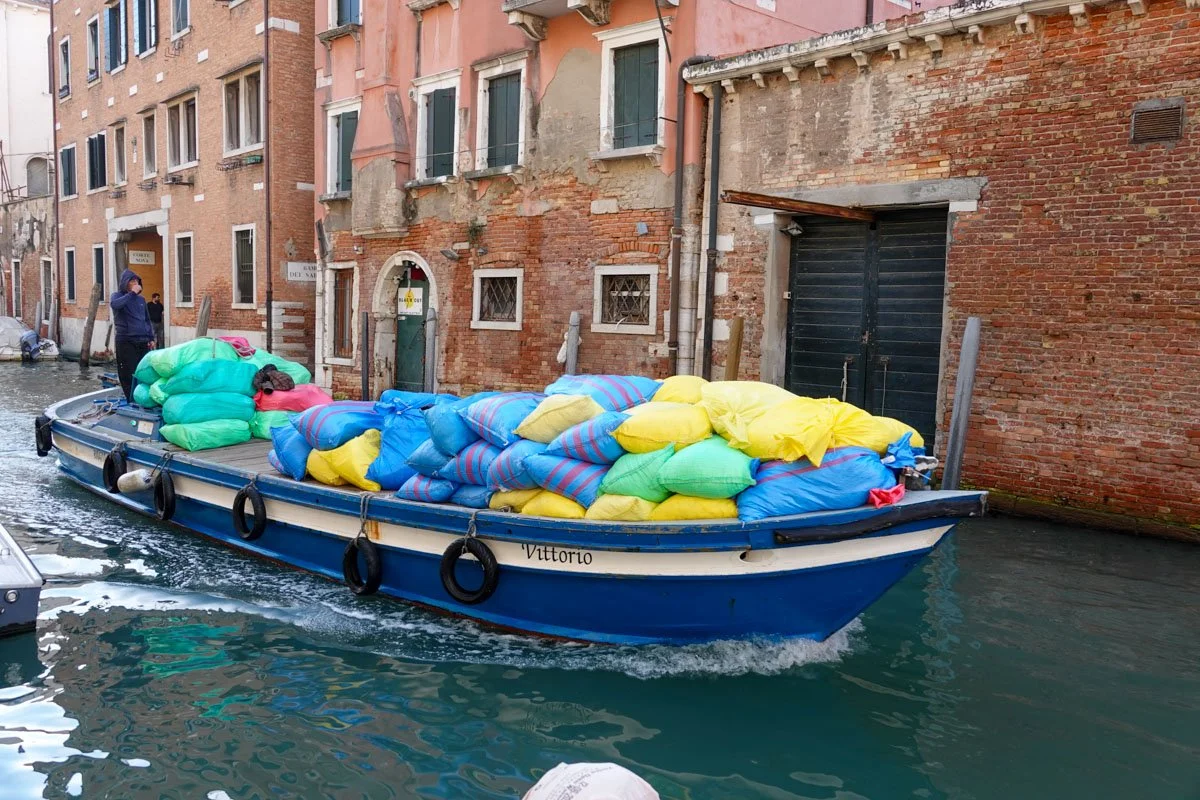
     People in Venice no doubt move housing locations like anyone else in the world. These guys were moving all the household furniture from a place nearby and putting it in their boat.

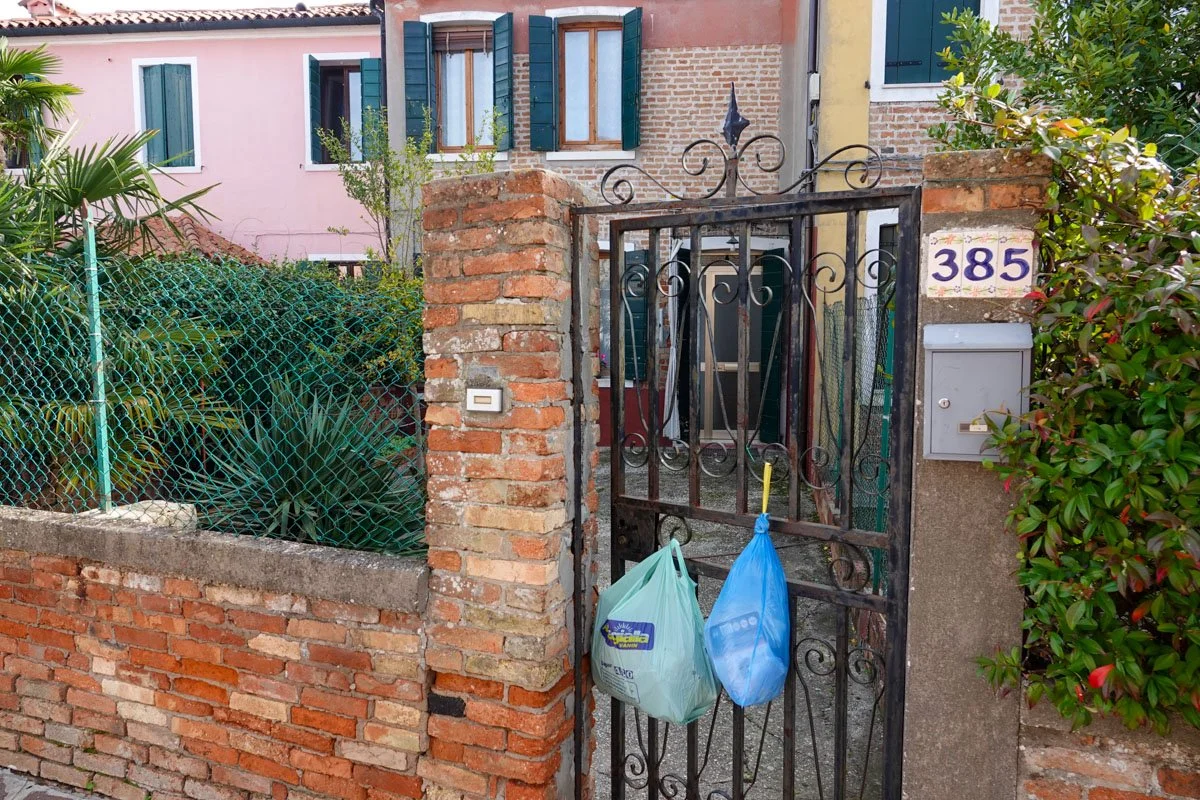
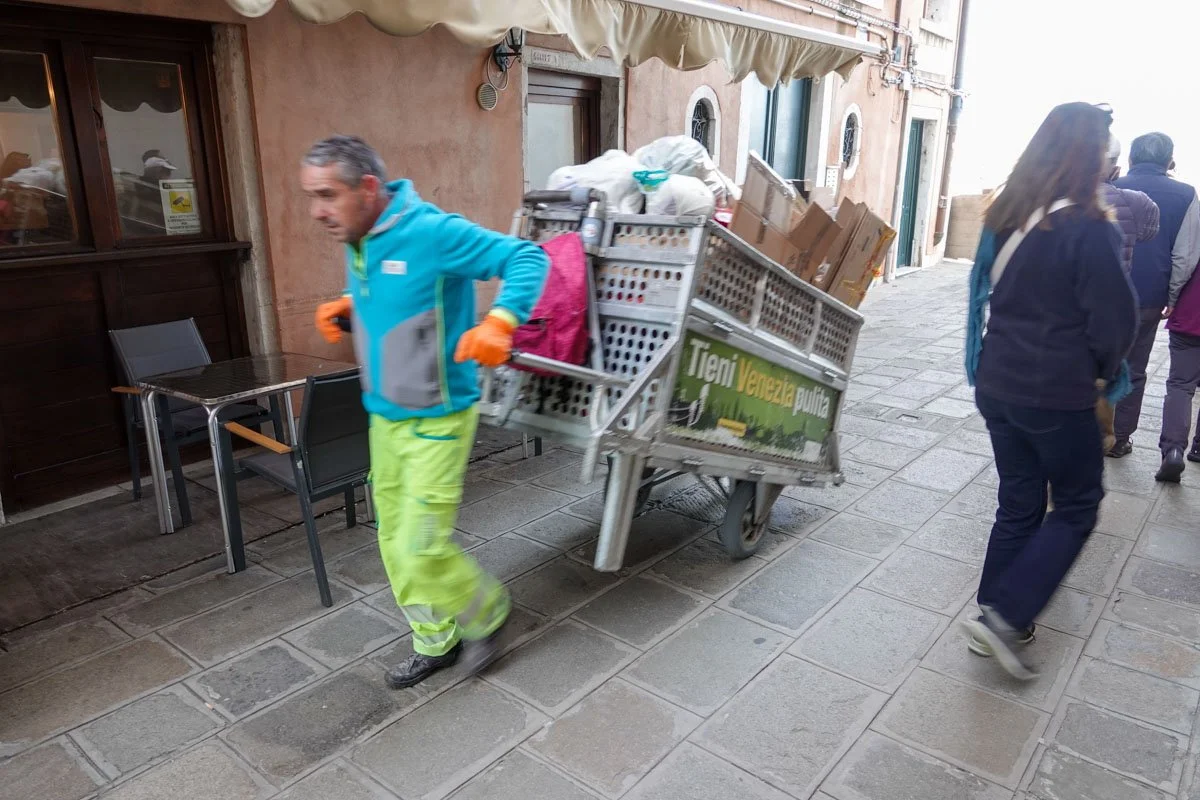
     Garbage disposal was something that I was very curious about. These next three photos will show the process as I observed it.

Saint Lazarus Island

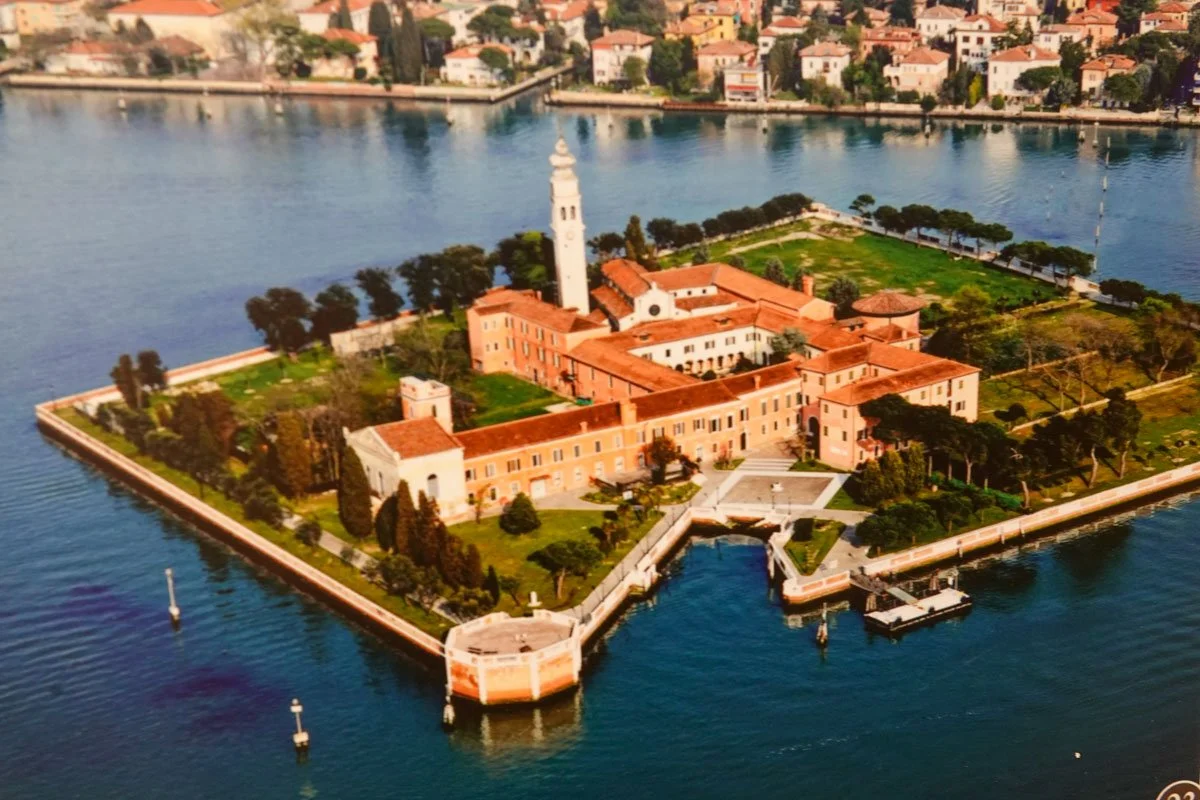
     We took a water taxi to Saint Lazarus Island. It's in the Venetian Lagoon, about 1.2 miles southeast of Venice proper. It has been the home of the Benedictine Congregation of the Mechitarists since 1717. They are an Armenian Catholic congregation. Saint Lazarus Island is one of their main centers along with one in Vienna. 

     The island has an interesting history. It was originally a leper colony as Saint Lazarus is the patron saint of lepers. Eventually the island was abandoned but then given to the Armenian monks. They have now lived here for more than 300 years.

     Napolean recognized it as an academy in 1810 when nearly all Venetian monasteries were abolished. Lord Byron visited here for two years, 1816-1817. According to our private island tour guide, Lord Byron worked here for two years while pursuing an Armenian woman. The island is now mostly a tourist destination. Below is a photo of a photo of the entire island.

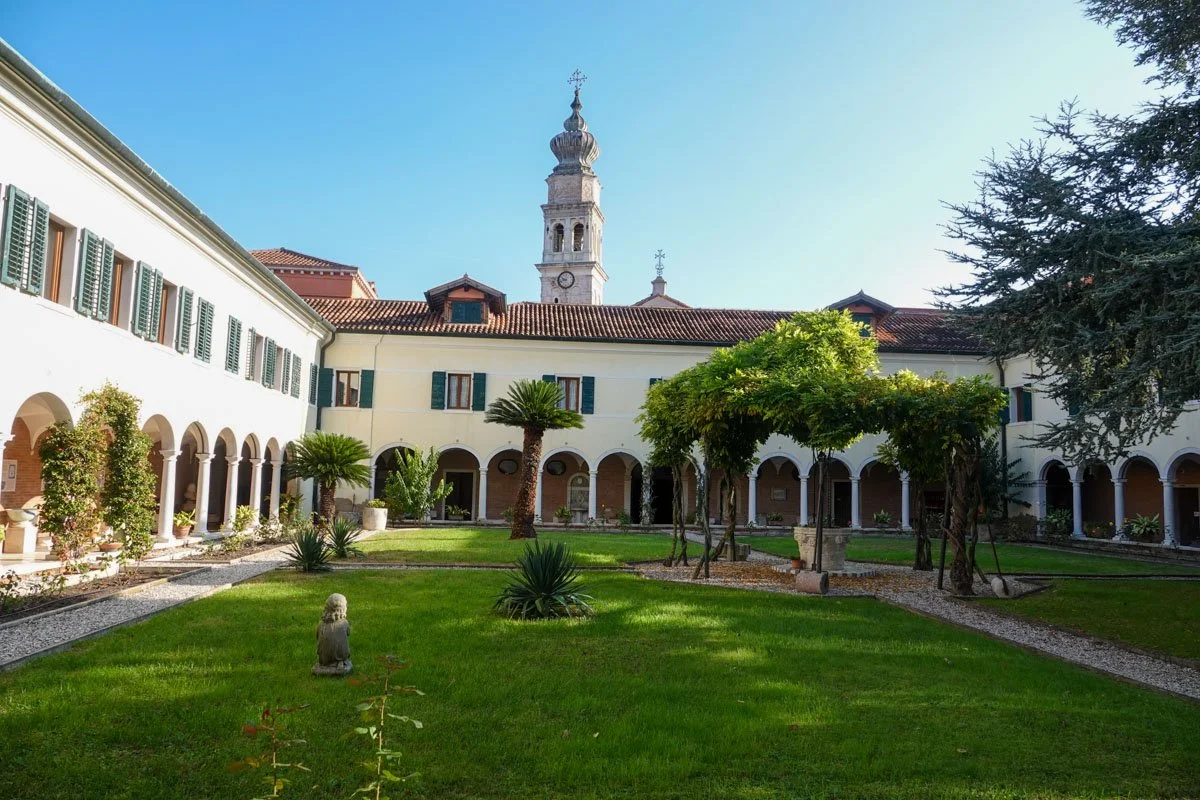
     Most of our time on the island was spent in the area and buildings around the interior courtyard. It was a very pleasant place to visit.

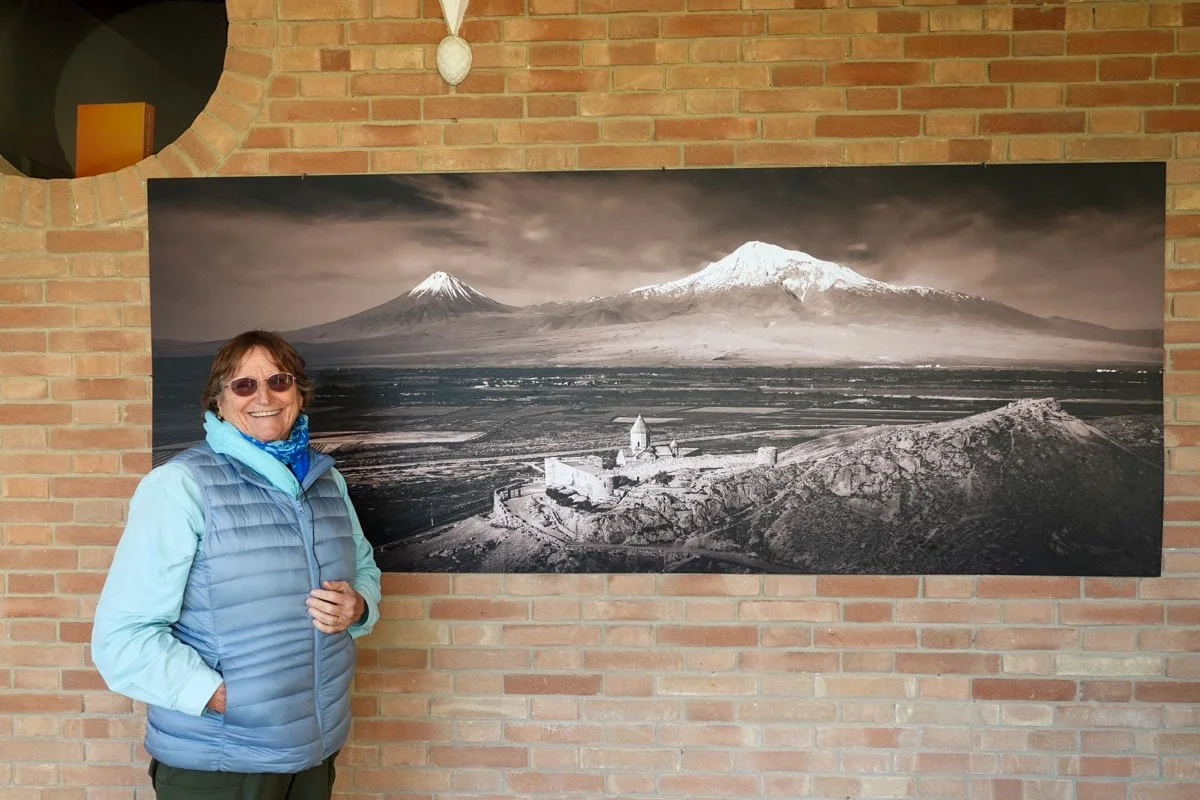
     The nearest walls of the courtyard buildings had some large print photos of Armenian sites. Vicky and I were thrilled to see places that we had just visited this year, in May. Below, Vicky stands next to a photo of the Khor Virap Monastery with Mount Ararat in the background. She showed our tour guide some photos of us right there in May that were on her phone. Our guide was quite impressed.

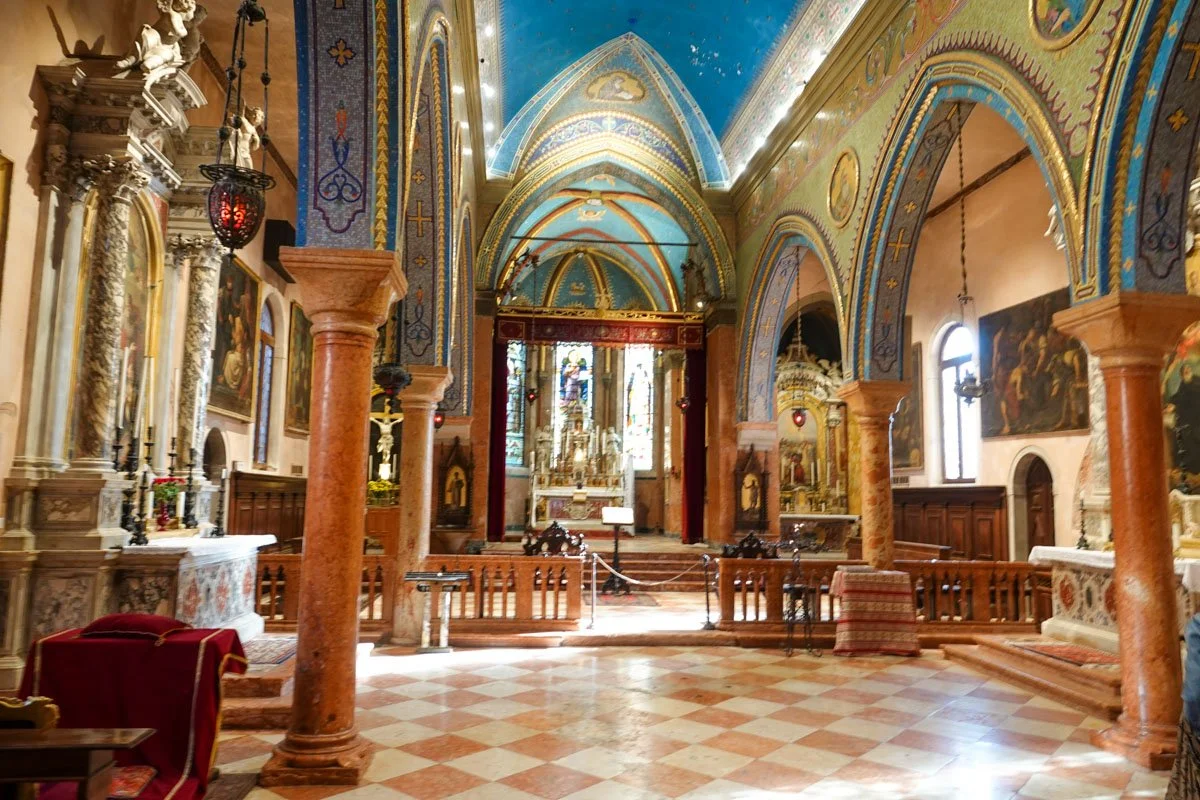
     The church was originally built in the 14th century if I understood it correctly but was extensively updated, restored, and improved by the Armenian monks in 1722. It has had other additions since that time. The church was quite large and much more decorative than I expected. I was especially surprised by the size considering how few monks have generally resided here over the years. The most interesting point for me was low windows off on the sides. Our guide said that the lepers were not allowed inside the church but looked through these windows during the services. You can't see the low windows in the photo below.

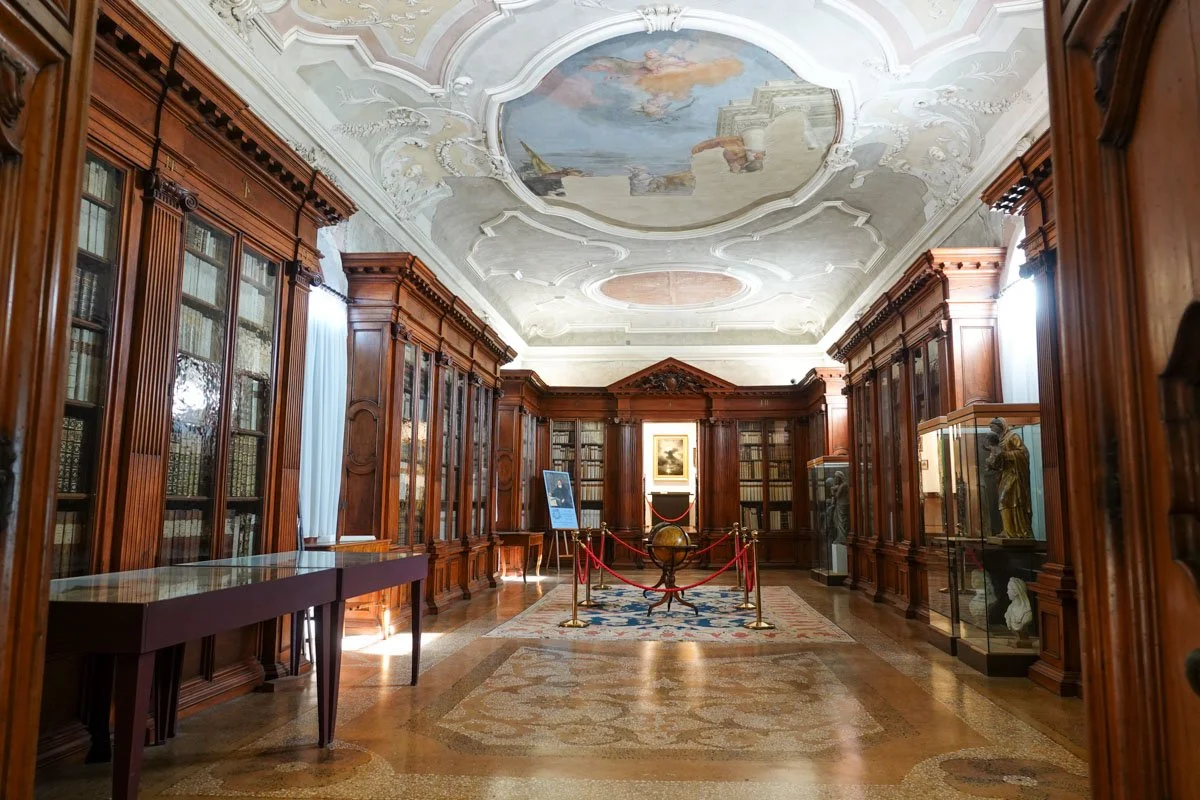
     The library was a highlight of our tour. Our guide said the library was built before 1714 and that it houses 180,000 valuable manuscripts. She said that it's an important repository of Armenian history and culture. Monks, scholars, and historians do research here. The photo below is just one tiny portion of the library.

     The monastery also has, as part of the library area, a large collection of journals, artifacts, paintings, Armenian ceramics, swords, tapestries, chalices, ivory staffs, crosses, various metal works, Egyptian mummies, statues, papyrus, Indian ivory, thrones, and even a painting of Niagara Falls. Most items were donated by Armenians living abroad in Egypt, China, India, the United States, and many other places. No photos were allowed in this area.

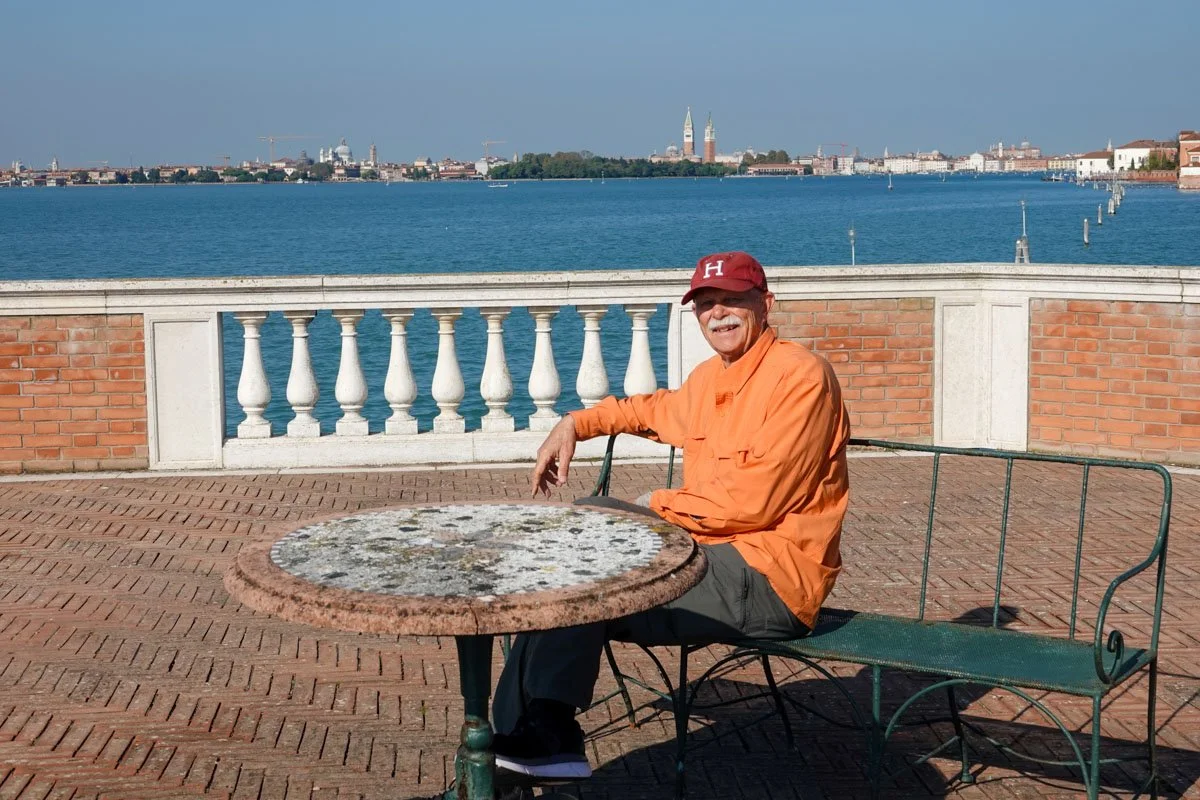
     After our tour, we had free time to spend in the gift shop. But we went outside and enjoyed a particularly nice day, viewing Venice across the lagoon.

A Closer look at Venice

     This will just be an odds and ends closer look at life in Venice, as we witnessed it. Venice is a big city and in most ways, they have it all.

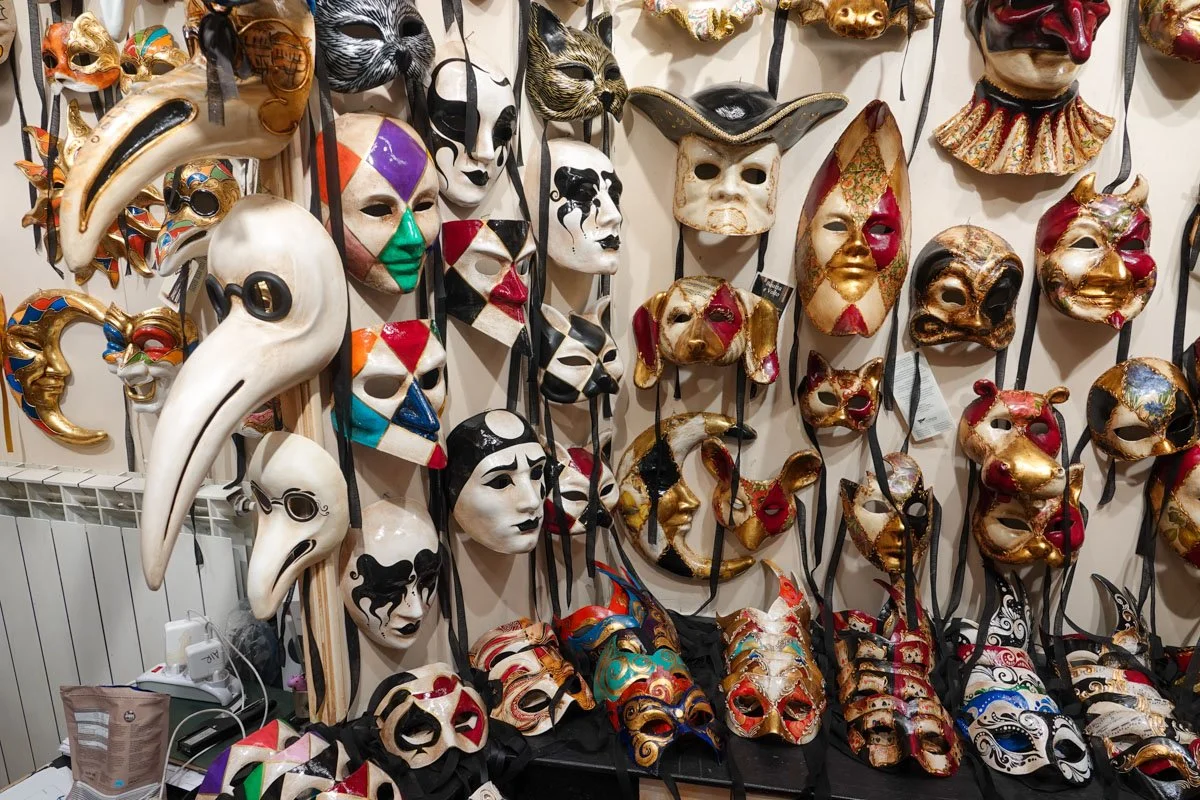
     We did plenty of shopping and especially window shopping in Venice. Well, at least one of us did. One type of store that we saw frequently was a  mask store. The wearing of masks in Venice evidently goes back as far as the 12th century. It seems to have been connected to Carnival. It wasn't Carnival when we were in Venice, but mask stores were there in big numbers. We also saw many adds for people to make their own mask.

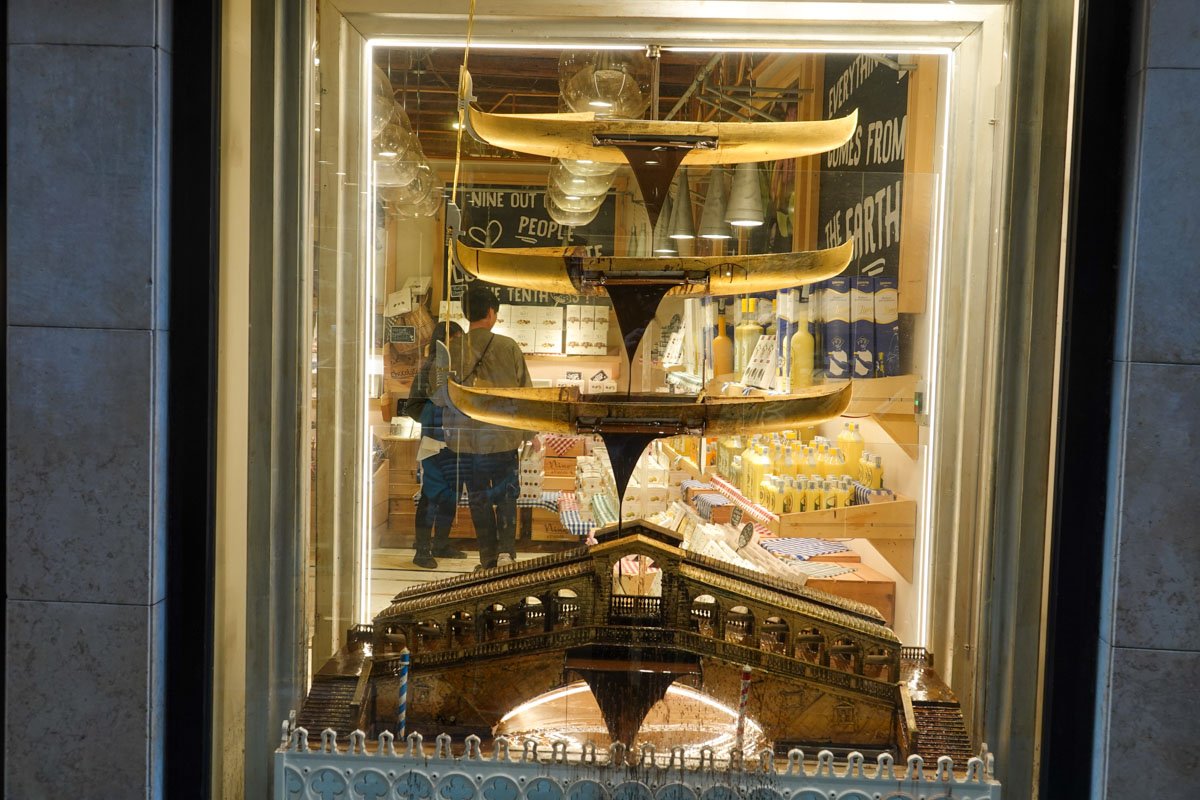
     We might have left Switzerland and the Alps but Venice still had chocolate shops. And yes, we stopped at them all. I liked the display in the window of the chocolate shop below. The chocolate is dripping down through three gondolas and through the Rialto Bridge. Nice.

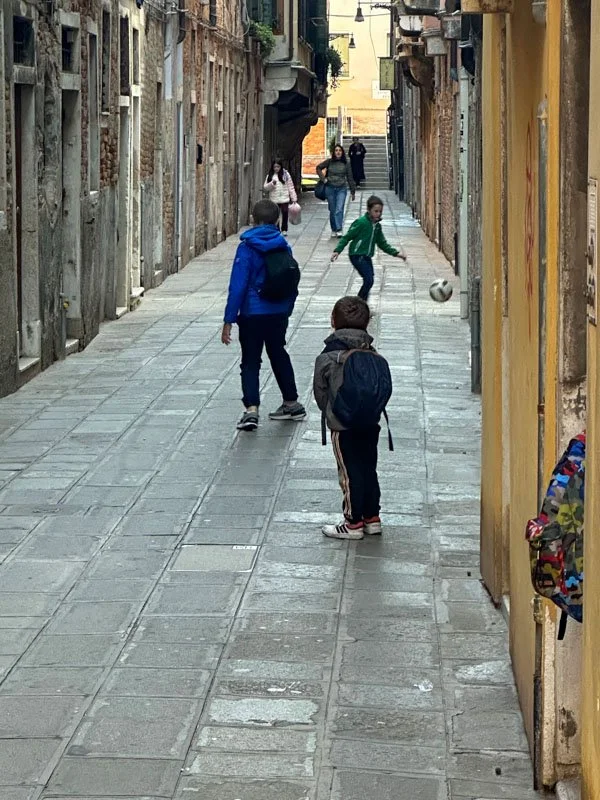
     As I had seen football (soccer to us) played in the Alps, which didn't seem ideal, I wondered about Venetian kids. No problems!

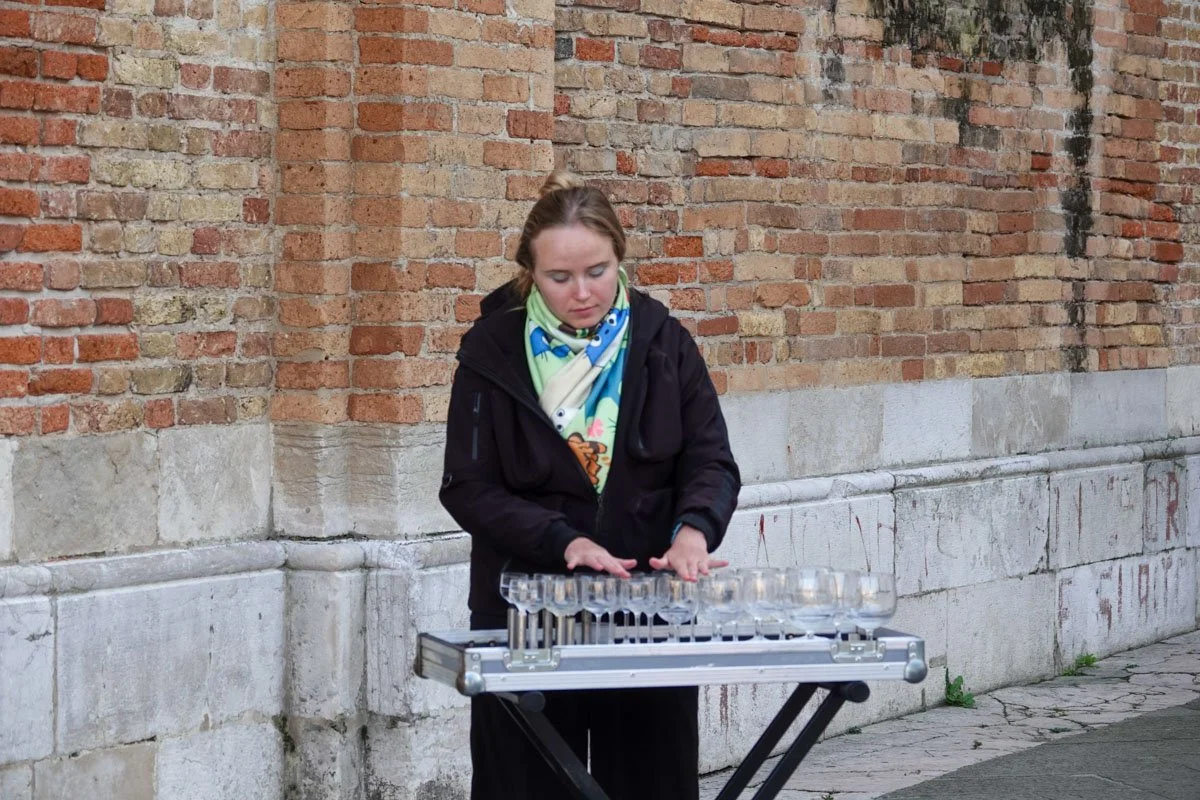
     As I said, Venice has it all, including street musicians. I liked this woman playing the wine goblets. She was quite good.

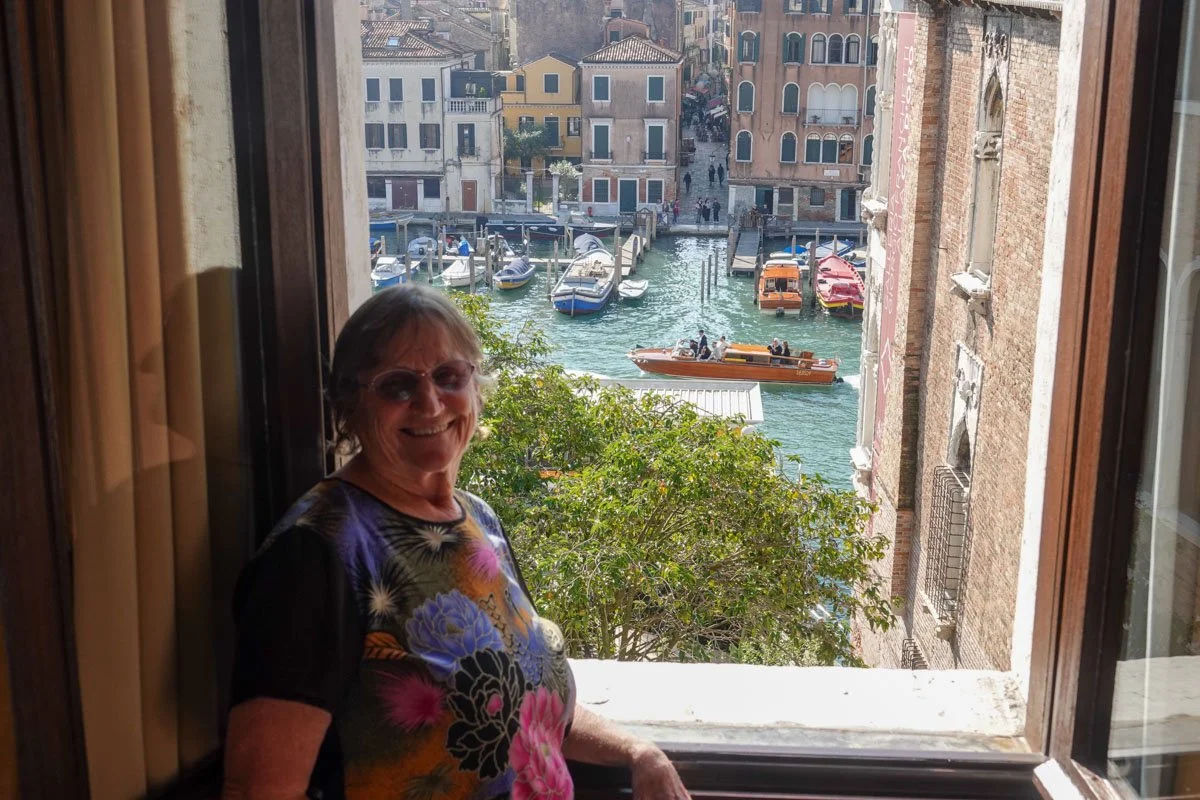
     We didn't spend much time in our hotel room, but when we did, we still had a nice view of the Grand Canal and all its traffic.

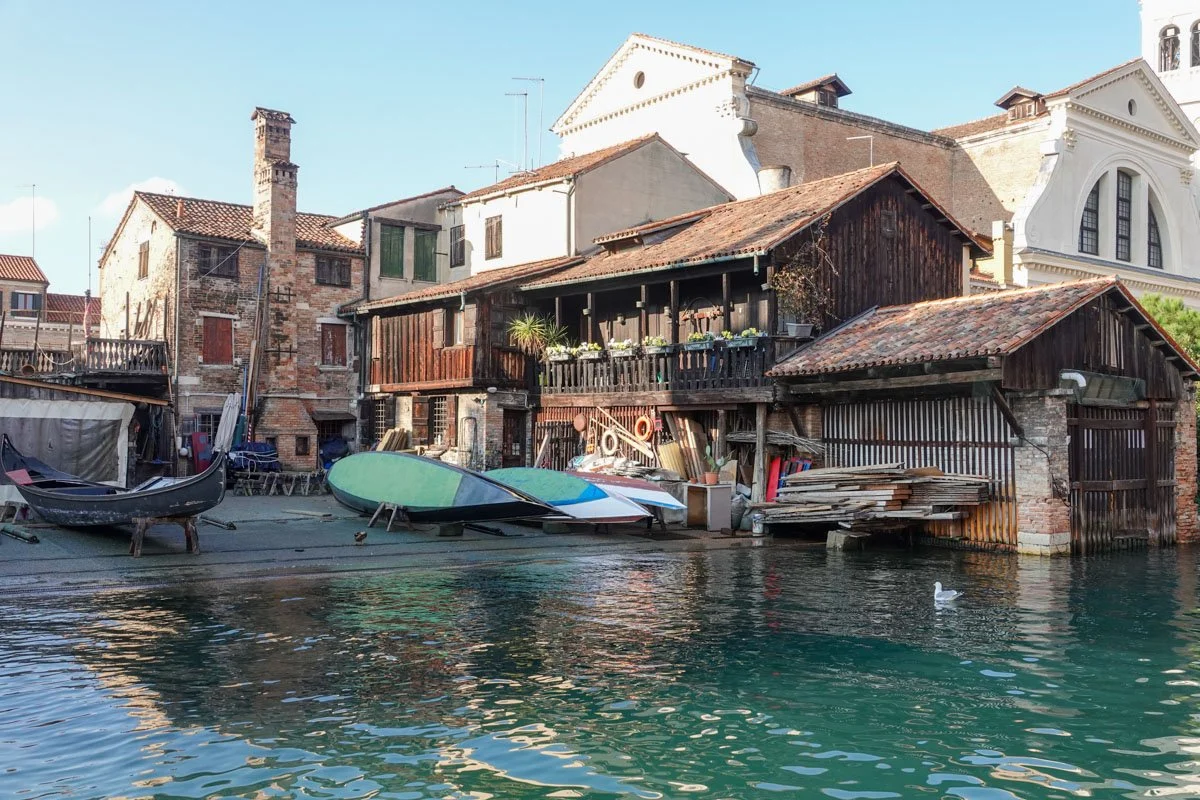
     On a walking tour with our Venetian guide, we passed this business. It is a gondola making business. They make gondolas. According to our guide, they were the first gondola makers in Venice and today, they are the only gondola making business in Venice. The founders were Swiss which our guide said accounts for the shape and decorations of the gondolas.

Gondola ride and Goodbye to Venice

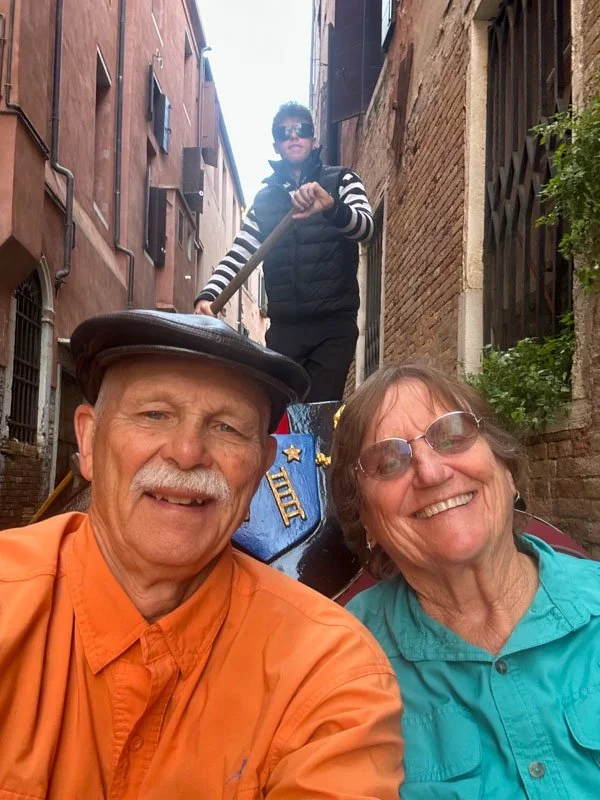
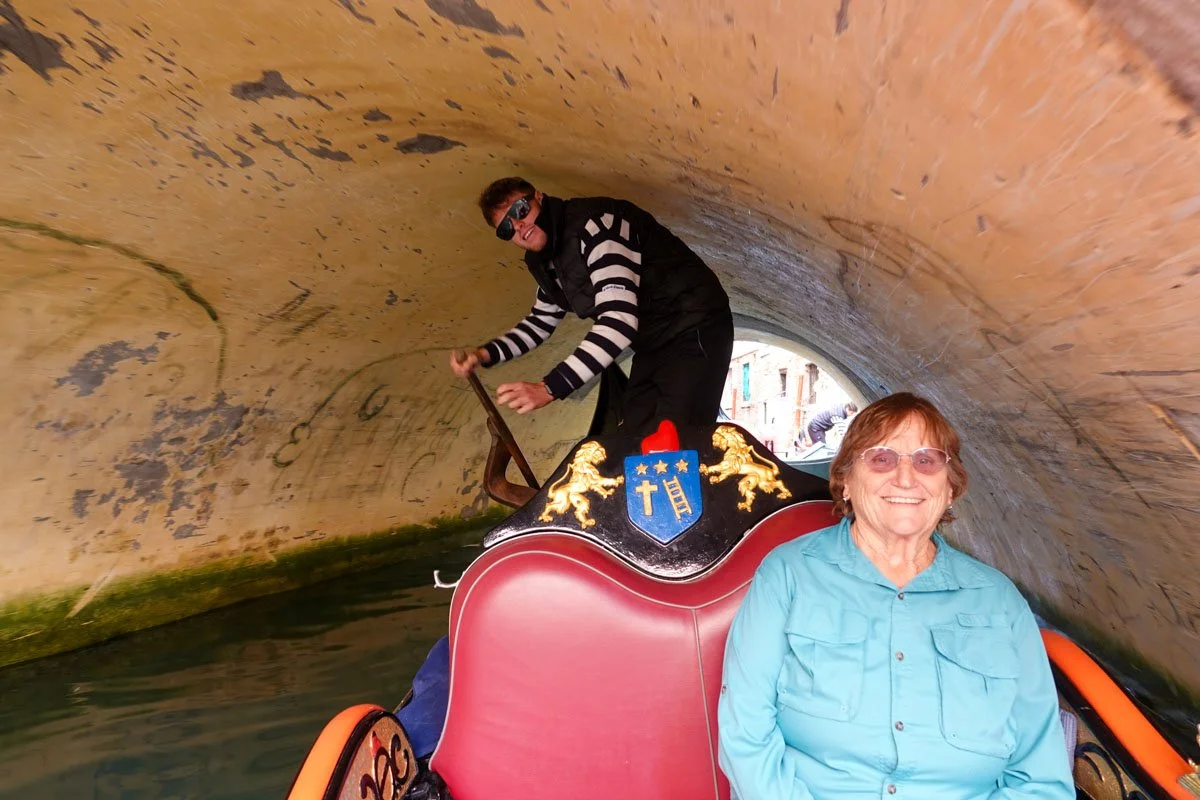
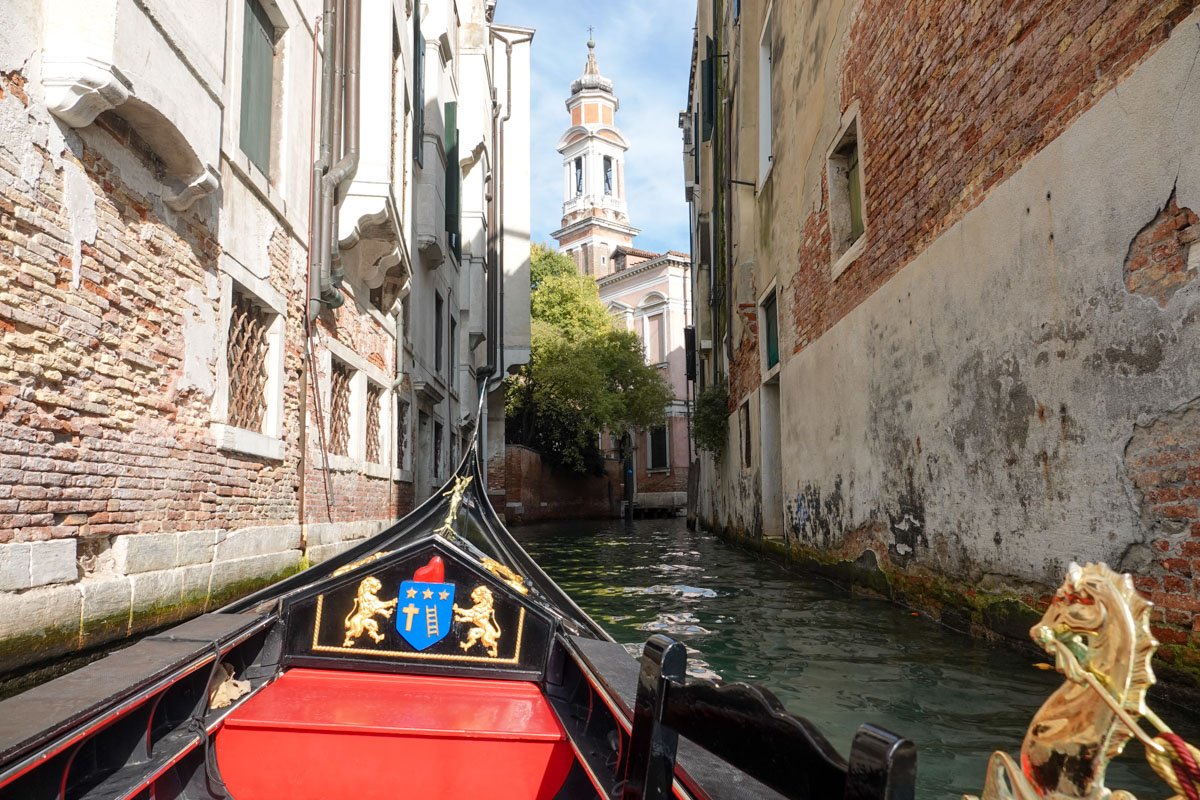
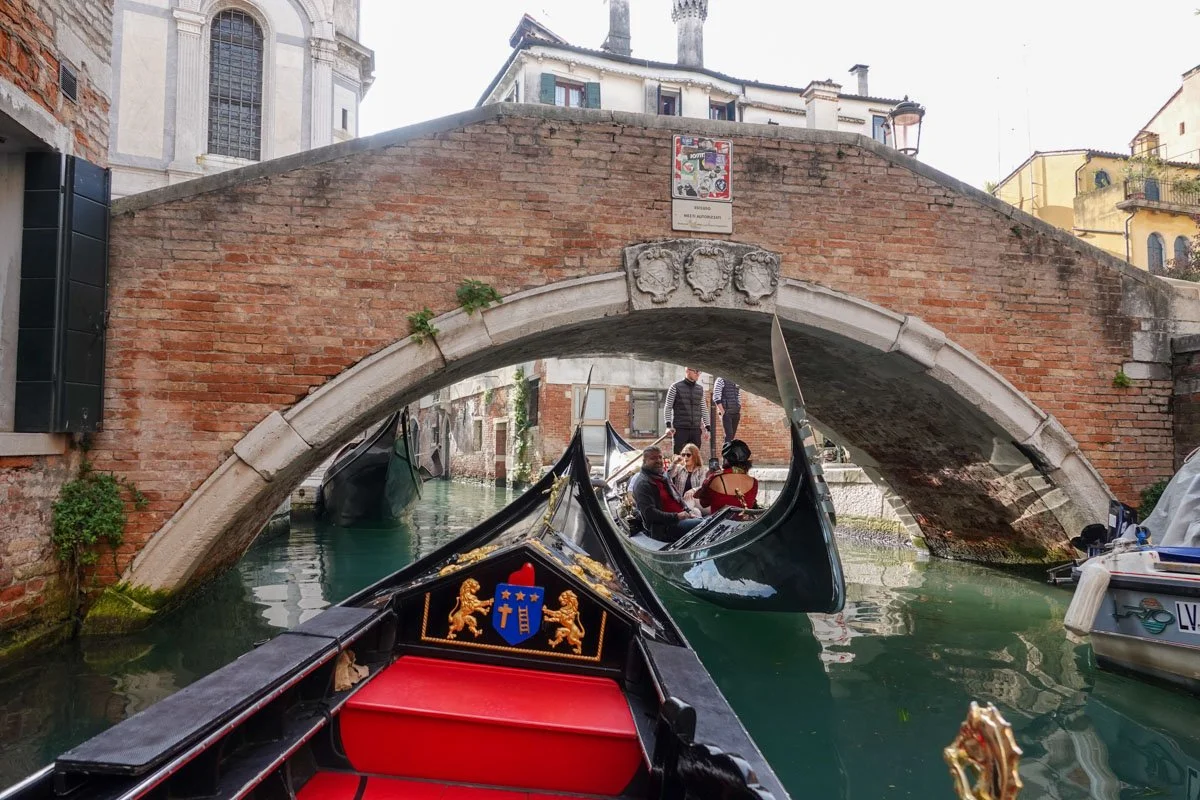
     Gondolas have been a part of Venice for centuries, originally as a primary mode of transportation. They are hand-made, about 36 feet long and flat bottomed to navigate the shallow waters of the Venetian Lagoon. Historically, Venice had about 10,000 gondolas working in town. Today, there are less than 400, but those 400 seemed to stay pretty busy, mainly with tourists. The gondolier propels the boat with a rowing oar, in a sculling manner, and it also serves as a rudder. 

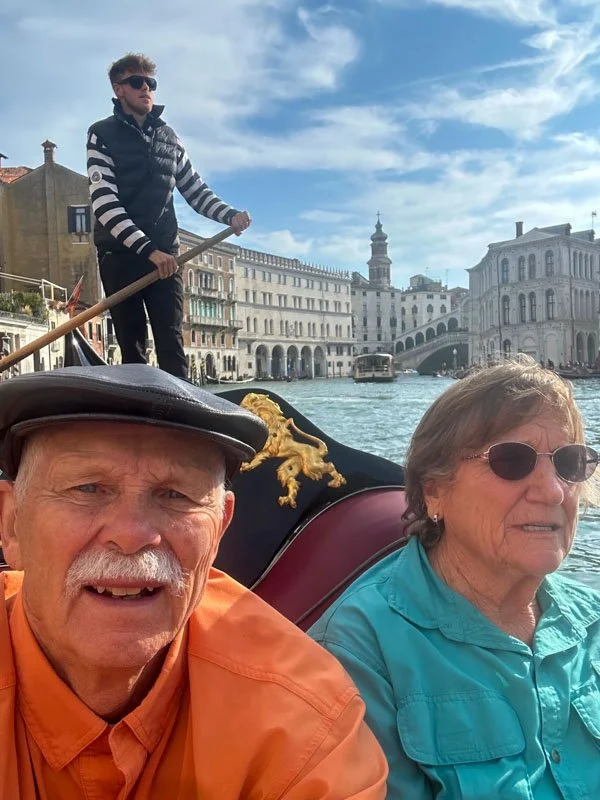
     We had a pleasant ride, both down quiet canals and into the Grand Canal. Our driver was also a guide, pointing out landmarks to us. I'm not sure about the romantic part as we frequently passed multiple boats and bridges were sometimes crowded with people taking our photo. I looked at it as something that we had to do in Venice, and we did it and we enjoyed it. You will see that it's really work for the gondolier.

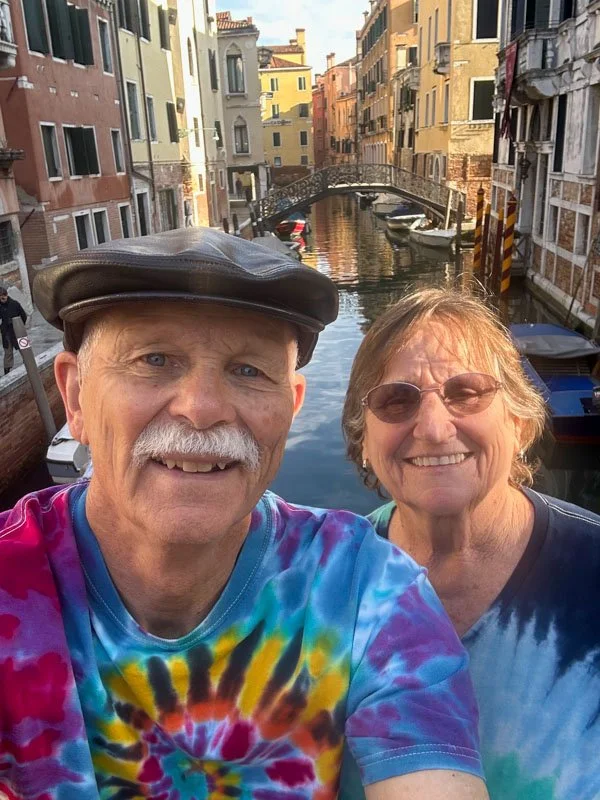
     That's it from Venice and northern Italy. We enjoyed every day of our four-week trip. We liked it all.