Are you ready to go to Colombia?

     We have been waiting a long time to visit Colombia. We visited Caracas, Venezuela in 1986. Jose, our local Caracas guide told us that Venezuela had a terrible Immigration problem. As conditions in Caracas looked so horrible to me, I asked if he didn't mean an "emigration" problem. He told me no, it is immigration. I said to him, "No offense Jose, but who is trying to immigrate into Venezuela?" Jose said, "Oh, senior, it's the Colombians. They are always trying to come here." I said to Jose, "What's it like in Colombia?" Jose said to me, in an extremely serious voice, "Senior, you don't want to go there!"

     Colombia, and perhaps particularly back in the 1980's and 1990's was infamous for armed conflicts, drug cartels, kidnappings, and incredible violence. Omar, one of our local Colombian guides told us that the conflict involved four groups fighting in Colombia. It was the far-right Paramilitary groups versus the far-left Guerilla groups, versus the Drug cartels versus the State of Colombia. The military groups were fighting for influence, the drug groups were fighting for themselves, and the state was sort of fighting everyone, including the common people. Omar said they had lived through four times: happy times, extortion times, kidnappings, and drugs, and he said that drugs are still going on, but just on a more localized level, not like when Pablo Escobar was running his cartel.

     Today, Colombia has made great strides to curb the violence and drugs. They might still be there, but heck, violence and drugs are everywhere.

     Ernesto, our main Colombian guide, started our initial briefing by telling us a few things about Colombia. He said that Colombia has the highest rainfall in the world, high altitude, bad roads, stairs everywhere, slow service, winding mountain roads, minimal English spoken, and it's the size of California and Texas combined. We figured that we were ready for all of it and anxious to get started.

     Our first stop in Colombia was in Bogota. Ernesto said that the ancient people originally settled here because this area had water, salt, gold, and emeralds. Vicky, my wife, really perked up when he mentioned emeralds! 

     Our time in Colombia brought us both many surprises and many things that were expected. We enjoyed them all...except perhaps the continuation of the high altitudes.

     We were surprised to learn that Fernando Botero was from Colombia. We had seen his sculptures last year in Armenia and found them very interesting.
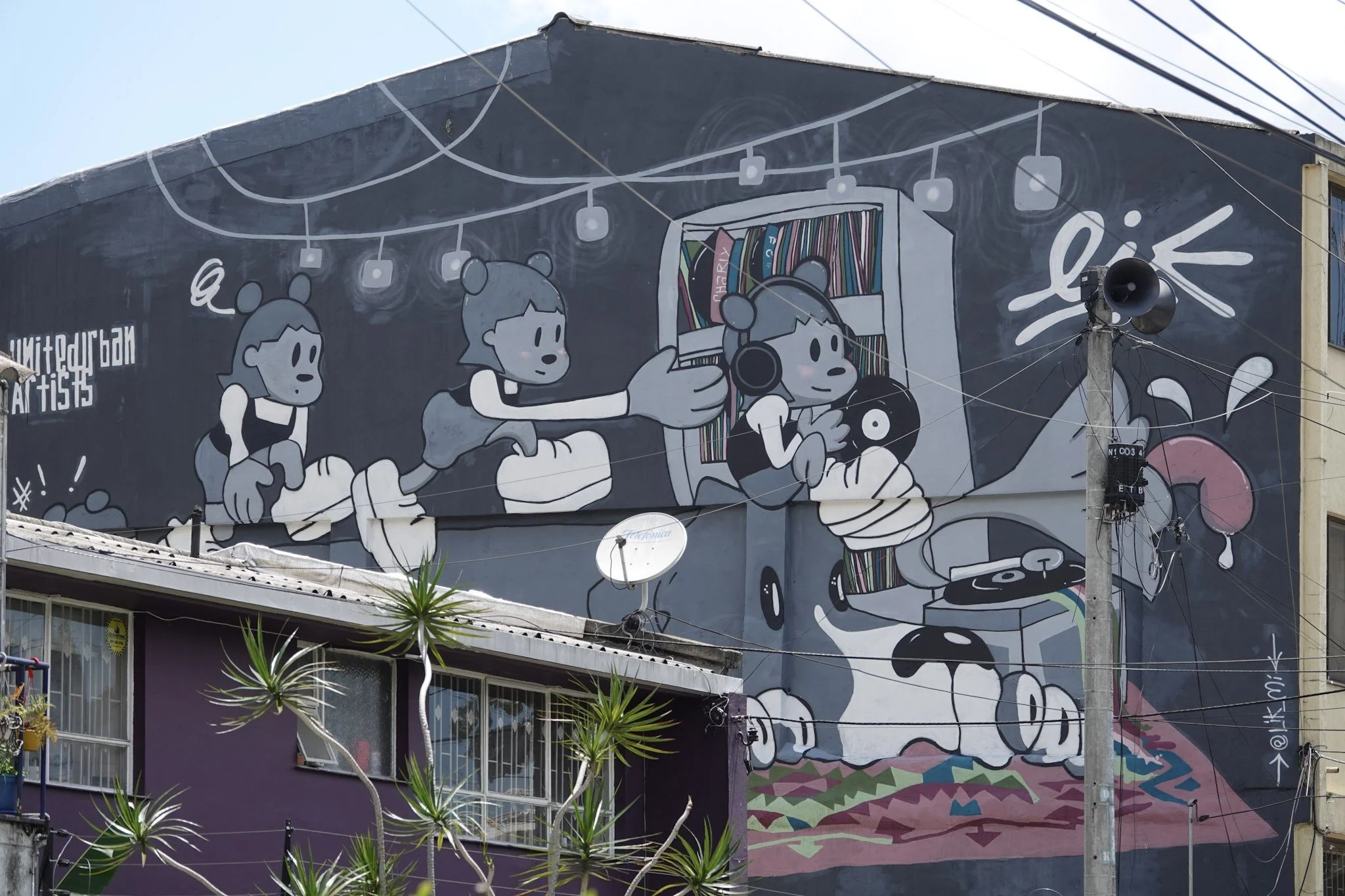
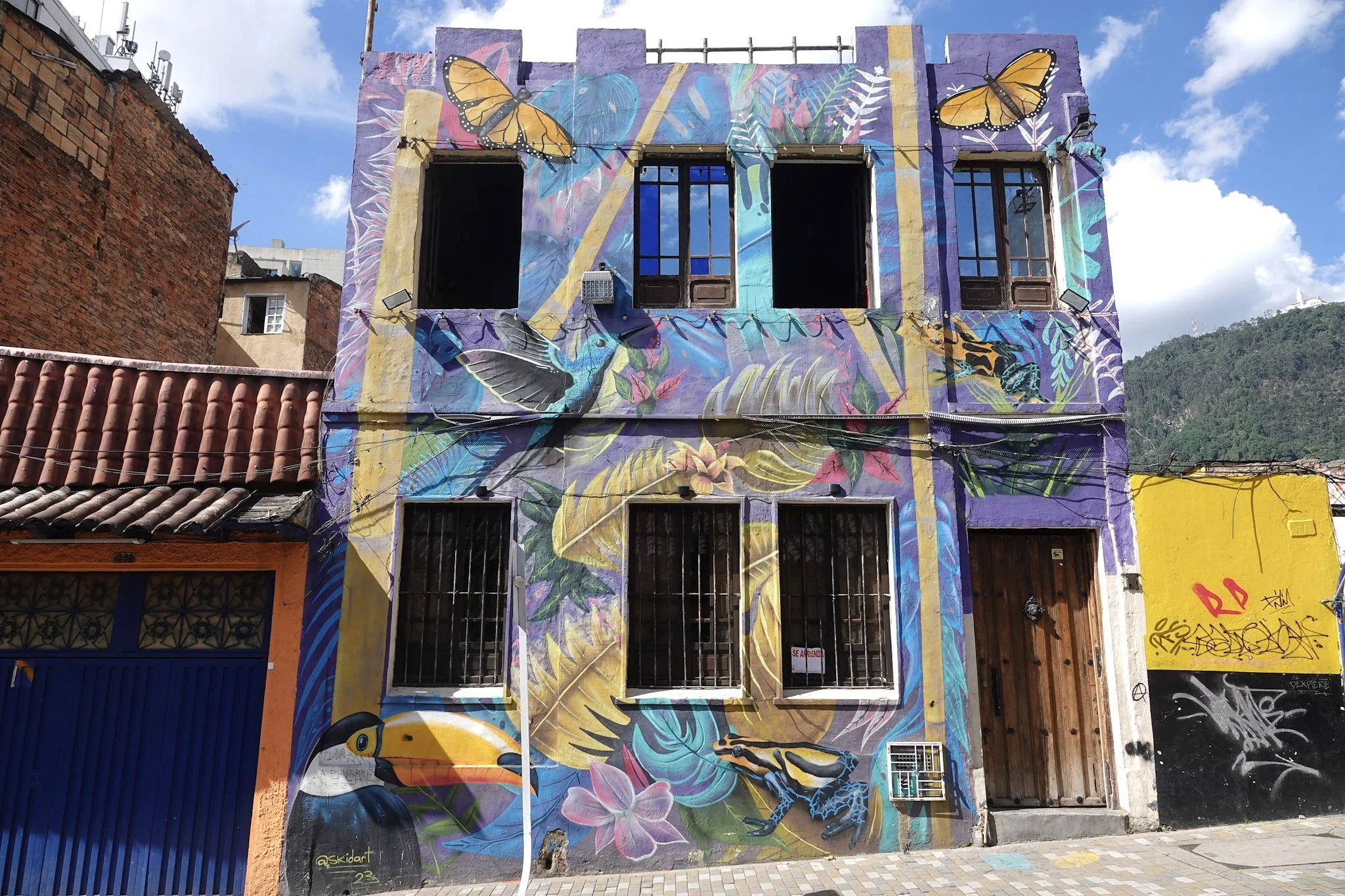
     I was not surprised to find graffiti in Colombia, but I was surprised to learn the extent to which Colombia has developed graffiti into a more mainstream art form.
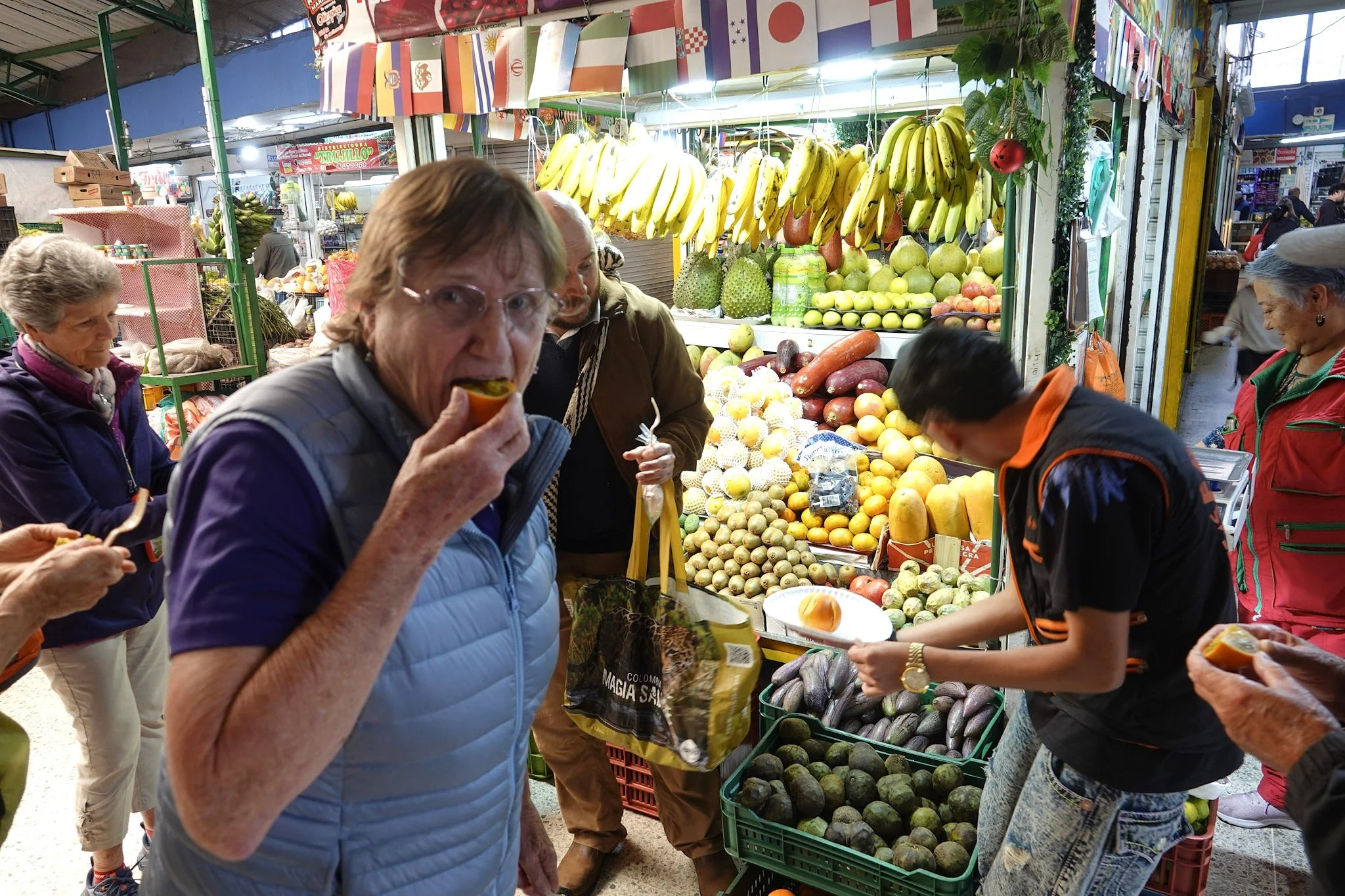
     Finding fresh fruits and vegetables in the markets was expected and we managed to eat our way through the markets. We even found some new fruits to try.
     Utilizing many different forms of transportation was no surprise, since OAT (Overseas Adventure Travel) always makes an effort to do exactly that.
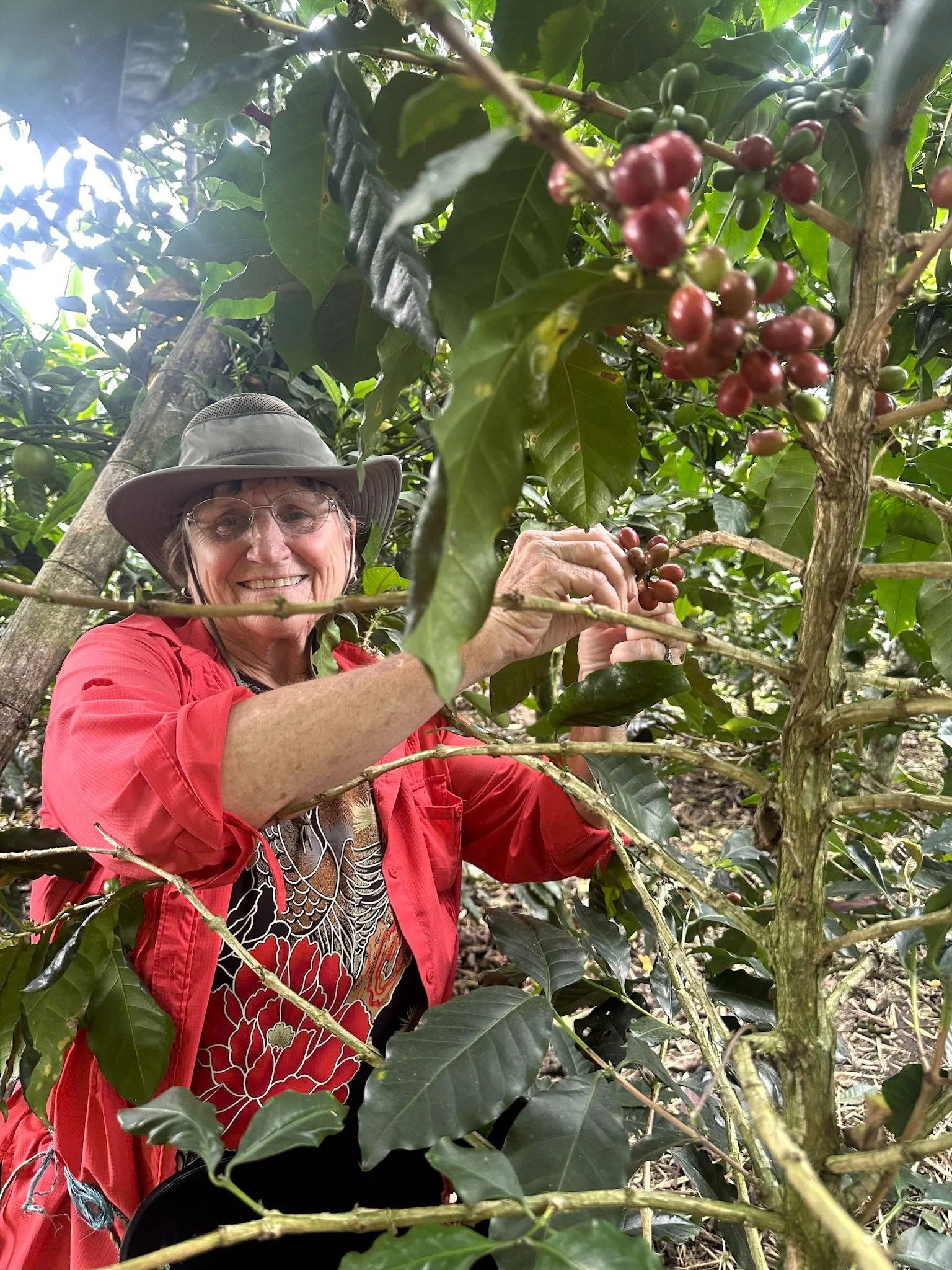
     Picking coffee beans wasn't a big surprise, but how many we ended up picking was a bit of a surprise to us. Plus, it was hot, hard work.
     Hiking in the Andes Mountains and in a couple of national parks was not a surprise at all. Nothing we like better than a good national park.
     And of course, my wife Vicky's everyday behavior was no surprise at all to me.
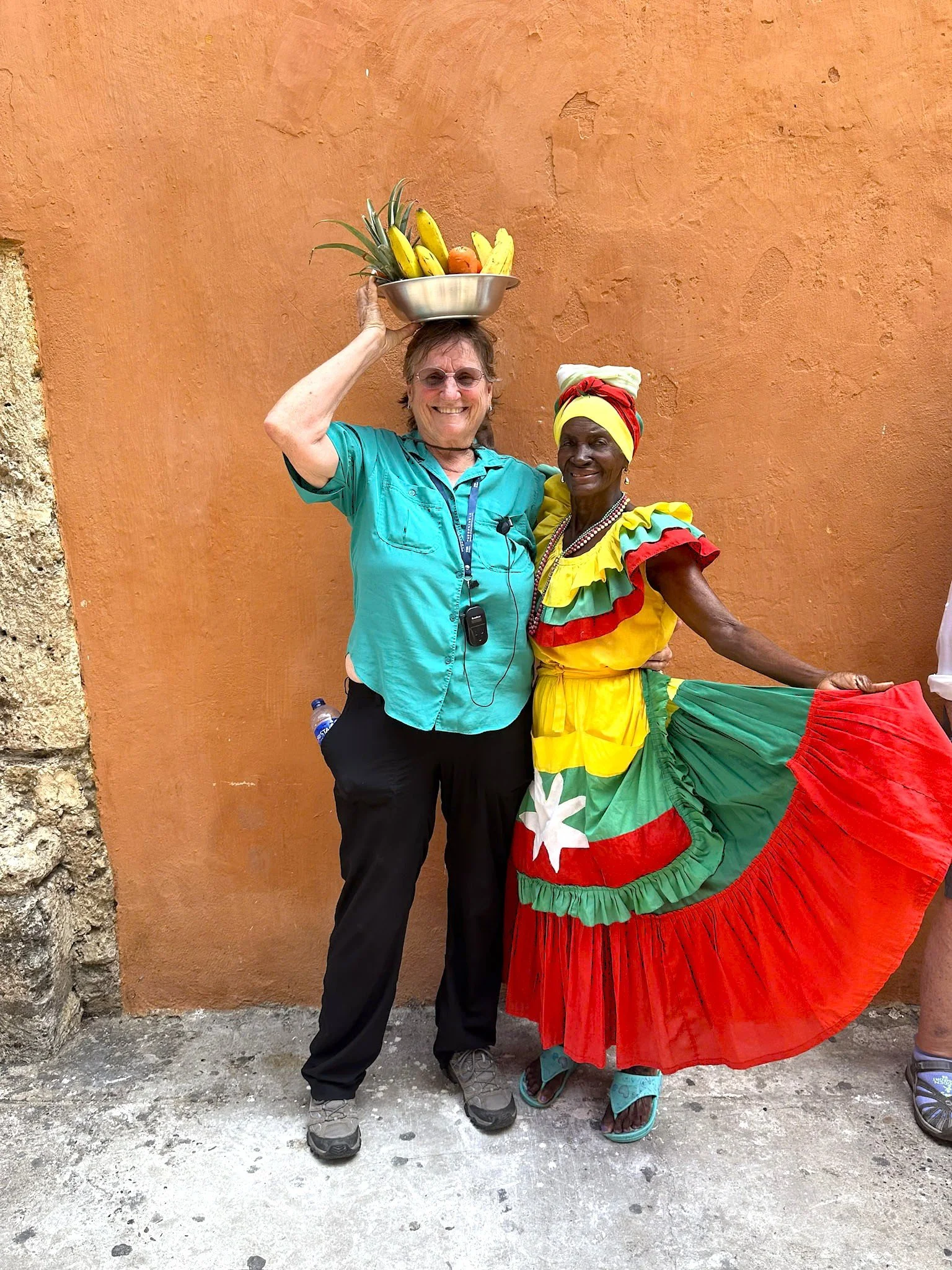
Bogota

     Bogota is where we started our trip to Colombia. It's the capital and largest city of Colombia. It's both the national capital and a district capital. Bogota is the main center of the country for political, administrative, economic, cultural, industrial, technological, scientific, medical, educational, and probably most other things. The area was lived in for thousands of years by the indigenous people but founded as a city and capital in 1538 by a Spanish conquistador. And while we were happy to be at a lower elevation than in Bolivia, Bogota is still at 8,660 feet in altitude with much higher mountains surrounding it. 

     Our hotel is only half a block from Bolivar Square, the main square of Bogota. Simon Bolivar was born in Caracas, Venezuela and was a military officer and a statesman. He led independence movements in what are currently the countries of Bolivia, Colombia, Ecuador, Panama, Peru, and Venezuela. He must have been a busy guy.

     On a side note, I used an ATM to convert $200 US dollars in Colombian pesos. I ended up with over 700,000 pesos.

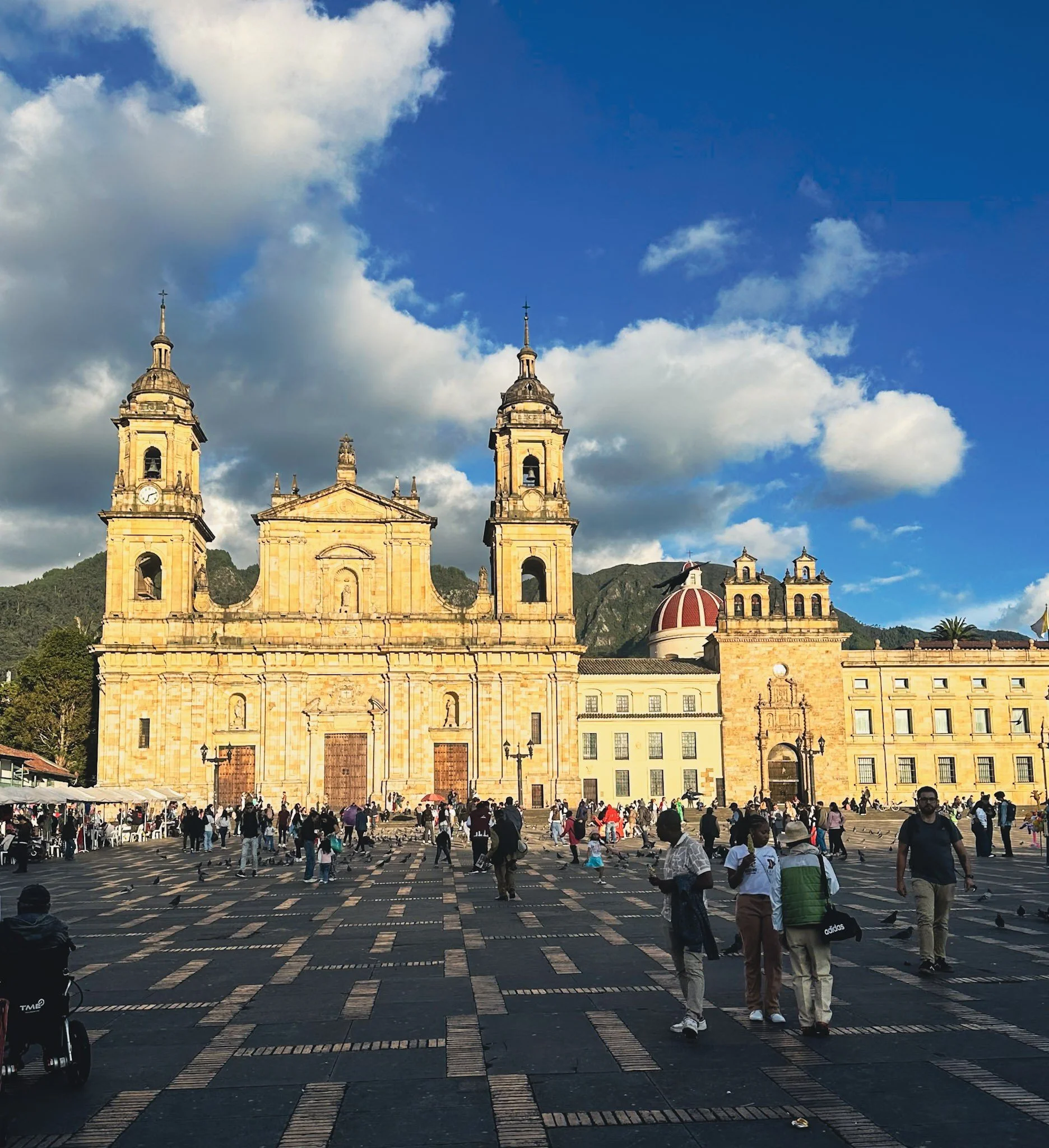
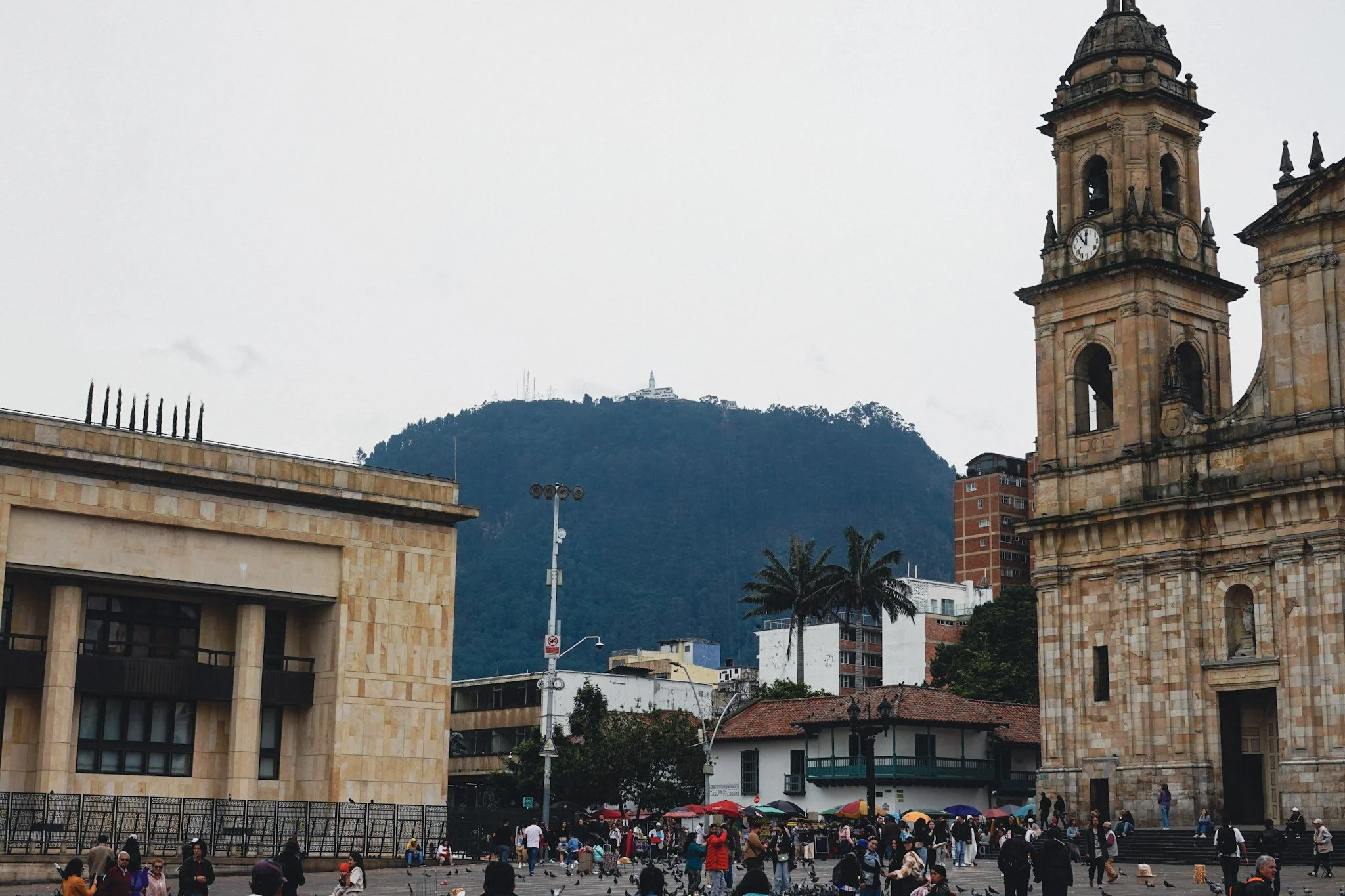
     We will start in Bolivar Square at the Bogota Cathedral (its short name). It was built between 1807 and 1823 on the same site where three earlier churches stood. It's next to the area's oldest church, from 1683, and the Bishop of Bogota's residence. We came to this church multiple times, including multiple times on a Sunday, but it was always closed, so we never got to see the inside of it.

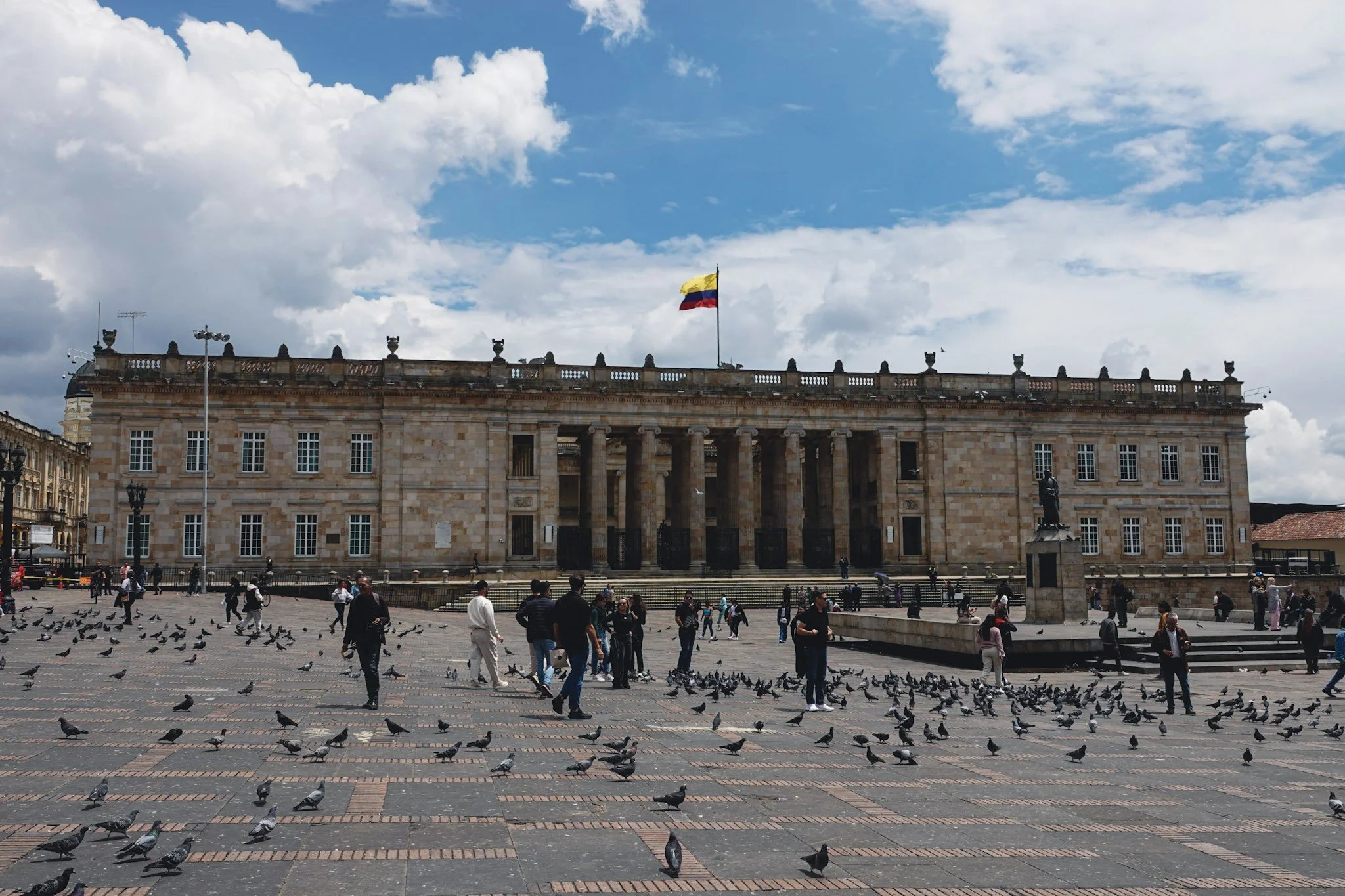
     To the right of the cathedral in the square is the National Capital of Colombia or the Congress of the Republic. It houses both houses of Congress. The building was started in 1848 and completed in 1926. This building was fenced and heavily guarded. We chatted with two police guards who were quite friendly, but we still didn't get inside. On the right side in the photo, but inside the square, you can see a statue of Simon Bolivar.

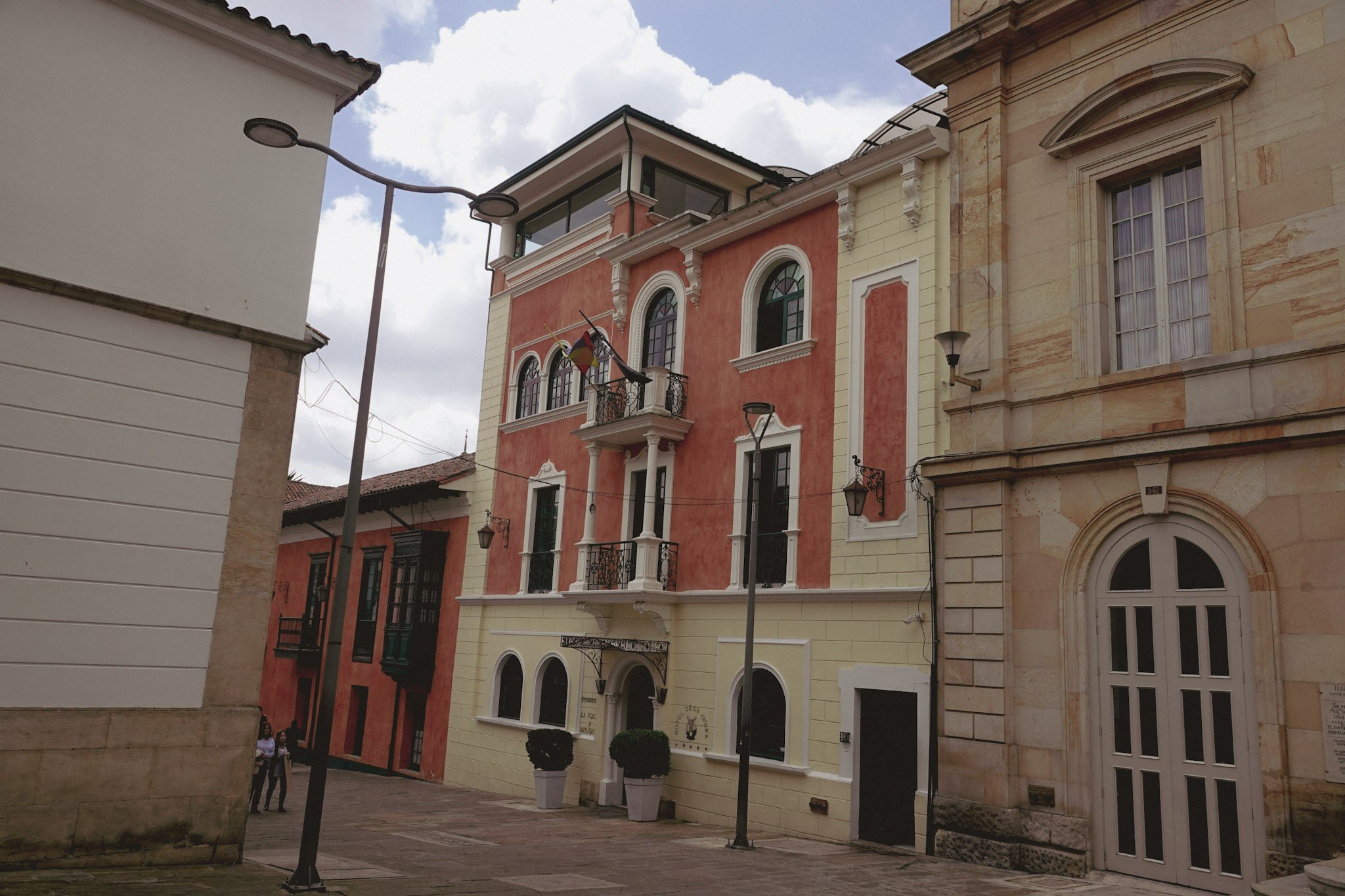
     We stayed at the De La Opera Hotel which is right next to the Opera House and right across from the former President’s House. The former President’s building had a plaque attached to it for where Simon Bolivar jumped out a window to escape an assassination attempt when he was the president of Colombia.

We were one-half block from the main square and the whole area was very Colonial. This area was also full of museums, and they were all free, so lots to do and see here. Our hotel is in the center and the right side building is the Opera House.

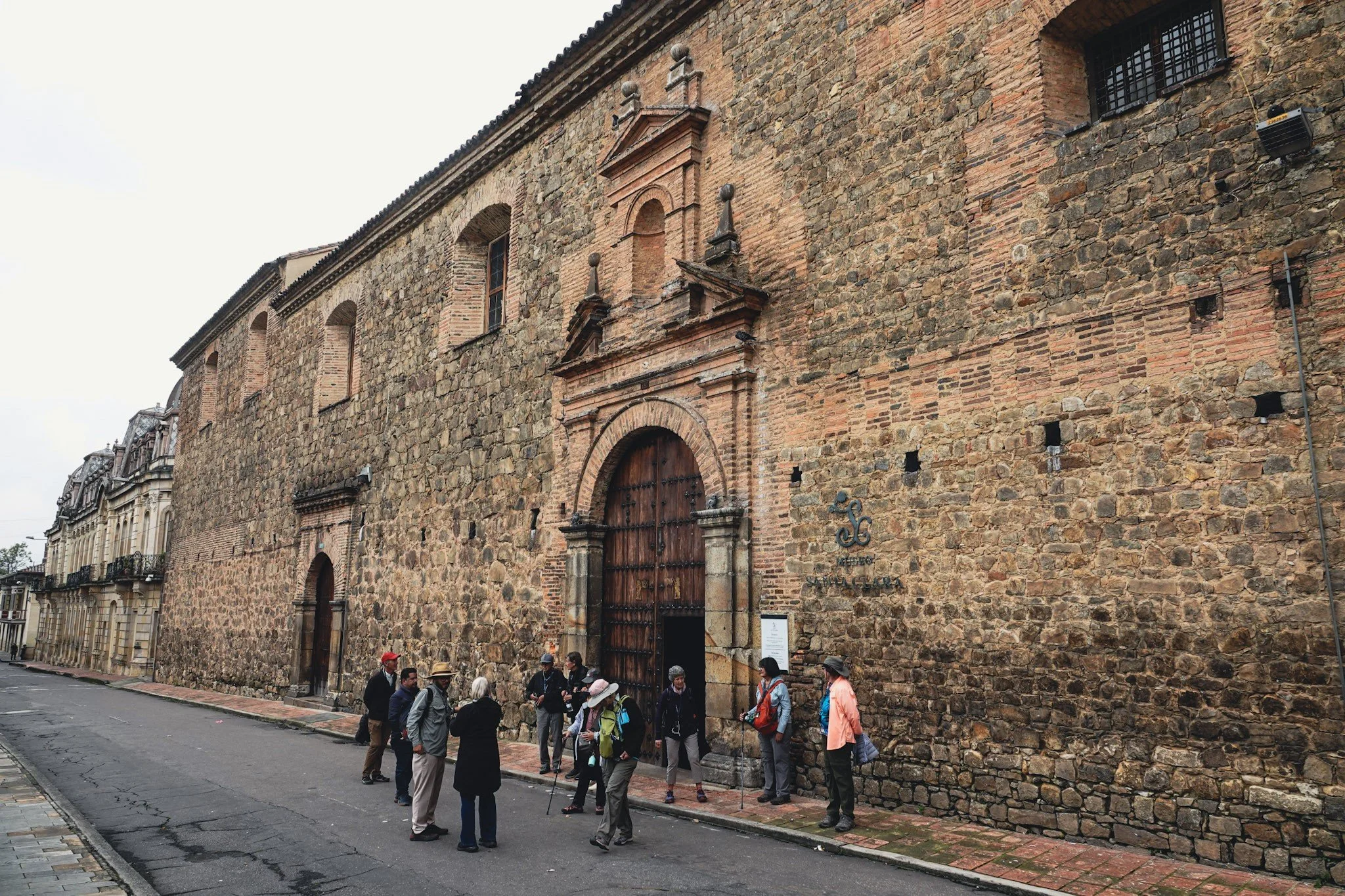
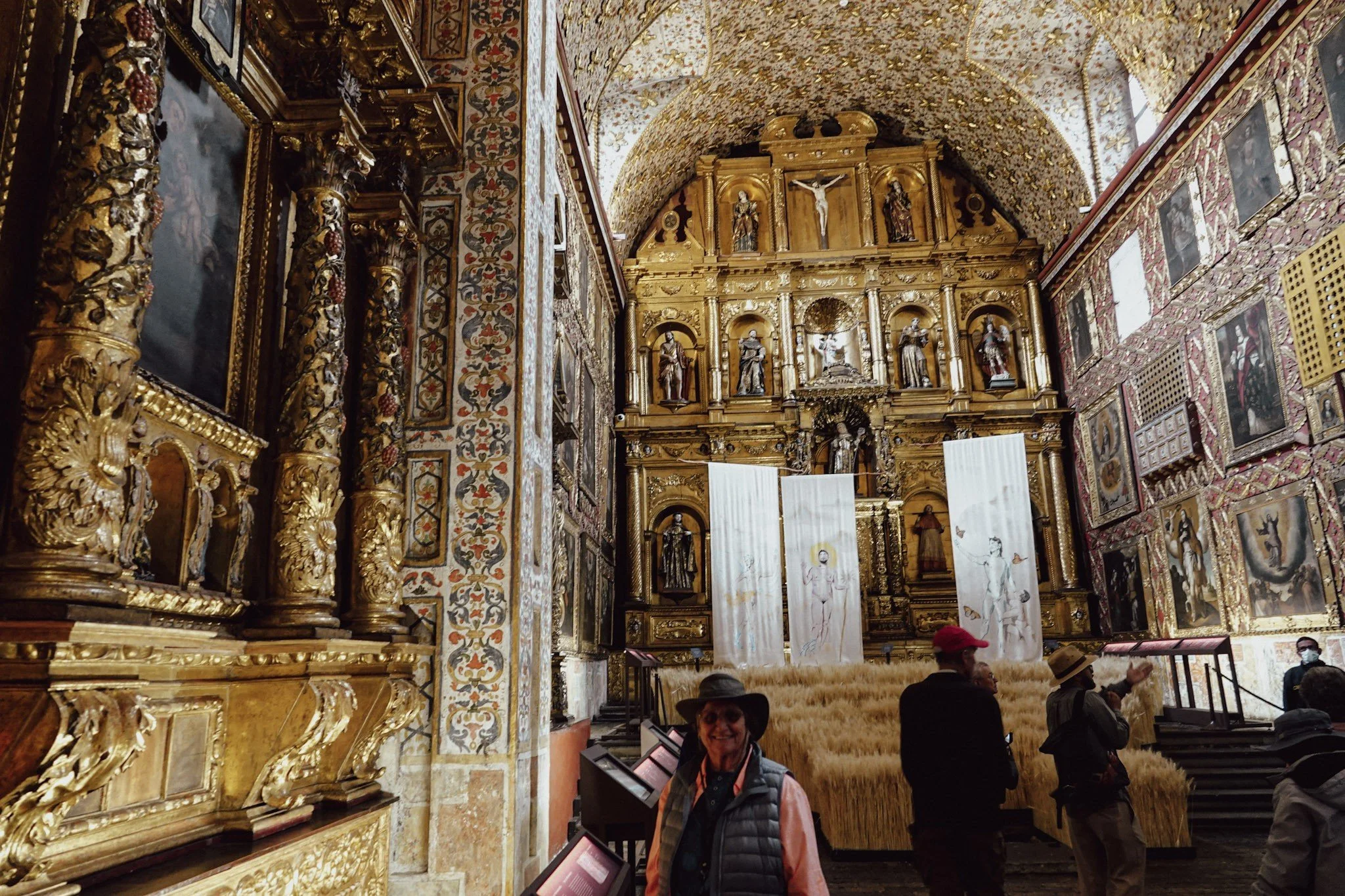
     Just around the corner after walking past the Congress building, we came to the current President's house. Across the street from there was the Santa Clara Museum which preserves the Church of Santa Clara. The church was built between 1619 and 1647, as part of the Royal Convent of Santa Clara. The convent housed a community of nuns. 

     The church was Romanesque architecture and Baroque decorations. It was incredibly decorated. The church also houses an incredible collection of paintings, designs, sculptures, and statues from the 17th through the 20th centuries. Every square inch of the church's insides are covered with decorations. The outside wall gave no indication of what was inside the building.

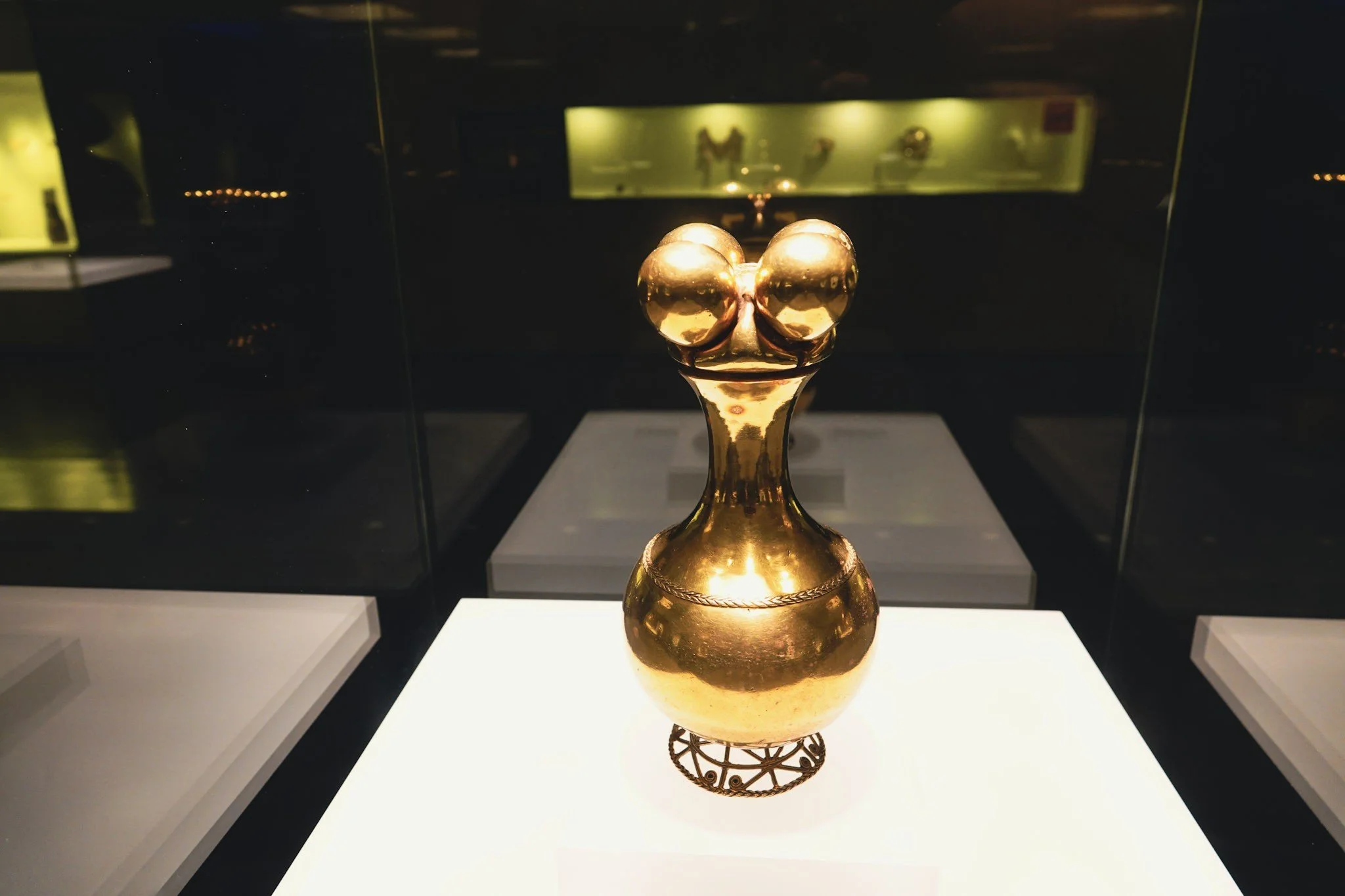
     Our next visit in Bogota was the Museo del Oro, or the Gold Museum. It has a collection of 55,000 pieces of which 6,000 are on display. It contains the largest collection of gold artifacts in the world in its second and third floor exhibition rooms. The museum also houses pottery, stone, shell, wood, textile, and other items made my indigenous cultures. The pieces had bilingual descriptions on them, so it was easy for me to wander off from our group and just look at what intrigued me.

Monserrate

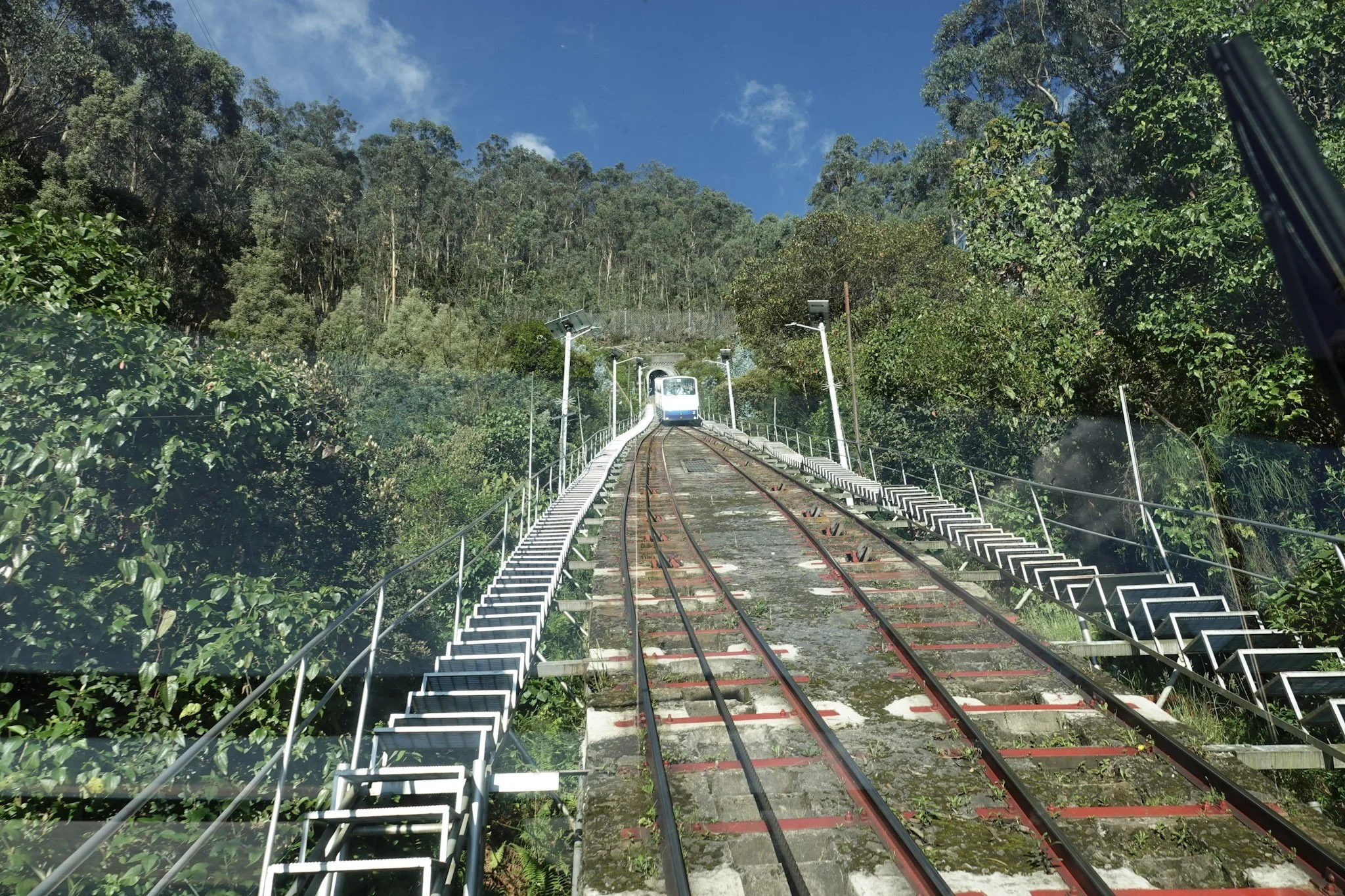
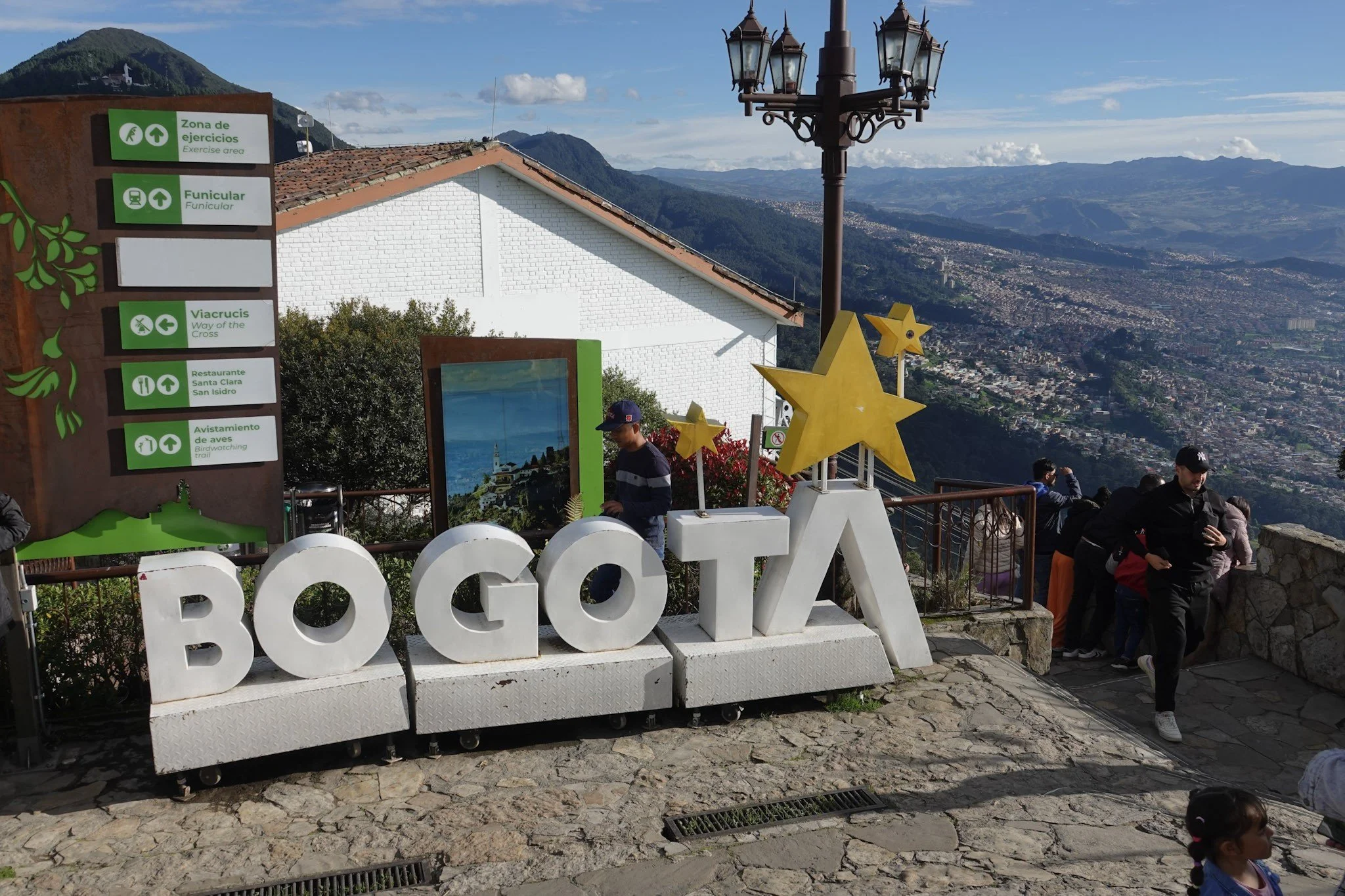
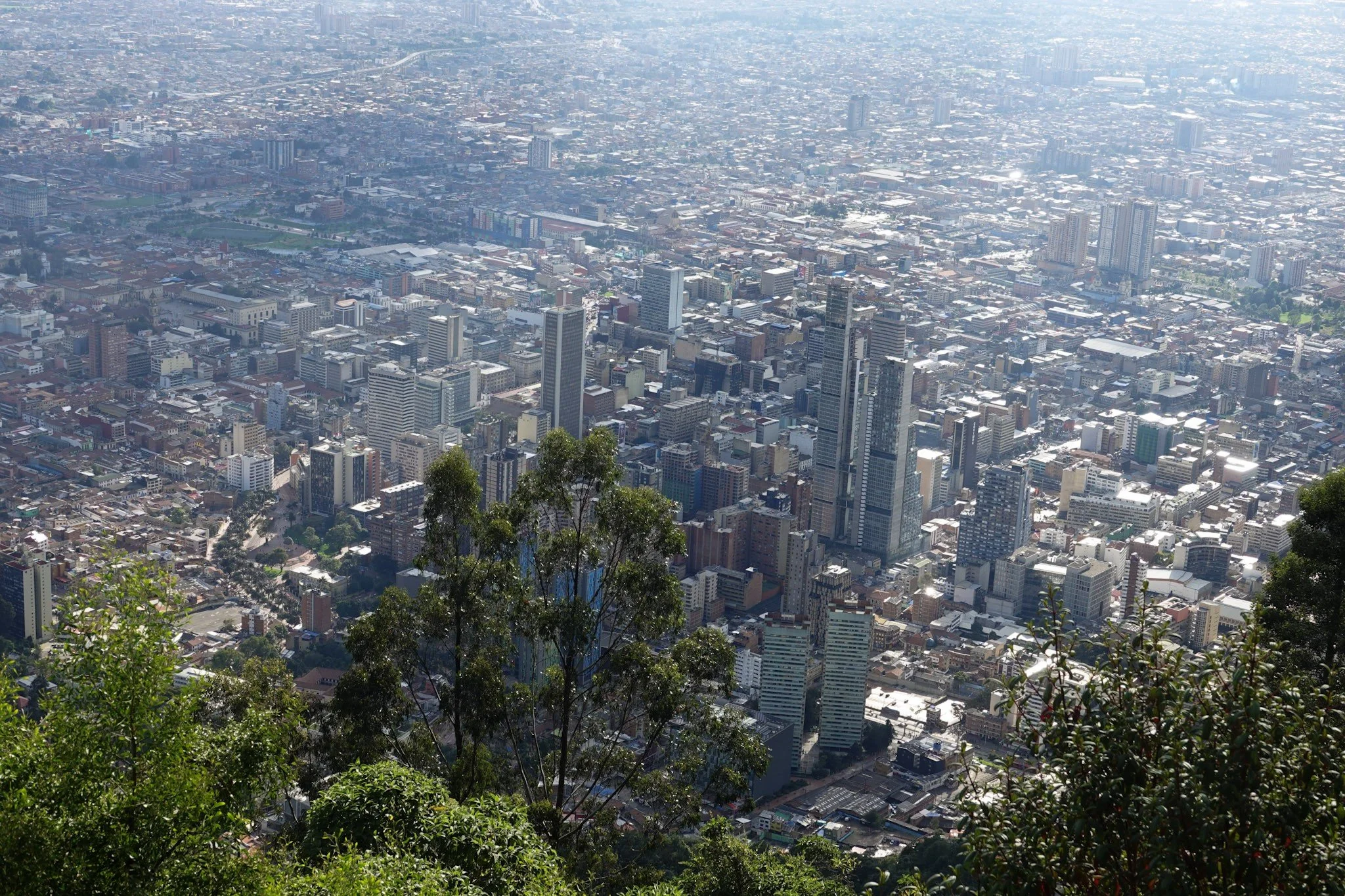
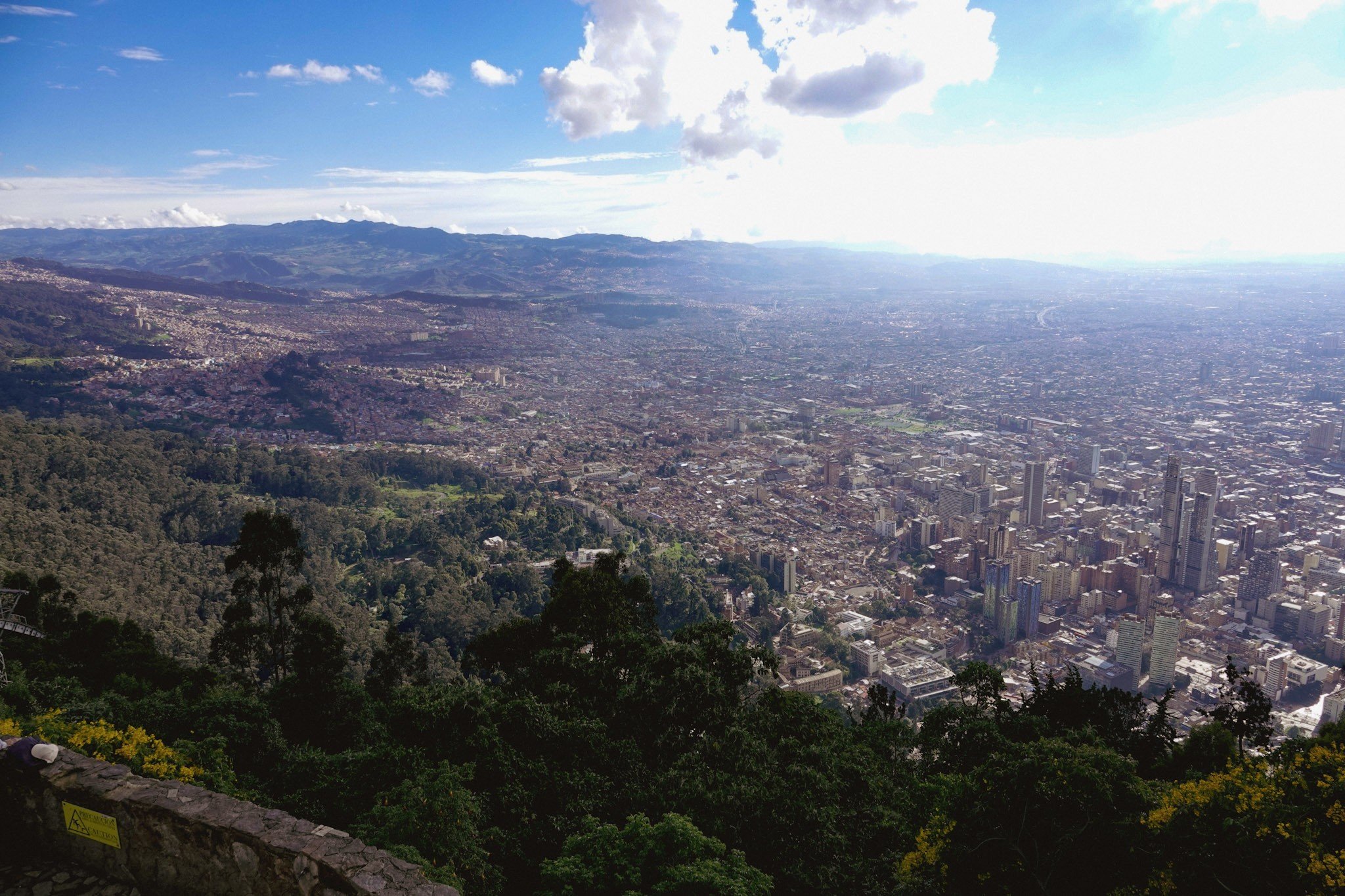
     Late, on this afternoon, we took a bus and funicular up to Monserrate. It's one of Bogota's most iconic landmarks. It's a sacred mountain that overlooks the city center. It's a major attraction in Bogota and offers panoramic views of the city. Unfortunately, we were up there at a bad sun-angle time for taking good photos of Bogota.

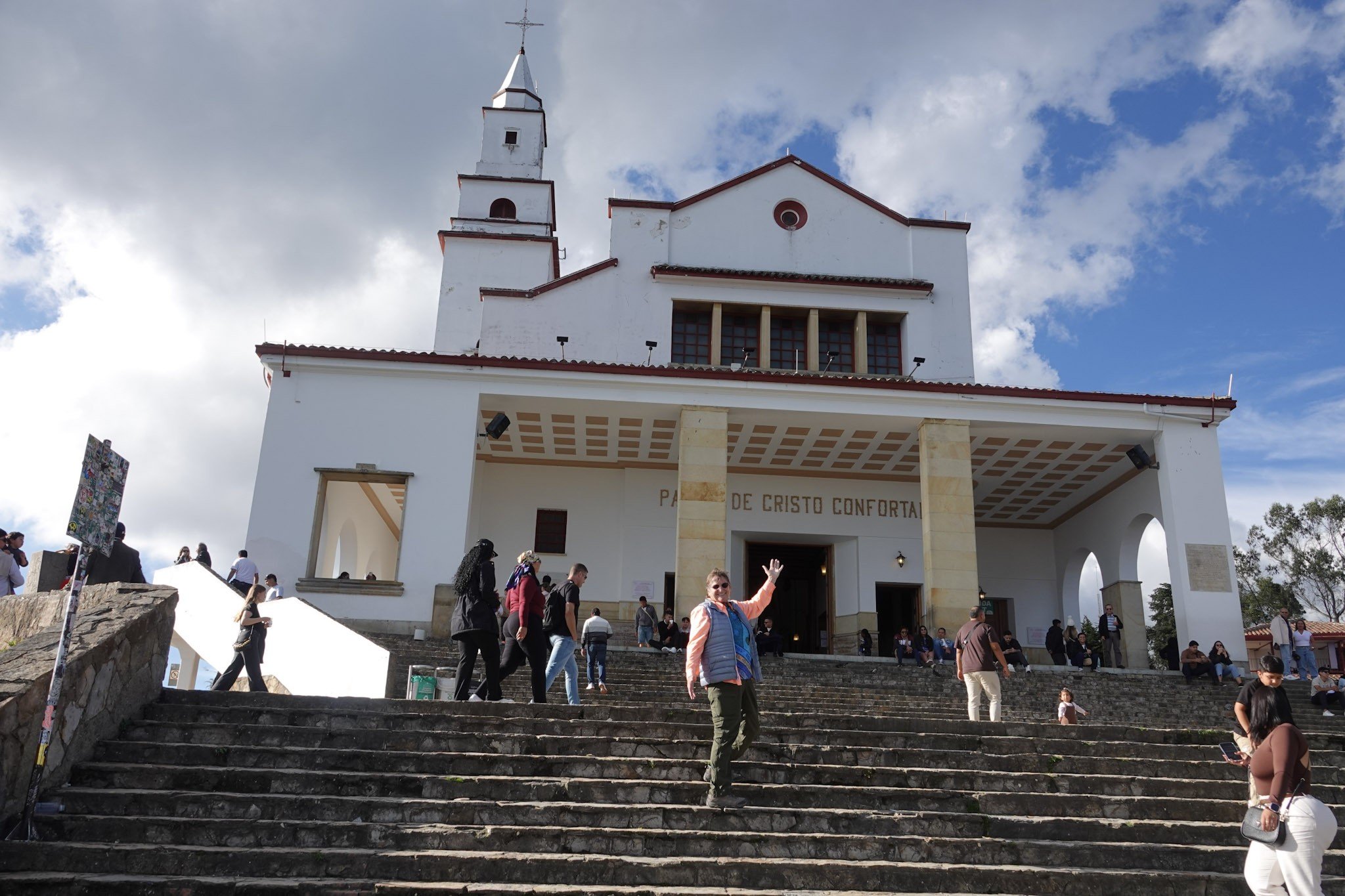
     This mountain has roots in pre-Colombian times and was inhabited by the Muisca people. The Spanish built the Basilica of Monserrate up there in the 17th century, making it a place of spiritual reflection. For me, it was another high mountain ascent since it sits at 10,341 feet elevation. Still, I huffed and puffed my way to the top. 

     Below, you can see Monserrate from the Bolivar Square and the Basilica on top. To walk it, it's a 1.5-mile trail, and 2,800 feet of elevation gain. We didn't walk up. We took a bus and the funicular...and still had a long, steep walk to the top.

     The views at the top of Monserrate were pretty great, but not for the photos. The sun was at a harsh angle. But you can still better understand how Bogota is snuggled into the Andes Mountains.

     The Basilica called to us, so we hiked up to it and went inside. It was a nice cool place to rest.

Street Art

     We had a local artist, designer, and part owner of an art studio act as our local tour guide for a 2.5 hour walk around two neighborhoods in Bogota. We walked and viewed the urban street scene with Monica giving us the play by play of what we were seeing. It's good she did as I never would have imagined what all I was seeing or all the behind-the-scenes things that have occurred in Bogota and Colombia.

     Graffiti was decriminalized many years back. Bogota decided they could not stop it, so they have tried to improve it and make it part of the fabric of the city. Bogota is the street art capital of Colombia and one of the street art capitals of the world. We started in the La Candelaria neighborhood, one of Bogota's leading street art neighborhoods.

     Monica told us that we would be seeing three separate graffiti art forms: Street Art, Throw-Ups, and Graffiti or Tagging. She would point each one out to us and explain the differences to the point that I sort of understood it, but not to the point of claiming any expertise. 

     I will just point out a few different street art works that will, hopefully, shed some light on some of the street art scene in Bogota.

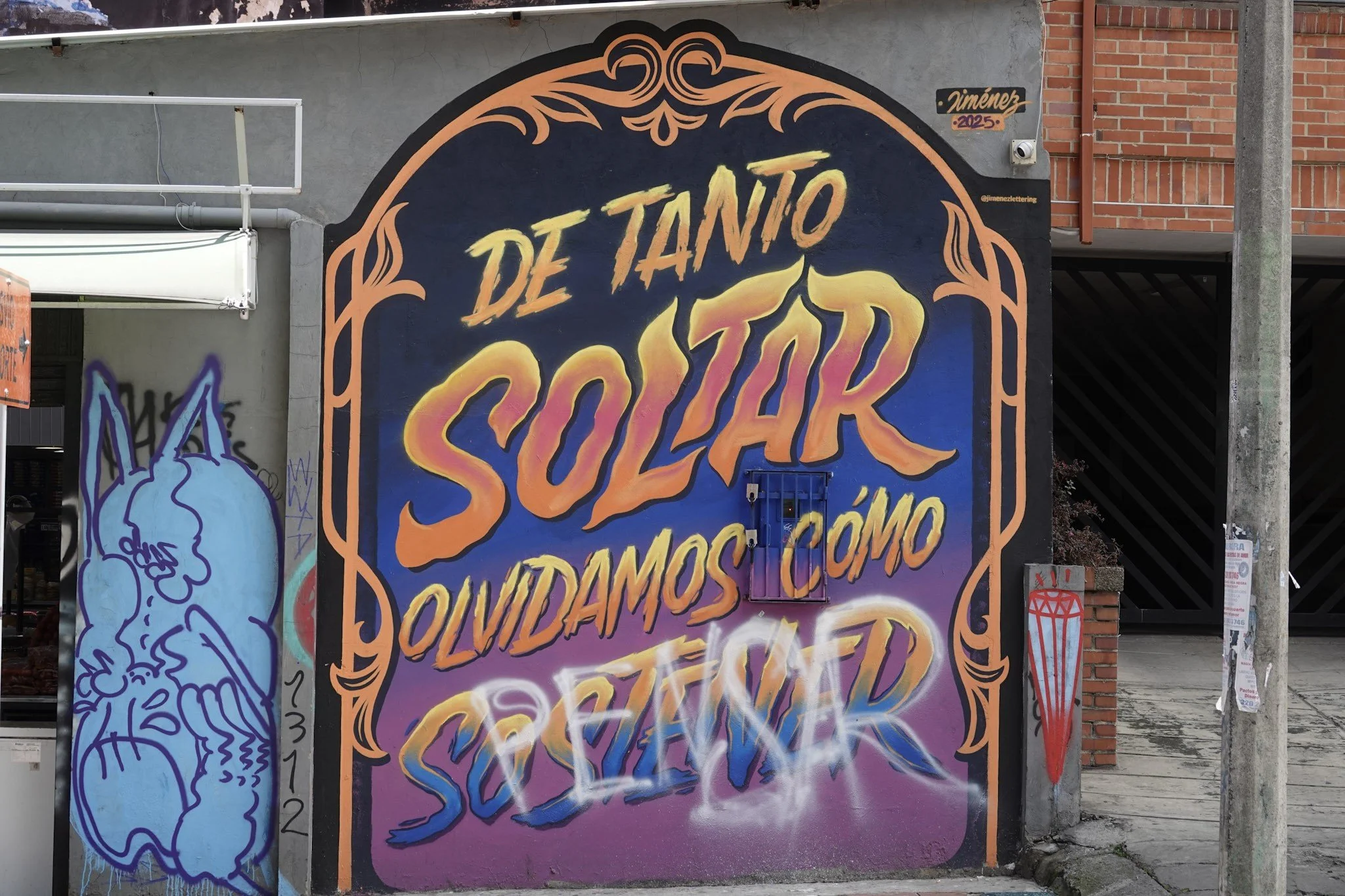
     This first one caught my interest because it shows two different forms: street art and tagging, or graffiti. Someone was paid by the shop owner or just allowed to paint the wall with a very nice artwork. Then, a tagger or graffiti person came along and added to it (or detracted from it).

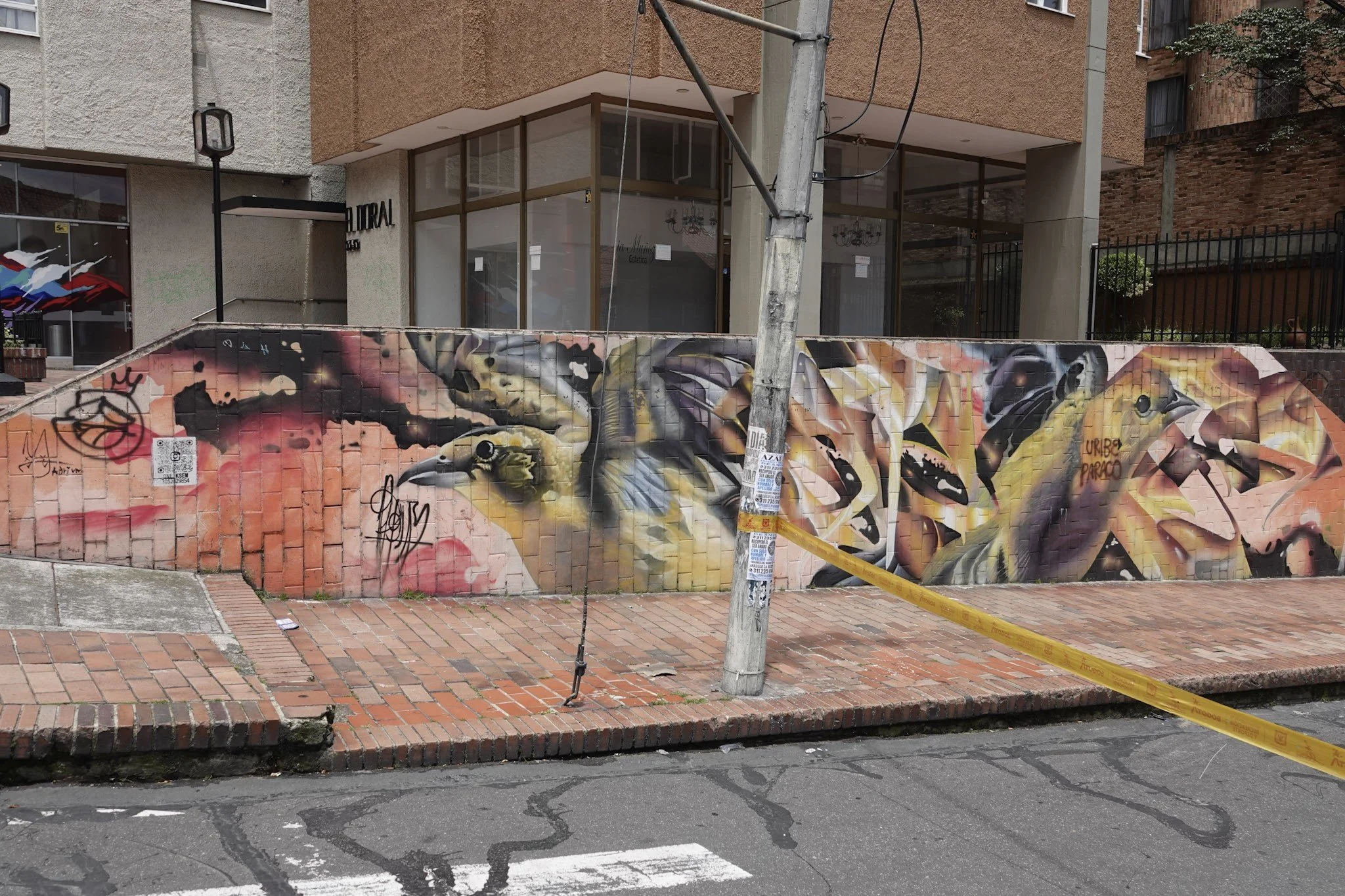
     This next artwork caught my attention in particular for one small detail. You might not even notice it. I didn't notice it until Monica pointed it out to us. The artwork is a retaining wall with some nice birds and such. But if you look well to the left side, you can notice a QR code. The artist adds this so that people who like their work and want to find out about them or hire them can do so. In this case, Monica pointed out another artwork by the same artist just down the street where he got hired because of this work and his QR code.

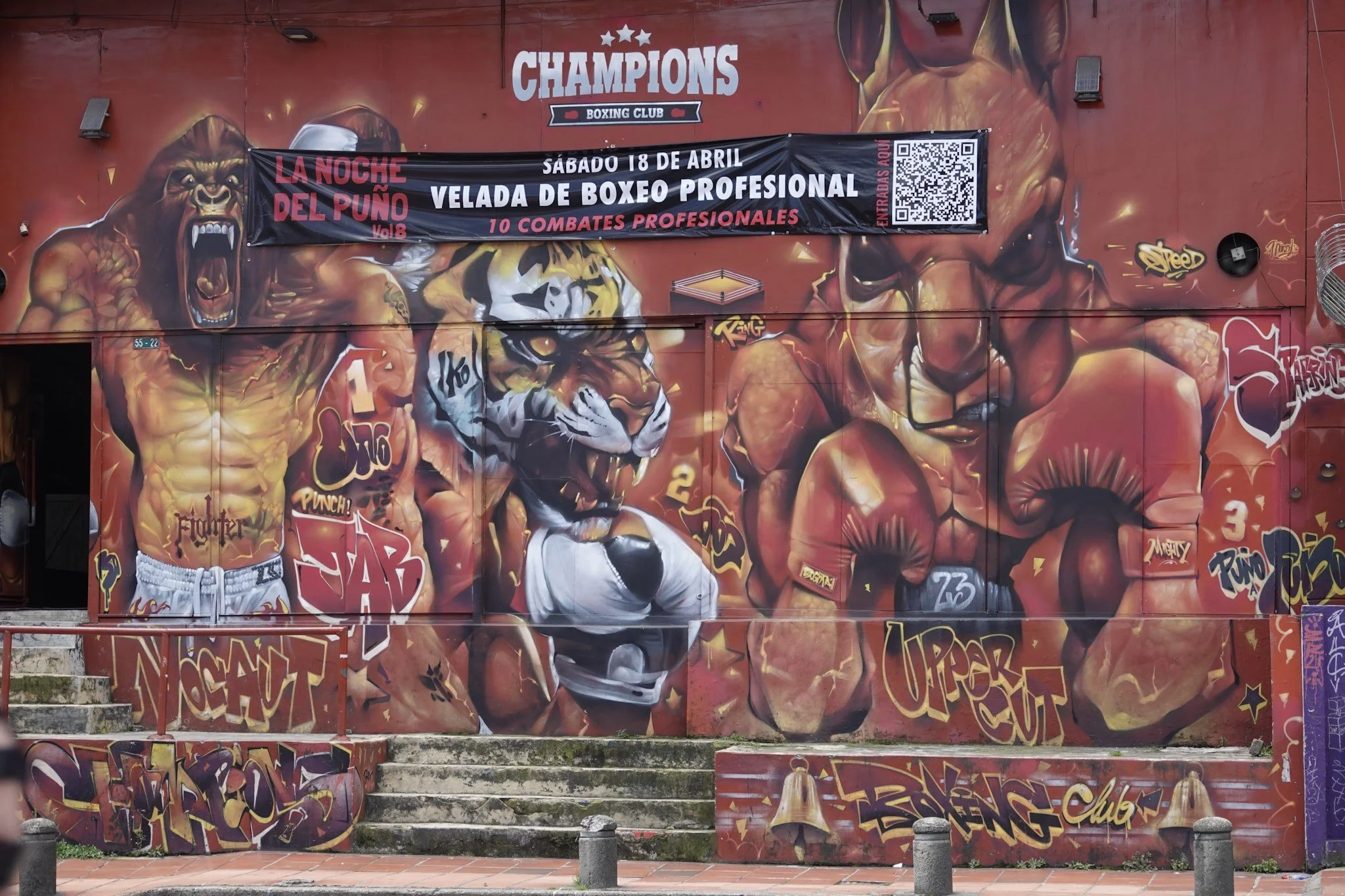
     Businesses are one of the big sponsors of street art, to advertise their business. Below is one example, for a boxing club.

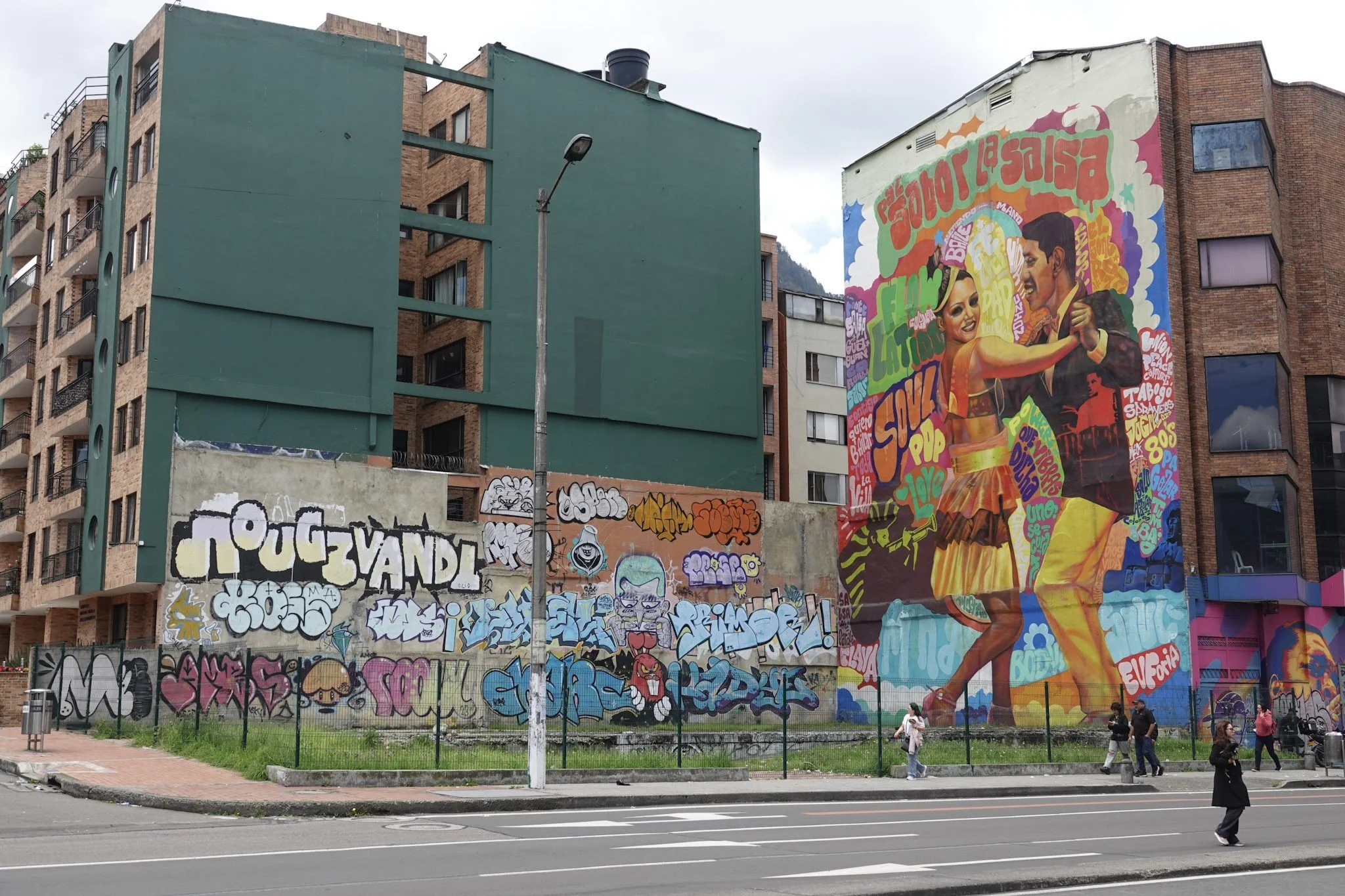
     Some of the artworks were massive. It was interesting to learn about the time, money, and equipment involved. Some art works took many months and involved huge cranes or massive scaffolding arrangements. The descriptions of how such large works were painted was fascinating. You have to remember, the artist can't possibly see the entire painting while doing a small portion, but they have various ways, mostly today using impressive electronic technology. I'm talking about the street artwork on the right, the large one.

     The street artwork on the left is a "Throw-Up". I'm not sure why, but it involves large lettering and large pictures, etc. that I think look like they were just thrown up on the wall.

     Next, we shifted to the San Felipe neighborhood. It has lots of art galleries and studios, including Monica's studio. At her studio, we made a silk-screen print, with help.

     This neighborhood had a number of different works, but it was all classified the same, per Monica.

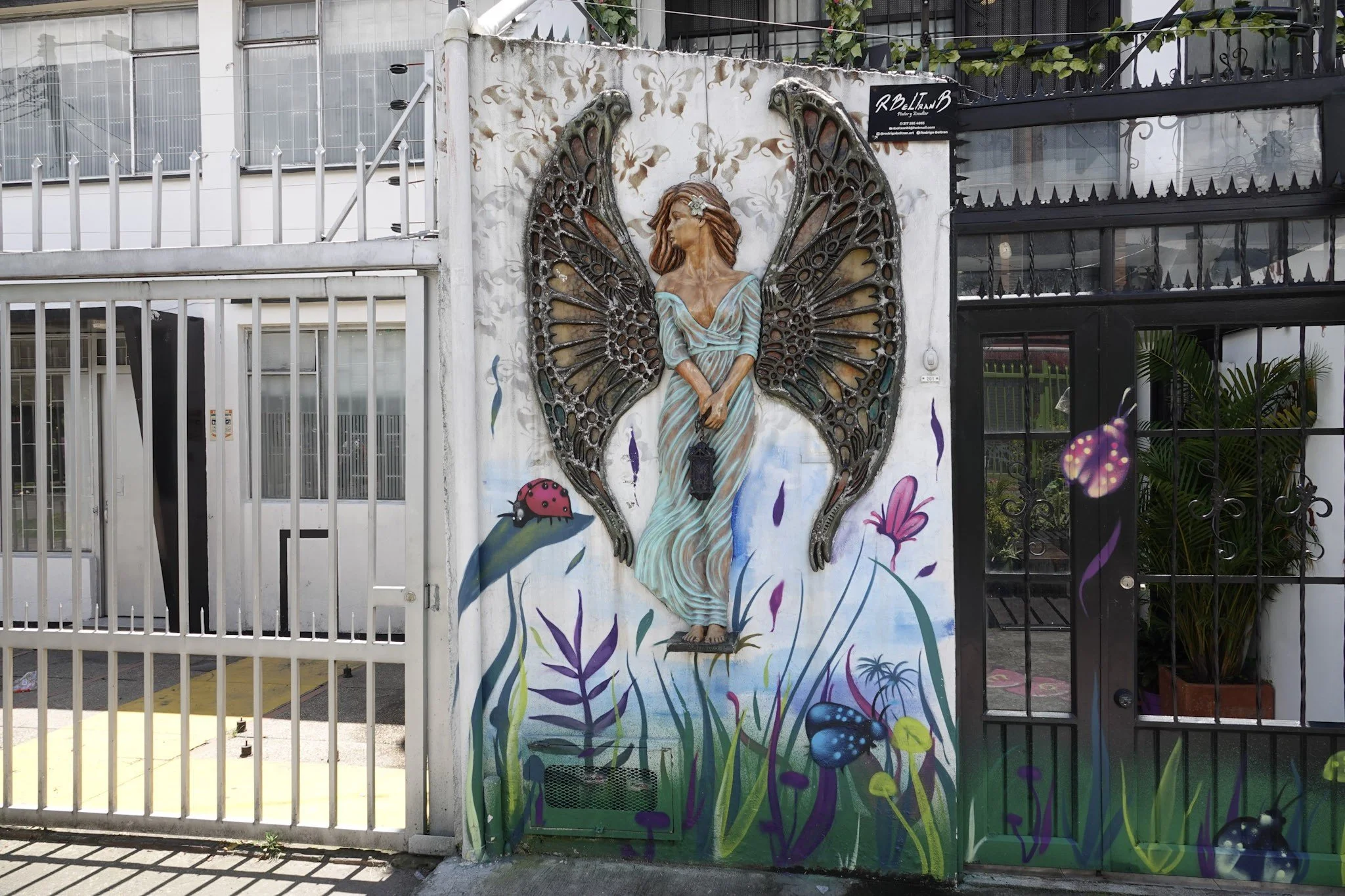
     I never wandered off down any alleys to find a small or unique street artwork, but I did come across some works that did not appear to be related to businesses or put in a key traffic area, but I still thought they were good art. This was just in the neighborhood and a wall between two driveways.

Bogota Food

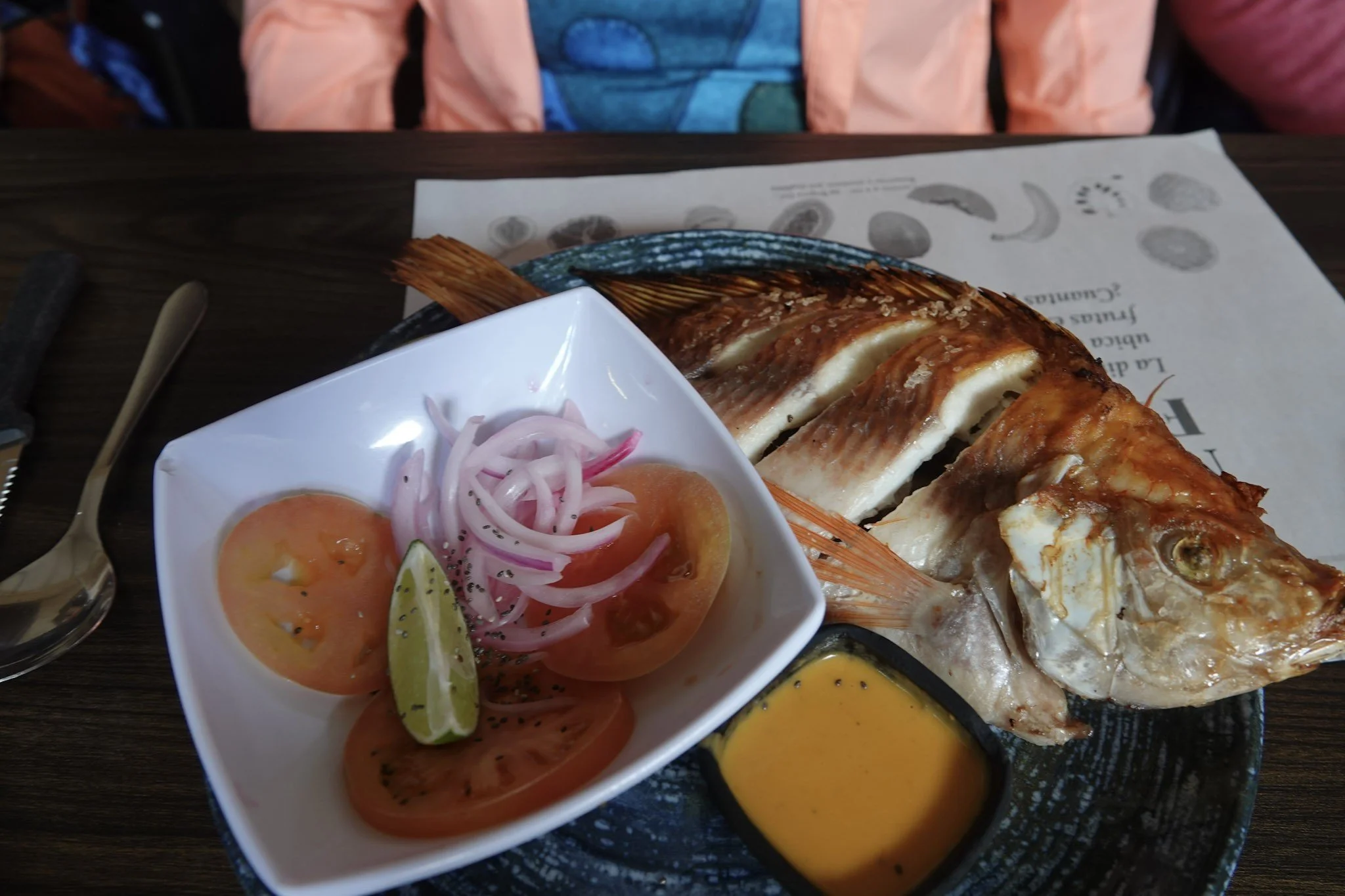
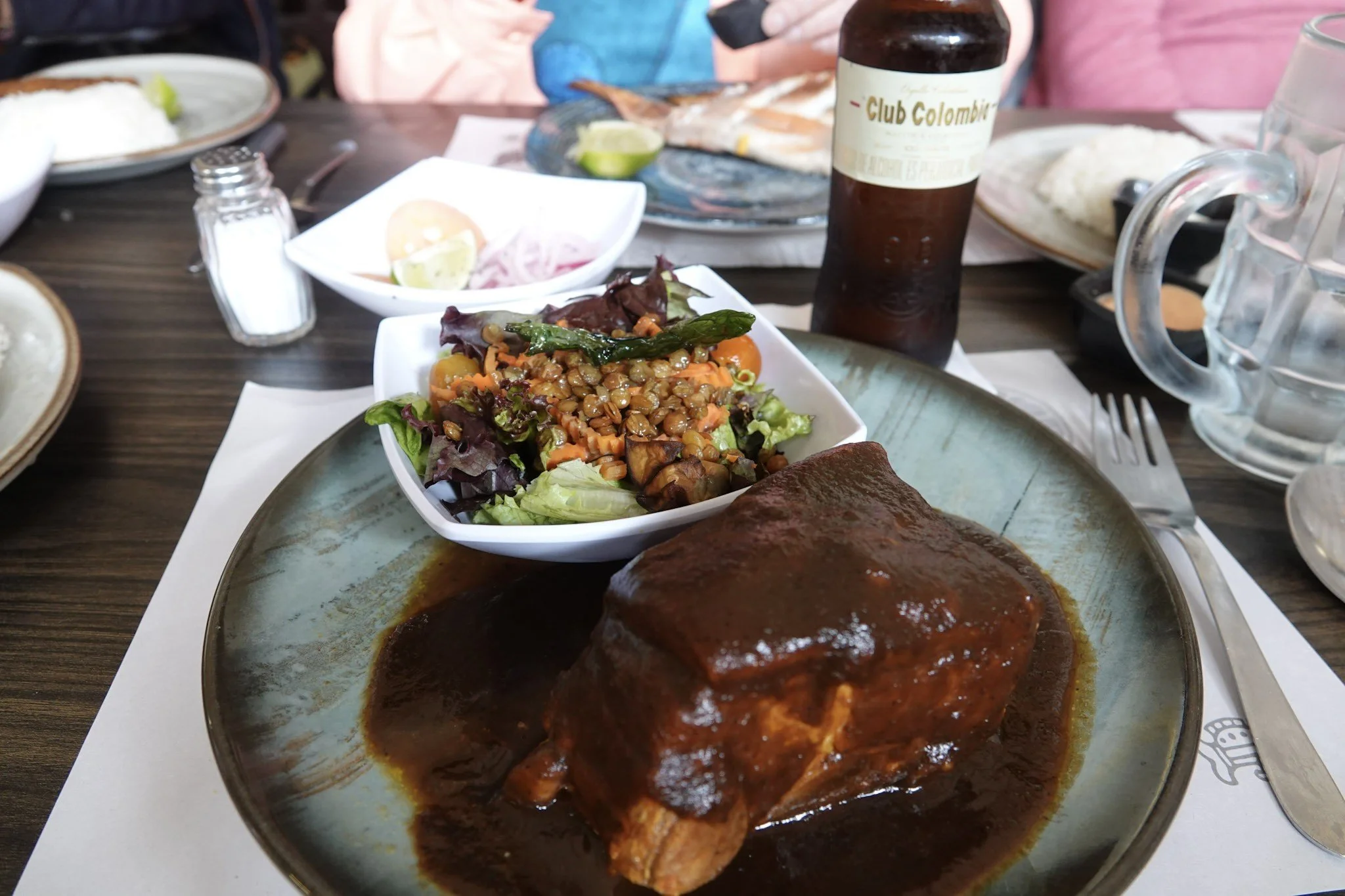
     We had some very good food in Bogota so I'll post some photos of a few of the dishes. The first two are from a lunch at Origen Bistro. Appetizers were cheese doughnuts from yucca flour plus plantain chips with a sauce (no photo). Vicky had a whole cooked fish with a coconut sauce. I had the ribs with a salad and potato dish. I had a Club Colombia beer and Vicky had coconut lemonade which was really great. Lime blueberry cake was dessert (no photo).

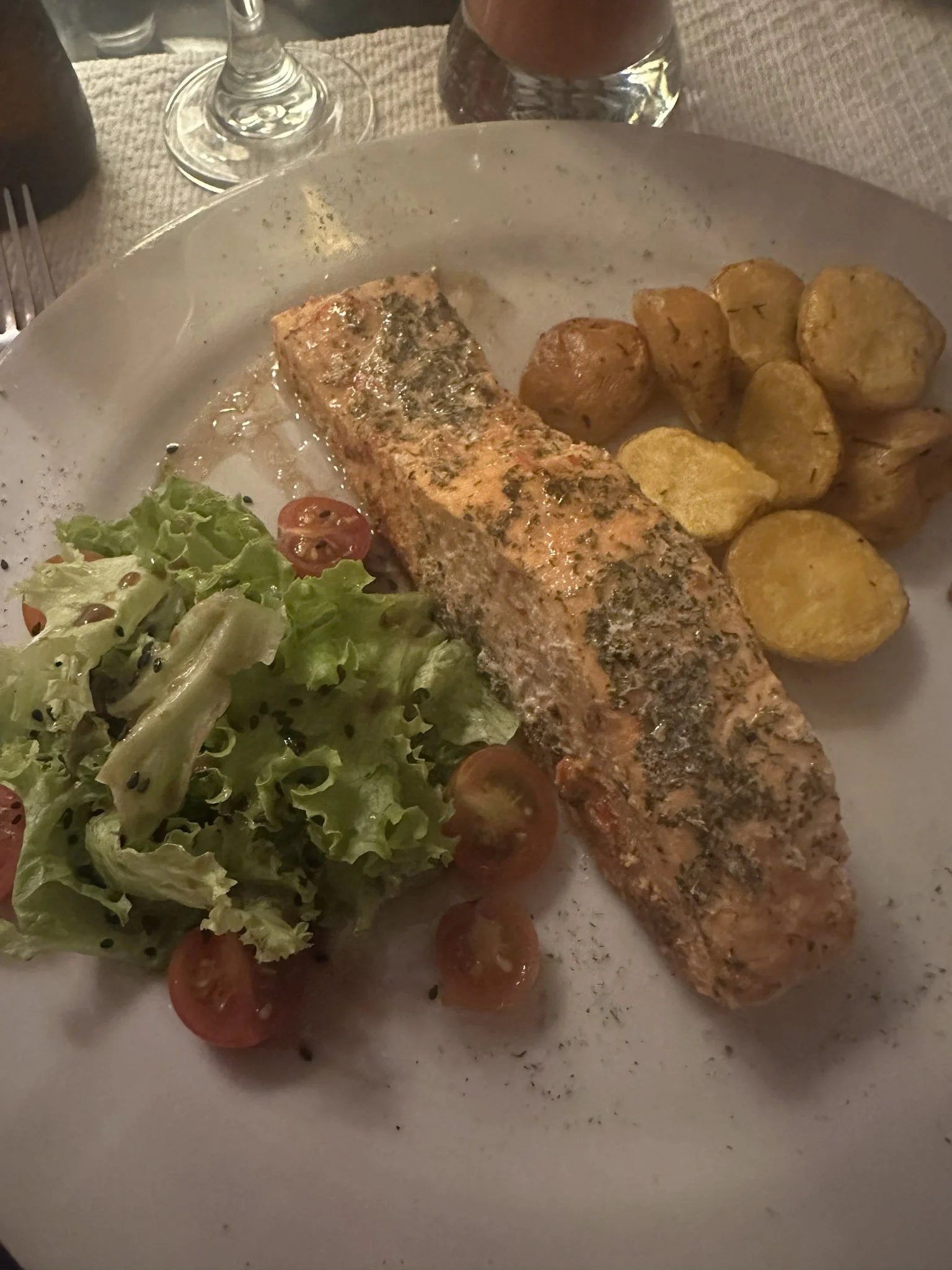
     For dinner at the Son de Grillos Restaurant, in a 246 year-old building, starters were bread, mushrooms, and avocados. I had the salmon with potatoes, salad, a beer, and strawberry juice. Colombian apple strudel was for dessert.

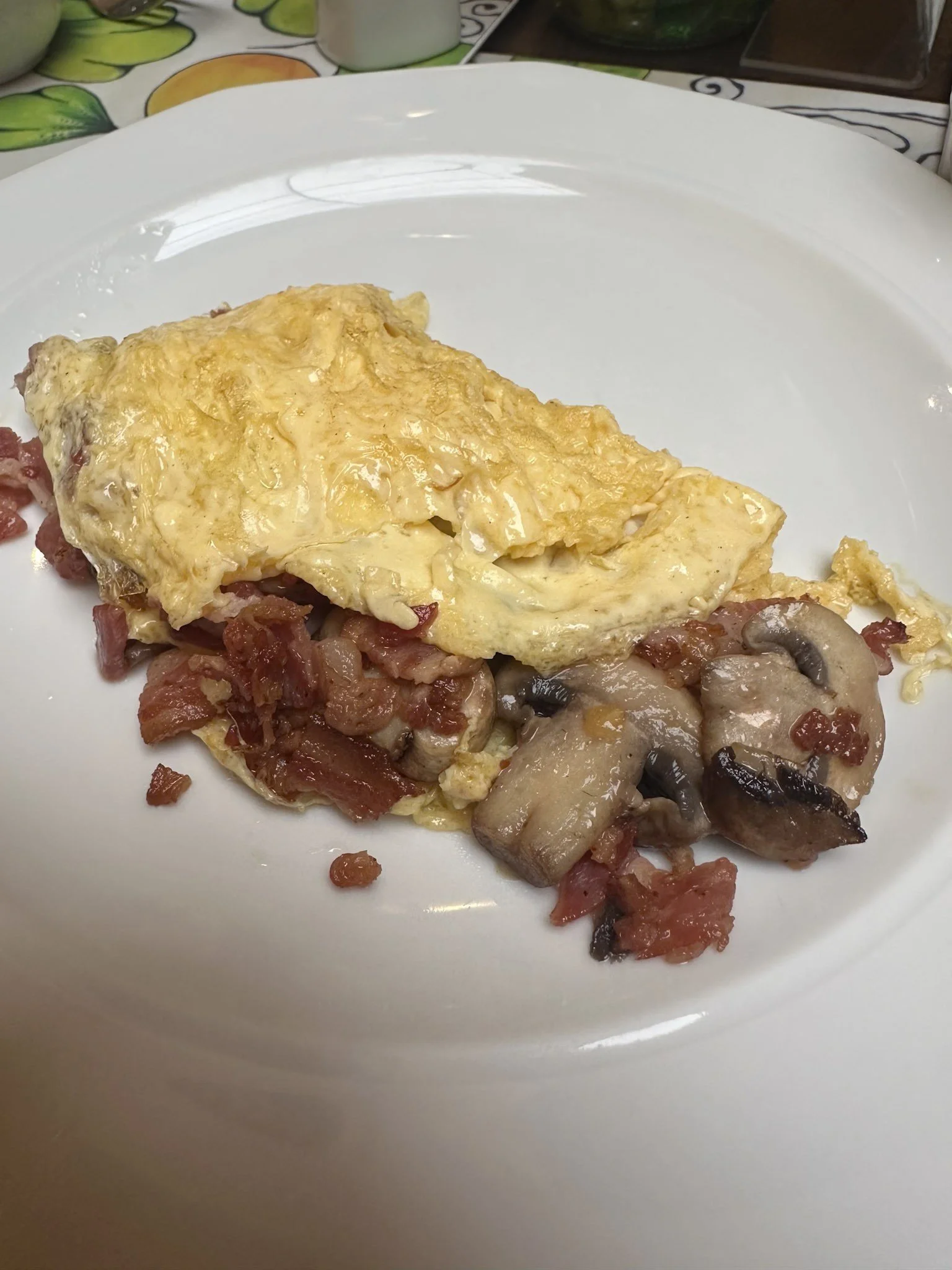
     I don't often post breakfast photos. For breakfast, we most often had a cooked-to-order omelete, fresh fruit, and maybe some toast or bread and coffee or hot chocolate or a combination of both. The omelets at the De La Opera Hotel in Bogota were excellent. Here I had a bacon, tomato, and mushroom omelet.

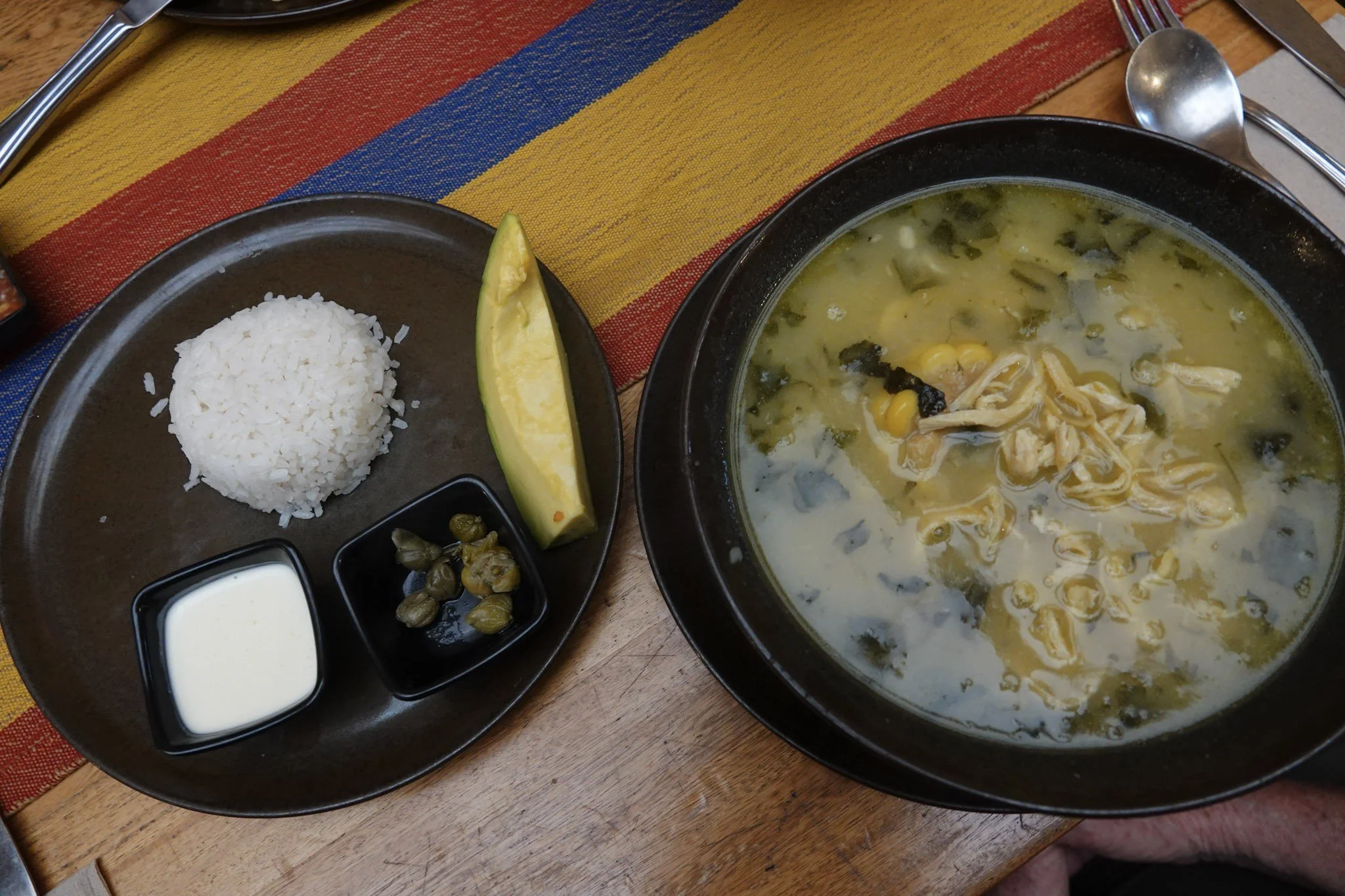
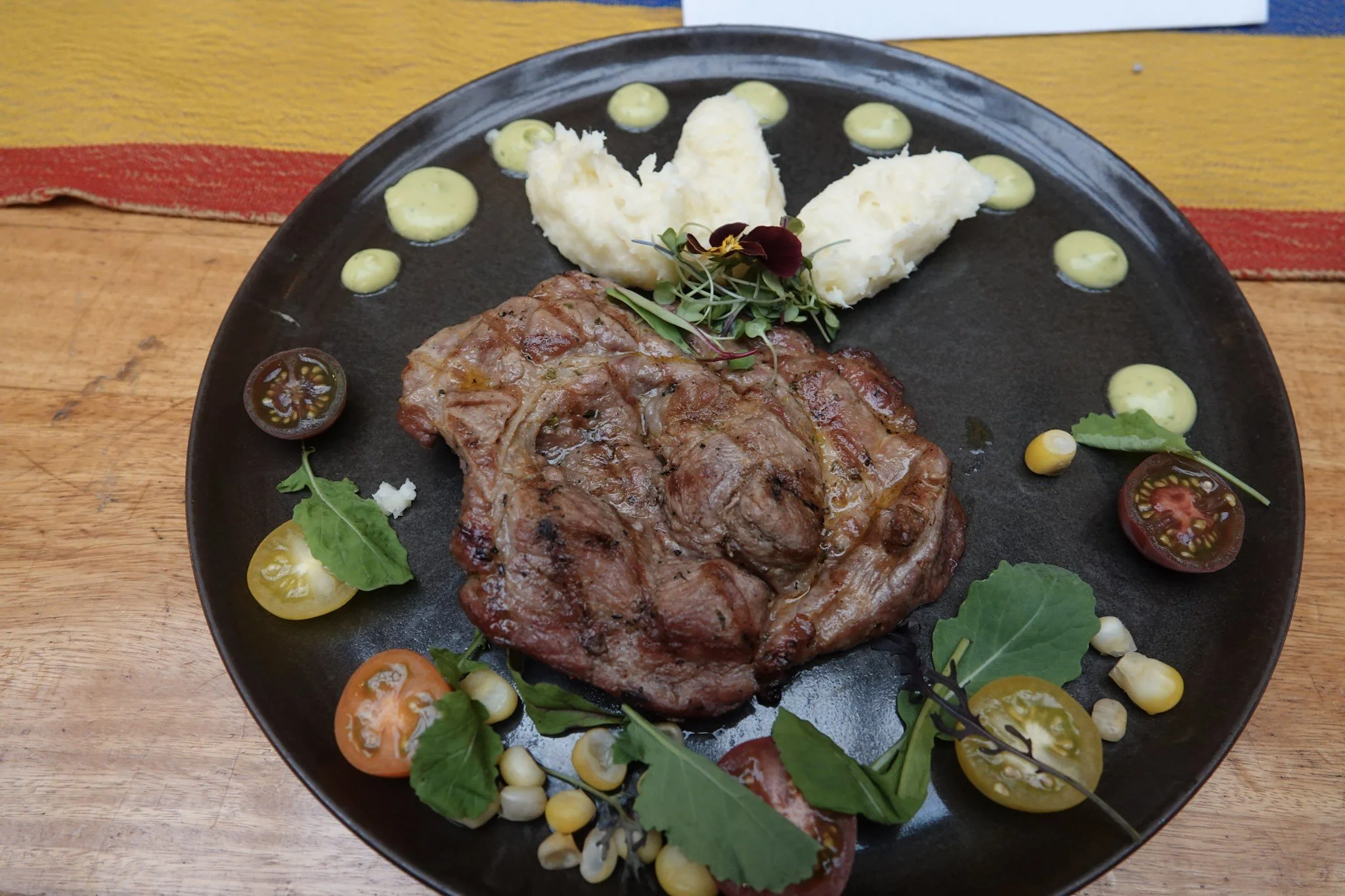
     On this day, lunch was at Chibchombia Cocina. Empanadas were our appetizers. Vicky had potato/chicken/corn soup with sides of avocado, rice, etc. I had the pork tenderloin with potatoes and tomatoes. Dessert was cheesecake with blackberries and passion fruit. We finished with 'real' Colombian coffee which was coffee cooked with cinnamon and brown sugar which was quite good.

Medellin

     Medellin was our second stop in Colombia. First, I want to clear up how to pronounce Medellin. I pronounced it like, "med-a-yeen." We were told that was wrong. They said that's how Spanish speakers or English speakers pronounce it, but in the Andes Mountains of Colombia, it's pronounced like, "med-a-jeen."

     Medellin is the second largest city and urban area in Colombia. The city is about 2.5 million people, and the urban area has over 4 million people. It's known as the 'City of Eternal Spring' for its great year-round climate. It's nestled in a narrow valley in the Andes and has a long and rich history. The city was founded in 1675 and was originally a mining town. Some of its major commerce today is for exporting cut flowers and textile manufacturing. 

     Medellin seemed to me to have a more youthful atmosphere to it. It's got the work hard, play hard vibe going for it. It has made some major improvements recently such as an efficient metro and cable car system. We also noticed more coffee shops, rooftop bars, and lively happenings. It also has lots of vibrant street art, like Bogota.

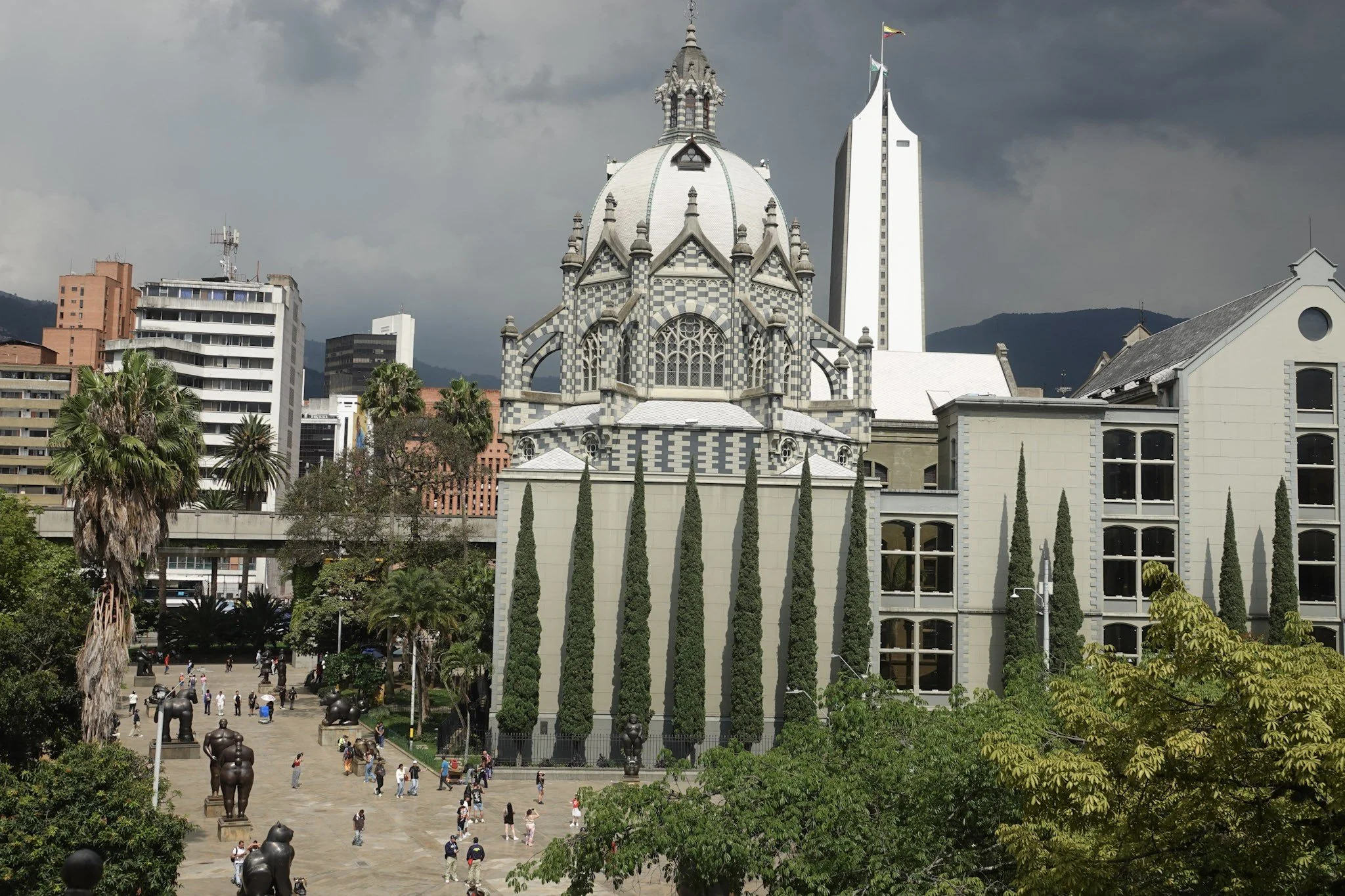
     I found it hard to capture Medellin in my photos. We had a local guide, Anna, who toured us around about nine blocks. We walked between the Town Hall and Botero's Square. The whole area was very busy and very noisy. I would call it chaotic. I'll just give a few glimpses of things that caught my eye.

     I should point out that back in the 1980's, Pablo Escobar had made Medellin the world's cocaine capital. It has been making a long, slow, and challenging recovery from those days...and I would say doing it very well, all things considered.

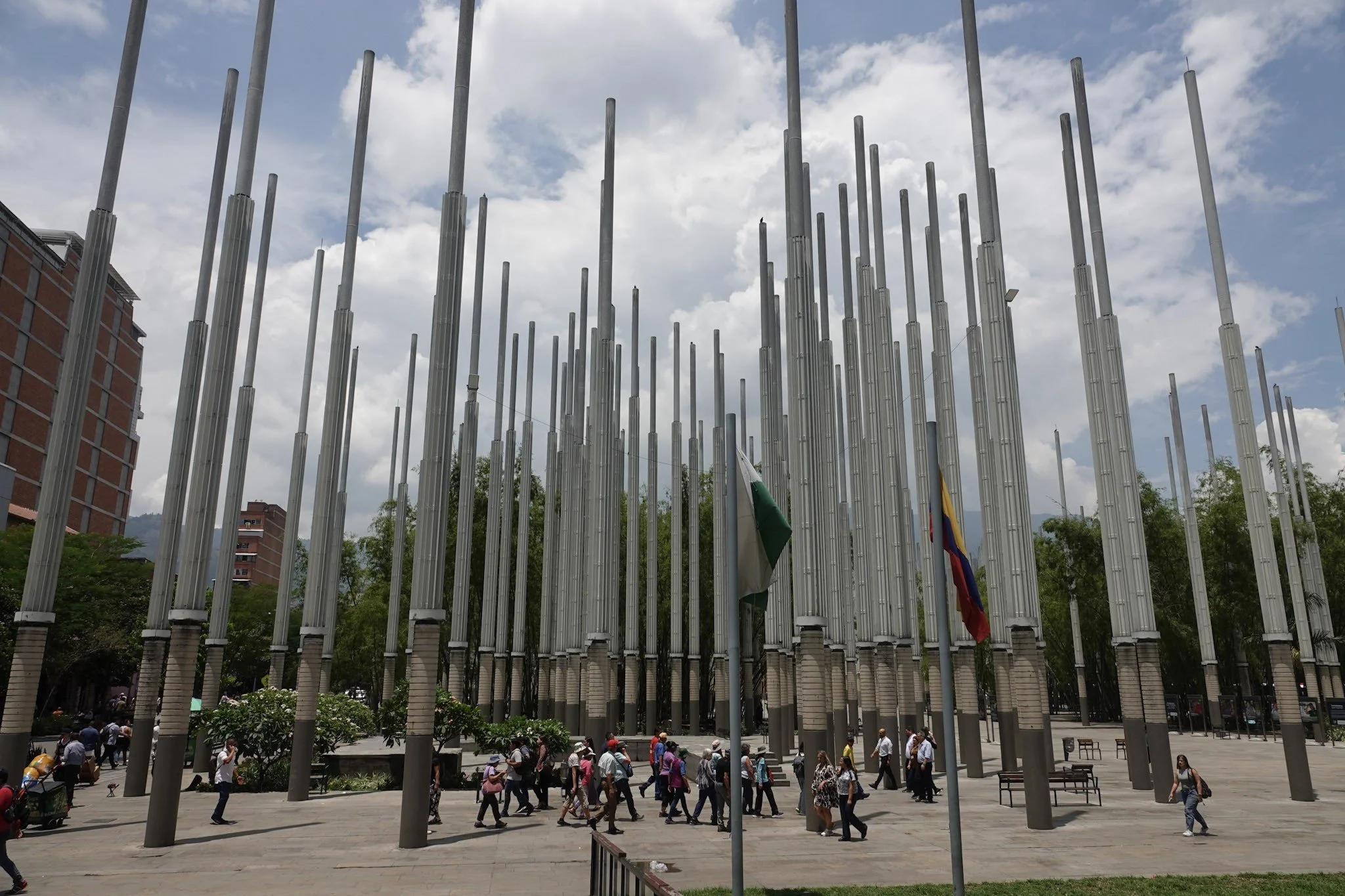
          Plaza Cisneros, or Lights Park, has an artificial forest of 300 light poles. This was a horrible area according to our local guide and the lights, to light up the night, have made a huge improvement. We never saw them at night, but they were still impressive in daylight. Plus, it now appears to be a neat, clean, safe area.

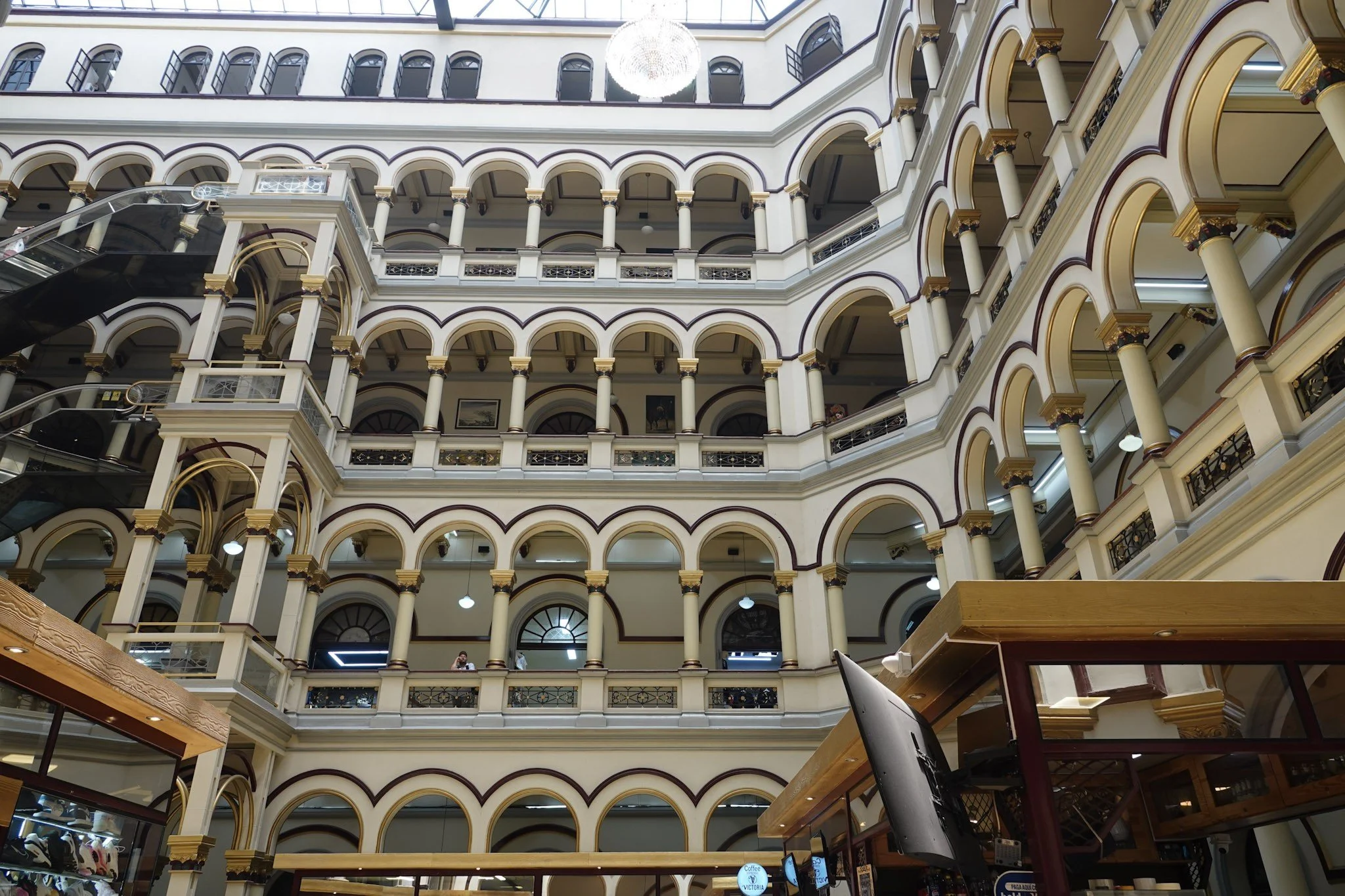
     The old Palatine National Building is now the National Palace Mall. It started life as offices and headquarters of some of the major governmental institutions. After some problems, it's now a shopping center with over 400 stores, cafe's, bars, art galleries, and a museum. It was extremely hard to get a good photo as the inside square footage is small and the building very tall, but it’s a beautiful building.

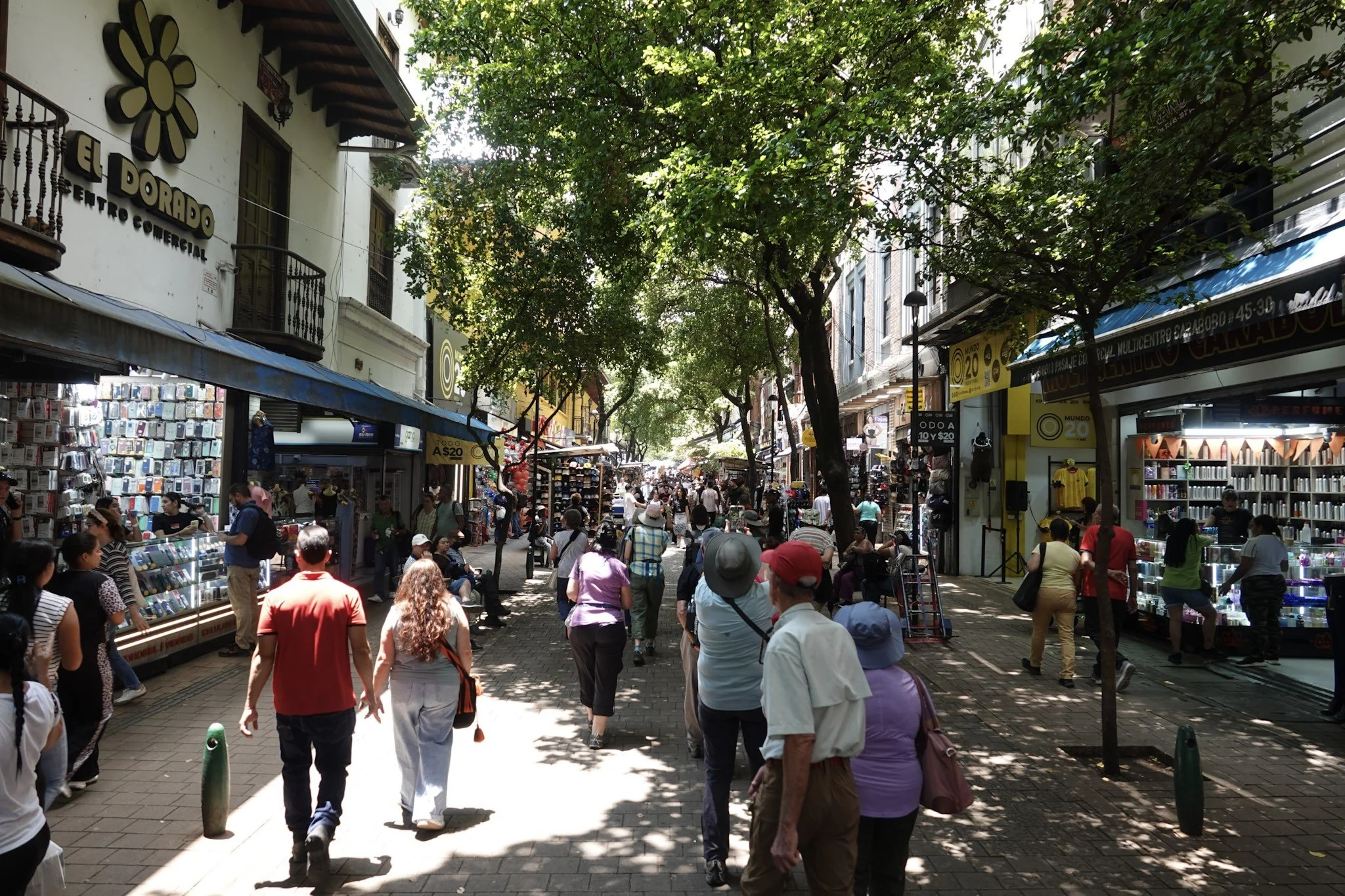
     Walking along the streets was a lively experience with all the sights, sounds, smells, and vendor appeals.

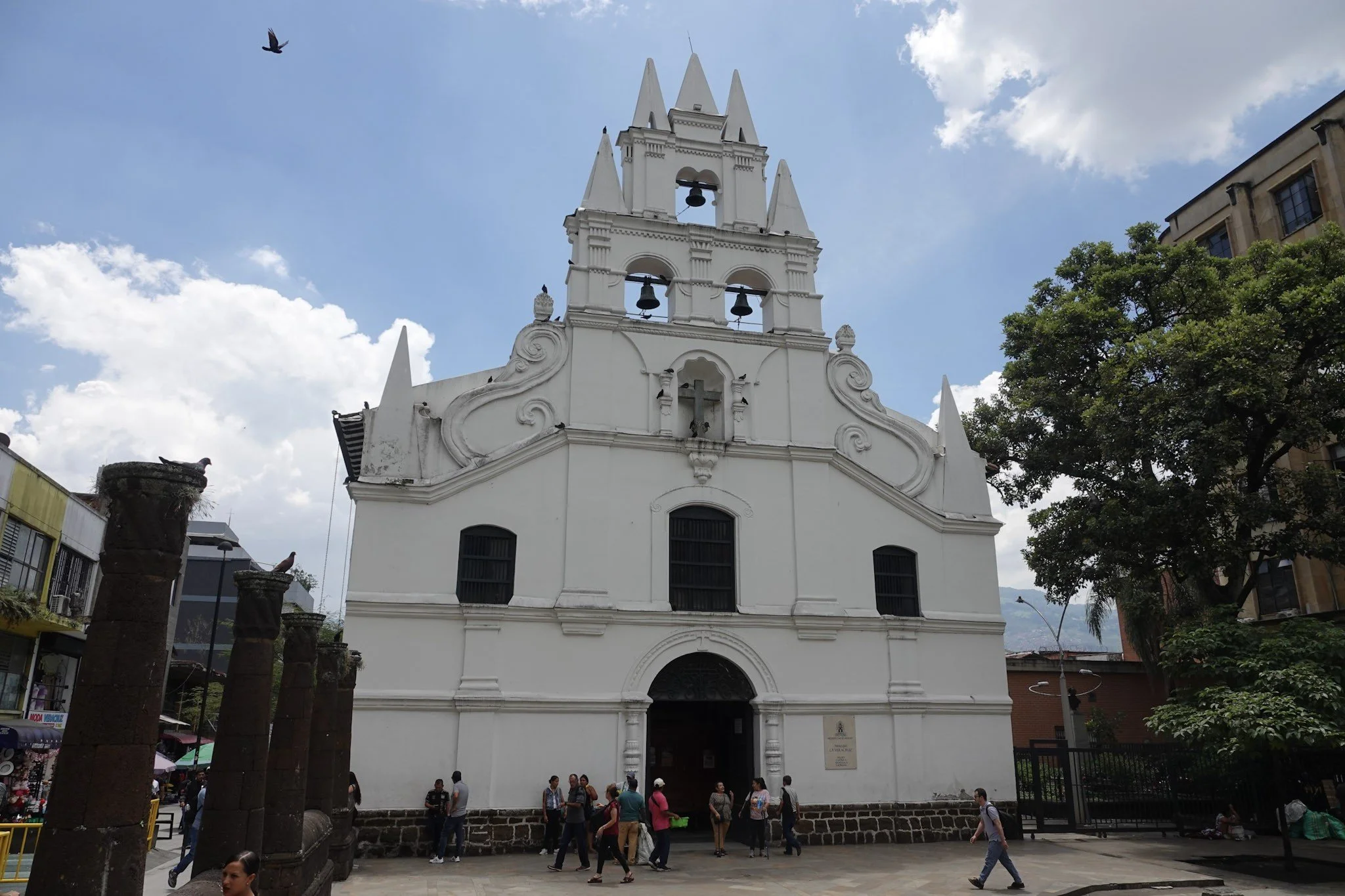
     The Veracruz Church is a Catholic church and the only colonial church in Medellin. Construction started in 1682, but that church has long been gone. This church was built and rebuilt in the 1800's.

     The Palace of Culture, or Rafael Uribe Uribe Palace of Culture, is now a public building. It began life as the official government building for the area. It was under construction from 1925 to 1937 and designed by a Belgian architect. Today, it houses the Institute of Culture and Heritage for this area. It has historical and photo archives, music and sound archives, cafe, library, an art gallery, and a museum room. It also has an auditorium and a projection room. You can only see the top of the building from this angle.

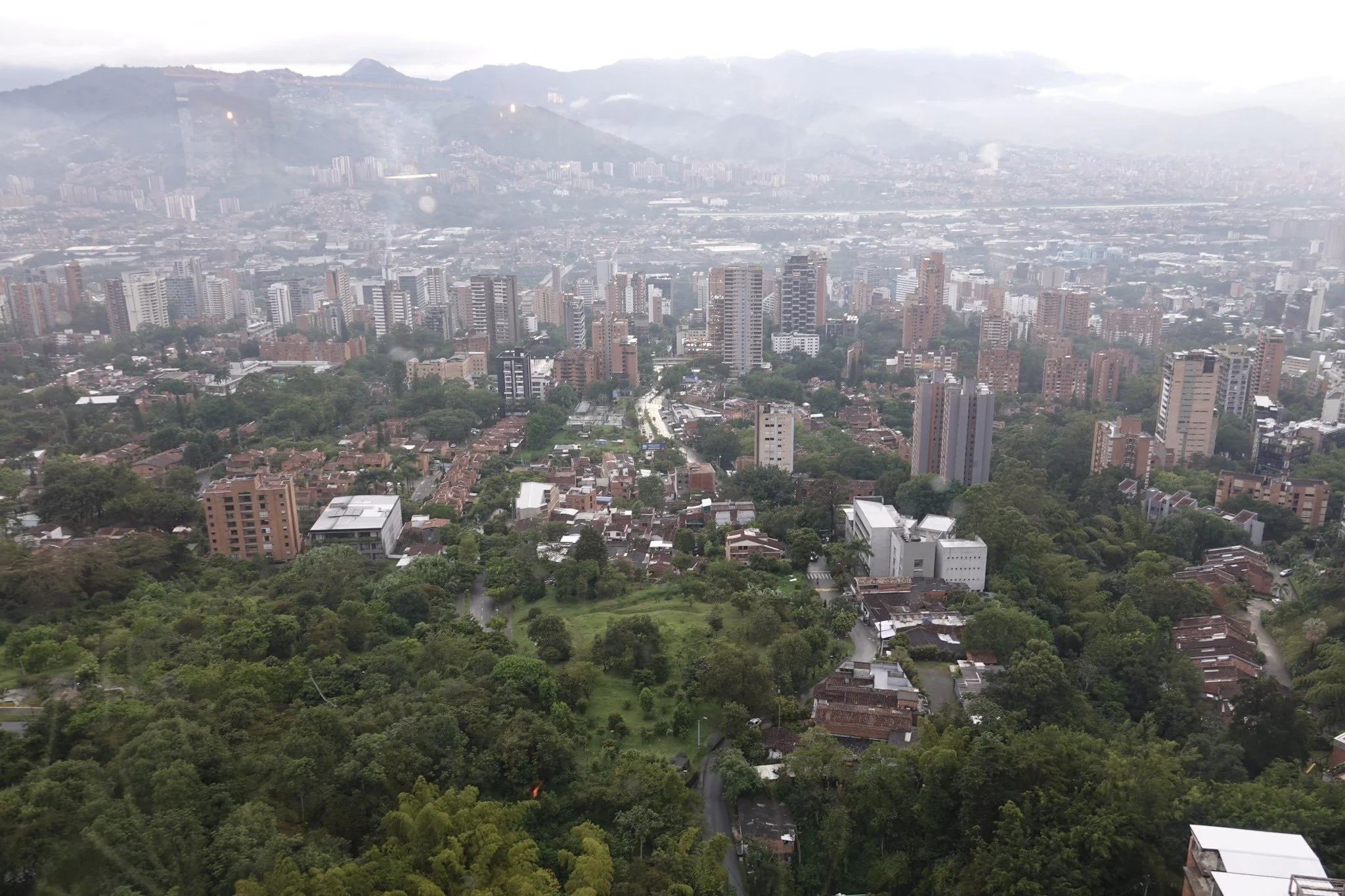
     Medellin is listed at an elevation of 4,900 feet. But like all of the Andes, it's not all flat. We managed to stay at a very upscale hotel, the Novotel Medellin El Tesoro. It was in the upper portion of the city, and we were also on a very high floor. At any rate, this photo was from our hotel room, but it doesn't look like most of Medellin. It's also not a very good photo due to the lighting but at least it’s a reference point.

Botero Square

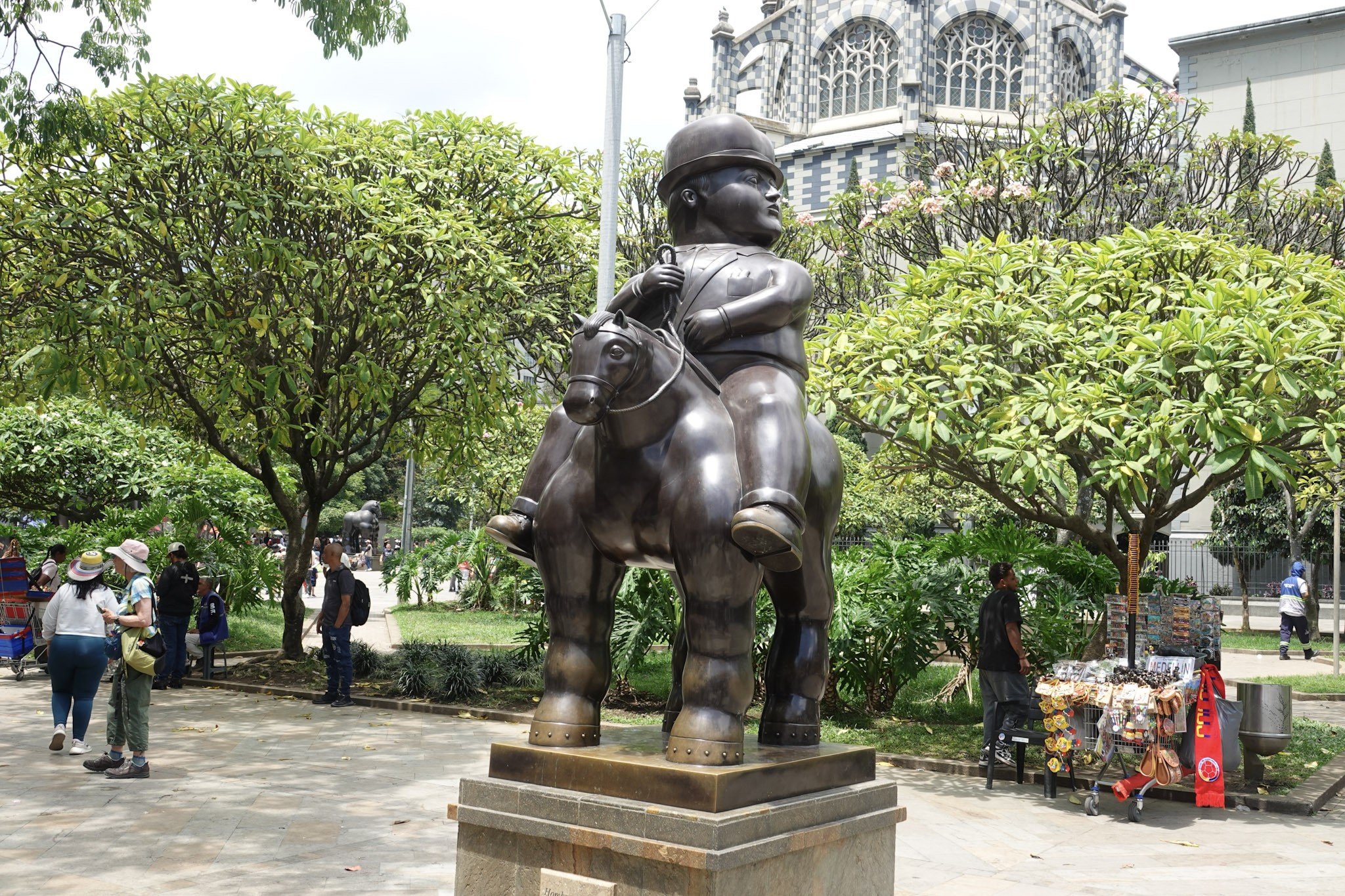
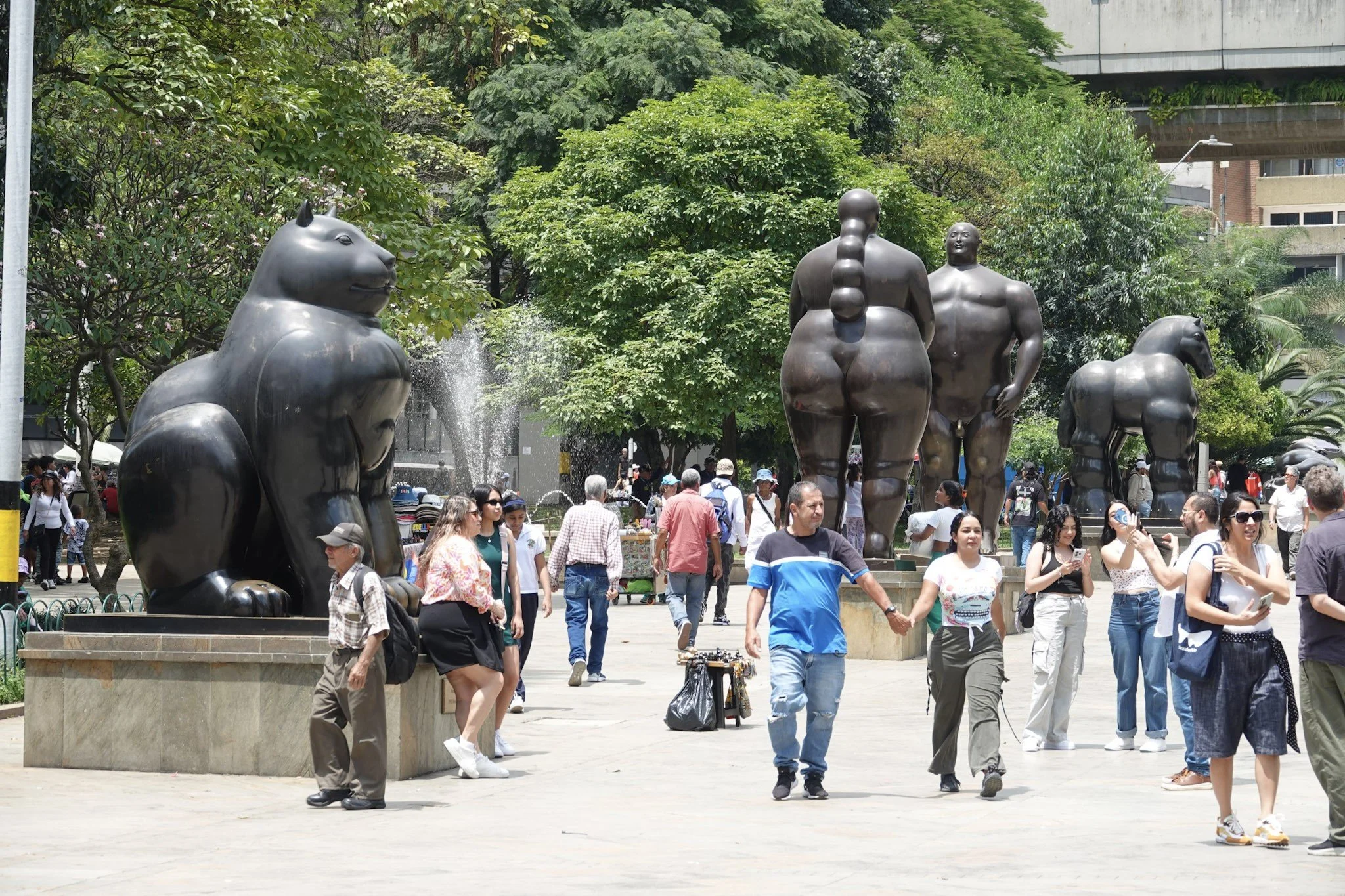
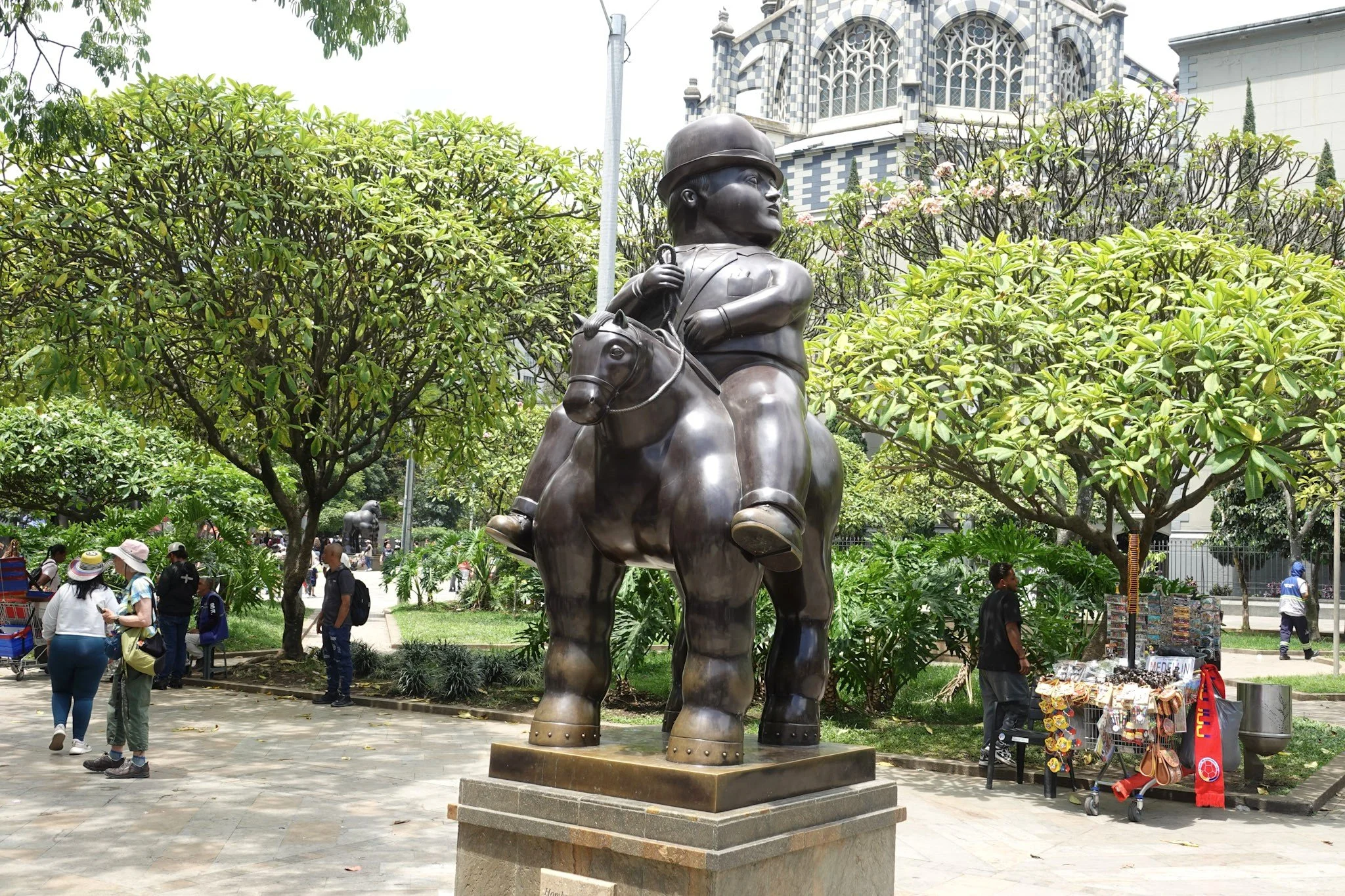
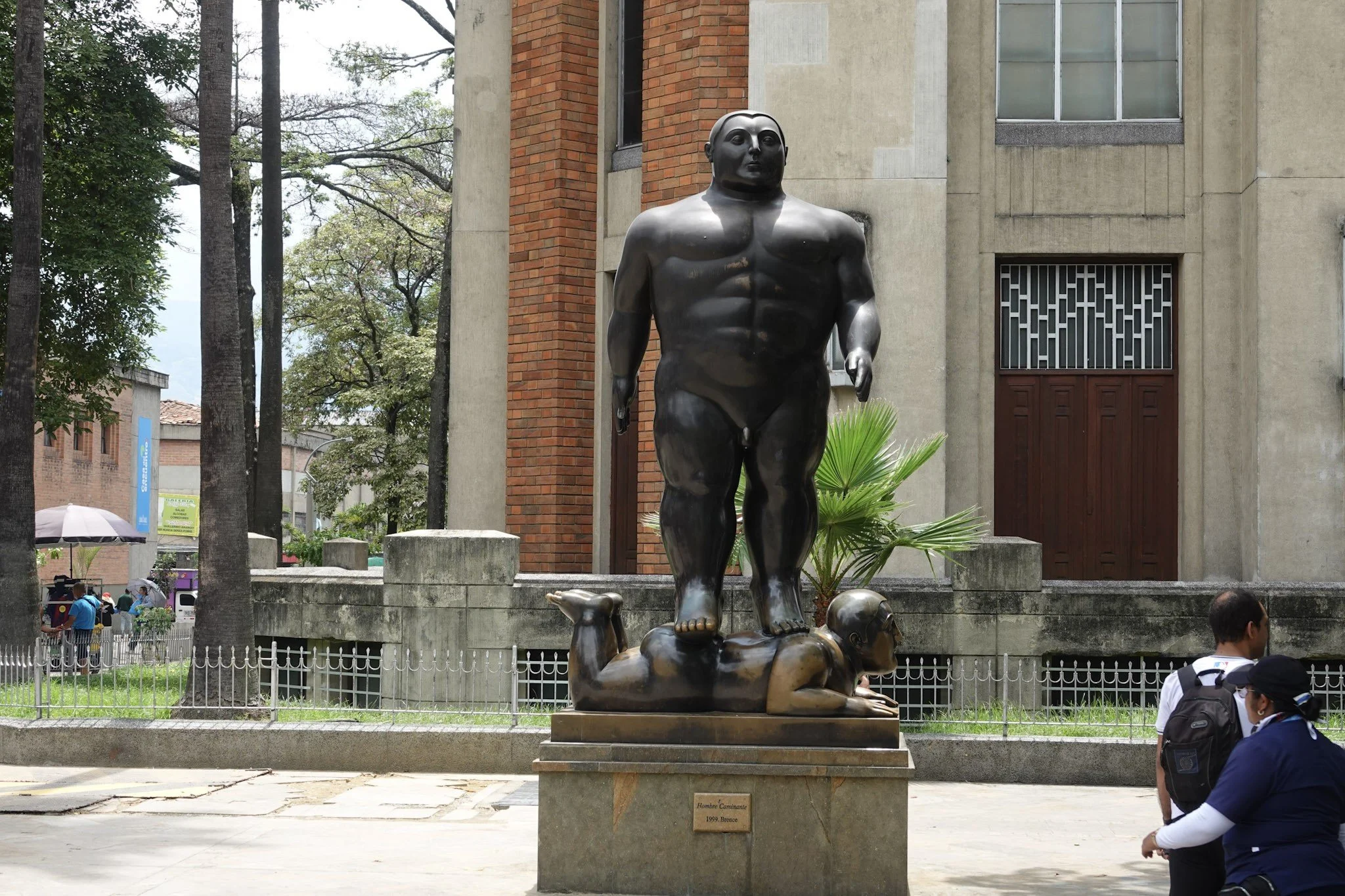
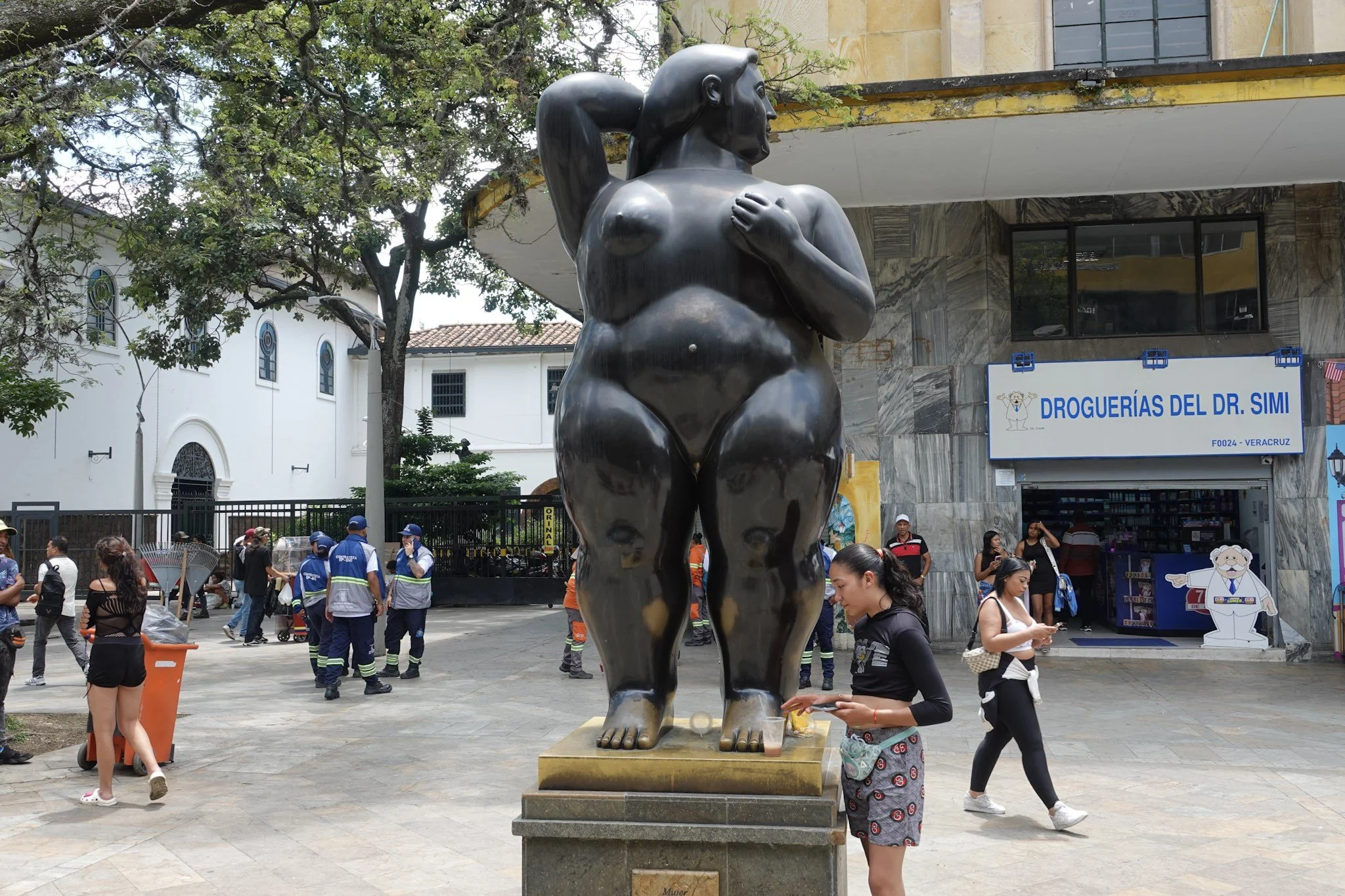
     Our downtown Medellin walk took us through Botero Square. Now I'm not particularly artistic nor am I a "museum guy" but I have to say that Fernando Botero caught my interest. We first saw his work in the Cascade complex in Yerevan, Armenia. It is obviously different and there is just something to it.

     Fernando Botero was born in Medellin and was a Colombian painter and sculptor with a signature style, called "Boterismo." His art works depict people, animals, and other objects in voluminous forms. Botero's works are displayed worldwide, and he donated extensively to Colombian museums. 

     We visited the Antioquia Museum in Botero Square, and it houses an international art collection on three floors. It has a large collection of works by Botero and Pedro Nel Gomez. It also has works by Salvador Dali, Marc Chagall, and many others.

     In the case of Botero Square or Plaza Botero, he donated 23 bronze sculptures. All are displayed outdoors in the plaza for all to see. 

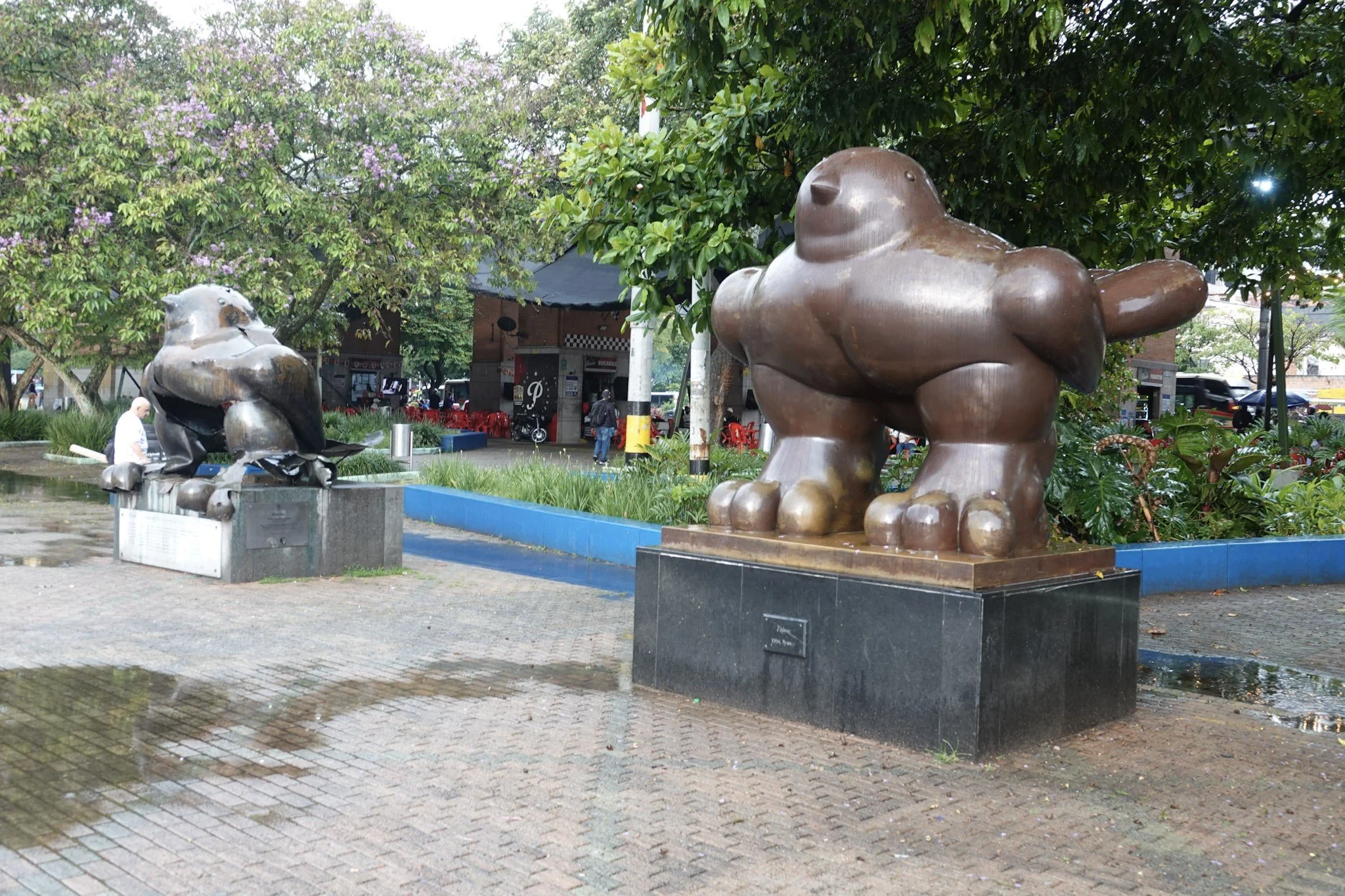
     The next art work by Botero was in a different part of town, and I suspect less safe. Botero put a statue of a bird here, but it got mostly destroyed during some sort of violent uprising. Botero responded by duplicating his effort but insisted that both sculptures should be there, for all to see the destruction of the one, but the continuation by Botero.

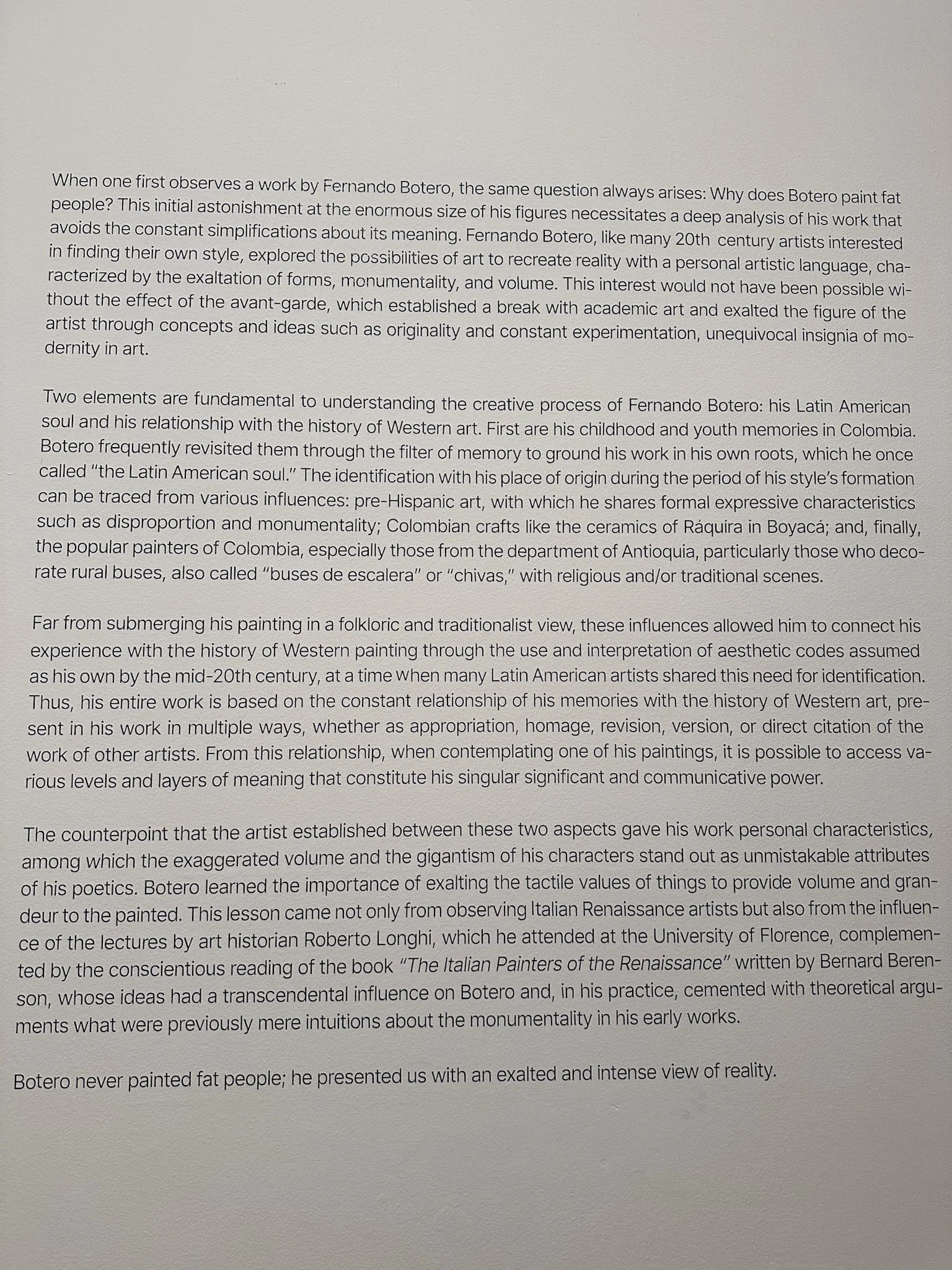
     Again, I'm not a big museum guy, but I did love the Botero floor of the Antioquia Museum. I spent some time reading the display below. In case it's not large enough to read, I'll write the last sentence because I found it fascinating. It said, "Botero never painted fat people; he presented us with an exalted and intense view of reality."

Guatape Reservoir

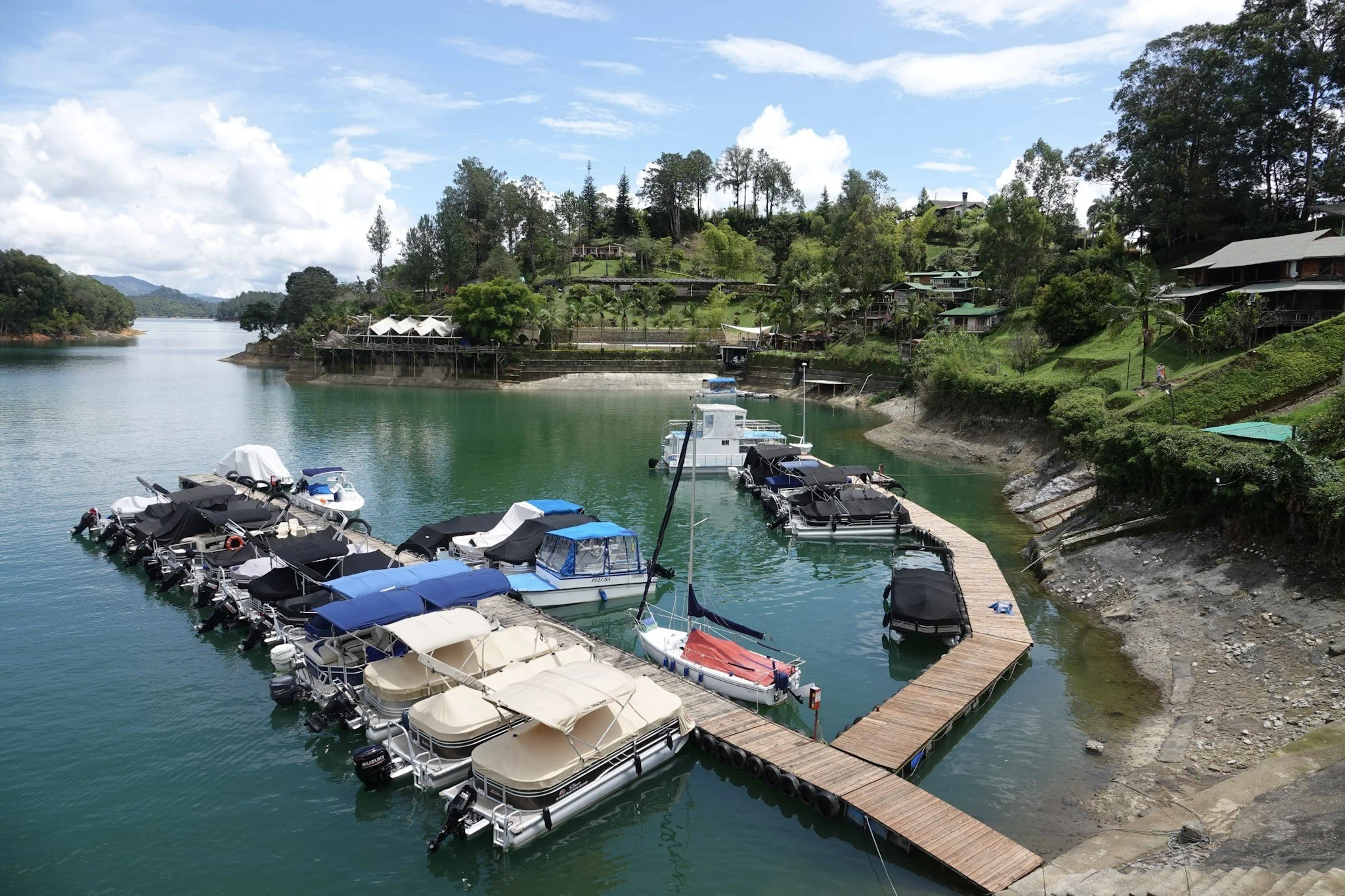
    We drove east from Medellin for over 2.5 hours to arrive at a marina on the El Penon de Guatape Reservoir. The reservoir was built for hydro-power, but it had its opponents as they flooded over a small town to build it. The marina and reservoir were at 6,200 feet elevation.

     We boarded a small boat for an hour ride out in the reservoir and ended up in the small town of Guatape. The weather was beautiful at the time, and we had a pleasant boat ride.

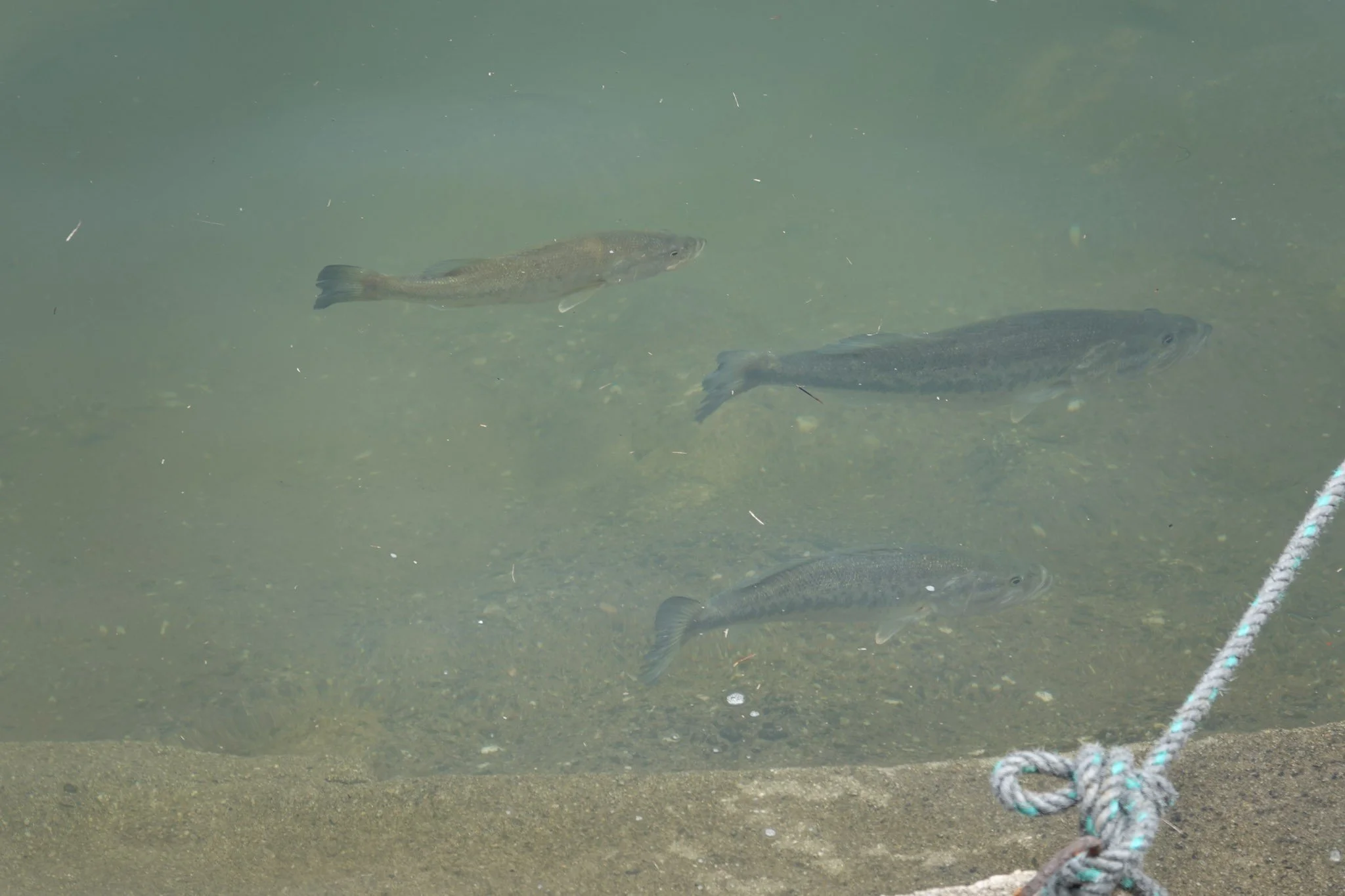
     For those fisherman and fisherwoman in my audience, yes, there were plenty of fish in this reservoir. I took the following photo from the same location as the above photo. I zoomed in for it. No, we didn't have a chance to fish.

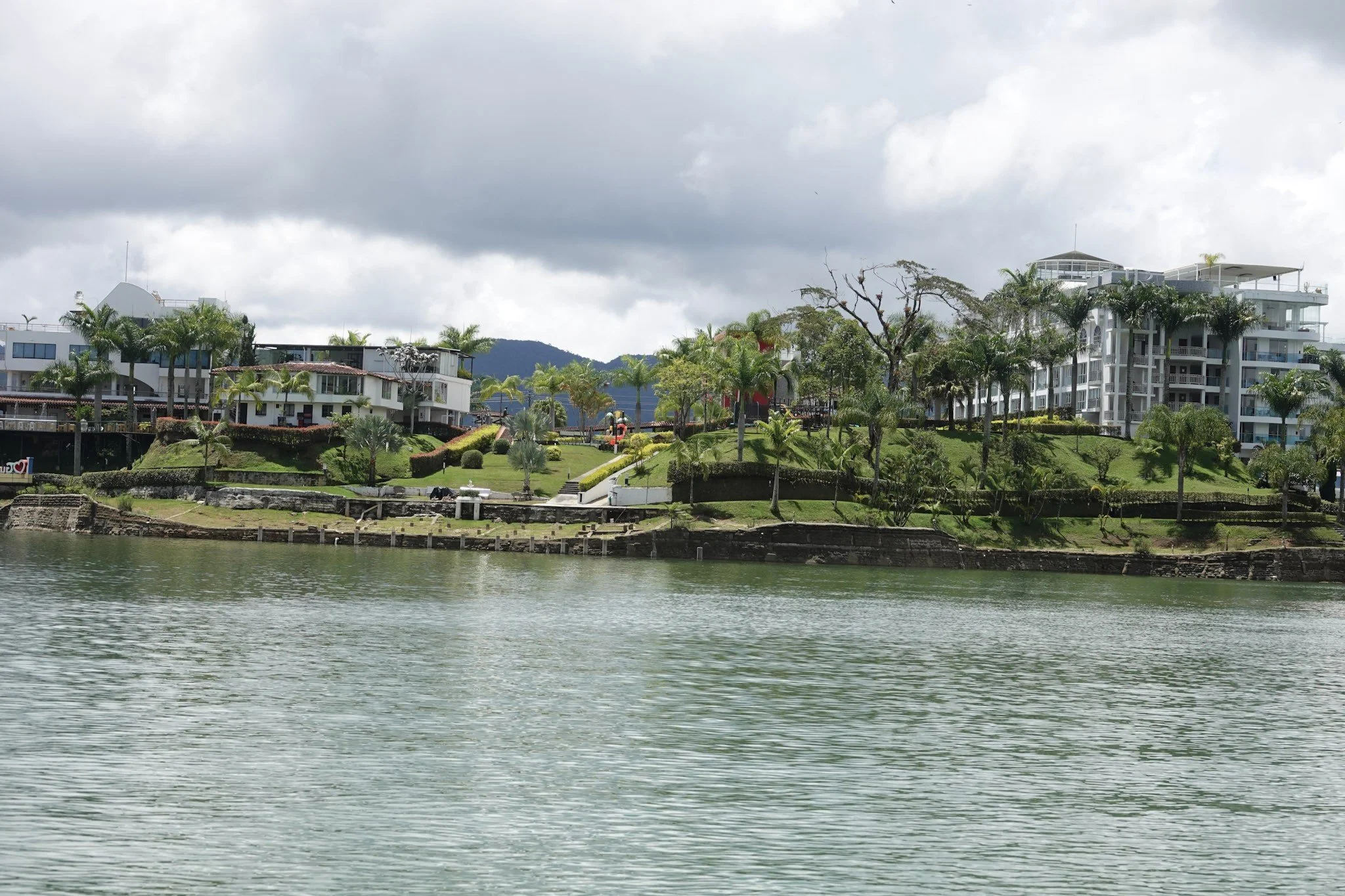
     We saw some very nice developments as we rode through the reservoir. It looks like a vacation place to me.
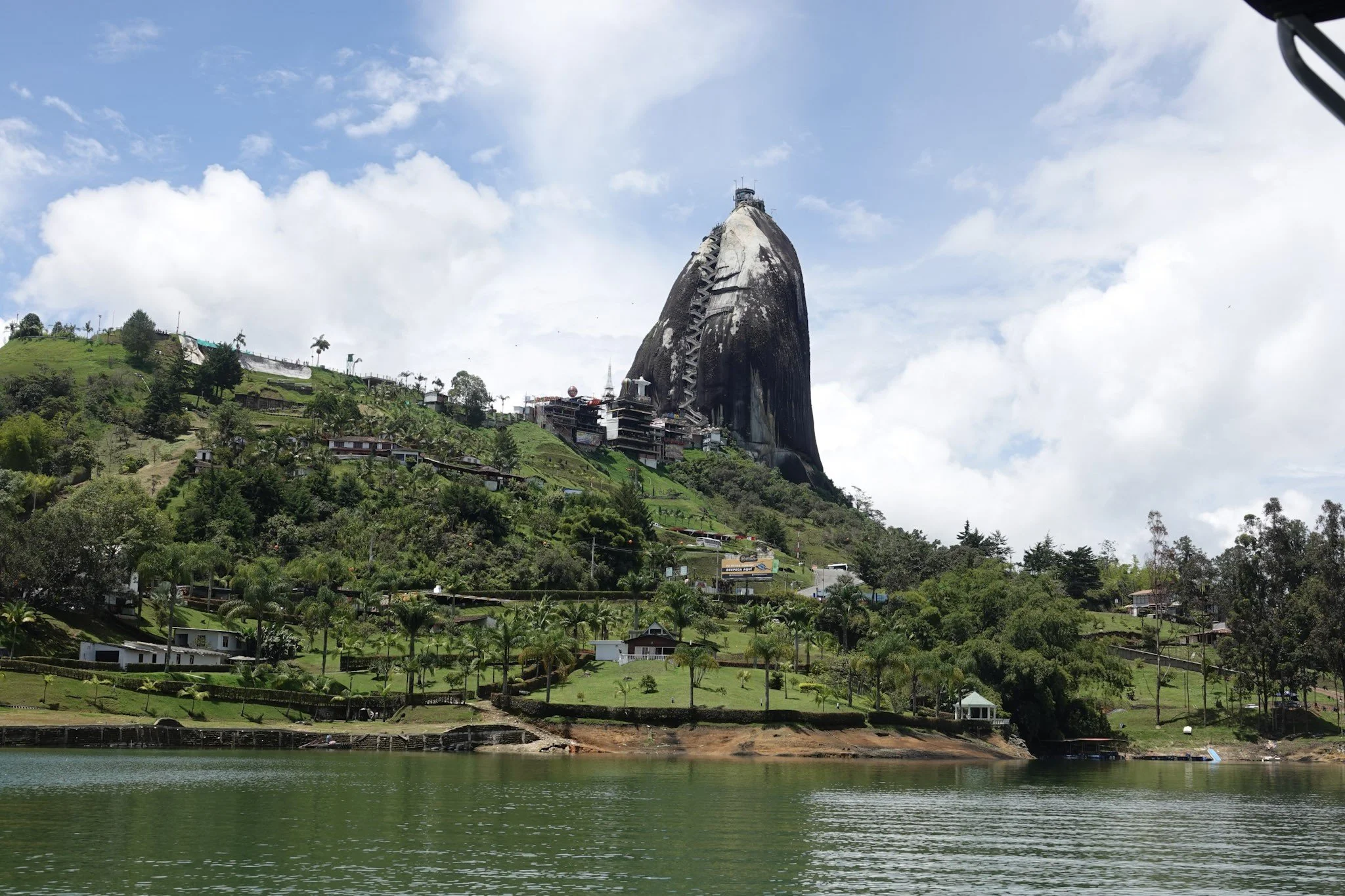
     The Rock of Guatape was hard to miss during our boat ride. It's also called The Stone of El Penol by the next-door town of El Penol, who also claim the rock as their own. It's a granite remnant with a lot of local history. It is privately owned, but it can be climbed. It has 740 steps and sticks up 656 feet above its base.

     Our guide asked if anyone wanted to climb it. Four of us volunteered and we were scheduled to climb it right after lunch. But before we finished lunch, the sky opened up and poured rain along with plenty of thunder and I suppose lightning. This was the only excursion that got canceled on our whole trip. Oh well.

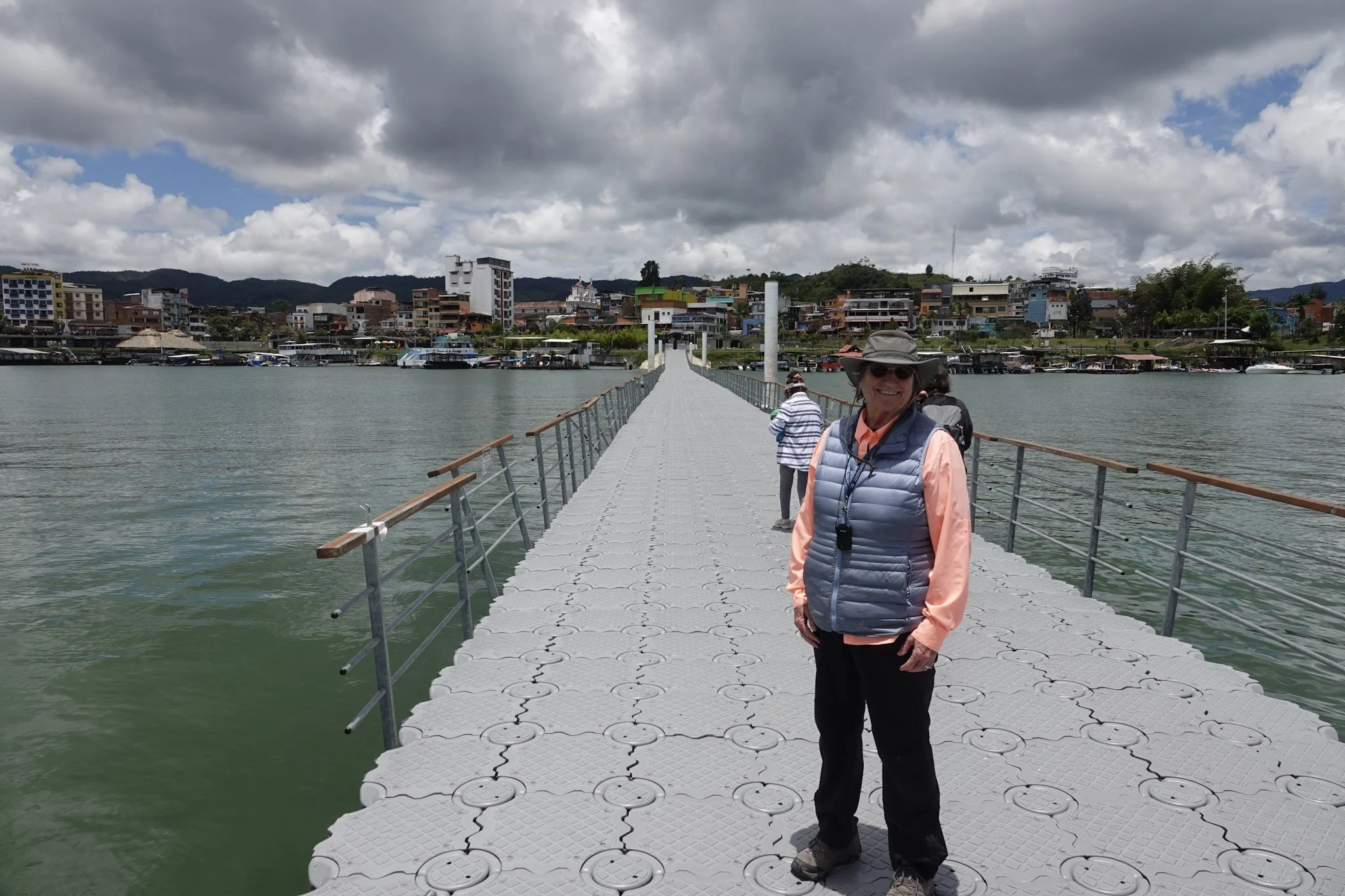
     Our boat landed us in Guatape. It's a small town and we had a nice visit there. But our boat landed a long way from main street on a floating dock.


Guatape

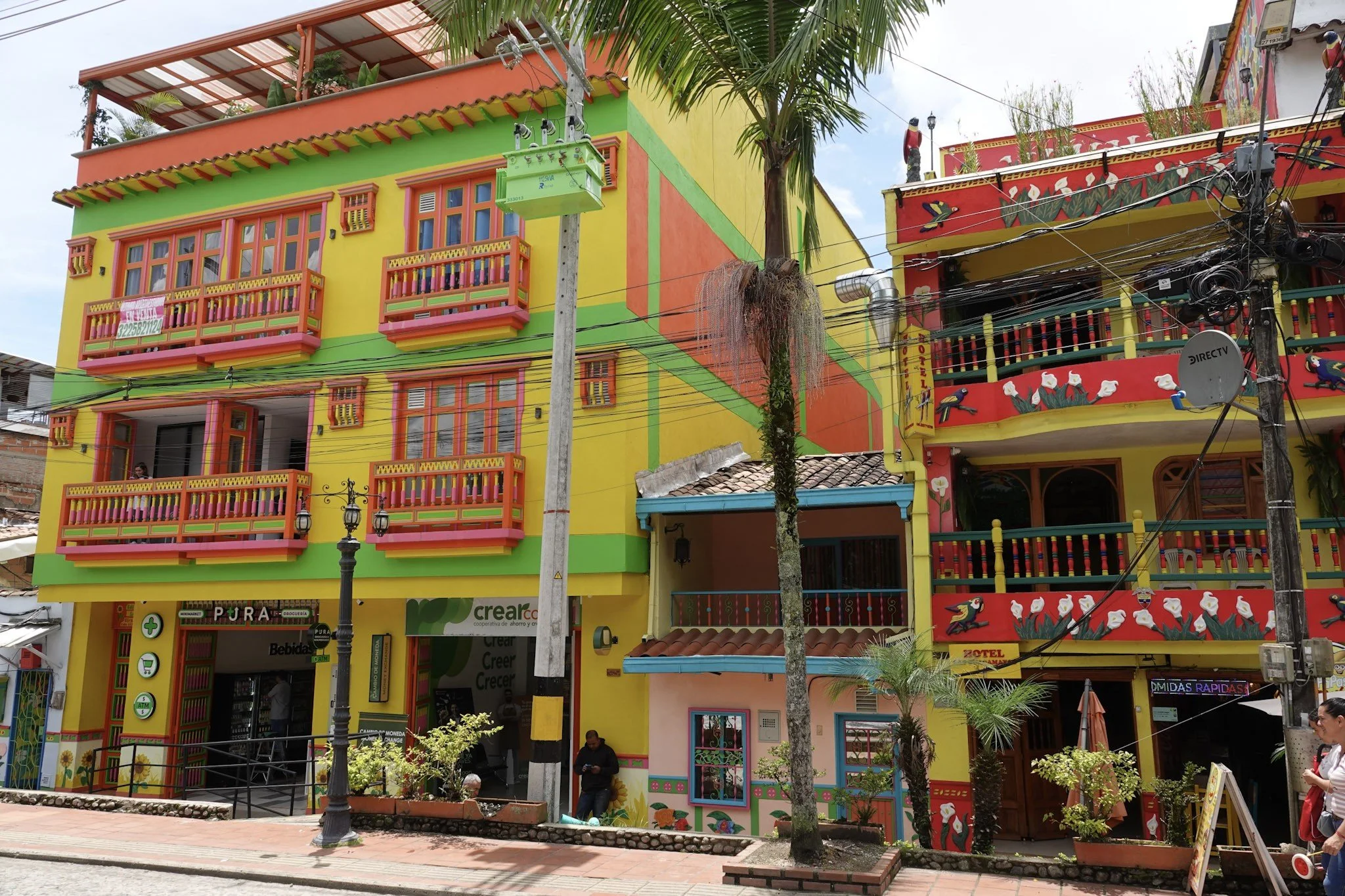
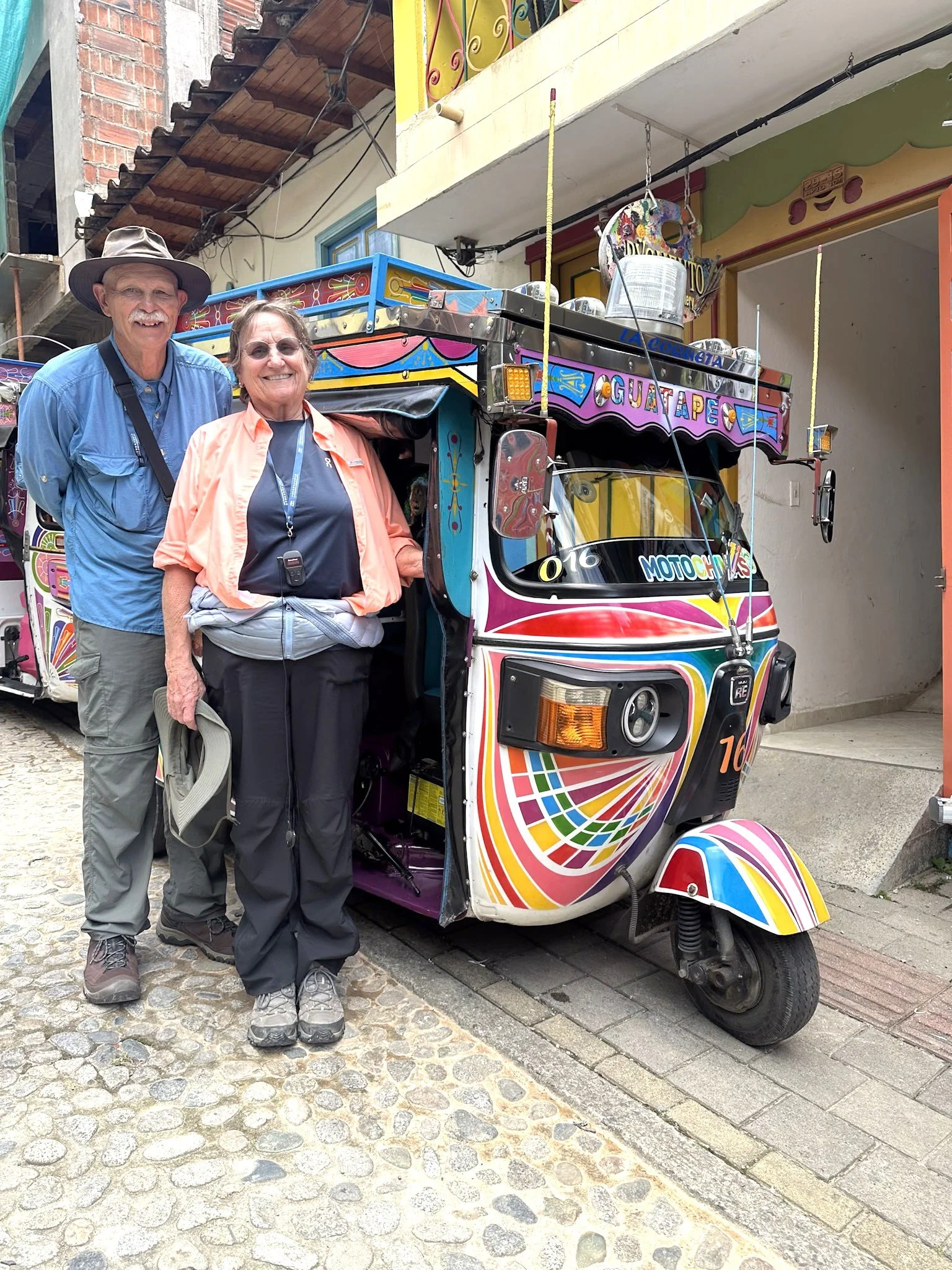
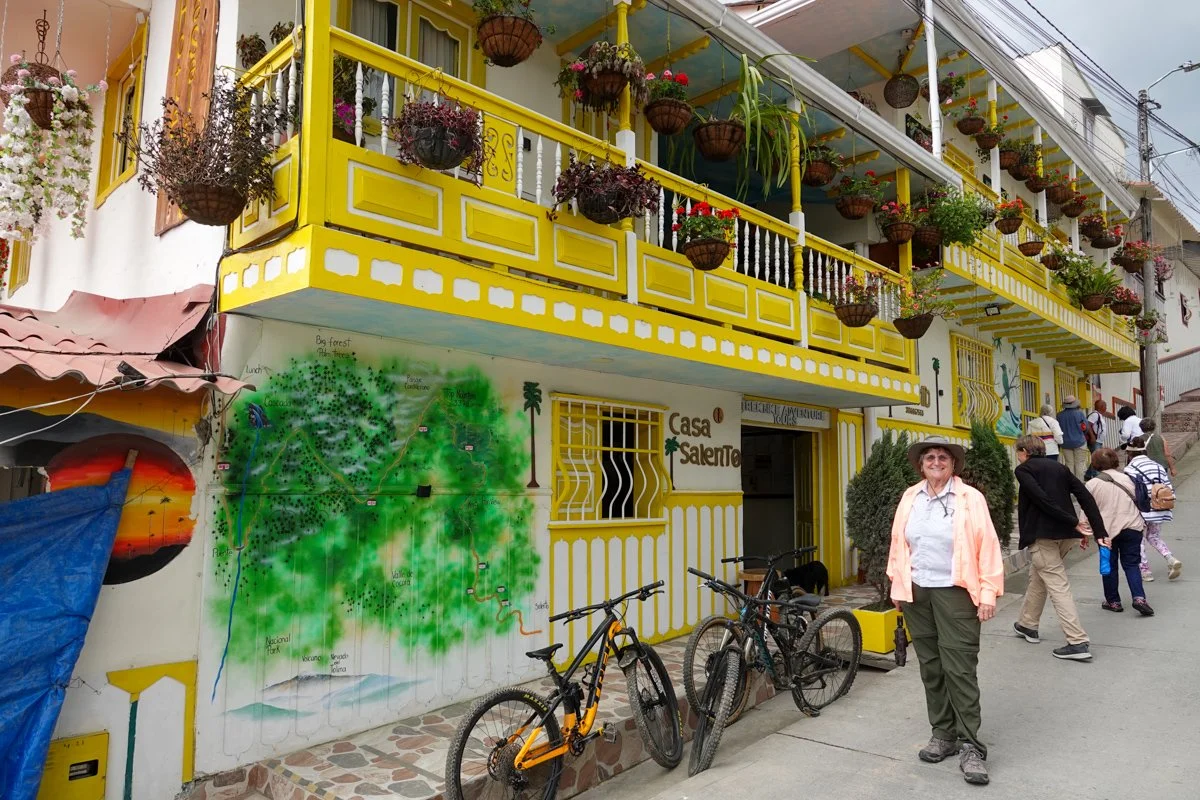
     Guatape is a small but extremely colorful town. It had lots of activity and plenty to see and do. We walked the town with many stops along the way. We also took a Tuk-Tuk ride to see an extended portion of the town.

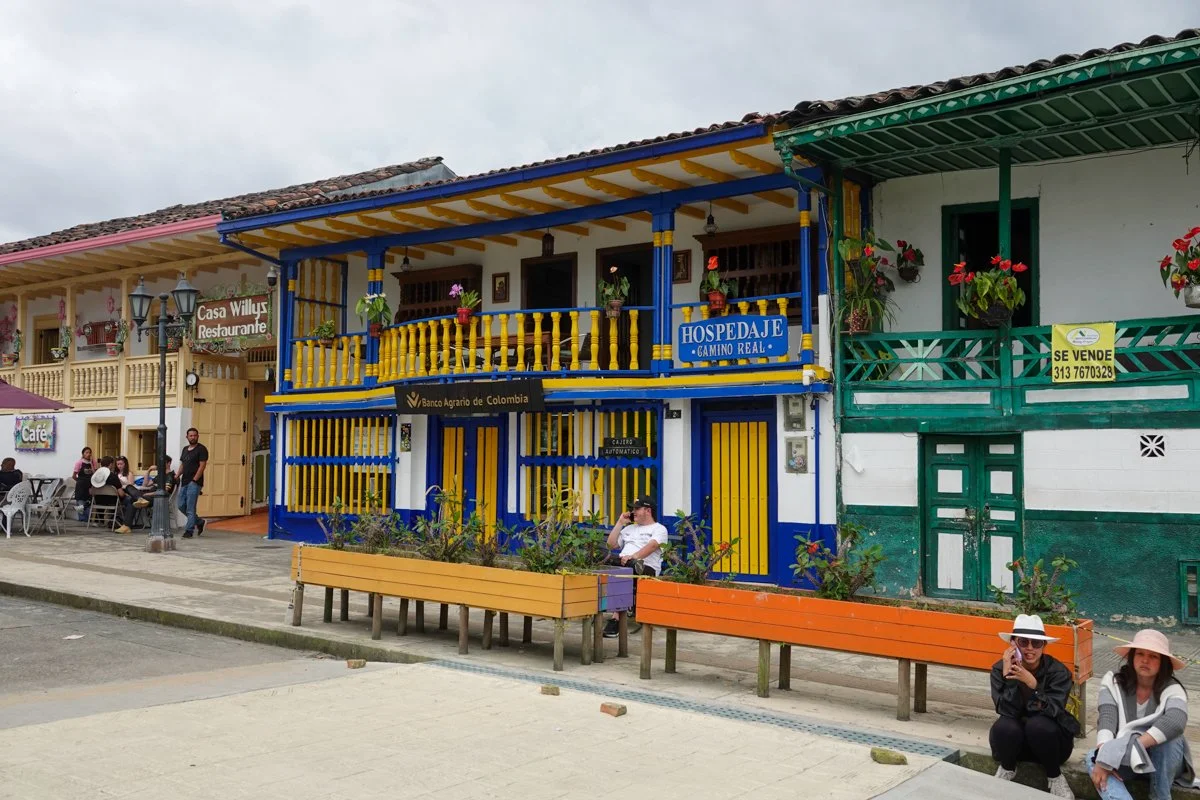
     Our local guide told us that Guatape used to have miserable weather. She said it was always overcast and wet and never sunny. For that reason, the town's people painted their buildings and houses very colorfully, to keep up their spirits. But more recently, Guatape has become a very sunny and fair-weather town. But it's still colorful.

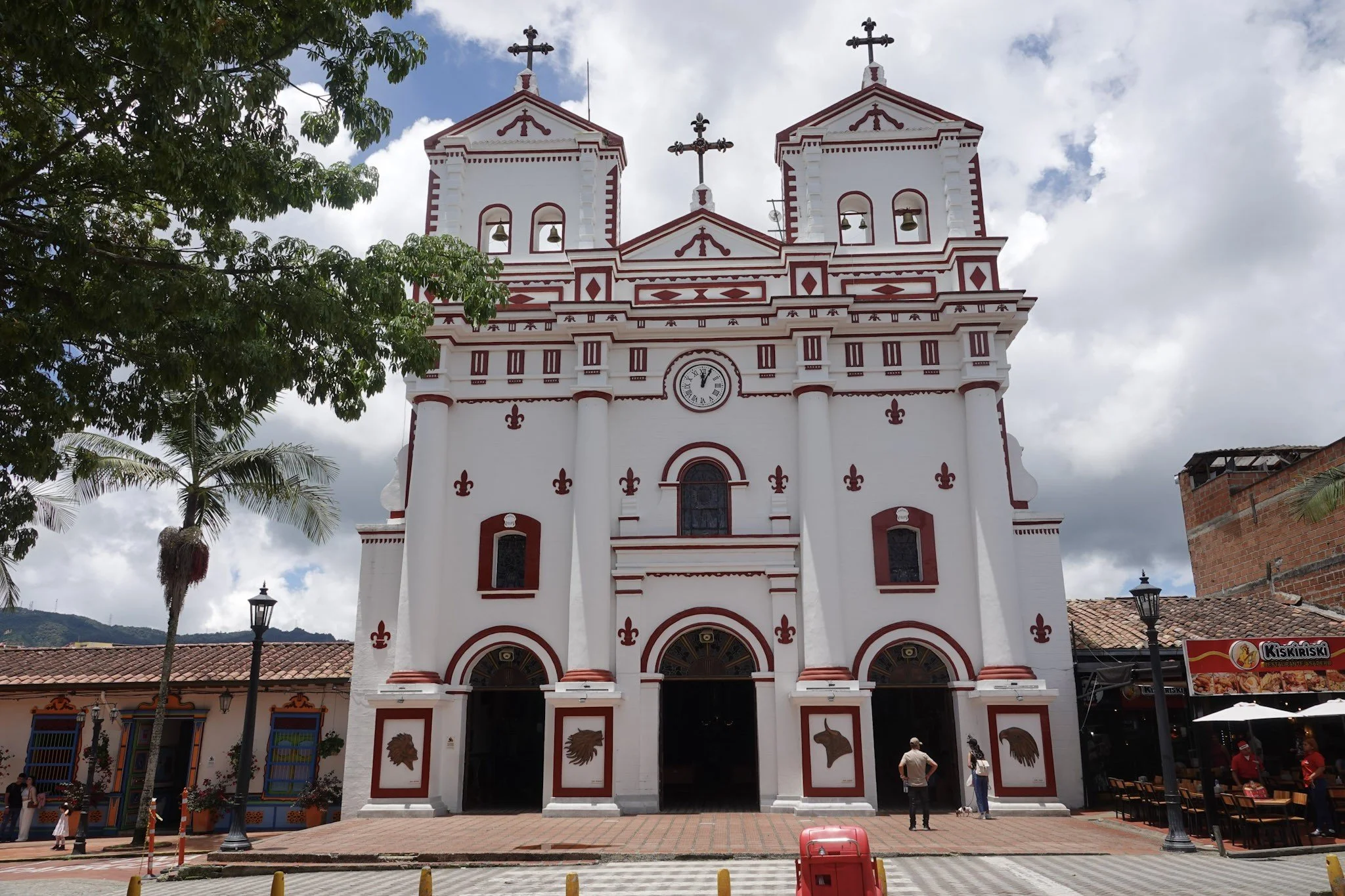
     The Guatape Church was not too colorful, which is probably why it stood out so much. It's located just off the main square and is on the simple and elegant style. 

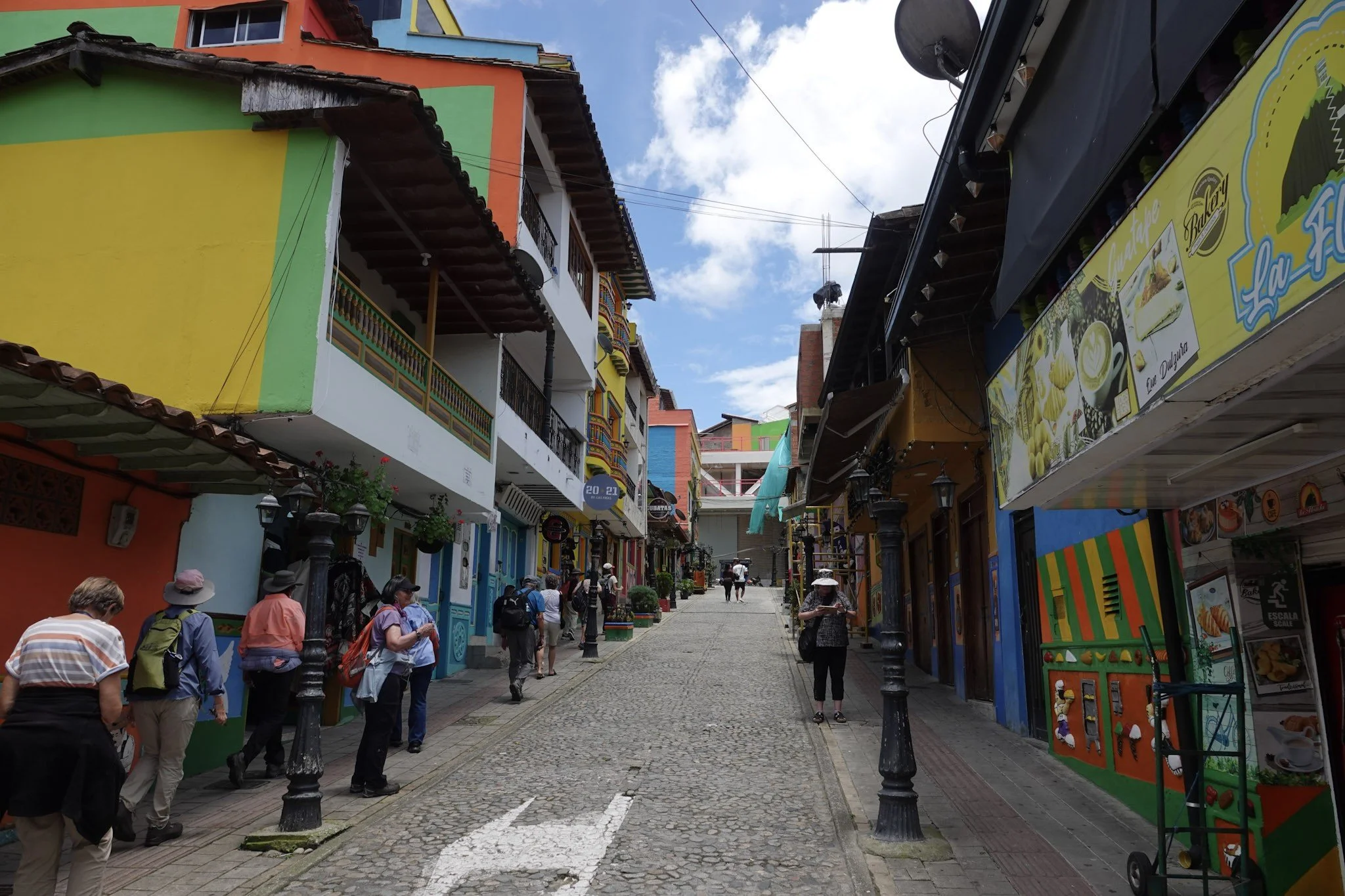
     When I say we walked around town, that involved a lot of up and down walking and not so much level walking, as you can see in the next photo.

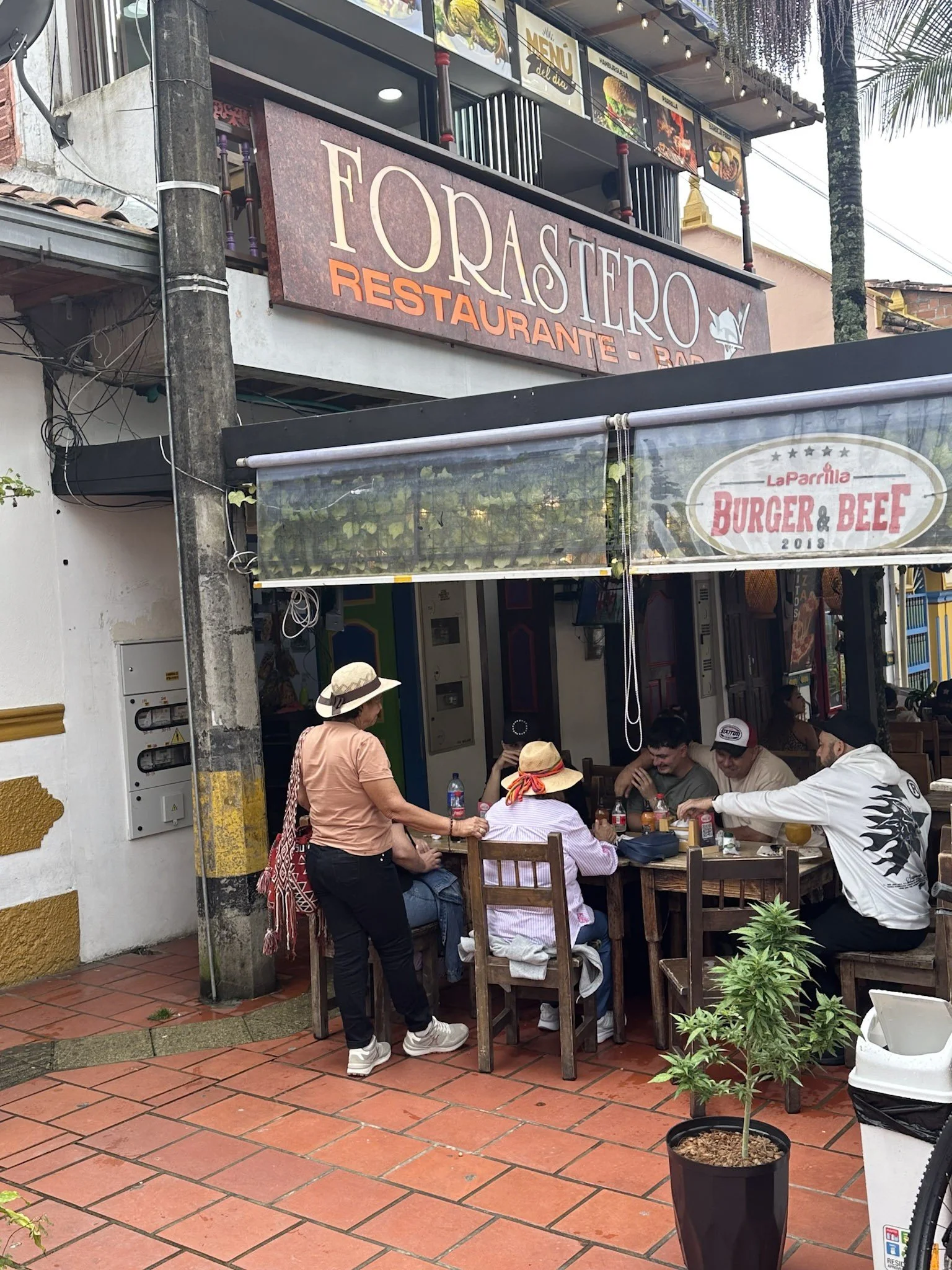
     To give you a flavor of Guatape and the Medellin area, we had lunch here at the Laparilla Burgers and Beef restaurant (the ground floor place, not the second story one). We didn't have burgers but that's not what I want to point out. If you look in the lower right corner of the photo, you can notice a plant growing in a pot. It is, in fact, pot growing in a pot. It's a marijuana plant, in full view and with no notice by anyone, perhaps except me. Perhaps it has some culinary value.

     Before lunch was finished, the thunder roared and the rain poured, so no rock climbing today. We used the next hour to shop in town on our own. It might have been raining but we still enjoyed our time walking around Guatape in the rain.

Comuna 13 District

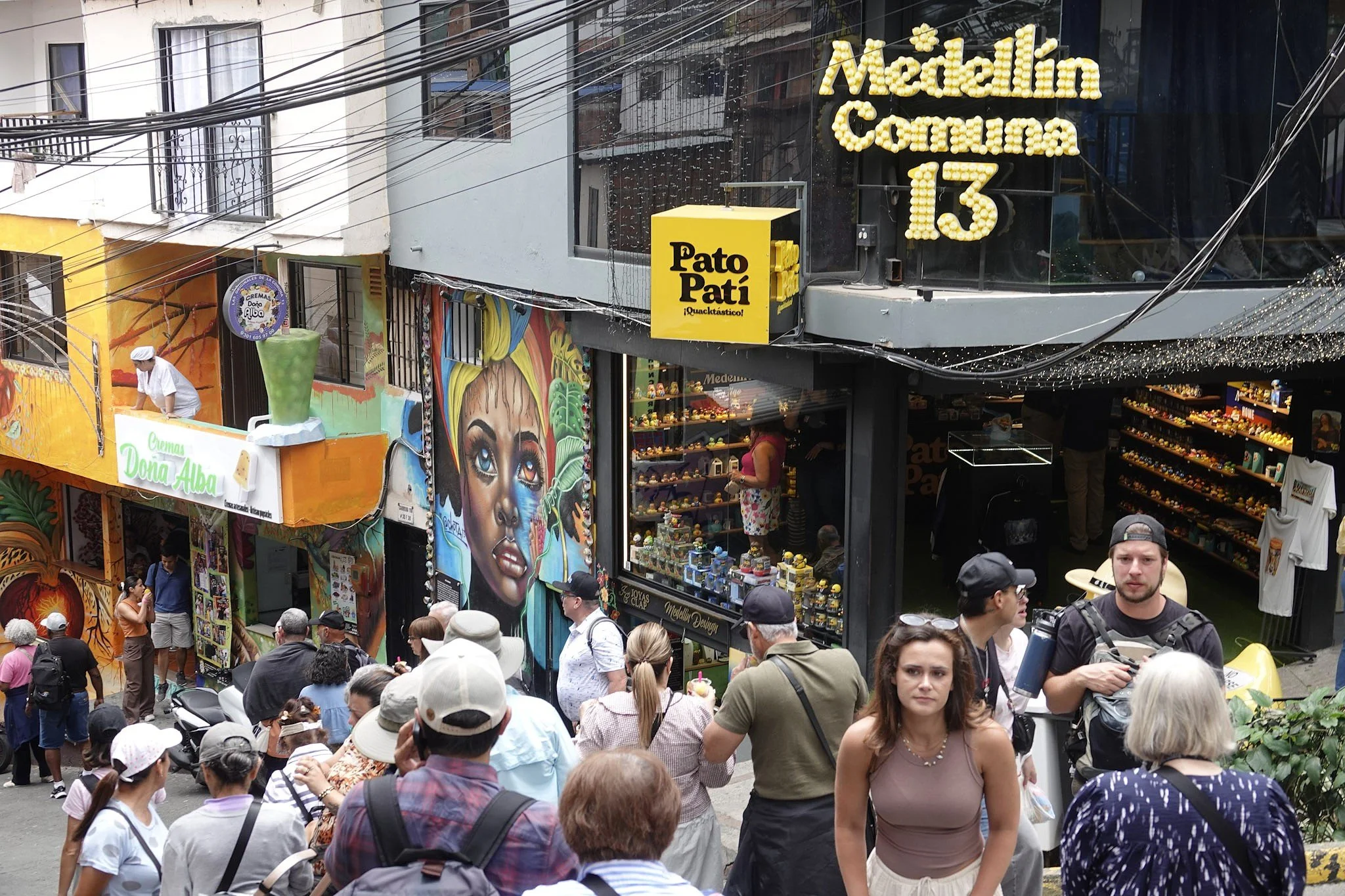
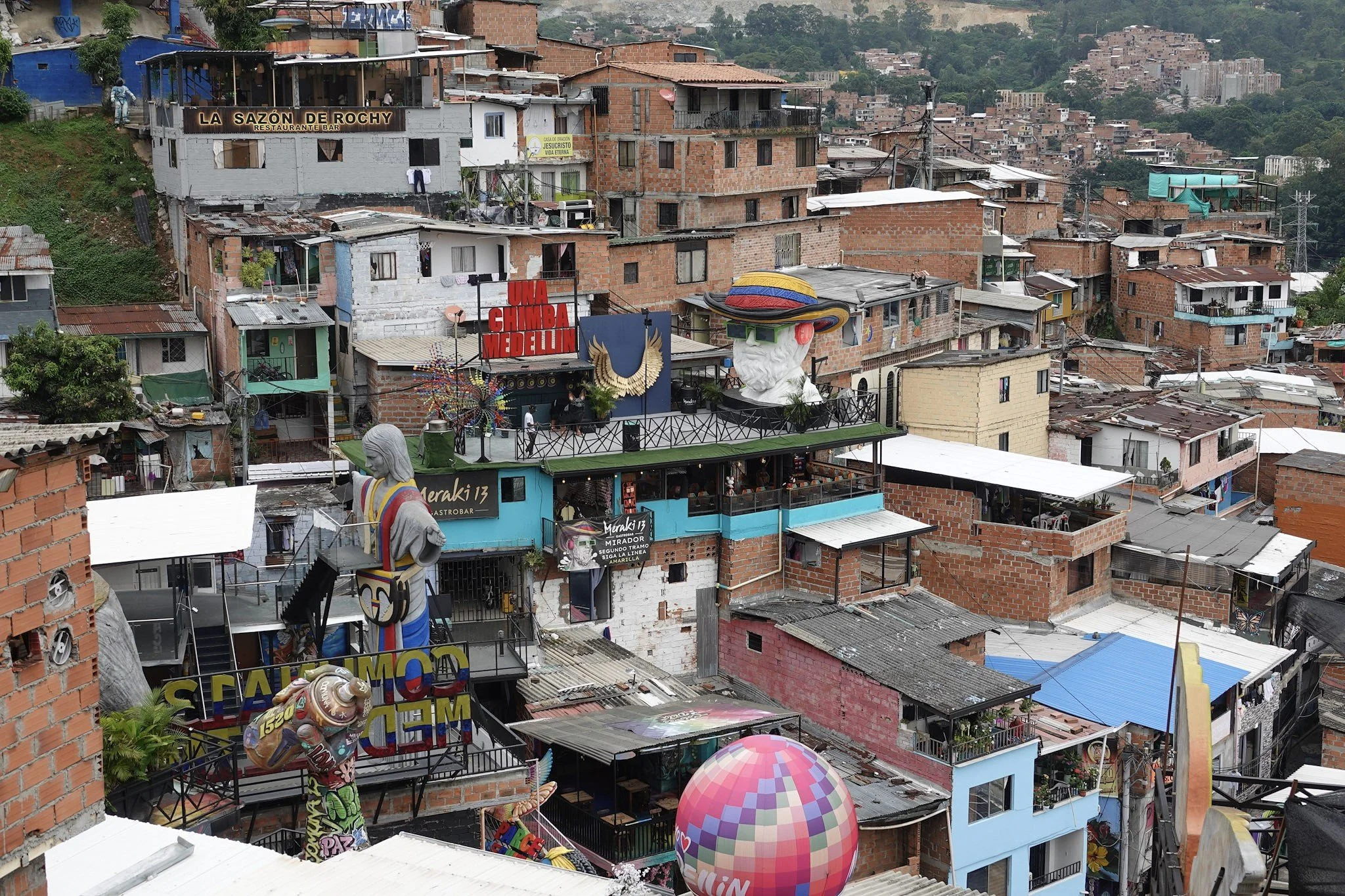
     We are back in Medellin and visiting the Comuna 13 District of the city. It is one of 16 districts in Medellin. It's located in the western hills and has had an interesting recent history. We visited here because this was one of the most dangerous neighborhoods in Colombia, particularly in the 1980's and 1990's but the government didn't really get it going again until 2002.

     The neighborhood was started by displaced farmers trying to escape violence in the 1940's but then had waves of migration, poverty, and unrest. Because of its hillside location on the edge of the city, it was a hotspot for paramilitaries, guerrilla groups, drug trafficking, and armed conflicts.

     The government did Operation Orion in 2002 which was a military offensive with helicopters and tanks to try and clear up the area. It had some bad results for some locals, but in the end, it appears to have started this area back on the upswing.

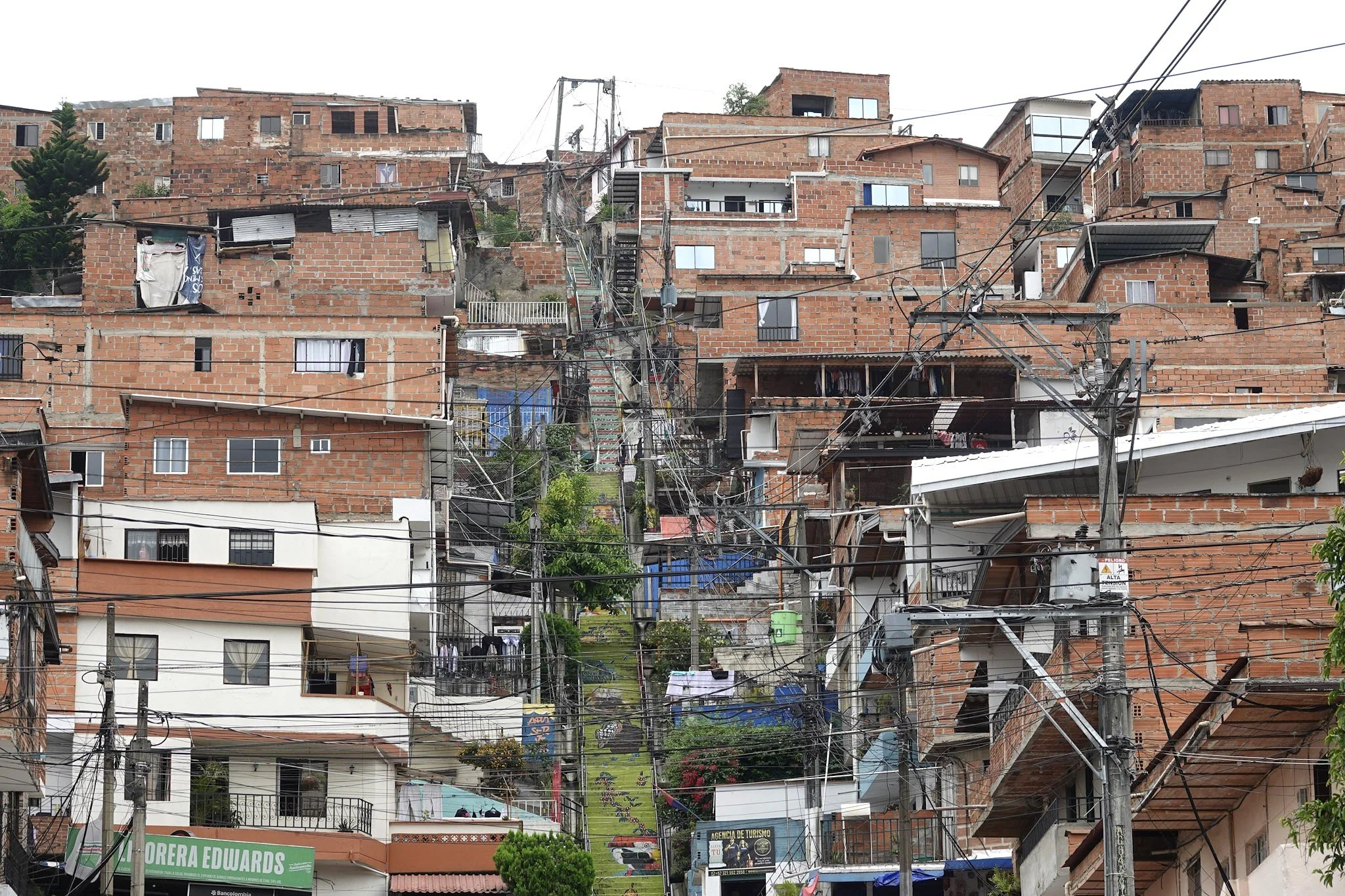
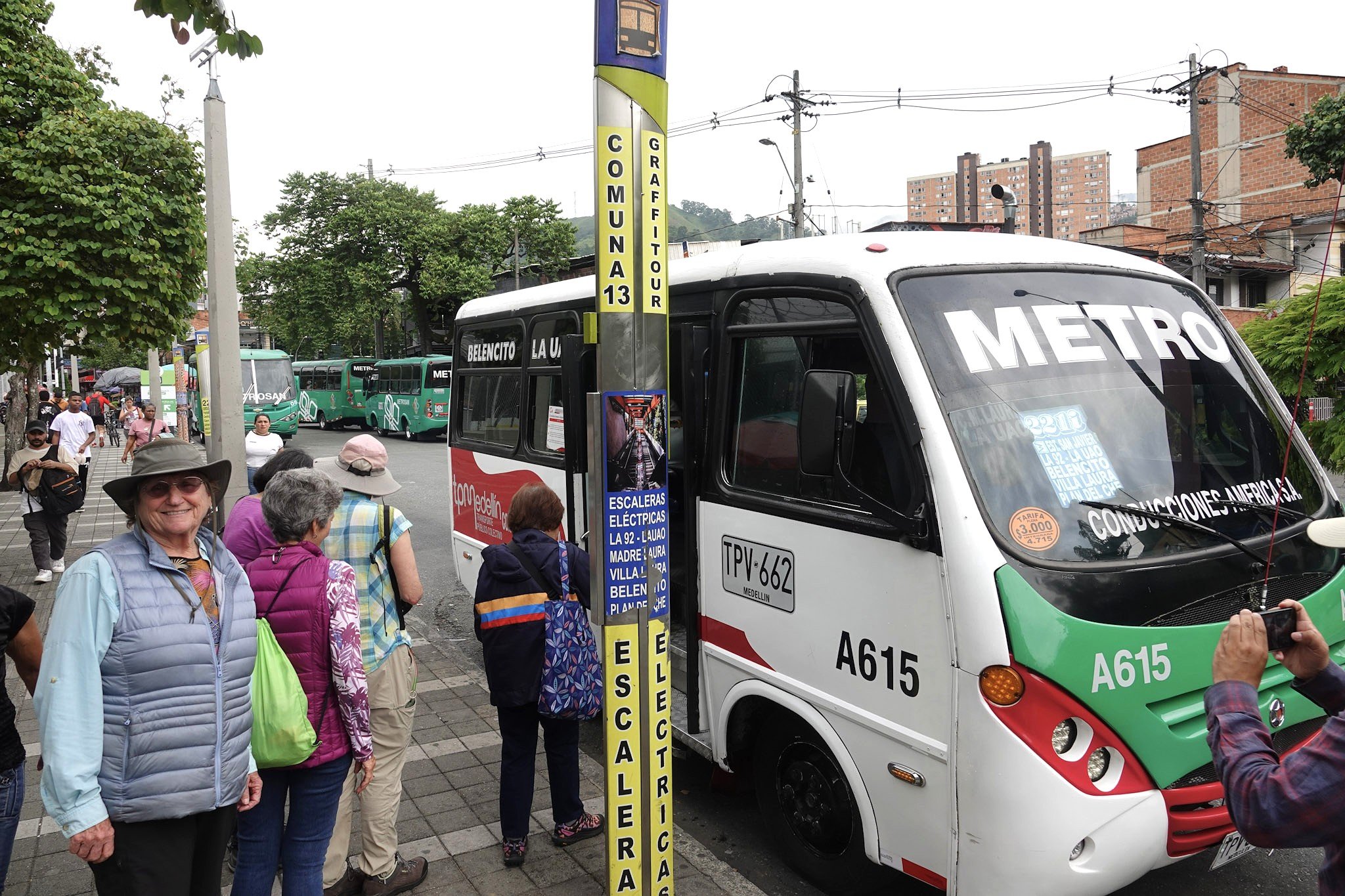
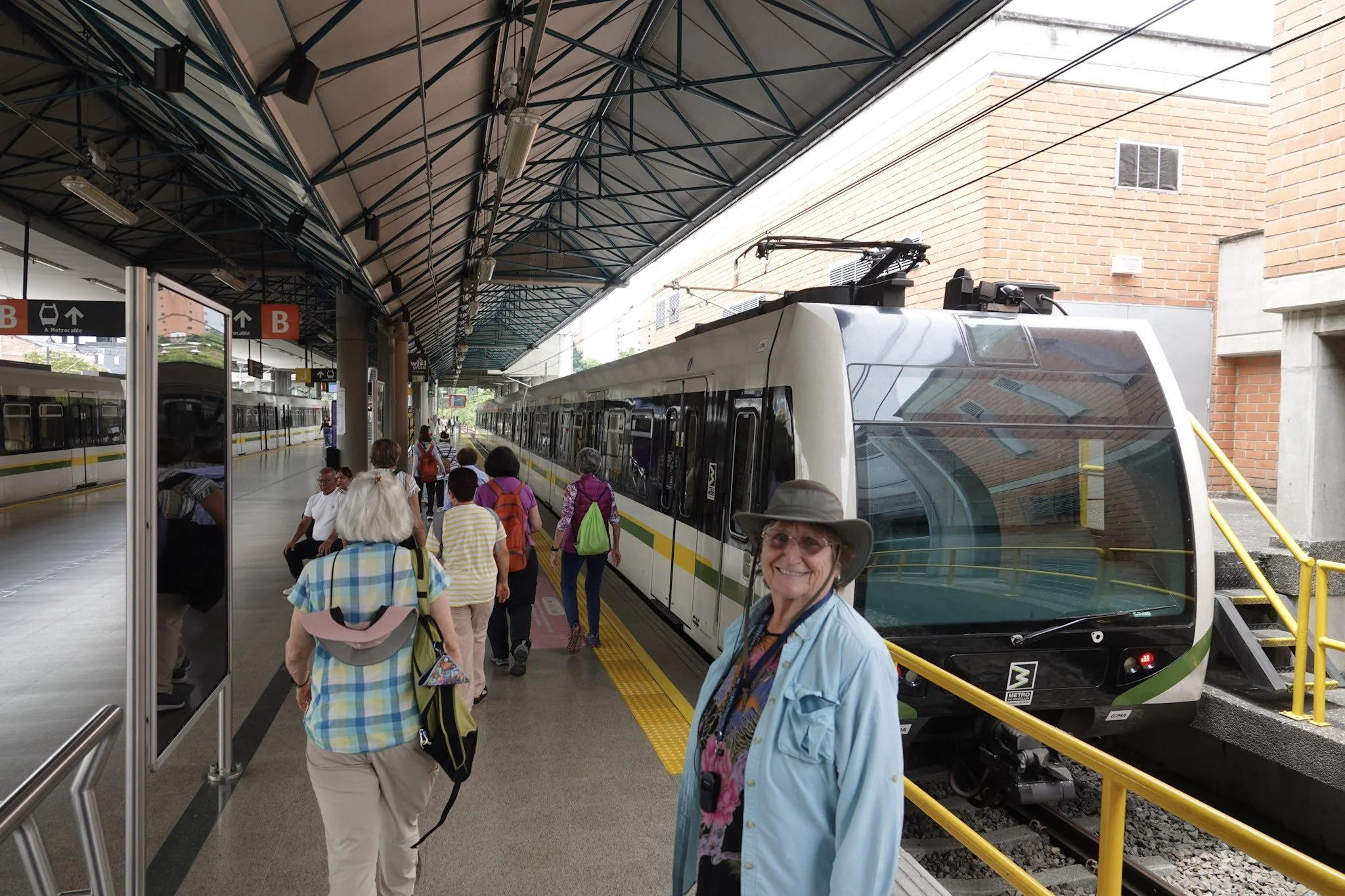
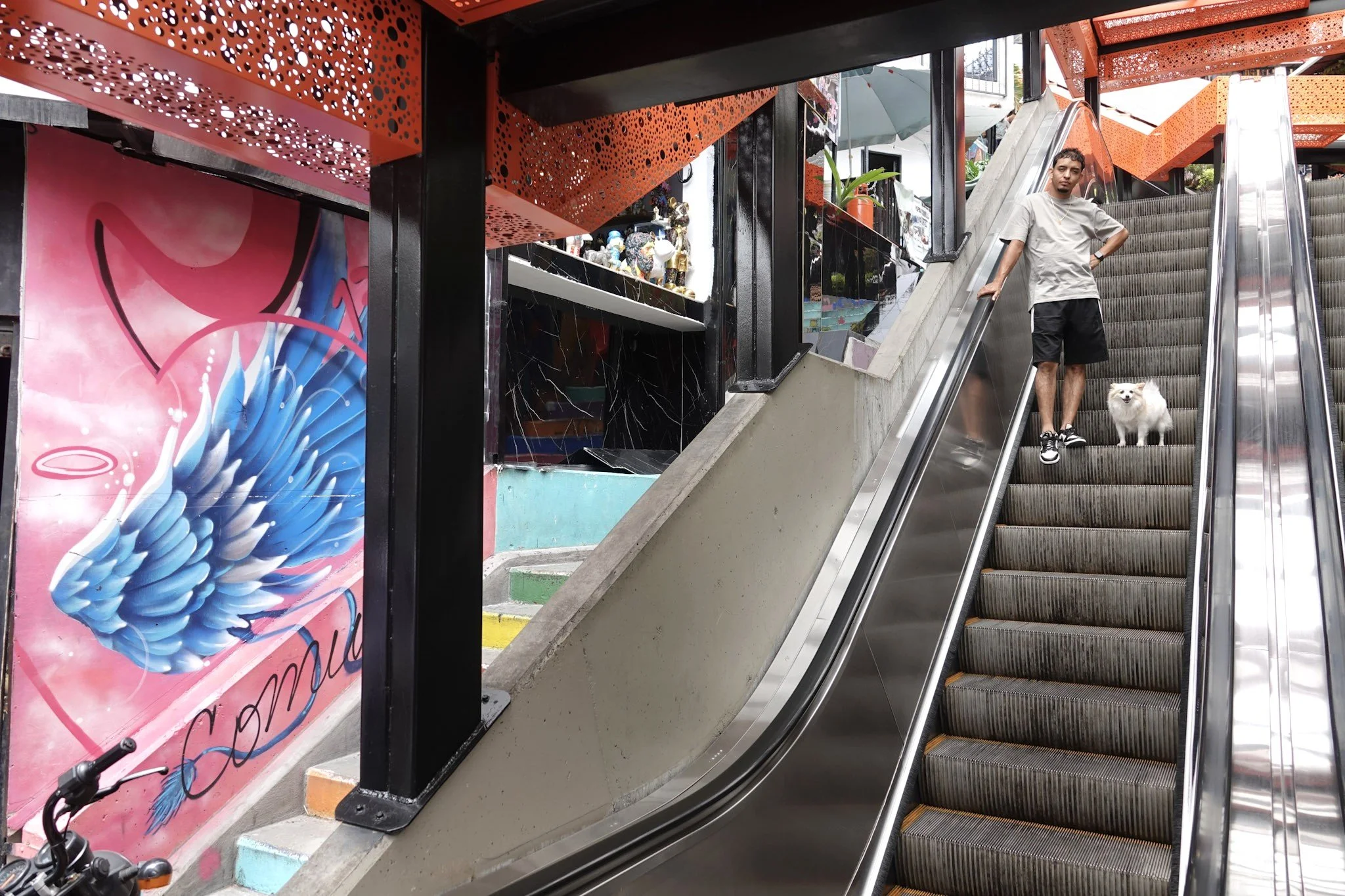
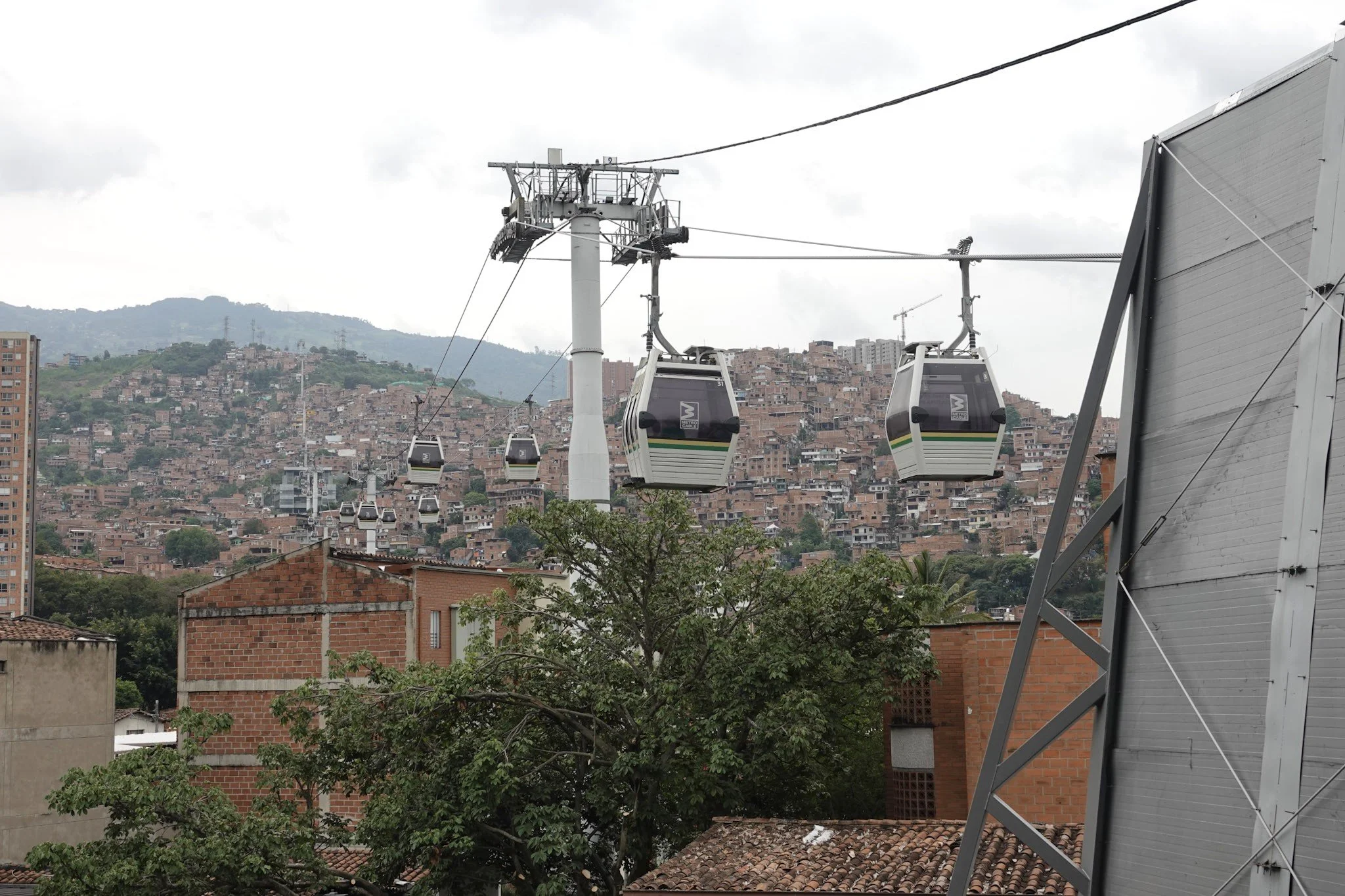
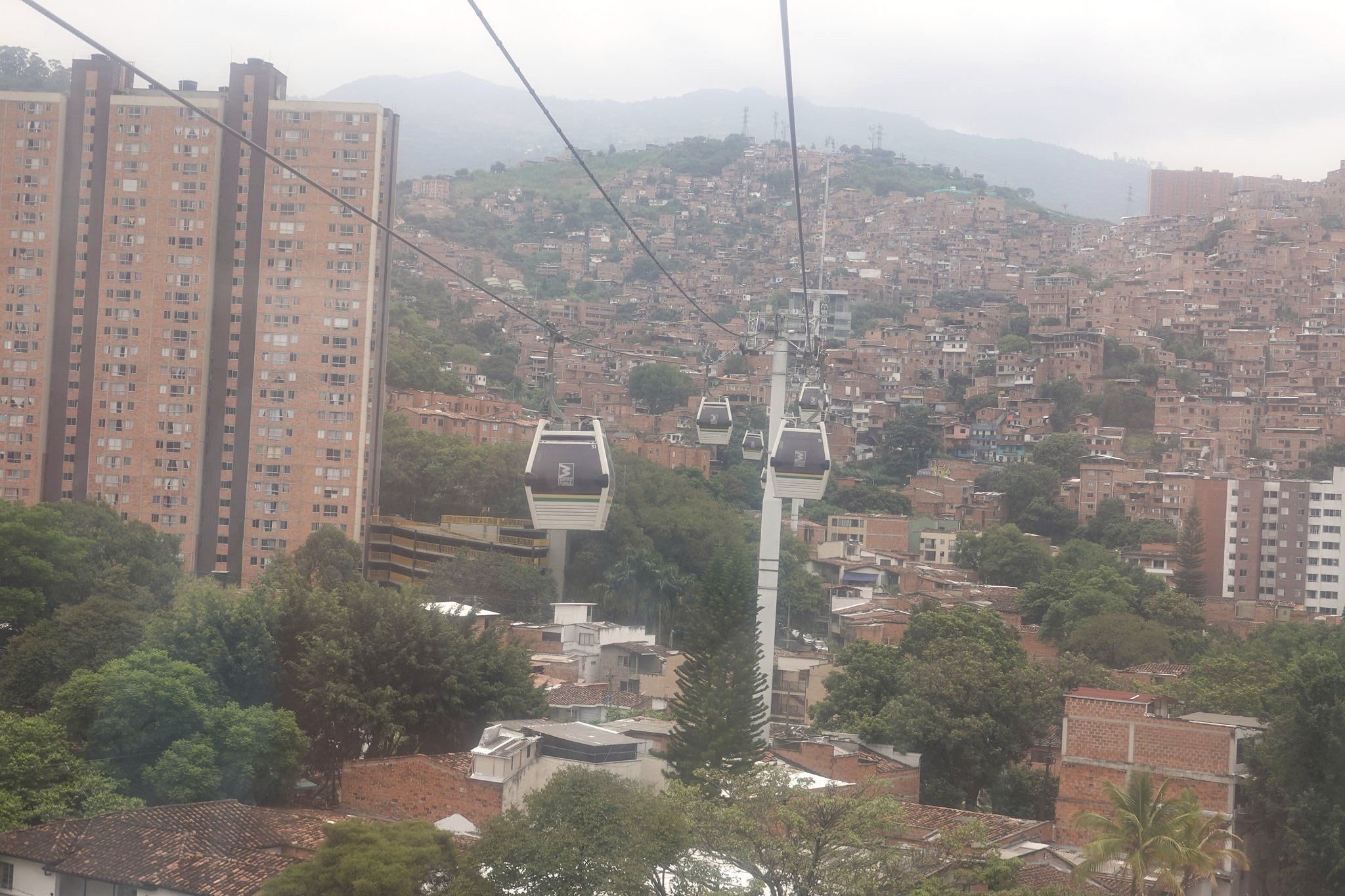
     The neighborhood is on steep slopes and has densely packed brick and cement housing. Part of the government's efforts to help the area included improving the mobility of the area so that people could get into town easier for jobs. This involved installing escalators, a Metro system with buses and trains, and also a cable car system. We rode all four of these. They also established libraries, community centers, and other cultural and social supports.

     Today, Comuna 13 is a vibrant area with lots of street art, culture, music, dance, murals, and plenty of food and drinks, including some ice juice drinks which we tried. I would add that this neighborhood seems to be on the young side, age-wise, and it's a good thing, because the streets and stairs are very steep here.

     The next photo is not a great rendering of the neighborhood, but it will give you a good idea of just how steep the streets are and how densely packed the houses are, and no escalators on this street.

     This is just another look at the neighborhood to see the layout. It's hard to see any streets. You can also see that it's on the edge of the mountains.

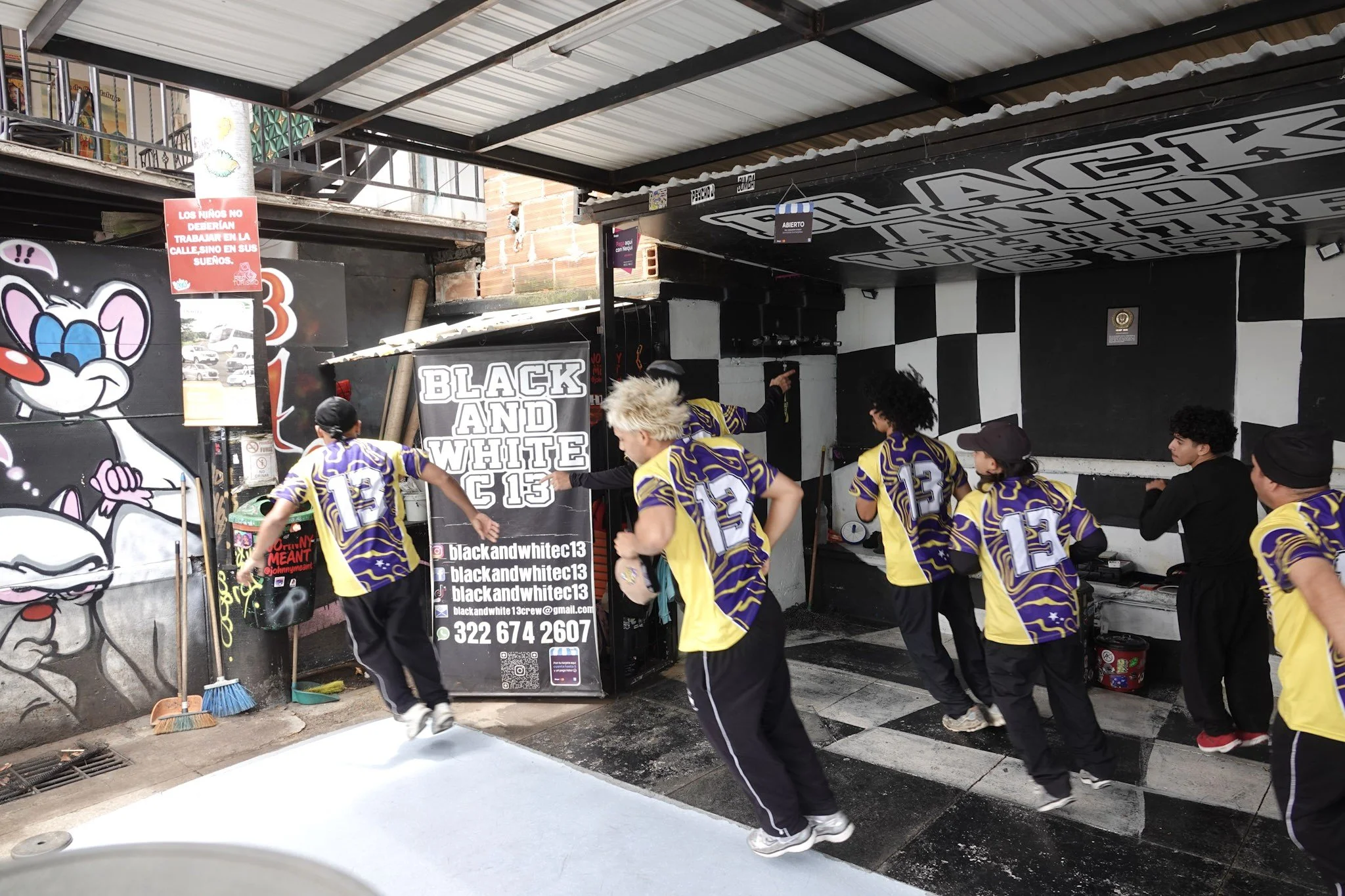
     What do people do here for a living? We stopped and paid a hip-hop group for some entertainment. This is what these guys do for a living. Their studio is right on a small street. I wished that I had these guys energy.

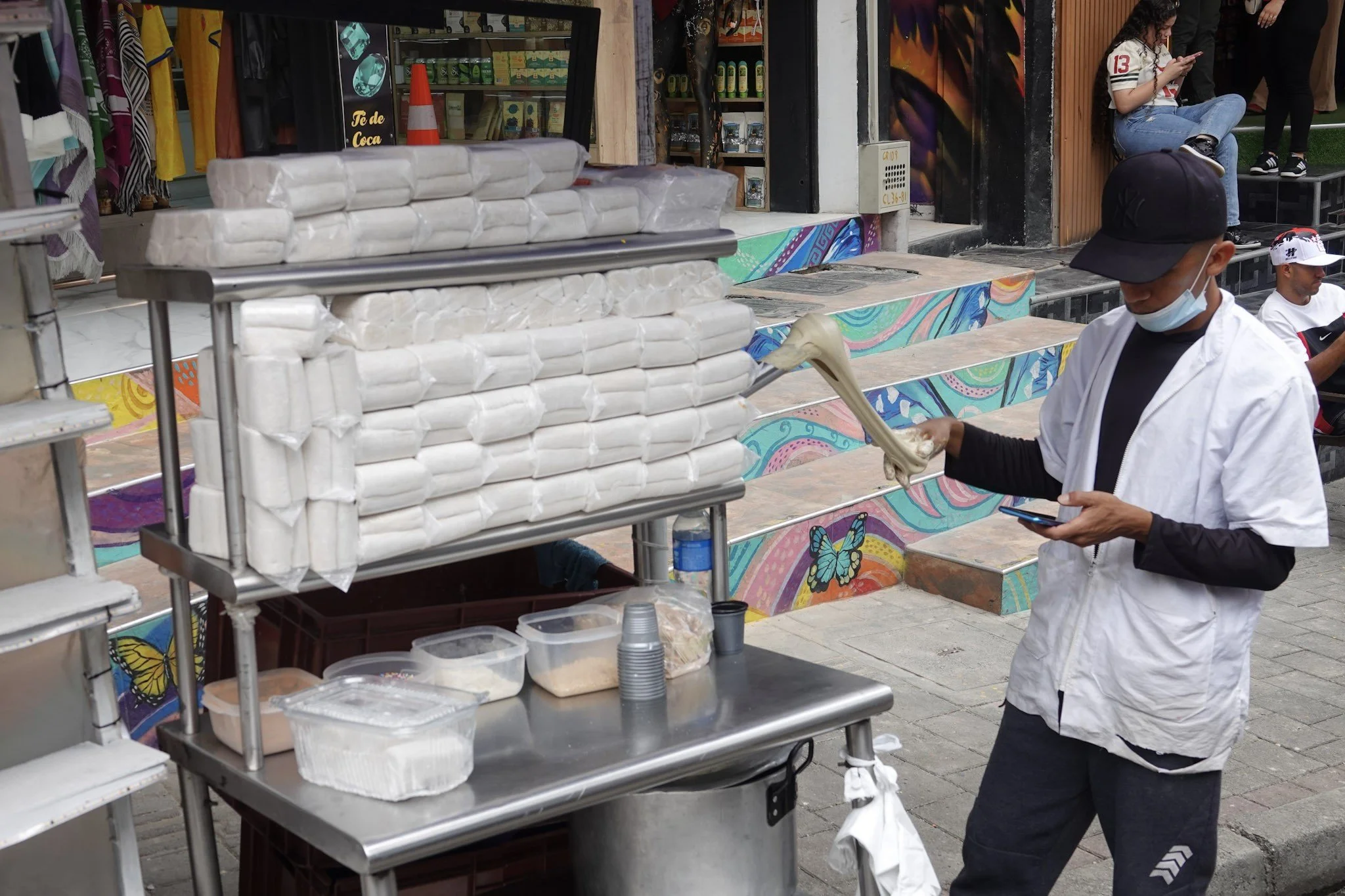
     I stopped dead at the next guy. I turned to our guide, Ernesto, and said, "I can't believe that you've got a guy selling cocaine, right here on the street!" He laughed and said, "Well, since you like it, I'll buy you some," and he did. The joke was on me. The guy was selling giant homemade marshmallows. The better news was that they were really delicious!

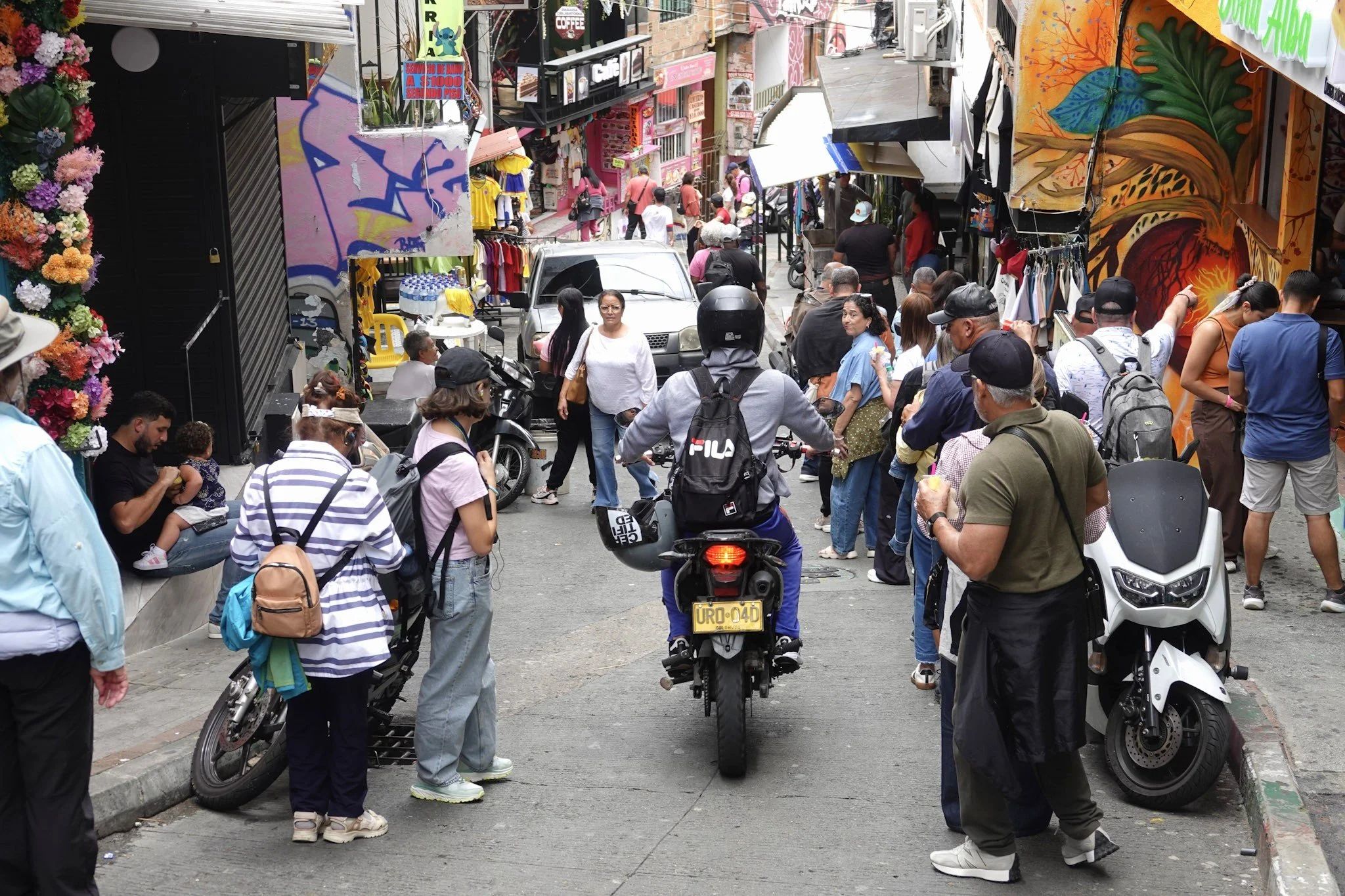
     Both our main guide and our local guide stressed to us how safe this neighborhood is today. I'm sure that it is, compared to its recent past. But I had to challenge them on one count. On those very narrow and winding and crowded streets, the motorcyclists were a genuine safety hazard! The cars were no picnic to dodge either.

Comuna 13 Transportation

     I mentioned that the government greatly improved transportation in Comuna 13, to help these people become more connected to the rest of the town. Our guide suggested that it has made a tremendous difference. We rode all the major transportation additions, and one more.

     Our guide said that Comuna 13 had the longest escalator system in the world. It was not one single escalator but a long series of them. There were also stairs right next to the escalators.

     The cable car system goes up and down over two hills. We rode it from our start until the end and then came back again. We got rewarded with some great views.

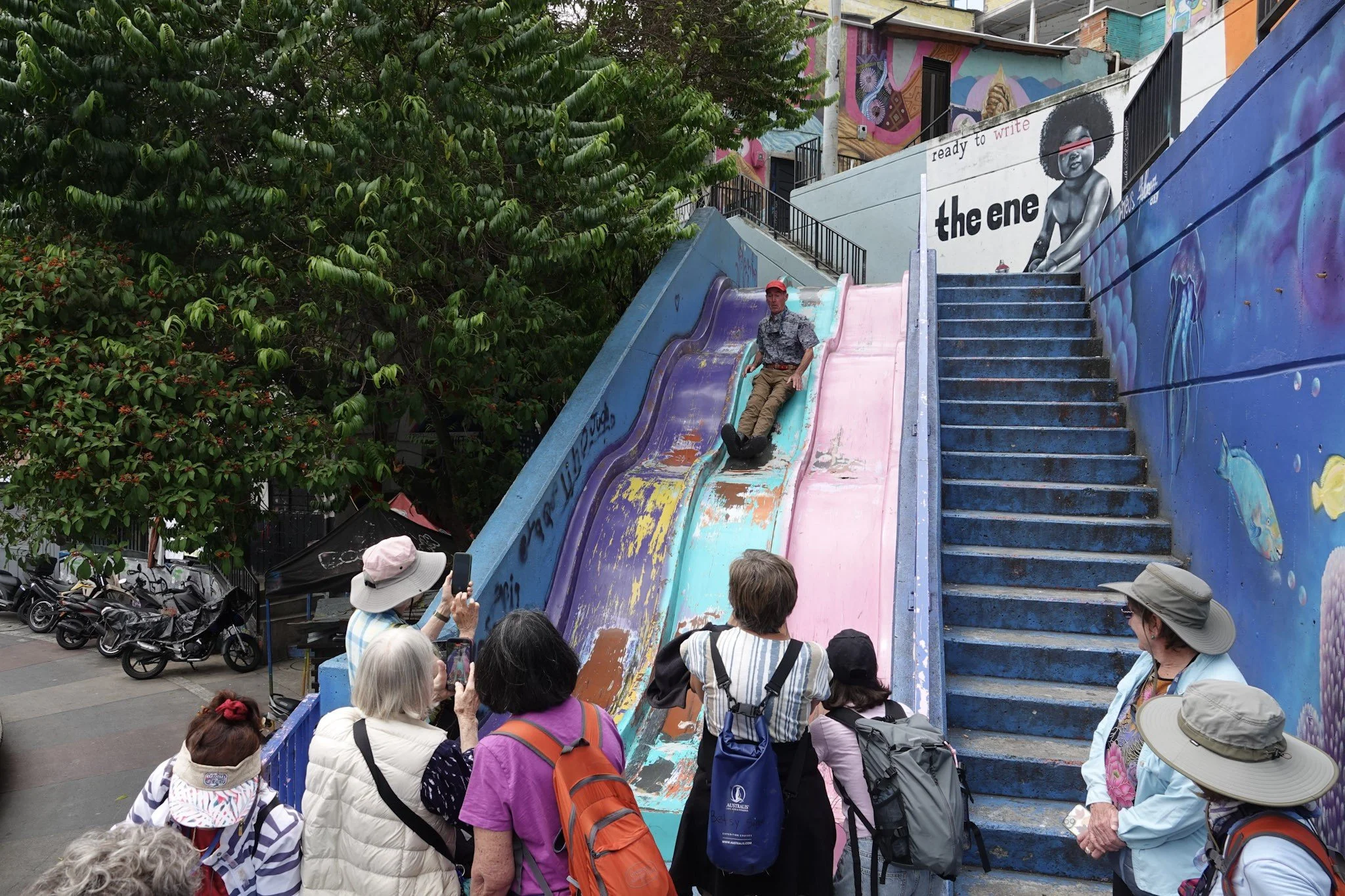
     At one point, our local guide stopped us to give us some information. At that point, one of our fellow travelers, Peter, who was one of the most ambitious and delightful people that we've ever traveled with, along with his wife Betsy, tried another form of transportation. Pete was on his way down the slide before our local guide could tell him that it was not a means of transportation, but rather for the kids entertainment.

Calarca

     We have now moved from Medellin to Calarca. We are not in town, but staying on an eco-farm at the Combia Inspiracion. It's on the end of a very bumpy dirt road. This is the coffee triangle area of Colombia. The three main cities within the Triangle are Manizales, Pereira, and Armenia and they form the vertices of the triangle. Calarca is only about 2.5 miles from Armenia.

     The area is very picturesque with lush green hills and loads of coffee plantations. Our local guide said that Colombia has 5 coffee regions and 565,000 coffee plantations. Most plantations are just family farms and the average size is about 3.7 acres.

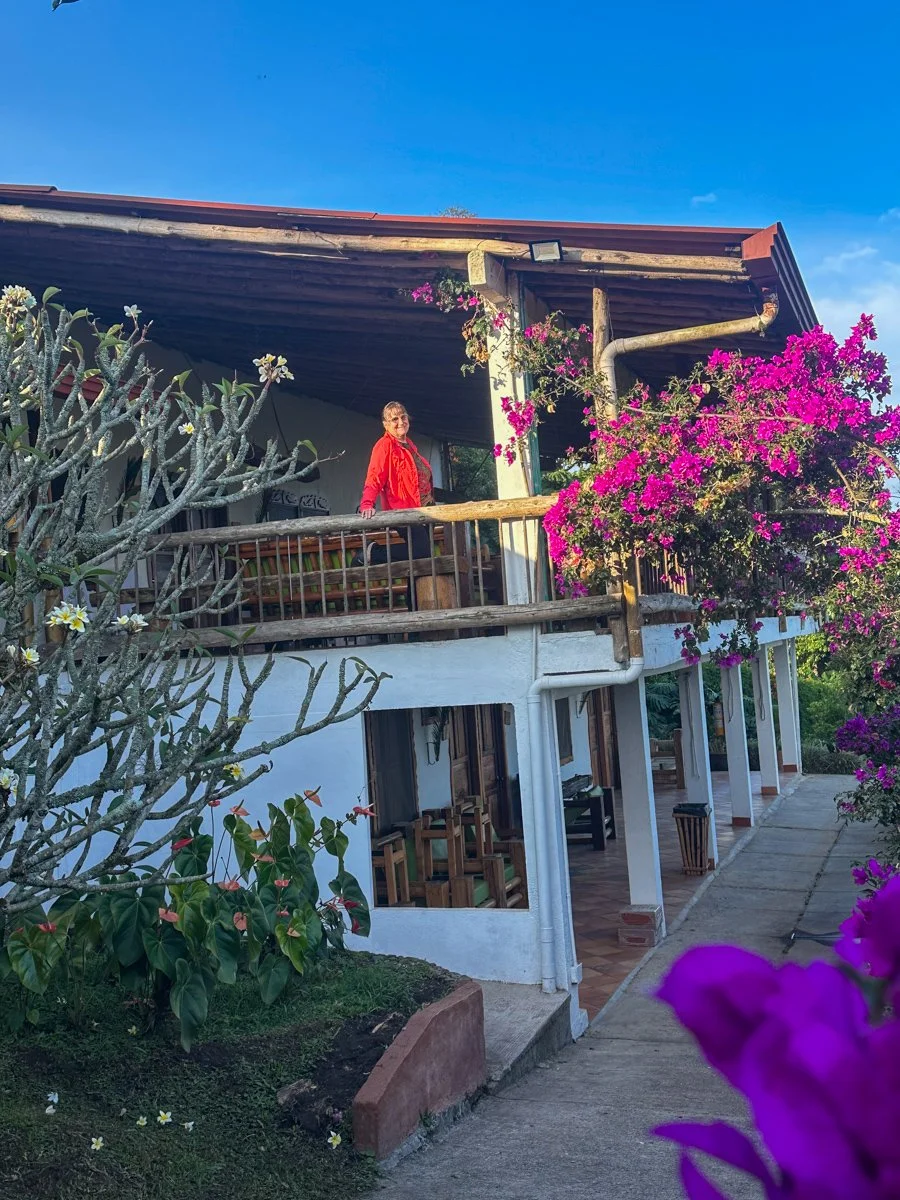
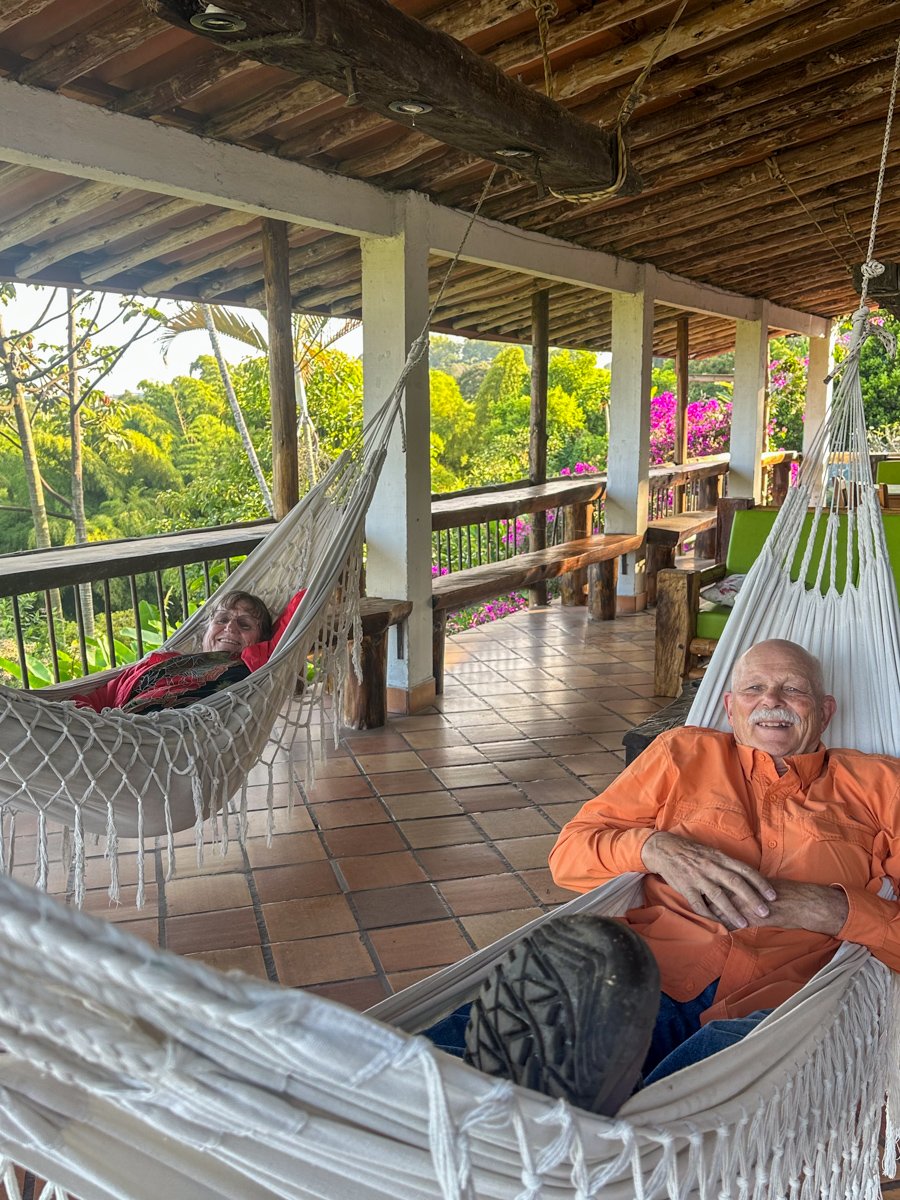
     After being in the big cities, being on a farm and at the Combia Inspiracion, we were delighted. The farm and hotel, or whatever it was, were small but very comfortable. You can see Vicky on the deck in front of our room in the first photo. In the second, we are both lounging on the deck.

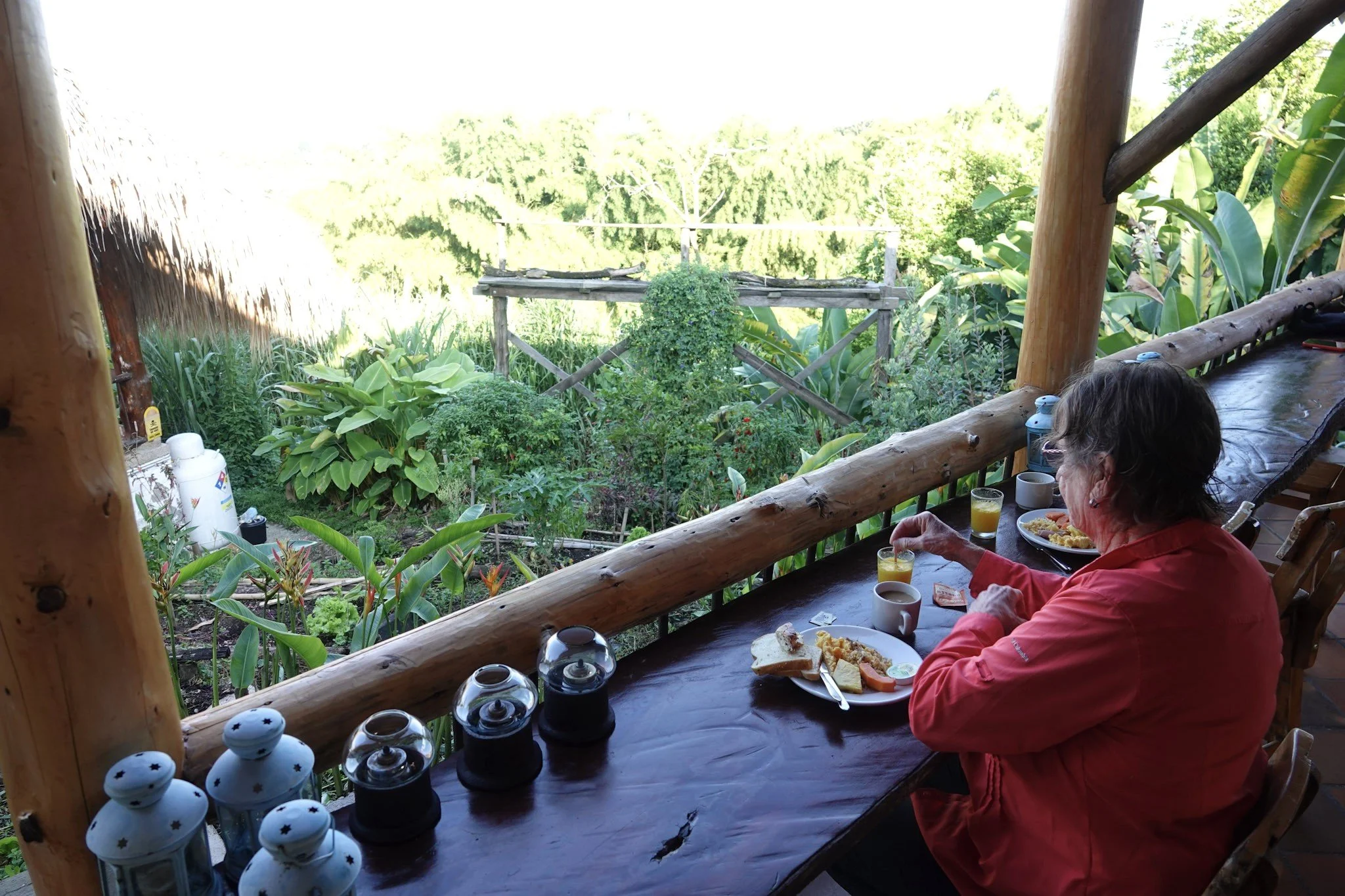
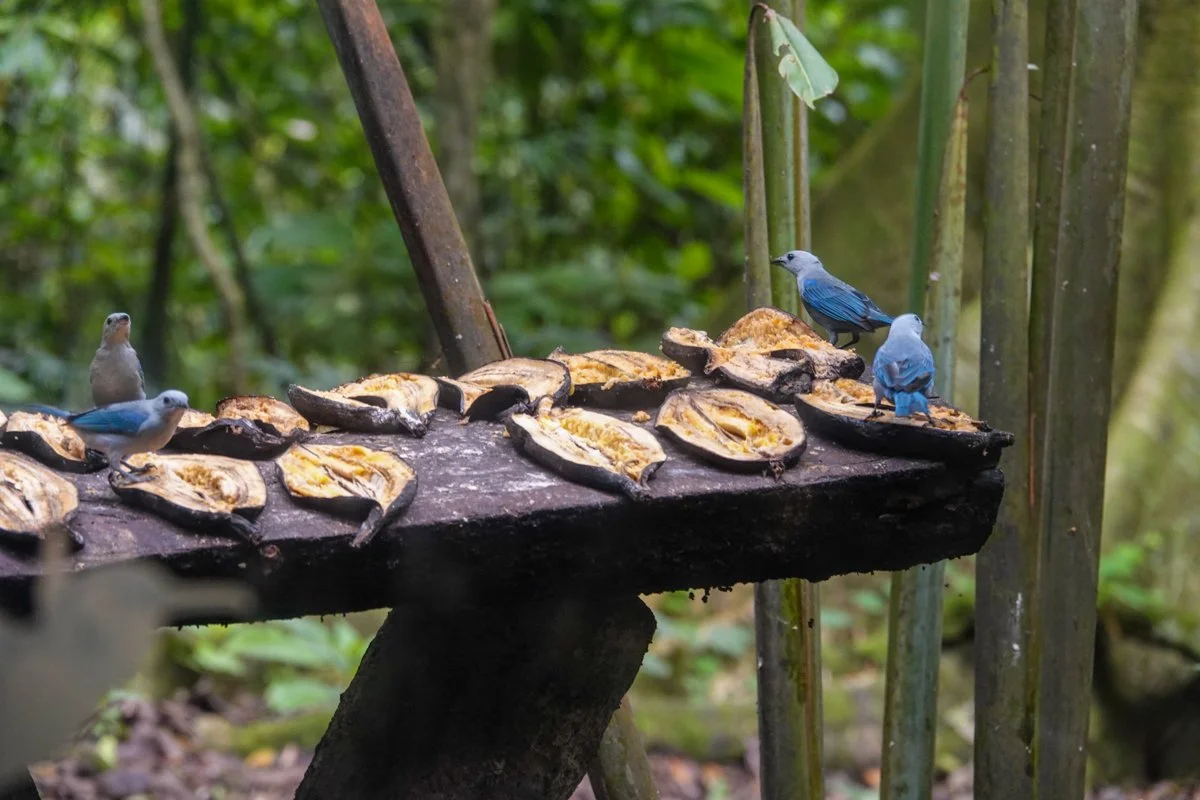
     Vicky and I both liked eating breakfast on the edge of the dining area. They had a structure just off the deck where they fed the birds bananas and other fruits, so we had great breakfast viewing.

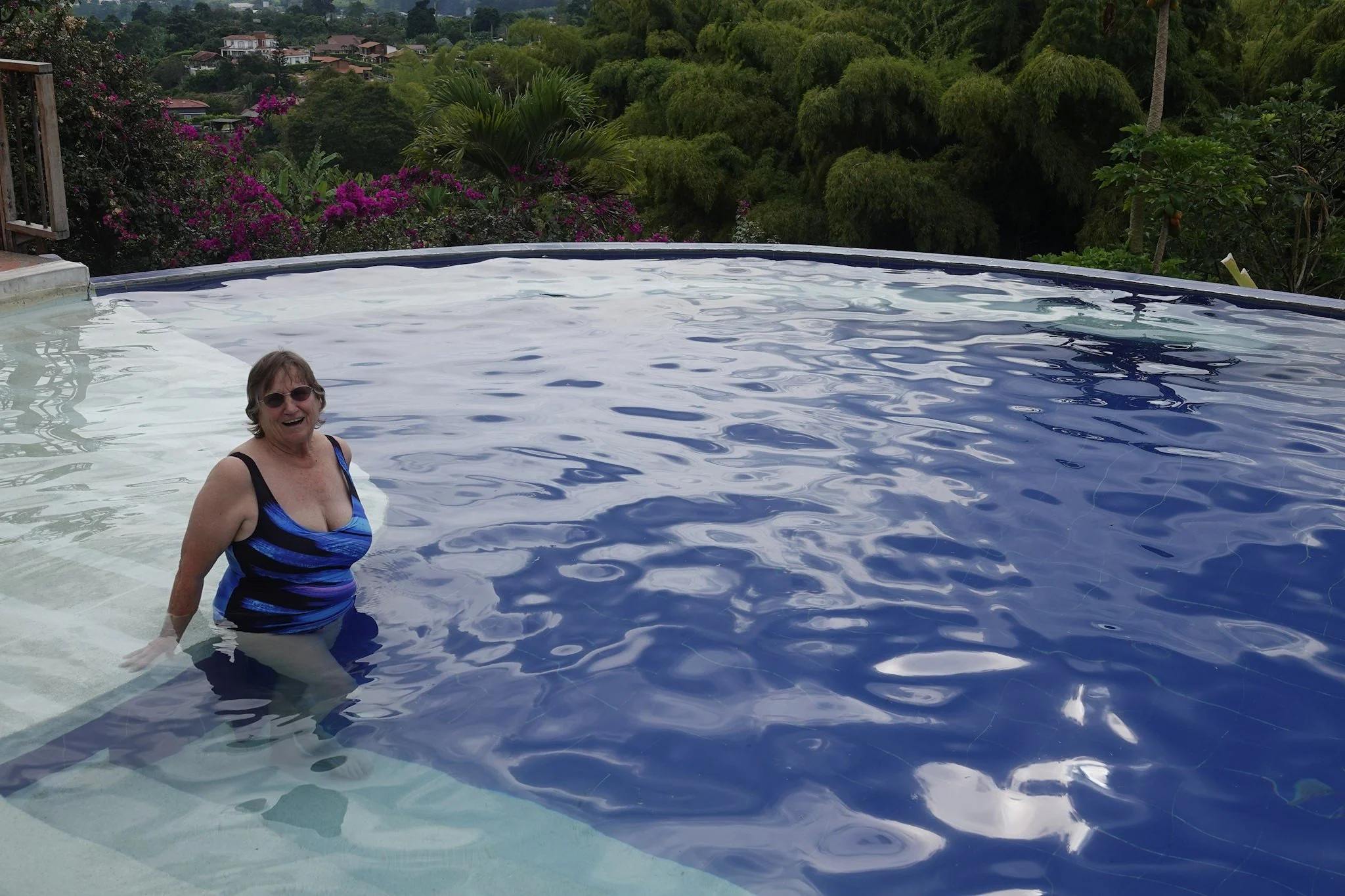
     We enjoyed our day trips while here but between hiking, picking coffee beans, and whatnot, we also enjoyed their swimming pool when we got back to the farm.

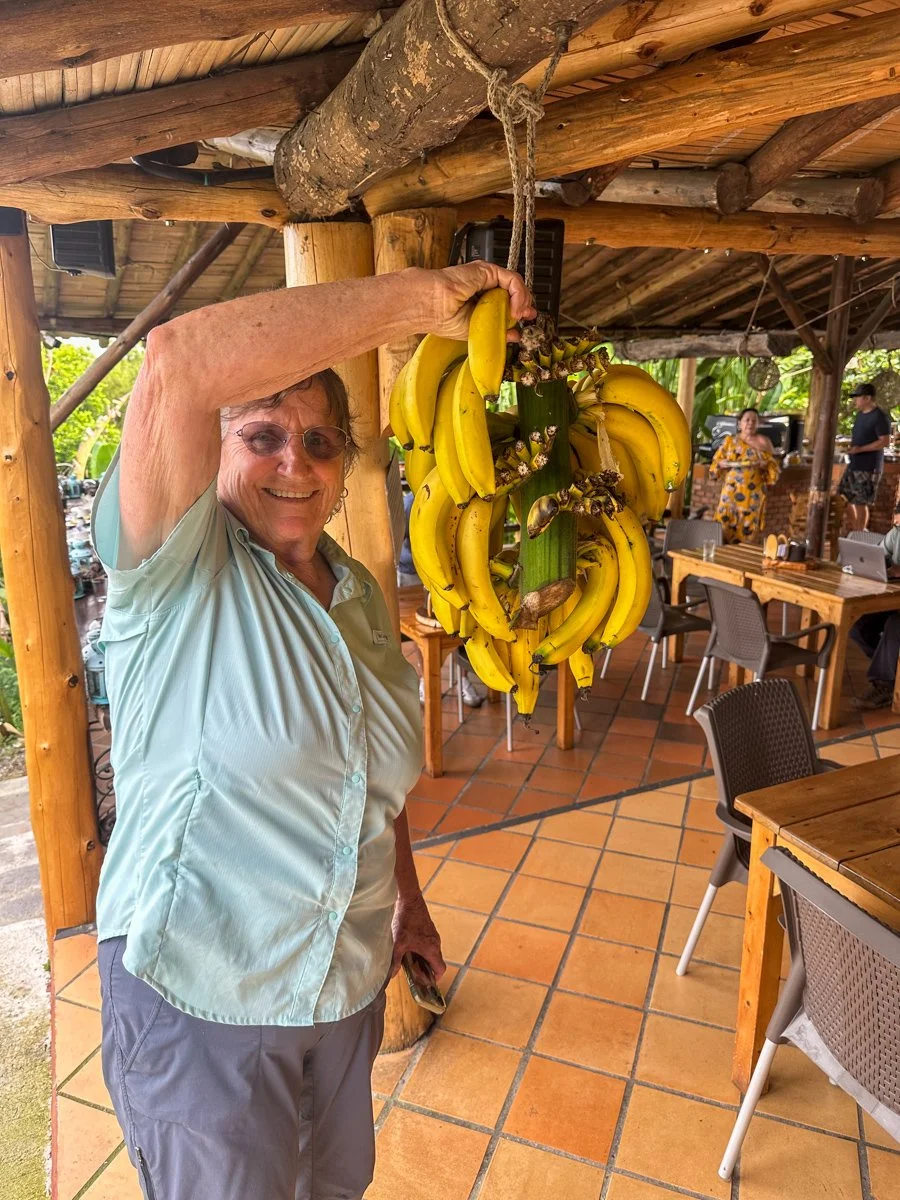
     We had the chance to grab a snack anytime that we wanted.

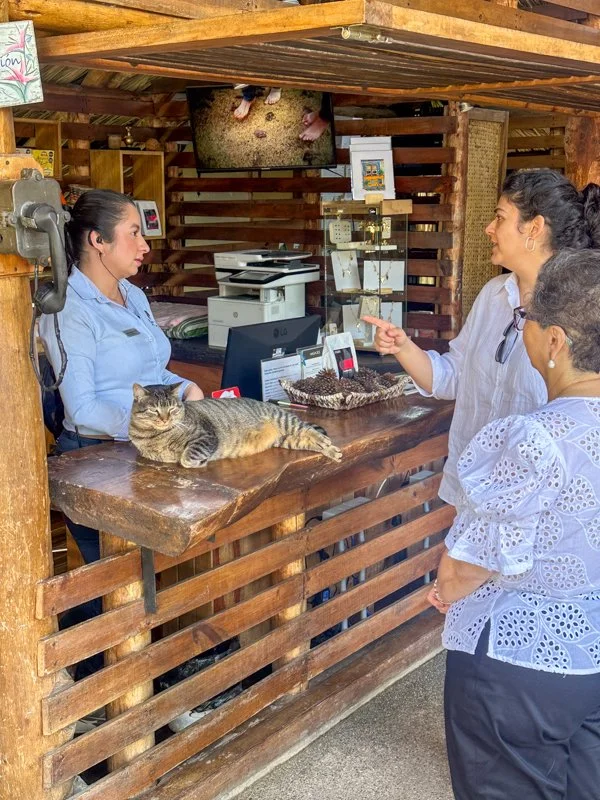
     One morning, I went to the office for something, and they were having a staff meeting. I waited a bit before interrupting their meeting. As you can see by the photo, the guy on the counter was in charge. Every time I came to the office, he was there while the rest of the staff fluctuated.

     We had plenty of entertainment, lectures, etc. on the farm, but I mostly enjoyed time on my own to wander about, take photos, and just enjoy the plants and scenery.

Coffee Farm Visit

     This day was what our tour company, (Overseas Adventure Travel), calls "a day in the life." We are in the coffee triangle of Colombia, and we visited a coffee plantation, which I would describe as a small family coffee farm. The family worked on this farm for 20 years before they were able to purchase it. The farm is five acres. They had to replant everything after they purchased the farm. Their son helped them with financing the farm, and he still helps them with that and with work on the farm.

     This was another area of Colombia where warring groups were fighting each other, and this family experienced the violence on a first-hand basis. Our local guide said that the drug trade is still here but on a much smaller scale than the Pablo Escobar days.

     They talked about how this area is so great for growing coffee with the temperature, humidity and so forth. But they sidestepped that these hills are high and steep, and the area is very jungle like. I thought it was a great area, but I don't do farm work there.

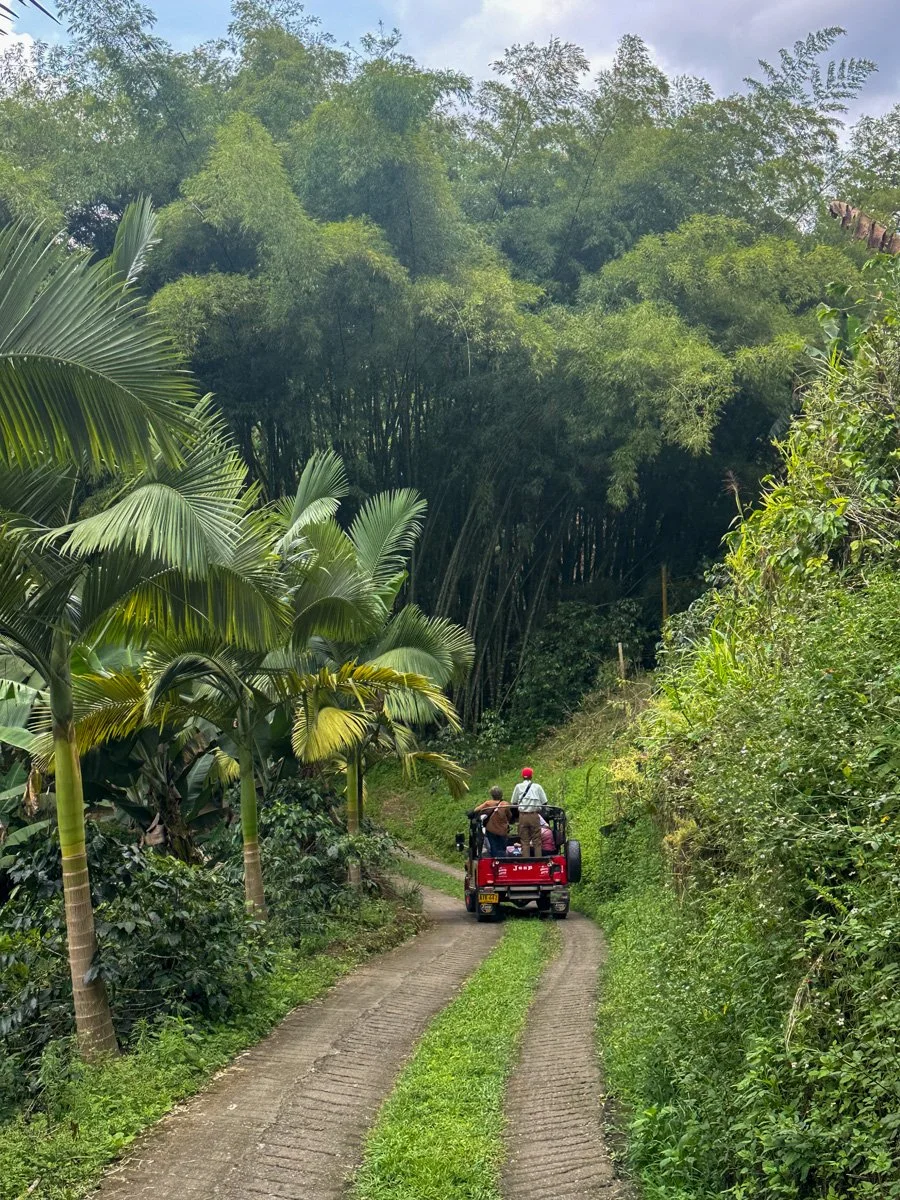
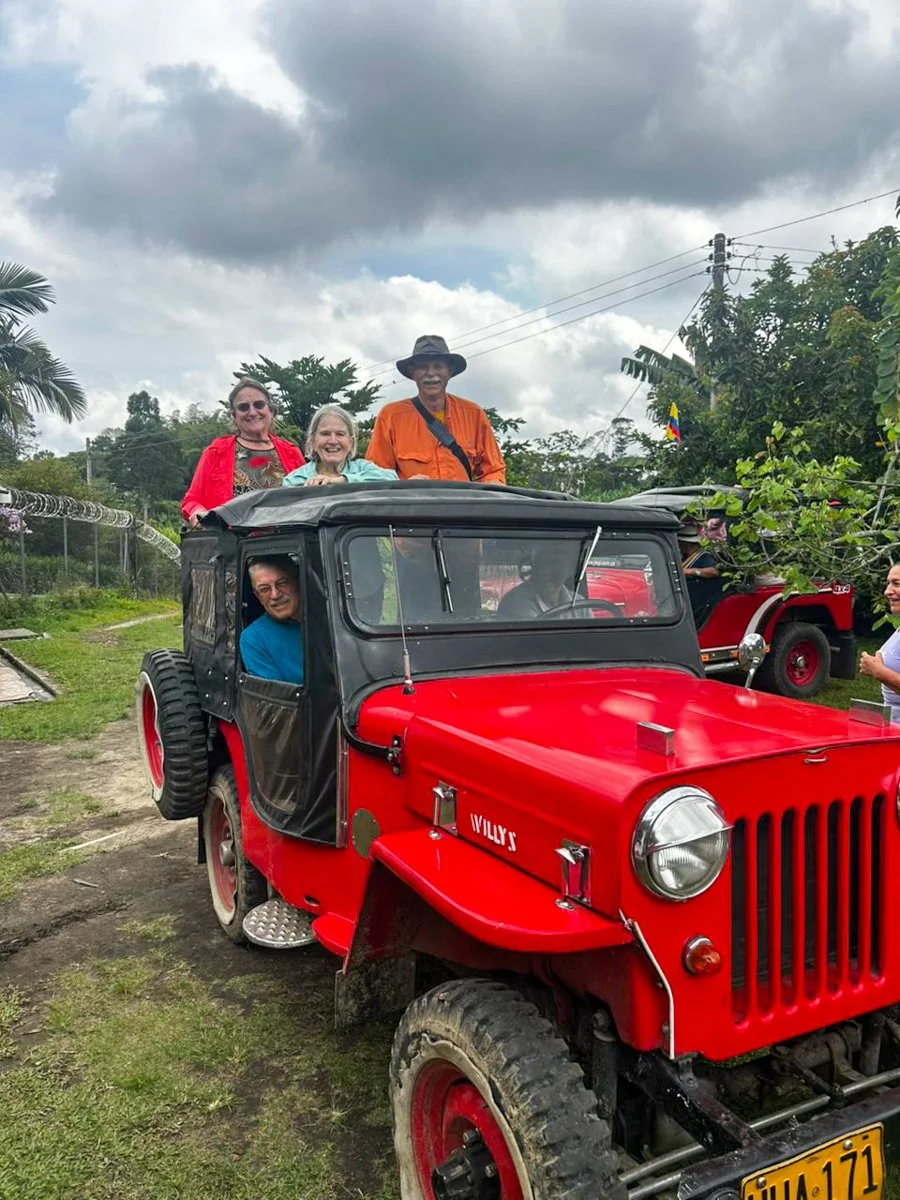
     We were told that walking or donkeys was the only transportation here, until after the Korean War. At that point in time, the world had an excess of jeeps and this area picked up on them as a means of transportation up and down these steep hills. They are still in use here, as we found out.

     Some people have businesses of using jeeps as taxis and our local guide said that if a person could get one foot on the jeep, they had to pay the fare. He said he once saw a jeep with 28 people in it. We managed to travel with fewer of us in each jeep. Seat belts? Not a chance.

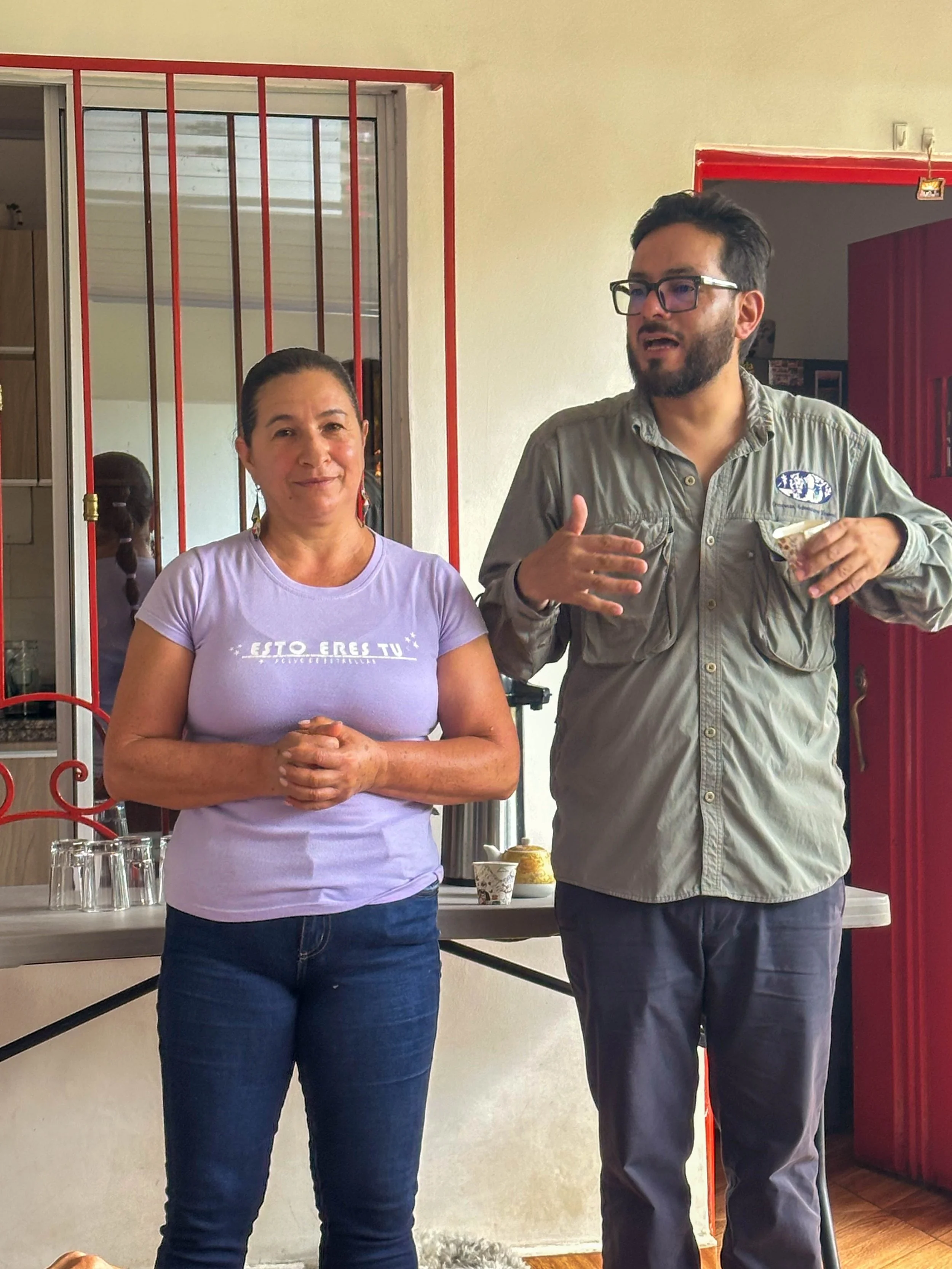
     Upon arriving at this farm, the mother of the clan gave us a nice talk about her family's life and how they had moved to this area to escape the violence of another area and ended up here, though not free from the violence. It was a moving story and made me feel incredibly happy for this family to have survived and be doing well today. The whole family was very nice and welcoming. Our guide is on the right.

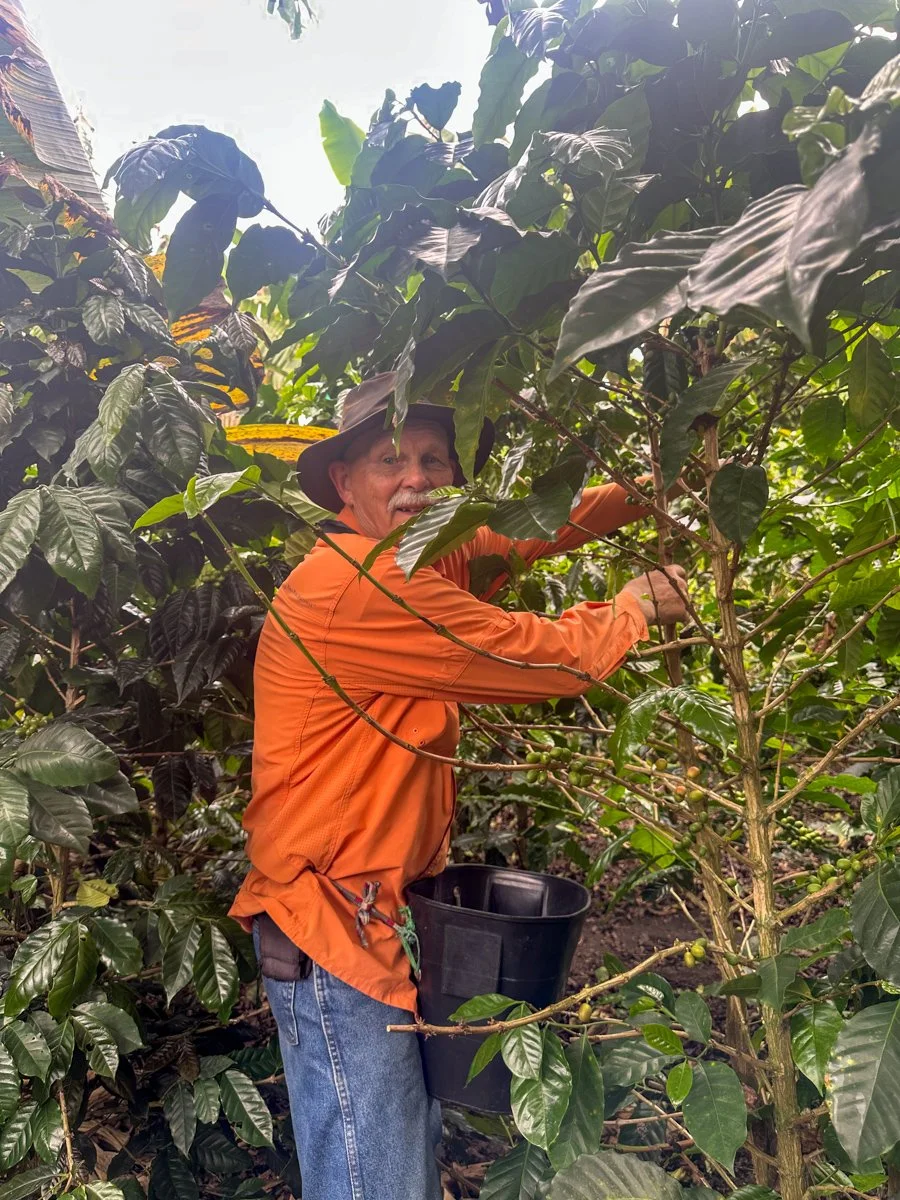
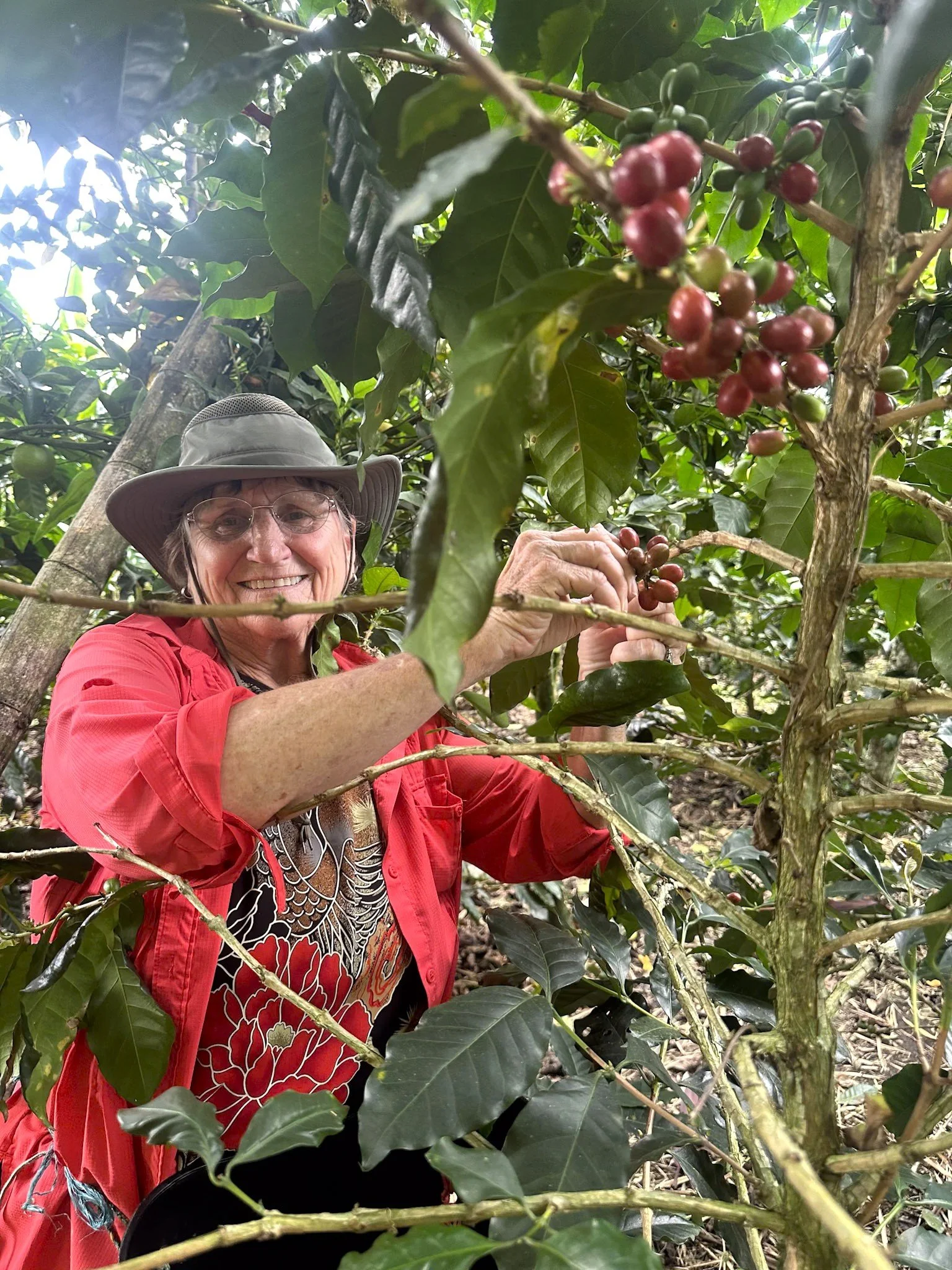
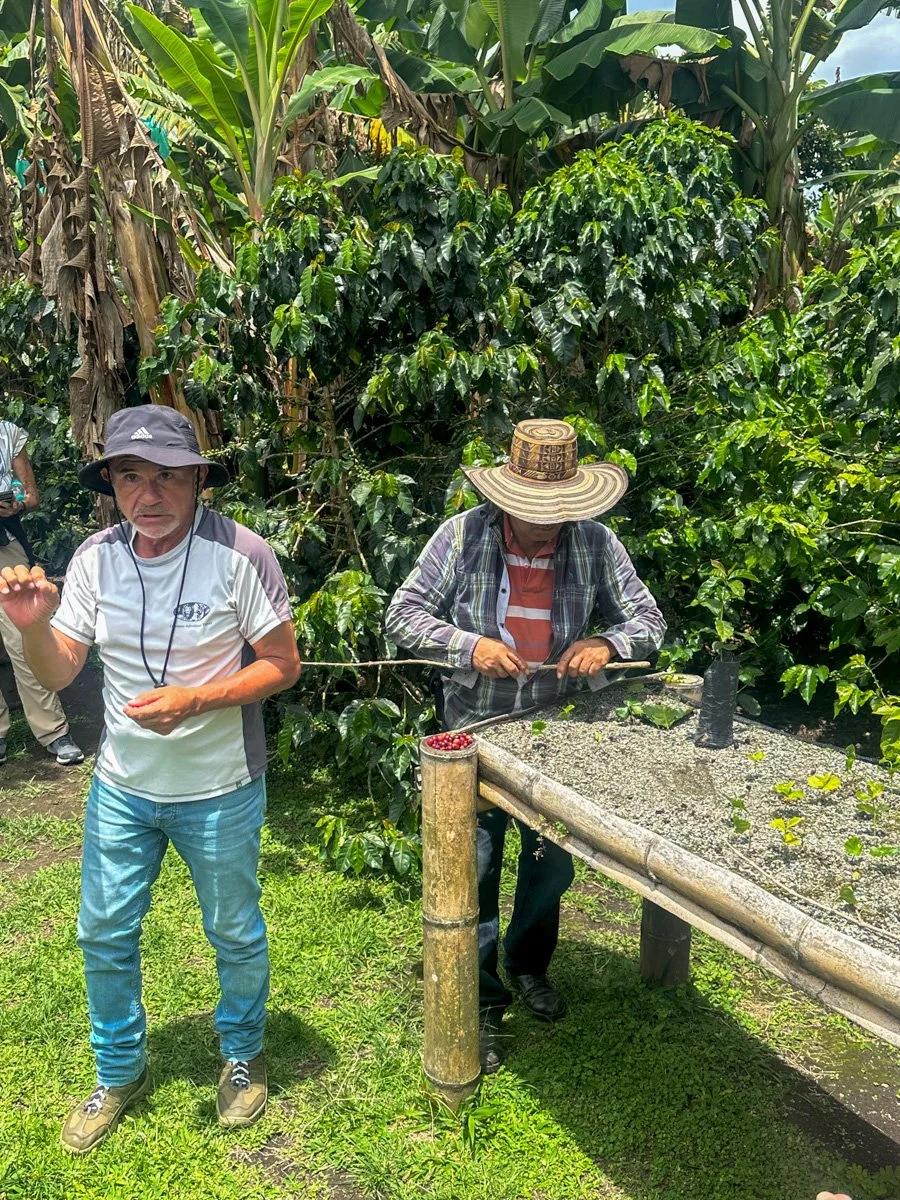
     Then they put us to work, out picking coffee beans. They called it a plantation, but I would call it a coffee jungle. We saw farms where the coffee plants were in rows, and a tractor could drive between the rows. On this farm, we had to fight our way through the jungle to pick the coffee berries. They have other plants growing on the farm as well, but we were only picking coffee beans. The dad said it takes 60 beans to make a cup of coffee. I may have picked enough for a cup or two, or an expresso. The red beans are not perfect; they want them slightly past red, like purple. You can notice my picker basket, strapped to my waist. I never filled it though.

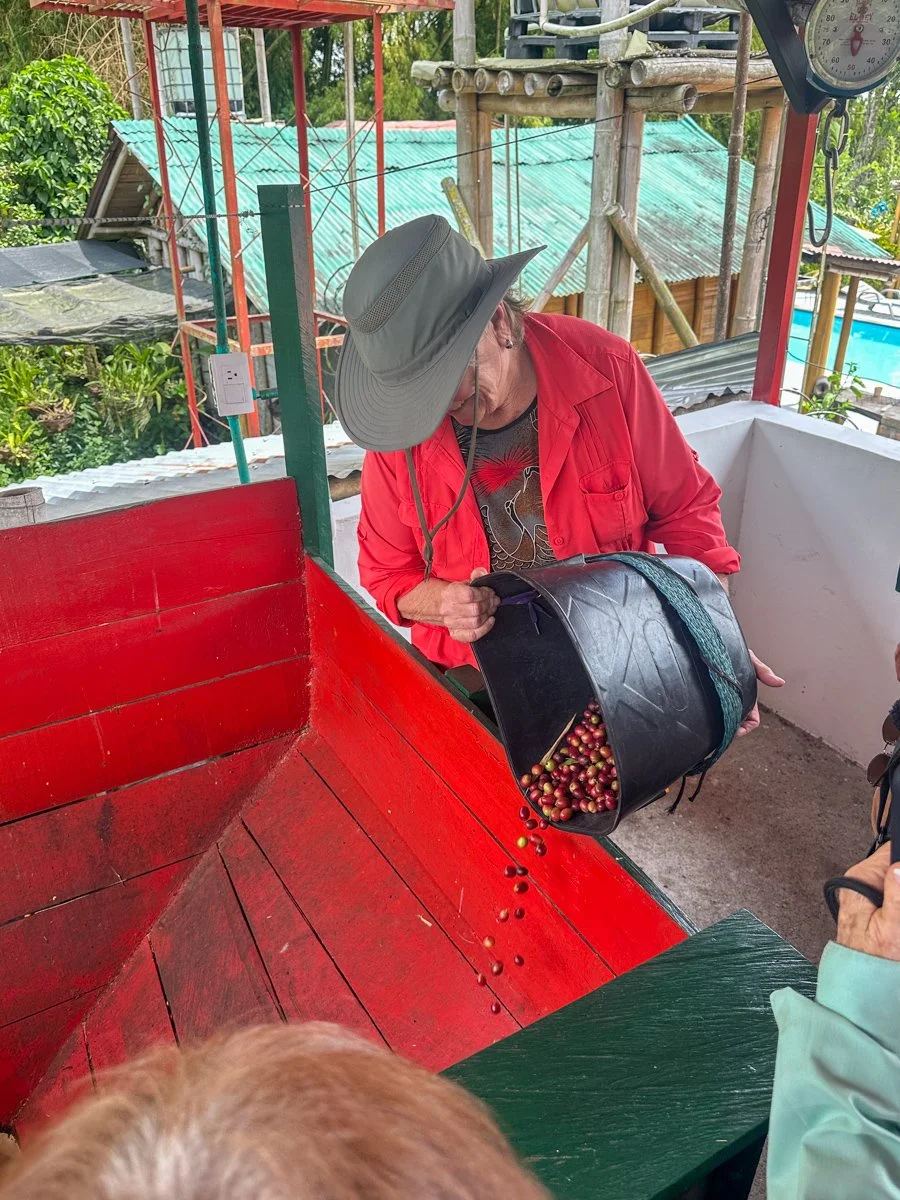
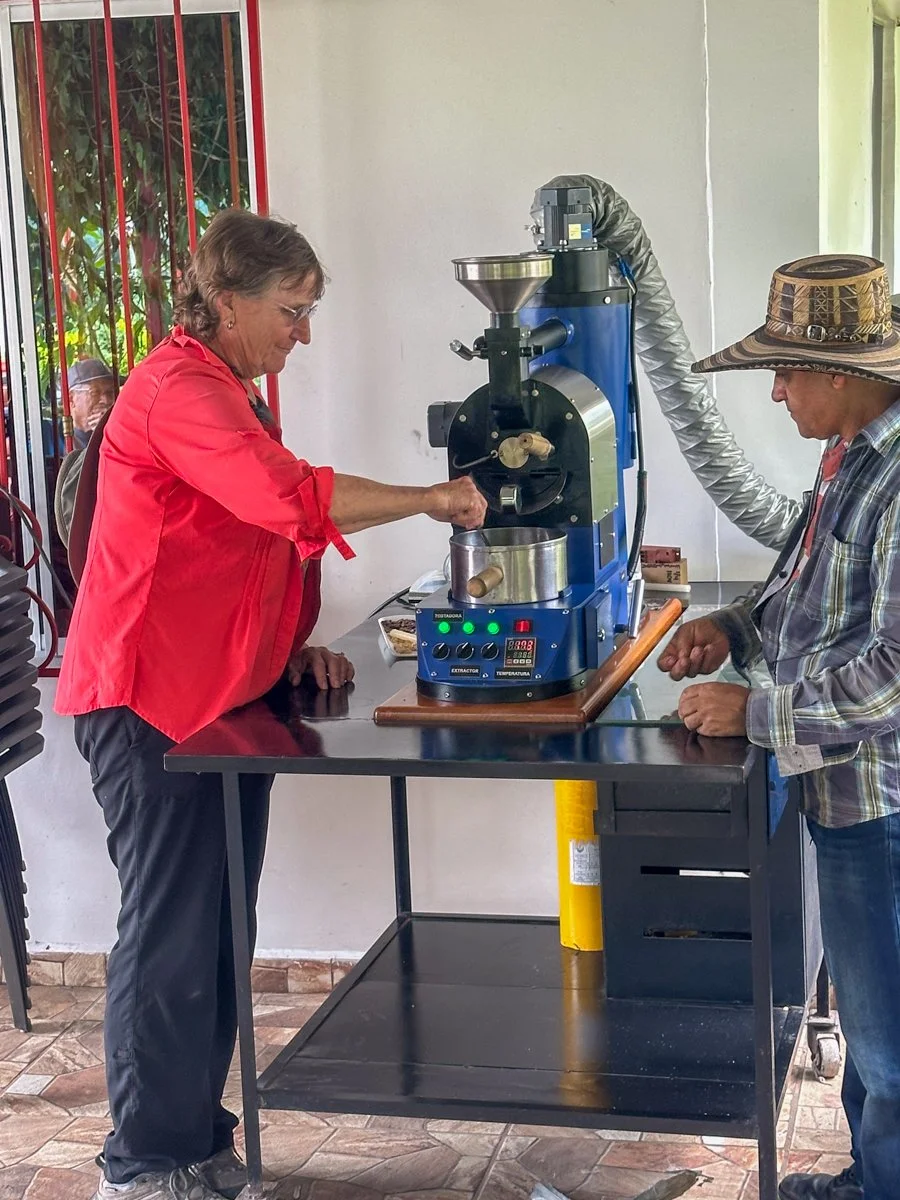
     After our group picked the beans, the dad walked us through the entire coffee making process. Vicky led the charge for the group with much of the work. He said that they process and sell their own best beans but sell the rest of their beans to the local co-op. We purchased multiple bags of coffee here.

We got to see other aspects of their coffee farm operation. For instance, they showed us how they start new coffee plants, from seeds - or beans. They start them in river sand and had somewhat elaborate procedures to insure good plants.

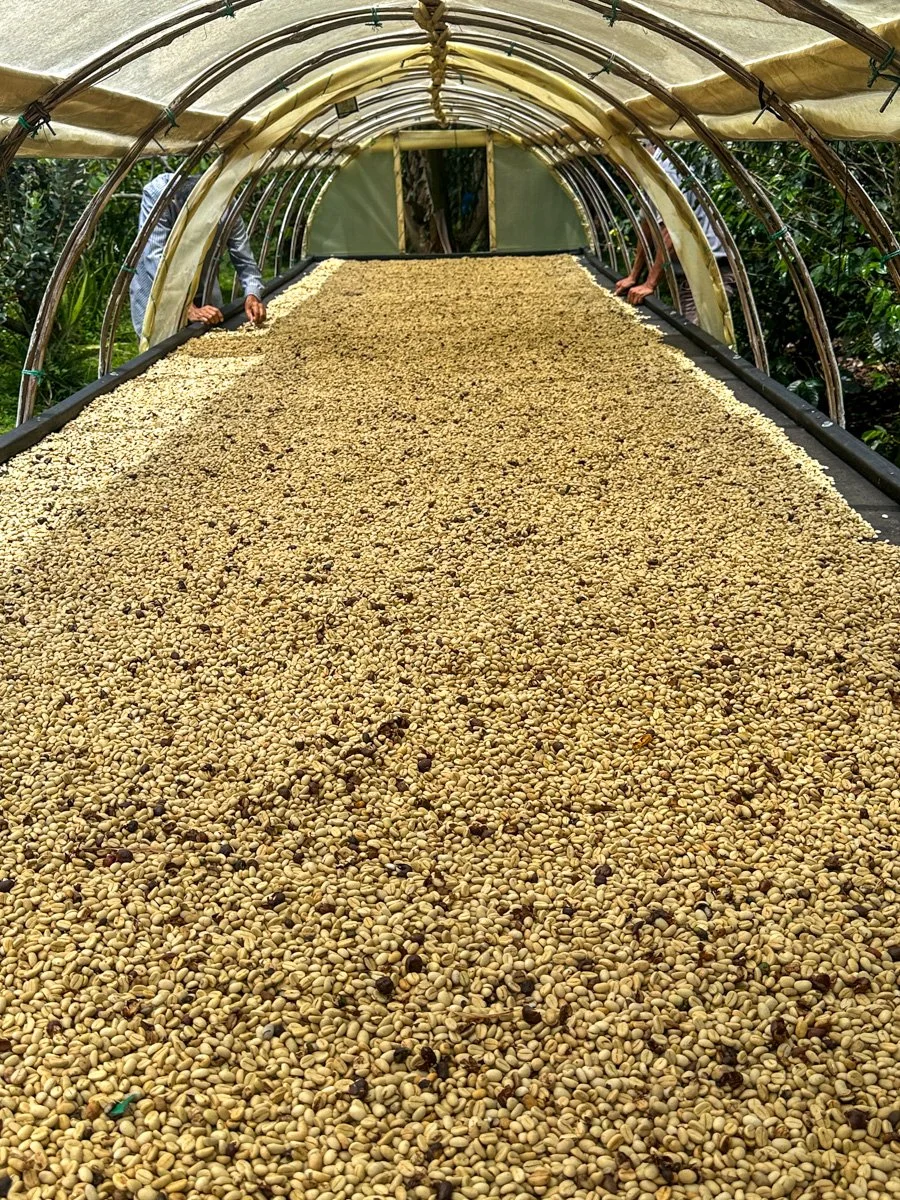
     They had plenty of coffee beans drying for a small family farm. Two guys were picking out something from the lot, perhaps bad beans. They said that they call Starbucks coffee, "Pizza coffee", because they stack it like a pizza with coffee, cream, flavorings, etc. They said, “Good coffee doesn’t need cream, and bad coffee doesn’t deserve it.” 

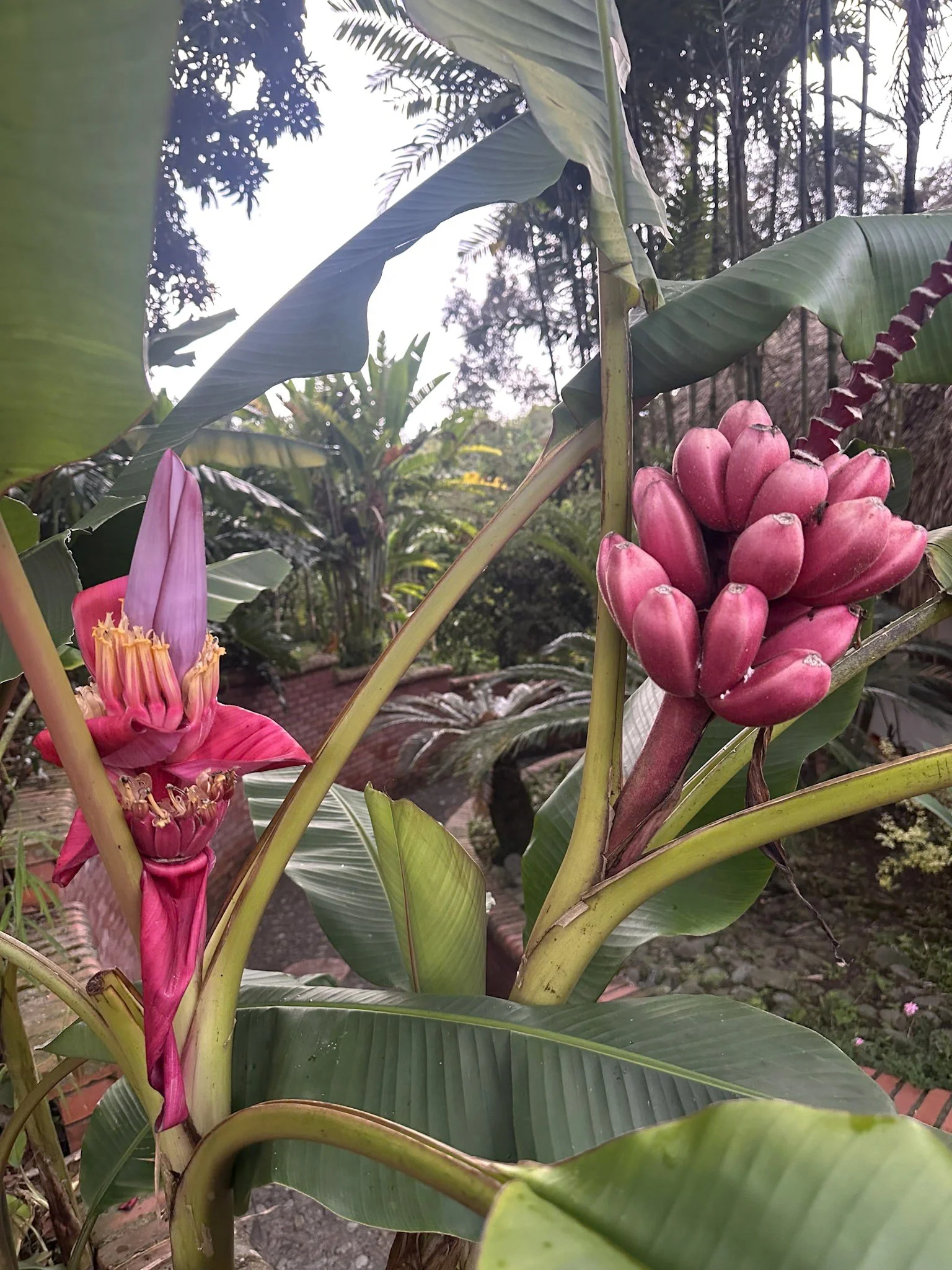
     This farm has all sorts of crops and plants on the farm. We saw Cocoa, Plantain, Coffee, Avocado, Papaya, Oranges, Lemons, Cotton, Blueberries, Strawberries, Chiti maya, Soursop, Guava, Apple-guava, and for insect prevention: tobacco and onions. Most varieties are just a few plants, but they use them all.

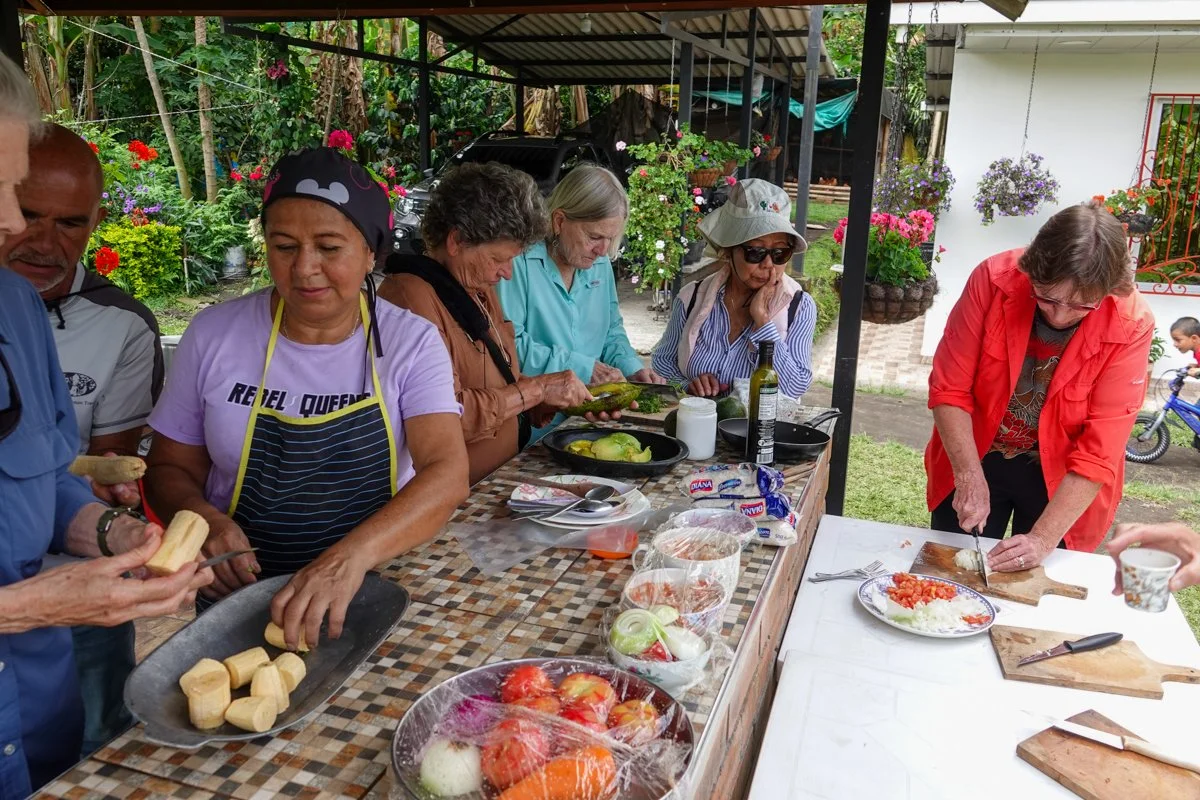
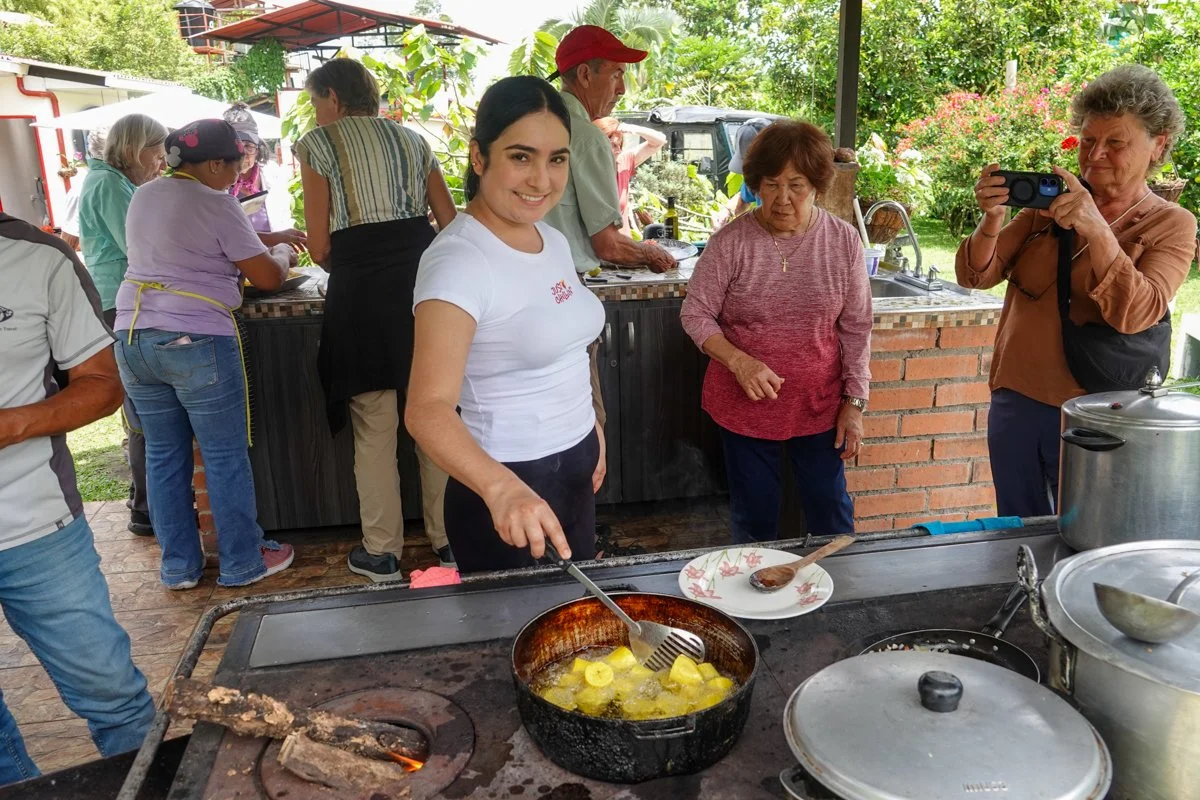
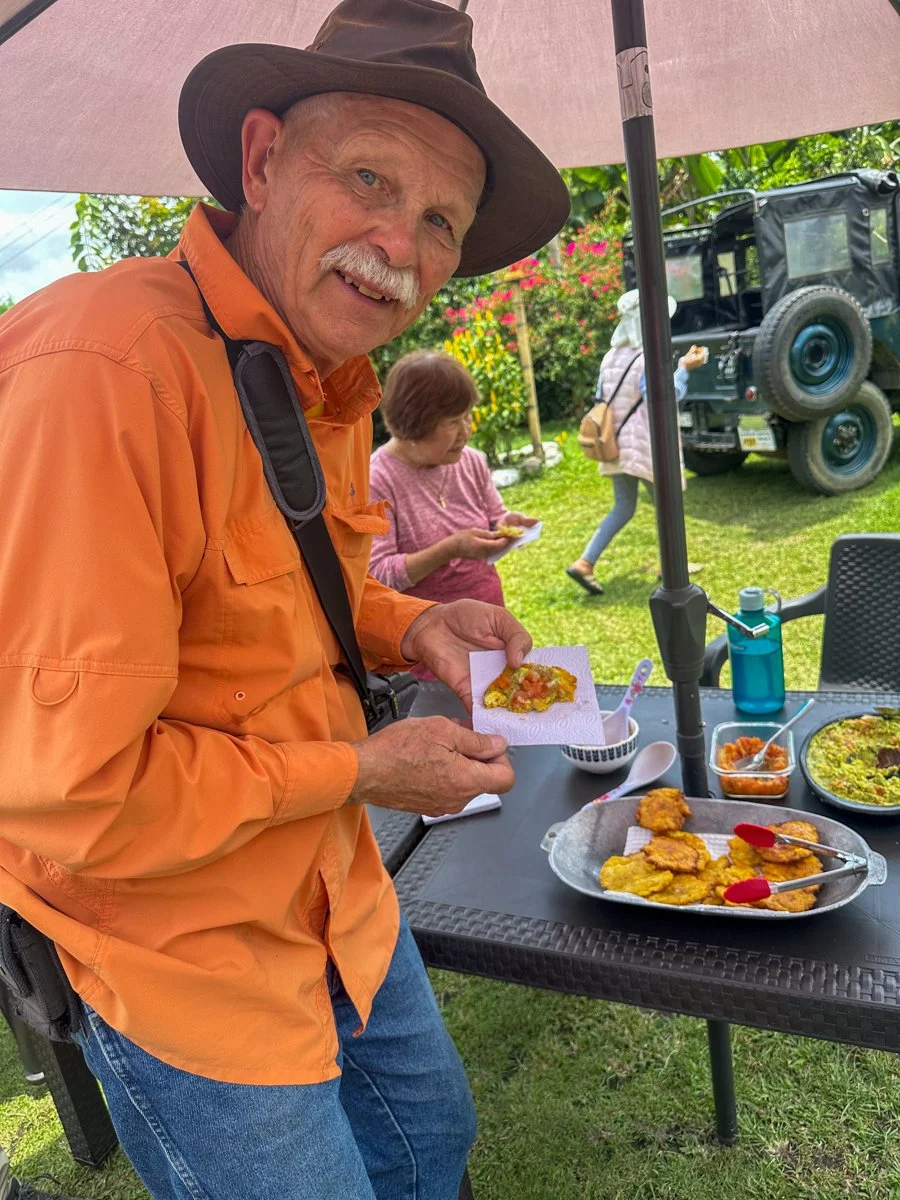
          We had a homemade lunch but first we started by helping the family make Platicon con Guacamole at their outdoor kitchen. They double fry plantain and make guacamole from fresh avocadoes plus fresh tomatoes and onions. This was absolutely the best snack – or food – that I ate on this trip. The freshness and taste just exploded in my mouth. Vicky helped prepare it, while I took photos of the process and ate the results, not strictly for quality control…

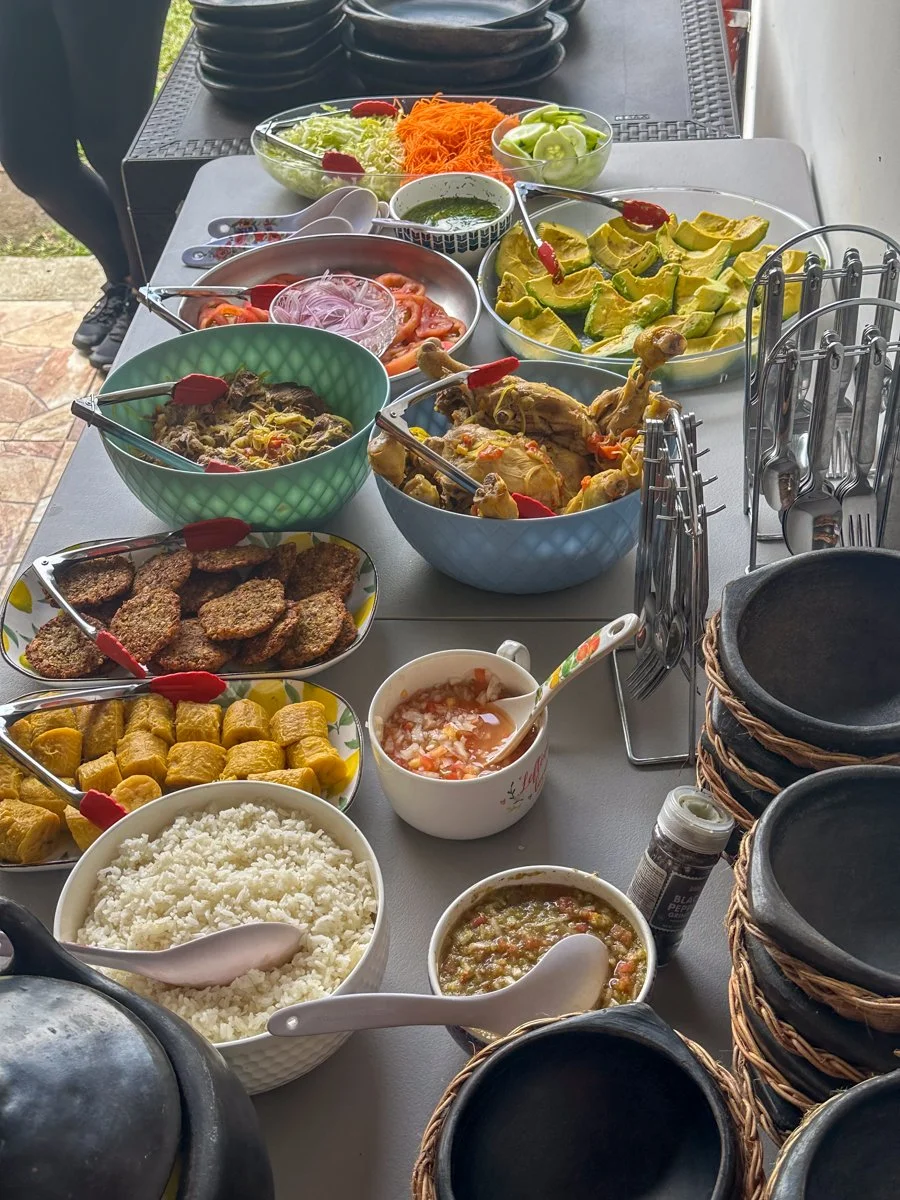
          Lunch was lemongrass soup with potatoes, plantain, etc. We had rice, beans, beef, chicken, avocadoes, tomatoes, carrots, onions, and salsas. Drinks were lemonade, made of lime juice, cinnamon, and brown sugar. Dessert was chocolate cake and chocolate coffee beans. It was all very fresh and delicious!

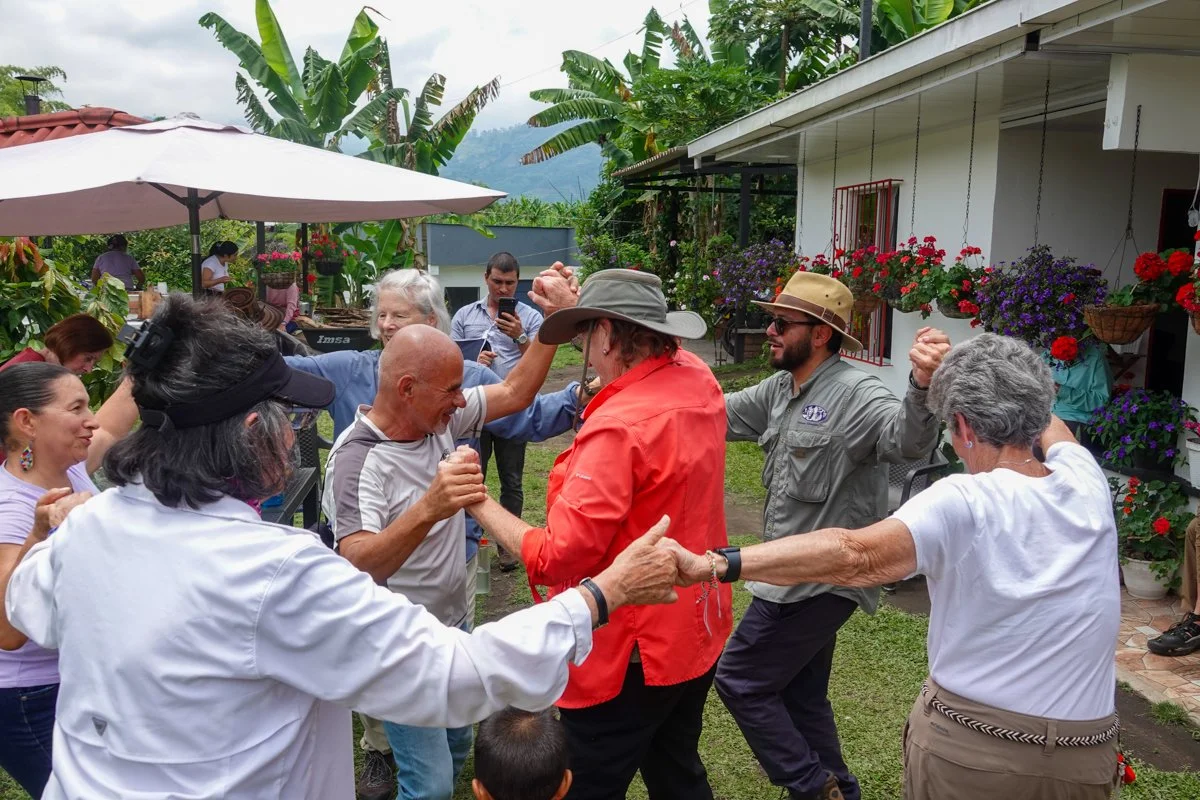
     I guess we wouldn't have been in Colombia without some dancing and partying...

Colombian Birds

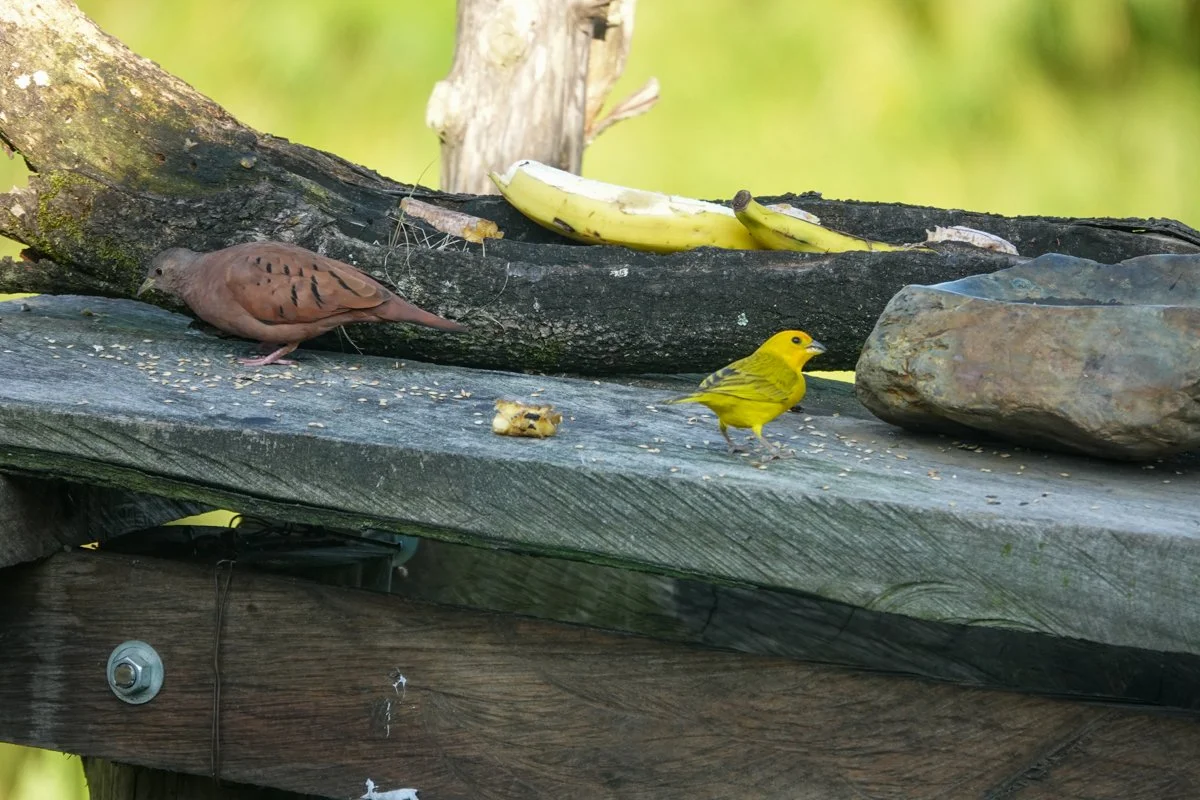
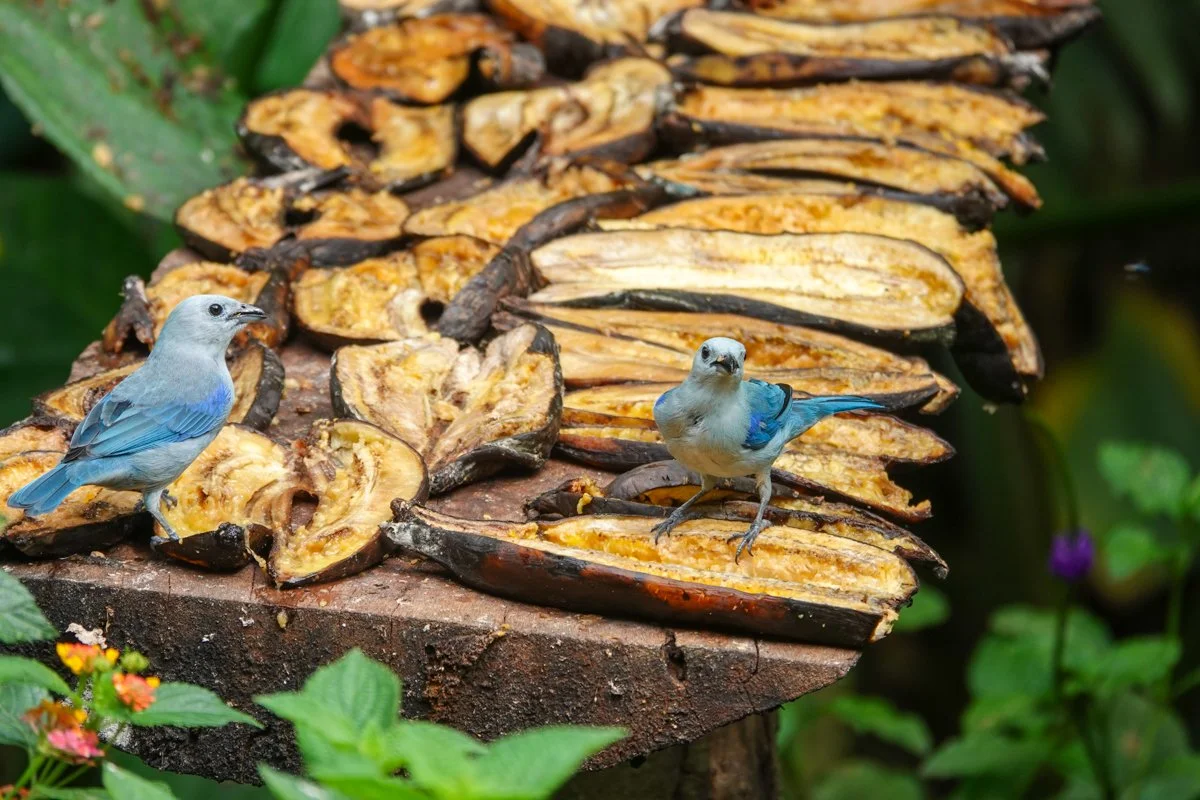
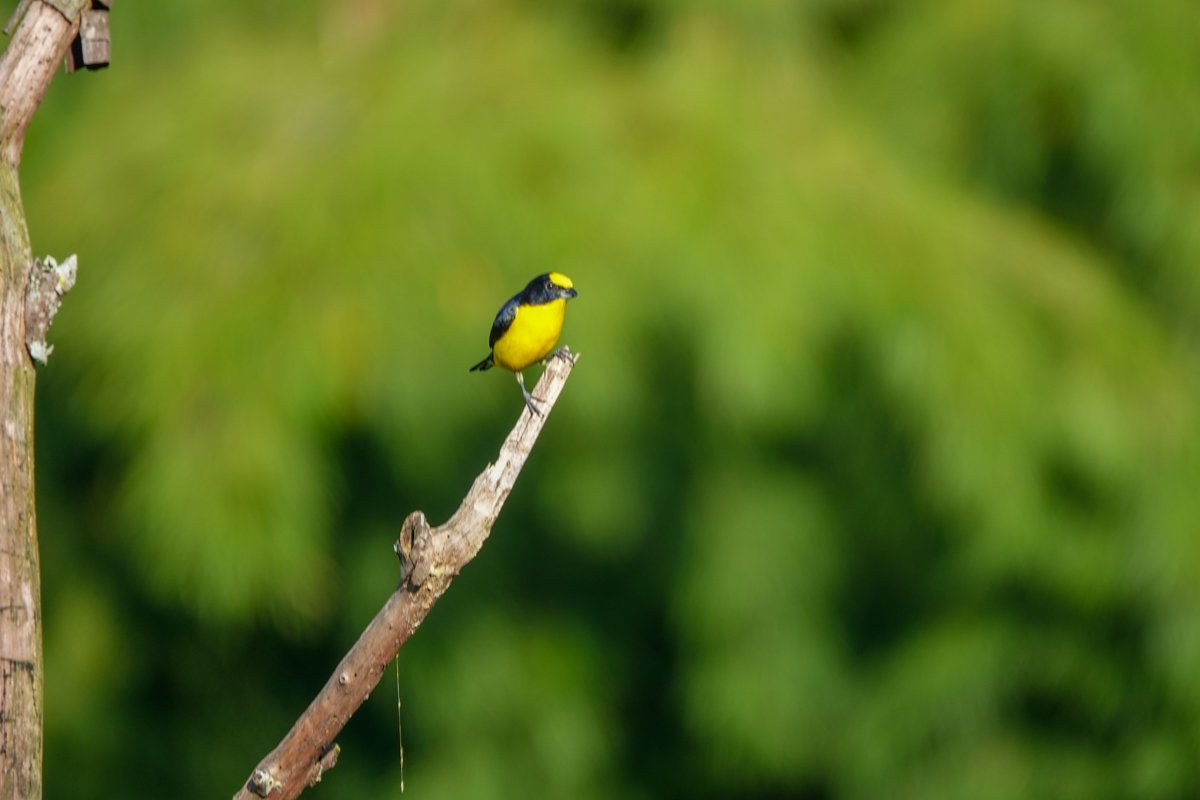
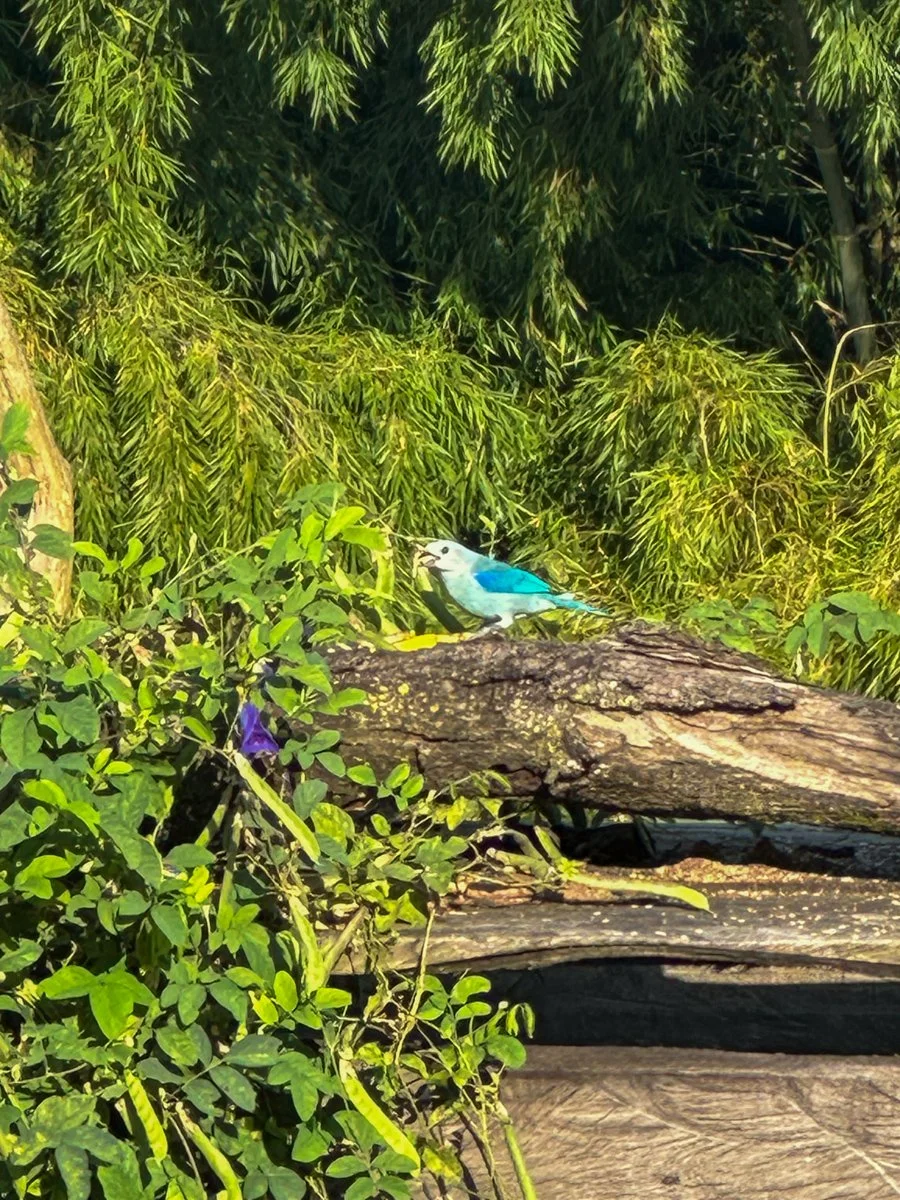
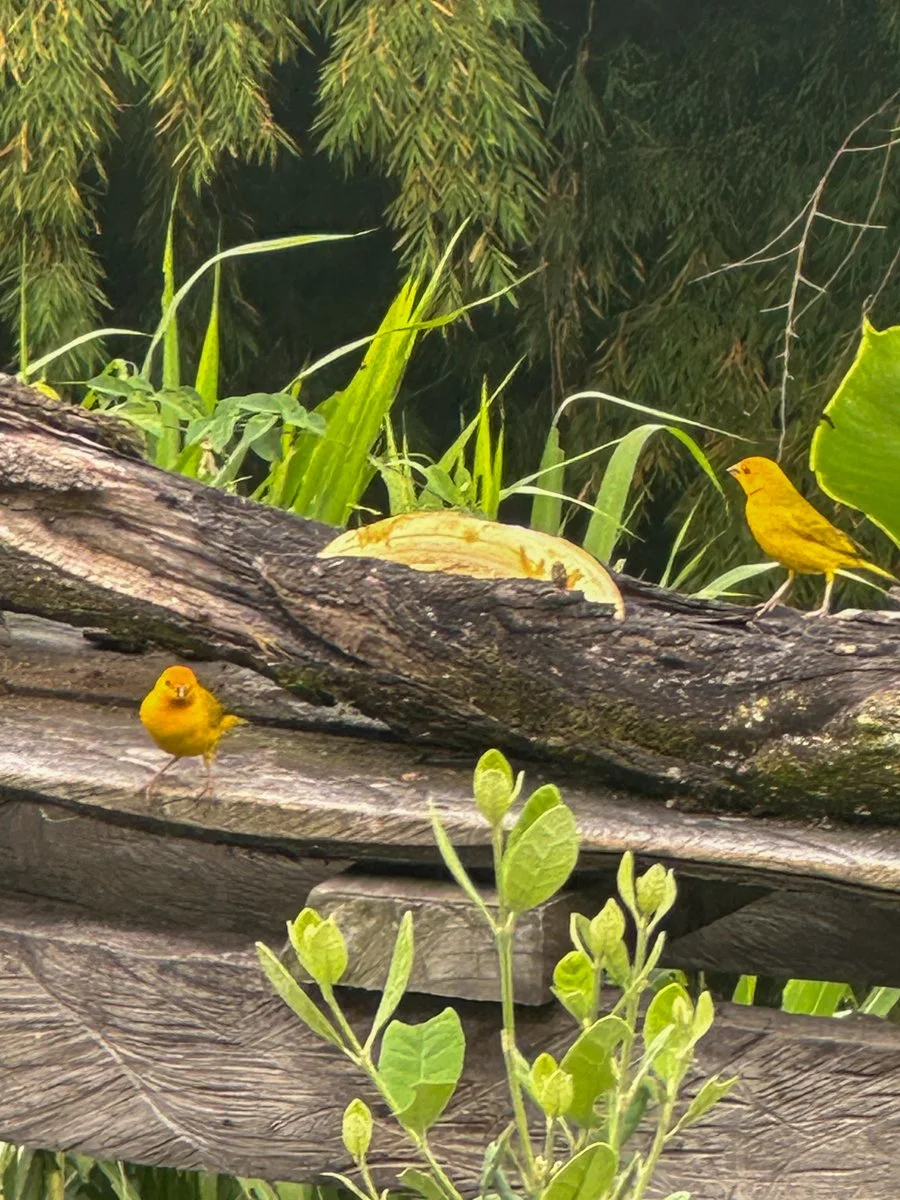
     Colombia has the highest bird species diversity globally. They have over 1,900 confirmed species and over 80 of them are endemic to Colombia. Our guides talked a lot about the birds but we were not in the best birding locations. We never got to see any toucans, scarlet ibis's, or the Andean Condor, with a wingspan of almost eleven feet and weighing up to 33 pounds.

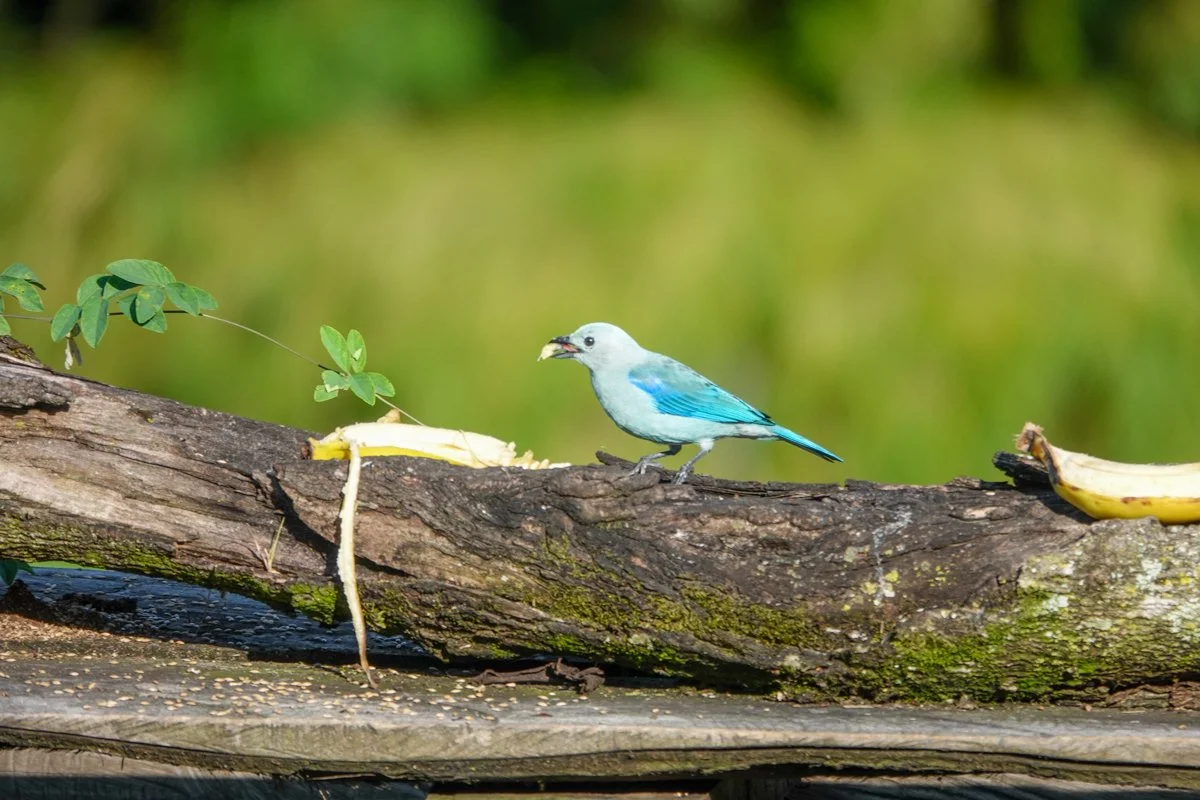
     We did see many even more colorful birds than I will show, but the darn little rascals wouldn't stay put long enough for me to get a photo. Most of my photos are from our eco-farm or from the botanical garden that we visited, and then most were feasting at bird feeders with bananas, plantain, etc.

Cocora Valley

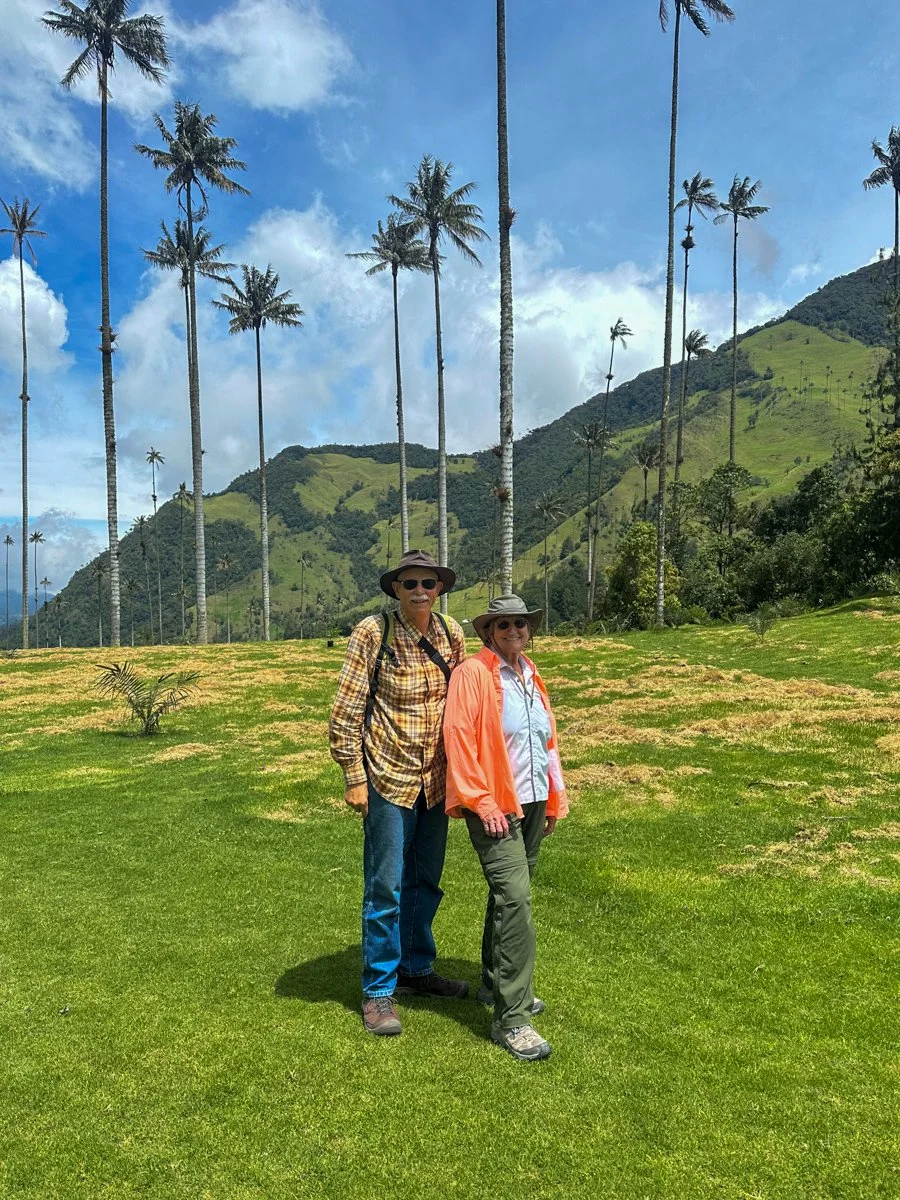
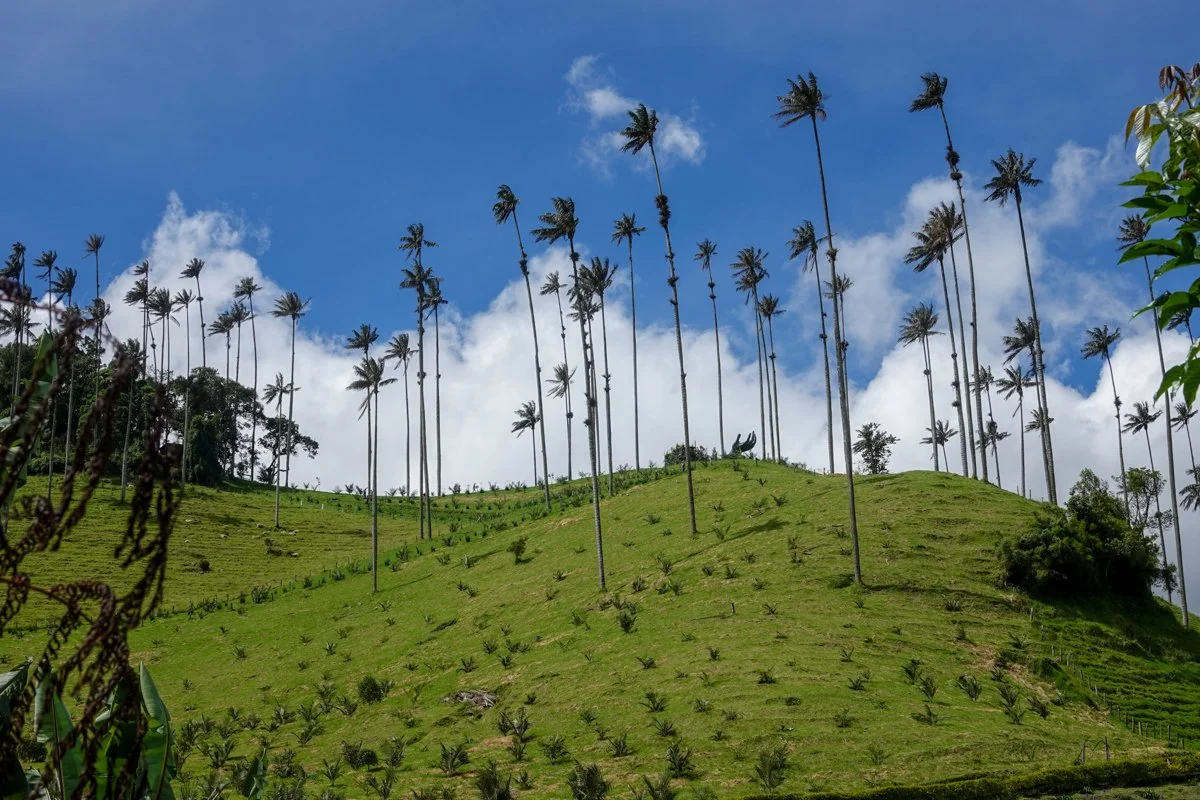
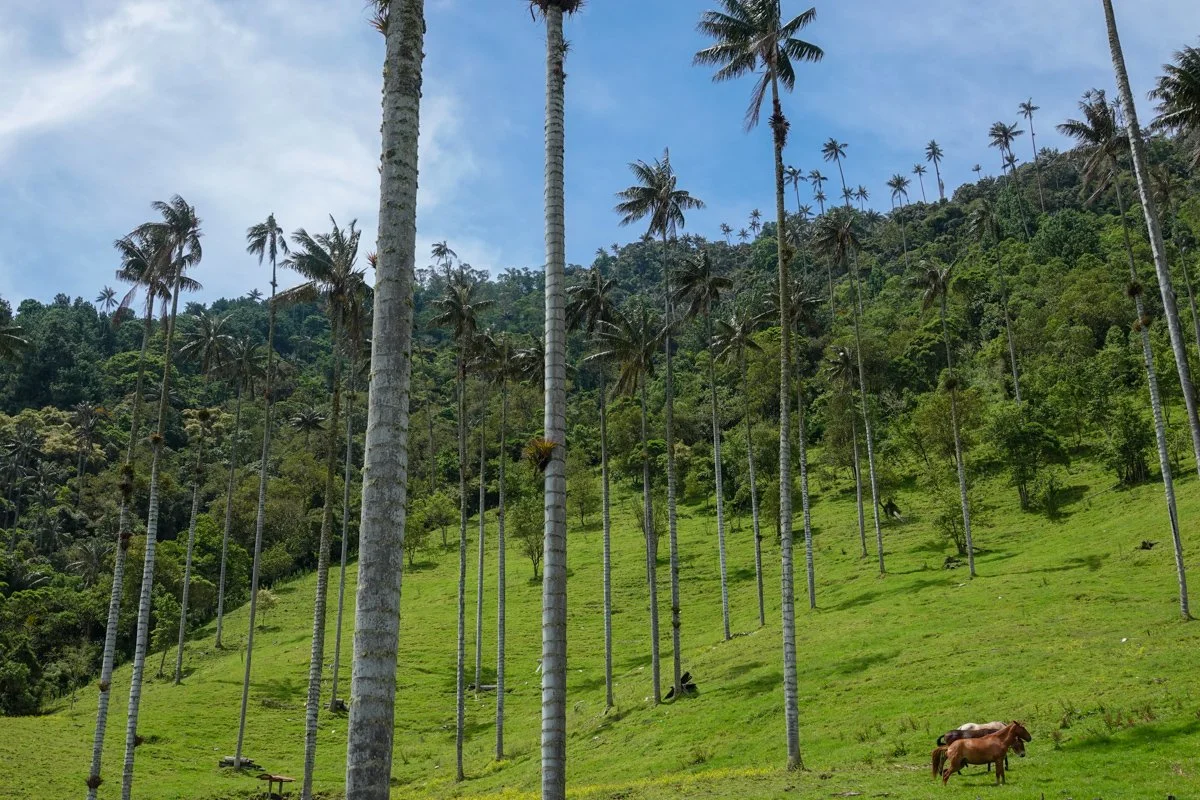
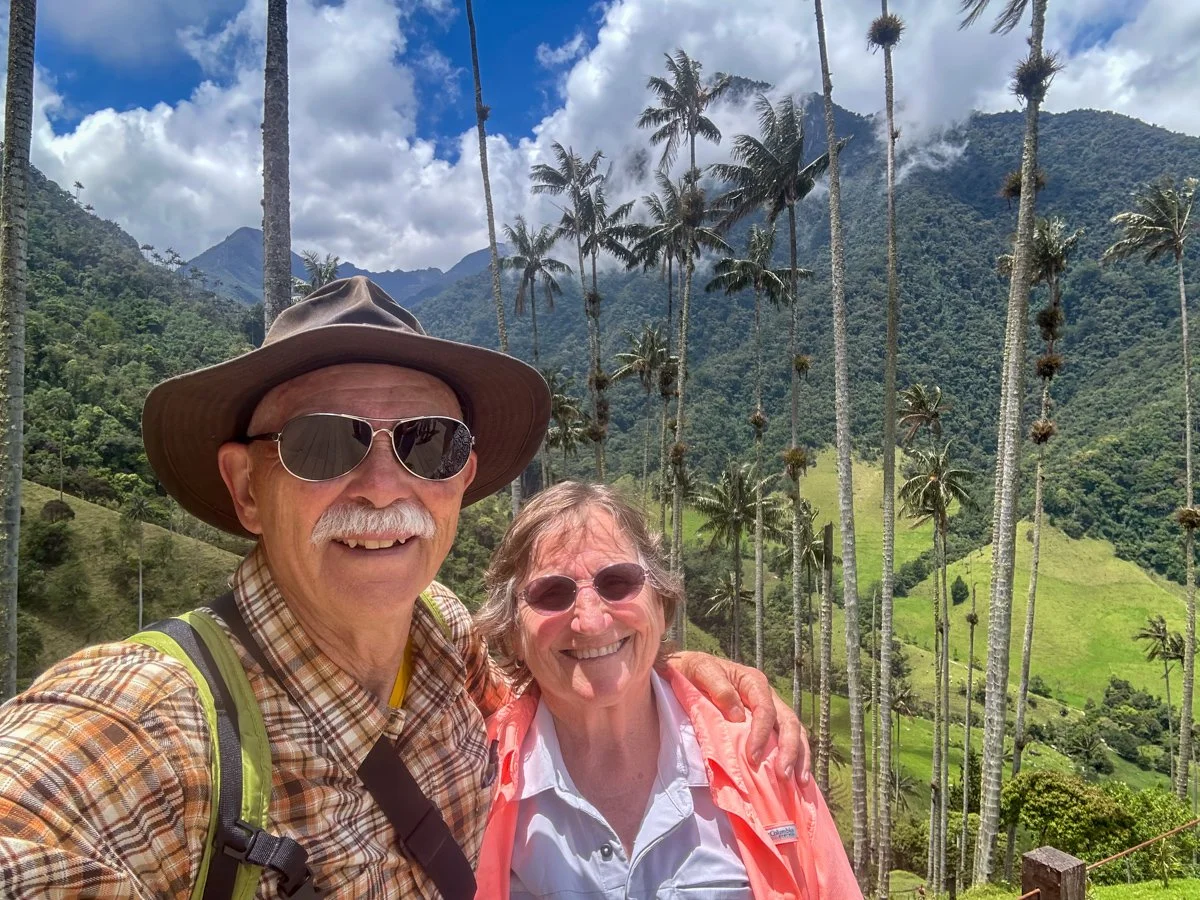
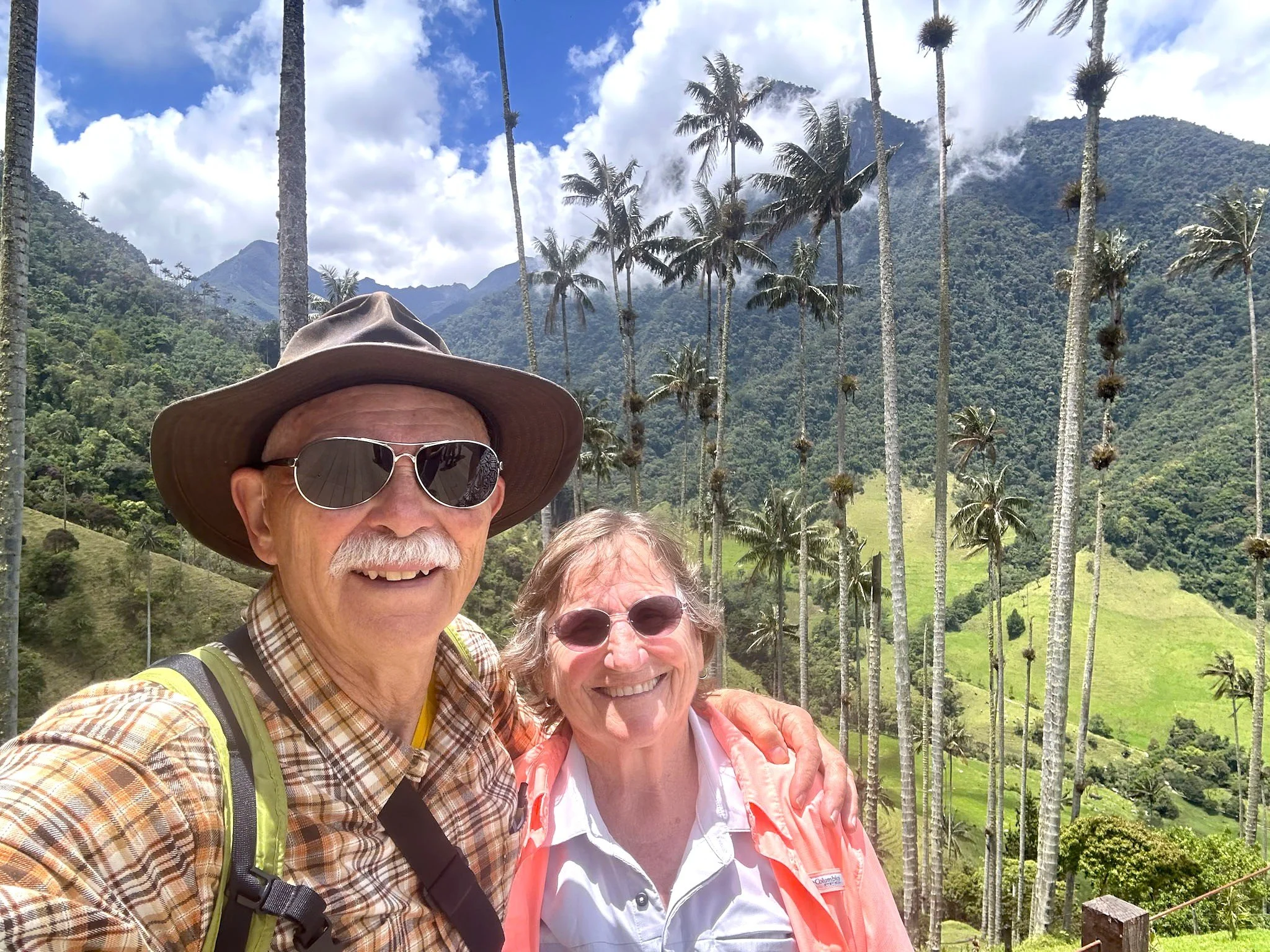
     We drove to the Cocora Valley, an area of six volcanoes of which three are active. Our guide said that the weather in this valley is so crazy that people here say, "We trust the politicians more than we trust the weather." Cocora Valley is the home of the Wax Palm trees, which are the tallest palm trees and tallest plants in the world. But Not the tallest trees, which are our California redwoods.

     The valley is part of the Los Nevados National Natural Park, and Cocora Valley was incorporated into the national park in 1985. The valley is the main location of the national tree of Colombia, the Quindio wax palm tree.

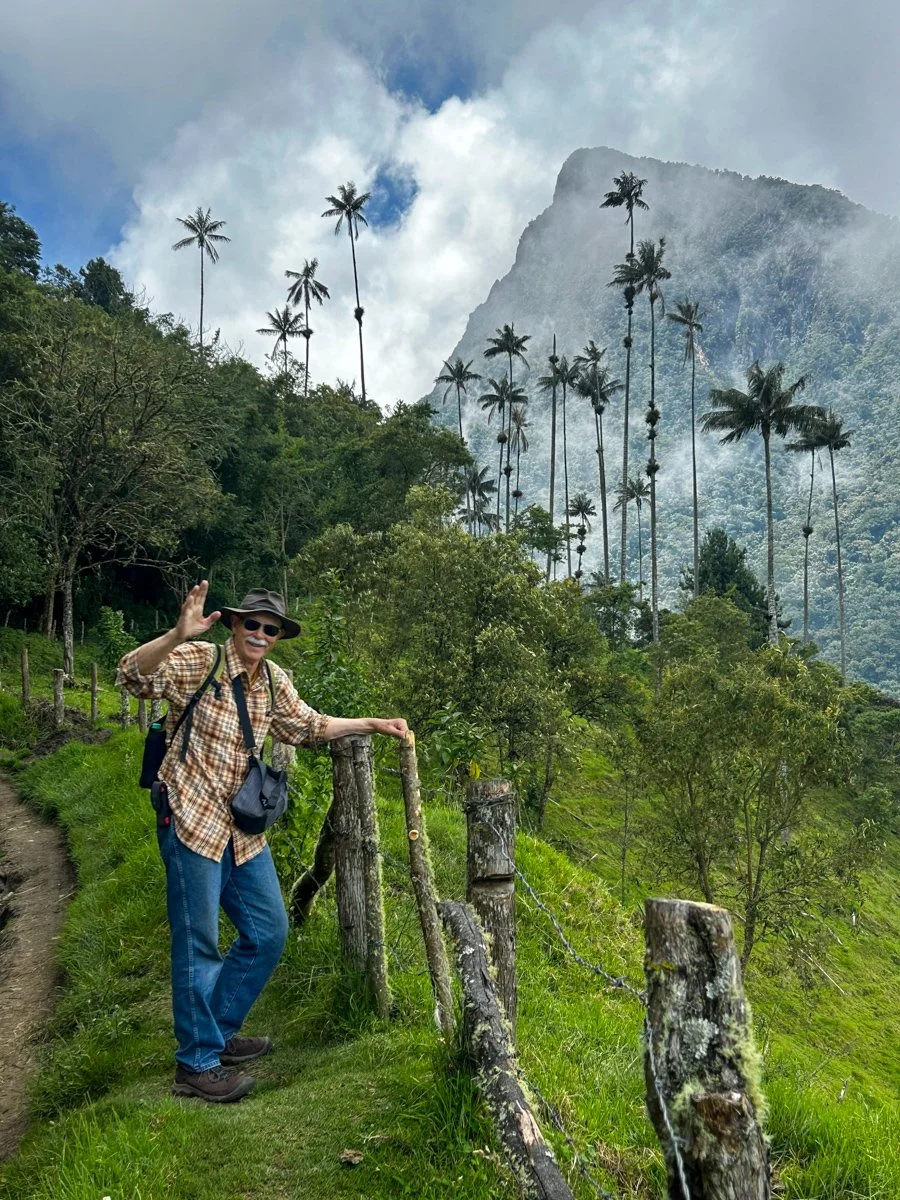
     We took a four-mile hike in the park with the first two miles being substantially uphill. We hiked from 8,000 feet elevation up to over 8,700 feet elevation. We made it all the way up, and Vicky was really outstanding! Why? She was vomiting horribly the night before, but she got up in the morning and made the entire hike. I was a little out of sorts myself, but we carried on, as usual.

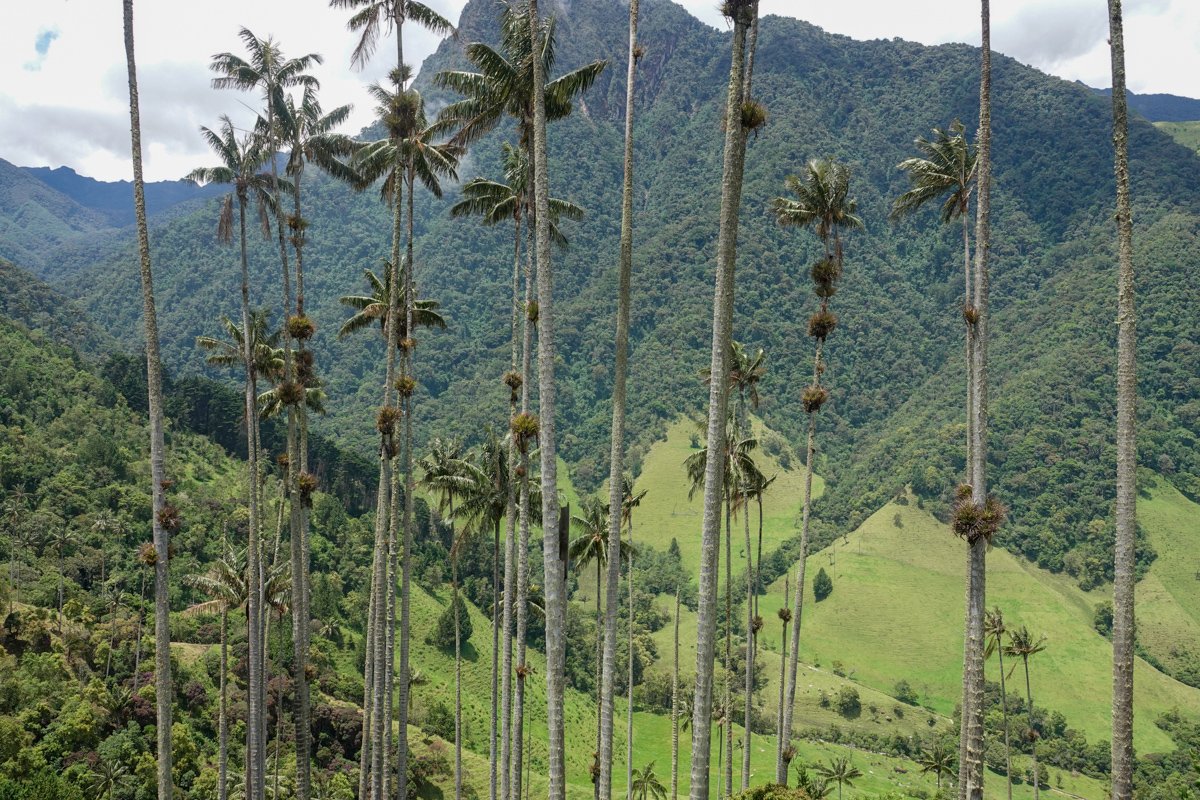
     The wax palm can grow as tall as 200 feet. The trunk is cylindrical, smooth, light colored, and covered with wax. The wax from the trunk was scraped off the trees (often killing them) and used to make candles, especially in the 19th century. It was also used to build houses and used for water supply systems. Today, this tree is protected under the park's national status.

     I was happy to see that they have been propagating and planting new wax palm trees here.

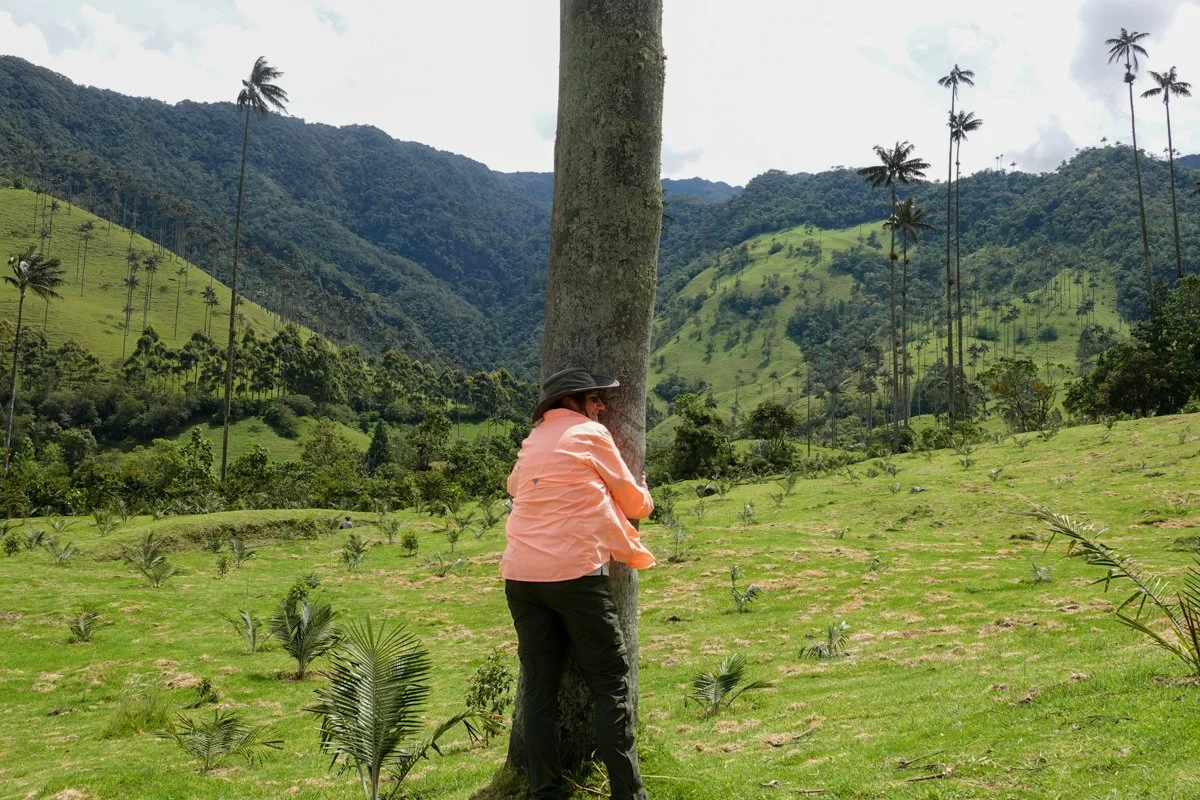
     We also spotted tree-huggers and horses as we hiked this trail.

     As we neared the top of the trail, we stopped more often but kept smiling and hiking...

     We made it to the top of the trail where there was an observation deck and a small snack bar. We had coffee with cinnamon and rum in it. It tasted great and gave us a boost for the trip back down. This was our view from the top.

Salento

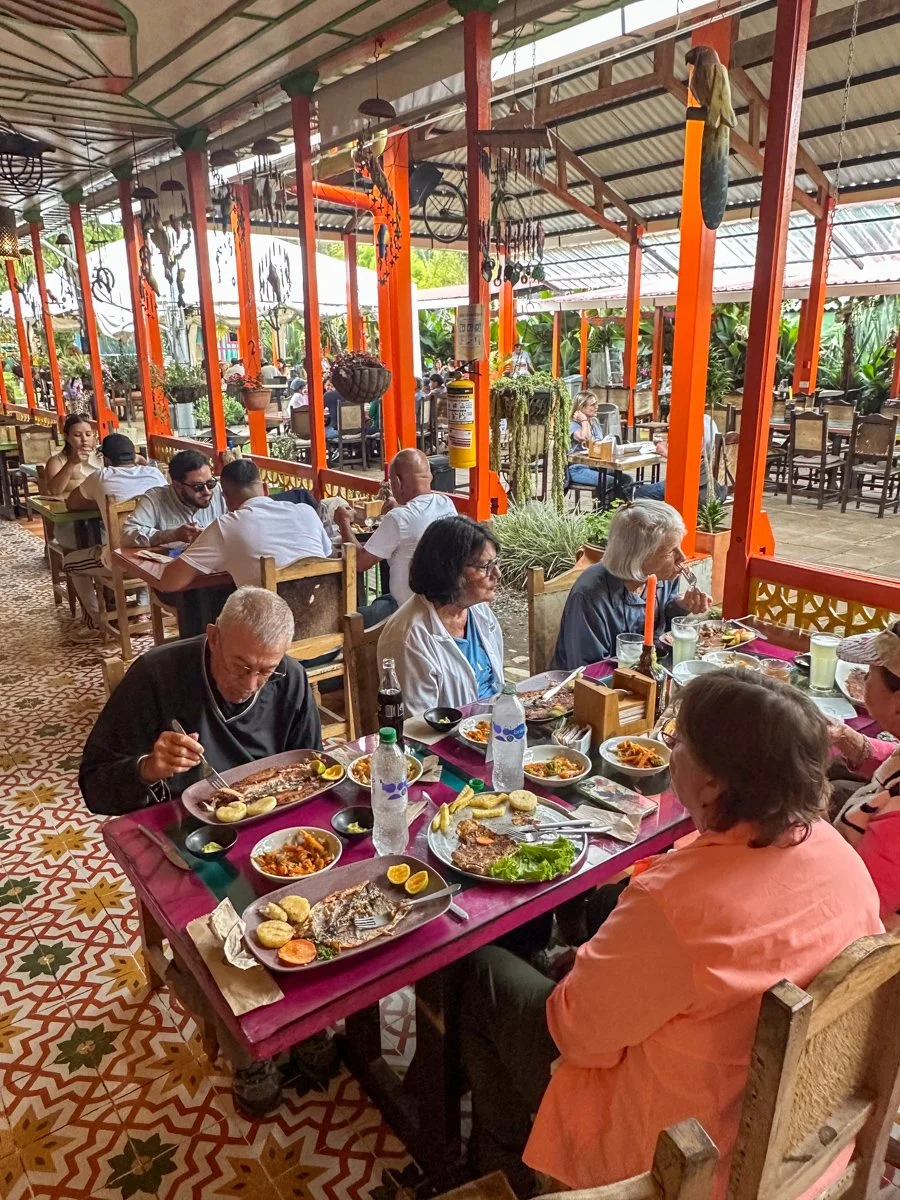
     On our way back to the eco-farm from the Cocora Valley, we stopped in the small town of Salento. But just before Salento, we had lunch at La Casa de Laurita. I had trout and Vicky had chicken. We also got cooked vegetables, potatoes, and passion-fruit flan for dessert. The restaurant was outdoors but covered, for the potential of inclement weather.

     Salento is a small town of less than 10,000 people. It lies on a plateau above the Quindio river valley. The town is at 6,200 feet elevation and is not flat.

     Tourism is the dominant economy of Salento today. The area also has farming and agriculture is very important here with dairy farming, coffee production, and flowers for the cut flower market.

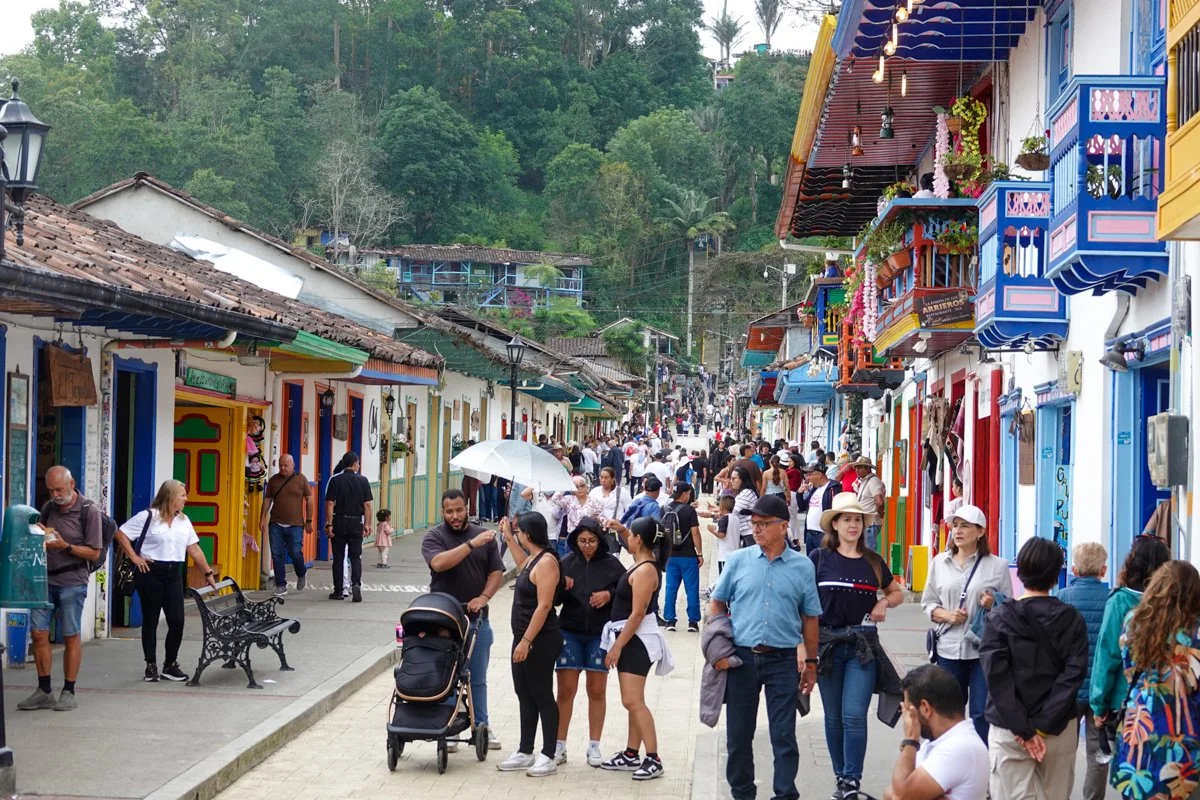
     Our local guide said that the weather in Salento used to be wet, overcast, drippy, and dreary all day long. For that reason, the town is super colorful, but the weather is not so gloomy these days.

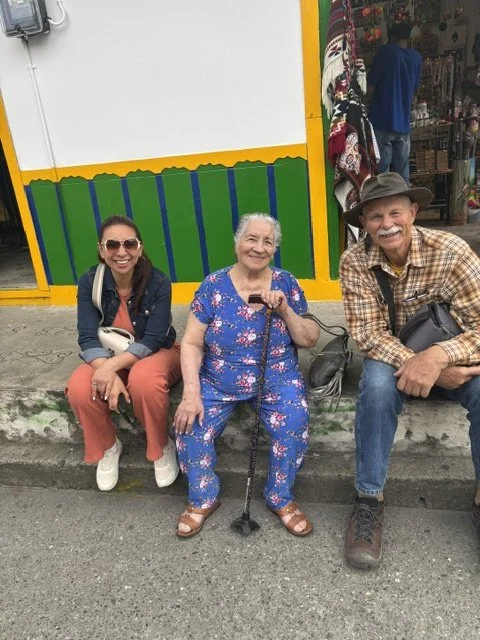
     At one point, Vicky went into a store to shop. I was a bit tired, so I sat down outside on the curb to rest. A couple of women came and sat down next to me. We had a long and engaging conversation. I only wish I knew what we had talked about!
     Salento had a main street called the 'miracle mile'. We walked it up and down. It was very busy and it was a boisterous crowd as we walked along. We heard lots of loud conversations, music, store barkers, and really enjoyed the whole atmosphere.

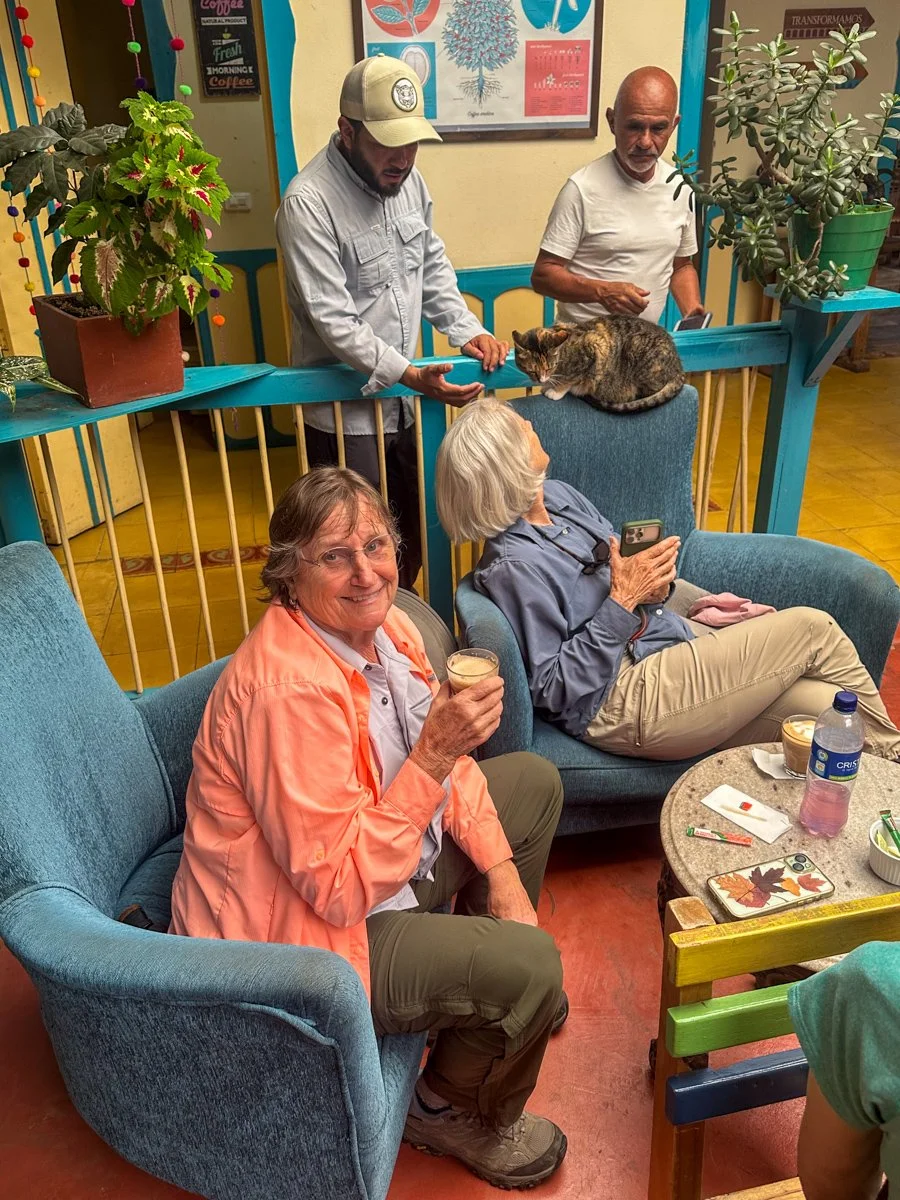
     It started to rain while we walked the miracle mile. We did like the Colombians and escaped to the Jesus Martin Coffee shop for a couple of mocha coffees while the weather settled down. Our local coffee triangle tour guide is on the back right.

Quindio Botanical Garden

     We started this day driving a short distance to the Quindio Botanical Garden. It was founded in 1978, registered, and became the first legally recognized botanical garden in Colombia. It received a plot of native forest in the 1980's and acquired a larger site in 1989. It opened to the public on December 16, 2000.

     The garden boasts over 850 plant species, 180 bird species, and 30 butterfly species. It has a handful of museums, a birdwatching area, and a butterfly house. The garden is a leader in biodiversity, sustainability, and environmental awareness.

     We took a two-hour walk through the forest. To me, it was more like a botanical forest than a botanical garden. We had a guide which was a good thing as we saw very little in the way of informational postings. 

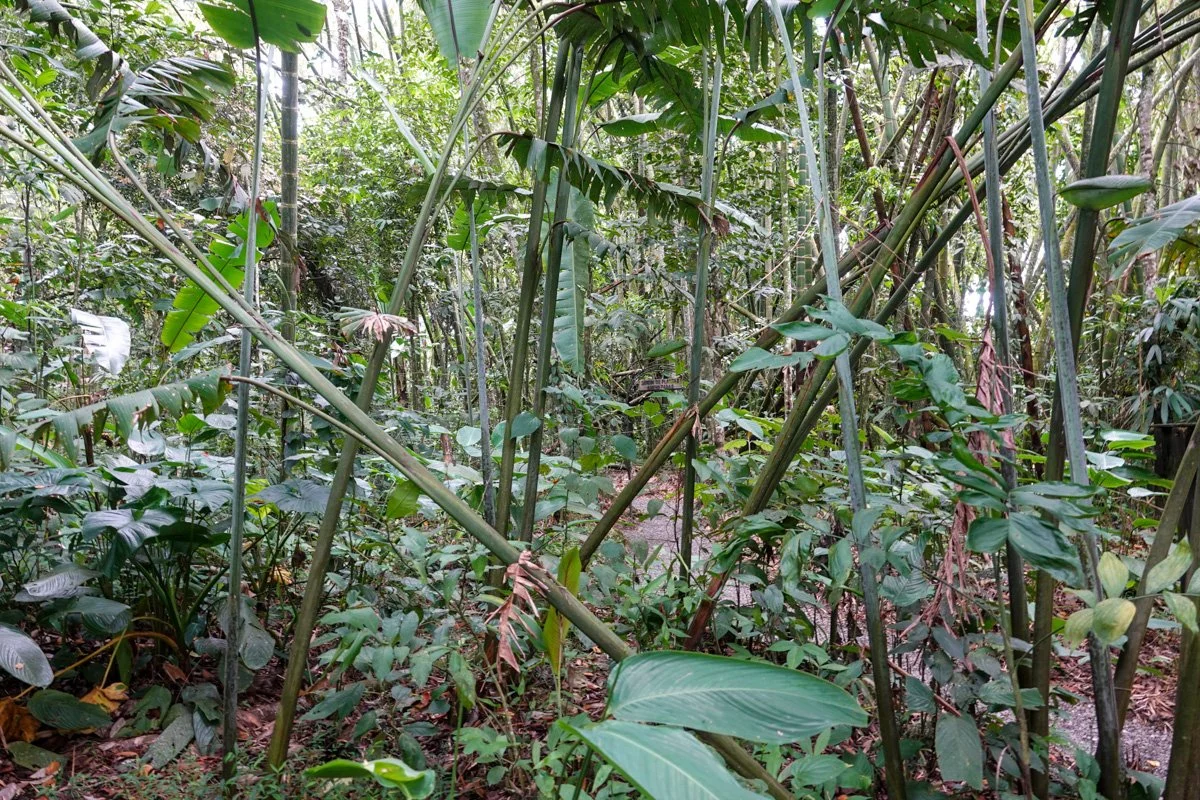
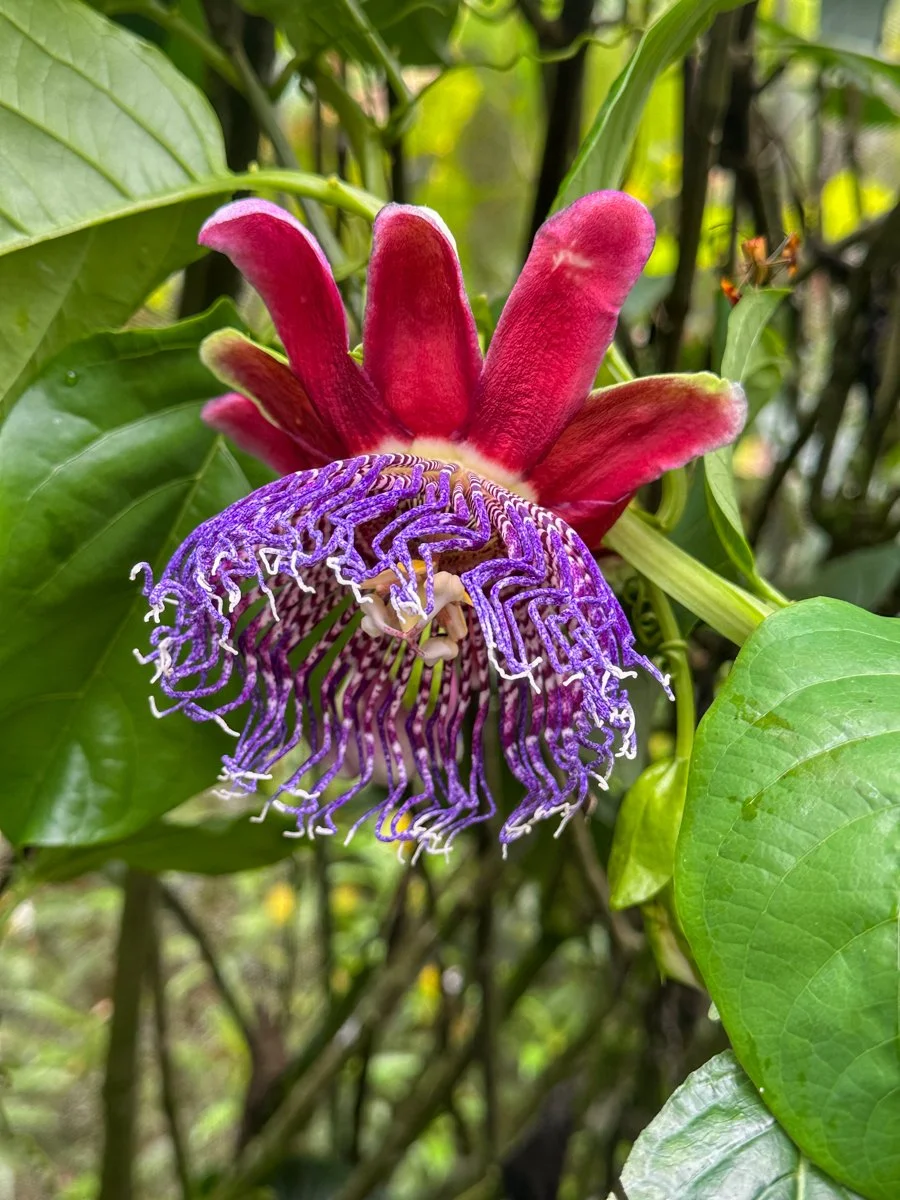
     The first photo will show that much of our walk was through some wild forest area. But then, on occasion, we would come across a bright flower or some colorful plants.

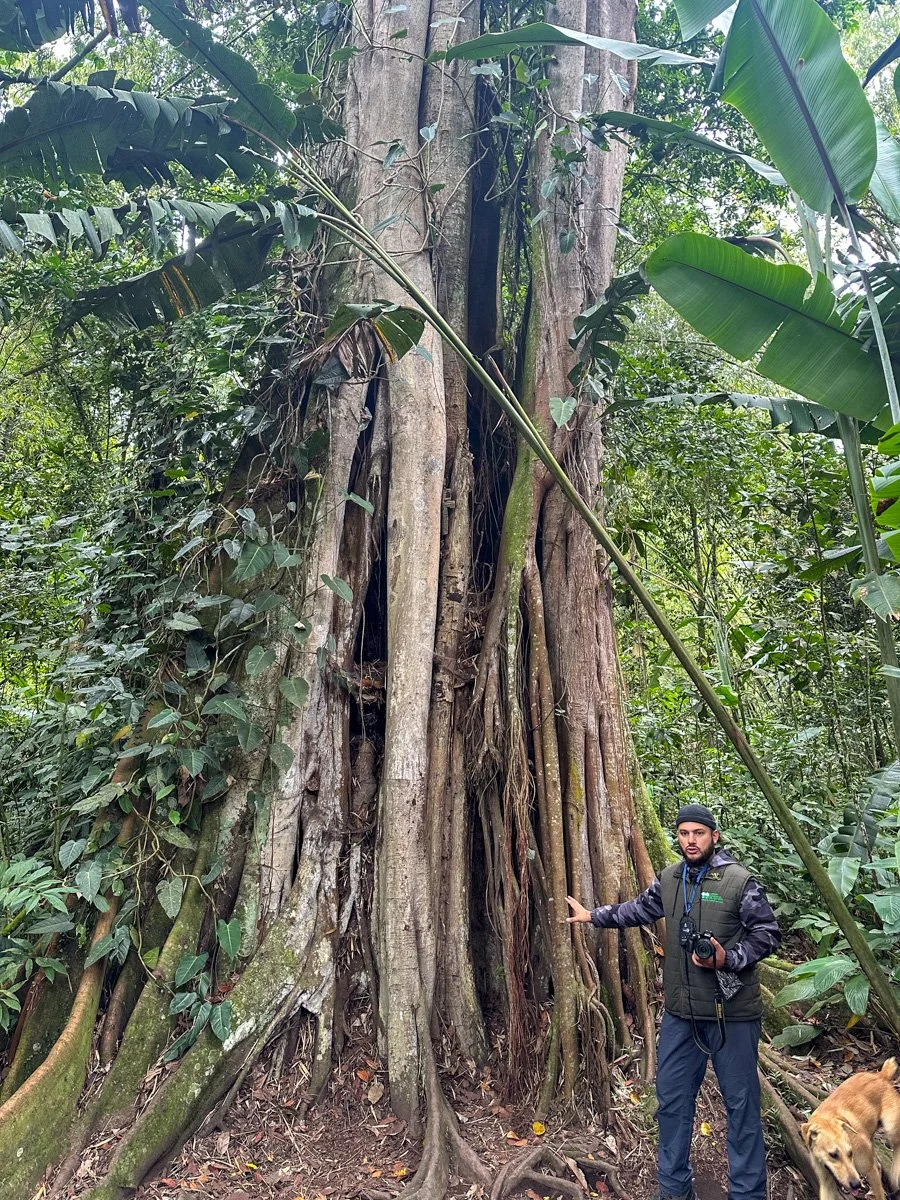
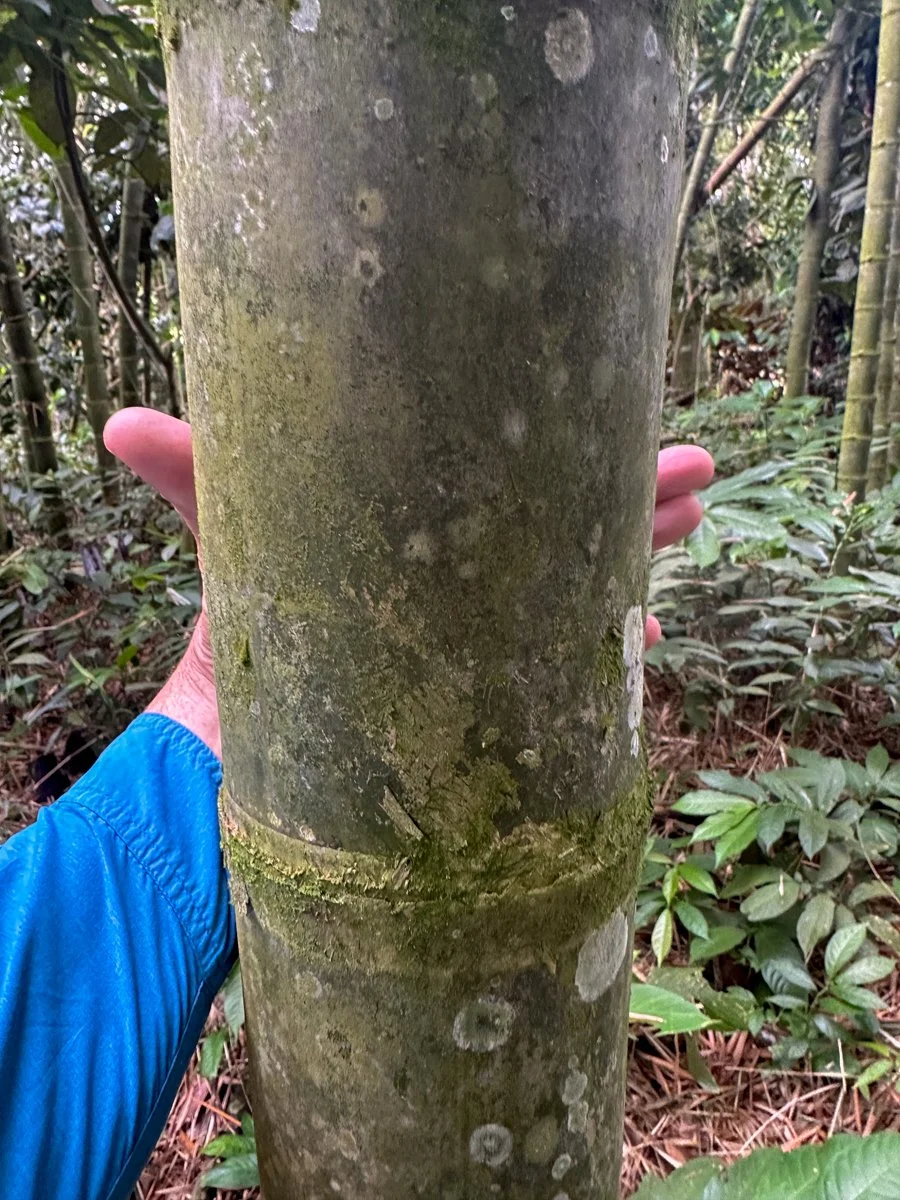
     You can see our botanical garden guide in the next photo, next to a large tree. The area did have some large specimen trees and the bamboo was very large as well. In the following photo, my own hand is behind the bamboo, so it had to be at least over eight inches in diameter.

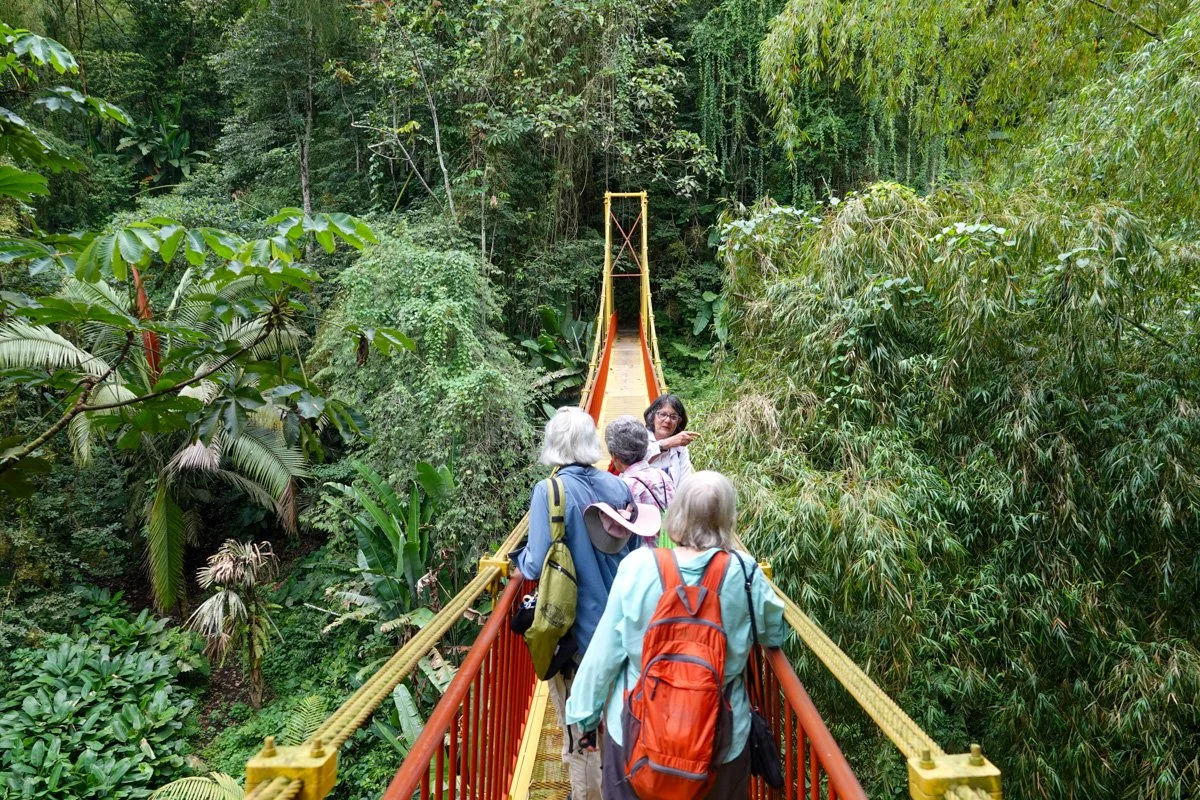
    There have been some upgrades to the garden, such as the bridge over a very steep canyon. It was a good opportunity to get to see some of the forest, while not being right in the forest.

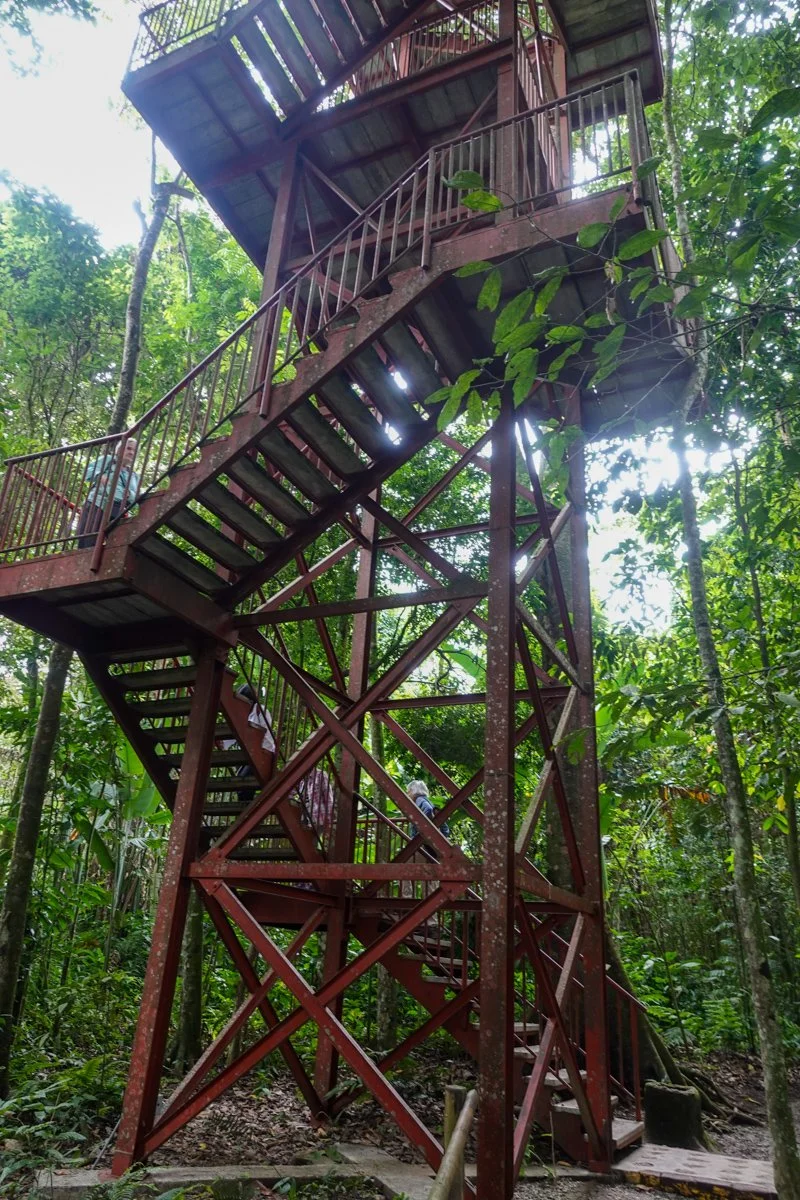
     We came to a butterfly viewing platform. I looked up at the 110-step structure and said to our garden guide that there had better be some butterflies up there to see, if I'm going to climb all the way up there. I was skeptical because of my past experiences. By the time we were here, it was getting close to mid-day, and I suspected that the butterflies had all settled down for the day. Our botanical garden guide told me that he guaranteed that I would see a butterfly from the top. I had to climb all the way up, just to prove him wrong!

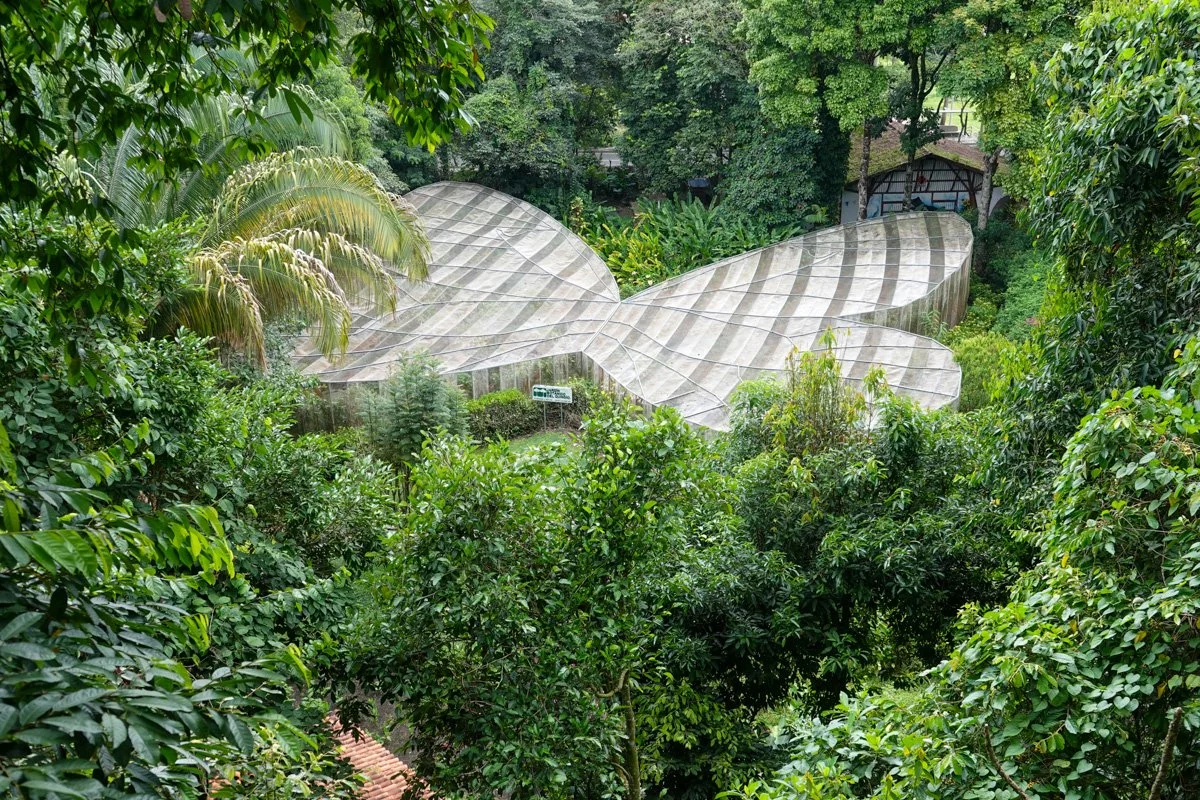
     Our garden guide proved to be too clever for me. He pointed out a butterfly, the ONLY one that I saw from the high platform. It turned out that the garden's butterfly house is shaped just like a butterfly. The joke was on me, but it was a good one!
Quindio Butterfly House

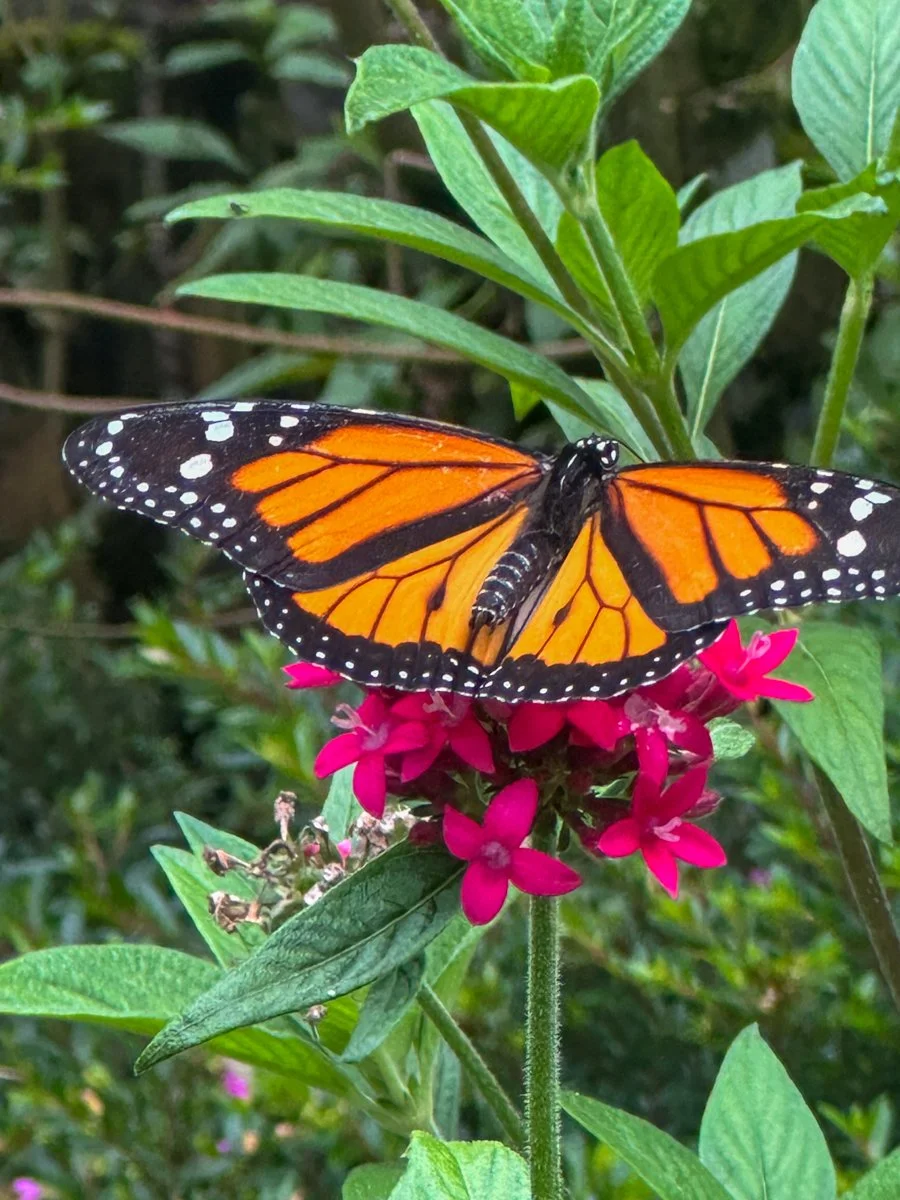
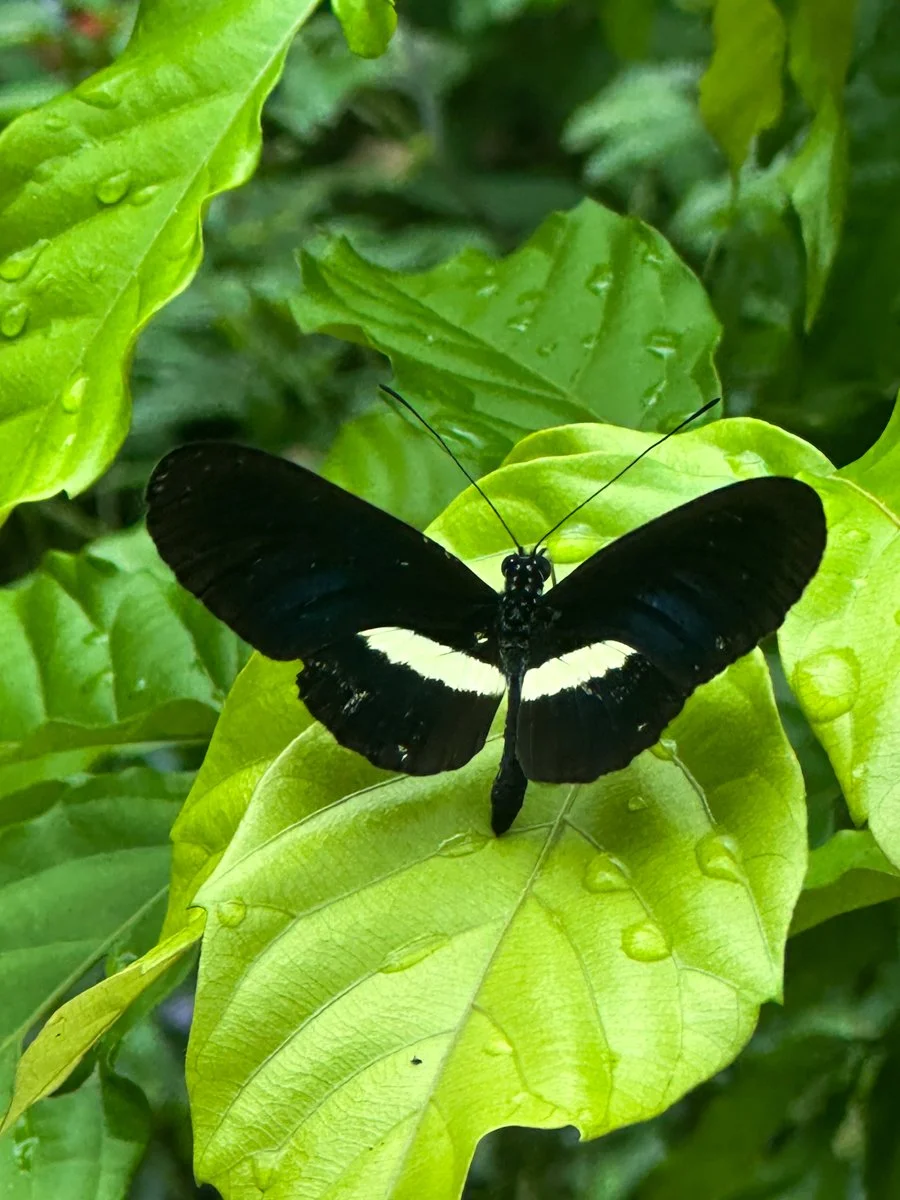
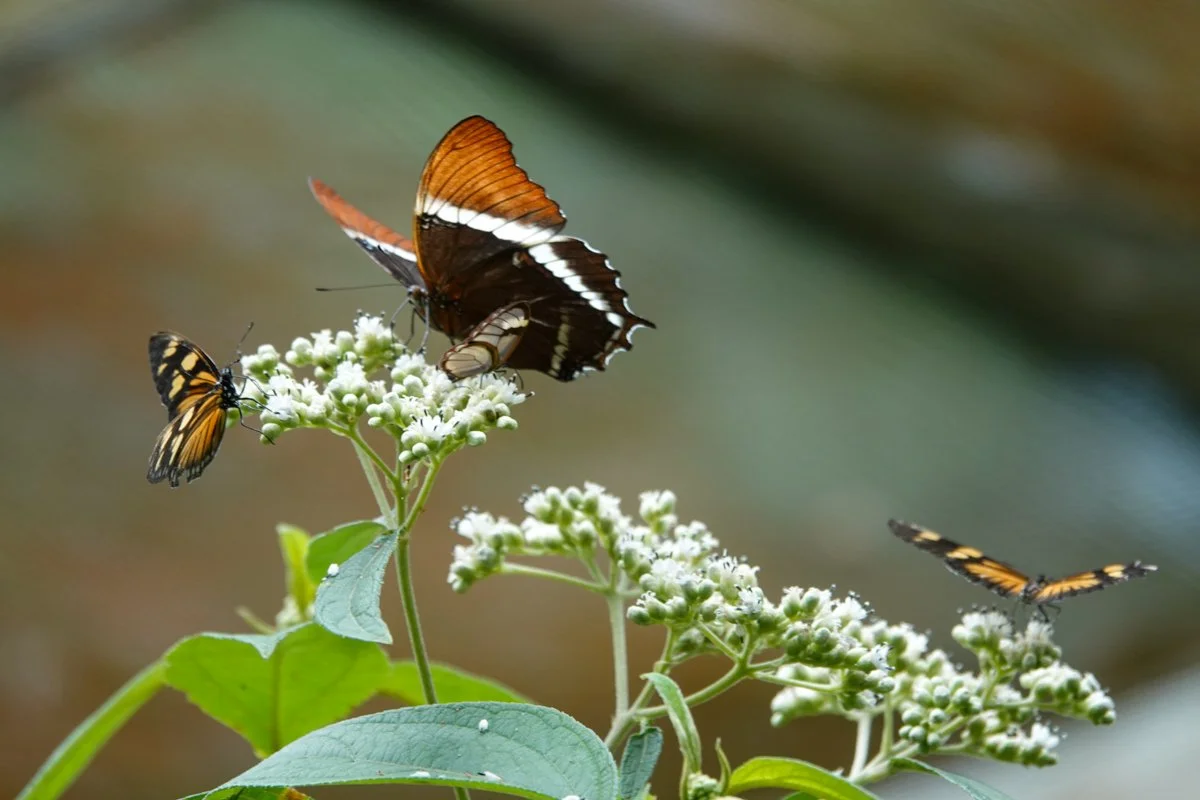
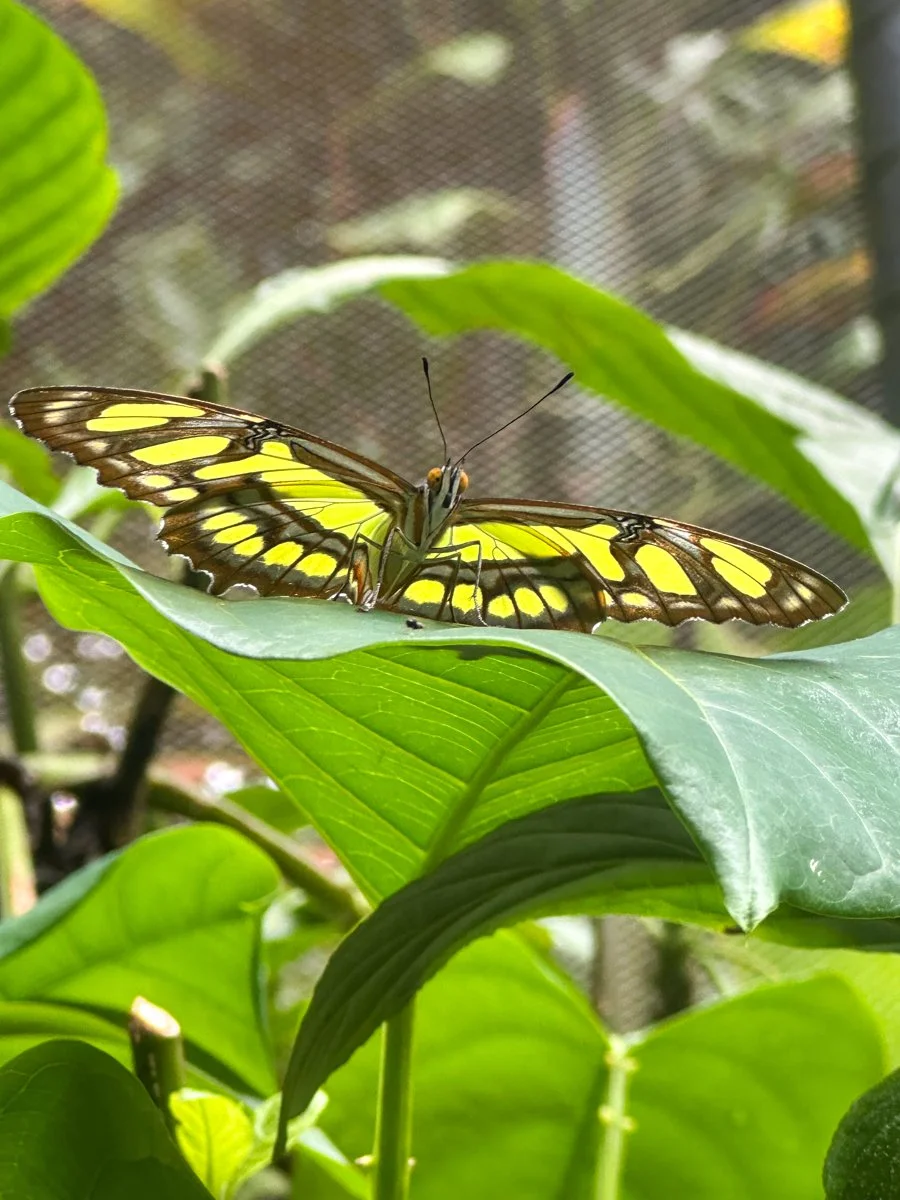
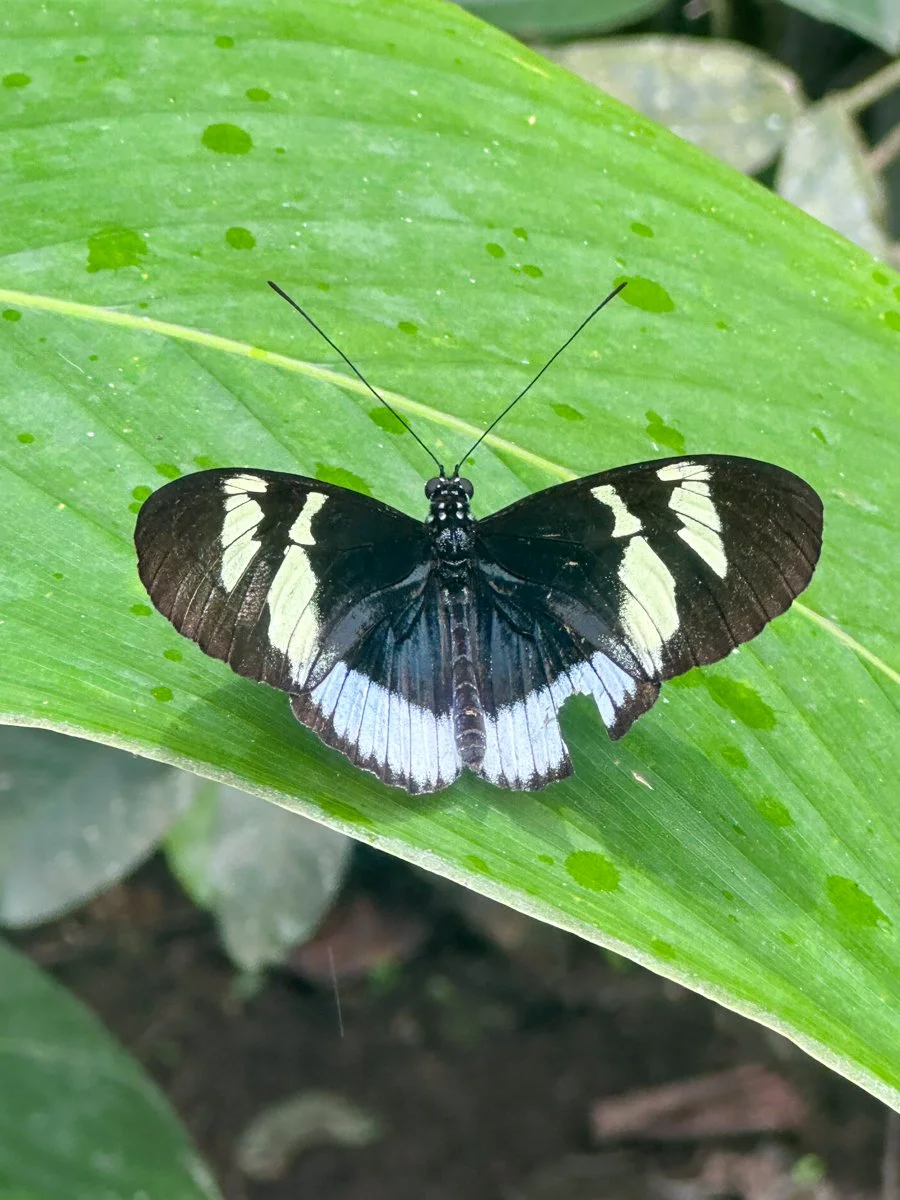
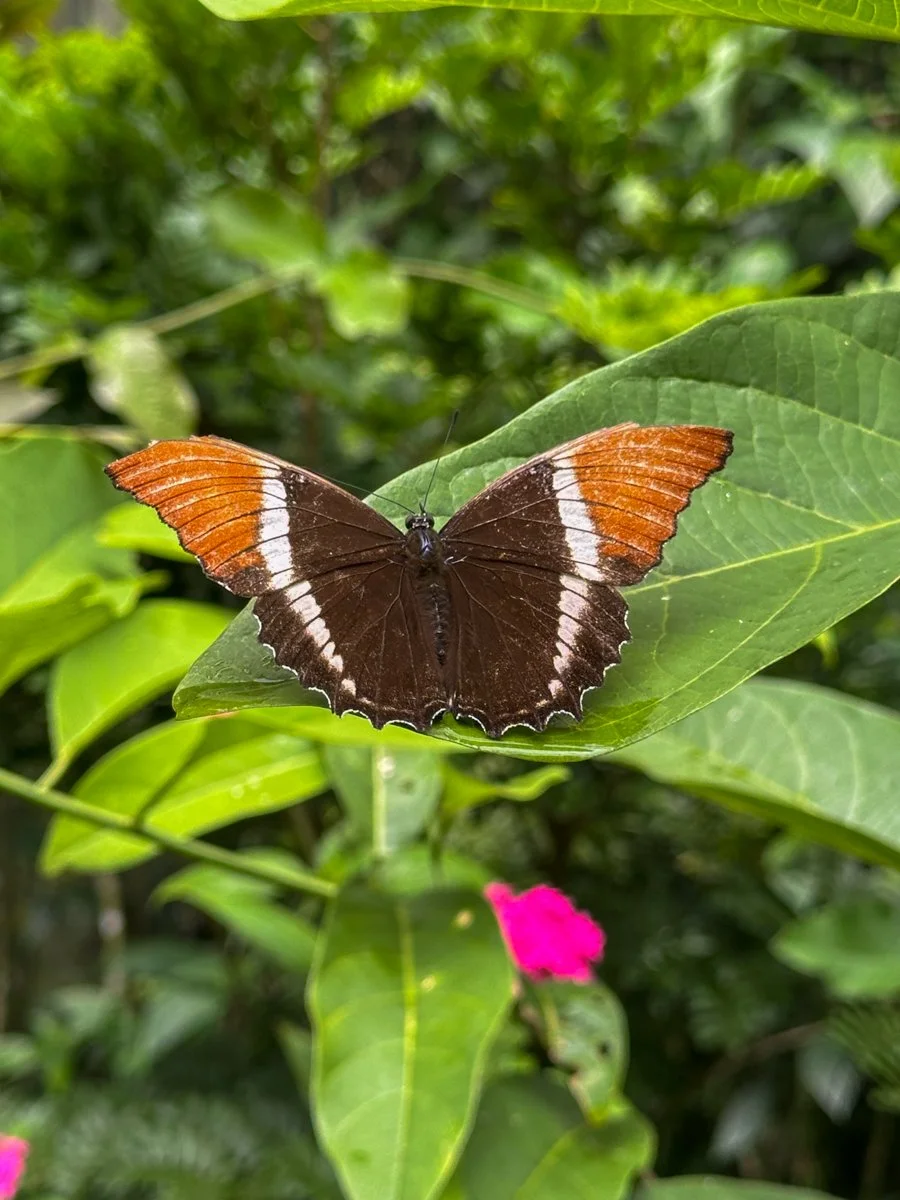
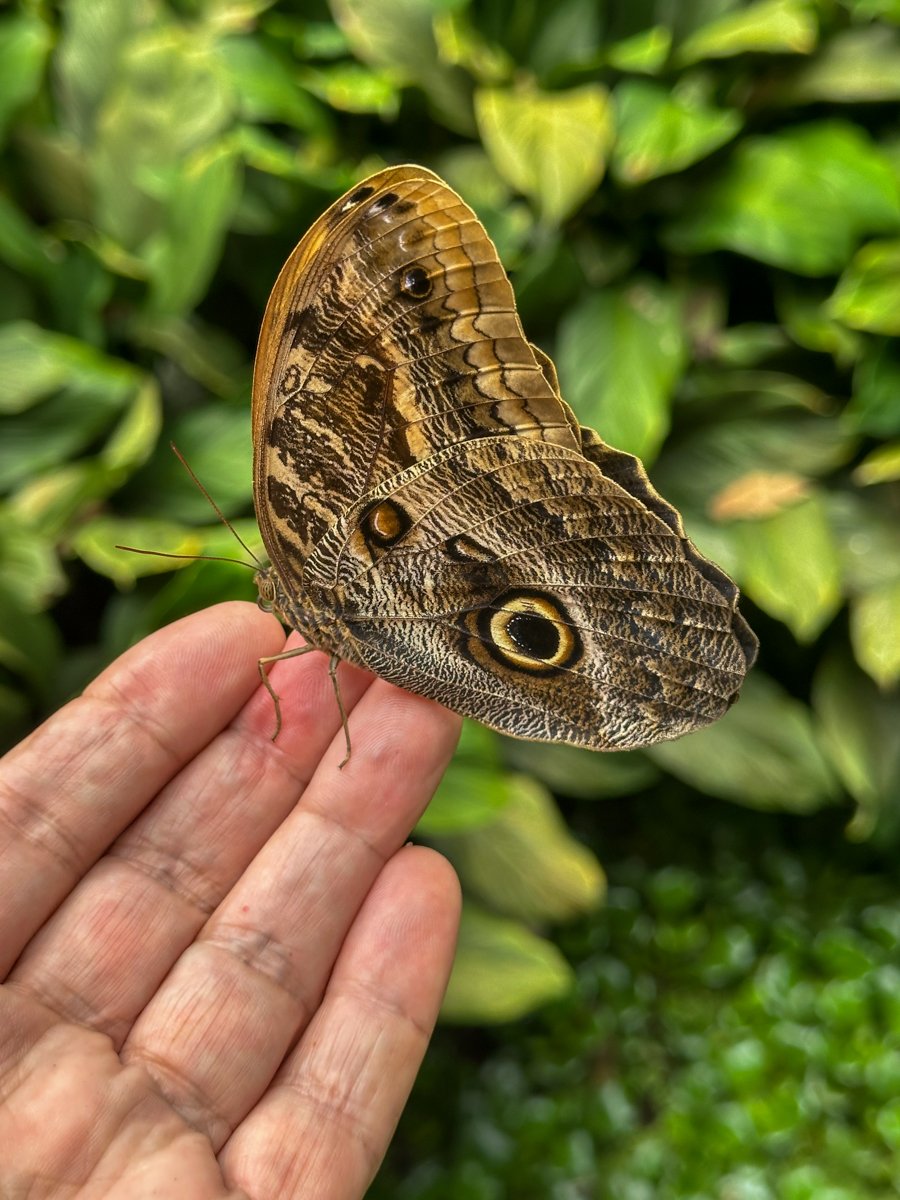
     The butterfly house at the Quindio Botanical Garden was my favorite stop at the garden. They also had a display building with half for insects and half for butterflies and moths. The butterfly house also had turtles crawling about the paths.

     My experience is that it is extremely difficult to get good butterfly photos, at least unless you have way more patience than I have. But the photos were pretty easy to get in this butterfly house.

     Regarding this last photo, it's my hand in the photo. I was coming close to missing my bus since this guy didn't want to leave me. Too bad Vicky wasn't there to see how sweet I am...
Colombian Food

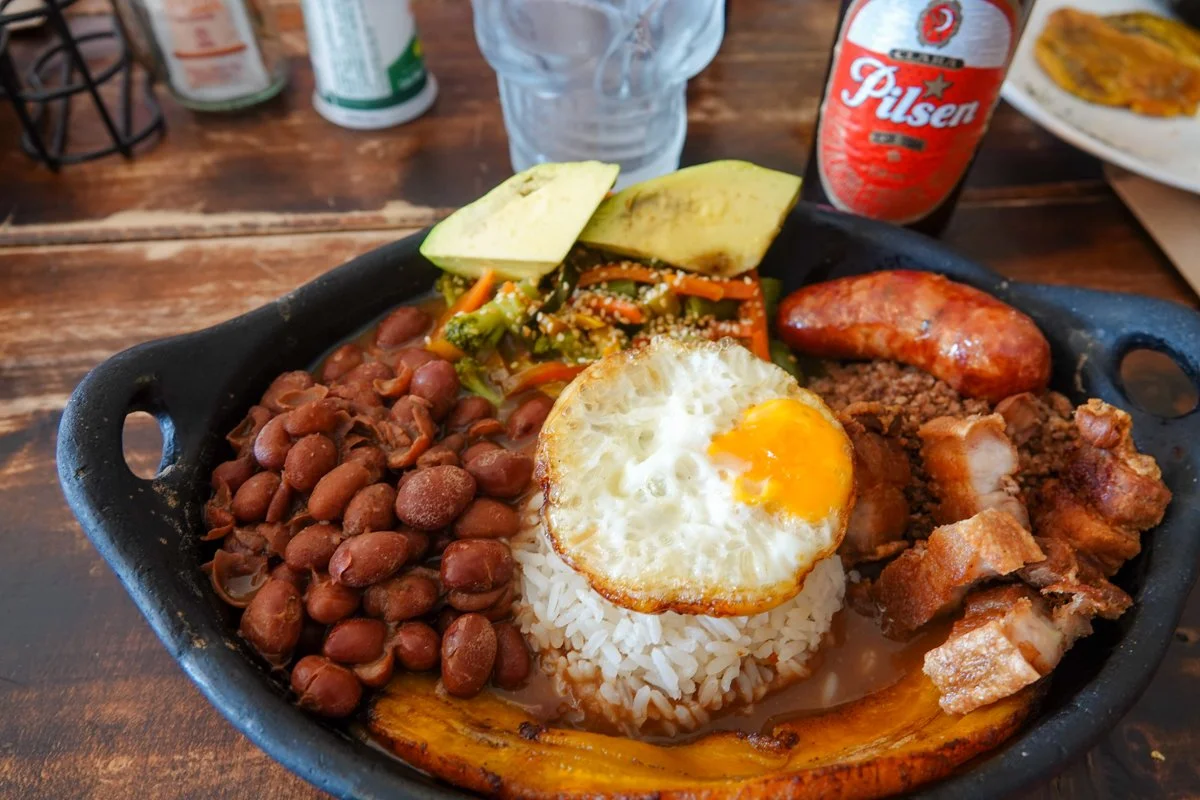
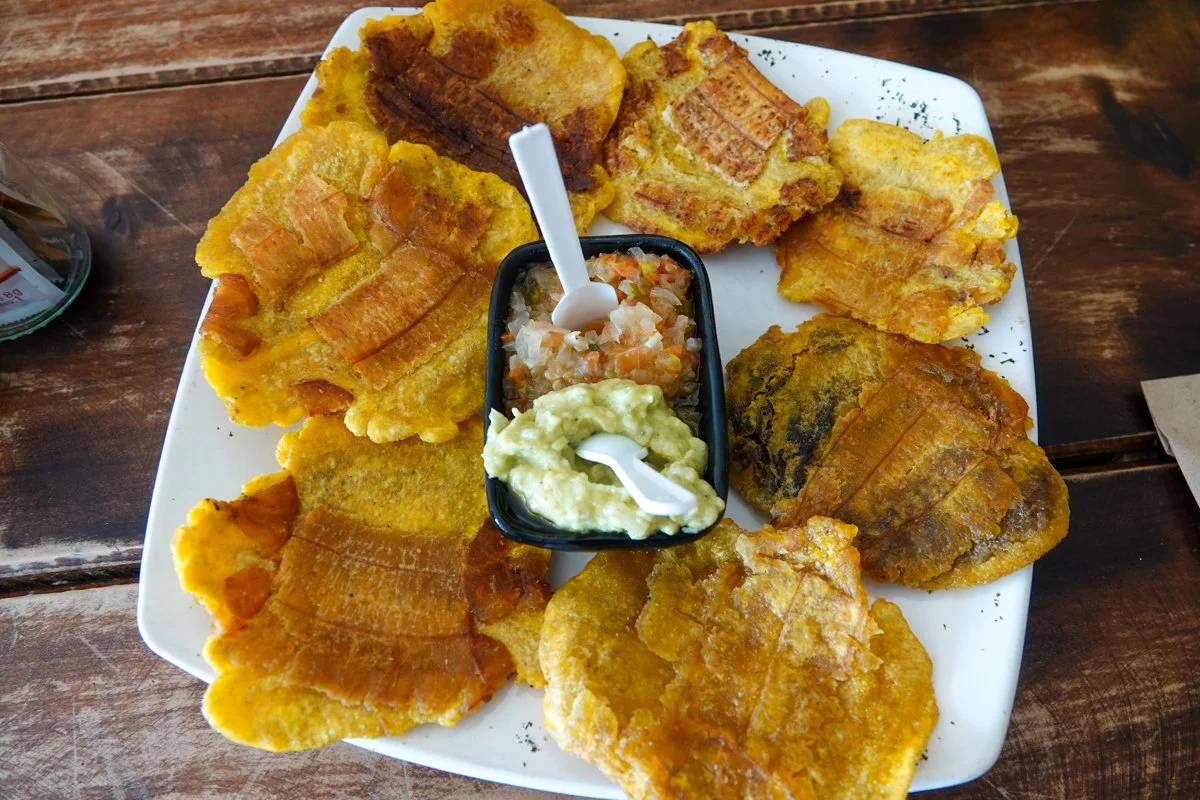
     This will show some dishes from the various places we traveled to in Colombia, after we left Bogota. The first plate was in Guatape at the Laparilla Burgers and Beef restaurant, with the marijuana plant growing on its front terrace. We had fried plantain and condiments for appetizers. My plate was a local dish of pork sausage, plantain, avocado, beans, ground beef, salad, and rice with a fried egg on top. We had beers with lunch and Ice cream for dessert. Everything was very good. The second photo is the fried plantain appetizers.
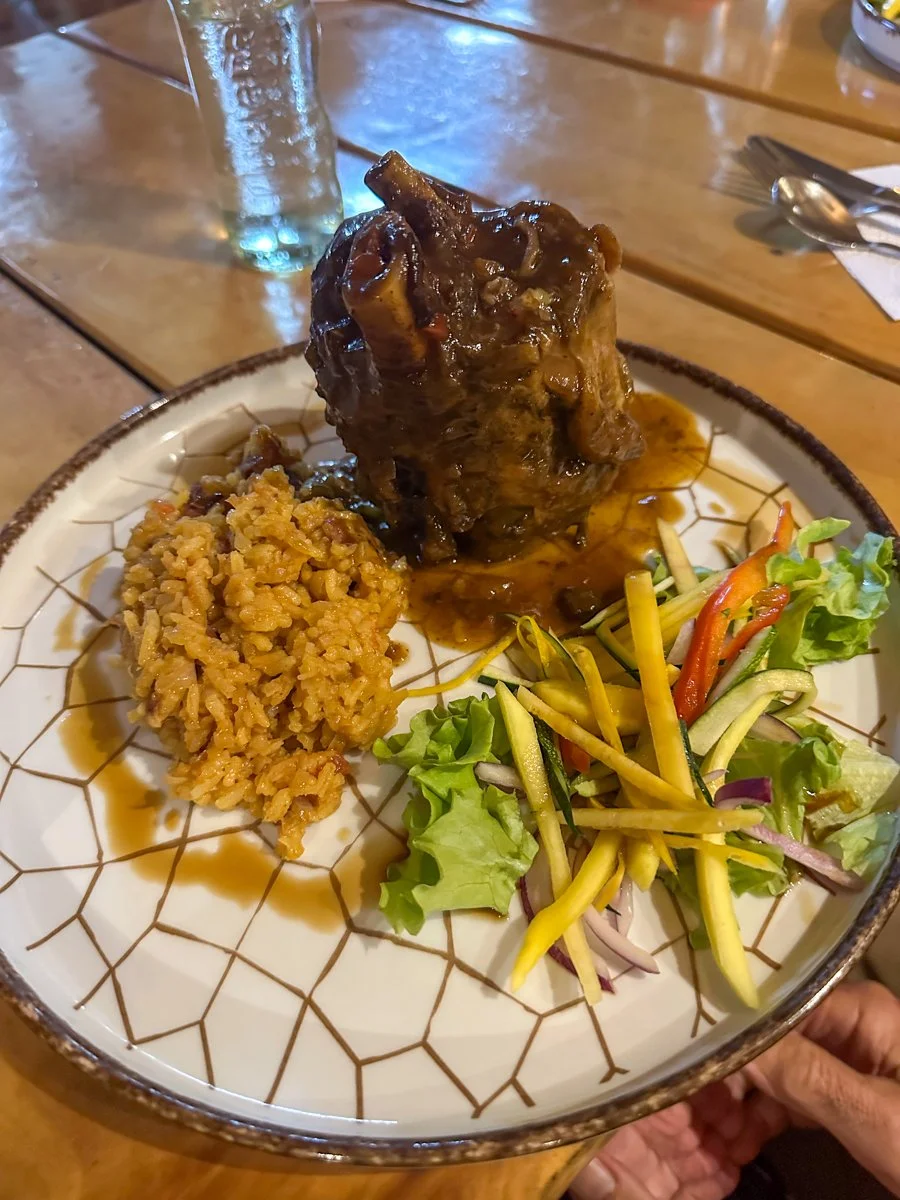
     The next photo was a dinner dish in Calarca at our Eco-Hotel. This is pork brisket with rice and salad.

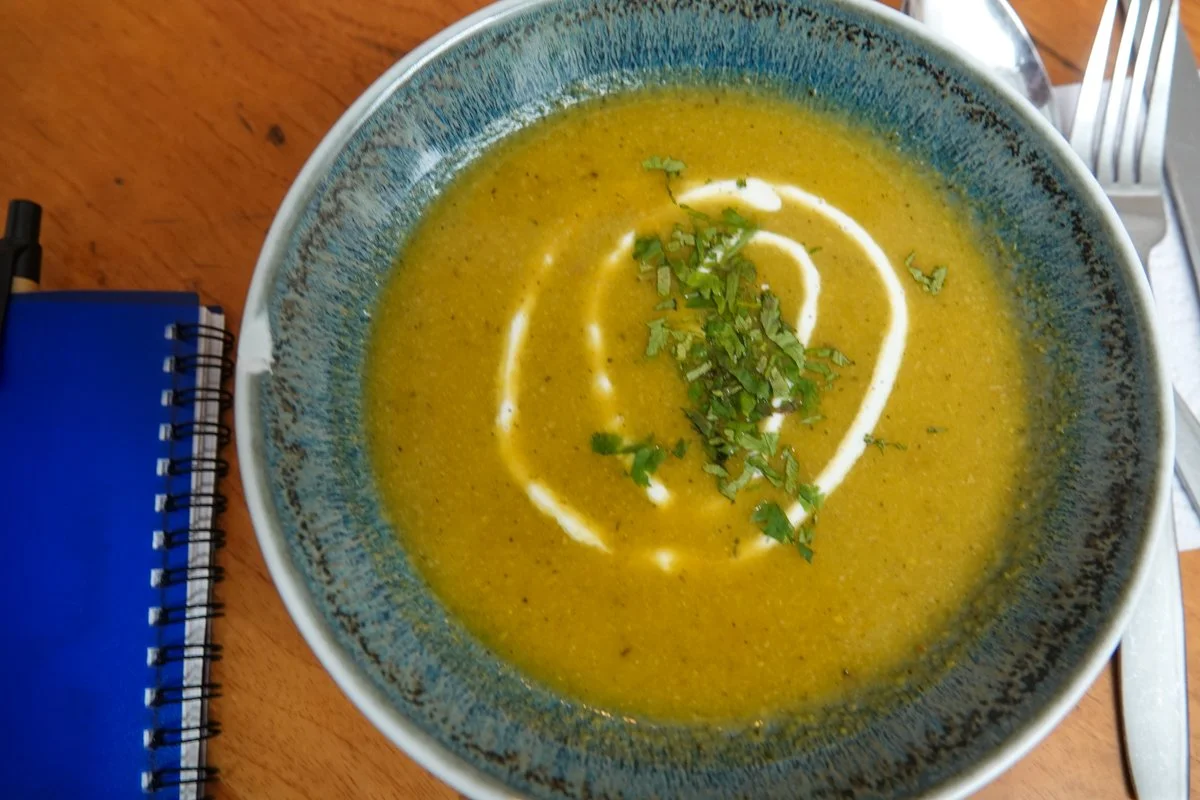
     For lunch in the Comuna 13 neighborhood in Medellin, we ate at La Cara del Allimento restaurant. Vicky started her meal with vegetable soup and beer. She then had Colombian fried rice with shrimp (not shown).

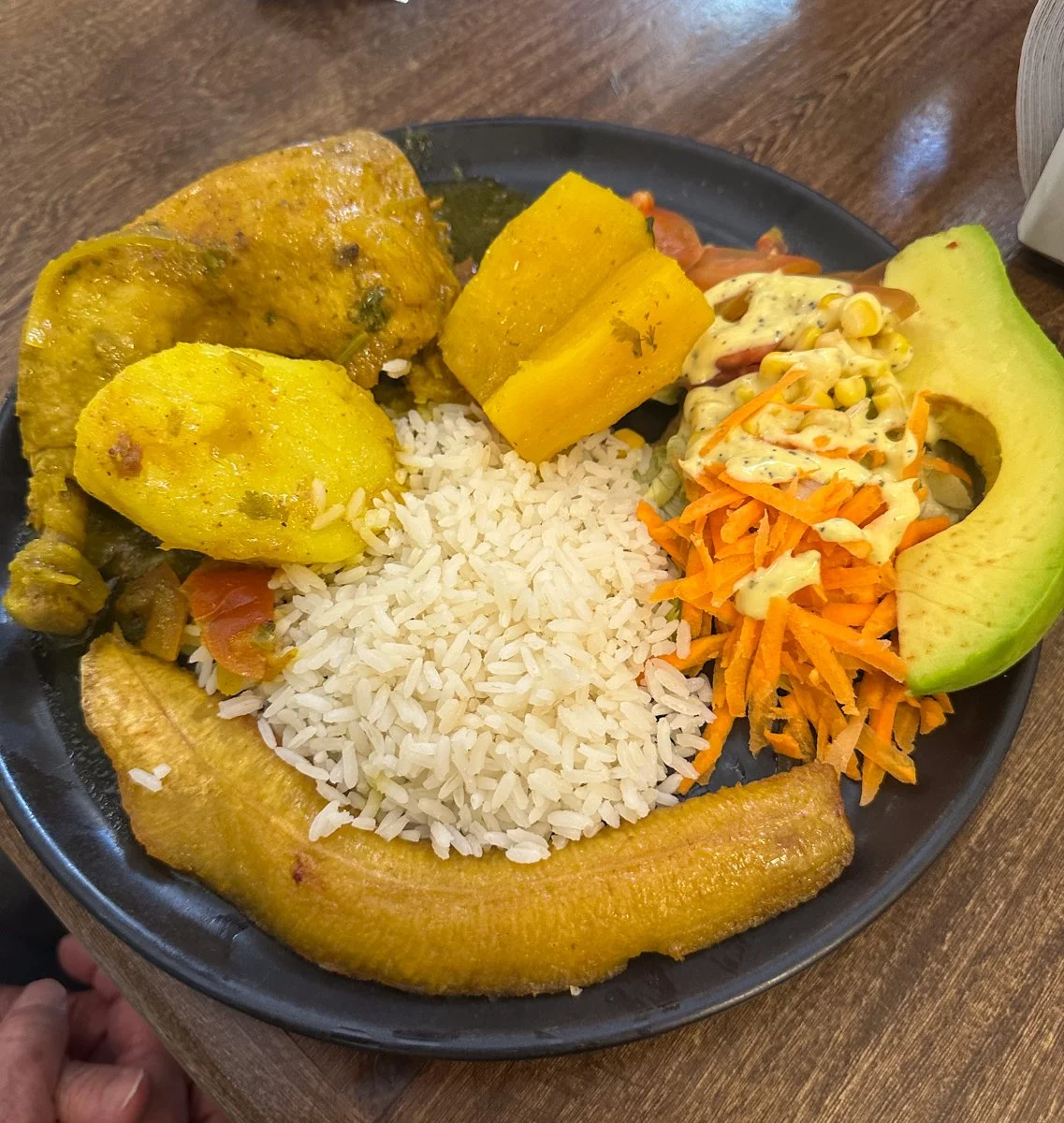
     Next was a lunch dish in Medellin at the El Social Restaurant. It was just called a 'chicken dish.'  It included avocado, rice, potatoes, salad, plantain, and beer plus a brownie for dessert.

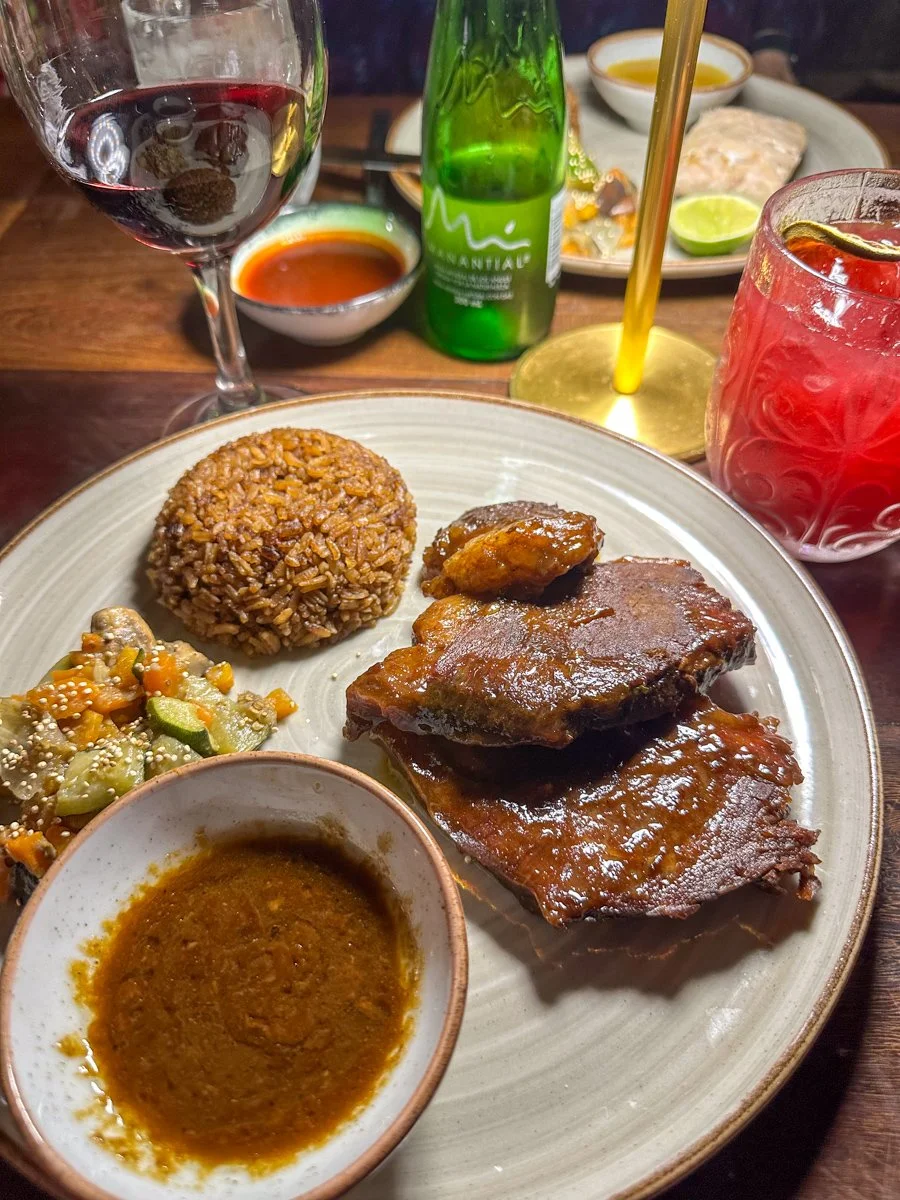
     This was a dinner in Cartagena at the Candelaria Restaurant. We started with ceviche, fried plantain with tomatoes, guacamole, and sauce. The dinner plate was steak, coconut rice, and steamed vegetables. Drinks included wine and Caroso juice (tasted like cherries). Passion fruit pudding was for dessert.
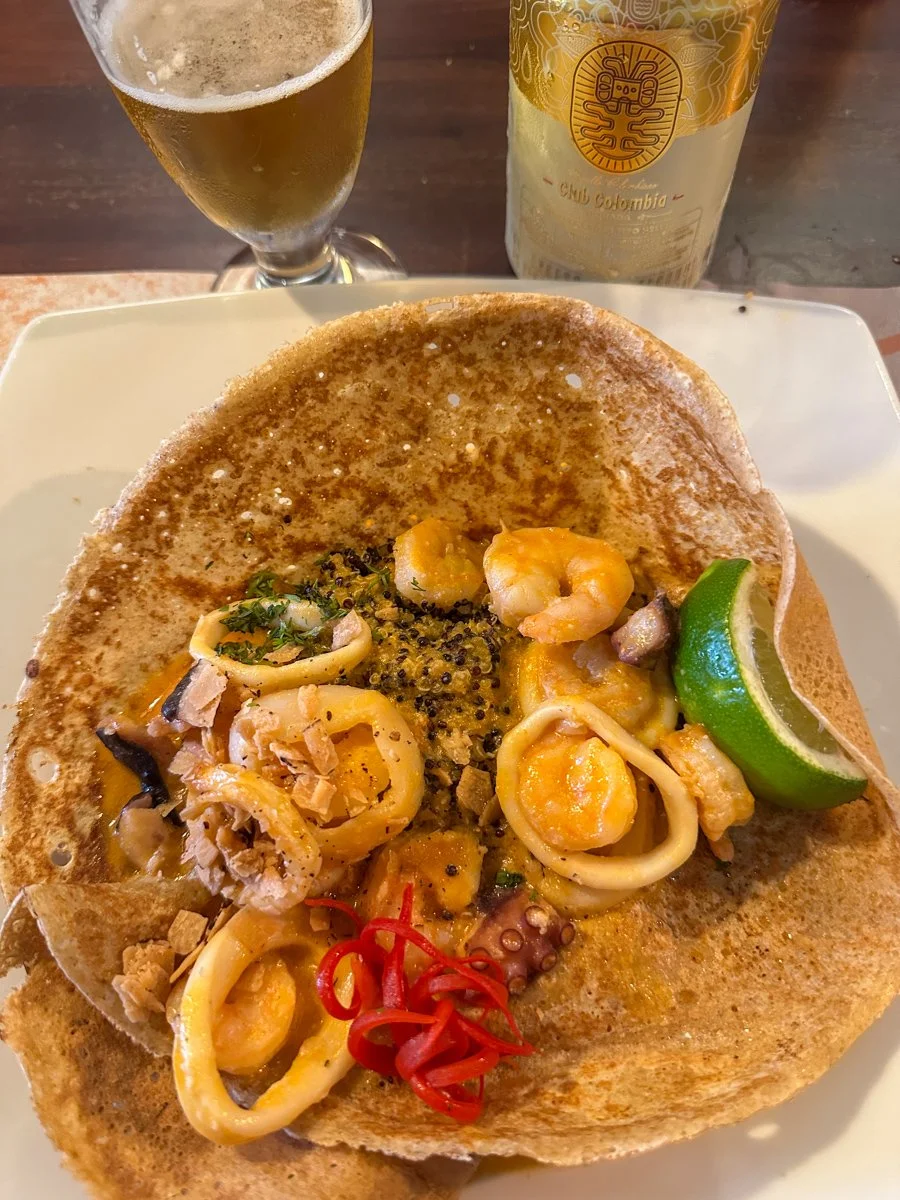
      This was lunch in Cartagena at the Crepes and Waffles Restaurant. I had a seafood dish with shrimp, calamari, and fish over coconut quinoa. We had several Club Colombia beers and two scoops of ice cream for dessert. I had rum raisin and raspberry ice cream.

Cartagena

     Cartagena was our final stop in Colombia. We had long looked forward to getting there because it would mean that we were now at sea level and away from the high altitudes. Well, Cartagena is at sea level since it's on the Caribbean Sea, but the heat and humidity were extremely challenging for us. The temperatures were in the high 80's to 90, and the humidity was at 80 plus percent.

     Cartagena has a long history, probably back to 4,000 BC. Its full name is Cartagena de Indias as Colombus thought he had landed in India when he arrived, per our guide. The city was named after Cartagena, Spain and was founded on June 1, 1533. It is one of South America's oldest colonial cities. It played a key role in the administration and expansion of the Spanish Empire. 

     Cartagena was a key port for exporting Bolivian silver and gold to Spain and for the importation of enslaved Africans to South America. For those reasons, Cartagena suffered frequent attacks by both pirates and other colonial powers. Cartagena built multiple defenses against these attacks and much of those defenses are still standing in the city today.

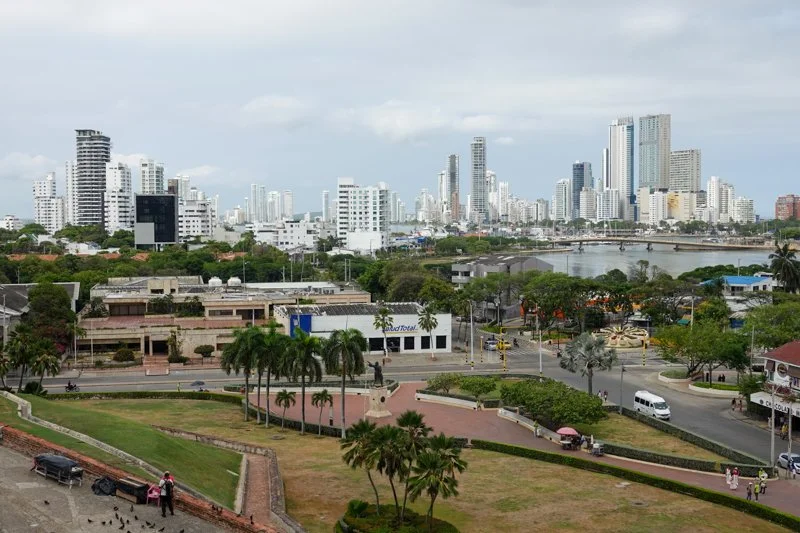
     Modern Cartagena is a large urban city with a larger metropolitan area. Economic activities include maritime industries, petrochemical industries, and tourism. We spent most of our time in Cartagena in the colonial areas, so I'll start with a photo showing its more modern side. This photo was taken from the San Felipe Fortress.

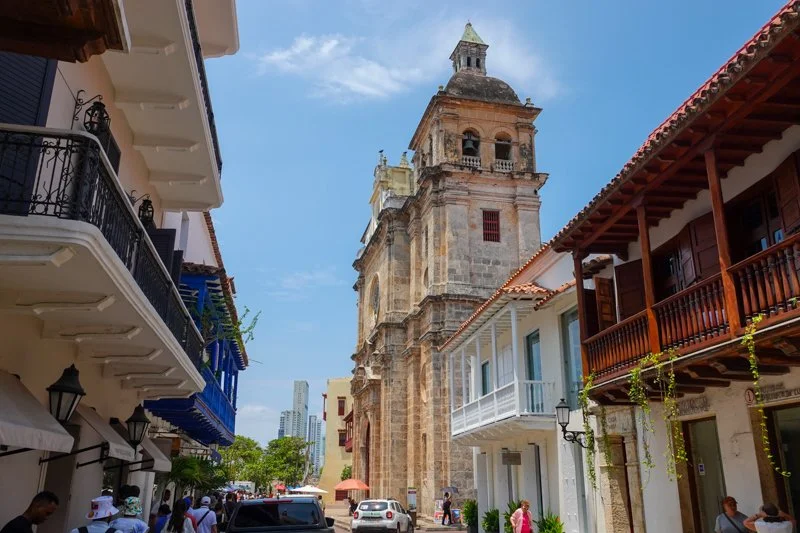
     This first post will be some general photos and explanations of our time in Cartagena. I'm including the next photo because it shows the very old (church), the colonial buildings on the street, and the large modern buildings in the background.

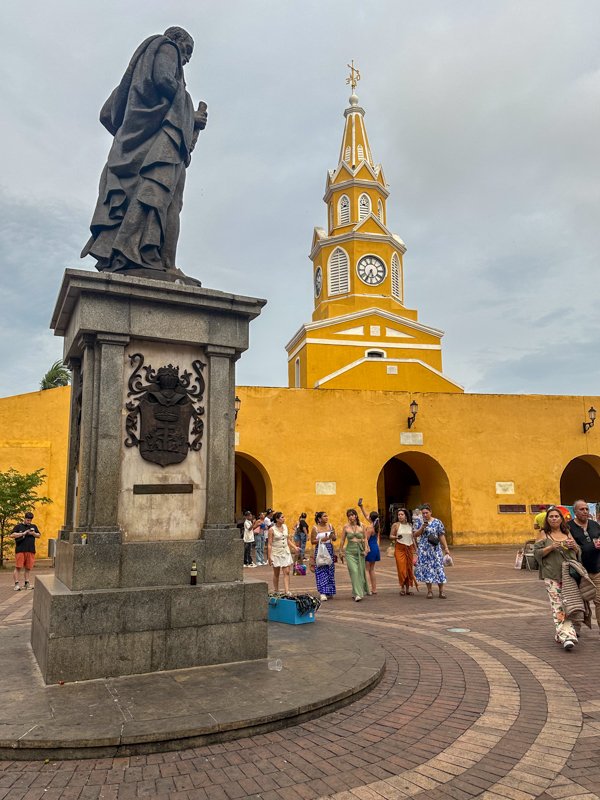
     The next photo is an old town plaza, and you can see some common features. The wall is the old city's defensive wall, twelve feet high, and built for protection from water attacks. Much of the old city wall still stands. You can also see a statue and Cartagena has plenty of statues. The clock tower was over the main entrance to the walled city. The clock was brought to here in 1874 from the United States, but it was replaced in 1937 by the current Swiss clock.

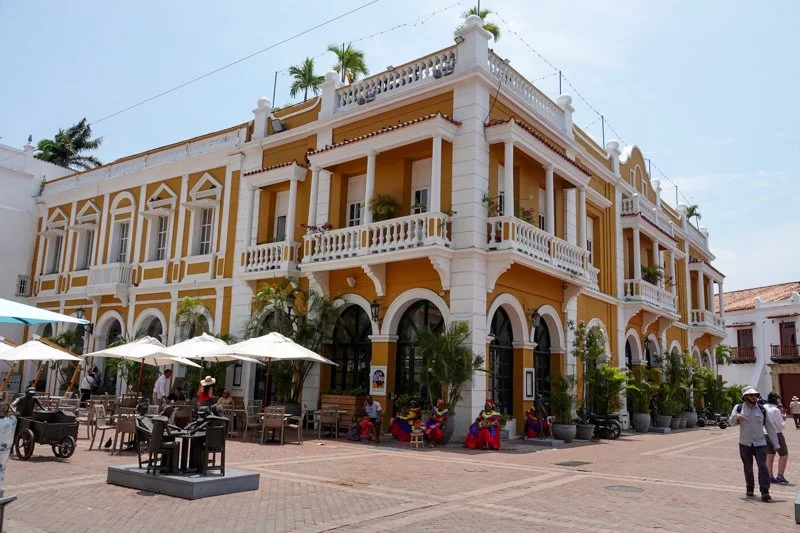
     As one of Colombia's oldest colonial cities, Cartagena has some beautiful colonial buildings.

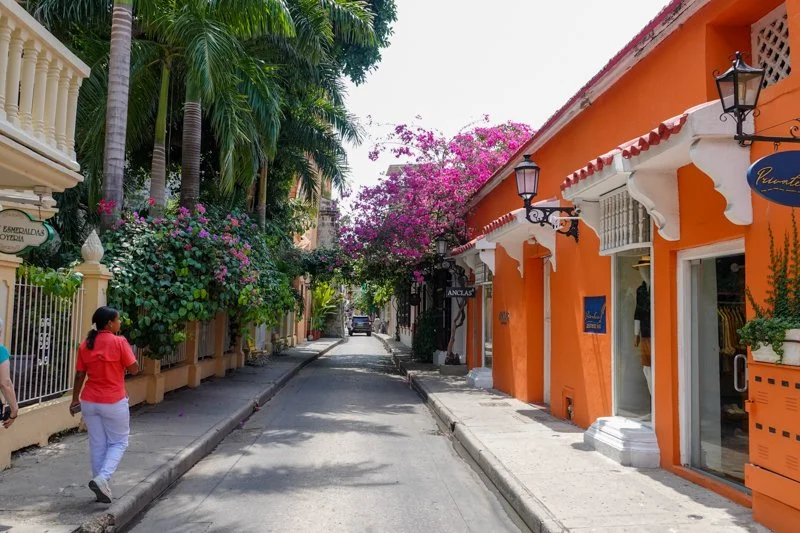
      We were in a nice hotel called the Bantu which is in Old Town Caragena. This next photo is not the street of our hotel, but it is very near to our hotel and typical of the area of Old Town. The woman walking on the left is our local tour guide, also named Vicky, and a very good guide. She added a lot to our touring.

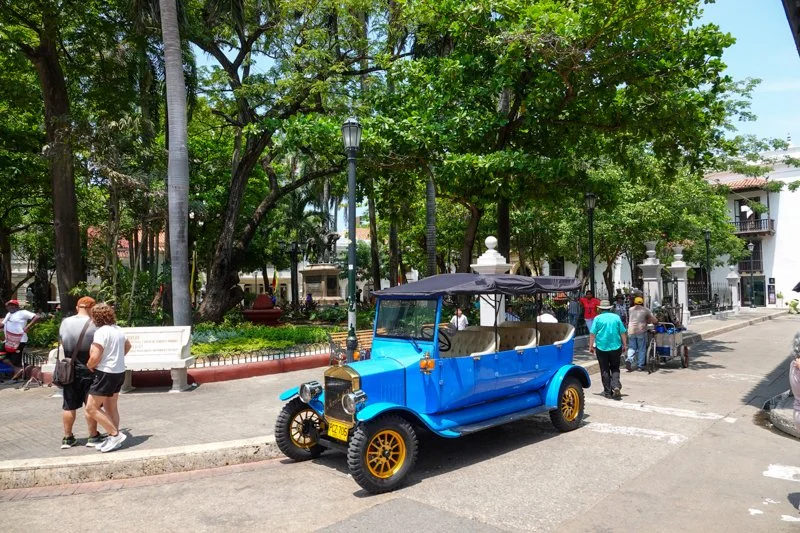
     The next photo is about a block from our hotel. It's Simone Bolivar Park in the Simone Bolivar Square. The car was a point of interest. Our guides said that Cartagena was trying to phase out the horse carriages, for a variety of reasons. The old-style cars are electric cars, to reduce pollution and noise. They do that but they are so quiet that they are causing some problems since, in the crowded and noisy streets, people don't hear them coming. 

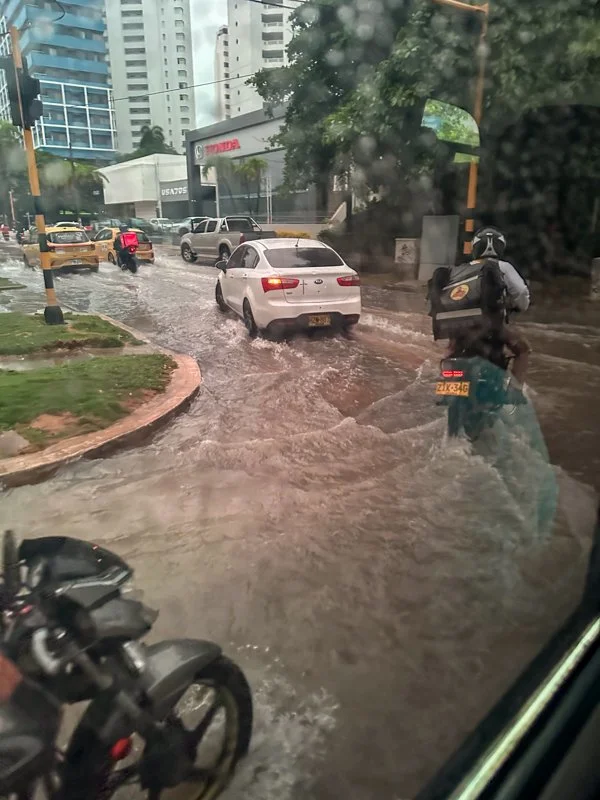
     On this day, we had just come out of the emerald museum, where we had been for an hour or more. It started to rain and rain relatively heavy. We boarded our bus to return to our hotel. In a matter of just a few minutes, the streets had three to six inches of water in them. Our local guide said that this has been a problem in Cartagena since day one, and they obviously have not solved their problem. This is a moving bus photo and not very good, but you get the idea. So, if it started to rain hard in Cartagena, you had to be prepared for immediate flooding.