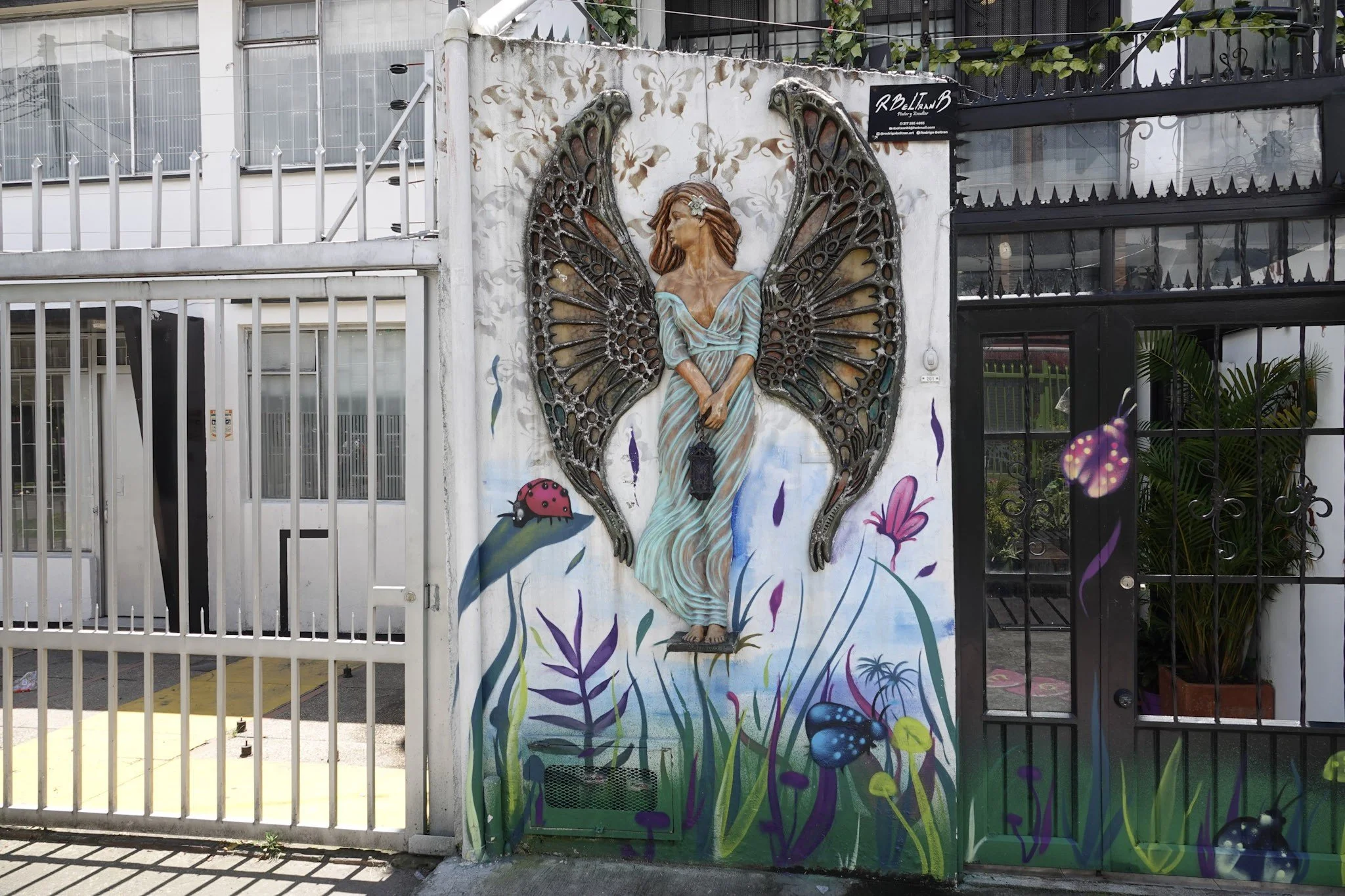
Street Art
We had a local artist, designer, and part owner of an art studio act as our local tour guide for a 2.5 hour walk around two neighborhoods in Bogota. We walked and viewed the urban street scene with Monica giving us the play by play of what we were seeing. It's good she did as I never would have imagined what all I was seeing or all the behind-the-scenes things that have occurred in Bogota and Colombia.
Graffiti was decriminalized many years back. Bogota decided they could not stop it, so they have tried to improve it and make it part of the fabric of the city. Bogota is the street art capital of Colombia and one of the street art capitals of the world. We started in the La Candelaria neighborhood, one of Bogota's leading street art neighborhoods.
Monica told us that we would be seeing three separate graffiti art forms: Street Art, Throw-Ups, and Graffiti or Tagging. She would point each one out to us and explain the differences to the point that I sort of understood it, but not to the point of claiming any expertise.
I will just point out a few different street art works that will, hopefully, shed some light on some of the street art scene in Bogota.
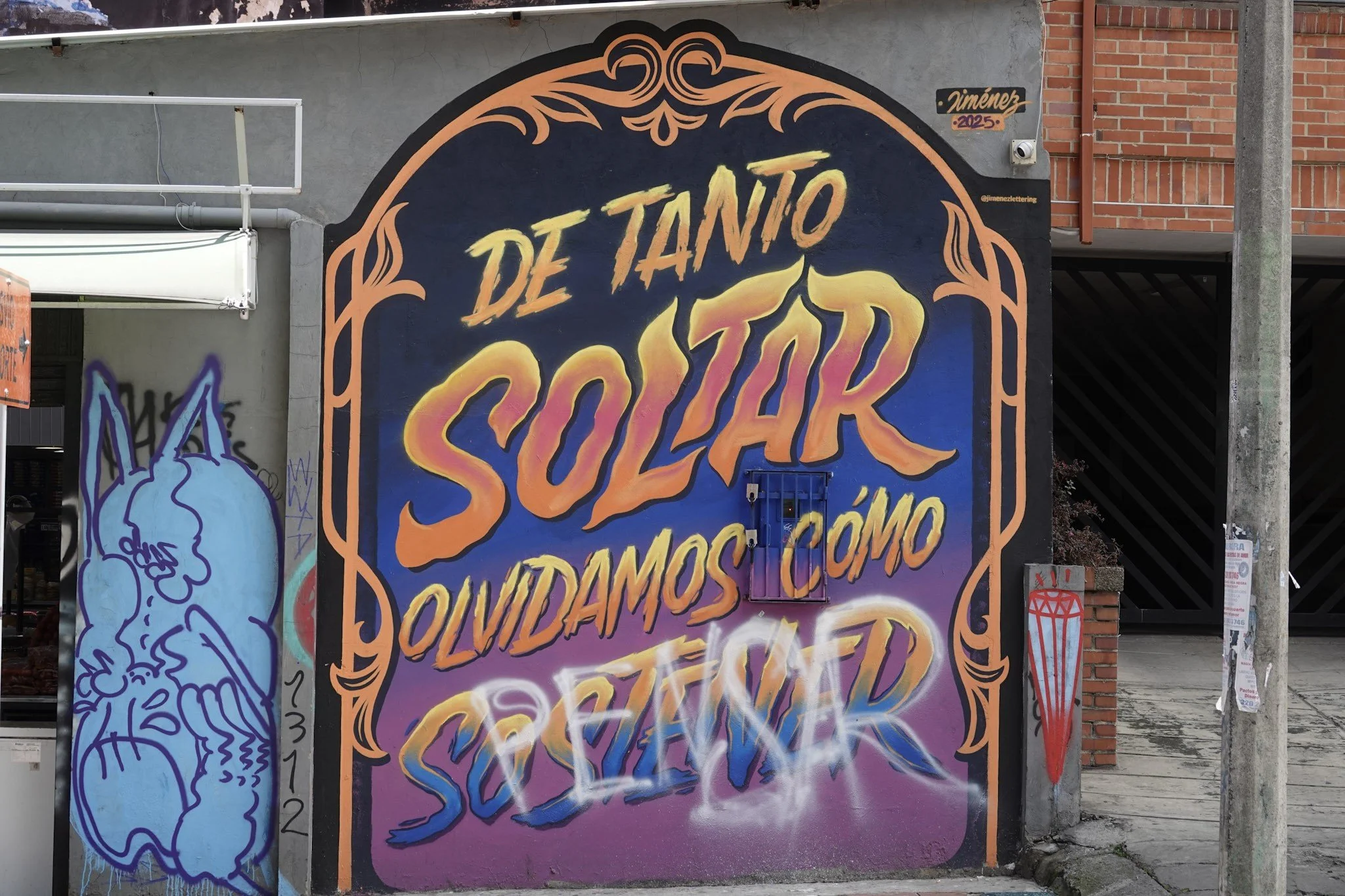
This first one caught my interest because it shows two different forms: street art and tagging, or graffiti. Someone was paid by the shop owner or just allowed to paint the wall with a very nice artwork. Then, a tagger or graffiti person came along and added to it (or detracted from it).
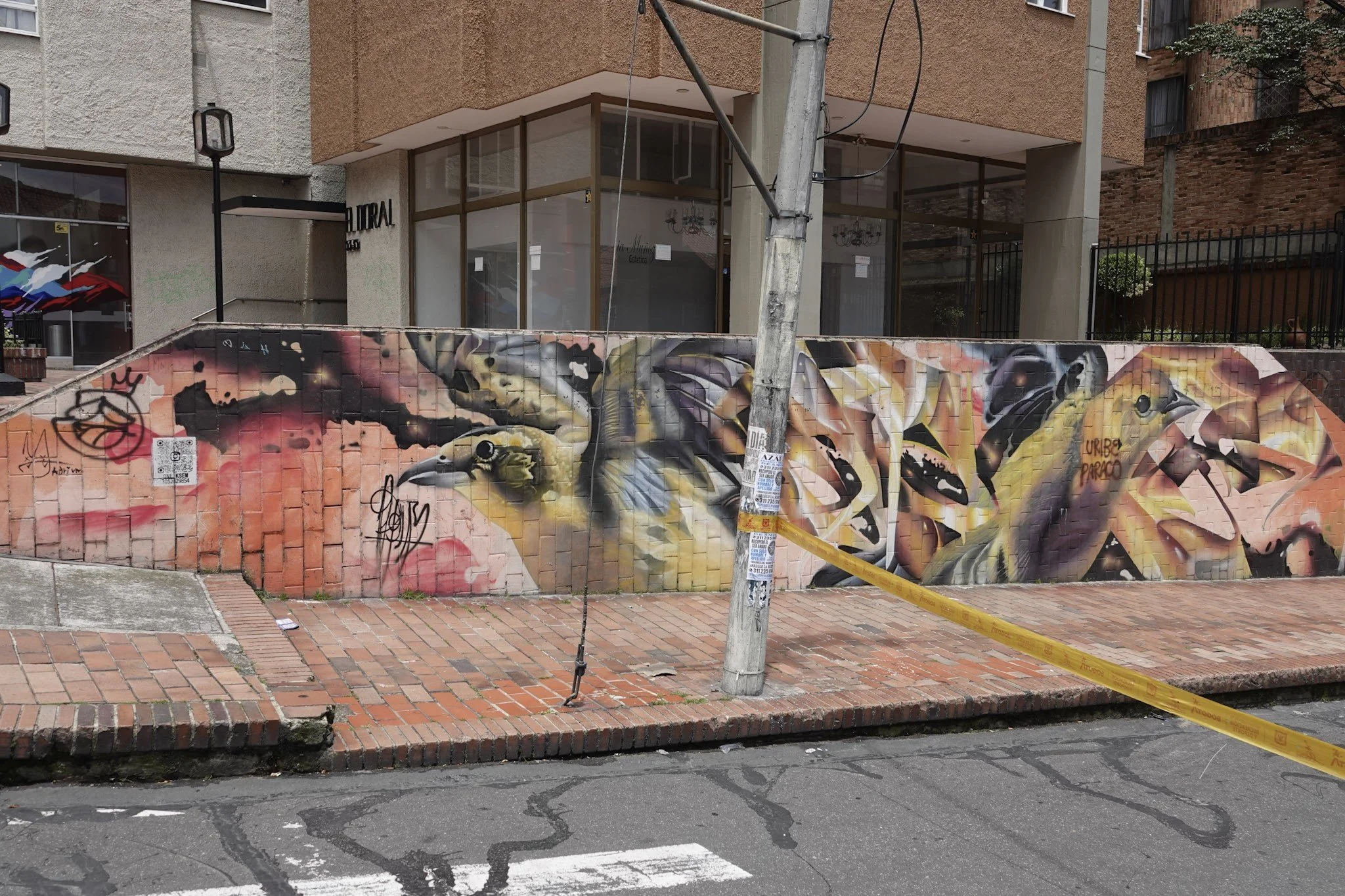
This next artwork caught my attention in particular for one small detail. You might not even notice it. I didn't notice it until Monica pointed it out to us. The artwork is a retaining wall with some nice birds and such. But if you look well to the left side, you can notice a QR code. The artist adds this so that people who like their work and want to find out about them or hire them can do so. In this case, Monica pointed out another artwork by the same artist just down the street where he got hired because of this work and his QR code.
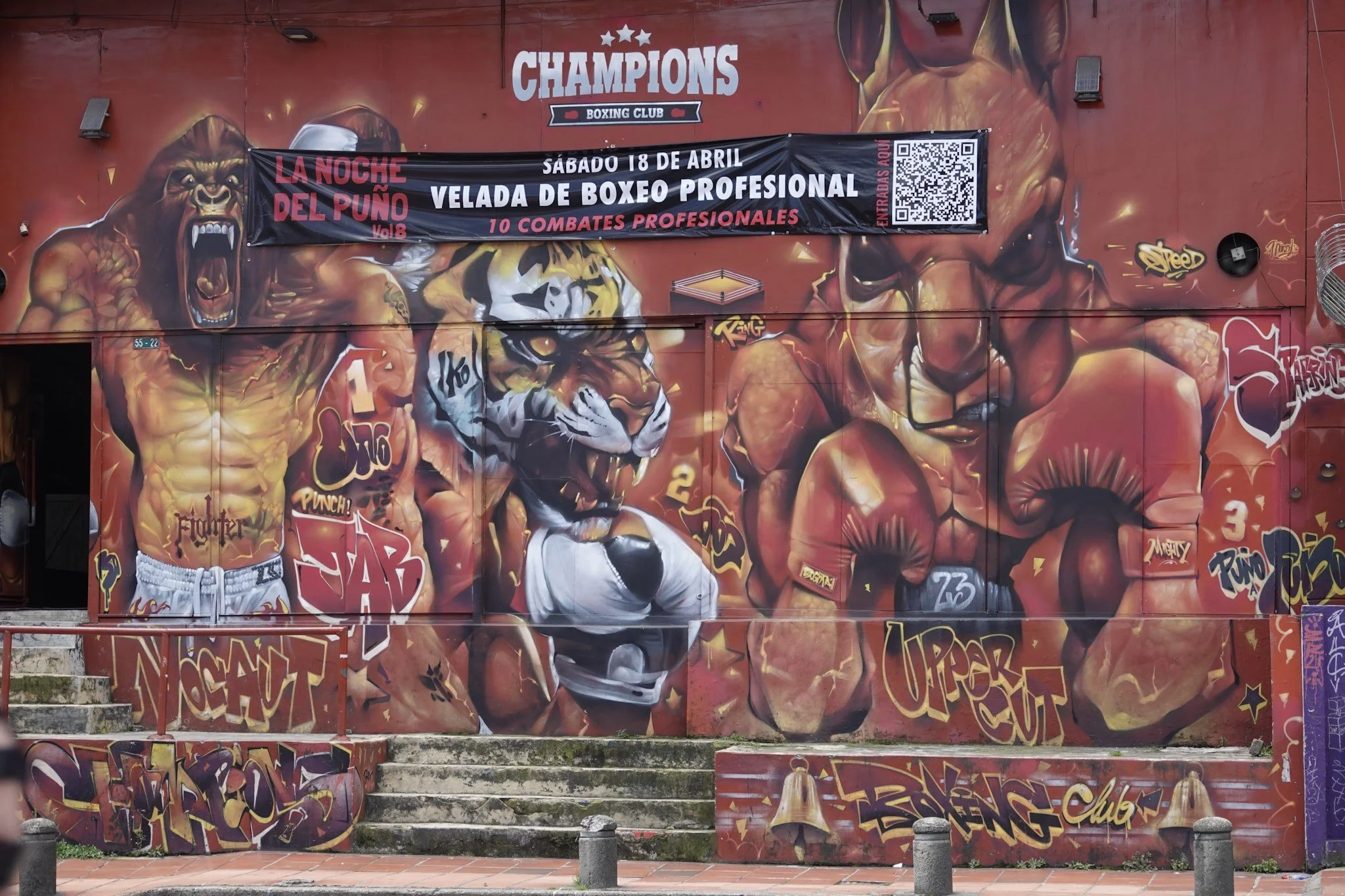
Businesses are one of the big sponsors of street art, to advertise their business. Below is one example, for a boxing club.
Some of the artworks were massive. It was interesting to learn about the time, money, and equipment involved. Some art works took many months and involved huge cranes or massive scaffolding arrangements. The descriptions of how such large works were painted was fascinating. You have to remember, the artist can't possibly see the entire painting while doing a small portion, but they have various ways, mostly today using impressive electronic technology. I'm talking about the street artwork on the right, the large one.
The street artwork on the left is a "Throw-Up". I'm not sure why, but it involves large lettering and large pictures, etc. that I think look like they were just thrown up on the wall.
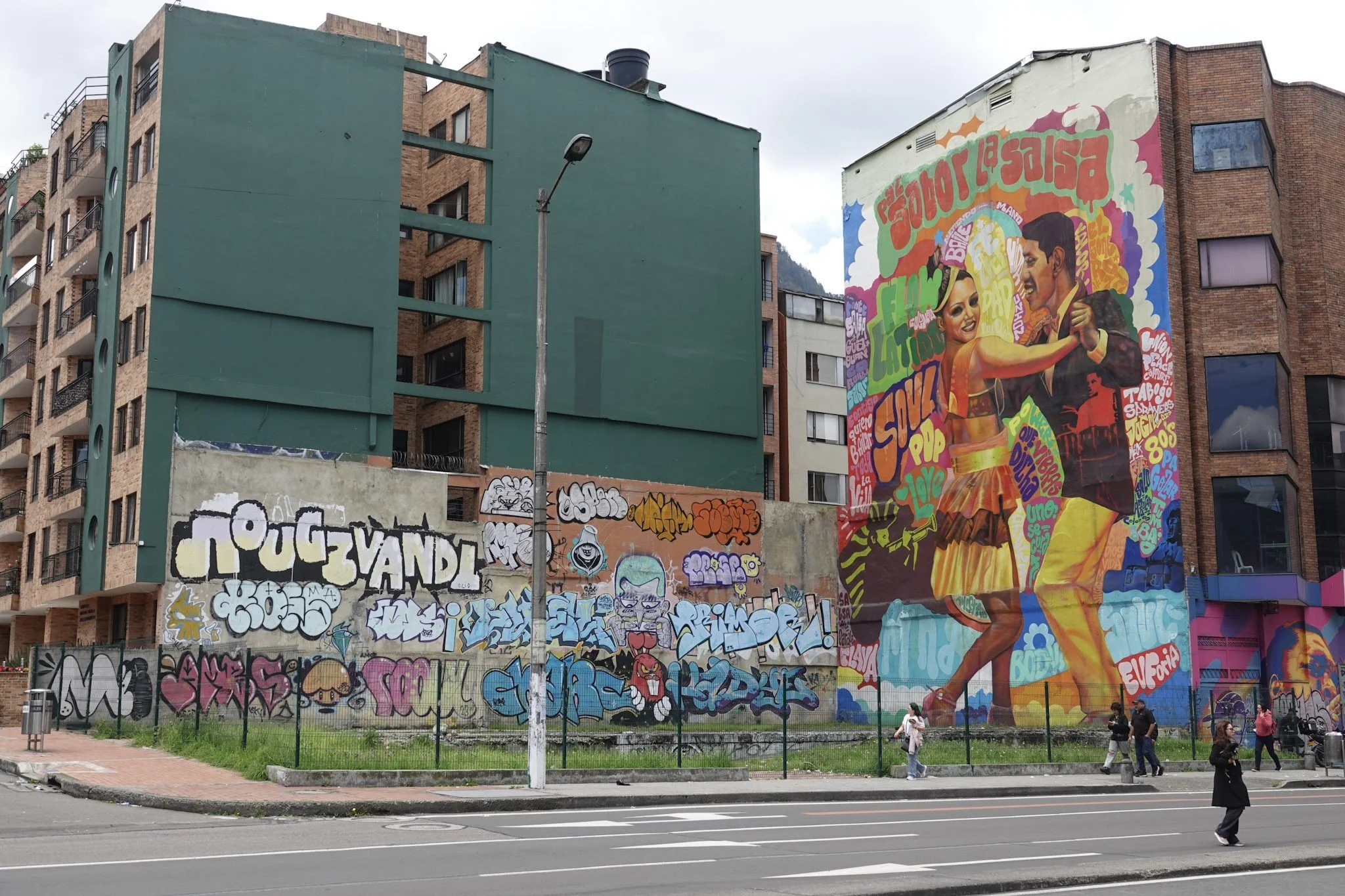
Next, we shifted to the San Felipe neighborhood. It has lots of art galleries and studios, including Monica's studio. At her studio, we made a silk-screen print, with help.
This neighborhood had a number of different works, but it was all classified the same, per Monica.
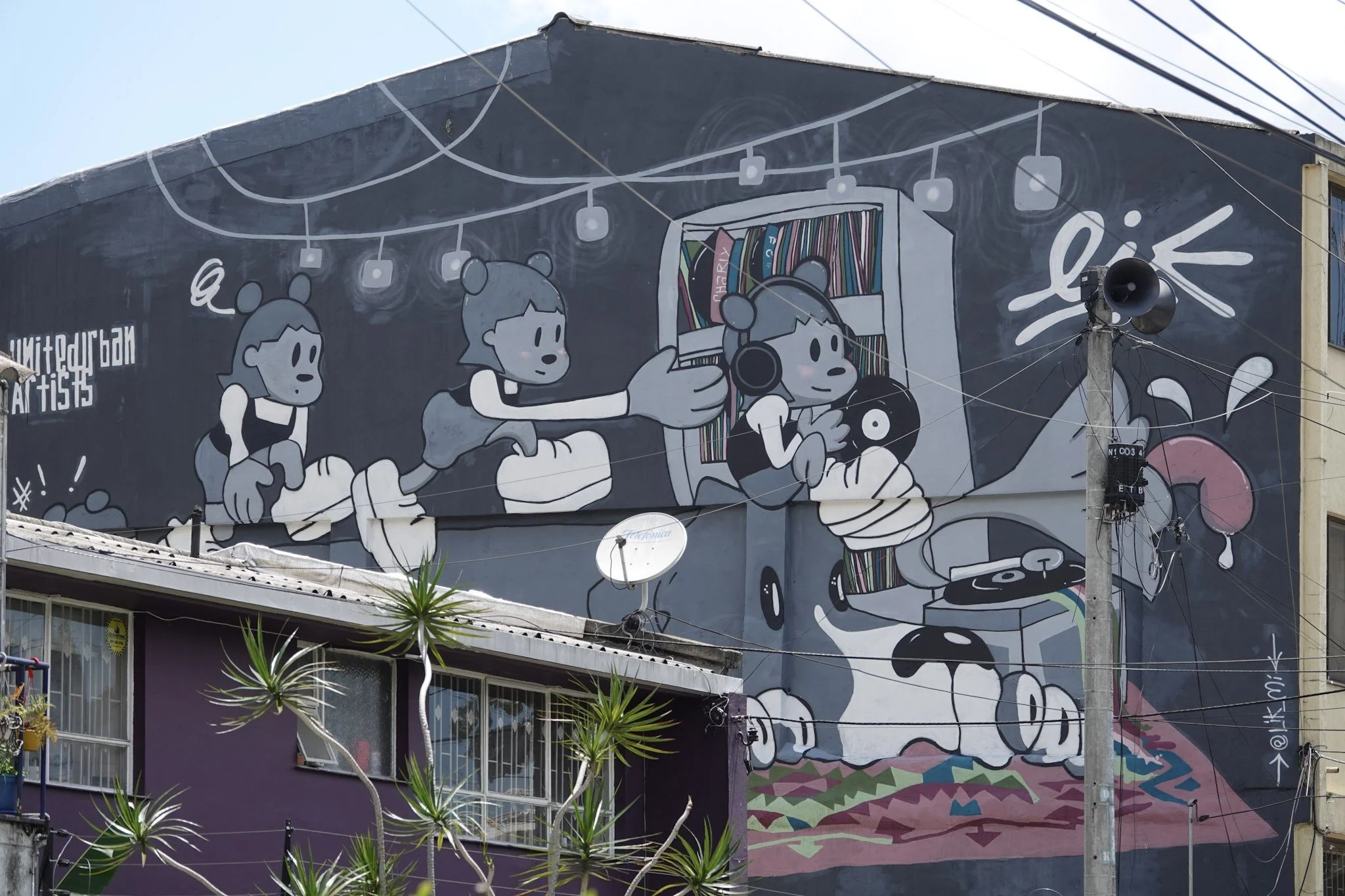
I never wandered off down any alleys to find a small or unique street artwork, but I did come across some works that did not appear to be related to businesses or put in a key traffic area, but I still thought they were good art. This was just in the neighborhood and a wall between two driveways.