Medellin
Medellin was our second stop in Colombia. First, I want to clear up how to pronounce Medellin. I pronounced it like, "med-a-yeen." We were told that was wrong. They said that's how Spanish speakers or English speakers pronounce it, but in the Andes Mountains of Colombia, it's pronounced like, "med-a-jeen."
Medellin is the second largest city and urban area in Colombia. The city is about 2.5 million people, and the urban area has over 4 million people. It's known as the 'City of Eternal Spring' for its great year-round climate. It's nestled in a narrow valley in the Andes and has a long and rich history. The city was founded in 1675 and was originally a mining town. Some of its major commerce today is for exporting cut flowers and textile manufacturing.
Medellin seemed to me to have a more youthful atmosphere to it. It's got the work hard, play hard vibe going for it. It has made some major improvements recently such as an efficient metro and cable car system. We also noticed more coffee shops, rooftop bars, and lively happenings. It also has lots of vibrant street art, like Bogota.
I found it hard to capture Medellin in my photos. We had a local guide, Anna, who toured us around about nine blocks. We walked between the Town Hall and Botero's Square. The whole area was very busy and very noisy. I would call it chaotic. I'll just give a few glimpses of things that caught my eye.
I should point out that back in the 1980's, Pablo Escobar had made Medellin the world's cocaine capital. It has been making a long, slow, and challenging recovery from those days...and I would say doing it very well, all things considered.
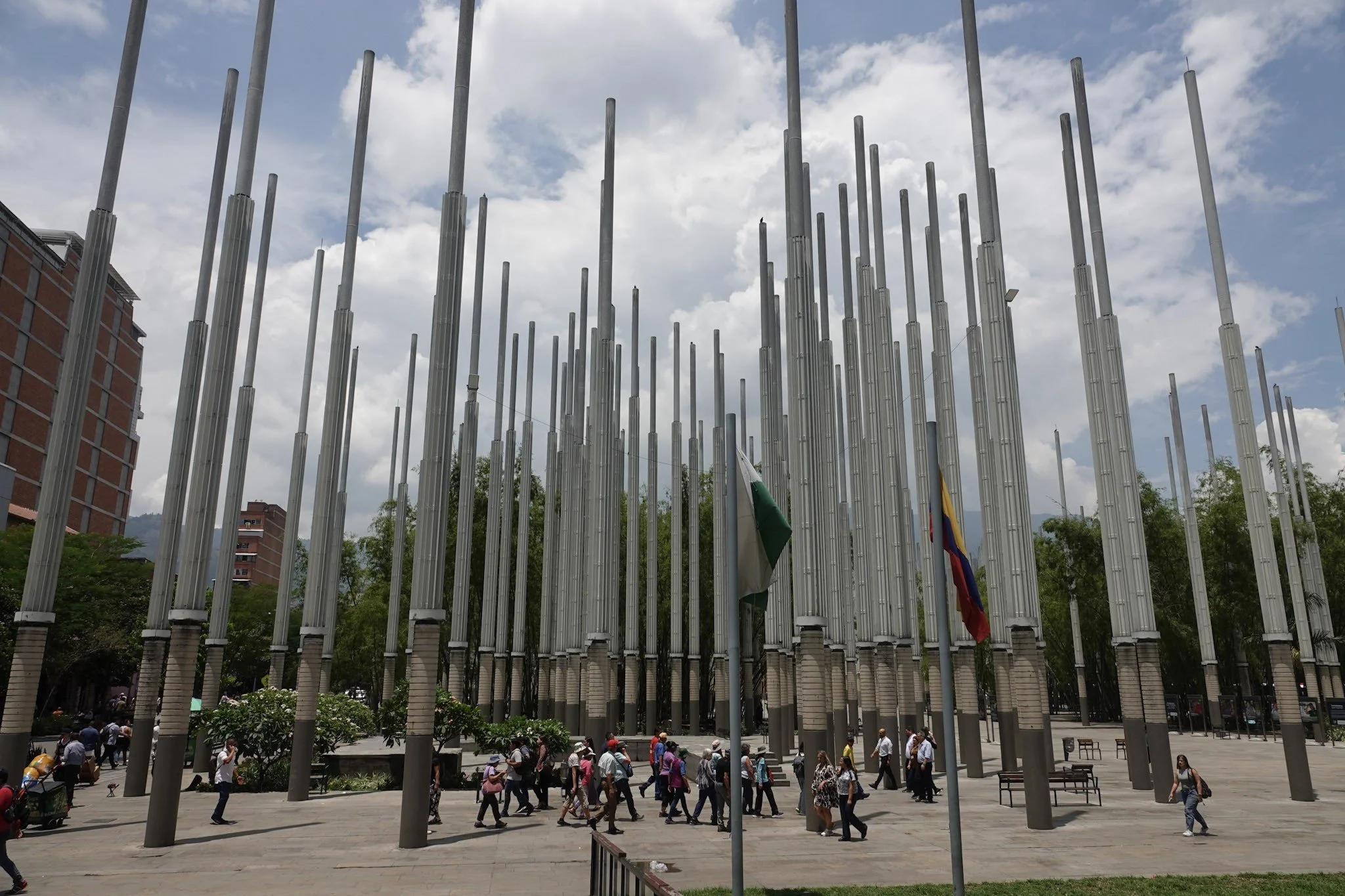
Plaza Cisneros, or Lights Park, has an artificial forest of 300 light poles. This was a horrible area according to our local guide and the lights, to light up the night, have made a huge improvement. We never saw them at night, but they were still impressive in daylight. Plus, it now appears to be a neat, clean, safe area.
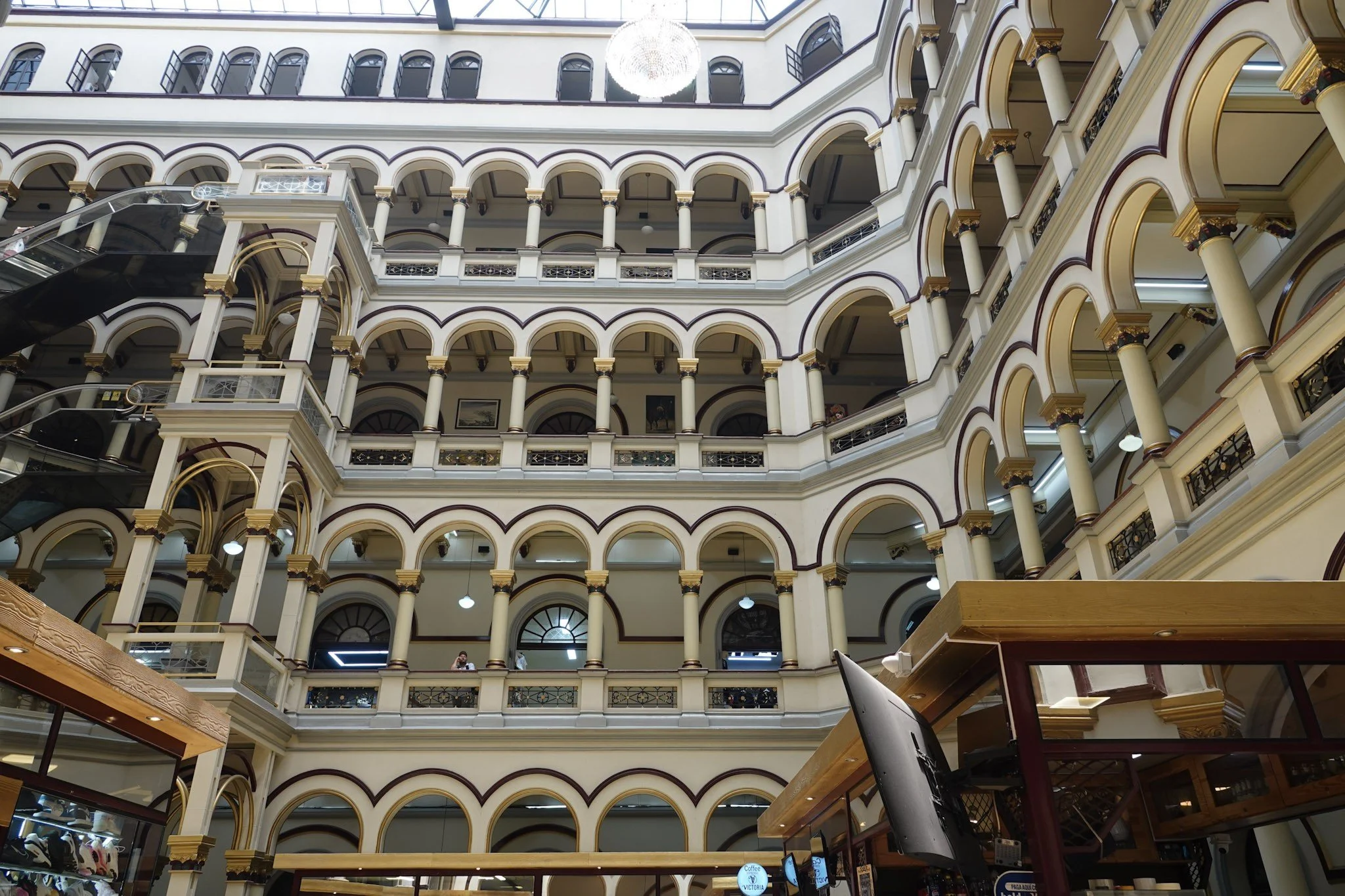
The old Palatine National Building is now the National Palace Mall. It started life as offices and headquarters of some of the major governmental institutions. After some problems, it's now a shopping center with over 400 stores, cafe's, bars, art galleries, and a museum. It was extremely hard to get a good photo as the inside square footage is small and the building very tall, but it’s a beautiful building.
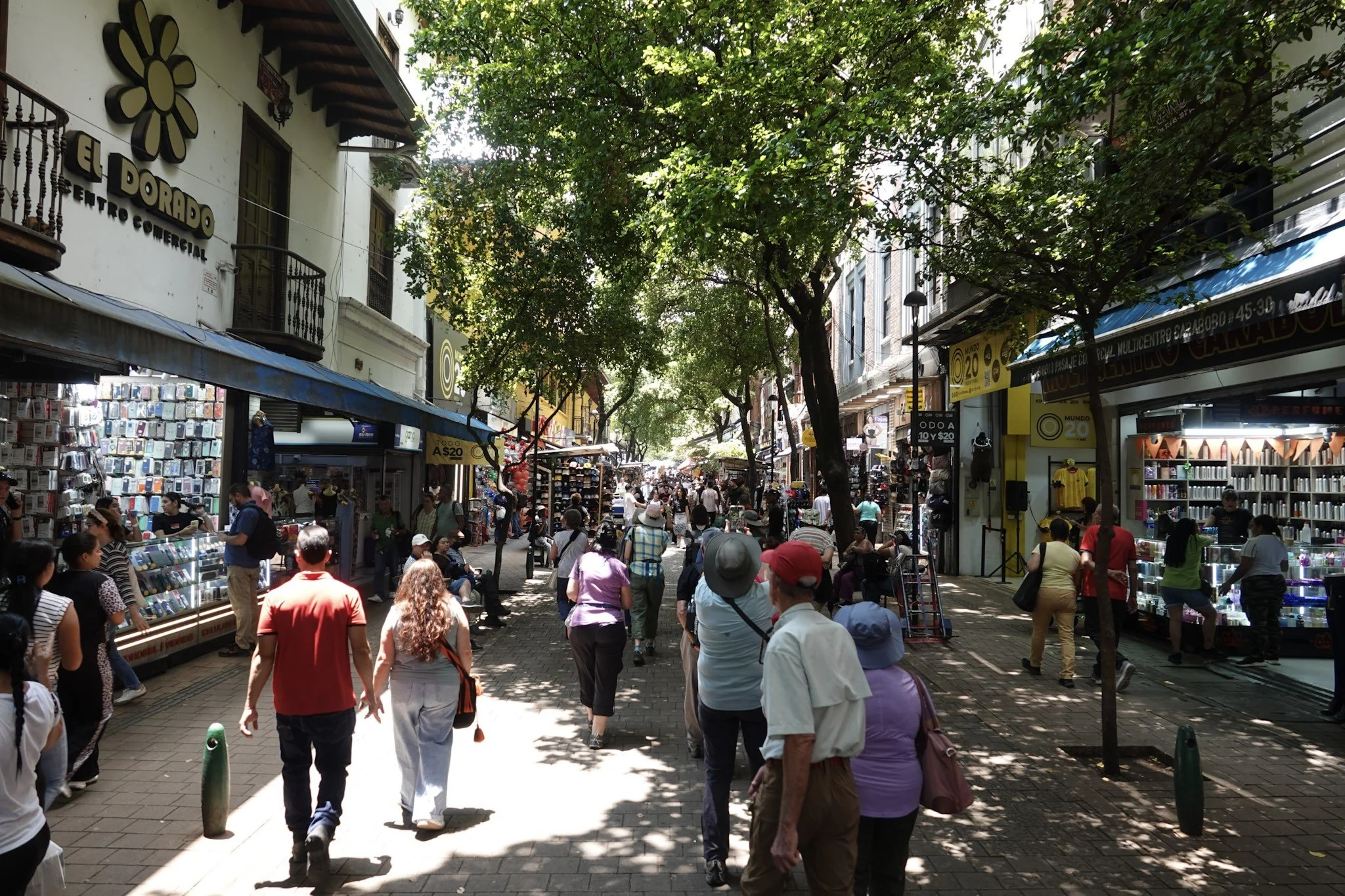
Walking along the streets was a lively experience with all the sights, sounds, smells, and vendor appeals.
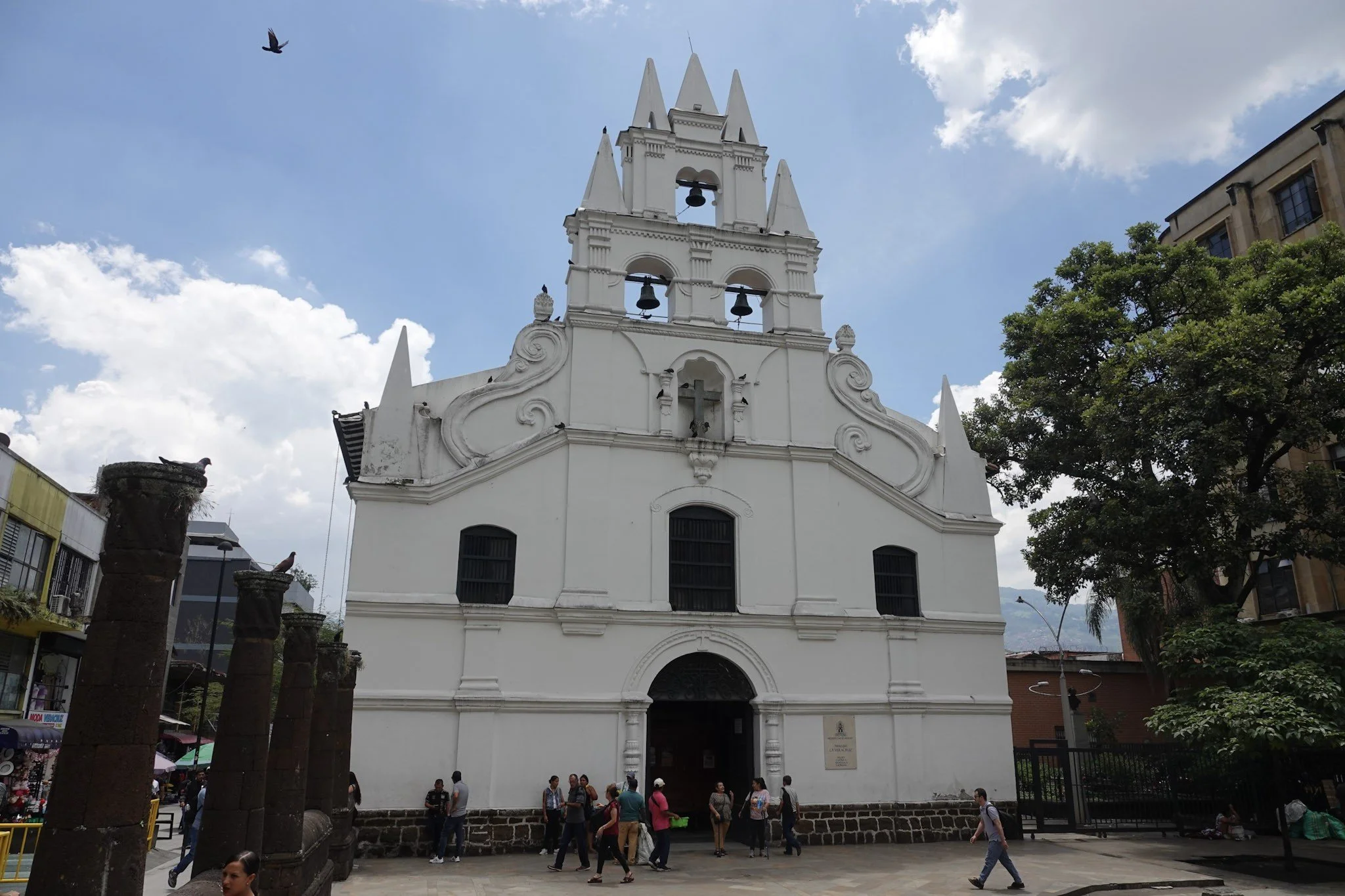
The Veracruz Church is a Catholic church and the only colonial church in Medellin. Construction started in 1682, but that church has long been gone. This church was built and rebuilt in the 1800's.
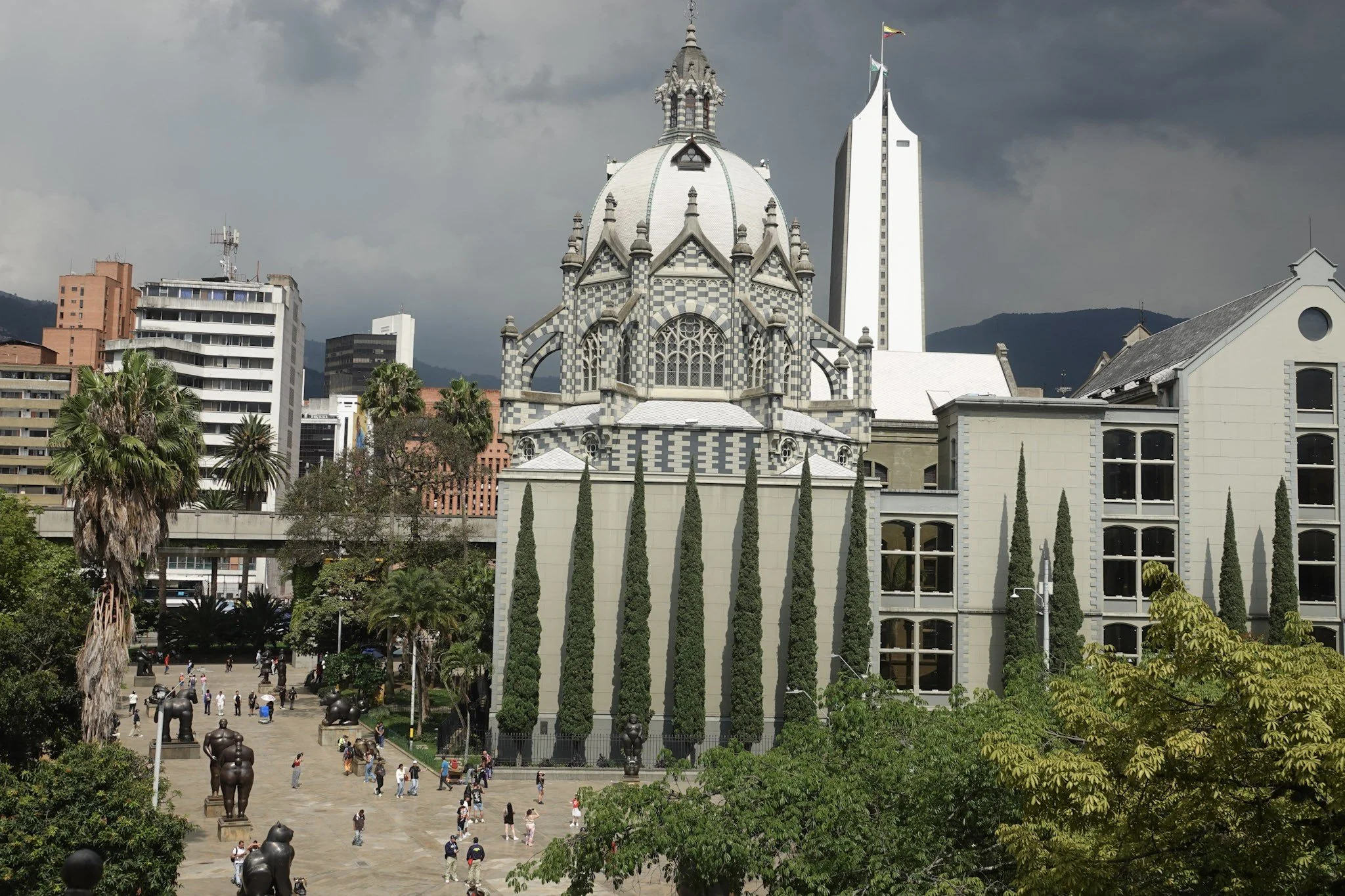
The Palace of Culture, or Rafael Uribe Uribe Palace of Culture, is now a public building. It began life as the official government building for the area. It was under construction from 1925 to 1937 and designed by a Belgian architect. Today, it houses the Institute of Culture and Heritage for this area. It has historical and photo archives, music and sound archives, cafe, library, an art gallery, and a museum room. It also has an auditorium and a projection room. You can only see the top of the building from this angle.
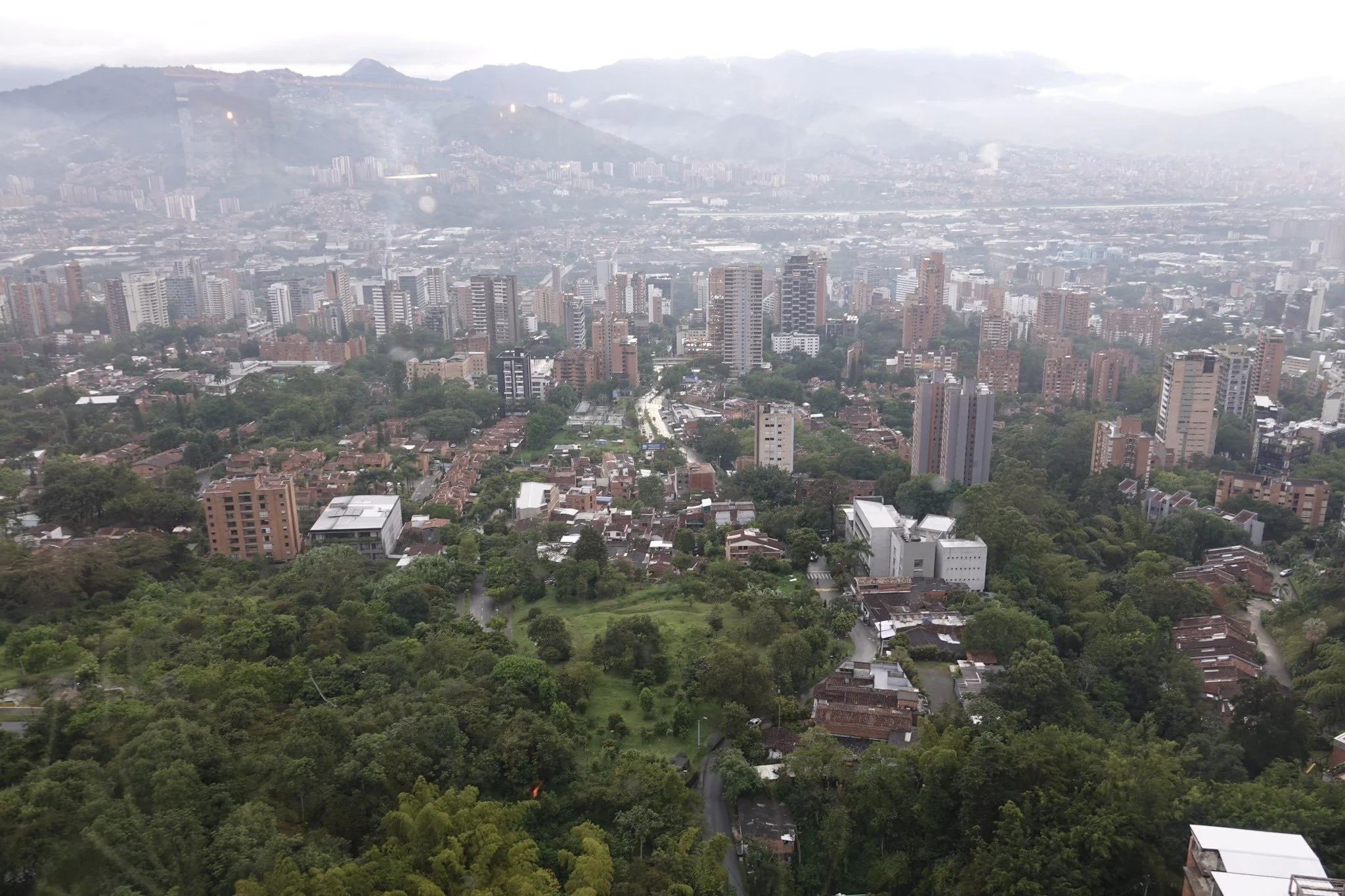
Medellin is listed at an elevation of 4,900 feet. But like all of the Andes, it's not all flat. We managed to stay at a very upscale hotel, the Novotel Medellin El Tesoro. It was in the upper portion of the city, and we were also on a very high floor. At any rate, this photo was from our hotel room, but it doesn't look like most of Medellin. It's also not a very good photo due to the lighting but at least it’s a reference point.