Bogota
Bogota is where we started our trip to Colombia. It's the capital and largest city of Colombia. It's both the national capital and a district capital. Bogota is the main center of the country for political, administrative, economic, cultural, industrial, technological, scientific, medical, educational, and probably most other things. The area was lived in for thousands of years by the indigenous people but founded as a city and capital in 1538 by a Spanish conquistador. And while we were happy to be at a lower elevation than in Bolivia, Bogota is still at 8,660 feet in altitude with much higher mountains surrounding it.
Our hotel is only half a block from Bolivar Square, the main square of Bogota. Simon Bolivar was born in Caracas, Venezuela and was a military officer and a statesman. He led independence movements in what are currently the countries of Bolivia, Colombia, Ecuador, Panama, Peru, and Venezuela. He must have been a busy guy.
On a side note, I used an ATM to convert $200 US dollars in Colombian pesos. I ended up with over 700,000 pesos.
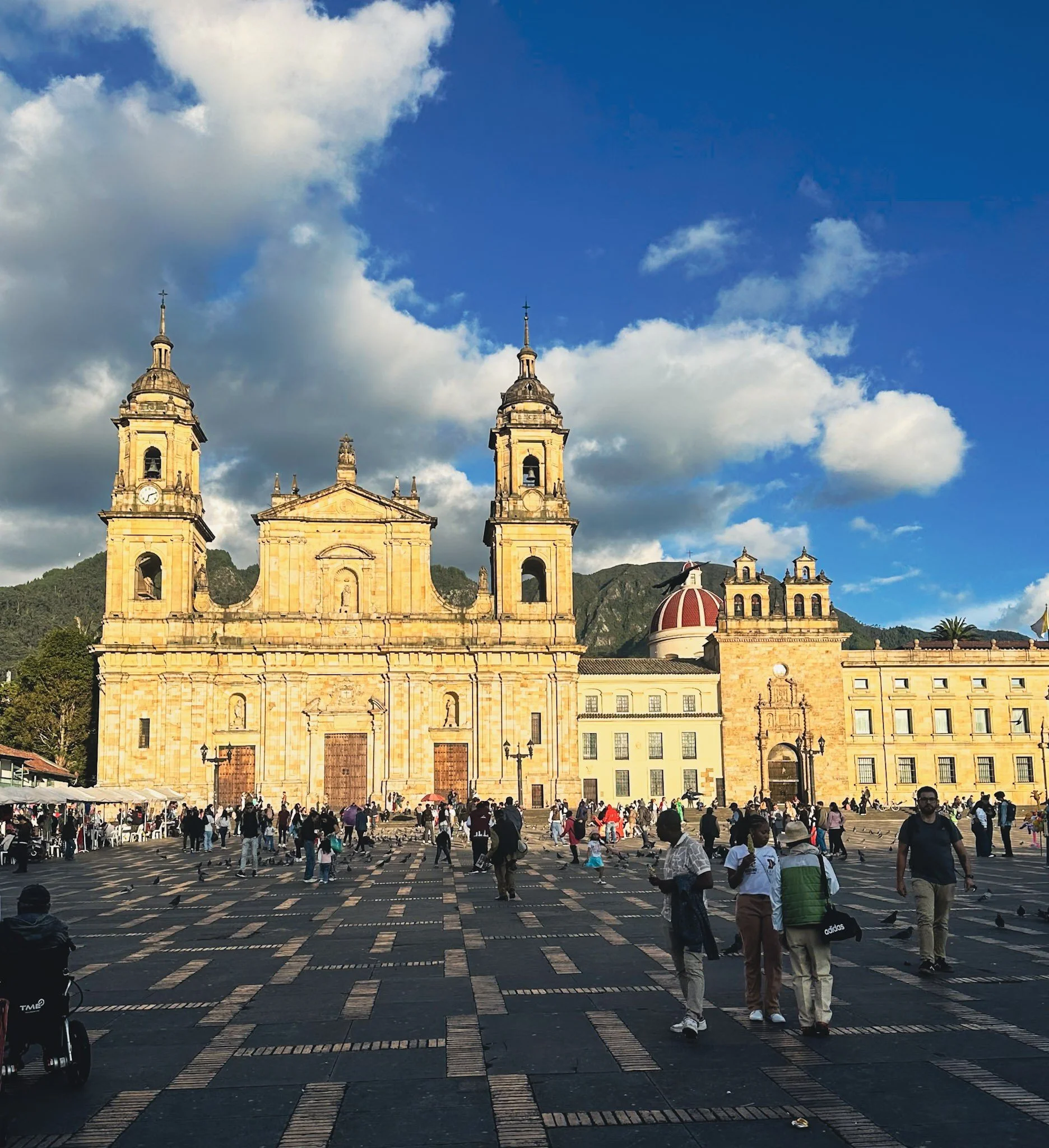
We will start in Bolivar Square at the Bogota Cathedral (its short name). It was built between 1807 and 1823 on the same site where three earlier churches stood. It's next to the area's oldest church, from 1683, and the Bishop of Bogota's residence. We came to this church multiple times, including multiple times on a Sunday, but it was always closed, so we never got to see the inside of it.
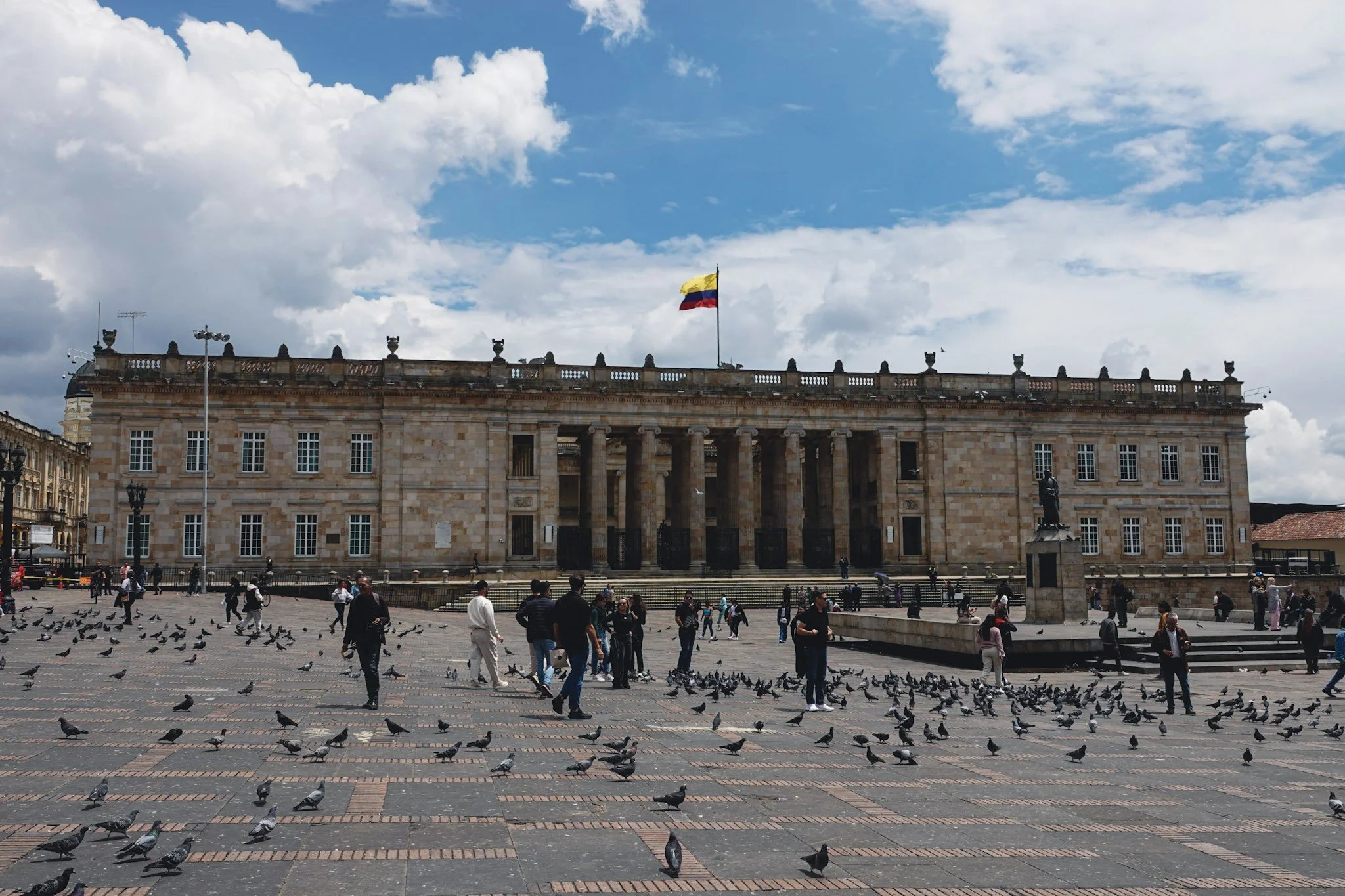
To the right of the cathedral in the square is the National Capital of Colombia or the Congress of the Republic. It houses both houses of Congress. The building was started in 1848 and completed in 1926. This building was fenced and heavily guarded. We chatted with two police guards who were quite friendly, but we still didn't get inside. On the right side in the photo, but inside the square, you can see a statue of Simon Bolivar.
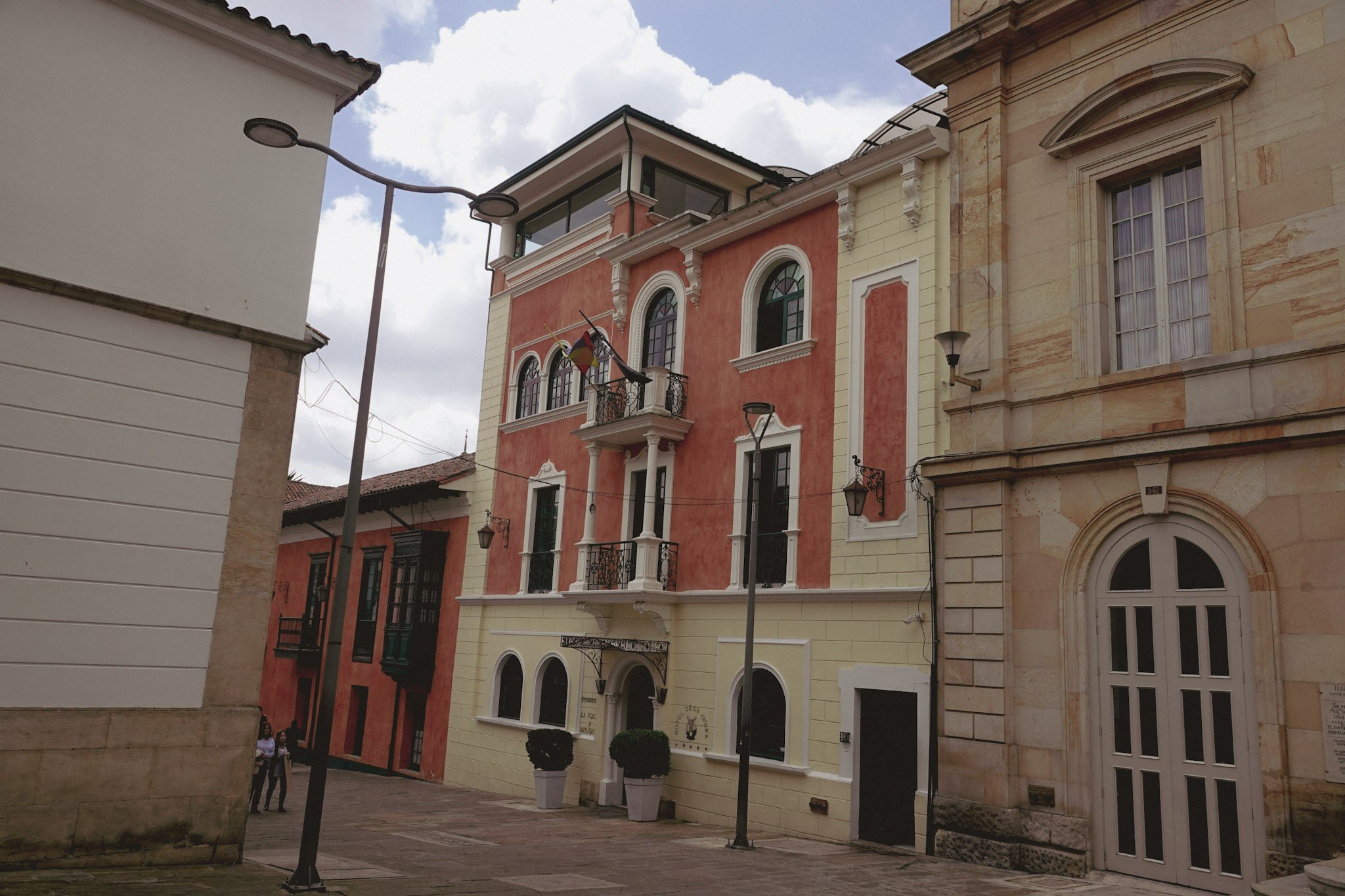
We stayed at the De La Opera Hotel which is right next to the Opera House and right across from the former President’s House. The former President’s building had a plaque attached to it for where Simon Bolivar jumped out a window to escape an assassination attempt when he was the president of Colombia.
We were one-half block from the main square and the whole area was very Colonial. This area was also full of museums, and they were all free, so lots to do and see here. Our hotel is in the center and the right side building is the Opera House.
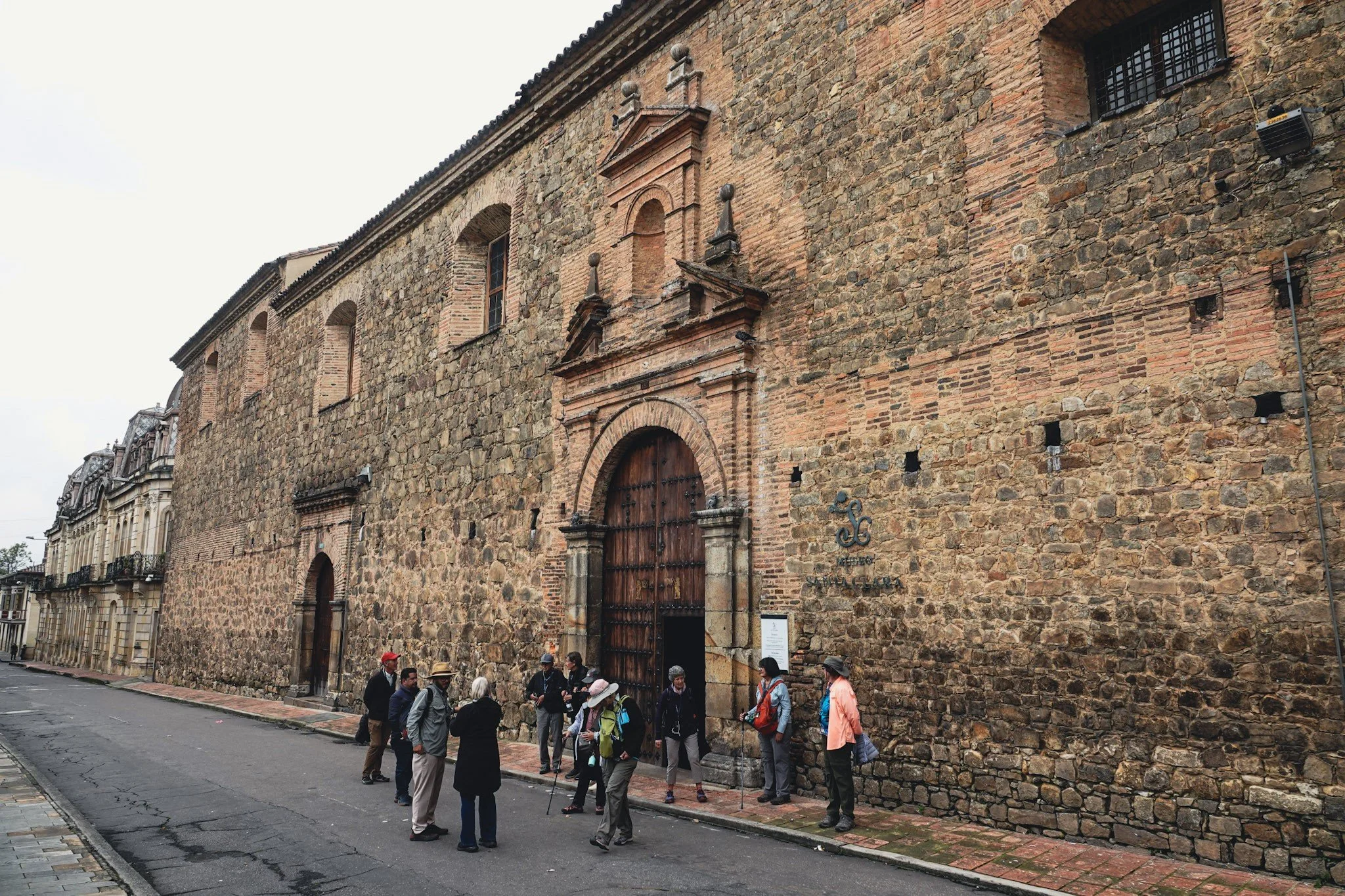
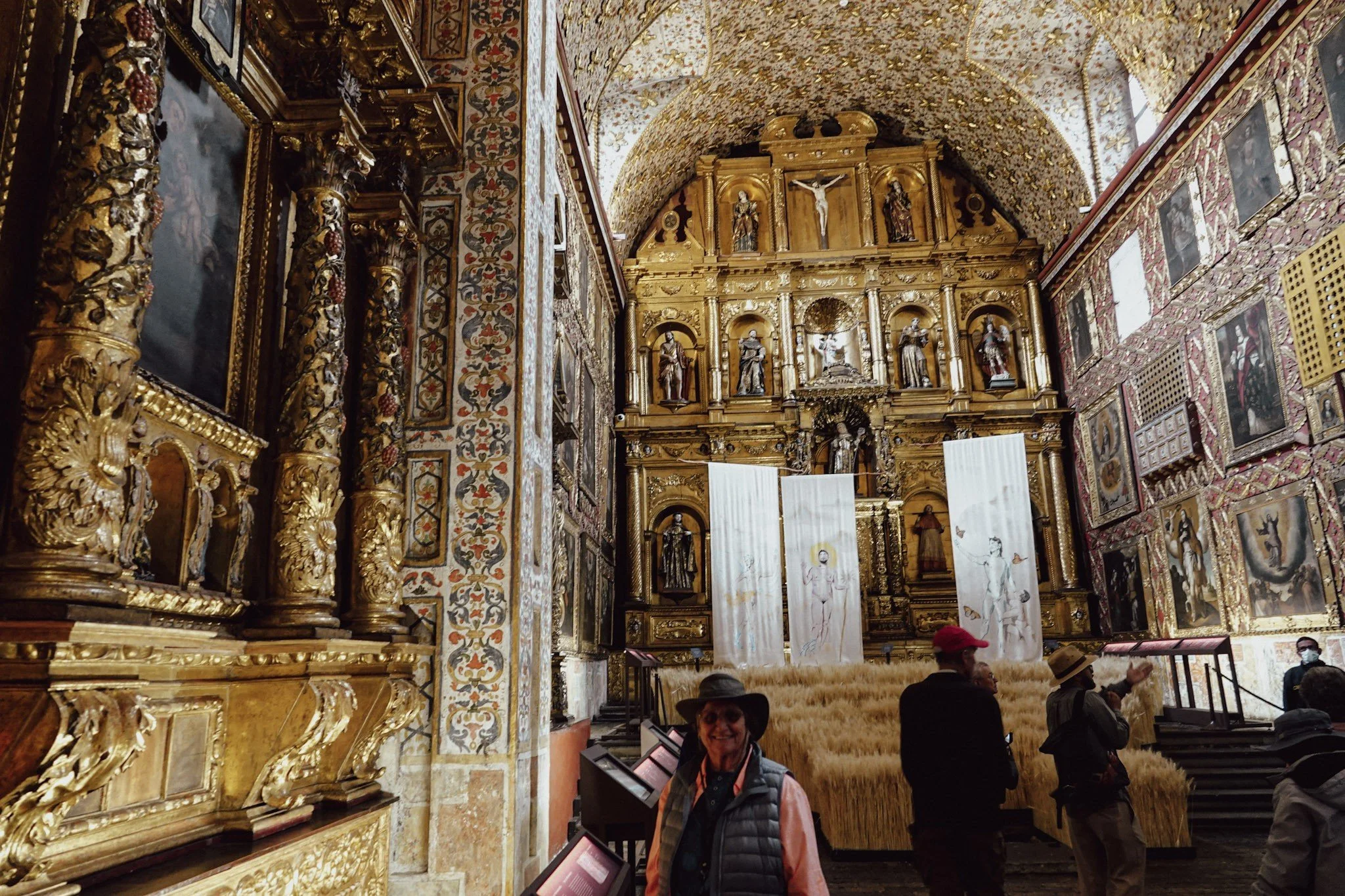
Just around the corner after walking past the Congress building, we came to the current President's house. Across the street from there was the Santa Clara Museum which preserves the Church of Santa Clara. The church was built between 1619 and 1647, as part of the Royal Convent of Santa Clara. The convent housed a community of nuns.
The church was Romanesque architecture and Baroque decorations. It was incredibly decorated. The church also houses an incredible collection of paintings, designs, sculptures, and statues from the 17th through the 20th centuries. Every square inch of the church's insides are covered with decorations. The outside wall gave no indication of what was inside the building.
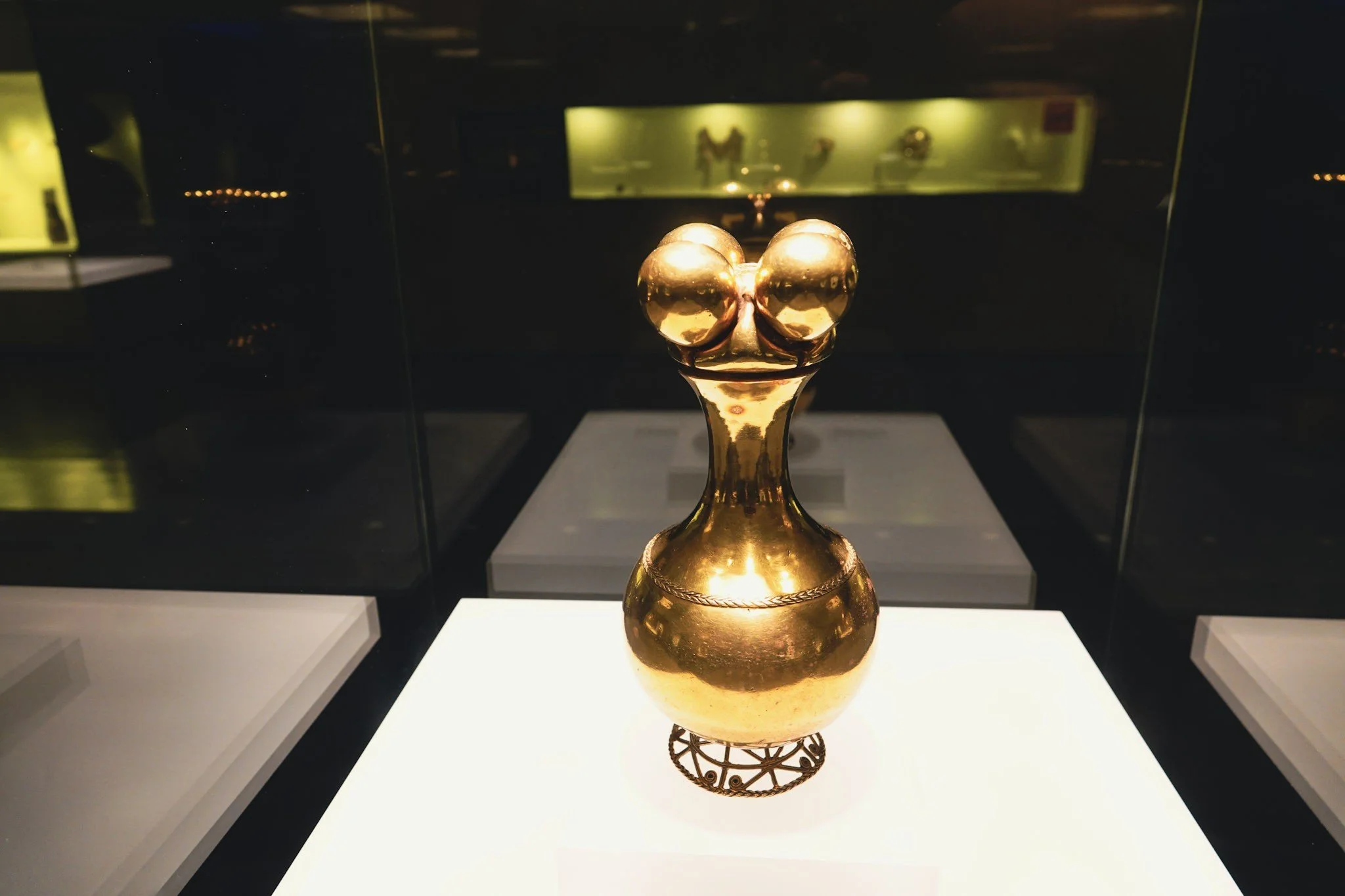
Our next visit in Bogota was the Museo del Oro, or the Gold Museum. It has a collection of 55,000 pieces of which 6,000 are on display. It contains the largest collection of gold artifacts in the world in its second and third floor exhibition rooms. The museum also houses pottery, stone, shell, wood, textile, and other items made my indigenous cultures. The pieces had bilingual descriptions on them, so it was easy for me to wander off from our group and just look at what intrigued me.