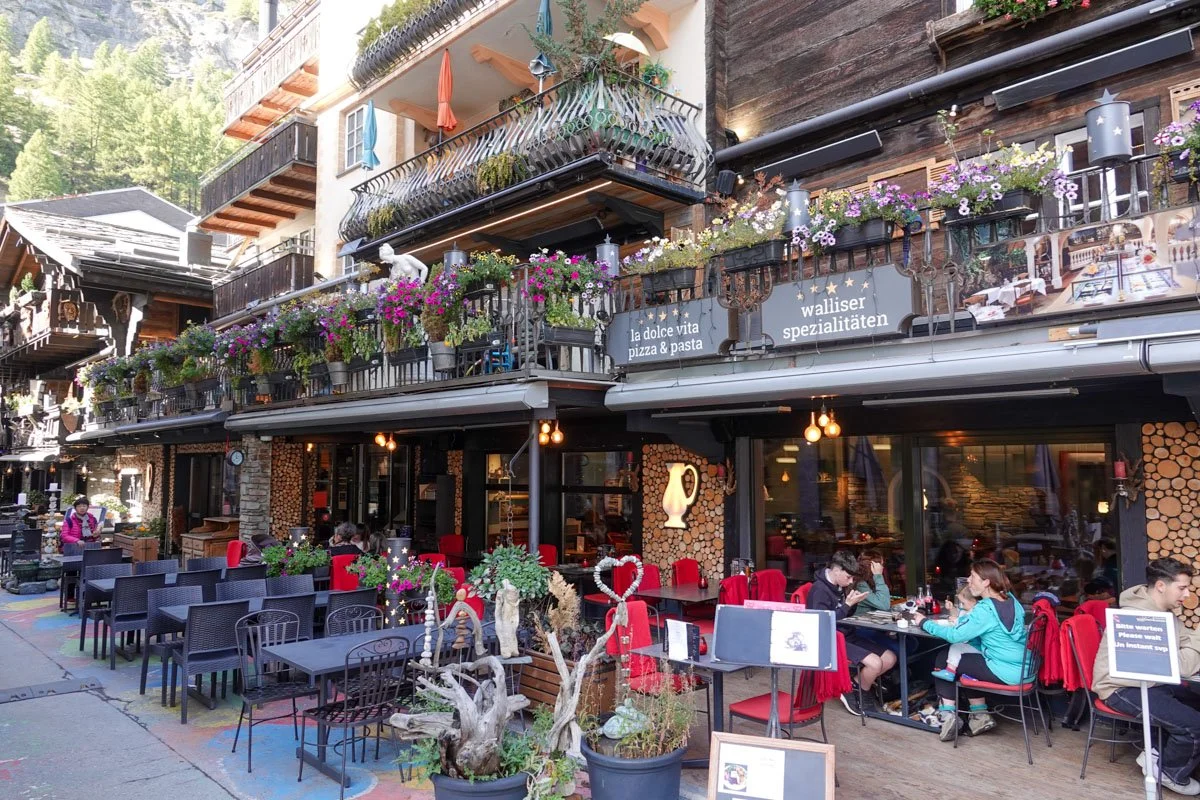
Zermatt
We ended our Glacier Express train ride in Zermatt. The town has a population of 5,800 people and is at the upper end of the Matter Valley at an elevation of 5,310 feet. It stands at the foot of Switzerland's highest peaks. The town is almost completely surrounded by high mountains of the Pennine Alps. Peaks include Monte Rosa at 15,203 feet, Dom at 14,911 feet, Liskamm at 14,852 feet, Weisshorn at 14,780 feet, and perhaps the best known peak, the Matterhorn at 14,692 feet high.
Until the 19th century, Zermatt was predominantly an agricultural community. But then it was discovered by British mountaineers and in 1865, the first ascent of the Matterhorn caused a rush to the mountains surrounding Zermatt to climb the mountains. This lead to the construction of tourist facilities and a changing of the economy to one based on tourism. Hotels and restaurants supply about half the jobs in Zermatt.
Zermatt today is known for both mountaineering and skiing and as a resort town. It's also known for being so close to the Matterhorn. Our guide said that most people who visit never get to see the Matterhorn clearly, if at all, but we could see it clearly when we arrived, late in the day.
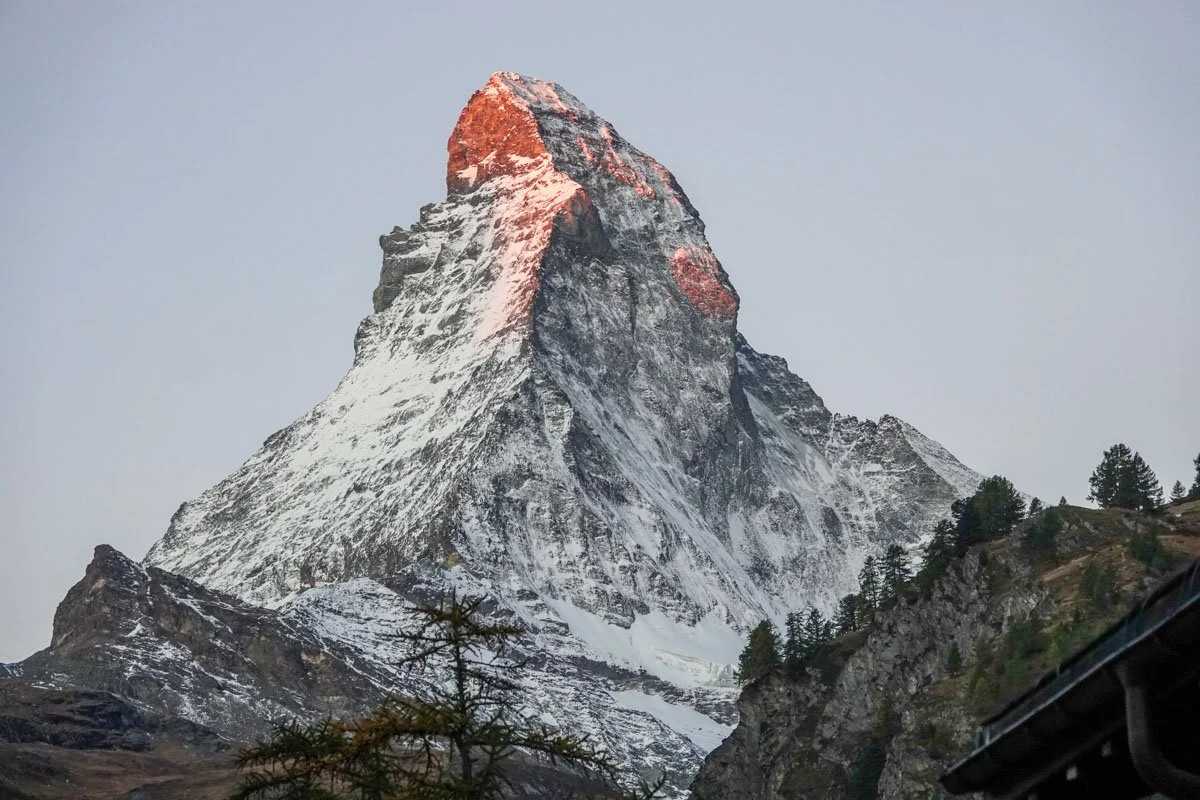
Vicky and I decided to get up before dawn and walk down to the part of town where our guide said was the best view of the Matterhorn at dawn. WOW!
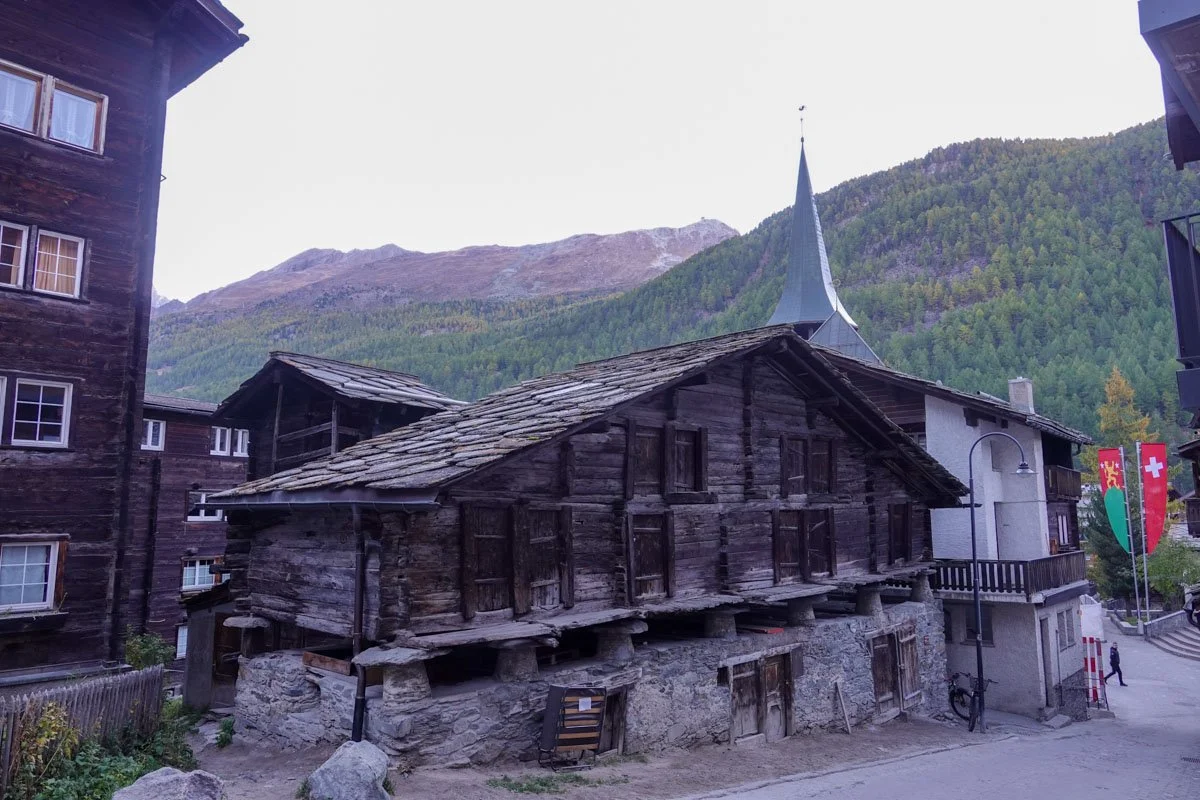
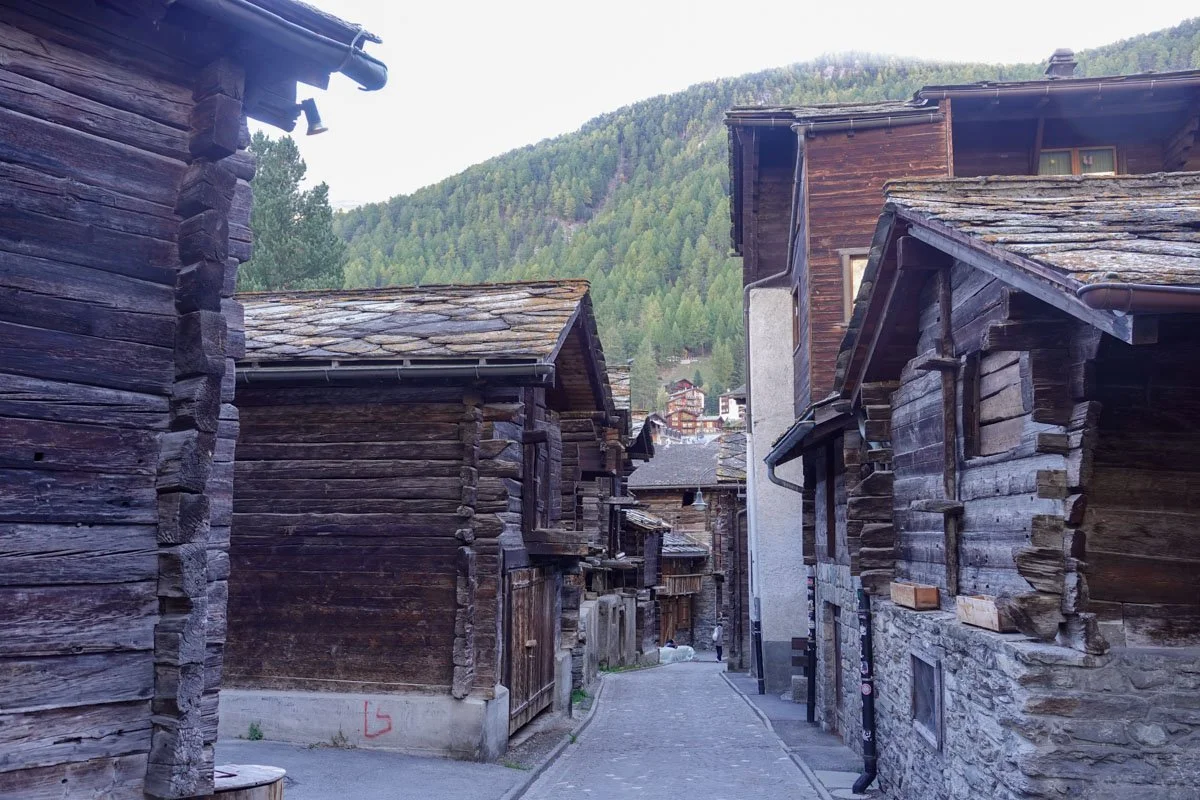
Since we were already up and the streets were remarkably empty, compared to when we arrived the day before, we decided to just keep walking around town and seeing what we could see. The older part of Zermatt goes back a long way as we looked at many of the buildings. This is the main street in town below. Vicky was excited to have the town all to herself. We could see the Matterhorn from various places in town.
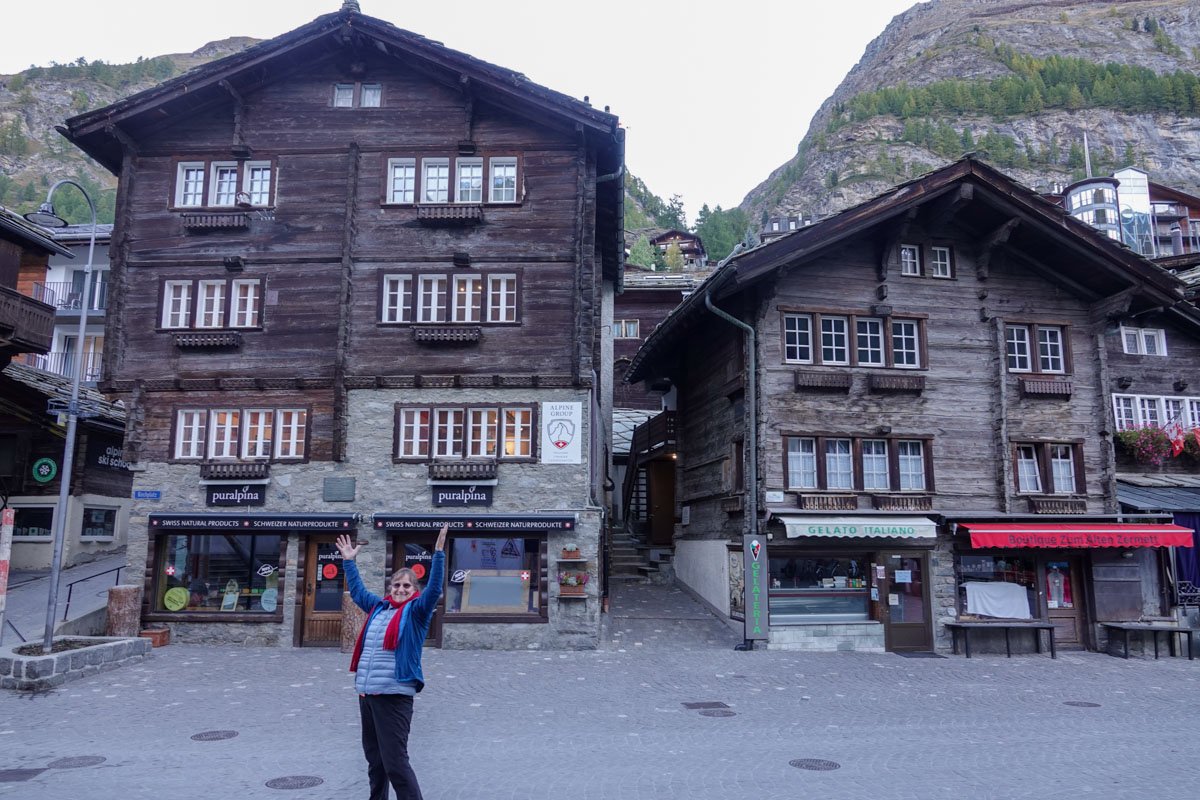
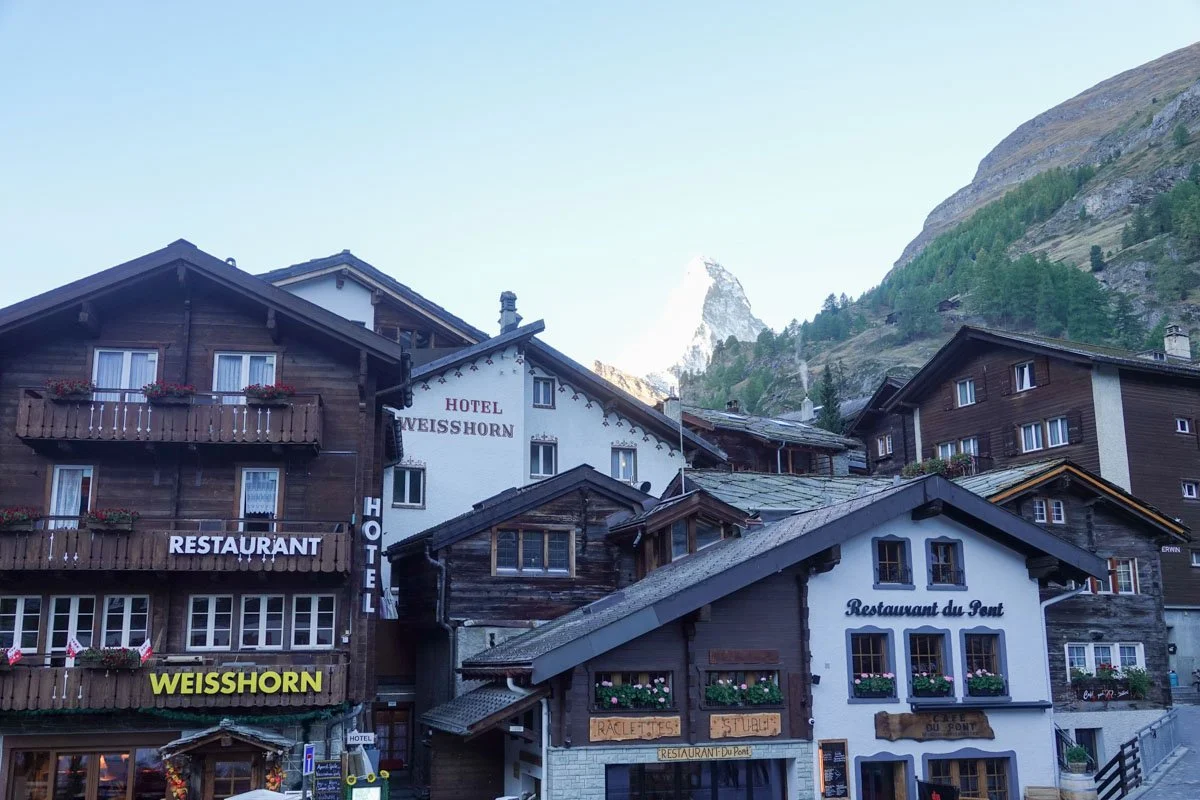
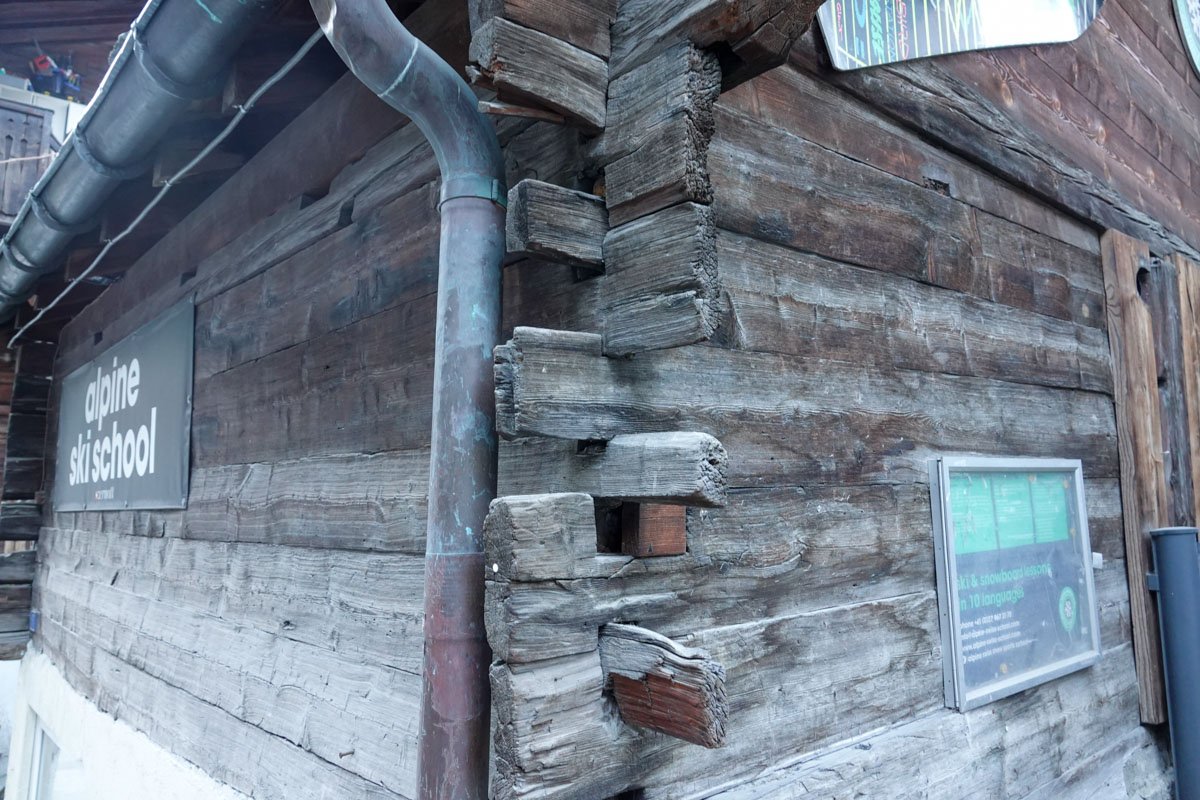
Looking at some of the construction of the old town buildings made me think of an old mining town out west in the U.S.
We got some breakfast and then took another tour of Zermatt, with our guide. It was great to see the town and also to be treated to glimpses of the Matterhorn, sometimes when least expected.
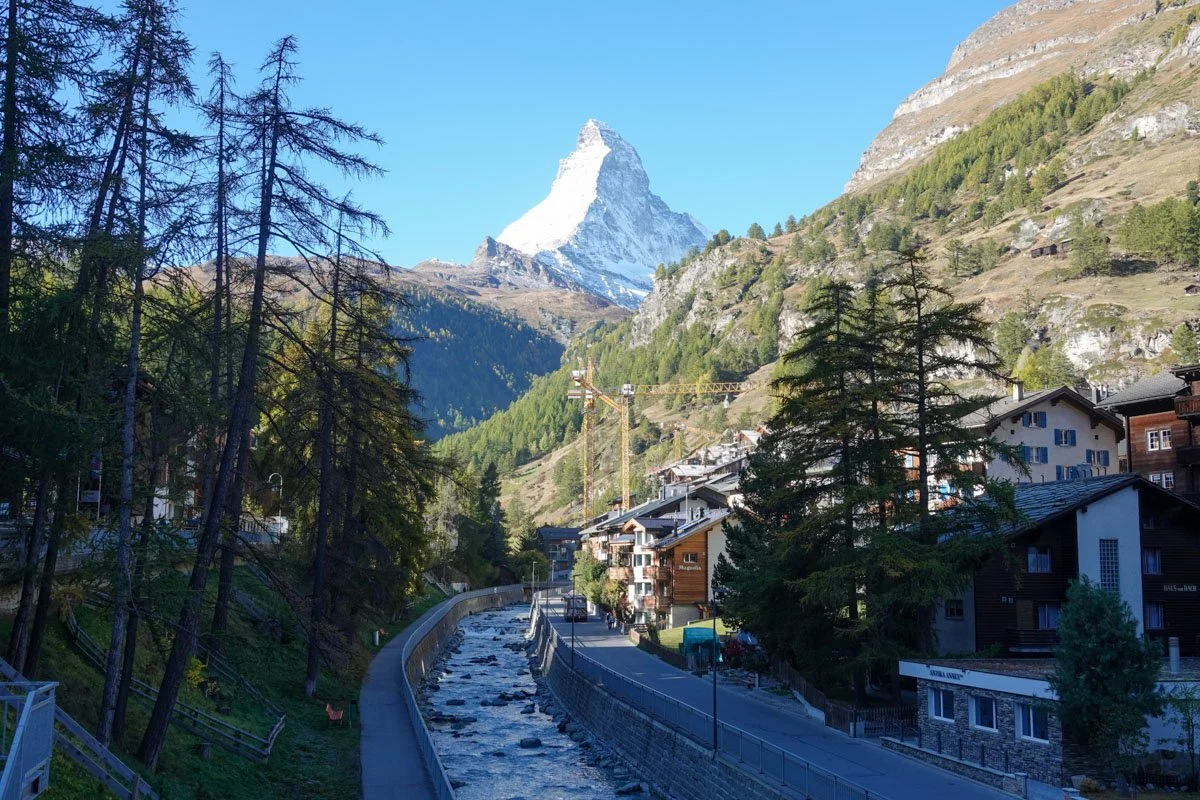
You can also notice a couple of cranes in the photo. Zermatt seems to be growing but the only way for it to grow is by taller buildings. In fact, the town was almost more like a construction project than a tourist town. Zermatt doesn't allow vehicles in town, EXCEPT for construction vehicles. It was mandatory to watch out when crossing streets. If the construction trucks didn't get you, the bicycles might.
Many of the buildings in Zermatt are also highly decorated with lots of flowers and such.

Zermatt has two cemeteries. The first one is the main cemetery for people who have lived and died in Zermatt. It's a big cemetery.
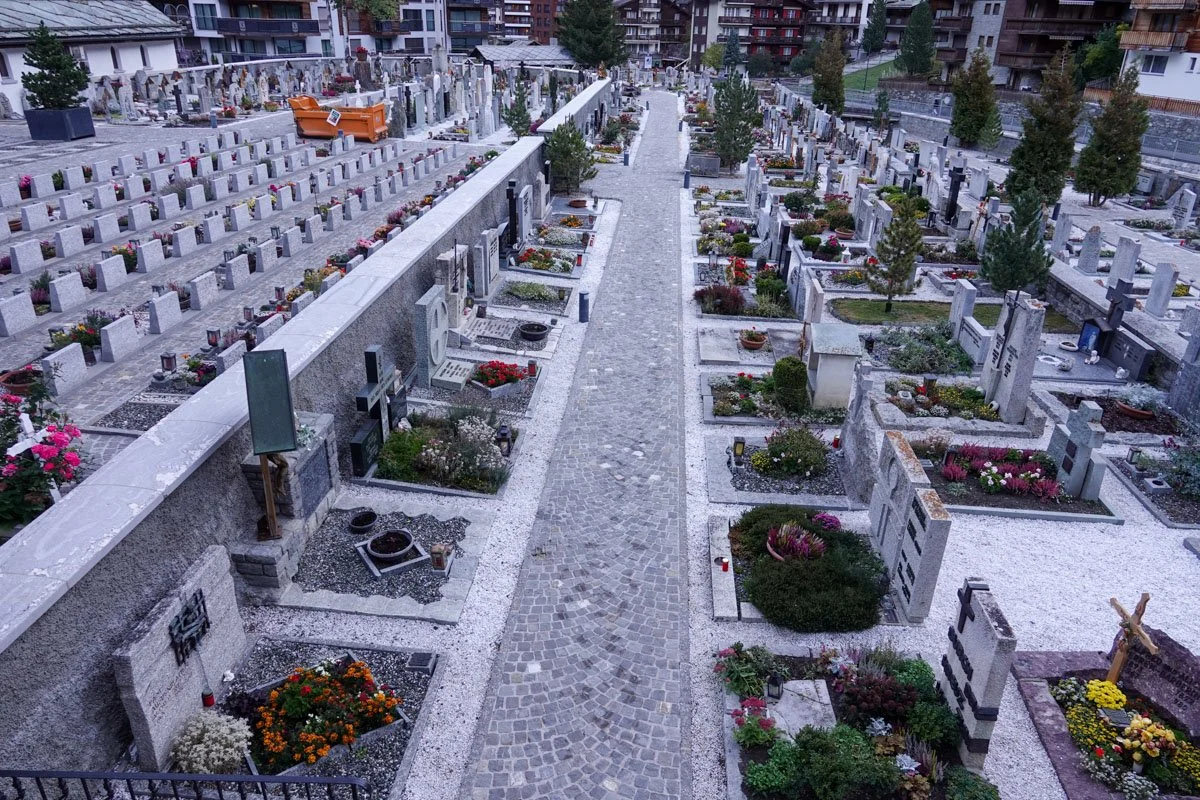
The second cemetery is across the street. It's not so crowded. This cemetery is only for people who died climbing the Matterhorn. I don't know the number of people buried here but it's not insignificant.
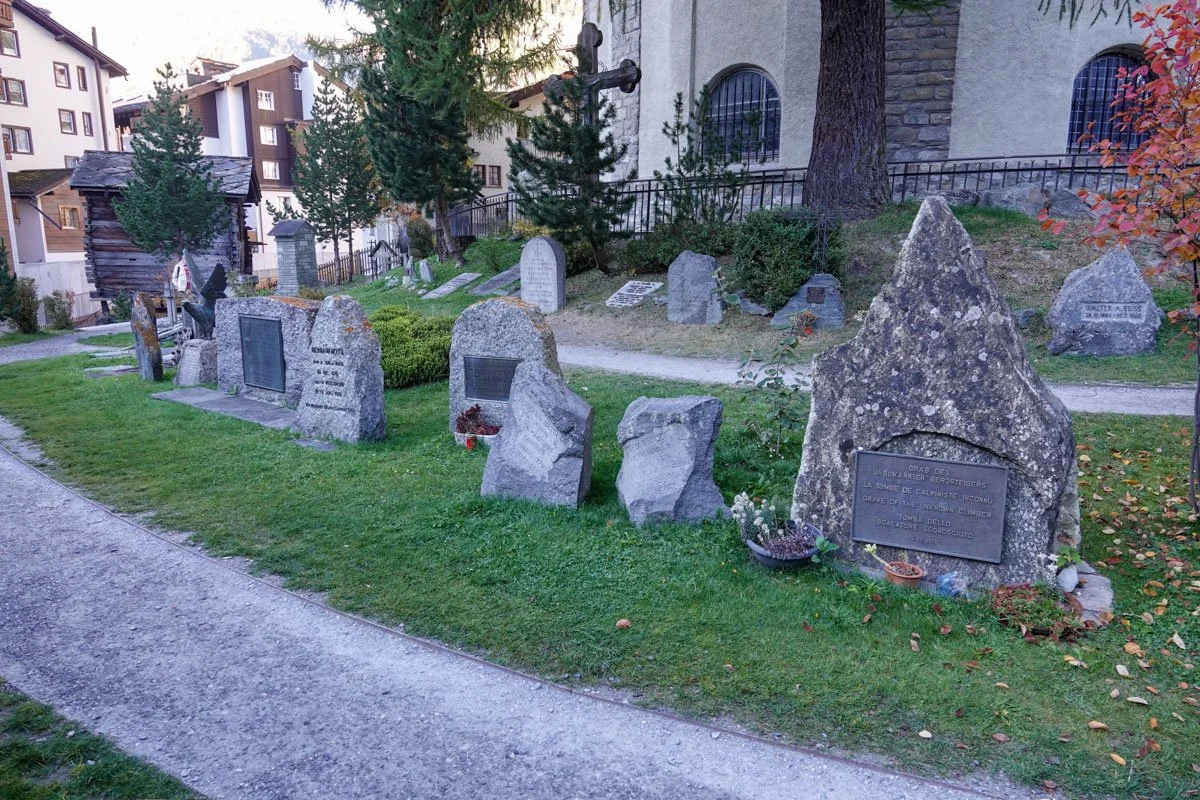
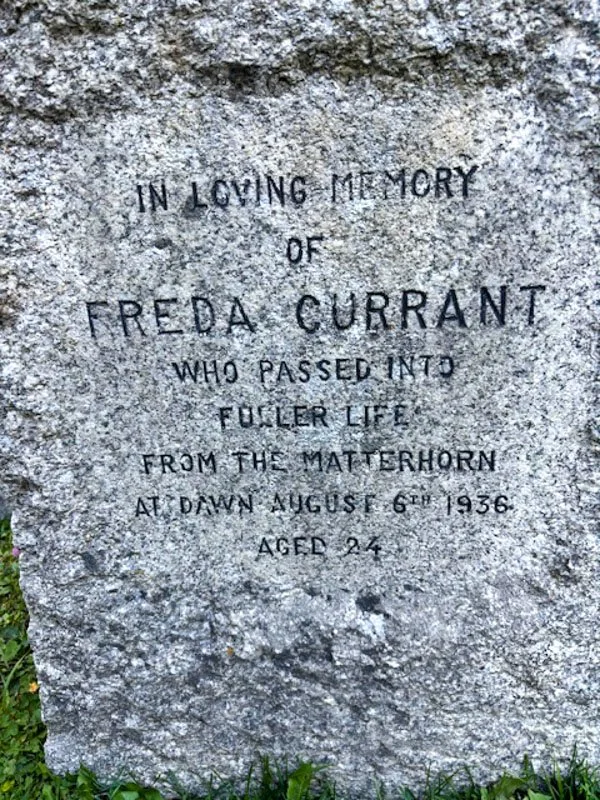
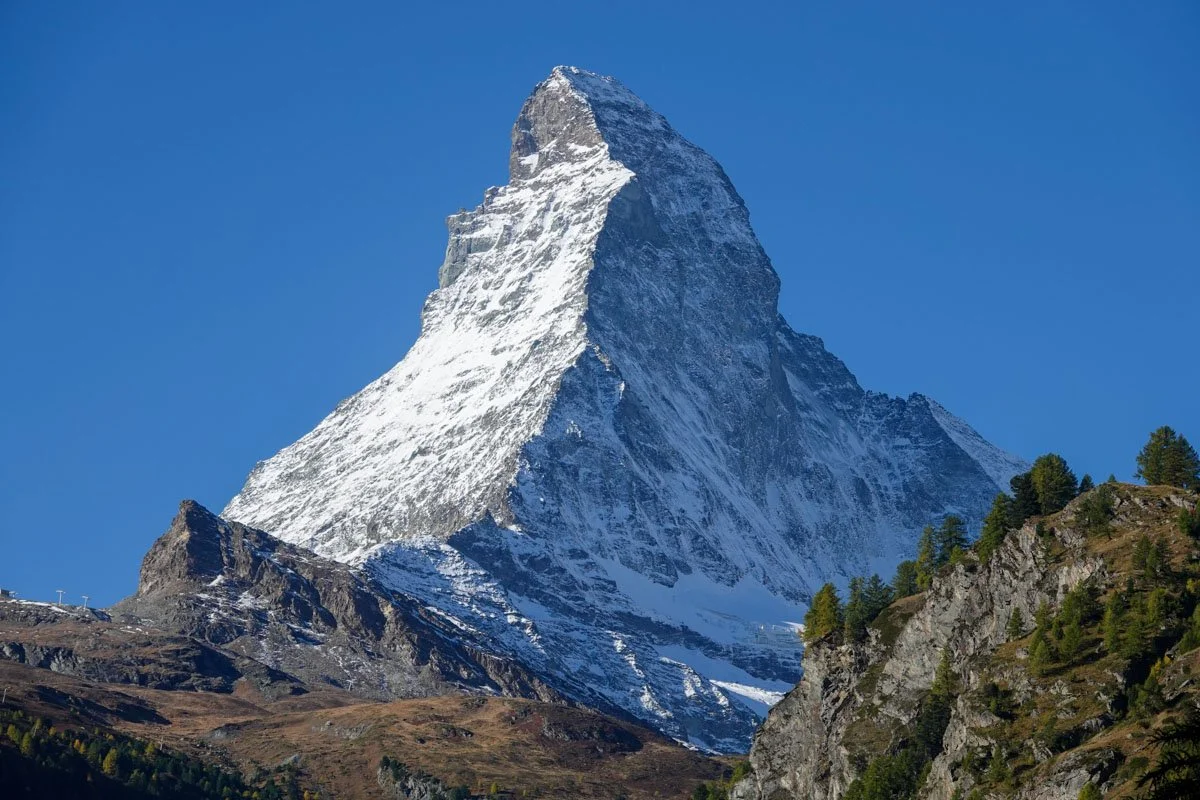
The next photo is from town and I must say that the Matterhorn is perhaps Zermatt's greatest asset. And we were so lucky to be here for three days and have the Matterhorn free of clouds for pretty much the entire time.
We enjoyed some very nice meals in Zermatt as they have lots of restaurants, bars, and coffee shops.