Lucerne
Lucerne was our first stopping place in Switzerland and it was a fantastic town to visit. It has a population of around 82,000 people but there was a carnival in town that started the day we arrived and the weather was in the 70's, so lots of people were out and about. Lucerne is in the German-speaking part of the country. Swiss cantons (like our states) could decide what religion they wanted the most for their canton. Most cantons chose Protestant religion, but Lucerne chose to be Catholic.
Lucerne is the most populous city in Central Switzerland and noted for economics, culture, transportation, and media. It's located on the shores of Lake Lucerne and the lake's outflow, the river Reuss. The town sits right below Mount Pilatus and Mount Rigi in the Swiss Alps. Lucerne has long been a tourist destination and Mark Twain even visited here twice.
Lucerne was once a fortified city but most of the medieval wall and towers have long since been removed. We, of course, were interested in seeing and walking the portion of the wall that remains and also climbed up the clock tower. It gave us some great views. In the first photo, you can see the remaining section of the wall and towers on the left side and the parts of the town originally within the walls and the parts now outside the wall. You can also see a small end of Lake Lucerne and the river Reuss that is running out of the lake at the bottom.
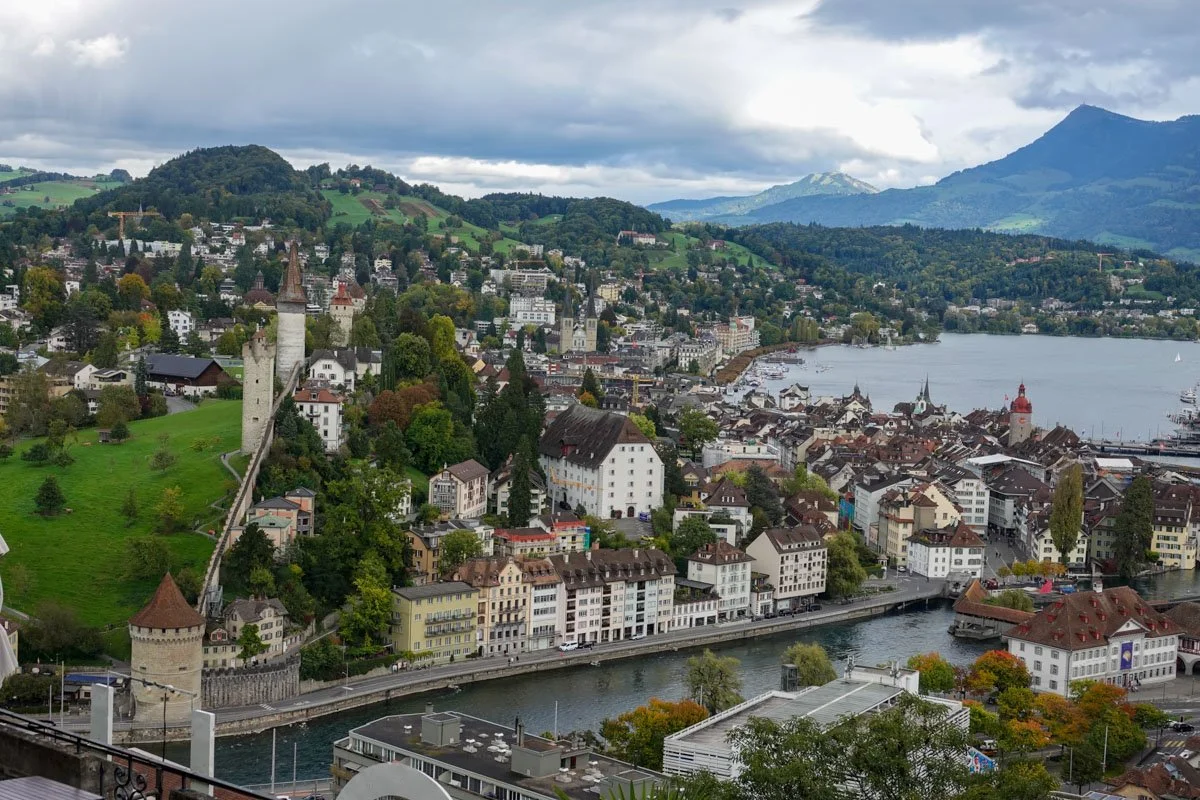
The next photo is just to the right of the above photo. Our hotel was in the center of the photo, about a block from the river.

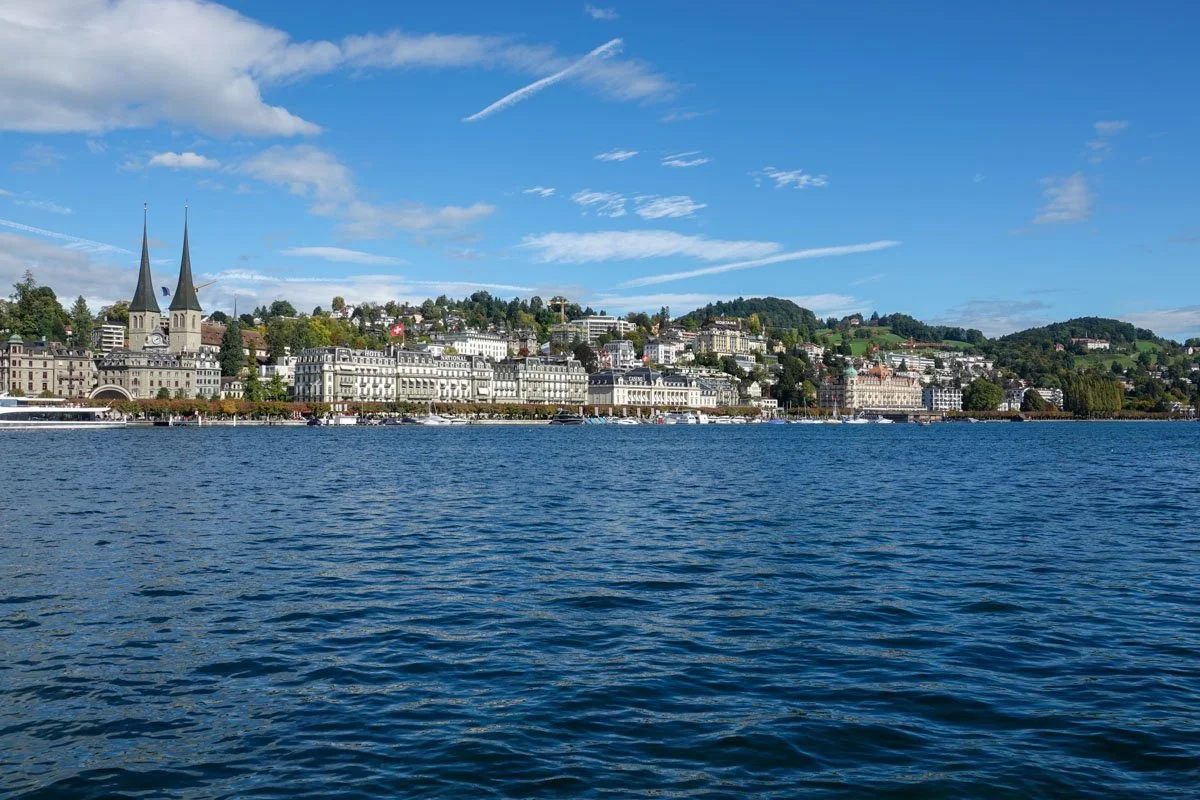
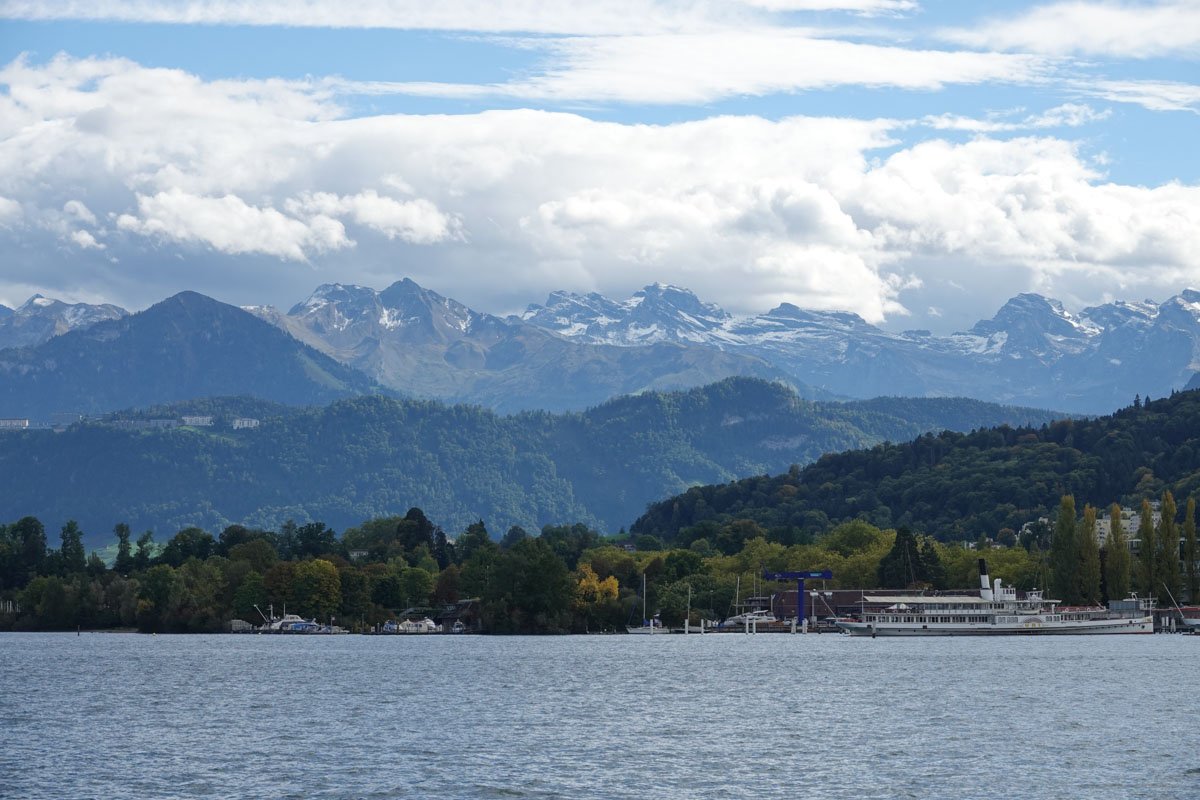
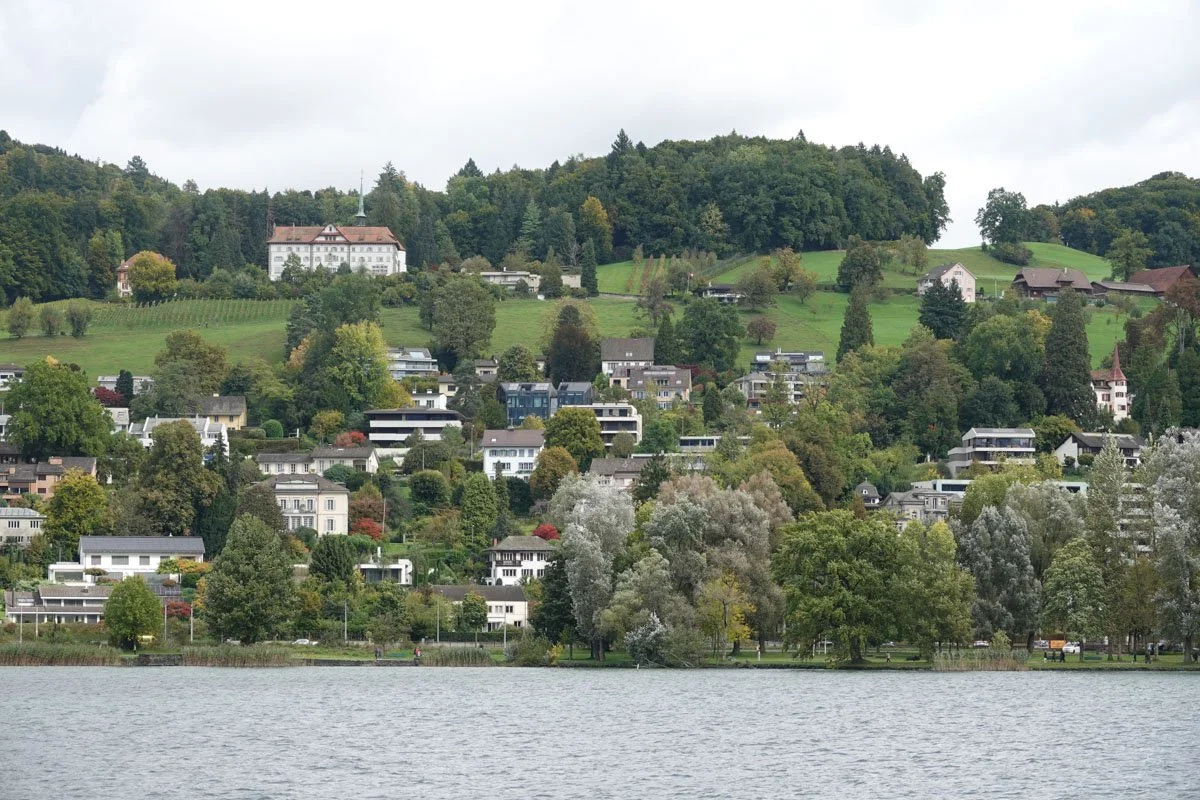
We took an hour boat ride out on Lake Lucerne. The lake is actually very large and fills four separate valleys. The lake has many towns and villages on its shores with regular ferry boats that connect them, as well as roads. Lucerne, like all of Switzerland, is surrounded by the Alps. The next three photos are from our boat ride out on the Lucerne end of the lake.
In bygone days, the bridges of Lucerne over the river Reuss formed part of the city's fortifications. The Old Mill Bridge was built in 1408 originally and the town's mills were right next to it. The bridge burned partially in 1996 but was rebuilt to include power generation, a fish ladder, and moveable wooden dam parts to keep the lake at a certain level to prevent flooding and allow boat access to all the lake's villages. It's a covered bridge.
The Chapel Bridge was constructed around 1360 which was later than its water tower. The Chapel Bridge was named so because it ended at a chapel when built, though the chapel has long since been removed. The Chapel Bridge is probably Lucerne's chief landmark. A boat tied up to the bridge to party in 1993 but the boat caught fire and burned down most of the bridge. It has been restored and boats are no longer allowed to tie up to it. We walked across these bridges multiple times and enjoyed each trip across. The Chapel Bridge is below.

This will be more photos from Lucerne but on a more granular scale. The city offered so much to see and enjoy without even hitting the highlights of the city. We had a great time just wandering around town and looking at the buildings, people and all the activity.
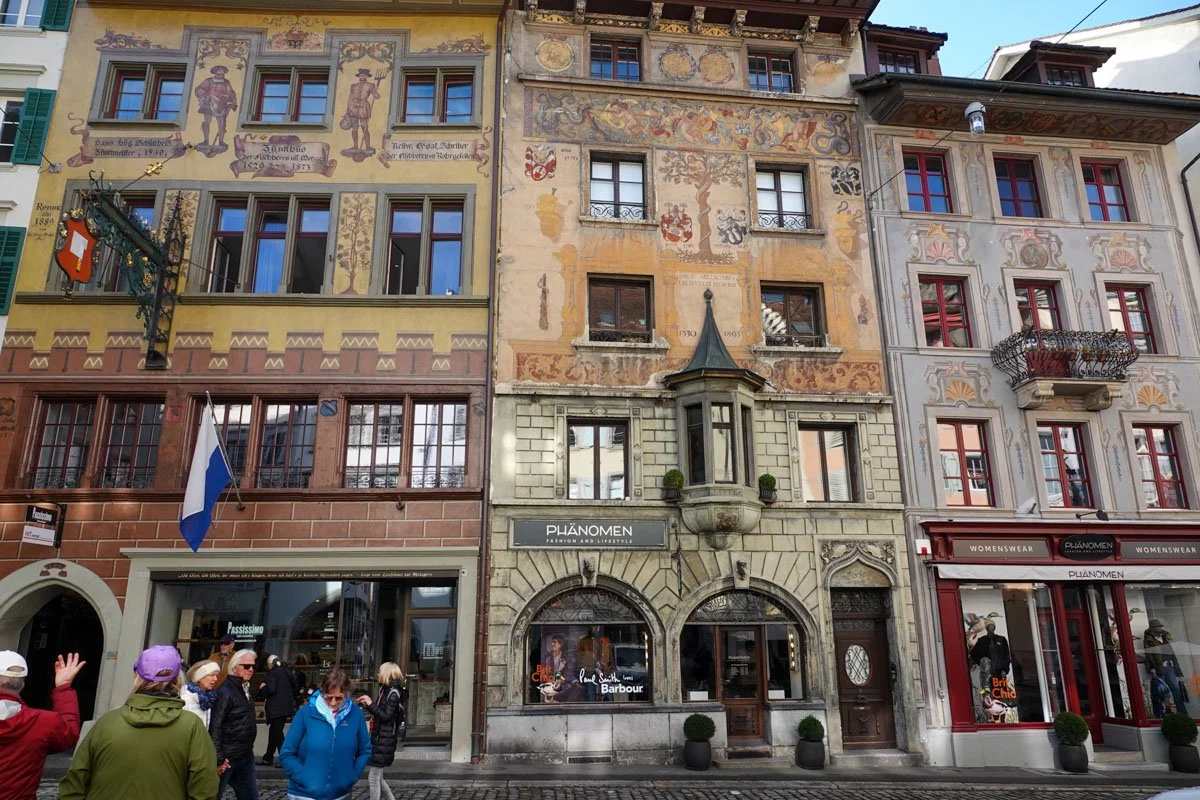
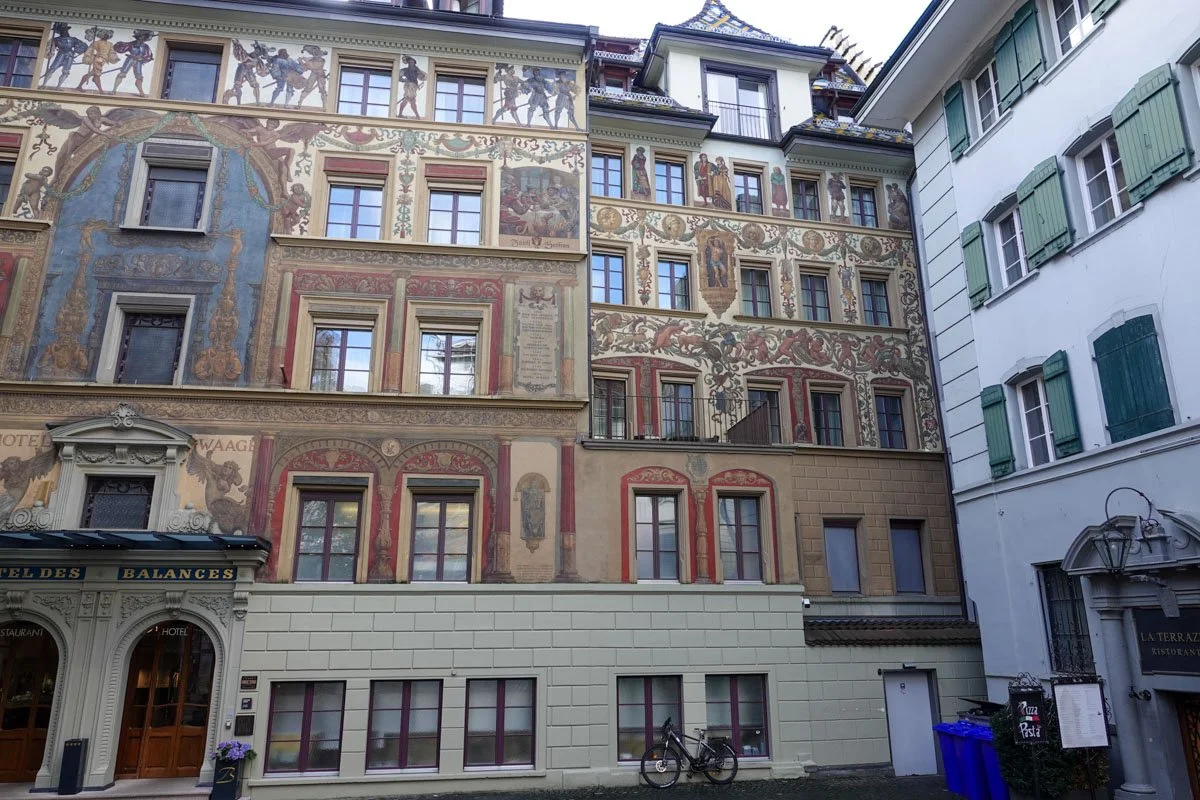
Lucerne's Old Town has some beautiful decorated buildings. The nicest ones have colorful frescos which depict some of the city's history and culture, such as their annual carnival, the legend of William Tell, historic battles, and the wedding of Canaan. The next two photos are some of the decorated buildings in Old Town.
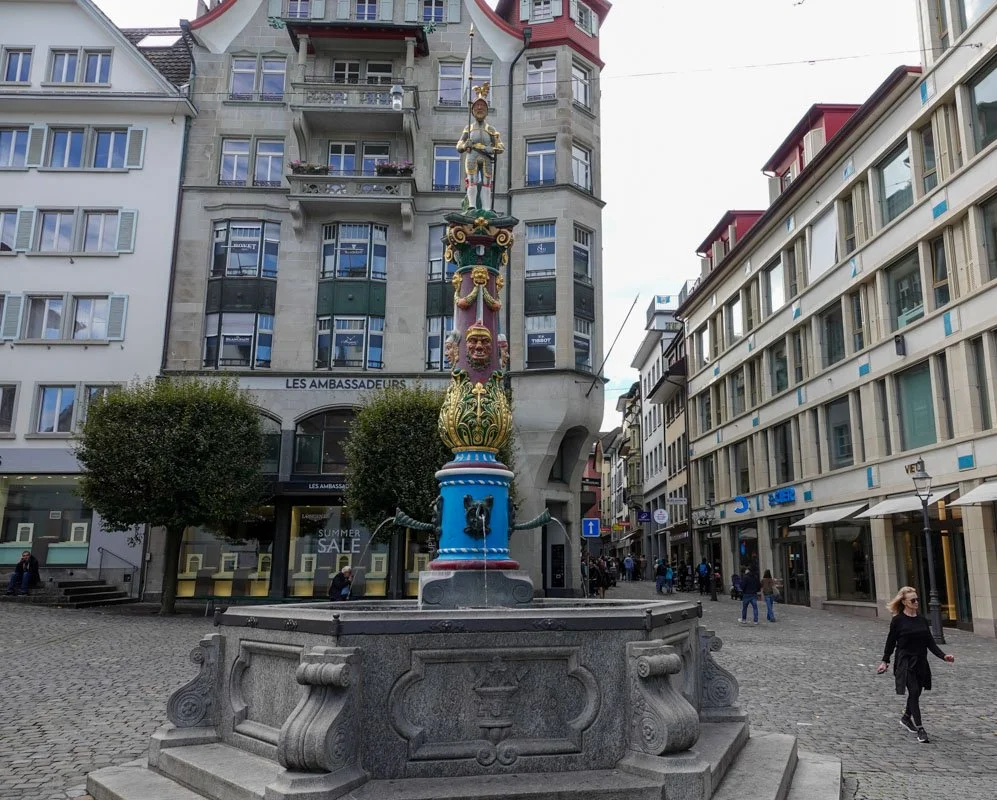
Lucerne did not have indoor plumbing until something like 1875. Long before that, the water they were drinking was very polluted and they had to address the problem. So back in the 1700's, they piped water down to town for drinking from high in the Alps. They have 200 water fountains in town which is where everyone got all of their water for centuries. All the fountains still work and people still use them to fill up their water bottles, including us. They are very proud of their constantly flowing mountain water, and the water fountains are large and highly decorative.
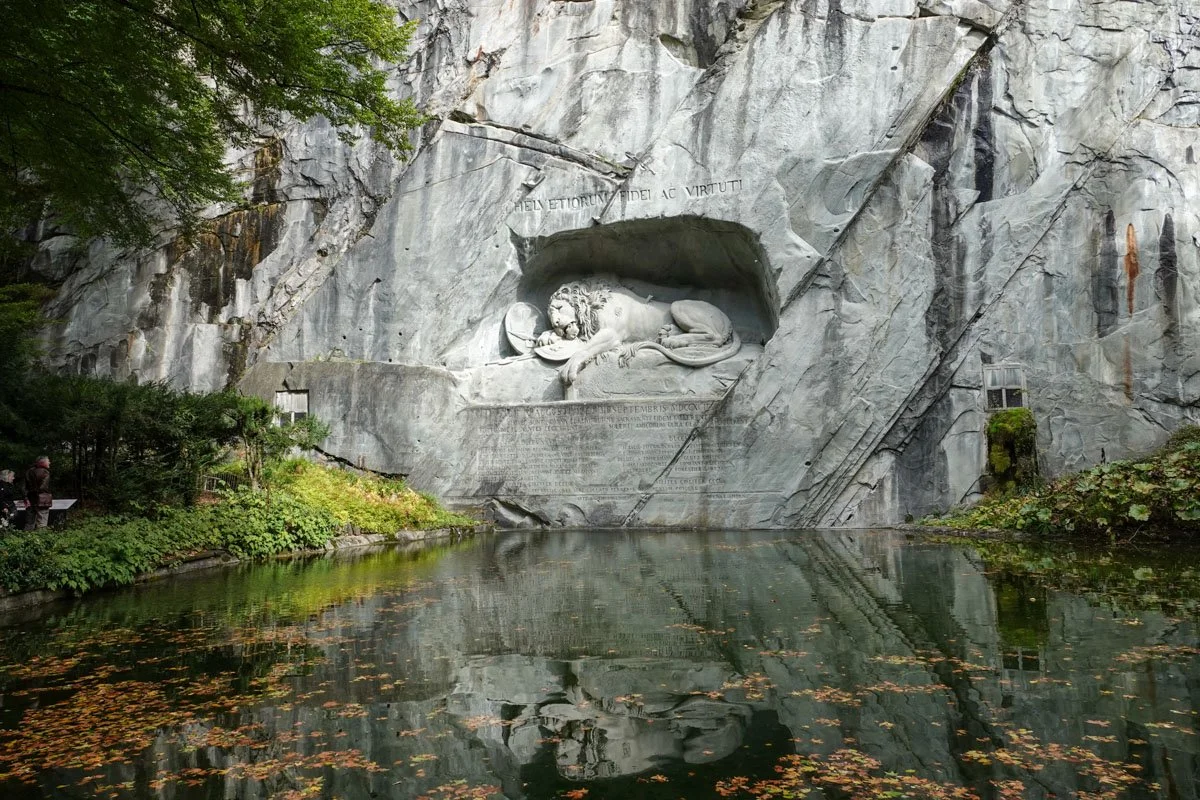
The Lion Monument was an interesting stop for us. I always think of the Swiss as being neutral but of course, they were fighters like everyone else in their past. This monument is a sculpture of a dying lion carved our of the rock of a former quarry in the northern part of Lucerne. It commemorates the Swiss soldiers who died defending King Louis XVI during the French Revolution in 1792. It's in a quiet, reflective space, if not too crowded.
On a side note, a local speaker talked to us about Swiss neutrality. She said that the Swiss people never decided it or voted on it. The Congress of Vienna imposed it on the Swiss in 1815. Following World War I, the Congress of Vienna leaders determined that Switzerland should act as a buffer zone between France, Italy, and Germany. Of course, it is more complicated in today's world. For instance, the Swiss came out and condemned Russia for invading Ukraine and that caused all kinds of havoc with Russia since Switzerland is supposed to be neutral.
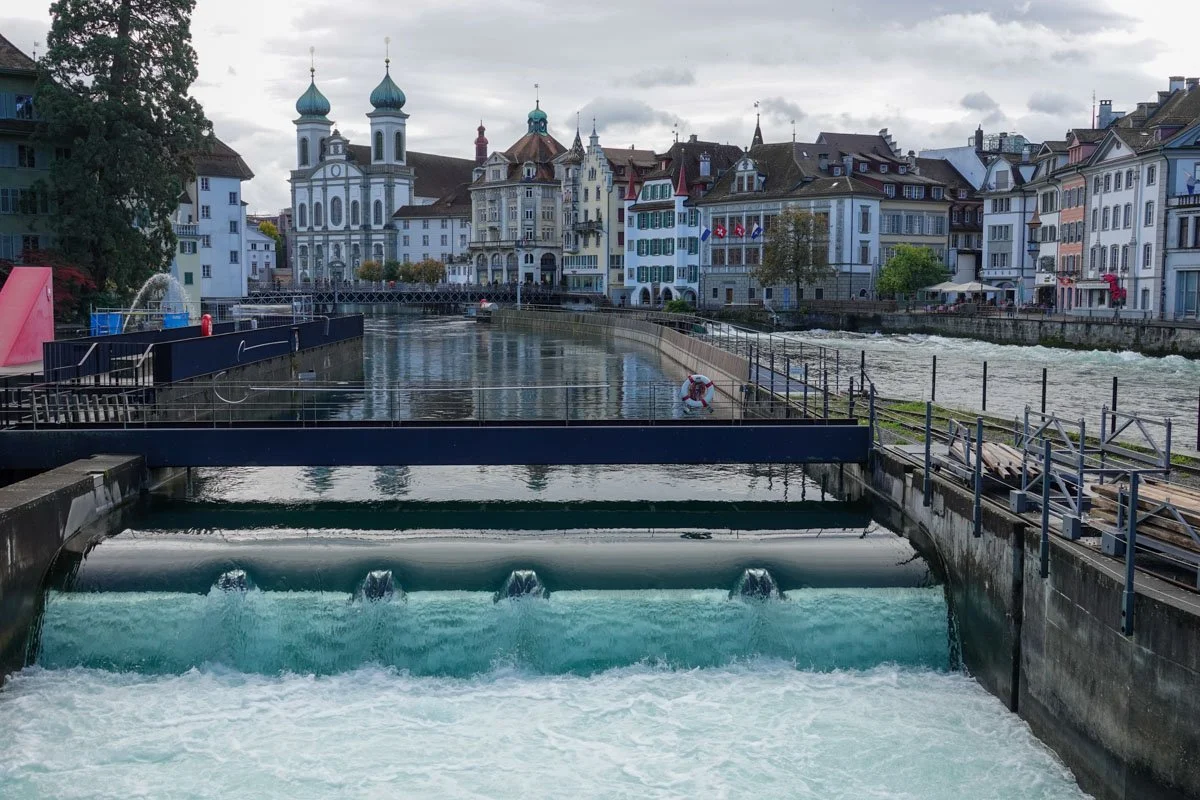
Mills have been operated in Lucerne since the 8th century, right near the Mill Bridge, which is the other covered bridge. Hydro-power is still produced here today. And in fact, we were told that some two-thirds of all Switzerland's power comes from hydro-power.
This photo was taken from the Mill Bridge and shows the hydro-power stream, with the main river on the right. You can't see it but there is a fish ladder on the left for fish to move upstream to the lake. I loved how the Swiss incorporated power production, fish care, farming, and so on right in their towns and cities.
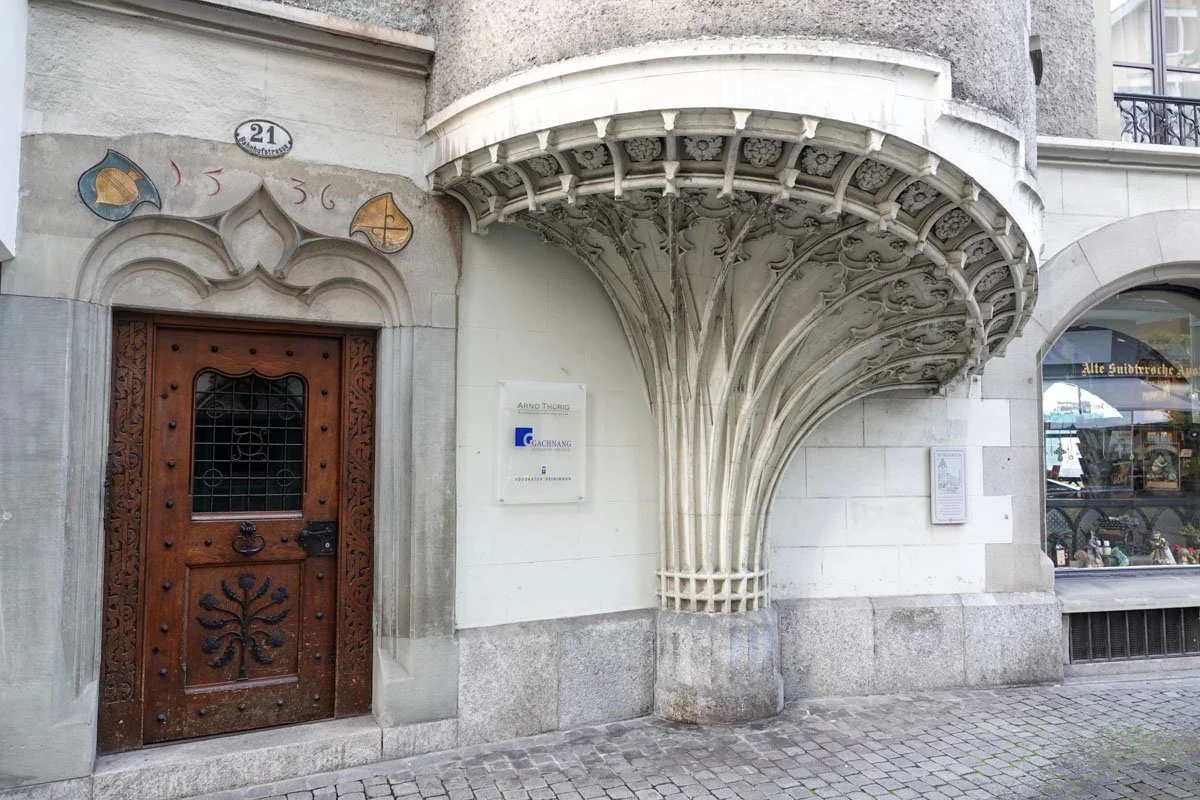
The next photo is a very simple one. This was right across the alley from our hotel. You can see what I mean about wandering around Lucerne and just enjoying the small things to see. A simple door and building wall were well worth the time to stop and stare for awhile.