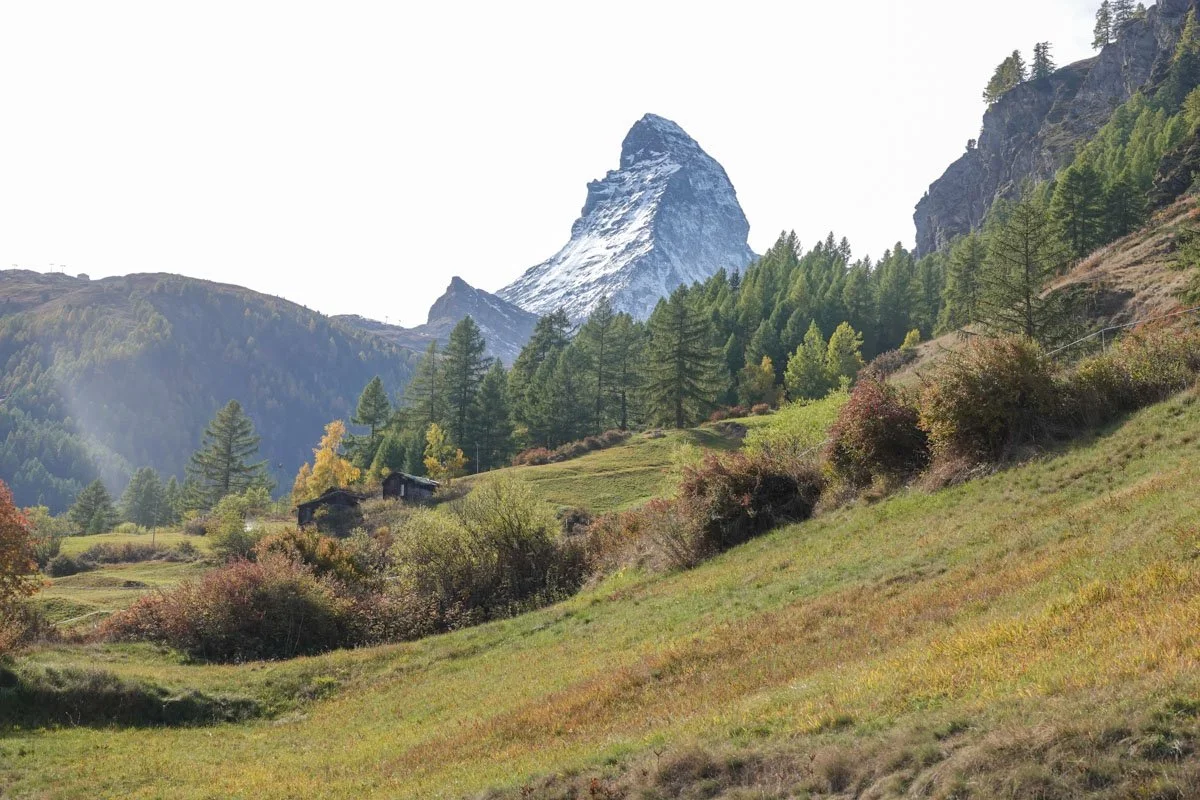
Furi Station to Zermatt
We rode the gondola from Trockener Steg down to the Furi gondola station, an interim station. There we got off and hiked back down to Zermatt. The area is somewhat of a glimpse back to the Ice Age. You can see glacial polish, glacier potholes, rock caves, and other peculiarities from the Ice Age past.
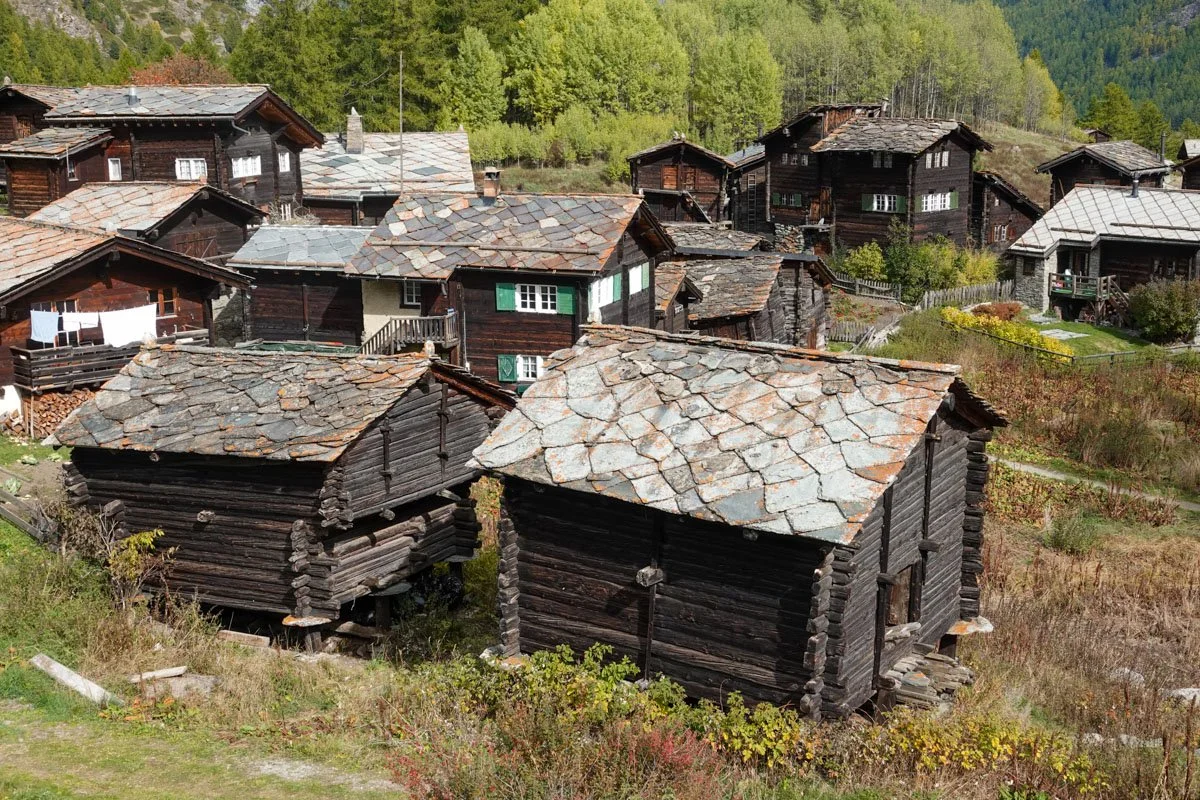
Back several hundred years, this area was fertile land for cattle grazing. There are still many historic wooden barns that once served as cattle stables. Today, most have been converted into residential buildings, though many are not used during winter.
We had an interesting hike down the mountain back to Zermatt. We passed multiple small villages, wide meadows, larch forests, rock formations, grazing sheep and cattle, crossed bridges, checked out different trails, and enjoyed the cow bells ringing.
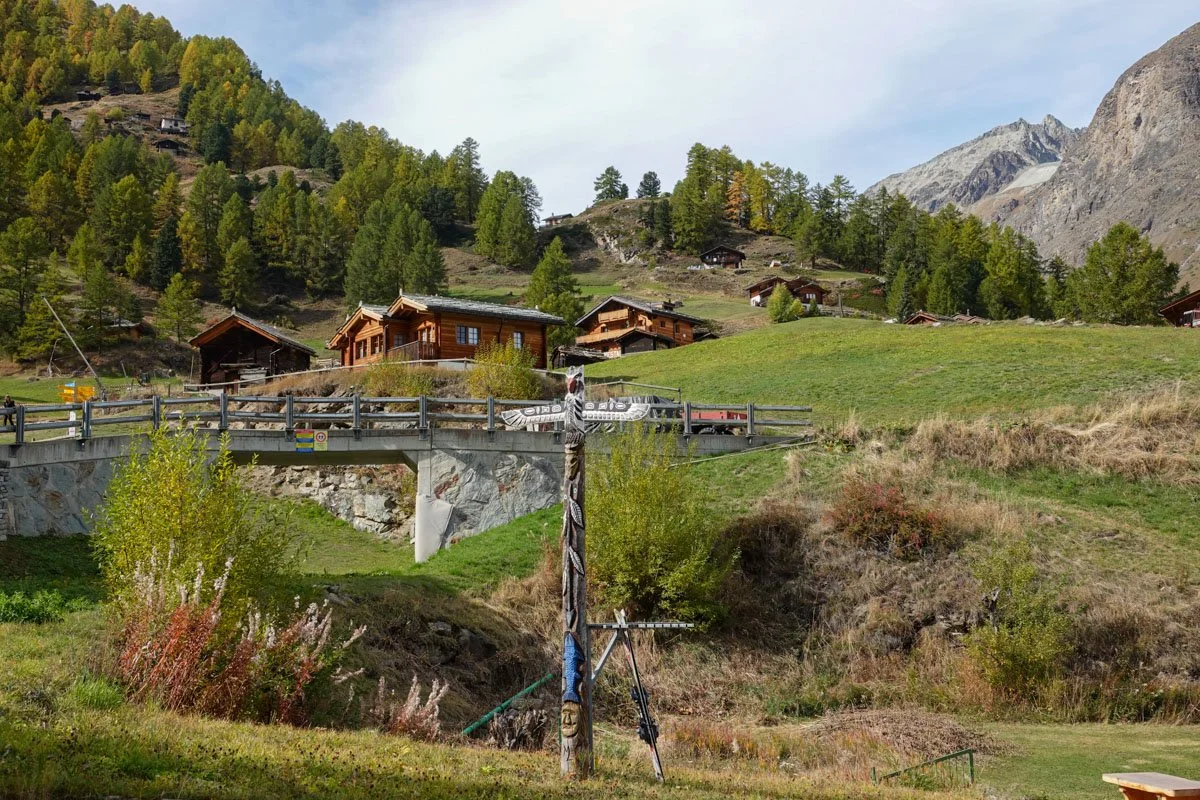
According to our guide, the house below in the very bottom right side was built in the 15th century, with its slate roof.
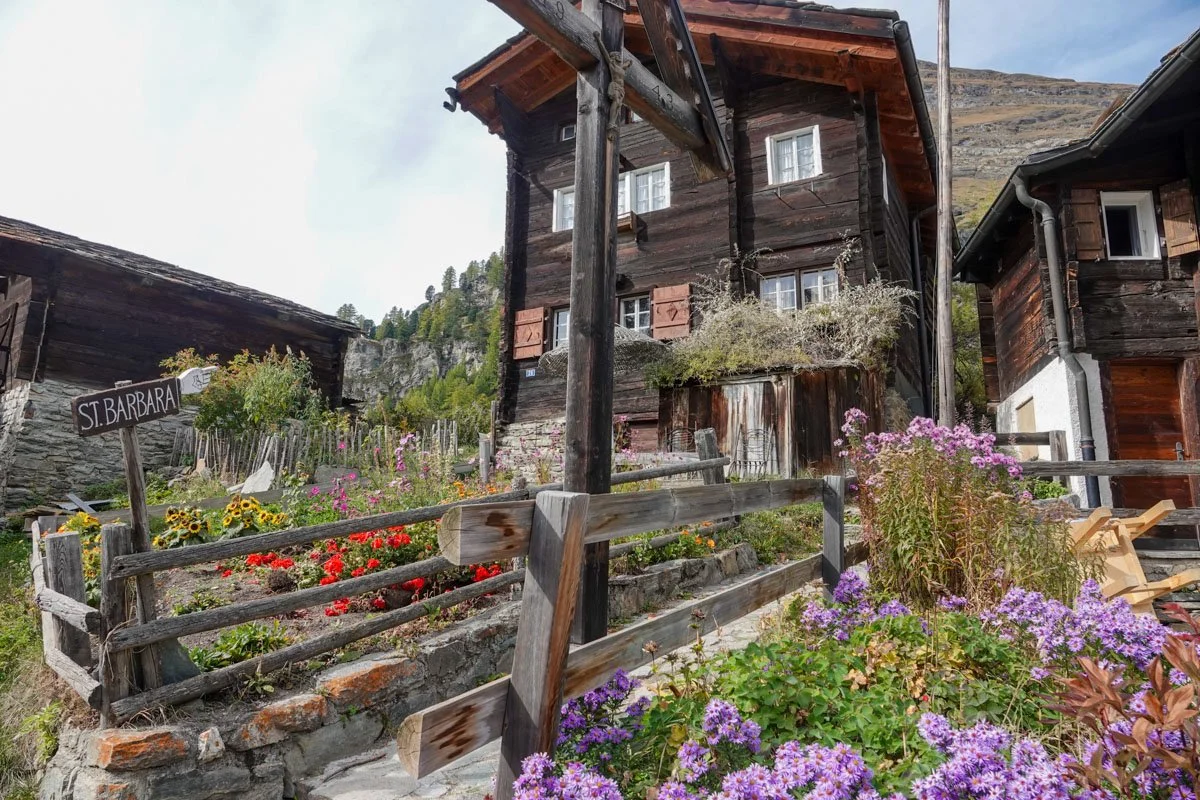
Some people spend more time in their gardens than other people. My guess is that those gardening people spend more time living here, versus just houses that are rented out for periods of time.
Aside from the villages, some people are very isolated, though not too far from the villages.

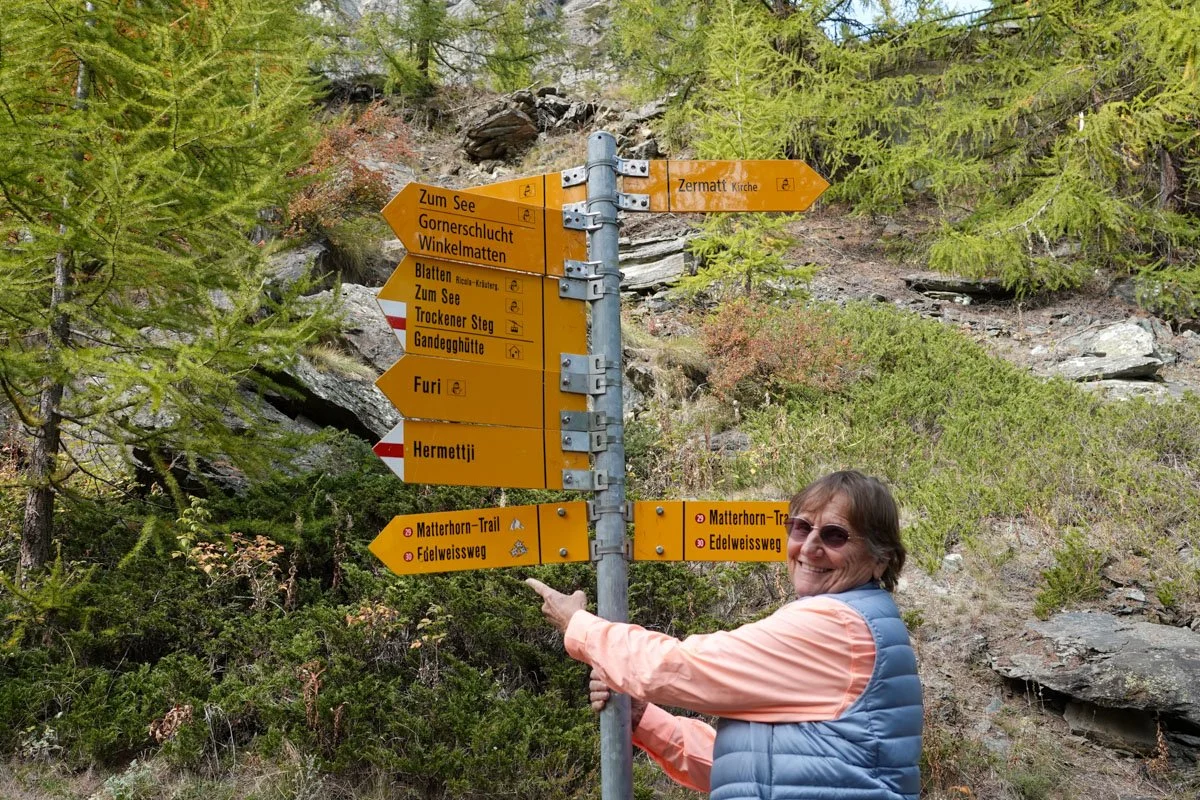
One comment about trail signs here, and in the Italian Alps, is that they are way better than trail signs in the U.S. You can also notice that they are in different languages.
We reached the bottom of the mountain, back in Zermatt and took another look up at the Matterhorn. We had three days of clear viewing and enjoyed every glimpse of it.