Veneto Region Farmer
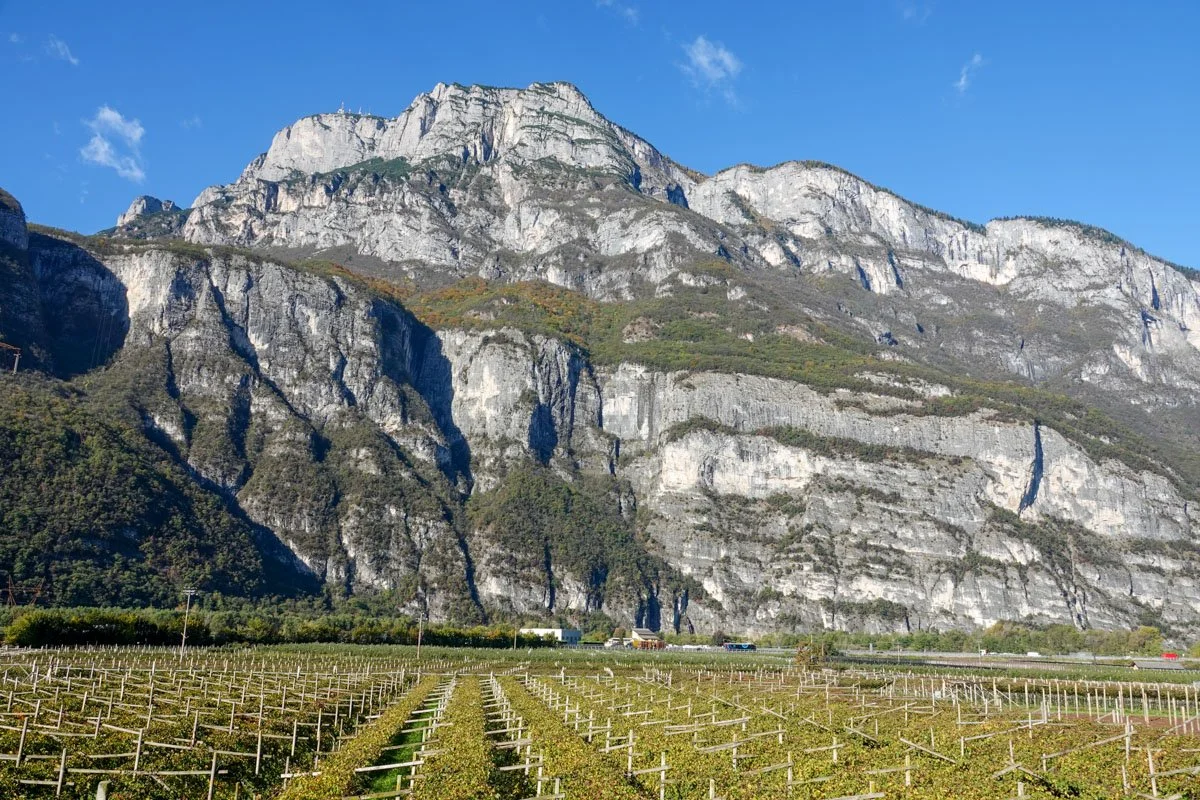
We left Bressanone and drove through valleys, in the direction of Venice. Along the way, we first stopped at the Adige River Valley. The landscape and the grapes both looked fantastic, so I'll include one photo from our pit stop in the valley. (Note: these are not the Dolomites, but very nice)
We kept driving into the hills of the Veneto region near Borgo Veneto, only up into the hills above it. The bus stopped where you see in the photo below and we had to walk to the farm. But first we met the farmer, Elvio. He immediately took us back in time by talking about all the fighting in this area during World War One. He pointed out places in the hills across the valley and named the battles that occurred there. Elvio was not alone in talking about the first world war on this trip. It turns out that this area was the Italian Front during World War One.
In Elvio's case, his family was farming here before WW One but they were Hungarian. After the war, they had to become Italians. He also said that during World War II, there was no fighting here, just a little bombing.
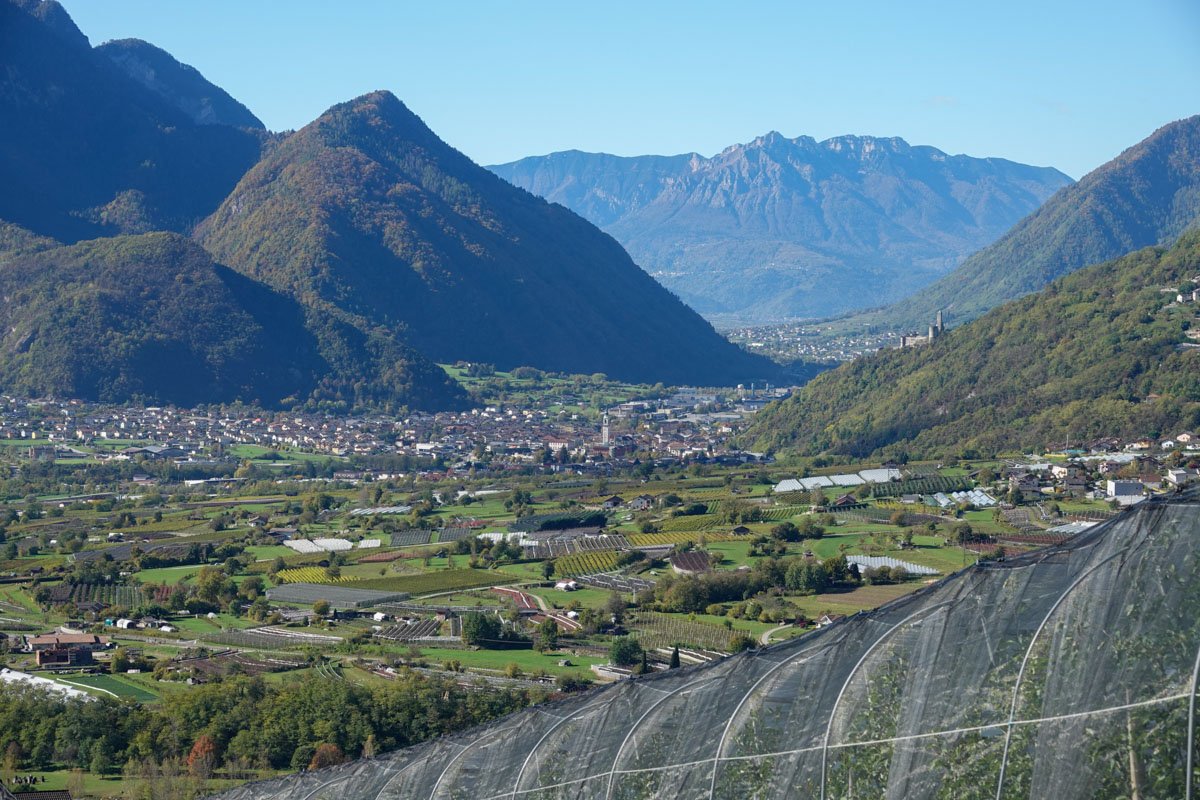
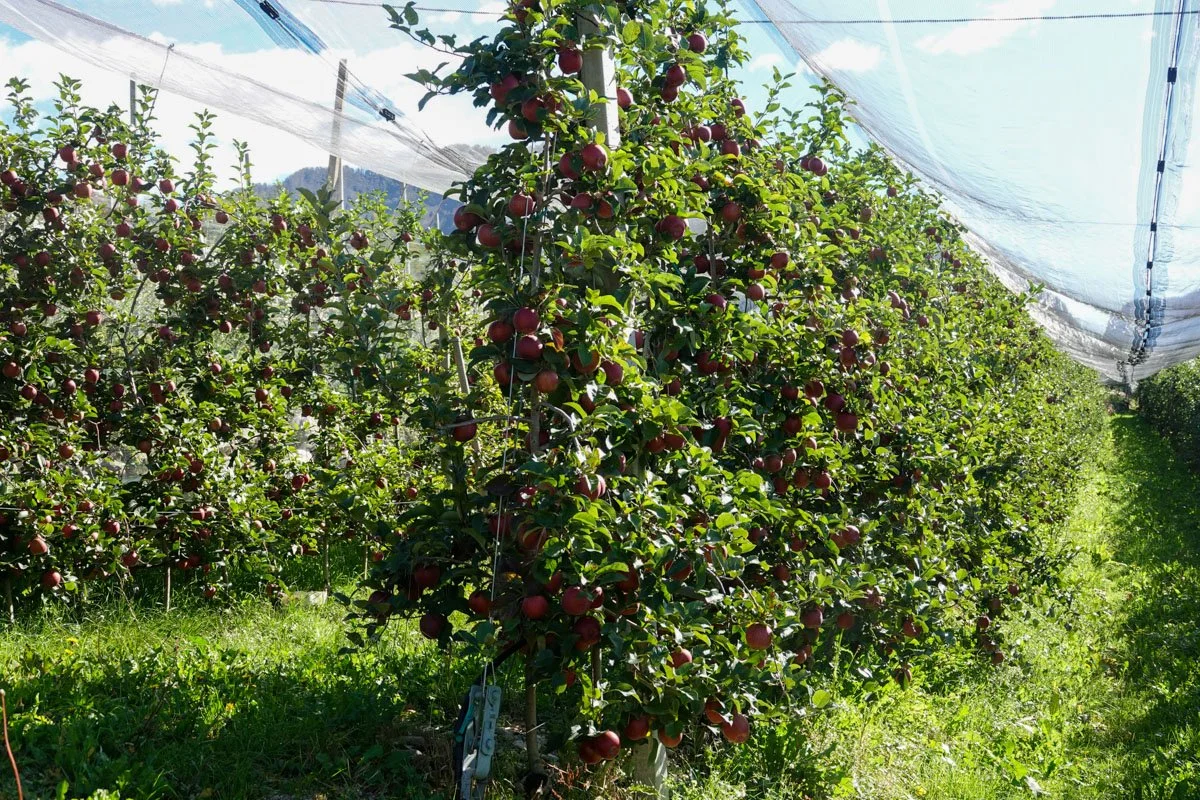
On the lower right in the above photo, you can see some apple orchards. They are covered over with netting. You can see another photo below.
Why do you think the apples are covered over by netting?
I personally guessed birds: WRONG. Elvio told us it was due to "hail". He said that climate change has caused Switzerland and Northern Italy to have much more frequent and more intense hailstorms. Since over 90 percent of their apples are for the fresh apple market, they can't afford the damage that hail would do to their apples. At least three people on this trip told us that and all blamed climate change.
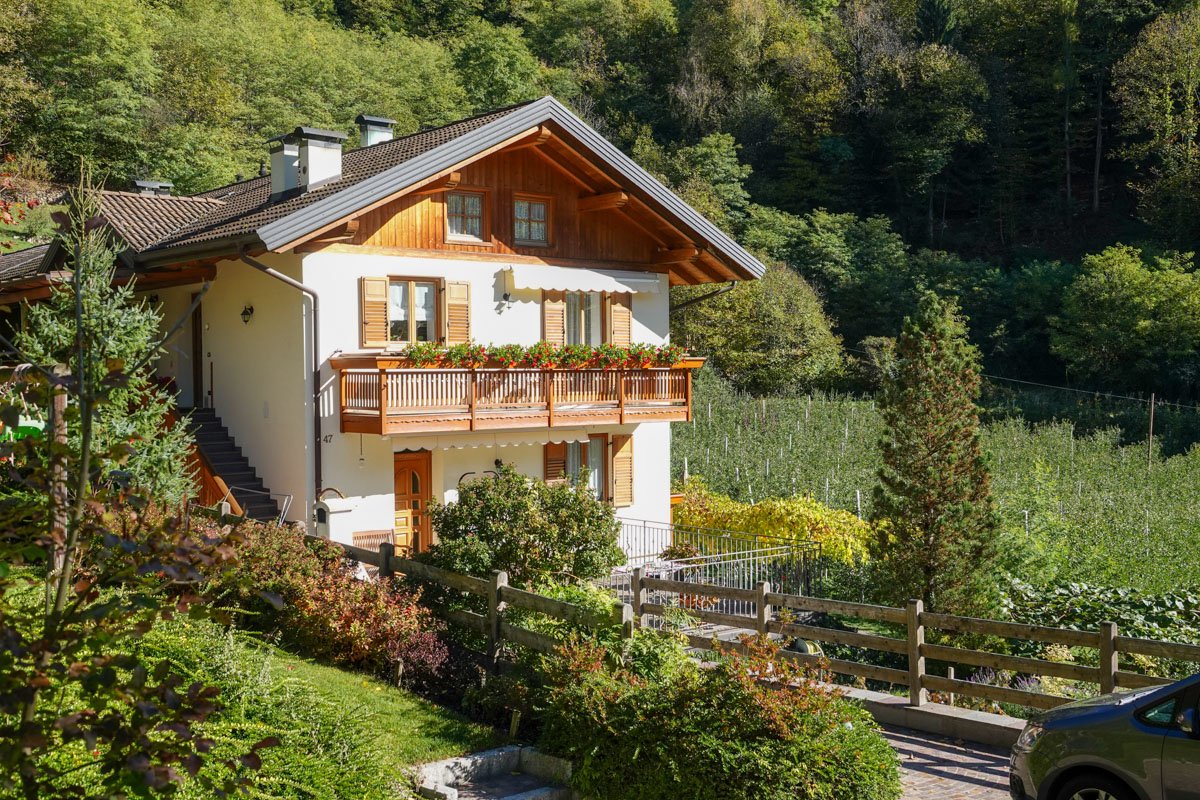
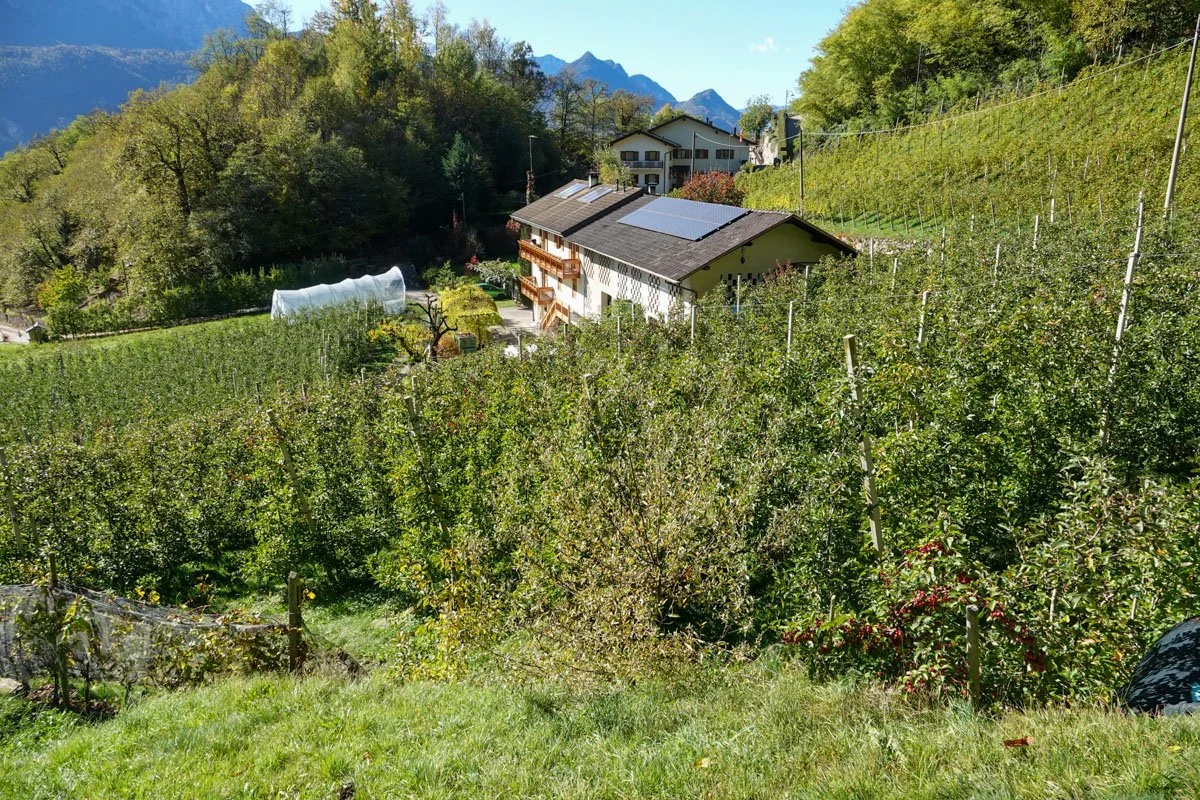
Elvio walked us to his farm and home. He has 9 acres by his home but more land at other locations. Apples are his major crop, and he belongs to an Apple Cooperative. He said that this area of northern Italy is the EU's major apple producing area.
Elvio said his home is 100 years old, but basically, it's a brand new home, except for one interior wall.
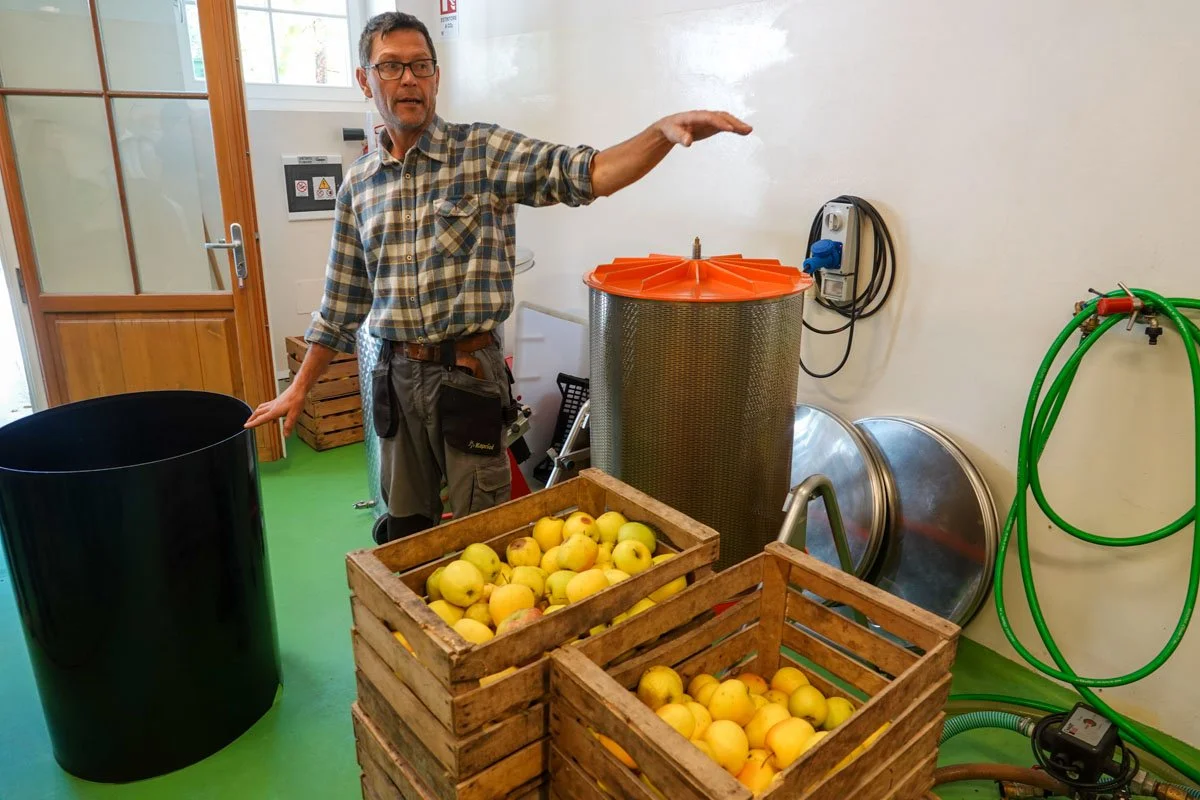
Elvio said that less than 10 percent of the area's apples are used for juice, applesauce, dried apples, etc. He makes his own apple juice and sells it. He doesn't make very much but still enjoys making it and drinking it. We drank some with lunch.
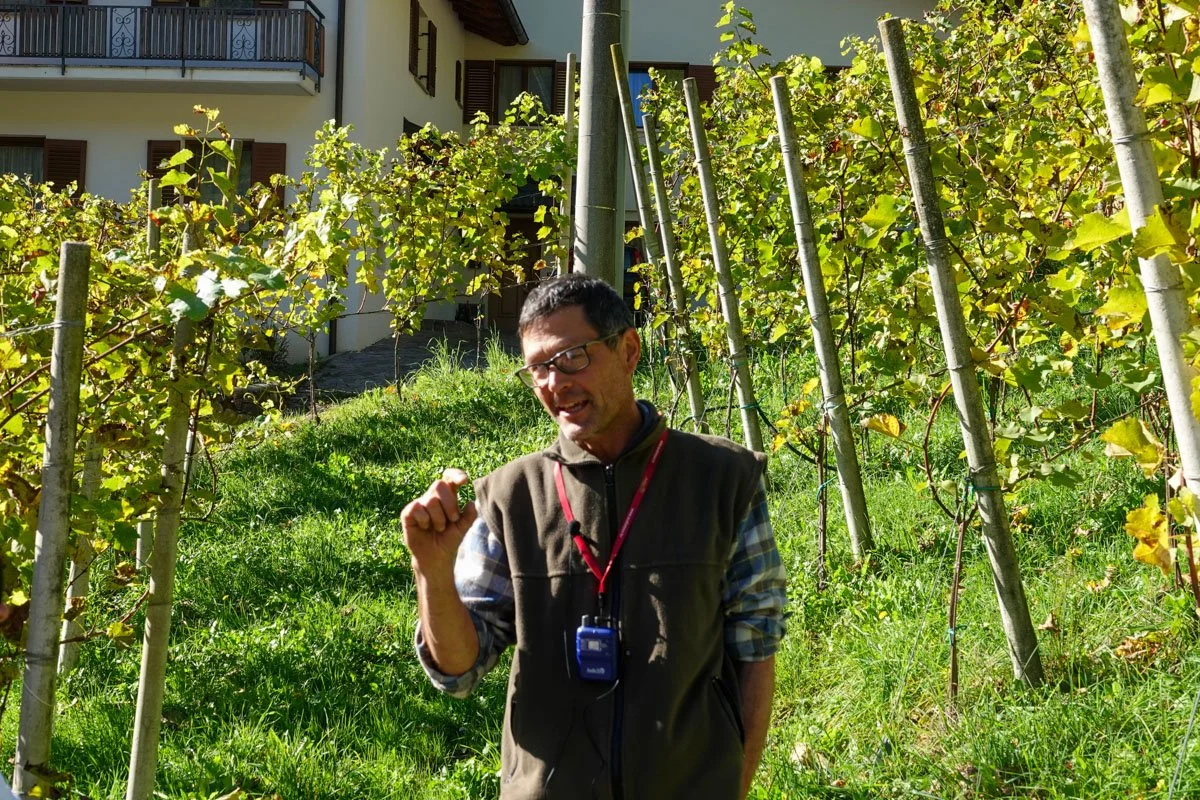
Elvio's also raises wine grapes. He sells most of his grapes to a winery, but he uses some of them to make his own wine for home use. He shared some with us for lunch and it was quite good.
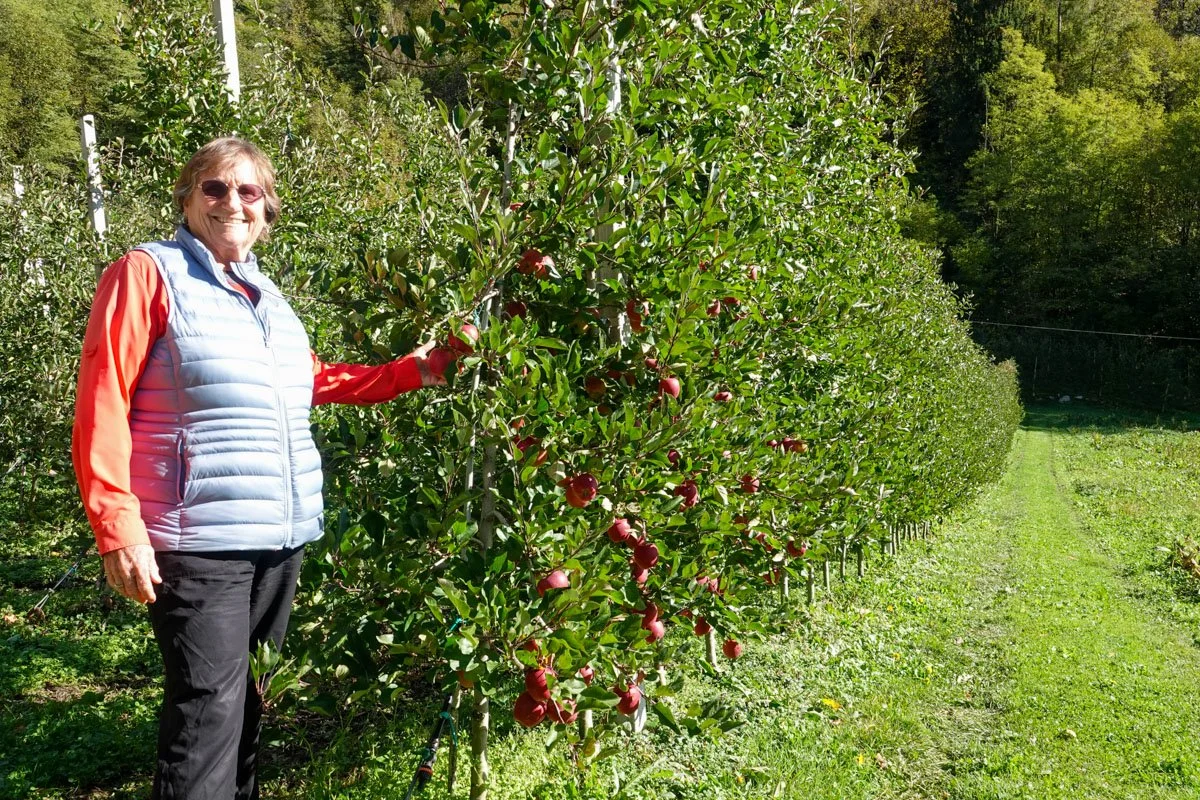
Elvio's apples here at his farm are roughly 90 percent Golden Delicious and 10 percent Red Delicious, but he has some Swinga apples too. He grows some Fuji and Granny Smith apples at his other locations. I can personally attest that his apples are excellent!
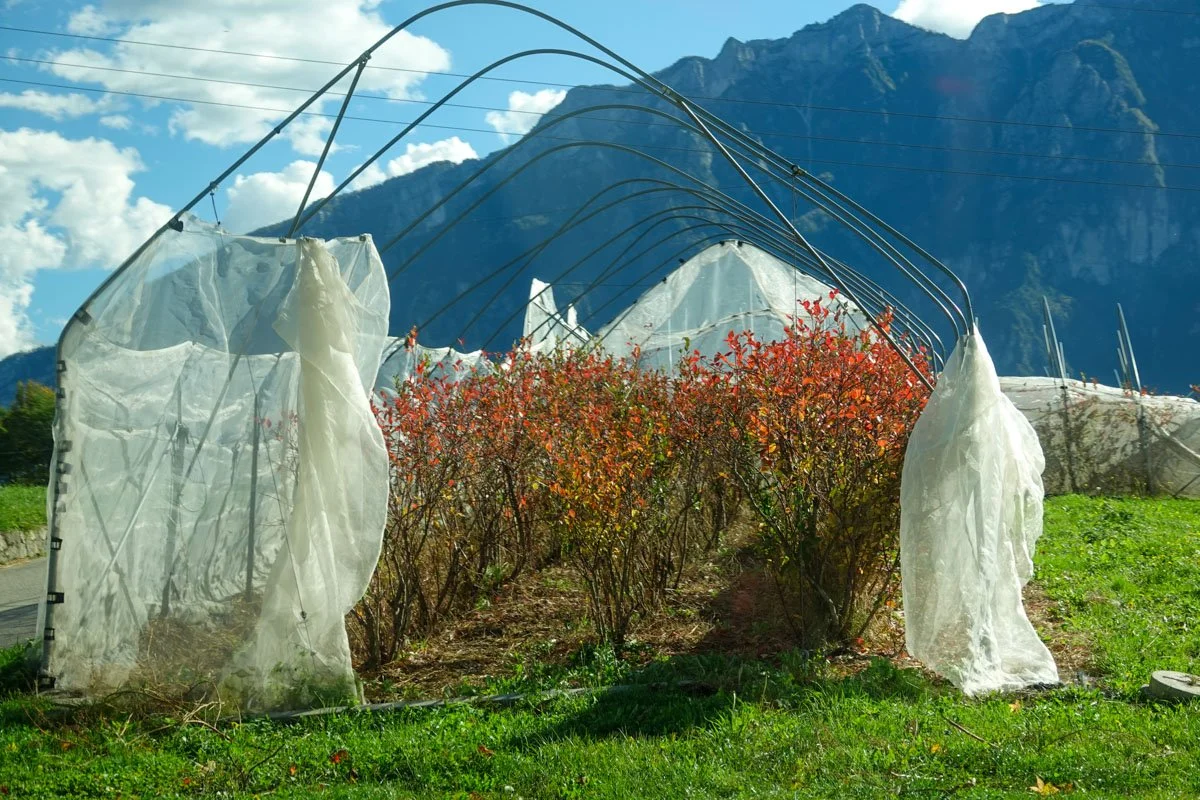
Elvio's other crops include cherries and blueberries (below). For personal use, he also had pomegranates, persimmons, kiwi's, along with a big garden that has tomatoes, corn, peppers, squash, garlic, and much more.
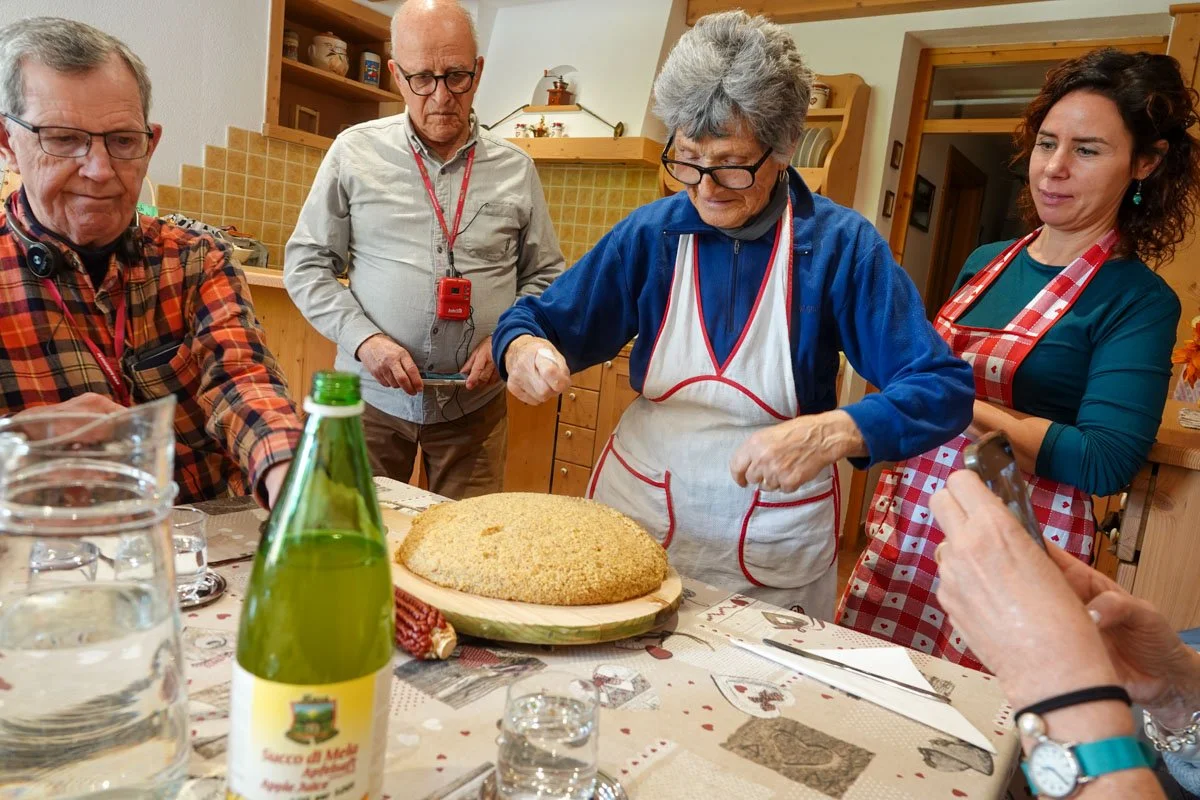
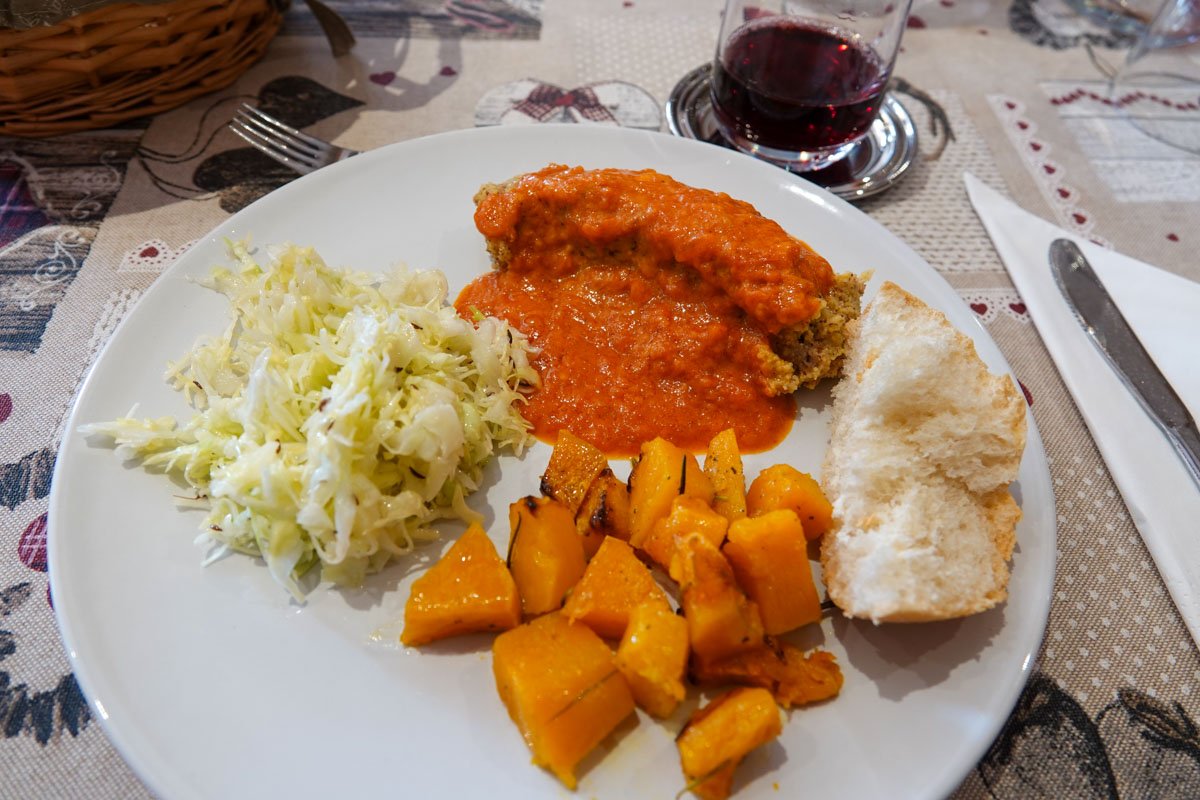
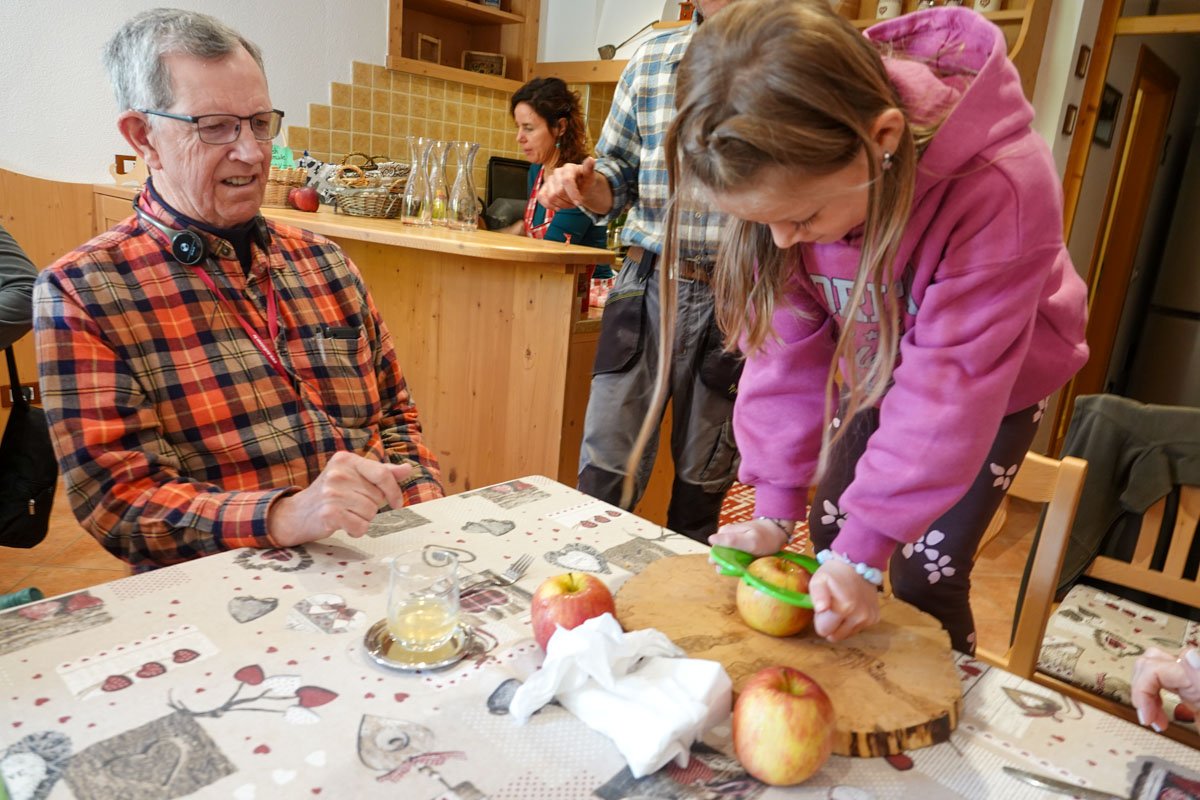
We were served lunch with probably everything being home grown and homemade. Elvio's mom and his wife made us lunch. They made polenta which his mom cut with a thread, then covered with tomato sauce and Trento cheese. We had homegrown squash, cabbage with fennel, fresh made bread, and homemade apple juice and wine. Dessert was a crumble cake and fresh apple slices, done by his daughter. Lunch was excellent!