Trento
Trento was our next stopping point in northern Italy. It has a history from ancient times through the Romans and then was part of Austria and the Austria-Hungarian Empire until the end of World War One. It was annexed by Italy in 1919. Our local Trento guide said Trento used to be Italian-speaking Hungarians before 1918 when they became Italian-speaking Italians.
The guide said that in 1916 when the first world war started here, 600 men from Trento went to fight for Italy while 60,000 men went to fight for Hungary. It was at that point that Mussolini started to gain influence here though he didn't gain power until 1922 and not officially until 1925.
Our guide said that Trento might be most famous for the Council of Trento, held between 1545 and 1563. It was the 19th ecumenical council of the Roman Catholic Church and was prompted by the Protestant Reformation. The Council of Trento revised Catholicism to defeat Protestantism. It was the last time that a Catholic ecumenical council was held outside of the city of Rome. And while it was unsuccessful at defeating Protestantism, it did manage to issue key statements and clarifications of the Church's doctrines and teachings, including scripture, biblical canon, sacred traditions, original sin, salvation, the sacraments, the Mass, the veneration of saints and much more. The Council met for 25 sessions over 18 years with Pope Paul III, who convoked the council, overseeing the first eight sessions. Two other popes oversaw the later sessions.
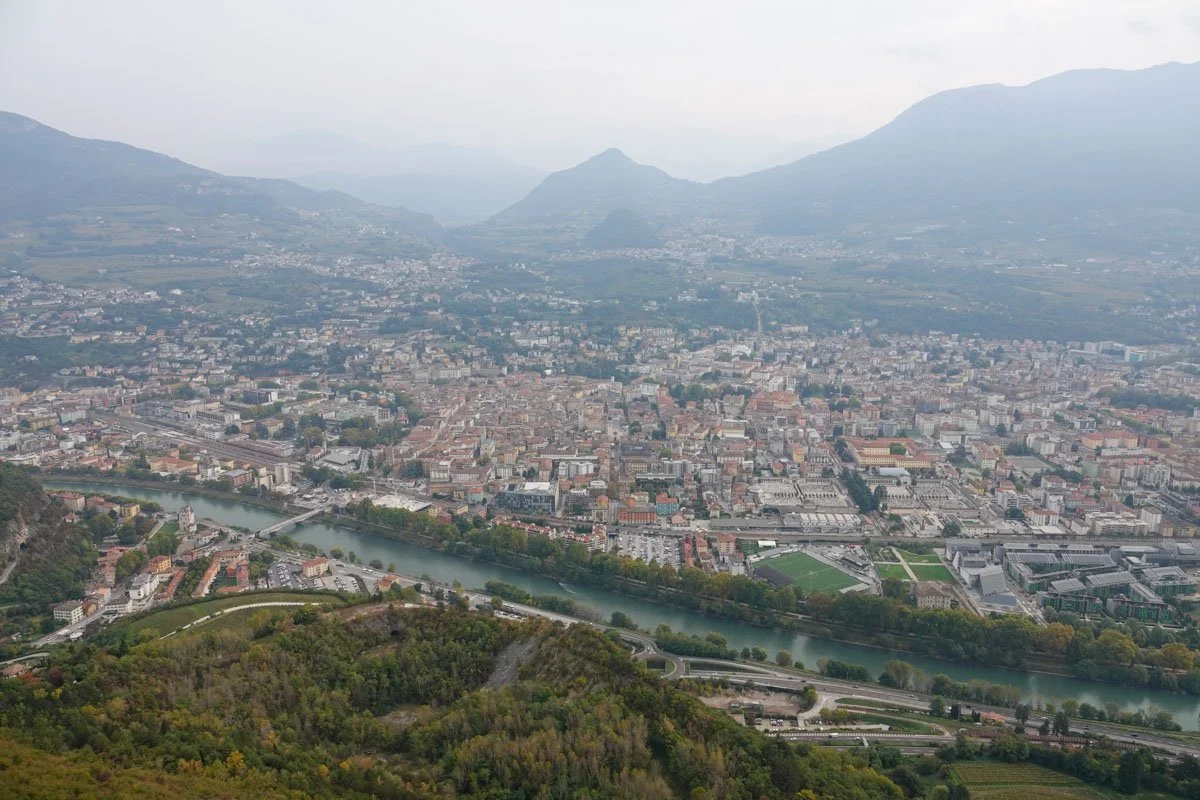
In our first full afternoon, we walked across town and the Adige River and took a funicular ride up to Sardagna which is across the river and very high up the mountain. It was from there that I took the following photo of Trento. We got the funicular right across the river, next to the bridge.
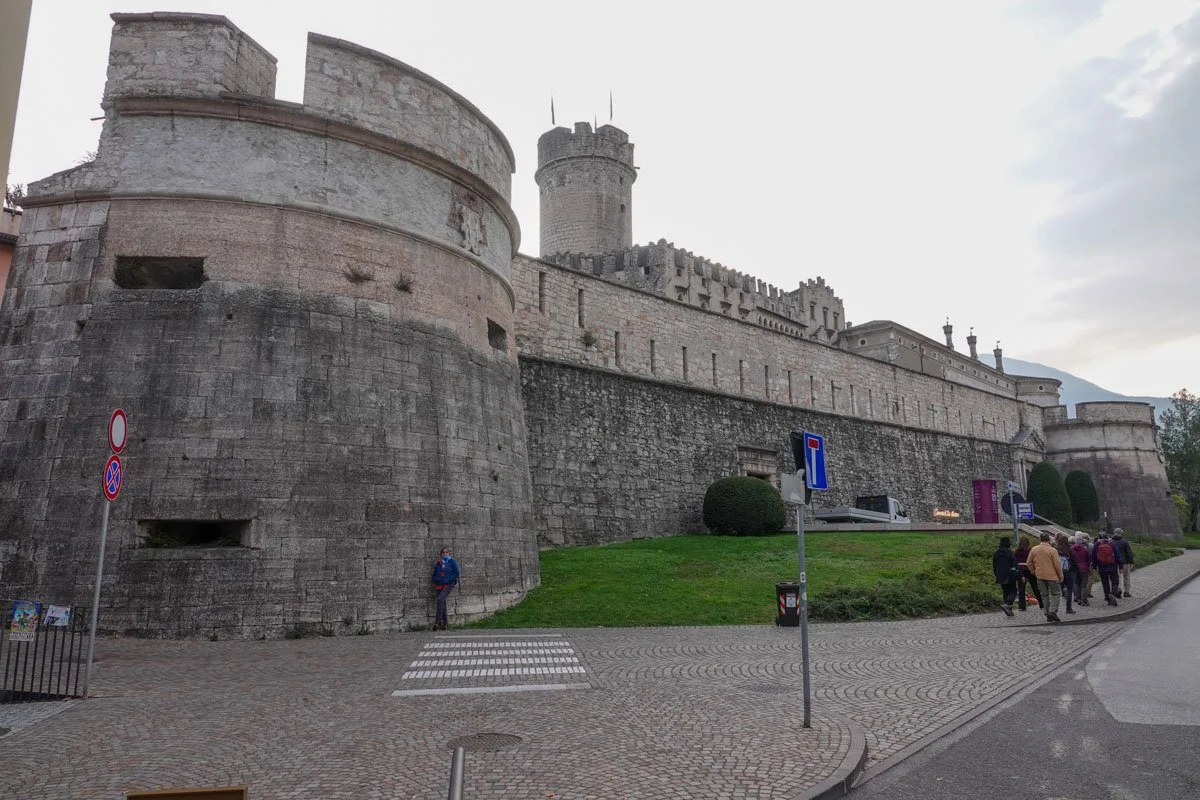
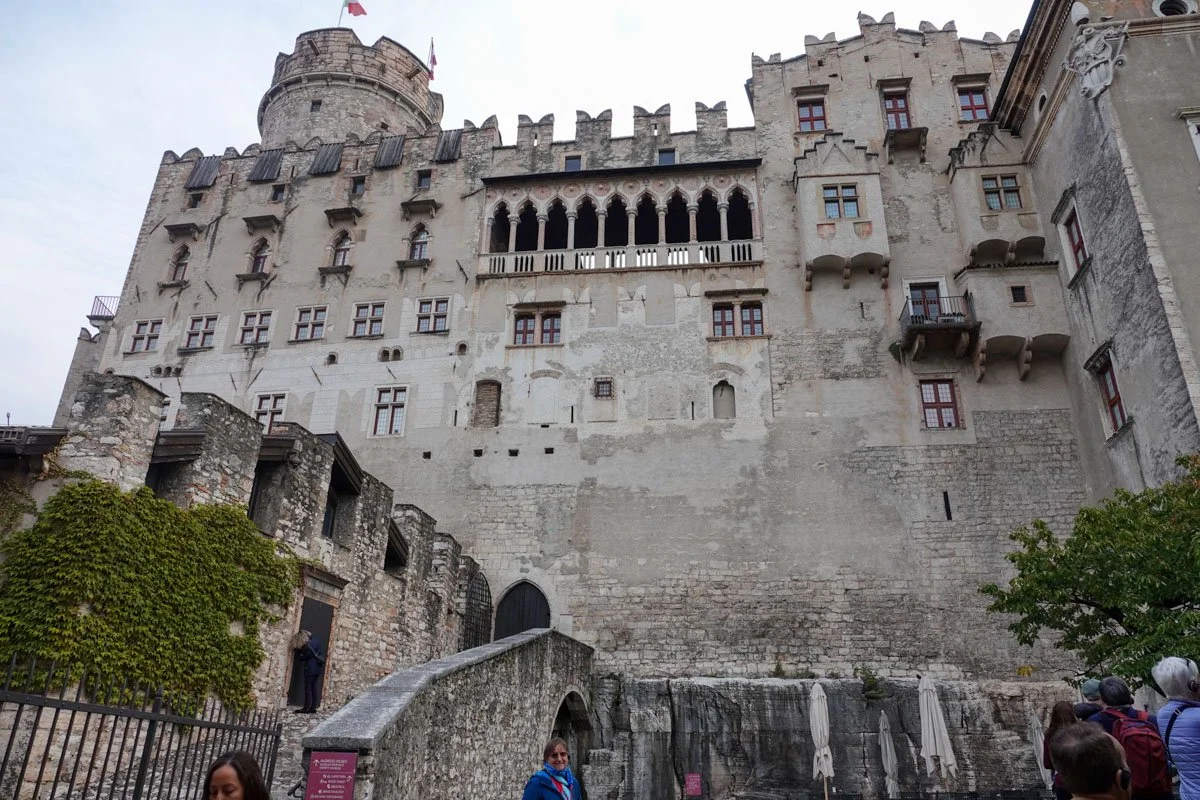
Our first stop on our walking Trento city tour was the Buonconsiglio Castle. Our guide said that "castle" just means "fortified place", much like an army base. This castle was the home of the Prince Bishop of Trento. He was appointed by the German Emperor. Upon his death, the emperor would appoint another prince bishop. Prince Bishops started their reign in the 13th century. Over the years, the castle had many design changes. It is still very impressive today with incredible stonework and decorations, inner courtyards, beautiful frescoes, and wall paintings. It was a lot to consider, but I'll include two photos just to give an idea of the size and scope of it. You can see Vicky in front of the round tower on the left side.
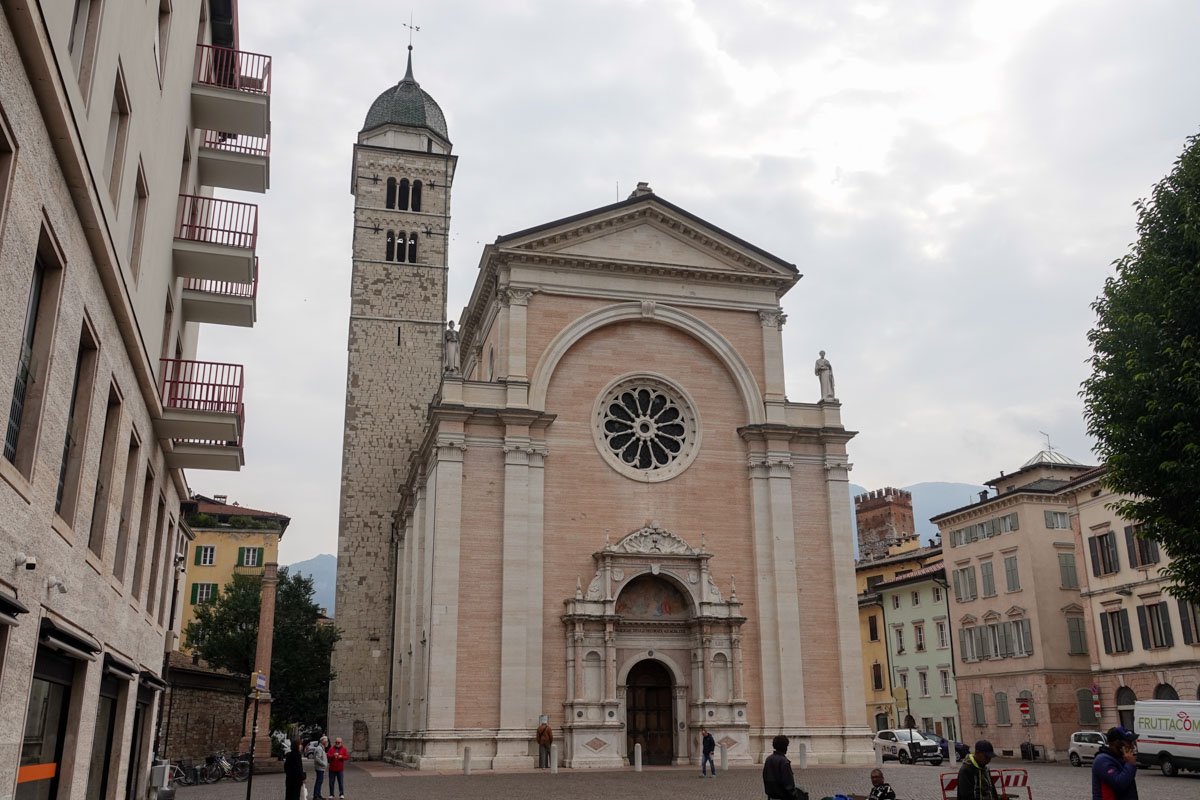
Next is the Chiesa di Santa Maria Maggiore. It's not as impressive as the Trento Cathedral in town but a beautiful building. It has lots of stucco details, many decorations, notable Baroque altars, and a large bell tower.
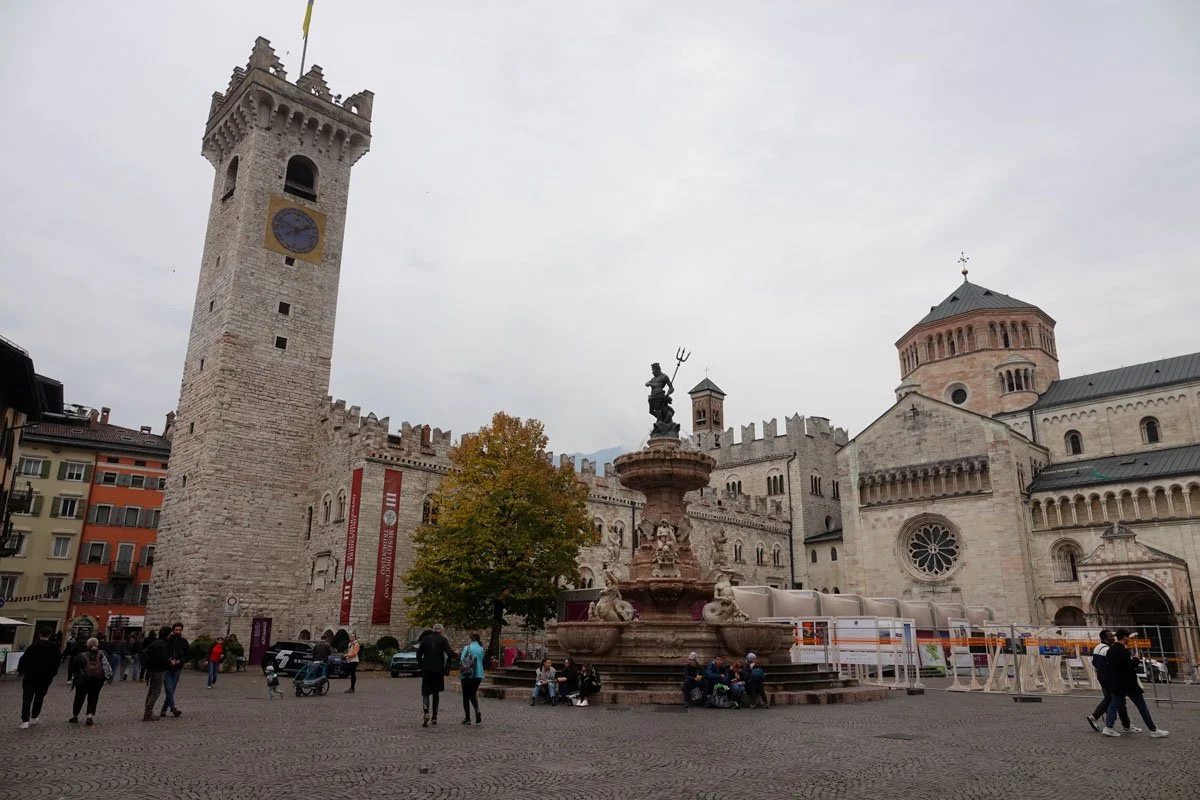
Next is the Cathedral Plaza. It is one of the main squares of Trento. The Trento Cathedral is on the right side. It was originally constructed in the 11th century. It's the main religious structure in Trento. It has been renovated and remodeled many times over the years. Many Renaissance frescoes were added to the interior in the 14th century. The circular rose window and decorative arched doorway are notable as are the two large gothic towers, one with an onion dome. The Fountain of Neptune is also in the square as are other significant buildings.
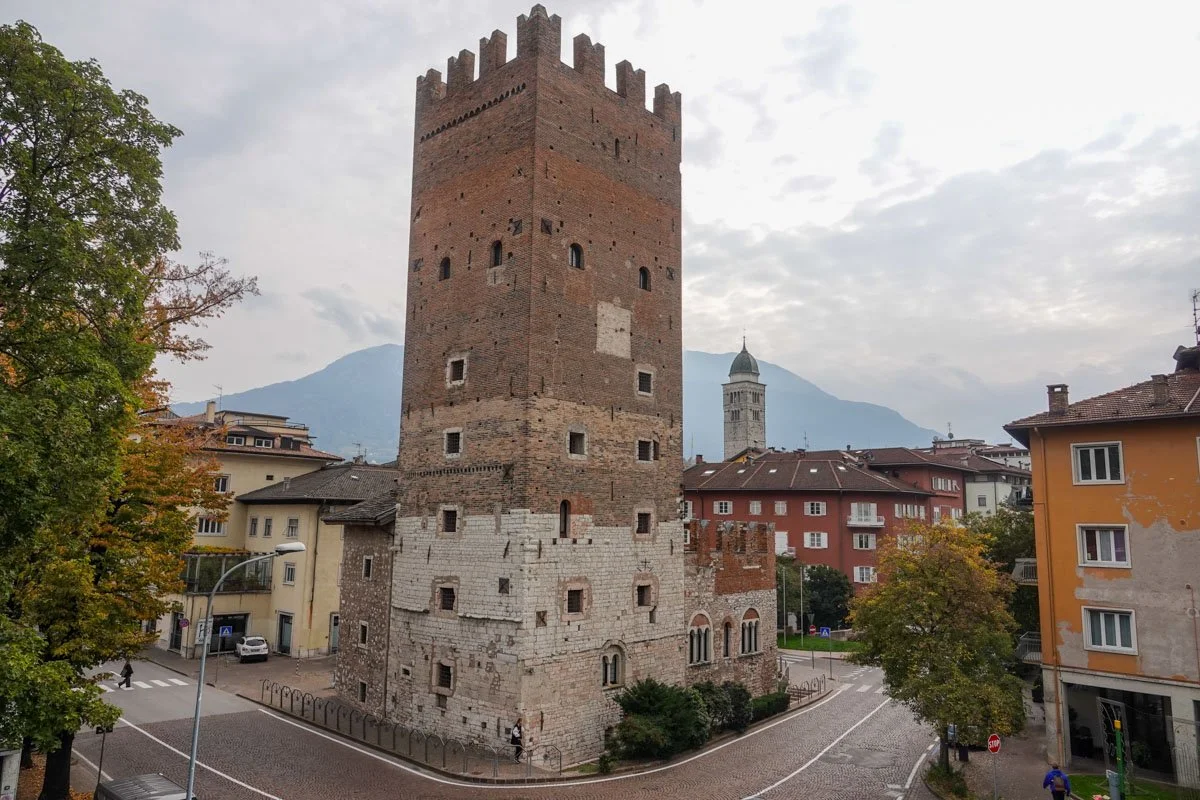
On our walk to the funicular to go to Sardagna, we found what had once been a corner of the old city wall. Everything but the corner tower is long gone but the tower still stands as a tribute to earlier times. I thought the tower looked like it had been shot at a few time.
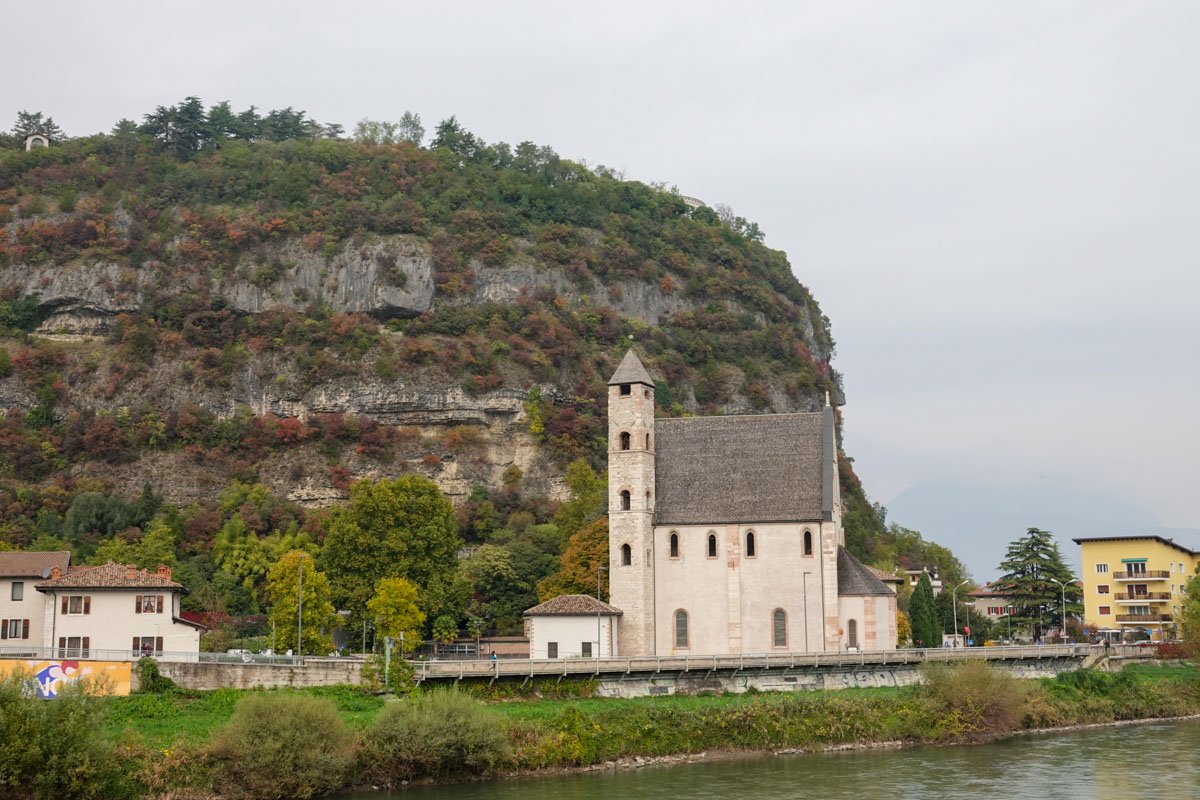
This next photo is right across the River Adige from the old town corner tower. The mountains in and around the city really add a lot to the look and feel of the city. And of course, churches seem to be everywhere.
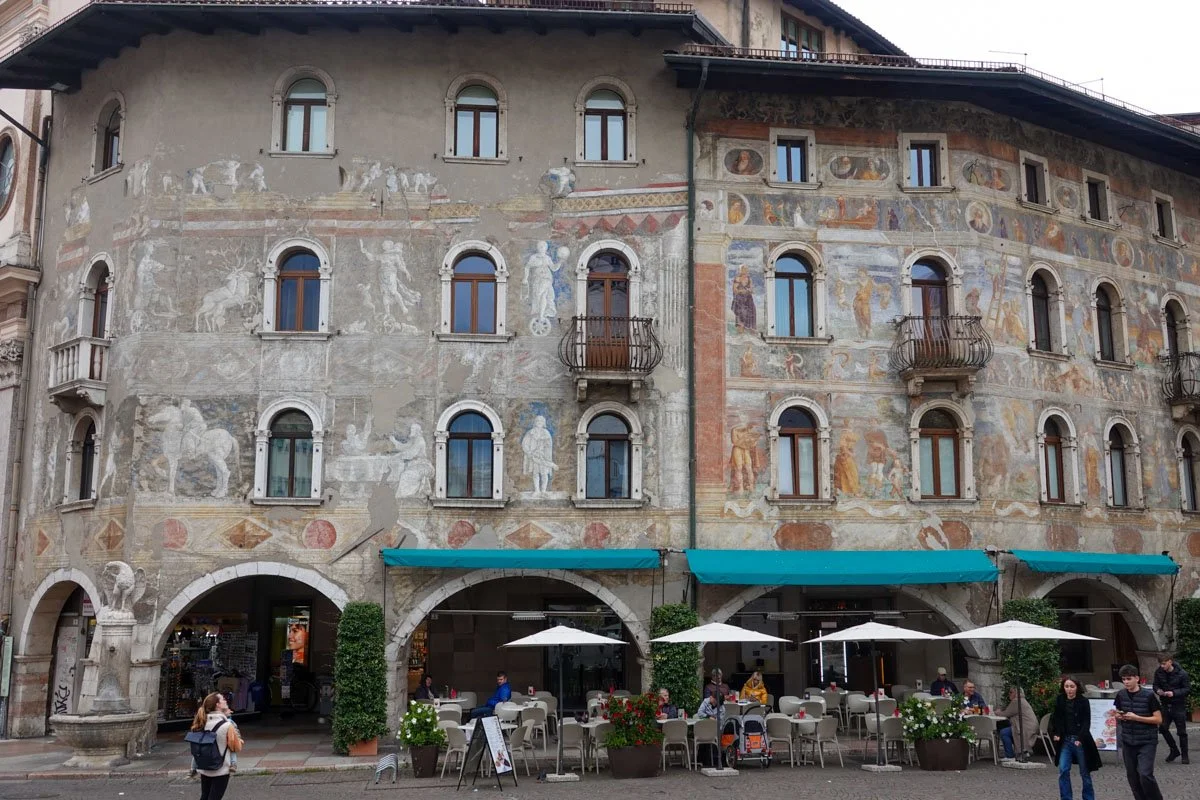
This is an old building in the Cathedral Plaza or Square and just across from the Fountain of Neptune. The frescoes on the exterior of the building are really eye-catching and remarkable.
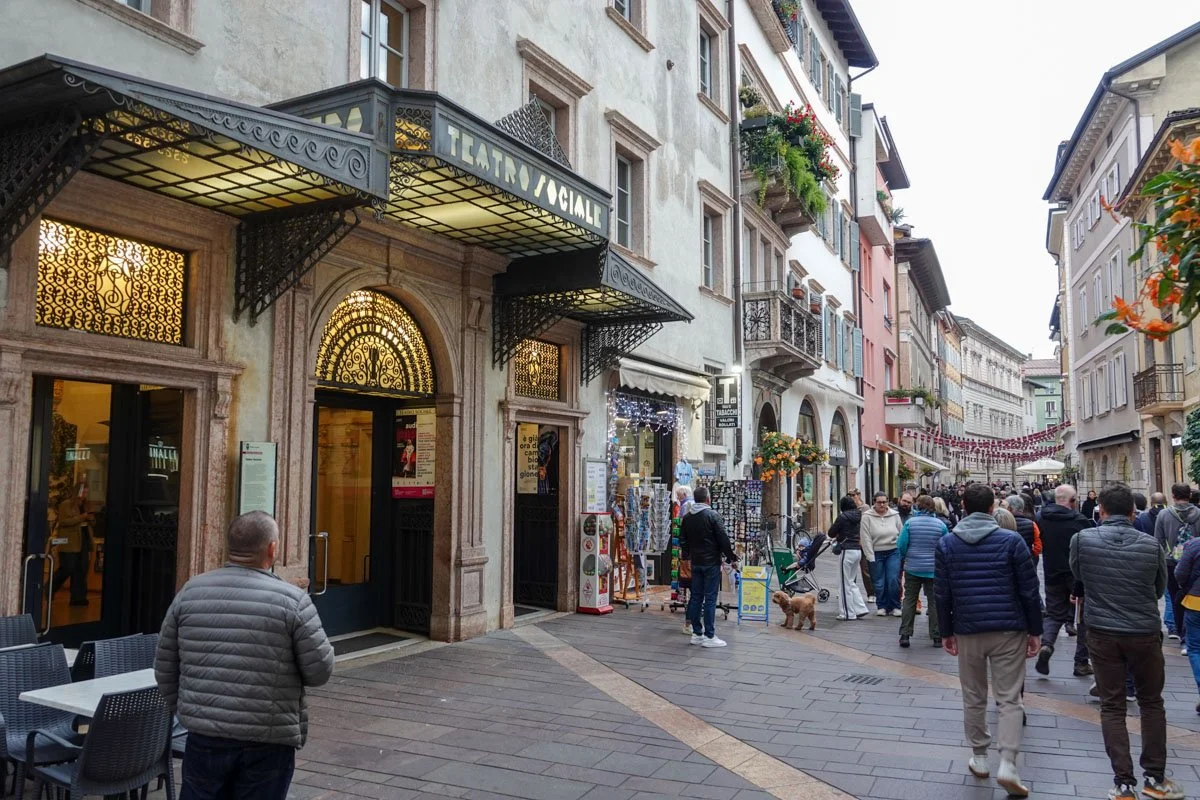
We managed to walk many of the shopping streets as well that probably aren't so famous but they were still very busy.
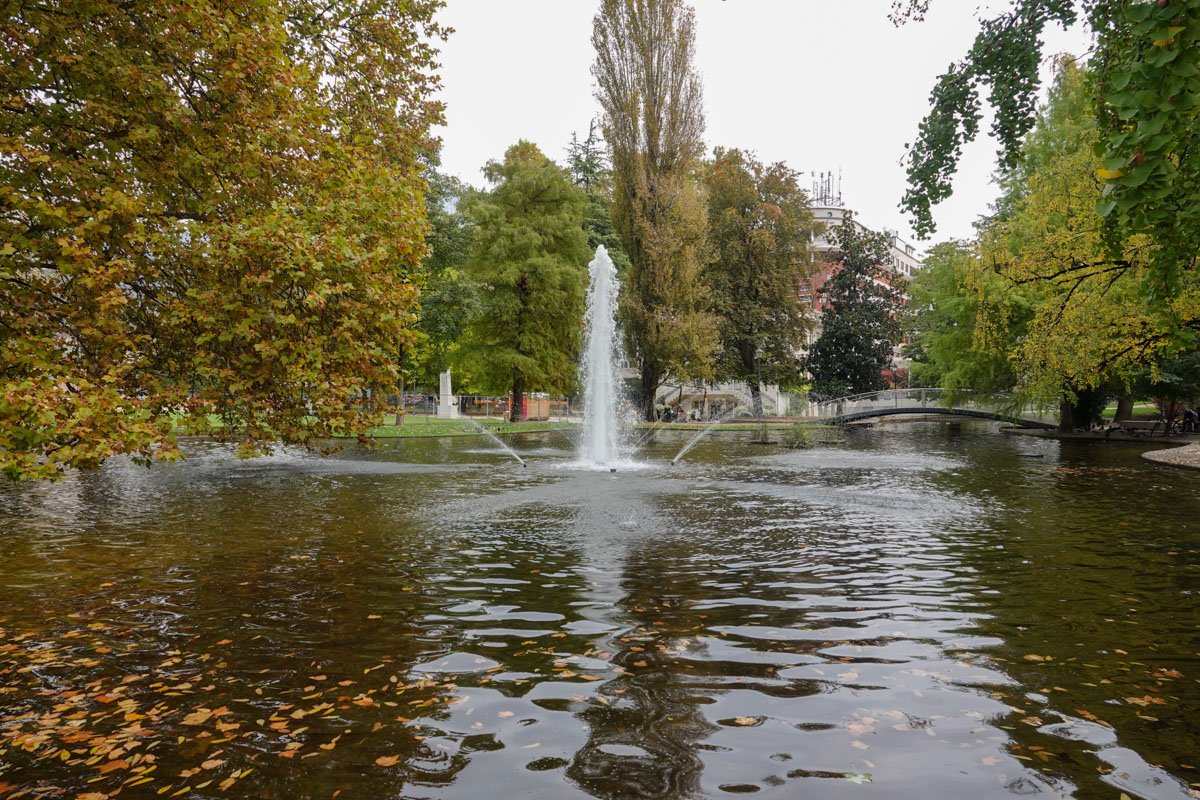
We also found parks and places within the city to be off by ourselves, more or less, and spend time relaxing. This was near our hotel.
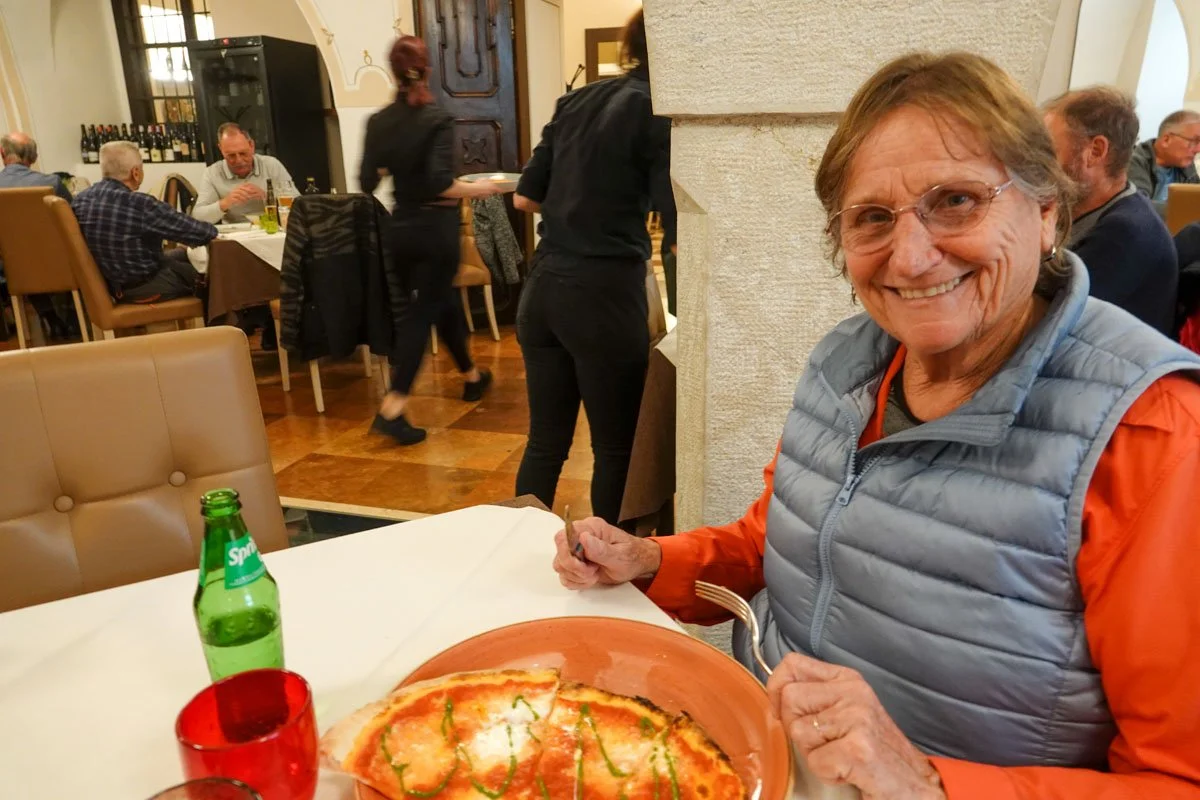
We got hungry and decided to find a quiet place for lunch. We saw a small sign at the end of a long, narrow alley in Old Town. We followed the alley, with no one else in it, until we found the Antico Pozzo Restaurant. We opened the door and wow, the place was packed with people and they all appeared to be locals. We ordered a pesto pizza. It was very thin and very good, but needed more pesto.
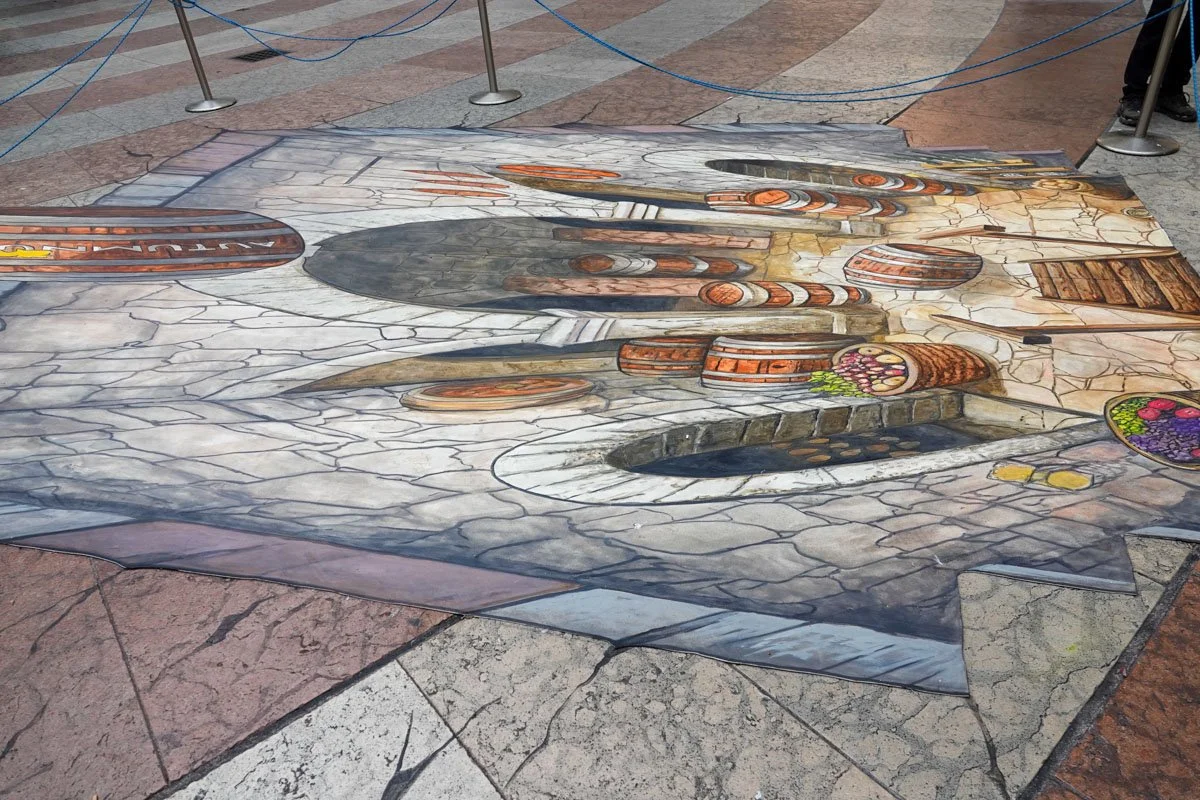
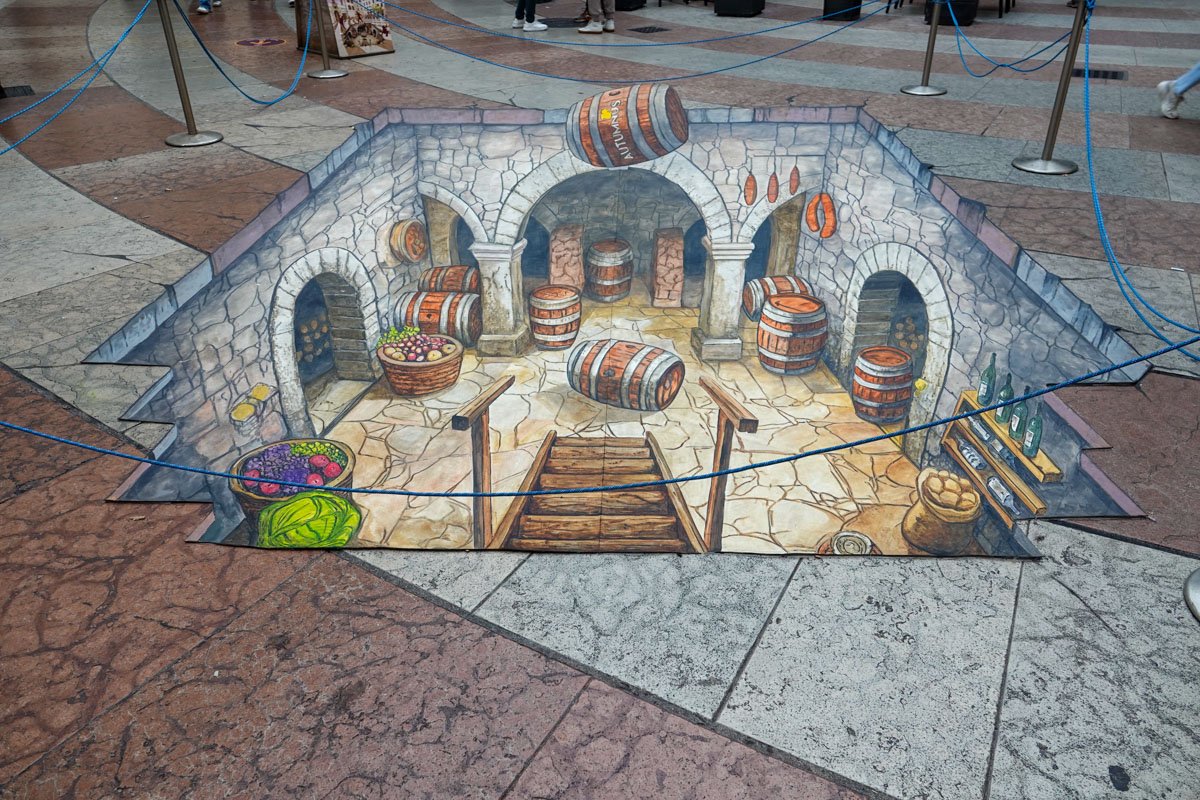
We were in another plaza or square when we came to a roped-off area in the center of the plaza. You can see what we saw in the first photo below. Then, we walked around to one end of the area for a different view of the same section of the square. It was all completely flat.