The Bishop's Palace
One of Bressanone's key places to visit was Hofburg, or The Bishop's Palace. The Prince Bishop of Bressanone commissioned construction of a fortified palace in the 13th century. Numerous revisions followed until around 1600 when the renaissance-style interior courtyard was created. Around 1706 some Baroque renovation occurred in the palace including the bishop's chapel and its majolica stoves were built.
We visited here one afternoon when it was raining hard outside. We had the whole place nearly to ourselves. The palace has things to see from the floor to the ceilings. It has plaster embellishments, tapestries, historical furnishings, a Chinese sitting room, a renaissance courtyard, state rooms, religious art including nativity scenes, sacred relics, liturgical objects, ivory art, precious goldsmiths' crosses, and all sorts of valuables.
Personally, I can't get over the whole "Prince Bishop" thing. Talk about the mixing of church and state... It served as the bishop's seat until 1964. Today, it houses the Diocesan Museum, the Cathedral Treasury, and a Nativity Museum.
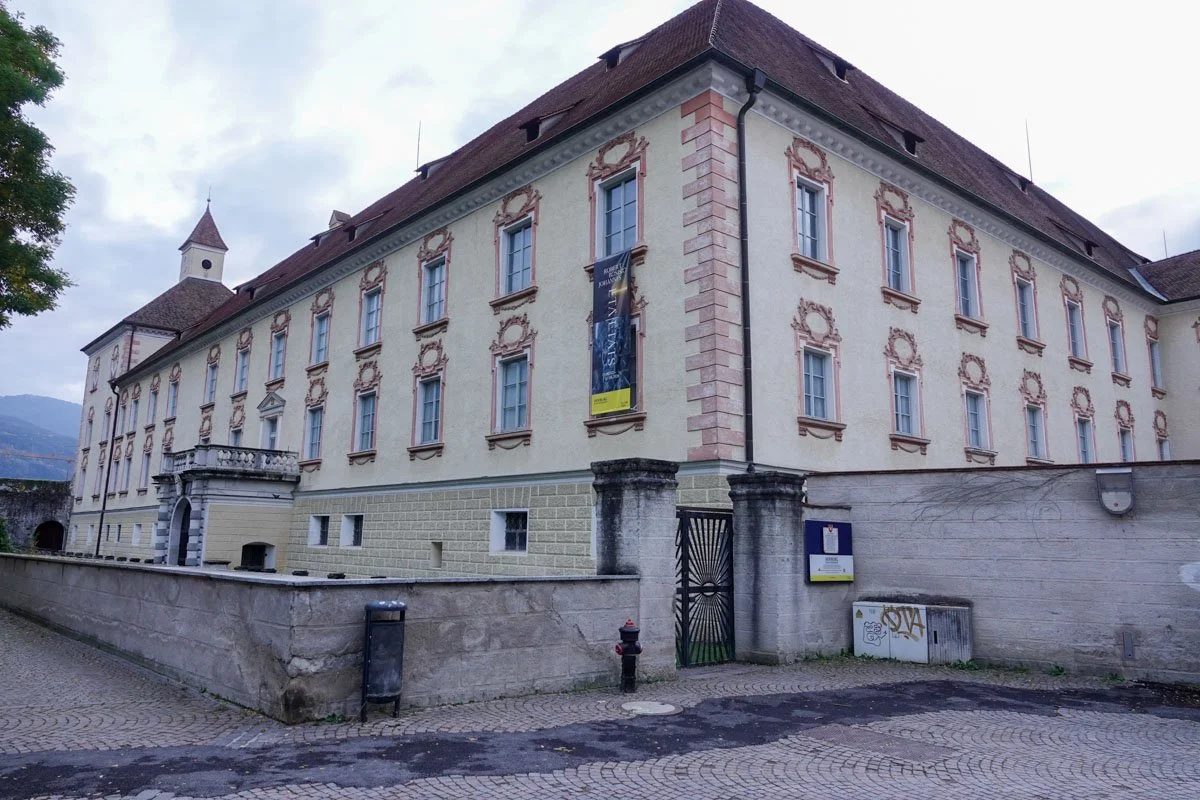
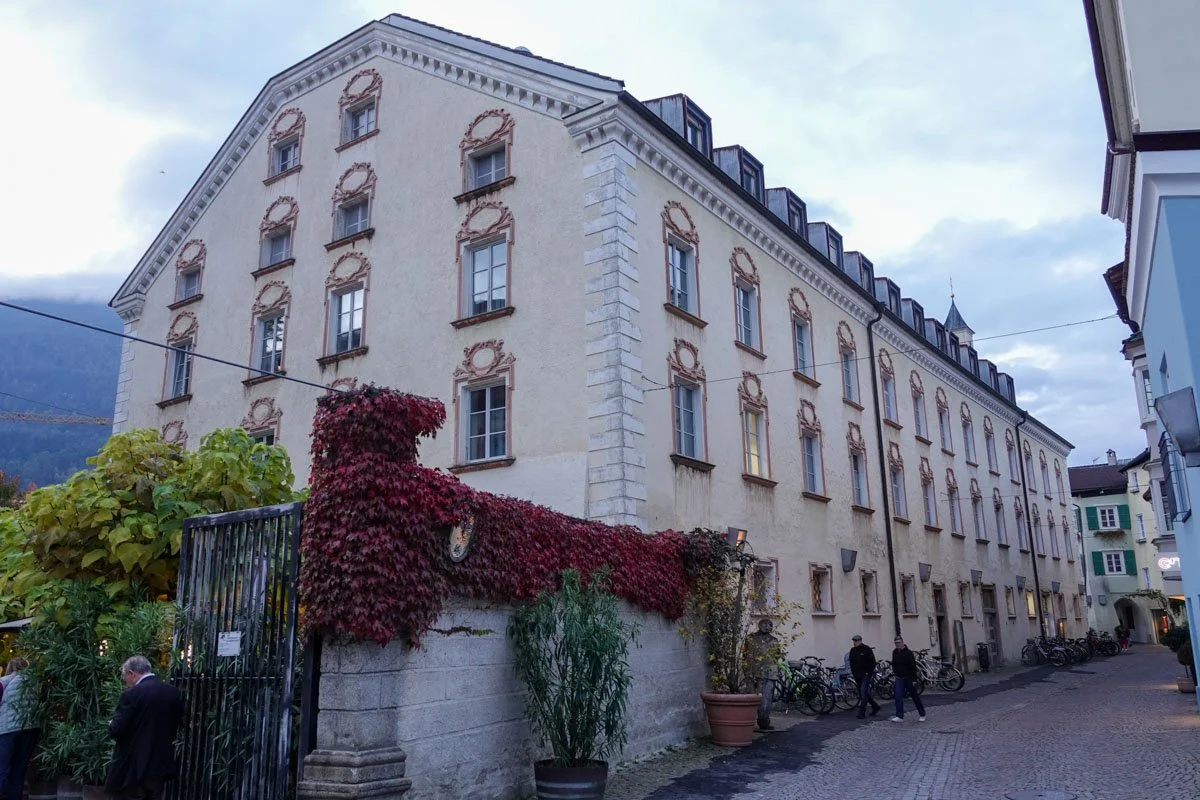
The first photo is a view of the Bishop's Palace from across the street. It was hard to get it all in the photo. The second photo is just to the right of the Bishop's Palace and it's the Bishop's Carriage House. It looks even larger than the palace. The third photo is part of the renaissance courtyard. It was a hard photo to get as I had to lean way out an open window on the third floor. The Prince Bishop lived a pretty good life.
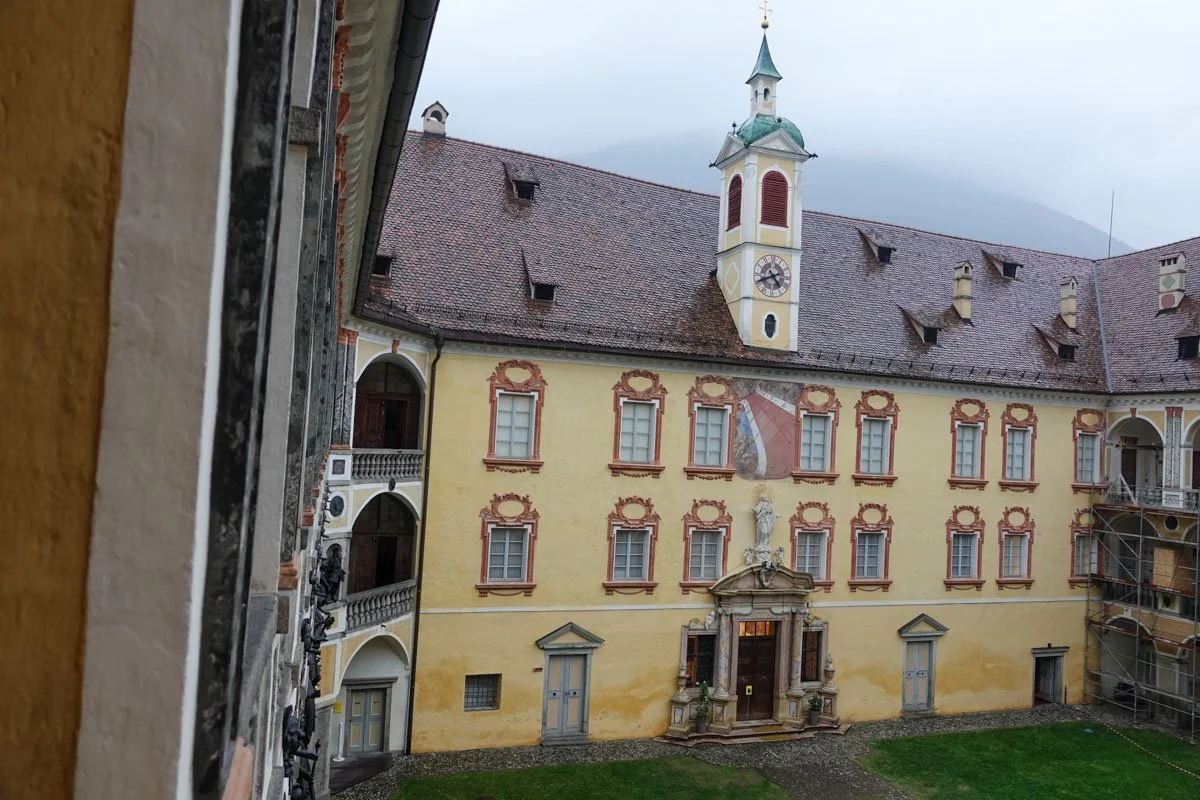
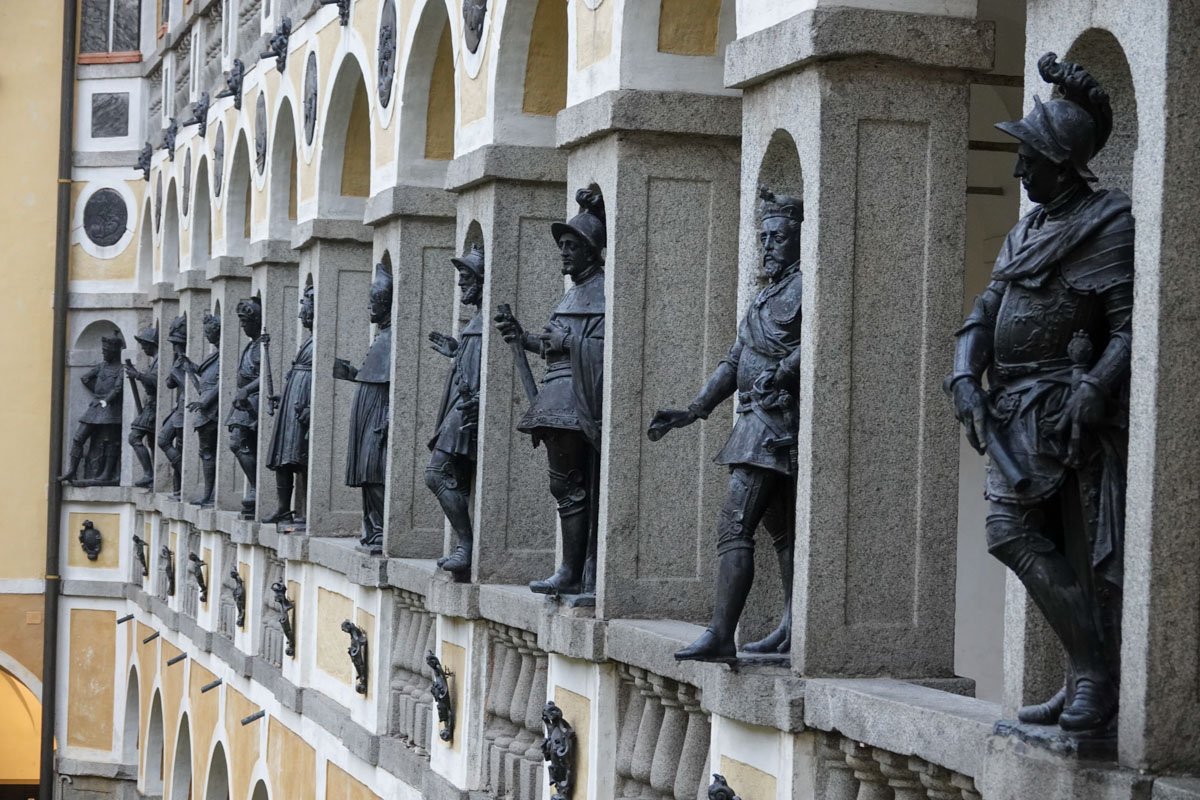
This is another 'leaning out the window' photo. These statues lined the exterior wall of the courtyard. I think on the second floor.
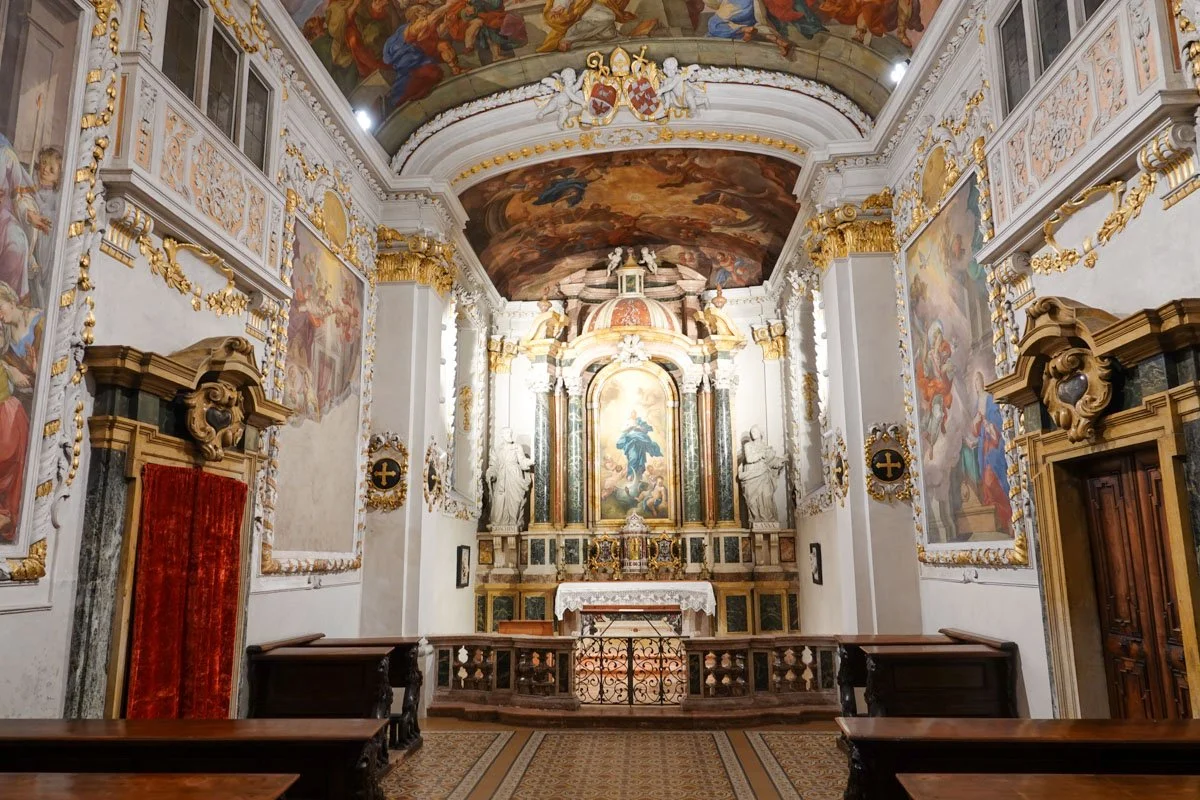
This is the bishop's chapel, small but very elegant.
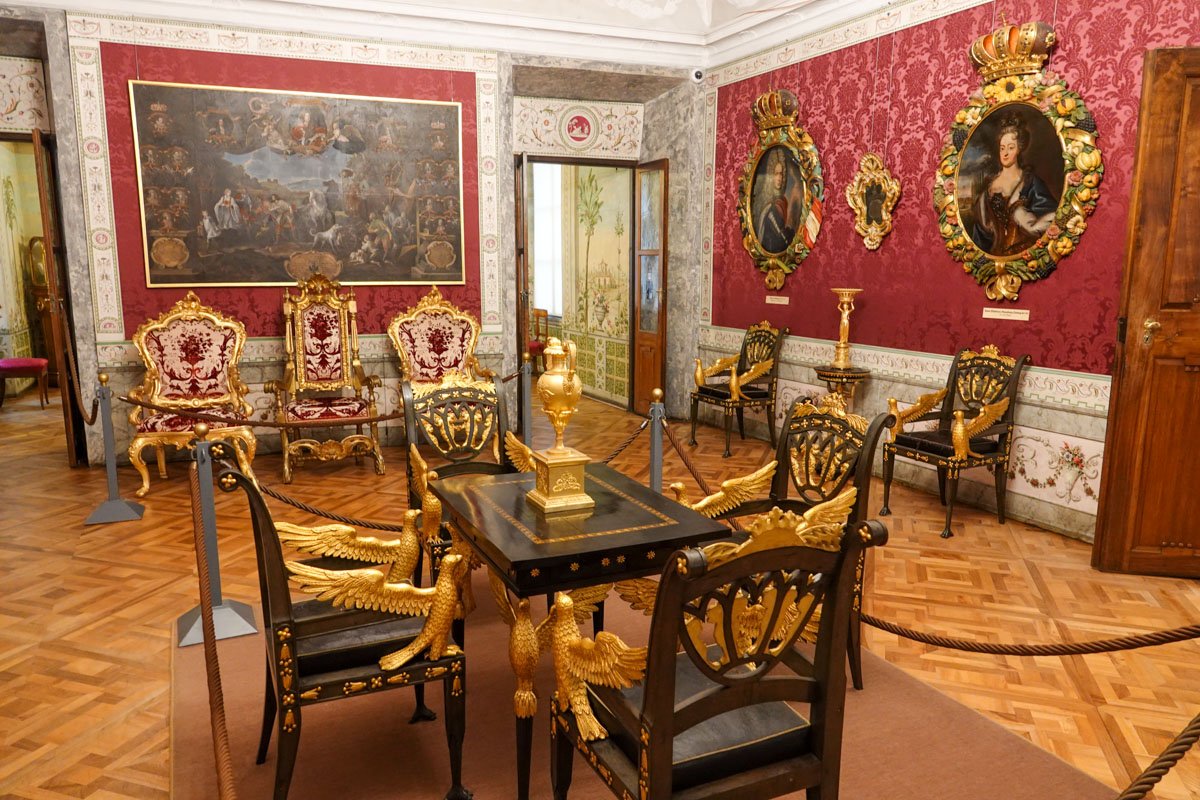
It's a big palace and we visited rooms of every type.
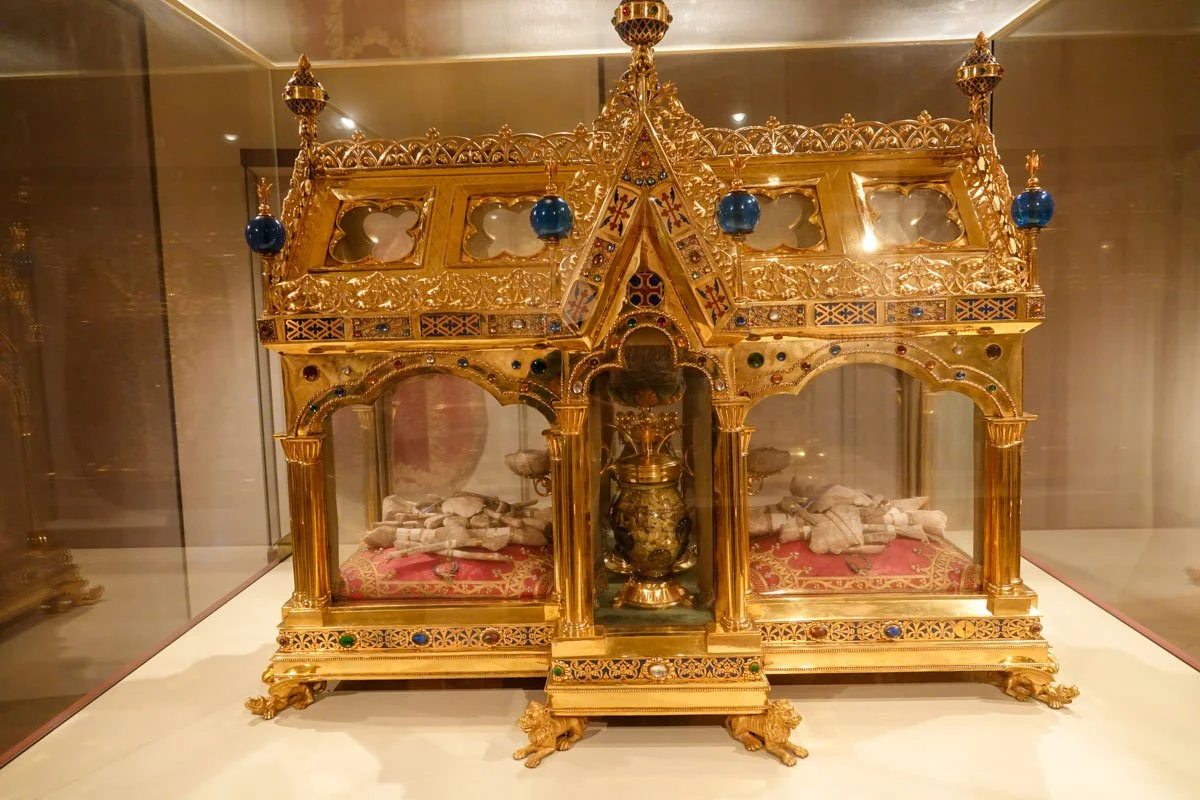
Many of the small objects were no doubt some of the most priceless in the museum.
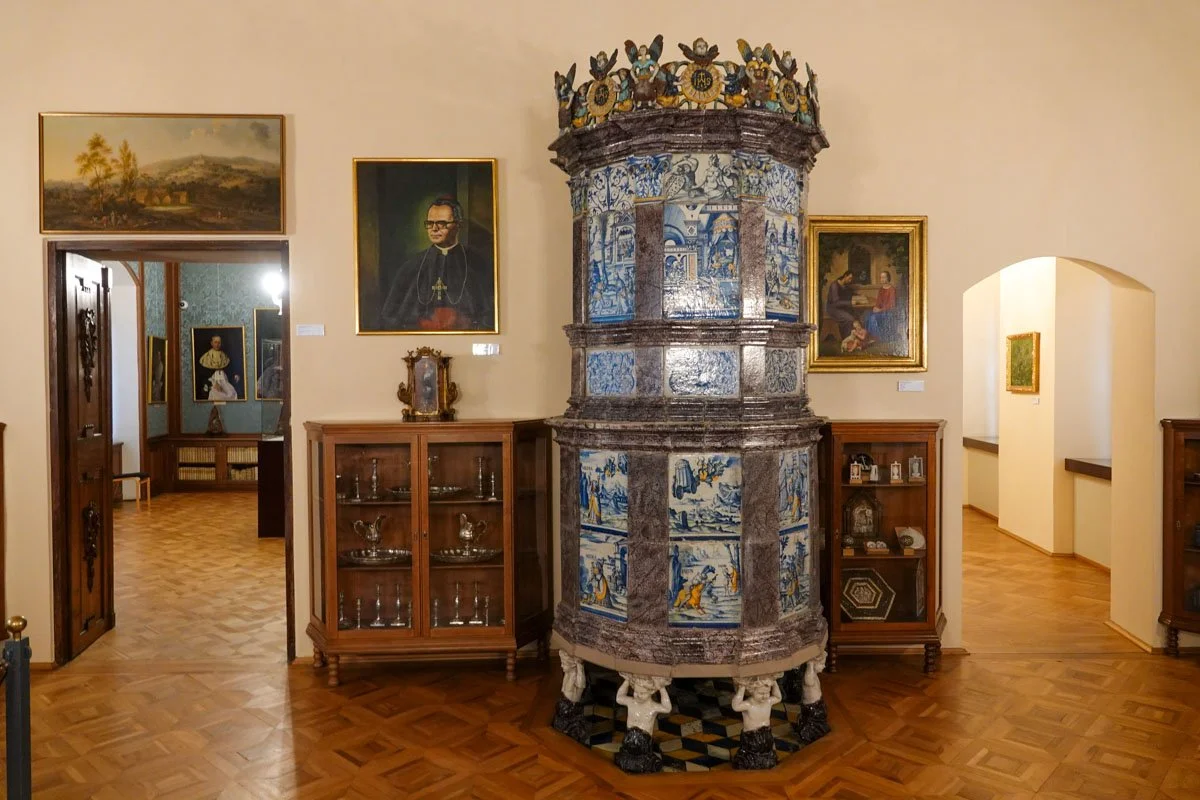
Perhaps my favorite thing to look for and see were the majolica (pottery made by a tin-glaze process) stoves. Almost every room had one. They were each very different, each very decorative, and all were quite large. The one below was not one of the largest stoves. This palace must have cost a fortune to heat in the winter time but I'm sure the bishop was comfortable.