Novacella Abbey
One afternoon in Bressanone, we boarded a bus and drove north to Varna. We visited the Novacella Abbey. It's a very large religious and production complex. It was founded in 1142 by the Augustinians, who still run it. In the Middle Ages, a school for choral music and a school for copyists was here. The abbey also was established for travelers, pilgrims, the sick, and the poor, offering shelter and care until it closed in the 15th or 16th century.
Novacella underwent secularization under Napoleon, but monastic life was revived in the abbey in the early 1800's. During WW II, Novacella served as a supply depot and was partially destroyed. It has been restored to its Baroque style again since 1949.
Today it houses a boarding school, a convention center, an exhibition space, a museum, and a winery.
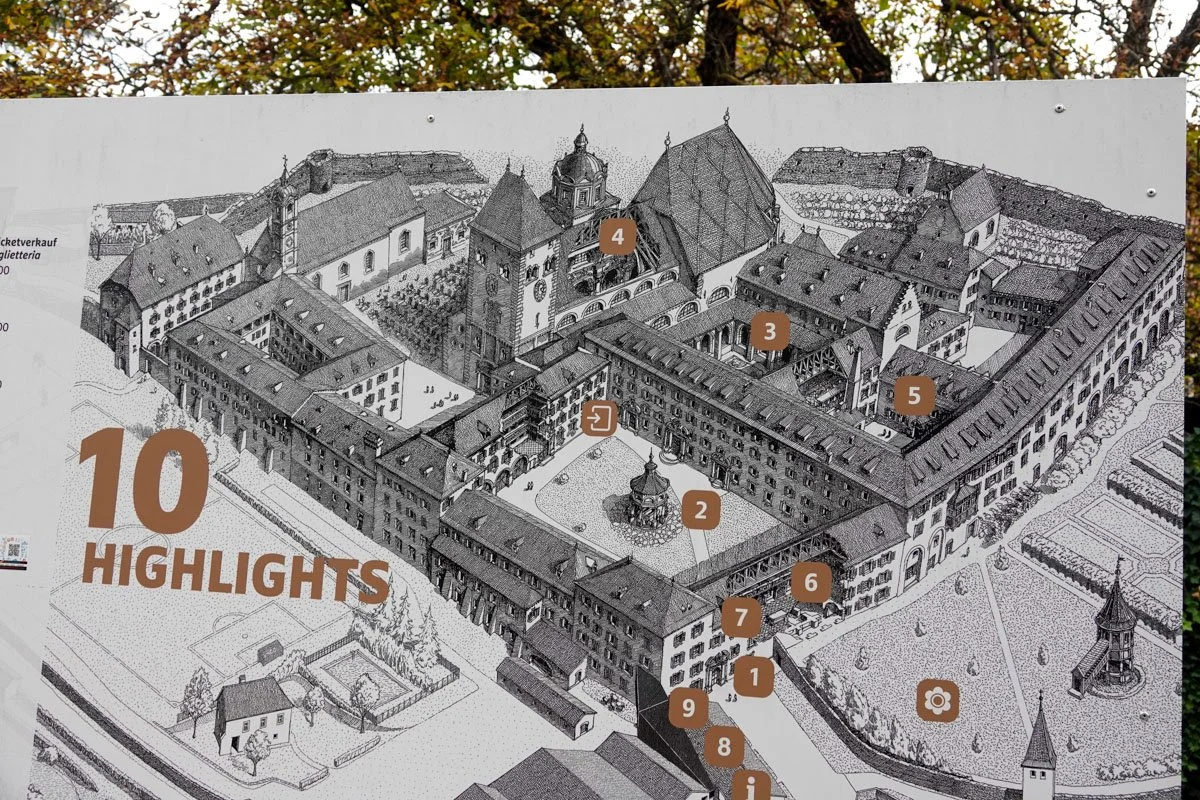
The abbey was a much bigger place than I expected. It also looked more like a fortress than I expected. I will barely be able to show much of it, but I do want to at least give you some idea about the abbey. I will start with a photo of a display photo of the abbey, just for perspective.
I'll include two more photos of two parts that we visited to give you some idea about the looks of the abbey.
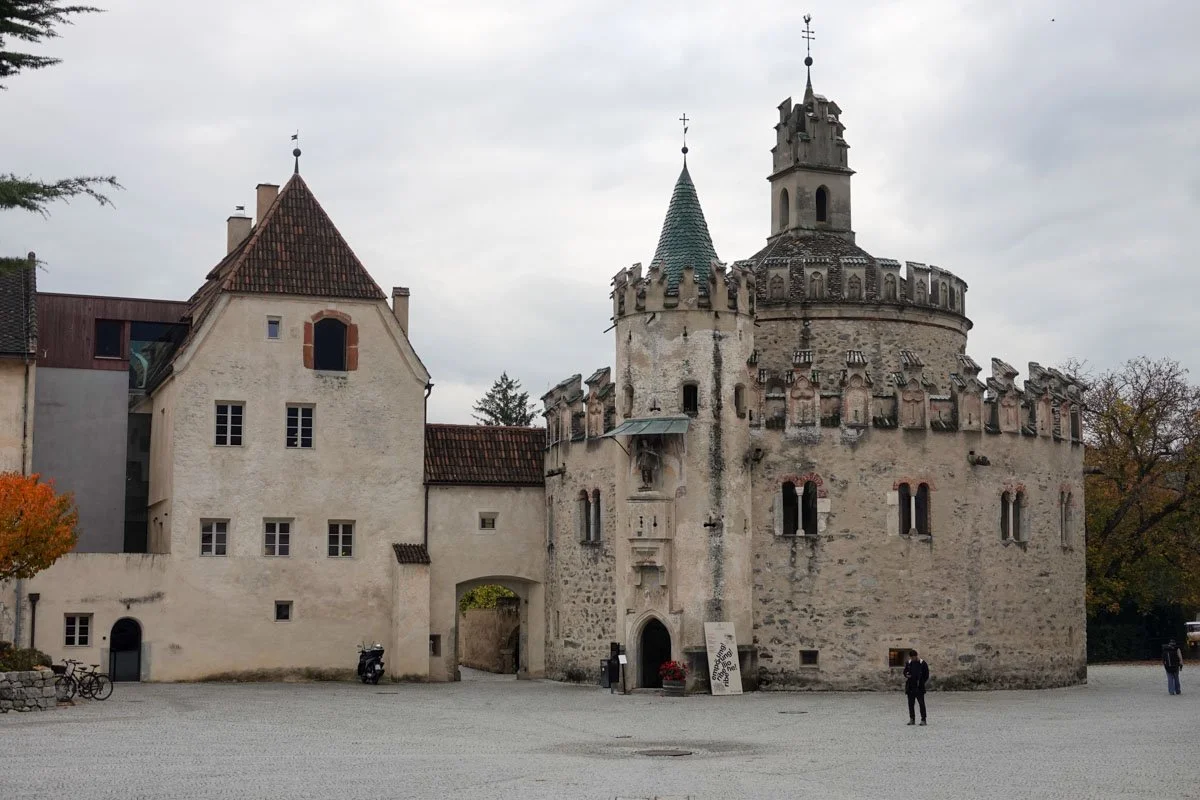
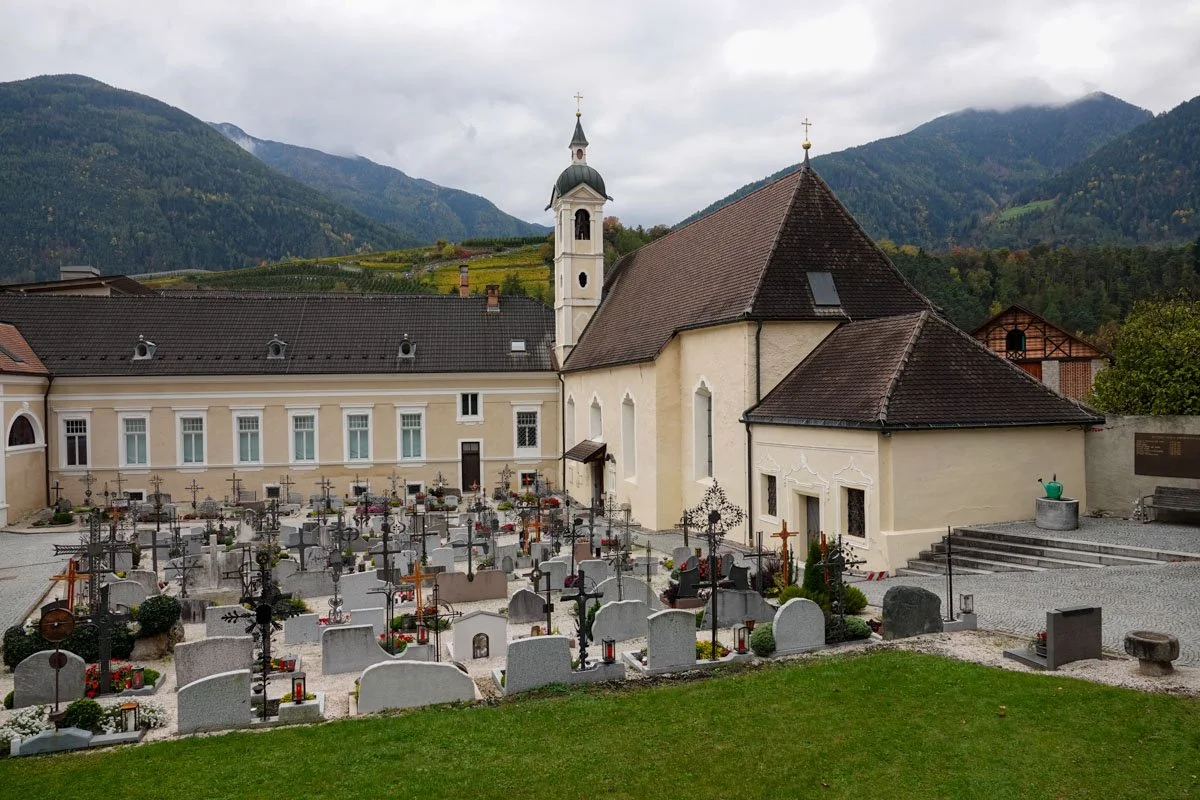
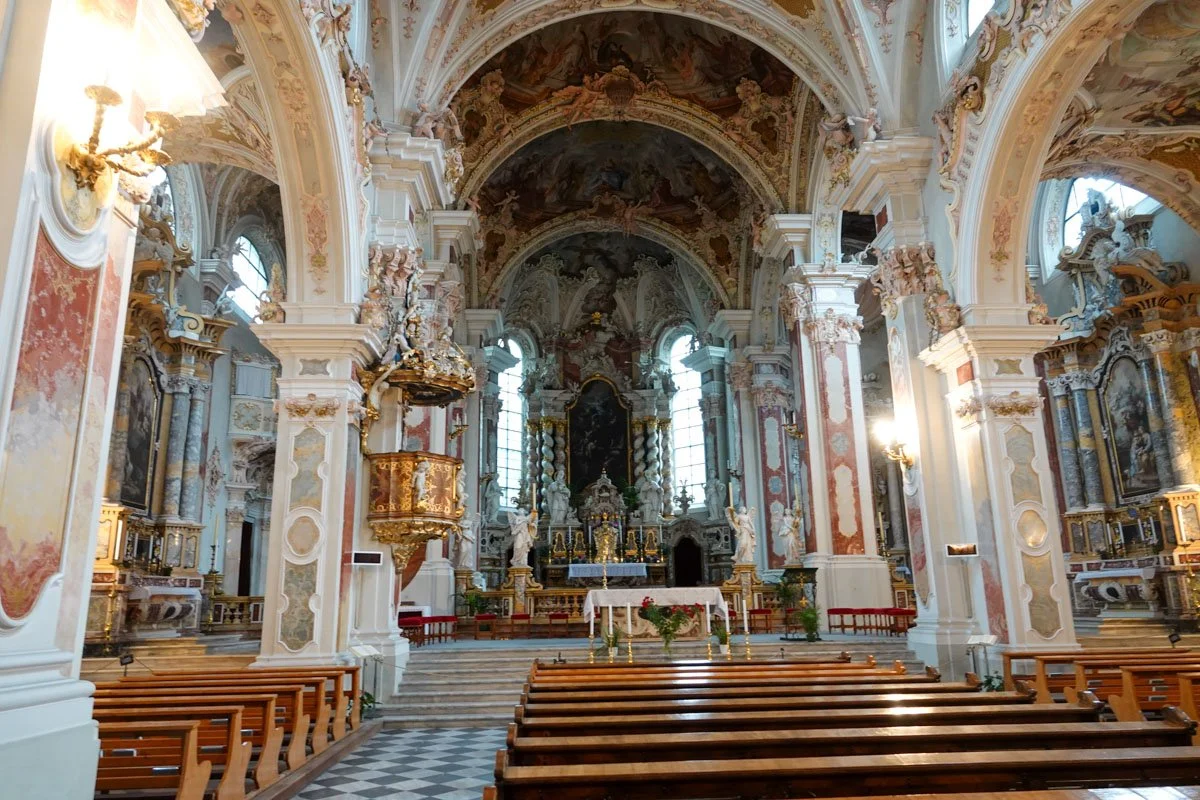
We only visited a few places within the abbey, but that included the Church of Our Lady. This abbey church was rebuilt in the mid-1800's, transforming its original Romanesque architecture into a Baroque style. It seemed like a large and fancy church for being inside an abbey. Adjacent, the cloister had Gothic ribbed vaulting and frescoes as well as the nearby monastery garden.
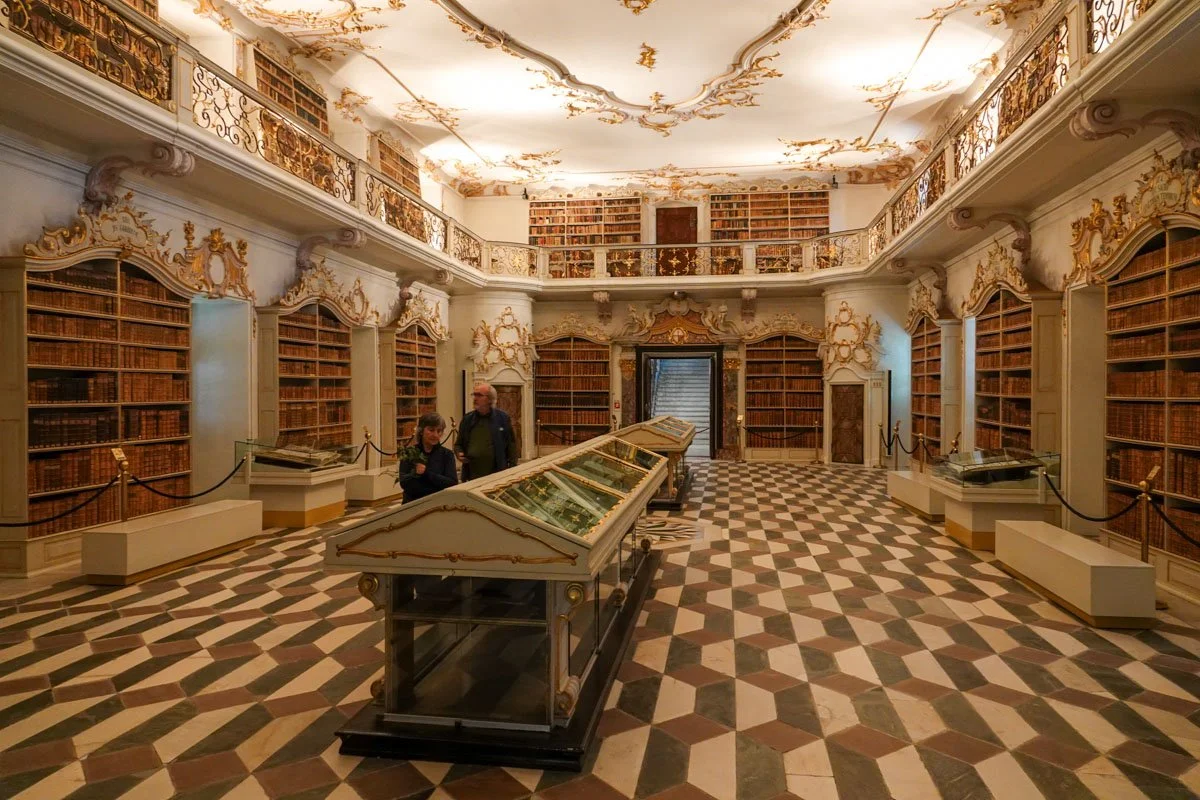
The library was one of our main visits in the abbey. It has a very valuable manuscript collection and an art gallery featuring Gothic panel paintings.
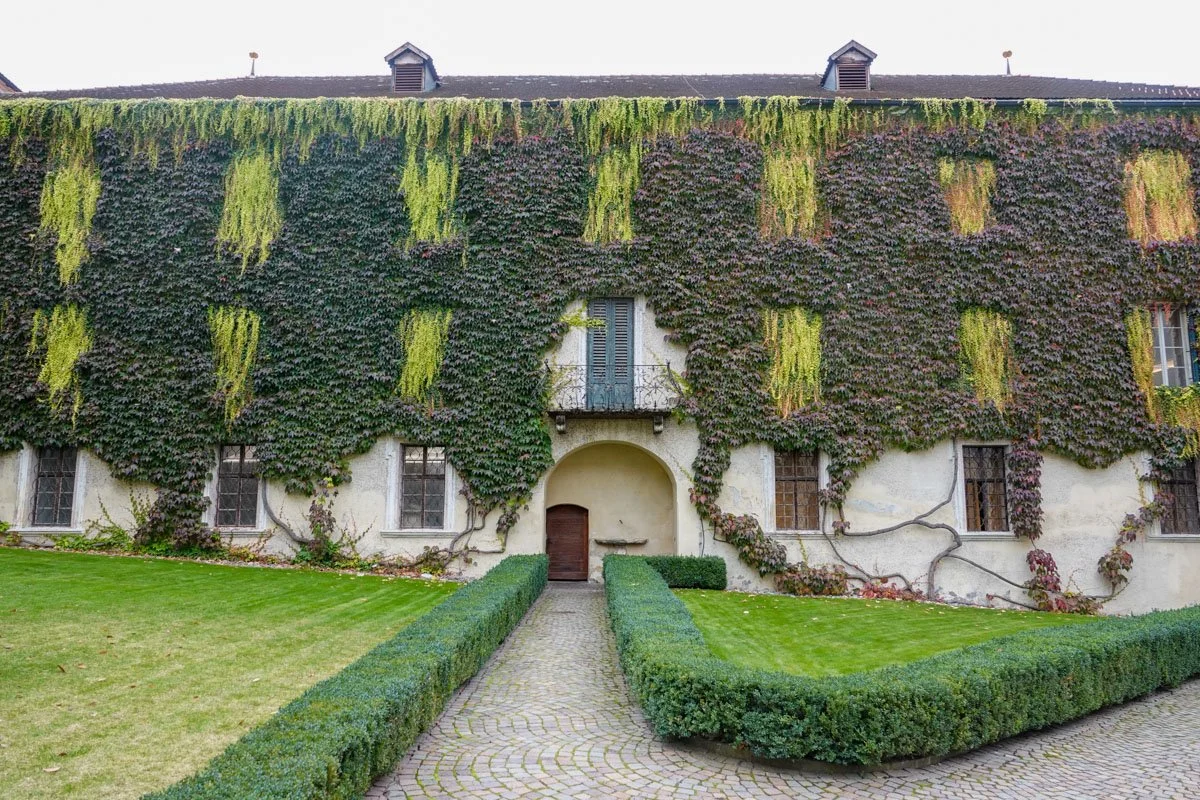
One of my favorite things to see was when we were in the courtyard, directly outside the library. I noticed the wall with the different plants growing on it and asked our guide about them. The guide said that this was the external wall of the library, and the plants were meant to protect the books. The light-colored hanging plants cover over the library's windows to greatly filter the light that reaches inside the library.