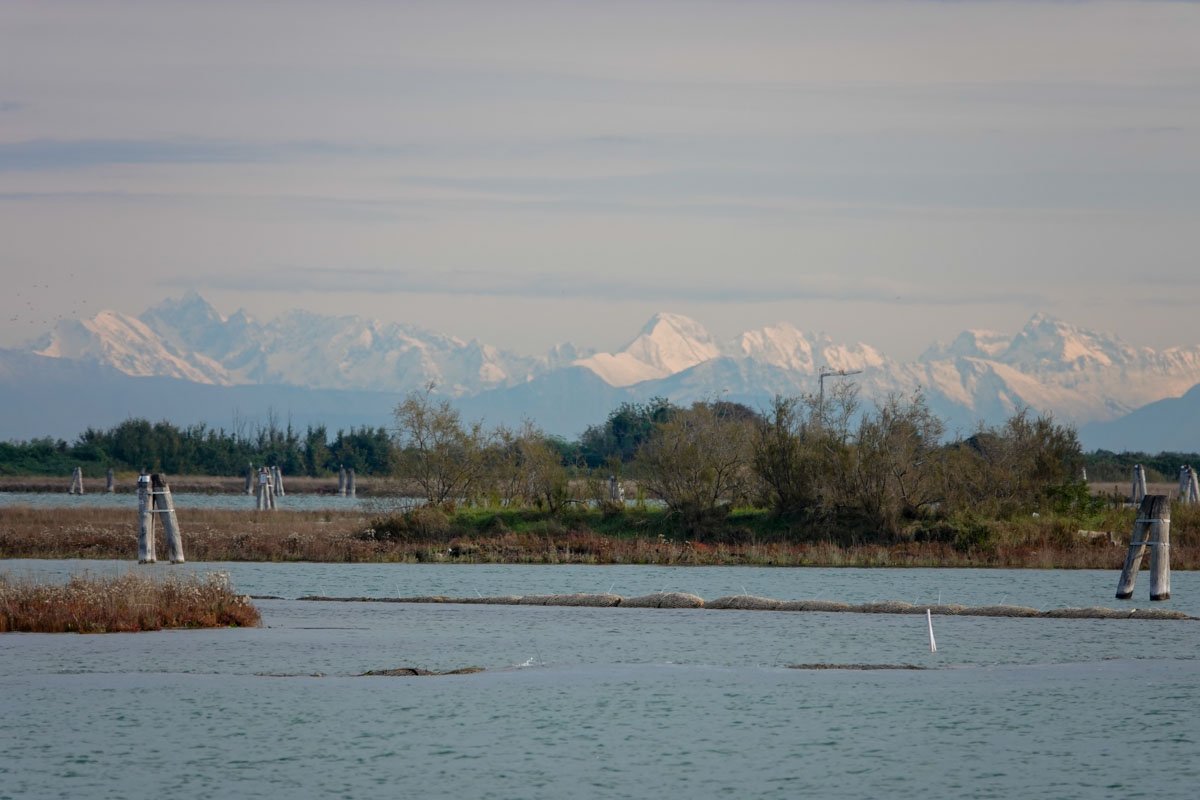
Murano
Murano is a series of islands linked by bridges in the Venetian Lagoon. It's about one mile from Venice and we stopped here on our way back from Burano. Murano was initially settled by the Romans but later by other people. The island initially prospered as a fishing port and through the production of salt. The island looks like it belongs as part of Venice, though probably more colorful.
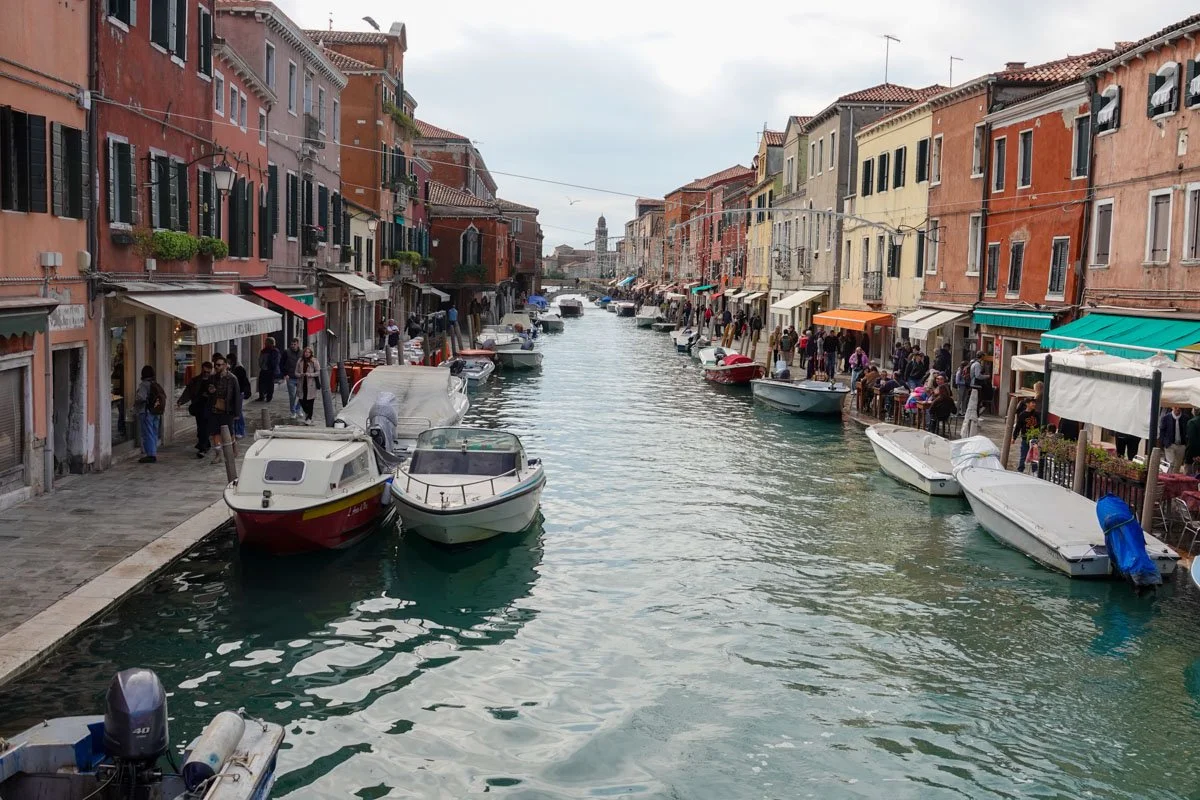
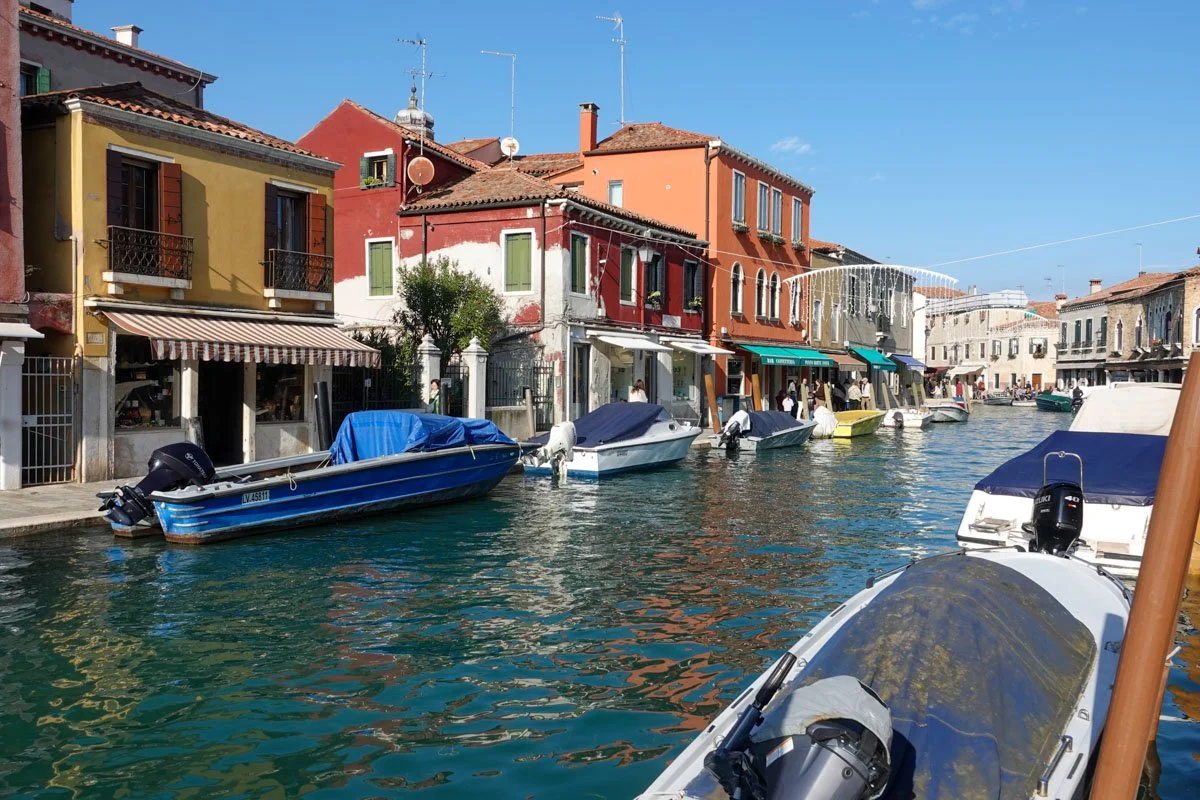
Venice has long been known for glassmakers. In 1291, Venice made all the glassmakers in Venice move to Murano. I don't know why, but they did. Murano is a glassmaker's paradise. They initially made glass beads and mirrors. Aventurine glass was invented in Murano. For a while, Murano was the main glass producer in Europe. Later, the island became known for chandeliers.
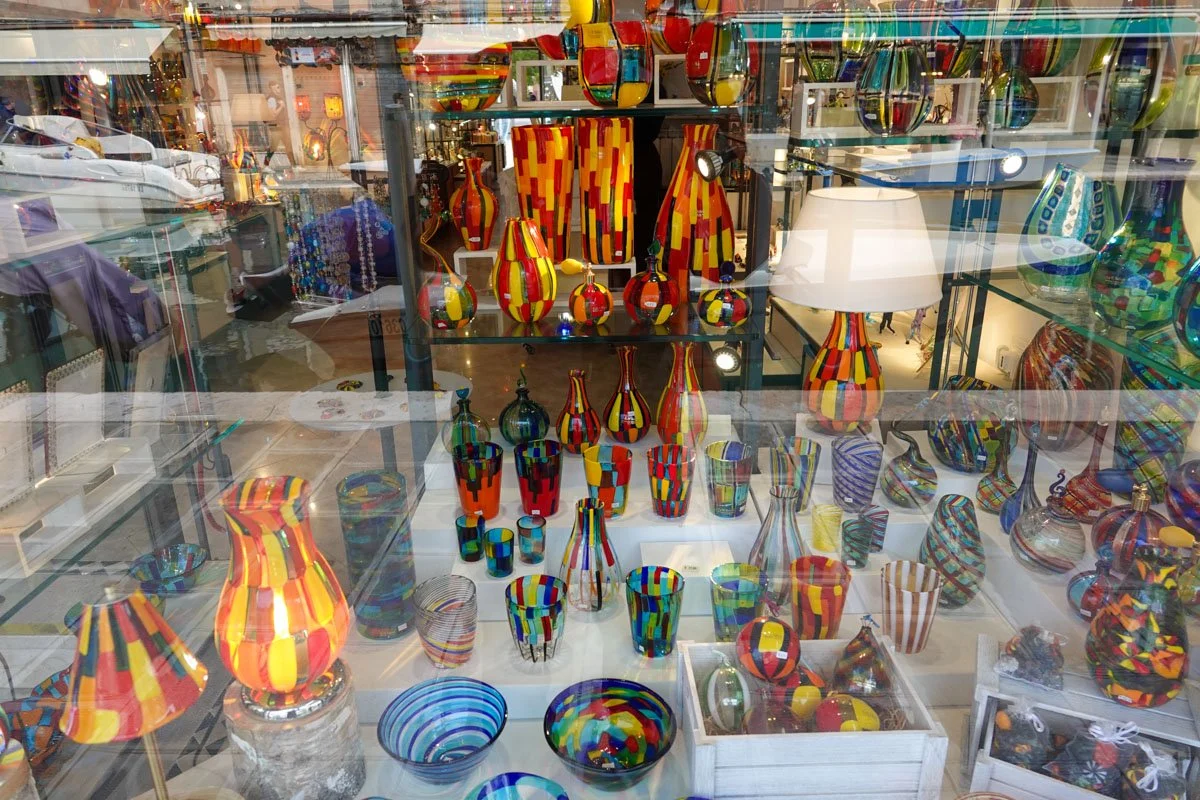
Today, Murano is full of glass shops. You can buy most anything you want, made out of glass in Murano. We saw glasses, lamps, ornaments, vases, goblets, jewelry, figurines, animals both large and small, miniatures, bottle corks, and everything else. I drew the line when I thought I was looking at some delicious candy, only to discover that it was made of glass.
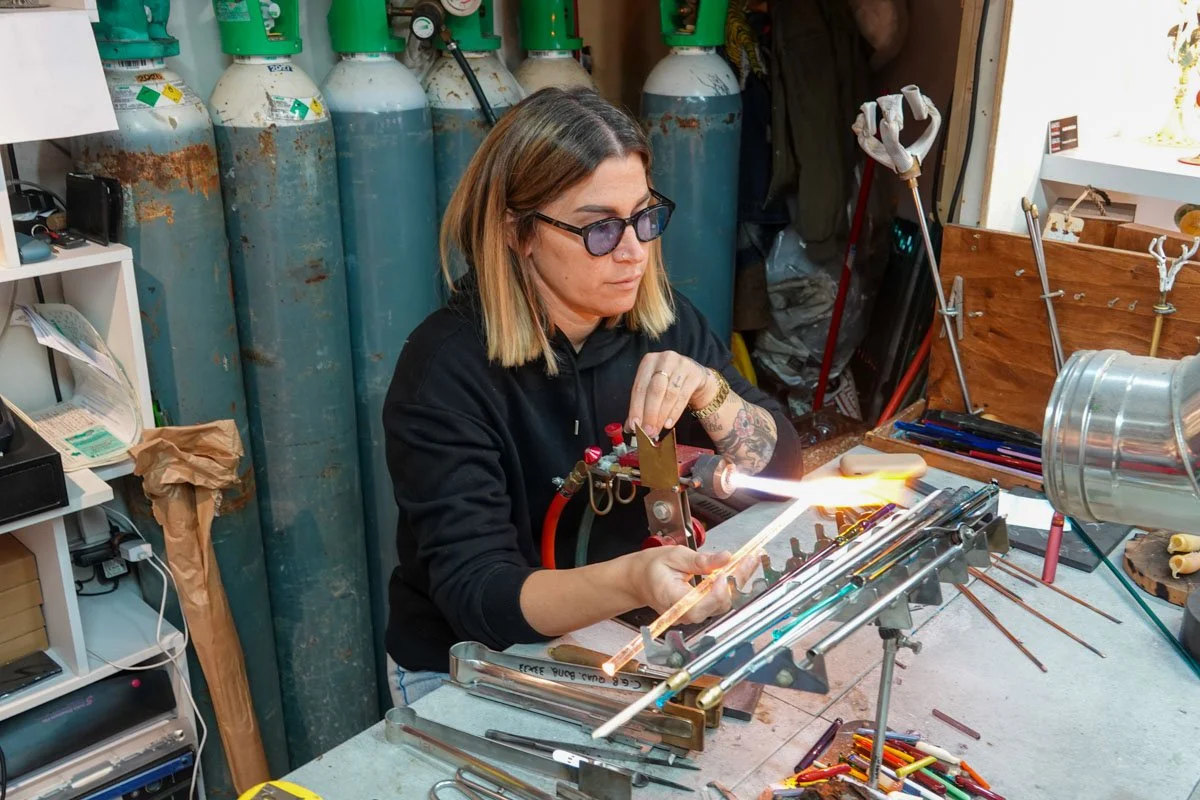
We visited a glassmaker, watched her work, and had a Q&A with her. I found her work fascinating. She said she had been doing this for ten years.
We had lunch at the Bella Vecchia Pescheria restaurant. We had a green salad, pasta with shrimp, and for dessert, "chocolate salami with cream." (wink-wink on the salami part, but that's what they called it). The whole meal was very good.
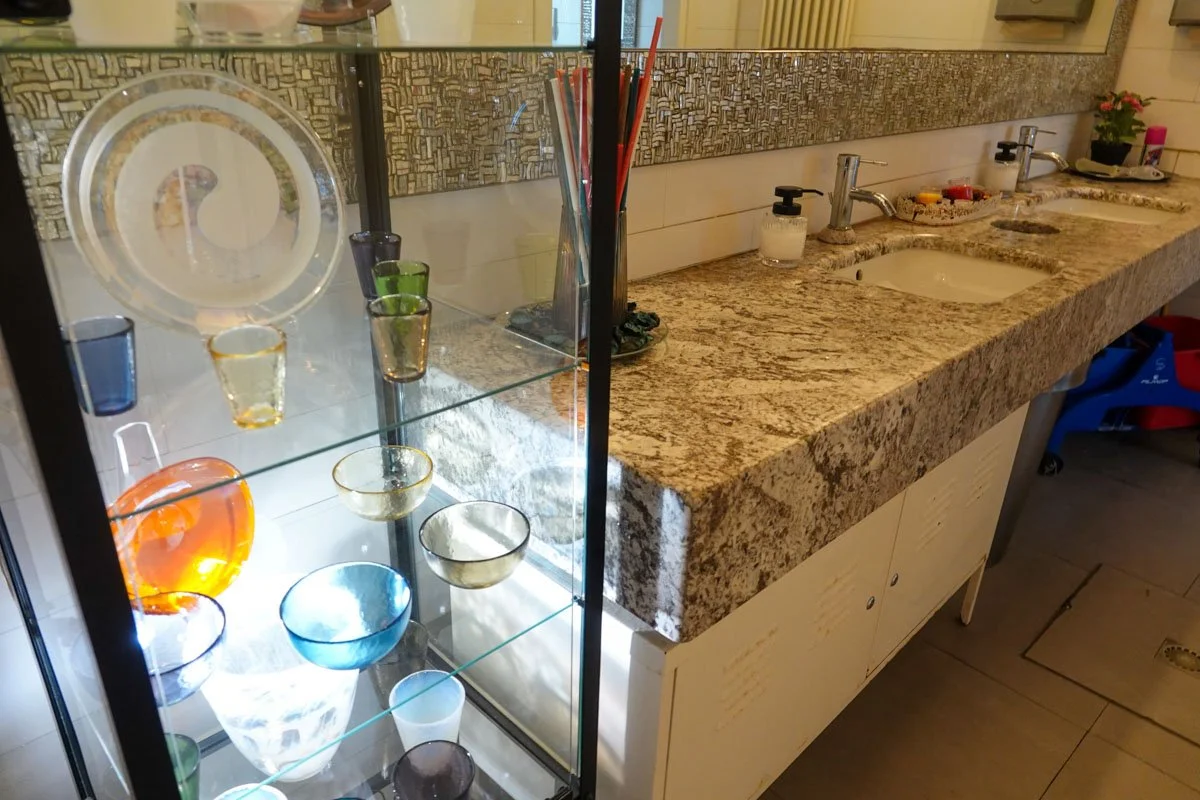
It is my contention that Murano is the leading glassmaking city in the world. How did I determine that? After lunch, I went to the restaurant's men's room before we left the town. This is what I saw in the men's restroom at the restaurant. Beat that, glassmaking towns of the world!
One last note before leaving these islands out in the Venetian Lagoon. When we arrived at Venice, I thought that the Alps were now way behind us. But from the islands out in the lagoon, you can see that the Alps are not far off.